東北薬科大学
審査学位論文(博士)
氏名(本籍) エルデネチメグ セレンゲ
Erdenechimeg Selenge
(モンゴル)学位の種類 博士(薬学)
学位記番号 甲第
140
号学位授与の日付 平成
26
年3
月18
日学位授与の要件 学位規則第4条1項該当
学位論文題名
Studies on phytochemical constituents and their biological activities from Mongolian medicinal plants, Dracocephalum and Chamaerhodos species
論文審査委員
主査 教 授 浪 越 通 夫 副査 教 授 山 下 幸 和 副査 教 授 柴 田 信 之
Studies on phytochemical constituents and their biological activities from Mongolian medicinal plants, Dracocephalum and
Chamaerhodos species
A dissertation presented by
Erdenechimeg Selenge Scholar to
The Department of Pharmacognosy in partial fulfillment of the requirements
for the degree of Doctor of Philosophy
in the subject of Pharmaceutical Sciences
Graduate School of Pharmaceutical Sciences Tohoku Pharmaceutical University
Sendai, Japan
March 2014
Table of contents
List of abbreviations Abstract
1. Introduction ………. 1
2. Phytochemical constituents of Dracocephalum ruyschiana …………... 9
2.1 Introduction ………. 9
2.2 Results and Discussion ……… 9
2.2.1 Isolation of known compounds ………... 10
2.2.2 Isolation and structure elucidation of new compounds ………... 11
2.2.2.1 Flavone tetraglycosides ………... 11
2.2.2.2 Benzyl alcohol glycosides ………... 15
3. Phytochemical constituents of Dracocephalum foetidum ………... 22
3.1 Introduction ………. 22
3.2 Results and Discussion ……… 22
3.2.1 Isolation of known compounds ………... 23
3.2.2 Isolation and structure elucidation of new compounds ………... 23
3.2.2.1 Monoterpene glycosides ……….. 23
3.2.2.2 Rosmarinic acid derivatives ……… 27
3.2.2.3 Acacetin acyl glycosides ………. 30
4. Phytochemical constituents of Chamaerhodos erecta and Chamaerhodos altaica ………. 36
4.1 Introduction ………. 36
4.2 Results and Discussion ……… 36
4.2.1 Isolation of known compounds ………... 39
4.2.2 Isolation and structure elucidation of new compounds ………... 41
5. Biological evaluation ………... 43
5.1 Hyaluronidase inhibitory activity ……… 43
5.2 DPPH radical scavenging activity ………... 44
5.3 Advanced glycation end products production inhibitory activity ……... 45
5.4 Tyrosinase inhibitory activity ……….. 46
6. Conclusions ………. 50
7. Experimental section ………... 55
7.1 General ……… 55
7.2 Dracocephalum ruyschiana ……… 55
7.2.1 Extraction and isolation ………... 56
7.2.2 Acid hydrolysis and identification of sugar components ……… 61
7.3 Dracocephalum foetidum ……… 61
7.3.1 Extraction and isolation ………... 61
7.3.2 Acid hydrolysis and identification of sugar components ……… 65
7.3.3 Alkaline hydrolysis of compounds 37-39 and 41 and condensation with (S) –phenylglycine methyl ester ……….. 66
7.4 Chamaerhodos erecta and Chamaerhodos altaica ……….. 67
7.4.1 Extraction and isolation ………... 67
7.4.2 Identification of sugar components ………. 71
7.5 Hyaluronidase inhibitory assay ………... 72
7.6 Measurement of DPPH radical scavenging activity ……… 72
7.7 Advanced glycation end products production inhibitory assay ………... 72
7.8 Tyrosinase inhibitory assay ………. 73
Acknowledgments ………... 74
References ………... 78
List of Abbreviations
[α]
Dspecific rotation
CD circular dichroism
p-DAB p-dimethylaminobenzaldehyde
DMSO dimethyl sulfoxide
EI electron ionization
EtOH ethanol
FAB fast atom bombardment
HMBC heteronuclear multiple bond correlation
HMQC heteronuclear multiple quantum correlation
HPLC high-performance liquid chromatography
HRMS high resolution mass spectrometry
IC
5050% inhibitory concentration
IR infrared
MeOH methanol
MTPA α-methoxy-α-(trifluoromethyl) phenylacetic acid
NMR nuclear magnetic resonance
NOE nuclear Overhauser effect
PGME phenylglycine methyl ester
ROE nuclear Overhauser effect in the rotating frame
TFA trifluoroacetic acid
TMS tetramethylsilane
UV ultraviolet
Abstract
Traditional Mongolian Medicine (TMM) has been revived and continues to be practiced widely, playing vital role in the health care needs of a large portion of the population of Mongolia. It includes the use of crude drugs, acupuncture, moxibustion, cupping, and massage. Most of the crude drugs used in medicine are derived from plant sources, while the others from animal and mineral sources.
In Mongolia, over 800 plant species are recognized as medicinal plants. Since ancient times, these plants are used for remedy and to prevent various infectious and non-infectious diseases, as well as improving the fertility of livestock. Some of typical medicinal plants are easily accessible within the country, and are widely used by Mongolian nomads as not only preventing and treating illnesses, but also a tonic to improve the health, because they cannot obtain modern drugs easily in nomadic life.
Even though city dwellers have access to modern medication use of traditional medicine is quite popular, as they have a few side effects.
TMM is being used for since several generations, and the traditional knowledge is extremely valuable. Hence a policy of state of Mongolia, making National herbal pharmacopoeia is needed and discussed. Thus it is the demand of the hour to conduct study of TMM using scientific approaches, so that traditional knowledge can be backed up by scientific data. In case of the medicinal plants, vegetation surveys and ecological researches have been done more than phytochemical study.
On the other hand, studies of Mongolian medicinal plants are still at a nascent stage
and even phytochemical constituents and the basic biological activities have not yet
been investigated sufficiently. So, there is a real need for scientific studies and
knowledge about TMM to provide scientific rationality. The knowledge of the basic
scientific data of phytochemical constituents will contribute to the pharmacopoeia, which specifies effective and safe use of each medicinal plant for patients.
Mongolian extreme climate damages skin and induces many other skin problems during the whole year, and increase especially in winter. Hence much attention has been paid to skin inflammation and its related diseases including allergies, severe rashes, dryness, and aging of skin by Mongolians. There are a lot of medicinal plants which have been handed down through the history, for skin care and protection from inflammation and its related diseases. A major focus of this study was identification of active components and action mechanisms of the plants in skin-care.
At first 51 extractions of Mongolian medicinal plants were tested for their hyaluronidase inhibitory and 1,1-diphenyl-2-picrylhydrazyl (DPPH) radical scavenging activities. Then, out of these extracts, 2 genus and 4 species were picked up, which showed significant activity and are commonly used as herbal medicine in TMM.
Dracocephalum L. is one of the important members of Lamiaceae family for TMM.
The genus consists of 17 species distributed in Mongolia and traditionally used for the treatment of inflammatory diseases, rheumatism, and external injury. Especially, D.
foetidum has been widely used as traditional medicine among Mongolian nomads. In this research, two Dracocephalum plants, D. ruyschiana and D. foetidum were revealed to have hyaluronidase inhibitory activity, which is known to be related with anti-inflammatory mechanism. The phytochemical constituents were isolated from the two plants by chromatography and chemical structures were determined by using instrumental analyses.
Ten new and 19 known compounds were identified from D. ruyschiana, and 13
new and 13 known compounds were identified from D. foetidum. Plants were found to
contain polyphenolic compounds such as phenylpropanoids and flavonoids. Rosmarinic acid was obtained as one of the main constituents of D. foetidum, but it was not found in D. ruyschiana, even when these are from same genus. The structure determination process is presented in Chapter 2 and 3.
Chapter 2 presents isolation and structure elucidation of five new flavone tetraglycosides, five new benzyl alcohol glycosides, and 19 known compounds from D.
ruyschiana.
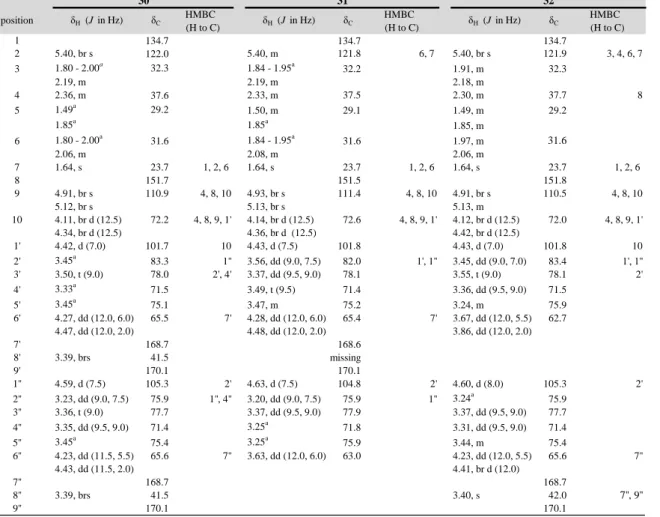
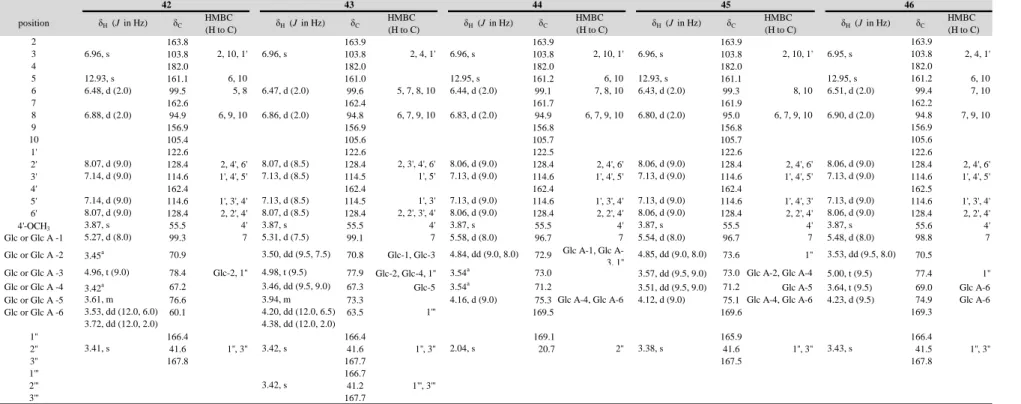
In Chapter 3, three new limonene glycosides, a new caffeic acid trimer, four new rosmarinic acid derivatives, five new acacetin acyl glycosides, as well as 13 known compounds from D. foetidum were characterized.
Chamaerhodos plants, C. erecta and C. altaica were revealed having potent antioxidant activity by screening of 23 Mongolian medicinal plants, and the plants are known to be used for skin-care, traditionally. Phytochemical investigations of C. erecta and C. altaica were followed the same processes as Dracocephalum plants and identified 4,5-dihydroxybenzaldehyde-3-O-β-
D-glucopyranoside from C. erecta and quercetin-3-O-β-
D-glucuronopyranosyl-4′-O-β-
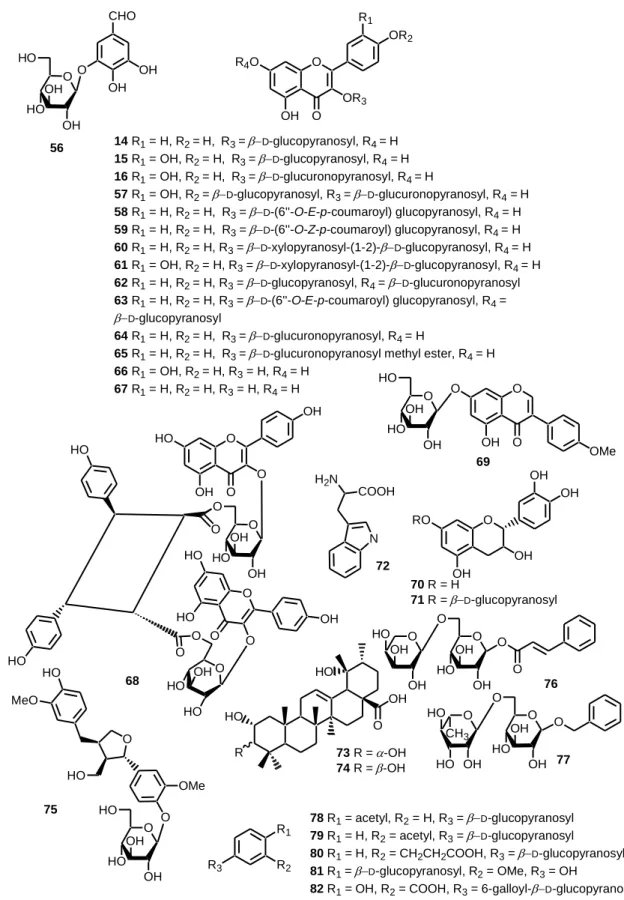
D-glucopyranoside from C. altaica as new compounds with 37 known compounds. A number of hydrolyzable tannins were isolated as typical constituents of Chamaerhodos plants. These results are explained in Chapter 4.
To elucidate skin-care effects and biological activities of the obtained 91
compounds (1 - 91), four basic tests hyaluronidase inhibitory, DPPH radical scavenging,
Advanced glycation endproducts (AGEs) inhibitory, and tyrosinase inhibitory activities
were evaluated. The tests were related with anti-inflammatory, antioxidant,
antipigmentation activities, and their results are discussed in Chapter 5.
Highlight of the four assays is detailed in here. Rosmarinic acid derivative (34), and acacetin glycosides (43 and 46) showed stronger hyaluronidase inhibitory activity than positive control disodium cromoglicate. Some of flavone glycosides, catechin, and some of hydrolyzable tannins showed moderate activity. Hyaluronidase inhibitory activity is expected to be involved anti-inflammatory and anti-allergic reactions, and this activity can be used as primary screen of anti-allergic effects.
Antioxidant activities of rosmarinic acid and hydrolyzable tannins were more than the positive control trolox, while some flavonoid glycosides and rosmarinic acid derivatives were similar to that of trolox.
A series of flavonols and their glycosides, catechins, and hydrolyzable tannins showed AGEs inhibitory activities. It is thought that the prevention of AGEs formation is promoted by antioxidant compounds, and almost of these active compounds also had DPPH radical scavenging activity. Antioxidant activity of natural products protects cells against the damaging effects of free radicals and is expected to be useful for the prevention and treatment of many diseases including skin inflammations, allergies, and aging-related diseases.
Although tyrosinase inhibitory effects of all compounds of D. foetidum were examined, they did not show any significant activity.
Dracocephalum and Chamaerhodos plants which contain rosmarinic acid and its derivatives, some flavonoid glycosides, and hydrolyzable tannins as potent hyaluronidase inhibitors and antioxidants may be useful in cosmetic for anti-inflammation, anti-allergies, and antioxidation.
It is rational that nomadic Mongolians used Dracocephalum and Chamaerhodos
plants for their ailments because the present study showed that constituents from those
have beneficial biological effects. These four medicinal plants have been important parts for TMM. The scientific data are expected to be useful and important information for the crude drugs which are being used by Mongolian people and generate data for the Mongolian National herbal pharmacopoeia.
Basic studies like above would increase understanding of the value of medicinal plants in Mongolia and increase the evidence for the efficacious use of herbs in health care.
O HO
H3CO
OH O
HO O
O OH
OH
O OH
OCH3
O O O
OH O HO R1O
O OH HO
O O
R2
43 R
1= malonyl, R
2= H
246 R
1= H, R
2= O
34
<
参考論文>
主論文(
原著論文)
1. Flavone Tetraglycosides and Benzyl Alcohol Glycosides from the Mongolian Medicinal Plant Dracocephalum ruyschiana
Erdenechimeg Selenge, Toshihiro Murata, Kyoko Kobayashi, Javzan Batkhuu, Fumihiko Yoshizaki. Journal of Natural Products, 2013, 76, 186-193.
2. Phytochemical constituents of Mongolian traditional medicinal plants, Chamaerhodos erecta and C. altaica, and its constituents prevent the extracellular matrix degradation factors
Erdenechimeg Selenge, Gendaram Odontuya, Toshihiro Murata, Kenroh Sasaki, Kyoko Kobayashi, Javzan Batkhuu, Fumihiko Yoshizaki. Journal of Natural Medicines, 2013, 67, 867-875.
3. Monoterpene glycosides, phenylpropanoids, and acacetin glycosides from Dracocephalum foetidum
Erdenechimeg Selenge, Toshihiro Murata, Shiho Tanaka, Kenroh Sasaki, Javzan
Batkhuu, Fumihiko Yoshizaki. Phytochemistry, 2014, In Press.
1
Chapter 1. Introduction
Nowadays people from around the world are having great interest in natural herbal medicines and are seeking more herbal remedies, products, and supplements. At the same time Traditional Mongolian Medicine (TMM) has been revived and continues to be practiced widely, playing vital role in the health-care needs of a large portion of the population of Mongolia.
TMM has a known history of more than 2500 years and has been passed from one generation to the next via oral traditions (Zhang, 2001). TMM based on the experiences of nomadic people, has its own unique medical theory, techniques, and medications in Mongolia. Some aspects of TMM along with elements from other Asian systems, such as Tibetan medicine, Ayurveda, and traditional Chinese medicine have been integrated into the Mongolian medical system (WHO, 2013).
From the 1930’s until the end of the 1980’s, traditional medicine was unrecognized.
Socio-economic changes in Mongolia during the 1990’s led to the development of the national culture, including revival of TMM (Pitschmann et al., 2013; Zhang, 2001).
Nowadays, traditional medicine is officially recognized as part of Mongolian medical heritage (Zhang, 2001).
In TMM, the physicians diagnose the diseases by reading the pulses, examining the
tongue, checking the urine by smell, color, and taste, as well as questioning the patients
(Pitschmann et al., 2013). TMM includes the use of crude drugs, acupuncture,
moxibustion, cupping, and massage. Most of the crude drugs used in medicine are
derived from plant sources, while the others from animal and mineral sources. The
physicians substitute plants, exchange plant parts or alter the formula of the recipe,
depending on the patients (Gerke, 2004).
2
In Mongolia, over 800 plant species are recognized as medicinal plants. Since ancient times, these plants are used for remedy and prevent various infectious and non-infectious diseases as well as improving the fertility of livestock. Some of typical medicinal plants are easily accessible within the country, and are widely used by Mongolian nomads as not only preventing and treating illnesses, but also a tonic to improve the health, because they cannot obtain modern drugs easily in nomadic life.
Even though city dwellers have access to modern medication use of traditional medicine is quite popular, as they have a few side effects.
There are several research institutions, universities, government agencies, and private companies involved in the research, protection, and commercial utilization of medicinal plants in Mongolia. Also many laboratories have formed research collaborations with other countries (Pitschmann et al., 2013). Since the last decade, Department of Pharmacognosy of Tohoku Pharmaceutical University has been collaborating with Laboratory of Bioorganic chemistry and Pharmacognosy of National University of Mongolia, to find and develop new drug candidates from medicinal plants used in traditional medicine, for various inflammations, cancer, Alzheimer, diabetes, and so on.
Mongolia currently has no pharmacopoeia for traditional medicine. In place of a
national herbal pharmacopoeia, many reliable resources are used, including the Chinese
pharmacopoeia and State pharmacopoeia of the USSR, and these are legally binding
(WHO, 2012). Herbal pharmacopoeia specifies botany, chemistry, harvesting, growing,
drying, storage, purity standards, dosage, side effects, contraindications, and drug
interactions of each medicinal plant, as well as herbal pharmacopoeia is to promote the
responsible use of herbal medicines and ensure they are used with the highest possible
3
degree of efficacy and safety. Quality, safety, and efficacy are the main requirements for the application of medicinal plants and herbal medicinal products (Ajazuddin and Saraf, 2012).
TMM is being used for since several generations, and traditional knowledge is extremely valuable. Hence a policy of state of Mongolia, making National herbal pharmacopoeia is needed and discussed. Thus it is the demand of the hour to conduct study of TMM using scientific approach, so that traditional knowledge can be backed up by scientific data. In case of the medicinal plants, vegetation surveys and ecological researches have been done more than phytochemical study.
On the other hand studies of Mongolian medicinal plants are still at a nascent stage and even phytochemical constituents and the basic biological activities have not yet been investigated sufficiently. So, there is a real need for scientific studies and knowledge about TMM to provide scientific rationality. The knowledge of the basic scientific data of phytochemical constituents will contribute to the pharmacopoeia, which specifies effective and safe use of each medicinal plant for patients.
In Mongolia, much attention has been paid to skin inflammation and its related diseases including allergies, severe rashes, dryness, and aging. Because Mongolian extreme climate damages skin and induces many other skin problems during the whole year, and increase especially in winter. There are a lot of medicinal plants which have been handed down through the history, for skin care and protection from inflammation and its related diseases.
Searching new skin-care ingredients from Mongolian plants becomes a great
interest and could also be used as skin-care products best suited to the harsh climate of
Mongolia to relieve the skin problems. Most widely used form is herbal extract for
4
skin-care and primarily added to the preparations due to several associated properties such as antioxidants. Also they have been used for the topical anti-inflammatory properties (Kole et al., 2005). Anti-inflammatory agents may be used in many different types of skin care products for sun protection, acne treatment, anti-aging skin-care products, and so on.
There are various methods to evaluate the potential of natural products for use in skin-care. Four (1-4) of the most common, simple, and related tests on natural products can be evaluating their hyaluronidase inhibitory, antioxidant, advanced glycation end products (AGEs) production inhibitory, and tyrosinase inhibitory activities (Fig. 1).
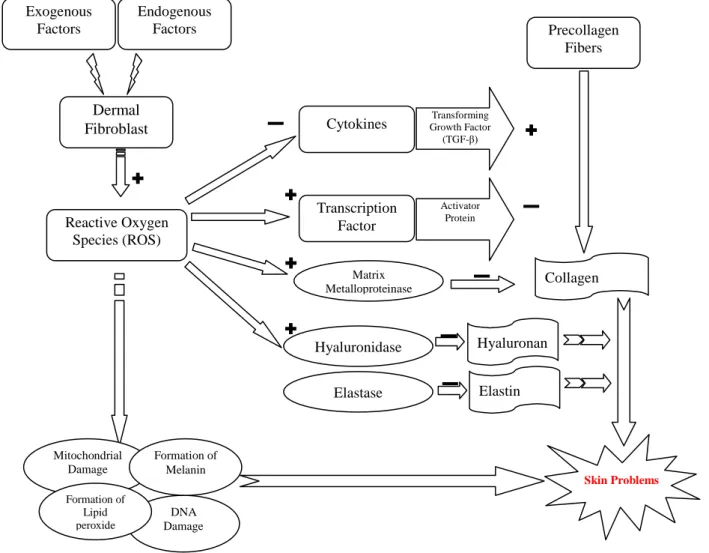
1. Hyaluronidase (EC 3.2.1.35) is an enzyme that decomposes hyaluronic acid resulting in reduced dermal hydration, disorganization of collagen and elastin fibers, and increased skin wrinkling and folding (Fig. 1). Hyaluronidase inhibitors are known to have potential benefits in preventing and treating wrinkling and inflammations (Mitra and Babu, 2010). In addition, hyaluronidases have been recognized in a number of physiological and pathological processes such as embryogenesis, angiogenesis, disease progression, wound healing, bacterial pathogenesis, and the diffusion of systemic toxins/venoms (Girish and Kemparaju, 2007). The modulation of hyaluronidase by suitable inhibitors will be useful for not only inflammations, but also normal homeostasis in the body (Gonzalez-Pena et al., 2013).
2. Skin produces free radicals or reactive oxygen species due to environmental
pollutants, food contaminants, cosmetic products, drugs, etc, which lead to oxidative
stresses and inflammatory responses in the dermal or epidermal layer of the connective
tissues resulting aging and damage to cell membranes, lipids, proteins, and DNA (Athar,
2002; Yamamoto, 2001).
5
Fig. 1 Pathway of skin problems (+, induction; -, inhibition)
3. AGEs production in organs is induced by hyperglycemia and is one of the causes of diabetic complications (Sourris et al., 2009). Moreover, AGEs production accumulate in the skin are correlated with aging and modifies elastin and collagen (Dyer et al., 1993;
Mizutari et al., 1997). When AGEs production accumulate, they induce cross-linking of collagen and reduce skin degradability and dermal regeneration (Wondrak et al., 2002).
Thus, the discovery and investigation of AGEs production inhibitors would offer a potential therapeutic approach for the prevention of skin complications.
Exogenous Factors
Endogenous Factors
Dermal Fibroblast
DNA Damage Reactive Oxygen
Species (ROS)
✚
Mitochondrial Damage
Formation of Melanin
Formation of Lipid peroxide
Skin Problems Precollagen
Fibers
Collagen Fibers
▬
▬
▬
Cytokines✚
Transcription Factor
Transforming Growth Factor (TGF-β)
Activator Protein
Hyaluronidase
Elastase Matrix Metalloproteinase
✚
✚
✚
▬
▬
Hyaluronan
Elastin
6
4. Tyrosinase (EC 1.14.18.1) is responsible for biosynthesis of melanin in melanocytes of human skin, and epidermal hyper-pigmentation might cause various dermatological disorders, such as melasma, freckles, and age spots (Li et al., 2010). It catalyzes the key step of the formation of melanin, the oxidation of diphenol to quinines (Pan et al., 2011). Tyrosinase inhibitors such as kojic acid, arbutin, and ascorbic acid have been used for prevention and treatment of hyperpigmentation. Some commercially available chemical and fungal derived skin-lightening agents have been proven to have chronic, cytotoxic, and mutagenic effects on humans (Nerya et al., 2003; Wang et al., 2006). Therefore, there is a need for alternative herbal derived and pharmaceutical agents for the treatment of hyperpigmentation of human skin (Yesilada, 2005).
At first 51 extractions of Mongolian medicinal plants were tested for their hyaluronidase inhibitory and DPPH radical scavenging activities. Then, out of these extracts, 2 genus and 4 species were picked up, which showed significant activity and are commonly used as herbal medicine in TMM. Their phytochemical and biological knowledge were revealed in this research.
Dracocephalum L. is one of the important members of Lamiaceae family for TMM and consists of around 60 species distributed in the temperate regions of the Northern hemisphere (Sonboli et al., 2011; Zeng et al., 2010). In the flora of Mongolia, the genus is represented by 17 species, which are mainly distributed in the northern and eastern parts of the country (Ligaa, 2005).
Dracocephalum plants, which are used in the traditional medicine, for a long period,
for the treatment of various inflammatory diseases, rheumatism, and external injury
(Ligaa, 2005), also showed a potent hyaluronidase inhibitory activity in our screening
(Murata et al., 2012). Especially, D. foetidum has been widely used as traditional
7
medicine among Mongolian nomads. Recently, much attention has been paid to Dracocephalum species and their chemical constituents, because of their diverse effects, such as antioxidant, anti-inflammatory, antihypoxic, and immunomodulatory activities.
Plants in this genus typically contain terpenoids and flavonoids (Zeng et al., 2010). In this research, two Dracocephalum plants, D. ruyschiana and D. foetidum were revealed to have hyaluronidase inhibitory activity, which is known to concern anti-inflammatory mechanism. The phytochemical constituents were isolated from the two plants by chromatography and chemical structures were determined by using instrumental analyses.
Ten new and 19 known compounds were identified from D. ruyschiana, and 13 new and 13 known compounds were identified from D. foetidum. The structure determination process is presented in Chapter 2 and 3.
Chapter 2 presents isolation and structure elucidation of five new flavone tetraglycosides (1-5), five new benzyl alcohol glycosides (7-9, 12, and 13), and 19 known compounds (6, 10, 11, and 14-29) from D. ruyschiana.
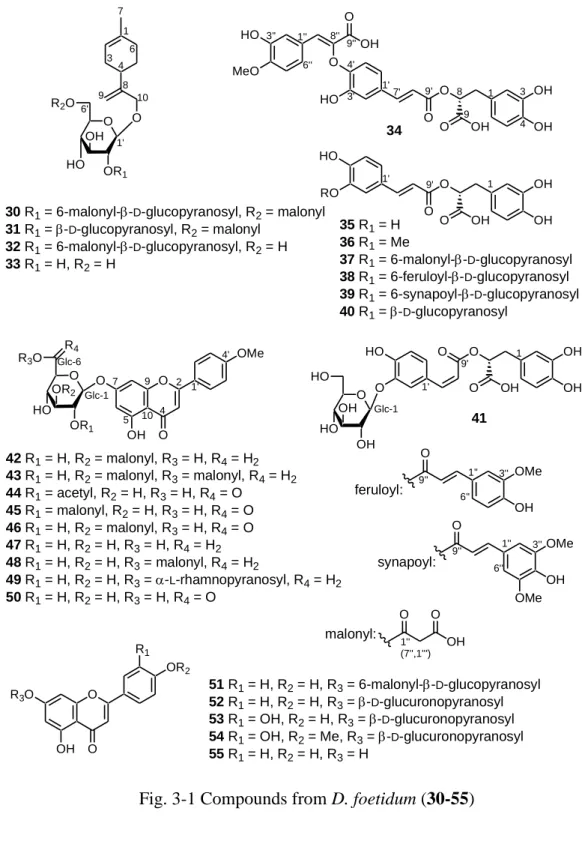
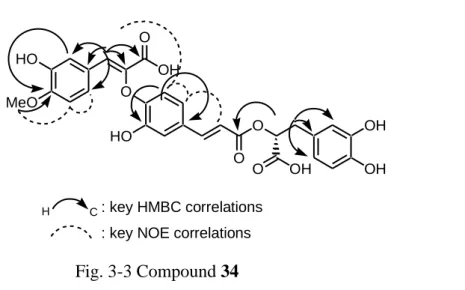
In Chapter 3, three new limonene glycosides (30-32), a new caffeic acid trimer (34), four new rosmarinic acid derivatives (37-39 and 41), five new acacetin acyl glycosides (42-46), as well as 13 known compounds (33, 35, 36, 40, and 47-55) from D.
foetidum were characterized.
Chamaerhodos plants, C. erecta and C. altaica were revealed having potent
antioxidant activity by screening of 23 Mongolian medicinal plants, and the plants are
known to be used for skin-care, traditionally. Plants in the genus Chamaerhodos Bge,
which belongs to the family Rosaceae, are herbs or subshrubs, glandular pilose and
distributed in Asia and North America. There are 6 species of Chamaerhodos in
8
Mongolia (Gubanov, 1996; Ligaa, 2005). The plants belonging to Rosaceae family were very active against DPPH free radical in our screening (Selenge, 2010).
Phytochemical investigations of C. erecta and C. altaica were followed the same processes as Dracocephalum plants and identified 4,5-dihydroxybenzaldehyde- 3-O-β-
D-glucopyranoside (56) from C. erecta and quercetin-3-O-β-
D-glucurono pyranosyl-4′-O-β-
D-glucopyranoside (57) from C. altaica as new compounds with 37 known compounds (14-16 and 56-91). These results are explained in Chapter 4.
To elucidate skin-care effects and biological activities of the obtained 91 compounds, four basic tests hyaluronidase inhibitory, DPPH radical scavenging, AGEs production inhibitory, and tyrosinase inhibitory activities were evaluated. The tests were related with anti-inflammatory, antioxidant, antipigmentation activities and their results are discussed in Chapter 5.
Phytochemical constituents of these plants are expected to contribute to biological
effects and usage of them in skin-care. This study will serve as a part of primary
reference for Mongolians, especially health care providers, manufacturers, and
regulators as well as it can contribute to confirm scientific rationality of traditional
medicinal plants. These conclusions are summarized in Chapter 6.
9
Chapter 2. Phytochemical constituents of Dracocephalum ruyschiana L.
2.1 Introduction
Dracocephalum ruyschiana L. (fam. Lamiaceae, Mongolian name: Ruishiin shimeldeg), is a traditional medicinal plant widely distributed in Mongolia around Khentei, Khangai, Mongol-Daurian, Great Khingan, Khobdo, and Middle Khalkha. It is typical habitat includes larch and mixed forests, their fringes and meadow slopes (Grubov, 1982). The aerial parts are widely used for the treatment of gastric ulcers, laryngitis, headache, acute respiratory infection, diarrhea, and rheumatoid arthritis (Ligaa, 2005). It has also been shown to have hepatoprotective effects, antimicrobial activity against Gram-positive bacteria, and antispasmodic effects (Ligaa, 2005).
Moreover, certain flavone glycosides, benzyl alcohol glycosides, and phenylpropanoids isolated from D. ruyschiana have been confirmed to have some pharmacological effects, such as anti-inflammatory (Zeng et al., 2010), hepatoprotective (Perez-Alvarez et al., 2001), antimicrobial activities (Rigano et al., 2007). Caffeic acid and α-hydroxydihydrocaffeic acid were reported as the chemical constituents of D.
ruyschiana (Zeng et al., 2010).
2.2 Results and Discussion
From the extract of aerial parts of D. ruyschiana L., five new flavone tetraglycosides (1-5) (Fig. 2-1), five new benzyl alcohol glycosides (7-9, 12, and 13) (Fig. 2-2, 2-3), and 19 known compounds (6, 10-11, 14-29) were isolated (Fig. 2-4).
The tetraglycosides contained a 7-O-β-
D-glucopyranosyl-(1→2)-β-
D-glucopyranosyl- (1→2)-[β-
L-rhamnopyranosyl-(1→6)]-β-
D-glucopyranosyl moiety. The benzyl alcohol glycosides had acyl groups on their glycosyl or aglycone moieties.
Similar tetraglycosides comprising a rhamnopyranosyl and three glucopyranosyl
10
units were identified in Peganum harmala (Ahmed and Saleh, 1987), P. nigellastrum (Yang et al., 2010), and Coptis japonica var. dissecta (Yoshikawa et al., 1997). Similar triglycosides were found in species such as Calamintha glandulosa, Micromeria spp (Marin et al., 2001)., Valeriana jatamansi (Tang et al., 2003), Sclerochiton vogelii (Lamidi et al., 2006), and Robinia pseudoacacia (Veitch et al., 2010). Some of the flavone tri- and tetraglycosides have an O-acetyl group on a glycosidic moiety. Flavone monodesmosides containing four glycosidic moieties seemed to be rare. On the other hand, benzyl alcohol, the aglycone moiety of 7-9, is known as an important aroma substance with a variety of biological activity (Scognamiglio et al., 2012). Two of the new benzyl alcohol glycosides (12 and 13) are esters of gastrodin, one of the major bioactive components from Gastrodia elata Bl., exhibiting cardiac hypertrophy protective, anticonvulsant, and neuroprotective effects (Shu et al., 2012).
2.2.1 Isolation of Known Compounds
Known compounds were identified from spectroscopic data as
diosmetin-7-O-β-
D-glucopyranosyl-(1→2)-β-
D-glucopyranosyl-(1→2)-[α-
L-rhamnopyr
anosyl-(1→6)]-β-
D-glucopyranoside (6) (Yang et al., 2010), benzyl-O-α-
L-rhamno-
pyranosyl-(1→6)-β-
D-glucopyranoside (10) (Kawahara et al., 2005), benzyl-O-β-
D-
glucopyranoside (11) (Seigler et al., 2002), kaempferol-3-O-β-
D-glucopyranoside (14)
(Han et al., 2004), quercetin-3-O-β-
D-glucopyranoside (15) (Han et al., 2004),
quercetin-3-O-β-
D-glucuronopyranoside (16) (Seto et al., 1992), chlorogenic acid (17)
(Pauli et al., 1999), 3,5-dicaffeoylquinic acid (18) (Kim et al., 2011),
3,4-dicaffeoylquinic acid (19) (Kim et al., 2011), 3-p-(E)-coumaroyl-5-(E)-
caffeoylquinic acid (20) (Kim et al., 2011; Pauli et al., 1999), (7S,8R)-dihydrodehydro
diconiferyl alcohol-9′-O-β-
D-glucopyranoside (21) (Kuang et al., 2009; Matsuda et al.,
11
1996; Otsuka et al., 2000), (7S, 8R)-urolignoside (22) (Kuang et al., 2009; Matsuda et al., 1996; Otsuka et al., 2000), citrusin C (23) (Teng et al., 2005), trans-p-coumaric acid (24) (Salum et al., 2010), methyl trans-p-coumaric acid (25) (Kwon and Kim, 2003), trans-ferulic acid (26) (Salum et al., 2010), cis-p-coumaric acid (27) (Salum et al., 2010), p-hydroxybenzaldehyde (28) (Kim et al., 2003), and 4,4′-dihydroxydiphenyl methane (29) (Hejaz et al., 2004).
2.2.2 Isolation and structure elucidation of new compounds
Five new flavone tetraglycosides (1-5) and five new benzyl alcohol glycosides (7-9, 12, and 13) were isolated.
2.2.2.1 Flavone tetraglycosides
Compounds 1-5 were isolated as amorphous solids. Compound 1 was demonstrated to have the molecular formula C
40H
52O
24on the basis of HRFABMS (m/z 939.2752, [M +Na]
+). In the
13C-NMR spectrum, 40 carbons (Table. 2-1) were observed; 14 aromatic/
olefinic carbons (δ
C94.9, C-8; 99.8, C-6; 103.8, C-3; 105.5, C-10; 114.8, C-3′ and -5′;
122.7, C-1′; 128.5, C-2′ and -6′; 157.0, C-9; 161.1, C-5; 162.5, C-4′; 162.7, C-7; 164.0, C-2) and a carbonyl carbon (δ
C182.1) suggested a flavone skeleton. An O-methyl signal at δ
H3.85 (3H, H-4′-OMe) was long-range coupled with C-4′ (δ
C162.5) in the HMBC spectrum. These results demonstrated the presence of an acacetin skeleton. Four anomeric protons in the
1H-NMR spectrum and a methyl (δ
C17.8) and 23 oxygenated carbons in the
13C-NMR spectrum suggested the presence of four glycosidic units. The glycosidic components and their absolute configurations were determined as one
L
-rhamnose and three
D-glucose units from the NMR data and HPLC sugar analysis, as
described in the Experimental Section (Tanaka et al., 2007). The coupling constants of
the anomeric protons of the three
D-glucopyranosyl moieties were 7.5 Hz, indicating
12
anomeric β-configurations (Veitch et al., 2010). Similarly, the anomeric proton (δ
H4.54, br s, H-Rha-1) of the
L-rhamnopyranosyl moiety indicated an α-anomeric configuration (Veitch et al., 2010). An anomeric proton at δ
H5.20 (d, J =7.5 Hz, H-Glc-I-1) was correlated with a proton at δ
H3.48 (dd, J = 9.5, 7.5 Hz, H-Glc-I-2) and with the corresponding carbon at δ
C83.0 (C-Glc-I-2) according to COSY and HMQC data. In addition, an anomeric proton at δ
H4.62 (1H, d, J = 7.5 Hz, HGlc-II-1) was correlated with a proton at δ
H3.25 (dd, J = 9.0, 7.5 Hz, H-Glc-II-2) and with the corresponding carbon at δ
C83.1 (C-Glc-II-2). The signals of the
13C-NMR spectrum were similar to those of acacetin-7-β-
D-glucopyranosyl-(1→2)-[α-
L-rhamnopyranosyl-(1→6)]-β-
D- glucopyranoside (Tang et al., 2003), except for the presence of the third β-
D-glucopyranosyl unit of 1. The C-Glc-II-2 signal was shifted downfield relative to that of the acacetin triglycoside, which suggested that the third glucopyranosyl unit is coupled to the carbon. In the HMBC spectrum, an anomeric proton at δ
H4.51 (d, J = 7.5 Hz, H-Glc-III-1) was long-range coupled with C-Glc-II-2. The anomeric proton of the second glucopyranosyl unit (H-Glc-II-1) was long-range coupled with C-Glc-I-2. A lower shifted C-6 signal at δ
C65.9 (C-Glc-I-6) was long-range coupled with H-Rha-1.
The signal of the acacetin moiety (C-7) was long-range coupled with H-Glc-I-1. From
these results, the structure of 1 was determined as acacetin-7-O-β-
D-glucopyranosyl-
(1→2)-β-
D-glucopyranosyl-(1→2)-[α-
L-rhamnopyranosyl-(1→6)]-β-
D-glucopyranoside.
13
OR2 O OO O
O
O O
OH O
O OH HO OH HO HO
CH3
O OR3 HO R4O
OH OH HO HO
R1
The molecular formula of 2 was established as C
42H
54O
25on the basis of the HRFABMS (m/z 959.3031 [M+H]
+), which was C
2H
2O more than that of 1. In the
1H- and
13C-NMR spectra, signals of an O-acetyl group (δ
H2.03, 3H, s; δ
C21.1 and 169.5) were observed. Other signals were similar to those of 1. The differential HOHAHA spectrum showed the correlations of the signals of the second glucosyl moiety [δ
H4.73 (d, J = 7.5 Hz, H-Glc-II-1), 3.49 (dd, J = 9.0, 7.5 Hz, H- Glc-II-2), 5.00 (dd, J = 9.5, 9.0 Hz, H-Glc-II-3), 3.44 (t, J = 9.5 Hz, H-Glc-II-4), 3.30 (overlapped, H-Glc-II-5), 3.30 (overlapped, H-Glc-II-6), and 3.47 (dd, J = 11.5, 2.0 Hz, HGlc-II-6)]. The H-Glc-II-3 signal was long-range coupled with the carbonyl carbon signal of the O-acetyl group (δ
C169.5). Thus, the structure of 2 was identified as acacetin-7-O-β-
D-glucopyranosyl- (1→2)-3-O-acetyl-β-
D-glucopyranosyl-(1→2)-[α-
L-rhamnopyranosyl-(1→6)]-β-
D- glucopyranoside.
Compound 3 had an [M+H]
+ion peak in HRFABMS at m/z 959.3026, corresponding to the molecular formula C
42H
54O
25, the same as that of 2. Its
1H- and
13
C-NMR spectra (in DMSO-d
6, Table. 2-1) were similar to those of 2. The
1H- and Fig. 2-1 New compounds (1-5)
1 R
1= H, R
2= Me, R
3= H, R
4= H
2 R
1= H, R
2= Me, R
3= Ac, R
4= H
3 R
1= H, R
2= Me, R
3= H, R
4= Ac
4 R
1= OH, R
2= Me, R
3= H, R
4= Ac
5 R
1= H, R
2= H, R
3= H, R
4= Ac
14
13
C-NMR spectra recorded in pyridine-d
5(see Experimental Section) were almost superimposable onto those of peganetin (Ahmed and Saleh, 1987). The HMBC spectrum showed that an anomeric proton at δ
H5.63 (d, J = 7.5 Hz, H-Glc-I-1) was long-range coupled with C-7 (δ
C164.0) of an acacetin moiety. Similarly, H-Glc-II-1 (δ
H5.27, d, J = 8.0 Hz) was long-range coupled with C-Glc-I-2 (δ
C84.7), HGlc-III-1 (δ
H5.31, d, J = 7.5 Hz) with C-Glc-II-2 (δ
C85.2), and H-Rha-I-1 (δ
H5.41, br s) with C-Glc-I-6 (δ
C67.2). In the differential HOHAHA spectrum (in pyridine-d
5), the anomeric proton of Glc-II correlated with H-Glc-II-6 (δ
H4.80, dd, J = 12.0, 3.0 Hz and 4.86, dd, J = 12.0, 1.0 Hz). The H-Glc-II-6 protons were long-range coupled with an O-acetyl carbonyl carbon at δ
C170.9 in the HMBC spectrum. Hence, the structure of 3 was determined as acacetin-7-O-β-
D-glucopyranosyl-(1→2)-6-O-acetyl-β-
D-gluco pyranosyl-(1→2)-[α-
L-rhamnopyranosyl-(1→6)]-β-
D-glucopyranoside. Assignments of NMR signals were as shown in Table. 2-1 (in DMSO-d
6) and the Experimental Section (in pyridine-d
5).
The molecular formula of 4 was suggested as C
42H
54O
26on the basis of HRFABMS (m/z 975.2988 [M+H]
+), which was one oxygen atom more than that of 3. Signals of glycosyl and an O-acetyl moiety in the
1H- and
13C-NMR spectra (in DMSO-d
6, Table.
2-1) were similar to those of 3. The aromatic protons (δ
H7.44, d, J = 2.0 Hz, H-2′; 7.13,
d, J = 8.5 Hz, H-5′; 7.57, dd, J = 8.5, 2.0 Hz, H-6′), and an O-methyl singlet at δ
H3.88
suggested that the aglycone moiety of 4 is diosmetin. In the differential HOHAHA
spectra, correlations of glycosidic signals such as from H-Glc-II-1 (δ
H4.68, d, J = 8.0
Hz) to H-Glc-II-6 (δ
H4.00, 1H, m; 4.01, 1H, m) were observed. Consequently,
compound 4 was identified as diosmetin-7-O-β-
D-glucopyranosyl-(1→2)-6-O-acetyl-
β-
D-glucopyranosyl-(1→2)-[α-
L-rhamnopyranosyl-(1→6)]-β-
D-glucopyranoside.
15
In the
1H-NMR spectrum of 5 (Table. 2-1), an AA′BB′ spin system (δ
H6.95, 2H, d, J = 9.0 Hz, H-3′ and -5′; 7.94, 2H, d, J = 9.0 Hz, H2′ and -6′), two m-coupled protons (δ
H6.46, 1H, J = 2.0 Hz, H-6; 6.71, 1H, J = 2.0 Hz, H-8), and a singlet (δ 6.84, 1H, H-3) were observed in the aromatic/olefinic region. These showed the presence of apigenin as the aglycone moiety. The molecular formula of 5 was suggested to be C
41H
52O
25on the basis of the HRFABMS (m/z 967.2713 [M+Na]
+), which was CH
2O less than that of 4. These results suggested that 5 was apigenin-7-O-β-
D- glucopyranosyl-(1→2)-β-
D-glucopyranosyl-(1→2)-[α-
L-rhamnopyranosyl-(1→6)]-β-
D- glucopyranoside.
2.2.2.2 Benzyl alcohol glycosides
Compounds 7−9, 12, and 13 were isolated as colorless powders. Compound 7 was established to have the molecular formula, C
28H
34O
12, based on the HRFABMS (m/z 563.2117, [M+H]
+). Five aromatic protons (δ
H7.23, 1H, m, H-4; 7.29, 2H, m, H-3 and -5; 7.41, 2H, d, J = 7.0 Hz, H-2 and -6) and two oxygenated methylene protons in the
1
H-NMR spectrum (Table. 2-2) at δ
H4.64 (d, J = 11.5 Hz, H-7) and 4.87 (d, J = 11.5 Hz,
H-7) suggested the presence of a benzyl group. Spin systems at δ
H6.80 (2H, d, J = 8.5
Hz, H-3′ and -5′), 7.43 (2H, d, J = 8.5 Hz, H-2′ and -6′), 6.36 (1H, d, J = 16.0 Hz, H-8′),
and 7.59 (1H, d, J = 16.0 Hz, H-7′), and a carbonyl carbon at δ
C168.6 (C-9′) indicated a
trans-p-coumaroyl moiety. Two anomeric, a methyl, and nine oxygenated carbons
suggested the presence of two glycosidic moieties. After acid hydrolysis of 7, the sugars
were identified as
D-glucose and
L-rhamnose by the same method as for 1 (Tanaka et al.,
2007). The coupling constant of H-Glc-1 (δ
H4.36, d, J = 8.0) indicated a β-
D-gluco
pyranosyl moiety (Kawahara et al., 2005; Veitch et al., 2010). The H-Glc-1 signal was
long-range coupled with a benzylic oxygenated carbon at δ
C71.8 (C-7) in the HMBC
16
spectrum. The anomeric proton at δ
H4.95 (d, J = 1.5 Hz, H-Rha-1) and the methyl doublet (δ
H1.32, d, J = 6.5 Hz, H-Rha-6) indicated the presence of an α-
L-rhamnopyranosyl moiety (Kawahara et al., 2005; Veitch et al., 2010). The H-Rha-1 signal correlated with H-Rha-2 (δ
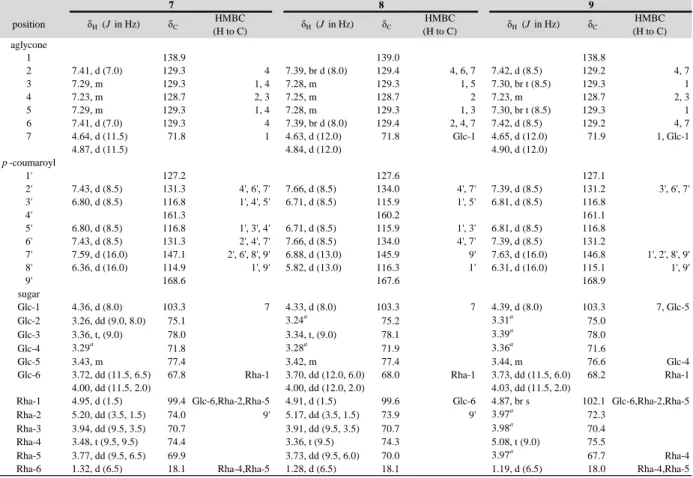
H5.20, dd, J = 3.5, 1.5 Hz) in the COSY spectrum. In the HMBC spectrum, the H-Rha-1 signal was long-range coupled with C-Glc-6 (δ
C67.8), and H-Rha-2 was long-range coupled with the acyl carbonyl carbon (C-9′). From these results, the structure of 7 was determined as benzyl-2-O-trans-p- coumaroyl-α-
L-rhamnopyranosyl-(1→6)-β-
D-glucopyranoside.
The molecular formula of 8 was determined as C
28H
34O
12on the basis of the HRFABMS (m/z 563.2129 [M+H]
+), which was the same as that of 7. The
1H- and
13
C-NMR spectra were similar to those of 7, except for signals of the acyl group. The coupling constant of H-7′ (δ
H6.88, d, J = 13.0 Hz) and H-8′ (δ
H5.82, d, J = 13.0 Hz) suggested that the acyl group was a cis-p-coumaroyl moiety. Therefore, the structure of 8 was determined as benzyl-2-O-cis-p-coumaroyl-α-
L-rhamnopyranosyl-(1→6)-β-
D- glucopyranoside.
Compound 9 also had the molecular formula C
28H
34O
12on the basis of the
HRFABMS (m/z 563.2143, [M+H]
+). Although its NMR spectra were similar to those
of 7, the H-Rha-4 signal (δ
H5.08, t, J = 9.0 Hz) in 9 was shifted downfield, instead of
the H-Rha-2 proton. In the HMBC spectrum, the H-Rha-4 signal correlated with the
carbonyl carbon at δ
C168.9 (C-9′). Hence, the structure of 9 was determined as
benzyl-4-O-trans-p-coumaroyl-α-
L-rhamnopyranosyl-(1→6)-β-
D-glucopyranoside.
17 O O
O
OH OH HO O
OR
1HO R
2O
CH
3The molecular formula of 12 was established as C
26H
32O
12on the basis of the HRFABMS (m/z 559.1797 [M+Na]
+). Aromatic ring protons (δ
H7.96, 2H, br d, J = 7.5 Hz, H-2′ and -6′; 7.65, 1H, m, H-4′; 7.40, 2H, m, H-3′ and -5′), an AA′BB′ spin system (δ
H7.40, d, J = 9.0 Hz, H-2 and -6; 7.00, d, J = 9.0 Hz, H-3 and -5), an oxymethylene singlet (δ
H5.27, 2H, H-7), an oxygenated carbon at δ
C157.1 (C-4), and an ester carbonyl carbon at δ
C165.6 (C-7′) were observed in the
1H- and
13C-NMR spectra of 12, indicating the presence of a benzyl and a benzoyl moiety. The H-7, -2′, and -6′ signals were long-range coupled with C-7′ (Fig. 2-3), demonstrating the presence of a 4-hydroxybenzyl benzoate aglycone moiety. Signals of two glycosidic units were also observed in the
1H- and
13C-NMR spectra. HPLC sugar analysis, as described in the Experimental Section, and coupling patterns of anomeric protons at δ
H5.00 (d, J = 7.5 Hz, H-Glc-1) and 5.12 (d, J = 1.5 Hz, H-Rha-1) confirmed the β-
D-glucopyranosyl and α-
L-rhamnopyranosyl moieties (Tanaka et al., 2007; Veitch et al., 2010). In the COSY spectrum, the H-Glc-1 signal correlated with H-Glc-2 (δ
H3.47, overlapped). The corresponding carbon (δ
C76.3, C-Glc-2) was determined using the HMQC data. In the HMBC spectrum (Fig. 2-3), the H-Rha-1 signal correlated with C-Glc-2, and H-Glc-1 with C-4 (δ
C157.1). From these results, the structure of 12 was formulated as [(benzoxy)methyl]phenyl-4-O-α-
L-rhamnopyranosyl-(1→6)-β-
D-glucopyranoside.
Compound 13 had an [M+H]
+ion peak in the HRFABMS at m/z 431.1558, corresponding to a molecular formula of C
19H
26O
11. The oxymethylene protons at δ
HFig. 2-2 New compounds (7-9)
7 R
1= trans-p-coumaroyl, R
2= H
8 R
1= cis-p-coumaroyl, R
2= H
9 R
1= H, R
2= trans-p-coumaroyl
18
5.07 (2H, s, H-7) and AA′BB′ systems (δ
H7.31, 2H, d, J = 9.0 Hz, H-2 and -6; 7.08, 2H, d, J = 9.0 Hz, H-3 and -5) indicated that 13 also contains a 4-hydroxybenzyl moiety.
Two carbonyl carbons [δ
C174.8 (C-5′) and 172.5 (C-1′)] and an oxygenated carbon [δ
C70.7 (C-3′)] were observed in the
13C-NMR spectrum. In the HMBC spectrum (Fig. 2-3), a methyl singlet at δ
H1.35 (3H, H-6′) was long-range coupled with C-3′ and two methylene signals [δ
C46.3 (C-2′) and 45.8 (C-4′)]. The methylene protons at δ
H2.70 (2H, br s, H-2′) and the H-7 signal correlated with C-1′ in the HMBC spectrum. These data suggested the presence of the ester of 3-hydroxy-3-methyl pentanedioic acid. A glycosidic unit was determined as the β-
D-glucopyranosyl by sugar analysis using HPLC (see Experimental Section) and a coupling constant of the anomeric proton at δ
H4.90 (d, J = 7.5 Hz, H-Glc-1). The H-Glc-1 signal correlated with C-4 (δ
C159.1) in the
HMBC spectrum. These results suggested that compound 13 was
[(3-hydroxy-3-methylglutaryl)methyl]phenyl-4-O-β-
D-glucopyranoside. The absolute
configuration of C-3′ could not be defined.
19 O O
O OH HO HO
O
OH HO HO
CH
3O O
OH OH HO HO O
O
O
O O
OH OH
1 4
7 7' 1'
4'
1 4
7
6'
1' 3'
5'
Glc-1 Glc-1
Rha-1
Glc-6 Glc-6
H C
: key HMBC correlations
OO O
OH OH HO O
OH HO HO
CH3
OO
OH OH HO HO OCH3 O O
O O
O
O O
OH O
O OH HO OH HO HO
CH3
O OH HO HO
OH OH HO HO
OH
OH O
O HO
OH
R1
OR2 14 R1= H, R2= -D-glucopyranosyl 15 R1= OH, R2= -D-glucopyranosyl 16 R1= OH, R2= -D-glucuronide HO COOH
OR1 OR2 R3O
17 R1= E-caffeoyl, R2= H, R3= H
18 R1= E-caffeoyl, R2= H, R3= E-caffeoyl 19 R1= E-caffeoyl, R2= E-caffeoyl, R3= H
20 R1= trans-p-coumaroyl, R2= H, R3= E-caffeoyl O
OR2
OMe HO
OMe R1O
21 R1= H, R2= -D-glucopyranosyl 22 R1= -D-glucopyranosyl, R2= H
O OR2 HO
R1
OO
OH OH HO HO
OMe
24 R1= H, R2= H, 25 R1= H, R2= Me 26 R1= OMe, R2= H
HO O OH
CHO
HO HO OH
6
10
11 23
27
28 29
Fig. 2-3 New compounds (12-13)
Fig. 2-4 Known compounds (6, 10-11, 14-29)
12 13
HMBC HMBC HMBC
(H to C) (H to C) (H to C)
aglycone
2 164.0 163.9 163.9 164.2 164.3
3 103.8 2, 4, 10, 1' 103.8 2, 4, 10, 1' 103.8 2, 4, 10, 1' 103.8 4, 10, 1' 103.1 4, 10, 1'
4 182.1 182.0 182.0 181.9 181.9
5 161.1 161.1 161.2 161.1 161.1
6 99.8 5, 7, 8, 10 99.6 5, 7 99.6 7, 8, 10 99.5 5, 7, 8, 10 99.4 7, 8, 10
7 162.7 162.4 162.7 162.6 162.6
8 94.9 6, 7, 9, 10 94.7 7, 9 94.6 4, 6, 7, 9, 10 94.5 4, 6, 7, 9, 10 94.6 9, 10
9 157.0 156.9 156.9 156.9 156.8
10 105.5 105.4 105.4 105.4 105.3
1' 122.7 122.7 122.7 122.9 121.0
2' 128.5 2, 4', 6' 128.4 4', 6', 2 128.4 3', 4', 6' 113.1 2, 3', 4', 6' 128.6 2, 4', 6'
3' 114.8 1', 4', 5' 114.7 1', 4', 5' 114.7 1', 4', 5' 146.8 116.0 1', 5'
4' 162.5 162.5 162.4 151.3 161.3
5' 114.8 1', 4', 3' 114.7 1', 3', 4' 114.7 1', 3', 4' 112.2 1', 3' 116.0 1', 3'
6' 128.5 2, 2', 4' 128.4 2', 4', 2 128.4 2', 3', 4' 118.9 2, 2', 4' 128.6 2, 2', 4'
4'-OCH3 3.85, s 55.6 4' 3.87, s 55.5 4' 3.85, s 55.6 4' 3.88, s 55.8 4'
sugar-1
Glc-I-1 98.3 7 98.2 7 98.0 7,Glc-I-2 98.0 7 98.0 7
Glc-I-2 83.0 82.8 83.0 Glc-I-1 83.2 83.2 Glc-I-1
Glc-I-3 75.3 75.0 75.3 75.2 75.4
Glc-I-4 68.7 68.7 68.6 68.5 68.5
Glc-I-5 75.4 75.3 75.5 75.4 75.4
Glc-I-6 65.9 Rha-1 65.9 65.9 65.8 Rha-1 65.8 Rha-1
sugar-2
Glc-II-1 4.62, d (7.5) 102.4 Glc-I-2 4.73, d (7.5) 102.1 Glc-I-2 4.67, d (7.5) 102.5 Glc-I-2 4.68, d (8.0) 102.4 Glc-I-2 4.68, d (7.5) 102.4 Glc-I-2
Glc-II-2 83.1 Glc-II-1 78.3 Glc-II-1 83.0 Glc-II-1 82.9 Glc-II-1 83.0 Glc-II-1
Glc-II-3 76.1 5.00, dd (9.5, 9.0) 76.4 Ac C=O,Glc-II-2 75.7 75.7 75.7
Glc-II-4 69.2 67.1 69.2 69.2 69.2
Glc-II-5 76.5 76.4 73.2 73.2 73.2
Glc-II-6 60.3 3.30a 59.6 63.1 Ac C=O,Glc-II-5 63.0 Ac C=O 63.1
3.47, dd (11.5, 2.0)
Ac C=O 169.5 170.2 170.1 170.2
Ac CH3 2.03, s 21.1 Ac C=O 1.89, s 20.4 Ac C=O 1.89, s 20.4 Ac C=O 1.89, s 20.4
sugar-3
Glc-III-1 4.51, d (7.5) 104.2 Glc-II-2 4.35, d (7.5) 103.2 Glc-II-2 4.52, d (7.5) 104.2 Glc-II-2 4.54, d (8.0) 104.1 Glc-II-2 4.52, d (8.0) 104.2 Glc-II-2
Glc-III-2 3.03, dd (8.5, 7.5) 74.6 Glc-III-1 2.92, dd (8.5, 7.5) 73.4 3.04, dd (8.5, 7.5) 74.6 Glc-III-1 3.05, dd (9.0, 8.0) 74.6 Glc-III-1 3.05, dd (9.0, 8.0) 74.6
Glc-III-3 76.2 76.5 76.0 76.0 76.0
Glc-III-4 69.7 69.8 69.7 69.6 69.6
Glc-III-5 77.4 77.2 77.4 77.4 77.4
Glc-III-6 60.9 61.0 60.9 60.8 60.8
sugar-4
Rha-1 4.54, brs 100.5 Glc-I-6,Rha-5 4.56, br s 100.5 Glc-I-6,Rha-5 4.55, brs 100.1 Glc-I-6,Rha-5 4.55, brs 100.5 Glc-I-6,Rha-5 4.55, d (1.0) 100.5 Glc-I-6,Rha-5
Rha-2 70.4 70.3 70.3 70.3 70.3
Rha-3 70.8 70.7 70.8 70.7 70.7
Rha-4 72.1 72.0 72.1 72.1 72.0
Rha-5 68.4 68.3 68.3 68.3 68.3
Rha-6 17.8 17.8 Rha-4,Rha-5 17.8 Rha-4,Rha-5 17.7 Rha-4,Rha-5 17.7 Rha-4,Rha-5
a Unclear signal pattern due to overlapping signals.
δC
δH (J in Hz)
δH (J in Hz) δC δH (J in Hz)
2 3 4 5
δC HMBC δH (J in Hz) δC HMBC
3.16, t (9.5) 3.18a 3.17, t (9.0) 3.17, t (9.0)
3.15, t (9.5)
3.45, m 3.45, m 3.47, m 3.45a
3.44, m
1.08, d (6.5) 1.07, d (6.0) 1.07, d (6.5) 1.07, d (6.5)
1.06, d (6.5)
3.49, dd (9.5, 6.5) 3.42, dd (9.0, 6.0) 3.42, dd (9.0, 6.5) 3.41, dd (9.5, 6.5)
3.41, dd (9.5, 6.5)
3.68, dd (3.5, 1.0) 3.67, dd (3.5, 1.5) 3.67, br d (3.5) 3.67, dd (3.0, 1.0)
3.66, dd (4.0, 1.5)
3.74, dd (11.5, 2.0)
4.01, dd (12.0, 4.5)
4.01, m 4.03, dd (12.0, 3.0)
3.45a 4.04, dd (12.0, 2.0)
3.48, dd (11.5, 5.0)
4.00, m 4.00, dd (12.0, 4.5)
3.40, dd (11.5, 5.0)
3.20, m 3.21, m 3.22, m 3.19a
3.20, m
3.04, t (9.0) 3.09, t (9.0) 3.09, t (9.0)
3.75, br d (11.5) 3.77, dd (12.0, 2.0) 3.76, dd (12.0, 2.0)
3.73, brd (11)
3.30a 3.46, m 3.47, m 3.45, m
3.45, m
3.09, t (9.0) 3.08, t (9.0)
3.13, dd (9.0, 8.5) 3.21, dd (9.0, 8.5) 3.22, t (9.0) 3.20a
3.16a
3.50, dd (11.5, 5.5) 3.52, dd (12.0, 6.0) 3.52, dd (12.0, 6.0)
3.50a
3.44, t (9.5) 3.19, t (9.5) 3.20, t (9.0) 3.19, t (9.0)
3.18, t (9.0)
3.48a 3.48, t (9.0) 3.49a
3.45a
3.49, dd (9.0, 7.5) 3.30, dd (9.0, 7.5) 3.31a 3.30a
3.25, dd (9.0, 7.5)
3.88, br d (11.5) 3.86, br d (11.5) 3.85, br d (11.5) 3.85, dd (11.5, 1.5)
3.85, br d (11.5)
3.48a 3.46, dd (11.5, 4.5) 3.46a 3.48a
3.45a
3.70, m 3.45, m 3.47a 3.44, m
3.66, m
3.29, t (9.5) 3.24, t (9.0) 3.25a 3.21, t (9.0)
3.24a
3.58, dd (9.5, 9.0) 3.61, dd (9.5, 9.0) 3.61, t (9.0) 3.61, t (9.0)
3.57, m
3.47, dd (9.0, 7.5) 3.47, dd (9.5, 7.5) 3.47, dd (9.5, 7.5) 3.48, dd (9.0, 7.5)
3.48, dd (9.5, 7.5)
5.25, d (7.5) 5.23, d (7.5) 5.26, d (7.5) 5.24, d (7.5)
5.20, d (7.5)
8.05, d (9.0) 8.04, d (8.5) 7.57, dd (8.5, 2.0) 7.94, d (9.0)
8.02, d (8.5)
7.16, d (9.0) 7.13, d (8.5) 7.13, d (8.5) 6.95, d (9.0)
7.14, d (8.5)
7.16, d (9.0) 7.13, d (8.5) 6.95, d (9.0)
7.14, d (8.5)
8.05, d (9.0) 8.04, d (8.5) 7.44, d (2.0) 7.94, d (9.0)
8.02, d (8.5)
6.84, d (2.0) 6.72, d (2.0) 6.73, d (2.0) 6.71, d (2.0)
6.83, d (1.5)
6.51, d (2.0) 6.46, d (2.0) 6.47, d (2.0) 6.46, d (2.0)
6.49, d (1.5)
6.94, s 6.91, s 6.80, s 6.84, s
6.91, s
Table 2-1. 1H and 13C NMR Spectroscopic Data (in DMSO-d6) of Compounds 1-5 position δH (J in Hz) δC
1
20