別紙様式1(論文博士申請者用)
Contribution of Sport Policy to Sport Legacy Development:
Case of the Sydney 2000 Olympic Games
(スポーツレガシー形成へのスポーツ政策の寄与に関する研究:
2000年シドニーオリンピック競技大会を事例として)
(西暦)
2015
年1
月6
日 提出首都大学東京大学院
人間健康科学研究科 人間健康科学専攻 ヘルスプロモーションサイエンス 学域
満期退学時学修番号/研究生番号:
11999602
客員教員/研究員受入通知書の文書番号:氏 名:本間 恵子
(
指導教員名:舛本直文教授 )博 士 学 位 論 文
Declaration
I hereby declare that this submission is my own work and that, to the best of my knowledge and belief, it contains no material written by another person nor material which to a substantial extent has been accepted for the award of any other degree or diploma of the university or other institute of higher learning, except where due acknowledgment has been made in the text. This is an original work and my own experiences in Australian sport system drew some insights for this study.
Abstract
The impacts of hosting the Olympic Games on a host city/nation are significant, and therefore how to minimize the negative effects and maximize the positive effect has been an issue for the event owner, the International Olympic Committee (IOC). The IOC aims to leave so-called ‘legacy,’ which are to be long-term positive effects, in host cities and nations. The legacy issues captured Olympic stakeholders and researchers, after the IOC Olympic Study Centre and Autonomous University of Barcelona, Spain jointly held a symposium ‘The Legacy of the Olympic Games: 1984–2000’ in 2002. As shown in the title, the discussion targeted the 1984 Olympic Games and after. This was because the impact of hosting the Olympic Games became larger as more stakeholder were involved in the management after the introduction of commercialization at the 1984 Los Angeles Games. The change in the management source from public fund to private fund was successful with revenue being generated at the Olympics. It probably saved the Olympic Movement from the financial crisis. However, such expansion of the Games was revisited in response to a growing global concern on the environment and sustainable development in 1990s.
The IOC launched a legacy/impact study in 2001 and introduced indicators in 2003 to measure impacts on host cities and nations. The indicators were collectively called as Olympic Games Global Impact (OGGI) study, covering three areas of economy, environment and society. The Organizing Committees of the Olympic Games (OCOGs) were required to collect data based on the indicators and to submit reports accordingly. The OGGI was then reviewed and the name was changed to Olympic Games Impact (OGI) study in 2007. The introduction of the OGGI/OGI study was a positive step to understand the impacts, however, some researchers pointed out the issues such as difficulty in collecting required data and inconsistent methodologies in the data. Not only the OGGI/OGI study but also most of the existing legacy studies focused on ‘impacts’
immediately after the Olympic Games. As a result, those existing legacy studies did not find any evidence that hosting the Olympic Games left a sustainable sport legacy in a host city/nation, for example. This is due to the limitations in the methodology where the secondary data such as sport participation rate or club membership were analysed. It is difficult to establish the relationship between the trend in such data and the Olympic Games, because other factors might affect the changes. Those legacy studies are considered as an outcome-based study. Therefore, this study applied a different approach by focusing on the process rather than the outcome. As a case study, this study focused on sport legacies in
accordance with the objective of ‘Olympism’, a word/philosophy created by Pierre de Coubertin who revived the modern Olympics. In addition, this study chose the Sydney 2000 Olympic Games to analyse long-term sport legacies. According to the pilot study, sport policy could contribute to develop sport legacy and therefore this study analysed the process of Australian federal sport policy from the time the city of Sydney bid for the 2000 Olympics, to date.
Through the sport policy analysis, some sustainable sport legacies were found, which existing studies did not refer to. They are: Australian Youth Olympic Festival (AYOF) organized by Australian Olympic Committee (AOC); Sydney Marathon owned by Athletics Australia; and sport activities at the Sydney Olympic Park overseen by Sydney Olympic Park Authority. In addition, another sport legacy ‘Pierre de Coubertin Award’
conducted by the AOC was also found and analysed. The national sport policy played an important role for the success of the Sydney 2000 Olympic Games, especially at early stage of the preparation, but it was not directly involved in the development of sport legacies.
Those sustainable sport legacies were not planned in advance but developed almost by accident in the case of the Sydney 2000 Olympic Games. This might be because its preparation was made in the 1990s before the ‘legacy’ issues captured Olympic stakeholders. However, there are still lessons from the case study. For example, it might be better that national sport policy be responsible for developing national programs/networks for sports or physical activities than local authority does. Sport policy would be able to be a primary legacy actor, in order that everyone enjoys the legacy from the Olympic Games.
This study would be helpful for future bid cities/nations and host cities/nations to plan their sport legacy of the Olympic Games.
Table of Contents
List of Figures ... 1
List of Tables ... 1
Glossary ... 2
Preface ... 3
Introduction ... 6
Background: Changes in the Management of the Olympic Games ... 6
1980s: Introducing commercialisation ... 6
1990s: Recognising sustainable development ... 7
2000s: Introducing impact/legacy study ... 8
Differences between ‘impact’ and ‘legacy’ ... 12
Current Challenges in the Legacy Study ... 14
Data availability ... 14
Study responsibility and period ... 15
Consistency in methodology ... 16
Limitation in attribution analysis ... 17
Theoretical Approach ... 19
Focusing on the sport legacy ... 19
Focusing on the process of the sport policy ... 21
Focusing on the opportunities for sustainable sport legacy development ... 24
Research Objective ... 26
Methodology ... 28
Case study ... 28
Hypothesis testing ... 28
Systematic review ... 28
Interview (semi-structured) ... 30
Significance and Limitation... 31
Chapter 1 Process Analysis of Sport Policy ... 32
1.1 Baseline policy ... 32
1989: Initiation of the four-year planning of the national sport policy . 32 1992: Bidding for the 2000 Olympic Games ... 35
1.2 Pre-Games policy ... 37
1994: Introducing the Olympic Athlete Program ... 37
1996: Balancing participation focused policy ... 40
1.3 Post-Games policy ... 43
2000: The Sydney Olympic and Paralympic Games and their legacies 43 Post Games sport policy and its reform ... 45
1.4 Conclusion ... 49
Chapter 2 Evaluation of Sport Legacy and the Legacy Actor ... 51
2.1 Australian Youth Olympic Festival (AYOF) ... 51
2.2 Pierre de Coubertin Award ... 55
2.3 Sport activities in the Sydney Olympic Park ... 58
2.4 Sydney Marathon (Blackmores Sydney Running Festival) ... 61
2.5 Conclusion ... 64
Chapter 3 Findings and Suggestion ... 66
3.1 Contribution of sport policy to the sport legacy ... 66
3.2 Interrelationship between sport policy and other factors ... 68
3.3 Legacy planning and its success ... 70
Importance of prior planning ... 70
Criteria of the success ... 71
3.4 For future legacy study ... 73
Narrow down the scope ... 73
Focusing on event objective ... 74
3.5 Conclusion ... 76
References ... 80
Appendix A: Interviewees and Questions ... 86
Interviewee A (face-to-face interview) ... 86
Interviewee B (face-to-face interview) ... 90
Interviewee C (face-to-face interview) ... 95
Interviewee D (email interview) ... 99
Interviewee E (email interview) ... 101
Appendix B: Interview request and agreement forms ... 102
1 List of Figures
Figure 1: Difference between positivism and constructivism approaches ... 23
Figure 2: Cultural complex model applied to sport legacy analysis... 24
Figure 3: Research objective and tasks ... 26
Figure 4: Australian sport policy expenses by participation and high performance ... 47
Figure 5: Changes in number of athletes and nations ... 52
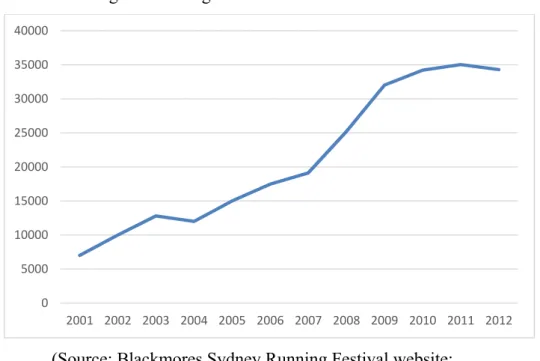
Figure 6: Changes in the number of entrants ... 62
List of Tables
Table 1: AYOF sports by category ... 53
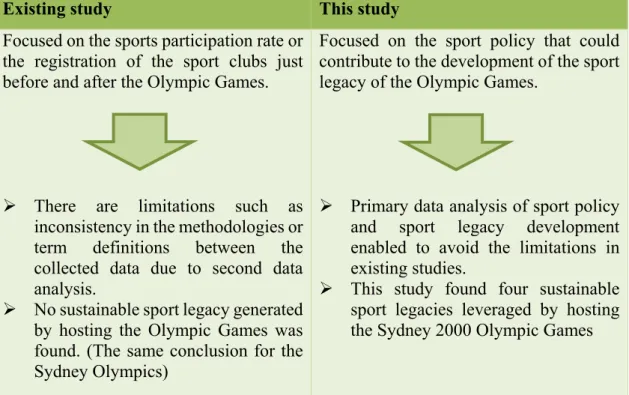
Table 2: Comparison between existing study and this study... 74
2 Glossary
Terms and their definitions used in this study are as follows.
Olympic legacy
Something being left in host cities/nations by hosting the Olympic Games. Olympic legacies could be positive or negative, tangible or intangible, short-term or long-term, or planned or unplanned (IOC 2011a; Gratton and Preuss 2008). There are many types of Olympic legacies, but it is difficult to categorize them clearly. However, the IOC considers they could fall into five categories: sporting, social, environmental, urban and economic legacies (IOC 2012b). In addition, the IOC explains the term ‘legacy’ in Olympic context as relatively long-term positive effects when compared to ‘impact’ (IOC 2012c).
Sport legacy
Sport legacy is an Olympic legacy that is related to sports. The examples are: sporting venues, sport development, sports participation or Olympic education. This study focuses on long-term sport legacies in accordance with the statement of Olympism. The word
‘sustainable sport legacy’ is also used in this context.
Legacy actor
An entity, which contributes to the development of Olympic legacy. There are direct actor and indirect actor. Direct actor plays the role as the owner or organizer of the legacy, while the role of indirect actor is limited to indirect involvement in the legacy development.
3 Preface
Undoubtedly, the Olympic Games represent the single largest sporting event in the world.
The extent of the impact of hosting the Olympic Games is broad from the construction and renovation of existing sporting facilities and public transportation systems in the host city to economic, social and environmental impacts on the host nation. For example, Cashman listed 11 types of impacts to consider, which include an alteration in the city design, improvements in infrastructure such as transportation systems, an increase in costs and taxes and increased community involvement as volunteers or probably as protesters (Cashman 2002a). These considerations start from the time a city or nation begins bidding for an Olympic Games. Some of the impacts may even occur during the bidding process. Once a city is selected to host the Games, the management of impacts and risks begins and persists until the Olympic Games ends or for long after the Games.
Although organising the Olympic Games requires many efforts, cities bid for the Olympic Games because they anticipate positive effects such as enhanced business opportunities and tourism. Furthermore, host cities believe that the positive effects would greatly outweigh any negative effects. Sponsor of the Olympic Games also expects positive returns such as an increase in sales by promoting their corporate image globally.
Broadcasters and print media expect that the coverage of an Olympic Games will attract more viewers and subscribers, and consequently more sponsors and advertisers to their businesses. The Olympic Games and Olympic Movement have been supported by these beliefs since the 1984 Los Angeles Olympic Games where commercialisation was introduced in the management of the Olympic Games. The 1984 Los Angeles Games generated profits and other positive effects, and its success saved the Olympic Movement from a fateful crisis as no other city had bid for the 1984 Games because of the huge deficit left by the 1976 Olympic Games in Montreal. However, the more stakeholders the organiser involves when hosting an Olympic Games, the greater the impact on the host city and nation. While some impacts are positive, others are negative. Therefore, minimising negative impacts and maximising positive impacts became a significant issue for the IOC (IOC 2011b). Just then, the United Nations (UN) created Agenda 21, an action plan designed as a response to global environmental issues with the concept of
4
‘sustainable development’. The IOC placed the ‘environment’ as the third pillar of the Olympic Movement in addition to ‘sport’ and ‘culture’ (Girginov and Hills 2009), and it created own Agenda 21 in the 1990s in response to local environmental issues and global concern for sustainable development (Toohey 2012).
In this context, the term ‘Olympic legacy’ captured Olympic stakeholders’
attentions in the 2000s to consider the long-term positive effects on the host city and nation. The IOC subsidiary institution, Olympic Study Centre, and Autonomous University of Barcelona, Spain jointly held a symposium ‘The Legacy of the Olympic Games: 1984–2000’ to discuss legacy issues for the first time. In 2003, the IOC introduced indicators to measure impacts on the city and nation caused by hosting the Olympic Games as an Olympic legacy study (VANOC 2007; IOC 2012b). These indicators were collectively called the Olympic Games Global Impact (OGGI) study. In 2007, it was reviewed and renamed Olympic Games Impact (OGI). The introduction of OGI was a significant step towards understanding the impact and legacy of the Olympic Games; however, some Organising Committees for the Olympic Games (OCOGs) and researchers pointed out issues in the current legacy study. For example, the Vancouver, London, Beijing and Torino Organising Committees reported difficulties in collecting required data (LOCOG 2010). Veal and Frawley verified that there was no evidence that the Sydney 2000 Olympic Games increased the sports participation rate in Australia because of inconsistent research design in national surveys occurring before and after the Games. The difference in the term definitions of ‘sports participation’ between surveys also made it difficult to compare the data (Veal and Frawley 2009). Gratton and Holger, and Toohey pointed out the importance of analysing the Olympic legacy for a much longer period than the current OGI study where the final report covers only three years following the Games. The Olympic legacy persists for a decade or more, and the stakeholders involved maintain their relationships with the Games long after they have ended (Gratton and Preuss 2008; Toohey 2008). In addition, in recent years, debates regarding the Olympic legacy are ever raging in academic papers and media reports, particularly those regarding the 2012 London Olympic Games1. One of the IOC roles
1 The examples of legacy debate are as follows. “Olympics: a true legacy would be sport for all,” The Guardian, 12/08/2012. http://www.guardian.co.uk/commentisfree/2012/aug/12/observer-editorial-
5
defined in the Olympic Charter is to promote a positive legacy from the Olympic Games to the host cities and host countries (IOC 2011a). Therefore, it is important for the IOC, host cities and countries to understand how the Olympic legacy could be developed and analyse how the Olympic legacy could be better measured.
There are many types of Olympic legacies, but the IOC considers that they fall into five categories: sporting, social, environmental, urban and economic legacies (IOC 2011b). Of those, sport legacy would be the most important legacy because developing sport legacy is one of the primary objectives of the Olympic Movement which stands on Olympism. However, existing sport legacy studies focused on the outcome such as sports participation rate before and after the Olympic Games and there seems no study focused on how the sport legacy could be developed. This event assessment by analysing outcome data would be useful but in reality there are limitations in evaluating the event impact with such macro data. For future legacy planning, it would be more important to learn the process of legacy development from the past successful case. Therefore, this study examines the long-term and sustainable sport legacy development of one of the most successful Olympic Games, Sydney 2000 Olympics, as a case study. Some researchers suggest that it is important to understand the entire sport development and participation system including the impact of broader public policy initiatives and health promotion strategies (Veal et al. 2012). As such, this study first analyses the process of Australian federal sport policy (in Chapter 1) and then examines each sport legacy of the Sydney 2000 Olympic Games (in Chapter 2). In conclusion, the study will find out how national sport policy contributed to the development of the sport legacies for the Sydney Olympics.
It also will make suggestions for future legacy planning and legacy study (in Chapter 3).
This study would be helpful for future bid cities/nations and host cities/nations to plan their sport legacy and to review their sport policies for sport development and public health.
encourage-school-sport “Will the Olympics legacy help grassroots sport or focus on the elite?”
The Guardian, 21/08/2013. http://www.guardian.co.uk/society/2012/aug/21/communities- youngpeople
6 Introduction2
Background: Changes in the Management of the Olympic Games
The term ‘legacy’ in Olympic context became a concern among stakeholders and researchers in the 2000s. The historical background starts from the 1980s where commercialization was firstly introduced in the management of the Olympic Games. That change probably saved the Olympic Movement from the financial and operational crisis which it faced in the 1970s, however, the ‘impact’ of hosting the Olympic Games became larger than before by the introduction of commercialization, on the other hand. In the 1990s, a concern about an ‘impact’ on the environment became a global concern in the world. The concept of ‘sustainable development’ was developed. This trend could link to the consideration of ‘Olympic legacy’ in the 2000s. Therefore, this section explains the historical background from the 1980s.
1980s: Introducing commercialisation
The management of the Olympic Games has changed since the 1984 Los Angeles Games.
After the 1984 Games, the impact of an Olympic Games on a host city increased with the size of the Games and involvement of athletes, media and sponsors (Cashman 2002a).
For the first time in the Olympic Games history, the 1984 Olympics introduced commercialisation by operating only with private funds. The previous Games were organised primarily with public money; however, such management faced a critical situation following the 1976 Montreal Olympic Games. The cost of organising the Games increased with the gradual increase in the size of the Olympic Games. An enormous amount of public funding was invested for the preparation of the 1976 Games; however, it resulted in a financial deficit to the Canadians. The tax payers of several generations had to make up the deficit. After the 1976 Games, the only city to bid for the 1984 Olympic Games was Los Angeles (and only Lake Placid in the United States bid for the 1980 Winter Olympic Games) (Cashman 2002a; Verbruggen 2002). It was a crisis for the Olympic Games and Olympic Movement. To cope with the situation, the OCOG of the
2 Analysis of the previous studies mentioned in this chapter was conducted in 2011 to establish the research plan of this study.
7
Los Angeles Games utilised existing facilities for most venues, and introduced sponsorships, marketing strategies and lots of volunteers. As a result, the Games generated a net profit of 223 million US dollars (Verbruggen 2002). This motivated cities to bid for future Games. Arguably, it was commercialisation that saved the Olympic Games and Olympic Movement.
On the other hand, concerns about the negative impacts on the environment and economy increased with the gigantic size of the Olympic Games following the introduction of commercialisation at the 1984 Los Angeles Olympics (Cashman 2002a).
In general, the motivation to bid for the Olympic Games is influenced by expectations for the potential legacies which the Games can leave in host cities (Toohey and Veal 2007).
Therefore, understanding the impacts is even more important for the IOC to be able to continue effective organisation of the Olympic Games.
1990s: Recognising sustainable development
In the 1990s, the term ‘sustainability’ became a concern in the Olympic Movement, particularly regarding the environment. The milestone of sustainability’s legitimacy was the United Nations Conference on Environment and Development in 1992 in Rio de Janeiro (Toohey 2012). At this conference, countries committed to develop their economy in a way that would protect the environment. The UN adopted an action plan, Agenda 21, which provided a blueprint to achieve sustainable development worldwide. In addition, the UN created a monitoring and reporting system for that purpose (Toohey 2012). As one of the global organisations invited to create their own Agenda 21 on the basis of the model adopted by the UN, the IOC recognised the significance of the environment and sustainable development in its mission at the 1994 Centennial Olympic Congress and launched to create its own Agenda 21. First, the IOC established the Sport and Environment Commission in 1995 to advise the IOC Executive Board on the policies to be adopted by the IOC and the Olympic Movement on matters related to environmental protection and support for sustainable development in relation to sport. In addition, the IOC and the United Nations Environment Programme (UNEP) organised the first biennial World Conference on Sport and the Environment in 1995 in Lausanne (IOC 2012b).
Second, according to the Agenda 21, the IOC amended the Olympic Charter in 1996 by
8
adding the following paragraph in Rule 2 (role of the IOC):
‘(...) the IOC sees that the Olympic Games are held in conditions which demonstrate a responsible concern for environmental issues and encourages the Olympic Movement to demonstrate a responsible concern for environmental issues, takes measures to reflect such concern in its activities and educates all those connected with the Olympic Movement as to the importance of sustainable development.’(IOC 2000)
The documentation of the IOC’s Agenda 21 was completed in collaboration with UNEP.
It was endorsed in October, 1999, at the Third World Conference on Sport and the Environment in Rio de Janeiro to encourage the members of the Olympic Movement and integrate sustainability principles into their operations (IOC 2012c). The objectives of the IOC’s Agenda 21 were as follows: improving socio-economic conditions, conservation and the management of resources for sustainable development, and strengthening the role of major groups (women, young people and indigenous populations). These objectives and actions provided legacy direction (IOC 2000).
2000s: Introducing impact/legacy study
Between 14th and 16th November 2002, the IOC subsidiary institution, Olympic Study Centre, and Autonomous University of Barcelona, Spain jointly held a symposium ‘The Legacy of the Olympic Games: 1984–2000’. The background of the symposium was that there were studies and lectures about Olympic legacy, which started around 2000 led by Cashman. The movement attracted researchers and stakeholders as well as the IOC because it was in line with global concern about the environment and sustainable development and because there were unsustainable issues in Olympic venues, according to the interview with the key person. At the symposium, the delegates discussed the Olympic Games legacy and various areas of impact on host cities and nations. For the importance of legacy, Jacques Rogge, the IOC President, wrote in his welcome message that the Olympic Games would not only be an important sports event for young athletes to achieve their dreams but also to bring with them a social responsibility to ensure that the organising cities leave a positive legacy. According to the symposium report, the
9 primary conclusions were as follows:
The Olympic legacy should be considered from the first steps of the bid process in the organisation of the Games.
The Olympic legacy is a local and global concept, existing within cities, regions and nations, as well as internationally. In addition, it is fundamental in the understanding of the mission of Olympism in society.
Long-term legacy planning of the Olympic Games in the context of sustainable development is needed.
So-called intangible legacies such as production of ideas and cultural values, intercultural and non-exclusionary experiences, popular memory, education, archives, collective effort and voluntarism, new sport practitioners, notoriety on a global scale, experience and know-how are important since these
intangible legacies also act as a motor for the tangible ones to develop a long- term legacy (IOC 2003).
Two weeks after the symposium, the Olympic Games Study Commission, one of the internal commissions of the IOC, proposed to review the roles of the IOC in the Olympic Charter at the 114th IOC Session held in Mexico City in November, 2002, in terms of
‘sustainable development’. The description of sustainable development in the Olympic Charter had referred to the environment; however, the Commission recommended extending the concept to the more general Olympic legacy (IOC 2002). The proposal was agreed upon at the IOC Session. Then, as mentioned in the 115th IOC Session report, the following paragraph was added as one of the roles of the IOC in the Olympic Charter:
‘(The IOC) takes measures to promote a positive legacy from the Olympic Games to the host city and the host country, including a reasonable control of the size and cost of the Olympic Games, and encourages the Organising Committees of the Olympic Games (OCOGs), public authorities in the host country and the persons or organisations belonging to the Olympic Movement to act accordingly.’ (Olympic Charter, Rule 2.13) (IOC 2003b)
In 2003, the IOC introduced a new study project in order to measure the impact on a host city and country caused by hosting the Olympic Games (Furrer 2002). This project was
10
called the Olympic Games Global Impact (OGGI) study,3 and consisted of 154 indicators covering areas of economic, social and environmental factors (VANOC 2007; LOCOG 2010). The OGGI required each OCOG to submit four reports over 11 years, from two years before a host city is chosen to two years after the Olympic Games. The four reports consisted of a baseline report, pre-Games report, Games report and a post-Games report.
The objectives of the OGGI were to measure the global impact of the Olympic Games, create a comparable benchmark across all future Olympic Games, and help those cities that are bidding for an Olympic Games and future organisers to identify potential legacies to maximise the Games’ benefits (VANOC 2007; IOC 2012c).
After three years, following the discussion between the four OCOGs of Turin 2006, Beijing 2008, Vancouver 2010, London 2012 and the IOC at the OGGI workshop in 2006, the IOC issued a revised draft of 126 indicators in December 2006, of which 73 were mandatory and 47 were optional4. The study’s name was revised to the Olympic Games Impact (OGI) study and the revised indicators were included in the OGI Technical Manual of 2007 (LOCOG 2010). The OGI study period was extended to a 12 year period, covering economic, socio-cultural and environment areas. This one year extension was applied to the post-Games period, extending it to three years following the Games.
According to the IOC, the OGI study is a living study and open to future changes in order to keep it relevant and pertinent. For example, the Vancouver Organising Committee for the 2010 Olympic and Paralympic Games (VANOC) was initially required to submit the following four reports: 1. Baseline Report covering the year of 2001 (submitted in 2007), 2. Pre-Games Report covering the years between 2002 and 2006 (submitted in 2009), 3.
Games-time Report covering the years between 2007 and 2010 (submitted in 2010), and 4. Post-Games Report covering 2011 and 2013 (to be submitted in 2013) (VANOC 2009;
LOCOG 2010). However, the OGI reporting for the London Organizing Committee of the Olympic Games and Paralympic Games (LOCOG) schedule was as follows: 1. Initial Situation Report to be submitted in 2008, 2. Pre-Games Report to be submitted in 2010,
3 There is a note regarding the term ‘global impact’ in the VANOC’s Baseline Report as follows. ‘The term “global impact” is defined as the “total” or “holistic” impact of the Games in the Host City, Region and Country. It does not refer to the ‘worldwide’ impact of the Games’.
4 The total number is 126 according to the VANOC Baseline report, whereas it is 120 according to the LOCOG Pre-Games report.
11
and Final Report to be submitted in 2015. In addition, a progress report will be submitted to the IOC in early 2013 before the dissolution of LOCOG (LOCOG 2010). The current reporting and submission schedule as of 2012 consists of two reports: the first to be submitted at 48 months before the Olympic Games and the second to be submitted at 36 months post-Games. The two reports are to be supported by two interim reports and any other additional documentation produced by the host city organisers that could facilitate better comprehension of the data included in the study (IOC 2011b).
12 Differences between ‘impact’ and ‘legacy’
The words ‘impact’ and ‘legacy’ in the Olympic Games context were used to express an effect caused or triggered by the Olympic Games, but were sometimes used interchangeably. The IOC defines the two words as follows.
‘The term “impact” is commonly used to describe the effects of a policy, programme or project on ecosystems, society in general and/or on the economic system. “Impact”
is more often regarded as implying an adverse effect or a damaging or destructive result. In contrast, the term “legacy” is more often used when presenting positive effects. “Legacy” also tends to be used in association with those effects that are of longer duration.’(IOC 2011b)
‘An impact may be temporary or permanent, direct or indirect, reversible or irreversible, certain or uncertain, short-term or long-term. As opposed to “impact,”
the term “legacy” is often used in a positive manner and implies after-effects, often long-term, rather than just immediate “impacts”.’(IOC 2011c)
According to the Guide on the Olympic Legacy (IOC 2011d), there are two forms of Olympic legacies: tangible and intangible legacies. Tangible legacies are, for example, improved or newly developed sport facilities, transportation systems, telecommunications or other infrastructure. On the other hand, benefits such as national pride, improved policies and practices, enhanced skill and knowledge, Olympic education, promoting a healthy lifestyle or environmental awareness are considered to be intangible legacies. Citizens and visitors in a host city might prefer to see tangible legacies; however, sometimes intangible legacies may be more important. Therefore, intangible legacies cannot be ignored. It is difficult to categorize Olympic legacies precisely; however, they generally fall into the following five categories: sporting, social, environmental, urban and economic legacies (IOC 2012b).
The word ‘legacy’ is sometimes used in a similar manner to the word ‘heritage’
as representing something moving from the past to present as well as being left for the future. However, MacAloon explained that the French origin of the word ‘heritage’ is more likely used in contexts towards the accumulated capital of the past arriving in the present, while the English word ‘legacy’ tends to be used in contexts towards the present’s
13
contribution to the future (MacAloon 2008). In this way, the term ‘legacy’ in Olympic context is considered what can be left for the future by hosting an Olympic Games.
14 Current Challenges in the Legacy Study
The introduction of legacy study such as the OGI represents a significant progress for the Olympic Movement; however, some issues emerged. This section describes three types of issues.
Data availability
The first issue is that it is difficult for the OCOGs to provide all the data required by the OGI indicators. For example, according to the VANOC OGI Baseline Report which covers 80 context indicators (22 indicators for environment, 30 for socio-cultural and 28 for economic),5 of which 15 indicators were completed as defined, 35 indicators were completed with modifications, 25 were completed with substitutions, and five were not completed because of data and/or resource limitations (VANOC 2007). For the VANOC Pre-Games Report submitted in 2009, the data for 29 of the 80 context indicators were available and of sufficient quality, but the data for other 28 indicators were at best weak, and remaining 23 indicators presented irresolvable data problems (VANOC 2009). On the other hand, the London 2012 OGI Working Group analysed the original 154 indicators and reported that 55 indicators were difficult and/or irrelevant in the context of an impacts and benefits evaluation at the OGI Seminar in Vancouver in July 2006. Further discussion between the London 2012 OGI Working Group and the IOC and International Paralympic Committee (IPC) resulted in reducing the number of the OGI indicators to 120, of which 73 were mandatory and 47 were optional. However, it was still difficult for London to provide the required data for the initial report because of time constraints (LOCOG 2010).
The working group was established in April, 2006, soon after the OGI technical manual was provided by the IOC. The initial report submission was scheduled to 2008. This means two years was insufficient to launch the study and collect the required data. For the second report, the Pre-Games Report, LOCOG studied only 59 indicators (10
5 Of the total number of the initial 126 indicators for the VANOC, 80 were context indicators while 46 were event indicators. The event indicators were to be reported in the Games Report.
15
environmental indicators, 26 socio-cultural indicators and 23 economic indicators) after discussion with the IOC and IPC. The data presented were from secondary data. No primary data collection by conducting surveys was possible within the available study period and budget (LOCOG 2010).
Study responsibility and period
The second issue involves who exactly is responsible for the OGI study. The appointed primary responsible body is the OCOG, a temporary organisation. The OCOGs are convened to host the Olympic Games and are normally dissolved soon after the Games.
This means the OCOG needs to hand over the task and responsibility of some of the four OGI reports such as the post-Games report. Even though the NOC assumes responsibility after the OCOG’s dissolution, it would be difficult to hand over all the experience and knowledge generated through the OGI study. It would be ideal that a permanent study body or a department in the NOCs which is specialised in the OGI study would assume responsibility for conducting the study and creating reports from the baseline to post- Games reporting. The permanent study organisation would be able to accumulate their knowledge and experience as well as responding to any changes made by the IOC for the OGI study more easily than a temporary organisation.
The issue of study responsibility also relates to the study period. Olympic impact and legacy are likely long-term in nature and may persist beyond 20 years. Some researchers point out this. For instance, Gratton and Preuss indicate that the post-Games report is almost certainly too short a time frame to capture and measure long-term legacies of mega-events such as the Olympic Games (Gratton and Preuss 2008). In addition, Toohey mentions that Olympic stakeholders are wide ranging and their relationships often extend beyond a few years following the Games, the usual time frame in which the OCOGs dissolve making it difficult to respond to legacy issues (Toohey 2008). Current post-Games reports cover only three years after the Games. It is important to look at the longer term to analyse the impact and legacy of the Olympic Games.
16 Consistency in methodology
The third issue is discrepancies in methodologies between the collected data. Data obtained from different survey samples or using different methodologies are problematic to compare. The data should ideally be collected under the same methodology to look at the trend. For example, although the Sydney 2000 Olympic Games are considered to be one of the most successful Games (Cashman 2002b); it is difficult to confirm the evidence that the Sydney Games increased sports participation because of discrepancies in data collection methods, analysis and definitions. Veal and Frawley explained these particular problems (Veal and Frawley 2009). First, survey designs relating to sports participation (for example, methodology, age group, sample size and target year) were changed before and after the Sydney 2000 Games. This change in survey design presented difficulties in the analysis of any long term trends in sports participation. Second, term definitions differed from survey to survey. For example, the Australian Bureau of Statistics (ABS) was using the term ‘sport and physical activities’, while the Standing Committee on Recreation and Sport was using the term ‘activities for exercise, recreation and sport’ in the Exercise Recreation and Sport Surveys (ERASS). These issues are also pointed out at the interviews. The examples are: the definitions for ‘organised sport’ or ‘physical activity’
are unclear, and the frequency of physical activities differ between surveys. The potential to compare and analyse data collected using different definitions and instruments is often limited. Weed et al. also pointed that reports might not be comparable if they were conducted at different times, with different designs for different purposes, by referring to the report about positive effect on physical activity participation for the instance of Barcelona (Weed et al. 2009).
As such, the survey design and definitions must be consistent to analyse trends or compare survey data. In the case of London mentioned above, secondary data were used as primary sources for the OGI study because of time and budget constraints. It is important to check the survey design and term definition in detail if the collected data are feasible and reliable enough to the trend. To avoid this problem, there are some trials such as studying the membership of local sports clubs. Those studies tried to find whether the Olympics affected the membership of a particular sport by looking at local, not national data. However, this approach still had challenges and there was a need to check if the increase in the registration was related to the Olympics or other factors, according to one
17
of the researchers. In addition to the quantitative study, a qualitative study could be performed to make it clarify.
Furthermore, it would be more difficult if the OGI study is to be used for global comparison between the OCOGs in the future, as the former Program Manager of the SOCOG answered to the interview for this study. This is because the economic, environmental and social circumstances are different between countries and the situation change quickly by the impact of technology or other factors.
Limitation in attribution analysis
The stakeholders of the Sydney 2000 Olympic Games and Olympic researchers pointed out other limitations in relation to attribution analysis, at the interviews for this study. For example, they explained the difficulties in the OGI study as follows:
‘It’s more difficult to find the cause and effect between the Games and between what happened. Sports participation is a good example because it is difficult to prove if the increase or decrease was related
to the Olympics.’ (Interviewee A)
‘Countries have different economic, environmental and social circumstances. What is important in a country may not be important in other countries. Although the contexts are not equivalent, the OGI
is trying to use the same measurement.’ (Interviewee A)
‘OGI study is a tangible measurement and tangible legacy could be measured with it, but there might be problems for intangible legacy.’
(Interviewee C)
In terms of analysing sports participation data to look at sport legacy of a major event such as an Olympic Games, the following challenges were mentioned:
18
‘There might be a minor impact of cultural issues on statistics, such as cultural differences in sports participation with aboriginal people
or immigrants.’ (Interviewee B)
‘There are many variables for participation. For instance, many rainy days or hot days in summer may affect participation in swimming.’
(Interviewee B)
‘If we collect the registration data as CRM (customer relationship management) for five or 10 years, the database show the actual
increase or decrease in participation. In the old system, it was counted as double if a person registers in multiple clubs. This is
problematic. In a new system, it is counted as single since it is available for checking duplicated registration. As a result, the number
decreased, however.’ (Interviewee B)
Those comments indicate there are limitations to measure Olympic legacy, especially sports participation legacy, with the data. Sports participation data are affected according to many factors/attributes such as economic or social circumstances and cultural background, or even climate. It is difficult to identify which attributes should be included for the analysis of Olympic legacy. In other words, it is difficult to identify whether the increase or decrease in the sports participation data were attributed to hosting the Olympic Games.
19 Theoretical Approach
To determine a way to solve the issues above, this section suggests an alternative analysis model as a theoretical approach for the Olympic legacy study.
Focusing on the sport legacy
As a trial, this study suggests examining a case of the sport legacy. This is because many legacy debates have focused on sport facility usage after the Games or regeneration of the host city. However, generating sport legacy in the host city and nation is one of the primary objectives of the Olympic Movement, which is supported by the concept of Olympism6. The Olympic Charter states the goal of Olympism is ‘to place sport at the service of the harmonious development of humankind, with a view to promoting a peaceful society concerned with the preservation of human dignity’ (IOC 2011a). The Olympic Charter also lists the roles of the IOC to promote Olympism worldwide. Of those, the following are related to sport legacy:
(The IOC’s role is) ‘to cooperate with the competent public or private organisations and authorities in the endeavour to place sport at the service of humanity and thereby to promote peace’,
‘to encourage and support the development of sport for all’
and ‘to encourage and support initiatives blending sport with culture and education’
(IOC 2011a).
According to the definitions of the goal and roles above, ‘sport’ is meant as a medium or catalyst for the harmonious development of humankind. It would contribute to promoting a better society. It can be said that promoting ‘doing sport’ is a starting point of Olympism.
Therefore, it is reasonable to examine the Olympic legacy focusing on the sport legacy, especially focusing on promoting participation in sports and physical activities; even though there are many types of legacy the Olympic Games could leave behind.
There are some previous studies which examined sports participation legacy.
Those studies, however, found certain limitations. Truno, a member of the Organising
6 The term ‘Olympism’ was coined by Pierre de Coubertin, the founder of the modern Olympic Games.
20
Committee for the Barcelona’92 Olympic Games (COOB’92), reported in 1995 that there was a psychological improvement in the population at large. He also mentioned that there was an improvement in the attitude of citizens about physical activity and sports, by showing sport facility usage data and physical activity participation data as evidence (Truño 1995). However, the London East Research Institute pointed that general attitude might not always be associated with actual participation. The Olympic Games were likely to have been one factor amongst many in these reported changes for the 1992 Barcelona Games (London East Research Institute 2007). Hindson et al. also studied the 1992 Olympics but both Summer and Winter Games and reported that the membership in most of sport clubs surveyed in Canterbury region in New Zealand remained unchanged after the 1992 Olympic Games. Although the number of clubs responded to the survey was thirty-five and further study would be required, Hindson et al. questioned whether there was any evidence that the demonstration effect or ‘trickle-down’ effect by the Olympic athletes encouraged grass-roots sports participation (Hindson, Gidlow, and Peebles 1994).
The question on the ‘trickle-down’ effect’ was also pointed out by other Olympic researchers in Australia on the interviews. The concern about ‘sporting benefit’ was raised with an opening question ‘who is to benefit’ in their paper, just after Sydney had awarded to host the 2000 Olympic Games. Veal and Frawley studied whether the Sydney 2000 Games encouraged sport or physical activity participation in Australia in detail and revealed the limitations to analyse data collected with different methodology or different term definitions, as described in the previous section. In addition, Frawley and Cush noted that the studies completed on the Sydney 2000 Olympic Games were based on the data for people aged 15 years and over due to data availability. As such, it may be problematic to draw conclusion on junior sport development after the Sydney 2000 Olympic Games (Frawley and Cush 2011).
Weed et al. conducted an extensive and detailed analysis of previous studies which relate to sport, physical activity or health legacy, and concluded that the notion of
‘no previous Olympic Games has raised participation levels in sport and physical activity’
would not be entirely correct. This was because there had been no evidence collected or collated that any previous Games had raised participation and because no previous Games had employed strategies towards raising physical activity or sports participation (Weed et al. 2009). Weed et al. also introduced the problems pointed out by Preuss and
21
Crompton that macro-data such as GDP figures or census are collected for far more general purpose and not appropriate to assess the impact of a particular sport event. It is impossible to isolate the effect of an event in such data; ‘even if it is possible to isolate changes to the event, macro-data is rarely sensitive enough to pick up changes.’(Weed et al. 2009) In this context, it is significant to explore an alternative approach for sport legacy study.
Focusing on the process of the sport policy
In terms of the sport legacy study of a sporting event, Veal et al. mentioned that it would be necessary to understand the entire sport development and participation system including the impact of broader public policy initiatives and health promotion strategies (Veal et al. 2012). There are some studies analysing the relationship between sport policy and sports participation. For example, Hogan and Norton analysed Australian federal government budget allocated on elite performance, their actual performance at the Olympics and sport or physical activity participation trend for over twenty years between the 1970s and 1990s. They found that the investment towards elite sports increased during that period, and it worked to obtain more Olympic medals while the adult population in Australia who reported they were completely sedentary increased (Hogan and Norton 2000). Hogan and Norton suggest that it be time to revisit the notion that elite sporting success leads to greater mass participation as a result of the so-called ‘trickle-down’ effect.
Hoye and Nicholson also analysed the instance of Australia but focused on after the Sydney 2000 Games. Their findings are that the data from the ABS and ERASS show that the level of regular participation in all forms of physical activity increased from 2001 to 2008. That increase was mainly in non-organised activities with the participation in organised activities remaining unchanged. Australian sport policy has been focusing on organised club sports to increase grassroots sports participation to develop future athletes (Hoye and Nicholson 2009). However, this direction might need to be reviewed to increase sports participation as a whole, according to the findings and the discussions on the ‘trickle-down’ effect above. For example, if sport policy strengthens the support for non-organised activities, it might be able to increase overall sports participation regardless of age, gender or cultural difference. A country with many immigrants such as
22
Australia accepts people whose cultural background might be different from typical Australians. Such a difference would affect not only lifestyle but also sport preference.
Girginov and Hills suggested that sport development policies should address not only people’s behaviour but also deeply rooted social structures and relations (Girginov and Hills 2009). Furthermore, there might be other factors that affect sport or physical activity participation. Technology advancement, especially expanding internet penetration, would be one of the examples for the changes in lifestyle. As such, the data in mass-level involve multiple social factors and it makes difficult to analyse an impact or legacy of a particular sporting event.
Similar to other policies, sport policy should be reviewed on the basis of social needs such as improving public health, reducing medical costs or changes in lifestyle. On the other hand, hosting the Olympic Games may have an impact on the sport policy.
Toohey mentioned that a debate regarding the direction of federal sport policy existed whether to fund elite or grassroots sports, but the IOC’s 1993 decision to award the 2000 Olympic Games to Sydney affected the balance and direction of federal sport policy and resulted in focusing on elite sport (Toohey 2010). Therefore, it is important to analyse the process how the Olympic Games has affected the sport policy review.
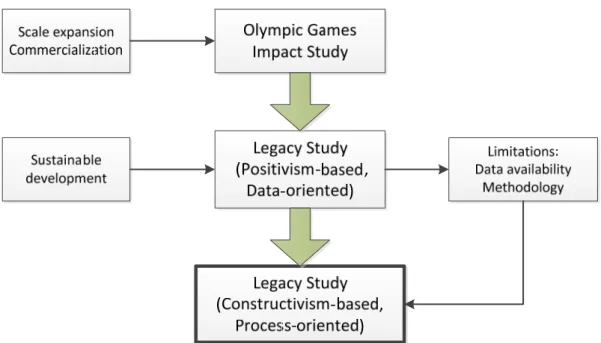
In terms of sport policy analysis, Girginov and Hills refer to the following two views: positivist and constructivist (Girginov and Hills 2009). The positivist or functionalist view is an approach that evaluates the functionality of events or organisations using conventional methods of measurement; however, this approach cannot respond to changes in society. By contrast, a constructivist approach has emerged in response to social changes. The constructivist approach focuses on a process rather than outcomes such as sports participation rates. When considering the Olympic sport legacy, sustainable sport development is a part of a process where people participate in sports and enjoy a better quality of life. With the emergence of the concept of the Olympic legacy, policy involvement in sustainable sport development has become more important issue (Girginov and Hills 2009). By this means, Girginov and Hills justified studying sport policy process through the constructivist view. As the previous legacy studies are considered as an outcome-oriented study with a positivist view, the constructivist approach would be used as an alternative analysis of the Olympic sport legacy to deal with challenges present in the current Olympic legacy study. A qualitative analysis of the
23
sport policy process would also be useful to provide an alternative view on the current legacy study as issues such as data availability and inconsistent methodology in collected data are based on quantitative research. The image below shows the difference between positivism approach and constructivism approach.
Figure 1: Difference between positivism and constructivism approaches
In relation to looking at the process, Chalip provides another view of ‘event leverage model’ focused on strategy and tactics of the event. The majority of impact studies are assessing or evaluating post-event effects focusing on the outcome. Those studies would provide some useful information, but they do not show why those outcomes occurred. In contrast, event leverage study aims to identify the strategies and tactics that can be implemented prior to and during an event in order to generate particular outcomes. By focusing on strategy and tactics in the process from the event bidding to post-event, event leverage study tries to learn in order to improve future leveraging efforts (Chalip 2006).
This approach is applicable when analysing the process of sport policy and its relationship with Olympic Games and sport legacy.
24
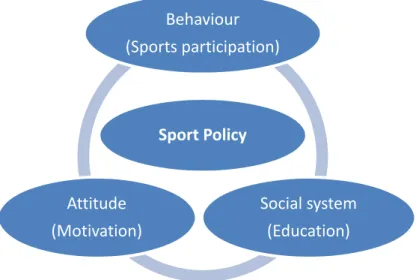
Focusing on the opportunities for sustainable sport legacy development To understand sport legacy development, this study suggests examining how the Olympic Games have affected the process of sport policy development. It is supposed that sport policy would be a primary factor for developing a sport legacy because it could affect people’s behaviour. On the other hand, Girginov and Hills suggested that sport policy should not only address people’s behaviour but also address root social structures and relations. Consequently, the relationship between sport policy and people’s attitude and social system as well as people’s behaviour should be analysed. To explain the concept, this study utilises a culture complex model. The ‘culture complex’ means a group of cultural traits that are all interrelated and dominated by one essential trait. For the sport legacy study, it is assumed that sport policy would be an essential trait which interrelate the social system, people’s behaviours and attitudes. The image below shows the concept:
Figure 2: Cultural complex model applied to sport legacy analysis
The social system refers to, for example, education or other social aspects. People’s behaviour refers to participation in sports or change in lifestyle, whereas people’s attitude reflects individuals’ motivations or values. These factors are all interrelated by the sport policy. Therefore, when analysing how the sport legacy could be developed and measured, the relationship between the factors and sport policy should be examined. Analysing the
Sport Policy Behaviour (Sports participation)
Social system (Education) Attitude
(Motivation)
25
interrelationship would help finding out what has leveraged the sport policy review and what could leverage creating sustainable sport legacy. Those ‘leverages’ can be converted to opportunities for sustainable sport legacy development. Note, however, it is necessary to look at the process for a long period during the analysis, at least from the time of bidding for the Olympic Games to 10 years after the Games, since the term ‘legacy’ in Olympic context means to generate long term positive effects.
The theoretical approach suggested in this study is to focus on event objective (e.g.
sport legacy for the Olympic Games) and to analyse factors and their relationship that would affect achieving the objective (e.g. sport policy, social system, behaviour, and attitude) focused on the process. The ultimate objective of the theoretical approach is to find out opportunities for developing sustainable sport legacy. Those opportunities would be utilised to create future event strategies.
26 Research Objective
According to the pilot study above, sport legacy would be one of the most important legacies that the Olympic Games should leave in the host city/nation. For the development of sport legacy, some researchers suggest that it is important to understand the entire sport development and participation system including the impact of broader public policy initiatives and health promotion strategies. Therefore, this study aims to find out how sport policy could be involved in sport legacy development. In order to understand long- term sport legacy development with a concrete example, this study will deal with a case of the Sydney 2000 Olympic Games. And it will analyse how Australian sport policy was involved in the development of the sport legacy of the Sydney Olympics.
Two tasks are established to achieve the objective. They are 1. Analysing Australian federal sport policy from the time the city of Sydney bid for the 2000 Olympic Games to date based on the theoretical approach, and 2. Evaluating each sport legacy and the legacy actor to find out how sport policy could be involved in the development of sport legacy. The figure 3 below shows the research objective of this study and the tasks to achieve the objective.
Figure 3: Research objective and tasks
To find out how sport policy could be contributed to sport legacy development
Evaluation of sport legacy and the legacy actor
(Legacy evaluation) Sport policy process from
the time of bidding for the Olympics
(Process analysis)
27
Based on the tasks, this thesis consists of three chapters and each chapter describes the tasks respectively as follows.
Chapter 1 Process Analysis of Sport Policy
This chapter describes the result of the first task, analysing sport policy by utilizing the theoretical approach to find out the relationship between sport policy and sport legacy development. It is important to analyse a long-term legacy for sustainable sport legacy development, and therefore this study analyses the sport legacy of the Sydney 2000 Olympic Games, which was held more than 10 years ago, and Australian federal sport policy. This chapter tracks how the sport policy was changed by bidding and hosting the 2000 Olympics, for more than 20 years from around 1990 when the city of Sydney bid for the Games to date. Through this task, some positive and sustainable sport legacies were found even though existing legacy studies could not identify them.
Chapter 2 Evaluation of Sport Legacy and the Legacy Actor
This chapter illustrates the result of the second task, evaluating each sport legacy found in the Chapter 1 with the view of how sport policy was involved in the legacy development. It also identifies the legacy actor for each sustainable sport legacy and evaluates the structure of the legacy development. Those analysis leads up to the final conclusion chapter ‘Findings and Suggestions’.
Chapter 3 Findings and Suggestions
This final chapter summarises the findings in this study and remarks suggestions for future legacy planning and legacy study.
28 Methodology
Case study
This study is a case study focused on the sport legacy of the Sydney 2000 Olympic Games.
It is a good case to look at sustainable sport legacy because it has been more than 10 years since the Games finished. Olympic legacies should be considered from the early stage of the preparation for the long-term legacies. Since the OGI study now requires the bid committees and OCOGs to plan their legacies, the period subject to study is approximately 20 years from the time the city of Sydney bid for the 2000 Olympics (i.e.
around 1992) to date (as of 2013).
Hypothesis testing
This study will utilise the theoretical approach established through the pilot study, which was mentioned in the ‘Theoretical Approach’ section above. That is to focus on the sport legacy of the Sydney 2000 Olympic Games by analysing the process of Australian federal sport policy, and to examine the long-term sport legacies by analysing the relationship between the sport policy and three factors: attitude (e.g. motivation, value) and behaviour (e.g. participation in sports or physical activities) of the people and the social system (e.g.
education). There were limitations in the previous sport legacy studies that analysed outcome data such as sport participation rate. Therefore, this study will look at the process of sport policy and sport legacy development qualitatively by applying the concept of constructivism, and will test the approach whether it works for Olympic legacy study. For details on how the theoretical approach was established, please refer to the Theoretical Approach section.
Systematic review
This study adopts systematic reviews as a primary methodology7. Systematic review is a literature review, but it is different from traditional narrative literature review in several
7 In this study, approximately 250 English literatures were initially analysed and sorted out. Then, 88 were selected for writing this thesis.
29
ways. Narrative literature review tend to be descriptive, do not involve a search of the literature, and thereby often focus on a subset of studies in an area chosen based on availability or author selection (Uman 2011). Thus, it could include an element of selection bias. In contrast, systematic reviews clearly focuses on an objective, systematic and comprehensive search of the literature and research evidence (Weed et al. 2009). It would minimize an element of selection bias. There has been an increasing interest in collating evidence for policy study in recent years and because of this reason systematic review has been promoted and disseminated by organizations especially in the health care field. For example, the Cochrane Collaboration is a widely recognized and respected international and not-for-profit organization that promotes, supports, and disseminates systematic reviews and meta-analyses (Uman 2011). The Cochrane Collaboration provides a handbook for systematic review procedures. According to the handbook, the general steps for systematic review in summary are: 1. establishing research questions and search criteria for them, 2. searching literature systematically based on the criteria, 3.
selecting literature and analysing them, and 4. interpreting the result (Please refer to the online handbook by (The Cochrane Collaboration) for details). Other organization that promotes systematic review is the ‘Evidence Network'. The network was established in 2001 in the United Kingdom to improve evidence-based study of policy and practice in the social sciences. It is known among researchers that the systematic review procedure has been widely used in assessing evidence in the field of sport, recreation and health, in relation to health policy and exercise motivation and/or sport policy and sports participation (Weed et al. 2009).
As such, the methodology ‘systematic review’ would suit best to this study that examines sport policy and its involvement in the development of the sport legacy.
Literature was collected with purpose and direction in accordance with the research objective and two tasks explained in the Objective section. This methodology was also used for the pilot study explained in the Background, Current Challenges in the Legacy Study, and Theoretical Approach sections. Evidences were accumulated based on the findings in the tasks from the first task to the second task through the systematic review.
In other words, literature was collected and analysed for the first task and the findings in the first task directed the second task. Then, the findings were interpreted for the further conclusion. For literature search, this study mainly used online search on search engines
30
and databases with the keywords related to the tasks. The databases used for the literature search are UTS library databases (such as SportDiscuss), TMU library database, Google Scholar, and Mendeley reference search. From those search results, literature were selected for this study by reading through the abstracts. Most of selected literature were digital version collected from the online databases, online bookstores, and corporation websites. Some literature which were not digital or not available on online were collected at the following Olympic study centres:
IOC Olympic Studies Centre (OSC) and the Olympic Games department (OG Knowledge Management section) in Switzerland, through online contact and application submission for the OGKM access
International Centre for Olympic Studies at the University of Western Ontario, in Canada, by visiting the centre
Australian Olympic Study Centre at the University of Technology, Sydney, in Australia, by visiting the centre
Systematic review is an established methodology for policy research, in particular in the health and sport sectors as described above.
Interview (semi‐structured)
This study will conduct interviews in a semi-structured manner as an additional methodology to supplement the result of the systematic reviews. This is because there might be a limitation in finding answers for the research objective by analysing published literature. The interview targets are stakeholders of the Sydney 2000 Olympic Games, for example, those who were involved in the management or program development. All the interviewees were key persons of the Games and professionals in Olympic legacy study.
Therefore, semi-structured interviews were chosen to draw their professional comments, rather than questionnaire-based interviews. The interview summaries are attached in the Appendix. Through the interviews, this study will confirm and supplement the result of systematic reviews. With those methodologies, this study will test the theoretical approach and find the answers to the research questions.