
JAIST Repository: 医療安全意識を涵養する教育プログラムの構成
118
0
0
全文
(2) An Education Program for Cultivating Medical Safety Awareness Haikuo Yu School of Knowledge Science, Japan Advanced Institute of Science and Technology March 2013 Keywords: Incident, Safety Education, Cognitive Characteristic, Faith Opposition, Introspection Support Many highly sophisticated and technical safety plan was introduced based on the analysis towards the previous medical emergencies and incidents. However, even though a safety plan was accordingly introduced and implemented to solve a particular categories of incidents, the issues still exist and can not be completed avoided. Because of the fact that the specially made safety plans for medical scene do not completely avoid the incidents, the provision of training to the paramedic teams in order to improve the risk censoring and critical decision making skills has become the most important topics to study. To ensure the medical safety quality, it is very necessary to scientifically identify the issues at the medical scenes from a professional perspective. From the analysis based on actual medical incidents, as a matter of fact, most of the problems are suggesting that issues happen from the staff themselves. However, with the progress of the technology to avoid human error, medical scenes are becoming more safe than ever, the senses of risk from the patients have been significantly reduced, as a result, it finds the paramedic teams have comparably lost the opportunities to develop their safety knowledge and ability. Because medical safety sense is not a kind of knowledge for a particular area, in the operation of activity participation and implementation, Meta suggests based on the observation, in order to acquire an advanced identifying ability, it's very important to absorb Copyright Ⓒ 2013 by Haikuo Yu. (1).
(3) the lessons from previous failures. Due to the fact that medical failure is not acceptable, it can not happen at medical scene, the method to improve medical safety is more based on an off-the-job training rather than an ideal on-the-job training. Off-the-job method is more based on an artificial environment; learners can only gain the experience from some typical medical incidents that picked purposely for the trainings. It is expected that the ability to reduce risk can be developed, but it is doubtful if a sensibility of potential risk can be successfully brought out. Therefore, in this research, in order to clarify the issue that what kind of education to implement to cultivate the safety knowledge, we will aim to meet the objective of the research through studying these topics. 1. Materialise the concept of medical safety sense. 2. How to carry out the education to improve medical safety sense. 3. The implementation of education materialisation. The approaches brought to solve the above topics consists of three parts. First, the faiths behind the sense of safety and the interview of value reflection. Secondly, the discussions based on the education of faith and value. Last, the meta-rule methodology of faith and value delivery. In this research, through the interviews conducted with the medical safety management, it suggests the different people have different strategies towards the same phenomenon. In another way, the plan brought out by different people can vary due to the different values, the it creates conflicts when making decisions. Because it does not always give you a certain answer because of the different values and faith people hold, this research will develop the topic from a few different points of view. In order to investigate the medical safety plan from different points of view, this research has conducted a few surveys based on the possibilities of carrying out the education on faiths and values. Based on the analysis towards the knowledge of medical safety management, the results suggest a different summary from the researches conducted in the early days. This theory is called meta-rule. Meta-rule is about the characteristics people reflect in the process of studying and knowledge utilisation. Through the characteristics of the thinker, it inducts people how they act to prevent forgetting the relevant knowledge. The research is conducted through the investigation on meta-rule and the change on medical staff's senses of safety and the specification that meta-rule has shown for medical safety purpose, and also the purpose of teaching practical medical ability to facilitate medical scene. As a result, it helps the paramedic team improve their medical safety sense and knowledge. The course created by this research meta-rule is being conducted by Miyazaki University. (2).
(4) among 110 Grade 1 medical students. The research designed a course report to improve the learners study quality also to facilitate then improvement of their safety awareness. The reports summarized from the course are analyzed from four parts. Firstly, the comprehension to meta-rule. Secondly, the impact it has from learning medical safety awareness. Moreover, it is whether they experience the conflicts. The last is whether the intention of the conflicts can be realized. The professors get the result and did some analysis based on it. The research is conducted among the medical students, in order to extend it in future, the courses will be open to nursing students, nurses and medical officers and observations will be carried out. The education of meta-rule cultivate the faith and also advocate the ability of self management, it also plays an important role for students' creativity.. (3).
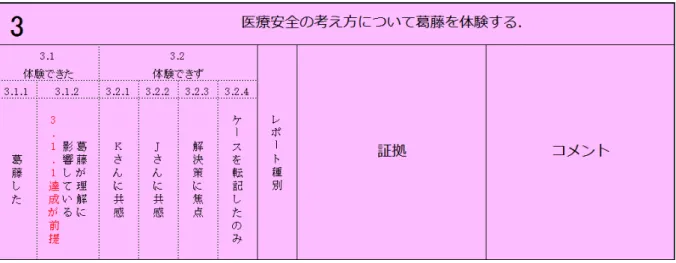
(5) 目 次. 第 1 章 はじめに ··························································· 1 第 2 章 医療者の信念・価値観を踏まえた安全教育 プログラムの構成手法 ·········································· 4 2.1 緒言 ······························································································· 4 2.2 医療安全対策と教育の歴史 ·································································· 5 2.2.1 医療安全推進の背景 ········································································· 5 2.2.2 ヒューマンエラーに注目した安全対策 ····················································· 5 2.2.3 医療におけるヒューマンエラー対策 ························································ 7 2.2.4 病院内での医療安全対策 ··································································· 8 2.3 医療現場の安全意識を向上させることの難しさ ··········································· 10 2.4 安全意識を涵養する教育プログラムの開発 ················································ 11 2.4.1 安全意識の背後にある信念・価値観を顕在化するインタビュー ······················· 12 2.4.2 メタルール:信念・価値観を踏まえての教育内容の検討 ································ 13 2.4.3 信念・価値観が伝達可能なメタルール教育法の構成 ··································· 13 2.5 結言 ······························································································· 14. 第 3 章 医療安全に対する医療安全管理者と現場の 価値観の違いを表出 ············································ 15 3.1 緒言 ······························································································· 15 3.2 医療者の安全意識の違いの顕在化手法 ··················································· 16 3.2.1 思考の組織化による信念・価値観レベルでの対立の顕在化:「思知」 ·············· 16 3.2.2 具体的なインシデント分析・対策への適用 ··············································· 18 3.2.3 医療安全の信念・価値観を表出する手順 ················································ 19. i.
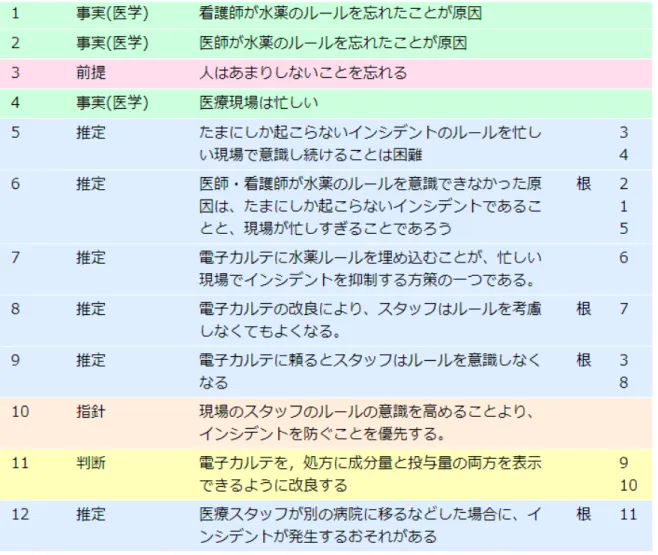
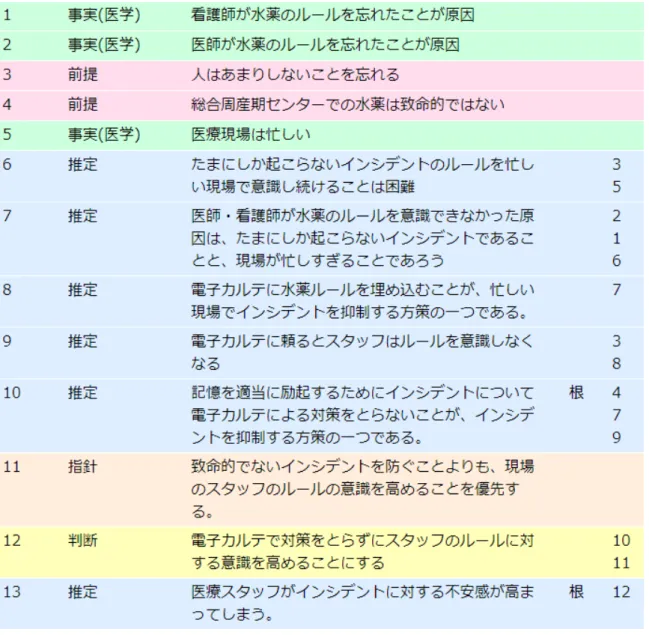
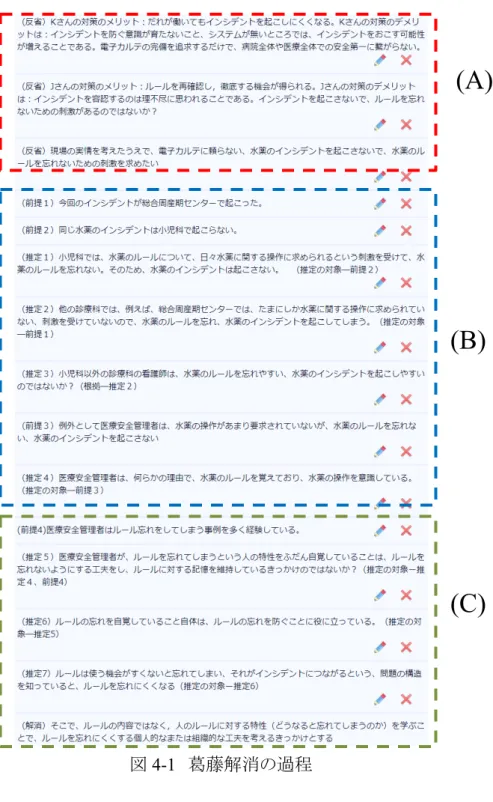
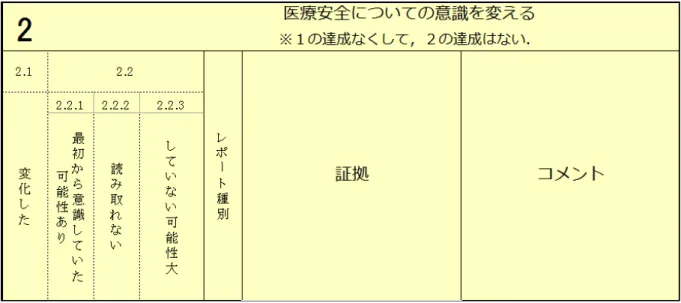
(6) 3.3 水薬インシデントの原因についてのインタビュー ·········································· 21 3.3.1 水薬インシデントとは ········································································· 21 3.3.2 水薬インシデントの発生プロセスの分節化 ··············································· 22 3.3.3 水薬インシデントの発生原因の分節化 ··················································· 23 3.4 対策における指針の違い ····································································· 24 3.5 指針の違いに基づく葛藤 ······································································ 28 3.6 結言 ······························································································· 29. 第 4 章 メタルール教育 ·················································· 30 4.1 緒言 ········································································ 30 4.2 信念・価値観を踏まえた安全教育の可能性調査 ······························· 30 4.3 医療現場で人の特性についての調査と分析 ··································· 31 4.3.1 信念・価値観レベルでの葛藤を踏まえたインタビューの手順 ··················· 31 4.3.2 (A)信念・価値観をふまえた安全対策の振りかえり ···························· 32 4.3.3 (B)医療者のルール記憶に関するインタビュイーの語り ······················· 33 4.3.4 (C)医療安全管理者がルールを忘れない原因の分析························· 35 4.4 メタルール(ルールの学習・運用での人の特性)の教育 ························· 37 4.4.1 人のルールに関する認知特性 ·············································· 37 4.4.2 メタルールと一般化知識の区分 ············································· 39 4.5 人の特性を知ることが,医療安全に対する意識変化に繋がる という仮説(医療安全に対する意義) ··········································· 40 4.6 結言 ········································································ 41. 第 5 章 メタルール講習会の設計 ······································ 43 5.1 緒言 ········································································ 43 5.2 メタルール講習会の全体像 ··················································· 43 5.2.1 メタルール講習会の教育目的と手段のあり方 ································· 43 5.2.2 目的に対する手段のあり方 ················································· 44 5.2.3 メタルール講習会の全体像 ················································· 44 5.2.4 医学生を対象とすることの意義と制約 ········································ 45 5.3 医学生を対象としたメタルール説明 ························································· 46 5.3.1 身近な例によるメタルールの説明·························································· 46 ii.
(7) 5.3.2 あえてメタルールという呼称を使わない ··················································· 46 5.3.3 医療という文脈でのメタルールの説明 ···················································· 47 5.4 受講者に自らの医療安全意識を内省させる ··············································· 47 5.4.1 信念・価値観の対立を見せる意義 ························································· 47 5.4.2 メタルール教育の契機となった信念・価値観の対立の提示 ·························· 48 5.5 アンケートとレポートの設計 ··················································· 49 5.6 結言 ········································································ 51. 第 6 章 メタルール講習の実施と結果の分析 ························ 52 6.1 緒言 ······························································································· 52 6.2 講習会の概要. ······························································· 52. 6.2.1 講習会の実施目的 ··········································································· 52 6.2.2 講習会の実施日と参加者 ··················································· 53 6.2.3 講習会のプログラム構成 ···································································· 54 6.3 分析の方法 ······················································································ 54 6.3.1 分析対象 ······················································································· 54 6.3.2 分析の観点. ······························································· 55. 6.3.3 分析軸1:メタルールの理解 ································································ 56 6.3.4 分析軸2:医療安全意識への影響 ························································· 57 6.3.5 分析軸3:葛藤を体験させられたか ························································ 58 6.3.6 分析軸4:葛藤の意図が認識されたか ···················································· 59 6.4 理想的な学習の例 ·············································································· 60 6.5 分析軸1:メタルールの理解の状況 ·························································· 62 6.5.1 カテゴリ‐1.1:適切に理解した ····························································· 62 6.5.2 カテゴリ‐1.2.1:一般化と誤解している ···················································· 63 6.5.3 カテゴリ‐1.2.2:その他の誤解 ······························································ 63 6.5.4 カテゴリ‐1.2.3:理解していない可能性が高い ·········································· 63 6.5.5 カテゴリ‐1.3:不明············································································ 64 6.6 分析軸2: 医療安全意識への影響 ························································· 64 6.6.1 カテゴリ‐2.1:変化した······································································· 64 6.6.2 カテゴリ‐2.2.1:最初から意識していた可能性あり ······································ 65 iii.
(8) 6.6.3 カテゴリ‐2.2.2:読み取れない ····························································· 66 6.6.4 カテゴリ‐2.2.3:していない可能性が高い ··············································· 66 6.7 分析軸3:葛藤を体験させられたか ·························································· 67 6.7.1 カテゴリ‐3.1.1:葛藤した ··································································· 67 6.7.2 カテゴリ‐3.1.2:葛藤が安全意識に影響している ······································· 68 6.7.3 カテゴリ‐3.2.1:K さんに共感 ······························································ 68 6.7.4 カテゴリ‐3.2.2:J さんに共感 ······························································· 69 6.7.5 カテゴリ‐3.2.3:解決策に焦点 ····························································· 69 6.7.6 カテゴリ‐3.2.4:内容(対策案)を整理したのみ ········································· 70 6.8 分析軸4:葛藤の意図が認識されたか ······················································ 70 6.8.1 カテゴリ‐4.1:葛藤の一般的な理解 ······················································ 70 6.8.2 カテゴリ‐4.2:葛藤を体験することの意義の理解 ······································· 71 6.8.3 カテゴリ‐4.3:理解していない ····························································· 71 6.9 各分析軸のカテゴリ‐分布を踏まえた考察 ················································ 72 6.9.1 カテゴリ‐の分布 ············································································· 72 6.9.2 知識としてのメタルールの教授は概ね良好 ·············································· 72 6.9.3 安全意識への影響を読み解くためのアンケートの必要性····························· 73 6.9.4 葛藤を体験させる方法の改良が必要 ····················································· 73 6.9.5 葛藤を体験する意図の説明が必要 ······················································· 74 6.10 結言 ······························································································· 75. 第 7 章 結論 ································································ 76 謝辞 ··········································································· 79 参考文献 ····································································· 80. iv.
(9) 図 目 次. 図 2-1 インシデントレポート記入例 ······························································· 9 図 2-2 インシデントレポートの報告経路 ························································· 9 図 2-3 インシデントレポートを起点とした安全対策の策定···································· 10 図 3-1 思知の構成画面 ············································································ 17 図 3-2 水薬インシデント分析の事象の整理 ···················································· 22 図 3-3 水薬インシデント分析の問題抽出と背後要因 ········································· 23 図 3-4 看護師 K さんの意見の背景にある論理構造 ·········································· 25 図 3-5 医療情報スタッフ J さんの意見の背景にある論理構造 ······························ 27 図 3-6 現場の医療者の指針,医療安全管理者の指針の葛藤 ······························· 28 図 4-1 葛藤解消の過程 ············································································ 32 図 4-2 Kさん、Jさん対策の反省 ··································································· 33 図 4-3 ルールの忘れについて現場へのインタビュー ········································· 34 図 4-4 医療安全管理者のルールの記憶状況の分析 ········································· 35 図 5-1 受講前アンケート ··········································································· 49 図 5-2 講義振り返りレポート ······································································· 50 図 5-3 課題ウ ························································································· 50 図 5-4 課題エ ························································································ 50 図 5-5 講義振り返り最終レポート ································································· 51 図 6-1 講習会実施の様子 ········································································· 54 図 6-2 分析シートの構造図 ········································································ 56 図 6-3 メタルールの理解の分析シート ··························································· 57 図 6-4 医療安全意識への影響の分析シート ··················································· 58 図 6-5 葛藤体験の分析シート ····································································· 59 v.
(10) 図 6-6 葛藤意図の認識の分析シート ···························································· 60. vi.
(11) 表 目 次. 表 3-1 看護師用思知タグ ·········································································· 18 表 6-1 宮崎大学医学部講習会の参加者データ ··············································· 53. vii.
(12) 第 1 章 はじめに. 第1章 はじめに 数多くの高度に専門的・技術的な安全対策は、過去の医療事故やインシデントの分析か ら作られている。ところが、現実には、またインシデントが発生し、その安全対策を検討し、実 施しても、また同じようなインシデントが発生し報告されてくる。医療現場の安全対策が作ら れても、事故は不幸にも再発してしまうというこのような実情を踏まえ、医療者の自ら積極的 に現場の潜在的な危険を発見し、予防対策を行うという医療安全意識を育つことが重要か つ喫緊の課題になっている。 著者は、医療安全の質を向上する方法論を確立するには、医療現場で起こった問題を知 識科学的視点での考察が必要であると考えている。医療事故が発生し、その分析を行うと、 そこには多くの場合、人間の問題が出てくる。ほとんどの産業分野で事故原因に占める人間 の割合が高いのである。そのため、医療の安全性を高めるには、エラーの原因となる人間の 特性を探求し対策につなげるだけでなく、現場の医療者が医療安全意識を高める必要があ る。しかし、そこには、ヒューマンエラー防止の技術的な対策の進歩に従って、医療現場が 安全になればなるほど、医療者の危険を感じる環境が少なくなり、安全意識が育つ機会失 われるというパラドクスがそこにはある。 医療安全意識とはなんらかの具体的な知識ではなく、自らの活動・業務をメタな視点から 観察するという認知能力であること、このような高次の認知能力の獲得には、失敗の経験が 欠かせない。きわめて単純化すると、失敗体験を提供するには、学習者の失敗を組織がヘ ッジすること、つまりコストを支払う必要がある。しかし、医療では失敗は医療過誤であり、裁 判など多大なコストを強いられる。このようなコストを医療現場ではとても許容できないのであ る。実際的な安全意識を変える解決法としては、On-the-Job ではなく、Off-the-Job での訓練 が一般的である。 しかし、Off-the-Job トレーニングは、あくまで人工的に構成した学習環境において、典型 的な事例についての体験により、事故が他人事ではないといった意識づけや、事故の低減 1.
(13) 第 1 章 はじめに につながる基本的な態度(事故を防止するための基本的な方法)を教育することは期待でき るものの、潜在的な危険を察知するといった能力向上には疑問が残る。 そこで、本研究では、能力としての安全意識を涵養するには、どのような教育が可能であ るかについて解の1つを示すことを目的として設定し、以下の課題に取り組んだ。 (1) 能力としての医療安全意識とは何かを具体化する (2) 能力としての医療安全意識を高めるために何が教育可能かを具体化する (3) 教育をいかに行うのかをコンテンツとして具体化する これらの課題へのアプローチとして、安全意識の背後にある医療者の信念・価値観を顕在 化するインタビュー手法を検討・実施し、それらの信念・価値観を踏まえての教育内容の検 討し、メタルールという具体的な教育内容を策定した。さらにメタルールを、その教育が必要 とされる信念・価値観が伝達できる形での教育プログラムを構成した。 本研究の医療安全管理者へのインタビューでは、インシデントに対し、異なる対策案が違 う人に提供されるという現象を気付いた。つまり、同じ事故に対し、人の価値観の違いにより、 良いと思う対策は異なっており、対策を決める時に、対立がある。時にこれは価値観レベル の問題であり、唯一の答えがないという意味で、正解のない問題である。このような対立を乗 り越え、よりよい対策を探求するには、両者の価値観を認めたうえで、それを超越する視点 で医療安全対策について検討する方法を探求した。 信念・価値観を踏まえた医療安全教育の可能性の調査からは、医療安全管理者がもって いるある種の知識を、個々の安全対策とは別に教育するというものである。この知識を我々 はメタルールと呼んでいる。メタルールは、ルールを学び・運用するときの人の性質について、 それをいかに考慮すれば、ルールそのものの忘れや違反を防げるかという知識である。メタ ルールが医療スタッフの安全意識変化に繋げることを理解し、メタルールの医療安全に対 する意義を説明し、メタルールを医療現場に教育する方針を立て、現場の医療安全意識を 変えることを目指した。 メタルールを教育するための講習のデザインでは、単にメタルールを教えることだけでなく、 受講者の医療安全に対する理解を変えること、つまりメタルールを現場で実践したいという 気持ちを育てることも教育目的としている。 以上の課題とそのアプローチについて、第 2 章では、まず医療安全対策と教育の歴史を 踏まえ、ヒューマンエラーに注目した安全対策及び現在の病院内での医療安全対策がどの ようなものかを概観する。そして、医療現場の医療安全意識を向上させることの難しさを論じ る。この問題に対し、前述の本研究の一連のアプローチ:安全意識の背後にある信念・価値 2.
(14) 第 1 章 はじめに 観を顕在化するインタビュー、信念・価値観を踏まえての教育内容の検討、信念・価値観が 伝達可能なメタルール教育法の構成、の特徴について説明する。 第 3 章では、思考の組織化による信念・価値観レベルでの対立の顕在化を可能にする 「思知」を援用することで、水薬インシデントの原因についてのインタビューを通じて、安全対 策における医療者の信念・価値観の違いを医療者の安全意識の違いとして顕在化する方 法について論じる。 第 4 章では、医療安全に対する医療安全管理者と現場の価値観の違いの顕在化に基づ いて、安全教育の可能性調査を行い、医療現場で人の特性についての分析から得た、メタ ルールと一般化知識という 2 つの概念を区別しながら、安全意識の向上へのメタルール教 育の効果を論じる。さらに、メタルールが医療安全に対する意義を検討する。 第 5 章では、メタルール教育の意義を明確にしたうえで、メタルールを医療現場に教育す るための講習の設計について述べる。対象者(受講者)は医学生であり、彼らの医療安全に 対する意識にいかに良い影響をあたえうるかを、講習の設計を通じて論じる。 第 6 章では、メタルール講習会の実施結果を紹介し、回収したアンケートの分析手法を説 明し、分析結果から、教育プログラムとしての完成度と、今後の改良点について検証する。 そのさいには、教育プログラムの評価法の妥当性・問題点についても考察する。 第 7 章にて、本研究の成果に関して総括し、結論と今後の教育プログラムの改良につい て展望を述べる。. 3.
図
![図 2-1 インシデントレポート記入例([坂本 08]から転載) 図 2-2 インシデントレポートの報告経路 ( [ 坂本 08] から転載)各部署発見者・報告主任当直医夜間管理看護長各診療部科部長看護長看護部長副看護部長院長・副院長・事務長医療安全管理室*緊急時は直ちに報告それ以外は翌朝報告指示報告平日・昼間夜間・休日](https://thumb-ap.123doks.com/thumbv2/123deta/6158349.1082714/20.892.292.644.114.675/インシデントレポート記入例坂から転載インシデントレポート報告.webp)
![図 2-3 インシデントレポートを起点とした安全対策の策定([坂本 08]から転載) 2.3 医療現場の安全意識を向上させることの難しさ 前節で述べたように、医療の安全性を高めるための枠組みは、現場の医療者が危険の種 としてのインシデントを発見し、それをインシデントレポートにより医療安全管理者に伝え、安 全対策が現場に適用されるというサイクルとして構成されている。このサイクルをまわすことで 医療の安全性が高まることが期待できる。しかし、このサイクルには、サイクルが回れば回る ほど、回りにくくなるという特](https://thumb-ap.123doks.com/thumbv2/123deta/6158349.1082714/21.892.212.744.144.518/インシデントレポートインシデントインシデントレポートサイクル.webp)
![表 3-1 看護師用思知タグ 3.2.2 具体的なインシデント分析・対策への適用 専門家に対し知識獲得のためのインタビューを実施すると、彼らは普段の教務で実際に 用いている知識を答えるのではなく、教科書的な知識を答えてしまうという現象が、人工知 能分野でエキスパートシステムを構築するさいに行う知識獲得インタビューの研究[ファイゲ ンバウム 83]で報告されている。 この原因を簡単に説明する。まず、専門家は自らが抱える知識を特に意識することなくタ例)例)例)例)例)根拠例)根拠例)例)例)原因例)](https://thumb-ap.123doks.com/thumbv2/123deta/6158349.1082714/29.892.121.794.145.937/インシデントインタビューエキスパートシステムインタビュー.webp)
+7


関連したドキュメント
Hilbert’s 12th problem conjectures that one might be able to generate all abelian extensions of a given algebraic number field in a way that would generalize the so-called theorem
In 1992 Greither [10] refined the method of Rubin and used the Euler system of cyclotomic units to give an elementary (but technical) proof of the second version of the Main
Proof of Theorem 2: The Push-and-Pull algorithm consists of the Initialization phase to generate an initial tableau that contains some basic variables, followed by the Push and
Proof of Theorem 2: The Push-and-Pull algorithm consists of the Initialization phase to generate an initial tableau that contains some basic variables, followed by the Push and
An easy-to-use procedure is presented for improving the ε-constraint method for computing the efficient frontier of the portfolio selection problem endowed with additional cardinality
Next we tropicalize this algebraic construction and consider T -polarized pyrami- dal arrays (that is, arrays satisfying octahedral relations). As a result we get several
The proof uses a set up of Seiberg Witten theory that replaces generic metrics by the construction of a localised Euler class of an infinite dimensional bundle with a Fredholm
We study the classical invariant theory of the B´ ezoutiant R(A, B) of a pair of binary forms A, B.. We also describe a ‘generic reduc- tion formula’ which recovers B from R(A, B)
