INTRODUCTION
Traditional Japanese meal patterns have been diversified due to globalization. The rice-as-a-main-dish traditional Japanese food style has decreased and been replaced by a side-dishes-main-dish Western food style. Typical Western-style foods, including bread and pasta, and multinational foods have been incorporated into the Japanese diet.
Changes have also been seen in food ingredients; meats, eggs, and fruit have been added to the more traditional rice, fish, vegetables, and soybeans. Recipes for fry-ups and deep-fried foods using oils and fats have increased. In terms of seasoning, sesame and various other spices have been added to the traditional Japanese seasonings of salt, sugar, miso, soy sauce, and vinegar, and sauce and dressing have been incorporated into people’s daily eating habits. These changes in dishes and meal patterns have increased the intake of animal products, particularly meat, and oils and fats; the initial result was that people’s diets became richer in nutrients, and Japanese nourishment improved.
However, the intake of carbohydrates was reduced, producing a
decrease in the grain energy ratio and an increase in the lipid energy ratio. This has resulted in problems such as increased obesity, metabolic syndrome, and other lifestyle-related diseases.
Japanese food was registered as part of Japan’s Intangible Cultural Heritage with UNESCO in December 2013. It is popular not only in Japan but also around the world. However, Western and Chinese foods are now routine parts of daily life in Japan. Through previous cooking studies, we found that the salt content, the quantity of oils and fats used, and the energy in Japanese foods are very different from those in Western and Chinese foods.
The present study examined the effects of the feeding of these three types of foods on the serum and liver lipid levels in rats. The menus of these experimental foods used in this study were considered to represent foods that are commonly combined in the diets humans eat.
The three types of experimental foods prepared for the present study were characterized by their cooking method, ingredients, and seasonings, with the stipulation that they contained an equivalent 学術論文
Effects of the Feeding of Different Types of Diets on Serum and Liver Lipid Levels in Rats:
Comparison among Japanese, Western- and Chinese-Style Foods with Equivalent Caloric Content
*1ラットの血清および肝臓脂質レベルに対する異なる種類の食餌摂取の影響㻌
-カロリーを等価とした日本料理・西洋料理・中華料理の比較-㻌
Wakana IZUMIYAMA,*2,3 Natsumi KANAZAWA,*2,3 Hiroko KOHAMA,*2,3 Chika SHINOGI,*2,3 Shiori SETTAI,*2,3 Sayuri CHIBA*2,3 and Masashi KAWASAKI*2,4
泉山若菜,金澤奈津美,小濱広子,篠木千佳,摂待詩織,千葉さゆり,川崎雅志
The effects of the feeding of different types of foods on serum and liver lipid levels were studied in rats. Rats were fed an experimental diet prepared from Japanese, Western, or Chinese foods.The menus of these experimental foods used in this study were considered to represent foods that are commonly combined in the diets humans eat with the stipulation that they contained an equivalent number of calories. The absolute epididymal adipose tissue weight was not significantly different among the three experimental diet groups, although the relative weight in the Western food group was significantly higher than that in the Japanese food group, and that in the Chinese food group was higher but without a significant difference as compared to the Japanese food group. The serum triglyceride concentration and liver triglyceride content in the Western food group were significantly higher than those in the Japanese food group, and those in the Western food group were higher but without a significant difference as compared to the Chinese food group. The liver cholesterol content in the Western and Chinese food groups was significantly higher than that in the Japanese food group. These results suggest that the feeding of different types of diets prepared from Japanese, Western, and Chinese foods had different effects on the serum and liver lipid levels in rats, and that the different actions might be due, at least in part, to the different compositions of the ingredients of the three experimental diets. The effects of the foods may have been a result of the nutritional diversity of the ingredients of the food; therefore, it is important to consume a well-balanced diet.
Keywords: Japanese, Western, and Chinese foods, liver lipid, serum lipid 日本料理・西洋料理・中華料理,肝臓脂質,血清脂質
*1 This study was conducted as a part of the Special Training of Food and Nutrition Major, Science of Living Department.
*2 Food and Nutrition Major, Science of Living Department.
*3 Co-first authors. These authors contributed equally to this work.
*4 Corresponding author.
Abbreviations: DHA, docosahexaenoic acid; EPA, eicosapentaenoic acid; HDL, high-density lipoprotein; HMG-CoA,
3-hydroxy-3-methylglutaryl-CoA; LDL, low-density lipoprotein; NEFA, nonesterified fatty acid; TBARS, thiobarbituric acid-reactive substance;
VLDL, very-low-density lipoprotein.
number of calories.
MATERIALS AND METHODS
Animals and diets. This animal experiment was conducted with the approval of the Iwate Prefectural University Research Ethics Committee.
Male Wistar rats (3-wk-old, Charles River Laboratories Japan, Inc., Kanagawa, Japan) were individually housed in stainless steel cages with wire bottoms in a room with the following conditions: a temperature of 22±2 ℃; relative humidity of 60±5 %; and a 12-h light cycle (0800-2000). Rats were fed a stock pellet diet (MF; Oriental Yeast Co., Ltd., Tokyo, Japan) for 4 days. Subsequently, the rats were divided into three groups (n=5) with similar body weights and were fed the experimental diets. In the present study, the experimental diets were prepared from Japanese, Western, and Chinese foods, andthe menus of these experimental foods used in this study were considered to represent foods that are commonly combined in the diets humans eat.
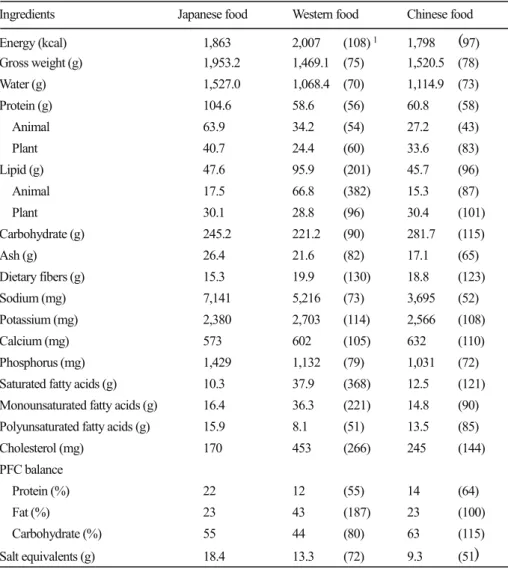
The experimental foods were cooked, freeze-dried, and powdered. The menu of the experimental foods and their compositions1,2) are shown in Table 1 and 2, respectively; composition of the experimental diets supplied to the rats are shown in Table 3. The three experimental diets were designed so as to provide almost an equivalent number of calories.
The rats were kept for 21 days in total. The experimental diet and water were available at all times. Urine was collected, and its volume was measured for the experimental period. Animals were deprived of their
diet at 0900 on the 21st day but allowed free access to water until they were sacrificed, which was performed 4 h later. Blood was collected from the heart and left to clot at room temperature so that serum could be obtained. The liver and epididymal adipose tissue were quickly removed, washed with cold 0.9% NaCl, blotted on filter paper, and weighed. The serum and liver were stored at 30℃ until lipid concentration analyses were performed. Aliquots of the liver were also preserved in methanol and stored at 4℃ until analyses of the lipid content were performed.
Lipid analyses. Serum total cholesterol, HDL-cholesterol, triglyceride, phospholipid, and NEFA concentrations were determined by an enzymatic method using a Cholesterol E-test Wako, HDL-Cholesterol E-test Wako, Triglyceride E-test Wako, Phospholipid C-test Wako, and NEFA-C test Wako, respectively. All test kits were obtained from Wako Pure Chemical Industries, Ltd., Osaka, Japan. The difference between the total cholesterol concentration and the HDL-cholesterol concentration was regarded as the (VLDL+LDL)-cholesterol concentration. The ratio of the (VLDL+LDL)-cholesterol concentration to the HDL-cholesterol concentration is designated as the atherogenic index. The ratio of the HDL-cholesterol concentration to the total cholesterol concentration is designated as the HDL-cholesterol ratio.
Total lipids from the liver were extracted according to the procedure described by Folch et al.3) After portions of the chloroform phase had been dried under nitrogen, cholesterol,4) triglyceride,5) and Table 1. Menu of experimental diets.
Japanese food Western food Chinese food Breakfast Steamed rice Muffins Paddy rice gruels
Baked chum salmon Soft rolls with strawberry jam and orange marmalade Bread type rolls Simmered nama-age Coffee Pickled cucumber Vinegared bean sprout and wakame Milk
Miso soup with eggplant and welsh onion
Lunch Buckwheat noodles Chili con carne Chinese soup Sliced raw tuna Carrot and tuna salad Namul Seasoned ground chicken Mushroom sauté Manju Nameko with grated radish Ham and vegetable salty pound cake Mapo tofu Toasted purple laver Green peas potage
Grated radish with roasted sesame seeds Condiment
Dinner Steamed rice Crab cream croquette with tomato source Bowl of rice with Chinese sauce Ginger-fried pork with cabbage and tomato Vichyssoise Candied sweet potatoes Lightly-pickled cucumber Blancmange Tomato and wakame salad Miso soup with spinach and abra-age Hot and sour soup Snack Shiratama Almond pudding
phospholipid6) contents were determined.
The serum and liver thiobarbituric acid-reactive substance (TBARS) values were measured according to the method described by
Yagi7) and Mihara et al.,8) respectively.
Statistical analyses. Results were expressed as the mean ± standard error. Statistical analysis was carried out by one-way analysis of Table 2. Composition of menu of experimental diets. (per day)
Ingredients Japanese food Western food Chinese food Energy (kcal) 1,863 2,007 (108) 1 1,798 (97) Gross weight (g) 1,953.2 1,469.1 (75) 1,520.5 (78) Water (g) 1,527.0 1,068.4 (70) 1,114.9 (73) Protein (g) 104.6 58.6 (56) 60.8 (58) Animal 63.9 34.2 (54) 27.2 (43) Plant 40.7 24.4 (60) 33.6 (83) Lipid (g) 47.6 95.9 (201) 45.7 (96) Animal 17.5 66.8 (382) 15.3 (87) Plant 30.1 28.8 (96) 30.4 (101) Carbohydrate (g) 245.2 221.2 (90) 281.7 (115) Ash (g) 26.4 21.6 (82) 17.1 (65) Dietary fibers (g) 15.3 19.9 (130) 18.8 (123) Sodium (mg) 7,141 5,216 (73) 3,695 (52) Potassium (mg) 2,380 2,703 (114) 2,566 (108) Calcium (mg) 573 602 (105) 632 (110) Phosphorus (mg) 1,429 1,132 (79) 1,031 (72) Saturated fatty acids (g) 10.3 37.9 (368) 12.5 (121) Monounsaturated fatty acids (g) 16.4 36.3 (221) 14.8 (90) Polyunsaturated fatty acids (g) 15.9 8.1 (51) 13.5 (85) Cholesterol (mg) 170 453 (266) 245 (144) PFC balance
Protein (%) 22 12 (55) 14 (64) Fat (%) 23 43 (187) 23 (100) Carbohydrate (%) 55 44 (80) 63 (115) Salt equivalents (g) 18.4 13.3 (72) 9.3 (51)
1 % of Japanese food diet.
Table 3. Composition of experimental diets. (per 100g)
Ingredients Japanese food Western food Chinese food Energy (kcal) 437 501 443 Protein (g) 24.5 14.6 15.0 Lipid (g) 11.2 23.9 11.3 Carbohydrate (g) 57.5 55.2 69.5 Ash (g) 6.2 5.4 4.2 Dietary fibers (g) 3.6 5.0 4.6 Salt equivalents (g) 4.3 3.3 2.3 Saturated fatty acids (g) 2.4 9.5 3.1 Monounsaturated fatty acids (g) 3.8 9.1 3.6 Polyunsaturated fatty acids (g) 3.7 2.0 3.3 Cholesterol (mg) 39.9 113.1 60.4 number of calories.
MATERIALS AND METHODS
Animals and diets. This animal experiment was conducted with the approval of the Iwate Prefectural University Research Ethics Committee.
Male Wistar rats (3-wk-old, Charles River Laboratories Japan, Inc., Kanagawa, Japan) were individually housed in stainless steel cages with wire bottoms in a room with the following conditions: a temperature of 22±2 ℃; relative humidity of 60±5 %; and a 12-h light cycle (0800-2000). Rats were fed a stock pellet diet (MF; Oriental Yeast Co., Ltd., Tokyo, Japan) for 4 days. Subsequently, the rats were divided into three groups (n=5) with similar body weights and were fed the experimental diets. In the present study, the experimental diets were prepared from Japanese, Western, and Chinese foods, andthe menus of these experimental foods used in this study were considered to represent foods that are commonly combined in the diets humans eat.
The experimental foods were cooked, freeze-dried, and powdered. The menu of the experimental foods and their compositions1,2) are shown in Table 1 and 2, respectively; composition of the experimental diets supplied to the rats are shown in Table 3. The three experimental diets were designed so as to provide almost an equivalent number of calories.
The rats were kept for 21 days in total. The experimental diet and water were available at all times. Urine was collected, and its volume was measured for the experimental period. Animals were deprived of their
diet at 0900 on the 21st day but allowed free access to water until they were sacrificed, which was performed 4 h later. Blood was collected from the heart and left to clot at room temperature so that serum could be obtained. The liver and epididymal adipose tissue were quickly removed, washed with cold 0.9% NaCl, blotted on filter paper, and weighed. The serum and liver were stored at 30℃ until lipid concentration analyses were performed. Aliquots of the liver were also preserved in methanol and stored at 4℃ until analyses of the lipid content were performed.
Lipid analyses. Serum total cholesterol, HDL-cholesterol, triglyceride, phospholipid, and NEFA concentrations were determined by an enzymatic method using a Cholesterol E-test Wako, HDL-Cholesterol E-test Wako, Triglyceride E-test Wako, Phospholipid C-test Wako, and NEFA-C test Wako, respectively. All test kits were obtained from Wako Pure Chemical Industries, Ltd., Osaka, Japan. The difference between the total cholesterol concentration and the HDL-cholesterol concentration was regarded as the (VLDL+LDL)-cholesterol concentration. The ratio of the (VLDL+LDL)-cholesterol concentration to the HDL-cholesterol concentration is designated as the atherogenic index. The ratio of the HDL-cholesterol concentration to the total cholesterol concentration is designated as the HDL-cholesterol ratio.
Total lipids from the liver were extracted according to the procedure described by Folch et al.3) After portions of the chloroform phase had been dried under nitrogen, cholesterol,4) triglyceride,5) and Table 1. Menu of experimental diets.
Japanese food Western food Chinese food Breakfast Steamed rice Muffins Paddy rice gruels
Baked chum salmon Soft rolls with strawberry jam and orange marmalade Bread type rolls Simmered nama-age Coffee Pickled cucumber Vinegared bean sprout and wakame Milk
Miso soup with eggplant and welsh onion
Lunch Buckwheat noodles Chili con carne Chinese soup Sliced raw tuna Carrot and tuna salad Namul Seasoned ground chicken Mushroom sauté Manju Nameko with grated radish Ham and vegetable salty pound cake Mapo tofu Toasted purple laver Green peas potage
Grated radish with roasted sesame seeds Condiment
Dinner Steamed rice Crab cream croquette with tomato source Bowl of rice with Chinese sauce Ginger-fried pork with cabbage and tomato Vichyssoise Candied sweet potatoes Lightly-pickled cucumber Blancmange Tomato and wakame salad Miso soup with spinach and abra-age Hot and sour soup Snack Shiratama Almond pudding
variance followed by Fisher’s protected least significant difference (PLSD) test using the SPSS Statistics, version 22 (IBM Japan, Ltd., Tokyo, Japan). Differences were considered significant at p < 0.05.
RESULTS
Table 4 shows the initial body weight, food, calorie and water intakes, body weight gain, and urinary excretion for the duration of the 21 days of experimental feeding, and the weight of the liver at the end of the experimental feeding period. The food intake and body weight gain were not significantly different among the three experimental diet groups. The calorie intake in the Western food group was significantly higher than that in the Japanese and Chinese food groups. The water
intake in the Japanese food group was higher but without a significant difference as compared to the Western and Chinese food groups. The urinary excretion in the Japanese food group was significantly higher than that in the Chinese food group, and that in the Japanese food group was higher but without a significant difference as compared to the Western food group. The absolute liver weight was not significantly different among the three experimental diet groups, whereas the relative liver weight in the Western and Chinese food groups was significantly higher than that in the Japanese food group.
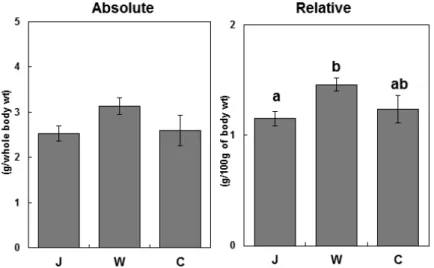
Figure 1 shows the weight of the epididymal adipose tissue at the end of the experimental feeding period. The absolute weight was not significantly different among the three experimental diet groups;
Table 4. Initial body weight, food, calorie and water intakes, body weight gain, urinary excretion, and liver weight in rats fed different types of diets.
Measurement Japanese food Western food Chinese food Initial body weight (g) 83.1 ± 1.5 84.5 ± 2.5 81.9 ± 1.5 Food intake (g/21d) 328.1 ± 5.1 332.5 ± 6.5 331.4 ± 12.0 Calorie intake (kcal/21d) 1,434 ± 22 a 1,666 ± 33 b 1,468 ± 53 a Water intake (ml/21d) 806.1 ± 72.6 751.7 ± 49.2 758.4 ± 58.5 Body weight gain (g/21d) 136.0 ± 3.6 130.3 ± 5.3 125.4 ± 8.8 Urinary excretion (ml/21d) 437.6 ± 60.1 a 292.0 ± 52.3 ab 255.0 ± 19.8 b Liver weight
Absolute (g/whole body weight) 9.38 ± 0.34 9.88 ± 0.48 9.40 ± 0.42 Relative (g/100g of body weight) 4.28 ± 0.10 a 4.59 ± 0.09 b 4.54 ± 0.03 b Values represent the means ± standard errors for five rats.Values not sharing a common letter are significantly different at p < 0.05 by one-way analysis of variance followed by Fisher’s protected least significant difference (PLSD) test.
Fig. 1. Effects of the feeding of different types of diets on absolute and relative epididymal adipose tissue weight in rats. Values represent the means for five rats. Vertical bars indicate standard errors. Values not sharing a common letter are significantly different at p < 0.05 by one-way analysis of variance followed by Fisher’s protected least significant difference (PLSD) test. J, Japanese food diet group; W, Western food diet group; C, Chinese food diet group.
however, the relative weight in the Western food group was significantly higher than that in the Japanese food group, and that in the Chinese food group was higher but without a significant difference as compared to the Japanese food group.
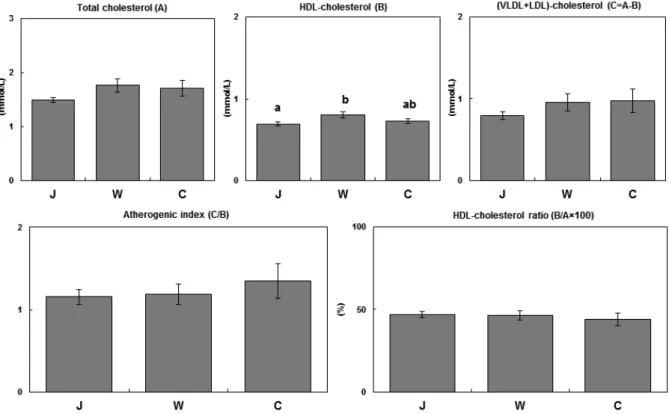
Serum cholesterol concentrations are shown in Figure 2. The serum total cholesterol concentration was not significantly different among the three experimental diet groups. As for the lipoprotein cholesterol concentrations, the HDL-cholesterol concentration in the Japanese food Fig. 2. Effects of the feeding of different types of diets on serum cholesterol concentration, atherogenic index, and high-density lipoprotein (HDL)-cholesterol ratio in rats. Values represent the means for five rats. Vertical bars indicate standard errors. Values not sharing a common letter are significantly different at p < 0.05 by one-way analysis of variance followed by Fisher’s protected least significant difference (PLSD) test. J, Japanese food diet group; W, Western food diet group; C, Chinese food diet group.
Fig. 3. Effects of the feeding of different types of diets on serum triglyceride, phospholipid, and nonesterified fatty acid (NEFA) concentrations in rats. Values represent the means for five rats. Vertical bars indicate standard errors. Values not sharing a common letter are significantly different at p
< 0.05 by one-way analysis of variance followed by Fisher’s protected least significant difference (PLSD) test. J, Japanese food diet group; W, Western food diet group; C, Chinese food diet group.
variance followed by Fisher’s protected least significant difference (PLSD) test using the SPSS Statistics, version 22 (IBM Japan, Ltd., Tokyo, Japan). Differences were considered significant at p < 0.05.
RESULTS
Table 4 shows the initial body weight, food, calorie and water intakes, body weight gain, and urinary excretion for the duration of the 21 days of experimental feeding, and the weight of the liver at the end of the experimental feeding period. The food intake and body weight gain were not significantly different among the three experimental diet groups. The calorie intake in the Western food group was significantly higher than that in the Japanese and Chinese food groups. The water
intake in the Japanese food group was higher but without a significant difference as compared to the Western and Chinese food groups. The urinary excretion in the Japanese food group was significantly higher than that in the Chinese food group, and that in the Japanese food group was higher but without a significant difference as compared to the Western food group. The absolute liver weight was not significantly different among the three experimental diet groups, whereas the relative liver weight in the Western and Chinese food groups was significantly higher than that in the Japanese food group.
Figure 1 shows the weight of the epididymal adipose tissue at the end of the experimental feeding period. The absolute weight was not significantly different among the three experimental diet groups;
Table 4. Initial body weight, food, calorie and water intakes, body weight gain, urinary excretion, and liver weight in rats fed different types of diets.
Measurement Japanese food Western food Chinese food Initial body weight (g) 83.1 ± 1.5 84.5 ± 2.5 81.9 ± 1.5 Food intake (g/21d) 328.1 ± 5.1 332.5 ± 6.5 331.4 ± 12.0 Calorie intake (kcal/21d) 1,434 ± 22 a 1,666 ± 33 b 1,468 ± 53 a Water intake (ml/21d) 806.1 ± 72.6 751.7 ± 49.2 758.4 ± 58.5 Body weight gain (g/21d) 136.0 ± 3.6 130.3 ± 5.3 125.4 ± 8.8 Urinary excretion (ml/21d) 437.6 ± 60.1 a 292.0 ± 52.3 ab 255.0 ± 19.8 b Liver weight
Absolute (g/whole body weight) 9.38 ± 0.34 9.88 ± 0.48 9.40 ± 0.42 Relative (g/100g of body weight) 4.28 ± 0.10 a 4.59 ± 0.09 b 4.54 ± 0.03 b Values represent the means ± standard errors for five rats.Values not sharing a common letter are significantly different at p < 0.05 by one-way analysis of variance followed by Fisher’s protected least significant difference (PLSD) test.
Fig. 1. Effects of the feeding of different types of diets on absolute and relative epididymal adipose tissue weight in rats. Values represent the means for five rats. Vertical bars indicate standard errors. Values not sharing a common letter are significantly different at p < 0.05 by one-way analysis of variance followed by Fisher’s protected least significant difference (PLSD) test. J, Japanese food diet group; W, Western food diet group; C, Chinese food diet group.
group was significantly lower than that in the Western food group. On the other hand, there was no significant difference in the (VLDL+LDL)-cholesterol concentration among the three experimental diet groups. Neither the atherogenic index nor HDL-cholesterol ratio were significantly different among the three experimental diet groups.
Figure 3 shows the serum triglyceride, phospholipid, and NEFA concentrations. The serum triglyceride concentration in the Western food group was significantly higher than that in the Japanese food group, whereas that in the Western food group was higher but without a significant difference as compared to the Chinese diet group. The
serum phospholipid concentration was not significantly different among the three experimental diet groups. The serum NEFA concentration in the Western food group was significantly higher than that in the Chinese food group, whereas that in the Western food group was higher but without a significant difference as compared to the Japanese diet group.
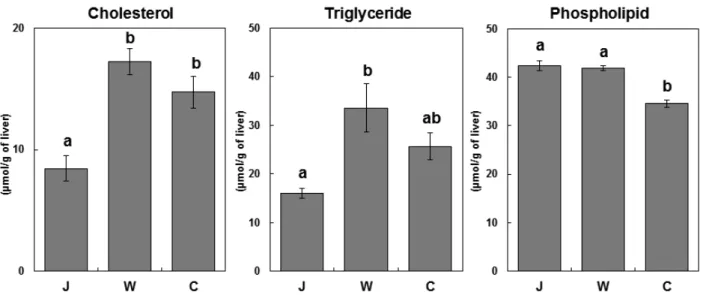
Liver lipid contents are shown in Figure 4. The liver cholesterol content in the Western and Chinese food groups was significantly higher than that in the Japanese food group. The liver triglyceride content in the Western food group was significantly higher than that in Fig. 4. Effects of the feeding of different types of diets on liver lipid contents in rats. Values represent the means for five rats. Vertical bars indicate standard errors. Values not sharing a common letter are significantly different at p < 0.05 by one-way analysis of variance followed by Fisher’s protected least significant difference (PLSD) test. J, Japanese food diet group; W, Western food diet group; C, Chinese food diet group.
Fig. 5. Effects of the feeding of different types of diets on serum and liver thiobarbituric acid-reactive substance (TBARS) values in rats. Values represent the means for five rats. Vertical bars indicate standard errors. J, Japanese food diet group; W, Western food diet group; C, Chinese food diet group.
the Japanese food group, whereas that in the Western food group was higher but without a significant difference as compared to the Chinese food group. The liver phospholipid content in the Japanese and Western food groups was significantly higher than that in the Chinese food group.
Serum and liver TBARS values are shown in Fig. 5. Both the serum and liver TBARS values were not significantly different among the three experimental diet groups.
DISCUSSION
In the present study, experimental diets prepared from Japanese, Western, and Chinese foods affected the serum and liver lipid levels in rats. The serum triglyceride concentration in the Western food group was significantly higher than that in the Japanese food group. Surplus ingestion of saturated fatty acids is known to increase the serum triglyceride concentration. In the present study, the use of oils and fats and the saturated fatty acids content in the Western food were highest of the three experimental diets; as a result, the serum triglyceride concentration in the Western food group was found to be significantly higher than that in the Japanese food group. Furthermore, it is known that surplus ingestion of oils and fats increases the accumulation of triglyceride, and surplus ingestion of saturated fatty acids elevates the cholesterol synthesis in the liver. The use of oils and fats, including butter, in the Japanese, Western, and Chinese foods were 8.0 g, 44.8 g, and 19.5 g per day, respectively. Therefore, the triglyceride and cholesterol contents in the liver and the relative weight of epididymal adipose tissue in the Western food group were found to be the highest among the three experimental diet groups.
The serum HDL-cholesterol concentration in the Japanese food group was significantly lower than that in the Western food group.
Olive oil and butter were the oils and fats mainly used in the Western food, while the Japanese food mainly used a blend of vegetable and fish oil. Olive oil is rich in oleic acid, a monounsaturated fatty acid, while fish oil is rich in eicosapentaenoic acid (EPA) and docosahexaenoic acid (DHA). Olive oil is known to increase the serum LDL-cholesterol concentration without changing the serum HDL-cholesterol concentration.9) On the other hand, fish oil is known to decrease the serum cholesterol concentration, as the fatty acids EPA and DHA decrease both the HDL-cholesterol and non-HDL-cholesterol ((VLDL+LDL)-cholesterol) concentrations in the serum.10) Therefore, the serum HDL-cholesterol concentration in the Japanese food group was found to be significantly lower than that in the Western food group.
The Japanese food group had significantly reduced the liver cholesterol and triglyceride contents as compared to the Western food group. The Japanese food contained fish, which, as mentioned, contains EPA and DHA. The intake of oils and fats from fish and shellfish, including those in soup stock, in the Japanese, Western, and Chinese food groups during the experimental period were 1.2 g, 0.1 g, and 0.1 g
per 100 g of diet, respectively. The EPA and DHA contents are high in fish oil as compared to other oils and fats. Many previous studies have shown the beneficial effects of EPA and DHA on lipid metabolism.
One study reported that a fish oil diet reduced hepatic 3-hydroxy-3-methylglutaryl-CoA (HMG-CoA) reductase activity.11) HMG-CoA reductase regulates the cholesterol biosynthesis, and the change in the liver cholesterol content is considered to be due to the change in the hepatic HMG-CoA reductase activity. Other investigators have demonstrated that EPA and DHA suppressed the hepatic fatty acid12) and triglyceride13) syntheses. The reduction of the liver cholesterol and triglyceride contents resulting from the consumption of the Japanese food diet is likely due, at least in part, to the EPA and DHA in fish.
In the present study, the urinary excretion in the Japanese food group was highest of the three experimental diet groups, and was significantly higher than that in the Chinese food group. The salt equivalents in the Japanese, Western and Chinese foods were 18.4 g, 13.3 g, and 9.3 g per day, respectively. The increase in the urinary excretion was accompanied by an increase in the water intake due to the increased salt intake. In the present study, the water intake in the Japanese food group was highest of the three experimental diet groups;
therefore, the urinary excretion in the Japanese food group was found to be the highest among the three experimental diet groups.
In conclusion, the feeding of diets prepared from Japanese, Western, and Chinese foods had different effects on the serum and liver lipid levels in rats. The three experimental diets prepared in the present study contained an equivalent number of calories, although the compositions of proteins and lipids (fatty acids), and the PFC (protein, fat, and carbohydrate) balance were different. Therefore, the different actions investigated in the present study might be due, at least in part, to the different ingredients contained in the three experimental diets. These results also indicate that the effects of foods may result from the nutritional diversity of the various ingredients of foods; therefore, it is important to consume a well-balanced diet.
REFERENCES
1) Standard tables of food composition in Japan 2010, Council for Science and Technology, Ministry of Education, Culture, Sports, Science and Technology, Japan (2010).
2) Standard tables of food composition in Japan, Fifth revised and enlarged edition, Fatty acids section, Council for Science and Technology, Ministry of Education, Culture, Sports, Science and Technology, Japan (2005).
3) Folch, J., Lees, M., and Sloane-Stanley, G. H., A simple method for the isolation and purification of total lipides from animal tissues, J.
Biol. Chem., 226, 497-509 (1957).
4) Zak, B., Simple rapid microtechnic for serum total cholesterol, Am. J.
Clin. Path., 27, 583-588 (1957).
group was significantly lower than that in the Western food group. On the other hand, there was no significant difference in the (VLDL+LDL)-cholesterol concentration among the three experimental diet groups. Neither the atherogenic index nor HDL-cholesterol ratio were significantly different among the three experimental diet groups.
Figure 3 shows the serum triglyceride, phospholipid, and NEFA concentrations. The serum triglyceride concentration in the Western food group was significantly higher than that in the Japanese food group, whereas that in the Western food group was higher but without a significant difference as compared to the Chinese diet group. The
serum phospholipid concentration was not significantly different among the three experimental diet groups. The serum NEFA concentration in the Western food group was significantly higher than that in the Chinese food group, whereas that in the Western food group was higher but without a significant difference as compared to the Japanese diet group.
Liver lipid contents are shown in Figure 4. The liver cholesterol content in the Western and Chinese food groups was significantly higher than that in the Japanese food group. The liver triglyceride content in the Western food group was significantly higher than that in Fig. 4. Effects of the feeding of different types of diets on liver lipid contents in rats. Values represent the means for five rats. Vertical bars indicate standard errors. Values not sharing a common letter are significantly different at p < 0.05 by one-way analysis of variance followed by Fisher’s protected least significant difference (PLSD) test. J, Japanese food diet group; W, Western food diet group; C, Chinese food diet group.
Fig. 5. Effects of the feeding of different types of diets on serum and liver thiobarbituric acid-reactive substance (TBARS) values in rats. Values represent the means for five rats. Vertical bars indicate standard errors. J, Japanese food diet group; W, Western food diet group; C, Chinese food diet group.
5) van Handel, E., Suggested modifications of the micro determination of triglycerides, Clin. Chem., 7, 249-251 (1961).
6) Chen, P. S., Toribara, T. Y., and Warner, H., Microdetermination of phosphorus, Anal. Chem., 28, 1756-1758 (1956).
7) Yagi, K., A simple fluorometric assay for lipoperoxide in blood plasma, Biochem Med., 15, 212-216 (1976).
8) Mihara, M., and Uchiyama, M., Determination of malonaldehyde precursor in tissues by thiobarbituric acid test, Anal. Biochem., 86, 271-278 (1978).
9) Pedersen, A., Baumstark, M. W., Marckmann, P., Gylling, H., Sandström, B., An olive oil-rich diet results in higher concentrations of LDL cholesterol and a higher number of LDL subfraction particles than rapeseed oil and sunflower oil diets, J. Lipid Res., 41, 1901-1911 (2000).
10) Kawasaki, M., Oikawa, T., Kudo, C., Fujisawa, A., and Mizuno, S.,
Effects of the feeding of oil and fat derived from different kinds of foods on serum and liver lipid levels in rats, Bulletin of Morioka Junior College, Iwate Prefectural University, 15, 21-27 (2013).
11) Du, C., Sato, A., Watanabe, S., Wu, C. Z., Ikemoto, A., Ando, K., Kikugawa, K., Fujii, Y., and Okuyama, H., Cholesterol synthesis in mice is suppressed but lipofuscin formation is not affected by long-term feeding of n-3 fatty acid-enriched oils compared with lard and n-6 fatty acid-enriched oils, Biol. Pharm. Bull., 26, 766-70 (2003).
12) Yoshida, H., Ikeda, I., Tomooka, M., Mawatari, M., Imaizumi, K., Seto, A., and Tsuji, H., Effect of dietary seal and fish oils on lipid metabolism in hamsters, J. Nutr. Sci. Vitaminol., 47, 242-247 (2001).
13) Ribeiro, A., Mangeney, M., Cardot, P., Loriette, C., Rayssiguier, Y., Chambaz, J., and Bereziat, G., Effect of dietary fish oil and corn oil on lipid metabolism and apolipoprotein gene expression by rat liver, Eur.
J. Biochem., 196, 499-507 (1991).
和文要旨 異なる種類の食餌摂取の血清および肝臓脂質レベルに対する影響をラットにおいて検討した。ラットには,実験 食として日本料理,西洋料理,中華料理を,ヒトが一般に摂取している食事を組み合わせてメニューとし,カロリーを等価として 与えた。副睾丸脂肪組織の絶対重量は,3食の間で有意な違いはみられなかったが,相対重量が,日本食摂取に比べて洋食摂取に よって有意に増加し,中華食摂取によって増加の傾向を示した。血清トリグリセリド濃度ならびに肝臓トリグリセリド含量が,洋 食摂取によって日本食摂取に比べて有意に増加し,中華食摂取に比べて増加の傾向を示した。肝臓コレステロール含量が,洋食な らびに中華食摂取によって日本食摂取に比べて有意に増加した。日本料理,西洋料理,中華料理から調製した異なる種類の食餌摂 取により血清および肝臓脂質レベルに対して異なる作用がみられ,こうした異なる作用は,少なくとも一部としてそれぞれの食餌 の成分組成の違いによるものであることが示唆された。食品の作用は様々な成分の栄養的多様性により現れることが考えられ,バ ランスのとれた食事を摂ることが重要である。