歯科用接着システムの開発に求めるもの
著者
西谷 佳浩
雑誌名
鹿児島大学歯学部紀要
巻
36
ページ
19-23
発行年
2016
別言語のタイトル
Requirement for development of dental
adhesives
歯科用接着システムの開発に求めるもの
西谷 佳浩
鹿児島大学大学院医歯学総合研究科
先進治療科学専攻 顎顔面機能再建学講座 歯科保存学分野
Requirement for development of dental adhesives
Yoshihiro Nishitani
Department of Restorative Dentistry and Endodntology Field of Oral and Maxillofacial Rehabilitation
Advabced Therapeutic Course
Kagoshima University Graduate School of Medical and Dental Sciences 8-35-1 Sakuragaoka, Kagoshima, 890-8544, Japan
ABSTRACT
Alan Boyde and his colleagues first described smear layers-covered dental hard tissues. Later, David Eick and his group examined smear layer-covered dentin and showed how acid-labile are smear layers. A superior bond strength has come to be provided for the resin-dentin interface in the current dental adhesive systems as a result that the acid-etching treatment for the enamel/dentin was examined to remove smear layers. Moreover, latest adhesive systems which gave top priority to convenience in clinic have developed. On the other hand, as a cause of the collapse of the resin-dentin interface, collagen degradation by host-derived enzymes (MMPs) has been focused attention. However, latest adhesive systems are not developed in consideration of improvement of the resin-dentin bond’s durability. Development of the dental adhesive that improves durability by inactivating dentin MMPs is required.
Key words: Acid-etching, dental adhesive system, collagen degradation Ⅰ.はじめに 歯科用接着システムの目覚しい発展により,現在の コンポジットレジン修復においては早期脱離や術後疼 痛の問題は皆無となっている。一般的には1955年に Buonocore1)が報告したエナメル質をリン酸で処理す ると MMA(即時重合)レジンがエナメル質に接着す るという論文が,修復材料の歯質に対する接着に関す る最初の論文と言われている。しかしながら充填材と して物性に優れない即時重合レジンを使用したことか ら多くの臨床家に受け入れられることはなかった。 1960年代になり,現在のコンポジットレジンの原型が 開発されると同時に,回転切削器具で削った象牙質を 覆う挫滅層,いわゆるスミヤー層が着目されるように なった。その結果,象牙質についても酸による歯面処 理方法が詳細に検討されるようになり,米国ではエナ メル質と象牙質をリン酸で処理するトータルエッチン グ法が,日本では歯質脱灰後に水洗をしないセルフ エッチングプライミング法が主流となっている。いず れにおいても現在の歯科用接着システムにおいては象 牙質に対して酸処理が必須となっており,それによっ
西谷 佳浩 20 て強固な接着が得られるようになっている。 一方でコンポジットレジン修復後,数年以上経って から歯質とレジンの接着界面に二次う蝕が生じる結 果,再治療を余儀なくされるケースは少なからず認め られる。接着界面劣化の原因の一つとして,象牙質マ トリックスメタロプロテアーゼ(MMPs)2, 3)の影響が 着目されている。歯質への強固な接着を獲得するため には象牙質の酸処理は必要不可欠であるが,酸処理に よって象牙質 MMPs が活性化される4)ことから,今 後のボンディングレジンの開発においては,象牙質 MMPs 活性を抑制または不活化できるような付加価値 が求められる。 Ⅱ.スミヤー層と酸処理について スミヤー層は,切削具による歯質切削後の象牙質表 面を覆う切削片や切削屑の層と定義される5)。1963年 の Alan Boyde らの報告6)を初めとして,回転切削器 具により象牙質の表層はスミヤー層で覆われ,酸処理 によってその直下の象牙質が露出することが明らかと なった7, 8)。その結果,1960年代から1970年代にかけ てのレジン-象牙質接着はスミヤー層で覆われた象牙 質への接着であり,エナメル質の引張接着強さが11~ 20 MPa9)であるのに対して象牙質の引張接着強さは5 MPa 程度であり,象牙質表層にレジンは浸透してお らず実際にはスミヤー層の凝集破壊を測定しているこ とが明らかとなった10)。接着阻害因子となるスミヤー 層はリン酸エッチング処理によって容易に除去される が,リン酸エッチングによって完全にスミヤー層が除 去された象牙質表層では,新たな問題が生じることと なった。脱灰前後のエナメル質および象牙質表層を Figure 1 に示す。リン酸エッチングを行うことによっ て象牙質においても10 MPa 以上の接着強さが得られ るものの,コンポジットレジンの重合収縮力がボン ディングレジンと窩壁との接着力よりも上回る11)結 果,窩洞辺縁にギャップが生じた場合に,スミヤー層 を全て除去した象牙質表層は象牙細管が開口してお り,辺縁漏洩に起因する術後の歯髄炎を容易に誘発す る一因となった。酸処理については,その後使用する リン酸の濃度や酸処理時間についても検討が行われて いる。1980年代にはリン酸処理後に象牙質プライマー を塗布してボンディングを行う3ステップの接着シス テムが開発された。象牙質プライマーの使用は象牙質 接着を向上させるには効果的であるものの,接着操作 が煩雑となった。その後,酸性の接着性レジンモノ マーを応用したセルフエッチングプライマーが開発さ れ,1990年代には酸処理とプライマー処理が同時に行 える2ステップの接着システムが開発された。セルフ エッチングプライマーによる歯質の脱灰はリン酸エッ チングに比べてマイルドな脱灰となることから,エナ メル質に対するリン酸エッチングの効果を重視した製 品としてリン酸エッチング後にプライマーとボンディ ングレジンの機能を有するアドヒーシブを応用する2 ステップの接着システムも開発されている(トータル エッチング)。日本においてはセルフエッチングシス テムが圧倒的に支持されており,現在では2ステップ をさらに発展させた1ステップ接着システムが主流と なっている。歯面の酸処理方法とステップ数によって これまでの接着システムは分類される。すなわち,エ ナメル質の酸処理のみを対象とした初期の接着システ ム(第1,2世代),エナメル質を選択的にエッチング する3ステップ接着システム(第3世代),トータル エッチングの3ステップ(第4世代),トータルエッ チングの2ステップ(第5世代),2ステップセルフ エッチングシステム(第6世代),1ステップのセル フエッチングシステム(第7世代)と分類することが できる。現在臨床応用されている接着システムにおい ても象牙質を酸処理することによって強固な接着が得 られている。 Ⅲ.象牙質 MMPs による接着界面の劣化 レジン-象牙質接着界面においてレジンが十分に浸 透していない場合や,接着界面のレジンが溶出した場 合には,微小漏洩が生じることによって接着界面の崩 壊に至ることが明らかとなっている12, 13)。象牙質にお
Figure 1. Microscope images of Enamel/Dentin surface ( ×3000) A: Smear layer-covered Enamel, B: Smear layer-covered Dentin, C: Acid-etched enamel, D: Acid-etched dentin
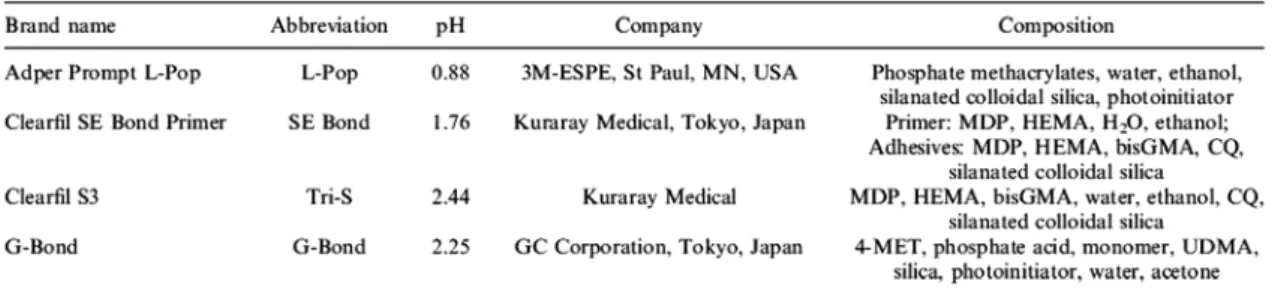
いても MMPs-2,-8, -20の存在が示され2, 3),Pashley ら はバクテリアが存在しない条件下においても250日後 に象牙質コラーゲンが分解されること,コラゲナーゼ インヒビターを加えた条件下では分解が抑制されるこ とを見出した14)。このことから象牙質 MMPs がレジ ン-象牙質接着界面の劣化の一因と考えられた。また 接着システムで行われる程度のマイルドな酸処理を施 した象牙質では MMPs が活性化される15, 16)ことから, 歯面処理時の酸処理によって歯質は脱灰されるもの の,酵素活性は阻害されないと考えられる。4種の接 着システム(Table 1)を用いて象牙質を酸処理した場 合の酵素活性について Figure 2 に示す。37%リン酸処 理を除いて,いずれの接着システムで酸処理した場合 でも酵素活性が上がる結果となっている。これらのこ とを踏まえて,レジン-象牙質接着界面の耐久性を向 上させるための研究は数多く行われており,象牙質 MMPs に特異的なインヒビターを応用する研究も行わ れている17, 18)が,臨床応用は非現実的であるといえ る。接着界面の劣化の一因となる象牙質 MMPs を不 活化するためには,歯面処理時に亜鉛またはカルシウ ムをキレートする方法19, 20)または酵素を架橋する方 法21)が望ましいと考えられる。しかしながら,通常 の接着システムにキレート剤や架橋剤を配合すること は,接着システム本来の性能が得られなくなる可能性 があり,配合量には限度がある22)。生体内で応用可能 な添加物という制約の中で,現在も国際的に研究が行 われている23-25)。 Ⅳ.おわりに 以上のように歯科用接着システムの耐久性に関して は解決するべき問題が残っている。しかしながら,近 年開発されている接着システムは,1ステップ接着シ ステムの歯面処理時間の短縮に加えて,貴金属,非金 属,ジルコニアなどの歯質以外の被着体にも前処理が 不要となるマルチタイプの接着システムとなってい る。酸処理方法についても同一の製品でトータルエッ チング,セレクティブエッチング,セルフエッチング のいずれでも可能とするシステムもあり,オールエッ チモードとなっている。これらはユーザーの利便性向 上を最優先して開発されたシステムであり,耐久性の 向上を目的としたものではない。今後も象牙質 MMPs の不活化についても考慮した耐久性を向上させる接着 システムを開発されることが求められる。
Figure 2. Comparison of gelatinolytic activity of human mineralized dentin powder following no treatment (control) or etching for 15 s (phosphoric acid, PA) or 5 min for L-Pop, SE, GB or S3. GB, G-Bond; L-Pop, Adper Prompt L-Pop; S3, Clearfil Tri-S; SE, Clearfil SE Bond primer; RFU, relative fluorescent units. Values represent the mean ± standard deviation (SD), n = 4 plates or 32 wells. Inset: gelatinolytic activity vs. pH of acidic agents.
西谷 佳浩 22
参考文献
1) Buonocore MG. A simple method of increasing the adhesion of acrylic filling materials to enamel surfaces. J Dent Res, 34, 849-853, 1955.
2) The localization of matrix metalloproteinase-20 (MMP-20, enamelysin) in mature human teeth. Sulkala M, Larmas M, Sorsa T, Salo T, Tjäderhane L. J Dent Res, 81, 603-607, 2002.
3) Matrix metalloproteinase-8 (MMP-8) is the major collagenase in human dentin. Sulkala M, Tervahartiala T, Sorsa T, Larmas M, Salo T, Tjäderhane L. Arch Oral Biol, 52, 121-127, 2007.
4) Activation of gelatinolytic/collagenolytic activity in dentin by self-etching adhesives. Nishitani Y, Yoshiyama M, Wadgaonkar B, Breschi L, Mannello F, Mazzoni A, Carvalho RM, Tjäderhane L, Tay FR, Pashley DH. Eur J Oral Sci, 114, 160-166, 2006. 5) 保存修復学専門用語集,第1版,日本歯科保存学
会編,45,医歯薬出版株式会社,東京,2009. 6) Boyde A, Switsur VR, Stewart ADG. An assessment
of two new physical methods applied to the study of dental tissues. Advances in Fluorine Research and Dental Caries Prevention, 1, 185-193, Oxford, Pergamon Press, 1963.
7) Eick JD, Wilko RA, Anderson CH, Sorenson SE. Scanning electron microscopy of cut tooth surfaces and identification of debris by use of the electron microprobe. J Dent Res, 49, 1359-1368.1970.
8) Gwinnett AJ. Smear layer: morphological considerations. Oper Dent, 9 (Suppl 3), 3-12, 1984. 9) Fusayama T. New Concepts in Operative Dentistry,
Quintessence Publishing Co., Inc., Chicago, p. 69, 1980.
10) Pashley DH, Horner JA, Brewer PD. Interactions of conditioners on the dentin surface. Oper Dent, 5, 137-150, 1992.
11) Davidson CL, de Gee AJ, Feilzer A. The competition between the composite-dentin bond strength and the polymerization contraction stress. J Dent Res, 63, 1396-1399, 1984.
12) Hashimoto M, Ohno H, Kaga M, Endo K, Sano H, Oguchi H. In vivo degradation of resin-dentin bonds in humans over 1 to 3 years. J Dent Res, 79, 1385-1391, 2000.
13) Hebling J, Pashley DH, Tjäderhane L, Tay FR.
Chlorhexidine arrests subclinical degradation of dentin hybrid layers in vivo. J Dent Res, 84, 741-746, 2005. 14) Pashley DH, Tay FR, Yiu C, Hashimoto M, Breschi L,
Carvalho RM, Ito S. Collagen degradation by host-derived enzymes during aging. J Dent Res, 83, 216-221, 2004.
15) Nishitani Y, Yoshiyama M, Wadgaonkar B, Breschi L, Mannello F, Mazzoni A, Carvalho RM, Tjäderhane L, Tay FR, Pashley DH. Activation of gelatinolytic/ collagenolytic activity in dentin by self-etching adhesives. Eur J Oral Sci, 114, 160-166, 2006. 16) Mazzoni A, Pashley DH, Nishitani Y, Breschi L,
Mannello F, Tjäderhane L, Toledano M, Pashley EL, Tay FR. Reactivation of inactivated endogenous proteolytic activities in phosphoric acid-etched dentine by etch-and-rinse adhesives. Biomaterials, 27, 4470-4476, 2006.
17) De Munck J, Van den Steen PE, Mine A, Van Landuyt KL, Poitevin A, Opdenakker G, Van Meerbeek B. Inhibition of enzymatic degradation of adhesive-dentin interfaces. J Dent Res, 88, 1101-1106, 2009.
18) Breschi L, Martin P, Mazzoni A, Nato F, Carrilho M, Tjäderhane L, Visintini E, Cadenaro M, Tay FR, De Stefano Dorigo E, Pashley DH. Use of a specific MMP-inhibitor (galardin) for preservation of hybrid layer. Dent Mater, 26, 571-578, 2010.
19) Osorio R, Erhardt MC, Pimenta LA, Osorio E, Toledano M. EDTA treatment improves resin-dentin bonds' resistance to degradation. J Dent Res, 84, 736-740, 2005.
20) Sauro S, Mannocci F, Toledano M, Osorio R, Pashley DH, Watson TF. EDTA or H3PO4/NaOCl dentine treatments may increase hybrid layers' resistance to degradation. J Dent, 37, 279-288, 2009.
21) Lynn L. H. Huang-Lee, David T. Cheung and Marcel E. Nimni. Biochemical changes and cytotoxicity associated with the degradation of polymeric glutaraldehyde derived crosslinks. J Biomed Mater Res, 24, 1185-1201, 1990.
22) Nishitani Y, Hosaka K, Hoshika T, Yoshiyama M, Pashley DH. Effects of chlorhexidine in self-etching adhesive: 24 hours results. Dent Mater J, 32, 420-424, 2013.
23) Tezvergil-Mutluay A, Agee KA, Hoshika T, Carrilho M, Breschi L, Tjäderhane L, Nishitani Y, Carvalho
RM, Looney S, Tay FR, Pashley DH. The requirement of zinc and calcium ions for functional MMP activity in demineralized dentin matrices. Dent Mater, 26, 1059-1067, 2010.
24) Tezvergil-Mutluay A, Agee KA, Uchiyama T, Imazato S, Mutluay MM, Cadenaro M, Breschi L, Nishitani Y, Tay FR, Pashley DH. The inhibitory effects of quaternary ammonium methacrylates on soluble and matrix-bound MMPs. J Dent Res, 90, 535-540, 2011. 25) Tezvergil-Mutluay A, Mutluay M,
Seseogullari-Dirihan R, Agee KA, Key WO, Scheffel DL, Breschi L, Mazzoni A, Tjäderhane L, Nishitani Y, Tay FR, Pashley DH. Effect of phosphoric acid on the degradation of human dentin matrix. J Dent Res, 92, 87-91, 2013.