Abstract
Grammars argue that many abstract noncount nouns can be used with the indefinite article (a/
an) when they are modified by an adjective. The influence of modification on the acceptability of a/
an with abstract nouns that refer to an attribute of a person (education, knowledge, understanding, etc.) is examined with the data collected from two large corpora, the British National Corpus and the Corpus of Contemporary American English. Nouns modified by qualitative adjectives show a higher acceptability of a/an than those modified by classifying adjectives. Nevertheless, neither the type nor the amount of modification determines the use of a/an. An abstract noun accepts a/an when it refers to a particular instance, which is bounded in physical, temporal or type space. It is the speaker’s intention to emphasize the particular and individual nature of the referent that determines the use of a/an. Modification does not force the use of a/an. It is the other way around: a/an forces the use of modification.
Key Words
Abstract Nouns, Count, Noncount, Countable, Uncountable, Acceptability, Indefinite Article, Zero Article, Modification, Adjectives.
1. Abstract noncount nouns and a/an
Grammars agree that abstract noncount nouns are often used with a/an under certain conditions.
Quirk, Randolph, Sidney Greenbaum, Geoffrey Leech, and Jan Svartvik (1985) argue that noncount nouns that refer to a quality or other abstraction of a person (e.g. education, dislike, sensitivity) can be used with a/an when they are modified and that the greater the amount of modification, the greater the acceptability of a/an. Quirk et al. (1985: 287) say as follows:
(1) Mavis had a good education. [1]
(2) My son suffers from a strange dislike of mathematics. <ironic > [2]
(3) She played the oboe with (a) remarkable sensitivity. [3]
The indefinite article is used exceptionally here with nouns which are normally noncount.
KODERA, Masahiro
Modification and Acceptability of a/an with Abstract
Nouns Referring to an Attribute of a Person
The conditions under which a/an occurs in such cases are unclear, but appear to include the following:
(i) the noun refers to a quality or other abstraction which is attributed to a person;
(ii) the noun is premodified and/or postmodified; and, generally speaking, the greater the amount of modification, the greater the acceptability of a/an.
In confirmation of (ii), notice that a would have to be omitted from [3] if the adjective were omitted:
*a sensitivity. [3a]
She played the oboe with
sensitivity. [3b]{
However, a would become more acceptable than zero if the noun were modified:
(a) charming sensitivity.
She played the oboe with
a sensitivity that delighted the critics.{
Swan (2005) argues that noncount nouns that refer to human emotions and mental activities
(e.g. knowledge, distrust, understanding, education) are often used with a/an when their meaning is limited. Swan (2005: 132) says as follows:
With certain uncountable nouns — especially nouns referring to human emotions and mental activity — we often use a/an when we are limiting their meaning in some way.
We need a secretary with a first-class knowledge of German. (NOT . . . with first class knowledge of German.)
She has always had a deep distrust of strangers.
That child shows a surprising understanding of adult behaviour.
My parents wanted me to have a good education. (NOT . . . to have good education.)
You’ve been a great help.
I need a good sleep.
Note that these nouns cannot normally be used in the plural, and that most uncountable nouns cannot be used with a/an at all, even when they have an adjective.
My father enjoys very good health. (NOT . . . a very good health.)
We’re having terrible weather. (NOT . . . a terrible weather.)
He speaks excellent English. (NOT . . . an excellent English.)
It’s interesting work. (NOT . . . an interesting work.)
Berry (1993) argues that abstract noncount nouns can be used with a/an when they are premodified by an adjective or postmodified by some form of modification (e.g. adjective clause) or when their individual and particular nature is emphasized. Berry (1993: 20-21) says as follows:
Many abstract nouns, that is, nouns referring to things which cannot be seen, touched or measured, can be used with the indefinite article when an adjective is used with them. For
example, if you talk about ‘a sudden violent hatred’, you mean a particular kind of hatred which is sudden and violent.
...a passionate hatred of feminists.
...working up a passing anger.
...a certain quaint charm.
Compare this with their use as uncount nouns when there are no adjectives.
How long can hatred last?
...in a voice choked with anger.
He had neither charm nor humour.
You don’t have to use the indefinite article with such nouns just because of the adjectives; you can still use them without an article if you don’t want to emphasize their individual, particular nature.
...a man of immense personal charm.
Instead of adjectives before the noun, you can have some form of qualification after it, for example a clause beginning with ‘that’.
...a charm that contains heavy doses of boyishness.
Biber, Douglas, Stig Johansson, Geoffrey Leech, Susan Conrad, and Edward Finegan (1999) argue that abstract noncount nouns have both count and noncount uses and that the count use refers to individual instances or types. Biber et al. (1999: 244) say as follows:
Abstract nouns, which tend to be basically uncountable, also have countable uses:
It pulls together a series of wide-ranging recommendations for business, transport, and education. <U>
Although she was a girl she wanted an education. <C>
I don’t think her parents gave her much — very much freedom. <U>
These are tiny freedoms, and if a woman enjoys being part of a couple, they should count for nothing. <C>
They had received kindness, thoughts and good wishes from total strangers. <U>
It would be a “cruel kindness” to uphold the county court order. <C>
In these examples, the uncountable use refers to the general phenomenon, while the countable use refers to individual instances or types.
Both Quirk et al. and Swan mention two conditions under which noncount nouns can be used with a/an: 1) the noun refers to a person’s attribute, which can be assumed to include human emotions and mental activity; 2) the noun is premodified and/or postmodified. Swan does not mention modification as a condition, but he apparently has premodification in mind when he says “when we are limiting their meaning in some way” since all the nouns in his examples are modified by an adjective or an attributive noun (e.g. a deep distrust, a first-class knowledge). Berry adds a third condition: emphasis on the individual and particular nature of the referent. Berry does not mention the types of nouns that can be used with a/an, but all the nouns in his examples (hatred, anger,
charm) are attributes of a person, from which it can be assumed that he has in mind the same type of nouns that Quirk et al. and Swan have. To sum up, abstract noncount nouns can be used with a/
an under the following three conditions:
1) The noun refers to an attribute of a person.
2) The noun is premodified and/or postmodified.
3) The individual and particular nature of the referent is emphasized.
In the following sections, two large corpora, the British National Corpus (BNC) with 100 million words and the Corpus of Contemporary American English (COCA) with 520 million words are used to explore the relationship between modification and the acceptability of a/an with abstract noncount nouns that refer to an attribute of a person. The validity of the first condition will not be examined since it is difficult to determine exactly what Quirk et al., Swan and Berry have in mind about the type of abstract nouns that can be used with a/an. Instead, the nouns they give in their example sentences (education, dislike, sensitivity, knowledge, distrust, understanding, help, hatred, anger, charm) are used to examine the second and the third condition. Two nouns (help, sleep) that Swan gives in his examples will not be examined since they do not refer to ‘human emotions and mental activity.’
Instances of noun phrases modified by determiners other than a/an are not considered in this research since determiners often make it difficult to determine if the noun is used as a count or a noncount noun (e.g. the education, any education, his education). Determiners include the definite article, demonstratives (e.g. this, that), quantifiers (e.g. some, any, much, more, less, each, enough, both, either, a lot, a few, a bit of ), possessives (e.g. his, her, their, whose), and others (e.g. no, such, either, what, whatever). When much, more, less, etc. are used as an adverb to modify an adjective (e.g.
he’s getting a much better education), their instances are counted. Instances of more than one noun joined by the conjunction and are not counted (e.g. a middle-class upbringing and education) since it is difficult to determine if a/an modifies the target noun (e.g. education). Other instances that are not counted are the cases of the target noun used as part of a proper name (e.g. book titles, names of organizations, etc.) and as an attributive noun to modify another noun (e.g. education department).
2. Modification and a/an
2.1. Education and modification
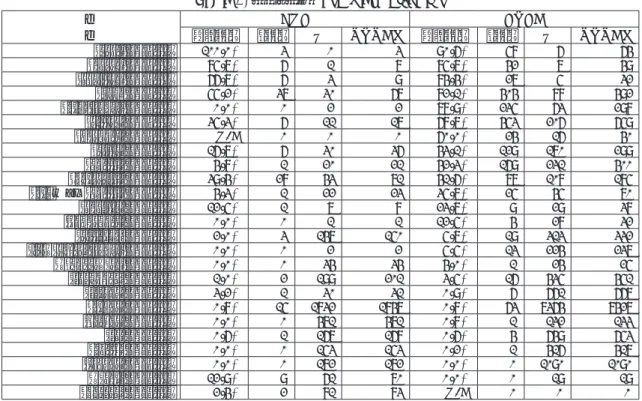
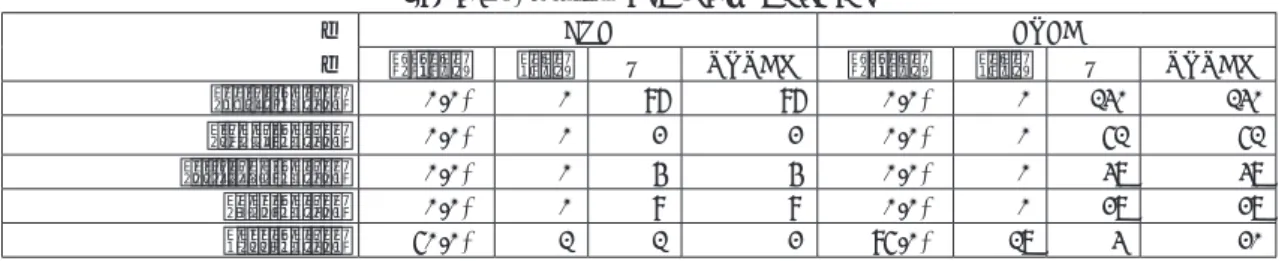
Table 1 lists a total of 25 noun phrases with education immediately premodified by an adjective or an attributive noun. Each noun phrase has 30 or more instances found in either BNC or COCA, and they are arranged from the top to the bottom according to the acceptability of the indefinite article (a/
an) in COCA. In the table, ‘a/an’ indicates the number of instances of a noun phrase used with the indefinite article (a/an); ‘Ø’ indicates the number of instances with the zero article (Ø), and ‘% a/
an’ shows the percentage of the instances of a noun phrase with a/an. ‘N/A’ means ‘not applicable.’
For example, BNC finds 3 instances of great education used with a/an and 0 instances with Ø, and the acceptability of a/an is 100.0%. COCA finds great education takes a/an in 90.6% of instances (58 instances taking a/an and 6 taking Ø). All the tables in this section are arranged in the same way, unless otherwise mentioned.
BNC finds 14 noun phrases with 30 or more instances, among which one phrase (good education)
takes a/an in more than 50% of instances (excluding great education, decent education and excellent education with less than 30 instances) while 13 phrases accept Ø in more than 50% of instances.
COCA finds 22 noun phrases with 30 or more instances (excluding management education, media education and primary education with less than 30 instances), among which seven noun phrases take a/an in more than 50% of instances (great education, decent education, excellent education, good education, high school education, college education, adequate education) while 15 phrases accept Ø in more than 50% of instances. These data do not support the argument that abstract noncount nouns are often used with a/an when they are premodified by an adjective.
Table 1. Education and premodification
BNC COCA
% a/an a/an Ø TOTAL % a/an a/an Ø TOTAL
great education 100.0% 3 0 3 90.6% 58 6 64
decent education 85.7% 6 1 7 85.7% 42 7 49
excellent education 66.7% 6 3 9 84.4% 27 5 32
good education 55.2% 37 30 67 82.1% 404 88 492
high school education 0.0% 0 2 2 78.9% 235 63 298
college education 35.3% 6 11 17 68.7% 453 206 659
adequate education N/A 0 0 0 60.0% 24 16 40
better education 16.7% 6 30 36 43.1% 129 170 299
quality education 4.8% 1 20 21 42.3% 169 231 400
university education 39.4% 28 43 71 41.6% 77 108 185
high(-)quality education 4.3% 1 22 23 35.7% 25 45 70
effective education 12.5% 1 7 8 23.7% 9 29 38
inadequate education 0.0% 0 1 1 12.5% 4 28 32
religious education 2.0% 3 147 150 5.7% 19 313 332
elementary school education 0.0% 0 2 2 5.5% 13 224 237
management education 0.0% 0 34 34 4.0% 1 24 25
secondary education 1.0% 2 199 201 3.5% 16 435 451
science education 3.2% 1 30 31 0.9% 6 661 667
higher education 0.8% 15 1832 1847 0.8% 63 7364 7427
further education 0.0% 0 471 471 0.8% 1 132 133
sex education 0.6% 1 167 168 0.6% 4 649 653
health education 0.0% 0 153 153 0.2% 1 416 417
teacher education 0.0% 0 172 172 0.0% 0 1090 1090
media education 12.9% 9 61 70 0.0% 0 19 19
nursery education 2.4% 2 81 83 N/A 0 0 0
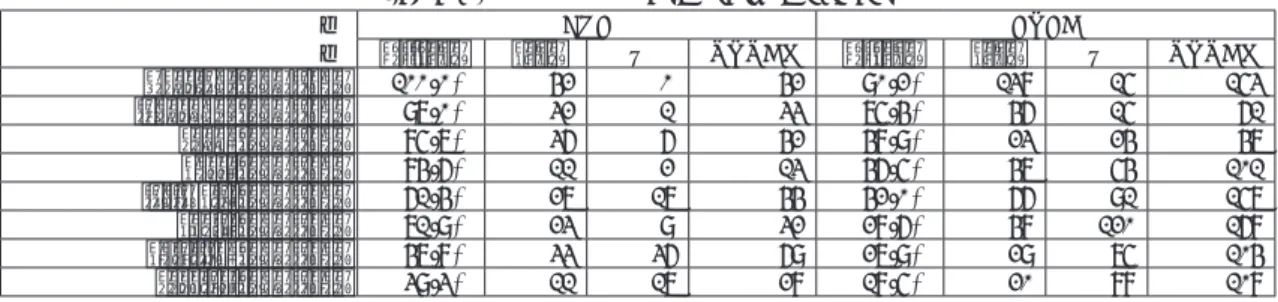
Table 2 shows the number of instances of education postmodified by an adjective clause with a relative pronoun that and which and by an adjective phrase that begins with the present participle
(V-ing) and the past participle (V-en) of a verb. The acceptability of a/an varies from 18.2% (V-en in BNC) to 68.6% (which in BNC). The sentences (1-4) below Table 2 are taken from BNC, which show that the amount of modification does not influence the acceptability of a/an. There is not much difference in the amount of modification between (1) and (2) and between (3) and (4), but (1)
and (3) accept a/an while (2) and (4) accept Ø. Education in (5), taken from Google Books, is modified by a very long adjective clause, but it accepts Ø. These data do not support the argument that the greater the amount of modification, the greater the acceptability of a/an. (The underlines and boldfaces are added by Kodera.)
Table 2. Education and postmodification
BNC COCA
% a/an a/an Ø TOTAL % a/an a/an Ø TOTAL
education that 55.6% 5 4 9 58.5% 182 129 311
education which 68.6% 24 11 35 28.0% 7 18 25
education + V-ing 25.0% 2 6 8 40.0% 6 9 15
education + V-en 18.2% 2 9 11 31.8% 50 107 157
TOTAL 51.9% 28 26 54 32.0% 63 134 197
1) We need to offer an education that enables them to play a positive role in society by giving them the opportunity to use their talents. (BNC)
2) Many fewer people leave school at 16 than did when the examinations were introduced; and more every year are being encouraged to stay at school or to leave only to go to sixth-form college, college of further education, or wherever else they may receive education that will lead to a higher accreditation. (BNC)
3) All are entitled to attend the local school, to receive an education which responds to their needs and allows them equality of opportunity. (BNC)
4) People have the right to receive media education which will enable them to become critical viewers of the medium. (BNC)
5) It [money] motivates people to go into business for themselves, or to seek advancement in their jobs, or to procure education that will enable them to obtain the kind of work that will permit them both to maintain themselves and their dependents comfortably and, at the same time, to engage in work that has satisfaction for its own sake. (Frances Lomas Feldman and Frances H.
Scherz. Family Social Welfare: Helping Troubled Families)
2.2. Knowledge and modification
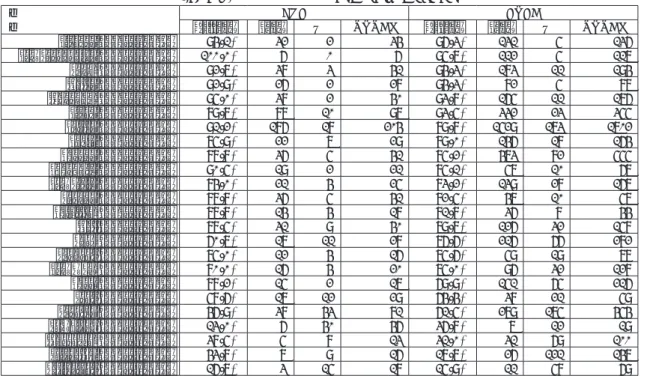
Table 3 lists a total of 55 noun phrases with knowledge immediately premodified by an adjective or an attributive noun. BNC finds 20 noun phrases with 30 or more instances, among which five phrases
(working knowledge, thorough knowledge, good knowledge, intimate knowledge, basic knowledge) take a/an in more than 50% of instances while 15 phrases accept Ø in more than 50% of instances. COCA finds 54 noun phrases with 30 or more instances, among which two phrases (working knowledge, thorough knowledge) take a/an in more than 50% of instances while 52 phrases accept Ø in more than 50% of instances. These data do not support the argument that abstract noncount nouns are often used with a/an when they are premodified by an adjective.
Table 3. Knowledge and premodification
BNC COCA
% a/an a/an Ø TOTAL % a/an a/an Ø TOTAL
working knowledge 100.0% 42 0 42 90.2% 138 15 153
thorough knowledge 97.0% 32 1 33 75.4% 46 15 61
good knowledge 85.7% 36 6 42 48.9% 23 24 47
deep knowledge 84.6% 11 2 13 46.5% 47 54 101
intimate knowledge 61.4% 27 17 44 42.0% 66 91 157
basic knowledge 71.9% 23 9 32 28.6% 48 120 168
detailed knowledge 47.8% 33 36 69 27.9% 29 75 104
greater knowledge 39.3% 11 17 28 18.5% 20 88 108
extensive knowledge 63.6% 7 4 11 18.4% 14 62 76
limited knowledge 23.8% 5 16 21 15.6% 23 124 147
shared knowledge 4.3% 1 22 23 12.5% 4 28 32
certain knowledge 33.3% 5 10 15 12.0% 6 44 50
theoretical knowledge 16.7% 3 15 18 8.9% 5 51 56
general knowledge 11.1% 6 48 54 8.5% 15 162 177
special knowledge 13.8% 4 25 29 8.3% 4 44 48
inside knowledge 18.2% 2 9 11 8.1% 3 34 37
personal knowledge 2.5% 3 118 121 6.8% 9 123 132
practical knowledge 8.0% 2 23 25 6.5% 6 87 93
increased knowledge 25.0% 2 6 8 6.3% 5 74 79
first(-)hand knowledge 0.0% 0 20 20 4.8% 10 198 208
full knowledge 22.5% 9 31 40 4.8% 4 80 84
useful knowledge 0.0% 0 18 18 4.5% 3 64 67
specialis(z)ed knowledge 9.1% 1 10 11 3.3% 4 119 123
technical knowledge 6.9% 4 54 58 3.2% 4 122 126
sufficient knowledge 3.8% 1 25 26 2.7% 2 71 73
superior knowledge 9.1% 1 10 11 2.6% 1 37 38
musical knowledge 14.3% 1 6 7 1.7% 1 59 60
cultural knowledge 0.0% 0 2 2 1.7% 2 119 121
pedagogical knowledge N/A 0 0 0 1.4% 1 73 74
historical knowledge 5.0% 1 19 20 1.1% 1 86 87
specific knowledge 11.1% 1 8 9 1.1% 1 86 87
financial knowledge 0.0% 0 2 2 1.1% 1 88 89
common knowledge 1.0% 1 95 96 1.1% 5 462 467
scientific knowledge 0.7% 1 151 152 1.1% 6 563 569
current knowledge 6.7% 1 14 15 1.0% 1 97 98
local knowledge 2.2% 2 90 92 0.9% 2 218 220
medical knowledge 2.6% 1 38 39 0.7% 1 137 138
new knowledge 2.2% 1 44 45 0.7% 4 581 585
prior knowledge 2.6% 1 37 38 0.6% 3 504 507
content knowledge N/A 0 0 0 0.0% 0 521 521
human knowledge 0.0% 0 69 69 0.0% 0 213 213
public knowledge 0.0% 0 58 58 0.0% 0 212 212
indigenous knowledge 0.0% 0 2 2 0.0% 0 210 210
environmental knowledge 0.0% 0 2 2 0.0% 0 195 195
ecological knowledge 0.0% 0 2 2 0.0% 0 108 108
procedural knowledge N/A 0 0 0 0.0% 0 101 101
existing knowledge 6.9% 2 27 29 0.0% 0 100 100
direct knowledge 0.0% 0 5 5 0.0% 0 95 95
traditional knowledge 0.0% 0 2 2 0.0% 0 93 93
social knowledge 0.0% 0 14 14 0.0% 0 85 85
professional knowledge 0.0% 0 16 16 0.0% 0 64 64
previous knowledge 2.6% 1 38 39 0.0% 0 56 56
relevant knowledge 0.0% 0 15 15 0.0% 0 36 36
actual knowledge 0.0% 0 18 18 0.0% 0 34 34
linguistic knowledge 0.0% 0 32 32 0.0% 0 13 13
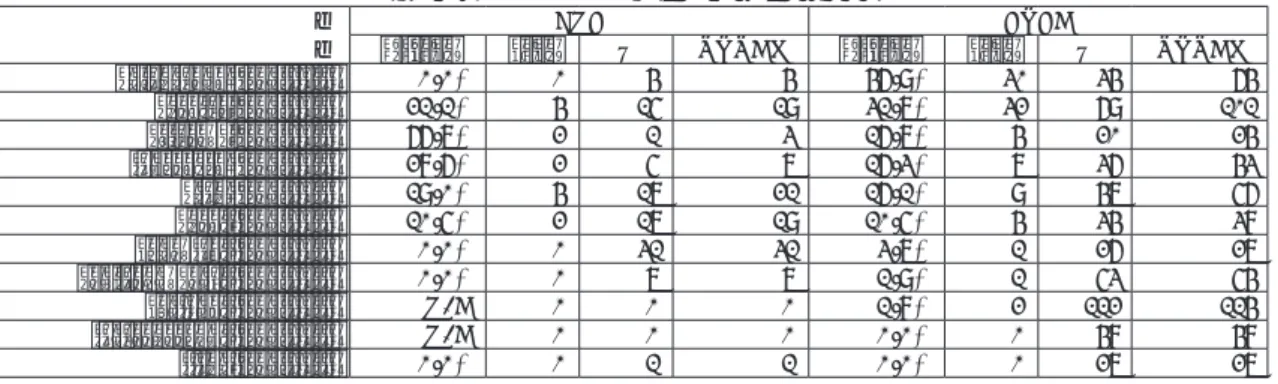
Table 4 shows the number of instances of knowledge postmodified by an adjective clause beginning with which and an adjective phrase beginning with V-en. The acceptance of a/an is less than 25%
with both types of postmodification in both corpora. Knowledge in (6) below, for example, is both pre- and post-modified, but it accepts Ø. The data in Table 4 do not support the argument that the greater the amount of modification, the greater the acceptability of a/an.
Table 4. Knowledge and postmodification
BNC COCA
% a/an a/an Ø TOTAL % a/an a/an Ø TOTAL
knowledge which 13.0% 7 47 54 23.5% 8 26 34
knowledge + V-en 3.1% 1 31 32 5.1% 17 314 331
6) The increasing complexity of trade and commerce demands financial and legal experts such as accountants and lawyers. The growth of industry requires more specialized scientific and technical knowledge which results in the development of professions such as science and engineering. (BNC)
2.3. Understanding and modification
Table 5 lists a total of 30 noun phrases with understanding immediately premodified by an adjective or an attributive noun. BNC finds 11 noun phrases with 30 or more instances, among which eight phrases take a/an in more than 50% of instances (clearer understanding, good understanding, thorough understanding, clear understanding, better understanding, deeper understanding, proper understanding, full understanding), while three phrases (greater understanding, sufficient understanding, mutual understanding) accept Ø in more than 50% of instances. COCA finds 29 noun phrases with 30 or more instances, among which 20 phrases take a/an in more than 50% of instances while nine phrases accept Ø in more than 50% of instances. The acceptability of a/an varies from 95.0% (thorough understanding) to 13.0% (sufficient understanding) in BNC and from 96.3% (clearer understanding) to 0.9% (human understanding) in COCA. These data do not support the argument that abstract noncount nouns are often used with a/an when they are premodified by an adjective.
Table 5. Understanding and premodification
BNC COCA
% a/an a/an Ø TOTAL % a/an a/an Ø TOTAL
clearer understanding 94.1% 32 2 34 96.3% 131 5 136
comprehensive understanding 100.0% 6 0 6 95.7% 112 5 117
good understanding 92.7% 38 3 41 94.3% 183 11 194
fuller understanding 92.9% 26 2 28 94.3% 82 5 87
thorough understanding 95.0% 38 2 40 93.8% 165 11 176
clear understanding 89.7% 87 10 97 93.5% 332 23 355
better understanding 91.2% 186 18 204 89.8% 1529 173 1702
basic understanding 75.9% 22 7 29 89.0% 146 18 164
deeper understanding 87.8% 36 5 41 85.2% 473 82 555
adequate understanding 90.5% 19 2 21 85.1% 57 10 67
complete understanding 84.0% 21 4 25 83.2% 139 28 167
proper understanding 87.8% 36 5 41 82.5% 47 10 57
detailed understanding 77.8% 14 4 18 81.8% 36 8 44
full understanding 77.5% 31 9 40 79.7% 126 32 158
new understanding 60.7% 17 11 28 76.6% 216 66 282
general understanding 75.0% 12 4 16 75.6% 59 19 78
common understanding 80.0% 16 4 20 75.0% 96 32 128
deep understanding 88.2% 15 2 17 69.9% 151 65 216
real understanding 58.6% 17 12 29 64.4% 38 21 59
greater understanding 46.9% 38 43 81 61.5% 279 175 454
sufficient understanding 13.0% 6 40 46 36.8% 7 12 19
increased understanding 38.5% 5 8 13 31.0% 31 69 100
scientific understanding 43.8% 7 9 16 17.7% 26 121 147
historical understanding 16.7% 3 15 18 15.9% 11 58 69
mutual understanding 17.3% 9 43 52 14.3% 38 228 266
conceptual understanding 18.2% 2 9 11 13.8% 24 150 174
cultural understanding 0.0% 0 2 2 10.3% 10 87 97
public understanding 0.0% 0 19 19 6.4% 10 146 156
musical understanding 0.0% 0 4 4 4.1% 3 70 73
human understanding 0.0% 0 17 17 0.9% 1 114 115
Table 6 shows the number of instances of understanding postmodified by an adjective clause beginning with which and an adjective phrase beginning with V-en and V-ing. The data are very limited and it is difficult to judge the influence of postmodification on the acceptability of a/an. It could be argued that the acceptance of a/an is higher when understanding is postmodified. It is still necessary to explain why understanding with postmodification sometimes accepts Ø as in (7).
Table 6. Understanding and postmodification
BNC COCA
% a/an a/an Ø TOTAL % a/an a/an Ø TOTAL
understanding which 77.8% 7 2 9 83.3% 5 1 6
understanding + V-en 75.0% 3 1 4 64.7% 22 12 34
understanding + V-ing 0.0% 0 1 1 85.7% 6 1 7
7) Meditation is that process of mental digestion that gives rise to understanding which integrates the energies of mind and will in a desire for God which is prayer. (BNC)
2.4. Sensitivity and modification
Table 7 lists a total of 11 noun phrases with sensitivity immediately premodified by an adjective or an attributive noun. Each noun phrase has 20 or more instances found in either BNC or COCA.
BNC finds two noun phrases with 20 or more instances (high sensitivity, chemical sensitivity), and they take a/an in 19.0% and 0.0% of instances respectively. COCA finds 11 noun phrases with 20 or more instances, none of which exceeds 50% in their a/an acceptance. These data do not support the argument that abstract noncount nouns are often used with a/an when they are premodified by an adjective.
Table 7. Sensitivity and premodification
BNC COCA
% a/an a/an Ø TOTAL % a/an a/an Ø TOTAL
heightened sensitivity 0.0% 0 4 4 46.9% 30 34 64
greater sensitivity 21.1% 4 15 19 31.7% 32 69 101
extreme sensitivity 66.7% 2 1 3 16.7% 4 20 24
increased sensitivity 28.6% 2 5 7 16.3% 7 36 43
high sensitivity 19.0% 4 17 21 16.1% 9 47 56
great sensitivity 10.5% 2 17 19 10.5% 4 34 38
chemical sensitivity 0.0% 0 31 31 3.7% 1 26 27
environmental sensitivity 0.0% 0 7 7 1.9% 1 53 54
cultural sensitivity N/A 0 0 0 1.8% 2 112 114
interpersonal sensitivity N/A 0 0 0 0.0% 0 48 48
light sensitivity 0.0% 0 1 1 0.0% 0 27 27
Table 8 shows the number of instances of sensitivity postmodified by an adjective clause beginning with which and that and an adjective phrase beginning with V-ing and V-en. The data are very limited and it is difficult to judge the influence of postmodification on the acceptability of a/an.
However, the sentences ( 8) and ( 9) below do not support the argument that the greater the amount of modification, the greater the acceptability of a/an. Sensitivity in (8) is both pre- and post- modified, but it accepts Ø. Sensitivity in (9), on the other hand, accepts a/an without modification.
Table 8. Sensitivity and postmodification
BNC COCA
% a/an a/an Ø TOTAL % a/an a/an Ø TOTAL
sensitivity that 66.7% 2 1 3 57.1% 4 3 7
sensitivity which 66.7% 2 1 3 74.1% 20 7 27
sensitivity + V-ing 100.0% 1 0 1 33.3% 1 2 3
sensitivity + V-en N/A 0 0 0 60.0% 3 2 5
8) How is spirituality, as we have examined it here, related to religion? In some contexts, this is an important question to address because there is heightened sensitivity set against promoting religion in a publicly supported school system or favoring one kind of religion over another in a multicultural, multifaith classroom. (COCA)
9) The department studies the Church’s history with the aid of other relevant disciplines, for example, social, political and economic history and social anthropology, as well as with a sensitivity to theological perspectives. (BNC)
2.5. Dislike and modification
Table 9 lists three noun phrases with dislike immediately premodified by an adjective. Each noun phrase has 10 or more instances found in either BNC or COCA. BNC finds one noun phrase with 10 or more instances (instant dislike), and it takes a/an in 92.3% of instances. COCA finds three noun phrases with 10 or more instances (instant dislike, strong dislike, personal dislike) and they take a/
an in 100.0%, 100.0% and 58.3% of instances respectively. Table 10 shows the number of instances of dislike postmodified by an adjective clause and phrase. The data are very limited and it is difficult to judge the influence of modification on the acceptability of a/an. It is still necessary to explain why dislike with postmodification sometimes accepts Ø as in (10).
Table 9. Dislike and premodification
BNC COCA
% a/an a/an Ø TOTAL % a/an a/an Ø TOTAL
instant dislike 92.3% 12 1 13 100.0% 22 0 22
strong dislike 83.3% 5 1 6 100.0% 18 0 18
personal dislike 50.0% 3 3 6 58.3% 7 5 12
Table 10. Dislike and postmodification
BNC COCA
% a/an a/an Ø TOTAL % a/an a/an Ø TOTAL
dislike that 100.0% 1 0 1 50.0% 1 1 2
dislike which 100.0% 2 0 2 N/A 0 0 0
dislike + V-ing 100.0% 1 0 1 N/A 0 0 0
dislike + V-en N/A 0 0 0 100.0% 1 0 1
10) He wasn’t angry. Anger, which I knew to be transient and generally at least part theater, I was used to and could easily bear. What I saw was dislike, which can’t be shrugged off, which abides.
(COCA)
2.6. Distrust and modification
Table 11 lists four noun phrases with distrust immediately premodified by an adjective. BNC does not find any noun phrase with 20 or more instances. COCA finds four noun phrases with 20 or more instances (general distrust, deep distrust, mutual distrust, public distrust) and their acceptability of a/
an varies from 66.7% to 3.3%. These data do not support the argument that abstract noncount nouns is often used with a/an when they are premodified by an adjective.
Table 12 shows the number of instances of distrust postmodified by an adjective clause and phrase. The data are very limited and it is difficult to judge the influence of postmodification on the acceptability of a/an. It is still necessary to explain why distrust with postmodification sometimes accepts Ø as in (11) and (12).
Table 11. Distrust and premodification
BNC COCA
% a/an a/an Ø TOTAL % a/an a/an Ø TOTAL
general distrust 100.0% 1 0 1 66.7% 14 7 21
deep distrust 80.0% 4 1 5 47.1% 24 27 51
mutual distrust 16.7% 1 5 6 10.8% 4 33 37
public distrust 0.0% 0 2 2 3.3% 1 29 30
Table 12. Distrust and postmodification
BNC COCA
% a/an a/an Ø TOTAL % a/an a/an Ø TOTAL
distrust that N/A 0 0 0 77.8% 7 2 9
distrust which N/A 0 0 0 N/A 0 0 0
distrust + V-ing 0.0% 0 1 1 N/A 0 0 0
distrust + V-en N/A 0 0 0 0.0% 0 1 1
11) Yamashita viewed the wormholer with deep distrust that verged on loathing. (COCA)
12) The “spontaneous” strivings of the working class were treated with distrust bordering on disdain.
(BNC)
2.7. Hatred and modification
Table 13 lists 10 noun phrases with hatred immediately premodified by an adjective. Each noun phrase has 20 or more instances found in either BNC or COCA. BNC finds one noun phrase with 20 or more instances (racial hatred), and it has no instance that takes a/an. COCA finds five noun phrases with 20 or more instances, among which deep hatred takes a/an in 85.0% of instances while the other four phrases have no instance that takes a/an. These data do not support the argument that abstract noncount nouns are often used with a/an when they are premodified. Table 14 shows the number of instances of hatred postmodified by an adjective clause and phrase. The data are very limited and it is difficult to judge the influence of postmodification on the acceptability of a/an. It is
still necessary to explain why hatred with postmodification sometimes accepts Ø as in (13).
Table 13. Hatred and premodification
BNC COCA
% a/an a/an Ø TOTAL % a/an a/an Ø TOTAL
racial hatred 0.0% 0 86 86 0.0% 0 130 130
ethnic hatred 0.0% 0 2 2 0.0% 0 51 51
religious hatred 0.0% 0 4 4 0.0% 0 37 37
pure hatred 0.0% 0 8 8 0.0% 0 27 27
deep hatred 50.0% 1 1 2 85.0% 17 3 20
Table 14. Hatred and postmodification
BNC COCA
% a/an a/an Ø TOTAL % a/an a/an Ø TOTAL
hatred that 100.0% 2 0 2 75.0% 15 5 20
hatred which N/A 0 0 0 66.7% 2 1 3
hatred + V-ing 0.0% 0 1 1 22.2% 2 7 9
hatred + V-en 50.0% 1 1 2 35.7% 5 9 14
13) I sank back into my chair as soon as they were out of the room. Not just dislike, but pure, unleavened, visceral hatred growing more and more powerful was pumping adrenaline through me like a tidal wave. (COCA)
2.8. Anger and modification
Table 15 lists nine noun phrases with anger immediately premodified by an adjective. BNC finds no phrase with 20 or more instances. COCA finds nine phrases with 20 or more instances, and their a/an acceptability varies from 18.8% to 0.0%. These data do not support the argument that abstract noncount nouns are often used with a/an when they are premodified. Table 16 shows the number of instances of anger postmodified by an adjective clause and phrase. COCA finds the a/an acceptability varies from 67.1% to 3.2%. The corpora find many instances of anger used with Ø when it is postmodifed as in (14) below. The data do not support the argument that the greater the amount of modification, the greater the acceptability of a/an.
Table 15. Anger and premodification
BNC COCA
% a/an a/an Ø TOTAL % a/an a/an Ø TOTAL
real anger 0.0% 0 6 6 18.8% 9 39 48
intense anger 50.0% 1 1 2 18.2% 4 18 22
deep anger 0.0% 0 2 2 16.0% 4 21 25
growing anger 25.0% 2 6 8 15.2% 5 28 33
sudden anger 33.3% 4 8 12 14.8% 4 23 27
righteous anger 0.0% 0 9 9 10.5% 6 51 57
great anger 11.1% 1 8 9 8.7% 2 21 23
public anger 0.0% 0 10 10 0.0% 0 117 117
popular anger 0.0% 0 6 6 0.0% 0 39 39
Table 16. Anger and pstmodification
BNC COCA
% a/an a/an Ø TOTAL % a/an a/an Ø TOTAL
anger that 30.0% 3 7 10 67.1% 49 24 73
anger which 40.0% 2 3 5 33.3% 1 2 3
anger + V-ing 80.0% 4 1 5 11.1% 8 64 72
anger + V-en 50.0% 1 1 2 3.2% 1 30 31
14) To take one example, anger directed against the wealthy Chinese minorities in much of Southeast Asia is growing. Already, more than 1,000 ethnic Chinese were killed last May during riots in Indonesia. (COCA)
2.9. Charm and modification
Table 17 lists 14 noun phrases with charm immediately premodified by an adjective or attributive noun. Each noun phrase has 20 or more instances in either BNC or COCA. Good luck charm (or good-luck charm), lucky charm and magic charm are not considered here, since charm in these phrases is a count noun that refers to a physical object. BNC finds one phrase (great charm) with 20 or more instances, which has no instance that takes a/an. COCA finds five noun phrases with 20 or more instances, and their acceptability of a/an varies from 100.0% to 9.5%. These data do not support the argument that abstract noncount nouns are often used with a/an when they are premodified by an adjective. Postmodification is not considered here since the data are very limited and it is sometimes difficult to judge whether the noun charm refers to an attribute of a person or a physical object.
Table 17. Charm and premodification
BNC COCA
% a/an a/an Ø TOTAL % a/an a/an Ø TOTAL
certain charm 100.0% 6 0 6 100.0% 30 0 30
old(-)world charm 0.0% 0 7 7 15.6% 5 27 32
Southern charm N/A 0 0 0 12.5% 5 35 40
great charm 0.0% 0 30 30 12.5% 3 21 24
small(-)town charm N/A 0 0 0 9.5% 2 19 21
2.10. Types of modification and the acceptability of a/an
The corpus data do not support the argument that abstract noncount nouns are often used with a/an when they are premodified by an adjective. There is no evidence that confirms the influence of premodification on the acceptability of a/an. The a/an acceptability varies greatly from 0.0% to 100.0% depending on adjectives (or attributive nouns). In this section, the relationship between the types of adjectives and the acceptability of a/an will be explored. Adjectives can be divided into two types: qualitative adjectives, which describe a particular quality of someone or something (e.g. happy, wise, pretty), and classifying adjectives, which indicate that something is of a particular type (e.g.
financial in financial help) (Sinclair 1992: 11).
Table 18 lists noun phrases with education, knowledge and understanding immediately premodified
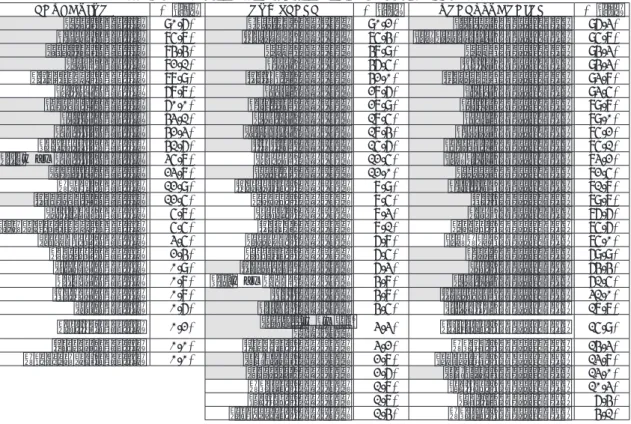
by adjectives (or attributive nouns) with 30 or more instances in either BNC or COCA. They are arranged according to the acceptability of a/an: the highest acceptability of a/an at the top and the lowest at the bottom. Qualitative adjectives are shaded. The data are from COCA except for those noun phrases that BNC finds more instances: media education, nursery education, management education, linguistic knowledge, human understanding.
Table 18 shows that the higher the a/an acceptability, the more chances to find qualitative adjectives. In the range of more than 70% acceptability of a/an, education has five noun phrases, out of which four are modified by qualitative adjectives (great, decent, excellent, good). Knowledge has two phrases in the range (working knowledge, thorough knowledge), both of which are modified by qualitative adjectives, and understanding has 17, out of which 15 are modified by qualitative adjectives.
In the range of less than 30% acceptability of a/an, education has 14 phrases, out of which 12 are modified by classifying adjectives (or attributive nouns), referring to levels of education (elementary, secondary, higher, further) and subjects of education (media, religious, nursery, science, sex, health, teacher, management). Knowledge has 50 phrases, out of which 36 are modified by classifying adjectives (shared, theoretical, general, etc.), and understanding has nine, out of which eight are modified by classifying adjectives (general, common, real, etc.). The data in Table 18 suggest that types of adjectives, i.e. whether qualitative or classifying, have a strong influence on the acceptability of a/an.
Table 18. Types of adjectives and the acceptability of a/an
EDUCATION % a/an KNOWLEDGE % a/an UNDERSTANDING % a/an
great education 90.6% working knowledge 90.2% clearer understanding 96.3%
decent education 85.7% thorough knowledge 75.4% comprehensive understanding 95.7%
excellent education 84.4% good knowledge 48.9% good understanding 94.3%
good education 82.1% deep knowledge 46.5% fuller understanding 94.3%
high school education 78.9% intimate knowledge 42.0% thorough understanding 93.8%
college education 68.7% basic knowledge 28.6% clear understanding 93.5%
adequate education 60.0% detailed knowledge 27.9% better understanding 89.8%
better education 43.1% greater knowledge 18.5% basic understanding 89.0%
quality education 42.3% extensive knowledge 18.4% deeper understanding 85.2%
university education 41.6% limited knowledge 15.6% adequate understanding 85.1%
high(-)quality education 35.7% shared knowledge 12.5% complete understanding 83.2%
effective education 23.7% certain knowledge 12.0% proper understanding 82.5%
media education 12.9% theoretical knowledge 8.9% detailed understanding 81.8%
inadequate education 12.5% general knowledge 8.5% full understanding 79.7%
religious education 5.7% special knowledge 8.3% new understanding 76.6%
elementary school education 5.5% inside knowledge 8.1% general understanding 75.6%
secondary education 3.5% personal knowledge 6.8% common understanding 75.0%
nursery education 2.4% practical knowledge 6.5% deep understanding 69.9%
science education 0.9% increased knowledge 6.3% real understanding 64.4%
higher education 0.8% first(-)hand knowledge 4.8% greater understanding 61.5%
further education 0.8% full knowledge 4.8% increased understanding 31.0%
sex education 0.6% useful knowledge 4.5% scientific understanding 17.7%
health education 0.2% specialis(z)ed
knowledge 3.3% historical understanding 15.9%
teacher education 0.0% technical knowledge 3.2% mutual understanding 14.3%
management education 0.0% sufficient knowledge 2.7% conceptual understanding 13.8%
superior knowledge 2.6% sufficient understanding 13.0%
musical knowledge 1.7% cultural understanding 10.3%
cultural knowledge 1.7% public understanding 6.4%
pedagogical knowledge 1.4% musical understanding 4.1%