• 検索結果がありません。

阪南大学学術リポジトリ

N/A
N/A
Protected

Academic year: 2021

シェア "阪南大学学術リポジトリ"

Copied!
18
0
0

読み込み中.... (全文を見る)

全文

(1)

Community - based Fundraising for User - fee  Exemption for Poor People: 

The Pagoda - based Health Equity Fund in Cambodia

Kenjiro Yagura

Abstract

 The pagoda-based health equity fund (HEF) in Kirivong Health Operational District is a scheme  to exempt poor people from user - fees using funds raised from the local people, especially non - beneficiaries of HEF  ( NBs ) . This paper is intended to examine how NBs are motivated to make a  donation and with what motives they could be expected to make larger donations.

 Analysis of field data indicate that, because HEF management committees, based on Buddhist  temple, solicit for voluntary donation in a way linked to Buddhism, most NBs regard the contribution  to the HEF as an act of merit making. Consequently, altruism for poor people and merit making  based on it are their major motives of donation. However, NBs tend to make a smaller donation  when they have altruistic motives than when they have non-altruistic motives such as an insurance  motive or when they make a donation on the basis of mutual help.

 The findings of this study underscore the potential role of religious organizations in raising funds  for  health  care  for  poor  people.  Another  lesson  is  that  having  non-poor  people  regard  their  contribution as an act of mutual support is expected to be effective to induce them to support the  fundraising.

Ⅰ Introduction

 From the standpoint of improving the quality of healthcare and allocating funds to underfinanced  sectors of healthcare, introduction of user fees at public health institutions was advocated  ( Akin  et al., 1987). Some governments of developing countries followed that recommendation. However, the  introduction of user fees is reported to have obstructed poor people ' s access to medical services in  some countries  ( McPake,  1993 ; James et al.,  2006) . To insure poor people ' s access to healthcare, some  governments exempt poor people from user - fees. Although this policy is not always effective  ( brief  review by James  et al.,  2006), the Cambodian  case is regarded as a successful case. To reduce  possible negative impacts of user - fees on poor people  ( Jacobs and Price,  2004) , the Cambodian  government introduced Health Equity Funds  ( HEF ) , a system of compensating public medical  facilities for their free medical services to poor people. Several studies have revealed that the HEF  succeeds in improving poor people's access to medical services and reducing the burden of their  medical expenses  ( Flores et al.,  2011 ; Jacobs et al.,  2007 ; Noirhomme et al.,  2007) .

 An unsolved problem of the HEF is how to raise funds. At present, the Cambodian government 

(2)

must rely on financial assistance by international donors for the HEF (Ministry of Health, 2011). To  extend the scale of the program and to assure its sustainability, funds should also be collected  domestically. In this regard, the program in Kirivong Health Operational District  ( Kirivong OD )

1) 

deserves attention. In Kirivong OD, Takeo province, the HEF at the health center  (HC) level is  funded by donations from the local population without financial support from outside. As HEF  management committees  ( HEFMC ) ,

2)

 the committees in charge of raising and managing the funds,  are closely connected with the pagoda committee of Buddhist temples  ( vat ) , a previous study called  this system  pagoda-managed HEF  (Jacobs et al., 2007).

 To introduce similar schemes in other regions of Cambodia and to construct schemes to collect  funds from the general public for healthcare services in other countries, a lot can be learned from  the case of the pagoda - managed HEF.

 To the author's knowledge, no similar scheme exists in other countries. Only Jacobs et al.  (2007)  analyze  the  pagoda - based  HEF  in  detail.  They  emphasize  the  organizational  capacity  and  the  organizational viability of HEFMCs. Regarding the issue of fundraising, the study describes how  funds are raised and presents the financial situations of the pagoda - based HEF. The study, however,  insufficiently addresses another important question: how non-beneficiaries of the HEF (NB), non- poor people by definition, are motivated to contribute funds to the HEF from which they do not  receive benefits.

 In this regard, it is worth noting that in Takeo province many villages have a fundraising practice  called sangkeaha to give financial assistance to those who suffer from serious illness. Sangkeaha is  similar to fundraising for the HEF in the sense that in both practices villagers are asked to make  donations to help their fellow villagers. The two practices are also similar in that people ' s faith in  Buddhism underlies people's participation in the fundraising. Because of these similarities, the study  on sangkeaha (Yagura, 2013) can provide clues to the understanding of fundraising for the HEF.

 But  sangkeaha differs from fundraising for the HEF in that in the former basically any villagers,  regardless of their economic status, can become a beneficiary  ( i.e. one who receives donations )  once  they get seriously ill. This means that, unlike fundraising for the HEF,  sangkeaha is a system of  mutual help like insurance (Yagura, 2013). People also take this point into consideration when they  make donations in  sangkeaha  ( Yagura,  2013) . The significant difference as such between the two  practices warrants a study specific to fundraising for the HEF. In fact, as demonstrated in the later  sections of this paper, we find dissimilarity in people's motive of donation between sangkeaha and  fundraising for the HEF.

 As discussed in the next section, the motive of donation is guided by the way in which the  fundraising is arranged. The latter is determined by characteristics of the organization that designs  the fundraising methods. However, as is also argued in the next section, how much NBs donate is  expected to be affected by their motives to donate. This suggests that we can collect more funds  from people by properly designing fundraising methods.

 Based on these arguments, this study examines three questions related to the pagoda - based HEF: 

(1)  what  motivates  NBs  make  a  donation  for  the  HEF;  (2)  what  elements  of  the  fundraising 

methods and the characteristics of HEFMC educe NBs '  motives; and  (3)  what relation exist between 

the type of the donation motive and the donation amount that people make. To address these 

(3)

questions, this study uses data collected mainly from HEFMCs and through a household survey  conducted in Kirivong OD.

 Although this study addresses only the case of Kirivong OD, the findings are expected to provide  hints for designing community-based financing schemes for poor people because no other case of  such a scheme has been reported in the relevant literature.

 This paper is organized as follows. The analytical framework is presented in the next section. 

After outlining fundraising methods and the financial record of pagoda - based HEF, people ' s motives  to contribute funds to the HEF are examined by linking it to the way in which the fundraising is  organized and the characteristics of the HEFMC. Then, the relation between the donation motives  and the donation amount is examined statistically. The final section summarizes the findings of this  study and presents policy implications derived from them.

Ⅱ Analytical Framework

 The special feature of the pagoda - based HEF as a health financing scheme is that funds are raised  from those who do not receive benefits directly from it. Apparently, non-poor people are asked to  help poor people unilaterally. Therefore, in terms of the issue of the motive or incentive of those who  make  a  financial  contribution,  conventional  theories  of  health  financing  such  as  that  of  health  insurance are inapplicable to the pagoda - based HEF. Rather, we must employ theories on giving in  general, which explain why people give to others, as elaborated in arguments by Kolm (2006).

 In addition, for designing effective schemes to raise funds for healthcare, we must relate people ' s  motive  ( or incentive )  to a way in which funds are raised. People ' s motives to donate are expected to  differ according to the way in which fundraising is organized even given identical purposes of  fundraising. To elucidate this argument, we discuss possible motives to donate (give) to others and  situations in which motives are likely to be induced in the context of fundraising for the HEF. The  theoretical arguments on motives to give to others presented below also serve as the basis of an  analytical framework for examining people's motive to make donations in sangkeaha (Yagura, 2013). 

 Following Kolm (2006), motives to give to others are classified largely into altruistic motives and  non - altruistic motives. In the former, a pursuit of the benefit of the recipient motivates the donor,  although it does not in the latter.

 Altruistic motives are based largely on hedonic altruism or normative altruism. For people with  hedonic altruism, the improvement of the welfare of the recipient makes them happy. This motive is  expected  to  be  induced  in  a  setting  where  donors  can  recognize  that  their  donation  actually  engenders the improvement of recipients '  circumstances. People give to others out of normative  altruism when they find normative values in helping others. This motive is expected to be induced  by giving the impression that a donation has such value.

 One non - altruistic motive is the avoidance of sanction  ( on those who fail to donate ) , which is  aroused by introducing a penalty for non - participation in donation. Another non - altruistic motive is  a pursuit of social prestige given to donors. For this motive to be effective, who made donations, and  how much, should be made public.

 Reciprocity, or the  insurance motive  based on it, is a motive which can be regarded both as 

(4)

altruistic and non-altruistic. This motive explains cases in which a person D makes a donation to R  to return the favor R gave to D in the past, or in which D expects to receive help from R in return  when  D  has  a  difficulty  in  future.  In  the  latter  case,  the  motive  of  D  can  be  regarded  as  an  insurance motive  because the purpose is to prepare for future risks. People can be expected to be  more likely to have such motives when the identities of donors and recipients are made public: a  situation in which donors and recipients can recognize the relations of dyadic reciprocity between  them.

 Even when the relations of dyadic reciprocity are not established between donors and recipients,  people  might  be  conscious  of  general  reciprocity  ( Kolm,  2008)   when  making  a  donation.  In  communities where people help each other on a daily basis, one can feel sure that other people can  be expected to help a person who falls into a difficult situation. Therefore, she might think she  should lend help to other people too even if she cannot expect to receive a favor directly from the  person she helps. In a similar manner, in the context of the HEF, NBs might think they should  contribute to the HEF because they would also be helped by other people through the HEF if they  were to become poor later.

 There are expected to be more motives than those described above, but a person can have  different motives at one time.

 The next question is how the donation motives are related to the donation amount. We cannot  assume that a specific motive affects the donation amount in a fixed  direction. Those who are  extremely altruistic can make a large donation only with their altruistic motive. However, we can  yet anticipate that people are likely to make a larger donation when their donation engenders their  own benefit in some way, or the motive includes a selfish element. Among the motives described  above, the pursuit of social prestige and the insurance motive are such motives.

 As discussed above, fundraising is arranged to determine the outcome of the fundraising by  influencing  people ' s  motives  to  donate,  which  would  then  affect  how  much  they  donate.  The  fundraising method is determined by the characteristics of the fundraising managing body, which is  expected to adopt methods to which the experience and the skill of its members are applicable or  which are in accordance  with their value judgment. For Kirivong OD, as explained later, HEFMCs  mainly  comprise  members  of  pagoda  committees,  which  execute  the  financial  management  of  Buddhist temples. Given this background, a previous report argues that HEFMCs succeed in a  transparent financial management (Jacobs et al., 2007). However, the fact that HEFMCs are based on  pagoda committees can also make a great difference in fundraising by directing the way in which  the fundraising is arranged.

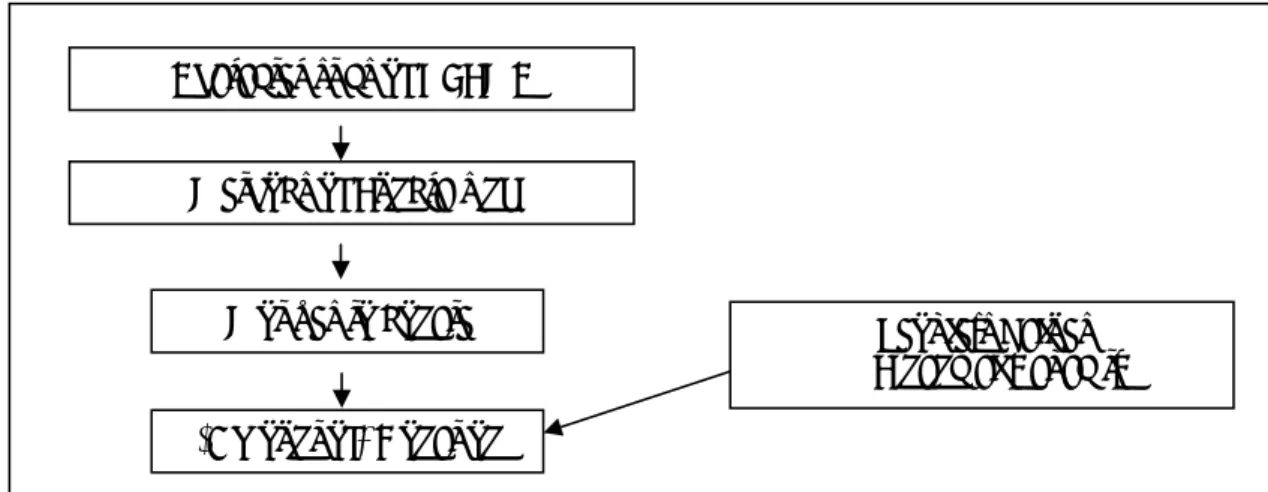
 The  relations  between  the  fundraising  method,  the  characteristics  of  the  managing  body 

determining it, and people's motive to donate can be presented as Fig.  1. The managing body 

hypothetically adopts fundraising methods that are tailored to their ability and values. The methods 

of fundraising set up as such, in combination with people ' s economic situation and value judgment, 

are expected to provide people with motives to donate. Therefore, they affect whether and how 

much people donate. In the following sections, we examine the respective components in this order.

(5)

Ⅲ Pagoda-based HEF in Kirivong OD

1.Field survey

 The data used for this study were collected through a field survey conducted in September 2010  and during February - March in  2011  by a research team including the author. We collected data  from three sources. First, general information related to HCs and HEFMCs was collected from  Buddhism for Health (BFH), a local NGO based in Kirivong, which supports HEFMCs and manages  the HEF at the hospital level. Second, five HCs and their affiliated HEFMCs  (A, B, C, D, E) were  selected. Subsequently, HEFMC representatives were interviewed to obtain detailed information  related to their activities. Two of the five HCs were selected from Kirivong district because the  district has the largest number of HCs in Kirivong OD. Each of other three HCs was selected from  the other three districts that constitute the OD.

 Third, to collect information related to local people ' s contribution to the HEF, a survey was  administered for  200  households in five villages, each of which is within the catchment area of one of  the five HCs

3)

 selected for this study. From each village 35 NB households (=non-poor households)  and five HEF beneficiary  ( EFB )  households  ( =poor households )  were selected randomly. Although  information related to EFBs was collected, only NBs data are used for this study because their  motive of contributing to the HEF is the subject of this study.

  Three of the five surveyed villages also have sangkeaha, through which funds are raised from  villagers to help those who get seriously ill.

4)

2.HEF in Kirivong OD

 Kirivong OD consists of the entire area of three districts  (Kirivong, Koh Andaet, and Borey  Cholsar ) ,  which  include  23   communes  in  total,  and  a  part  of  Treang  district  ( including  seven  communes ) .

5)

 These are rural districts where most households engage in rice farming. The OD has 

Fig 1. Analytical framework Source: Prepared by the author.

Characteristics of HEFMC Methods of Fundraising

Motives to donate People’s Values

& Financial Capacity (Amount of) Donation

Fig. 1. Analytical framework

Source: Prepared by the author.

(6)

20 HCs and one referral hospital. The population in the OD as of 2010 was 229,475, of which  32,254  people  (6 , 968  households ) , or  14 . 05 % of the entire population, were EFBs.

 Starting in  2003 , in Kirivong OD, the HEF scheme was applied to medical services at both the  referral hospital and HCs in the OD. EFBs are eligible to receive medical services at these public  facilities for no charge. The HEF also covers their transportation costs to these facilities.

 The HEF is funded at the hospital level by the Cambodian government  ( with financial assistance  from foreign donors ) . It is managed by BFH. The HEF at the HC level is managed by the HEFMC  established  at  each  HC  level.  The  funds  are  raised  by  the  respective  HEFMCs  from  the  local  population in the catchment area of the HC. Although HEFMCs have received regular technical  assistance from BFH and although they had received seed money from a foreign donor in  2003 , no  financial support from outside has been provided since then.

 BFH also introduces the HEF scheme based on locally collected funds such as the one in Kirivong  OD in other ODs  ( in Ang Roka OD in  2006 , in Kampot OD in  2009  and in Bati and Preah Sihanouk  ODs in  2010) .

3.HEFMC

 The HEFMC members are selected fundamentally from  vats and villages within the catchment  area of the affiliated HC. Among vats in the HC catchment area, one vat is designated as the vat kool,  which functions as the executive center of HEFMC. The chairman of the committee is selected from  the vat kool.

 The number of committee members and its composition differ from committee to committee. 

Table  1   presents cases of five HEFMCs surveyed. It is readily apparent that most members are  selected  from  vats.  Those  who  are  selected  from  vats  include  the  lay  members  of  the  pagoda  committee of respective vat as well as non-members of the pagoda committee but working for the  management of vat.  Achars, or lay persons arranging ceremonies related to Buddhism, are among  them.

 The members of HEFMCs are unpaid. Although they had received a transportation allowance 

Table 1. HEFMCs surveyed Catchment area Number of

committee

member Member

HC Number of

village Number of vat

A 19 8 24   The chief monk &  2   achar vat  from each  vat

B 21 10 20 2  persons from each  vat

C 17 6 46 2   persons  from  each  vat +  2   persons  from 

each village 

)

D 8 4 9 2   persons  from  each vat 

)

  +  1   vice  village 

chief from one of the  8  villages

E 15 4 8 2  persons from each  vat

Source : Prepared by the author based on information collected by the author from each HEFMC.

a)  Villagers other than village chief.

b)  Including one Islamic mosque  ( for other HCs no Islamic mosque exists in their catchment areas ) .

(7)

from BFH in the past, no allowance was provided in 2010.

 The committee members are expected to fulfill three tasks. They raise funds for the HEF and  make payments to the HC. They also identify EFB, or poor households eligible to receive the HEF  benefit. This work is done in collaboration with village chiefs of each village.

6)

 Moreover, they convey  requests from the local people to the HC to improve the service at the HC.

Ⅳ Fundraising Methods and Financial Records

1.Fundraising methods

 Each  HEFMC  determines  its  method  of  fundraising  for  the  HEF,  but  common  methods  are  adopted presumably because of advice from BFH and the exchange of ideas among committees. 

Fundraising methods adopted in 2010 by the five HEFMCs surveyed are as described below.

1)  Bon phkar

 All  five  HEFMCs  collected  funds  through  bon phkar,  a  traditional  fundraising  ceremony  in  Cambodia for public purposes such as construction of  vat and school buildings. Each of the five  HEFMCs organized  bon phkar dedicated for the HEF one time in  2010  in vats or villages. People  participate in bon phkar to make a donation on a voluntary basis.

2) Donation box

 Donation boxes dedicated for the HEF are placed at vats or commune offices to collect donations  from visitors. All five HEFMCs put donation boxes at vats. Three of them also place the donation  boxes at commune offices. Donation boxes at vats collect contributions from people especially when  religious events are held at  vats, such as phchum ben, kathem and thngai sel

7)

 as well as New Year  festival. Visitors decide independently whether to put money in a donation box. In fact, little donation  was collected through the donation box at commune offices. For this reason one HEFMC stopped  placing a donation box at the commune office in 2010.

3)  Contributions from vats

 All five HEFMCs ask each  vat  ( and one Islamic mosque in the case of one HEFMC )  in their  catchment area to contribute a set amount of funds to the HEF annually from their budgets. This  was started as early as in 2009, presumably in response to a funding shortage. Each vat has its own  funds, which are also donated from local people  ( and sometimes from affluent people from other  areas ) ,  for  vat  operations  and  vat  building  construction.  In  the  respective  cases  of  B,  D,  and  E-HEFMCs, each vat in the catchment area was asked to donate  500,000 riels every year. The  A - HEFMC area vats are asked for  300 , 000 − 500 , 000  riels annually  ( information related to E - HEFMC  was unavailable ) . However, according to financial records provided by these HEFMCs, only one vat  contributed  money  up  to  the  requested  amount  in  2010 ,  probably  because vats  are  also  not  sufficiently affluent to provide this level of contribution.

4)  Donation from private ceremonies

(8)

 Three HEFMCs also ask guests of private ceremonies (such as life cycle events) in villages to  make donations to the HEF.

2.Payment to the HC

 Using funds collected through these methods, each HEFMC pays to its affiliated HC the lost  revenue of the HC because of user - fee exemption for EFBs. To receive the payment, the HC reports  detailed data every month to the HEFMC related to the cases of the EFBs using services at the HC. 

After validating the information provided by the HC, the HEFMC reimburses the HC according to  the report.

 The money collected by a HEFMC is used only for payment to its affiliated HC; the funds are not  sent to other HCs. In other words, each HEFMC cannot count on  ( the money collected by )  other  HEFMCs if it cannot collect sufficient funds to pay the HC. Because of this  self-support system,   for some HEFMCs, the amount of money they collected is short of the user - fees for the EFBs, as  described later. In such a case, the HEFMC owes funds to the HC until it can collect sufficient funds  to  repay  the debt.

3.Financial status of HEFMCs

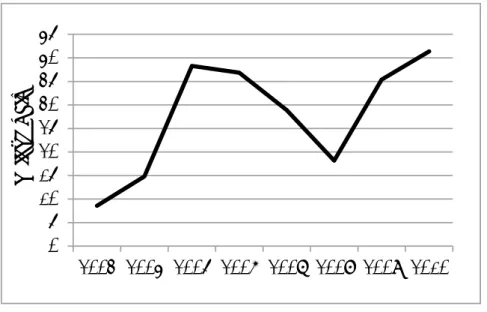
 Fig.  2  presents the total annual amount of funds collected by the  20  HEFMCs in Kirivong OD. 

After a steady increase to  2005 , the collected funds dropped abruptly. However, the amount collected  began to increase in  2009 again and hit a record-high level in 2010. The increase since 2009 is  attributable to the introduction of contributions from vats. The introduction of this new funding  source was a response to the abrupt drop up to  2008 .

0 5 10 15 20 25 30 35 40 45

2003 2004 2005 2006 2007 2008 2009 2010

m ill io n rie ls

Fig 2. Fund collected for HEF (for 20 HCs )

Source: Prepared by the author based on data provided from BFH.

Notes: Fund raising in 2003 was started from May.

Fig. 2. Fund collected for HEF (for 20 HCs ) Source: Prepared by the author based on data provided from BFH.

Notes: Fund raising in  2003  was started from May.

(9)

 Table  2  shows HEF revenue  ( the amount collected by HEFMC )  and the HEF expenses  ( user fees  for  the  EFBs  exempted  by  the  HCs),  as  well  as  their  mutual  differences.  As  the  table  shows,  HEFMCs succeed overall in collecting sufficient funds. In total,  52 . 7  million riels were collected by  the  20  HEFMCs in  2010 . The figures differ from those shown in Fig.  2  because different data sources  were used. This figure amounted to  1 , 632  riels per EFB  ( person )  and  267  riels per NB. In contrast,  the HEF expense at the 20 HCs during the same year was 37.3 million riels, leaving a surplus of 15.4  million riels.

 However, because of the  self - support system  described above, the financial performance varies  greatly by HEFMC. Among the  20 HEFMCs, five committees recorded a negative surplus in  2010. 

Although the  best  HEFMC obtained a surplus of 5,205 riels per EFB, the  worst  HEFMC ended  up with a deficit of  1 , 110  riels per EFB, or two million riels in total.

 We were unable to obtain detailed data related to the amount collected by fundraising methods,  but available data indicate that  bon phkar, the donation box, and the contribution from  vats is an  important  source  of  funds.  Regarding  A-HEFMC,  out  of  3.23  million  riels  of  the  total  amount  collected in  2010 ,  1 . 5  million riels were contributed from vats;  0 . 86  million riels was collected through  bon phkar. B - HEFMC also collected  1 . 0  million riels by bon phkar, which amounted to nearly half of  the total amount collected (2.03 million riels) during 2010. For C-HEFMC, out of the 0.43 million riels  collected during January- August  2010 ,  0 . 29  million riels were collected through donation boxes.

4.Household level data of donation

 Table 3 presents household-level data of donations made by NBs in  bon phkar for HEF in  2010  collected through our household survey in five villages. The names of the villages  ( A, B, C, D, E )   correspond to the names of the associated HEFMC or HC  ( e.g., A - village is a village within the  A - HC catchment area ) .

 The participation rate and the average donation amount vary greatly among villages. Although  most sample households in E - village participated in  bon phkar, only one - fourth joined in D - village. 

Regarding the average donation amount, the gap separating villages is more than double.

8)

Table 2. Financial status of the pagda-managed HEF in 2010 (riel)

Total Best HEFMC Worst HEFMC

HEF revenue  ( A ) 52 , 651 , 400 8 , 191 , 600 1 , 188 , 000

revenue per EFB 1 , 632 8 , 515 652

revenue per NB 267 615 143

HEF expense  ( B ) 37 , 250 , 150 3 , 184 , 200 3 , 211 , 500

Expense per EFB 1 , 155 3 , 310 1 , 762

Surplus   ( =A - B ) 15 , 401 , 2 505 , 007 , 400 -2 , 023 , 500

Surplus per EFB 477 5 , 205 -1 , 110

Surplus per NB 78 376 -243

Source : Prepared by the author based on data provided from BFH.

Notes : “Best HEFMC” refers to the HEFMC which has the largest surplus per EFB, while 

“Worst HEFMC” refers to the one with the smallest surplus  ( the largest deficit ) per EFB.

(10)

 The village with the lowest participation rate, D - village, is under the  worst HEFMC  shown in  Table  2   ( the worst HEFMC is in fact D - HEFMC ) . However, participating households of D - village  donated  more  than  those  in  other  villages  on  average.  Therefore  the  financial  status  of  the  D - HEFMC could be improved greatly if the participation rate were increased.

 In this regard, it is important to understand the reasons for non - participation. According to our  household survey, out of  71  households which did not participate in bon phkar in  2010 ,  80 % cited  did  not know  bon phkar was held  as the reason, and 17% responded  Absent from the village   (and  therefore did not know the holding of bon phkar or could not participate ) . Only  1 % described  lack of  money  ( to donate )  as the reason. Although these responses might not always express their true  motivations,  the  reasons  they  gave  indicate  that  they  failed  to  participate  not  because  they  disapproved of fundraising for the HEF and that they could have participated in bon phkar as long as  they were informed of the bon phkar and they had time to participate in it. This information further  suggests that the  bon phkar participation rate can be increased merely by informing people more  extensively of the holding of bon phkar and by taking measures to make participation easier.

Ⅴ Motives of Donation

1.Characteristics of the HEFMC and the fundraising methods

 The fundraising methods adopted by HEFMCs strongly reflect the fact the most committee  members  are  people  working  for vats  or  for  Buddhism.  They  are  achars  or  pagoda  committee  members.

 First, they adopt fundraising methods that are linked to Buddhism or  vat. Therefore, they have  experience at arranging fundraising through those methods. For instance, bon phkar, a traditional  fundraising method for various public causes in Cambodia, is generally linked to Buddhism and is  therefore arranged by  achars and attended by monks even when the purpose of the fundraising is  unrelated to vats (such as building school). Merely by changing the cause, they can collect money  from people for the HEF through bon phkar. Fundraising through the donation box is also linked to  Buddhism or  vat, not just because donation boxes are placed at vats but also because contributions 

Table 3. Participation and donation in   for HEF in 2010

Village N Participation 

rate  ( % )

Donation per household  ( riel )

Median Average

(1) (2)

A 33 69 . 7 2 , 000 5 , 189 3 , 459

B 34 41 . 2 2 , 000 2 , 643 1 , 088

C 35 54 . 3 2 , 000 2 , 105 1 , 143

D 31 25 . 8 2 , 500 3 , 929 887

E 35 85 . 7 1 , 000 1 , 603 1 , 374

Total 168 56 . 0 2 , 000 2 , 899 1 , 588

Source: Data collected by the author through household survey in February - March  2011 .

Notes: Date for NBs.  (1)  refers to the average over participating households;  (2)  refers to the 

average over the whole sample households.

(11)

made through the donation box are solicited especially at Buddhist ceremonies held at vats.

 Second, asking  vats for a contribution to the HEF seems possible only because some members of  HEFMCs also work on pagoda committees. This method would not be adopted if HEFMCs were  organized without those who involved with  vat management.  For ordinary people,  vats are rather  what they should support financially.

 However, the linkage with vat or Buddhism might exclude the possibility of adopting fundraising  methods that are unrelated to  vat or Buddhism or which conflict with religious principles. For  example, although regular collection of funds from local people was suggested as a fundraising  method  ( Jacobs  et al.,  2007) , this method has never been adopted, at least by the five HEFMCs we  surveyed, although it can be expected to bring them a steady flow of revenue. Methods involving  some sort of coercion might not be among the alternatives for HEFMC members working also for a  vat, a place devoted to religious faith, which is voluntary in nature.

2.Motives to donate induced by fundraising methods

 Next, we examine whether the HEFMC fundraising methods have such elements that induce the  motives of donation described above. As discussed below, we detect the element of normative  altruism but cannot find those of hedonic altruism, reciprocity, the avoidance of sanction and the  pursuit of social prestige. This is in contrast with the fundraising method of sangkeaha, in which we  also find the elements of hedonic altruism, reciprocity and insurance  ( Yagura,  2013) .

a )  Hedonic altruism

 Elements evoking hedonic altruism are not incorporated into fundraising methods. Compassion for  EFBs is unlikely to be evoked: donors do not hand over money directly to EFBs suffering from  illness. First, people are not informed of who the EFBs are (probably to avoid stigmatization). For  that reason, according to our household survey,  46 % of NBs can only guess  who the EFBs are in  their village or do not know them at all.

b) Normative altruism

 Fundraising  through  bon phkar  or  donation  boxes  placed  at  vats  evoke  a  sense  of  normative  altruism in the form of merit making. These fundraising methods are linked with Buddhism as  discussed above. Therefore people would have the impression that making a donation for the HEF is  in accordance with Buddhist teachings. This impression would engender a belief that by making a  donation  for  the  HEF  they  can  make  merit,  to  which  Buddhists  in  Cambodia  attach  great  importance.

9)

 Furthermore, according the representatives of HEFMCs, when they call villagers for  joining bon phkar, they emphasize not only that donations are intended to help poor people but also  that donors can make merit. Therefore, it is not surprising if people make a donation to make merit.

c )  Avoidance of sanction and the pursuit of social prestige

 Avoidance of sanction is unlikely to constitute a motive of donation because making a donation is 

voluntary. No penalty is put on non - participation in donation. People also would not make a donation 

to receive social prestige because who made a donation, and how much was donated are not made 

(12)

public.

d )  Reciprocity

 We cannot find elements that induce motives based on reciprocity. Dyadic reciprocal relations  between donors and recipients are difficult to form because neither the identities of donors nor  recipients are made public. In addition, HEFMC representatives told the author that they do not  mention that the donation is regarded as mutual help in the community when they call villagers for  participation in bon phkar. Furthermore, NBs are unlikely to perceive a mutual assistance relation  with EFBs because they cannot expect to receive much help from EFBs, who are poor by definition.

3.Motives of donation cited by non-beneficiaries

 To examine people's motives to make donations, in our household survey we asked NBs who have  participated in bon phkar  (N= 105)  why they made a donation to bon phkar  ( multiple answered were  allowed ) . The results are presented in Table  4 .

 The most cited reason is  to help poor people , indicating that NBs make a donation out of  altruism, although it remains difficult to tell whether it is hedonic or normative. The second reason is  to make merit . Such a normative - altruistic motive was cited by  62 % of respondents. These two  reasons have the same root as long as one can make merit just because they help poor people.

10)

 In  fact, presumably because of the way in which fundraising is organized, as described above, most NBs  relate the contribution to the HEF to merit-making. Of NBs including both those who participated in  bon phkar and those who have never participated  (N= 133) , all but  5 % of them answered that they  thought they could make merit by making a donation to bon phkar for the HEF.

 Motives regarded as being based on reciprocity include  to help each other ,  otherwise people  would not help me in future  and  so that people would help me in future , although we cannot  judge whether they are based on dyadic reciprocity or general reciprocity. Among these three  reasons, the latter two can be regarded as insurance motives because the respondents expect to  receive help when they have trouble in the future. Those who cited any of these three reasons  constitute  only  a  minority,  or  22%,  of  the  respondents,  reflecting  the  fact  that  no  element  is  incorporated into fundraising to make NBs perceive reciprocity in making a donation for the HEF, as 

Table 4. Reasons for participating in    for HEF (%)

To help poor people 72 . 4

To make merit 61 . 9

To help each other 11 . 4

Otherwise people would not help me in future 8 . 6

Otherwise people would accuse me 2 . 9

So that people would help me in future 1 . 9

It is a custom 1 . 9

Other reasons 13 . 3

Source: Data  collected  by  the  author  through  household  survey  in  February - March  2011 .

Notes: Response by NBs  ( N= 105) . Multiplue answers are allowed.

(13)

described above.

 As anticipated, no respondent cited a reason related to social prestige. Very few gave  otherwise  people would accuse me , or avoidance of sanction, as a reason.

 It  is  worthwhile  to  compare  these  reasons  to  make  donations  for  the  HEF  with  those  for  sangkeaha. In the household survey we asked respondents from the three villages with sangkeaha the  reason for making donations in sangkeaha. The following three points are worth mentioning.

11)

 First,  no respondent cited as a reason  to help poor people , the top reason in the case of donations for the  HEF. This is not surprising because in sangkeaha the recipients of donations are not limited to poor  people. Second, instead, the majority of the respondents  (84 % )  cited reasons related to reciprocity,  such as  we should help villagers with each other . The consideration of reciprocity, which much  fewer respondents expressed in the case of donations for the HEF, reflects the fact that  sangkeaha can be regarded as a system of mutual help among villagers, in which any villagers including non- poor people can become a recipient of donations in sangkeaha.

 Third, in contrast with the case of the HEF, merit - making is not the major reason in the case of  sangkeaha, cited only by  31  % of the respondents. This does not mean, however, that normative  altruism  is  unimportant  as  a  motive  for  making  donations  in  sangkeaha.  In  fact,  63  %  of  the  respondents also mentioned  we should help those who suffer  as a reason. Merit - making is of a  greater importance as a motive in making donations for the HEF supposedly because funds are  raised through  bon phkar. Perceiving bon phkar as a kind of Buddhism - related ceremony, people  would be more conscious about merit-making when making donation for the HEF than in the case  of sangkeaha.

12)

Ⅵ Motive and Amount of Donation

 As described in the previous section, most NBs answered that they contributed to the HEF to  help  poor  people  and  to  make  merit  by  doing  so.  Such  are  altruistic  motives.  In  contrast,  the  insurance motive can be regarded as a selfish motive, and only a very few respondents reported  such a motive.

 Although inducing NBs to have altruistic motives is apparently the key to the success of the  pagoda - based HEF in collecting funds from NBs, the fact that altruistic motives are the major  motives can negatively affect fundraising in terms of the donation amount that each participant  makes, as discussed above. To examine whether this is the case, this section presents analysis of the  effect of the motives of NBs on the donation amount they made using a regression analysis with our  household data.

 The dependent variable is the donation amount made by NBs in  bon phkar for the HEF held in  2010 .

 We define four dummy explanatory variables representing motives of donation:  to help poor 

people ,  to make merit ,  to help each other  and the  insurance motive . The first three variables 

take one if the respondent cited corresponding reasons as the reason for making a donation, and take 

zero otherwise.  Insurance motive  takes one in case the respondent cited  otherwise people would 

not help me in future  or  so that people would help me in future  as the reason, and takes zero 

(14)

otherwise. Based on the argument in Section II, the coefficient for  insurance motive  is inferred to  be  positive;  and  to  help  poor  people   and  to  make  merit   are  expected  to  have  negative  coefficients. However, the sign of  to help each other  can be either positive or negative because it  can represent either altruistic or non-altruistic motives.

 Other explanatory variables include attributes of household head (age and the educational level),  the  composition  of  the  household  member,  the  size  of  productive  asset,  and  village  dummies  controlling for any differences between villages. The asset size is defined as the first component of  the principal component analysis of three variables

13)

: the area of farmland, the number of draft  animals, and the total monetary value of other major productive assets

14)

 owned by the household.

 The  number  of  household  members  with  chronic  disease  as  well  as  a  dummy  variable  representing whether the household head has chronic disease are also included as explanatory  variables. These variables are fundamentally expected to be correlated negatively with the donation  amount by negatively affecting household disposable income  ( because of a greater burden of medical  expenses or a reduced number of working members ) . However, these variables can also positively  affect donations if those who  ( or whose family )  have chronic disease are more likely to appreciate  the significance of the HEF as a program reducing the burdens of medical costs.

 The  donation  amount  is  observed  only  for  households  participating  in  bon phkar.  Therefore,  estimating the  amount - of - donation function  independently can entail selection bias. However, the  estimation  result  of  the  sample  selection  model,  in  which  the  equation  relating  the  decision  of  participation in bon phkar and independent variables is used as the selection function,

15)

 indicates that  the  selection  bias  can  be  ignored.

16)

  Therefore  we  estimate  the  amount - of - donation  function  independently by Ordinary Least Squares  ( OLS )  using only data of those participating in bon phkar. 

The number of observations is 90 after omitting samples with missing variables and one sample for  which the donation amount is extraordinarily large (60,000 riels).

 The estimation result is presented in Table  5 , which supports our hypothesis related to the effect  of motives on the donation amount. Among the four motives, the insurance motive and  to help each  other  have a positive sign. Particularly, the coefficient for the former is significant and its value is  much larger than the latter. In contrast,  to help poor people  and  to make merit  have a negative  sign. The coefficient for the former is significant.

 This result indicates that people tend to make a smaller donation in bon phkar for the HEF when  their motive is only altruism than when they have selfish motives such as an insurance motive. In  addition,  the  result  that  to  help  each  other   has  a  positive  ( though  insignificant )   coefficient  suggests that we can induce more donation by making people conscious that the contribution to the  HEF can be regarded as mutual help in their community. Some members of HEFMCs are aware of  this possibility. The chairman of C-HEFMC told the author the following.

   More people would participate  ( in bon phkar for the HEF )  if it were called  bon samakki  rather 

than emphasizing  helping poor people  because many people think that poor people are poor 

just for their lack of effort, as land was distributed equally among households in the 1980s.

17)

 In his comment, samakki means unity or solidarity in Khmer. Therefore, his comment indicates 

(15)

that, to induce people to make a donation for the HEF, it is important to make people realize that the  contribution to the HEF is an act of helping one another in their own community, rather than  helping poor people unilaterally out of altruism.

 Effects of some other variables are as follows. The asset size has a significant positive sign,  indicating  that  donation  is  progressive,  as  is  normally  anticipated.  In  contrast,  the  number  of  chronically ill members is positively correlated with the donation amount, although  HH head is  chronically ill  has a negative coefficient.

18)

 The former result indicates that people would appreciate  the  significance  of  the  HEF  if  they  were  to  struggle  with  the  burden  of  medical  expenses  themselves.

Ⅶ Conclusion

 The pagoda - based HEF in Kirivong OD is funded by the local population, especially by donations  from NBs. This paper presents examination of: (1) with what motives NBs contribute to the HEF; 

(2)  what elements in the fundraising methods as well as the characteristics of the HEFMC induce  their motives; and  (3)  the relation between the donation motives and the donation amount. Data  collected from five HEFMCs as well as households in the catchment area of these committees  provide the following results.

 First, reflecting the fact that they are based on vat, HEFMCs do not adopt cohesive measures to  collect funds but solicit for voluntary donation in a way linked to vat or Buddhism such as holding a 

Table 5. Estimation result of the amount of donation function

Explanatory variables Coefficient

To help poor people  ( dummy ) -1074 . 6(2 . 20) **

To make merit  ( dummy ) -97 . 6(0 . 24)

To help each other  ( dummy ) 389 . 1(0 . 89)

Insurance  ( dummy ) 1134 . 3(2 . 22) **

Age of household head  ( year ) 57 . 0(2 . 25) **

Education level of household head

)

639 . 4(1 . 51) Number of household member  ( aged  0-14) 241 . 4(1 . 28) Number of household member  ( aged  15-59) 142 . 4(1 . 08) Number of household member  ( aged  60-) -819 . 8(1 . 55)

Asset

)

  630 . 2(3 . 77) ***

Number of cronically - ill household member   1401 . 8(2 . 60) **

Household head is cronically ill  ( dummy ) -2062 . 2(2 . 19) **

constant -784 . 3(0 . 50)

Source: Prepared by the author.

Notes: Village dummy variables are omitted from the table.

Adjusted R

2

 = 0 . 47 . Significance level: ***  1 %, **  5 %, *  10 %.

Figures  in  the  parenthese  are  the  absolute  value  of  t - static  based  on  heterogeneity - robust standard errors.

a)  No education= 0 ; Primary school= 1 ; Junior - highschool= 2 ; Highschool= 3 .

b)  See the main text and the notes for the definition of the variable.

(16)

bon phkar and placing donation boxes at vats. The close linkage with vat also enables HEFMCs to ask  for contributions from vats.

 Second, because of the voluntary characteristics of the fundraising and its linkage to Buddhism or  vat, most NBs regard the contribution to the HEF as an act of merit making, to which they attach a  great importance in their life. As a consequence, altruism for poor people and merit making based on  it are the major donation motives for NBs.

 These two findings indicate that the fact that HEFMCs are based on vat is a key to success of the  pagoda-based HEF not only in the sense that the members of HEFMCs can exercise proper funds  management  because  of  their  experience  of  vat  management,  but  also  in  the  sense  that  their  fundraising  style  motivates  people  without  cohesion  to  contribute  to  the  HEF  by  linking  the  contribution to religious value.

 Third, however, altruistic motives are negatively correlated with the amount of the donation each  NB makes. Rather, NBs tend to make larger donations when they have non - altruistic motives such  as an insurance motive or when they regard the contribution to the HEF within the context of  reciprocity or mutual help.

 These findings provide some lessons for those who intend to raise funds at the community level  for medical services given to poor people.

 First, where people are very religious and faith - based donation is actively organized, religious  organizations or people selected from or linked to such organizations can be good candidates as  fundraising organizers. In this regard, the system of the pagoda-based HEF  in Kirivong OD is  applicable to other areas of rural Cambodia. However, where the conditions described above do not  exist, the local governmental authority would be responsible for the fundraising. What kind of  method is effective in such a case is beyond the scope of this study and is therefore left for future  research.

 Second, to induce non - poor people, who are asked to contribute but who cannot benefit directly  from the scheme for poor people, to support the fundraising and increase their contribution, making  them aware that their making a contribution can be regarded as an act of mutual support in their  community is expected to be effective. In doing so, they can have non-altruistic motives, which are  expected to induce a greater contribution than through altruistic motives, as described in this paper. 

Although doing this remains as a difficult question and therefore merits future research, merely  changing  the  name  of  fundraising  activities  or  emphasizing  different  points  when  calling  for  contributions from people might be effective, as suggested above.

Acknowledgements

 This study was funded by International Program of Collaborative Research, CSEAS. I wish to 

thank the five HEFMCs, Buddhism for Health, and people in the five villages surveyed for providing 

information related to the HEF. I am also indebted to Mr. Dork Vuthy from the Royal University of 

Phnom Penh for preparing and supporting the field survey for this study. Moreover, I extend my 

heartfelt gratitude to the research assistants who conducted the field surveys.

(17)

Notes

1) The health operational district (OD) is the administrative unit of health administration in Cambodia. An OD  often includes a few districts (as a general administration unit).

2) The HEFMC also functions as the Health Center Management Committee (HCMC), but herein, we use the  former because of our emphasis on HEF management.

3) Each HC is assigned to catchment villages: the people in these villages are supposed to use that HC. However,  HCs can also provide medical services to people from outside their catchment area.

4) In sangkeaha of these three villages, people visit the patient's house to make a donation.

5) Cambodian local administrative units include provinces, districts, communes, and villages, in descending  order.

6) See Jacobs and Price (2006) for the criteria and the method of identification.

7) Thngai sel is a day set aside for the observance of Buddhist precepts.

8) The donation amount in A-village shown in the table is outstanding because one household donated 60,000  riels; if we omit this household, the average donation amount per participating household is 2,579 riels.

9) According to data collected through another survey by the author administered to 300 households in Treang  district in 2010, which is used in Yagura  (2013), 98% of respondents regarded making merit as  important   or  very important  to their life.

10) In the same survey, mentioned in Notes 9, 93% of the respondents answered that they could make merit by  helping those who are in trouble  which is comparable with  contributing to the construction of vat  (92%)  and  making one's son become a monk  (92%).

11) To compare with the case of the HEF, we only present the figures based on data collected from NBs. In fact,  the figures do not change much even if we include responses by EFBs in the data.

12) The distribution of the reasons for making donations in sangkeaha presented in this paper is similar to that  presented in Yagura (2013), which is based on data mentioned in Notes 9.

13) The first component explains 52% of the total variance. The eigenvalues for respective variables are 1.55, 0.45,  and 1.00.

14) The third variable is defined as the sum of the purchase price (in riels) of assets including tractors or tillers,  harvesters, threshers, rice mills, water pumps, motorbikes, and automobiles. Prices denominated in US dollars  are converted to riels with the average exchange rate of 2010 (4000 riels=1 US dollar).

15) The motive variables, which can be only defined for households participating in bon phkar, cannot be included  in the sample selection model. Instead, to satisfy the exclusion restriction, the selection function includes two  additional variables (a variable expressing whether the respondent has relatives among the HEF beneficiaries  and a variable representing whether the respondent knows any HEF beneficiary in the village other than  relatives).

16) The inverse Mill's ratio derived from the selection function is not statistically significant in the amount-of- donation function (p=0.53).

17) Under the government of People's Republic of Kampuchea, which was established after the collapse of  Democratic Kampuchea (the Pol Pot Regime), collective farming was dissolved gradually. Farmland was  redistributed to rural households in the 1980s.

18) This result does not change even if we remove  HH head is chronically ill  from the equation.

References

Akin, J., Birdsall, N. and de Ferranti, D. (1987) Financing Health Services in Developing Countries; A World Bank Policy Study; An Agenda for Reform. Washington, D.C.: World Bank.

Flores, G., Por, I., Men, C.R., O Donnell, O. and Doorslaer, E.A.  (2011)  Financial Protection of Patients through Compensation of Providers: The Impact of Health Equity Funds in Cambodia. Amsterdam: Tinbergen Institute.

Jacobs, B. and Price, N. (2004)  The Impact of the Introduction of User Fees at a District Hospital in Cambodia,   Health Policy and Planning, Vol. 19, No. 5, pp. 310-321.

Jacobs, B. and Price, N. (2006)  Improving Access for the Poorest to Public Sector Health Services: Insights from 

(18)

Kirivong Operational Health District in Cambodia,  Health Policy and Planning, Vol. 21, No. 2, pp. 27-39.

Jacobs, B., Price, N. and Oeun, S. (2007)  Do Exemptions from User Fees Mean Free Access to Health Services? 

A Case Study from a Rural Cambodian Hospital,  Tropical Medicine and International Health, Vol. 12, No. 11, pp. 

1391-1401.

Jacobs, B., Price, N. and Sam, S.O. (2007)  A Sustainability Assessment of a Health Equity Fund Initiative in  Cambodia, International Journal of Health Planning and Management, Vol. 22, No. 3, pp. 183-203.

James, C.D., Hanson, K., McPake, B., Balabanova, D., Gwatkin, D., Hopwood, I., Kirunga, C., Knippenberg, R.,  Meessen, B., Morris, S.S., Preker, A., Souteyrand, Y., Tibouti, A., Villeneuve, P. and Xu, K. (2006)  To Retain  or Remove User Fees? Reflections on the Current Debate in Low- and Middle-income Countries,  Applied Health Economics and Health Policy, Vol. 5, No. 3, pp.137-153.

Kolm, S.C. (2006)  Introduction to the Economics of Giving, Altruism and Reciprocity,  In Kolm, S.C. and Ythier,  J.M. (Eds.),  Handbook of the Economics of Giving, Altruism and Reciprocity Foundations Volume 1,  (pp. 1-122). 

Amsterdam: North-Holland.

Kolm, S.C. (2008) Reciprocity: An Economics of Social Relations. Cambridge: Cambridge University Press.

McPake, B.  (1993)  User Charges for Health Services in Developing Countries: A Review of the Economic  Literature,  Social Science & Medicine, Vol. 36, No. 11, pp. 1397-1405.

Ministry of Health (2011) Annual Health Financing Report 2010. Phnom Penh.

Noirhomme, M., Meessen, B., Griffiths, F., Por, I., Jacobs, B., Thor, R., Criel, B. and Damme, W.V. (2007)  Improving  Access to Hospital Care for the Poor: Comparative Analysis of Four Health Equity Funds in Cambodia,   Health Policy and Planning, Vol. 22, No. 4, pp. 246-262.

Yagura, K. (2013)  Community-based Fundraising-type Safety Net against Health Shock: the Case of Sangkeaha  in Rural Cambodia,  The Hannan Ronshu (Social Science), Vol. 48, No. 2, pp. 1-30.

  (2013年7月19日掲載決定)

Fig 1. Analytical framework  Source: Prepared by the author.
Fig 2. Fund collected for HEF (for 20 HCs )

参照

関連したドキュメント

Perhaps the most significant result describing planar graphs as intersection graphs of curves is the recent proof of Scheinerman’s conjecture that all planar graphs are segment

We show that a discrete fixed point theorem of Eilenberg is equivalent to the restriction of the contraction principle to the class of non-Archimedean bounded metric spaces.. We

The work is organized as follows: in Section 2.1 the model is defined and some basic equilibrium properties are recalled; in Section 2.2 we introduce our dynamics and for

We have formulated and discussed our main results for scalar equations where the solutions remain of a single sign. This restriction has enabled us to achieve sharp results on

In [9] a free energy encoding marked length spectra of closed geodesics was introduced, thus our objective is to analyze facts of the free energy of herein comparing with the

It is also known that every internally triconnected plane graph has a grid drawing of size (n − 1) × (n − 2) in which all inner facial cycles are drawn as convex polygons although

So far, most spectral and analytic properties mirror of M Z 0 those of periodic Schr¨odinger operators, but there are two important differences: (i) M 0 is not bounded from below

For a positive definite fundamental tensor all known examples of Osserman algebraic curvature tensors have a typical structure.. They can be produced from a metric tensor and a