秋 田 大 学 高 等 教 育 グローバルセンター紀要 1 − 9 (2021)
Extensive Reading in Quarantine: Maximizing University Library Resources During the COVID-19 Pandemic
自粛の英語多読:コロナ禍中に大学図書館の資料を最大的に利用
Ben Grafström
1Lecturer
Global Center for Higher Education Akita University
In 2020 the COVID-19 pandemic negatively impacted education worldwide. As university teachers attempted to move their courses “online,” they started to discover gaps in their understanding of what technological resources are currently available for education. Many educators also had to re-think their teaching practices, since they quickly realized long-lectures online fail to keep students engaged in class. Language educators, who traditionally have relied on face-to-face, in-person classes to teach foreign languages found themselves having to overhaul their syllabi and recalibrate their expectations of students.
This report briefly outlines an EFL extensive reading class that was formerly taught as a 100% paper-based course, but due to pandemic-restrictions was seamlessly transformed into a 100% digital course. Thanks to the support of the university library, students in the course had a wide range of reading materials at their disposal and could easily access the e-books off campus from their home or apartments, by using tablets, smartphones, or personal computers while in self-quarantine. 31 engineering students who were in their 2
ndyear of university, and whose individual English language abilities varied broadly, participated in the course. The students read an average
Abstract
2020 年のコロナウイルスの大流行は世界中の教育にとっても悪影響だった。授業がオンライン化 するにつれて,大学教授の中で教育に活用できる ICT についての理解に差があることが分かった。
また多くの教育者は,長時間のオンライン授業は生徒が学習に集中できないとすぐに気づき,教育方 法について再び考え直さなければならなかった。さらに,伝統的に対面での外国語教育に依存してい た外国語教員は,シラバスを修正し,生徒に対する期待を再考察しなければならないと感じていた。
ここでは,以前は 100 % 紙媒体で教えられていたが感染拡大防止により一貫して電子媒体となった EFL の多読について概要を説明していく。大学図書館の支援により学生は幅広い多読図書を自由に 使うことができ,自粛期間の間に大学から離れた自宅やアパートからタブレットやスマートフォン,
PC を使って簡単に e-books にアクセスすることができる。現在,さまざまな英語レベルの理工学部 2 年生 31 人が多読授業に参加していて,1 週間で平均約 1 , 771 語を e-book リーダーを通じて読んで
いる。 e-book リーダーは大学図書館から提供されており,この多読授業の学生は大学図書館のオン
ライン e-book 使用の約 40 % を占めている。そして学生は MReader という多読管理サイトにあるク
イズに解答して,彼らが読んだ図書の理解を確かめる。そして授業の最後には,学生は教授がシラバ スに記載した期待分量を上回って,約 84 . 66 % を読み進めたのである。
1
[email protected]
of approximately 1,771 words per week using e-book versions of graded readers. The e-book graded readers were supplied by the university library and the students in this course accounted for nearly 40% of the university library’s online e-book traffic. Students then demonstrated their comprehension of what they read by taking online quizzes using MReader, an extensive reading management site. At the end of the course, the students exceeded the professor’s expectations by reading approximately 84.66% more than what was required by the syllabus.
Keywords
extensive reading, MReader, graded readers, e-books, EFL
At the beginning of 2020, many educators in Japan were unsure of the effects that the fledgling coronavirus outbreak would have on teaching. By March, however, it became clear that the 2020–21 school year would be thrown into complete disarray. When it became apparent that face-to-face classes would put teachers, students, and staff at risk of contracting the fast-spreading, potentially lethal virus, Akita University, along with universities nationwide, opted to move classes “online” by utilizing services like ZOOM, Google Classroom, and Office 365 Education.
Indeed, many university educators, who had been relying on tried-and-true traditional teaching styles like lecturing and paper-based assignments and assessments were woefully unprepared for the transition to digital education- platforms and resources. I, too, found myself at a loss for how to teach the course English for Academic Purposes III—Reading,
2a course I have been teaching for about seven years to second-year engineering students. Fortunately, Akita University’s Library was well-equipped with the resources to help the students in the course succeed in their English language studies.
As the title of the course suggests, the course’s emphasis is on building students’ reading ability and reading skills, so naturally I had relied on mostly paper versions of books and resources. About 50% of the course work comprises of students reading books called graded-readers. These reading assignments are usually done in the Akita University Library, outside of class time. After reading the graded readers in the library, the students come to class ready to discuss and write about the books they read. In previous years, students read approximately 1,000 words per week, amounting to about 1 or 2 graded-readers per week. This type of reading-based, long term activity is called
“extensive reading.”
Since extensive reading requires students to read so many books, they do not buy their own books, but rather depend on the university library’s resources. The university library has hundreds of paperback graded-readers, published by a number of companies. Due to university restrictions, however, the library was closed to students, which meant the supply of graded readers was inaccessible to students during the spring semester of the 2020–21 school year. With this in mind, my two concerns were 1) whether or not I could conduct my reading class as normal, without negatively affecting students’ English language education, and 2) would the Akita University Library’s resources be accessible and sufficient enough for students to succeed at extensive reading. After consulting with library staff and carefully inspecting the library’s online resources, I determined that its collection of e-readers, which are specifically for extensive reading, was both vast and accessible enough for students to read successfully from home using their PCs, smartphones, or tablets.
Extensive Reading
Extensive reading refers to providing large quantities of easily comprehensible English books to students, thereby improving students’ reading proficiency, while allowing them to enjoy the process (Day & Bamford, 1998).
The impetus for an extensive-reading approach to education comes from the theory of implicit learning, which is “the
2
Which appears in Akita University ʼ s course guidebook as 大学英語 III — Reading. Herein, EAP III — Reading.
learning of complex information in an incidental manner, without awareness of what has been learned” (Sun, 2008).
In other words, by reading copious amounts of material in English, students can subconsciously gain an awareness of vocabulary, grammar, syntax, and other important elements necessary to learn a language. While extensive reading is important for learning one’s own native language, it is also beneficial for learning a foreign language. As Suk (2017) writes, “based on research to date, reading ability is only likely to develop gradually when L2 learners are continually exposed to abundant meaningful input, or extensive reading.”
In contrast to extensive reading is “intensive reading.” Intensive reading could be used to describe the approach that many university students experienced in middle and high school: reading texts with difficult vocabulary and complex topics—in other words, texts that require a lot of effort and concentration to read and comprehend. Since EAP I and EAP II (taken by freshmen in their first and second semester) focus primarily on intensive reading, the EAP III–Reading course is a good opportunity to introduce students to extensive reading, which they can continue even after the course is finished.
Extensive reading is not a new approach to either foreign language learning or learning in general. It has been a topic in education literature since at least 1930, for example in Hanna (1931) where he writes about extensive reading in contrast to intensive reading and their roles in America’s education system. In terms of extensive reading benefitting foreign language study, LeCoq (1942) says, “extensive foreign language reading posits experience and knowledge that are not found in young people at the Junior College level,” which hints at the implicit-learning nature of extensive reading.
Even though many Akita University students have high English-language ability, many students have reported that when they take tests like the TOEIC or TOEFL, they often cannot finish the readings in time. Of course, this could be an indicator of many gaps in the students’ abilities, but one benefit of extensive reading is that it boosts learner’s reading speeds (i.e., the number of words per minute they can read with a certain degree of comprehension).
Suk (2013) writes, that “since extensive reading provides L2 learners with the appropriate conditions through consistent reading practice with extended texts [they] can obtain the ability to read longer texts comfortably at a reasonable rate.” Thus, practicing extensive reading can help students read the texts on standardized tests more smoothly and quickly, leaving enough time to answer the test items. Indeed, Stoeckel, Reagan, & Hann (2012) have also cited the benefits on standardized tests reporting that “extensive reading has been found to improve TOEFL scores and is associated with increased TOEIC scores.”
Aside from the benefits of higher test scores, which are no doubt important for students to realize their career goals, the pedagogical goals of extensive reading are that it instills within students a joy of reading and good habits, that is reading as a pastime. Since extensive reading texts offer a wider variety of genres and topics to read about, students have the freedom to choose for themselves the books they read, thus allowing for a higher degree of learner autonomy and the increased motivation to continue reading on their own (Nakanishi, 2015). Another benefit that is not as intuitive is that even though students may be quite fluent in English (for example), they might avoid reading English books for leisure because of their beliefs that it is too burdensome, leading to what Lee and Schallert (2014) call a type of aliteracy. But since extensive reading texts (which are explained in more detail below) are often at a level of difficulty that matches an L2 learner’s ability, learners eventually grow to enjoy reading in a second language as a pastime.
Extensive Reading Materials: Graded Readers
Unlike typical textbooks, extensive reading programs usually utilize “graded readers.” Graded readers are short
books consisting of approximately 500–2000 words on average, and are designed with what Fry (2002) describes
as “readability” and “leveling” in mind. Readability means that the type of vocabulary in the book and the writing
style are both appealing to the reader, or as Harris & Hodges (1995) define it, “ease of comprehension because of
style of writing” (in Fry, 2002). Leveling means that the graded readers, which often come in sets, progress from those suitable for beginner, low-level learners, and progress to more complex texts for advanced readers, or as Weaver (2000) defines it, “as selecting books to match the competencies of a reader or writer” (in Fry 2002). Graded readers are not new to education: they have been around since at least the early 19
thcentury. As Fry (2002) explains,
“William Holmes McGuffey (1800–1873) developed the first widely used “leveled” set of readers in 1836, called The McGuffey Readers, which sold over 130 million copies in the United States.” The McGuffey Readers came in sets, each of which corresponded to a grade-school level. Prior to The McGuffey Readers, literacy education in the United States tended to rely on intensive reading of the Bible. McGuffey Readers, on the other hand, contained more lighthearted stories. In the 1920s and 1930s “graded” readers became more widespread and corresponded to grades in elementary school (Fry 2002), for example a reader labeled “3” was for 3
rdgrade, “4” for 4
thgrade, etc. Like the McGuffey Readers, these graded readers were primarily for American literacy education, in general, but in as late as the 1930s, graded readers began being used for foreign language education, too (see, LeCoq, 1942).
Akita University’s Library Resources
Whereas in a typical foreign language class, students may only need to have one or two main texts, an extensive reading program requires that students have access to many books, which can often number in the hundreds;
therefore, extensive reading programs rely on their schools and libraries to provide the materials. In 2012 the Akita University Library had about 100–200 graded readers on a single wall-shelving unit. Around 2014 and 2015, with the inauguration of the new Faculty of International Resource Sciences
3the library increased its inventory of graded readers and other extensive reading materials to approximately 700 books, which are now prominently located on the ground floor in the English Support Corner. According to the library’s online database
4there are 342 graded readers from Oxford University Press’s “Oxford Bookworms” series, 28 from Cambridge University Press’s
“Readers” series, 171 of Pearson’s “Penguin Readers” series, and many more. Oxford Bookworms range in 7 levels from Starter to Stage 6; Cambridge Readers in 11 levels from CEFR A1 to C2, and Penguin Readers in 8 levels from Starter to Level 7. The graded readers in each of these big-three collections range from word counts of 1,375 words in the starter levels to upwards of 30,000 words in most advanced levels. These main collections contain both fiction and non-fiction genres and subgenres like romance, comedy, mystery, and science fiction. While some of the fiction books in the starter levels are just basic stories, as the levels advance they tend to draw their material from more literary sources for example Shakespeare, Mark Twain, and Edgar Allen Poe. Non-fiction books include biographies, histories, geography, and science.
Extensive Reading in EAP III–Reading, Pre-Pandemic
EAP III–Reading is for sophomore engineering students. For EAP I and EAP II (taken by students in the Humanities, Engineering, and Medical faculties in their freshmen year), students are separated into class levels based on standardized test scores, for example, Engineering students with the lowest test scores are placed in levels D1 and D2, and the highest scoring students are placed in D12. In their sophomore year, however, students are free to select an EAP III class based on its theme, for example reading, speaking, listening, writing, or TOEIC intensive.
Due to this feature, the students in my EAP III—Reading class tend to have mixed English language skills. Although this feature may produce some challenges in other language programs, it is very suitable for an extensive reading program since, as Eichhorst & Shearon (2013) describe it, “extensive reading classes can accommodate students of varying ability levels, and challenge each of them in turn.”
3
Kokusai shigen gakubu 国際資源学部 .
4
https://www.lib.akita-u.ac.jp/top/
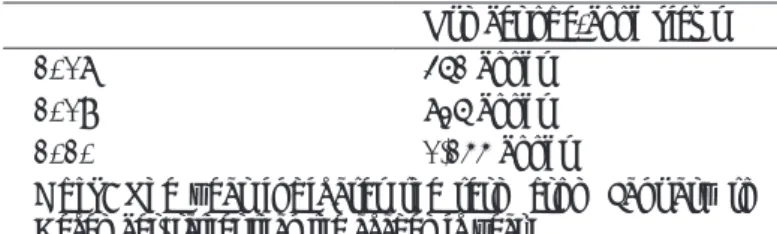
In prior years, extensive reading activities accounted for 50% of the EAP III—Reading students’ semester evaluation. This included reading graded readers outside of class, and then discussing the books they read in class in small groups in an activity I called “Book Share.” Using graded readers, the students had to read 1,000 words per week to earn an evaluation of “B” (see Table 1). One semester is approximately 15 weeks, so students would be given an evaluation each week, thus they were not being scored on a final total, but rather on whether or not they were reading regularly and consistently, as is required by extensive reading. As one can see, in order to “pass,”
students in EAP III—Reading potentially read anywhere from 13,500 to 18,150 words a semester, outside of their regular class time.
Table 1. Weekly-Reading Evaluations Fail (less than
60%) C (60–69%) B (70–79%) A (80–89%) S (90–100%) prior to AY
2020–21 < 900 words 900 words 1,000 words 1,100 words 1,210 words AY 2020–21 < 1,000 words 1,125 words 1,250 words 1,375 words 1,500 words MReader
I began introducing extensive reading activities into the EAP III—Reading course during the 2014–15 academic year, after reading The Tohoku University Extensive Reading Manual by Eichhorst and Shearon (2013). At the time my course’s extensive reading activities were 100% paper based: students read graded readers in the library and then recorded their word count and other pertinent information about the books they read on paper report-forms. In the 2018–19 academic year I began using a web service built for managing extensive reading programs called MReader, which added a bit of modern technology to my class, making the extensive reading program about 50% online, 50%
on paper.
One feature of graded readers is the book’s word count is indicated on the cover of the book, which makes keeping track of the number of words a student has read rather easy. In order for a book to count towards a student’s weekly word count, students needed to complete a quiz found on the free, online extensive reading website called MReader (a.k.a., Moodle Reader) which is hosted by The Extensive Reading Foundation. According to MReader’s website,
5the site was “developed with research funds from Kyoto Sangyo University and the Japanese Ministry of Education.” As of this publication, the site has 6000 quizzes, which is to say quizzes for 6000 graded readers from dozens of publishers.
Volunteer language teachers from all over the world submit questions to The Extensive Reading Foundation, creating a quiz-item bank of 20–30 items for each book. The MReader Manual for Teachers (n.d.) explains, most quizzes consist of at least 10 questions. There are a minimum of 20 questions that are available for any given book, of which, each student receives a random selection. There are four types of quiz items: multiple choice, “who said,”
true/false, and ordering. The exact number of each kind of item that a student must answer varies from quiz to quiz.
Each quiz has a 15-minute time limit, after which the student is timed-out of the quiz and does not receive credit for reading the book. Also, students may only take a book’s quiz once. Both of these measures (the time limit and quiz- taking limit) are to prevent cheating and to maintain the integrity of the quiz items. Furthermore, extensive reading is meant to encourage consistent reading habits, so in order to deter students from cramming all their reading in at once (i.e., the night before the deadline), there is a 6-hour mandatory wait-time between quizzes. MReader then keeps track of how many books a student read, the word count for each book, each students’ total word count for the semester, the level of each book, and the number of failed attempts at quizzes.
5