Development of Divergent and Parallel
Synthetic Methods for (E)- and
(Z)-Stereodefined Multi-Substituted Alkene
Scaffolds
著者(英)
Yuichiro Ashida
学位名
博士(理学)
学位授与機関
関西学院大学
学位授与番号
34504甲第627号
URL
http://hdl.handle.net/10236/00026467
Development of Divergent and Parallel Synthetic Methods for
(E)- and (Z)-Stereodefined Multi-Substituted Alkene Scaffolds
Yuichiro Ashida
Department of Chemistry
School of Science and Technology
Kwansei Gakuin University
2016
Development of Divergent and Parallel Synthetic Methods for
(E)- and (Z)-Stereodefined Multi-Substituted Alkene Scaffolds
Chapter 1
General Introduction: Synthetic Methods for (E)- and
(Z)-Stereodefined Alkenes
1
Chapter 2
(E)-, (Z)-Parallel Preparative Methods for Stereodefined β,β-Diaryl-
and
α,β-Diaryl-α,β-unsaturated
Esters:
Application
to
Stereocomplementary Concise Synthesis of Zimelidine
13
Chapter 3
(E)- and (Z)-Stereodefined Enol Phosphonates Derived from
β-Ketoesters: Stereocomplementary Synthesis of Fully-substituted
α,β-Unsaturated Esters
41
Chapter 4
General and Robust Method for the Preparation of (E)- and
(Z)-Stereodefined Fully-substituted Enol Tosylates: A Promising
Cross-coupling Partner
72
Chapter 5
Divergent Synthetic Access to E- and Z-Stereodefined
All-carbon-substituted Olefin Scaffolds: Application to Parallel
Synthesis of (E)- and (Z)-Tamoxifens
95
Chapter 6
(Z)-Enol p-Tosylate Derived from Methyl Acetoacetate: A Useful
Cross-coupling Partner for the Synthesis of Methyl (Z)-3-Phenyl (or
Aryl)-2-butenoate
126
Chapter 7
Synthesis of Methyl 1-Formylcyclopropanecarboxylate Utilizing
Ti-Claisen Condensation
136
Chapter 8
Acid-induced Favorskii-type Reaction: Regiocontrolled Elimination
of Acyloin Mesylates Leading to α,β-Unsaturated Ketones
148
Acknowledgements
168
1
Chapter 1.
General Introduction: Synthetic Methods for (E)- and
(Z)-Stereodefined Alkenes
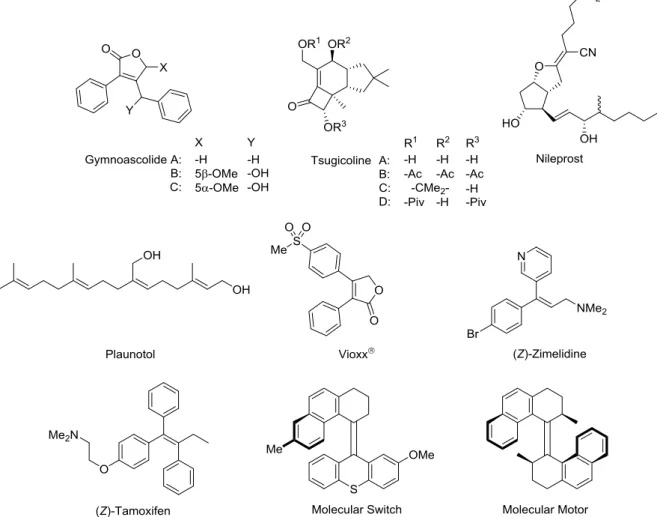
(E)- and (Z)-stereodefined alkenes are widely distributed in natural products, pharmaceuticals, and functional molecules. Figure 1-1 displays representative examples of these alkenes: aromatic butenolides (gymnoascolide A−C),1 protoilludane sesquiterpenes (tsugicoline A−D),2 a promising antiulcer agent (nileprost),3 antiulcer drug (plaunotol),4 an orally active cyclooxygenase-2 inhibitor (vioxx®),5 a selective serotonin reuptake inhibitor (SSRI) antidepressant [(Z)-zimelidine],6 an antiestrogenic agent [(Z)-tamoxifen],7 the chiral molecular switch,8 and the chiral molecular motor.9 Stereodefined alkenes also serve as useful scaffolds for a number of elaborated compounds through readily accessible transformations such as hydrogenation, epoxidation, and Michael addition to construct contiguous chiral and achiral centers.10
Due to the high demand, a number of stereocontrolled synthetic methods for (E)- and (Z)-multi-substituted stereodefined alkenes have been developed, and are generally categorized into six approaches (Scheme 1-1): 1) Wittig-type reactions, 2) carbometalations of alkynes using Cu, B, Sn, Mg, Pd, and so forth, followed by reactions with electrophiles, 3) cross-couplings with halogenovinyl templates, 4) elimination reactions of tertiary alcohols, 5) cross-metatheses between different alkenes, and 6) ynolate-mediated reactions derived from α,α-dibromoesters. However, the (E)- and (Z)-stereocomplementary method using the similar common starting materials with sufficient substrate-generality is quite limited to date.
2
3
Scheme 1-1. Stereocontrolled synthetic methods for (E)- and (Z)-multi-substituted stereodefined alkenes.
Strategies based on cross-coupling reactions with stereodefined enol sulfonate11 and phosphonate12 partners
derived from β-ketoesters, which emerged in recent decades, are considered as promising and reliable approaches compared with the above-mentioned methods, due to the following advantages: 1) various starting β-ketoester substrates are readily available,13 and 2) parallel approach enhances the versatility of the method.
In 2005, the Merck process group disclosed a characteristic protocol for (E)- and (Z)-stereocomplementary enol tosylations of specific α- or γ-nitrogen-substituted β-ketoesters using respective Ts2O−M(Li or
Na)HMDS and Ts2O−amine reagents (Scheme 1-2).14 The obtained stereodefined enol tosylate scaffolds
were successfully subjected to stereoretentive Suzuki-Miyaura (SM) cross-couplings for the synthesis of γ-aminobutanoic acid (GABA) precursors. In addition, they also reported a concise synthesis of chiral β-cyclopropyl-α-methyldihydrocinnamates.15 This notable pharmacophore was synthesized via (E)- and
4
(Z)-stereocontrolled enol tosylations using a β-cyclopropyl-α-methyl-β-ketoester; the (E)-isomer was prepared using Ts2O−NaHMDS at −78 °C, whereas the (Z)-isomer was prepared using the same reagent at room
temperature. Throughout the study, they consistently use reactive but highly expensive Ts2O instead of TsCl
for enol tosylation of β-ketoeste to avoid α-chlorinated by-product.
Scheme 1-2. (E)- and (Z)-stereocomplementary synthesis of γ-amino-substituted (E)- and (Z)-α,β-unsaturated esters utilizing stereoselective enol tosylations and stereoretentive cross-couplings reported by the Merck process group.
In 2008, Frantz’s group has reported a practical preparative method for (E)- and (Z)-stereodefined enol triflates derived from β-ketoesters (Scheme 1-3).16 Highly reactive these enol sulfonates have served as
useful building blocks for the synthesis of natural products,17 however, enol triflates methods have several drawbacks: (i) Tf2O is ca. 15−30 times more expensive than TsCl, (ii) Tf2O is highly toxic and hazardous
with a low boiling point (81−83 °C) and reacts violently with water, and (iii) triflates are often unstable under cross-couplimg conditions due to their inherent reactivity.
Scheme 1-3. (E)- and (Z)-Stereocomplementary preparation of enol triflates reported by Frantz’s group.
As a part of our ongoing studies on mild but powerful sulfonylations18 and silylations19 of various alcohols
and carbonyl compounds, in 2008 and 2009, our group has reported a series of (E)- and (Z)-stereocomplementary enol tosylations of not only acyclic “α-nonsubstituted” β-ketoesters (R1 = alkyl or
aryl, R2 = H), but also α-formylesters (R1 = H, R2 = alkyl or aryl), which were conducted by a much more
accessible TsCl−N-methylimidazole (NMI)−base system (Scheme 1-4). TsCl−NMI−Et3N was used for the
(E)-selective reactions, whereas TsCl−NMI−LiOH controlled the (Z)-selective reactions. Subsequent highly (E)- and (Z)-stereoretentive cross-couplings (Negishi,20a Sonogashira,20a Suzuki-Miyaura,20b and Kochi‒
5
Scheme 1-4. (E)- and (Z)-stereocomplementary synthesis of ‘not fully’-substituted (E)- and (Z)-α,β-unsaturated esters utilizing
stereoselective enol tosylations and stereoretentive cross-couplings.
As depicted in Scheme 1-5, the current privileged robust and cost-effective protocols have been successfully adopted for the synthesis of elaborated natural and unnatural compounds, such as juvenile hormones 0 and I,21a,b madangamine A,21c and functionalized steroids,21d etc .
Scheme 1-5. Synthetic applications of “not fully”-substituted (E)- and (Z)-enol tosylates.
This background led the author to envisage a highly substrate-general synthesis of multi-substituted (E)- and (Z)-stereodefined alkene scaffolds, and especially with focusing on a parallel and stereocomplementary methodology.
In chapter 2, parallel and practical methods for the preparation of both (E)- and (Z)-β-aryl1-β-aryl2-α,β-unsaturated esters and (E)- and (Z)-α-aryl1-β-aryl2-α,β-unsaturated esters are described
(Scheme 1-6). These methods involve accessible, robust, stereocomplementary N-methylimidazole (NMI)-mediated enol tosylations (14 examples, 70−99% yield), as well as stereoretentive Suzuki-Miyaura cross-couplings (36 examples, 64−99% yield). The highlighted feature of the present protocol is the use of parallel and stereocomplementary approaches to obtain (E)- and (Z)-products with high purity by utilizing sequential enol tosylations and cross-coupling reactions. An expeditious and parallel synthesis of (E)- and (Z)-zimelidine, which is a highly representative selective serotonin reuptake inhibitor (SSRI), was performed by utilizing the present methods.
6
Scheme 1-6. Parallel and practical methods for the preparation of both (E)- and (Z)-β-aryl1-β-aryl2-α,β-unsaturated esters and
(E)- and (Z)-α-aryl1-β-aryl2-α,β-unsaturated esters.
In chapter 3, a versatile, robust, and stereocomplementary synthesis of fully-substituted (E)- and (Z)-stereodefined α,β-unsaturated esters from accessible α-substituted β-ketoesters via (E)- and (Z)-enol phosphonates was achieved (Scheme 1-7). The present method involves two accessible reaction sequences: (i) (E)- and (Z)-stereocomplementary enol phosphorylations of a wide variety of β-ketoesters (24 examples; 71–99% yield, each >95:5 ds), and (ii) (E)- and (Z)-stereoretentive Suzuki–Miyaura cross-coupling (16 examples; 71–91% yield, >81:19 ds) and Negishi cross-coupling (32 examples; 65–96% yield, >95:5 ds) using (E)- and (Z)-enol phosphonates. 1H NMR monitoring for a key reactive N-phosphorylammonium
(imidazolium) intermediate I and an application in the synthesis of both (E)- and (Z)-tamoxifen precursors are described.
7
Scheme 1-7. Stereocomplementary synthesis of fully-substituted (E)- and (Z)-stereodefined α,β-unsaturated esters from
accessible α-substituted β-ketoesters via (E)- and (Z)-enol phosphonates.
In chapter 4, a robust method for preparing (E)- and (Z)-stereodefined fully-substituted enol tosylates is described (Scheme 1-8). -Substituted β-ketoesters undergo (E)-selective enol tosylations using TsCl– Me2N(CH2)6NMe2 as the reagent (method A, 13 examples; 63–96%) and (Z)-selective enol tosylations using
TsCl–TMEDA–LiCl as the reagent (method B, 13 examples; 62–99%). A plausible mechanism for the (E)- and (Z)-enol tosylation selectivity is proposed. A 1H NMR monitoring experiment revealed that TsCl coupled with TMEDA formed a simple N-sulfonylammonium intermediate.
Scheme 1-8. A robust method for preparing (E)- and (Z)-stereodefined fully-substituted enol tosylates.
In chapter 5, a highly substrate-general synthesis of all-carbon-substituted E- and Z-stereodefined olefins is performed (Scheme 1-9). The method comprises two sets of parallel and stereocomplementary preparations of (E)- and (Z)-α,β-unsaturated esters involving two robust and distinctive reactions: 1) stereocomplementary enol tosylations using readily available TsCl/diamine/(LiCl) base reagents, and 2) stereoretentive Negishi cross-coupling using the catalysts [Pd(dppe)Cl2] (for E) and [Pd(dppb)Cl2] (for Z). The present parallel
approach is categorized as both type I (convergent approach: 16 examples, 56−87% yield) and type II (divergent approach: 18 examples, 70−95% yield). The following two developments are performed by Atsushi Honda, one of the author’s colleagues: (i) The obtained (E)- and (Z)-α,β-unsaturated ester scaffolds
8
are successfully transformed into various E- and Z-stereodefined known and novel olefins (8x2 derivatization arrays). (ii) As a demonstration, application to the parallel synthesis of both (E)- and (Z)-tamoxifens, a representative motif of all-carbon-substituted olefins, is accomplished in a total of eight steps with overall yields of 58% (average 93%) and 57% (average 93%), respectively.
Scheme 1-9. Parallel and a highly substrate-general synthesis of all-carbon-substituted E- and Z-stereodefined olefins.
In the next two chapters 6 and 7, the author reports two subjects directed for the publication in Organic
Syntheses. Unique features of this journal are as follows. 1) Each procedure and all characterization data are
carefully checked for reproducibility in the laboratory of a member of the Board of Editors. 2) The procedure should be resulted in at least 5 g and no more than 50 g of the final product. 3) The purity of the final product should be at least 97%. The author has developed the procedure for two useful and less accessible building blocks in line with the criteria of Organic Syntheses.
In chapter 6, a synthesis of methyl (Z)-3-phenyl-2-butenoate [methyl (Z)-β-methylcinnamate] directed for
Organic Syntheses is presented (Scheme 1-10). Despite its simple structure, hitherto reported methods
require multi-steps or expensive reagents, a low temperature, and a long reaction period. The enol tosylation of methyl acetoacetate utilizing TsCl−TMEDA−LiCl reagent in AcOEt solvent gives (Z)-3-(p-toluenesulfonyloxy)but-2-enoate, which is converted to methyl (Z)-3-phenyl-2-butenoate utilizing a
9
highly cost-effective Pd(OAc)2 (1 mol%)/PPh3 (2 mol%)-catalyzed Suzuki-Miyaura cross-coupling with
nearly perfect (Z)-stereoretention. Throughout the procedure, tedious column chromatographic purification is not required. In addition, environmentally benign solvents, such as AcOEt, iPrOH, and H2O, are
employed for both of two reaction steps and the corresponding extraction (work-up) steps. In addition, the synthesis of the aryl analogues including stereocomplementary (E)-isomer are addressed.
Scheme 1-10. A synthesis of methyl (Z)-3-phenyl-2-butenoate directed for Organic Syntheses.
In chapter 7, a synthesis of methyl 1-formylcyclopropanecarboxylate directerd for Organic Syntheses is disclosed (Scheme 1-11). Despite its utility to install cyclopropane segment into various pharmaceuticals, hitherto reported methods require multi-steps or expensive reagents, a low temperature, and a long reaction period. Starting methyl 4-chlorobutanoate, possessing base-sensitive γ-chloro moiety, can be successfully α-formylated utilizing distinctive TiCl4/Et3N-mediated (Ti-Claisen) condensation at 0−15 °C to give methyl
4-chloro-1-formylbutanoate. Without any purification of the α-formylester, successive cyclopropanation is performed in mild basic conditions [Et3N (10 mol%)/K2CO3 (1 equiv) in AcOEt at 0−15 °C] to produce
methyl 1-formylcyclopropanecarboxylate, which is easily purified by simple distillation (the boiling point was documented for the first time). Throughout the procedure, column chromatographic purification is not required.
Scheme 1-11. A synthesis of methyl 1-formylcyclopropanecarboxylate directed for Organic Syntheses.
In chapter 8, a highly regiocontrolled acid-induced Favorskii-type elimination reaction of acyloin mesylates proceeded smoothly to give more substituted α,β-unsaturated ketones (Scheme 1-12). Not only acyclic but also cyclic acyloin mesylates produced the corresponding higher substituted enones via double-bond-migration pathway. A mechanistic speculation and application to a synthesis of chiral muscone precursor are also described.
10
Scheme 1-12. Regiocontrolled acid-induced Favorskii-type elimination reaction using unsymmetrically-substituted acyloin
11
References
1. Clark, B.; Capon, R. J.; Lacey, E.; Tennant, S.; Gill, J. H.; Bulheller, B.; Bringmann, G. J. Nat. Prod.
2005, 68, 1226.
2. Arnone, A.; Brambilla, U.; Nasini, G.; Pava, O. V. Tetrahedron 1995, 51, 13357.
3. Takahashi, A.; Kirio, Y.; Sodeoka, M.; Sasai, H.; Shibasaki, M. J. Am. Chem. Soc. 1989, 111, 643. 4. Ogiso, A.; Kitazawa, E.; Kurabayashi, M.; Sato, A.; Takahashi, S.; Noguchi, H.; Kuwano, H.; Kobayashi,
S.; Mishima, H. Chem. Pharm. Bull. 1978, 26, 3117.
5. (a) Caturla, F.; Amat, M.; Reinoso, R. F.; Cordoba, M.; Warrellow, G. Bioorg. Med. Chem. Lett. 2006, 16, 3209. (b) Wadman, M. Nature 2006, 440, 277. (c) Prasit, P.; Wang, Z.; Brideau, C.; Chan, C. -C.; Charleson, S.; Cromlish, W.; Ethier, D.; Evans, J. F.; Ford-Hutchinson, A. W.; Gauthier, J. Y. Gordon, R.; Guay, J.; Gresser, M.; Kargman, S.; Kennedy, B.; Leblanc, Y.; Léger, Y.; Mancini, J.; O’Neill, G. P.; Ouellet, M.; Percival, M. D.; Perrier, H.; Riendeau, D.; Rodger, I.; Tagari, P.; Thérien, M.; Vickers, P.; Wong, E.; Xu, L. -J.; Young, R. N.; Zamboni, R. Bioorg. Med. Chem. Lett. 1999, 9, 1773.
6. (a) Coppen, A.; Rama Rao, V. A.; Swade, C.; Wood, K. Psychopharmacology 1979, 63, 125. (b) Coppen, A.; Rama Rao, V. A.; Swade, C. Wood, K. Psychopharmacology 1979, 63, 199.
7. R. B. Miller, M. I. Al-Hassan, J. Org. Chem. 1985, 50, 2121.
8. Feringa, B. L.; Jager, W. F.; de Lange, B.; Meijer, E. W. J. Am. Chem. Soc. 1991, 113, 5468.
9. (a) Koumura, N; Zijilstra, R. W. J.; van Delden, R. A.; Harada, N.; Feringa, B. L. Nature 1999, 401, 152. (b) Koumura, N; Geertsema, E. M.; van Gelder, M. B.; Meetsma, A.; Feringa, B. L. J. Am. Chem. Soc.
2002, 124, 5037.
10. Flynn, A. B.; Ogilvie, W. W. Chem. Rev. 2007, 107, 4698.
11. For a representative review, and the concept on cross-couplings using enol tosylates and phosphates, see: Lindhardt, A. T.; Skrydstrup, T. Chem. Eur. J. 2008, 14, 8756, and relevant references cited therein. 12. For a representative review, see: Sellars, J. D.; Steel, P. G. Chem. Soc. Rev. 2011, 40, 5170.
13. (a) Smith, M. T. March’s Advanced Organic Chemistry, 6th ed. Wiley, New York, 2007, p. 624, 1355, 1452. (b) Clayden, J.; Greeves, N.; Warren, S.; Wothers, P.; Organic Chemistry Oxford University, New York, 2001, p. 728. (c) Kürti, L.; Czakó, B. Strategic Applications of Named Reactions in Organic
Synthesis Elsevier, Burlington, 2005, p. 86.
14. (a) Baxter, J. M.; Steinhuebel, D.; Palucki, M.; Davies, I. W. Org. Lett. 2005, 7, 215. (b) Steinhuebel, D.; Baxter, J. M.; Palucki, M.; Davies, I. W. J. Org. Chem. 2005, 70, 10124.
15. Christensen, M.; Nolting, A.; Shevlin, M.; Weisel, M.; Maligres, P. E.; Lee, J.; Orr, R. K.; Plummer, C. W.; Tudge, M. T.; Campeau, L. C.; Ruck, R. T. J. Org. Chem. 2016, 81, 824.
16. Babinski, D.; Soltani, O.; Frantz, D. E. Org. Lett. 2008, 10, 2901. 17. Zhang, S.; Dong, H.; Gui, J.; Tian, W. Tetrahedron Lett. 2012, 53, 1882.
18. Selected examples: (a) Tanabe, Y.; Yamamoto, H.; Yoshida, Y.; Miyawaki, T.; Utsumi, N. Bull. Chem. Soc.
Jpn. 1995, 68, 297. (b) Yoshida, Y.; Sakakura, Y.; Aso, N.; Okada, S.; Tanabe, Y. Tetrahedron 1999, 55,
2183. (c) Yoshida, Y.; Shimonishi, K.; Sakakura, Y.; Okada, S.; Aso, N.; Tanabe, Y. Synthesis 1999, 1633. (d) Morita, J.; Nakatsuji, H.; Misaki, T.; Tanabe, Y. Green Chem. 2005, 7, 711.
12
19. Selected examples: (a) Tanabe, Y.; Murakami, M.; Kitaichi, K.; Yoshida, Y. Tetrahedron Lett. 1994, 35, 8409. (b) Tanabe, Y.; Okumura, H.; Maeda, A.; Murakami, M. Tetrahedron Lett. 1994, 35, 8413. (c) Iida, A.; Horii, A.; Misaki, T.; Tanabe, Y. Synthesis 2005, 2677. (d) Tanabe, Y.; Misaki, T.; Kurihara, M.; Iida, A. Chem. Commun. 2002, 1628. (e) Iida,A.; Okazaki, H.; Misaki, T.; Sunagawa, M.; Sasaki, A.; Tanabe, Y. J. Org. Chem. 2006, 71, 5380. (f) Iida, A.; Hashimoto, C.; Misaki, T.; Katsumoto, Y.; Ozaki, Y.; Tanabe, Y. J. Org. Chem. 2007, 72, 4970. (g) Okabayashi, T.; Iida, A.; Takai, K.; Nawate, Y.; Misaki, T.; Tanabe, Y. J. Org. Chem. 2007, 72, 8142. (h) Takai, K.; Nawate, Y.; Okabayashi, T.; Nakatsuji, H.; Iida, A.; Tanabe, Y. Tetrahedron (Symposium in print) 2009, 65, 5596.
20. (a) Nakatsuji, H.; Ueno, K.; Misaki, T.; Tanabe, Y. Org. Lett. 2008, 10, 2131. (b) Nakatsuji, H.; Nishikado, H.; Ueno, K.; Tanabe, Y. Org. Lett. 2009, 11, 4258. (c) Nishikado, H.; Nakatsuji, H.; Ueno, K.; Nagase, R.; Tanabe, Y. Synlett 2010, 2078.
21. (a) Manabe, A.; Ohfune, Y.; Shinada, T. Synlett 2012, 23, 1213. (b) Totsuka, Y.; Ueda, S.; Kuzuyama, T.; Shinada, T. Bull. Chem. Soc. Jpn. 2015, 88, 575. (c) Yanagita, Y.; Suto, T.; Matsuo, N.; Kurosu, Y.; Sato, T.; Chida, N. Org. Lett. 2015, 17, 1946. (d) Li, H.; Mazet, C. J. Am. Chem. Soc. 2015, 137, 10720.
13
Chapter 2.
(E)-, (Z)-Parallel Preparative Methods for Stereodefined
β,β-Diaryl- and α,β-Diaryl-α,β-unsaturated Esters: Application to
Stereocomplementary Concise Synthesis of Zimelidine
Abstract
Parallel and practical methods for the preparation of both (E)- and (Z)-β-aryl1-β-aryl2-α,β-unsaturated
esters 2-1 and (E)- and (Z)-α-aryl1-β-aryl2-α,β-unsaturated esters 2-2 are described. These
methods involve accessible, robust, stereocomplementary N-methylimidazole (NMI)-mediated enol tosylations (14 examples, 70−99% yield), as well as stereoretentive Suzuki-Miyaura cross-couplings (36 examples, 64−99% yield). The highlighted feature of the present protocol is the use of parallel and stereocomplementary approaches to obtain highly (E)- and (Z)-pure products 2-1 and 2-2 by utilizing sequential enol tosylations and cross-coupling reactions. An expeditious and parallel synthesis of (E)- and (Z)-zimelidine (2-3), which is a highly representative selective serotonin reuptake inhibitor (SSRI), was performed by utilizing the present methods.
Introduction
The stereocontrolled preparation of ubiquitous (E)- and (Z)-α,β-unsaturated esters is pivotal in organic syntheses because these compounds serve as useful structural scaffolds for various stereodefined olefins and conjugate (Michael) addition acceptors. Both (E)- and (Z)-β-aryl1-β-aryl2-α,β-unsaturated esters 2-1 and (E)-
and (Z)-α-aryl1-β-aryl2-α,β-unsaturated esters 2-2 are well-recognized synthetic building blocks among
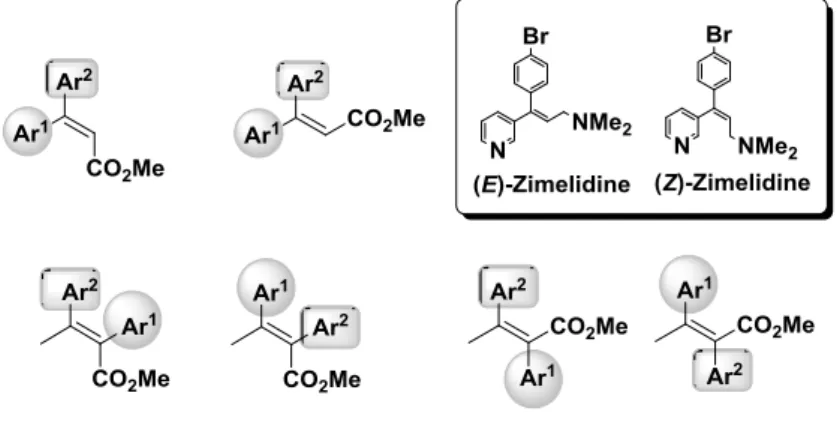
various α,β-unsaturated esters (Figure 2-1).
Figure 2-1. Examples of (E)- and (Z)-β-aryl1-β-aryl2-α,β-unsaturated esters 2-1 and (E)- and (Z)-α-aryl1-β-aryl2-α,β-unsaturated
14
Despite the reasonable demand for (E)- and (Z)-esters 2-1 and 2-2 for the synthesis of natural products, fine and supramolecules, and for process chemistry, stereoselective and general preparative methods have not yet been fully established due to the fundamental synthetic difficulty in differentiating between structurally similar diaryl (Ar1 and Ar2) moieties. A literature survey for the preparation of (E)- and (Z)-2-1 reveals that
1) Mizoroki−Heck reactions,1 2) a recent notable oxidative Heck reaction sequence (Studer’s group),2 and 3) an excellent cooper-catalyzed conjugate addition of ArB(OH)2 to alkynoates (Yamamoto’s group),3 are
representative stereocontrolled methods. A stereoselective preparative method of (E)- and (Z)-2-2 with sufficient substrate generality, however, is more limited. Sequential stereoretentive Suzuki-Miyaura cross-coupling with (E)-β-chloro-α-iodo-α,β-unsaturated esters should also be included as a successful example (Ogilvie’s group).4 Condensation of ynolates with acetophenone is a useful method (Shindo’s group), but a sole example has been presented with moderate stereoselectivity.5
Consistent with our continued interest in finding a methodology for the stereocomplementary preparation of (E)- and (Z)-stereodefined α,β-unsaturated esters,6 we disclose herein a parallel preparative method for (E)- and (Z)-2-1 and (E)- and (Z)-2-2. The present reaction sequence utilizes accessible and robust
N-methylimidazole (NMI)-mediated enol tosylations and Suzuki-Miyaura cross-couplings, as depicted in
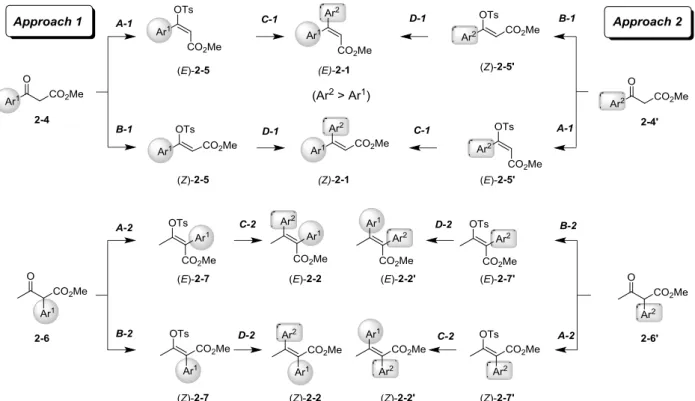
Scheme 2-1. The highlighted aspect of the present protocol is parallel and stereocomplementary Approaches
1 and 2 to obtain highly (E)- and (Z)- pure products 2-1 and 2-2 (or 2-2’) by accessible and robust enol tosylations and cross-coupling reactions, which start from readily available β-ketoesters 2-4 (or 2-4’) and 2-6 (or 2-6’), respectively. The present dual-mode approach enhances the versatility of the project. To demonstrate the utility of the present method, we describe an expeditious and parallel synthesis of (E)- and (Z)-zimelidine (2-3),7 which is a highly representative selective serotonin reuptake inhibitor (SSRI; Figure
2-2).
Figure 2-2. Structures of (E)- and (Z)-zimelidine (3-3) synthesized by means of the methodology described herein.
Results and Discussion
The initial (E)- and (Z)-stereocomplementary enol tosylations8-10 of starting readily available β-ketoesters 2-4
were performed by utilizing a conventional procedure with TsCl/NMI/base, as listed in Table 2-1. The salient features are as follows: 1) (E)-enol tosylation proceeded in good to excellent yield, but poor stereoselectivity, despite screening a number of conditions (amine and solvent; Method A-1). 2) In clear contrast, the (Z)-enol tosylation exhibited nearly perfect stereoselectivity (Method B-1). 3) Fortunately, (E)- and (Z)-enol tosylates 2-5 were easily separated by column chromatography and/or recrystallization. This result markedly contrasted with that obtained when using relevant aliphatic α,β-unsaturated esters,6 which was
likely to be due to intrinsically more stable (Z)-β-aryl-α,β-unsaturated (cinnamic) ester moiety.11 4) It should
15
Scheme 2-1. Parallel and stereocomplementary syntheses of both (E)- and (Z)-diaryl (Ar1, Ar2) α,β-unsaturated esters 2-4 and 2-6.
Ts = tosyl.
Table 2-1. (E)- and (Z)-Stereocomplementary enol tosylations using β-Ar1-β-ketoesters 2.4.
Entry Ketoester 2-4 Method Product Yield / % E/Z a
1 A-1 (E)-2-5a 73 60:40 2 B-1 (Z)-2-5a 70 2:>98 3 A-1 (E)-2-5b 96 51:49 4 B-1 (Z)-2-5b 80b 2:>98 5 A-1 (E)-2-5c 98 59:41 6 B-1 (Z)-2-5c 85c 2:>98
a) Determined by 1H NMR of the crude products. b) NaOH was used instead of LiOH. c) TsCl (2.0 equiv), LiOH (2.0 equiv), and NMI
16
Subsequent (E)- and (Z)-stereoretentive Suzuki-Miyaura cross-couplings12 with (E)-2-5 and (Z)-2-5 were
performed, as summarized in Table 2-2. The salient features are as follows: 1) Although reported catalysis with Pd(OAc)2–PCy36b produced disappointing results (decomposition of (E)-2-5; a somewhat undesirable
isomerization for (Z)-2-5), [Pd(dppb)Cl2]/KF or /K2CO3 catalysis resulted from the reaction with (E)-2-5,
whereas [Pd(dppf)Cl2]/K2CO3 catalysis produced fruitful results for (Z)-2-5 in good to excellent yield with
consistent stereoretention. 2) In clear contrast to the case of relevant aliphatic type substrates,6b which
Table 2-2. The (E)- and (Z)-stereoretentive Suzuki–Miyaura cross-coupling of β-Ar1-enol tosylates 2-5.a
Entry Ar1 Substrateb Ar2 Method Product Yield / % E/Zc
1 Ph (E)-2-5a (p-Me)C6H4 C-1 (E)-2-1a 92 (88)d 95:5
(95:5)
2 (Z)-2-5a D-1 (Z)-2-1a 88 2:>98
3 Ph (E)-2-5a (p-MeO)C6H4 C-1 (E)-2-1b 83 95:5
4 (Z)-2-5a D-1 (Z)-2-1b 64 2:98
5 Ph (E)-2-5a (p-Cl)C6H4 C-1 (E)-2-1c 55 (88)d 98:2
6 (Z)-2-5a D-1 (Z)-2-1c 77 11:89
7 Ph (E)-2-5a (p-F)C6H4 C-1 (E)-2-1d 82 96:4
8 (Z)-2-5a D-1 (Z)-2-1d 80 13:87
9 Ph (E)-2-5a (p-AcO)C6H4 C-1 (E)-2-1e 88 98:2
10 (Z)-2-5a D-1 (Z)-2-1e 80 10:90
11 Ph (E)-2-5a (o-Me)C6H4 C-1 (E)-2-1f 93 96:4
12 (Z)-2-5a D-1 (Z)-2-1f 80 10:90
13 Ph (E)-2-5a (o-Cl)C6H4 C-1 (E)-2-1g 93 96:4
14 (Z)-2-5a D-1 (Z)-2-1g 80 10:90
15 (p-MeO)C6H4 (E)-2-5b Ph C-1 (Z)-2-1b 88e 14:86
16 (Z)-2-5b D-1 (E)-2-1b 91 90:10
17 (p-Cl)C6H4 (E)-2-5b Ph C-1 (Z)-2-1c 87f 3:97
18 (Z)-2-5b D-1 (E)-2-1c 95 95:5
a) dppb=1,4-bis(diphenylphosphino)butane, dppf=1,1’-bis(diphenylphosphino)ferrocene. b) E- and Z-purities were up to >98% based on the
1H NMR spectra. c) Determined by 1H NMR spectroscopy of the crude products. d) K
2CO3 was used instead of KF. e) 5.0 equivalents of
17
requires harsh conditions (reflux in DMF), the present reaction proceeded smoothly under considerably milder conditions (60 °C in iPrOH) to give the corresponding (E)- and (Z)-esters 2-1 (Methods C-1 and D-1).
3) The parallel preparation mode was performed to afford (E)-2-1b, (Z)-2-1b, (E)-2-1c, and (Z)-2-1c (Table 2-2, entries 3−6 and 15−18). 4) Various substituents on Ar1 and/or Ar2, such as p-Me, p-MeO, p-Cl, p-F, p-AcO
o-Me, and o-Cl, were compatible (Table 2-2).
Our next study focused on a parallel approach for the preparation of (E)- and (Z)-α-aryl1-β-aryl2-α,β-unsaturated esters 2-2. The reported method using a condensation reaction of
ynolates with acetophenone produces a variety of tetrasubstituted α,β-unsaturated esters,[5] wherein a sole specific example, (E)-2-2a with E/Z = 86:14, is produced. To the best of our knowledge, there is no (E)- and (Z)-stereocomplementary method for the preparation of 2-2 with sufficient substrate-generality.
Table 2-3 lists successful (E)- and (Z)-stereocomplementary enol tosylations starting from β-ketoesters 2-6.
Notably, refinement of the reaction conditions led to highly satisfactory results (excellent yield and nearly perfect (E)- and (Z)-stereoselectivity); replacement of MeCN with DMF was effective for the preparation of (E)-2-7 (Method A-2), and the combined use of TMEDA/LiCl displaced with NMI/LiOH was effective for (Z)-2-7 (Method B-2). Similar to the case of 2-5, all of these stereodefined (E)- and (Z)-enol tosylates 2-7 are novel compounds.
Table 2-3. The (E)- and (Z)-stereocomplementary enol tosylations of α-Ar1-β-ketoesters 2-6.a
Entry Ketoesters 2-6 Method Product Yield / % E/Zb
1 2-6a A-2 (E)-2-7a 94 >98:2 2 B-2 (Z)-2-7a 93 2:>98 3 2-6b A-2 (E)-2-7b 98 >98:2 4 B-2 (Z)-2-7b 99 2:>98 5 2-6c A-2 (E)-2-7c 98 >98:2 6 B-2 (Z)-2-7c 99 2:>98 7 2-6d A-2 (E)-2-7d 92 >98:2 8 B-2 (Z)-2-7d 98 2:>98
18
A plausible mechanism for the successful emergence of (E)-, (Z)-enol tosylation stereoselectivity is depicted in Scheme 2-2, wherein substrate 2-6a is exemplified. The addition of TsCl and NMI forms key a highly reactive sulfonyl ammonium salt, the existence of which is supported by 1H NMR spectroscopic analysis.6a The (E)-stereoselective reaction proceeds through a non-chelation pathway to give (E)-2-7a; the
quaternary ammonium cation aids (E)-enolate formation formation through dipole−dipole repulsive interactions between the oxy anion and ester function. In clear contrast, the (Z)-stereoselective reaction proceeds through a chelation mechanism to give (Z)-2-7a; Li cation facilitates (Z)-enolate formation.
Scheme 2-2. Mechanistic investigation for (E)- and (Z)-stereoselective enol tosylation of 2-6a.
Successful results of subsequent (E)- and (Z)-stereoretentive Suzuki-Miyaura cross-coupling reactions with enol tosylates (E)-2-7 and (Z)-2-7 are listed in Table 2-4. Unfortunately, the aforementioned catalytic reactions with [Pd(dppb)Cl2]/KF and [Pd(dppf)]Cl2/K2CO3 could not be applied for the respective preparation
of (E)-2-7 and (Z)-2-7; Under identical conditions, Methods C-1 and D-1 resulted in low conversion yield (ca. 20%). Several other catalytic reactions, such as those [Pd(PPh3)4], Pd(OAc)2/PCy3/base, and [Pd(PPh3)2Cl2],
gave similar disappointing results. After standard screening procedures, to our delight, the reaction with Pd(OAc)2/2-dicyclohexylphosphino-2’,6’-dimethoxybiphenyl (SPhos)/iPr2NEt catalysis proceeded smoothly
to give the desired (E)-2-2 and (Z)-2-2.
The salient features are as follows: 1) For both (E)-2-7 and (Z)-2-7 substrates, the use of Pd(OAc)2/
SPhos/iPr2NEt catalyst system produced fruitful results. 2) Excellent yield was obtained in almost all cases
examined (entries 1−6, 9−16). 3) Notably, almost perfect stereoretentivity was obtained in every case examined. 4) Two sets of the reactions with the (p-Cl)C6H4B(OH)2 nucleophile (Ar2) and substrates
containing (p-Cl)C6H4 group (Ar1) were concurrent with further cross-couplings (Table 2-4, entries 7, 8, 17,
and 18). The structure of these byproducts was unambiguously determined based on 1H NMR and 13C NMR
spectroscopy, IR spectroscopy, and HRMS measurements. This conspicuous problem was successfully resolved by using another catalyst (see below). 5) The addition of H2O to the reaction system dramatically
affected the results; In the absence of H2O, the yield was decreased to ca. 20%. 6) Several substituents on
Ar1 and/or Ar2, such as p-Me, p-MeO, and p-Cl, were compatible (Table 2-4, entries 3−8 and 13−18). 7)
19
Table 2-4. The (E)- and (Z)-stereoretentive Suzuki-Miyaura cross-coupling of α-Ar1-enol tosylates 2-7.
Entry Ar1 Substratea Ar2 Method Product Yield/ % E/Z b
1 Ph (E)-2-7a Ph C-2 (E)-2-2a 94 >98:2
2 (Z)-2-7a D-2 (Z)-2-2a 99 2:>98
3 (E)-2-7a (p-Me)C6H4 C-2 (E)-2-2b 97 >98:2
4 (Z)-2-7a D-2 (Z)-2-2b 99 2:>98
5 (E)-2-7a (p-MeO)C6H4 C-2 (E)-2-2c 97 98:2
6 (Z)-2-7a D-2 (Z)-2-2c 99 2:>98 7 (E)-2-7a (p-Cl)C6H4 C-2 (E)-2-2d 48 (10)c >98:2 8 (Z)-2-7a D-2 (Z)-2-2d 41 (10)d 2:>98 9 (E)-2-7a C-2 (E)-2-2e 92 >98:2 10 (Z)-2-7a D-2 (Z)-2-2e 96 2:>98 11 (E)-2-7a C-2 (E)-2-2f 94 >98:2 12 (Z)-2-7a D-2 (Z)-2-2f 95 2:>98
13 (p-Me)C6H4 (E)-2-7b Ph C-2 (E)-2-2g 99 >98:2
14 (Z)-2-7b D-2 (Z)-2-2g 97 2:>98
15 (p-MeO)C6H4 (E)-2-7c Ph C-2 (E)-2-2h 99 >98:2
16 (Z)-2-7c D-2 (Z)-2-2h 99 2:>98
17 (p-Cl)C6H4 (E)-2-7d Ph C-2 (E)-2-2i 41 (50)e >98:2
18 (Z)-2-7d D-2 (Z)-2-2i 58 (39)f 2:>98
a) The E- and Z-purities were up to >98% based on the 1H NMR spectra. b) Determined by 1H NMR spectroscopy of the crude products.
c) (E)-2d-x d) (Z)-2d-x
20
9−12).
With this successful outcome (Methods A-1, B-1, C-1, D-1) in our hands, we next envisaged an application for concise and parallel stereocontrolled synthesis of (E)- and (Z)-2-3. We referred fully to the pioneering works established by the groups of Bäckvall and Högberg.13,14
The reported nonstereoselective method13 for the synthesis of 2-3 involves the following reaction sequence:
1) addition of allylmagnesium chloride with p-bromophenyl 3-pyridyl ketone, giving the tertiary allyl alcohol, 2) successive acid-promoted allyl rearrangement giving the allyl chloride; and 3) final dimethylamination. On the other hand, stereoselective synthesis14 was performed proficiently by rigorous pH-controlled reductive amination procedure. Due to the difficulty of stereocontrol, and oxidation as a side reaction, reductive amination steps were required.
Our synthetic approach and the successful result are illustrated in Scheme 2-3. The salient features are as follows: 1) Steresoselective enol tosylations of β-ketoestes 2-8a and 2-8b successfully proceeded when using Methods A-1 and B-1, conditions [a]−[d]. 2) Contrary to our expectation, Suzuki-Miyaura cross-coupling with (3-Py)B(OH)2 with (E)-2-9 did not proceed (no reaction) under the identical conditions (Methods C-1
and D-1). Fortuitously, the use of small amounts of H2O cosolvent resolved the problem for all four desired
stereocomplementary reactions, conditions [e]−[h], in excellent yield (79−91%) with almost perfect stereoretention (E/Z = >97:3). 3) Despite the labile p-Br substituent, none of the four cross-couplings had serious side reactions, such as reduction or further couplings. 4) Compounds (E)- and (Z)-2-3 were successfully obtained through the accessible reaction sequences, that is, DIBAL reduction, chlorination with SOCl2/catalytic DMF, and final dimethylamination with aqueous solution of Me2NH, conditions [i] and [j].
Despite the simple operation, undesirable isomerization between E and Z did not occur. 5) Overall yields were 33% for (Z)-2-3 and 45% for (E)-2-3 after each five parallel steps. Compared with extensive studies on the synthesis for (E)- and (Z)-2-3,[13,14] which involved MnO
2 oxidation of allylic alcohol followed by
reductive amination or dimethylamination, the present method is of highly concise and orthogonal without tedious pH-dependent separation.
21
Scheme 2-3. Parallel and stereocomplementary syntheses of both (E)- and (Z)-2-3. Reagents and conditions: [a] TsCl (1.5
equiv)/NMI (1.5 equiv)/Et3N (1.5 equiv)/N,N-dimethylacetamide (DMA), 20 – 25 °C, 1 h. 96%, E / Z = 75:25. Pure (E)-2.9 was
isolated in 66% (column chromatography). [b] TsCl (2.0 equiv)/NMI (2.0 equiv)/NaOH (1.5 equiv)/CH2Cl2, 20 – 25 °C, 2 h. 81%,
E/Z = 8:92, 81%. Pure (Z)-2-9 was isolated in 66% (washing with hexane). Notably, the reaction with LiOH is very sluggish
(only 29% yield). [c] TsCl (1.5 equiv)/NMI (1.5 equiv)/LiOH (1.5 equiv)/CH2Cl2, 20 – 25 °C, 2 h. 72%, E/Z = 2:>98. [d] Similar
conditions to [a], 92%, E/Z = 67:33. Pure (Z)-2-10 was isolated in 62% (column chromatography). [e] (p-Br)C6H4B(OH)2 (1.05
equiv), [Pd(PPh3)2Cl2] (5 mol%), K2CO3 (3.0 equiv), iPrOH/H2O (3:1), 60 – 65 °C, 1 h, 89%, E/Z = 2:>98. The use of
[Pd(dppb)Cl2] gave about 35% conversion. [f] (p-Br)C6H4B(OH)2 (1.05 equiv), [Pd(PPh3)2Cl2] (5 mol%), K2CO3 (3.0 equiv),
iPrOH/H2O (3:1), 60 – 65 °C, 1 h, 79%, E/Z = >98:2. [g] (3-Py)B(OH)2 (1.05 equiv), [Pd(dppf)Cl2] (5 mol%), K2CO3 (3.0 equiv),
iPrOH/H2O (3:1), 60 – 65 °C, 81%, E/Z = 2:>98. [h] Similar conditions to those given for [g], 81%, E/Z = 97:3. [i] i)
diisobutylaluminum hydride (DIBAL; 4.0 equiv)/THF, −78 °C, 0.5 h. 82%; ii) SOCl2 (1.5 equiv), DMF (5 mol%)/CH2Cl2, 20 − 25 °C,
successive treatment with an aqueous solution of Me2NH (10 equiv), 1 h, 91%, E/Z = 2:>98. [j] Similar conditions to those given
for [i], overall 81%, E/Z = 98:2.
Encouraged by the successful synthesis of (E)- and (Z)-2-3, we reinvestigated two sets of cross-couplings by using a (p-Cl)C6H4B(OH)2 nucleophile with (E)-2-7a and (Z)-2-7a and a PhB(OH)2 nucleophile with
acceptors (E)-2-7d and (Z)-2-7d, which contained the (p-Cl)C6H4 group (see unsatisfactory cases in Table 2-4,
entries 7, 8, 17, and 18). Gratifyingly, as depicted in Scheme 2-4, the reaction catalyzed by [Pd(PPh3)2Cl2]/K2CO3 in iPrOH/H2O (3:1) at 60−65 °C proceeded very smoothly to give the desired products
(E)-2-2d, (Z)-2-2d, (E)-2-2i, and (Z)-2-2i in good yield with excellent stereoretention; the amounts of respective undesirable further-coupled byproducts, (E)-2-2d-x, (Z)-2-2d-x, (E)-2-2i-x, and (Z)-2-2i-x, decreased to trace amounts. The present results contribute towards strengthening the substrate generality of Methods C-2 and D-2. This outcome may be attributed to the milder catalysis with [Pd(PPh3)Cl2] than that
22
Scheme 2-4. Refinement for catalysis with the p-Cl-substituted nucleophile and substrate by using Methods C-2 and D-2.
Conclusion
An efficient, (E)- and (Z)-stereocomplementary, and parallel synthetic methods have been developed for the production of a variety of stereodefined β,β-diaryl- and α,β-diaryl-α,β-unsaturated esters. The present method involves a couple of readily accessible reaction sequences; (i) robust and (E)-, (Z)-stereocomplementary enol tosylations of β-ketoesters and (ii) successive stereoretentive Suzuki-Miyaura (SM) cross-couplings. Appropriate (subtle but laborious) tunings of the catalysts for SM cross-coupling improved the yield, stereoretentivity, and accessibility of the reaction conditions. In addition, 3-pyridyl and (p-bromo)phenyl group were compatible during the SM cross-coupling stage, which demonstrates the performance of the concise and parallel stereocontrolled syntheses of (E)- and (Z)-zimelidines. This method provides a new avenue for the synthesis of these stereodefined β,β-diaryl- and α,β-diaryl-α,β-unsaturated esters in the fields of natural product synthesis and process chemistry.
24
Experimental
General
All reactions were carried out in oven-dried glassware under an argon atmosphere. Flash column chromatography was performed with silica gel (Merck 60, 230−400 mesh ASTM). TLC analysis was performed on 0.25 mm Silica gel Merck 60 F254 plates. Melting points were determined on a hot stage microscope apparatus (AS ONE, ATM-01) and were uncorrected. IR Spectra were recorded on a JASCO FT/IR-5300 spectrophotometer. NMR spectra were recorded on a JEOL DELTA 300 or JEOLRESONANCE ECX-500 spectrometer, operating at 300 MHz or 500 MHz for 1H NMR and 75 MHz or 125 MHz for 13C NMR. Chemical shifts (δ) (ppm) in CDCl3 are reported downfield from TMS (0 ppm) for 1H NMR. For 13C NMR, chemical shifts are reported relative to CDCl
3 (77.00 ppm) as an internal reference. Mass
spectra were measured on a JEOL JMS-T100LC spectrometer. E/Z ratios were determined by 1H NMR of the crude products.
Starting β-ketoesters 2-4, 2-8a, and 2-8b were prepared by the reported methods.[15,16]
β,β-Diaryl-α,β-unsaturated esters (E)- and (Z)-2-1a,1j (E)-1j and (Z)-2 2-1b, (E)- and (Z)-2-1c,2 (E)- and
(Z)-2-1d2 are known compounds. α,β-Diaryl α,β-unsaturated esters (E)- and (Z)-2-2a,17 as well as (E)- and
(Z)-2-2b,18 are known compounds. Starting β-ketoesters 2-6a,19 2-6b,20 2-6c,21 and 2-6d19a were prepared
according to reported methods.
Syntheses
Methyl 3-oxo-2-phenylbutanoate 2-6a:19a Methyl phenylacetate (15.0 g, 0.10 mol) and methyl acetate (22.2
g, 0.30 mol) in THF (50 mL) were successively added dropwise to a stirred suspension of tBuOK (8.42 g, 0.15 mol) in THF (50 mL) at −78 °C under an argon atmosphere, and the mixture was stirred at the same temperature for 2 h and at 40 – 45 °C for 11 h. 1M HCl aqueous solution (ca. 100 mL) was added to the mixture, which was extracted twice with AcOEt. The combined organic phase was washed with water and brine, dried (Na2SO4), and concentrated. The obtained crude product was purified by distillation to give the
desired product (9.61 g, 51%) as a colorless oil. B.p. 108–110 °C/0.75 mmHg (ref. 19 92–96 °C /0.6 mmHg); 1H NMR (300 MHz, CDCl
3): δ = 1.85 (s, 3H × 3.5/10; enol form), 2.18 (s, 3H × 6.5/10; keto form), 3.69 (s,
3H × 3.5/10; enol form), 3.76 (s, 3H × 6.5/10; keto form), 4.70 (s, 1H × 6.5/10; keto form), 7.12–7.43 ppm (m, 5H); 13C NMR (75 MHz, CDCl
3): δ = 19.6, 28.6, 51.6, 52.3, 65.4, 103.9, 126.9, 128.0, 128.1, 128.7, 129.2,
131.0, 132.5, 134.9, 168.8, 172.8, 173.9, 201.3 ppm; IR (neat): νmax = 2953, 1749, 1718, 1645, 1610, 1438,
1344, 1264 cm−1.
Methyl 3-oxo-2-(p-tolyl)butanoate 2-6b:20 Following the procedure for the preparation of 2-6a, the reaction
of methyl p-tolylacetate (16.4 g, 0.10 mol) with methyl acetate (22.2 g, 0.30 mol) and tBuOK (8.42 g, 0.15 mol) gave the desired product (10.1 g, 49%) as a colorless oil.
B.p. 83–84 °C/0.53 mmHg; 1H NMR (300 MHz, CDCl
3): δ = 1.85 (s, 3H x 4.0/10; enol form), 2.17 (s, 3H x
25
enol form), 3.75 (s, 3H × 6.0/10; keto form), 4.66 (s, 1H × 6.0/10; keto form), 7.02–7.25 ppm (m, 4H); 13C NMR (75 MHz, CDCl3): δ = 19.6, 20.9, 20.9, 28.4, 51.5, 52.2, 64.9, 103.6, 128.7, 129.0, 129.4, 130.8, 131.9,
137.9, 168.9,172.8, 173.8, 201.4 ppm; IR (neat): νmax = 2953, 1717, 1644, 1514, 1439, 1340, 1264, 1228
cm−1.
Methyl 2-(4-methoxyphenyl)-3-oxobutanoate 2-6c:21 Following the procedure for the preparation of 2-6a,
the reaction of methyl p-methoxyphenylacetate (18.0 g, 0.10 mol) with methyl acetate (22.2 g, 0.30 mol) and
tBuOK (8.42 g, 0.15 mol) gave the desired product (9.56 g, 43%) as a colorless oil.
B.p. 93–95 °C/0.56 mmHg; 1H NMR (300 MHz, CDCl3): δ = 1.85 (s, 3H × 3.0/10; enol form), 2.17 (s, 3H ×
7.0/10; keto form), 3.69 (s, 3H × 3.0/10; enol form), 3.75 (s, 3H × 7.0/10; keto form), 3.81 (s, 3H × 7.0/10; keto form), 3.82 (s, 3H × 3.0/10; enol form), 4.65 (s, 1H × 7.0/10; keto form), 6.85–7.29 ppm (m, 4H); 13C NMR (75 MHz, CDCl3): δ = 19.6, 28.5, 51.6, 52.3, 55.0, 55.1, 64.5, 103.3, 113.3, 113.4, 114.2, 124.5, 127.1,
130.3, 132.1, 158.5, 159.4, 169.2, 173.0, 174.0, 201.7 ppm; IR (neat): νmax = 2954, 2839, 1714, 1609, 1512,
1441, 1355, 1247 cm−1.
Methyl 2-(4-chlorophenyl)-3-oxobutanoate 2-6d: Following the procedure for the preparation of 2-6a, the
reaction of methyl p-chlorophenylacetate (18.5 g, 0.10 mol) with methyl acetate (22.2 g, 0.30 mol) and
tBuOK (8.42 g, 0.15 mol) gave the desired product (8.84 g, 39%) as a colorless oil. B.p. 90–92 °C/0.49 mmHg; 1H NMR (300 MHz, CDCl3): δ = 1.85 (s, 3H × 8.0/10; enol form), 2.20 (s, 3H × 2.0/10; keto form),
3.69 (s, 3H × 8.0/10; enol form), 3.76 (s, 3H × 2.0/10; keto form), 4.69 (s, 1H × 2.0/10; keto form), 7.07–7.39 ppm (m, 4H); 13C NMR (75 MHz, CDCl
3): δ = 19.6, 28.6, 51.6, 52.4, 64.4, 102.8, 128.2, 128.8, 130.6, 130.9,
132.4, 133.4, 134.2, 168,4, 172.4, 174.1, 200.5 ppm; IR (neat): νmax = 2953, 1718, 1645, 1611, 1492, 1340,
1266, 1224 cm−1; HRMS (ESI): m/z calcd for C
11H11O3Cl [M+Na]+ 249.0294; found: 249.0303.
General procedure for (E)- and (Z)-stereocomplementary enol tosylations.
Method A-1: TsCl (2.86 g, 15 mmol) in MeCN (10 mL) was added to a stirred solution of β-ketoester 2-4 (10
mmol), NMI (1.23 g, 15 mmol), and Et3N (1.52 g, 15 mmol) in MeCN (10 mL) at 20 − 25 °C under an Ar
atmosphere, followed by being stirred for 1 h. Water was added to the stirred mixture, which was extracted with EtOAc. The organic phase was washed with 1M HCl aqueous solution, brine, dried (Na2SO4), and
concentrated. The obtained crude product was purified by silica gel column chromatography (hexane/AcOEt = 20/1 – 5/1) or recrystallization to give the corresponding desired product (E)-2-5.
Method B-1: TsCl (2.86 g, 15 mmol) in CH2Cl2 (10 mL) was added to a stirred solution of a β-ketoester 2-4
(10 mmol), NMI (1.23 g, 15 mmol) and LiOH (359 mg, 15 mmol) in CH2Cl2 (10 mL) at 0 − 5 °C under an Ar
atmosphere. The mixture was stirred at same temperature for 1 h and 20 − 25 °C for 1 h. A similar work up to that of Method A-1 gave the corresponding desired product (Z)-2-5.
26
(1.00 mmol), NMI (124 mg, 1.50 mmol), and Et3N (152 mg, 1.50 mmol) in DMF (1.0 mL) at 0 – 5 °C and the
mixture was stirred at the same temperature for 1 h and at 20 – 25 °C for 1 h. A large amount of water was added to the mixture, which was extracted twice with AcOEt. The combined organic phase was washed with large amounts of water, a saturated aqueous solution of NaHCO3, and brine; dried (Na2SO4); and concentrated.
The obtained crude product was purified by column chromatography on silica gel (hexane/AcOEt=50/1 – 20/1) to give the corresponding desired product (E)-2-7.
Method B-2: TsCl (286 mg, 1.50 mmol) in MeCN (1.0 mL) was added to a stirred solution of β-ketoester 2-6
(1.00 mmol), TMEDA (258 mg, 1.50 mmol), and LiCl (64 mg, 1.5 mmol) in MeCN (1.0 mL) at 0 − 5 °C and the mixture was stirred at the same temperature for 1 h and at 20 − 25 °C for 1 h. A large amount of water was added to the mixture, which was extracted twice with AcOEt. The combined organic phase was washed with large amounts of water, a saturated aqueous solution of NaHCO3, and brine; dried (Na2SO4); and
concentrated. The obtained crude product was purified by column chromatography on silica gel (hexane/AcOEt= 50/1 – 20/1) to give the corresponding desired product (Z)-2-7.
Methyl (E)-3-phenyl-3-(tosyloxy)prop-2-enoate (E)-2-5a
Colorless crystals; mp 79−81 °C; 1H NMR (300 MHz, CDCl3): δ = 2.41 (s, 3H), 3.62 (s, 3H), 6.08 (s, 1H),
7.18−7.38 (m, 7H), 7.66 (d, J = 8.3 Hz, 2H); 13C NMR (75 MHz, CDCl3): δ = 21.6, 51.6, 111.3, 127.7, 128.2,
129.2, 129.7, 130.4, 131.7, 132.9, 145.5, 159.6, 164.9; IR (neat): νmax = 3058, 2952, 1730, 1645, 1597, 1435,
1377, 1193, 1038, 806 cm−1; HRMS (ESI): m/z calcd for C
17H16O5S [M+Na]+ 355.0616; found: 355.0620.
Methyl (Z)-3-phenyl-3-(tosyloxy)prop-2-enoate (Z)-2-5a
Colorless crystals; mp 103−105 °C; 1H NMR (300 MHz, CDCl
3): δ = 2.40 (s, 3H), 3.69 (s, 3H), 6.11 (s, 1H),
7.17−7.45 (m, 7H), 7.72 (d, J = 8.3 Hz, 2H); 13C NMR (75 MHz, CDCl
3): δ = 21.6, 51.6, 110.3, 126.9, 128.4,
129.4, 130.7, 133.0, 133.4, 145.2, 155.7, 163.8; IR (neat): νmax = 1732, 1646, 1384, 1270, 1178, 763 cm−1.
Methyl (E)-3-(4-methoxyphenyl)-3-(tosyloxy)prop-2-enoate (E)-2-5b
Pale yellow oil; 1H NMR (300 MHz, CDCl
3): δ = 2.42 (s, 3H), 3.64 (s, 3H), 3.80 (s, 3H), 5.96 (s, 1H), 6.76 (d,
J = 8.9 Hz, 2H), 7.24 (d, J = 7.9 Hz, 2H), 7.32 (d, J = 8.9 Hz, 2H), 7.67 (d, J = 8.6 Hz, 2H); 13C NMR (75
MHz, CDCl3): δ = 21.6, 51.6, 55.3, 110.0, 113.1, 123.9, 128.3, 129.7, 131.1, 145.4, 159.7, 161.4, 165.2; IR
(neat): νmax = 2954, 2841, 1727, 1636, 1606, 1511, 1375, 1176, 1032, 779 cm−1.
Methyl (Z)-3-(4-methoxyphenyl)-3-(tosyloxy)prop-2-enoate (Z)-2-5b
Pale yellow oil; 1H NMR (300 MHz, CDCl
3): δ = 2.42 (s, 3H), 3.66 (s, 3H), 3.81 (s, 3H), 6.01 (s, 1H), 6.78 (d,
J = 8.9 Hz, 2H), 7.25 (d, J = 8.0 Hz, 2H), 7.38 (d, J = 8.9 Hz, 2H), 7.75 (d, J = 8.6 Hz, 2H); 13C NMR (75
MHz, CDCl3): δ = 21.5, 51.4, 55.3, 108.1, 113.8, 125.2, 128.4, 128.6, 129.4, 133.5, 145.1, 155.6, 161.7,
163.9; IR (neat): νmax = 3019, 2952, 1730, 1645, 1605, 1511, 1257, 1176, 1037, 909, 731 cm−1; HRMS (ESI):
27
Methyl (E)-3-(4-chlorophenyl)-3-(tosyloxy)prop-2-enoate (E)-2-5c
Pale yellow oil; 1H NMR (300 MHz, CDCl3): δ = 2.43 (s, 3H), 3.64 (s, 3H), 6.07 (s, 1H), 7.17−7.31 (m, 6H),
7.65 (d, J = 8.3 Hz, 2H); 13C NMR (75 MHz, CDCl3): δ = 21.6, 51.7, 111.9, 127.9, 128.2, 129.8, 130.1, 130.6,
132.7, 136.6, 145.8, 158.4, 164.7; IR (neat): νmax = 3027, 2852, 1730, 1646, 1380, 1217, 1193, 1036, 755
cm−1.
Methyl (Z)-3-(4-chlorophenyl)-3-(tosyloxy)prop-2-enoate (Z)-2-5c
Pale yellow crystals; mp 73−75 °C; 1H NMR (300 MHz, CDCl3): δ = 2.43 (s, 3H), 3.68 (s, 3H), 6.09 (s, 1H),
7.20−7.29 (m, 4H), 7.37 (d, J = 8.9 Hz, 2H), 7.74 (d, J = 8.3 Hz, 2H); 13C NMR (75 MHz, CDCl3): δ = 21.5,
51.4, 55.3, 108.1, 113.8, 125.2, 128.4, 128.6, 129.4, 133.5, 145.1, 155.6, 161.7, 163.9; IR (neat): νmax = 1732,
1646, 1435, 1268, 1178, 1038, 928, 765 cm−1; HRMS (ESI): m/z calcd for C17H15ClO5S [M+Na]+ 389.0226;
found: 389.0238.
Methyl (E)-2-phenyl-3-(tosyloxy)but-2-enoate (E)-2-7a
Colorless crystals; mp 71−72 °C; 1H NMR (300 MHz, CDCl3): δ = 2.37 (s, 3H), 2.53 (s, 3H), 3.70 (s, 3H),
6.96−7.31 ppm (m, 9H); 13C NMR (75 MHz, CDCl3): δ = 19.9, 21.4, 52.2, 125.9, 127.3, 127.5, 127.7, 129.3,
129.3, 132.7, 133.0, 144.7, 153.6, 167.2 ppm; IR (neat): νmax = 2359, 1715, 1639, 1433, 1361, 1193, 1154,
1064 cm−1; HRMS (ESI): m/z calcd for C18H18O5S [M+Na]+ 369.0773; found: 369.0779.
Methyl (Z)-2-phenyl-3-(tosyloxy)but-2-enoate (Z)-2-7a
Colorless oil; 1H NMR (300 MHz, CDCl 3): δ = 1.98 (s, 3H), 2.43 (s, 3H), 3.53 (s, 3H), 7.17−7.40 (m, 7H), 7.85−7.92 ppm (m, 7H); 13C NMR (75 MHz, CDCl 3): δ = 18.7, 21.4, 51.8, 126.2, 127.9, 128.1, 128.3, 128.9, 129.6, 133.2, 133.5, 145.2, 149.3, 165.4 ppm; IR (neat): νmax = 1727, 1597, 1434, 1371, 1226, 1195, 1092, 1057 cm−1.
Methyl (E)-2-(p-tolyl)-3-(tosyloxy)but-2-enoate (E)-2-7b
Colorless crystals; mp 79−80 °C; 1H NMR (300 MHz, CDCl
3): δ = 2.30 (s, 3H), 2.36 (s, 3H), 2.50 (s, 3H),
3.68 (s, 3H), 6.84−6.91 (m, 2H), 6.91−6.98 (m, 2H), 7.01−7.08 (m, 2H), 7.26−7.32 ppm (m, 2H); 13C NMR
(75 MHz, CDCl3): δ = 20.0, 21.1, 21.5, 52.2, 125.9, 127.6, 128.4, 129.1, 129.2, 130.0, 133.0, 137.1, 144.6,
153.3, 167.4 ppm; IR (neat): νmax = 2951, 1716, 1645, 1352, 1291, 1194, 1178, 1155 cm−1; HRMS (ESI): m/z
calcd for C19H20O5S [M+Na]+ 383.0929; found: 383.0943.
Methyl (Z)-2-(p-tolyl)-3-(tosyloxy)but-2-enoate (Z)-2-7b Colorless crystals; mp 95−96 °C; 1H NMR (300 MHz, CDCl 3): δ = 2.00 (s, 3H), 2.35 (s, 3H), 2.46 (s, 3H), 3.55 (s, 3H), 7.08−7.14 (m, 2H), 7.14−7.20 (m, 2H), 7.34−7.40 (m, 2H), 7.86−7.92 ppm (m, 2H); 13C NMR (75 MHz, CDCl3): δ = 18.8, 21.1, 21.5, 51.9, 126.2, 128.0, 128.9, 129.1, 129.7, 130.6, 133.5, 138.1, 145.2, 149.2, 165.8 ppm; IR (neat): νmax = 1724, 1431, 1365, 1304, 1225, 1193, 1178, 1057 cm−1.
28
Methyl (E)-2-(4-methoxyphenyl)-3-(tosyloxy)but-2-enoate (E)-2-7c
Pale yellow crystals; mp 90−91 °C; 1H NMR (300 MHz, CDCl3): δ = 2.38 (s, 3H), 2.49 (s, 3H), 3.71 (s, 3H),
3.79 (s, 3H), 6.64−6.70 (m, 2H), 6.88−6.95 (m, 2H), 7.04−7.10 (m, 2H), 7.30−7.36 ppm (m, 2H); 13C NMR (75 MHz, CDCl3): δ = 20.1, 21.5, 52.2, 55.0, 113.1, 125.1, 125.6, 127.6, 129.2, 130.5, 132.9, 144.6, 152.9,
158.8, 167.6 ppm; IR (neat): νmax = 2954, 1715, 1607, 1513, 1435, 1345, 1224, 1177 cm−1; HRMS (ESI): m/z
calcd for C19H20O6S [M+Na]+ 399.0878; found: 399.0876.
Methyl (Z)-2-(4-methoxyphenyl)-3-(tosyloxy)but-2-enoate (Z)-2-7c
Pale yellow crystals; mp 67−68 °C; 1H NMR (300 MHz, CDCl3): δ = 1.99 (s, 3H), 2.44 (s, 3H), 3.55 (s, 3H),
3.78 (s, 3H), 6.84−6.92 (m, 2H), 7.10−7.19 (m, 2H), 7.33−7.41 (m, 2H), 7.84−7.91 ppm (m, 2H); 13C NMR (75 MHz, CDCl3): δ = 18.7, 21.4, 51.8, 55.0, 113.8, 125.6, 125.9, 127.9, 129.6, 130.2, 133.4, 145.2, 148.8,
159.3, 165.9 ppm; IR (neat): νmax = 1725, 1608, 1512, 1435, 1366, 1282, 1092, 1052 cm−1.
Methyl (E)-2-(4-chlorophenyl)-3-(tosyloxy)but-2-enoate (E)-2-7d
Pale yellow crystals; mp 80−81 °C; 1H NMR (300 MHz, CDCl3): δ = 2.41 (s, 3H), 2.55 (s, 3H), 3.70 (s, 3H),
6.88−6.94 (m, 2H), 7.05−7.15 (m, 4H), 7.28−7.34 ppm (m, 2H); 13C NMR (75 MHz, CDCl3): δ = 20.1, 21.3,
52.1, 124.5, 127.3, 127.7, 129.3, 130.7, 131.4, 132.9, 133.3, 145.0, 154.7, 166.6 ppm; IR (neat): νmax = 1717,
1639, 1595, 1491, 1224, 1195, 1178, 1156 cm−1; HRMS (ESI): m/z calcd for C18H17O5S [M+Na]+ 403.0383;
found: 403.0377. Methyl (Z)-2-(4-chlorophenyl)-3-(tosyloxy)but-2-enoate (Z)-2-7d Colorless crystals; mp 75−76 °C; 1H NMR (300 MHz, CDCl 3): δ = 1.98 (s, 3H), 2.47 (s, 3H), 3.57 (s, 3H), 7.14−7.21 (m, 2H), 7.30−7.42 (m, 4H), 7.85−7.92 ppm (m, 2H); 13C NMR (75 MHz, CDCl 3): δ = 19.1, 21.7, 52.2, 125.2, 128.1, 128.8, 129.8, 130.6, 132.2, 133.5, 134.4, 145.4, 150.3, 165.3 ppm; IR (neat): νmax = 1721, 1652, 1595, 1491, 1346, 1313, 1223, 1194 cm−1.
General procedure of (E)-, (Z)-stereoretentive Suzuki-Miyaura cross couplings
Method C-1: A suspension of an enol tosylate (E)-2-5 (0.50 mmol), ArB(OH)2 (0.75 mmol), [Pd(dppb)Cl2] (15
mg, 0.025 mmol), and KF (87 mg, 1.5 mmol) in iPrOH (3.0 mL) was stirred at 60 − 65 °C under an Ar atmosphere for 2 h. After cooling, water was added to the mixture, which was extracted twice with AcOEt. The combined organic phase was washed with water, brine, dried (Na2SO4), and concentrated. The obtained
crude product was purified by silica gel column chromatography (hexane/Et2O = 100/1 – 20/1) to give the
corresponding desired product (E)-2-1.
Method D-1: A suspension of an enol tosylate (Z)-2-5 (0.50 mmol), ArB(OH)2 (0.75 mmol), [Pd(dppf)Cl2] (18
mg, 0.025 mmol), and K2CO3 (207 mg, 1.5 mmol) in iPrOH (3.0 mL) was stirred at 60 − 65 °C under an Ar
29
The combined organic phase was washed with water, brine, dried (Na2SO4), and concentrated. The obtained
crude product was purified by silica gel column chromatography (hexane/diethyl ether = 100/1 – 20/1) to give the corresponding desired product (Z)-2-1.
Method C-2: A suspension of enol tosylate (E)-2-7 (0.50 mmol), ArB(OH)2 (0.75 mmol), iPr2NEt (194 mg,
1.50 mmol), Pd(OAc)2 (6 mg, 0.025 mmol), and SPhos (20 mg, 0.05 mmol) in toluene (0.7 mL)/water (3.3
mL) was stirred at 80 − 85 °C under an argon atmosphere for 2 h. After cooling, water was added to the mixture, which was extracted twice with AcOEt. The combined organic phase was washed with water and brine, dried (Na2SO4), and concentrated. The obtained crude product was purified by column
chromatography on silica gel (hexane/Et2O = 200/1 – 100/1) to give the corresponding desired product
(E)-2-2.
Method D-2: A suspension of enol tosylate (Z)-2-7 (0.50 mmol), ArB(OH)2 (0.75 mmol), iPr2NEt (194 mg, 1.5
mmol), Pd(OAc)2 (6 mg, 0.025 mmol), and SPhos (20 mg, 0.05 mmol) in toluene (0.7 mL)/water (3.3 mL)
was stirred at 80 – 85 °C under an argon atmosphere for 2 h. After cooling, water was added to the mixture, which was extracted twice with AcOEt. The combined organic phase was washed with water and brine, dried (Na2SO4), and concentrated. The obtained crude product was purified by column chromatography on
silica gel (hexane/Et2O = 200/1 – 100/1) to give the corresponding desired product (Z)-2-2.
Methyl (E)-3-(4-methylphenyl)-3-phenylprop-2-enoate (E)-2-1a1j
Pale yellow oil; 1H NMR (300 MHz, CDCl
3): δ = 2.35 (s, 3H), 3.60 (s, 3H), 6.35 (s, 1H), 7.12 (d, J = 7.9 Hz,
2H), 7.15−7.23 (m, 2H), 7.32–7.43 (m, 3H); 13C NMR (75 MHz, CDCl
3): δ = 21.1, 51.1, 115.8, 127.7, 128.0,
128.2, 129.0, 137.9, 138.9, 139.6, 157.0, 166.4; IR (neat): νmax = 3022, 2948, 1719, 1608, 1433, 1267, 1164,
910, 756 cm−1.
Methyl (Z)-3-(4-methylphenyl)-3-phenylprop-2-enoate (Z)-2-1a1j
Colorless oil; 1H NMR (300 MHz, CDCl
3): δ = 2.39 (s, 3H), 3.63 (s, 3H), 6.32 (s, 1H), 7.10 (d, J = 7.9 Hz,
2H), 7.19 (d, J = 7.9 Hz, 2H), 7.27−7.42 (m, 5H); 13C NMR (75 MHz, CDCl
3): δ = 21.3, 51.1, 116.4, 128.3,
128.3, 128.6, 129.1, 129.3, 135.7, 138.0, 141.1, 157.3, 166.4; IR (neat): νmax =3024, 2949, 1725, 1610, 1508,
1362, 1266, 1165, 722 cm−1; HRMS (ESI): m/z calcd for C
17H16O2 [M+Na]+ 275.1048; found: 275.1046.
Methyl (E)-3-(4-methoxylphenyl)-3-phenylprop-2-enoate (E)-2-1b1j
Brown colored oil; 1H NMR (300 MHz, CDCl
3): δ = 3.59 (s, 3H), 3.81 (s, 3H), 6.31 (s, 1H), 6.84 (d, J = 8.9 Hz, 2H), 7.15−7.27 (m, 4H), 7.35−7.43 (m, 5H); 13C NMR (75 MHz, CDCl 3): δ = 51.1, 55.3, 113.7, 114.6, 127.8, 128.0, 129.0, 129.7, 133.0, 139.0, 156.8, 160.8, 166.5; IR (neat): νmax =2950, 1717, 1607, 1509, 1248, 1166, 773 cm−1. Methyl (Z)-3-(4-methylphenyl)-3-phenylprop-2-enoate (Z)-2-1b2
30
Colorless oil; 1H NMR (300 MHz, CDCl3): δ = 3.64 (s, 3H), 3.84 (s, 3H), 6.27 (s, 1H), 6.91 (d, J = 8.6 Hz,
2H), 7.16 (d, J = 8.6 Hz, 2H), 7.23−7.42 (m, 5H); 13C NMR (75 MHz, CDCl3): δ = 51.2, 55.2, 113.2, 116.2,
128.3, 128.5, 129.3, 130.9, 130.9, 141.5, 157.0, 159.7, 166.6; IR (neat): νmax =3019, 2952, 1717, 1607, 1509,
1247, 1167, 908, 755 cm−1; HRMS (ESI): m/z calcd for C17H16O3 [M+Na]+ 291.0997; found: 291.1019.
Methyl (E)-3-(4-chlorophenyl)-3-phenylprop-2-enoate (E)-2-1c2
Pale yellow oil; 1H NMR (300 MHz, CDCl3): δ = 3.61 (s, 3H), 6.34 (s, 1H), 7.14−7.32 (m, 6H), 7.35−7.45 (m,
3H); 13C NMR (75 MHz, CDCl3): δ = 51.2, 117.1, 127.9, 128.4, 128.6, 129.0, 129.5, 135.5, 138.3, 139.2,
155.6, 166.1; IR (neat): νmax =3019, 1716, 1617, 1488, 1434, 1215, 1168, 907, 732 cm−1; HRMS (ESI): m/z
calcd for C16H13ClO2 [M+Na]+ 295.0502; found: 295.0582.
Methyl (Z)-3-(4-chlorophenyl)-3-phenylprop-2-enoate (Z)-2-1c2
Colorless oil; 1H NMR (300 MHz, CDCl3): δ = 3.62 (s, 3H), 6.37 (s, 1H), 7.15 (d, J = 8.6 Hz, 2H), 7.22−7.40
(m, 7H); 13C NMR (75 MHz, CDCl3): δ = 51.2, 117.1, 128.1, 128.2, 128.4, 129.6, 130.5, 134.2, 137.1, 140.3,
155.8, 166.1; IR (neat): νmax =3021, 2950, 1718, 1617, 1488, 1272, 1167, 908, 756 cm−1.
Methyl (E)-3-(4-fluorophenyl)-3-phenylprop-2-enoate (E)-2-1d2
Colorless oil; 1H NMR (300 MHz, CDCl3): δ = 3.61 (s, 3H), 6.31 (s, 1H), 7.00 (t, J = 8.9 Hz, 2H), 7.15−7.22
(m, 2H), 7.24−7.30 (m, 2H), 7.39 (t, J = 3.1 Hz, 3H); 13C NMR (75 MHz, CDCl3): δ = 51.2, 115.2, 115.5,
116.6, 127.9, 128.3, 129.0, 130.1, 130.2, 138.6, 155.8, 166.2; IR (neat): νmax =3021, 2950, 1718, 1600, 1507,
1434, 1362, 1267, 1166, 909, 732 cm−1; HRMS (ESI): m/z calcd for C
16H13FO2 [M+Na]+ 279.0797; found:
279.0827.
Methyl (Z)-3-(4-fluorophenyl)-3-phenylprop-2-enoate (Z)-2-1d2
Pale yellow oil; 1H NMR (300 MHz, CDCl
3): δ = 3.63 (s, 3H), 6.36 (s, 1H), 7.07 (t, J = 8.6 Hz, 2H), 7.20 (dd,
J = 5.5, 8.3 Hz, 2H), 7.24−7.42 (m, 5H); 13C NMR (75 MHz, CDCl
3): δ = 51.2, 114.7, 115.0, 117.0, 128.2,
128.4, 129.5, 131.0, 131.1, 140.7, 156.0, 166.2; IR (neat): νmax =3019, 1713, 1602, 1509, 1215, 1172, 908,
753 cm−1.
Methyl (E)-3-(4-acetylphenyl)-3-phenylprop-2-enoate (E)-2-1e
Pale yellow crystals; mp 97–98 °C; 1H NMR (300 MHz, CDCl
3): δ = 2.60 (s, 3H), 3.63 (s, 3H), 6.42 (s, 1H),
7.16−7.24 (m, 2H), 7.00 (t, J = 8.9 Hz, 2H), 7.34−7.46 (m, 5H), 7.39 (d, J = 8.3 Hz, 2H); 13C NMR (75 MHz,
CDCl3): δ = 26.6, 51.3, 118.6, 128.0, 128.2, 128.4, 129.0, 137.4, 138.0, 145.2, 155.4, 166.0, 197.3; IR (neat):
νmax =3019, 1683, 1605, 1435, 1360, 1264, 1215, 906, 730 cm−1.
Methyl (Z)-3-(4-acetylphenyl)-3-phenylprop-2-enoate (Z)-2-1e
Pale yellow oil; 1H NMR (300 MHz, CDCl
3): δ = 2.63 (s, 3H), 3.62 (s, 3H), 6.44 (s, 1H), 7.22−7.42 (m, 7H),
8.00 (d, J = 8.6 Hz, 2H); 13C NMR (75 MHz, CDCl