ǵ̦̓͡ˠऄɴ̺̠ͲɭȦȩႵჃᮃȵ Ȧʳ⏏ȦʚɫɻዝсˁɌɩȦʳɹɫ⏋ተɴ ɻᦅᓚɌɛႵჃᮃɭȦȭʳ⏏ʚɛ̓ ̦͡ˠऄɻᢌȴɲඨ႒ሂˁʢɤɩȦʳ⏏Ʉɹ ඨ႒ˁ̺̠ͲȵɰȩգᅎɌɩȦʳɹȴ⏋ɰȩ ᠗ᡫɌɩȦʳɹȴɭȦȩɹȵኽɹድ̘ͻ͇ ɞ⏏ ǵድࢪᢒܩɹɻᬚɹाɹࣳɴȡʱ⏋ᅘ ȴʰɻɑȦʉ˃᧙Ȧȵ̓ͻ̜ɞȿɫɛɰʱɦ ȿʳ⏏౬ɻߡܩɹɹ࣊ᨆˁ᥊ǾɭɌɩȦ ɛɭȦȩɹɫ⏋ȡʳઝ٢ɫድɌʦɐȼɲɤ ɛɭȦȭʳ⏏ʢɤɭʢШᐏᇕɲᅊ༎ȵʛʰʶ ɲȦɭȦȩဣɫɻਥɲɹɞȵ⏏ɇɩ⏋Ʉɹ ɹʚʼʱɹගɫϺ⏃˓Ͳ̶˝ͻ͇Ͳ̜⏆ ɭඨ႒ᮃˁɌɲȵʰඨ႒ɴɦȦɩȡʶɄʶ ఠȭɩʢʰȩɭȦȩɹȵኽɹድɹݜೣс ɞ⏏ඨ႒ˁሾɤɩȦʳɭȦȩɞȿɲʰȼɹ Ϻȵ˓Ͳ̶˝ͻ͇Ͳ̜ɛʱȭʳɹɞȵ⏋ჼ ࡸɴɻఠȭΫଝɲሂଝɫɲȦɭᮑɌȦᯆȵ ȡʳ⏏ፀ 1 ɴៜᘽɹکᰍ⏏ኽȵ̺̠Ͳˁࢹ ɌɌȴ᠌ɓɲȦɛʠ⏋˓Ͳ̲͖̊ͻɻݜೣ ᇕɴ˓Ͳ̝̦˹ˏɫȩ⏏ɫʢ⏋Ϻɹμ ɴɻ˓Ͳ̝̦˹ˏɹȡʚʱΫଝɫɲȦϺʢ Ȧʳ⏏ȴɭȦɤɩ⏋ȡʚʱ༑ɴɌʤʏʰʶ ʳɭɄɠʰɹჿៗȵȲȦɦȴɲȦ⏏ʚɛɲ ʳɹکᰍɞȿɫɲȼ⏋ೣϺɹኽɴɻ ɲɍʛɹɲȦ႒ʦෙਥȵ᠌ɴɫɩȼʳɄɭʢ ȡʳ⏏10 ϺʓɰɹϺɭඨ႒ᮃɴՏȴȿɩ ʛɛȵ⏋ɗɹμɫͦ͞ɇ˃ɭȦȩȲɍɇ˃ȵ ఠȭΫଝɞɤɛ⏏ͦ͞ɇ˃ɻ⏋ኽȵఠȭʰʶ
̺̠Ͳɭɹඨ႒ᮃ
ǵࢸǵǵǵǵᨊ*
* ϴᨊ߂߂ˏ˻ˏˏ̶͠ˡܩݖድድዀ ৢ૯ 1 ȁఆ͒ΤȜ̥̠́࢜အঊ ৢ૯ 2 ȁρυ̯ͭɛɄɭˁჿៗɫȷɲȦɭȷɴʢ⏋ᝠჼˁȴȭ ɛʱࡸྲɌɩȼʶɛʱɭΫଝɴᠦ౩Ɍɩȼʶ ʳ⏏ɗ˃ɲʼȿɫ⏋ͦ͞ɇ˃ɭʭȼඨ႒ᮃ ɴɫȴȿʳɄɭɴɲɤɛ⏏ ǵඨ႒ᮃɴՏᇍɐʳɭȷɴɻ⏋ɄɹմɻΫ ༑ɹʓȩʍɤɛȴʰЁɻά༑ɹʓȩʍ ȼȴɲɰɭȦȩʈȩɴ᧟য়ɴᯆˁໆʠʳ⏏ ाȦɴȦɩ᧟য়ɴȴʰᮐʶɛɭɄʸʚ ɫȼʳɭ⏋ගɹμʍɻȦɤɩȦȼ⏏ಁǾ⏋͞ ͦɇ˃ȵȋɄʶɻʢȩɤɛȴ⏱ȍɲɰɭඨ ႒ˁኍɐ⏏ͦ͞ɇ˃ɭɞȿඨ႒ᮃˁɌɩȦ ʶɽȷɤɭͦ͞ɇ˃ȵɤɛඨ႒ˁʓɭ˃ɰ ៅȭɩȼʶɩȦʳɞʸȩȿʶɰ⏋ЈɹϺɭʢ ඨ႒ᮃˁɌɩȦʳɹɫɗȩʢȦȴɲȦ⏏ኽ ɹ៨ૡɻ߂ᮊɲඨ႒ɹ˫͡ͻ̺ɴɦȦɩȼ ʰȦɫ⏃ඨ႒ՕᰖɫȦȩɭዀʦࣚͤ̾͡⏆⏋ ɗɹዛˁɤɛȴɰȩȴʚɫៅȭɩȦɲȦɄ ɭȵʓɭ˃ɰɞ⏏ȋȩͻ˃ɄʶɻɤɩɲȦ ȴʢɌʶɲȦȴʰɤɩȲɄȩȍɭȦȩɄɭ ɴɲʳ⏏ᖽʦࡸȵɦȦɩȦʳඨ႒ȵȡʶɽ⏋ ኽɹʓȩȴʰȋɄʶɻл⏱ȍɭ០Ȧɩᮃ ɐʳ⏏ɗȩȦɤɛඨ႒ɻؾࡴɴɌʦɐȦȩȭ ɴ⏋৳ʰȵ᧧˃ɞʼȿɫɻɲȦඨ႒ɴࢪɌɩ ɰ˃ɲፐȭȵȷȿʳɹȴɴʢᖂ٢ȵȡɤɛɹ ɞ⏏ͦ͞ɇ˃ȵȋɄʶɻሾʰɲȦȍɭȦɤɛ ɹɻᔼᅊ͞Ͳɞȿɞɤɛ⏏ЈɴʢȦȼɦȴؿ մˁፐȭɩʢʰȭɲȴɤɛʢɹȵȡɤɛȵ⏋ ɗʶɻܩᯆɴᘺɠɩȦɛᖽɲɰɫሾʰɲȦɭ ȦȩʭʱՕȴʰɲȦɭȦȩʏȷʢɹɞɤɛ⏏ ǵɗ˃ɲʈȩɴɌɩ 500 ዛˁᣳȭʳඨ႒ˁ ᮃɌɛ⏏ͦ͞ɇ˃ГɹϺʢȋɄɹඨ ႒ɻሾʰɲȦȍɭȦȩɄɭɻʓɭ˃ɰɲȴɤ ɛ⏏ዛͤ̾͡ɫɻɤȷʱɭៅȭɩȦʳȴɭȦ ȩɭȴɲʱȡʦɌȦᨆՕʢȡʳȵ⏋Ȧȼɦȴ ɹዛˁيʞʭȩɲ˫͡ͻ̺ؿˁ৳ʰȵፐȭʰ ʶɲȴɤɛɄɭɻʓɭ˃ɰɲȦ⏏ɫؾࡴɌ ɩʛʳɭ⏋ؾɍ˫͡ͻ̺ؿˁήȭʰʶɛඨ႒ ɻɛȦɩȦᏙᐏᇕɴᦏȦʢɹɫ⏋̺̠Ͳȵඨ ႒ᕶкɹᰖаਸɫඨ႒ɴؿմˁɦȿɩȦʳɄ ɭɭ⏋৳ʰȵȦȦ֓ཝɴፐȭɩȦɛɹɫɻɲ ȴɤɛɭȦȩɄɭȵՕȴɤɛ⏏ʞɌʸ̺̠Ͳ ؿˁᰉʱɴؾࡴɌɛᯆʢȡʳ⏏ɛɭȭɽ⏋2 ɦɹඨ႒ȵؾɍ˫͡ͻ̺ؿˁήȭʰʶɩȦɛ ȵ⏋1 ɦɻ A ɫ 1 ɦɻ B ɭȦȩዀɹඨ႒ɞ ɭਲ਼ɤɩؾࡴɌɩʛɩʢ B ɹዀɹʓȩɹඨ ႒ȵȩʚȼؾࡴɫȷɲȦ⏏ਥɹɛʠɭ⏋A ɹ ዀɹඨ႒ɴȡɩɻʚʳʢɹȵɲȦȴɭᠭʏɩ ʛʳɭ⏋ɄʶȵȩʚȼؾࡴɫȷɩɌʚȩ⏏Ʉ ȩȦȩɄɭȵл܌ȴȡɤɛ⏏ᖽʦࡸȵȡʳฌ ೣɞɭɄȩȦȩɄɭɻȡʚʱɲȦɹɞȵ⏋ᘽ ɞȿɌȴɲȦฌೣɻ⏋ድᓔɴɭɤɩɻໆʠ ଝɴɲʳݬᩄȵࢹɲȼؾࡴȵᮑɌȦ⏏Ϻ ɻɗȩɫɻɲȦ⏏ᘽɞȿɫʢปᇤɞȿɫʢɰ ɹඨ႒ȴՕȴɤɩɌʚȩ⏏ࢹɌ᠌ȵᔬ᧑ɴɗ ʶʳȵ⏋ϺɻઝɭᖽɹɄɭˁሾʰɲȦ⏏ ᩂឹɲ̶͡ͻ̓ɹᖽɲɰɻɇɐȵɴʭȼሾɤ ɩȦʳȵ⏋ɗʶГɻಸɴɌȴៅȭɩȦɲ Ȧ⏏ᘽɻ 1 ॷμɦȦɩȦʳɌ⏋ॾೠɹɭȷȴ ʰয়းȡʳ⏏ปᇤʢȦɦʢᇿɴɐʳʢɹɞ⏏ ɗʶɴປʏ⏋ᖽɻቁȦೝᬚɌȴɦȴɲȦɌ ΫȴʰᘺɠɩȷɛʢɹˁᇿɴɐʳɞȿɹɄɭ ȵȦ⏏ɌȴʢᖽᕶкˁлȴɴьȩɭȦȩɄ ɭɻʓɭ˃ɰɲȦ⏏ɗ˃ɲჿᅓɫ⏋ᖽɹɄɭ ɻȡʚʱሾʰɲȦɫȦʳɹɫɻɭཀྵɌɩȦ ʳ⏏ ǵɇɩ᠌ˁଖɌɩ⏋˫͡ͻ̺ؿɭɻɰȩȦ
ȩʢɹȴёˁȡɁɩᠦ౩ɌɩȲɄȩ⏏ೣϺ ɴɭɤɩʢɲɍʛɹȡʳʢɹɫɻ⏋˵˪ࣚ͞ ɹඨ႒ɻ̺̠Ͳɫ̜̓ͤ˓ɭᐵዌɇʶɩȦ ʳ⏏Ʉʶȵ˫͡ͻ̺ؿɞ⏏Ʉɹμɴ⏋̜̓ͤ ˓͌Ͳʦ̜̓ͤ˓͇͡˓ɭȦɤɛȦʸȦ ʸɲ̜̓ͤ˓ɹዛᰖȵȡʳ⏏Ʉʶˁ҅աؿɭ ʭ˃ɫȲɄȩ⏏͇ͤͻᏙɹៜɻؿ᠁ɹɴ ০ࢅˁʢɤɩȼʳɹɫ⏋̜̓ͤ˓ɹɹ͌ Ͳʦ͇͡˓ȵ̜̓ͤ˓ˁ০ࢅɌɩȦʳ⏏՟ ɴؿմˁ០ȼɭɛȦɩȦȋ̜̓ͤ˓ȍɹʭȩ ɴɌȴፐȭɩȼʶɲȦ⏏Ʉɠʰȵʈʞʈʞɭ ɗɹؿմˁ̶ˑͻ̨̝͡ͻ̜ɴɦȿɩ⏋Ɍɽ ʰȼɐʳɭʚɛȋ̜̓ͤ˓ȍȵᇎݭɐʳ⏏ɗ ɹȋ̜̓ͤ˓ȍɻ⏋մɹȋ̜̓ͤ˓ȍɭɻ᧓ ȩ⏏ȋɄʶɻ⏋ɇɤȷɹɭؾɍ⏱ȍɭ០ȼɭ⏋ ȦʦȦʦմɹɻ̜̓ͤ˓͌ͲɫɄʶɻ̜̓ ͤ˓͇͡˓ɞɭȦȩɄɭɴɲʳ⏏ኽȵؾɍ ȴɭ០ȼɹɻ⏋ࡸɻա႒ɞɭՕȴɤɩȦɩʢ Ϻȵɰȩඨ႒ˁឿՕȿɩȦʳȴˁሾʱɛȦ ȴʰɞ⏏Ϻȵፐȭʳ˫͡ͻ̺ؿȵተɞɭ ӴɴೆȦɛȵ⏋҅աؿɹʓȩɻȡʦɌȦ⏏Ʉ ɹ҅աؿɹȋȡʦɌɇȍ⏋ȦȦȴȭʳɭ҅Ϻ ҅Ϻɹ᠗ᡫɹಸɇʦ҅Ϻᬚɫɹሾᡫɹ᧓Ȧ ˁ๖ɴɻድɌɩʛɛȦɭਲ਼ɤɩȦʳ⏏ ǵɭɄʸɫ⏋ᠨɫʢؾɍȼʰȦඨ႒ˁሾɤɩ ȦʳȴɭȦȩɭɗȩɫɻɲȦ⏏ࡎњɛɠȵʚ ɞඨ႒ˁሾʰɲȦɹɻաɭɌɩ⏋ɭȼɴᗐȦ ॷБɹߨਸȵሾɤɩȦʳඨ႒ȵࢹɲȦ⏏ኽȵ ฌೣେɌˁɌɩȦʳɹˁʛɲȵʰ⏋ȋɄʶɻ лǾɫɌʬȩ⏱ȍɲɰɭ០ȦɩȼʳɹɞȵɄ ʶȵʭȼᬚ᧓ɤɩȦʳ⏏ȡɛʰɑɌʢ᧙ȴʰ ɑɭȦȩɄɭʢȡʶɽ⏋ԃȼឿয়ɻɑʶɲɄ ɭʢȡʳ⏏ᠨɫʢሾɤɩȦʳ⏃ɭ⏋ȡʚʱɴ ৢ૯ 3 ȁດུۋ̥̞̹̾̽̀ͅȜήϋ Ȧʸ˃ɲϺȵఠȭɩȼʶʳɹɫኽȵਲ਼ɤɩ Ȧɛ⏆ȡʳᚫᅎඨ႒ˁሾʰɲȦߨਸȵȦɛ⏏ 20 Бմץɞȵࡎњʢ 2 ϺȦʳߨਸɞ⏏ɴ зᦉʛɫഀɩȦʳࢸോɹӴᅊȵ̶̖̓͞˻ ዀɹᚫᅎඨ႒ˁᔒɩɩȦɛɹɫ⏋ȋ̺̠Ͳɻ ͞˪̓ˏ̒˪ɭȦȩɄʶɴᦏȦඨ႒ˁᚫɴ ьȩʭȍɭኽɻ᠌Ɍȴȿɛ⏏ɗɄʍɗɹߨਸ ȵᦲʱȴȴɤɛɹɫተ᠗ɹɛʠɴɗɹ᠌ˁɐ ʳɭ⏋͞˪̓ˏ̒˪ɭȦȩؿմɇȭሾʰɲ ȦɭȦȩ⏏ɄʶɴɻࢹɌȦɩ⏋ɫɄɹ᠌ ˁ৳ߨɹၼ៊ɴɌɛ⏏ၼ៊ɻͦ͞ɇ˃ɞ⏏ኽ ɻ⏋ʢɌȴɌɛʰ৳ߨɻɑȴɌȼɩሾʰɲ ȦɭៜɤɩɌʚɤɛɹɫɻɲȦȴɭʢਲ਼ɤɩ Ȧɛ⏏ɫʢ⏋ͦ͞ɇ˃ɻȋ৳ߨɻʚɞᗐȦȴ ʰሾʰɲȴɤɛ˃ɞɭਲ਼ȩ⏏৳ߨʢॷˁɭʶ ɽሾʳʭȩɴɲʳȍɭፐȭɛ⏏ɌȴɌ⏋ೣয় ɴሾʳ̍͑Ͳ˽ȵȡʳɹȴɰȩȴᆄکɞ⏏ Ϻɛɠɻ⏋ࡎњȵȡʳɩȦɰ߂ȷȼɲʳ⏃ ೣɫȦȩμᅊȼʰȦ⏆ɭඨ႒ˁఠȭɞɐɹ ɞɭȦȩ⏏ɌȴɌ⏋ᦅᓚɌɩɌʚɤɛჼ
ܧɫɻߨਸȵගɫɅɐಁᬚɻࢹɲȦ⏏ᅖਸ ɻႵʱʦകᅋ႒ɹᮃɫʭȼගɴɻȦɤɩȦ ʳɹɞȵ⏋ߨਸɻʦ္ᅣɫɅɐಁᬚȵᬏ Ȧ⏏៊ɴఠʼʳ̍͑Ͳ˽ȵᭉʰʶɩɌʚɤɛ ɹɫɻɲȦɞʸȩȴ⏏ ǵ2⏋30 ॷմɴɻႥɻᅵɲɤɩȦɛʭȩ ɞ⏏ͦ͞ɇ˃ɻȲၼɇ˃ˁȼɴϭȼɌɩȲ ທɇ˃ȴʰඨ႒ˁఠʼɤɛɭȦȩɌ⏋Ȳɽȡ ɇ˃ɴඨ႒ˁఠʼɤɛɭȦȩ 30 Бմץɹᅖ ਸʢȦɛ⏏Ʉɹɹᬏɻ 40 Бץɽɫ⏋ِ ȷሼɲɰɹʢɹɧȼʱȵઝɲϺɞ⏏৳ɭඨ ႒ᮃɴɤɛɭȷɴɻ⏋ߡɇ˃ȵΥᐷɞɤ ɛ⏏ᕶՕɻɫᅊʚʶᔒɤɛȿʶɰ⏋ߡɇ˃ ɹʓȩɻࡎњಁБʭȼගɫಬʰɌɩȦɛɹɫ ᕶՕʭʱඨ႒ˁʭȼሾɤɩȦʳȴʰɭ⏏ߡɇ ˃ʢ 40 БץɽȼʰȦɞȵ⏋ᗐȦߨਸɭɻ᧓ Ȧࡸ᭬ʭȼඨ႒ˁሾɤɩȦɛ⏏ɭɄʸɫɄɹ ɻඨ႒ᮃɹμɫ˓̨˹˹ȵკʶɛ⏏ɛ ȦɩȦɹ˓Ͳ̶˝ͻ͇Ͳ̜ɻ⏋ඨ႒ᮃɹ ɦȦɫɴႵʱʦകᅋ႒ᮃˁȩ⏏Ʉɠʰɴ ɭɤɩʢࡸ᭬ɹಬʰɌˁʛʳȦȦลЦɞ⏏ ȦɩȦɩ⏋ᇿᇕɴɠʬȩɰȦȦʢɹȵʛɦȴ ʳɭ˵˵̒ɭᮃɌɩɌʚȩ⏏Ʉɹკʶɛ ˓̨˹˹ɻ⏋ɐȽɴՖʱՕȿɩᎢɴ᠋ʠɩߡ ɇ˃ȵᔘᢦɤɛ⏏Ʉʉʱɹ˓̨˹˹ɫɻȡɤ ɛȵ⏋ኽɲʰ୫ɠΫɁʳɞȿɫʦɤɭɹᩂɇ ɞ⏏ɗʶˁࢸനɲߡɇ˃ȵȦɫថɫɐɛ ɐɛȦɩȦȼɹɴɻඨ႒ɹɄɭГΫɴઢਕ Ɍɛ⏏ʚɛ৳ߨɻೠᇎʱʢΫଝɞɤɛ⏏ೣয় ɻɗʶʓɰॷࢊʱɫɻɲȦȿʶɰ⏋ឿɛᇿɻ Ёɹೣɲʰ 70 ɭȦɤɩʢɭȲʱɗȩɲ ȼʰȦɞ⏏ȋȲɽȡɇ˃ȍȵഘɹɲȦॻˁଝ ɭɞȿɫ˽͡˽͡ᇎʳࠒɻృ᳞ɞɤɛ⏏ ǵΥᖔᇕɲӃكɭɌɩ⏋ႵჃᮃɻᅊ႒ؿ ৢˁᦅᓚɴປʏɩᇍ᧒ɇɓɩȦɲȦɭȦ ʼʶɩȦʳ⏏ʚɛᦥɴ⏋ႵჃᮃˁሁஞɴ ሾʰɲȦϺɻ⏋ႵჃᮃɭȦȩɭɌɁɲ ٟˁьȩϺǾɭȦȩʭȩɲ˓͍ͻ˻ˁʢɤ ɩȦʳɄɭʢȡʳ⏏ኽɹᠭീɌɩȦʳ̺̠Ͳ ɹݭغɗɹɰɠʰɫʢɲȴɤɛ⏏ඨ႒ɴʭȼ ؿմˁɦȿɩȦʳɌɗʶəʶɹඨ႒ɴɦȦɩ ʭȼሾɤɩȦʳ⏋ɭɻȦȭٟᇕɴඨ႒ˁь ȩɄɭɻʓɭ˃ɰɲȦ⏏ΥᖔᠶʦӴԂ៎ɴࢪ ৢ૯ 4 ȁ࡛ह͈৽͈ι࣮̳ͬͥ੫̹̻ ৢ૯ 5 ȁΌ͂ͼΦΏΏ͈̩̹͂ࠬ́̾̽ഥൡ
Introduction
I would like to give an overview of my current field research area in Eritrea and share impressions from diary during my fieldwork last year. From 2001 until 2004, I have been conducting research in Eritrea. My research has focused on assessing the impact of formal education on the livelihood of rural people in general and girls in particular during the war between Ethiopia and Eritrea. First, I will give a brief overview of the field area. Second, I will simply share my diary to show the response of my informants to the current education phenomena in Eritrea.
At the time of independence in 1991, Eritrea inherited an economy in shambles, a social infrastructure rendered decrepit by war, a shortage of skilled and professional workers and a host of other social problems.
Challenges of War Time Education; Fieldwork Report
from Gadien Village in Eritrea
Daniel Baheta*
The formal education system was feeble, distorted and insufficient to reach the population at large. In the past thirteen years the government has initiated radical policies to allow access to education in all parts of the country. The fundamental aim of the government of Eritrea is to make basic education up to grade eight compulsory and develop a curriculum that reflects the reality of Eritrean society and history. Furthermore, the government seeks to use education as a means to implant a nationalist sentiment and a desire to both develop and defend Eritrea.
The formal Eritrean education system is as follows; primary school is from grades 1-5, junior high school is from grades 6-8, and senior high school is from grades 9-12 followed by six-month mandatory military service. Those students who pass to
* Graduate School of Asian and African Area Studies, Kyoto University ɌɩᕶՕɫ̚ͻ̊ˁɭɤɩተȴʠɩȦȼ⏋ȡ ʳȦɻុɌɩȦȼ⏋̶ˑͻ̝ͩ͡ͻ˪ɹᨬᨭ ٢ɹ 1 ɦɞɭਲ਼ȩ⏏ɇɩ๖ɹᠩᰍɻ⏋ɄȩɌ ɩჼࡸˁɭʰȭɛɫʢɤɭᤑʛᦉʛɛȦɄ ɭˁʛɦȿ⏋ɗɹɛʠɴɻɰȩʦɤɩድɐ ʶɽȦȦɹȴᓒȭɩ๖ʍᦽ˃ɫȦȼɄɭɞ⏏ ኽɴʢ๖ɴሾʱɛȦɄɭȵȦʸȦʸȡʳ⏏ᕶ ՕɫᓒȭɩᕶՕɫࡸɐʳ̶ˑͻ̝ͩ͡ͻ ˪⏋ූɌȦɫɐʭ⏏
university, college and technical schools will continue with their education, the rest will serve in the national service for two years.
Research Area
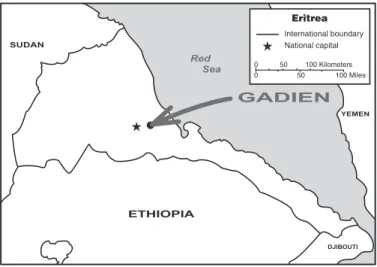
Gadien is located at an altitude of 2,100 m above sea level in the barren mountainous terrain of Eritrea. The capital city Asmara lies 62 km to the Southwest, and while the
port town of Massawa is located 125 km to the Southeast. The emergence of Gadien as a settlement area is attributed to the construction of a second road linking the port town of Massawa to Asmara in the 1900’s.
Eritrea is a predominantly agrarian society with 80% of its people living in rural areas. However, the great majority of people in Eritrea struggle to produce just enough food Photo 1. Overview of Gadien village. Fruits farm is neighboring to the village center.
for sustenance. The introduction of irrigation farming by Italian colonizers forced farmers to migrate from the areas around Gadien, to come to the village to work as laborers.
The population of Gadien is 1,123 with a nearly equal distribution of males and females. Of this total population, 425 or 37.8% are under the age of 18. Of the 210 households in Gadien village, 74 are Muslim and 136 are Orthodox Christian. About 80% of the people in Gadien are farmers who depend on agriculture for their livelihood. However, the overwhelming majorities do not own land but work as laborers on the fruit crop farms or practice pastoral way of life. An Italian named Galio opened the first crop farm. The introduction of water pump irrigation for effective farming was incentive for many people to migrate to Gadien.
Today the main agricultural activity in Gadien is the production of fruit crops for sale. The main fruits include oranges, papaya, guava and lemons. About 60% of this fruit cropland is owned by a Catholic organization called Enda Padre. Galio sold his property to this church organization and after independence they were able to reclaim the land. People who come from the neighboring towns and villages to work in Gadien own the rest of the crop farmland.
Since independence, Eritrea’s new government has focused on the rebuilding of nation starting from ground zero. Eritrea
still suffers from the effects of the long and costly war with its former colonizer and from continued border conflicts with its new neighbor Ethiopia that started in 1998. The damage to its education sector cannot be easily measured. Over 85% of Eritrean youth aged 18 to 35 are conscripted into military service. Over 80% of male teachers have been teaching for meager salary. This is because they have been called on to serve their nation, and over 90% of their salary goes to the defense forces.
In the next section, I will present parts of my diary from field notebook showing my unadorned impression just after arrival in Gadien village and my record of conversations with informants. My aim is to show how people in Eritrea are coping with the war in conjunction with shortage of water and food by creating innovative ways.
Changes in Gadien; April 7, 2003
I have just arrived in Gadien village to start my 4 th fieldwork. I went to see the school and talked to the teachers and principal of Gadien primary school. Right from the start, I observed some changes in my students’ faces and appearances. The first noticeable change was the fact that all the students were wearing new school uniforms. In Eritrea all students from primary up to senior high school students must wear uniform. However, until this year the obligatory policy was not
enforced in Gadien. This must have added extra cost to the parentsʼn already stressed household economy. The second change was the fact that all the teachers and the principal of Gadien primary school have been changed. The changes that took place were introduced as national policy this year in order to rotate teachers working in remote areas to have a chance to work in big cities.
This new change was both good and bad for my research. It is good, because it allowed me to get afresh and anew perspectives about the village and the teachers. I spoke with the new principal about Gadien and his students. I also asked him about the shortage of food and water in the area and how it is impacting on the process of learning in the classroom.
The principal, Mr. Eyob, answered my question by giving me the general feeling about the community. Starting with the lack of labor force, fathers being at the trenches and serving in the front line, mothers earning the minimum amount by working in the fruit farms, the kids were the first to suffer. Mr. Eyob was surprised at the people’s ability to endure such difficult conditions and how the communities were moving forward. He said, ŋPeople at war are always zealous.Ō He said that 300 students were registered this school year, and of these 5 students have dropped out. One was married; 3 were dreadfully sick and the last one simply quitted school. The rest were here he added.
In grade 5 almost half of the students were involved in paid labor every day. They come to school in the morning and in the afternoon they must work for the private farm owners. According to the principal of the school, the youth working during the afternoon seemed to do well academically and in their daily activities. They were more responsible and matured students. Mr. Eyob also talked about how parents were getting financially stressed due to the fact that many of them were paying more for transportation to send their children to junior and senior high school a large city 20 km away from Gadien.
Today in Gadien, the hard social reality and the poverty level of the villagers are broadening. For example, most, if not the majority, of the children are growing up within single mother households. This is due to the fact that, some fathers have not been back since the war begun in 1998, meaning that they are missing in action. This social reality is negatively affecting the learning process. Mr. Eyob also stressed that even those fathers living at home are suffering from the economic reality of the current state of the nation. Most of the men working as day laborers are making only about 30 Nakfa ($3) a day.
4 out of the 6 teachers are also doing military service and they only make 500 Nakfa per a month. As mentioned above, almost everyone between the ages of 18-40
is currently serving in the military. This is also another extremely difficult social reality. If the teachers are not eating, feeding their family and content with their life, their ability to teach will dramatically suffer. Mr. Eyob explains that education needs a place and time where parents, students and teachers have the necessary ingredients to conduct the teaching and the learning process in a more conducive environment.
I also talked to some villagers about the education system and how it is affecting their daily life. I asked Mrs. Tsegewine how the current situation, especially the question of water, is impacting daily life. In the last two years, rain shortage has caused very severe social conditions for farmers. Mrs. Tsegewine said,
“We are suffering greatly. We did not harvest last year. We did not even get enough water to drink, never mind nourishing the land. God is punishing us. We are hoping this year will be different. Our children cannot go to junior or senior high school due to the lack of funds. We have no money. Even those rich farmers are not hiring many people, or if they do the payment is almost nothing. We are truly suffering. Of course we get aid, but that is not enough either or if we do not get water what can we eat?”
Mrs. Lemelem was very clear and expressive in her view. She explained her worries about her daughter’s refusal to get married. ŋMy daughter wants to further her education and go beyond high school.Ō Mrs. Lemelem could not understand why she would want to stay in school. She started by explaining the cost of transportation and other related expenses. Moreover, three or four times men have come to ask for the parentsʼn approval to marry their daughter. But, it has not been possible. The problem as the mother explains is very clear.
“The men who have come to marry her are in military service, they cannot afford to feed or provide for her. They only want to have children. I can understand that, but how long can we live like this? Yes, my sons also have the same dilemma. We also want them to find wives but we have nothing to offer the brides. We are being supported by aid money to survive.”
The community at large is asking similar questions.
Water Pipe Project; April 12, 2003
Today, almost all of the parents of Gadien elementary school came to work on a water pipe project. Since the lack of water in Gadien is creating a major crisis in the
whole community, the people are planning on their own initiative to create a water reserve so that the students can drink while they are at school. First, the school director invited the parents to a meeting and brought the idea before them. Then all the parents raised about 1,500 Nakfa ($150) to put in the pipelines. But, since the money was not enough, so I donated to them 1,000 Nakfa, then they bought the needed extra pipes and were able to call all the community to install the pipeline. In all about 90 people, both men and women participated in digging, burying and cementing on the pipeline.
After they finished working, I interviewed two parents from Gadien elementary school about the current situation. I asked Mr. Jaber first to give me a general sense of the problem. He explained the lack of water in the community.
“In the last rainy season we did not get nearly enough water even for drinking. Because of that we did not get anything from the land. We did not harvest. The fruit farm had not produced anything so even those employed, as day laborers could get no money. This had major implications. We have become aid dependent. But even the aid we get is not sufficient, we are getting about 10 km per month. Without water we cannot even use the aid we get. Water has become
our petroleum. People who own farms have water pumps, but they cannot keep on giving while their water from underground is drying out. I think this year probably things will change. This coming rainy season, God will help us.”
Mrs. Meherate also explained her share of the current shortage of water. She explained about the need for learning and building water reserves or some sort of irrigation. ŋWe get enough water running at least two times a year but we do not know how to keep it in reserve so in times like this we can use it.Ō She explained about the women struggle in the community in digging water wells. ŋWe are in need of people to help us with digging water wells, to get the water we need to dig deeper into the ground, but we have a shortage of people.Ō Even though people who own the motors for water pipes are sharing them with the general public, the well is drying up.
Dekemahare Senior High School; April 17, 2003
Today, I went to visit Dekemahare Senior High School. Dekemahare is 20 km away from Gadien. Students from Gadien must take the local bus to attend junior and senior high school. It is the only high school in the area. It has about 4,780 students, 47 teachers of whom 15 are foreign Indian
teachers. All the students wear a uniform. The overwhelming majority of the students come from the neighboring villages and small towns. And so the situation is very complex. I asked the vice director Mr. Haile Walde Yohanes about the difference between students coming from Dekemahare city and those from the surrounding villages including Gadien. Mr. Haile explained, ŋ the students from the Gadien area were very good natured, disciplined, and matured. They have a very shy attitude towards the teachers and to the school rules and policies.Ō He also added that students from the Gadien area seemed to have more money and resources, as well as independent minds.
Generally, students coming from rural areas do not create any problems for the teachers nor to the other students. However, they have a poor sense of time and they do not respect time. They come very late and they tend to miss classes whenever they want. This may be due to the fact over 95% of the students work both at home and in fruits farms as workers. This causes stress in their school activities. They have very low ability to communicate with instructional media in the classroom. English is a very new and under-practiced language in their lives. So, it appears that they do not participate or speak in the classrooms. Their academic achievement is very limited and not significant. Mr. Haile said, ŋIt seems to me that they come to school
just to avoid going to the military service. They are not interested in learning or using education as a tool to improve their lives.Ō In the last 4 years I have witnessed an incredible increase in the numbers of students from villages finishing high school. This is because many of the villagers are using the school as a shield to avoid going to the military service early.
The dropout rate is not very significant. From the village areas most boys tend to finish school. Nevertheless, only less than 1% will continue to higher education institutions such as university or colleges. Most of the girls get married in grade 9 or 10. Almost none of the girls go on to obtain higher education pass to high school. However in the last 2 years, we have seen some girls from the village areas pursuing school with great interest. Some are refusing to get married early and intend to go ahead with their education.
The last 4 years education has become very irrelevant. Over 75% of the total student body, have repeated at least 1 year of school. This is also a mechanism to delay military service and stay at home. Only 5% of the total student population will pass the general entrance examination in grade 11. The rest will continue in the military service and most students consider education to be irrelevant. This has really impacted on the teaching and learning process in most places in Eritrea.
̜͇̜ɹ᧓Ȧ
⏎˭̢ˏɹ͇̍͑˱˽ԇ͇ͻ˭̜̒ɫᩃᘛࢸެڧȴʰ˃ɞɄɭ⏎
ܮǵϥǵᏛԇࡎ*
* ϴᨊ߂߂ˏ˻ˏˏ̶͠ˡܩݖድድዀ Most students are here for a student ID, so the police will not stop them. If you are not a registered student, you have to join the military and that is the main reason most of the students come to school.
Finally, I asked Mr. Haile about the relevancy of education in general for students in his school. He explained that
“Education must have at least three principal purposes. First, it has to play a major role in giving students knowledge about the universe and about common sense. Second, it has to provide tools
to solve problems. Furthermore, it has to give students common language to communicate as well as sense of security for the future.”
However, in Eritrea education system today does not provide these three most fundamental issues, i.e., knowledge, common language and security. Furthermore, according to my observation during my fieldwork in Eritrea, I have observed that wartime education is having negative impact on the livelihood people in Gadien village.
ǵɄɄɻ˭̢ˏɹܩᨊ͇॑̍͑˱˽ɴȡʳ ԇ͇ͻ˭̜̒ɫɐ⏃Ԡሎ 1⏆⏏ኽɻɄɹ͇ͻ ˭̜̒ɴᦲȦɲȵʰ⏋ڧެɴᬠɐʳɇʚɊʚ ɲሾᡫˁڧϺɛɠȴʰఠʼɤɩȦʚɐ⏏ɄɄ ɫɻᅊᅋᓔ⏋ެڧ⏋ࢸެڧɭȦɤɛ 1,600 Ϻȡʚʱɹެʱଝɛɠɴʭʱ⏋Ꮭ 140 ዛᰖɹ ᦅᅋ႒ȵެɇʶɩȦʚɐ⏏ɗɹɲȴɫʢʁ ɭ᭬ᇿጓɦڧڃɭȦȭɽ⏋̜͇̜ɫɐ⏏ɲɕ ɲʰ⏋ެʱଝȵʢɤɭʢȼ⏋͇ͻ˭̜̒ɹ ȦɛʳɭɄʸɴ᭘՞ɇʶɩȦʳȴʰɫɐ⏏ɛ ɭȭɽ⏋ެȵʼʶɩȦʳ˽̿ͻ˽ɹץՕ ˁ̜͇̜ȵװʠɩȲʱ⏋ɗɄɫᑵʱঃɁʰʶ ʳᮾȦዷɭሎɤᣧɲ̜͇̜ɭɹ᳞ʦȴɲᖬɹ ጫྲɻʛɅɭɫɐ⏏ ǵ̜͇̜ˁȩެʱଝȵȦʼȿɻ⏋͇̍͑ ˱˽ɫΥᖔᇕɲషჿˁឿʳɭʼȴʱʚɐ⏏ʚ ɑ⏋˽ͻ̺ɻၓɌɛ̜͇̜ˁ̾ͻ˽ɴ٢Њ ȿɇʶ⏋ʓɰʭȼၓʶɩ᤹ɹܔȦ̜͇̜ɻ˵ ̋͞ɹς৲ɫɐ⏏ɗɌɩ⏋ςᰩɹ˓˹ˠ⏃͍ ˓̀ɭᢊɹ၊ᦉʛ⏆ʢ̜͇̜ɫ٢ˁɭɭɹȭ
ʚɐ⏏Ʉɹʭȩɴ̜͇̜ɻ⏋షჿɴ๕ȴɓɲ Ȧᰩೳɫɐ⏏ɌȴʢᔼʱʦɐȦᅊ᳞ᩃᘛɫȡ ʳɛʠ⏋ǾɄʚʠɴᣘԂɇʶʳᰩೳɫʢȡ ʱʚɐ⏏ឹɐʳɴ⏋̜͇̜ɻࡴɌɛᮛឹɹ ȡʳڧڃɲɹɫɐ⏏ެʱଝɻɄɹ႕ਐɴᇿˁ ɦȿ⏋ǾተࡸɴգᇰˁʳଝຍɭɌɩ̜͇ ̜ˁȦʚɐ⏏ɭȦȩʼȿɫ⏋͇ͻ˭̜̒ɴ ɻ̜͇̜ɹެʱଝȵྍʶɩȦʳɹɫɐ⏏ ǵɌȴɌ⏋̜͇̜ȵະɐʳ͇ͻ˭̜̒ɫ⏋ ެʱଝɻɰȩʦɤɩᕶՕɹ̜͇̜ˁᢷȦଝ ɴެʱᦉʞɹɫɌʬȩȴ⏏ɗɌɩ⏋ᢷȦଝ ɻɰɹʭȩɴ̜͇̜ˁ᧧˃ɫȦʳɹɫɌʬȩ ȴ⏏ɗ˃ɲᏬ೧ɲᆄکˁʢɤɩȦɛኽɴ⏋ȡ ʳ⏋ࢸެڧɹ̝˕˱Ȳɽɠʤ˃ˁଝШȩล ЦȵʶʚɌɛ⏏Гάɫɻ⏋ɗɹɭȷȴȦʚ ឿɛ̜͇̜ɹ᧓ȦɴɦȦɩᓒȭɛȦɭਲ਼Ȧʚ ɐ⏏ ǵ 6 ಁɹ͇ͻ˭̜̒ɻ⏋̜͇̜ˁެʳᅊ ᅋᓔʦެڧɭɗʶˁᢷȩࢸެڧɭɫȦɤɿ Ȧɴɲʱ⏋༎ຩɧȦɩȦʚɐ⏃Ԡሎ 2⏆⏏ኽ ɻ̝˕˱Ȳɽɠʤ˃ɹʸɴȼɤɦȦɩ̜ ͇̜ˁЇԂʶʳɄɭɴɲʱʚɌɛ⏏̜͇̜ɹ ߂ȷɇɻፈᏩɫךՕɇʶɩȲʱ⏋ሂݭɹᲞȦ ɴȋA Ꮹ⏃፯ɹμ᤹ȵ߂Ꮀɽȴʱ⏆ȍȋB Ꮹ ⏃μᎰɽȴʱ⏆ȍȋMix ⏃߂ᎰɭμᎰɹཌྷغ⏆ȍ ȋᏩɲɌ⏃ࢸᎰʢɌȼɻ߂ȷɇȵέəʸȦ⏆ȍ ɭɲɤɩȦʚɐ⏏ၓʶԍغɹ᧓ȦɴʢךՕȵ ȡʱ⏋ሂݭɹᲞȦɴȋᮾᣧཌྷغ⏃ၓʶȴȿ ɭၓʶɛʢɹ⏆ȍȋᮾȦ⏃ၓʶȴȿ⏆ȍȋሎɤᣧ ⏃ၓ⏆ȍɴՕȴʶʚɐ⏏ɦʚʱ⏋Ʉɹʈɛɦ ɹݜྈɹᏼغɓɴʭʱ⏋̜͇̜ȵ 4Ì3⏮12 ɹ᧓ȦɴךՕɇʶʳɄɭɴɲʱʚɐ⏏ʢɤɭ ʢᲞғɴɲʳȋA Ꮹȍɫȋᮾᣧཌྷغȍɹ̜͇ ̜ɹሂݭɻ⏋Ʉɹ⏋ೠ፯ȡɛʱ 1,300 ˹ ͠Ͳ˫⏃1 ˭̢ˏ˹͠Ͳ˫ƕ1.4 ԓ⏆ɫɌɛ⏏ ᢷȦଝɛɠɻ⏋ፈᏩɭၓʶԍغˁن٢Ɍɲȵ ʰެʱଝɭғຍɹϯབˁᑵʱᦐɌʚɐ⏏̝˕ ˱Ȳɽɠʤ˃ȵ 2 ಁᬚȴȿɩЇԂʶɛʢɹɻ ȋᏩɲɌȍɹȋሎɤᣧȍɲ̜͇̜ɫ⏋1 ፯ 950 ˹͠Ͳ˫ɴɲʱʚɌɛ⏏ፈᏩɭၓʶԍغɹך Օȴʰՠుɐʳɭ⏋Ʉʶɻғɴȡɛʳ̜ ͇̜ɫɐ⏏ ǵ̝˕˱Ȳɽɠʤ˃ɻȋᏩɲɌȍɫȋሎɤ ᣧȍɲ̜͇̜ˁʭȼЇԂʶʚɐ⏏ؾɍʭȩ ৢ૯ 1ȁΠζΠͬء̳૽̹̻ ৢ૯ 2ȁ்ಱ 6 শ͈ζȜΉΛΠ
ɴ⏋ɗɹكȴȦɫۊɐʳࢸެڧɻȋA Ꮹȍ ɫȋᮾᣧཌྷغȍɹ̜͇̜ˁʭȼЇԂʶɩȦʚ ɐ⏏ЇԂຍ᭥ɫࢸެڧɛɠɻ⏋ᕶՕȵެʳ̜ ͇̜ɭܑٞɹࢸެڧȵެʳ̜͇̜ɭɹᬚɴ⏋ ፈᏩɭၓʶԍغɹ᧓ȦˁȲȲɊɤɿɴʢɦʭ ȩɫɐ⏏ ǵɇȠ⏋Υਖ਼ɦȼಞʢɲȼ⏋̜͇̜ˁެʱݭ ɴιʏɩڧެˁɻɍʠɲȿʶɽɲʱʚɓ˃⏏ ʓȴɹࢸެڧɛɠɻɐɫɴڧڃˁιʏɻɍ ʠɩȦʚɐ⏏ኽɛɠʢਸ਼ȦɫྈҺɴʱȴȴ ʸȩɭɌɛɭȷ⏋̝˕˱Ȳɽɠʤ˃ȵኽɴك ȴɤɩȦȦʚɌɛ⏏ ǵȋ͌Ͳ̸⏃ኽɹȡɞؿ⏆⏋Ёɻȡ˃ɛɴ̜ ͇̜ˁʚȴɓʳʭ⏏̜͇̜ˁዩ˃ɫɅʰ˃ȍ ǵࢸެڧɛɠɻ⏋Ȧȼɦȴɹ̜͇̜ˁዩ˃ ɫࢸɇɲˁɦȼʱ⏋ɗʶˁеɴެɌʚ ɐ⏃Ԡሎ 3⏆⏏ኽɻʚɑ 10 ҅ɹ̜͇̜ˁଝɴ ɭɤɩ⏋ˁɦȼɤɩʛʚɌɛ⏏ȡʶʚȠ⏏ ȦɦʢឿીʶɩȦʳ̜͇̜ɹȵɫȷʚɓ ˃⏏့ɤɩዩʞɭगʶɩȷʚɐ⏏ଁɌɩʢ ɻˤ̊ˤ̊ɲ̴̝͊̒͞ɴɲɤɩȦʚɐ⏏ ɗɹࡎˁឿɛȲɽɠʤ˃ɻ⏋ˁगɌɩ̜ ͇̜ˁዩʛሁɌʚɐ⏏ ǵȋ͌Ͳ̸⏋ឿɩȲȷɲɇȦ⏏Ʉʶɍʤȵ ɐȽɴगʶɩɌʚȩʭ⏏ɗʶɴЁɹ̜͇ ̜ɻࢸᎰɞȴʰ⏋20 ˹͠Ͳ˫ɫެʳɻ 16 ҅ɹ̜͇̜ˁьȩɄɭ⏏ɗʶʢ߂ȷʠɹ̜͇ ̜ˁዩʞ⏏ʚɑ⏋1 ຍᇿɴ০ȵɗʸɤɛʢɹ ˁᒞȼ⏏2 ຍᇿɴɻ 1 ຍᇿʭʱʢ߂ȷʠɹ̜ ͇̜ˁዩʞ⏏Ϋຍɴɻ႕ɴ߂ȷȼɩ০ɹȦ Ȧʢɹˁᥔɓɩɫȷȡȵʱ⏏ɗʶȴʰ⏋10 ˹͠Ͳ˫ɹɻ߂ȷʠɹ̜͇̜ɽȴʱɞɭ 8 ҅⏋ࢸɇʠɹ̜͇̜ɽȴʱɞɭ 10 ҅ˁьȩ⏏ 5 ˹͠Ͳ˫ɫެʳɻ႕ɴࢸɇɲ̜͇̜ˁ 5 ҅ьȩʭȩɴ⏋ɗʰʦɤɩɅʰ˃ȍ ǵ߂ȷɇɭ০ˁɗʸȭʳɄɭɫ⏋ተȴɴࡴ ઢɹȡʳȵɫȷȡȵɤɩȦʚɐ⏏ɗʶɴ⏋ كȴȦɫɻȋA Ꮹȍɹ̜͇̜ȵ 7 ҅ɫ 20 ˹ ͠Ͳ˫ɹɭɌɩ⏋3 ҅ɫ 10 ˹͠Ͳ˫ɹ ɭɌɩιʏʰʶɩȦɛɹɫ⏋ɗʶʰɭኽɛɠ ɹɭɹᬚɴɻ⏋ठɹ᧓ȦȵɫȷɩȦʚɐ⏏ ǵɌɽʰȼɌɩኽȵެʱݭɹմ՞ɴ 4 ɦɹ ˁɦȼʱᏺȭɛɭȷ⏋̝˕˱Ȳɽɠʤ˃ɻ ˻͑ˤ˓͐ˁιʏɩȦɛଝˁʠɩ⏋Ȳʢʞ ʸɴȦȦʚɌɛ⏏ ǵȋ͌Ͳ̸⏋ᢷȦଝȵឿʳكȴʰɗɹˁ ឿɩɅʰ˃⏏ᢷȦɛȦɭਲ਼ȩȴȦ⏱ሎɤᣧɫ ০ʢȦȦ̜͇̜ˁȼԂʶɛˁմ՞ɴι ʏʳɄɭ⏏έਗ਼߫ɲʢɹɻɹΥᅱάɹຍɴ Ԃʶɩ⏋ឿȭɲȦʭȩɴɗɹΫȴʰ̜͇̜ˁ ዩʞ⏏ᔼʱȴȿɹ̜͇̜ɻԂʶɲȦɄɭ⏏ɗ ʶɻȲʚȿɫࡹɴȡɁʳȴЁɹᰯɴьȩ ȴʰ⏋ʸɴᒞȼ⏏๖ɴᮾȦ̜͇̜ɽȴʱɹ ʢɦȼɤɩȲȼɄɭ⏏ʚɭʠᢷȦˁɐʳࡹ ɹݭغ⏋ᮾȦ̜͇̜ˁ๙Ɍȵʳȴʰɷȍ ǵˁዩʛɻɍʠɩȴʰ 1 ಁᬚȵᐁɌɛɭ ৢ૯ 3ȁऴͬค̳ͤͥΡͽ̤̻͊ͭ͝
ȷ⏋ʭȩʦȼ 20 ҅ɹˁɦȼʱᏺȭʚɌɛ⏏ ʈɭᰑˁΫɁʳɭ⏋ܑٞɹࢸެڧɛɠɻɭɤ ȼɴιʏᏺʼɤɩঊᬖȷ⏏࣐˃ɞࠒֳɫ̜͇ ̜ˁዩ˃ɞɛʠɴᆟȼɲɤɛᕆˁʢʛʓȽɌ ɩȦʳɭ⏋كȴȦɹࢸެڧȵ̢̢͓͓Ɍɲȵ ʰȋɲȴɲȴȦȦዩʛԍغɍʤɲȦȴȍɭ⏋ ߧ᬴ɌɩȦɛኽˁɷȹʰɤɩȼʶʚɌɛ⏏ ǵࢸެڧɛɠɻ⏋ɅɭɴၓʶԍغˁᐏΥɇ ɓ⏋০ɹȦȦʢɹȵᢷȦଝүȴʰឿȭʳʭȩ ɴ̜͇̜ˁዩ˃ɫˁɦȼʱʚɐ⏃Ԡሎ 4⏆⏏ Ʉɹʭȩɴ⏋᭘՞ຍ᭥ɫࢸެڧɛɠɻ⏋ʁɭ ɹठɹ᧓Ȧʦ̜͇̜ɹᖬ০ɹᖪɇɫȲϣȦ ɹˁेաɌ⏋ެʱᦉʛغˁɌɩȦʳʭ ȩɫɐ⏏ɗʶɭؾಁɴ⏋ᕶՕɹɹɲȴɫၓ ʶԍغɹ᧓ȦˁʭʱᏳȴȼȿɩɹ ʢܒɤɩȦʚɐ⏏Ʉɹಁဣɫɐɫɴެʱݭɴ ɻ⏋ɴʛʰʶɛ 12 ךՕˁɻʳȴɴΫ܌ ʳȋ̜͇̜ɹ᧓ȦȍȵჼʶɩȷʚɌɛ⏏ ǵɇɩ⏋̍͑˓⏃ቆᏋȵɛɤʋʱԂɤɛ͊͡ ˪̘ˑ⏆ˁᰰʛɲȵʰΥਖ਼ɦȦɩȦɛɭɄʸ ɴ⏋՟ɹࡹȵഀʚɌɛ⏏ ǵȋȡ˃ɛȵ̜͇̜ˁެɤɩȦʳɹȴȦ⏱ȍ ɭ⏋Ȳɍɇ˃ȵᏬᦲʱɌʭȩɭɌɛˁʠ ɩȦɛʭȩɴᓬȷʚɐ⏏ ǵȋɗȩɫɐ⏏ɰɹɴɌʚɌʬȩȴȍ ǵኽɻɄɹΥឿࡹɴ̜͇̜ˁᢷɤɩʢʰȲ ȩɭડʭȼਝࢪɌʚɐ⏏ɗɹᬚ̝˕˱Ȳɽ ɠʤ˃ɻχɌʉʱɴɷɩȷɛࠂɭ 2 ϺɫȲ ɌʤʏʱˁᐚȿɩȦʚɐ⏏ ǵȋؿմɻ⏱ɰɄȴʰഀɛɹ⏱ȍɭ⏋Ȳɍɇ ˃ɻኽɴᣒکɐʳɞȿɫ⏋̜͇̜ˁᢷȩࡎ ɻȡʱʚɓ˃⏏ ǵȋлˁஜɌɩʳ˃ɞȦ⏏Ʉɹࡎɻ̜͇̜ ɍʤɲȦʭ⏋ȼ̜͇̜ˁ᧧˃ɫȲȼʶɤ⎷ȍ ǵዺး̝˕˱Ȳɽɠʤ˃ɻከɹȡʳުɫԟ ᠰϯɍʱɴయئˁȦȦ⏋Ȳɍɇ˃ˁܦ҉Ɍʚ ɐ⏏ɗɌɩȲɽɠʤ˃ɻ⏋Ȳɍɇ˃ȵᰏɫȴ ɐȴɴ୭Ɍɛكɴȡʳ 20 ˹͠Ͳ˫ɹˁ ̢̲ͻ͡ᝬʍ᠋ʠɞɌʚɌɛ⏏ɲ˃ɭ⏋ɗɹ ɹάຍɴɻ⏋ެʱ႒ɴɻɲʰɲȦɻɑɹᔼ ʱȴȿɛ̜͇̜ȵཌྷɊɤɩȦʚɌɛ⏏Ɍȴʢ ̜͇̜ˁ᠋ʠʳɭȷɴ᭰ɹʍᏪʶᦉ˃ɞ̜ ͇̜ˁɗɹʚʚఔᒞɌ⏋Ȳʚȿɹ̜͇̜ɇȭ Ԃʶɑɴᝬɹؤˁᬔɍɛɹɫɐ⏏ɗɹ֪сɹ ᏬɇɻʛɅɭɲʢɹɫɌɛ⏏႒ხɌȦܕ Ϻɭ᠌ɌɛȦȲɍɇ˃ɻ⏋ɗʶɴຩɧȷʚɓ ˃⏏Ʉɹ֯ᢦ⏋Υឿɹࡹˁৄȷᦉ˃ɞኽɭᝬ ᠋ʠɹଯȵ̘̾͞Ͳɹݖɴ᧒ɌɛȲɽɠʤ˃ ɭɹᦹொ̺ͤͻɫ⏋֯ɫɐ⏏ ǵȲ౾ɰȷɴɲʳɭ⏋͇ͻ˭̜̒Ԓɴȡʳ ᎎ౫ᰩݟɹঊڊɛɠȵ⏋ၓʶɛ̜͇̜ˁஜ Ɍɩ͇ͻ˭̜̒ˁਅ৽Ɍʚɐ⏏ɄȩɌɛᰩݟ ɫɻ⏋ಔᦲɻᠭჿཕʛɹషჿˁࡹɴՏɌʚɐ ৢ૯ 4 ఱ̧̯͂ͦߓࣣ̮͂ͅΠζΠ͈५ͬ̾ ̩̽̀คͥค̹̻
ȵ⏋ಁǾ̢͍͖ͻɴɲȦయʢ؝ȿ⏋ঊڊɻ ɗɹᨊ̜͇̜ˁਖឹɲՕᩄɞȿࢸެڧȴʰ ᢷȩɹɫɐ⏏˥͚ͦ˥͚ͦɌɲȵʰȦɩȦ ɛঊڊȵኽɛɠɹմɫʚʱʚɌɛ⏏ ǵȋɄʶ⏋ʭȼၓʶɩȦʳɷ⏏Ʉɹˁʁɭ ɦ᠋ʠɩʭ⏏ȡɤ⎷ 1 ᅱάɹຍɹ 2 ɦɻᔼɤ ɩȦʳ˃ɍʤɲȦɹ⏱ɗɹ 2 ɦɻԂʶɲȦɫ ʭ⏏Бʼʱɴʸɹȴʰ 2 ɦԂʶɩȲȦɩ⏏ Ȳʚȿȵ 2 ɦɲ˃ɩࢹɲȦʭ⏋Ʉɹ̜͇̜ʢ ȲʚȿɫʢʰɤɩȲȼʭȍ ǵঊڊɻȩʳɇȦయˁɦȿʚɐ⏏ኽɻɄ ɹࡹɹៜȦɲʱɴɲʱ⏋߂ȷȼ০ɹȦȦ̜͇ ̜ɽȴʱˁᝬɴ᠋ʠ⏋ȲʚȿʢȼԂʶɩɌ ʚɤɛɛʠɴ⏋20 ˹͠Ͳ˫ɫެʶʳʭȩɲ ˁ 10 ˹͠Ͳ˫ɫެʳɻʠɴɲʱʚɌɛ⏏ ǵȋɗ˃ɲɄɭɍʤ⏋ڧެȡȵɤɛʱɞʭȍ ǵ̝˕˱Ȳɽɠʤ˃ɻኽˁɛɌɲʠʚɐ⏏ȿ ʶɰʢጓɩᐚȿɴɄɹʭȩɲΥឿɹࡹȵഀɩ ɻ⏋Ȳɽɠʤ˃ɹȦȩڧެȡȵɤɛʱɲᢷȦ ˁɌɩȦȷʚɐ⏏ᐁᱻɹ༓Ȧެʱଝɴɻ⏋ ᢷȦଝɹଂȵʚʚˁȴʼɐɄɭɻɭɩʢᮑɌ Ȧ⏏ኽɻ⏋ɗʶˁȩʚȼգᅎɐʳାȿᇿɹɲ ȦᢷȦଝɛɠɹᰩɴɲɤɩȦʚɐ⏏ ǵ 5 ಁȴʰɻ⏋ϺǾȵᰯɹೳషˁᢷ Ȧɴʦɤɩȼʳಁᬚय़ɫɐ⏏ࢸɇɲᅖɹࡎȵ ʁɭʱኽɹմɴጓɠʚɌɛ⏏̝˕˱Ȳɽɠʤ ˃ɻਕɛʭȩɴ⏋ɤɩȦʳɲȴɫʢʭ ȼၓʶɛ̜͇̜ɽȴʱɹˁ᧧˃ɫ⏋ኽɴ̲ ̢ͻ͡ᝬʍ᠋ʠɇɓʚɌɛ⏏ɇʰɴȲɽɠʤ ˃ᕶʰȵȲʚȿˁ 3 ɦʢɌɩ⏋ᅖɹࡎʍᝬ ˁཡɌʚɐ⏏ɐʳɭᅖɹࡎɻ⏋̮̒ɭᬖȦɛ ଝɹʁʰˁኽɴेɌՏɌʚɌɛ⏏ɗɄɴɻ 5 ˹͠Ͳ˫ᢪ 1 ഖȵɹɤɩȦʚɌɛ⏏ ǵȋȲທɇ˃ɻӯຩȴȦ⏱ʓʰ⏋ᝬˁɠʤ˃ ɭୃȷȴȴȭɩ୫ɠɲɇȦ⏏ᘺɭɇɲȦʭȩ ɴɐʳ˃ɞʭȍɭ⏋ᅖɹࡎɹγ᠌ˁʦȦɩȦ ʳȲɽɠʤ˃ɹดɫ⏋ኽɻɦʉʦȷʚɌɛ⏏ ǵȋȲɽɠʤ˃⏋ɗʶڧެȡȵɤɛʱʦɫȫȍ ǵ̜͇̜ɹᖪɌੲɌȵʼȴʰɲȦࡎњɻ⏋ެ ʱଝɴɭɤɩᱼɌ౫Ȧࡹɴɲʱʚɐ⏏Ɍȴ ɌȲɽɠʤ˃ɻ⏋ᅖɹࡎɹБʼʱɴ̜͇̜ˁ ᧧ʃ⏋ɌȴʢȼɹȲʚȿˁȡɁʚɌɛ⏏Ʉ ɹࡎɹȲທɇ˃ɻ̝˕˱Ȳɽɠʤ˃ɹ।ᦹࡹ ɫȡʱ⏋ሾʱغȦɞɗȩɫɐ⏏Ʉɹ֯ᢦɻ⏋ ̝˕˱Ȳɽɠʤ˃ɹɭɄʸɴᅖɹࡎˁȲьȦ ɴȴɓɛȲທɇ˃ɹс֯ɠɭȦȭʚɐ⏏ ǵף 7 ಁɴʭȩʦȼ 1 ɹЇϟȵᏺʼʱ⏋ 95 ҅ɹȵެʶɩ⏋̜͇̜ɹެΫɁɻᐵᰎ 810 ˹͠Ͳ˫⏃Ꮴգᇰɻ 310 ˹͠Ͳ˫⏆ɴ ɲʱʚɌɛ⏏ೠ፯ȦɤɿȦɴ᠋ʚɤɩȦɛ̜ ͇̜ȵץՕᦏȼʚɫཝɤɩȦʚɌɛ⏏Ёɻ ʭȼެʶɛɭȦɤɩ⏋Ȳɽɠʤ˃ɻྃɗȩ ɫɐ⏏ ǵ୷ʱᦐɤɩʛʳɭ⏋ެʱଝȵᠨɫᢷȦଝ ɻᠨɲɹȴɭȦȩ᧓Ȧʦ⏋ެʱଝɹᐁᱻɹ᧓ Ȧȵ⏋ᏺᇕɴެᢷɇʶʳ̜͇̜ɹᩄɭᣒɴ ˁʢɛʰɌʚɌɛ⏏ɄȩɌɩވȭɩȦȼ ȋ̜͇̜ɹ᧓Ȧȍˁᇿɹয়ɛʱɴɌ⏋ɗʶГ մɴୃȦɩȦɛᏬ೧ɲᆄکˁࢹɌៗ༥ɐʳɄ ɭȵɫȷʚɌɛ⏏̜͇̜ȵະɐʳ͇ͻ˭̒ ̜ɫ⏋ᕶՕɹ̜͇̜ˁᢷȦଝɴެʱᦉʞɛ ʠɴ⏋ެʱଝɻЇԂ᭘՞ެɹعຍ᭥ɫ ǾɴɗɌɩʭʱᏳɲ᧓Ȧˁ̜͇̜ɴʢɛ ɓʚɐ⏏ɗɌɩᢷȦଝɻ̜͇̜ˁ᧧ʉɭȷ⏋ ̜͇̜ɹឿɛᇿɹ᧓Ȧɭɭʢɴ⏋ެʱଝɹ᧓ ȦɴʢᇿɌʚɐ⏏
ǵɄɹˁޅɴ⏋ɰɹ̜͇̜ʢؾɍʭȩɴɌ ȴɤɩȦɲȴɤɛኽɹᇿɴ⏋ȋ̜͇̜ɹ᧓ ȦȍȵឿȭɩȷʚɌɛ⏏ᮾȦዷɹάɴȡʳɹ ɻ⏋ɴᣧȦ̜͇̜ɹǾɫɻȡʱʚɓ˃⏏ ߂ȷɇᖬᩄᣒȵ᧓Ȧ⏋Ɍȴʢެᢷɹ μɴɗɹԒࢅȵɇʰɴɌȩʳ⏋ᖬɭʱ ɰʱɫڞΥံϠɹ̜͇̜ɹǾɫɐ⏏ެʱଝ ɻሾਜ਼ˁᐈʱɲȵʰɇʚɊʚɲȋ̜͇̜ɹ᧓ ȦȍˁᅎઝɌ⏋ውʱຩɲᢷȦଝɭɗɹԒࢅˁ ʠȽɤɩ֯ᢦɐʳ⏏Ʉɹެʱଝɹᐳઢɭߧ ᬴ʉʱȵʼȴɤɛЁ⏋ံ᧹ຩɴ͇ͻ˭̜̒ɹ ᰟಕˁූɌʠɲȼɲɤɛኽɫɌɛ⏏ɛȴȵ̜ ͇̜⏋ɇʶɰ̜͇̜⏏̜͇̜ɻኽɴ͇ͻ˭̒ ̜ɫɹڧެɹߡཉɇˁ̍͞͠ɭឿɓɩȼʶɛ ʭȩɫɐ⏏