地域課題解決に向けた産学官連携の役割と質的変化
⾹川県地域課題解決のための情報サービス開発
The role and qualitative change of
industry-academia-government collaboration for solving regional issues
Information service development for solving regional issues in Kagawa
4.8.1 ⾃治体の地域課題解決に向けた内発的な参画 ... 91 4.9 地域課題解決に向けた産学官連携を実現するための知⾒ ... 93 4.10 本章のまとめ ... 94 5. 旅の思い出を記録する観光ガイドブック⽣成/印刷システム「KadaPam/カダパン」 ... 95 5.1 はじめに ... 95 5.2 関連研究 ... 97 5.2.1 写真を⽤いた観光情報サービスやサービスに関する研究 ... 97 5.2.2 スタンプラリーやフォトラリーの仕組みを取り⼊れた観光情報サービスやサービス に関する研究 ... 98 5.2.3 カダパンの特徴 ... 98 5.3 カダパンの設計と開発 ... 99 5.4 ⾹川県⼩⾖島におけるカダパンの実証実験 ... 104 5.4.1 実証実験の概要 ... 104 5.4.2 実証実験の結果 ... 105 5.5 ⽣成された観光ガイドブックを⽤いた観光者の観光⾏動分析 ... 108 5.5.1 アップロードされた写真による⼩⾖島観光の特徴分析について ... 108 5.5.2 ⽣成された観光ガイドブックを⽤いたカダパンの圏域形成⽀援の効果について ... 110 5.6 「KadaPam/カダパン」開発のまとめ ... 116 5.7 「KadaPam/カダパン」の現状 ... 117
5.8 画像照合技術の Skimming API としての提供(RICOH TAMAGO Snapi SDK) ... 117
概要
英語概要
(Abstract)
In today's Japanese society, with the increasing concentration of population in the
Tokyo metropolitan area and the declining birthrate and aging population, regional
development is a major issue. The solution of regional issues is the key to the future
regional revitalization. In the information society as indicated by the Society5.0, it is
expected that information and the use of communication technology (ICT) in solving
local issues. Local governments cannot solve regional issues alone, and
industry-academic-government collaboration is required to solve regional issues. In order to solve
the regional issues, it is necessary to develop a new system of intrinsic
industry-academic-government cooperation for a new era, rather than the old system of cooperation between
industry, academia and government. Regional development is very important.
Furthermore, it is said to be necessary to mobilize regional power through
industry-academic-government cooperation. In this study, we design a regional development
process model that will serve as a benchmark for promoting good cooperation between
industry, academia and government in rural areas and for providing solutions to regional
issues that are rooted in the region.
Furthermore, we envision an ideal system for industry-academia-government cooperation
to solve regional issues.
We have created a scenario in which the old relationship between industry, academia
and government is transformed into an ideal form of cooperation between industry,
academia and government. We also envisioned solutions to the challenges of advancing
that scenario. Solutions to these issues will be derived from a case study of the
development of an information service for the resolution of regional issues implemented
in Kagawa Prefecture. In this paper, based on the activities and knowledges from those
activities, we will identify in practical terms the know-how and methods of building a
good relationship between industry, academia and government.
lecturer at the Kagawa University Faculty of Creative Engineering, Modeling and Media
Design Course. Furthermore, from September 2019, The author entered the Department
of Functional Control Systems, PhD Course, Graduate School of Science and Engineering,
Shibaura Institute of Technology. This paper is a compilation of studies from all these
periods.
During this period, we developed an information service as a solution for regional
issues in Kagawa Prefecture through industry-academia-government collaboration
between Ricoh Co., Ltd., Kagawa University, Kagawa Prefecture, and Shodoshima Town,
Kagawa Prefecture. We have developed the following three information services.
l "KadaPos", a printer system to display advertisements
l "KaDiary", a tourist diary generation/printing system
l "KadaPam", a tourist guidebook generation/printing system to record travel
memories
These series of information services have been developed using the regional
development process model as an activity index. The regional development process
model was designed based on the experience of software development, system
development, and new business creation that the author cultivated in the corporate era.
This paper consists of 6 chapters. Chapter 1 gives an introduction. Chapter 2 describes
the regional development process model for advancing activities of
industry-academia-government collaboration for solving regional issues. In addition, assuming the ideal form
of industry-academia-government collaboration for solving regional issues in order to
solve regional issues, we will describe a scenario in which the existing system of
industry-academia-government collaboration changes to the ideal state. Furthermore, we will
discuss the issues that are expected to accompany changes.
industry-academia-government collaboration and the know-how to bring about such
changes from the knowledge obtained from the activities. We will consider the approach
and provision method of open information disclosure by companies that triggered the
qualitative change. Finally, we will discuss future developments and the competencies
that bring about such changes.
In Chapter 2, We have designed a regional development process model that provides a
normative role for promoters. The aim is to create regional issues solutions through
industry-academia-government collaboration and to sustainably manage the solutions.
Furthermore, the model was defined as a Kagawa type development process for operation
in Kagawa prefecture. In addition, we envisioned "the ideal form of
industry-academia-government collaboration for the resolution of regional issues" in promoting the
resolution of regional issues. Furthermore, the qualitative changes in
industry-academia-government collaboration and the issues that may occur in the process of change were set
as follows.
l Relationships between companies and universities to achieve solutions
l Changes in Local Governments by Proposing Solutions to Local issues by
Companies and Universities
l Commercialization of problem solution proposals by companies and universities
In addition, we envisioned the following scenarios to solve these challenges.
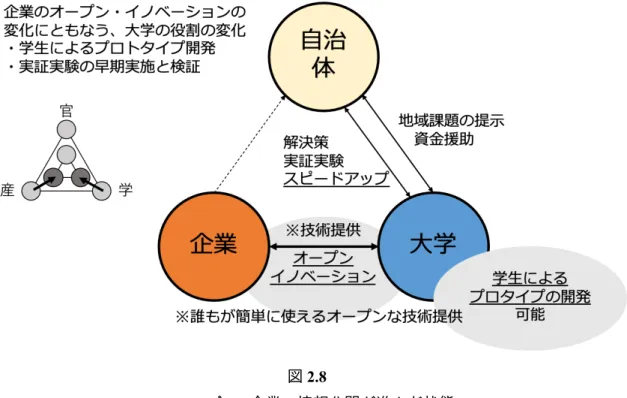
1. changing consciousness of companies from closed to open innovation
2. providing simple and easy to understand tools to help students develop prototype
systems
3. The development of a prototype system by students enabled a low-cost demonstration
experiment in a short period of time.
4. By verifying the effectiveness of l regional issues solutions, a spiral up (virtuous cycle)
of quality improvement will be accelerated.
5. By carrying out demonstration experiments, concrete solutions to problems will be
realized. Furthermore, opportunities for problem solving and improvement are promoted
by the intrinsic participation of local governments.
6. public evaluation of the effectiveness of solutions to local issues by local governments,
leading to horizontal deployment of solutions
companies to seize business opportunities and commercialize products and services
commencement
8. The start of information services by companies is the start of services rooted in the
community
In the relationship between companies and universities, which is the first issue in the
series of issues to be resolved, the Open information sharing, and provision of information
was considered essential. Therefore, we will consider how companies should promote
open information provision. We will examine changes in the concept of open innovation
from closed innovation in the Japanese manufacturing industry and describe the
advantages and disadvantages of open innovation. In addition, we will also mention the
pain that Japanese companies suffered from the financial open policy. To this end, we
have been discussing how companies can promote open information provision, and the
following questions have been raised in the Japanese manufacturing industry.
In Chapter 3, we describe the advertisement display printer system "KadaPos". In the
development of "KadaPos", we focused on the qualitative change in the
industry-academic-government collaboration. We focused on the changing relationship between
companies and universities in industry-academia-government collaboration. How
companies were openly offering their company's technology in response to requests from
universities This section describes the following. We describe the changes in the way
Ricoh Corporation provides printing control technology.
factor in bringing about the first change toward the ideal state of cooperation between
industry, academia and government.
In Chapter 4, we describe the advertisement display printer system "KaDiary". In the
development of "KaDiary", we focused on the qualitative change in the
industry-academic-government collaboration. In the development of "KaDiary", we pay attention
to the changes in the approach to the solution of the regional issues of local governments
and describe how the evaluation of the solution of the regional issues by the collaboration
between universities and companies moved the awareness of local governments.
In chapter 5, we describe "KadaPam", a travel guidebook generation/printing system
for recording travel memories and describe the qualitative changes in the process of
industry-academia-government collaboration. In the development of "KadaPam", we
focus on the horizontal development of solutions to the problems and the changes toward
commercialization of the companies, and how the companies will develop the solutions
to the regional issues created by the industry-academia-government collaboration as
business.
Kagawa University has developed a system to replace the photos in the sightseeing
guidebook with the photos taken by the tourists themselves at the same place and in the
same composition, and a system to generate and print the sightseeing guidebook
"KadaPam" to record your travel memories. This paper describes the results of a
demonstration experiment conducted on Shodoshima Island and an analysis of tourist
behavior based on the data obtained in the demonstration experiment. The results of the
tourism behavior analysis confirmed that “KadaPam” has a certain effect in helping to
form a tourist area and attracting tourists to different tourist destinations in the same area.
The “KadaPam” is currently in the process of completing the commercialization decision
in the regional development process model and moving towards commercialization.
The appeal of "KadaPam" is that it is a unique tourism information service that uses a
new image recognition technology provided by Ricoh Company, Ltd. This is a unique
service that allows tourists to enjoy sightseeing as if playing a game. The service provider
can analyze tourists' behavior. "KadaPam" has been tested at the level of perfection to be
used as an information service. The results of the demonstration experiment were positive,
and it was found that the system can be used to form the area of a tourist spot. It was
picked up by the mass media, and its visibility in the region was increased. The local
government asked us to develop the system into a practical service. We also received
inquiries from other municipalities (Zentsuji City) and companies.
Ricoh, Ricoh Japan and local companies in the Institute of Innovation Design, Kagawa
University.
In Chapter 6, the conclusions of this study are summarized as follows based on the
qualitative changes in the industry-academia-government collaboration and the
know-how of problem-solving to bring about changes toward the "ideal state of
industry-academia-government collaboration to solve regional issues" obtained through a series of
developments, based on the activities and knowledges.
How to get local governments to participate intrinsically.
l Universities, in collaboration with companies, must quickly implement solutions to
local issues as a prototype system and proceed with demonstration experiments and
improvements.
l Proposals to the local governments will not be made on the desk, but will be made
proactively based on the results of prototype systems and demonstration experiments,
together with activity reports.
The know-how to help companies move forward with business development.
l The companies see the possibility of horizontal deployment of solutions as a business
opportunity based on the evaluation by local governments.
l Continuous cooperation and support by universities and local governments will
strengthen the commercialization decisions of companies.
In addition, as a future development, we will start operating the commercialized
"KadaPam" as a community-based service.
And we have established the following human resources necessary for the management
of smooth industry-academic-government collaboration to resolve regional issues, and
we will secure and train such human resources.
outside of the university in order to appropriately understand regional issues and find
solutions, in addition to his or her own field of expertise.
l A person who can take action quickly and set priorities for what needs to be done
now
1.3 本論⽂の構成 本論⽂の構成を以下に⽰す.2 章では,地域課題解決とそれに向けた産学官連携の活動に 関して,その活動を進めていくために指針となる,地域開発プロセスモデルを定義し,実際 に⾹川県の事例に適⽤するための⾹川型開発プロセスに関して述べ,地域課題解決を進め る上での産学官連携のあるべき姿を想定し,これまでの産学官連携の体制から理想の姿へ 変化していくシナリオと⾹川型開発プロセスに則して地域課題解決を進めていくと予想さ れる課題を明確にする. 3,4,5 章では,いずれも⾹川型開発プロセスに則して進めた地域課題解決に向けた活 動として 3 章では,広告表⽰プリンタシステム 「KadaPos /カダポス」[1.16],4 章では,観 光⽇記⽣成/印刷システム「KaDiary /カダイアリー」[1.17],5 章では,旅の思い出を記録す る観光ガイドブック⽣成/印刷 システム「KadaPam/カダパン」[1.18]を紹介する. 6 章ではまとめとして,⼀連の開発事例から得られた知⾒をもとに産・学・官それぞれの 意識や取り組み姿勢の変化とその変化の⽣じさせた要因,どのようにすれば,これらの事例 で⽣じた変化により「地域課題解決に向けた産学官連携のあるべき姿」に近づくことができ るかに関して活動で得た知⾒からまとめる.さらに,このような産学官連携を⽣み出すため に必要な産・学・官の特性や⼈材の*コンピダンスはどのようなものかに関して考察する. また,今回の活動や開発した情報サービスを将来的にどのように評価していくかの計画,今 後の展開に関して述べる.
本論⽂をまとめるにあたり,著者の論⽂として,Development Case of Information Services to Accelerate Open Innovation and Implementation [1.19],オープン・イノベーシ ョンによる地域課題解決型情報サービス開発にむけた⾹川⼤学型開発モデルとその実践 [1.20],Kagawa University-type development model and its practice of information system for regional problem solution by open innovation[1.21]を参照している.
<*コンピダンス>
専⾨的な能⼒,⼒量の総称であり単に「あることができる」とか「ある特定の仕事ができる」ということではなく,「環
図2.3
アジャイル型開発プロセス
図2.4
2.3 地域課題解決に向けた産学官連携の課題 産学官が連携し,⾹川型開発プロセスに則して地域課題解決を進めていくと以下のような 課題が⽣じる可能性がある. 1. 課題解決を実現するための企業と⼤学の関係のおける課題 ⼤学は企業の技術を活⽤し,どのようにスピーディーに課題解決策を実現するか? 企業はどのように⾃社の技術を守りながらオープンに技術を提供するか? 2. 企業と⼤学による地域課題解決策の提案による⾃治体の変化におけるか課題 課題解決策を⾃治体に対してどのように⽰し,提案することで⾃治体が内発的に課題解決 活動に参画してもらえるようになるか? 3. 課題解決策の企業による事業展開における課題 プロトタイプシステムと実証実験により評価された課題解決策を企業がどのように事業化 して地域に根差したサービスとして展開していこうとするか?
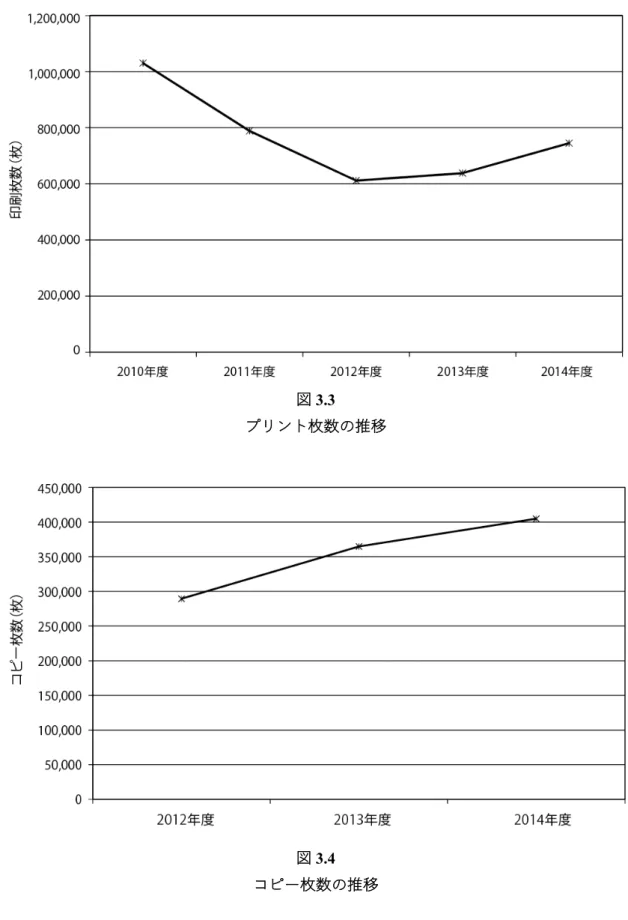
図3.3
プリント枚数の推移
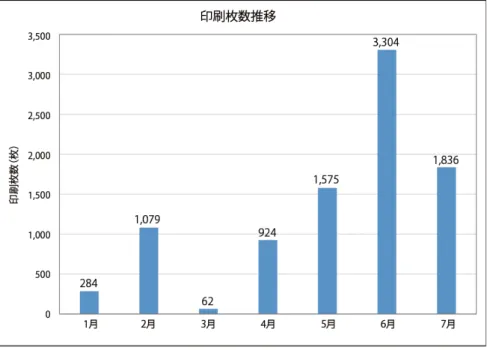
図3.8
印刷枚数(⽉別)
図3.9
ら掲⽰板やサイネージを補完し,学⽣に有益な情報を提供する仕組みとして⼀定の有効性 があることが確認された.現在は,学⽣の属性を⼊学年度および所属する学部の 2 つのみ で運⽤しているが,属性については増やすことも可能であり,性別や年齢などを追加するこ とで,よりユーザに応じた情報提供を可能にする仕組みも検討している.
カダポスは⾹川⼤学を中⼼に開発をすすめたが,設置を希望する声が複数の⼤学から寄 せられた.カダポスは,認証に Google 認証を⽤いており,設置にあたっては Google Apps など何らかの認証の仕組みを導⼊していることが条件となっている.⼤学関係者以外のゲ ストユーザの利⽤や,認証の仕組みを持っていない⼤学などでの設置等を⾒据え,ワンタイ ムパスワードの導⼊なども検討している.
図 3.13 は,印刷制御技術の提供⽅法の変化を⽰したものである.このように,産学官連 携を進める中で,株式会社リコーは,印刷制御技術に関して,これまでのクローズドイノベ ーションよりの考えから,オープンイノベーションの考えに変化していった.さらに,簡単 な Application Programming Interface(以降 API と呼ぶ)で機能を提供することにより,提供 技術に関する情報公開が進み,多くの学⽣(⼯学部,情報系の学⽣)は,発案した情報サー ビスのプロトタイプシステムを⾃らの⼿で短期間に開発できるように変化した.このこと は,実証実験による課題解決策の有効性確認のスピードアップに⼤きく貢献した.
3.7.2 株式会社リコーの技術提供⽅法と制御レベル
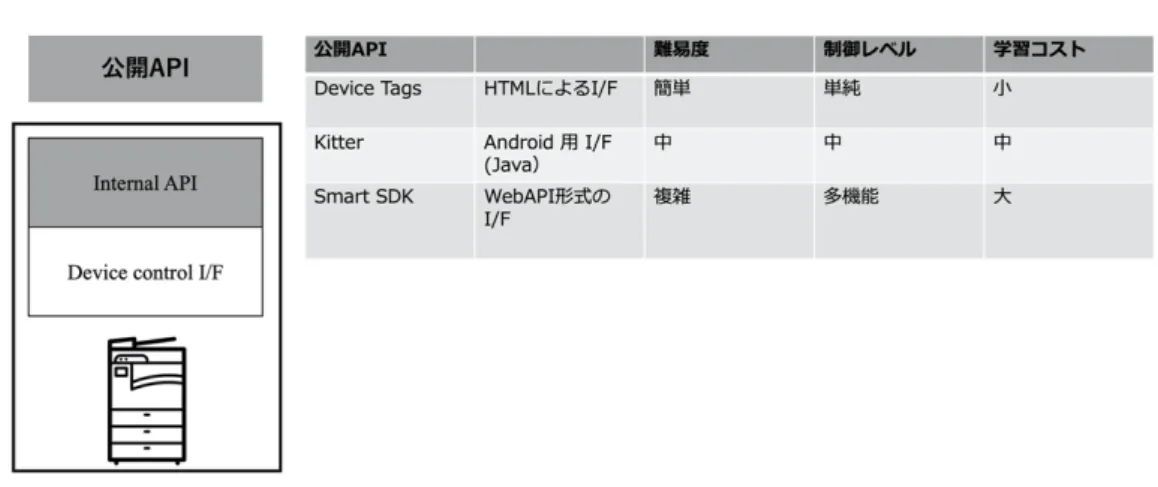
株式会社リコーは「KadaPos /カダポス」の開発の中で,MultiFunction Printer(以降 MFP と 呼ぶ)の印刷制御機能を公開するにあたり,利⽤者に合わせて 3 つのレベルの API と SDK を提供している.図 3.14 は,株式会社リコーの提供する印刷制御 API を⽰している.最下 位に位置するのは社内で利⽤する内部 API であり,公開 API は,その上位に「RICOH Smart SDK」,さらに上位に「Kitter」,「Device Tags」と続く.
図3.14
リコーの提供する印刷制御API
ース仕様を理解した上で,認証機能などより細部にわたり MFP を制御できる WebAPI 形式 [3.17]のインタフェースである.株式会社リコー内で利⽤している内部 API は,全ての機能 を利⽤できるが,その仕様を理解し利⽤できるのは社内でも MFP の設計に従事する⼀部の 技術者に限られる. 地域課題解決に向けて産学官連携で進めていく際,特に⼤学の学⽣にこれらの技術を利 ⽤させる場合は,機能を絞っても簡単で使いやすいインタフェースを提供することが重要 となる.次に「Device Tags」による HTML を⽤いた印刷指⽰例を具体的に⽰す. l Device Tags による印刷指⽰例 3.7.3 オープンな情報公開による技術提供 ⾹川型開発プロセスに従い産学官連携による情報サービスの開発を進めていく過程で, 質的変化の最初の段階として,企業と⼤学の情報共有における変化が重要であり,変化のス タート点となる.企業の技術を⼤学に提供する形態がこれまでのクローズドイノベーショ ンよりの考え⽅からオープンイノベーションの考え⽅に変わることが重要であるが,その 中でも情報公開の⽅法が鍵となる. 企業と⼤学間での情報公開では,闇雲にオープンに情報公開するのではなく,公開される 技術・機能をだれもが簡単に利⽤できるレベルで提供することが重要である.その結果,⼤ 学においては,学⽣によるプロトタイプシステムの開発が可能となり,発案された課題解決 策が机上での提案から,実際のフィールドにおいて実証実験がおこなえるものになる.さら に,プロトタイプシステムの開発と実証実験が短期間に実現できるようになることで,シス テムの改修・改良が容易,かつ迅速に進められるアジャイル型開発の利点を⽣かした開発が 可能となり,課題解決策の改修・改良が迅速におこなえるようになる. 企業にとって社内の技術を公開し,誰もが利⽤できるようにすることは,利⽤者にとっ てはメリットが⼤きいが,提供者である企業にとってはどのようなメリットがあるのだろ うか.機器や機能をオープンに提供する動きは,これまでもソフトウエアの世界において は多く進められてきた.社内の保有技術をオープンに公開することは,簡単に聞こえる が,実は企業にとって⾮常に重要な舵取りとなる.ここで,オープンに技術を公開する事 <body>
図4.2
KaDiary/カダイアリーの概要図
図4.6
図4.10
すべての観光ルートを地図上に⽰した様⼦
図4.11
図5.1
カダパンの概要
図5.2
図5.3 オリジナルのガイドブック(海辺コース)表⾯
図5.5
図5.12
図5.14
観光者の観光地間の遷移図(海辺コース)
表5.2
図5.17
コース別の観光地訪問者数
表5.3
5.6 「KadaPam/カダパン」開発のまとめ カダパンは,JPEG 形式と PDF 形式の 2 種類のガイドブックを⽣成する.PDF 形式のガ イドブックは,クラウドに接続されたプリンタを⽤いて印刷される.カダパンは,観光者に よる「事後情報」の⽣成を⽀援している.また,⽣成された JPEG 形式の観光ガイドブック が他の観光者へ(SNS などを通じて)共有されることで,他の観光者に向けた「事前情報」 として活⽤できる.さらに,⽣成された観光ガイドブックには,観光ガイドブックを利⽤し た観光者の観光⾏動が記録されており,その分析が可能である. 本研究では,カダパンによって収集されたデータを分析することで,観光ガイドブックを ⼊⼿した観光者の観光⾏動が分析できた.また実証実験の結果,カダパンには,訪問観光地 数や観光地の滞在時間の増加に⼀定の効果があることが認められた.すなわちカダパンは, ゲーミフィケーションを適⽤し,スタンプラリーやフォトラリーと同じく,圏域形成を⽀援 し,観光者を同じ圏域の別の観光地へ誘う可能性を有している. 実証実験に参加した観光者から,「認識されたこと⾃体がうれしかった.」というコメント が寄せられた.カダパンにおける認識率は,誤判定を起こさず,⼀定の認識率(オリジナル の観光ガイドブックに掲載された写真と観光者が撮影した写真が,同⼀の場所,同⼀の構図 で撮影された写真かどうかの判定率,本研究で実施した実証実験では 56.8%)があれば,ユ ーザには影響を与えないことを⽰唆している.また実証実験の結果,画像特徴パターンが抽 出されやすい構図を採⽤することで,認識率向上が⾒込めることも明らかになった.
5.7 「KadaPam/カダパン」の現状 ⾹川型開発プロセスに則して「KadaPam/カダパン」のこれまでの活動をトレースすると 次のようになる. 「KadaPam/カダパン」は,①「地域課題の抽出」として,⾹川県内の観光地で⾹川⼤学の 学⽣が紙の観光ガイドブックが利⽤後に捨てられるケースが多いことに気づき,⾹川⼤学 が,②「課題に対する解決策(仮説)の⽴案」として,観光ガイドブックを捨てずに持って 帰るようにするには,観光ガイドブック中の写真を⾃分の写真と⼊れ替えることで⾃分の 写ったパンフレットは捨てないで持って帰るであろう,といった仮説を発案した.この仮説 を情報サービスとして実現するために⾹川⼤学と株式会社リコーは,印刷制御技術以外に ⾃社の保有する画像照合技術(RICOH TAMAGO Snapi SDK)も Skimming API として提供 し,2017 年に③「仮説を検証するためのプロトタイプシステムの開発」を発案した学⽣⾃ らがおこなった.カダパンは,④「プロトタイプシステムを⽤いた実証実験」を⾹川県⼩⾖ 島町の協⼒を得て 2017 年 11 ⽉に⼩⾖島で実施し,⑤「評価」をおこなった.その結果,地 域課題に対する解決策は,ユニークで観光者も「KadaPam/カダパン」を楽しみながらおこな っていたことや,「KadaPam/カダパン」が観光スポット間の圏域を形成することから,地域 課題を解決する情報サービスとして良好と判断し,⑥「事業化判断」のフェーズに進んだ. ⑥「事業化判断」のフェーズでも,対象となるコンテンツを他の観光地に切り替えることに よる展開可能性や圏域形成,さらに観光者の⾏動分析もおこなえることから,市場⾯,資⾦ ⾯で事業化の⾒込みがあると判断された.現在,他の⾃治体からの引き合いもあり,⾹川⼤ 学イノベーションデザイン研究所の特別共同研究テーマとして⑦「製品化」のフェーズで実 ⽤化を⽬指して進めている.
5.8 画像照合技術の Skimming API としての提供(RICOH TAMAGO Snapi SDK)
学,地⽅⾃治体など異業種,異分野が持つ技術やアイデアなどを組み合わせた製品開発や, ユーザである顧客からのニーズを踏まえた製品開発を⽬指し組織された.
RICOH Visual Search は当初,⾃社製品に組み込むことを⽬的として開発が進められた. RICOH TAMAGO Labs は,情報通信技術の急速な発展による顧客ニーズの多様化や,競争 ⼒のあるソフトウェア開発に対応するため,また外部の知識や技術を融合させた新しい製 品やサービスの創出を⽬指し,RICOH Visual Search の技術を SDK として提供した.
Snapi SDK は,RICOH Visual Search の技術をベースに開発された SDK であり,キーワ ード検索と同様に画像を⽤いた検索(以下,キー画像検索とよぶ)をおこなうことができる. Snapi SDK で提供するキー画像検索は,RICOH Visual Search の技術を利⽤し,⼊⼒された クエリ画像と登録された複数のキー画像を⽐較し,画像特徴パターンとその個数による評 価値から,検索結果を返す画像検索システムである.
Snapi SDK は,オープンイノベーションを加速させるべく,株式会社リコーの保有する技術を 多くの開発者に提供することで,様々な情報サービスが創出され,多くのユーザにそれらの情報 サービスを通じて⾃社の技術を利⽤してもらうことを⽬的に開発された.
Snapi SDK で提供するキー画像検索は,RICOH Visual Search の技術を利⽤し,⼊⼒されたクエ リ画像と登録された複数のキー画像を⽐較し,画像特徴パターンとその個数による評価値から, 検索結果を返す画像検索システムである.このような狙いを実現するため Snapi SDK は以下の 点に考慮して設計・開発された:
(A) Snapi SDK は,開発者が画像検索技術に関する知識がなくても画像検索技術を⽤いた情 報サービスが創出でき,ユーザが創出された情報サービスを通じて株式会社リコーの有す る RICOH Visual Search の技術を利⽤することができる.
Snapi SDK は,Web アプリケーションなどで広く利⽤してもらうため,クラウド上に構 築し,ネットワーク経由で利⽤できる仕組みを提供した.この仕組みによって,開発者は画 像検索システムについて特別な知識を必要としなくても,画像検索システムを⽤いたソフ トウェアの開発や情報サービスの創出が可能である. 「KadaPam/カダパン」は,観光ガイドブックを利⽤する様々な観光者が,観光の最中に負 担なく⼿軽に利⽤できるシステムである必要がある.また,iOS 搭載端末,android 搭載端 末,いずれの端末でも動作する必要がある.そのため,多様な機能の実装が可能でダウンロ ードを必要とするスマートフォンアプリではなく,観光者が利⽤する機能は画像の送受信 のみに絞り,携帯情報端末の Web ブラウザで動作する Web アプリケーションとして開発す るため,画像認識技術と Web アプリケーションとのやり取りが容易であることが望まれた. 図 5.18 は,RICOH TAMAGO Snapi SDK の概要である.Snapi SDK は,JavaScript ライブラ リとして配布され,JavaScript で記述された Web アプリケーションに容易に組み込むことが できた.
図5.18
誰もが簡単に利⽤できる Skimming API を有した,Snapi SDK をオープンに提供することで 新しい情報サービスのアイデア創出とスピーディーなプロトタイプシステムの開発と実証 実験の実現にさらに貢献した. 5.9 「KadaPam/カダパン」開発の産学官連携における⽬的 「KadaPam/カダパン」の開発では,⾃治体の評価を得て実現可能性が⾒えてきた課題解決 策をどのように地域に根差した情報サービスとして実運⽤を開始するか,そのためにどの ように事業化を進めるかといった課題に対し,⾃治体の評価と企業による事業化に向けた 取り組みに注⽬し,その変化から知⾒を集めた. ⾃治体による課題解決策の評価が進むと他の⾃治体や企業からもその課題解決策を利⽤ したいといった引き合いが増えてくる.地域において地域課題解決策を継続的に提供して いくためには,⾃治体による⼀時的予算だけでは運⽤は難しく,事業採算性などを評価した 上で企業による事業化による運営が鍵となる.そこで,企業が事業化を⾒据えた活動を開始 するために,企業がどのように産学官連携で創出された地域課題解決策をビジネスとして 展開を判断していくか,企業はビジネス展開可能性をどのような視点でとらえるか,企業が ビジネス展開を判断する要因はなにか,さらに,その進め⽅はどのようなものかといった課 題に対し,「KadaPam/カダパン」の開発事例を通して株式会社リコー,リコージャパンと⾹ 川⼤学,⾃治体の変化に関して述べる. 5.9.1 企業による地域課題解決策の事業化へ向けた始動
ビジネスモデルに関しての研究や実際のマーケティング活動を進め,他の⾃治体との実運 ⽤サービスとして提供を前提に活動を進めている.図 5.19 は,「KadaPam/カダパン」におけ る現在の産学官連携の概念図である.
5.10 地域課題解決に向けた産学官連携を実現するための知⾒
<活動から得られた主な知⾒> 1. 企業による適切な Skimming API の設計とオープンな技術提供が企業と⼤学との関係構 築を始める上での鍵となる 2. Skimming API を利⽤して地域課題解決策の学⽣によるスピーディーなプロトタイプシ ステムの開発と実証実験の実施が課題解決策を評価してもらうためには重要 3. ⾃治体に対しては,机上の提案からプロトタイプシステムと実証実験の結果による提案 が⾃治体の地域課題解決に向けた内発的な参画への変化を起こす要因へつながる 4. 地域課題解決策の⾃治体による評価とプロモーション活動が課題解決策の⽔平展開可 能性を⽣み出し,企業が事業化に向けた活動を開始する要因となる ⼤学と企業の強固な関係作りのノウハウとしては,前述したとおり,企業による適切な Skimming API の設計とオープンな技術提供が企業と⼤学との関係構築を始める上での鍵と なり,Skimming API を利⽤して地域課題解決策の学⽣によるスピーディーなプロトタイプ システムの開発と実証実験の実施が課題解決策を評価してもらうためには重要となる.こ れらを実現するためには,以下の点を意識して活動を進めていくことが重要である. <⼤学と企業の強固な関係作りのノウハウ> l ⼤学は,課題解決策を発案し地域課題解決に必要な技術を有する企業と組むことが重 要である l 企業は,⾃社の技術を守りながら,利⽤者(⼤学⽣など)が理解しやすく簡単に利⽤で きる Skimming API を適切に設計し技術をオープンに提供していくことが重要である l ⼤学は,企業と連携して,提供された Skimming API を利⽤して,進化的プロトタイピ ング⼿法を⽤いてプロトタイプシステムの開発と実証実験,改良のサイクルをスピー ディーに回していくことが重要である
切に設定できる⼈材 ・学⽣に信頼され,学⽣を巻き込んで地域課題解決に取り組むことができる教員 ⾃治体においては; ・地域課題を⾏政の課題とせず,⾃分も含め課題解決に⾃ら挑戦する勇気と意気込みのある ⼈材 ・⾃治体のルールやおこなえることを熟知した上で,課題解決策の実現に向けて柔軟に⾃治 体のやれることを推進できる⼈材 このようなコンピタンスを意識した上で,産学官連携を推進できる⼈材の育成も重要で ある.学⽣の卒業にともなうプロトタイプシステム継承の問題,⼤学において推進役として 活躍できる実務経験のある⼈材の教育,育成の課題も残されている. そのためにも,⼤学は企業と連携してデザイン思考の考え⽅に基づく課題認識,アイデア 創出と検証,アジャイル型開発による柔軟性,リーン・スタートアップの考え⽅と活動のス ピードなどの新しい⼿法を実務的に発揮できる能⼒を備えた⼈材を育成していくことが急 務と考えている.今回の開発事例から,⼤学における推進役(コーディネーター)は,⾃⾝ の経験として以下のような経験や考え⽅を持つ⼈材が担当することが望ましい. ・地域課題に対し⾃らが主体的に取り組み,新しい考え⽅を採⽤していける. ・起業経験や,企業において新規事業創出や⽴ち上げの経験を有している. ・これまでのやり⽅に捕らわれず,以下の考え⽅を理解し実践できる. ・デザイン思考の考え⽅に基づく課題認識,アイデア創出と検証 ・アジャイル型開発による柔軟性の意義の理解 ・リーン・スタートアップの考え⽅と活動スピードの重要性の認識 ⾹川⼤学では現在,地域社会の課題解決に資する教育・研究等の実績をもとに,地域活性 化の中核的拠点としての機能強化に取り組むことをビジョンとして掲げており,地域活⼒ を維持・向上させるためにはイノベーションが必要とされ,そうした新たな価値を創造でき る⼈材を育てるため DRI 教育(Design thinking,Risk management,Informatics の頭⽂字から なる)を取り組んでいる.
研究業績
査読付論⽂誌 執筆者名 熊野 圭⾺, 宮川 怜, 國枝 孝之, ⼭⽥ 哲, 後藤⽥ 中, 紀伊 雅敦, ⼋重樫 理 ⼈ 論⽂題⽬ 観光⽇記⽣成/印刷システム「KaDiary/カダイアリ―」の開発と⾹川県⼩⾖島に おける観光⽇記を⽤いた観光⾏動分析 掲載誌名 情報処理学会デジタルプラクティス Journal Vol.8, No.4 pp.316-324, 2017 年執筆者名 ⾼⽥ 良介, 後藤⽥ 中,紀伊 雅敦, 國枝 孝之, ⼭⽥ 哲, 佐野 弘実, ⽵下 裕也, ⼋重樫 理⼈
論⽂題⽬ 広告表⽰プリンタシステム「KadaPos/カダポス」の開発と⾹川⼤学における実 運⽤による評価
掲載誌名 情報処理学会デジタルプラクティス Journal Vol.8, No.4 pp.325-333, 2017 年
執筆者名 國枝 孝之, 泉 亮祐, 宮川 怜, 池⽥ 哲也, ⾦⽮ 光久, ⼭⽥ 哲, 後藤⽥ 中, ⽶ ⾕ 雄介, ⼋重樫 理⼈
論⽂題⽬ 旅の思い出を記録する観光ガイドブック⽣成/印刷システム「KadaPam/カダパ ン」の開発と⼩⾖島における観光ガイドブックを⽤いた観光⾏動分析
掲載誌名 情報処理学会デジタルプラクティス Journal Vol.10, No.4 pp.829-849, 2019 年
執筆者名 國枝 孝之,⼭⽥ 哲,池⽥哲也,⽶⾕ 雄介,後藤⽥ 中,⼋重樫 理⼈ 論⽂題⽬ オープン・イノベーションによる地域課題解決型情報サービス開発にむけた⾹
川⼤学型開発モデルとその実践 掲載誌名 学術情報処理研究誌(JACN)
査読付国際会議
執筆者名 Ryo OOOKA, Keima KUMANO, Takayuki KUNIEDA, Tetsuya IKEDA, Naka GOTODA, Masanobu KII, Toshihiro HAYASHI, Rihito YAEGASHI
論⽂題⽬ Development of a Presentation System for Tourist Information which Helps the Tourists to Post and Share their Comments
掲載誌名 Proceedings of The Fourth International Conference on Informatics & Applications, Takamatsu, Japan, pp.329-332, 2015
執筆者名 Keima KUMANO, Rei MIYAGAWA, Satoru YAMADA, Takayuki KUNIEDA, Naka GOTODA, Masanobu KII and Rihito YAEGASHI
論⽂題⽬ Development of the Travel Diary Generating/Printing System (KaDiary) using Geotagged Photos and Extracting Touristsʼ Behavior from Diaries
掲載誌名 Proceedings of Digital World 2017 GEO Processing 2017 pp. 63-68, 2017
執筆者名 Rei Miyagawa, Keima Kumano, Takayuki Kunieda, Tetsuya Ikeda, Naka Gotoda, Masanobu Kii and Rihito Yaegashi
論⽂題⽬ Development of a Sharing System for Virtual Graffiti of Tourism Information among Tourists using Image Recognition
掲載誌名 Proceedings of Digital World 2017 SMART ACCESSIBILITY 2017 pp. 26-27, 2017
執筆者名 Takayuki Kunieda, Yusuke Kometani, Naka Gotoda, Rihito Yaegashi
論⽂題⽬ Development Case of Information Services to Accelerate Open Innovation and Implementation
掲載誌名 Proceedings of 12th Joint Conference on Knowledge-Based Software Engineering (JCKBSE2018) Corfu, Greece, pp.221-230, 2018
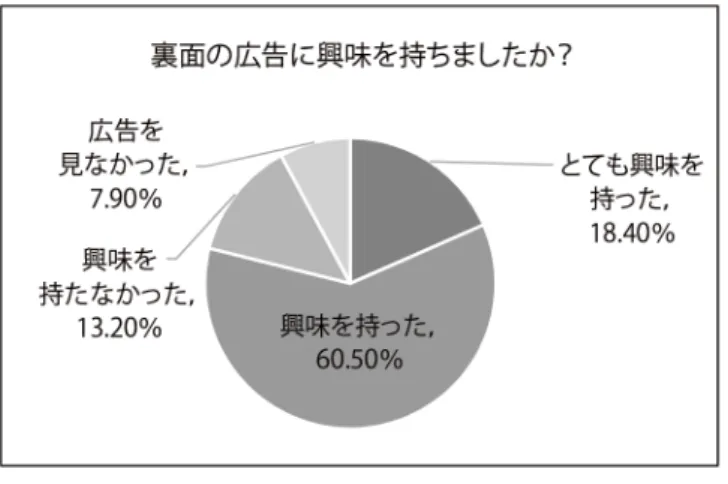
共同研究作品(システム) 製作者名 ⾼⽥良介,後藤⽥中,紀伊雅敦,國枝孝之,⼭⽥哲,佐野弘実,⽵下裕也,⼋ 重樫理⼈ 作品の名称 広告表⽰プリンタシステム「KadaPos /カダポス」 場所 ⾹川⼤学における実証実験と運⽤ 2016 年〜 概要 地域情報を収集し,それらを必要とする⼈に適切に提供する仕組みが求められ ている.「KadaPos/カダポス」は,地域情報を提供する広告表⽰プリンタシステ ムであり,2016 年 1 ⽉から⾹川⼤学幸町キャンパスにて運⽤をおこなった. 実証実験では,⾼松南部三町商店街に関する広告を⾹川⼤学に設置した KadaPos プリンタで裏ページに印刷し,広告を⾒た学⽣が商店街に⾜を運ぶこ とを想定して実験をおこなった.広告を裏⾯に印刷することで学⽣は無料でプ リントをおこなうことができる.実験の結果,効果も認められ実証実験後も⾹ 川⼤学では継続的に運⽤されている. サイト http://www.kadapos.com 記事 http://www.bk-web.jp/2016/0901/mirai.php 製作者名 熊野圭⾺,宮川怜,國枝孝之,⼭⽥哲,後藤⽥中,紀伊雅敦,⼋重樫理⼈ 作品の名称 観光⽇記⽣成/印刷システム「KaDiary /カダイアリー」 場所 ⼩⾖島における実証実験 2016 年〜 概要 「KaDiary /カダイアリー」は,観光者が観光中に撮影した写真から観光⽇記を ⽣成することができる情報サービスである.観光者が観光中に撮影した写真の EXIF 情報から撮影⽇時,緯度・経度情報を抽出し,観光ルートと撮影位置をプ ロットした Web ページを⽣成する.⽣成された Web ページは観光終了後プリ 掲載誌名 Proceedings of 12th Joint Conference on Knowledge-Based Software
Engineering (JCKBSE2018) Corfu, Greece, pp.207-213, 2018
執筆者名 Takayuki Kunieda, Satoru Yamada, Tetsuya Ikeda, Yusuke Kometani, Naka Gotoda, Rihito Yaegashi
論⽂題⽬ Kagawa University-type development model and its practice of information system for regional problem solution by open innovation
「KaDaxi/カダクシー」の開発 掲載誌名 情報処理学会第 80 回全国⼤会 2ZE-08, 2018 執筆者名 板⾕達也,宮川怜,國枝孝之,⼭⽥哲,後藤⽥中,⼋重樫理⼈ 論⽂題⽬ 観光ガイドブック⽣成・印刷システム「KadaTabi/カダ旅」の開発 掲載誌名 情報処理学会第 80 回全国⼤会 2ZE-09, 2018 執筆者名 内⽥ ⼀希,泉 亮祐,⼭⽥ 哲,⽶⾕ 雄介, 後藤⽥ 中, 國枝 孝之, ⼋重樫 理⼈ 論⽂題⽬ 観光者満⾜度を⾼める移動⼿段を考慮した観光ルートを推薦する観光ガイドブ ック⾃動⽣成印刷システム「KadaTabi2/カダ旅 2」の提案 掲載誌名 平成 30 年度電気関係学会四国⽀部連合⼤会講演論⽂集, 2018 執筆者名 内⽥⼀希, 泉亮祐,⼭⽥哲,⽶⾕雄介, 後藤⽥中, 國枝孝之, ⼋重樫理⼈ 論⽂題⽬ 滞在型観光を⽀援する観光⽀援システム「KadaSola/カダソーラ」の開発 掲載誌名 情報処理学会第 81 回全国⼤会, pp.841-842, 2019 招待講演
講演名 「新しいビジネスの TAMAGO を創出する RICOH TAMAGO 活動の紹介」 主催者 CIAJ フォーラムプラザシンポジウム 2013
講演名 企業における「新しいものづくり」への挑戦 「キー画像」によるコンテンツ登 録・検索サービス SDK(RICOH TAMAGO Snapi)の開発事例の紹介 主催者 電⼦情報通信学会 ソサイエティ⼤会 2017
講演名 「産学連携からみた教育・学習⽀援システム研究の今と 5 年後 10 年後」(パネ ル討論)
テム「KaDiary/カダイアリー」の開発と⾹川県⼩⾖島における観光⽇記を⽤いた観光⾏動分析. 情報処理学会 デジタ ルプラクティス 8(4): 316 ‒ 324 https://www.ipsj.or.jp/dp/contents/publication/32/S0804-T02.html [1.18] 國枝孝之,泉亮祐,宮川怜,池⽥哲也,⾦⽮光久,⼭⽥哲,後藤⽥中,⽶⾕雄介,⼋重樫理⼈ (2019) 旅の 思い出を記録する観光ガイドブック⽣成/印刷システム「KadaPam/カダパン」の開発と⼩⾖島における観光ガイドブ ックを⽤いた観光⾏動分析. 情報処理学会デジタルプラクティス 10(4): https://www.ipsj.or.jp/dp/contents/publication/40/S1004-1816.html
[1.19] Takayuki Kunieda, Yusuke Kometani, Naka Gotoda, Rihito Yaegashi (2018) Development Case of Information Services to Accelerate Open Innovation and Implementation. Proceedings of 12th Joint Conference on Knowledge-Based Software Engineering (JCKBSE2018) Corfu, Greece pp.221-230
[1.20] 國枝 孝之,⼭⽥ 哲,池⽥哲也,⽶⾕ 雄介,後藤⽥ 中,⼋重樫 理⼈(2019) オープン・イノベーションによ る地域課題解決型情報サービス開発にむけた⾹川⼤学型開発モデルとその実践. 学術情報処理研究誌(JACN) No.23: [1.21] Takayuki Kunieda, Satoru Yamada, Tetsuya Ikeda, Yusuke Kometani, Naka Gotoda, Rihito Yaegashi (2020) Kagawa University-type development model and its practice of information system for regional problem solution by open innovation. Proceedings of 2020 3rd International Conference on Information and Computer Technologies
2. 地域開発プロセスの質的変化 [2.1] プロセスモデル(Wikipedia)https://ja.wikipedia.org/wiki/プロセスモデル(2019年12⽉12⽇参照) [2.2] スタンフォード⼤学ハッソ・プラットナー・デザイン研究所(2012) スタンフォード・デザイン・ガイド デザイ ン思考 5つのステップ http://www.nara-wu.ac.jp/core/img/pdf/DesignThinking5steps.pdf (2019年12⽉12⽇参照) [2.3] アジャイルソフトウェア開発宣⾔ http://agilemanifesto.org/iso/ja/manifesto.html (2019年12⽉12⽇参照) [2.4] 情報処理推進機構(2018) アジャイル開発の進め⽅ https://www.ipa.go.jp/files/000065606.pdf (2019年12⽉12 ⽇参照) [2.5] エリック リース(2012).リーン・スタートアップ.⽇経BP,408p.
4. 観光⽇記⽣成/印刷システム「KaDiary /カダイアリー」 [4.1] 観光庁:観光⽴国推進基本計画,http://www.mlit.go.jp/kankocho/kankorikkoku/kihonkeikaku.html (2016 年7 ⽉15 ⽇参照) [4.2] 観光庁: 観光⽴国推進基本法,http://www.mlit.go.jp/kankocho/kankorikkoku/kihonhou.html (2016 年7 ⽉15 ⽇参照) [4.3] 前⽥勇 (2007)現代観光総論第三版, 学⽂社. [4.4] 安村克⼰,野⼝洋平,細野昌和 (2007) 観光事業論講義, くんぷる(2005).
[4.5] 市川尚,阿部昭博 (2011) 観光周遊におけるIT ⽀援,⼈⼯知能学会誌,Vol.26, No.3, pp.240-247.
[4.6] 上⽥智昭,⼤岡稜,熊野圭⾺,垂⽔浩幸,林敏浩,⼋重樫理⼈ (2015) 観光情報の⽣成/共有を⽀援する観光⽀ 援システム,情報処理学会研究報告,Vol.2015-IS-131, No.4, pp.1-7. [4.7] 観光庁:GPS 機能による位置情報等を活⽤した観光⾏動の調査分析報告書(2013年度), http://www.mlit.go.jp/common/001045119.pdf (2016 年7 ⽉15 ⽇参照) [4.8] 観光庁:GPS を利⽤した観光⾏動の調査分析に関するワーキンググループ( 第5回), http://www.mlit.go.jp/common/001080530.pdf (2016 年7 ⽉15 ⽇参照) [4.9] 瀬⼾内国際芸術祭,http://setouchi-artfest.jp/(2017年5⽉31⽇参照). [4.10] ⾼⽊有⼈,遠藤雅樹,廣⽥雅春,倉⽥陽平,横⼭昌平 (2016) ジオタグ付き写真を⽤いたホットスポットを訪 問する前後のユーザ⾏動の分析,第8 回データ⼯学と情報マネジメントに関するフォーラム (DEIM2016),F7-5.
[4.11] Vu, Q. H., Leung, R., Rong, J., Miao, Y. (2016) Exploring Park Visitors' Activities in Hong Kong using Geotagged Photos, Information and Communication Technologies in Tourism 2016, pp.183-196.
[4.12] 倉⽥陽平,鞠⼭彩実,⽯川博 (2016) Flickr 画像を⽤いて観光空間内の写真撮影⾏動の来訪者類型別⽐較−浅 草を例として−,第8 回データ⼯学と情報マネジメントに関するフォーラム(DEIM2016),P5-6. [4.13] 倉⽥陽平 (2011) 観光ポテンシャルの可視化によるスマートフォン向けのシンプルな観光情報サービス,地理 情報サービス学会講演論⽂集,第20 回地理情報サービス学会学術⼤会,地理情報サービス学会講演論⽂集20. [4.14] 倉島健,岩⽥具治,⼊江豪,藤村考 (2010) 写真共有サイトにおけるジオタグ情報を利⽤したトラベルルート 推薦,電⼦情報通信学会技術研究報告.LOIS,ライフインテリジェンスとオフィス情報サービス,Vol.109, No.450, pp.55-60. [4.15] 伊藤淳⼦,椎名佳奈⼦,宗森純 (2008) 電⼦思いでノートの開発と⽇中での適⽤,電⼦情報通信学会技術研究 報告.OIS,オフィスインフォメーションシステム,Vol.108, No.53, pp.19-24. [4.16] ⻑尾聡輝,加藤福⼰,浦⽥真由,安⽥考美 (2012) スマートフォンを⽤いた観光アルバム作成アプリケーショ ンの開発,情報処理学会研究報告,Vol.2012-DCC-2, No.22, pp.1-4.
[4.19] MicroSoft:MicroSoft Azure, https://azure.microsoft.com/ (2016 年12⽉6 ⽇参照) [4.20] Google:Google Maps APIs, https://developers.google.com/maps/ (2016 年12 ⽉6 ⽇参照)
[4.21] ⼩⾖島ふるさと村:⼩⾖島ふるさと村Web ページ,http://www.shodoshima.jp/ (2016 年12 ⽉14 ⽇参照)
[4.22] Google:Google Maps Directions API‚
https://developers.google.com/maps/documentation/directions/intro?hl=ja (2017 年1 ⽉24 ⽇参照) [4.23] Kisilevich, S., Mansmann, F. and Keim, D.: P-DBSCAN:A Density Based Clustering Algorithm for Exploration and Analysis of Attractive Areas Using Collections of Geotagged Photos, In Proceedings of the 1st
International Conference and Exhibition on Computing for Geospatial Research and Application Article, Article No.38, (2010).
[4.24] 北川フラム(監修),瀬⼾内国際芸術祭実⾏委員会(監修) (2016) 瀬⼾内国際芸術祭2016 公式ガイドブッ
5. 旅の思い出を記録する観光ガイドブック⽣成/印刷 システム「KadaPam/カダパン」 [5.1] ⽇本政府観光局:平成28年訪⽇外客数・出国⽇本⼈数, https://www.jnto.go.jp/jpn/statistics/data_info_listing/pdf/170117_monthly.pdf (2019年12⽉12⽇参照) [5.2] 総務省:情報通信⽩書平成29年度版,http://www.soumu.go.jp/johotsusintokei/whitepaper/h29.html (2019年 12⽉12⽇参照) [5.3] 観光庁:観光ICT化促進プログラム,http://www.mlit.go.jp/common/000138613.pdf (2019年12⽉12⽇参照) [5.4] [4.3] 前⽥勇 (2007) 現代観光総論 第三版,学⽂社. [5.5] [4.4] 安村克⼰,野⼝洋平,細野昌和 (2007) 観光事業論講義,くんぷる. [5.6] [4.5] 市川尚,阿部昭博 (2011) 観光周遊におけるIT⽀援,⼈⼯知能学会誌,Vol.26, No.3, pp.240-247. [5.7] リコー:RICOH TAMAGO Snapi (online), https://www.ricoh.co.jp/software/tamago/snapi/ (2019年12⽉12⽇ 参照)
[5.8] リコー:RICOH Clickable Paper (online), https://www.ricoh.co.jp/software/other/clickablepaper/ (2019年12 ⽉12⽇参照) [5.9] 根本啓⼀,⾼橋正道,林直樹,⽔⾕美由起,堀⽥⻯⼠,井上明⼈ (2014) ゲーミフィケーションを活⽤した⾃発 的・持続的⾏動⽀援プラットフォームの試作と実践,情報処理学会論⽂誌,Vol.55, No.6, pp.1600‒1613. [5.10] 藤原佑歌⼦,吉野孝 (2014) 観光予定者のためのパノラマ画像を介した情報共有システムの提案,情報処理学 会,マルチメディア,分散,協調とモバイル(DICOMO2014)シンポジウム, pp.430-437. [5.11] 倉島健,岩⽥具治,⼊江豪,藤村考 (2010) 写真共有サイトにおけるジオタグ情報を利⽤したトラベルルート 推薦,電⼦情報通信学会技術研究報告,LOIS,ライフインテリジェンスとオフィス情報サービス,Vol.109, No.450, pp.55-60. [5.12] 倉⽥陽平,鞠⼭彩実,⽯川博 (2016) Flickr画像を⽤いて観光空間内の写真撮影⾏動の来訪者類型別⽐較─浅草 を例として─,第8回データ⼯学と情報マネジメントに関するフォーラム(DEIM2016), P5-6. [5.13] 浦⽥真由,⻑尾聡輝,加藤福⼰,遠藤守,安⽥孝美 (2014) 地域 観光を⽀援するためのフォトラリーシステ ムの開発,情報⽂化学会誌,Vol.21, No.2, pp.11-18. [5.14] 宇野健,徳⼭陽⼀ (2010) 酒まつり QR コードラリー運営システムの開発,⽇本知能情報ファジィ学会ファジ ィシステムシンポジウム講演論⽂集,第26回ファジィシステムシンポジウム,⽇本知能情報ファジィ学会,p.140-140. [5.15] MicroSoft : MicroSoft Azure (online), https://azure.microsoft.com/ (2019年12⽉12⽇参照)
[5.16] リコー:リコービジュアルサーチ(RVS)技術,http://jp.ricoh.com/technology/tech/044_search.html (2019 年12⽉12⽇参照)
![図 2.6 地域課題解決に向けて産学官連携に求められる良好な体制の概念図 「オープンイノベーション」[2.9][2.10][2.11]とは,上記で述べた問題の解決を⽬指し,⾃ 社だけでなく他社や⼤学,地⽅⾃治体,社会起業家など異業種, 異分野が持つ技術やアイデ ア,サービス,ノウハウ,データ,知識などを組み合わせ, ⾰新的なビジネスモデル,研究 成果, 製品開発,サービス開発, 組織改⾰,⾏政改⾰,地域活性化, ソーシャルイノベーシ ョン等につなげるイノベーションの⽅法論である.そのために企業は,⾃](https://thumb-ap.123doks.com/thumbv2/123deta/9765901.1849905/38.892.142.762.157.506/オープンイノベーションアサービスノウハウデータ.webp)


![図 4.3 概要ページ 4.4 カダイアリーの実証実験 4.4.1 実証の概要 我々は, カダイアリーの有効性を確認するために⾹川県⼩⾖島において, カダイアリーの 実証実験をおこなった. ⼩⾖島は瀬⼾内海の島々の⼀つであり, 1 年間に約百万⼈の観光者 が訪れる島である.実証実験は, ⼩⾖島に訪れる観光者の観光⾏動を分析し, 観光者の⾏動 を把握することを⽬的として実施された.観光者に観光地において観光⽇記を印刷してい ただくために,プリンタを, ⼩⾖島ふるさと村[4.21] に設置した.](https://thumb-ap.123doks.com/thumbv2/123deta/9765901.1849905/80.892.263.639.156.713/ページカダイアリーカダイアリーカダイアリーおこなっプリンタ.webp)