第18巻第1号
内 容
原 著
大分のブユ成虫における動物寄生性オンコセルカ3種幼虫について(英文)
・高岡 宏行,Odile Bain 1−10 研究ノート
Possible Causes Leading to an Epidemic Outbreakes of Sleeping Sickness:
Facts and Hypotheses………一…・………・……・…・…Dawson B.Mbulamberi11−16 症例報告
輸入動物の寄生虫 V.オオガラゴに見出された舌虫幼虫
…影井 昇,七里 茂美 17−22 協δ万o吻翅商読による食中毒症例
一本邦とフィリピンにおける自験症例の臨床像について一(英文)
一奥村悦之,中嶋敏宏,秦 光孝,Edy L Mypa23−30 陳旧性日本住血吸虫症に発生した胃癌の一症例
一神田 亨勉,小山 幸男,加藤 達也,前田 光久,
篠原 宏康,伊藤 秀明,狩野 繁之,鈴木 守 31−38 短 報
フィールドにおけるブロモデオキシウリジンの取り込みによる熱帯熱マラリアの
薬剤感受性試験(英文)・………・一………・一土居 弘幸,Syafei,石井 明・39−41 第31回日本熱帯医学会総会講演英文抄録
目 次…・… 43−46
特別講演・一 47−48 シンポジウム
1 北スマトラ地域保健協力の成果…… 49−57 11熱帯性下痢症一社会1青勢の変遷にまつわる動向と課題一…・……・ 58−61
一般講演……一 62−106
(裏面に続く)
日本熱帯医学会
J*P" . J. T**P. M*d. Hyg., v.1' 18, N'. 1, 1990, pp. 1‑lo
INFECTIONS OF BLACKFLIES
' (DIPTERA: SIMULIIDAE)
WITH THREE TYPES OF ZOONOTIC ONCHOCERCA LARVAE IN OITA, JAPAN
l
HIROYUKI TAKAOKA' AND ODILE BAIN=
Received August 21 1989/Accepted November 21 1989
Abstract: Wild female blackflies were collected at five cattle sheds in Oita, southern Japan, where a human zoonotic onchocerciasis had occurred. Among the eight Simulium species captured, S. bidentatum was predominant, followed by S, arakawae. atural infections with filarial laryae were found in 10.5‑20% of the parous S. bidentatum collected at three cattle sheds, and also in 6% of the parous S, arakawae captured at one cattle shed.
Only one infected S. arakawae harbored two third‑stage latvae in the thorax while the others had 1‑4 either first‑ or second‑stage larvae in the thorax. Third‑stage larvae obtained from wild flies maintained alive for 6‑9 days after being collected are distin‑
guished into three types of Onchocerca: type I recovered from S. bidentatum, S, arakawae and S, aokii is probably new, having an elongated body length (1,075‑1, 80 pm) , and types II and 111, recovered from S. bidentatum arid S, arakawad respectively, are each indistin‑
guishable from O. gutturosa and O. Iienalis. It is suggested that due to its anthropophily as well as zoophily S, bidentatum is the most probab̲le v ctor of zoonotic Onchocerca (either type I 'of ID which may be acquired by humans in the western suburbs of Oita. ‑
INTRODUCTION
In relation to the transm,ission ,of human zoonotic onchocerciasis found in Oita. Japan (Hashimoto et al.. 1990) , we carr.ied out collections of wild blackfiies using human baits at the residential area of Tabaru, the suspected infection place, and suggested that Simulium bidentatum (Shiraki) might have been the vector of this zoonotic parasite to humans due to its high anthropophily, abundance and natural infections with larvae of Onchocerca spp.
(Takaoka et al.. 1989). The identity of these zoonotic Onchocerca larvae and their natural animal hosts have remained to be studied yet.
We made further investigations on filarial infections of blackfiies at several cattle sheds around Tabaru in the western part of Oita City. In this paper, we report that S. bidentatum is the predominant species attacking cattle and is naturally infected with larvae of two types of Onchocerca (one type, unknown and the other, resembling O. gutturosa Neumann, 1910) . It
1 Division of Medical Zoology, Medical College of Oita, Hazama, Oita 879‑56, Japan
2 Laboratoire de Zoologie Vers. Museum National d'Histoire Naturelle, 61, Rue de Bufftm, 75231
Paris Cedex 05, France '¥
This study was supported by a Grant‑in‑Aid for Scientific Research from the Ministry of Education, Science and Culture of Japan (No. 01570216)
is f,urther demonstrated that S. arakawae Matsumura is also i,nfected with Onchocerca larvae indistinguishable from O. Iienalis Stiles, 1908.
MATERIALS AND MET,HOD. S :=
Collections of adult blackflies were carried out at five cattle sheds in th western part of Oita City. All of these cattle sheds are situated in lowland (ca. 20‑30 m above sea leveD and located within a 3‑kilometer radius from the residential area of Tabaru (altitude ca. 30 m above sea level; 131'35'E and 33'10'N), where the zoonotic Ol chocerca infection was presumed to have occurred.
The locality of each cattle shed surveyed, distance' from Tabaru, race and number of cattle raised, structure of cattle shed and date of collections are as follows: 1) Kokubu, ca.
0.7 km north, ca. 50 Holstein, cattle shed well constructed, with windowed wall, May 1989; 2) Shimoonozuru, 2.6 km north‑east, 18 Holstein, cattle,shed well constructed, with windowed wall, Novem. ber 1988; 3) Kamionozuru, ca. 2 km north‑east, 20 Holstein, cattle shed roughly constructed, without wall, October 1988; 4) Takajou, 2.5 km east, 15 Japanese Black, cattle shed with roof but without wall, October 1988; 5) Uchiwasada, ca. 1.6 km south‑east, 4 Japanese Black, cattle shed with robf but without windowed wall, October 1988. Cattle sheds 1, 2, and 3 are all situated in the rice fields along the banks of the Oita River, while cattle sheds 4 and 5, situated along the bank of the Nanase River, Iie at the northern foothill of Mt.
Ryouzen (5g6 m high). There is a low hilly area (50‑100 m in altitude) with a shrubbery extending from west‑south to east‑north between the two river basins.
C.ollections were made between 16.00 and 18.00 hours, and flies landing on the inside surface of glass windows of cattle sheds I and 2 or flying around the body surface of the cows or collectors at cattle sheds 3‑5 were captured by an aspiration tube or by an insect net, and held overnight in small plastic containers. On the following day, fiies were dissected in saline on a glass slide, and parity was determined by the presence of follicular relics (Detinova, 1962). Parous・ females were microscopically searched for filarial larvae. The larvae found were preserved in formalih‑glycerol (Wharton, 1959) for morphometric observations.
About 230 blood‑fed blackflies were*(.collected at cattle shed 2 and examined for the presence of microfilariae of bovine Onchdberca in the blood ingested. Microfilariae found were fixed in formalin solution, dried on'slide and stained with Giemsa solution. In addition, around 1,000 unfed and blood‑fed flies'collected at cattle shed 2 were individually maintained alive with sucrose solution at 25'C for 6‑9 days, and dissected for the presence of third‑stage filarial larvae. Generic and specific diagnosis of third‑stage larvae followed that of Bain and Chabaud ,(̲1986) . However, it should be noted that the results given are as the most probable since the s ecific identification of third‑stage larvae is generally difficult.
RESULTS
Table I shows the results of dissections of blackflies collected at five cattle sheds. The majority of blackfly species at tattle sheds 1‑4 were S. bidentatum, followed by S. arakawae.
whereas the latter species predominated at cattle shed 5.
Natural infections of S, bidentatum with filarial larvae were found in three of five cattle sheds surveyed, with infection rates of parous flies being 10.6%, 10.5% and 20%. All the
3
infected S. bidentatum harbored few first‑stage larvae in their thorax except one fly collected at cattle shed I with two second‑stage larvae (ca. 430 pm in body length) . On the other hand, natural filarial infections were found in three of 50 parous fiies (or 6%) of S.
arahawae captured at cattla shed 5, and one of three infected flies had two early third‑stage larvae in the thorax. The measurements of one of the two larvae were as follows: body length 943 pm, body width 26 pm, Iength of oesophagus 396 pm, Iength of tail 32 pm. The remaining two infected flies had one and three first‑stage larvae, respectively.
In dissection of blood‑fed flies two principal types of unsheathed microfilariae (X, Y) were found in three blackfiy species (Table 2). All of the positive flies had no mixed infections. Type X (Fig. I A‑D) measures 177‑318 pm long and 5.0‑6.5 pm wide, and is not coiled, while type Y (Fig. I E and F) , which is 137‑235 pm long and 5.0‑7.5 pm wide, is coiled in the posterior region and has a thick cuticle. Type X shows variations in head morphology, as shown in Fig. I A‑D.
Table 3 shows the results of dissections of unfed fiies collected at cattle shed 2 and maintained alive for 6‑9 days. The filarial infection rates of fiies examined (rates of parous fiies in parenthesis) were 0.9% (5.9%) for S. aokii, 3.0% (10%) for S. arakawae and 3.3%
(8.6%) for S. bidentatum. Third‑stage larvae were found in all three blackfiy species examined. These third‑stage larvae are classified into three types by their morphology (e.
g., whole body length and length of oesophagus relative to body length) (Table 5). Type I, the longest in body length (Fig. 2 A) , was found in the thorax and abdomen of three blackfly
Table I Species composition, parity and filarial infections of blackfiies collected at five cattle sheds (sites 1‑5) in westem part of Oita City, southern Japan
1 2
Collection sites
.‑ 3‑ 4 5
Simulium
sp p.
No. No, No. No. No. No. No, No. No. No, No, No. No. No. No.
col. par, inf, col, par, inf, col. par. inf. col, par. inf. col. par. inf.
aokii arakawae bid entatum japonicum
,eikkoense quinquestriatum rufibasis takahasii
10 20 185 O
O 2
3 3 47
O o
o O O 5
o o
o
26 48 60 O o 6 o O
14 4 19
3 o o 2
o 2 12 45 O O 3 O
l 4 11
O
1 o O O
o
O O O 6 O 2 2 l O
5
2 o
O
o o o
O 115 18 2 O 9 O O
50 5 o
o 3
o
Table 2 Microfilariae (mf.) found in the blood of the stomach of three blackfly species collected at cattle shed 2
Srmullum spp. No. examined No. with mf. (No. mf: median, range) Type X Type Y
aokii arahawae bidantatum
24 52 151
4 (13, 1‑71) 5 (1, 1‑30) 7 (1, 1‑21)
1 (1, 1) 2 (1, l) 19 (2, 1‑5)
t o eo
o ::o o
eF
e
.
0'2 e
o'
l O G),5
e
oe
. e,
c
a,
E
o
e& 1)Q;
o
{ Q
s,?o Q'." ".o
;
E
o e
A B F : : . D
Figure l Microfilariae found in blood meals ingested by blackflies collected at cattle shed 2. A‑D, type X assigned to Onchocerca spp.: A, C: ? O. gutturosa; B, D:
? O. Iienalis; E, F, type Y, unknown species.
5
species. Type 11 with intermediate body length (Fig. 2 B) was found in abdomen of S.
bidentatum. Type 111, the shortest in body length (Fig. 2 O, was recovered from the head of S. arakawae.
These three types of third‑stage larvae were also recovered from blood‑fed flies dissect‑
ed 6‑9 days after collection (Table 4). Types 11 and 111 were found in S. bidentatum and S.
arakawae respectively, whereas type I was found in both species. The'bverall infection rates of these blood‑fed fiies examined on days 6‑9 after collection were 2.9% for S. aokii. 7.1% for S. arakawae and 2.4% for S. bidentatum.
The measurements of three types of third‑stage larvae are shown in Table 5. The third‑
stage larvae found in the thorax of the flies were presumably young and then their measure‑
ments were not included in the table. Type I (Fig. 2 A and Fig. 3 A‑E) is characterized by its large body size (1,075‑1,380 pm long by 24‑26 pm wide) . The axial terminal caudal lappet is well distinct (Fig. 3 D and E). Tail is thick with a ratio of length/width 1.7‑2.2. On the other hand, type 11 (Fig. 2 B and Fig. 3 F‑J) measures 870‑950 pm in body length and 20‑21 pm in body width and has an elongated oesophagus (over half of body length). The tail is slender (Fig. 3 G and H), with ratio of tail length/width 2.5‑2.7. Type 111 (Fig. 2 C and Fig.
3 K‑P) is distinct from the former two types by its short body length (510‑530 I/m) .
Table 3 Filarial infections in unfed females of three blackfly species collected at cattle shed 2, and maintained alive at 25'C for 6‑9 days in the laboratory
No. No. No. No.
spp. dissected parous infected Head
& stages of larvael
Simulium Thorax Abdomen
Type of larvae2 aokii
arakawae bid entatum
107 99 151
17 30 58
1 2 5
4 L3
1 L3 1 L3
l Lp, 2 L3 2 L3
11 ll, 4111 31, 111 1
2
Lp and L3 each mean preinfective and third‑stage larvae.
See text for definition of types.
Table 4 Filarial infections in blood‑fed females of three blackfiy species collected at shed 2 and maintained alive at 25'C for 6‑9 days in the laboratory
cattle
Days post No. No,
spp, ingestion dissected infected Head
No. & stage of larvae
Simul ium Thorax Abdomen
Type of larvae2 aokii
arakawae bid entatum
6, 7 8, 9 6, 7 8, 9 6, 7 8, 9
24 lO 36 20
2 70
232
o 3
4 8
3 L3
1 L2
1 Ll, I L3
2 L2' 5 Lp 1 L2' 5 L3
1 L3
2 L.
4 L3
11, 1111 3111 11, 111 71, 211 1
2
Ll, L2. Lp and L3 each mean first, second, preinfective and third‑stage larvae.
See text for definition of types.
Table 5 Measurements of third‑stage larvael of species collected at cattle shed 2 and laboratory
Onchocerca spp, found in three blackfly maintained alive for 6‑9 days in the
Characters2
N o. Ty pe BL BW NR OE (GL) OE/BL TL TW/TL Host Simulium
1 2 3 4 5 6 7 8 9 10 11 12 13 14 15
I I I
I I
I
II II II II III III III III
1 220
1 , 220 1 , 075
1 120
l , 230 1 , 320 1 , 380
870 890 900 950 510 510 510 530
26 26 26 25 26 24 25 20 21 20 20 17 17 18 18
70 75 78 65 80 80 80 80 85 75 75 80 70 80 85
600 550 500 530 600 600 650 575 600 610 520 350 330 350 330
(470) (410) (365) (460) (470) (460) (510) (440) (475) (490) (390) (240) (215) (220) (195)
o . 50 o . 45 o . 47 o . 47 o . 48 O . 45 o . 45 o . 67 o . 67 o . 67 o . 54 o . 69 o . 59 O . 69 o . 62
40 40 38 40 45 40 40 51 36 46 42 37 36 33 32
1.8 2.0 l.7 2.0 2.0 1.8 2.2 2.8 2,5 2.4 2.7 2.1 2,l 2,1
2‑.1
S, aokii S, arahawae S. bidentatum S, bidentatum S, bidentatum S, bidentatum S. bidentatum S. bidentatum S. bidentatum S, bidentatum S, bidentatum S. arakawae S, arakawae S. arakawae S. arahawae 1 . Only mature larvae recovered from head (no. 13‑15) and abdomen (no. IL12) were
measured.
2 . BL: total body length; BW: maxirnum body width; NR: distance from head tip to nerve ring; OE: Iength of oesophagus; GL: Iength of glandular part of oesophagus; OE/BL: ratio of length of oesophagus/total body length; TL: tail length; TW/TL: ratio of tail width/tail length.
DrscussroN
In the present study, three types of third‑stage larvae were recovered from three blackfly species. These are all assigned to the genus Onchocerca by posse sing the very small, almost indiscernible caudal lappets. Larvae of type I, chiefly infecting S. bidentatum, appear to be more frequently encountered than type II, as shown in Tables 3 arid 4. The young third‑stage larvae found in S. arakawae at cattle shed 5 probably are the same species as type I by its body length and ratio of oesophagus/body length. Type I does not correspond to any of the known third‑stage larvae of Onchocerca (Bain and Chabaud, 1986) . On the other hand, type II infecting only S. bidentatum is assumed to be O. gutturosa, a comrhon Onchocerca of cattle, although this bovine filaria has been reported to develop in Culicoides in European region (Bain, 1979) . The measurements of type 111 Iarvae recovered from S. arahawae agree well to that of O. Iienalis, another bovine Onchocerca species, given by Bain and Chabaud (1986) .
In order to know whether these three types of Onchocerca have originated from cattle bred in surveyed area, blood‑fed blackflies were examined for the presence of microfilariae.
Two principal types (X, Y) of microfilariae were found in three blackfly species (Table 2).
A comparative analysis of these microfilariae and the slide‑mounted microfilariae of deter‑
mined Onchocerca from Museum National d'Histoire Naturelle, Paris, revealed that type X seems to be composed of at least two different species, i.e., one resembling O. Iienalis, which
7
L
E :L
o o
CN
;i,‑ ・,*,
i
'‑ J :J.
,
e(
1
(
c
B
¥ A
Figure 2 Third‑stage larvae found in blackflies collected at cattle shed signed to genus Onchocerca: general morphology. A, type I,
species; B, type II, ? O. gutturosa; C, type 111, ? O. Iienah .
2, and as‑
unknown
://. ,
" l.::
E
::: B
' ,
rL
E
l
:¥b ¥
,
;
...t,̲1 I
l I Il
,,, at , ,l
・ ! 'i
, , ,!
'J:,11, .. I .t
・ l'l J '.f
,1
H
: :
, *
K
G
. .*
;l
.J
E :L
Lt, C l
M
i,
r: .
:::P
E :L
O O
L
N
Figure 3 Three types of third‑stage Onchocerca larvae: detailed morphology. A‑E, type I, unknown species; F‑J, type II, ? O. gutturosa; K‑P, type 111, ? O.
lienalis (B. C, I, J, O, P: Iateral view of heads; D, G, M: Iateral view of tails;
E, H, N: ventral view of tails) . Scales 100 pm for A; 50 pm for F, K, L; 25 pm for the others.
9
is wider, especially in the anterior third of the body and presents a trapezoidal or rounded head according to the orientation, as shown in Fig. I B, D; the other resembling O. gutturosa with an inflated or slirn head, as shown Fig. I A, C. On the other hand, type Y remains unidentified, although it resembles some species of Cercopithlfilaria Eberhard, 1980 by its flattened body; microfilariae of this genus are dermic and vectors are ticks (Bain et al.. 1988) . Blood‑fed flies were maintained alive for 6‑9 days in an attempt to determine whether microfilariae ingested by blackflies at cattle shed 2 could develop to third‑stage larvae. The rate of blood‑fed flies harboring third‑stage larvae of each type was compared to that of unfed flies (Tables 3 and 4) . Our data show that the rate of blood‑fed S. arahawae infected with third‑stage larvae of type 111 (3.6%) was slightly higher than that of unfed flies (2.1%) , suggesting the development to the third stage of a proportion of microfilariae ingested.
However, no such an increased infection rate was observed in S. bidentatum for type I (1.2%
for blood‑fed fiies vs. 2.0% for unfed ones) and type 11 (0.6% vs. 0.7%). Most of the third‑
stage larvae of types I and 11 found in blood‑fed S. bidentatum might have originated from the previous infection; it should be noted that the rate of S. bidentatum ingesting microfilariae resembling O. gutturosa is suspected to be very low, since majority of type X microfilariae are likely to be O. Iienalis, judging from the characteristic consistent pattern of acid phosphatase activity (unpublished data) , as observed in the microfilariae of O. Iienalis (Trees et al., 1987) . Further studies are needed to related type X microfilariae to types 11 and 111 third‑stage larvae. The identity of the type I third‑stage larvae is at present uncertain. It is possible that this also is a bovine Onchocerca, because of the absence of other ungulates as a reservoir host in and around the study area, as well as its frequent occurrence in the cattle‑attacking blackfly species. The possible relationship of type I third‑stage larvae with type Y microfilariae, both of which were found most frequently in S. bidentatum, is under investiga‑
tion.
In the previous paper (Takaoka et al.. 1989), we reported that S. bidentatum was anthropophilic and was naturally infected with two types of zoonotic Onchocerca larvae, suggesting the possible involvernent of this blackfly species in the transmission of human zoonotic onchocerciasis in Oita, southern Japan. Our results demonstrate that S. bidentatum is the predominant blackfly species attacking cattle in the same area, followed by S. ara‑
kawae, and that three types of Onchocerca larvae are infecting three blackfiy species.
Simulium bidentatum is infected with two (types I and ID of these three types, as mentioned above. It should be noted that two types of third‑stage larvae reported from S. bidentatum collected on human baits at Tabaru correspond to these types I and 11 respectively. It is thus suggested that S. bidentatum is the most probable potential vector of zoonotic onchocerciasis which may be acquired by humans in the western part of Oita City, and types I and/or 11 will be responsible as its causative parasite. The possibility of type 111 being transrnitted to humans should not be ruled out since S. arakawae, the probable vector of this parasite, has been reported to bite man in the same area (Takaoka et al., 1989) .
ACKNOWLEDGEMENTS
We are grateful to Dr. I. Tada, Kumamoto University Medical SchQol, for his valuable comments. Thanks are also due to Dr. M. Baba, Miss C. Aoki, and K. Ogata, Medical College
of Oita, for their assistance. '
REFERENCES
1)Bain,O.(1979):Transmission de rOnchocerque bovine,On6hoo6κπg御枷名os¢par C㍑1ガoo毎θs,
Ann.ParasitoL Hum.Comp.,54,483−488
2)Bain,0,and Chabaud,/、.G.(1986):Atlas des larves infestantes de nlaires,Trop.Med.Parasit.,
37,301−340
3)Bain,0・,Wama亀CIN・and Reid,GD・F・(1988):Diversit6des丘laires du genre C6κo餌h玩如吻 chez les babouins,au、琴e昇ya,Ann。ParasitoL Hum.Comp、,63,224−239
4)Detinova,TS,(1962):Ag♀一grouping methods in Diptera of medical importance,Monograph Ser.W.H.0.no.47,pp,217
5)Hashimoto,H.,MUrakami,1.,Fujiwara,S.,Takayasu,S.,Takaoka,H.,Uga,S.,Akao,N.,
Kondo,K and Yoshimura,H.(1990):A human case of zoonotic onchoc6rciasis in Japan,J.
DermatoL,17,(in prOss)
6)Takaoka,H.,Baba,M.and Bain,0.(1989):Natural infections of S吻御1勉吻ゐ漉撹α伽解 (Diptera: Simuliidae)with larvae of Onohoo召鴬αspp.,in relation to a human zoonotic onchocerciasis in Oita,Japan,Japan.J.TroP.Med.Hyg.,17,279−284
7)Trees,AJ.,McCall,P.J.and Crozier,S.J.(1987):Onchocerciasis in British cattle:a study of O%ohoo召糊g㍑伽名osαand O J伽α傭in North Wales,J.Helmintho1.,61,103−113
8)Wharton,RH.(1959):A simplemethod ofmounting and preserving丘larial larvae,Bull.Wld.
Hlth Org.,20,729−730
大分のブユ成虫における動物寄生性オンコセルカ 3種幼虫の感染について
高岡 宏行1・Odile Bain2
大分市で見いだされた動物寄生性オンコセルカの人体寄生症例の起因種,および媒介ブユ種を 追究する目的で,人体への感染が起きたと思われる地区周辺の牛舎においてブユの採集を行い,
フィラリア幼虫の感染を調べた。採集されたブユ8種のうち,キアシツメトゲブユSδf吻%観襯 が優先種で,ヒメアシマダラブユS。α昭肋2〃磁が次に多かった。フィラリアの自然感染は,調べ た5牛舎のうち3牛舎で採集されたブユに認められた。フィラリアの種を確かめるため,1牛舎 で採集したブユを6−9日問飼育した後,第3期幼虫を回収し,形態学的な検討を行った。その 結果,牛のオンコセルカとして知られているαg寓枷zo詔およびα漉%傭と思われる幼虫が,
それぞれキアシツメトゲブユおよびヒメアシマダラブユより見いだされた。さらに,未記録種と 思われる第3の幼虫が,上記2ブユ種ζアオキツメトゲブユS.αo肋に感染していることが分 かった。既に報告した,人囮法によって採集したブユのフィラリア感染の結果と合わせて,O g観郷osoと思われる種と未記録種の2種のオンコセルカが,キアシツメトゲブユによって人へ感
染する可能性が示唆された。
大分医科大学医動物学教室
Laboratoire de Zoologie Vers.,Museum National d Histoire Naturelle,Parls,France
Japan. J. Trop. Med. Hyg., Vol. 18, No. 1, 1990, pp. Il 16 ll
Research note
POSSIBLE CAUSES LEADlNG TO AN EPIDEMIC OUTBREAK OF SLEEPlNG SICKNESS=
FACTS AND HYPOTHESES
DAWSON B. MBULAMBERI
Received March 13 1989/Accepted December 1 1989
Abstract: Sleeping sickness epidemics have been noted to occur with some degree of periodicity and the question as to why this is so has been asked for duite a long time.
These epidemics have been partially controlled in the past using the conventional methods of bush clearing, mass diagnostic surveys and treatment. Political, social and economic upheavals have been found to be very important factors in the recurr nce of these epidemics. In addition, a number of facts and hypotheses have been advanced as possible causes of epidemic outbreaks of sleeping sickness.
This paper presents a brief account of factual epidemic outbreaks of sleeping sickness in south eastern Uganda (Busoga) and then proceeds to discuss, in general terms, a number of hypotheses that have been incriminated to date, as possible causes that might lead to an epidemic outbreak of the disease.
HISTORICAL PERSPECTIVE
The sleeping sickness epidemic which devastated the shores of Lake Victoria at the beginning of this century is a famous event in the annals of tropical medicine. It is famous because an estimated one quarter to one third of a million people lost their lives (Langlands, 1967) . The same epidemic brought controversy as to whether Dr. Castellani or Colonel Bruce first identified the trypanosome as the cause of the epidemic (1962) .
The cause of the epidemic was attributed to Trypanosoma gambiense introduced to this part of the country by a party accompanying the explorer Lugard from the Congo basin on relief of Emin Pasha expedition in 1894 (Christy, 1903). However, more properly the cause lay in the general increase in social, commercial and military mobility which developed throughout tropical Africa in the late nineteenth and early twentieth centuries.
Another outbreak involving about 2,500 persons occurred in the same area from Jinja eastwards to the border with Kenya between 1939 and 1945 (Machichan, 1944). The most striking feature of this epidemic was the virulence and rapid course of illness as contrasted with T. gambiense infection. An early and profuse appearance of posterior nucleate forms and a rapid and fatal course of the disease was observed on animal inoculation. Thus, it is believed, the epidemic was caused by T. rhodesiense. The first cases detected were among migrant workers employed on Kakira Sugar estates. Since these immigrants came from
Uganda National Sleeping Sickness Control Programme, P. O. Box 1241, Jinja, Uganda
areas of reasonable proximity to the infected areas of Tanganyika (now Tanzania), this epidernic was thought to have been introduced by them.
Since that outbreak, cases continued to be reported from within the infected area, though not in epidemic numbers. In 1971, infection spilled north of the usual focus and involved up to 169 persons. Through the combined efforts of EATRO (now UTRO) and the Ministry of Health, this outbreak was soon brought under control.
PRESENT SITUATION
Following the control of the small epidemic of 1971, surveillance programmes were not instituted because of the prevailing political and economic atmosphere in the country at that time. There was indiscriminate and haphazard movement of people and livestock across the traditional trypanosomiasis barrier zone. Besides smuggling of commodities including cattle between Kenya and Uganda across the zone, became a means of livelihood. It was therefore difiicult for the Ministry of Health teams to enforce surveillance measures. The Tsetse Control Department could not carry out control programmes due to lack of insecticides, transport and manpower. Thus, there was total breakdown of control measures and hence, by 1976, the stage was set fdr another epidemic outbreak of the disease in the area.
In August, 1976 a report was received at the then East African Trypanosomiasis Research Organization (EATRO) now Uganda Trypanosomiasis Research Organization (UTRO) of an outbreak of sleeping sickness in Luuka County of lganga District. A preliminary survey by EATRO (now UTRO) medical team revealed 12 positive cases out of 812 persons examined (prevalence rate of 1.5%) (EATRO unpublished observations, 1976).
Unfortunately, in June 1977, the East African Community collapsed and EATRO Iost valuable logistics to a partner state. These included vehicles and laboratory equipment. In addition, several members of staff were forced to go into exile because of the harsh political and economic atmosphere prevailing in the country at the time of Amin's rule. Thus, UTRO, probably the department in the best position to help contain this epidemic during its outset, was rendered helpless.
The Ministry of Health, Uganda Government, posted microscopists to the area and later opened up treatment centres in the area. Since then, however, the incidence of the disease has continued to increase from 52 cases in 1976 to over 8,000 cases in 1980 (see Table 1) .
HYPOTHESES OF EpIDEMIOLOGICAL IMPORTANCE
To date, a number of general hypotheses have been advanced to explain the occurrence of sleeping sickness epidemic outbreaks. Some of these hypotheses are discussed as follows.
Increased man‑fly contact:
This phenomenon occurs most commonly during the hot, dry season with the result that transmission is enhanced. Indeed a period of drought almost invariably means an increase in the number of infections because few sources of water are shared by man, fly and game animals, in the case of T. rhodesiense, in close association; there is also more hunting and more searching for wild forest products at times when crops are bad. This phenomenon has been described by Willet (1965) and many other workers.
13
Changes in climate, vegetation and tsetse fly distribution:
Climate appears to be of more than ordinary importanc . At higher tempera‑
tures, there is increased saliv ry gland infection rate in the tsetse flies, and in addition to this direct effect, there are
many ways in which the climate
influences a closer association between man and fiy.
In Kenya a succession of heavy rains provided G. f fuscipes with suitable con‑
ditions well outside its usual riverine habitat so that it was able to live and breed in the vegetation surrounding the homesteads‑conditions which gave rise to the Alego outbreak of 1965. This same factor has had a role in the current epi‑
demic in Uganda where the abundant growth of Lantana camara thickets near idomestic contact with man.
Table 1 Annual incidence of sleeping sickness in south eastern Uganda 1976‑1987
Year Number of cases
1976 1977 1978 1979 1980 1981 1982 1983 1984 1985 1986
1987 (up to end of July)
2 4 8 1
1
3 4 5
52 586 076 991 465 938 309 199 956 517 446 053
Total 35 , 588
homesteads, has attracted G. f fuscipes into per‑
There is too the influence of climate in determining where people choose to live, and the population density of both flies and human beings, as discussed by Ford (1965) and this is relevant to the proper use and planned full development of land which is the ideal at which to aim in the eradication of the tsetse fly and trypanosomiasis.
Infection rates in the tsetse flies and their infectivity:
Wijers (1958) observed that infection rates were highest in flies taking an infective blood meal on the day on which they emerged, somewhat lower on the sedond day after emergence, and did not occur thereafter. Thus the fact that flies emerging during the hot season are likely to feed early in their adult life means that infection rates in the fiy are maximal during the hot, dry season. However, the number of trypanosomes inoculated by an infected tsetse fly varies greatly even among flies infected from the same host and in the same fiy at different times.
It has been estimated that the minimum infective dose of T. rhodesiense for man is of the order of 350 parasites and it is probable that a similar number would be required to establish infection with T. gambiense (Fairbairn and Burtt, 1946)
Population density of the tsetse flies and their feeding behaviour:
A tsetse fly feeding on a number of animals and possibly also on man,' may become infected with many different strains of trypanosome. Most of these strains will be non‑
pathogenic for man and even if a man‑infective strain is acquired by the fiy, the tendency will be for it to be so diluted by the non‑pathogenic strains that it will not be passed on in a number sufiicient to cause an infection in man.
Tsetse longevity :
Flies emerging at the end of the hot, dry season are particularly receptive to trypanosome infection since they will feed early in adult life. With the onset of the rainy season, the
expectation of life of the tsetse flies is maximal so that a combination of these factors produces a situation in vyhich infected flies are liable to survive for protracted periods which enhances the potential for these flies to transmit the disease, of course depending on their infection rates.
Presence of domestic and wild animal reservoir hosts:
The pig in the case of T. gambiense and cattle in the case of T. rhodensiense have been incriminated as domestic animal reservoir hosts, while the kob and hartebeest in the case of T. gambiense and the bushbuck in the case of T. rhodesiense have been incriminated as wild game reservoir hosts. The bushbuck is particularly important because it tends to live in thickets near human habitation which puts it in close contact with man.
Appearance of dlfferent forms of the parasite:
The appearance of such parasites may be due to either the parasites being introduced from outside the area or genetic changes in the parasite.
There is at least a suspicion, based on field observations, that zymodemes of trypanosome introduced into fresh localities may exhibit an enhanced ability to spread through the community. Scott (1961) reported two instances in which the introduction of infected persops from an established epidemic area resulted in sharp outbreaks of the disease in endemic localities far removed from the original focus of infection. There are other similar observa‑
tions suggesting that severe local outbreaks which quickly follow the introduction of infected persons to fresh localities are in some way connected with enhanced ability of the zymodeme to spread. Indeed, the possible existence of epidemic trypanosome zymodemes has been advanced by some workers.
Changes in population movements and population growth:
It is generally supposed that population movements are liable to precipitate epidemics.
Refugees displaced as the result of war, famine, earthquakes and other similar occurrences are notoriously prone to disease in epidemic form as are also immigrant labourforces recruited for large scale construction work (tropical aggregation of labour) and pilgrims attending major religious festivals.
A new population in an area may spark off an epidemic outbreak of sleeping sickness in the area as a result of imported cases among them, which may be sufficiently large to augment the reservoir of infection available to the insect vector and so in a quantitative manner promote transmission. An imported strain may also show quantitative differences such as enhanced virulence or ability to spread or may be one to which the indigenous population has not been previously exposed and to which no resistance has been acquired.
This phenomenon can also operate vice versa. Further, as with some other diseases, the periodicity of epidemics of sleeping sickness may be associated with growing up of a new generation of people with no previous experience of the disease.
Occurrence of subacute cases of the disease:
Another factor which might concejvably influence the spread of sleeping sickness is the presence of an undetected and perhaps unsuspected reservoir of infection in the form of human 'healthy carriers' of the disease which has been reported by several workers (Buyst, 1977; Rickman, 1974; Woodruff, 1982).
Under conditions in which man‑biting tsetse are common where people congregate, the ambulant human carrier assumes a powerful potential for the onward transmission and spread qf sleeping sickness. The exact extent of asymptomatic carriers is certainly low.
1:5
・How ver;‑sleeping sickness' 1 ases with non‑specific symptoms (feyer, headache) who remain t, mbulant for several we ks'‑ af 'common, and they too may 'be important reservoirs of
infection where man‑fly contact is intense (Wurapa, 1984) . This threat is also present among many early cases of the Gambian disease in which the initial stages are generally relatively mild and the victim may contihtie at work fot many months or even for years, before he is eventually driven by increasing illness to seek treatment or to retire to his home. During this time, he is a constant source of infection to tsetse so that the very nature of the illness provides great opportunities for its spread. In the Ugandan situation, however, the question
of delayed diagnosis and treatment is a big factor. ' ',.'
Human behaviour and activities in the fly habitat:
Man becomes infected during travel, hun ing, 'fishing, collection of honey, or when working in the fly bush. Fishing and 'honey‑hunting' are particularly hazardous occupations.
While fishing in the riverine pobls surrounded by thickets, man may be in close contact with tsetse fiy for many d ys at a time, a situation in which the association between man, bushbuck and the tsetse fiy is likely to be significant and therefore conducive, to transmission and spread of the disease. Wyatt et al. (1985) working in north east Zambia found fishing to be more common among cases of sleeping sickness than controls and that it represented a hazard either while walking to the stream or while engaged in the activity of fishing itself.
Large regional and national development projects:
Projects like the on‑going Onchocerciasis Control Programme in the Volta River Basin, construction of dams for power generation or irrigation, and agricultural or agro‑industrial projects bring about changes in the local ecology in general. Moreover, such projects attract migrants and, whether spontaneous or planned, the resulting settlements are often inade‑
quately supervised from the health and sanitation point of view. Also, the risk of sleeping sickness is rarely specifically considered when such projects are planned.
Political and economic upheavals:
These cause extensive and often uncontrolled movements of people into areas that were previously abandoned because of epidemics thereby promoting circulation of the parasite in the population and the risk of contact between people and the tsetse flies. These upheavals lead, in the final analysis, to a breakdown in vital social services including systematic medical and vector surveillance programmes. This is obviously the most important factor in the case of the current epidemic in Uganda as is the case in other countries like Angola, Mozambique and the Sudan which are also bedevilled with civil strife.
ACKNOWLEDGEMENTS
My sentiments of acknowledgement are extended to Drs. G.B. Wyatt and D.H. Smith for their guidance on the preparation of this paper.
REFERENCES
l) 2)
Buyst, H. (1977): The epidemiology of sleeping sickness in the historical Luanga Valley, Annales de la Societe Belge de Medicine Tropicale, 57, 349‑359
Mackichan, I.W. (1944): Rhodesian sleeping sickness in eastern Uganda, Trans. Roy. Soc.
Trop. Med. Hyg., 38, 49
3=): Mbulamberi, D.B. (1982): A survey of the prevalence of human trypanosomiasis in Kigulu County in lganga District, Uganda. A dissertation submitted for the Academic Postgraduate Diploma in Public Health, University of Makerere
4 ) Morris, K.K.S. (1959): The epidemiology of sleeping sickness in East Africa. A sleeping sickness outbreak in Uganda in 1957, Trans. Roy. Soc. Trop. Med. Hyg., 53, 384
5 ) Onyango, R.J., Van Hoeve, K. and De Raadt, P. (1966): The epidemiology of T. rhodesiense sleeping sickness in Alego location, Central Nyanza, Kenya with evidence that cattle may act as reservoirs to most of the trypanosomes infective to man, Trans. Roy. Soc. Trop. Med. Hyg., 60, 175
6 ) Rickman, K.R. (1974): Investigations into an outbreak of human trypanosomiasis in the lower Luangwa Valley, Eastern Province, Zambia, East African Med. J., 51, 467‑487
7 ) WHO Expert Committee on the Epidemio]ogy and Control of African Trypanosomiasis (1986) : Wld. Hlth. Org. Tech. Report Series, No. 739
8 ) Wyatt, G.B., Boatin, B.A. and Wurapa, F.K. (1985): Risk factors associated with the acquisi‑
tion of sleeping sickness in north‑east Zambia: A case control study, Annls. Trop. Med.
Parasit., 79, 385‑392
9 ) Woodruff, A.W., Evans, D.A. and Owino, N.O. (1982): A 'healthy' carrier of African trypanosomiasis, Journal of Infection, 5, 89‑92
日熱医会誌.,第18巻 第1号 1990年 17−22頁 17
症例報告
輸入動物の寄生虫
V.オオガラゴに見出された舌虫幼虫
影井 昇1・七里 茂美2 平成元年6月15日受付/平成元年12月6日受理
輸入動物の寄生虫類の中には,その動物が輸入 されることによって,それらの動物から直接人体 に感染し問題を提起するものと,輸入動物に寄生 していた寄生虫が我が国に土着し,それでもって 我が国に流行をもたらすものとがある(影井,
1988)。この後者のような過程をとって流行する寄 生虫病は,その流行した後の撲滅作業が極めて困 難になることのあることは,第二次大戦後礼文島 で発見され,現在は北海道をも侵襲し,蔓延を続 けている多包条虫の感染例を見れぱ明らかであろ
う。
我が国における舌虫類に関する調査は,利岡 (1968)やKeegan8∫磁(1969)による日本産
』動物についての報告以外に,輸入動物からの舌虫 類の報告も決して少なくはなく(中川ら,1967;
小山ら,1974;Kugi,1977;山口,庄司,1978;
山本ら,1978;町田,1983),今後も輸入され,報 告されるであろう。
本報告では,アフリカから輸入されたオオガラ ゴGα㎏o砿欝sゼo側吻伽sに見出された舌虫幼虫 の寄生虫学的検索と,今後の問題点について考察
する。
症 例
アフリカ東部産のオオガラゴ4頭(成・幼獣雌 雄各1頭ずつ)を,1987年11月17日に購入・輸入 し,多摩動物園にて飼育中の翌月16日に雌幼獣の 1頭(体重6509)が死亡したので,死因究明のた
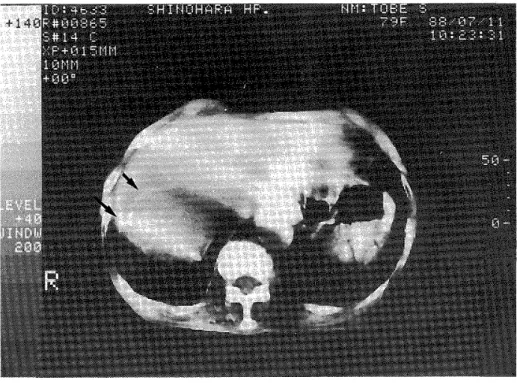
め剖検を行ったところ,写真1に示すように各臓 器表面,ならびに内部に多数の虫体寄生が見出さ れたので,それらについて寄生虫学的検索を行っ た。なおその他の寄生虫類については,各臓器と もその感染は証明されなかった。
死亡したオオガラゴは,外観上は可視粘膜が蒼 白であったが,潰瘍などは認められず,皮下脂肪 は少なかった。天然孔の汚れは見られなかったが,
肛門に乾燥した硬固便の付着が見られた。
剖検により,表1のごとく各臓器より乳白色の 虫体が計25匹見出された。表1の備考に,簡単な 肉眼所見を記した。
生存している残りの3頭中,死亡幼若雌と同居 していた幼若雄は,体重の増加はあまり見られて いないが,X線ならびに糞便検査では認めるべき 異常はなく,現在も元気に生活している。この幼 若雌ガラゴの死亡原因については不明で,舌虫寄 生が死亡に至らしめたか否かも不明である。
寄生虫学的検索
虫体は各組織(肝臓,肺臓,脾臓,横隔膜,腸 間膜,腹壁)の表面近く,あるいは組織内に埋まっ たような形で,それぞれの部位でC字型渦巻き状 に薄い透明な膜によって包まれた形で被嚢してお
り(写真1,直径4−6mm),25匹のうち剖検時 に遊離した虫体2匹(写真1,2)の計測値は,
それぞれ体長17.6mm,16.7mm,体幅2.48 mm,2.10mmを示した。それぞれの虫体表面に 国立予防医学研究所寄生虫部
東京都多摩動物公園衛生第2係
Photo. l Photo, 2 Photo . Photo , Photo.
3 4 5
Photo, 6
Many small cystic nodules were found in the liver (LD , diaphragm (D) and lung (LU) of a died thick‑tailed bush baby.
Armill fer armillatus nymphs removed from the cyst showing typical annulations,
Anterior part of A, armilla:tus nymph showing a hook (arrow) . Hook piked up from anterior part of A. armillatus nymph.
Cross 8ection of A, armillatus nymph encysted on the liver, Hematoxylin‑eosin stain. H: hook.
Cross section of A, afrmillatus nymph encysted on the diaphragm.
Hematokylin‑eosin stain. AG: acidophilic glands. I: intestinal
tract.