Muslim Consumer Behavior: Understanding Their
Service Requirements and Purchase Intentions
学位名
博士(先端マネジメント)
学位授与機関
関西学院大学
学位授与番号
34504甲第676号
i
Doctoral Dissertation
For Doctoral Degree
Kwansei Gakuin University
Muslim Consumer Behavior:
Understanding Their Service Requirements and Purchase Intentions
Doctoral Research Advisor
Professor Yamamoto Shoji Professor Norlia Ahmad
Professor David Methe
September 2018
Graduate Department of Advanced Management (Ph.D.) Institute of Business and Accounting
ii
Table of Contents
Table of Contents ... vii
List of Tables ... iv
List of Figures ... vi
List of Charts ... vii
List of Diagrams ... vii
List of Plots ... vii
Abstract ... Error! Bookmark not defined. Chapter One ... 1
Introduction ... 1
Why Japan is Targeting Muslim Consumers. ... 7
Japan’s popularity among Muslim tourists. ... 8
Problem statement and Significance of the Study ... 10
Framework of The Study (Figure 1)………...14
Structure of This Study ... 16
Chapter Two ... 18
Literature Review ... 18
An overview of Muslim consumers ... 28
Sources of Shariah Law in Islam ... 32
Quran ... 34
The Hadith or Sunnah ... 35
Ijma’a ... 36
Ijtihad ... 37
The Kano Model and the Hospitality Industry ... 38
Theory of Planned Behavior (TPB) ... 43
Attitude ... 45
iii
Perceived Behavioral Control ... 46
Chapter Three ... 56
Methodology ... 56
The Kano Model Survey ... 56
Interview ... 57
Questionnaire ... 58
Theory of Planned Behavior (TPB) Survey ... 60
Questionnaire ... 60
Chapter Four ... 65
Data Analysis ... 65
The Kano Model Data Analysis ... 65
Theory of Planned Behavior (TPB) Data Analysis ... 75
Factor analysis ... 87
Structural Equation Analysis (AMOS) ... 102
Chapter 5 ... 112
Conclusion ... 112
Theoretical Contribution ... 123
Managerial Implications ... 128
Limitations ... 131
Recommendation for Future Studies ... 133
References ... 136
Appendix ... 145
Appendix 1: Kano Model Survey ... 145
iv
List of Tables
Table 1: Muslim Population by Region... 29
Table 2: Demographic Profile of Respondents ... 66
Table 3: Categorization of the Kano Model ... 68
Table 4: Kano Model Classification for Muslim Consumers’ Requirements from the Hotel in Japan ... 73
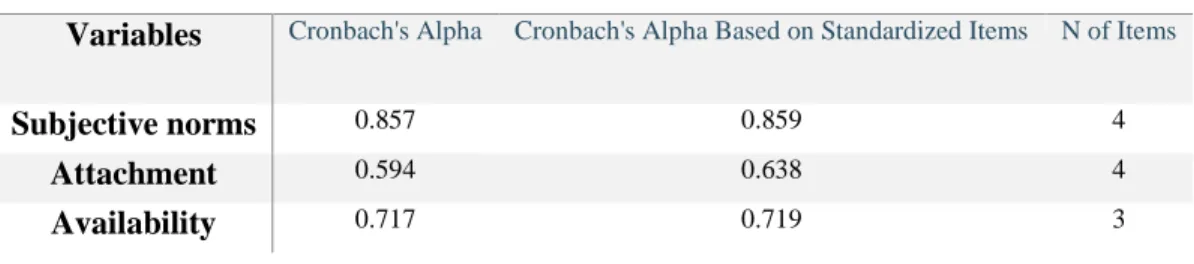
Table 5: Reliability Statistics... 75
Table 6: Demographic Characteristic of the respondents (Gender) ... 76
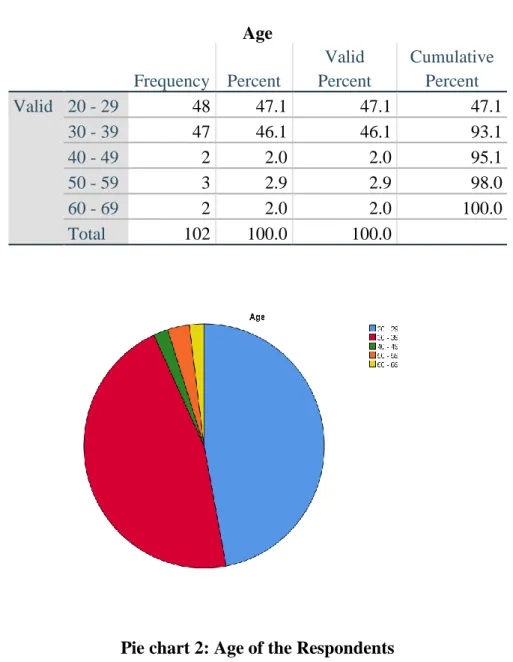
Table 7: Demographic Characteristic of the respondents (Age) ... 77
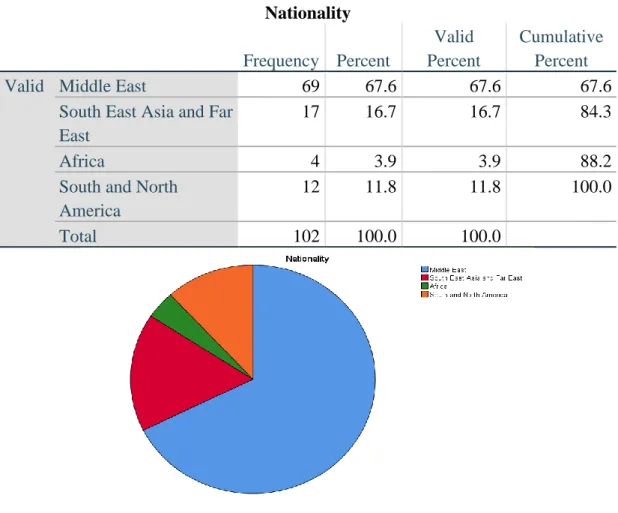
Table 8: Demographic Characteristic of the respondents (Nationality) ... 78
Table 9: Demographic Characteristic of the respondents (Marital Statues) ... 79
Table 10: Demographic Characteristic of the respondents (Occupation) ... 80
Table 11: Demographic Characteristic of the respondents (Level of Education) ... 81
Table 12: Regression Results Between Gender, Age, and Intention ... 82
Table 13: One-Way ANOVA Results Between Intention and Nationality ... 83
Table 14: One-Way ANOVA Results Between Intention and Marital Statues ... 84
Table 15: One-Way ANOVA Results Between Intention and Level of Education ... 85
Table 16: One-Way ANOVA Results Between Intention and Occupation ... 86
Table 17: Factor Analysis ... 88
Table 18: Factor Analysis Total Variance Explained ... 90
Table 19: Factor Analysis Rotated Component Matrixa ... 92
Table 20: Regression Analysis of intention with subjective norms, attachment, personal choice, and perceived availability. ... 93
v
Table 21: Moderator Analysis between intention, subjective norms, and Nationality... 94
Table 22: Moderator Analysis between intention, Availability, and Nationality ... 95
Table 23: Moderator Analysis between intention, attachment, and Nationality ... 96
Table 24: Moderator Analysis between Intention, Habit, and Nationality... 97
Table 25: Moderator Analysis between intention, habit, and Gender ... 98
Table 26: Moderator Analysis Between Intention, Subjective Norms, and Gender ... 99
Table 27: Moderator Analysis Between Intention, Availability, and Gender ... 100
Table 28: Moderator Analysis Between Intention, Attachment, and Gender ... 101
Table 29: Regression Weights: (Group number 1 - Default model) ... 104
Table 30: Covariance: (Group number 1 - Default model) ... 105
Table 31: Model Fit Summary ... 106
Table 32: Factor Analysis Communalities of the TPB Components ... 107
Table 33: Total Variance Explained of the TPB components ... 108
Table 34: Rotated Component Matrix of TPB Components ... 109
Table 35: Moderator Analysis Between Intention, Attachment, and Subjective Norms ... 110
vi
List of Figures
Figure 1: Framework of the Study ... 15 Figure 2: Factors Influencing Consumer Behavior ... 19 Figure 3: The ABC Model of Attitude ... 22 Figure 4: The Common Flow of Islamic Knowledge and its Influence on the
Market/Consumer ... 33 Figure 5: Theory of Planned Behavior ... 45 Figure 6: Proposed Conceptual Framework Theory of Planned Behavior with
Application to Halal Food Consumption ... 49 Figure 7: Conceptual Framework of the Theory of Planned Behavior Applied to Halal Food Consumption ... 51 Figure 8: Diagram of the Conceptual Moderator Model ... 63 Figure 9: The Influence of Service Quality Attributes on Satisfaction and Dissatisfaction ... 72 Figure 10: Muslim Consumers Decision-making Process ... 125
vii
List of Charts
Pie chart 1: Number of female and male respondents ... 76
Pie chart 2: Age of the Respondents ... 77
Pie chart 3: Nationality of the Respondents ... 78
Pie chart 4: Marital Statues of the Respondents ... 79
Pie chart 5: Occupation of the Respondents ... 80
viii
List of Diagrams
Diagram 1: Causal Model of TPB Components using AMOS ... 103
List of Plots Means Plot 1: Plot of Nationality Mean on the Mean of Intention ... 83
Means Plot 2: Plot of Marital Statues Mean on the Mean of Intention ... 84
Means Plot 3: Plot of Level of Education Mean on the Mean of Intention... 85
ix
Abstract
In the field of consumer behavior, religion is considered as an important cultural element. It influences consumers’ beliefs, values, and behavior. Religion can play an important
role in deciding food purchases and establishing food habits as seen in the Muslim consumption of halal food. Muslims are known as the “Fourth-Billion” consumer segment, after India, China, and women, and show a strong foundation for future growth. The increase in the interest in Muslim consumers and the Islamic market is due to the rise in buying power of Muslim consumers, an increase in their disposable income and a growing number of successful Muslim entrepreneurs. Additionally, the appearance of articles, journals and conferences that focus on the topic of Muslim consumers and Islamic market and marketing, are in response to this growing interest. This study responds to the demand for more research in the area of Islamic marketing and contributes to the growing pool of data available for marketers and managers for planning future marketing strategies. It also addresses the subject of Muslim consumers’ religious based requirements and halal food in Japan, in response to the global halal phenomenon. This study focuses on three main objectives, namely; 1) to demonstrate how religion influences Muslim consumer behavior and the existence of heterogeneous and homogeneous aspects of Muslim consumers; 2) to analyze religious based requirements of hotel services and products for Muslim consumers via the Kano model; 3) to analyze intentions and attitude towards the consumption of halal food using the Theory of Planned Behavior (TPB). By outlining the foundations of the Islamic market, it provides information for Japanese businesses to take the first steps in order to formulate effective marketing strategies to target this market. This study employed two surveys in its methodology. The first survey
x followed the Kano model methodology to identify and categorize Muslim consumers’ religious based requirements. The second survey followed the methodology of Bonne et. al. (2007) to identify determinants of halal food consumption intention in Japan by introducing a modified model of the Theory of Planned Behavior. This research confirms the role of religion as central to decision-making behavior and purchase intentions of the Muslim market and provides a clearer understanding of the halal phenomenon in Japan. The findings show that Islam is an important factor that influences Muslim consumer decision-making. It also shows that Muslim consumers’ religious based needs are attractive attributes, provision of which exceeds expectations leading to higher satisfaction. The results show that Muslim consumers search for the same attributes as other consumers in their choice of hotel accommodations regardless of age, gender, and nationality. Results also show that attachment plays a significant role in influencing Muslim consumers’ intention towards the consumption of halal food. This study also
found that the Muslim market is not a homogenous entity. Regional differences and cultural norms vary throughout the population, such as different practices, and culture. However, when it comes to halal food, Muslim consumers are homogenous. The study also found that the laws pertaining to halal and haram food are derivatives of the Quran, thus, it is important to understand the Islamic reasoning behind the prohibition and permission of food. Though Muslim consumers differ in the practical implementation of Islamic law, the basic foundation of Muslim communities is in essence the same. This research fills the need for more research in the area of Islamic marketing and Muslim consumers and contributes to a deeper understanding of the needs and requirements of Muslim consumers and the factors that influence their purchase intention of halal food. As an implication for Japanese businesses, it is important to increase measures to
xi provide more halal food options for Muslim consumers living and visiting Japan. A clear and firm grasp of the essence and knowledge of the Islamic market and halal food is also encouraged. Part of the limitation of this study is the small sample size and the phrasing of some of the survey questions. Exploring in more detail the influence of religious rulings,
shariah law, on Muslim consumers’ behavior towards certain brands and products. For
future studies, it is recommended to exploring the role of fatwa rulings on different products and services as well as the influence of religious rulings on Muslim consumers’ behavior towards certain brands, products, and services.
Key words: Japan, Muslim Consumers, Fourth-Billion Consumer Segment, Islamic
Marketing, Halal Food, Service Requirements, The Kano Model, Theory of Planned Behavior, Muslims as homogeneous/heterogeneous.
1
Chapter One
Introduction
Designing and executing successful marketing strategies requires an ongoing understanding and inquiry into consumer behavior. Consumer behavior is the study of individual decision-making when purchasing, using, and disposing of products, services, ideas, or experiences to satisfy needs and desires (Solomon, 2004). As individuals and decision-makers, consumers are influenced by internal and external factors. Personal aspects such as age, lifestyle, occupation and income; psychological factors like motivation, beliefs and attitude. External factors like cultural, including religion and social class; and social, involving family, reference groups, role and status. Religion is an important cultural component acknowledged by marketers and researchers. It influences consumers’ beliefs, values, and behavior. Existing data on this subject, i.e. the study of
marketing and consumer behavior of Muslim consumers and the Islamic market, remains insufficient. The earliest research examining religion’s influence on consumer behavior
began in the mid-1970s (Minton, 2015). It focuses on whether religion is a viable segmentation variable and makes connections to ethical behavior derived from religious scriptures.
Religion affects the consumer’s decision-making process and intention to purchase and
consume certain products and services. For macro-marketers, religion influences the process of economic pursuits including marketing. The prohibition or promotion of
2 certain products, i.e. exclusion of alcohol in Muslim markets and the fostering of halal food consumption, can be affected by religion. On a micro-marketing level, religious affiliation, that is the consumer’s beliefs and religiosity, or the extent to which a consumer’s beliefs influence his or her behavior, also have an impact on economic
activities. In deciding food purchases and establishing food habits, religion can play a powerful role, as seen in the Muslim consumption of halal food and Jewish consumption of kosher foods.
Muslims are known as the “Fourth-Billion” consumer segment, after India, China, and
women, and show a strong foundation for future growth (Bikramjit & Halder, 2015). The market for shariah compliant products and services, that is products or services that conform to Islamic law, totals $2 trillion annually and is growing rapidly. While many Muslim consumers’ lives are defined by the dietary, lifestyle, and financial rules of the
Islamic faith, they are not a homogeneous whole (Bikramjit & Halder, 2015). The recent rise of interest in the field of Islamic Marketing is due to the appearance of several attempts in journals, articles and at conferences in a push to comprehend marketing proposals based on a framework of the principles of Islam and a context of the Muslim population. Islamic Marketing has gained prominence over the last decade because of the shifting demographics within the Muslim population, an increase in purchasing power of the community, and the increasing number of Muslim entrepreneurs. This growing market segment, with its $200 billion spending propensity in the US alone, is viewed by companies as an attractive avenue for economic growth. In addition, Muslim consumers are inclined to show extreme loyalty towards specific brands, freely advertising a brand’s values via positive, word-of-mouth networks (Mabe, 2011). Islamic Marketing represents
3 a new and innovative strain of marketing that is a “focal phase torch bearer.” It challenges
convention but at the same time remains fit for the purpose of marketing. Hence, the concept of a Muslim market is in many ways vague (Bikramjit & Halder, 2015).
Japan is renowned for providing high-quality services with its service sector accounting for three-quarters of the country’s total economic output (Global Finance, 2013). Generating millions of jobs domestically and with a global ranking of 4th for Travel & Tourism GDP (World Tourism Organization, 2017), Japan has seen a steady rise in international visitors. In 2012, Japan was the third most-visited country in the Asia Pacific region, in 2013, Japan received 11.25 million visitors (World Tourism Organization, 2013). Between 2015 to 2016 Japan saw a 22% increase in international tourists to 24 million and has set targets of 40 million by 2020, and 60 million by 2030 (World Tourism Organization, 2017). A substantial section of service providers, in Japan, falls under the division of hotel services. Various categories, such as luxury hotels and business hotels, offer different services specific to each category. Thus, experiences in hotels may vary greatly from one establishment to the next. For service providers, like hotels, it is essential to create memorable experiences for their customers that positively affect consumer satisfaction in order to gain a competitive advantage over other companies within the same sector. The hotel industry often faces challenges due to a lack of uniformity in their services, such as a lack of experienced staff and other problems that might occur during or after the service (Yang, C.-C., Yung-Tsan, J., & Lai-Yu, C.2009). By increasing cultural awareness, some competitors in the hospitality industry have broadened their services to meet the increasing demands and ever-changing requirements of their customer demographic. Therefore, creating exceptional experiences that meet the demands of consumers and give businesses
4 a competitive edge are necessary components of the ongoing success of the hospitality industry in Japan.
To achieve service satisfaction, customer needs and expectations must be fulfilled. Customer satisfaction is a key element for the success of any business. Studies have shown that a rise in customer loyalty can increase the profits of a company. Anderson and Mittal (2000) conducted a study on Swedish companies as part of a customer satisfaction barometer and found that an increase of 1% in customer satisfaction was associated with a 2.37% increase in the ROI (Return Over Investment), while a decrease of 1% equaled a decrease of 5.08% in the ROI (Anderson & Mittal, 2000). These results show that creating memorable experiences will not only grant a competitive advantage over rival companies, but also increase the profits of an organization. It is therefore important to clearly identify and highlight the attributes in hotel services that consumers seek. With this in mind, measuring and identifying these attributes are obstacles service providers face when they evaluate their services.
The fulfillment of a customer’s needs depends on a hotel’s ability to meet their requirements via products and services. However, customer requirements shift over time due to changes in their needs. In addition, a company’s ability to substitute or evolve
specific services, which adapt to customers’ needs, are crucial. As a result, service providers should distinguish the main attributes of consumer satisfaction and identify strengths and weaknesses in their performance. Some studies were conducted to develop theoretical frameworks that introduce various means to identify attributes that are
5 important to consumers in the hotel industry. The results of these studies showed that there were different elements of service quality in the hotel industry that served different international markets. Moreover, some of the studies investigated the elements that led consumers to select their accommodation. Some elements such as staff attitude, cleanliness of rooms, locations, security, room rates, and additional services were considered the most important factors in the selection process.
Quality Function Deployment (QFD) is an example of a model that has been tested to define customer needs or requirements and translate them into specific plans to produce products or services that meet those needs (Crow, 2014). The QFD model is powerful because it conveys an organization’s process and how each process interacts to create
customer satisfaction and profit (Tontini, 2007). The Kano model of service quality was developed to identify service attributes that affect customer satisfaction; thus, helping organizations to understand which attributes will increase their customers’
satisfaction. These attributes increase customer satisfaction if they meet customer requirements when they visit a certain hotel or use a certain product. Customer requirements vary based on their needs and desires. The more precise an attribute is for an aim fulfillment, the higher the satisfaction. Mittal et. al. (1999) indicated that the relative importance of service and product attributes changes over time as the importance of each attribute to the customer changes with time (Mittal et. al 1999). For instance, Kano (2001) conducted a study investigating customers’ perception of TV remote
controls through his questionnaire in 1983, 1989, and 1998 (Kano, 2001). The study found that a remote control was an attractive attribute in 1983, one-dimensional in 1989, and in 1998 it was perceived as a must-be attribute (Kano, 2001).
6 Muslim tourist expenditure is expected to increase by 13% of the entire global tourism expenditure by 2020. The service sector is aiming to address the needs of Muslim consumers by providing prayer facilities and serving halal food at restaurants. These additional services have been a boon to the promotion of halal tourism (the catering to the needs of Muslim consumers in accordance with Islamic law), which represents 12.3% of the global outbound tourism market (Hughes, 2012). In addition, the halal industry is one of the biggest and fastest growing industries in the world. The annual global market is around $2.1 trillion, 60% of which is generated by halal food (Abdul Khalek & Syed Ismail, 2015). This growing demand of Muslim consumers creates and generates business opportunities for companies that are able to articulate this growing market segment. World leaders in the fast-food industry, such as KFC and McDonald’s, have introduced
halal food items to their menus. Accordingly, retailers like Carrefour and Albert Heijin
have also introduced halal meat to their product lines (Arrnitage & Conner, 2011).
Previous literature (Bonne et al., 2007, Salman and Siddiqui, 2011, Nutrition Unit, 1993, Abdul Khalek and Syed Ismail, 2015) has articulated the topic of halal food consumption from a theoretical and empirical perspective in different contexts and societies. Several studies have touched on the topic of halal food consumption by applying the Theory of Planned Behavior (TPB). The Theory of Planned Behavior is a theory that explains human behavior by linking beliefs to behavior. Developed by Icek Ajzen, TPB states that attitude towards behavior, subjective norms, and perceived behavioral control come together to shape an individual's behavioral intentions and behaviors. Attitude represents a complex amalgamation of negative and positive reactions to behavioral outcomes. Subjective norms are the perception of behaviors and whether they are influenced by
7 external factors like family, friends, and others. Perceived behavioral control is the individual’s perceived ease or difficulty of performing the behavior of interest. Previous
researchers (Abdul Khalek and Syed Ismail, 2015, bonne et al., 2007) have tested the influence of attitude, subjective norms, perceived behavioral control and religiosity on
halal food consumption.
Why Japan is Targeting Muslim Consumers.
Japan has been aiming to increase the number of tourists to 20 million visitors by 2020, when Tokyo will host the Olympics Games (Singleton, 2014). In 2013, 11.25 million tourists visited Japan, a number 27% higher than 2012 (Holliday, 2014). This increase in the number of tourists to Japan is largely due to the economic growth of neighboring Asian countries and other Southeast Asian countries (Holliday, 2014). The Islamic market represents 23% of the world market (Temporal, 2011), therefore, targeting this market creates opportunities for different industries such as tourism, hospitality, and the food and beverage industry. Japan has intensified efforts to increase the number of tourists and meet the demands of the Islamic market, garnering huge potential gains and allowing for new economic growth in the country (Tang, 2014). In 2013, 11.25 million tourists visited Japan. Thirty-seven percent of this number were tourists from Indonesia (Singleton, 2014), representing 13.1% of the total Islamic market, or 209,120,000 Muslims (Maps of World, 2012). Twenty-one percent were from Malaysia, where Muslims account for 60.4% of the total population (Ali, 2014). The number of Indonesian tourists in 2013 surged to 27.3%, much higher than that of 2012, while the number of Malaysian tourists
8 increased by 65.5%. Muslim tourists from the Gulf Area also increased by 50% (Asia News, 2014).
With the increasing numbers of tourists from Islamic countries, Japan’s courtship of Muslim tourists started by providing prayer rooms, halal food restaurants and most importantly, establishing the Japan Halal Association. Founded in 2012, it issued 40 halal certificates to different restaurants around Japan (NY Daily News, 2014). This rising interest in meeting the demands of Muslim tourists is in response to the rising number of tourists visiting Japan from different Islamic countries, in addition to the rise of the middle class in Southeast Asia, and finally the influx of different Muslim athletes and audiences that the hosting of the Olympics Games in Tokyo will bring to Japan (NY Daily News, 2014).
Japan’s popularity among Muslim tourists.
The total number of tourist arrivals in Japan in 2016 exceeded 24 million, ahead of the 20 million-target set by the national government for 2020. Tourists from Muslim nations accounted for a growing number of the arrivals. According to the Japan National Tourism Organization (JNTO), nearly 271,000 Indonesians travelled to Japan in 2016, up from just 63,000 in 2009 (Shusuke, 2016). Similarly, more than 394,000 Malaysians arrived in 2017, up from 89,000 of the previous year (Shusuke, 2016). The increase in the number of tourists from Southeast Asia is a result of several factors; the Japanese government relaxing visa requirements, growth in low-cost-carrier airlines serving Japan, an increase
9 in the middle class having a larger disposable income, and better exchange rates making it easier for travelers to enjoy Japan.
Although the Japanese government is intensifying their efforts to attract Muslim consumers, this is not the main reason that Japan has become an attractive destination for Muslim travelers. Japan is very well known for its extraordinary services, products, and technology, but also for a modern culture deeply ingrained with a traditional past.
Modern culture in Japan retains many historical traditions. Habits such as food rituals, daily religious practices, ancestor worship, and observing festivals are characteristics that Muslims respect and empathize with. Whilst many Japanese customs remain traditional, a coexisting pop culture of economic importance thrives. A combination of anime, comics, video games, robotics, and offshoots of Otaku/geek culture and popular culture is a huge drawcard for many visitors to Japan. The anime industry alone nets substantial
international profits, overseas sales in 2008 totaled ¥13.3 billion, and continues to grow
in popularity (Nagata, 2018).
Japan’s social and cultural environment is community-centered. Low crime rates and strong neighborhood inter-relations have helped Japan to build a reputation of safety and trust (Kyodo, 2018), traits that many Muslims value and identify with. When compared to other destinations, Japan is viewed as a favorable tourist spot with modern conveniences, language options, and an infrastructure that encourages visitors to explore. This positive reputation overlaps the service industry particularly in hotels. Hotels in
10 Japan provide Muslim-friendly facilities, English language services, high levels of hygiene, and a willingness to satisfy and cater to tourist needs.
Furthermore, Japan’s reputation in the retail industry is trustworthy and of high quality. The “Made in Japan” seal of approval communicates a strong sense of value and
legitimacy. Japan’s retail industry is extensive, accounting for about 55% of the Asian retail industry (Japan Retail News, 2018). Cultivating this secure and trustworthy reputation serves to increase Japan’s attractiveness for Muslim tourists wanting to shop. With the establishment of Japan Halal Certification, implementation of Halal Media Japan and a myriad of Halal mobile apps, Japan entices Muslim tourists with the promise of safety, service, convenience, and tradition.
Problem statement and Significance of the Study
The Islamic market represents 23% of the world market. It is expected to grow to represent 26% of the world market by 2030 (Hughes, 2012). Therefore, Muslim consumers and the Islamic market represent viable and profitable business opportunities for various industries. The expanding Islamic market has motivated companies to address the needs of Muslim consumers. This market expansion is a result of a growing Muslim population, a rise in overall consumption, and an increase in disposable income. Thus, many companies have recognized the market potential, starting a global trend towards
halal (lawful or permitted in Islam) products and services. The annual growth of halal
food consumption represents 16% of global consumption. The halal market is estimated to be worth $667 million and represents 20% of the global food market (Hughes, 2012).
11 The demand for halal food is expected to increase by more than 70% by 2050. This demand has motivated companies to provide halal products for their consumers. For example, Nestle, by expanding its halal product lines to address the needs of Muslim consumers, has become the biggest food manufacturer in the halal industry claiming $5 billion of annual global sales. As Muslim tourist expenditure continues to increase, furthering the ongoing success of halal tourism (catering to the needs of Muslim consumers in accordance with Islamic law), and representing a substantial chunk of the global outbound tourism market (Hughes, 2012), companies need to focus their efforts on acquiring information necessary to better understand and formulate their policies towards this growing market.
There are three main objectives of this study. First, this study demonstrates the influence of religion on Muslim consumer behavior and the existence of heterogeneous and homogeneous aspects among Muslim consumers. Second, to analyze Muslim consumers’ religious requirements from hotel services and products through the implementation of the Kano model. Third, to analyze Muslim consumers’ intentions and attitude towards the
consumption of halal food by employing the Theory of Planned Behavior (TPB). This research provides an insight on the growing interest in Muslim consumer behavior. It also brings about a clearer understanding of the halal phenomenon in Japan. It offers valuable information for companies wanting to plan and implement steps for providing halal food options and services. In addition, this research highlights the similarities and differences of Muslim consumers by the identifying broader, homogenous traits, like halal food consumption and prayer, whilst clarifying the existence of more region-specific traits,
12 like adherence to dress code. This study responds to the burgeoning need for more research on Islamic marketing, Islamic markets, and Muslim consumers.
The increase in Muslim buying power and rise of the middle class has made it necessary to understand and strive to meet the demands of Muslim consumers through the provision of services and products. This study addresses the topic of Muslim consumers and halal food in Japan, in response to the global halal phenomenon. This research focuses on Japan, as the country is expecting to receive an influx of Muslims visitors for the 2020Tokyo Olympics and hopes to articulate this as an ongoing market segment. From the period of September 2016 to February 2017, Japan received 26,700 tourists from Malaysia and 17,900 tourists from Indonesia (Japan Tourism Research & Consulting Co., 2017) and this number is expected to increase. This research also focuses on Muslim consumer requirements, resending hotel services, and halal food in the Japanese market. This research aims to provide an understanding of Muslim consumer halal food demands and their service requirements by implementing the Theory of Planned Behavior (TPB) and the Kano model of Service quality. TPB has been chosen as it helps in understanding the determinants of halal food consumption in Japan. In existing literature, the Kano model has been proven to be an effective tool to identify attributes that affect customer satisfaction. Thus, the Kano model is often employed to identify elements of customers’ requirements and satisfaction in hotels located in specific areas around Japan. The Kano model has been chosen because of the “applicability” and “generalizability” of the model
for quality assessment (Yang C., 2005). It also helps organizations to better understand the relationship between the degree of fulfillment and the level of customer satisfaction
13 within certain attributes provided by different service providers (Kano et. al, 1984). The Kano model also helps service providers to prioritize the criteria that should be focused on. It highlights the different needs of the customer based on segmentations, as different segments have different needs (Kurt et. al, 1996). It also allows service providers to achieve competitive advantages by focusing on attractive attributes (Kurt et. al, 1996) and clearly outlining one-dimensional attributes.
The service sector accounts for 64% of the global wealth, thus, focusing on achieving high levels of service satisfaction is essential in generating revenues. Service satisfaction is achieved when customer needs and expectations are fulfilled. Customers’ satisfaction is a key element for the success of any business. Studies have shown that an increase in customer loyalty can increase the profits of a company. The fulfillment of customer needs depends on a service provider’s ability to meet customer requirements in services. Japan
is well known for its high-quality services. In Japan, the service sector accounts for 75% of the country’s GDP (Nikkei Asian Review, 2016). Japan has become one of the
most-visited destinations in Asia and the Pacific, with 8.3 billion tourists visiting the country in 2012 and tourist numbers continuing to increase annually (World Tourism Organization, 2013). As mentioned previously, a main category of service providers in Japan falls under hotels, with different types of hotels and services resulting in varied customer experiences. Creating memorable experiences for customers that positively affect consumer satisfaction and overcoming the issues associated with the hotel industry is paramount for companies wanting to establish a reputation in the Muslim market.
14
Framework of the Study (Figure 1)
Religion influences the consumer decision-making process and subsequent purchase intentions. Understanding how religious beliefs interact and influence Muslim consumer behavior comprises the fundamental framework of this study. This may be achieved by understanding the essence of Islam and shariah law sources which have a direct influence on beliefs. Thus, knowledge of the heterogeneous and homogenous characteristics of the Muslim market sector is an essential foundation for those wishing to realize the potential of this market. Beliefs influence Muslim consumers’ needs and behavior. One of the
focuses of this research is to provide an understanding of Muslim consumer religious based needs from their choice of hotel accommodation. This objective is achieved through the application of the Kano model, which results in two hypotheses as shown in figure 1. The second objective is to identify determinants influencing Muslim consumers’ halal
food consumption behavior through the implementation of the Theory of Planned Behavior. The Theory of Planned Behavior (TPB) consists of three components, attachment, subjective norms and availability. These three components form three hypotheses that demonstrate the influence of attachment, subjective norms, and availability on intention. The fourth component of the model is demographic characteristics. This has been added to the modified model of the TPB as demographic characteristics may influence behavioral intention, thus a new hypothesis has been proposed. The data accrued via the implementation of the Theory of Planned Behavior (TPB) and the Kano model of service quality, diverges thus; the TBP Model deals with behavioral intention and the Kano Model outlines consumer needs.
15
Figure 1: Framework of the Study
H3 H4 H5 Theory of Planned Behavior Subjective norm -religious authorities -Islamic organization Country, Intention to Purchase halal food Availability -perceived availability, information on halal labels and halal food
Demographic characteristics
-gender, age, nationality, marital status, education,
occupation
Attachment
Behavioral control, habit, self-identity, attitude H6 Islamic law (Fatwa rulings) Belief Religion-based needs/ product requirements
(Kano model)
One-dimensional Excitement H1 H2 I: Service requirements (Kano Model) II: Purchase Intention (Theory of Planned Behavior) Behavior
16
Structure of This Study
Chapter one covers the main objectives of this research. It introduces religion, as viewed in the field of marketing, as a sub-cultural factor in the consumer decision-making process. In addition, it introduces the concept of Islamic marketing, Muslim consumers, and the need to address this market. This chapter also discusses the service industry and the halal market in Japan. It explains why these two markets were selected for this study.
Chapter two is divided into three parts. The first part discusses the topic of Islam and Muslim consumers. It then discusses religion as an independent factor that influences the Muslim consumer’s decision-making process. The second part covers the theoretical
frameworks used in the research, the main sources of shariah law, or Islamic law, and its influence on the Muslim consumer’s decision-making process. The third part tackles
literature that covers the two theoretical frameworks used in this study, i.e. The Kano model and the TPB model. Chapter two also tackles the hypotheses proposed for both models.
Chapter three is divided into two sections. The first section discusses the implementation of the Kano model. It provides detailed information regarding how the interview for the Kano model survey was conducted and for what purpose. It also details the construction of the survey used in this study. The second section covers the questions used in the TPB survey the purpose and scale of each question. In addition, it covers the analysis method used to analyze the survey results.
17 Chapter four is also divided into two sections. The first section analyzes the results of the Kano model survey, the steps taken to analyze the data, and the hypothesis testing. It also covers the discussion of the Kano model results, clarifying and identifying Muslim consumers’ requirements from hotel accommodation. The second section of chapter four
details and analyzes the results of the TPB survey to test the hypothesis and to identify factors influencing Muslim consumers’ intentions to consume halal food. After the
analysis, a discussion of the results and findings of the research follows.
The final chapter, chapter five, discusses the results of the study’s findings, theoretical
and managerial implications, limitations, and future recommendations for further research.
18
Chapter Two
Literature Review
Recently, interest in consumer behavior has become a focal point for companies, as it helps them to gather sufficient and valuable information about how consumers think, feel, and choose their products. Consumer behavior is the study of an individual’s activities associated with the purchase, use, and disposal of products, services, ideas, or experiences to satisfy needs and desires (Solomon, 2004). Consumers recognize the need and the desire to obtain a product or service. The strength of the need drives the entire decision process. Information search describes the phase where consumers scan both their internal and external sources for information about products or services that will potentially satisfy their need. The aim of the information search is to identify a list of options that represent realistic purchase options. Throughout the entire process, the consumer engages in a series of mental evaluations of alternatives, searching for the best value. At the end of the evaluation stage, consumers form a purchase intention, which translates into an actual product purchase.
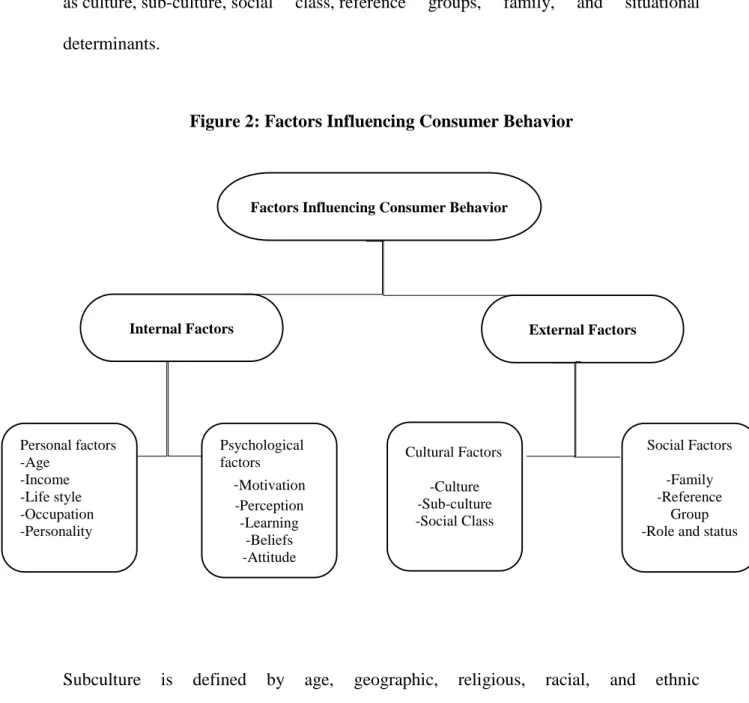
The evaluation stage is followed by purchase intention. Purchase intention is when consumers go through a process of selecting products and services before purchasing a product. That process is influenced by external and internal factors (Figure 2). Internal factors refer to both personal and interpersonal factors. Consumers have both a personal identity and a social identity. Personal identity consists of unique personal characteristics such as skills and capabilities. Social identity consists of the individual's perception of the
19 central groups to which an individual belongs to and may refer to an age group, lifestyle group, or religious group. Consumers can also be affected by external influences, such as culture, sub-culture, social class, reference groups, family, and situational determinants.
Figure 2: Factors Influencing Consumer Behavior
Subculture is defined by age, geographic, religious, racial, and ethnic differences. A subculture is any cultural patterning that shows important features of the dominant society but affects values, norms, and behaviors. Religion in consumer behavior falls under the subculture factor. However, religion is an important factor in consumer life. Pew Forum report (2012) indicates that 80 percent of people worldwide affiliate with
Factors Influencing Consumer Behavior
Internal Factors External Factors
Social Factors
-Family -Reference
Group -Role and status
Cultural Factors -Culture -Sub-culture -Social Class Personal factors -Age -Income -Life style -Occupation -Personality Psychological factors -Motivation -Perception -Learning -Beliefs -Attitude
20 a religion. In addition, religion affects consumer psychology and behavior through four key dimensions; beliefs, rituals, values, and community (Mathrasa, 2016).
Religion is described as “the habitual expression of an interpretation of life, which deals
with ultimate concerns and values. Institutional religion formalizes these into a system which can be taught to each generation” (Fam et al., 2004). Religion has a great impact on people’s values, habits, and attitude, and it influences lifestyle, thus, affecting
consumer decision behavior. To explain how religion influences Muslim customers, Mathrasa (2016) argued that religious beliefs about sacredness differ between religions, sects, and denominations. They also stated that religious values provide guidance to individuals about what to consume, how much to consume, and when to consume it. Previous research has found a connection between religious values and reciprocity, self-control, giving, and volunteerism. Religious values outline what consumers are allowed and forbidden from consuming. For example, sharia law in Islam stipulates certain
haram (prohibited) items such as pork and alcohol. Distinctive regional differences exist
between Islamic populations around the world and the way Islam is followed or practiced. Consumption of halal food, however, exists as a common denominator throughout all Islamic nations. Understanding this common thread will enable businesses to take the first, broad steps towards attracting Muslim customers. Further understanding of how religious beliefs affect consumer behavior in more detail, as expected service attributes and attitude towards halal/haram food, will allow businesses to reach more specific markets, i.e. visitors from the Middle East vs. South East Asia.
21 Consumer attitude consists of beliefs, feelings, and behavioral intentions toward products or services. These components are viewed together as the factors that influence how the consumer will react to products or services. Thus, the ABC Model of Attitude illustrates this process of consumer decision-making. It is composed of three components, affect, behavior, and cognition (figure 3) and shows the relationship between knowing, feeling, and doing (Solomon, 2004). Affect is the feeling an individual has regarding an object. In the current context, affect represents the emotion or opinion about a product or service. Behavior is the response of a consumer resulting from affect and cognition. Behavior only implies intention. Cognition is an individual’s belief or knowledge about an attitude
object
The ABC model of Attitude (Affect, Behavior and Cognition) suggests that attitude is structured into three components; an affective component, which involves a consumer’s feelings and emotions about behavioral attitudes, a behavioral component, primarily the manifestation of these behavioral attitudes, and finally, a cognitive component, which involves a person’s belief or knowledge about behavioral attitudes.
Consumer behavior theories state that consumers go through a process known as purchase behavior. Decision-making behavior assumes that purchase decisions do not occur in a vacuum, but rather it is a process affected by external and internal factors. One of the external factors that effects the consumer decision-making process is culture. Religion falls under the external factors of subculture. A subculture is a group whose members share beliefs and common experiences that set them apart from other groups. Religion is defined as “a unified system of beliefs and practices relative to the sacred things” while
22 religiosity is viewed as “the degree to which beliefs in specific religious values and ideals are held and practiced by an individual” (Delener, 1990). Religion has received little
attention from consumer researchers. This is partly a result of an initial assumption by a small number of consumer behavior researchers who maintain that religious influences on the consumption process are indirect and that the topic of religion has no place in theories of consumer behavior. However, religion qualifies as an important cultural factor to study as it is one of the most universal and influential social institutions having a significant influence on consumer attitude, values and behavior at both the individual and societal levels. Religious subcultures have an impact on consumer variables such as personality, attitudes toward income, and political attitudes.
Figure 3: The ABC Model of Attitude
Religious values provide the individual not only with a specific set of acts and spiritual rituals but also with standards of behavior and a foundation on which consumers choose
Affect
•The way a consumer feels about a product or service.
Behavior
•The consumer intention to purchase behavior •(Purchasing the product or service)
Cognition
23 to lead their lives. Religion has sets of laws that affect everyday purchases and habits. Even if the degree to which individual members adhere to the religious conventions varies, their preferences and tastes are shaped by values according to the rules and customs of their religion. Religion is a crucial factor in shaping consumers’ consumption decisions, especially, in regard to food choices. However, the influence of religion on food choice relies mostly on the religion itself. For instance, pork is forbidden in both Islam and Judaism, pork and beef in Hinduism and Buddhism. In addition, the number of people following the rules of religion might vary. For example, it is estimated that 90% of Buddhist and Hindus, 75% of Muslims, and 16% of Jews in the US strictly follow religious dietary laws. This research explains the factors that explain the differences in adherence to religious dietary restrictions and halal food consumption (Bonne et. al., 2007).
Religion is an essential factor in Islamic culture. A thorough understanding of Islam, what it represents to Muslim consumers, and its effect on consumer behavior, is crucial as it gives an intimate understanding of consumer choice in Islamic culture. An individual’s
behavior is directly affected by religion through the rules and taboos it inspires. In addition, religion indirectly affects behavior by classifications of all phenomena, development and establishment of codes of conduct that are accepted norms, values, and attitudes of the culture. Therefore, religion is an important part of the socialization process (Sood & Nasu, 1995).
To test the influence of religion on consumer behavior Sood and Nasu (1995) conducted a study to examine the influence of religiosity on American Protestant and Japanese
24 Shinto and Buddhist consumers. They found that there was no significant difference in consumer behavior between the devout and casually religious Japanese, whereas devout American Protestants showed different consumer behaviors than their casual religious counterparts. This shows that the level of religious adherence affects the way consumers behave. This effect might be visible in the consumer’s decision-making process towards
halal food and halal tourism.
Wilkes et al. (1986) conducted a study to explore if religious commitment among consumers was related to certain life-styles or interests. They also assessed the appropriateness of alternate measures of religiosity to examine the relationships. They found that religiosity increases with age. In addition, individuals with high religiosity tend to be more traditional in their life-style and are generally more satisfied compared to less religious individuals. They also stated that frequent attendance to church is not necessarily an appropriate measure of religiosity. This shows that individuals with different religious commitments tend to differ in the degree to which they embrace certain aspects of lifestyle (Wilkes et al., 1986).
In a study conducted by Mokhlis (2008), he examines the link between consumer religiosity and the importance of some salient store attributes. He found that religious consumers tend to place a higher level of importance on product-related attributes such as quality and brand. In addition, consumers with high interpersonal religiosity attach greater importance to store reputation. He concluded that both intrapersonal and interpersonal aspects of religiosity were related to the importance individuals attach to the attractiveness of a retail store. Similarly, McDaniel and Burnett (1990) found that the
25 importance that an individual placed on retail store attractiveness was influenced by cognitive religiosity and one aspect of behavioral religiosity.
Religion is an important part of culture because it has a great influence on the individual’s
attitude, values, and behavior at both individual and societal levels. The direct influence of religion is visible in taboos, obligations, and in the social influence on culture and society. Mokhlis (2009) stated that religious values affect human behavior “ritualistically” and “symbolically.” He also stated that religion affects important life transitions, such as
marriage, funerals, and heritage. Religion also provides moral values that affect everyday aspects of an individual’s life. Thus, religion’s effect on consumer behavior depends on the individual’s level of religious commitment or the importance placed on religion in
their life. Religion has an external influence as well as an internal one. External in the sense that it teaches the community how to conduct oneself in specific situations, such as marriage, divorce, inheritance, and death. Religion’s external affect is implemented in the punishment system as well as in the culture. The internal effect of religion on the individual is clear in the person’s behavior, value system, and who he/she is as an
individual. As a result, religion is a fundamental factor that affects consumer behavior. Consumer behavior theories argue that religion has essentially only an external influence on decision-making. However, the above literature states that religion not only influences externally but also plays both internal and external roles that influence consumer behavior in the context of Islam.
26 Islam is a highly influential religion with rules on every aspect of daily life; from the clothes, you wear to your personal hygiene habits. Islam is a way of life directed by rules and customs built on the five pillars of Islam that every Muslim must follow; shahadah (bearing witness), salat (prayer), zakah (charity), siyam (fasting for Ramadan), and hajj (making holy pilgrimage). Muslims are required to follow rules regarding their diet.
These rules are intended for the health and well-being of the body. These laws forbid (haram) the consumption of alcohol, pork, blood, meat from carrion, or meat from livestock not slaughtered in accordance with Islamic principles. Foods that do not fall under the category of haram (unlawful) are known as halal (permitted). Religious commitments and beliefs form important roles in shaping people’s beliefs, knowledge
and attitudes.
These religious commitments and beliefs affect the feelings and attitudes of Muslims in their overall consumption. The halal concept is one of these commitments that affects a Muslim’s food choices. The growing trend of halal food is mainly due to the expansion
of the Muslim community and the potential business opportunities of this previously unexploited market. Therefore, it is important to understand the essence and values of Islam to be able to address the needs of Muslim consumers. For instance, Muslims visiting and living in Japan are seeking dietary services that cater to their religious needs, specifically halal food.
27 The Islamic rulings of halal and haram are based on the Quran (the Islamic holy book) and the Sunna (the narration and explanation of the prophet Mohammed.) In the Holy Quran, there are specific verses that describe what types of food are considered halal and what falls under haram for Muslim consumers. As stated in the Quran, “He has forbidden
you carrion, and blood, and the flesh of swine, and anything consecrated to other than God. But if anyone is compelled by necessity, without being deliberate or malicious, then God is Forgiving and Merciful. And do not say of falsehood asserted by your tongues”
(Quran 16:115). In short Islam, forbids the eating of dead animals “carrion”, blood, pork, and any meat that has been slaughtered to a being other than God. The Islamic reasoning behind being classified as haram is that consuming these foods is harmful to one’s health. Islam is a way of life that is incorporated in the daily habits of Muslims; therefore, it is crucial to understand Muslims’ intentions in halal food consumption and what affects
28
An overview of Muslim consumers
Every culture has a common set of values shared by members of the society. These values are passed from one generation to the next and influence individuals to behave, think, act, develop habits, and their overall social organization. Religion is one of the main sources of these values. Religion is defined as a unified system of beliefs, practices, and symbols designed to enable closeness to God. Religion influences consumer behavior by influencing the consumer’s personality structure, beliefs, values and behavioral tendencies, which in turn affect consumer behavior. Religion functions as a source of value that encourages consumers to embrace a certain set of values. Religion is also an important part of the socialization process that can be part of a culture. Religious affiliation affects the choices and decisions of its followers. Religion often plays a role in influencing life changes that people experience, in shaping public opinion, and in what is allowed and forbidden for consumption.
Religion influences society’s value system and the results of these effects on consumer
behavior are clear. Religion influences attitudes towards owning and using goods and services. Studies argue that religion is often a key element of culture, greatly influencing behavior, which in turn affects purchase decisions. This influence takes two forms; the first is through the direct influence of religious codes of conducts on personal choice. The second form is an indirect influence that affects attitude and value formation. Therefore, it is important to understand the religion itself and its followers.
29 Islam is the world’s second largest religion and the fastest growing religion with 1.8
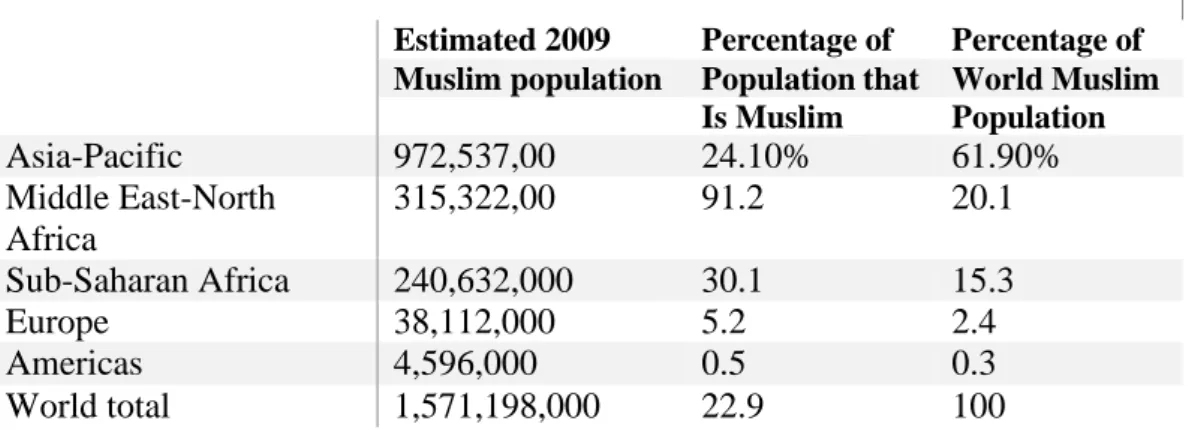
billion Muslims, who represent 24.1% of the global population (Lipka, 2017). More than 60% of the global Muslim population resides in Asia and about 20% resides in the Middle East and North Africa. In Europe and America, the portion of the global Muslim population totals 2.1% and 0.3% respectively (table 1). The Middle East-North Africa region has the highest percentage of Muslim-majority countries (Pew Research Center, 2009).
Table 1: Muslim population by region
Estimated 2009 Percentage of Percentage of
Muslim population Population that World Muslim Is Muslim Population Asia-Pacific 972,537,00 24.10% 61.90% Middle East-North Africa 315,322,00 91.2 20.1 Sub-Saharan Africa 240,632,000 30.1 15.3 Europe 38,112,000 5.2 2.4 Americas 4,596,000 0.5 0.3 World total 1,571,198,000 22.9 100
Source (Pew Research Center, 2009)
Islam is an Arabic word meaning submission, safeness, and peace, and in a religious context it, submission to God. The primary source for Islamic teaching is the Quran, followed by the Hadith or Sunnah, sayings of the prophet. The Islamic community and Muslims are referred to as ummah, Arabic for nation, which includes all people who
30 follow the religion of Islam. Religious concepts and practices include the five pillars of Islam, which are obligatory acts of worship and following Islamic rules that tackle everyday aspects of life and society, from banking and welfare of the environment. Islam has a strong influence on the individual’s lifestyle. Islam deals with every aspect of life
as well as the individual’s relationship with God.
Although all the Islamic markets share the same faith, Islam, there are differences and similarities across global Muslim markets. Commonalities like common faith, values, and identity as Muslims exist (Young, 2010). However, studies have shown that Muslim consumers cannot be treated as one homogeneous market as each market has different characteristics. Numerous aspects can be treated as homogenous, for example financing and banking, logistics, hospitality and entertainment, branding, diet, dress and fashion (Alserhan & Alserhan, 2012). There are some obvious differences that need to be mentioned; diverse locations, multiple languages and dialects, various cultural and lifestyle differences, varying degrees of Islamic adherence, varying degrees of education, social stature, and economic situations. Based on these differences and similarities, Muslim consumers are not a homogeneous entity. Thus, strategies for targeting one market cannot necessarily be applied to other markets (Young, 2010). Young (2010) mentioned that marketers face two challenges when it comes to addressing Muslim consumers. The first, geographical variations of the Muslim population, and the second, the concept that Muslim consumers do not simply differ by one variable from the norm, they differ by other norms that start with Islamic identity. When targeting Muslim consumers many factors that are affected by the society in which they live in should be considered, such as age, economic status, class, and education. Therefore, Muslim
31 consumers cannot be treated as one homogenous market but instead should be viewed as heterogeneous. Ahmad (2017) states that the differences among Muslims are due to the various interpretations and understanding of the Quran and Sunnah approved by different schools of thought, religious authorities, and clerics. She further argues that in addition to the different interpretations of Islam, a gap between beliefs and practices exists within Muslim societies. Recognizing this gap and the way Islam is lived and experienced in various contexts is necessary in order to understand Muslims’ consumer behavior and
their religious beliefs.
The Islamic market is an emerging market that accounts for 30% of the world’s emerging
markets (Forbes, 2015). By 2030, the global Muslim market is expected to increase by 35%, from 1.6 billion in 2010 to 2.2 billion in 2030. As a result, this thriving market represents huge opportunities for businesses (Temporal, 2011). The rising interest in the Islamic market is due to the increasing buying power of Muslim consumers. By understanding and addressing the needs and demands of this market, businesses will be able to design and implement strategies to attract Muslim consumers. In addition, meeting Muslim consumer needs leads to an increase in satisfaction and, in turn, the ability to retain customers.
32
Sources of Shariah Law in Islam
Islamic law, also known as shariah law, was one of the major important legal systems of the medieval world. It lent structure to new ideas and new political, social and cultural ideas. In Muslim majority countries, Islamic law also played a very significant role in structuring the administrative, social, political and cultural systems of those countries. To understand the influence of Islamic religion on Muslim consumer behavior, it is important to understand the different sources of Islamic influence on Muslim consumer behavior. All Islamic rulings are derived from four fundamental sources of Shariah law, the Quran,
Hadith (anecdotes of life of Prophet Mohammed), Ijma, and Ijtihad.
Fatwa, or Islamic rulings, are formal legal opinions declared by Islamic jurists or scholars
in response to issues brought to them by members of their community (Muhamad et. al, 2015). These rulings often deal with contemporary concerns that are not addressed in the
Quran and other shariah law sources. In the Islamic religion, intermediaries between
people and God do not exist. However, most Muslims’ grasp of Islamic knowledge and
prohibitions are broadcast via several sources. Namely, the government and religious authorities, but also through religious classes, family, friends, and the internet, as shown in figure 4. The involvement of these intermediaries influences how communities comprehend and interpret rulings or recommendations and thus affects subsequent behavior.
33
Figure 4: The common flow of Islamic knowledge and its influence on the market/consumer
Source: Muhamad et.al. (2015)
Islamic laws concerning haram and halal food, on the other hand, are not affected by these sources. Halal and haram are clear directives found in verses from the Quran. They are not dynamic nor changeable and so are not subject to fatwa rulings. The common flow of Islamic knowledge and its influence on the market/consumer, for the purposes of this study, do not apply. Fatwa rulings concern contemporary issues specific to their time, that are not in the Quran, for example smoking. Although not mentioned in the Quran smoking, via a fatwa ruling, became haram (prohibited). The use of pork by-products like pig bristles in hair care products also became a subject of a fatwa verdict and is now
haram. Issues such as these are recommended for future studies.
Sources of Law Quran Sunnah Ijma Ijtihad Religious scholars (ulama) Intermediary Dissemination source/agents - Formal: Government Religious authorities - Informal: Religious classes Internet Family and friends Marketplace behavior Consumer product knowledge
34
Quran
The Quran is the primary source of shariah law. The Quran is also termed as Al-Kitab and contains collected revelations from God that were sent to the Prophet Mohammad through an angel Gabriel in a definitive, written form. Muslims believe that the Quran is a compilation of the words of God (Allah). The belief that the Quran is the word of Allah forms the most fundamental belief for all Muslims. In the early days of Islam, memory was used as a channel for the transmission of the Quran. During the lifetime of the prophet, only a part of the revelation was recorded. It was the Caliph Abu Bakr who decided to have a written text prepared and entrusted the task to Zaid bin Sabit, the favorite secretary of the prophet (Muhamad, 2008). Caliph Usman appointed a commission to co-operate with Zaid. Their combined efforts resulted in putting together a definitive Quran in four copies. The final revision of the Quran was produced by Usman twenty-five years after the death of the prophet in 632 A.D (Muhamad, 2008).
There are 114 chapters, or surah, in the Quran and each chapter is divided into a varying number of verses, or ayah. Out of these there are about 100 surah which can serve a sort of explanation to a code of conduct and which simply seek to reform the existing customary law. The scholars aimed at the elaboration of Shariah, a system of law for Muslims, based on the Quranic Principles. Other verses in the Quran contain injunctions on the Tawhid, the fundamental beliefs for being a Muslim. The Tawhid is the conscious recognition of the unity of god and includes belief in the Prophet-hood, the divine decree, angels, the holy books, and the Day of Judgment. Muslims also believe that matters of
35 The Quran also provides teaching about various aspects of the believer’s life such as prohibition on financial interests and the consumption of pork and alcohol, as well as teaching a code of conducts for certain contexts such as divorce, inheritance, marriage, and death. The Quran is written in Arabic, a language not spoken in all the different Muslim nations. Thus, interpretation of the Quran is provided in different languages. As a result, the differences in the interpretations of the Quranic verses can lead to further variations in Shariah law rulings (Muhamad, 2008). The verses in the Quran are contextual to events that occurred throughout the life of the Prophet Mohammed, documented in the form of stories and sayings known as sunnah or hadith. Sunnah provides explanations for some verses of the Quran.
The Hadith or Sunnah
Sunnah is the second source of Islamic teaching and law. Sunnah serves as an
interpretation and clarification of the Quran. It is defined as the “traditions and customs of Muhammad" or "the words, actions and silent assertions of him." It includes the everyday sayings and utterances of Muhammad, his acts, his tacit consent, and acknowledgments of statements and activities. A solid understanding of the sunnah is required in order to describe and extract the Quranic principles, and to implement them across Muslim cultures (Muhamad, 2008).
Justification for using the sunnah as a source of law can be found in the Quran. The
Quran commands Muslims to follow Muhammad, during his lifetime. Most Muslims