A Study of Restorative Justice in Indonesia:
An Eclecticism of Adat Law, Islamic Criminal Law, and Modern Law
著者 フェリー ファスロークマン
著者別表示 Ferry Fathurokhman journal or
publication title
博士論文本文Full 学位授与番号 13301甲第4126号
学位名 博士(法学)
学位授与年月日 2014‑09‑26
URL http://hdl.handle.net/2297/40487
Creative Commons : 表示 ‑ 非営利 ‑ 改変禁止 http://creativecommons.org/licenses/by‑nc‑nd/3.0/deed.ja
1
博士論文
A STUDY OF RESTORATIVE JUSTICE IN INDONESIA:
AN ECLECTICISM OF ADAT LAW, ISLAMIC CRIMINAL LAW, AND MODERN LAW
金沢大学大学院人間社会環境研究科 人間社会環境学 専攻
学籍番号
: 1121072715
氏名
: FERRY FATHUROKHMAN
主任指導教員名
:
足立英彦2
A STUDY OF RESTORATIVE JUSTICE IN INDONESIA:
AN ECLECTICISM OF ADAT LAW, ISLAMIC CRIMINAL LAW, AND MODERN LAW
FERRY FATHUROKHMAN
2014
3
ABSTRACT
In traditional criminal justice systems, victims do not have the right to express their needs. Instead, the state articulates the victim‘s rights. Therefore, the judge‘s verdict should be perceived as representing the victim‘s interest. Restorative justice takes cognizance of this gap in representation and offers a new paradigm for viewing crime. Importantly, victims are given a place in the restorative justice process. Their voices are heard. Restorative justice is viewed as a novel concept in criminal law that assumes various forms. Many countries, including Indonesia, have employed restorative justice for handling crime. However, for the Indonesian people, restorative justice is not a novel idea since its features can be found in Adat law, in local wisdom reflected in community policing programs, and in Islamic criminal law. The introduction and adoption of modern law in Indonesia, in the mid-nineteenth century, has led to the decline of Adat law and of Islamic criminal law. These systems were marginalized and gradually replaced by the transplanted Dutch law.
This study, grounded in the basic concept of restorative justice, aims, through textual analysis, to assess whether Adat law and some of the values embedded in Islamic criminal law fit with the characteristics of restorative justice. Field research was also conducted to seek answers to the research questions as textual law often differs from law in practice. The study found that despite the positive values ascribed to modern law, its transplanting to Indonesia, and replacement of traditional laws, has created several problems. These are rooted in the misfit of the legal culture, which is a critical factor in a legal system, with Indonesian culture. A new law, the Juvenile Criminal Justice System Act (JCJSA) has been passed by the Indonesian Parliament to replace the Juvenile Court Act (JCA). JCJSA diverges from the previous JCA Act through its inclusion of a restorative justice program that was not present in the earlier Act, and is considered to be aligned with Indonesian culture.
The study reveals that there are two potential obstacles and challenges regarding the
implementation of JCJSA: synchronization of law enforcement agencies, and the role of
mediators. Another finding of the study is that conflict between public and private interests
within restorative justice may be alleviated through consideration of Islamic criminal law
values. The ultimate conclusion of this thesis is that restorative justice in Indonesia is
essentially an eclecticism of Adat law, Islamic criminal law, and modern law.
4
CONTENTS
ABSTRACT ………... i
CONTENTS ………... ii
List of Tables and Figures ………... iv
Chapter One: Introduction ………... 1
1.1 Research Objectives ………... 1
1.2 Methodology ………... 2
1.3 Structure of Chapters ………... 2
Chapter Two: Restorative Justice ………... 4
2.1 Definition of Restorative Justice ………...… 4
2.2 Historical Background of the Restorative Justice Movement ………... 9
2.3 Categorization of Restorative Justice ………... 14
2.3.1 Origins ………...…… 15
2.3.2 Initial Forms ………..……. 16
2.3.2.1 Mediation ………... 16
2.3.2.2 Conferencing ………...… 18
2.3.2.3 Circle ………... 19
2.3.3 Timeline Operation ………..…. 20
2.3.4 Enforcement ………... 20
2.4 Conclusion ………... 21
Chapter Three: Restorative Justice in Indonesia ………...… 22
3.1 Restorative Justice in Light of Customary Law: Adat, Adat Law, Customary Law and Adat Criminal Law ………...…… 24
3.1.1 Adat ……….. 25
3.1.2 Adat Law (Adatrecht) ……….. 25
3.1.3 Customary Law ………... 26
3.1.4 Adat Criminal Law ………..…. 28
3.2 Restorative Justice Values from an Islamic Criminal Law (Jinayat) Perspective……... 34
3.2.1 Hudud ……….. 36
3.2.1.1 Theft ………... 37
3.2.1.2 ‗Highway‘ Robbery (Hirabah) ……… 38
3.2.2 Qisas and Diyyat ………... 38
3.2.3 Ta‟zir ……….. 43
3.3 Police–Community Partnership Forum (FKPM) as a Modern Form of Adat Law……. 44
3.4 Conclusion ………... 48
Chapter Four: Restorative Justice for Juveniles in Indonesia ………...… 50
4.1 Age of Criminal Responsibility for Juveniles ………...…… 51
4.2 The Necessity of Restorative Justice in the Case of Juvenile Delinquency ……... 56
4.2.1 The RJ Case: A Young Detainee ………... 56
4.2.2 The AAL Case ………..…. 58
4.3 Restorative Justice as a Safeguard for Protecting Children‘s Futures ………... 59
4.4 JCJSA: A New Chapter in Handling Juvenile Cases ………... 60
5
4.5 Conclusion ………... 63
Chapter Five: Potential Problems and Challenges of Implementing Restorative
Justice in Indonesia ………... 64 5.1 Possibilities, Obstacles, and Challenges in Implementing Restorative
Justice for Juveniles ………... 67
5.2 Bridging and Balancing Public and Private Interests within Restorative Justice ……... 73
5.3 Conclusion ………77
Chapter Six: Conclusions ………... 78 Appendix: Joint Decision Letters ………...…… 80
1. Domestic Violence 2. Adultery
3. Light Maltreatment`
4. Inheritance 5. Irrigation case
Bibliography ………89
6
List of Tables and Figures
List of Tables
Table 1: Two Different Views of Justice ………... 8
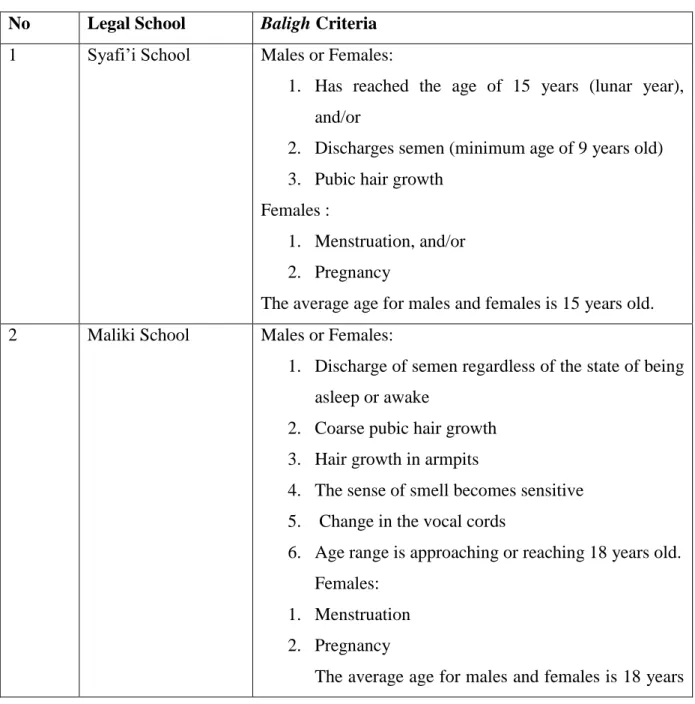
Table 2: Baligh Criteria ………... 52
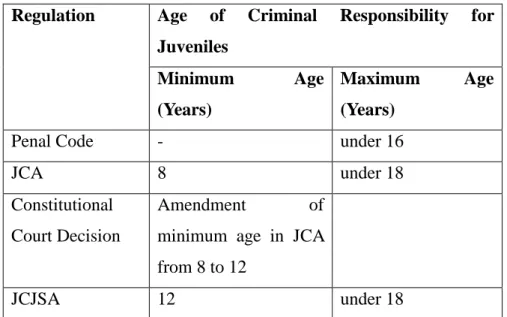
Table 3: The Age of Criminal Responsibility for Juvenile ………... 55
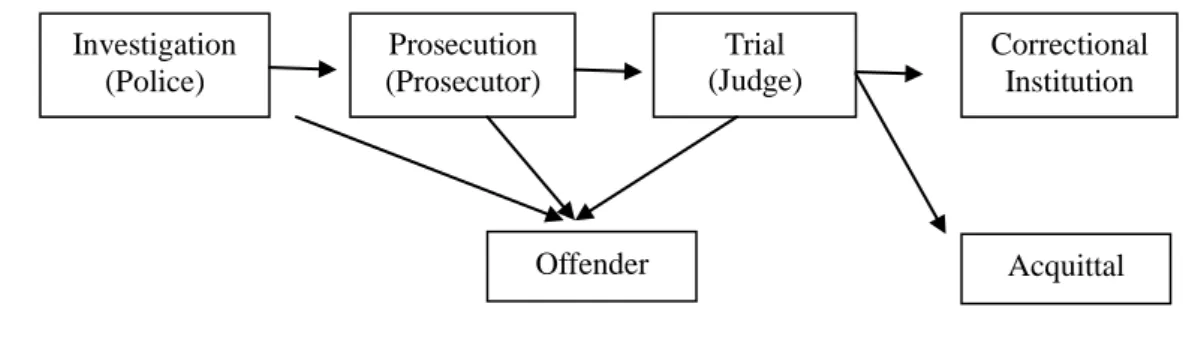
List of Figures Figure 1: Criminal Justice System Scheme ………...…… 22
Figure 2: Victim Position in the current Criminal Justice System Scheme …………...… 23
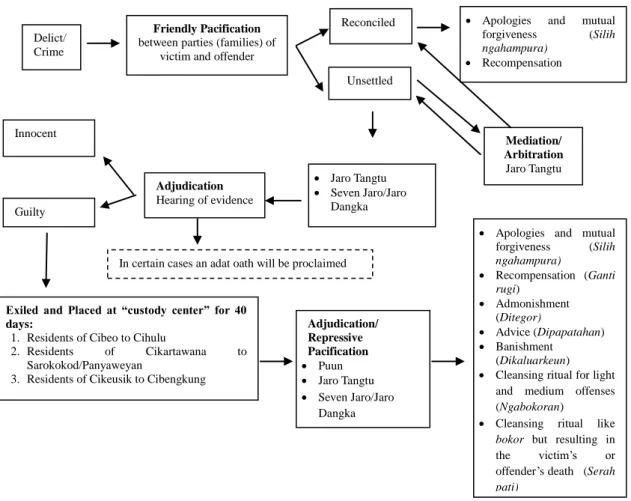
Figure 3: Criminal Pocedural Scheme of the Baduy ………... 33
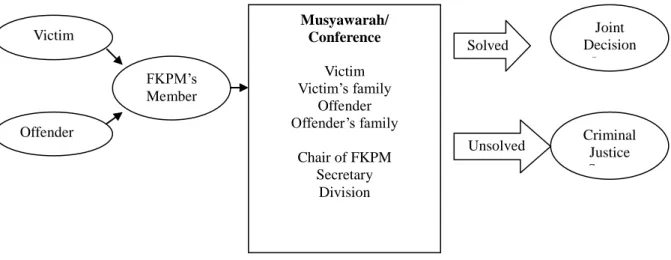
Figure 4: Alternative Dispute Resolution Scheme within an FKPM …..……… 48
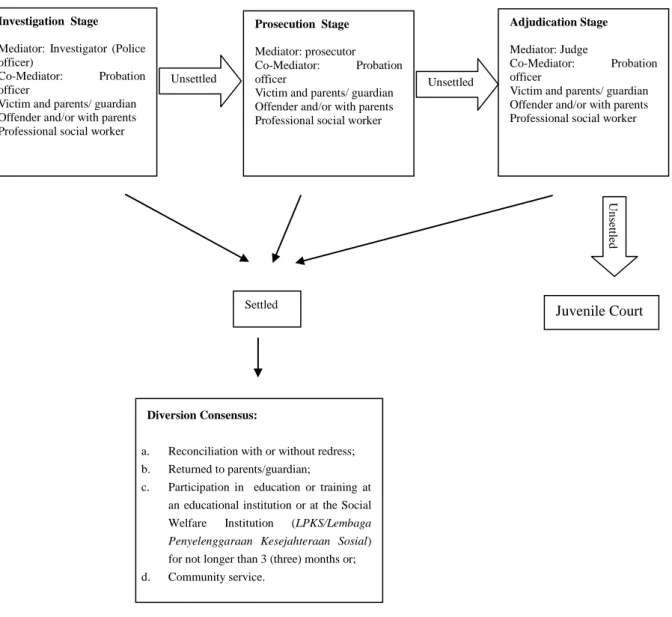
Figure 5: JCJSA Diversion Flow Chart ………... 62
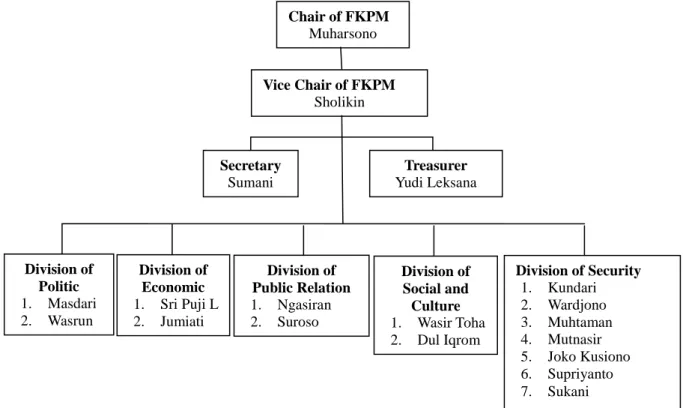
Figure 6: Karasgede FKPM Structure ………... 70
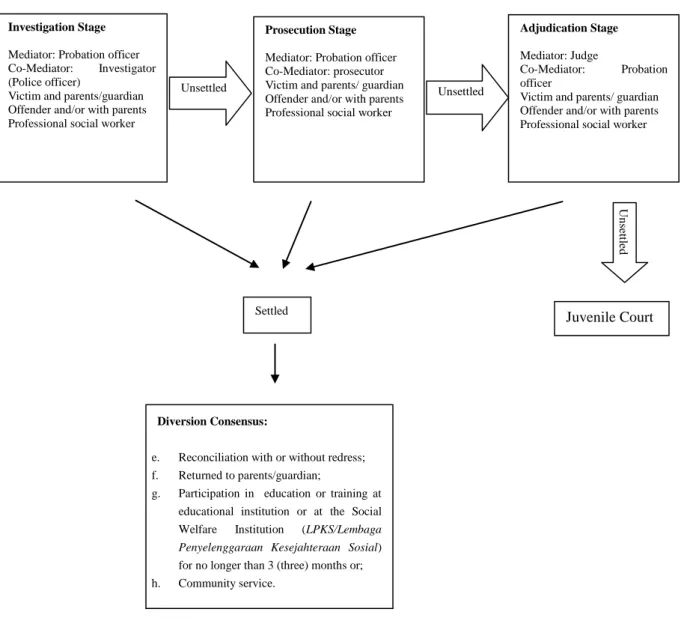
Figure 7: Ideal Mediator within JCJSA‘s Diversionary System ………... 72
7
8
Chapter I
INTRODUCTION
Restorative justice is a relatively new method for handling crimes. I emphasize
―relatively‖ since there is contention among proponents of restorative justice as to whether this is a novel system or a revival of an older legal practice.
In its current form, restorative justice first appeared in the mid-1970s in the Canadian city of Kitchener, Ontario at a presentence hearing of the trial of two teenagers for vandalism.
On the other hand, this practice, or what later came to be known as restorative justice, is actually part of indigenous practice in many traditions across the world. There is evidence of this from the discovery of John Braithwaite, an Australian criminologist, following the launch of his book, Crime, Shame and Reintegration in 1989, that restorative justice conferences also occur in Africa, Melanesia, Asia, and America.
1In the context of Indonesia, I hypothesize that the values of restorative justice are common to traditional legal systems, namely adat law and Islamic criminal law that predate the Dutch colonization of the archipelago and its subsequent renaming as Indonesia. This research is, therefore a variety of ―flashback research‖ that analyzes old practices to predict the potential challenges facing the modern form of restorative justice, as enacted in the new Juvenile Criminal Justice System Act (JCJSA) that will prevail from mid-2014. I posit that JCJSA is an eclecticism of adat law, Islamic criminal law, and modern law. This study makes an important contribution through its assessment of whether restorative justice practices actually exist in Indonesia, and if they do exist, what these practices can contribute to the development and implementation of restorative justice in Indonesia.
1.1 Research Objectives
When I first learned about restorative justice in Indonesia in 2008, I realized that the basic concept shared similarities with some of the features of adat law as well as Islamic criminal law, both of which are familiar systems in Indonesian society, particularly prior to Dutch colonization. Therefore, when the Indonesian Parliament passed the Juvenile Criminal Justice System Act in mid-2012, I aimed to predict potential obstacles and challenges that could ensue when implementing restorative justice in Indonesia. I formulated this central concern within two research questions as follows:
1 John Braithwaite, Restorative Justice and Responsive Regulation (Oxford University Press 2002) 24.
9
1. What are the possibilities, obstacles, and challenges entailed in the implementation of restorative justice for juveniles in Indonesia?
2. How can public and private interests be bridged and balanced within restorative justice programs?
The conflict between public and private interests, as articulated in my second research problem, is one of several issues that have been discussed within the field of restorative justice. I will subsequently return to this problem in an in-depth discussion in chapter five.
1.2. Methodology
This research is qualitative and relies on secondary data that are supported by primary data. Primary data for this research were obtained by conducting in-depth interviews using the purposive sampling method.
The research focuses on the notion of restorative justice by retracing its first appearance. My hypothesis is that the concept and practice of restorative justice had been in existence for a long time prior to the Dutch colonization. My attempt here is to retrace Indonesian legal history to situate the contemporary practice of restorative justice in postcolonial Indonesia and to analyze whether adat law, community policing, and Islamic criminal law theory share values in com`mon with restorative justice. Based on this study, I predict the possibility of implementing restorative justice in its modern form. I employ Lawrence M. Friedman‘s concept of legal culture as an analytic tool in this thesis. I discuss this concept further in chapter five.
1.3 Structure of Chapters
This thesis is divided into six chapters. Chapter one introduces the study and provides a brief framework of the thesis as a whole. In chapter two I discuss the basic notion of restorative justice and formulate categories of restorative justice. In chapter three, I present the three components of legal concepts and practice in Indonesia, namely adat law, Islamic criminal law, and community policing, and examine whether restorative justice values exist in their theory and practice. Chapter four entails a discussion of legal provisions on children and juveniles in Indonesia, including the new act for juveniles, which includes a diversionary model of a restorative justice program. In chapter five, in accordance with the research questions posed in this chapter, I discuss potential problems of restorative justice in Indonesia.
Chapter six offers conclusions on the findings of this thesis.
10
Chapter Two
RESTORATIVE JUSTICE
2.1. Definition of Restorative Justice
The term ―restorative justice‖ is becoming familiar in criminology and the field of criminal law. Moreover, restorative justice is emerging as a global trend in handling crime. To develop a deeper understanding of restorative justice, I would like to trace the origins of the term. In much of the literature, proponents of restorative justice have unanimously affirmed that the term ―restorative justice‖ was first coined by Albert Eglash. Most of them also agree that it first appeared in his 1977 paper,
2entitled Beyond Restitution—Creative Restitution which was presented at a conference on restitution in 1975.
3In his paper, Eglash described three faces of justice: (1) retributive justice; (2) distributive justice
4and; (3) restorative justice. The first aspect relied heavily on punishment as its prominent technique for handling crimes, while the second advocated therapeutic treatment of offenders.
5The third aspect, that is restorative justice, proposed restitution as its characteristic feature in handling crime. Eglash referred to this as creative restitution. He noted that, in many respects, retributive and distributive justice shared similarities but differed from creative restitution. For instance, both punishment and therapeutic treatment were primarily concerned with the offender‘s behavior, whereas restorative justice focused on
2 The exceptions are Daniel W. Van Ness and Karen Heetderks Strong who, while initially concurring with this view, inserted a ―clarification‖ footnote in the fourth edition of their book. They noted that Eglash developed his concept of creative restitution (discussed in his 1975 article) as a feature of restorative justice within his series of articles published in 1958 and 1959. Ann Skelton (2005), who has traced Eglash‘s sources, found that the term restorative justice emerged in 1956 in a book by Heinz-Horst Schrey, Hanz Hermann Walz, and W.A.
Whitehouse. The book was, written in German and subsequently translated and adapted into English as The Biblical Doctrine of Justice and Law. For more details, see Daniel W Van Ness and Karen Heetderks Strong, Restoring Justice, An Introduction to Restorative Justice (4th ed., Anderson Publishing 2010) 22.
3 In 1977, the paper was published in an anthology entitled Restitution in Criminal Justice: A Critical Assessment of Sanctions.
4 The concept of distributive justice discussed here should be regarded differently from the concept of distributive justice that is opposed to commutative justice within penal law vis-à-vis civil law. Eglash appears to have been referring to the neoclassical meaning of distributive justice which, in contrast to the classical meaning, focuses on the offender rather than on the offense. Most scholars of criminal law and criminologists refer to this as the rehabilitation model of criminal justice (or simply rehabilitative justice) instead of distributive justice. See, for example, Steve Mulligan who wrote that ―[restorative justice] is better understood through its goal and principles and in comparison to the paradigms that precede it, namely the retributive and rehabilitative philosophies of punishment.‖ Steve Mulligan, ‗From Retribution to Repair: Juvenile Justice and the History of Restorative Justice‘ (2009) 31. U.La Verve L. Rev. 139.
5 In the view of most scholars of criminal law, the most effective penal reform in modern society was accomplished by shifting the focus of sentencing from punishment for reasons of deserving to punishment as a means of rehabilitation and reform. The reform entailed a shift in the purpose of punishment from distributive to rehabilitative justice. See Wesley Cragg, The Practice of Punishment: Towards a Theory of Restorative Justice (Routledge 1992) 80.
11
the destructive or harmful consequences of that behavior, and its effect on the victim of a criminal act. From the perspective of the victim, he or she was disregarded by both the punishment and therapeutic treatment approaches, except as a witness. On the other hand, creative restitution made victims and their needs an important consideration and gave them a significant role to play, both in achieving justice and in developing a rehabilitative or correctional program.
6I suggest that besides the Kitchener experiment, creative restitution can also be regarded as an embryonic form of the restorative justice program. Interestingly, as Eglash admitted, creative restitution was designed primarily for offenders. He noted that:
―For me, restorative justice and restitution, like its two alternatives, punishment and treatment, is concerned primarily with offenders. Any benefit to victims is a bonus, gravy, but not the meat and potatoes of the process.‖
7As we shall see later, various definitions have emerged with the growth of the restorative justice movement that are wider than the above-mentioned definition by Eglash, especially in terms of its central concern.
Restorative justice has been widely developed and applied in many countries as a new paradigm for handling crime. Recently, it has developed sporadically and in various ways, following from its first experimental inception in North America (Kitchener) and spreading to European and Asian countries. However, from the perspective of indigenous law, ―restorative justice‖ has previously existed and been practiced in every continent.
Howard Zehr, who is regarded as the ―father‖ of restorative justice, admits that he cannot identify and recognize all of the current restorative justice programs and the hundreds of restorative justice practitioners and academicians involved in developing restorative justice programs. This situation radically contrasts with the 1990s era when he was able to keep abreast of developments in restorative justice, including its practitioners and proponents.
8Since restorative justice has evidently evolved into many forms, it is helpful to briefly revisit its initial definition. Zehr originally conceptualized restorative justice as a process that involved, to the greatest extent possible, those who had a stake in a specific offense in collectively identifying harms, needs, and obligations, as well as their redress, to heal and make things as right as possible.
9Certainly this definition raises some further questions, such as what does Zehr mean by those ―who had a stake in a specific offense?‖ How are such
6 For more details, see Albert Eglash, ‗Beyond Restitution–Creative Restitution‘ in Joe Hudson and Burt Galaway (eds.), Restitution in Criminal Justice: A Critical Assessment of Sanctions (Lexington Books, 1977) 91-99. <www.lorennwalker.com/blog/?p=117> accessed March 7, 2014.
7ibid 99.
8 Howard Zehr in the foreword of a book by Mark Umbreit and Marilyn Peterson Armour entitled, Restorative Justice Dialogue, an Essential Guide for Research and Practice (Springer Publishing Company 2011) vii.
9 ibid 7.
12
individuals to be defined?
To respond to such questions and enrich the discussion, I propose another definition that is acknowledged as the most acceptable definition of restorative justice since it has also been adopted by the United Nations.
10This definition was proposed by Tony Marshal who argued that ―restorative justice is a process whereby all the parties with a stake in a particular offense come together to resolve collectively how to deal with the aftermath of the offense and its implications for the future.‖
11Marshal‘s definition, however, raises the same question as Zehr‘s definition, namely, who is ―the parties with a stake in a particular offense?‖ Additionally, according to Marshal‘s definition, what should be restored? The latter question was reasonably resolved within Zehr‘s definition, that is, harm and needs resulting from a specific offense.
To respond to the above question, we may also refer to the Economic and Social Council (ECOSOC) Resolution of 2002/12 regarding the Basic Principle on the Use of Restorative Justice Programmes in Criminal Matters. In its annex, specifically subsection 4 of section I on the use of terms, it states that ―Parties‖ means the victim, the offender, and any other individuals or community members affected by a crime who may be involved in a restorative process.
12This is in line with John Braithwaite‘s response in his book regarding Marshal‘s definition that a ―stake in a particular offense‖ primarily refers to the victim(s), offender(s), and affected communities (including the families of victims and offenders).
Braithwaite also answered the question of what should be restored as follows: ―whatever dimensions of restoration matter to the victims, offenders and communities affected by the crime. Stakeholder deliberation determines what restoration means in a specific context.‖
13In his audiovisual lecture, John Braithwaite explained restorative justice by describing its history and process in the following way:
Restorative Justice evolved from searching for a more productive way of dealing with crimes rather than putting more and more people away in prison. The main idea is about restoring the victim, restoring the offender and restoring the community.
Because crime hurts, justice should heal. In a typical process the victim will be asked to say who would they like to come to support them through the audience, then the offender will be asked in the same way, and the supporter of the offender with the offender come together with the victim and the victim‟s supporter are facilitated, they sit together in a circle [sic]. First, they talk about what happened, who was hurt by
10 Paul McCold, ‗The Recent History of Restorative Justice: Mediation, Circle, and Conferencing‘ in Dennis Sullivan and Larry Tifft (eds.), Handbook of Restorative Justice (Routledge 2008) 23.
11 Braithwaite (n 1) 11.
12<www.un.org/en/ecosoc/docs/2002/resolution%202002-12.pdf> last accessed March 7, 2014.
13 Braithwaite (n 1) 11.
13
what happened and what might be done to right the wrong and come up with a plan of action and then there will be follow up to check whether the plan of action is actually implemented to the satisfaction of all stakeholders.
14It is clear from the three definitions provided by Zehr, Marshal, and Braithwaite that the central focus has gradually shifted from Eglash‘s proposal of creative restitution which was designed primarily for the offender. Borrowing Eglash words, now the victim has become
―the meat and potatoes‖ in most restorative justice programs. I will subsequently elaborate on the background context of why the victim has become an important party in restorative justice.
For most criminal law scholars, incorporating victims—and the affected community when appropriate—in the criminal justice process is a relatively new idea given that the role of the victim in this process has been represented and taken over by the investigator (police) and prosecutor. Restorative justice evidently has a different core concept from that of criminal justice.
Zehr‘s framework provides a clear understanding of victim-incorporation. Adopting the analogy of a photographic lens, Zehr explained that the choice of lens affected the outcome, because different lenses created different pictures. The same went for understanding a crime.
Zehr noted that if we viewed crimes through a retributive lens, the ―criminal justice‖ process failed to meet many of the needs of either the victim or the offender. The process neglected victims while failing to meet its expressed goals of holding offenders accountable and deterring crime.
15To clarify these differences, Zehr then differentiated between criminal justice and restorative justice as shown in the table below:
1614<www.anu.edu.au/fellows/jbraithwaite/lectures/index.php> last accessed March 7, 2014.
15 Howard Zehr, Changing Lens: A New Focus for Crime and Justice (Herald Press 2005) 178–179.
16 Umbreit (n 8) 8.
14
Table 1: Two Different Views of Justice
Criminal Justice Restorative Justice
Crime is a violation of the law and the state
Violations create guilt
Justice requires the state to determine blame (guilt) and impose pain
(punishment)
Central focus: Offenders getting what they deserve
Crime is a violation of people and relationships
Violations create obligation
Justice involves victims, offenders, and community
members in an effort to put things right
Central focus: Victims‘ needs and offenders‘ responsibility for repairing harm
According to Zehr, as cited by Mark Umbreit and Marilyn Peter Armour, the two approaches shown in the above table entail different ways of seeking justice. These differences can be clarified by posing the following three questions relating to a criminal justice system. (1) What laws have been broken? (2) Who broke these laws? (3) What do they deserve in response? From a contrasting restorative justice perspective, these questions would be reframed as: (1) Who has been hurt? (2) What are their needs? (3) Who is obliged to meet these needs?
17For Allison Morris and Gabrielle Maxwell, restorative justice is a process that drastically reduces the roles of the court, judiciary, and other criminal justice professionals by returning this role to those most affected by it and by encouraging them to determine appropriate responses.
18Relying on the reparative and encounter concepts,
19Daniel W. Van Ness and Karen Heetderks Strong defined restorative justice as a theory of justice that emphasizes reparation
17 ibid.
18 Allison Morris and Gabrielle Maxwell, ‗The Practice of Family Group Conferences in New Zealand:
Assessing the Place, Potential and Pitfalls of Restorative Justice‘ in Adam Crawford and Jo Goodey (eds), Integrating a Victim Perspective within Criminal Justice. International Debates (Ashgate Publishing 2000) 207.
19The key point of the reparative concept is that crime causes harm and that justice must repair that harm while the encounter concept focusing on the importance of stakeholder meetings and on the many benefits that result from discussions of the crime among stakeholders, including what contributed to it and its aftermath. See Van Ness (n 2) 42; also Gerry Johnstone and Van Ness (eds) ‗The Meaning of Restorative Justice‘ in Handbook of Restorative Justice (Routledge 2011) 9.
15
of the harm caused or revealed by criminal behavior. It is best accomplished through cooperative processes that include all stakeholders.
20Citing Marian Liebmann, Steve Mulligan noted that restorative justice was a criminal justice paradigm that emphasized the restoration of the victim.
21Similarly, Lyle Keanini, citing Tony Marshal, stated that restorative justice was ―centrally concerned with restoration: restoration of the victim, restoration of the offender to a law-abiding life, [and] restoration of the damage caused by [the] crime to the community.‖
22There are many more definitions proposed by restorative justice proponents that have resulted from the ongoing development of restorative justice programs. Some of these are general and can incorporate all restorative justice programs, while others leave loopholes that do not apply to some restorative justice programs. In many respects, whereas some definitions complement and complete each other, others criticize and compete with each other, resulting in new formulations. This will be discussed further in a subsequent section of this chapter on categorizing restorative justice.
2.2 Historical Background of the Restorative Justice Movement
The traditional criminal justice system clearly focuses on the offender, and how to punish him or her to create a deterrent effect both for the particular offender and for potential offenders within a society. At the same time, the system excludes the crime victims who are only regarded as witnesses, helping the prosecutor to prove that the offender is guilty of a crime that actually involves them as the injured party. This situation was perceived as a gap in the prevailing criminal justice system. Therefore, research was conducted and a new paradigm of justice emerged and has been continually evolved. This new paradigm is known as restorative justice.
A discussion of restorative justice should begin by retracing the victim‘s position in the criminal justice system of the past when the state (in this case, court) did not yet exist, and which was subsequently followed by the emergence of the court that replaced the victim‘s interest.
There was a time when no distinction was made between penal law and private law; a time when penal law was still regarded as private law.
23Crime victims directly sought justice
20ibid 43.
21 Mulligan (n 4).
22 Lyle Keanini ‗ADR in Hawaii Courts: The Role of Restorative Justice Mediators‘(2011) 12. Asian-Pac. L. &
Pol‘y J. 174.
23 For further details, see Gustav Radbruch, The Legal Philosophies of Lask, Radbruch, and Dabin. Harvard
16
against offenders, often with the assistance of their kin. This system was based on the principle of commutative justice between coequals that is used in private law.
24John Gilissen and Frits Gorle have argued that this system prevailed over a long period, creating vigilante (eigenrichting) as a form of criminal dispute settlement, until the state intervened and took over the settlement of criminal disputes.
25Israel Drapkin has noted that the Twelve Tables (449 BCE) marked a transition from private retribution to state adjudication. Though during this period, there was still no clear boundary between public and private law, criminal matters were regulated in accordance with the eighth and ninth tables, which Drapkin, suggests was the embryonic form of the public law/criminal law divide.
26In the early development phase of criminal law, victims were still considered as parties that should get restitution from offenders. Victimologists have described the justice approach during this period as a ―victim justice system.‖
27Before the existence of the state, offenders were forced by victims (or the victim‘s kin) to take responsible for the crimes that they had committed. Codes of behavior were based on social norms. Society recognized crimes such as murder and other serious act as mala in se (crime by itself, viewed as totally unacceptable behavior).With rare exceptions, written law did not yet exist, and there was no clear distinction made between public and private law.
Society also recognized a basic system of retribution and restitution. This system was based on the principle of lex talionis, (an eye for an eye, a tooth for a tooth) and was retaliation- based. Victims during this period could obtain restitution from offenders. With the emergence of the state, however, restitution gradually changed from being for victims to being for the state which replaced and represented the victim‘s interest. Barons played a significant role in changing restitution to the exacting of fines for the King (State). Thus, restitution was replaced by fines, and the process of excluding the victim‘s interest began. In addition, society was transformed from the simpler gemeinschaft society to the more complex gesellschaft society that encouraged individualism. Gradually, the victim justice system declined and was replaced by the criminal justice system.
28What followed entailed a progressive marginalization, ignoring, and abandonment of victims‘ needs. The role of law enforcement agencies was deemed as simultaneously
(Kurt Wilk (trs) 1950) 186.
24 ibid 74.
25 John Gilissen and Frits Gorle, Sejarah Hukum, Suatu Pengantar (Legal History, an Introduction), (Refika Aditama 2007) 29.
26 Israel Drapkin M D, Crime and Punishment in the Ancient World (Lexington Books 1989) 232.
27 William G Doerner and Steven P. Lab, Victimology (3rd ed., Anderson Publishing 2002) 2
28 Ibid.
17
representing the victim and public interest. The Victims‘ Rights Movement has tried to reincorporate victims within the criminal justice system. I suggest that the emergence of the victims‘ rights and restorative justice movements was triggered by dissatisfaction with the traditional criminal justice system, viewed as a nonintegrated system that only focuses on the offender and ignores the victim‘s interest; and on a critique of prison effectiveness.
From this point forward, a historical correlation between the restorative justice movement and the victims‘ rights movement is evident. This observation is in line with the point made by Daniel W Van Ness that restorative justice theory has its roots in a number of reform movements. One of these is the victims‘ rights movement.
29The point made by Van Ness was affirmed by the victimologists William G Doerner and Steven P Lab who noted that the movement toward restorative justice was led by prominent proponents of victims‘
rights.
30The gains of the victims‘ rights movement have been evident in many of its outcomes such as victim impact statements,
31restitution from offenders, and state compensation.
In the view of Western scholars, the achievements of the victims‘ rights movement were gradually introduced from Western countries to Asian countries. In Japan, for instance, according to Tatsuya Ota, a professor at Keio University, victim impact statements were introduced into judicial proceedings when the criminal procedure code was amended in 2000.
32In Indonesia, the concept of the victim impact statement is a new one that has emerged in the latest legislation, the Juvenile Criminal Justice System Act (Act Number 11/2012) that will replace the current Juvenile Court Act (Act Number 3/1997) by the end of July 2014.
3329 The two other reform movements are the informal justice movement and the restitution/diversion movement.
For further details, see Daniel W Van Ness in Gordon Bazemore and Lode Walgrafe (eds.), Restorative Justice, Repairing the Harm of Youth Crime (Lynne Rienner Publisher 2010) 283.
30 Doerner (n 27) 354.
31 According to Gerry Johnstone, victim impact statements have been introduced in the UK, United States, New Zealand, Canada, Israel, and parts of Australia and Ireland. For more details, see Gerry Johnstone, Restorative Justice. Ideas, Values, Debates (Routledge 2011) 58.
32 Matsuo cited by Tatsuya Ota ‗The Development of Victim Support and Victim Rights in Asia‘ in Wing- Cheong Can (ed.), Support for Victims of Crime in Asia. (Routledge 2008) 128. Ota‘s article does not contain any further detailed information on this. However, I believe that Ota‘s (or Matsuo‘s) statement refers to Article 292-2 (1) Code of Criminal Procedure (of Japan) (Part II) (Act No 131 of 1948) which states that: ―The court shall, when the victim or his/her legal representative requests to state an opinion such as their sentiments, have the victim and others state their opinions at the trial; or in its original version: 刑事訴訟法(第二編) 裁判所 は、被害者等又は当該被害者の法定代理人から、被害に関する心情その他の被告事件に関する意見の 陳述の申出があるときは、公判期日において、その意見を陳述させるものとする。
33 Article 60, verse 2 states that: ―In particular matters, the child victim is given an opportunity by justice to convey a statement regarding his or her related case (Dalam hal tertentu Anak Korban diberi kesempatan oleh hakim untuk menyampaikan pendapat tentang perkara yang bersangkutan).‖ This article, however, is unclear in several aspects. First, there is no further explanation as to the criteria of the ―particular matter.‖ Second, there is
18
Both concepts—restorative justice and the victims‘ rights movement—attempt to fill the gap in the current criminal justice system. However, restorative justice has a broader scope compared with the victims‘ rights movement. Restorative justice not only focuses on restoring victims, but also the offenders and the community that has been affected by the crime. It is an integrated and holistic way of dealing with crime. Till date, several countries have already implemented and enforced restorative justice as a new and alternative method for handling crimes and dispensing justice.
Many consider the VORP (Victim Offender Reconciliation Program) to be the first
―baby‖ of the restorative justice program in its modern form. VORP was born from the
―Kitchener experiment‖ in 1974. At that time, two young individuals, aged 18 and 19 years, from Elmira in Ontario, Canada, pleaded guilty to vandalizing 22 properties (houses and cars).
The case was published and widely discussed. Mark Yantzi, a probation officer, who was charged with preparing the presentence report for this case, attended a Christian group meeting several days before the guilty plea was filed. At the meeting, the Christian response to shoplifting was discussed. Yantzi then conceived of the idea of the offenders meeting the victims to repair the damage. In criminal procedural law, this idea was impossible to implement, because, as I mentioned earlier, the victims‘ interests are taken over by the prosecutor. Yantzi buried the idea because of the lack of a legal basis to support it. However, Dave Worth, a coordinator of voluntary service workers for the Mennonite Central Committee (MCC), encouraged Yantzi to pursue the idea. He, therefore, took a chance and proposed to the judge that the offenders meet with the victims and pay them back. Predictably, the judge refused to entertain the idea. Nevertheless, Yantzi‘s proposal seemed to have influenced the judge, because when the time for sentencing arrived, the judge ordered the offenders to have a face-to-face meeting with the victims to work out suitable restitution as a condition of probation. Accompanied by their probation officer, the offenders then visited all of their victims,
34negotiated restitution, and within three months had repaid their victims.
This case was considered the inception of VORP in Canada, and is also believed to be the first restorative justice program. Judges have subsequently continued to order this process to
no clear provision on whether the statement should be delivered orally or in writing. For comparison purposes, in Canada, the form of the statement is written and can be read aloud at the sentence hearing (http://www.justice.gc.ca/eng/rp-pr/cj-jp/victim/statem-declar/index.html). Third, there is no clear explanation provided on whether the child victim can delegate his or her role to other parties such as parents or a guardian in delivering the victim impact statement. This last point is critical as crime victims, especially child victims, usually have difficulty in expressing their feelings as a result of the trauma caused by the crime.
34 There are two versions of this part of the post-case proceedings. According to Mark Umbreit and Marilyn Peterson Armor, the offenders met all of the victims, whereas Howard Zehr contends that the offenders could not meet two of the victims because they had moved from Elmira.
19
be carried out. Van Ness notes that in 1976, the probation officer formed a nonprofit organization to promote and facilitate these meetings.
35Coincidentally, the initial practice of VORP in Canada fulfilled what Eglash had suggested in terms of implementing creative restitution, namely the probation requirement.
36Zehr describes VORP as ―contagious,‖ with Indiana being the first state in the United States to establish a similar program in 1977–
1978.
37More recently, restorative justice has been discussed and implemented in several countries. Barda Nawawi Arief notes that within Europe, Austria, Belgium, Germany, France, and Poland have been applying restorative justice in many forms within their criminal code procedures.
38From its first emergence in Canada, the practice of restorative justice has been spreading to other continents such as Europe, Africa, and Asia.
39The restorative justice movement is unstoppable and has mutated into many forms to fit each country‘s needs.
Regarding Japan, restorative justice is described, mostly by Western scholars, as a new paradigm that will likely meet with no strong resistance when it is implemented. This perception usually involves reference to Japan‘s cultural foundation.
40In addition, T.
Kawashima and Y. Noda, as cited by Hiroshi Oda, have categorized Japanese society as a non-litigious society, which in my view will facilitate the implementation and acceptance of restorative justice.
41Unfortunately, to date, Japan has not established a legal basis for implementing restorative justice, particularly as a diversionary system.
42However, according to Kei Someda, Director of General Affairs and the Planning Division of the Chiba Probation Office, Ministry of Justice, the police and public prosecutor may discharge cases based on their discretionary power.
43示談Jidan (out-of-court settlement) is possible within this system.
35 cf. Van Ness (n 2); Umbreit (n 8); Zehr (n 15).
36 Eglash proposed two points relating to the implementation of creative restitution within the criminal justice process. The first was the probation requirement that could be done at the hearing stage before the sentence was handed down. The second involved preoffenders turning themselves in to the police or a mental health agency before committing any offense. See Eglash (n 6) 96 for further details.
37 Zehr (n 15) 159.
38 See Barda Nawawi Arief, Mediasi Penal Penyelesaian Perkara di Luar Pengadilan(Penal Mediation, Extrajudicial Settlement) (Pustaka Magister Publishing 2008).
39 Sullivan (n 10) 35–40; Van Ness (n 2) 33–38.
40 John O Haley stresses the cultural foundation to highlight apology and reciprocal pardon as dominant threads in the Japanese social fabric. This is reflected in standard practices in Japan whereby the offender seeks a formal letter of forgiveness from the victim that is addressed to the police, the prosecutor, or the judge. The victim, through the letter, may inform the law enforcement agencies that he or she has been compensated and has pardoned the offender. The letter may also include a request to the authorities not to report, prosecute, and punish the offender. This letter is then used by law enforcement officials when considering their decision. See John O Haley. A Spiral of Success, Community Support is the Key to Restorative Justice in Japan. 1994.
Downloaded from www.context.org/iclib/ic38/haley/ accessed December 11, 2012.
41 See Hiroshi Oda, Japanese Law (3rd ed., Oxford University Press 2009) 2.
42 Diversionary system here means a system that provides an alternative dispute resolution in lieu of a criminal trial.
43 According to Haley, despite the high conviction rate in Japan (about 99.5%), it is estimated that the police do
20
Nevertheless, Someda adds that further research is required as to whether or not jidan can be categorized as restorative justice.
44In my view, the perception of minimum resistance described above becomes shaky and vague when applied in practice. Some efforts have been made to implement restorative justice in Japan, especially as a therapeutic system that operates when the offender is serving his/her punishment in prison. The offenders are offered an opportunity to write an apology letter to their victims. However, according to Yoko Hosoi, a professor of sociology at Toyo University, this program can hardly be described as successful, since there are not many offenders who are willing to participate in it.
45The same pessimistic outlook applies regarding the victims. Some victims have responded that if offenders want to apologize and repent for what they have done, then they should prove this by accepting a harsher penalty.
46In my view this paradoxical fact can be understood to signify the decline of the Japanese legal culture. It seems that John O Haley‘s perspective on apology and reciprocal pardon being part of Japan‘s cultural foundation requires reevaluation.
2.3. Categorization of Restorative Justice
Restorative justice has been evolving and transforming widely and spontaneously. Some of the variations that have developed are not far from its original core, whereas others are considered to have developed well beyond the core of restorative justice. Debates about restorative justice occur not only between proponents and opponents of restorative justice, but also among its proponents. To better understand the concept and its variations, I will discuss four categories relating to restorative justice below:
2.3.1 Origins
There are two contrasting narratives of restorative justice: (1) as a novel and innovative system; and (2) as a modification of indigenous law. The first narrative views restorative justice as a subsequent development from its first experimental origins in Kitchener, as described earlier in this chapter. The second narrative views restorative justice as neither a novel nor an innovative system, but rather as an old practice that precedes any theory.
not report up to 40% of all apprehended offenders and that prosecutors suspend prosecution of possible convicts in nearly a third of the reported cases. See Haley (n 40).
44 Personal communication from Kei Someda at the Restorative Justice Regular Meeting at Waseda University, March 2, 2013.
45 Personal communication from Yoko Hosoi, March 2, 2013.
46 Personal communication from Professor Setsuo Miyazawa at Aoyama Gakuin University Law School during the 5th Annual Conference of the Asian Criminological Society held in Mumbai, India, from April 14–16, 2013.
21
According to this view, our realization that this old practice was actually restorative justice only came after its theorization.
47According to Steve Mulligan, there is no dispute regarding the first narrative which is different from the second narrative.
48Proponents of the first narrative argue that the second narrative provides a misleading view of restorative justice.
Kathleen Dally has refuted what she regards as a misconception that conferencing is based on indigenous practices. According to Dally, efforts to write a history of restorative justice that romantically invoke a premodern past to justify current practices of justice are not only erroneous, but also unwittingly re-inscribe the ethnocentrism that they wish to avoid. Dally added that this misconception was ubiquitous among prominent advocates of restorative justice. In particular, she asserted that just because restorative justice was flexible and accommodating did not mean that conferencing (particularly in New Zealand) was an indigenous practice.
49However, in my view, it is difficult to detach the practice of FGC (Family Group Conference) in New Zealand from the practices of the Maori people who have greatly contributed to FGC. Moreover, historically, as noted by Gerry Johnstone, in 1988, the New Zealand Department of Justice commissioned a report by Moana Jackson recommending that the Maori be allowed to deal with conflicts that affected them in a way that was culturally appropriate. This implied a return to the principles of restorative justice that were embedded in the precolonial method of dispute resolution. A year later in 1989, the practice of FGC, which was partly informed by Maori philosophy and practices of justice, was established for youth offenders.
50Therefore, even though FGC cannot be said to be an indigenous practice, as Dally has pointed out, in the same way it also cannot be said to be an entirely new practice. Regarding this issue, I cite Zehr and Ali Gohar, who suggest that restorative justice in its modern form entails the ―revival‖ of indigenous practices:
51―….the movement owes a great debt to earlier movements and to a variety of cultural and religious traditions. It owes a special debt to the native people of North America and New Zealand (emphasis added). The precedents and roots of this movement are much wider and deeper than the Mennonite-led initiatives of the 1970s. Indeed, they are as old as human history‖
47 Sullivan (n 10) 24.
48 Mulligan (n 4).
49 Kathleen Dally, ‗Conferencing in Australia and New Zealand: Variations, Research Findings, and Prospects‘
in Allison Morris and Gabrielle Maxwell (eds.), Restorative Justice for Juveniles: Conferencing, Mediation and Circles (Hart Publishing 2003) 65.
50 Johnstone (n 31) 36.
51 Howard Zehr and Ali Gohar, The Little Book of Restorative Justice (2003) 10, downloaded from
<www.unicef.org/tdad/littlebookrjpakaf.pdf> last accessed on March 10, 2014.
22
2.3.2 Initial Forms
In much of the literature, three forms of the initial practice of restorative justice are described, namely, Mediation, Conferencing, and the Circle. These practices are reflected in many programs. For instance, the Victim Offender Reconciliation Program (VORP), Victim Offender Mediation (VOM), and Community Mediation belong to the mediation category.
Examples of the conferencing category are the Family Group Conference (FGC), the Wagga Wagga Conference, and Community Group Conferencing. Navajo Justice and the Sentencing Circle are examples of the last category. Paul McCold has differentiated these practices as discussed below.
522.3.2.1 Mediation VORP
As I have previously discussed in relation to the historical background of the restorative justice movement, the first emergence of VORP dates back to 1974 in Ontario, Canada. The primary purpose of VORP is reconciliation, involving the healing of injuries and restoring right relationships, which is conducted through direct mediation (face-to-face meetings between the victim and offender). This program can be viewed as complementary to the traditional criminal justice system rather than as a diversionary model designed to ―avoid‖ the criminal justice system to obtain a better settlement compared with the criminal justice system. VORP is a faith-based program, that is, it adopts a religion-based approach, particularly Christian values, to reach reconciliation. Historically, VORP mediators were probation officers, but this does not have to be predetermined. Citing Zehr, Johnstone suggests it is preferable that the mediator is a community volunteer.
53However, it is notable that the community affected by the crime is not involved in this program.
VOM
According to Mark Umbreit and Marilyn Peterson Armour, VOM is a further evolutionary step in VORP‘s journey. Historically, the VORP experiment in Ontario was adopted and implemented for the first time in Elkhart, Indiana, in the United States in 1978.
52 Morris (n 49) 42–51. See also Daniel W Van Ness and Karen Heetderks Strong who consider three programs:
Victim-Offender Mediation (Canada and US), Conferencing (New Zealand and Wagga Wagga, New South Wales) and Circles (Canada), to be key programs that have influenced the development of restorative justice, Van Ness (n 2) 26.
53 Johnstone, (n 31) 2.
23
With the passage of time, the initial experiments have gone through numerous iterations in the structure of the encounter, its focus, and even in its name.
54Paul McCold has noted that VOM does not stress reconciliation as VORP does, but places more emphasis, instead, on victims‘ healing, offenders‘ accountability, and the restoration of losses. Like its precursor, VOM entails direct mediation. Nevertheless, differing from the first VORP experience, VOM occasionally requires premediation sessions for each party and non-directive ―dialogue driven‖
processes.
55VOM can also be used at various stages of the criminal justice process.
56Community Mediation
Paul McCold states that community mediation was the first generation of mediation in the United States that emerged in the early 1970s. It was subsequently followed by VORP in 1978, which further evolved into VOM.
57Community mediation programs are operated by community dispute resolution centers, often as adjuncts to law schools or court services that receive cases from the police, prosecutor, and probation officers, and offer a range of dispute resolution services.
58Community mediation is ―settlement-driven,‖ implying that the mediator cannot impose a decision, but may help to identify multiple paths toward an agreement.
59Unlike VORP, community mediation is a theoretically secular model, but has not been secular in practice.
60In terms of their ongoing development, the boundaries between these three initial programs are becoming increasingly blurred. For example, more recently, it has also become possible to conduct indirect mediation for a victim who does not want to meet the offender, but still wants to express their feelings emanating from the crime.
61In Europe, most forms of mediation such as VOM do not mandatorily require direct meetings between the victim and offender.
62It should be noted that VOM, VORP, and Community Mediation are initial forms of mediation. Certainly, there is scope for developing other programs beside these three within this category. Take for instance VOD (Victim-Offender Dialogue) which is an
54 Umbreit (n 8) 113.
55 A dialogue-driven process involves assisting parties to enter into dialogue with each other, experience each other as human beings, and understand the harm that has been done, Umbreit (n 8) 242.
56 Keanini (n 22).
57 Sullivan (n 10) 24.
58 Morris (n 49) 42.
59 Umbreit (n 8) 242.
60 Morris (n 49) 42.
61 Keanini (n 22).
62 Norio Takahashi, ―Restorative Justice and Treatment of Offenders‖ in Sonderdruck Aus Menschengerechtes Strafrecht (2005) Festschrift Fur Albin Eser Zum 70. Geburtstag. Verlag C.H. Beck Muncen, 1434–1439; see also Morris (n 50) 7.
24
outgrowth of VOM.
63Unlike VOM, which is effective in handling juvenile offenders, VOD is designed as a non-diversionary program for handling severely violent crimes such as murder, vehicular homicide, or serious felony assaults.
642.3.2.2. Conferencing
Family Group Conference (FGC) in New Zealand
Since 1989, New Zealand has incorporated FGC as a restorative justice program within its judicial process through the Children, Young Persons and Their Family Act. Compared with VORP and VOM, FGC has a larger number of participants. It is designed both as an alternative to court proceedings and as a means of providing guidance to sentencers. Youth justice family conferences are facilitated by a youth justice coordinator who is an employee of the Department of Child, Youth and Family Service.
Wagga Wagga Conference
Wagga Wagga is a small city in New South Wales, Australia. In 1991, influenced by FGC and John Braithwaite‘s theory of reintegrative shaming, Terry O‘Connel, a police officer, emulated FGC in using the conference method in Wagga Wagga.
65Unlike a sentencing circle, which uses judicial discretionary power, or FGC, which relies on an Act as its legal basis, O‘Connel used the Wagga Wagga conference within the ambit of police discretionary power.
Community Group Conferencing
Community group conferencing is conducted by particular communities within a wide range of circumstances and places such as a school, workplace, community, youth organization, or college campus. Community group conferencing is an incident-focused conference which means that it is merely limited to repairing the damage caused by a specific offense.
662.3.2.3. Circle
63 According to Susan L Miller, as of October 2009, twenty-five states in the United States had VOD programs for victims/survivors of severe violence. For further details, see Susan L Miller, After the Crime. The Power of Restorative Justice Dialogue between Victims and Violent Offenders (New York University Press 2011) 17
64 Umbreit (n 8) 212.
65Reintegrative shaming is a notion proposed by John Braithwaite that differs from the concept of
―stigmatization shaming‖ within the traditional criminal justice system. For further details, see Braithwaite (n 1); see also Johnstone (n 31) 99.
66 For further details, see Morris (n 49) 47.
25
Navajo Justice
Navajo justice refers to an old legal practice of the Navajo nation.
67It is conducted if the nalyeeh (compensation) demanded by the victim from the offender is unsuccessful, and is facilitated by a naat‟aanii (a respected peacemaker within the community). Its core practice is based on traditional spiritual beliefs. This practice has influenced modern forms of peacemaking circles such as the sentencing circle described below.
Sentencing circle
The sentencing circle first emerged in 1992, in Mayo Town, in Canada‘s Yukon Territory, and was based on the application of judicial discretionary power facilitated by a judge. At that time, a 26-year-old recidivist committed a ―new‖ crime after his previous 46 criminal convictions. Realizing that the conventional criminal justice process had not been effective for this offender, the judge, probation officer, and Crown Counsel explored another way to engage other parties within the process of sentence determination. The judge then modified the courtroom setting. A circle of 30 chairs was arranged for the participants: the judge, lawyers, police, First Nation officials and members, probation officer, victim, and others. Using the circle process was advantageous for the judge compared with a traditional sentencing hearing.
68In a sentencing circle, everyone is allowed to give their opinion regarding the crime and the offender. In the conventional criminal justice system, there is no opportunity for certain parties, for example, the police to appear at the trial. Therefore, a sentencing circle provides a comprehensive approach that helps a judge to reach a verdict.
The sentencing circle was thus adapted from the traditional circle ritual and has been incorporated within the criminal justice system
2.3.3. Timeline Operation
A timeline operation refers to the operational time frame of restorative justice. Susan L.
Miller divides restorative justice programs into two types: diversionary and therapeutic. The diversionary type refers to any restorative program that is designed to operate in lieu of the criminal justice system process and to provide an alternative outcome. In Miller‘s view, this type is more offender-centered. On the other hand, the therapeutic type is more victim- centered since it operates after the offender has been convicted. The goal of this type of
67 The Navajo nation, with a population of approximately 200,000, is spread across the states of Arizona, New Mexico, and Utah, Johnstone (n 31) 50.
68 Van Ness (n 2) 29.
26
program is to empower, recover, and heal the victim.
69In relation to this category, Moriss and Maxwell have identified three possible processes of restorative justice referring to its flexibility: pretrial as a diversion; presentence to inform sentencers; and prerelease.
702.3.4. Enforcement
The last category is composed of two types of enforcement: voluntary and coercive. In much of the literature, these two subcategories are also referred to as ―the purist‖ and ―the maximalist‖ models, respectively. The purist model relies on the initial definition of restorative justice. Take for instance Toni Marshal, who, for many, is a purist. He defined restorative justice in this way: ―restorative justice is a process whereby all the parties with a stake in a particular offense come together to resolve collectively how to deal with the aftermath of the offense and its implications for the future.‖ From Marshal‘s definition, it is clear that the initial notion of restorative justice was to ―resolve collectively‖ and not by just one party. This implies the necessity of obtaining the voluntary consent of each party.
On the other hand, maximalists take a different path, referring to Lode Walgrave and others who defined restorative justice as ―all activities oriented to realize justice by restoring harm brought by a crime.‖
71In the maximalist view, the words ―all activities‖ can be extended to include all measures for realizing justice as long the purpose is to restore the harm caused by the crime. This also includes coercive enforcement of restorative justice. This can be done, for example, through the judge‘s verdict, regardless of whether the offender agrees or disagrees with the verdict.
2.4 Conclusion
In short, restorative justice should be understood from a wide set of angles to obtain a clear and comprehensive picture of what it entails. A nation can choose which of the categories that I have described in this chapter best fits its national characteristics so that it becomes feasible to implement restorative justice. Taking account of all of the above categories, there are twenty-four possible permutations of restorative justice programs. For instance, a nation can establish a new practice of restorative justice by using a conference
69 Miller (n 63) 12.
70 Crawford (n 18) 207; an example of a prerelease restorative justice program is VVH (Victim Voice Heard) which was formulated by Kim Book in Delaware in the United States, see Miller (n 63).
71 Takahashi (n 62) 1434–35; Crawford (n 18) 273–77.