侵襲性肺炎球菌感染症の小児から分離された Streptococcus pneumoniae の抗菌薬感受性
旭川厚生病院小児科
坂 田 宏
(平成 24 年 7 月 26 日受付)
(平成 24 年 8 月 14 日受理)
Key words : Streptococcus pneumoniae, bacteremia, drug susceptibility, penicillin resistant
要 旨
2006 年から 2011 年までに侵襲性肺炎球菌感染症の小児から検出されたStreptococcus pneumoniae 76 株に ついて最小発育阻止濃度(MIC)と最小殺菌濃度(MBC)を測定した.患者の年齢は生後 4 カ月から 6 歳 までに分布し,1 歳が 50 名(65.8%),1 歳未満が 10 名(13.2%)と 1 歳以下で 60 名(79.1%)を占めてい た.疾患では occult bacteremia 38 例(50.0%),肺炎 34 例(44.7%),髄膜炎 3 例(3.9%),敗血症 1 例(1.3%)
であった.敗血症 1 例が死亡し,他は後遺症なく治癒した.莢膜の血清型は 6B が最も多く 20 株(26.3%),
ついで 19F が 13 株(17.1%),14 が 9 株(11.8%)であった.7 価結合型ワクチンに含まれる血清型は 55 株(72.4%)であった.ペニシリン結合蛋白遺伝子変異による耐性分類では penicillin resistantS. pneumoniae
(PRSP)株 32 株(42.1%),penicillin intermediate-resistantS. pneumoniae(PISP)35 株(46.1%),penicillin susceptibleS. pneumoniae(PSSP)株 11 株(11.8%)であった.MIC90!MBC90は ampicillin 4!4μg!mL,van- comycin 0.5!0.5μg!mL,cefotaxime 1!2μg!mL,ceftriaxone 1!2μg!mL,panipenem 0.125!0.125μg!mL,mero- penem 0.5!0.5μg!mL,doripenem 0.25!0.25μg!mL であった.
〔感染症誌 87:1〜5,2013〕
はじめに
Streptococcus pneumoniaeは小児に髄膜炎,菌血症,
肺炎などの侵襲性肺炎球菌感染症(invasive pneumo- coccal disease,IPD)をきたす,小児科領域では重要 な菌の一つである.近年,S. pneumoniaeは penicillin や cephem 薬に感受性が低下した株が増加し,治療に 難渋する症例も少なくない.IPD に対する適切な抗菌 薬を選択するために,2006 年〜2011 年に当院を含め て北海道内の小児科施設で診療した IPD の小児から 分離された株における抗菌薬感受性を検討したので報 告する.
対象と方法
2006 年 1 月から 2011 年 12 月ま で の 6 年 間 に IPD のために当院を含めた北海道内の小児科施設で診療し た小児から検出されたS. pneumoniae 76 株を対象とし た.IPD の定義は,本来無菌であるべき部位からS.
pneumoniaeを分離した感染症とし,76 株は 73 株が血
液,3 株が髄液から分離された.
最小発育阻止濃度(minimum inhibitory concentra- tion,MIC)は日本化学療法学会標準法1)に準じた微 量 液 体 希 釈 法 で penicillinG(PCG),ampicillin
(ABPC),cefotaxime(CTX),ceftriaxone(CTRX),
panipenem ( PAPM ), meropenem ( MEPM ),
doripenem(DRPM),vancomycin(VCM)の 8 薬 剤について測定した.PCG に対する MIC が 2μg!mL 以上を penicillin resistantS. pneumoniae(PRSP),0.1 μg!mL 未 満 を penicillin susceptible S. pneumoniae
(PSSP),中間を penicillin intermediate resistant S.
pneumoniae(PISP)とした.
最小殺菌濃度(minimum bactericidal concentra- tion,MBC)は MIC 測定を行ったプレートより MIC 以上の濃度のウェルから培養液 10μL を非選択培地に 塗布し,35℃ で 20〜24 時間好気培養後,コロニー数 を計測し,発育菌量を 99.9% 以上減少させる濃度と した.
血清型は Pneumococcal antisera(Statens Serum 原 著
別刷請求先:(〒078―8211)旭川市 1 条通 24 丁目
旭川厚生病院小児科 坂田 宏
Fig. 1 Serotype distribution of Streptococcus pneumoniae isolated from children with invasive pneumococcal disease
Institute,Copenhagen,Denmark)で判定した.PBP 遺伝子解析は PCR キットである肺炎球菌遺伝子検出 試薬(湧永製薬)を用いて行った.その成績から生方 らの報告2)に基づいて,gPRSP,gPISP,gPSSP に分 類した.
成 績
IPD の患者の年齢は生後 4 カ月から 6 歳までに分布 していたが,1 歳が 50 名(65.8%),1 歳未満が 10 名
(13.2%),2 歳 が 6 名(7.9%),3 歳 が 5 名(6.6%),
4 歳が 4 名(5.3%),6 歳が 1 名(1.3%)と乳 幼 児 に 多く,1 歳以下は 60 名(79.1%)であった.疾患では occult bacteremia 38 名(50.0%),肺炎 34 名(44.7%),
髄膜炎 3 名(3.9%),敗血症 1 名(1.3%)であった.
死亡は 1 名で,敗血症の 3 歳女児がショックをきたし て死亡した.75 名は後遺症なく治癒した.
PBP 遺伝子変異による耐性分類では gPSSP が 9 株
(11.8%),gPISP は 35 例(46.1%),そのなかで pbp1a+
2x に変異が認めたのは 8 名(10.5%),pbp2x+2a に 変異があったのは 1 例(1.3%),pbp2x のみに変異が あったのは 26 例(34.2%),pPRSP は 32 例(42.1%)
で あ っ た.MIC に よ る 分 類 で は PSSP は 35 株
( 46.1% ), PISP は 22 株 ( 28.9% ), PRSP は 19 株
(25.0%)と遺伝子変異による分類とは乖離が認めら れた.
Fig. 1に示したように血清型で最も多かったのは 6B で 20 株(26.3%),つ い で 19F が 13 株(17.1%),14 が 9 株(11.8%),23F が 8 株(10.5%)で あ っ た.7 価結合型ワクチンに含まれる血清型(4,6B,9V,14,
18C,19F,23F)は 55 株(72.4%),13 価結合型ワク チンに含まれる血清型(1,3,4,5,6A,6B,7F,9V,
14,18C,19A,19F,23F)は 65 株(85.5%)であっ
た.7 価結合型ワクチン血清型 55 株とそれ以外の血 清型 21 株の耐性頻度を比較した.ワクチンの血清型 株では gPSSP 2 株(3.6%),gPISP 23 株(41.8%),
gPRSP 30 株(54.5%),ワクチンに含まれる血清型以 外 の 株 で は gPSSP 7 株(33.3%),gPISP 12 株
(57.1%),gPRSP 2 株(9.5%)とワクチンの血清型 株の方が有意に耐性率は高かった(p<0.05).MIC で も PSSP 18 株(32.7%),gPISP 19 株(34.5%),gPRSP 18 株(32.7%),ワクチン血清型以外の株では PSSP 17 株(81.0%),gPISP 3 株(14.3%),gPRSP 1 株(4.8%)
とワクチンの血清型株の方が有意に高かった(p<
0.05).
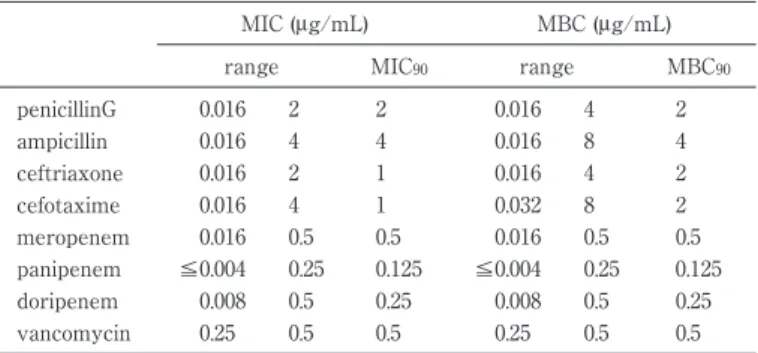
各薬剤に対する MIC と MBC の分布を Fig. 2-1と 2- 2 に,MIC90と MBC90を Table 1に 示 し た.測 定 し た 薬剤の中で最も低値であった MIC90は PAPM で 0.125 μg!mL,ついで DRPM が 0.25μg!mL,MEPM と VCM の 0.5μg!mL の 順 で あ っ た.ABPC は 4μg!mL と 最 も高かった.MBC でも,MIC とほぼ同様な成績であ り,PAPM が最も優れた値で あ っ た.Carbapenem 薬の MIC と MBC はすべての菌で一致していたが,
penicillin 薬,cephem 薬では MBC が 2 倍ほど高くな る株が多かった.
考 案
今回の検討で,gPSSP が 11.8% であったのに対し PSSP は 46.1% と遺伝子変異による分類と MIC によ る分類において乖離が認められた.生方3)は pbp2x に 変異があると,penicillin 薬より cephem 薬での感受 性の低下が著しいとしていることから,このような結 果が生じたと考えられた.
Chiba ら4)は 2006 年 8 月〜2007 年 7 月 ま で の 1 年 間に IPD から分離されたS. pneumoniaeを全国各地の
Fig. 2-1 MIC and MBC distribution in Streptococcus pneumoniae isolated from children with invasive pneumococcal disease
Fig. 2-2 MIC and MBC distribution in Streptococcus pneumoniae isolated from children with invasive pneumococcal disease
186 施設からS. pneumoniae 496 株を集積して,血清 型と耐性遺伝子について検討している.小児からの分 離株は 193 株で,4 歳以下の乳幼児からの株が 90%
以上を占めており,疾患は敗血症が 114 例(59.1%),
肺炎が 44 例(22.8%),髄膜炎が 30 例(15.5%)であっ た.この頻度からは敗血症に occult bacteremia がか なり含まれていると思われる.血清型は 191 株で測定 し,6B が最も多く 43 株(22.5%),次いで 19F が 27 株(14.1%),14 が 25 株(13.1%),23F が 23 株(12.0%)
であり,PCV-7 のカバー率は 144 株(75.4%),PCV-
13 のカバー率は 179 株(93.7%)であったと報告して いる3).さらに,耐性遺伝子の検討では gPRSP は 88 株(46.1%),gPISP は 76 株(39.8%),gPSSP は 27 株(14.1%)であった.これらは,著者らの報告とほ ぼ一致する成績であった.
著者の検討では,7 価結合型ワクチンに含まれる血 清型の株における gPISP と gPRSP の比率は 90.3%,
それ以外の株 72.3% であり,7 価結合型ワクチンに含 まれる株に耐性の頻度が高かった.Chiba ら5)はさら に,集積した株の中から 300 株について主要な抗菌薬
Table 1 MIC and MBC in Streptococcus pneumoniae isolated from children with invasive pneumococcal disease
MIC (μg/mL) MBC (μg/mL)
range MIC90 range MBC90
penicillinG 0.016 2 2 0.016 4 2
ampicillin 0.016 4 4 0.016 8 4
ceftriaxone 0.016 2 1 0.016 4 2
cefotaxime 0.016 4 1 0.032 8 2
meropenem 0.016 0.5 0.5 0.016 0.5 0.5
panipenem ≦0.004 0.25 0.125 ≦0.004 0.25 0.125
doripenem 0.008 0.5 0.25 0.008 0.5 0.25
vancomycin 0.25 0.5 0.5 0.25 0.5 0.5
に対する MIC を測定し,MIC90は ABPC が 2μg!mL,
CTX が 1μg!mL,MEPM が 0.5μg!mL,PAPM が 0.063μg!mL と,著者の成績とほぼ一致していた.以 上のように,著者の結果は北海道という限局した地域 の成績ではあるが,全国的に株を集めた Chiba らの 成績4)5)と同様な傾向を示していた.
IPD をきたした株が,上咽頭や喀痰から検出される
S. pneumoniaeと耐性状況が異なっているかであるが,
2006 年から 2010 年までに当院を受診した小児の臨床 材料から分離されたS. pneumoniae2,407 株の耐性率 を検討した成績6)では,PSSP が 1,099 株(45.7%),PISP が 856 株(35.6%),PRSP が 452 株(18.8%)であり,
今 回 の 成 績 と ほ ぼ 一 致 し て お り,IPD を き た すS.
pneumoniaeにおいて耐性の面からは通常の感染症の
小児から検出される株と異なる傾向は得られなかっ た.
著者は以前,2003 年から 2005 年までに IPD の小児 から分離されたS. pneumoniae16 株について今回と同 様な検討を行っている7).その時の MIC90は ABPC が 4μg!mL,CTX が 1μg!mL,CTRX が 1μg!mL,MEPM が 0.5μg!mL,PAPM が 0.25μg!mL,VCM が 0.5μg!
mL と今回とほぼ同様の成績であり,特にそれぞれの 薬剤の感受性が低下している所見は認められなかっ た.
IPD でも,最も臨床的に問題となるのは髄膜炎であ る.髄膜炎に対する抗菌薬の選択の条件としては,
MBC が低いこと,髄液への移行性が良いこと,蛋白 結合率が低いことなどがあげられる.抗菌薬が有効性 を示すには原因菌の MBC の 10 倍以上の髄液濃度が 必要とされている.今回 MBC を測定した抗菌薬は,
主に髄膜炎の治療に用いられる薬剤であるが,そのな かで最も MBC が低かったのは PAPM であった.米 国では PAPM が販売されていないこともあり,髄膜 炎の治療には VCM が用いられることが多いが,VCM の MBC90は 0.5μg!mL,PAPM の MIC90は 0.125μg!mL
と大きな差が認められ,抗菌力からは PAPM を優先 すべきと思われた.
謝辞:菌の分与をいただいた,遠軽厚生病院,名寄 市立病院,旭川医科大学病院,札幌徳州会病院,富良 野協会病院,網走厚生病院の各小児科の先生方に感謝 いたします.
血清型を判定していただいた北里大学北里生命科学 研究所生方公子先生に深謝します.
利益相反自己申告:申告すべきものなし 文 献
1)日本化学療法学会抗菌薬感受性測定法検討委員 会:微量液体希釈による MIC 測定法(微量液体希 釈法)―日本化学療法学会標準法―. Chemother- apy 1990;38:102―5.
2)生方公子,小林玲子,千葉菜穂子,長谷川恵子,
紺野昌俊:本邦において 1998 年から 2000 年の 間に分離されたStreptococcus pneumoniaeの分子 疫学解析 肺炎球菌等による市中感染症研究会 収集株のまとめ.日化療会誌 2003;51:60―70.
3)生方公子:呼吸器感染症原因微生物の質的変化 による薬剤耐性化.日化療会誌 2006;54:69―
94.
4)Chiba N, Morozumi M, Sunaoshi K, Takahashi S, Takano M,et al.:Serotype and antibiotic re- sistance of isolates from patients with invasive pneumococcal disease in Japan. Epidemiol Infect 2010;138:61―8.
5)Chiba N, Morozumi M, Ubukata K:Application of the real-time PCR method for genotypic iden- tification of β-lactam resistance in isolates from invasive pneumococcal diseases. Microb Drug Resist 2012;18:149―56.
6)坂 田 宏:2001〜2010 年 ま で のStreptococcus pneumoniaeのβ-lactam 抗菌薬に対する感受性の 変動.小児感染免疫 2011;23:395―400.
7)Sakata H:Bactericidal activities of parenteral antibiotics and genotype of penicillin-binding protein in Streptococcus pneumoniae and Haemo- philus influenzaeisolated from childrenʼs blood. J Infect Chemother 2006;12:338―42.
Susceptibility in Parenteral Antibiotics inStreptococcus pneumoniaeIsolated from Children with Invasive Pneumococcal Disease
Hiroshi SAKATA
Department of Pediatrics, Asahikawa Kosei Hospital
Minimum inhibitory concentration (MIC) and minimum bactericidal concentration (MBC) of commonly used clinical antimicrobial drugs were examined for 76 strains of Streptococcus pneumoniaeisolated between 2006 and 2011 from pediatric patients with invasive pneumococcal infection. Patients from whom bacterial strains were isolated ranged from 4 months to 6 years old and included 50 infants (65.8%) 1 year old and 10 (13.2%) less than 1 year old, i.e., 79.1% of all patients studied. In diagnosis, 38 (50.0%) had occult bacteremia, 34 (44.7%) pneumonia, 3 (3.9%) meningitis, and 1 (1.3%) sepsis. Infections in all but one case who died of sep- sis were treated without sequelae. The most frequent capsular serotype among isolates was 6B (20 strains, 26.3%), followed by 19 F (13 strains, 17.1%) and 14 (9 strains, 11.8%). Serotypes for 55 strains (72.4%) corre- sponded to those contained in heptavalent pneumococcal conjugate vaccine. In classification by resistance based on mutations in penicillin-binding protein genes, 32 were penicillin-resistantS. pneumoniae(42.1%), 35 penicillin intermediate-resistant S. pneumoniae (46.1%), and 11 penicillin-susceptible S. pneumoniae (11.8%).
MIC90!MBC90 of drugs were as follows : ampicillin 4!4μg!mL, cefotaxime 0.5!0.5μg!mL, ceftriaxone 1!2μg!
mL, panipenem 0.125!0.125μg!mL, meropenem 0.5!0.5μg!mL, and doripenem 0.25!0.25μg!mL.