
九州大学学術情報リポジトリ
Kyushu University Institutional Repository
蒸発過程における土と大気の相互作用の評価に関す る研究
滕, 继東
https://doi.org/10.15017/1398369
出版情報:Kyushu University, 2013, 博士(工学), 課程博士 バージョン:
権利関係:Fulltext available.
Evaluation of Soil-Atmosphere Interaction during Evaporation Process
Jidong Teng
Evaluation of Soil-Atmosphere Interaction during Evaporation Process
A Thesis Submitted
In Partial Fulfillment of the Requirements For the Degree of
Doctor of Engineering
By Jidong Teng
to the
DEPARTMENT OF CIVIL AND STRUCTURAL ENGINEERING GRADUATE SCHOOL OF ENGINEERING
KYUSHU UNIVERSITY Fukuoka, Japan
August, 2013
DEPARTMENT OF CIVIL AND STRUCTURAL ENGINEERING GRADUATE SCHOOL OF ENGINEERING
KYUSHU UNIVERSITY Fukuoka, Japan
CERTIFICATE
The undersigned hereby certify that they have read and recommended to the Graduate School of Engineering for the acceptance of this thesis entitled,
‘‘Evaluation of Soil-Atmosphere Interaction during Evaporation Process” by
Jidong Teng in partial fulfillment of the requirements for the degree of Doctor of Engineering.
Dated: August, 2013
Thesis Supervisor:
_______________________________
Prof. Noriyuki Yasufuku, Dr. Eng.
Examining Committee:
_______________________________
Prof. Takahiro Kuba, Dr. Eng.
_______________________________
Prof. Yasuhiro Mitani, Dr. Eng.
_______________________________
Prof. Noriyuki Yasufuku, Dr. Eng.
i
ABSTRACT
Nowadays, desertification is one of the world’s most alarming global environmental problems. It takes place worldwide in drylands that occupy 41% of earth’s land area. The total area affected by desertification is between 6 and 12 million square kilometers, a billion people are under threat from further desertification.
With the knowledge that only environmentally friendly engineering can provide sustainable solutions for combating desertification, the concept of “self-watering system (SWS)” has been proposed from geotechnical view, which aims to develop the greening system without any irrigation as a countermeasure of desertification. In the research program of SWS, geotechnical approach has been dedicated to development of safe and long-term water supply in arid and semi-arid region.
Some important criteria are critical to assess the performance of SWS, such as conservation of soil water, water use efficiency, water content distribution. All these criteria are highly related to the soil-atmosphere interaction. The soil water status in SWS is closely interacted with the ground surface fluxes, particularly the evaporation process, because the evaporation is extremely high and greatly exceeding the annual precipitation in arid and semi-arid region. Many other geotechnical applications also need to evaluate evaporation process. However, little attention was taken from geotechnical researchers to deal with the soil-atmosphere interaction during evaporation process. From academic view, mechanism of soil surface evaporation is not completely understood, how to extend clearly defined potential evaporation to actual evaporation has been a challenge. Moreover, the apparatus capable of truly replicate climate characteristics to evaluate soil evaporation process is really rare.
The primary objective of this thesis is to identify the dominant mechanisms of soil-atmosphere interaction during evaporation process, which is extended from both experimental and analytical approaches. In this thesis, a newly developed climate control apparatus is introduced, based on which soil evaporation properties are evaluated in various conditions. An empirical methodology for determining soil evaporation is presented. The analytical models are developed for simulating water content at any time and any soil depth during evaporation process. Finally, the in-situ soil-atmosphere interaction is investigated by a filed lysimeter test. This dissertation
ii
consists of seven chapters; the specific content of each chapter is described as follows:
Chapter 1 familiarizes the readers with the concept of SWS to combat desertification. It is illustrated that the necessity of the investigation of evaporative flux for evaluating SWS in arid and semi-arid region and other typical problems. The objectives of the thesis to accomplish are briefly outlined. In addition, the original contributions are indicated.
Chapter 2 provides a brief summary of the previous research on the evaporation topics. It reviews from three aspects that are experimental approach for measuring evaporation, methods to compute evaporation and the simulation of soil moisture change. The available information is used to set the stage for further theoretical and experimental evaluation in this research program.
Chapter 3 mainly focuses on the development of laboratory test program. A newly developed climate control apparatus is put forward, which can maintain the atmosphere conditions comprehensively to investigate evaporation behavior. The apparatus is composed of climate control part, evaporation part and data acquisition system. It has the features of flexibly configuring for specimen, accuracy increased and automatic control and visualization. The calibration tests shows that the apparatus is capable to favorably control wind speed and relative humidity, while temperature is stable with a relatively small range.
Chapter 4 presents the methodology for determining soil surface evaporation.
Before parameterizing the soil evaporation, the effect of related factors on soil evaporation is evaluated separately by various tests. It is found that, evaporating time would shorten 4% in average for air temperature increasing 1 °C. An increase in wind speed always results in a linear increase in evaporation rate, but average gradient of the increase is related to relative humidity. It would not be a linear relationship between evaporation rate and relative humidity, an inflection point at about 60% properly exists. Soil structure (dry density) has little influence on the evaporation rate, while particle size of soil affects the diffusion of vapor, soil in greater particle size shows longer time of stage 1. Theoretical derivations of Ea/Ep
from aerodynamic approach and molecular physics approach indicate that the water content alone cannot be the unique independent variable to formulate the evaporation from all soil surfaces. A parameterizing method is proposed by defining a critical water content c and setting up the formulation of c for different soil textures and wind speeds. Three easily measured indexes are the inputs in this model: the
iii
moisture of top 1cm soil, aerodynamic resistance (wind speed), and field capacity as a constant for specified soil texture. Although this parameterization is in empirical form, its accuracy meets the requirement for estimating evaporation rate from different soil surface.
Chapter 5 develops an analytical model for simulating the temporal and spatial change of soil water content during evaporation process. Based on several assumptions, analytical solutions of Richards’ equation are derived in two categories, which are one dimensional evaporation problem from infinite soil domain, and one dimensional evaporation problem with water table. Two groups of column soil evaporation tests are conducted to verify the proposed model, the first group controls the environmental conditions without water supply while the second group controls the water table. The good agreement between the proposed analytical solution and experimental result indicates that the analytical model provides a reliable way to investigate water content redistribution during evaporation process. Finally, the parameter study is performed based on the analytical model, which includes hydraulic parameters, surface evaporative flux, and depth of water table. Some new findings are stated as well in this chapter.
Chapter 6 highlights the in-situ evaluation of soil-atmosphere interaction. A lysimeter test lasted for 81 days is carried out, based on which the thermal and hydrological phenomena of soil are discussed. Finite element simulation is also performed to compare with the measured data. The summary are remarked that the most significant variation of volumetric water content is the near surface area, which is limited in top 35 cm; the lower the soil depth, the greater change in water content responding to evaporation or precipitation. The result also suggests that temperature is more sensitive to climate change than volumetric water content. The rainfall event shows the function of eliminating temperature gradient and unifying the water content profile, while the evaporation process enlarges the gradient of temperature and water content. The comparison between measured data and simulated result indicates that numerical approach provides a rough simulation of the variation of water content and soil temperature. Further effort is required on dealing with the upper boundary.
Chapter 7 concludes the results and achievements of the whole thesis; Also, it indicates the problems to be solved in future studies.
v
ACKNOWLEDGEMENTS
First and foremost, I express my sincere gratitude to my supervisor, Prof.
Noriyuki Yasufuku. He gave me constructive guidance, good supervision, constant encouragement, and many far-reaching thoughts. It is my honor to study with such a talented, capacious-thinking, and amiable person. I would like to say that he made all possible efforts to give me the best research conditions.
I also give my sincere appreciation and respect to Prof. Guangli Xu in China University of Geosciences, who provided me a lot of knowledge and opportunities in engineering practice and academic research. Moreover, his encouragement and help are valuable for both my life and research.
I would also like to extend my sincere appreciation to other academic and technic staffs in geotechnical engineering research group, both past and present, Prof.
Hemanta Hazarika, Prof. Kiyoshi Omine, Associ. Prof. Taizo Kobayashi, Assistant Prof. Ryoshi Ishikura, Dr. Kohei Araki, Ms. Aki Ito. Specially, I am indebted to Mr.
Michio Nakashima for his great assistance in laboratory and field tests and instruments for this research.
I would like to express my sincerely gratitude to members of my dissertation committee, Prof. Noriyuki Yasufuku, Prof. Takahiro Kuba, and Assoc. Prof.
Yasuhiro Mitani for their treasure time in review evaluation and valuable comments on my thesis.
Special thanks are given to my research colleges for their friendship and support throughout my time in Kyushu University, they are: Dr. Manandhar Suman, Dr.
Qiang Liu, Dr. Jun Tong, Mr. Shiyu Liu, Ms. Jiali Miao, Mr. Handoko Luky, Mr.
Vilayvong, Mr. Zentaro Furukawa, Mr. Zhenbo Jiang, Mr. Yi He, Mr. Guojun Liu, Mr. Shintaro Miyamoto, Mr. Taiga Hashimoto, Mr. Kenichirou Okumura, Mr.
Masataka Iwasaki, and Mr. Satoshi Suenaga.
I must also acknowledge my friends who have provided encouragement and kind help to me. Special thanks are given to Mr. Xingwei Ren, Mr. Yanjun Shen, Mr.
Shuai Meng, Mr. Changshuai Sun and Mr. Ning Jia.
Finally, my deepest gratitude is due to my family for their continuous encouragement and support in the past years. I appreciate all the things they have done for me.
vii
TABLE OF CONTENT
CHAPTER 1 Introduction ... 1
1.1 Background ... 1
1.1.1 Concept of self-watering system combating desertification ... 1
1.1.2 Necessity of predicting evaporative flux from ground surface ... 2
1.2 Objectives and scopes ... 3
1.3 Thesis organization ... 4
1.4 Original contributions ... 6
CHAPTER 2 Literature review ... 9
2.1 Introduction ... 9
2.2 Evaporation phenomenon ... 9
2.2.1 Definition ... 9
2.2.2 Factors affecting actual evaporation ... 11
2.3 Direct measurement of evaporation ... 13
2.4 Methods for calculating potential evaporation ... 15
2.4.1 Mass transfer method ... 15
2.4.2 Radiation-based method ... 19
2.4.3 Temperature-based method ... 21
2.5 Methods for calculating actual evaporation ... 22
2.5.1 Water balance method ... 23
2.5.2 Aerodynamic method ... 23
2.5.3 Combination method ... 25
2.6 Simulation of soil water redistribution during evaporation ... 27
2.6.1 Numerical simulation approach ... 27
2.6.2 Analytical solution approach ... 28
2.7 Summary and academic issues to be solved ... 29
CHAPTER 3 Development of climate control apparatus for evaporation experiment ... 39
3.1 Introduction ... 39
3.2 Instrumentation of the apparatus ... 40
3.2.1 Climate control part ... 42
3.2.2 Evaporation test part ... 43
viii
3.2.3 Data acquisition system ... 44
3.3 Features of the developed apparatus ... 44
3.3.1 Flexible configure for specimen ... 44
3.3.2 Accuracy increased ... 45
3.3.3 Automatic control and visualization ... 46
3.4 Accuracy calibration ... 46
3.5 Summary ... 52
CHAPTER 4 Methodology for determing soil evaporation ... 55
4.1 Introduction ... 55
4.2 Evaluation of the effect factors of soil evaporation ... 56
4.2.1 Influence of Meteorological variables ... 56
4.2.2 Influence of soil properties ... 64
4.3 Theoretical development for calculating actual evaporation ... 69
4.3.1 Aerodynamic approach ... 71
4.3.2 Molecular physics approach ... 73
4.4 Parameterization of soil evaporation ... 76
4.4.1 Relationship between critical water content and soil texture ... 76
4.4.2 Relationship between critical water content and aerodynamic resistance ... 78
4.4.3 Formulation to determine soil evaporation ... 81
4.5 Summary ... 86
CHAPTER 5 Analytical evaluation of water content distribution during evaporaiton ... 91
5.1 Introduction ... 91
5.2 Analytical solution of Richards’ equation ... 92
5.2.1 Basic assumption ... 92
5.2.2 Richards’ equation ... 92
5.2.3 One dimensional evaporation problem without water table ... 94
5.2.4 One dimensional evaporation problem with water table ... 96
5.3 Column evaporation test ... 100
5.3.1 Climate conditions controlled case ... 100
5.3.2 Water table controlled case ... 102
5.4 Result analysis and model validation ... 105
5.4.1 Evaporation without water table ... 105
5.4.2 Evaporation with water table ... 110
ix
5.5 Parameter study ... 116
5.5.1 Influence of desaturation coefficient () ... 117
5.5.2 Influence of water storage capacity, (s -r) ... 118
5.5.3 Influence of saturated permeability (ks) ... 120
5.5.4 Influence of evaporation rate (E) ... 121
5.5.5 Influence of water table (L) ... 122
5.6 Summary ... 124
CHAPTER 6 In situ evaluation of soil-atmosphere interaction ... 129
6.1 Introduction ... 129
6.2 In situ lysimeter experiment ... 131
6.2.1 Design and Construction... 131
6.2.2 Experimental procedure ... 136
6.3 Numerical simulation for field test ... 137
6.3.1 Description of HYDRUS-1D code ... 137
6.3.2 Input data ... 137
6.4 Result and discussion ... 139
6.4.1 Analysis of field monitored data ... 139
6.4.2 Variation of soil temperature and water content ... 144
6.4.3 Drainage and evaporation ... 148
6.5 Summary ... 151
CHAPTER 7 Conclusions and future work ... 155
7.1 Conclusions ... 155
7.2 Future work ... 157
xi
LIST OF FIGURES
Figure 1.1 Classes of problems requiring the evaluation of moisture fluxes at the
soil surface (after Wilson 1990) ... 3
Figure 1.2 Flowchart of this dissertation ... 8
Figure 2.1 Relationship of soil evaporation rate versus time with showing there stages of drying and soil water status ... 10
Figure 2.2 Steady state evaporation rates from medium and coarse textured soils versus the evaporation rate from a free water surface (after Gardner, 1958)... 13
Figure 3.1 Pictures of the climate control apparatus. The left one shows the setup for conducting pan soil evaporation test while the right one is for the column soil evaporation test. ... 40
Figure 3.2 Schematic illustration of climate control apparatus for investigating evaporation ... 41
Figure 3.3 Photograph of devices fabricated on the control panel ... 42
Figure 3.4 Transient change of relative humidity, (a) from 40% to 80% and (b) from 20% to 30%. ... 47
Figure 3.5 Standard deviations for relative humidity from 40% to 80% ... 48
Figure 3.6 Wind speed variation for set values of 1.4, 2.5 and 3.6 m/s ... 49
Figure 3.7 Standard deviations for different setting values of wind speeds ... 50
Figure 3.8 The vertical profile of wind speed ... 50
Figure 3.9 Temperature variation for different set values from 10 °C to 50 °C 51 Figure 3.10 Standard deviations for temperature at different values ... 52
Figure 4.1 Photograph of the specimen for oven dry test ... 57
Figure 4.2 The change of average water content of samples at different temperature ... 58
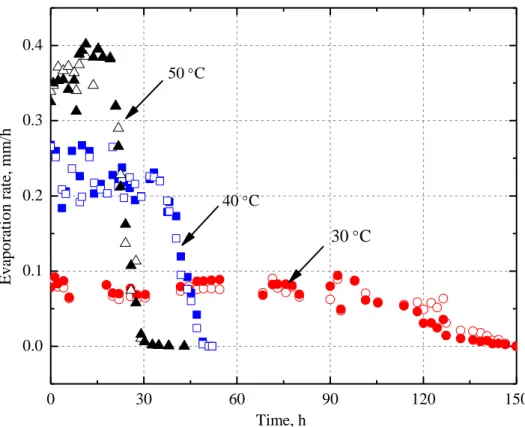
Figure 4.3 The change of evaporation rate of samples at different temperatures ... 59
Figure 4.4 The evaporation rate versus elapsed time for the relative humidity of (a) 40%, (b) 60%, and (c) 80%, respectively ... 61
Figure 4.5 Relationship between constant evaporation rate and wind speed .... 62
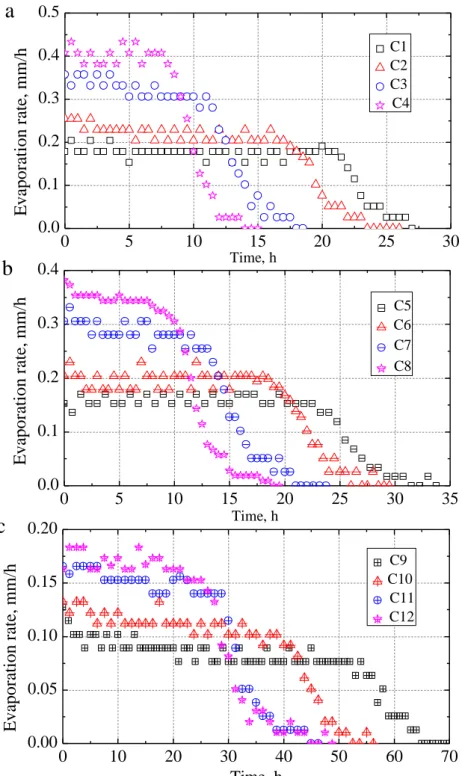
Figure 4.6 The evaporation rate versus elapsed time for the wind speed of (a) 0.5 m/s, (b) 1.4 m/s, (c) 2.5 m/s and (d) 3.6 m/s, respectively ... 63
xii
Figure 4.7 Relationship between constant evaporation rate and relative humidity ... 63 Figure 4.8 Influence of dry density of soil on evaporation rate, (a) evaporation rate versus elapsed time, and (b) evaporation versus soil water content ... 65
Figure 4.9 Photograph of K-7 sand, K-3 sand and Fly ash ... 67 Figure 4.10 Particle size distribution of K-7 sand, K-3 sand and Fly ash ... 67 Figure 4.11 Evaporation rate of K-3, K-7 and fly ash under C8 condition versus (a) elapsed time, and (b) soil water content ... 68
Figure 4.12 Flowchart to estimate actual evaporation ... 70 Figure 4.13 Relative humidity of soil surface versus total suction calculated on the basis of Eq.(4.1) (after Wilson et al. 1997) ... 70
Figure 4.14 Schematic illustration of the resistance to vapor diffusion from soil pores to atmosphere ... 72
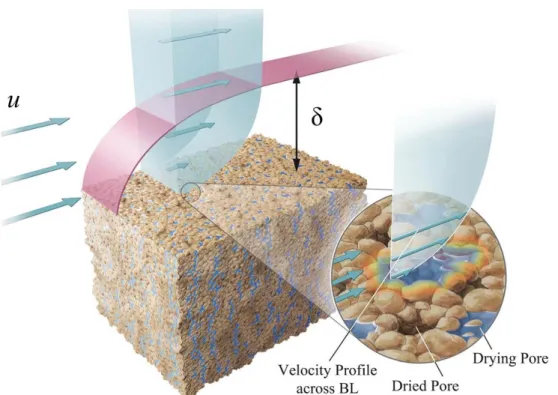
Figure 4.15 Coupling between evaporative surface and ambient air with velocity u, the boundary layer (BL) has a thickness of δ (after Shahraeeni et al., 2012)... 75
Figure 4.16 Modeling of a partially wetted surface from which evaporation takes place into a gas stream. δ is thickness of the viscous sublayer, r is radius of the wet patches, l is distance of the wet patches ... 75
Figure 4.17 The relative evaporation rate versus volumetric water content for (a) K-3 sand, (b) K-7 sand and (c) Fly ash ... 77
Figure 4.18 The relative evaporation rate versus volumetric water content for K-7 sand at the conditions of (a) C1-C4; (b) C5-C8 and (c) C9-C12 ... 79
Figure 4.19 Schematic illustration of aerodynamic resistance influence on relative evaporation rate ... 80
Figure 4.20 Scatter diagrams of estimated F(,ra)versus the value calculated from experiment data for K-3 sand, K-7 sand and fly ash ... 82
Figure 4.21 Relationship between critical water content and aerodynamic resistance ... 84
Figure 4.22 Comparison between estimated relative evaporation rate and observation value for (a) K-3 sand, (b) K-7 sand and (c) fly ash ... 85
Figure 5.1 Schematic of hypothetical water content distribution in unsaturated soil. s is the water content at saturated, r is the residual water content, E(t) is time-dependent varying surface fluxes. ... 97
Figure 5.2 Schematic of evaporation column showing the size of soil specimen and positions of sensors ... 102
xiii
Figure 5.3 Picture of the setup of column evaporation test with constant water
table ... 103
Figure 5.4 Schematic diagram of column soil evaporation test with constant water table ... 104
Figure 5.5 Measured and simulated soil water content at the depth of 1cm versus the elapsed time. The solid line represents simulated results, and the symbols are measured ones. ... 106
Figure 5.6 Measured and computed water content profile for (a) case 1, (b) case 2 and (c) case 3. Symbols present the experimental profile while the solid lines are theoretical trends ... 108
Figure 5.7 Measured and computed evaporative rate for (a) case 1, (b) case 2, and (c) case 3... 109
Figure 5.8 Measurement and computed cumulative evaporation versus elapsed time for the three cases... 110
Figure 5.9 Measured and simulated water content profile with water table of 1 m ... 111
Figure 5.10 Measured and simulated soil water content at different depths versus elapsed time when the water table is 1 m ... 112
Figure 5.11 Measured and simulated water content profile with water table of 1.5 m ... 113
Figure 5.12 Measured and simulated soil water content at different depths versus elapsed time when the water table is 1.5 m ... 114
Figure 5.13 Monitored amount of water supplied to the soil column from the boundary ... 115
Figure 5.14 Soil water content profiles with respect to different ... 118
Figure 5.15 Soil water content profiles with respect to different (s -r) ... 119
Figure 5.16 Soil water content profiles with respect to different ks ... 120
Figure 5.17 Soil water content profiles with respect to different E/ks ... 122
Figure 5.18 Variation of soil water content at depths of 0.2 m and 1 m for different water table conditions ... 123
Figure 5.19 Variation of soil water content versus elapsed time for different rate of z/L ... 124
Figure 6.1 Schematic diagram of soil water distribution due to soil-atmosphere interaction ... 131
Figure 6.2 The location of studied area ... 132
xiv
Figure 6.3 Schematic illustration of lysimeter tests ... 133 Figure 6.4 Photos of the lysimeter test, (a) thermocouple and water moisture probe, (b) soil column, (c) bird view of lysimeter, (d) data acquisition system, (e) final appearance ... 134
Figure 6.5 Meteorological data from Mar. 27, 2013 to Jun. 15, 2013. (a) precipitation, (b) solar radiation, (c) temperature, (d) relative humidity, (e) wind speed ... 140
Figure 6.6 Variation of measured volumetric water content at different depths:
(a) 5 cm ~ 25 cm, (b) 35 cm ~ 95 cm ... 141 Figure 6.7 Monitored soil temperature variations at different depths during the test ... 142
Figure 6.8 Monitored soil temperature variation in one day for the selected two days, (a) Apr. 10th, 2013 and (b) May 20th, 2013 ... 143
Figure 6.9 Comparison between numerical simulation and measurement for the soil temperature at three depths, (a) 5 cm, (b) 50 cm, and (c) 95 cm ... 145
Figure 6.10 Comparison between simulated and measured soil temperature profile for the selected time, the solid lines represent numerical simulation result, symbols are the measured data ... 146
Figure 6.11 Comparison between simulated and measured water content at three different depths, (a) 5 cm, (b) 15 cm, and (c) 50 cm ... 147
Figure 6.12 Comparison between simulated and measured soil water content profile ... 148
Figure 6.13 Variation of cumulative drainage: comparison between simulation and measurement ... 149
Figure 6.14 Variation of cumulative evaporation from soil surface: comparison between simulation and measurement ... 150
xv
LIST OF TABLES
Table 2.1 Description of the apparatus for measuring evaporation ... 16 Table 2.2 Some formulas of mass transfer method to estimate evaporation (after Singh and Xu, 1997) ... 18
Table 2.3 Generalized equations for the formulas of mass transfer method ... 19 Table 2.4 Generalized equations for radiation-based method (after Xu and Singh, 2000) ... 20
Table 2.5 A summary of normally used temperature-based method to determine potential evaporation ... 22
Table 2.6 Summary of aerodynamic method to calculate actual evaporation (modified from Mahfouf and Noilhan, 1991) ... 24
Table 2.7 A brief summary of combination method for evaluating evaporation .... 26 Table 4.1 Summary of the properties of soil specimens ... 57 Table 4.2 Experimental conditions ... 60 Table 4.3The value of field capacity for several soils ... 83 Table 5.1 Summary of the properties of soil sample ... 101 Table 5.2 Experimental conditions, the number in parenthesis is the mean error for each item ... 101
Table 5.3 Analysis scheme for the parameter study ... 117 Table 6.1 Weather variables recorded by the weather station ... 136 Table 6.2 Parameters used for the numerical simulation of field lysimeter test ... 138
xvii
NOMENCLATURE
Csd specific heat of dry soil
Cw specific heat of water
Cp specific heat of air
C() specific water capacity
Datm molecular diffusivity of vapor in air Dl hours of daylight
E evaporation
ET evapotranspiration Ea actual evaporation rate Ec cumulative evaporation rate Ep potential evaporation rate
G soil heat flux
Gp basal percolation
H sensitive heat transfer
I the annual heat index
K0 von Karman’s constant
L water table depth
LE latent heat transfer
Mw molecular mass of water
N the number of days in a given month P precipitation
R gas constant for water vapor
RH relative humidity
Rh mean monthly relative humidity Rs total solar radiation
Rn net radiation
Roff surface water runoff
SWS self-watering system
Ta air temperature
mean dew point
xviii
TDR time domain reflectometry
Tm the modified temperature due to elevation Tw water surface temperature
b a fitting parameter
c a fitting parameter
d duration of average monthly daylight in hour
ea vapor pressure of air
es vapor pressure of water or soil surface e* vapor pressure at the gas-liquid interface
el vapor pressure from the center of the wet patches f(u) a function of wind speed
g acceleration of gravity
hr relative humidity of the air next to the water in soil pore
h pore water pressure head
i monthly heat index
k hydraulic conductivity
km a monthly consumptive use coefficient ks saturated hydraulic conductivity l pore connectivity parameter
m the ratio of critical water content to volumetric water content mv one fitting parameters in van Genuchten model
nv one fitting parameters in van Genuchten model pb barometric pressure
per percentage of total daytime hours to the period used out of total daytime hours of the year
q volumetric liquid water flux qa specific humidity of air
qs specific humidity of air at the soil surface
q* saturated specific humidity as a function of temperature r radius of parallel pipes
ra aerodynamic resistance
rs surface resistance
s1 relative wetted surface area
xix
t time
u wind speed
z vertical coordinate
slope of the saturation vapor pressure curve
S changes in moisture storage
a density of air
psychromatic constant
volumetric water content
c critical water content
fc the field capacity
s saturated water content
r residual water content
water potential at soil surface
λ soil water desorption
thickness of the viscous sublayer
mean free path of the gas molecules
soil pore-size distribution parameter
m adjust parameter in the function of soil wetness
v one fitting parameter in van Genuchten model
a positive constant with the unit of one over time
m adjust parameter in the function of soil wetness
normalized soil water content
1
CHAPTER 1
I
NTRODUCTION1.1 BACKGROUND
1.1.1 CONCEPT OF SELF-WATERING SYSTEM
Desertification is defined as “land degradation in arid, semiarid and sub-humid areas, resulting from climatic various factor including climatic variations and human activities” by the United Nations Convention to Combat Desertification (UNCCD, 1994). Nowadays, desertification is one of the world’s most alarming global environmental problems. It takes place worldwide in drylands that occupy 41% of earth’s land area. It has been estimatedthat some 10~20% of drylands are already degraded, the total area affected by desertification being between 6 and 12 million square kilometers, that about 1~6% of the inhabitants of drylands live in desertified areas, and that a billion people are under threat from further desertification (Holtz, 2007). At least 90% of the inhabitants of drylands live in developing countries and they suffer the poorest economic and social conditions.
Considering that the world’s dry lands is home to more than 2 billion people and being concerned that many dry lands are subject to desertification as a result of extended droughts, climate change and human activities, new scientific challenges and opportunities for research and development have emerged. With the knowledge that only environmentally friendly engineering can provide sustainable solutions for combating desertification, the concept of “self-watering system” (SWS) has been proposed by geotechnical research laboratory of Kyushu University, which aims to develop the greening system without any irrigation as a countermeasure of desertification. In the research program of SWS, geotechnical approach has been
2
dedicated to development of safe and long-term water supply in arid and semi-arid region.
The objective of the “self-watering system” (SWS) is introduction of innovative approach in project design and creation of energy efficient, large water supply system, adapted to the prevailing desert environment and integrated with the recovery of depleted and saline regional aquifers in arid and semi-arid region. The SWS is designed to collect and store all kinds of water, comprised of the simple ground is much efficient to support surface vegetation. The system can continually raise the ground water to a certain depth in the sandy ground using the capillary force without extra energy input. Moreover, it can minimize the evaporation from the system, which provides the potential to minimize salinization (Liu et al., 2011).
1.1.2 NECESSITY OF PREDICTING SOIL SURFACE EVAPORATION
Conservation of soil moisture, water use efficiency, water resource distribution and so on are important criteria for the assessment and further improvement of SWS in semi-arid and arid regions. These criteria cannot be carried out without considering the interaction among soil, vegetation, and the atmosphere. The soil water condition is closely related to the ground surface fluxes, especially in the dry climate condition. Therefore, the ability to predict surface flux also plays an important role in operation of SWS. Moreover, an understanding of the process of surface flux in relation to the overall soil water balance is necessary.
Amongst the fluxes that the different actors of the water sector need to assess, soil evaporation and infiltration are of major importance. Infiltration refers to the movement of water into a soil profile, of which the quantification can be determined directly by using the fluxmeters. Evaporation from bare land is a phenomenon in which the aqueous content of the soil is directly transferred into the atmosphere from the ground surface in the gaseous phase, due to vaporization. The mechanics of infiltration is relatively understood and widely discussed in literature. In contrast, the mechanics of evaporation from soil surface is not completely understood. However, Estimating surface evaporation is extremely important for the study of water resources management, environmental studies in arid and semi-arid region where the potential evaporation is very high, greatly exceeding the annual rainfall. Evaluation of evaporation also can significantly improve the modeling of energy balance and water cycle.
3
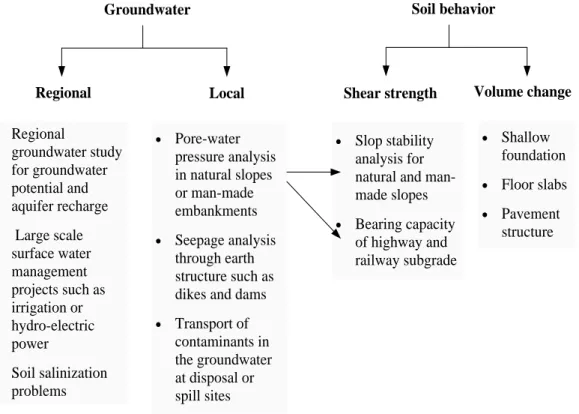
From other aspects, numerous practical problems require the prediction of the water flux from soil surface as summarized in Figure 1.1. Especially for geotechnical problems, it includes that regional ground water modeling, the design of light structure on expansive soils, seepage analysis through earth structures such as dams and canals, and the evaluation of pore pressure conditions in natural slopes or manmade embankments (Wilson, 1990). In addition, recent evaluation on hazards caused by droughts showed that evaporation is also an important process to be accounted for natural hazards analysis. However, little attention was taken from geotechnical researchers to deal with the soil-atmosphere interaction, especially the surface evaporative flux. Therefore, a comprehensive research of mechanistic and experimental approaches is requisite to enhance the study of soil-atmosphere inaction.
· Regional
groundwater study for groundwater potential and aquifer recharge
· Large scale surface water management projects such as irrigation or hydro-electric power
· Soil salinization problems
Groundwater
Regional Local
· Pore-water pressure analysis in natural slopes or man-made embankments
· Seepage analysis through earth structure such as dikes and dams
· Transport of contaminants in the groundwater at disposal or spill sites
Soil behavior
Shear strength Volume change
· Slop stability analysis for natural and man- made slopes
· Bearing capacity of highway and railway subgrade
· Shallow foundation
· Floor slabs
· Pavement structure
Figure 1.1 Classes of problems requiring the evaluation of moisture fluxes at the soil surface (after Wilson 1990)
1.2 OBJECTIVES AND SCOPES
The objectives of this study are to investigate the evaporative flux from soil
4
surface particularly unsaturated soil surfaces, which impose the greatest analytical difficulties. To achieve the goal, the mechanism of the evaporation should be investigated from both experimental and analytical or numerical simulation approach.
The specific objectives are as follows:
1) To develop a new apparatus with distinguishing features for evaluating the mechanisms involved in evaporation and water content distribution.
2) To explain the physical process of evaporation and to identify the appropriate soil properties and meteorological variables that control evaporation from soil surface.
3) To propose the methodology for parameterizing the acutal evaporation rate from soil surface and analytically model for soil water redistribution during the evaporation process.
4) To carry out laboratory and field tests together with numerical simulation to verify the proposed model, further demonstrate the soil-atmosphere interaction mechanism in field condition.
The research in this thesis is the evaluation of evaporation from non-vegetated soil surfaces, it is understood that soil moisture due to plants uptake (transpiration) may exceed evaporation from a bare soil. However, the presence of a vegetative cover greatly increases the complexity of the problem of evaluation of evaporation.
Before the complex evapotranspiration, process from vegetated surface can be examined from geotechnical perspective, the mechanism and processes involved in evaporation from unsaturated soil must be thoroughly understood.
1.3 THESIS ORGANIZATION
To fully achieve the objectives as mentioned above, this dissertation is organized in seven chapters with the framework presented in Figure 1.2. The outlines of each chapter are briefly described as follows:
Chapter 1 familiarizes the readers with the concept of SWS to combat desertification. And it highlights the necessity of investigating evaporative flux for evaluating performance of SWS and other typical geotechnical problems. The objectives of this thesis and research program required to accomplish are briefly outlined. In addition, the original contributions of this study are presented.
Chapter 2 provides a brief summary of pervious research on the evaporation topic. It reviews from the following three aspects: phenomena of evaporation that
5
mainly discusses the affecting factors of soil evaporation, measurement of soil evaporation, methods to determine evaporation rate and finally the simulation of soil water variation during evaporation process. The academic issues to be solved are also summarized in this chapter. The available information is used to set the stage for further theoretical and experimental development in this research program.
Chapter 3 mainly focuses on the apparatus development. Since the errors related to evaporation measurements are mainly due to the alteration of natural profiles of atmospheric conditions. A climate control apparatus is newly developed and comprehensively introduced from the aspects of instrumentation of the apparatus, features and accuracy calibration. This apparatus is flexible to response to different experimental demands, for example, the pan soil evaporation test, column soil evaporation test with or without water supply. In addition, it provides the soil evaporation rate in higher precision 0.01 mm/h compared with regular evaporation devices.
Chapter 4 proposes a methodology for determining evaporation from soil surface. The influence factors of soil evaporation are firstly evaluated by evaporation test, including the atmosphere variables and soil properties such as relative humidity, temperature, wind speed, and soil dry density. The theoretical formulation of the actual evaporation rate is derived from the approaches of aerodynamic approach and molecular physics approach. Based on the theoretical formulation, the related parameters are identified, and the form of the determining formula is obtained.
Finally, the parameterization of the soil evaporation is proposed by defining a critical water content c. The empirical formulation of c for different soil textures and wind speeds is set up. The experimental work verifies the proposed model, which applies 12 different atmosphere conditions on three kinds of soil respectively.
Chapter 5 investigates the water content variation of soil during the evaporation process that is the water flow properties in soil body caused by the surface evaporation. Actually, it provides a connection between soil surface evaporation and the water content distribution. Based on some assumptions, the analytical solutions of Richards’ equation for two evaporation problems are developed, which are the evaporation process from infinite soil domain, evaporation process with water table.
These two cases are seeks to comprise the normal problem dealing with evaporation problem. Two groups of soil column evaporation experiments are conducted to verify the proposed model. In first group, the atmosphere condition is controlled in three cases with no water supply, while the water table is maintained at two different
6
depths for the second group. The comparison between the proposed analytical model and laboratory test result shows good agreement and thus validates the proposed model. Finally, the parameter study is performed to investigate the influence of soil hydraulic properties and external factors on soil water distribution during evaporation process.
Chapter 6 evaluates the soil water properties towards soil-atmosphere interaction in natural condition. A lysimeter test conducted in the field of Ito campus of Kyushu University is described, it provides an extensive database of environmental parameters and the reaction of soil properties. Both thermal and hydrological phenomena are discussed in this chapter. HYDRUS-1D code is adopted to simulate the variations of water content, soil temperature and water fluxes, these simulated data is also used to compare with field-measured result.
Chapter 7 summarizes the findings from this dissertation and provides recommendations regarding the direction for future work in this research topic.
1.4 ORIGINAL CONTRIBUTIONS
Current research investigates the soil-atmosphere interaction during evaporation process from both experimental and theoretical approaches; some new findings are obtained which are considered as the original contributions, as follows,
(1) A climate control apparatus is newly developed for investigating the soil evaporation properties, it has function of handling with different experimental demands, providing the soil evaporation rate in higher precision, and auto-testing system.
(2) Two theoretical derivations from aerodynamic approach and molecular physic approach are developed to formulate the ratio of actual evaporation to potential evaporation, which identifies the related parameters and the form for determining soil evaporation.
(3) A methodology for determining soil evaporation is presented by defining a critical water content c and setting up the empirical formulation of c for different soil textures and wind speeds. Three easily measured indexes are inputs in this methodology: water content of top 1cm soil, aerodynamic resistance (wind speed), and field capacity as a constant for specified soil texture.
(4) The analytical model for simulating the soil water redistribution during
7
evaporation process in two cases is developed respectively, which are the evaporation process from infinite soil domain, and evaporation process with water table. In this model, the basic hydraulic parameters ks, , (s -r), constant evaporation rate E, and water table depth L are inputs for simulating instantaneous water content profile. The model in these two cases can comprise the normal problem dealing with evaporation problem.
(5) The filed lysimeter test provides a practical foundation for designing the SWS, moreover the comparison between finite element simulation of HYDRUS-1D code and field measurement also designate the further effort on dealing with the field soil-atmosphere interaction problem.
REFERENCE
Liu, Q., Yasufuku, N., Omine, K., and Hazarika, H. (2011): A geotechnical countermeasure for combating desertification: self-watering system in unsaturated arid ground. The Proceedings of 5th International Symposium on the East Asian Environmental Problems, 209-216.
Holtz, U. (2007): Implementing the united nations convention to combat desertification from a parliamentary point of view-Critical assessment and challenges ahead, 1-28.
UNCCD, (1994): United Nations Convention to Combat Desertification.
Wilson, G. W. (1990): Soil evaporative fluxes for geotechnical engineering problems.
Ph.D. dissertation, University of Saskatchewan, Saskatoon.
8 Chapter 1 Introduction
· Background and objectives
· Framework and outline
· Original contributions Chapter 2 Literature reviews
· Experimental approach to measure evaporation
· Methods and models to determine evaporation
· Numerical and analytical approach for simulate soil water redistrubition
Chapter 3 Apparatus development
· Instrumentation
· Features and accuracy calibration
· The effect of atmosphere conditions on evaporation
Chapter 4 Methodology for determining soil evaporation
· Theoretical background
· Parameterization of evaporation
· Experimental validation and the analysis of factors’ influence
Chapter 5 Analytical approach to simulate water content distribution during evaporation
· Theoretical development
· Column evaporation test with different evaporative fluxes (20 cm in three cases), or different water tables (1.0 m and 1.5 m)
· Result analysis and model validation
· Parameters study
Chapter 6 In-situ evaluation of soil-atmosphere interaction
· Experimental setup and material
· Result analysis
· Discussion (The comparison between numerical simulation:
HYDRUS-1D and experiment data)
Chapter 7 Conclusions and future work
· Summary of this dissertation Applic
ation
Application
· Experimental validation and the analysis of factors’ influence
· Theoretical background
· Parameterization of evaporation
· Theoretical development
· Column evaporation test with different evaporative fluxes (20 cm in three cases), or different water tables (1.0 m and 1.5 m)
· Experimental setup and material
From soil surface to interior
Desk work Experimental
study
Theoretical study Legend
Figure 1.2 Flowchart of this dissertation
9
CHAPTER 2
L
ITERATURE REVIEW2.1 INTRODUCTION
Evaporation is a complex process belonging to a phenomenon of soil-atmosphere interaction in nature, which needs comprehensively consideration of both atmosphere condition and soil water properties. This chapter provides the literature review from the aspects of firstly physical illustration of evaporation process, secondly the experiment approach to measure evaporation, thirdly method to determine evaporation, and finally the simulation of soil water redistribution due to evaporation.
2.2 EVAPORATION PHENOMENON
2.2.1 DEFINITION
Evaporation is the process that liquid water changes to vapor from macroscopic view, while water molecule overcomes the attractive forces between molecules and escapes to atmosphere from microscopic view. Hillel (1980) pointed that three requirements should be satisfied for evaporation occurrence and maintenance, continuous energy supply, the vapor pressure gradient between evaporative surface and atmosphere and sufficient water transfer to evaporative surface.
We usually refer the evaporation process occurring at a free water surface, which actually is the potential evaporation (Ep), the International Glossary of Hydrology (World Meteorological Organization, 1974) defines the Ep as “The quantity of water vapor which could be emitted by a surface of pure water per unit
10
surface area and unit time under the existing atmosphere conditions”. It is a function of meteorological variable. However, the actual evaporation (Ea) that the evaporation takes place on soil surface is the topic specifically dealt with in this thesis. In most simple terms, maximum rate of Ea is stated to be approximately equal to the Ep when the soil is wet or near saturated, then it start to decline as the surface becomes unsaturated and the supply of water to the surface becomes limited (Brutseart, 1982).
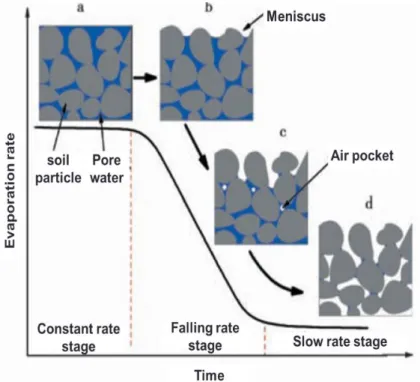
Figure 2.1 Relationship of soil evaporation rate versus time with showing there stages of drying and soil water status
The shape of evaporation curve shown in Figure 2.1 is well known and has been described by many researchers, which has three stages in general. Stage I named as constant rate stage is the maximum or potential rate of drying that occurs when the soil surface is at or near saturated. At that time, the soil is sufficiently conductive to supply water to the evaporative site at a rate equal to the evaporative flux imposed by climatic conditions.
Stage II is the falling rate stage, it starts when the conductive properties of the soil no longer permit a sufficient flow of water to the surface to maintain the maximum potential rate of evaporation. The hydraulic conductivity of the soil decreases with desaturation because the effective cross sectional area of the liquid phase is declining or thinning out. Richie (1972) claim the decline in evaporation
11
with is proportional to the square root of time elapsed, which was validated by many researchers from experimental work including Yunusa et al. (1994), Brutsaert and Chen (1995), Shokri and Or (2011) and so on.
The rate of evaporation continues to desiccate and reaches a slow residual value defined as Stage III. It is stated by Hillel (1980) that the Stage III occurs after the soil surface becomes sufficiently discontinuous. The flow of liquid water to the surface eases and water molecules may only migrate to the surface through the process of vapor diffusion. The third stage of drying occurs at a point of drying where the residual liquid phase is controlled by the molecular adsorptive forces of the soil particle.
In summary, it can be seen that the rate of actual evaporation from soil surface is controlled by both climate conditions and soil properties.
2.2.2 FACTORS AFFECTING ACTUAL EVAPORATION
Evaporation from soil surface involves very complex mechanisms since water in soil is not freely available. Exchange of water vapor between the surface and the atmosphere not only depends on hydraulic transfers within the deep soil but also on the diffusion of water in a thin layer close to the surface where vaporization of soil water takes places. Hillel (1980) stated that the actual evaporation rate is determined either by external evaporability or by the soils own ability to deliver water, whichever is the lesser (and hence the limiting factor). Evaporation from soil surface is affected by many factors, such as soil hydraulic properties, climate conditions, soil-atmosphere interface behavior and so on. These factors do not function as independent variables, but rather acts as a closely coupled system.
The evaporation rate is controlled by the climate condition, which is indexed by energy availability, humidity and rate of turbulent diffusion. Firstly, the energy provided to evaporation is normally the solar radiation, which supplies the power for the molecule to escape out from water body. And also, it can improve the temperature of subsurface, then the molecules have a higher average kinetic energy, thus evaporation can be accelerated. Secondly, evaporation rate is a function of the humidity difference between the water surface and the overlying air. Only when the vapor pressure deficit exists, the evaporation occurs. Thirdly, vapor pressure deficit soon reaches zero in calm condition for evaporation, so a mixing of air by turbulence is required, air movement is needed to remove the lowest moist layers in contact with
12
the water surface and to mix them with the upper drier layers. The stronger wind results in greater turbulence. Thus, there will be more convection and more evaporation. In addition to meteorological factors, the physical characteristics of water body also have influence on the rates of evaporation, such as the salinity.
Refer in particular to factors affecting the soil surface evaporation, the most important thing is water availability, which is highly related to the depth of water table. Gardner (1958) developed solutions to the unsaturated flow equation for the case of steady state flow from a water table. He showed that the maximum evaporation rate from a soil is a function of the hydraulic conductivity of the soil and the depth to the water table. The results show that if the water table is located at a shallow depth, a steady evaporation rate will be attained, and that the greater the depth, the lower the steady state evaporation rate will be.
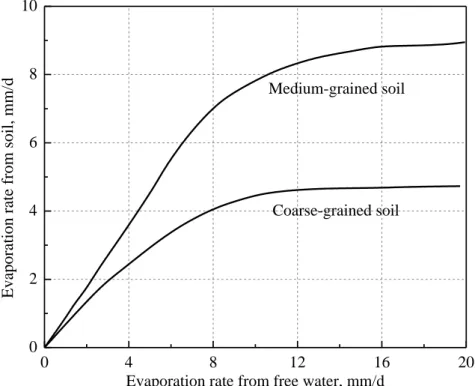
The effect of soil texture and associated hydraulic conductivity on soil evaporation rate were also demonstrated by Gardner (1958). Figure 2.2 shows the relationships between the free water evaporation rate and the computed soil evaporation rate for a medium and a coarse texture soil. In the case of the medium-textured soil, the soil evaporation rate almost equals to the free water evaporation rate at low and moderate evaporative condition. Restriction to flows occurs only when high evaporation rates are imposed. The curve for coarse textured soil shows a decline in the evaporative rate at much lower fluxes. This occurs because the hydraulic conductivity of coarse grained material decreases more rapidly as desaturation occurs.
13
0 4 8 12 16 20
0 2 4 6 8 10
Coarse-grained soil
Evaporation rate from soil, mm/d
Evaporation rate from free water, mm/d Medium-grained soil
Figure 2.2 Steady state evaporation rates from medium and coarse textured soils versus the evaporation rate from a free water surface (after Gardner, 1958)
Besides that, soil color, temperature and surface roughness also affect the evaporation from soil surface. Soil color affects albedo of solar radiation, normally darker soils tends to absorb more heat. Warmer soils may have higher rates of evaporation as they have more energy that is available. The surface roughness would have influence on the movement of the wind.
2.3 DIRECT MEASUREMENT OF EVAPORATION
Direct measurements of evaporation are commonly performed by meteorologists and hydrologists. Direct measurements typically determine the potential evaporation, the evaporation rate that is controlled by climate conditions rather than by soil and groundwater conditions. The most common direct measurement methods for evaporation are evaporation pans and lysimeters, and also some sophisticated equipment were also adapted in lab or field evaporation test. A comprehensive review is presented in Table 1.1.
Each measurement method has its own application scope. The evaporation pans are likely the most familiar devises in evaluating evaporation. It gives realistic
14
estimates of potential evapotranspiration in humid regions while it is less reliable in arid climates. Factors such as moisture availability, advected energy and surface roughness are extremely important (Brutseart, 1982).
A lysimeter measures the weight change of a soil mass due to evaporation based on the load cell at bottom. The apparatus is installed or constructed in the field such that its surface is continuous or flush with the natural ground. Lysimeter provides the best estimate of actual evaporation in the field. Many researchers from hydrology and agriculture conducted the lysimeter experiment with different features including Plauborg (1995), Herbst et al. (1996), Benson et al. ( 2001), Miyamoto et al. (2010) and so on. In addition, Wilson (1990) and Yanful (2003) also carried out laboratory evaporation tests by developing new apparatus, of which the principles are similar to lysimeter. In fact, field tests have limitation including difficulty in imposing predetermined climate conditions (controlling boundary condition) and in making long term measurements. Also it is required for assessing hysteretic behavior of soil as in responds to alternating drying and wetting.
For laboratory evaporation tests, various kinds of apparatus have been developed. Van de Griend (1994), Yamanaka et al. (1997), and Wang (2006) developed the evaporation apparatus based on wind tunnels in different scales. The wind tunnel can provide enough range of wind speed to increase the evaporation rate, but sometimes other variables would change much due to its large scale. Yanful (1997), Aluwihare et al. (2003) and Cui (2012) used environmental chamber to investigate soil surface evaporation with different properties, the working principle of the chambers developed by Aluwihare et al. (2003) and Cui (2012) is similar, which calculate the evaporation rate from the change of air humidity. The environmental chamber can maintain certain climate condition and provide full set of data involving both air and soil at a relatively low cost, thus may be the best devices for studying soil water evaporation (Cui et al., 2012). Blight (1997) introduced a set of devices to monitor the micrometeological parameters thus to indirectly predict evaporation rate. Tristancho et al. (2011) developed equipment combing the climate chamber with a centrifuge, which was designed to simulate tropical weather conditions and respect the scaling laws.
Examination of the existing apparatus shows that most of them only analyze the air conditions, the soil being few instrumented and studied. Moreover, the apparatus capable to control climate conditions for investigating evaporation process is relatively rare; the researchers normally conducted the evaporation test under natural
15
condition. In other words, no device to date, truly replicate climate characteristics to evaluate soil evaporation process.
2.4 METHODS FOR CALCULATING POTENTIAL EVAPORATION
Potential evaporation is not only an important input in hydrological cycle simulations, but also acts as a base for the estimation of actual evaporation.
Therefore, we firstly reviews the methods for calculating potential evaporation in this section. Over the last century, a large number of more or less empirical methods have been developed by numerous scientists and specialists worldwide to estimate potential evaporation from different climatic variables. These methods can be categorized into three groups due to their mechanisms: mass transfer method, radiation based method and radiation based method. However, the use of different methods to estimate potential evaporation influences the simulation accuracy of a given hydrological or environmental model. It should be noted that although this section will review the methods for calculating potential evaporation in detail, not all of them are suitable for geotechnical researchers for estimating evaporative fluxes since a local and micro scale should be considered.
2.4.1 MASS TRANSFER METHOD
The mass transfer approach has the deepest historical roots as its origin is frequently attributed to Dalton at the turn of the nineteenth century. The mass transfer method utilizes the concept of eddy motion transfer of water vapor from an evaporating surface to the atmosphere. Many researchers have proposed empirical methods as briefly shown in Table 2.2 while the generalized form of these equations are summarized in Table 2.3.
16
Table 2.1 Description of the apparatus for measuring evaporation
Item Derivation Characteristic Comments
Evaporation pan
Wang ( 2006) holding water to evaporation while monitor the weight change
(1) simple and convenient
(2) only for free water evaporation (3) location limited
Wilson (1997) Kondo et al. (1990)
(1) thickness:74 mm, diameter: 258mm (2) soil sample as thin as possible
(3) monitoring air and soil temperature, humidity, and water loss in laboratory condition
(1) effectively evaluate the soil surface behavior during evaporation
(2) atmosphere conditions’ influence should be considered
Lysimeter
Benson et al. ( 2001) Herbst et al. (1996)
Miyamoto et al.
(2010) Plauborg (1995)
(1) measuring the total weight of soil and the stored water
(2) combined with other methods, such as TDR
(1) measure ET and Ea in field
(2) fluids could only be gathered under saturated gravity flow
Wilson (1990) Yanful (2003)
(1) conducted in lab and water supply controlled (2) monitoring temperature and water content of soil column profile
(3) multi-layers experiment can be conducted
(1) it is available to investigate evaporation process in lab
(2) more modification needed in controlling the atmosphere conditions constant
(3) considering radiations effects
17 Table 2.1 (continued)
Environmental chamber
Yanful (1997) Aluwihare et al.
(2003) Cui (2012)
(1) conducting experiment under certain condition (2) monitoring atmosphere indexes together with specimen conditions
(1) the accuracy of the chamber of Aluwihare and Cui should be confirmed
(2) climate change’s influence need be considered
Wind tunnel
Yamanaka et al (1997) Van de Griend (1994)
Wang (2006)
(1) atmosphere conditions controlled or partly controlled
(2) monitoring water loss use a lysimeter (3) soil conditions controlled
fluctuation of controlled variables or accuracy need be considered
Others
Blight (1997) a meteorological station works together with soil heat/moisture flux measurement in filed
Ea or ET value cannot directly obtained, computation from models is needed
Teng et al. (2011)
(1) temperature, relative humidity and wind speed can be controlled
(2) pan soil test and soil column evaporation test can be conducted in one apparatus.
(1) meteorological variables only can be controlled in a small range
(2) evaporation rate cannot be measured directly for column evaporation test.
Tristancho et al.
(2011)
(1) climate chamber with centrifuge
(2) monitor seasonal cycles of drying and wetting only tropical weather conditions can be simulated
TDR: time domain reflectometry; ET: evapotranspiration



![[書評] 菱田雅晴・園田茂人著『経済発展と社会変 動 シリーズ現代中国経済 8』](data:image/gif;base64,R0lGODlhAQABAIAAAP///wAAACH5BAEAAAAALAAAAAABAAEAAAICRAEAOw==)