“In silico screening of novel drug candidates for
diabetes mellitus”
By
Shabana Bibi
Reg. No.1456505
A PhD thesis submitted to the
Division of Environmental and Life Engineering,
Graduate school of Engineering
Maebashi Institute of Technology
Japan
TABLE OF CONTENTS
ABSTRACT ... I LIST OF FIGURES ...III LIST OF TABLES ... IV LIST OF ACRONYMS/ABBREVIATIONS ... V CHAPTER 1. INTRODUCTION
1.1. Diabeties mellitus...1
1.1.1. Types and treatments for diabetes mellitus ...1
1.1.2. Protein tyrosine phosphatase non-receptor type 1 (PTPN1) ...7
1.1.3. Natural source of anti-diabetic medication ...9
1.2. Computer-aided drug design for diabetes mellitus ...11
1.2.1. Status of computer-aided drug design for fatal diseases ...11
1.2.2. Concepts of drug design, discovery and development...14
1.2.3. Current computational techniques ...16
1.3. Motivation ...20
1.4. Research goals and strategies...21
1.5. Thesis outline ...22
CHAPTER 2. LEAD IDENTIFICATION AND OPTIMIZATION OF PLANT INSULIN-BASED ANTIDIABETES DRUGS 2.1. Abstract ...24
2.2. Introduction ...25
2.3. Materials and methods ...30
2.5. Conclusion ...45
CHAPTER 3. AN INTEGRATED COMPUTATIONAL APPROACH FOR PLANT-BASED PROTEIN TYROSINE PHOSPHATASE NON-RECEPTOR TYPE 1 INHIBITORS 3.1. Abstract ...46
3.2. Introduction ...47
3.3. Materials and methods ...49
3.4. Results and discussion ...52
3.5. Conclusion ...77
CHAPTER 4. CONCLUSION AND FUTURE PROSPECTS ...78
AKNOWLEGEMENT ...81
ABSTRACT
Diabetes mellitus is known as blood-sugar disease. The pancreas fails to perform its appropriate function to stimulate insulin production in diabetic patients. The prevalence of type 2 diabetes mellitus (T2DM) has increased dramatically during recent decades and now it is a serious global health burden. According to the International Diabetes Federation 2015 report, the ratio of diabetic patients in the world is one out of eleven adults. Diabetes mellitus and its related complications are major causes of death in various countries.
Most diabetes medicines nowadays available and have approval from FDA (United States Food & Drug Administration), but unfortunately, they could not approach satisfactory levels of blood sugar (glucose) in patients suffering diabetes mellitus and possess numerous adverse effects. Thus novel classes of anti-diabetic drugs are required. The efforts established by computer-aided drug design (CADD) are desirable because the CADD techniques can screen numerous available databases to produce novel and effective virtual candidates and decrease the time and costs to develop new drugs. The computer-aided drug design, especially virtual screening, is a widely-used technique for lead identification and lead optimization. The contribution of CADD techniques in the identification of antidiabetic agents has been discussed in this dissertation.
Most of the diabetes patients cannot afford diabetic medicine in low-income countries and prefer to eat a healthy diet or some alternative low-priced plant-based products. The use of alternative medicine is increased in the world for lowering blood glucose in diabetic patients. While some highly developed countries people prefer plant-based treatments because they are safe and effective with few side effects.
Protein tyrosine phosphatase non-receptor type 1 (PTPN1) inhibitory drugs for T2DM are a hot research target because to inhibit PTPN1 could efficiently ameliorate insulin resistance with normal plasma glucose level in patients of T2DM.
I identified novel antidiabetic agents along with knowledge of plant extracts which possess antidiabetic activity by computer-aided drug design methods. I concluded that the antidiabetic agents show the appropriate mode of interactions with Canavalia ensiformis protein; hence it proved their mechanism of action as controller of diabetes by stimulating insulin secretion. The identified lead and designed analogs based on it can be recommended for laboratory tests to confirm their antidiabetic activity. While the plant extract isosilybin has the possibility to become a PTPN1 inhibitor with antidiabetic activity. The isosilybin can be recommended for laboratory tests and further analyses to confirm its activity.
In chapter 1, I introduced the background and current status of CADD for diabetes mellitus, my research goals and the strategies used in this dissertation.
In chapter 2, by computational analysis of Canavalia ensiformis protein, I demonstrated that it conserved amino acid sequence homologous to human insulin protein, and it is also evident from the literature review that leguminous plants contain the insulin-like sequence homologous to animal insulin. The plant insulin (UniProt ID: Q7M217) used as alternative source of human insulin showed its mechanism of action in terms of optimal binding mode with available antidiabetic drugs. A biphenyl derivative was screened as a lead compound (WO2007067614) and designed its analogs. Molecular docking analyses showed that four analogs are recommended as antidiabetic agents with suitable drug-like properties as compared with a standard antidiabetic drug (aleglitazar).
In chapter 3, plant-derived PTPN1 inhibitors possessing antidiabetic activity were used for pharmacophore model generation. The pharmacophore-based screening of plant-derived compounds of the ZINC database was conducted using ZINCpharmer; screened hits were assessed to evaluate their drug-likeness, pharmacokinetics, detailed binding behavior and aggregator possibility. The crystal structure of PTPN1 (PDB ID: 3EAX) was used as a molecular target for docking analyses of screened dataset. Through the virtual screening and in silico pharmacology protocols ZINC30731533 (isosilybin) was identified as a lead compound with optimal properties.
In chapter 4, I sum-ups the achievement and originality of this research work and reviewed the integration of computational methods used to produce fruitful results in the discovery of antidiabetic drugs and clarified my research outcomes warrant new protocols in the design/discovery of potential drug-like virtual hits based on the available biological data. It concluded with the significant aspects of the current research scheme in the area of drug discovery of plant-derived proteins and compounds for future functional food and medicinal research.
LIST OF FIGURES
Figure 1.1: Protein tyrosine phosphatase non-receptor type 1 (PTPN1) in insulin and leptin signaling pathway.
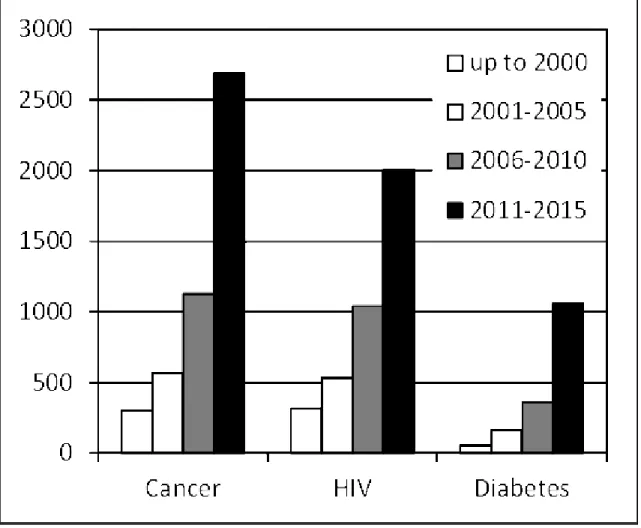
Figure 1.2: The number of publications related to computer-aided drug design and diseases. Key words used in the Google Scholar search (scholar.google.com) were as follows: computer-aided drug design and disease; e.g. diabetes.
Figure 1.3: Concepts of drug design, discovery and development and impact of computational methodologies.
Figure 2.1: Schematic workflow summarizing the methods used to identify plant insulin-based antidiabetic drugs.
Figure 2.2: Structure of plant insulin extracted from Canavalia ensiformis, identification number Q7M217 [A] protein hydrophobic surface and [B] ribbon representations generated by chimera software.
Figure 2.3: Graphical summary of the database sequence aligned to the query sequence.
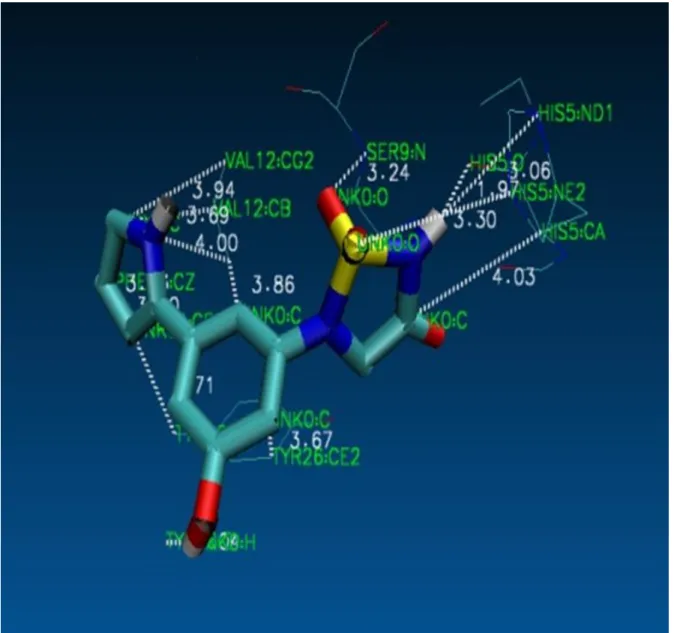
Figure 2.4: Binding interaction of docked lead compound T6 with active-site residues of target protein characterized in bond formation. Red highlights hydrogen bond acceptors and blue highlights the hydrogen bond donors, white highlights hydrogen bonds and yellow highlights halogens atom.
Figure 3.1: Ten pharmacophore hypothetical models (lower panel) were generated for eleven compounds using LigandScout 4.1. Six features are the best fit to generate the best pharmacophore model. The proposed pharmacophore model (model 1 shown in upper panel) used in this study contains three HBAs (red spheres), two ARs (purple spheres) and one HR (yellow spheres).
Figure 3.2: Schematic workflow summarizing the screening of protein tyrosine phosphatase non receptor type 1 inhibitors using computer aided drug design.
Figure 3.3: Hydrophobic surface and the active binding site of the 3EAX protein showing LZP ligand that is co-crystallized and overlaid at the active site, as generated using chimera.
Figure 3.4: Schematic representation of the binding mode of ligands with protein tyrosine phosphatase non receptor type 1 protein (PDB ID: 3EAX). The protein site is hydrophobic and the NMR structure of the 3EAX protein complex bonded with LZP is shown in (A). Conserved interacting residues of the binding site of the target protein bonded with the virtual hits (B). ZINC04259056 shows only hydrophobic bonding (C). ZINC30731533 shows large network of hydrophobic and hydrogen bonding (D). ZINC00968072 also shows large network of hydrophobic and hydrogen bonding. Conserved interacting residues are displayed in red circles.
LIST OF TABLES
Table 1.1: Approved drugs for type 2 diabetes
Table 1.2: Drugs under development for type 2 diabetes
Table 2.1: Summary of the alignment results of three top scored plant insulin hits against human insulin by BlastP.
Table 2.2: Sequence alignment for human insulin and three top scored plant insulin hits.
Table 2.3: Structures and binding interactions of the standard drug, aleglitazar, and eight test compounds (T1-T8) including amino acid data in the target protein pocket and binding energies
Table 2.4: Analogs of the lead compound (T6) along with interactions and binding affinities of the analogs with those of the target protein pocket
Table 2.5: Summary of drug-like properties of analogs and a standard antidiabetic drug
Table 3.1: Selected compounds that possess protein tyrosine phosphatase non receptor type 1 inhibitory activity used as a training set.
Table 3.2: Pharmacophore features of the training set and common pharmacophore feature of a selected pharmacophore model
Table 3.3: Overlay of training set compounds upon the pharmacophore generated using LigandScout 4.1
Table 3.4: Summary of drug-likeness and pharmacokinetic properties of the 15 selected virtual hits
Table 3.5: Conserved interacting residues within the binding site of the target protein of the top scored 15 virtual hits
Table 3.6: Summary of molecular docking analysis of selected 15 virtual hits
LIST OF ABBREVIATION
ADMET Absorption, Distribution, Metabolism, Excretion and Toxicity
AR Aromatic ring
CADD Computer-aided drug design
CYP1A2 Cytochrome p4501A2
CYP2C19 Cytochrome p4502C19
CYP2C9 Cytochrome p4502C9
DM Diabetes mellitus
EMA European medicines agency
FDA Food and drug administration
FGI Functional group inter conversion
HBA Hydrogen bond acceptor
HBD Hydrogen bond donor
HR Hydrophobic region
HTS High-throughput screening
IC50 Half maximal inhibitory constant
LBDD Ligand based drug design
logP/clogP Partition coefficient between n-octanol and water log (Coctanol/Cwater)
MW Molecular weight
NMR Nuclear magnetic resonance
PAINS Pan assay interference compounds
PDB Protein data bank
PSA Polar surface area
PTP1B PTPN1
Protein tyrosine phosphatase 1B
Protein tyrosine phosphatase non receptor type 1
QSAR Quantitative structure-activity relationships
QSPR Quantitative structure-properties relationships
RB Rotatable bonds
RMSD Root-mean-square deviation
SAS Synthetic accessibility score
SBDD Structure based drug design
SMILES Simplified molecular-input line-entry system
T1DM Type 1 diabetes mellitus
T2DM Type 2 diabetes mellitus
CHAPTER 1
INTRODUCTION
1.1. Diabetes mellitus
Diabetes mellitus (DM) is a group of diseases that result from high levels of blood glucose and that depend on insulin production and action. It involves multiple disorders of abnormal carbohydrates, lipids and protein metabolism [1]. People with diabetes may develop serious complications such as heart disease, stroke, kidney failure, blindness and premature death. DM is a diverse and complicated disorder that is characterized by persistent hyperglycemia. It has been called a “third killer” of human health [2]. Hypoglycemic medication is used to lower the blood sugar level in the body or to treat other severe symptoms of DM. These medications can be categorized into insulin and insulin preparations, which are used only parenterally and hypoglycemic medicine that can be administered orally [3].The 2014 National Diabetes Statistics Report revealed that from 2010 to 2012, the number of American diabetic patients increased from 25.8 million to 29.1 million, and that the DM prevalence rate for adults aged 20 years and older increased from 11.3% to 12.3% [4]. The International Diabetes Federation recently reported that the number of people with diabetes is expected to rise from 382 million to 592 million by 2035. Most people with diabetes live in low and middle-income countries [5, 6].
There are two most important categories of diabetes mellitus (DM); type 1 known as T1DM and type 2 known as T2DM but there is another third type is diabetes known as gestational diabetes belongs to pregnant women’s.
T1DM is an autoimmune disorder in which the immune system is activated to terminate the pancreatic cells function to produce insulin [7, 8]. T1DM is usually ten to fifteen percent of all type of diabetic cases [8]. Its indications are frequent and also life-threatening. Its diagnosis is quite rapid and managed with insulin injections only depends upon the condition of patients. T1DM does not depend on the lifestyle, but if someone has T1DM, regular diet and exercise can reduce the chance of development of other complications e.g. damage to kidney, limbs, and eyes [7].
T2DM is a progressive disorder in which body develops resistance to regular insulin functions and losses its capacity to regulate sufficient insulin in the pancreas [7-9]. T2DM is related with risk factors; unstable lifestyle, genetic and family history. Usually, eighty-five to ninety percent of all diabetic cases belong to T2DM. There are no specific indications; normally situation can go undetected and being realized in old age. There is currently no treatment for T2DM; which can manage the condition properly but healthy food, lifestyle adaptations, and proper medicine can improve the situation to decrease the risk of development into progressive complications especially cardiovascular disorders [8, 9].
Gestational diabetes is in between five percent to ten percent cases found in the pregnant women. Usually, in the initial situation, it can manage with the regime of healthy food and physical exercises. But sometimes it is managed with insulin injections
in the period of pregnancy and ended this situation after delivery of baby but the risk is still there for baby and mother both to develop T2DM in rest of their life [7].
Complications of DM are a frequent heart attack, stroke, and the collapse of blood vessels, kidney diseases, nervous disorders, eye infections, and pregnancy complications [9, 10].
Although there are antidiabetic medications currently approved by the U.S. FDA to treat patients with type 2 diabetes, most do not achieve appropriate glycemic control, and some have severe side effects. Successful treatment of type 2 diabetes, therefore, requires new drugs with improved mechanisms of action. In our review, I describe the use of computational tools for the discovery and design of new anti-diabetic drugs that are not currently approved, but that may lower glucose levels and decrease the risk of hypoglycemia, which is a major difficulty to control level of glucose and important for treatments which increase levels of insulin [6].
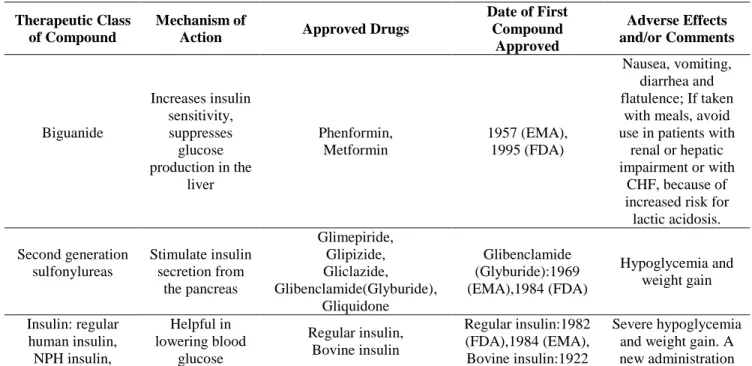
Table 1.1: Approved drugs for type 2 diabetes.
Therapeutic Class of Compound
Mechanism of
Action Approved Drugs
Date of First Compound Approved Adverse Effects and/or Comments Biguanide Increases insulin sensitivity, suppresses glucose production in the liver Phenformin, Metformin 1957 (EMA), 1995 (FDA) Nausea, vomiting, diarrhea and flatulence; If taken
with meals, avoid use in patients with
renal or hepatic impairment or with
CHF, because of increased risk for lactic acidosis. Second generation sulfonylureas Stimulate insulin secretion from the pancreas Glimepiride, Glipizide, Gliclazide, Glibenclamide(Glyburide), Gliquidone Glibenclamide (Glyburide):1969 (EMA),1984 (FDA) Hypoglycemia and weight gain Insulin: regular human insulin, NPH insulin, Helpful in lowering blood glucose Regular insulin, Bovine insulin Regular insulin:1982 (FDA),1984 (EMA), Bovine insulin:1922 Severe hypoglycemia and weight gain. A new administration
insulin aspart, insulin lispro, insulin glargine, insulin detemir, insulin levemir form of inhaled insulin has been recently approved (2014) (Afrezza) for
type 1 and type 2 diabetes. Alpha-glucosidase inhibitor Delay complex carbohydrate absorption Acarbose, Miglitol, Voglibose Acarbose:1991 (EMA),1995 (FDA) Flatulence, diarrhea, abdominal pain. Less effective than other
agents, it is considered in all elderly patients with
mild diabetes. Glinides Stimulate insulin secretion from the pancreas Repaglinide, Nateglinide Repaglinide:1998 (EMA), 1997 (FDA) Hypoglycemia and weight gain; the precaution is to take with meals to control rapid onset. Some partial agonists are in
clinical trials. An example is INT131 (previously known as
AMG-131), which progressed through the phase 2 clinical
trials. C333H is a novel partial agonist in preclinical development. Thiazolidinediones Increase peripheral tissue insulin sensitivity Pioglitazone, Rosiglitazone Rosiglitazone:1999 (FDA), 2000 (EMA) Edema, it should be avoided in patients
with heart failure. These agents can cause or exacerbate CHF contra indicated
in patients with NYHA class III or
IV heart failure. Amylin analogue Slowing of gastric emptying, suppression of elevated glucagon, stimulation of satiety. Pramlintide Pramlintide:2005 (FDA)
Approved for type 1 and 2 diabetes,
nausea, hypoglycemia when combined with other anti-diabetic drugs (e.g. insulin). GLP-1 agonists Stimulation of glucose dependent insulin release, suppression of elevated glucagon levels, Exenatide, Liraglutide, Exenatide extended-release, Lixisenatide, Albiglutide, Dulaglutide Exenatide: 2005 (FDA), 2006 (EMA), Liraglutide:2010 (FDA), 2009 (EMA), Exenatide ER: 2012 (FDA), Lixisenatide: 2013 (EMA),
Only injectable drug, weight loss, nausea,
vomiting, diarrhea and acute pancreatitis. Risk for
medullary thyroid cancer, pancreatitis
reduction of gastrointestinal motility Albiglutide: 2014 (FDA, EMA), Dulaglutide: 2014 (FDA) or pancreatic cancer. Not confirmed in clinical trials by FDA and EMA. Many oral GLP-1 agents are under trail
for TD. ORMD-0901 NN9924, NN9926, NN9927, NN9928, TTP054, ZYOG1, NN9924, ORMD-0901, TTP054 have reached Phase 2 DPP4 inhibitor Slow inactivation of incretin hormones Sitagliptin, Vildagliptin, Saxagliptin, Linagliptin, Alogliptin Sitagliptin:2006 (FDA), 2007 (EMA), Vildagliptin:2008 (EMA), Saxagliptin: 2009 (FDA, EMA), Linagliptin:2011 (FDA), Alogliptin: 2013 (FDA)
Risk for medullary thyroid cancer,
pancreatitis or pancreatic cancer.
Not confirmed in clinical trials by FDA and EMA. Few
agents are under clinical: ARI-2243 (Phase 1), Teneligliptin (Phase 1), Omarigliptin (Phase 3), Trelagliptin (Phase 3) Bile acid sequestrant Possibly activation of the farnesoid X receptor / bile acid receptor Colesevelam Colesevelam:2008 (FDA) Constipation, nausea and dyspepsia. Primary a lipid lowering drug with
additional glucose lowering effects. Mechanism of action
for diabetes control is unknown. Dopamine agonist Central modification of insulin resistance Bromocriptine Bromocriptine:2009 (FDA) Orthostatic hypotension, nausea. Mechanism of action for diabetes control
is unknown. SGLT2 inhibitor Reduction of the renal threshold for glucose excretion Dapagliflozin, Canagliflozin, Empagliflozin Dapagliflozin:2012 (EMA), 2014 (FDA), Canagliflozin:2013 (FDA), Empagliflozin:2014 (FDA, EMA) Genital infections and possible diuretic
effects. Other favorable effects of
SGLT2 inhibitors include a reduction in both body weight
and blood pressure. Still some agents are
under trails to improve the effects,
e.g. Ertugliflozin
(Phase 3), EGT0001442 (Phase
2), luseogliflozin (TS-071) (Phase 1).
The most important function of anti-DM drugs is to stimulate the insulin via pancreatic cells and improve sensitivity of cells toward insulin hormone and it’s normally utilized along insulin. Various therapeutic classes of DM medications are present in the market and the reason to choose a medicine based on the type of DM (age factor, situations of the diabetic person and other critical issues). Twelve classes of anti-DM drugs are currently available and approved (table 1.1).
There are ten more classes that have new mechanisms of action, which are in various phases of clinical trials shown in table 1.2. These therapeutic classes provide novel compounds that show improved safety and tolerability profiles for known adverse effects related to marketed agents such as gastrointestinal side effects, hypoglycemia risk and weight gain. Further optimization and clinical studies will help to generate a useful drug in a short period of time from these compounds. These agents may potentially control glucose levels and improve outcomes in patients with T2DM. I expect computer-aided drug design techniques to contribute in improvement of the compounds and acceleration of novel diabetes drug development [6].
Table 1.2: Drugs under development for type 2 diabetes
Therapeutic Class of
Compound Mechanism of Action Adverse Effects and/or Comments
dehydrogenase type 1 inhibitor
fasting glucose levels and hepatic insulin sensitivity
and hypertension. Some agents are under trails. There are no long-term studies available beyond 3 months: PF-00915275
(Phase 1), INCB13739 (Phase 2), MK-0916 (Phase 2). Glycogen
phosphorylase inhibitor
Potential target of hepatic glucose production
In early development: oral agents have shown promising results in animals and humans.
Glucokinase activator
Activate key enzyme to increase hepatic glucose
metabolism
Hyperlipidemia, hyperglycemia and Cardiovascular risk. Several drugs are currently in phase 2 clinical trials:
PF-04937319 (Phase 2), AZD1656 (Phase 2).
G protein–coupled receptor 119 agonist
Activation induces insulin release and increases secretion of glucagon-like
peptide 1 and gastric inhibitory peptide
Low potential for hypoglycemia. Several agents are in clinical trials: DS-8500 (Phase 2), MBX2982 (Phase 2), GSK1292263
(Phase 2).
PTP1B/PTPN1 inhibitor
Negatively regulates insulin in a signal pathway that helps to increase leptin
and insulin release.
Reduces adipose tissue storage of triglyceride under conditions of over-nutrition and was not associated with any obvious
toxicity. No weight gain, indicating another substantial advantage for diabetic patients, who are frequently obese and
at high cardiovascular risk. Some agents are currently in clinical trials: TTP814 (Phase 1/2), ISIS-PTP1BRx (Phase 2).
Glucagon-receptor antagonist
Block glucagon from binding to hepatic receptors, thereby
decreasing gluconeogenesis.
Low potential for hypoglycemia. Several agents are under trails: BAY 27-9955 (Phase 1), LGD-6972 (Phase 1), MK-0893 (Phase 2), MK-3577 (Phase 2), LY-2409021 (Phase 2).
Hepatic carnitine palmitoyltransferase
1 (CPT1) inhibitors
CPT1 is a mitochondrial enzyme involved in fatty acid metabolism makes CPT1 important in many metabolic disorders such as
diabetes. Inhibition decreases gluconeogenesis
Since its crystal structure is not known, its exact mechanism of action remains to be determined. Only limited data available.
One agent is in clinical trials: Teglicar (Phase 2).
Diacylglycerol acyltransferase (DGAT)-1 inhibitors
Inhibition of DGAT-1 enzyme responsible for final step in triglyceride synthesis – weight loss,
improved insulin sensitivity, decreased
cholesterol and triglycerides
Gastrointestinal side effects (nausea, diarrhea, vomiting). Several agents are in clinical trials: DS-7250 (Phase 2), P7435
(Phase 1)
Sirtuin1 (SIRT1) activators
Enhance glucose production and lipid metabolism,
insulin signaling and pancreatic insulin secretion.
SIRT1activation improves glucose homeostasis and insulin resistance. Very early development. One agent is in clinical
trials: SRT3025 (Phase 1) Glucocorticoid receptor antagonist Liver specific glucocorticoid receptor antagonist; reduction of hepatic glucose production.
Early in development, Only limited data is available. One agent is in clinical trials: ISIS-GCGRRx (Phase 1).
1.1.2. Protein tyrosine phosphatase non-receptor type 1 (PTPN1)
Some of important drugs are currently under development for T2DM. PTPN1 could be one upcoming possible oral therapeutic option for glycemic control and weight
management. PTPN1 knockout mice shown anti-DM activity by subsequently normalizing blood glucose levels and improves insulin sensitivity [11]. PTPN1 inhibition is a novel approach for the treatment of DM and PTPN1 inhibitors represent attractive medicinal activity in experimental studies for DM, obesity and cancer treatment [12, 13]. Recent studies demonstrate that biochemical and pharmacological confirmation for PTPN1 as important negative regulator of insulin along with leptin hormone. PTPN1 mechanism of action for T2DM is shown in figure 1.1 [13].
Figure 1.1: Protein tyrosine phosphatase non-receptor type 1 (PTPN1) in insulin and leptin signaling pathway [13].
Insulin binds to its receptor (IR) and induces conformational changes to activate insulin receptor kinase domain (IRK) in cytoplasmic part of IR. Activated receptor undergoes autophosphorylation of tyrosine residues and phosphorylate insulin receptor substrate (IRS) activates phosphatidylinositol-3-Kinase (PI3K) via interacting with p85 subunit and activates the catalytic subunit p110. Activation of P13K encourages downstream effectors which monitor the translocation of glucose transporter 4 (GLUT4) and cellular glucose endorsement in muscle and deactivates glycogen-synthase kinase 3 (GSK3). Leptin hormone is cooperative in metabolic homeostasis along with PTPN1. Leptin binds to its receptor (obR) and proceeds phosphorylation of Janus kinase 2 domain’s (JAK2), and it stimulates the JAK signals to STAT pathway and perhaps the P13K pathway (mechanism not clear). STAT3 pathway start by JAK2 phosphorylation encourages translocation of STAT3 towards the nucleus. STAT3 encourages gene reactions which reduce transcription of acetyl coenzyme-A carboxylase (ACC), decreasing malonyl CoA in addition to fatty acid synthesis, while accumulative fatty acid oxidation. Cytosolic PTPN1 dephosphorylates insulin receptors and leptin receptors to terminate the process [12, 13]. Hence, slight variations in the expression or action of PTPN1 enzyme with respect to insulin receptor could disturb insulin signaling and contribute to insulin resistance in T2DM patients.
1.1.3. Natural source of anti-diabetic medication
Bioactive natural products with therapeutic potential for DM are abundantly available and some are beyond exploration by conventional methods. Natural medicines are usually safe, inexpensive, and easily accessible while sometimes it’s more efficacious
than a synthetic medicine [14]. Several databases of natural drug-like compounds are useful to find important lead compounds for many disease treatments. Small molecules and secondary metabolites have been economically designed and synthesized by nature for the benefit of evolution; in other words, they have been evolutionarily selected [15]. Natural products contain various types of biologically relevant privileged structures that have saved millions of lives, which render them a continuous source of inspiration for the discovery of new drugs [16]. These plant-based compounds assist as excellent initial points for exploring biologically applicable chemical space [17]. Therefore, identification of natural products that are capable of modulating protein functions in pathogenesis-related pathways is the heart of drug discovery and development [18]. Until now, distinct natural products have been chemically modified and driven to become Food and Drug Administration (FDA) approved drugs [19]. Natural products and their derivatives in 1981 to 2010, accounted for 74.8% of all drugs approved by the FDA [20].
Merits of plant-based medicine have been proved in development of numerous drugs. Metformin FDA approved drug used from long time drug for management of T2DM, is derived from the guanidine which were obtained from Galegine officinalis [20]. Various studies in investigation of plant-based antidiabetic agents are discussed in details [21]. Some of these plant-based medicines are better extracted and use in crude form as is the common practice in traditional anti-DM medicine. In addition, the combined effect of the constituent anti-DM agents could be better than a single agent acting alone.
It is necessary to get that food which gives you maximum vitamins and minerals required for good health. Various research displays that person affected by DM are more expected to use supplements as medicine than the person without DM. Summary of
National Health Survey demonstrated that 22 percent people affected by DM use herbal therapies. While additional research confirmed that 31 percent DM patients use dietary supplement. Various ethnic individuals in the world; Hispanics or Latino, African-Americans population and Native African-Americans society also has routine of eating additional dietary supplements [22].
Insulin-like material glucokinin was present in plant sources and microbes that exhibited similar functions to those of insulin in vertebrates [23]. The presence of insulin-type peptides confirms in bacteria and fungi also [24, 25]. Ample research has demonstrated insulin-type molecule is present in Momordica charantia [26]. They showed the related features of a protein of animal insulin in plants. Xavier-Filho et al. retrieved information that suggested insulin was present in plants. Their results suggested that the insulin-type protein with the conserved sequence as of bovine insulin was expressed in plants family Leguminosae. These old-style treatments are hopeful as anti-DM medicine. So it is an urgent need to shift the focus of research on the way to the plant-based origin of insulin and it should elicit less adverse outcomes as compared to commercially available drugs for hyperglycemia and DM [27].
1.2. Computer-aided drug design for diabetes mellitus
1.2.1. Status of computer-aided drug design for fatal diseases
The average cost of launching a new drug onto the market is estimated to 1.8 billion dollars [28], and few drugs make it to the market. From 1999 to 2008, only 50 compounds were approved by the FDA in the U.S., out of which 17 were identified as arising from target-based drug design methods [29]. This suggests that experimental
libraries made by conventional high-throughput screening take more time, and that the results are not always efficient for developing novel drugs [6].
Computer-aided drug design provides advantages for experimental findings, mechanisms of action and new suggestions for molecular structures for new synthesis, and it can help in making cost-effective decisions before the costly process of drug synthesis begins. Numerous compounds were discovered and/or optimized using computational methods and they have reached the clinical stage of drug development or have even gained U.S. Food and Drug Administration (FDA) approval [30, 31]. Computer-aided drug design can increase the hit rate of novel anti-diabetic drug-like compounds because it better uses a large chemical search space to find a suitable target compared with traditional high-throughput screening and combinatorial chemistry. Several studies have compared conventional high-throughput screening and virtual screening, and virtual screens had hit rates of tenfold to 1700-fold those of conventional screening [6, 32-36]. Computational methods are required because the amount of biological data has increased and manual screening against such data requires much time and human resources. Computer-aided drug design methods have been used in the development of therapeutic molecules for over three decades. The increasing use of this method is reflected in the number of publications about computer-aided drug design in fatal diseases. Publications on computer-aided drug design for the top 3 most fatal diseases [6, 37, 38] are shown in Figure 1.2.
Diabetes has the third most papers published on computer aided drug design, but the number of published papers for diabetes was half of what it was for cancer or HIV. Thus, there is still room for improvement in antidiabetic drug design with the help of computational techniques [6].
Figure 1.2: The number of publications related to computer-aided drug design and diseases. Key words used in the Google Scholar search (scholar.google.com) were as follows: computer-aided drug design and disease; e.g. diabetes.
1.2.2. Concepts of drug design, discovery and development
The basics regarding drug design programs are identification, design of compounds or dataset of compounds that can generate the preferred medicinal properties. The success rate of any drug design scheme depends on the creativity and interplay of different techniques at the same ground includes biotechnology, bioinformatics, genomics, genetics, proteomics, structural biology, pharmacology, medicinal chemistry, and pharmacokinetics [39]. The anti-DM drug design is a complex process that requires expertise from multidisciplinary fields.
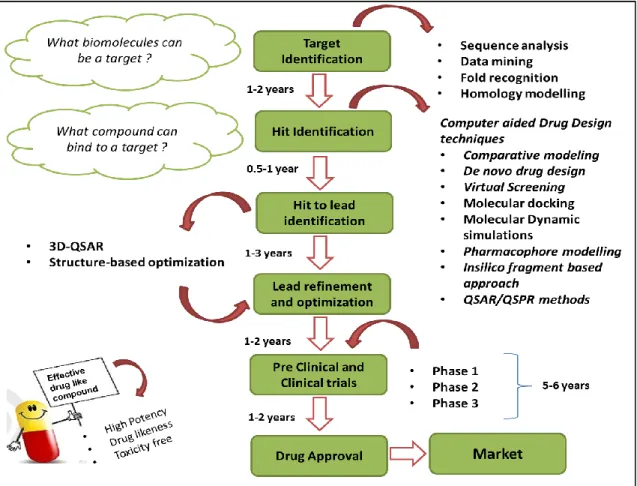
Figure 1.3: Concepts of drug design, discovery and development and impact of computational methodologies.
*Hit= Virtual candidates that can fit to the target binding site.
* Lead= a most active virtual candidate with preferred biological activity.
* QSAR and QSPR= Quantitative structure activity/properties relationship of chemical compounds.
The primary phase in the pipeline of drug discovery includes; Selection of a validated drug target. Following various phases of lead identification and optimization, next step is pre-clinical or animal tests, and ultimate phase of clinical trials using human beings [40] shown in Figure 1.3. The identification of a potent drug for diabetes which reaches the appropriate glycemic control is a costly procedure. Usually, a new drug with FDA approval needs approximate 10 years before introducing to market [41]. Possibly, most of the anti-DM drugs are not accepted in the late clinical phase because it exhibits some toxic effects or due to less efficacious. It has been stated that total cost of each drug discovery and development process is almost US $2.6 billion [42]. A comparatively cheap explanation is to use computational methods which can be used to rank target proteins and drug candidates that have the anticipated properties to ultimately develop an efficacious drug. Actually, the early twenty percent of the procedure of drug development is contributed by computer-aided drug design. Drug design to develop effective anti-DM drugs is extremely complex and expensive practice with unpredictable outcomes. To reduce these problems, CADD becomes gradually popular owing to low cost and least investment in manpower by using database resources of chemical compounds (Figure 1.3). CADD methods are essential to aid identification of conventional drug targets involved in insulin signaling pathways, design of new lead compound and structural modification of lead compound to improve aspects of its binding affinity, pharmacokinetic and pharmacodynamics parameters.
The design typically features small molecules that can interact with target protein/enzymes and inhibits their function. The distinction stems from whether a 3D structure of a protein is available and used in the design process. Structure-based methods of drug design can proceed with the only existence of target protein structure and modeling software for building ligands in the projected binding pocket. However, further insights delivered by the assessment of molecular energies for the bonding process are the center of current structure-based methods of drug designing [43]. Ligand-based methods do not require 3D structure of protein but analyze the structure-activity relationship of chemical compounds that have been tested in the biological assay for its target function. One seeks patterns in the assay results to suggest potential modifications of the compounds yield enhanced activity. The upside is that a target structure is not required; the downside is that substantial activity data are needed [44].
1.2.3. Current computational techniques
Drug development requires extensive clinical testing and is a costly process. There are two main phases involved in creating a new drug: the discovery phase and the clinical testing phase. In silico approaches, including virtual high throughput screening, and de novo structure-based rational drug design, has been established as tools in the discovery phase [6]. Virtual screening emerged for finding novel drug-like compounds.
In silico virtual screening has become a reliable, cost effective and time-saving technique
that is complementary to in vitro screening for the discovery and optimization of potent lead and hit compounds. There are two broad categories of screening techniques; the ligand-based virtual screening and receptor-based virtual screening, to select candidate compounds that are likely to interact favorably with the target binding sites from a
chemical database. The three-dimensional structure of protein or protein-ligand complex is helpful in lead identification using molecular modeling. Quantitative structure-activity relationship (QSAR), pharmacophore and biological assays can be helpful to optimize and design new leads. Structure-based drug design helps to provide potent and significant compounds more productively in the drug discovery process. Structure-based virtual screening is used more frequently than the ligand-based virtual screening (322 to 107 studies) [6, 45].
Virtual screening uses high-performance computing to screen large chemical databases and prioritize compounds for synthesis. Current databases allow rapid virtual screening of up to 100,000 molecules per day using parallel computing techniques [46]. The databases of three-dimensional structures directly available for virtual screening are [6]:
Advanced Chemistry Development [47]
InfoChem GmgH database [48]
MDPI database [49]
National Cancer institute open database compound [50]
Thomson index chemicus database [51]
Tripos discovery research screening libraries [52]
ZINC database [53]
They contain libraries that have been experimentally determined. Several computer programs have been developed and used in research leading to drug discoveries for various diseases. They are based on computational techniques of drug design, using
different algorithms and scoring functions. Some of the programs for virtual screening and docking studies are [6]:
AutoDock[54]
CLC drug discovery work bench [55]
Dock [56] FlexX [57] FRED [58] Glide [59] GOLD [60] MOE [61]
Several remarkable drug design applications using docking tools have been mentioned in our review. Pharmacophore modeling, or ligand-based virtual screening, is an efficient method to increase hit rates in drug discovery research [6].
Catalyst [62]
LigandScout 4.0 [63,64]
MOE (pharmacophore module) [61]
Phase [65]
These are widely used computer programs for pharmacophore elucidation and virtual screening. The effective pharmacophore models depend on two factors: the definite understanding and placement of pharmacophoric features, and the alignment method used for overlaying the three-dimensional pharmacophore model with a set of ligand compounds of screened data [6, 66].
QSAR methods can be used to optimize lead compounds. Modern three-dimensional QSAR methods involve the interaction fields around a molecule by calculating the interaction energy in a grid. The well-known three dimensional QSAR techniques are; comparative molecular field analyses [67] and comparative molecular similarity index analyses [68] to predict activity and correlates the biological dataset of chemical compounds. These approaches calculate molecular properties including steric, electronic, hydrogen bonding, and hydrophobic fields. Some of the programs used in research and that are available for two-dimensional and three dimensional QSAR analyses are [6]:
CODESSA [69]
Dragon [70]
QSARpro-Vlife science [71]
SYBYL-Xsuit [72]
Another type of program is the versatile and advanced software for molecular modeling and simulation, which has broad applications to many-particle systems, includes [6]:
AMBER [73]
CHARMM [74]
1.3. Motivation
By IDF (International Diabetes Federation) 2015 report; ratio of diabetic patients in the world is one out of 11 adults. Diabetes mellitus (DM) and its related complications are major causes of death in various countries. Despite continuous efforts of the international communities to reduce the impact of DM on poor and developed countries, there is steadily rise in the number of diabetic patient because of high cost and low availability of medications (specially in poor countries).
Available anti-DM drugs approved by FDA could not approach sufficient blood sugar (glucose) levels in patients suffering from DM, and there were many side effects affiliated with these medicines as I mentioned in chapter 1. Therefore, a new class of potential candidates is urgently needed. Efforts established on CADD techniques can mine numerous databases, generate novel and powerful virtual hits, and decrease the time period and cost need for discovery of novel anti-DM drug.
Drug design efforts in this way are most expected for development of potential drugs if the target is novel mechanism of action. Such methods could lead to anti-DM prescriptions with functional and structural difference with respect to available drugs and shows novel approach to reach appropriate glycemic control. As DM is a disease of all poor and developed countries, cost effective technologies have to be used to find the novel and potential entities. I have identified small drug-like compounds that have potential and may helpful in development of new anti-DM drugs.
1.4. Research goals and strategies
By using CADD methods I want to contribute in the successful discovery of novel antidiabetic drug candidates. Number of anti-DM drugs and recombinant insulin are accessible to DM patients, but with severe side effects. My goal is to discover novel candidate compounds which should be safe and harmonious to human body.
Numerous new medicines and their active ingredients are derived from plants because it’s cheap and safe source of drugs. Merits of plant-based medicine have been justified through development of some drugs. An example is the metformin, a FDA approved drug, used for a long time for management of Type 2 diabetes mellitus, had been derived from the plant source. The presence of plant proteins whose genomic sequences are similar to those of animal insulin encourages confirming its activity as insulin and evaluating its action with respect to diabetic medicine. It could produce therapeutically significant effects for diabetic patients.
Computer-based screening of large databases has shown compatibility with various in silico procedures such as molecular docking and pharmacophore generation. In
silico drug-likeness and pharmacokinetic estimations adds knowledge to reduce the
adverse outcomes of chemical compounds. Contributions of computer-aided drug design approaches in the identification of plant-based anti-DM virtual candidates have been explained in this thesis.
1.5. Thesis outline
Chapter 1 introduces target disease (diabetes mellitus) with its types and complications. Importance of natural products used in diabetes treatment is briefly explained. Status of CADD for top 3 most fatal diseases (Cancer, HIV and diabetes) has been demonstrated. CADD approaches have contributed to successful identification of new anti-DM drug candidates and highlighting currently FDA-approved medicines for DM with the newly discovered diabetes drugs also that appeared in the development phase and could attain the appropriate glucose control and reduce the threat of hyperglycemia, which is the main cause of glucose imbalance and an important concern for anti-DM therapies which enhance insulin production.
Chapter 2 focus on plant insulin protein present in Canavalia ensiformis used as the target protein for identification of potential anti-DM agents. Identification of most active compound from a set of eight compounds with desired biological activities for a validated molecular target has explained in detail. Analogs design of lead compound using functional group inter-conversion approach has demonstrated. Molecular docking analyses showed that the four analogs could be used as anti-DM agents. Binding energies and binding interactions of the analogs have been explained in detail.
Chapter 3 focuses on pharmacophore modeling based on the information of known biological activities of plant-based PTPN1 compounds. Shared feature pharmacophore model has been established. Molecular superimposition algorithm works in order to organize the 3D structure of the input dataset in a way that chemical features of compounds located in similar positions in each pharmacophore model. Pharmacophore-based screening of natural compounds of ZINC database has been
conducted. Molecular docking analysis explained binding features of selected drug-like hits with the target protein. Identified hits were assessed for their aggregator potential to compare with previously reported aggregators. By virtual screening and in silico pharmacology protocols; identified a lead compound with best results is explained in detail.
Chapter 4 sum-ups the achievement and originality of this research work. This chapter reviews the integration of computational methods used to produce fruitful results in the discovery of anti-DM drugs and explains my research outcomes warrant new protocols in the field of CADD. It concluded with significant aspects of the current research scheme in the area of drug discovery of plant-derived proteins and compounds for future functional food and medicinal research.
CHAPTER 2
LEAD IDENTIFICATION AND OPTIMIZATION OF PLANT INSULIN-BASED ANTIDIABETES DRUGS
2.1. Abstract
Objective: Diabetes mellitus (DM) depends on multiple factors involved in pancreatic
disorders and becomes the third leading cause of deaths in humans. The presence of plant proteins whose genomic sequences are similar to those of animal insulin has been demonstrated. I wished to discover anti-DM drugs having high inhibitory activity based on plant protein.
Methods: Computer-aided molecular docking methods were applied using Auto Dock
Vina software.
Results: I have selected a plant protein with UniProt identification Q7M217 insulin in
Canavalia ensiformis as the target protein for DM. I have identified an active lead
compound among eight candidate compounds based on significant interactions with protein molecule and half-maximal inhibitory concentration (IC50) values. I have
designed four analogs of the lead compound. Molecular docking analyses showed that the four analogs could be used as anti-DM agents with suitable drug-like properties as compared with a standard compound for the treatment of DM (aleglitazar). These analogs can also be used for future studies.
Conclusion: The present study has identified an anti-DM compound, a biphenyl
inter-conversion approach. Our computer-aided study provided information on binding energies and binding interactions of the analogs to predict their anti-DM activity.
Keywords: Diabetes mellitus, Plant insulin, Lead identification and optimization,
Computer-aided drug design
2.2. Introduction
Insulin hormone regulates blood sugar levels. If insulin is not present in the body, cell could not utilize the energy from blood sugar factory to uphold the metabolic events within a body. Frederick Grant Banting and Charles Best (1921) took out insulin from dogs. It was introduced into a 14-year-old male with DM in 1922 as medicine for this disease [76].
Insulin reached to approval by the US Food and administration (FDA) in 1939 [77]. It is used in the homeostasis of blood sugar and lipids, growth and progress of tissue, and responds to elevated levels of glucose and amino acids in blood. It regulates metabolism by tissue-specific mechanisms such as protein phosphorylation and altered functions and shows different gene expression. The physiological discorded of T2DM; by insulin resistance includes pancreatic beta cells, skeletal muscles, liver and fat storing tissues. Similar to insulin secretion and glucagon suppression, the combination of stimulation (high post-meal level of blood glucose) is owned by humans to maintain plasma glucose levels at about ≈5 mmol [77-80]. Glucose-based insulin regulatory mechanism of beta cells has been described [81]. Pancreatic beta cells respond to increased levels of sugar/glucose in plasma by secretion of insulin. Protein-facilitated
glucose transporter 2 on the membrane of beta cells has high Michaelis constant. The maximum rate can be achieved by a system that allows fast equilibration of glucose across the membrane. Glucokinase promotes the phosphorylation of glucose and encourages conversion to a glycolytic cycle, an important step in determining glucose-stimulated insulin secretion [81]. The released insulin connects with insulin receptor (IR), a transmembrane heterodimer of twice alpha and beta subunits retained by a disulfide bonding. Isoforms IR type 1 and IR type 2 have various affinities to bind with insulin with the extracellular domains. Fluctuating affinity for insulin has advantage over insulin resistance, but it is a controversial matter and still incompletely understood. Insulin binding facilitates the interaction and autophosphorylation of three tyrosine residues in the control domain and raises the activity of the enzyme tyrosine kinases. Then, intracellular phosphorylation of insulin receptor substrate, (IRS type 1) takes place. IRS type 1 is a typical adapter protein expresses four isoforms, of which IRS type 1 and IRS type 2 get involved in the balance of glucose and glucagon to control levels of blood glucose and T2DM [82, 83].
Insulin hormone in plants is not accepted by plant science researchers [84]. Insulin is the main glucose controlling hormone and it was originally isolated from pancreatic tissue of an animal [85]. Plant life does not carry pancreas and so glucose does not precede major metabolites. Several studies suggested that chemicals similar to animal insulin exist in plants and extracts from these chemical substances alter the metabolism of the seedlings, so it was proved that insulin protein is present in plants [86, 87]. Khanna and his colleagues stated that the similar to insulin, glucokinin is present in plants and microbes that exhibited similar functions to those of insulin in vertebrates [23]. Therefore,
in some studies, insulin-like peptides have been reported in the living organism such as bacteria and fungi [24, 25].
Further studies which proved the possibility of the existence of insulin-type molecules in Momordica charantia was conducted by Ng and his colleagues [26]. It proves that similar features of a protein of animal insulin found in plants. Momordica
charantia when co-administered with the conventional drugs and tested in clinical studies
for its combined effects proves that it produced positive interactions with the drugs and significantly reduce the serum glucose at half of the regular dose with metformin [88], while with glibenclamide also shows remarkable reduction in serum glucose at half of regular dose of glibenclamide [88]. In other experimental studies, it is proved that combined therapy of metformin with Momordica charantia presented improved hypoglycemic activity in normal, streptozotocin induced- and alloxan-diabetic rats [89, 90]. Positive interactions of plant extracts with antidiabetic drugs could improve the situation of diabetes worldwide in terms of enhanced drug bioactivity and side effects.
The “Human Genome Project” brought revolution which permitted comparison analyses of sequence of nucleotides and proteins through bioinformatics approaches to identify common proteins that could exist across different living organisms [91, 92].
Xavier-Filho and his fellows retrieved the information that suggested insulin was present in plants. Their results suggested that insulin protein express common amino-acid sequence as bovine insulin in plants of family Leguminosae [93]. Koona and his fellows tested this assumption that plant species contain sequences similar to that of animal insulin by phylogenetic analyses of different categories of insulin. They predicted protein domains and demonstrated that molecules similar to insulin are present in plant species.
In addition, domains common to the sequence of insulin are present in Bauhinia purpurea,
Canavalia ensiformis, and Vigna unguiculata. Proteins similar to insulin may have role in
the development of plants and show metabolic activities [94].
Bauhinia purpurea (orchid tree) is a member of family Leguminosae. It is an
average-size deciduous tree, the components of which are used as medicine for body pain, restlessness, fever, dropsy, rheumatism, seizures, and septicemia [95]. Plant bark functions as an astringent in the management of diarrhea and its isolated chemicals are useful in the treatment of stomach ulcers. The plant has pharmacologic actions on the central nervous system and has cardiotonic, hypoglycemic, lower blood cholesterol, oxidation inhibition and anti-hepatotoxicity activities [96]. Leaves of orchid tree are widely used to cure abrasions and muscular damages [97]
Canavalia ensiformis (horse bean/ Jack beans) is a member of family
Leguminosae. It is found in the Central America and West Indian islands. Jack beans
cultivation widely found in the humid tropical region of Asia and Africa. Canavalia
ensiformis seeds have been reported to possess anti-hypercholesterolemic and
hypoglycemic properties [98]. Its extracts have been tested on alloxan-induced DM rats, showed good activity against hyperlipidemia and hyperketonemia, and it has been shown to be potential anti-DM agents. Oral administration of an aqueous extract of the seeds of
Canavalia ensiformis has been shown to reduce urinary and blood levels of glucose and
to elevate levels of triacylglycerol, ketonic group, and level of cholesterol related with DM [99].
Vigna unguiculata (cowpea) is a member of family Leguminosae found in various
reaches maturity in sixty days when sowed. The protein sequence of Vigna unguiculata shows similar sequence to bovine/animal insulin to sequence of the plant-insulin extracted from the cowpea seed-coat [27, 101]. These old-style treatments have encouraging future in DM management. Adverse effects were reported as compared in commercial drugs available for hypoglycemia [27]. In the present study, I carried out bioinformatics studies of molecular docking to identify new drugs for DM treatment using plant extracts with similar sequences to those of animal insulin.
I employed a ligand-based drug design and revealed diverse classes of small drug-like compounds to be potential candidates for DM treatment. Moreover, I computed molecular modeling and docking studies for the lead compound, which was identified from the test dataset of anti-DM compounds [102] and modified for optimization of its activity. These results will provide a deeper understanding of the inhibitory behavior of the compound and be valuable in the development of anti-DM drugs.
2.3. Materials and methods
Figure 2.1: Schematic workflow summarizing the methods used to identify plant insulin-based antidiabetic drugs.
Diabetic mellitus was selected as target disease to start this study. As results of human insulin sequence similarity search by BlastP [103], Canavalia ensiformis found with highest sequence similarity of 56% with 88.2 maximum bits score. Anti-DM compounds were retrieved from my previous study [102]. Insulin protein isolated by plant source was subjected to identify the most active anti-DM compound by molecular docking and detail interaction analysis. Lead compound was identified and optimized by analogs design using functional group inter-conversion approach. Schematic workflow
summarizing computer-aided drug design methods used in this study is shown in Figure 2.1.
BlastP [103] is used to for identification of homologs of human insulin by using the insulin sequence with 110 amino acid length as input query sequence. Query sequence was submitted in FASTA format and results retrieved in the HTML format. Blast search for the identical sequences present in the database with respect to query sequence. While performing BlastP sequence similarity search using NCBI portal. The results were given in graphical format showing the most identical hits, domain knowledge and family of protein and also provide the table of sequence identical to the input query sequence with certain Blast scores and similarity percentages, with the alignment for each sequence with respect to query sequence shown in Table 2.1 and 2.2.
Molecular docking analyses were undertaken to evaluate the most preferred geometry of protein–ligand complexes. Anti-DM compounds were analyzed for a target protein binding using Auto Dock v 4.0 and Auto Dock Vina [54, 104]. The docking phase is, in general, meaningful with its two components: target protein and ligand. Molecular docking simulations identify native or similar to native configurations of docked complexes.
Docking steps were conducted in a specific sequence. Briefly, water molecules were excluded from target protein structure, and then the input was provided to analytical docking tool. Marsili-Gasteiger partial charges were calculated for the target protein by Auto Dock v 4.0 [54, 104]. And then the protein structure was examined for the missing atoms. So when missing atoms confirmed, hydrogen atoms were added by selecting the default parameters. After these modifications, the protein structure was obtained, and the
ligand was prepared for docking experiment. Marsili-Gasteiger partial charges were calculated for the ligand [105]. Then some moiety exhibiting torsions in ligands was defined. To choose torsion for flexible docking, rotatable connections were altered into non-rotatable connections and vice versa. The number assigned for active torsions was marked as the most atoms. After preparation of protein and a ligand structure, an inflexible residue was set by utilizing the GRID modules of Auto Dock v4.0. A flexible macromolecule was then obtained. Auto Dock Vina was used for molecular docking. This software outputs various energy conformations. Among these, the lowest energy conformation against each docked ligand was selected and docking results for the selected dataset are generated.
For understanding the results of molecular docking, the therapeutic target protein was docked with the test set, and the interactions between of binding pocket of the protein molecule and ligands must be found. There are three types of interactions found in the docked complex: hydrophobic interactions, ionic interactions, and hydrogen bonding. Interaction analyses were conducted by using Visual Molecular Dynamic (VMD) program [106]. The interaction results were considered within a distance of 4Å. The detail binding behavior of each docked complex was analyzed (Table 2.2).
2.4. Results and discussion
Target identification and selection is an important step in initiating drug design. The plant insulin protein was used as the target protein in this study. I extracted plant-insulin 3D structure from the public source of MODBASE database [107] to examine it as a substitute source of human insulin protein. The three-dimensional (3D) structure of
protein isolated from Canavalia ensiformis with identification number Q7M217 in figure 2.2 shows two representations.
Figure 2.2: Structure of plant insulin extracted from Canavalia ensiformis, identification number Q7M217 [A] protein hydrophobic surface and [B] ribbon representations generated by chimera software.
The insulin-like growth factor segments of human insulin are conserved to the insulin sequence in Bauhinia purpurea, Canavalia ensiformis and Vigna unguiculata [94]. These plants are members of the class: Leguminosae. I selected Canavalia ensiformis for testing as an insulin source because it has been tested in wet laboratory experiments and because it has a highly identical homolog to human insulin protein (table 2.1 & table 2.2). In a wet laboratory experiment, a protein extracted from Canavalia ensiformis was acknowledged by anti-human insulin antibodies that lower the level of blood glucose
in alloxanized mice (suggesting that the plant insulin has biologic potential against DM), and found to have evolutionary characteristics similar to those of human insulin [108].
The reason to select the most identical insulin-like protein Canavalia ensiformis in this study is depicted by sequence similarity search. Results summary of human insulin sequence similarity search by BlastP [103] is shown in table 2.1 and the align sequences are shown in table 2.2. Canavalia ensiformis shows the highest sequence similarity of 56% with 88.2 maximum bits score. While Vigna unguiculata with 72.4 bits score shows 49% sequence similarity and Bauhinia purpurea with 65.5 bits score shows 67% sequence similarity with human insulin protein.
BlastP a freely available web tool searches for the identical and specific hits as homologs. They represent a reliable association between the protein query sequence (human insulin sequence) and a domain model. Figure 2.3 displays putative conserved domain and information of the superfamily retrieved against the query sequence used as input to BlastP. Conserved insulin-like domains shown in dark green bar and IIGF-like superfamily shown in light green bar concluded the function of the model protein. IIGF-like superfamily is a large class of evolutionary proteins which own diverse hormonal activities and its subfamily is insulin and insulin-like growth factors.
Figure 2.3: Graphical summary of the database sequence aligned to the query sequence.
Table 2.1: Summary of the alignment results of three top scored plant insulin hits against human insulin by BlastP.
Top scored hits Accession ID Source Max score Total score Query cover E
value Identity Positives Gaps
1 A59151 Canavalia ensiformis (jack bean) 88.2 88.2 78% 1e-22 56% 56% 40% 2 P83770.1 Vigna unguiculata (cowpea) 72.4 72.4 78% 3e-16 49% 50% 40% 3 721138A Bauhinia purpurea (camel's foot tree) 65.5 110 58% 1e-13 67% 79% 43%
Table 2.2: Sequence alignment for human insulin and three top scored plant insulin hits.
Top scored hits
Protein description and sequence alignments against Query (human insulin)
1 Insulin precursor - jack bean (fragments) / Canavalia ensiformis (jack bean)
(Sequence length: 51) Query 25 FVNQHLCGSHLVEALYLVCGERGFFYTPKTRREAEDLQVGQVELGGGPGAGSLQPLALEG 84 FVNQHLCGSHLVEALYLVCGERGFFYTPK Sbjct 1 FVNQHLCGSHLVEALYLVCGERGFFYTPKA--- 30 Query 85 SLQKRGIVEQCCTSICSLYQLENYCN 110 GIVEQCC S+CSLYQLENYCN Sbjct 31 ---GIVEQCCASVCSLYQLENYCN 51
2 RecName: Full=Insulin-like protein; Contains: Rec Name: Full=Insulin-like protein B chain;
Contains: Rec Name: Full=Insulin-like protein A chain / Vigna unguiculata (cowpea) (Sequence length: 51) Query 25 FVNQHLCGSHLVEALYLVCGERGFFYTPKTRREAEDLQVGQVELGGGPGAGSLQPLALEG 84 FVNQHL GSHLVEALYLV GERGFFYTPK Sbjct 1 FVNQHLXGSHLVEALYLVXGERGFFYTPKA--- 30 Query 85 SLQKRGIVEQCCTSICSLYQLENYCN 110 GIVEQ S+ SLYQLENY N Sbjct 31 ---GIVEQXXASVXSLYQLENYXN 51
3 Insulin / Bauhinia purpurea (camel's foot tree)
(sequence length: 51)
Query 12 ALLALWGPDPAAAFVNQHLCGSHLVEALYLVCGERGFFYTPKT 54 ++ +L+ + F NQHLCGSHLVEALYLVCGERGFFYTPK Sbjct 9 SVCSLYQLENYCNFANQHLCGSHLVEALYLVCGERGFFYTPKA 51
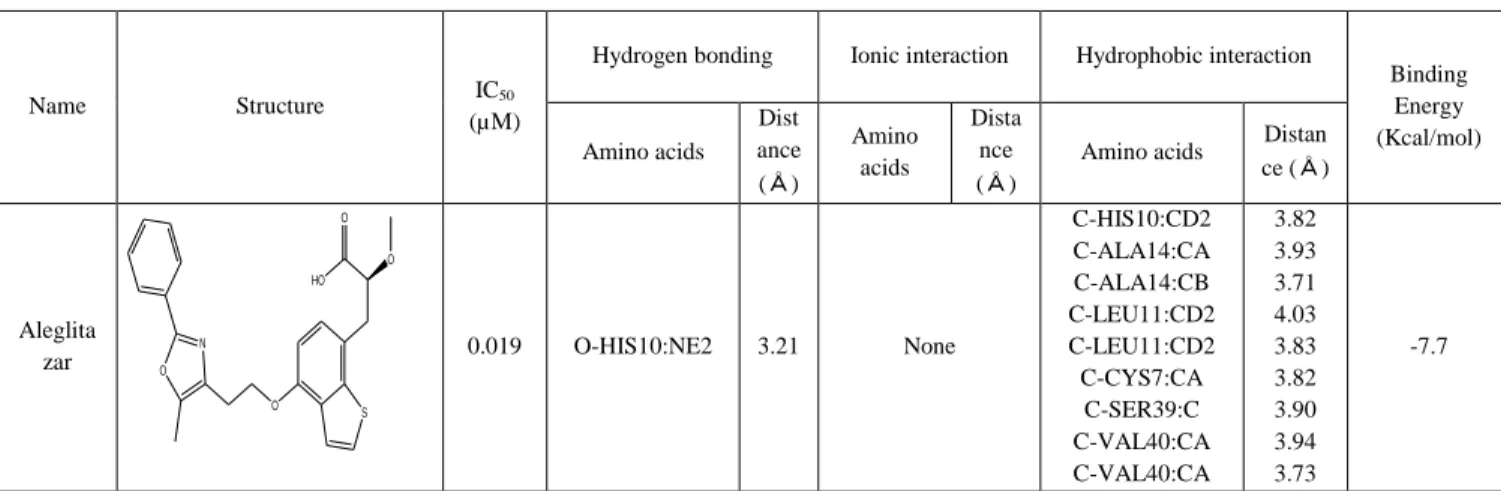
I used aleglitazar (Roche, Basel, Switzerland) [109] with a half-maximal inhibitory concentration (IC50) value of 0.019 μM as a standard drug for DM. I collected
data for aleglitazar from PubChem [110], which provides authenticated chemical structure and all related information of drugs and which is organized by the US National Institutes of Health. Aleglitazar is a type of sensitizer used for T2DM treatment to reduce the complications of cardiovascular morbidity and mortality. In T2DM patients, aleglitazar can control levels of lipids and glucose in a synergistic manner while eliciting limited side effects and toxicity [110]. I designed and evaluated novel candidate compounds based on a comparison with aleglitazar.
I generated a test dataset of eight compounds (table 2.3) by perusing studies of anti-DM drugs [102]. The dataset was considered highly active owing to their low IC50
values (μM). The rule of five [111] used to evaluate drug-likeness of chemical compounds and the results integrate the pharmacokinetics of these compounds from a previous study [112]. Compound structures in the test dataset were made by Chem Draw Ultra 8.0 [113]. The compounds and their bioavailability in the form of IC50 values are
listed in table 2.3.
I evaluated interactions of compounds with protein molecule using Auto Dock and Auto Dock Vina [104]. By employing docking analyses, different confirmations of compounds were provided as docked complex with the target protein molecule. I generated ten most active conformations for each ligand ranked based on binding affinities of the ligand with the protein molecule. I selected the optimal confirmation from these ten confirmations (having a minimum value of the root-mean-square
![Figure 1.1: Protein tyrosine phosphatase non-receptor type 1 (PTPN1) in insulin and leptin signaling pathway [13]](https://thumb-ap.123doks.com/thumbv2/123deta/6319719.1097400/16.918.160.813.438.933/figure-protein-tyrosine-phosphatase-receptor-insulin-signaling-pathway.webp)

![Figure 2.2: Structure of plant insulin extracted from Canavalia ensiformis, identification number Q7M217 [A] protein hydrophobic surface and [B] ribbon representations generated by chimera software](https://thumb-ap.123doks.com/thumbv2/123deta/6319719.1097400/41.918.156.807.232.579/structure-extracted-canavalia-ensiformis-identification-hydrophobic-representations-generated.webp)