223 (223)
報 文
家庭洗濯の衣類乾燥に関する地域間の比較研究
An Investigation into Differences in Method of Drying Domestic Laundry
Based on Area Survey
清井えり子
1,板垣昌子
2,尾畑納子
3,多賀谷久子
4,山口庸子
1*
Eriko SEII
1, Masako ITAGAKI
2, Noriko OBATA
3, Hisako TAGAYA
4and Yoko YAMAGUCHI
1*
(
1共立女子短期大学,
2昭和学院短期大学,
3富山国際大学,
4元滋賀大学)
原稿受付 平成 22 年 8 月 3 日;原稿受理 平成 22 年 12 月 4 日
1Kyoritsu Women’s Junior College, Chiyoda-ku, Tokyo 101-8437 2Showagakuin Junior College, Chiba 272-0823
3Toyama University of International Studies, Toyama 930-1292 4Former Shiga University, Shiga 522-8522
To reduce the environmental burdens caused by the methods used to dry domestic laundry, we undertook a survey-based questionnaire on current attitudes and practices related to drying clothes in the rainy season, in winter, and in other seasons (“other seasons” referred to as “normal seasons” hereafter) in three areas with significantly differing climates: Tohoku and Hokuriku, Kanto, and Setouchi. The results indicate that in normal seasons, people in all three areas dried their clothes primarily by air-drying outdoors. The survey also indicated high satisfaction with this method. However, during the rainy season and in winter, more households dried clothes by air-drying indoors and machine-drying. The prevalence of specific practices varied significantly by area. In Tohoku and Hokuriku, many households air-dried clothing indoors. The percentage of households air-drying clothes indoors was approximately 40% in the rainy season and 60% in winter, and survey participants in this area indicated high satisfaction with this method. On the other hand, laundry habits in Kanto and Setouchi featured less air-drying indoors by itself and more drying that combined air-drying indoors with machine-drying. The survey results indicated participants in Kanto and Setouchi were more satisfied with this combined approach than with air- drying indoor alone. The survey confirmed the usefulness of air-drying outdoors as a method for drying clothes, delivering low environmental impact and high satisfaction. However, air-drying indoors and machine-drying were seen as essential in all areas. The need to reduce environmental burdens will make it paramount to shift to clothing that offers high drying performance, to use dryers with low CO2 emissions, and to redesign living environments on the assumption of a preference for
air-drying indoors.
Keywords:domestic laundry 家庭洗濯,clothes drying 衣類乾燥,CO2 emission 二酸化炭素排出
量,environmental burden 環境負荷 * To whom correspondence should be addressed E-mail:[email protected]
(224) 224
1.諸 言
2008 年にパリで開催された第 7 回世界界面活性剤会議 では,新たな領域として “Consumer Sustainable Use” が加 わり,界面活性剤の使用段階である家庭洗濯の環境負荷削 減は緊急を要するテーマとして取り扱われた.特に,低温洗 浄に向けた酵素の活用など,使用段階の省資源や省エネに より環境負荷を削減することが強調された.これに対してわ が国の家庭洗濯は,常温で洗う「低温洗浄」や「天日干し」 が行われており,欧米の目標に近い状況にあるといえる.し かし,ライフスタイルの変化や省スペース化など居住環境の 変化から洗濯機と乾燥機を一体化した「洗濯乾燥機」の販 売量が増加しており,衣類乾燥のスタイルも大きく変化して いるものと考える1).これまで,著者らは家庭洗濯の LCA(Life Cycle Assessment)分析から,洗濯機の製造や洗濯工程で 排出される CO2量 よりも,乾燥工程で排出される CO2量が 非常に多いことを指摘してきた2,3).近年の洗濯乾燥機の急 激な普及によって,衣類の乾燥工程に由来する CO2 排出量 は,今後ますます増加すると推察される. 一方,南北に細長く気候風土の異なる日本にあって,家庭 洗濯における衣類乾燥の実態は大きく異なるものと考える. 家庭洗濯に関する先行調査研究として,日本石鹸洗剤工業 会が首都圏在住の主婦を対象に 1991 年,2000 年,2005 年に実施した調査4-6)では,家庭洗濯の詳細な経年変化を 報告しており,洗濯機の大型化やまとめ洗い,浴比の低下 が指摘されている.しかし,衣類乾燥に関する報告は見られ ない.また,首都圏在住の働く20 代の独身女性と主婦を対 象とした 1991 年から 3 年ごとの比較調査7-9)では,「まと め洗い」や「部屋干し」が増加傾向にあることが指摘されて いる.さらに,首都圏在住の主婦を対象とした衣類乾燥機 器の所持・使用状況に関する調査10)が行われており,衣類 乾燥機の満足度や問題点が報告された.また,首都圏在住 の既婚女性を対象とした洗濯物の室内干しに関する調査11, 12)では,室内干しが居室におけるカビ発生の要因の一つで あることを指摘している.しかし,これらの調査研究は首都 圏に限定した調査であり,日本の気候や住環境の違いに着 目した家庭洗濯や衣類乾燥に関する比較調査は行われてい ない. そこで,本報告では環境負荷の少ない衣類乾燥の提案を 目的として,気候の大きく異なる 3 地域「東北・北陸」「関東」 「瀬戸内」を対象に,家庭洗濯における衣類乾燥の現状と 意識に関するアンケート調査を実施して,地域間の違いや特 徴を明確にした.さらに,得られた知見を基により環境負荷 の少ない衣類の乾燥方法について考察した. 2.調査方法 (1)調査対象および時期 調査対象は,気候の大きく異なる「東北・北陸」,「関東」 および「瀬戸内」の 3 地域とした.東北・北陸地域(以後, 東北 ・ 北陸)では,平均気温 12.3℃,平均湿度 73.2% であり, 曇雨天や雪日数が多く,年間降水日数(降水量 1 mm 以 上)は 149 日,年間雪日数は 73 日である.また,1 年を 通じて日照時間は短く年間では 1,618 時間であり,秋田の 1 月の平均日照時間はわずか 38 時間である.これに対して 関東地域(以後,関東)では,平均気温 15.3℃,平均湿 度 65.5% であり,夏場は雨が多く冬場は乾燥している.年 間降水日数は 102 日, 8 月の平均降水量は 175.6 mm であ り,東京の 1 月の相対湿度は 46.2% と低い.年間日照時間 は 1,980 時間と長い.瀬戸内地域(以後,瀬戸内)では, 平均気温 16.8℃,平均湿度 65.9% であり,年間降水日数 は 95 日と年間を通じて温暖・少雨である.また,日照時間 は長く,年間 2,000 時間を超える.なお,上述の気象特性 は気象庁ホームページ気象統計情報より13),調査対象地域 の 2000 ~ 2009 年の情報をもとに求めたものである. 調査時期は,東北・北陸では平成 20 年 1 月中旬から 2 月上旬,関東と瀬戸内では平成 20 年 1 月中旬から 2 月上 旬および同年 6 月中旬から 7 月末の二回行った.回答者は 主に洗濯を行っている人に限定し,留置法にて実施した.ア ンケートは 3 地域合計 1,089 世帯に配布し,回収件数 519 件,有効回答件数 257 件(有効回答率 23.6%)であった. 調査地域および回収件数の詳細を Table 1 に示す.
Table 1.Research areas and the number of reported Areas Prefecture of householdsNumber Total
Tohoku-Hokuriku Aomori 1 88 Akita 19 Iwate 10 Miyagi 17 Yamagata 15 Niigata 15 Toyama 11 Kanto Ibaraki 3 111 Tochigi 1 Gumma 1 Saitama 12 Chiba 26 Tokyo 44 Kanagawa 24 Setouchi Hyogo 4 58 Kagawa 1 Tokushima 8 Hiroshima 45 Total 257
225 (225)
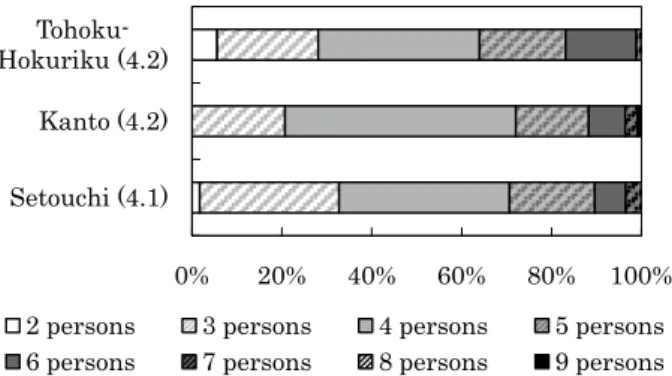
図表 web10212 山口 Fig.1 Fig.1. Percentage of household structure in three areas.
( ): Average number of households
0% 20% 40% 60% 80% 100% Setouchi (4.1)
Kanto (4.2) Tohoku-Hokuriku (4.2)
2 persons 3 persons 4 persons 5 persons 6 persons 7 persons 8 persons 9 persons
(2)調査内容 地域間の衣類乾燥の違いを明らかにするために,洗濯状 況を含めたアンケート調査を実施した.調査内容は,①調 査対象の基本属性について,②洗濯・乾燥機器の所持状況, ③洗濯を含めた衣類乾燥の行動である.調査対象の基本属 性については,居住地域や洗濯を行う人の年齢,職業の有無, 家族構成に住居形態などを加えて質問した.洗濯・乾燥機 器の所持状況では,現在使用している洗濯機および衣類乾 燥機のタイプや今後購入希望のタイプ,標準洗濯容量など を質問した.洗濯行動の調査では,「夏場」と「冬場」に分 けて洗濯回数や洗濯日数,洗濯時間帯,一回当たりの洗濯 物重量,洗剤のタイプなどを質問した.乾燥行動の調査では, 「通常」に「梅雨時」と「冬場」を加えて,季節ごとの乾 燥方法(外干し・室内干し・機械乾燥)や室内干しと機械 乾燥の使用頻度および使用状況(全て乾燥・生乾きの状態 から・最後の湿り気を除く程度など),使用機器のタイプ,さ らに満足度について質問した. (3)調査結果の分析 データの分析には,SPSS Statistics 17.0 を用いた.衣類 乾燥の実施状況について,季節ごと(通常・梅雨時・冬場) に,「外干し」「室内干し」「機械乾燥」の「する」,「しない」 を(1,0)で入力し,東北・北陸,関東,瀬戸内の各地域 間の母比率の差について 2 × 2 のχ2検定を行った. 3.結果および考察 (1)調査世帯の特徴 1)基本属性 分析にあたって,子供の年齢によって洗濯物の量や経済 状況に相違が生じる傾向がみられたため,一人暮らしの学生 および学生同士の二人暮らしを除き,親と同居している大学 生の居る世帯(257 世帯)を対象とした.対象世帯の平均 家族構成員は 4.2 人,最多家族構成員世帯は 4 人世帯(111 世帯)であった.居住地域別に,Fig.1 に同居家族の構成割 合を,Fig.2 に住居形態の割合を示す.3 地域とも家族構成 員数はやや多く,同居家族の構成割合に大きな違いは見ら れない.これに対して住居形態は,3 地域ともに一戸建て住 宅が多いが,関東と瀬戸内では集合住宅の占める割合は約 30% と高く,東北・北陸よりも都市型の傾向がみられた. 2)洗濯・乾燥機器の所持状況 洗濯機および衣類乾燥機の所持状況を Fig.3 に,洗濯機 の標準洗濯容量(最大容量)を Fig.4 に示す.なお,Fig.3 には,近年設置数が急増した浴室乾燥機を含めて示した.3 地域ともにうず巻き式全自動洗濯機が全体の 60% 以上を占 め,東北・北陸では二槽式洗濯機の所持率が高い.関東では, 衣類乾燥機や洗濯乾燥機に浴室乾燥機など各種の「乾燥機 器」の所持率が約 60% と最も高い.瀬戸内では,節水機 能の高いドラム式の洗濯機および洗濯乾燥機の所持率が高 い傾向にあった.また,浴室乾燥機は関東,瀬戸内で高い 設置率を示した.Fig.4 より洗濯機の標準洗濯容量は,3 地 域ともに 7 kg を最頻値とする大型化が進んでいることがわ かる.しかし,洗濯機の所持状況は地域によって異なり,関 東では平均洗濯容量 6.8 kg,瀬戸内では 6.6 kg であり,い 0% 20% 40% 60% 80% 100% Setouchi (58) Kanto (111) Tohoku-Hokuriku (88)
Fig.2. Occupied dwellings by type of building in three areas. ( ): Number of reported 0% 20% 40% 60% 80% 100% Setouchi (58) Kanto (111) Tohoku-Hokuriku (88)
Detached houses Apartments Not reported
図表.xlsx Fig.2 Fig.2.Occupied dwellings by type of building in three areas.
( ): Number of reported 0 20 40 60 80 100 120 140 Setouchi (58) Kanto (111) Tohoku-Hokuriku (88) (%) 1.Pulsator automatic washing machine 2.Drum automatic washing machine 3.Two-tub automatic washing machine
Fig.3. Haves rates of the washing machines and clothes dryers compared with three areas. (Plural number of reported) ( ): Number of reported 0 20 40 60 80 100 120 140 Setouchi (58) Kanto (111) Tohoku-Hokuriku (88) (%) 1.Pulsator automatic washing machine 2.Drum automatic washing machine 3.Two-tub automatic washing machine 4.Pulsator washer-dryer
5.Drum washer-dryer 6.Electric clothes dryer 7.Gas clothes dryer 8.Bathroom dryer 9.Not reported
図表.xlsx Fig.3 Fig.3.Haves rates of the washing machines and clothes dryers compared with three areas. (Plural number of reported)
( ): Number of reported
Fig.1.Percentage of household structure in three areas. ( ): Average number of households
(226) 226 数および洗濯回数は少なく一回当たりの洗濯物重量が多い ことから,冬季の衣類重量が重いことを考慮しても,3 地域 とも冬場は「まとめ洗い」が行われているといえる.さらに, 東北・北陸では一世帯当たりの洗濯頻度,洗濯物重量とも に最も少ない.季節や地域の違いといった気象条件によって 洗濯頻度が左右されることが分かる. 職業別に洗濯時間帯の夏場と冬場の平均を求め,3 地域 について Fig.6 に示す.3 地域ともに午前中に洗濯を行う世 帯が多く,約 60% の世帯が 6 時~ 9 時までの早朝に洗濯 を行っている.次いで 18 時以降の夜間に洗濯を行う世帯が 多く,関東と瀬戸内の世帯平均は約 17% に対して東北・北 陸では約 28% と夜間に洗濯を行う世帯が多く見られた.こ の理由として,雪日数が多く寒冷な東北・北陸では「日中だ けでは乾燥が不十分なため暖房機器を使用する夜間に洗濯 を行い,室内干しと併用する」という自由回答が多数挙げら れた.このように,気候の異なる 3 地域間で洗濯の実施状 況は異なり,関東と瀬戸内に比べて日照時間が短く寒冷な 東北・北陸は特異であることが判明した. 一方,洗濯者の職業と洗濯時間帯の関係は, 6 時~ 9 時 までの早朝に洗濯を行う割合は 3 地域ともにほぼパートタイ 0 5 10 15 20 25 30 (%) Tohoku- Hokuriku (88) Kanto (111) Setouchi (58)
Fig.4. Maximum capacity of the washing machines in three areas. ( ): Number of reported 0 5 10 15 20 25 30 under 2.5 2.5| 3.5 3.5 | 4.5 4.5 | 5.5 5.5 | 6.5 6.5 | 7.5 7.5 | 8.5 8.5 and over (%) (kg) Tohoku- Hokuriku (88) Kanto (111) Setouchi (58) 図表.xlsx Fig.4 Fig.4.Maximum capacity of the washing machines in three areas. ( ): Number of reported 6.6 6.5 6.3 6.2 6.4 5.8 0 2 4 6 8 10 12 14 Setouchi Kanto Tohoku-Hokuriku
Number of washing days (day/week)
Summer (6.5 days) Winter (6.2 days) 8.9 10.2 8.3 8.1 9.2 7.1 0 2 4 6 8 10 12 14 16 18 20 22 Setouchi Kanto
Tohoku-Hokuriku Summer (9.1 times)Winter (8.1 times)
Fig.5. Comparison of the washing frequency in three areas. (Number of washing days and washing frequency per one week, laundry weight per one time) ( ): Average of three areas
6.6 6.5 6.3 6.2 6.4 5.8 0 2 4 6 8 10 12 14 Setouchi Kanto Tohoku-Hokuriku
Number of washing days (day/week)
Summer (6.5 days) Winter (6.2 days) 8.9 10.2 8.3 8.1 9.2 7.1 0 2 4 6 8 10 12 14 16 18 20 22 Setouchi Kanto Tohoku-Hokuriku
Washing frequency (time/week)
Summer (9.1 times) Winter (8.1 times) 4.7 5.2 4.5 5.1 5.5 4.8 0 2 4 6 8 10 12 Setouchi Kanto Tohoku-Hokuriku
Laundry weight (kg/time)
Summer (4.8 kg) Winter (5.1 kg)
図表.xlsx Fig.5 Fig.5.Comparison of the washing frequency in three areas. (Number of washing days and washing frequency per one week, laundry weight per one time)
( ): Average of three areas
0 20 40 60 80 100 6:00 | 9:00 9:00 | 12:00 12:00 | 15:00 15:00 | 18:00 18:00 | 21:00 21:00 | 24:00(time) Full time Part time Unemployed Tohoku-Hokuriku 0 20 40 60 80 100 6:00 9:00 12:00 15:00 18:00 21:00 Full time Part time Unemployed Kanto 100 (%)
Fig.6. Comparison between three areas of washing time zone and washing person's occupations. (Plural number of reported)
0 20 40 60 80 100 6:00 | 9:00 9:00 | 12:00 12:00 | 15:00 15:00 | 18:00 18:00 | 21:00 21:00 | 24:00(time) Full time Part time Unemployed Tohoku-Hokuriku 0 20 40 60 80 100 6:00 | 9:00 9:00 | 12:00 12:00 | 15:00 15:00 | 18:00 18:00 | 21:00 21:00 | 24:00(time) Full time Part time Unemployed Kanto 0 20 40 60 80 100 6:00 | 9:00 9:00 | 12:00 12:00 | 15:00 15:00 | 18:00 18:00 | 21:00 21:00 | 24:00 (time) Full time Part time Unemployed Setouchi (%) 図表.xlsx Fig.6 Fig.6.Comparison between three areas of washing time
zone and washing person's occupations. (Plural number of reported) ずれも7 kgを最頻値とする正規分布を示した.これに対して, 東北・北陸では平均洗濯容量 6.2 kg とやや低く,7 kg と 5 kg の所持率が高いふたこぶ型分布を示し,洗濯機の容量は 二極化の傾向にあった. (2)洗濯行動の地域間の比較 1)洗濯の実施状況 夏場と冬場の洗濯頻度を示す値として一週間当たりの洗濯 日数と洗濯回数を求め,一回当たりの平均洗濯物重量を加 えて Fig.5 に示す.3 地域ともに夏場に比べて冬場の洗濯日
227 (227) 常の衣類乾燥は約 60% が「外干し」を行っており,検定の 結果からも通常の「外干し」では 3 地域間に有意差はみら れない.また,3 地域ともに梅雨時と冬場に「室内干し」と「機 械乾燥」を行う世帯が増加するが,利用状況は地域によっ て大きく異なり,東北・北陸では「室内干しのみ」を行う世 帯が多く,梅雨時は約 40%,冬場は 60% 以上にのぼり,通 常でも約 10% の世帯が「室内干しのみ」を行っていた.検 定結果より,冬場の「外干し」では東北・北陸と関東および 瀬戸内間に危険率 0.1% の有意差が認められた.「室内干し」 では,東北・北陸と関東間の通常に危険率 1% の有意差が, 梅雨時と冬場に危険率 0.1% の有意差が認められた.さらに, 東北・北陸と瀬戸内間の「室内干し」では梅雨時に危険率 1% の有意差が,冬場に危険率 0.1% の有意差が認められる など,「室内干し」は東北・北陸の衣類乾燥を特徴づける行 動といえる. 一方,Fig.8 に示すように,関東と瀬戸内では梅雨時と冬 場に,「機械乾燥のみ」「外干し + 機械乾燥」「外干し + 室 内干し + 機械乾燥」などの「機械乾燥」を使用した衣類乾 燥を行う世帯が東北・北陸に比べて増加する.この傾向は 梅雨時に顕著であり,関東と瀬戸内の衣類乾燥を特徴づけ ていた.Table 2 に示した「外干し + 室内干し + 機械乾燥」 0% 20% 40% 60% 80% 100% Setouchi (58) Kanto (111) Tohoku-Hokuriku (88) Summer Tohoku-Hokuriku (88) Winter
Fig.7. Type of detergent in three areas. ( ): Number of reported
0% 20% 40% 60% 80% 100% Setouchi (58) Kanto (111) Tohoku-Hokuriku (88) Summer 0% 20% 40% 60% 80% 100% Setouchi (58) Kanto (111) Tohoku-Hokuriku (88) Winter
Powder-type Liquid-type Both Not reported
図表.xlsx Fig.7 Fig.7.Type of detergent in three areas.
( ): Number of reported ム>無職>フルタイムの関係を示し,18 時以降の夜間に洗 濯を行う割合はフルタイム>パートタイム>無職の関係にあ った.地域に関わらず洗濯者が有職者の場合,夜間に洗濯 を行う傾向は顕著であった.今後,女性の社会進出や夫婦 共働き世帯の増加などが予想されることからも,「室内干し」 をはじめとする夜間の衣類乾燥の改善を図ることが重要で ある. 2)使用洗剤について 使用している洗剤のタイプを Fig.7 に示す.3 地域ともに 夏場は粉末洗剤の使用率が高く,60% 以上を占める.一方, 冬場は液体洗剤の使用率が増加し,3 地域ともに約 10% の 世帯が液体洗剤に切り替えていた.その理由として,「粉末 洗剤の水溶け」を挙げる回答が多く見られた.また,液体 洗剤の使用率は関東と瀬戸内で高く,東北・北陸では冬場 でも約 60% の世帯が粉末洗剤を使用していた.一方,洗剤 の使用量の目安は 3 地域いずれも「洗濯機の表示に従う」 約 30% に対して,「洗剤の表示に従う」約 45% と,洗剤の 表示に従って使用する傾向にあった.さらに,約 60% の世 帯が適量を使用するように心がけているなど,洗剤使用量の 目安は 3 地域間で大きな違いは見られなかった. (3)乾燥行動の地域間の比較 1)衣類乾燥の実施状況 3 地域の衣類乾燥の実施状況を比較して,通常・梅雨時・ 冬場の季節ごとに Fig.8 に示す.なお,Fig.8 中の機械乾燥 には電気およびガス衣類乾燥機や洗濯乾燥機の他に,浴室 乾燥機による衣類乾燥を含めた.さらに,3 地域間の衣類 の乾燥方法の母比率の差の検定(χ2検定)結果を Table 2 に示す.なお,有効回答件数の不足によりχ2検定を実施で きなかった地域間は空欄とした.Fig.8 より,3 地域ともに通
Fig.8.Methods of clothes drying by season compared with three areas.
( ): Number of reported, Outdoors: Air-drying outdoors, Indoors: Air-drying indoors
0% 20% 40% 60% 80% 100% Setouchi (58) Kanto (111) Tohoku-Hokuriku (88) Normal 0% 20% 40% 60% 80% 100% Setouchi (58) Kanto (111) Tohoku-Hokuriku (88) Rainy season Winter
Fig.8. Methods of clothes drying by season compared with three areas. ( ): Number of reported, Outdoors: Air-drying outdoors, Indoors: Air-drying indoors 0% 20% 40% 60% 80% 100% Setouchi (58) Kanto (111) Tohoku-Hokuriku (88) Normal Setouchi (58) Kanto (111) Tohoku-Hokuriku (88) Rainy season 0% 20% 40% 60% 80% 100% Setouchi (58) Kanto (111) Tohoku-Hokuriku (88) Winter 図表.xlsx Fig.8
(228) 228 の検定結果からも,東北・北陸と関東間では梅雨時に危険 率 1% の有意差が,冬場に危険率 0.1% の有意差が認めら れたが,関東と瀬戸内間には有意差はみられず,梅雨時お よび冬場の「機械乾燥」の併用は,関東および瀬戸内の衣 類乾燥を特徴づける行動といえる.さらに,関東と瀬戸内で は,冬場でも「外干しのみ」の世帯が 30% 弱を占めるなど, 両者には明らかな相違はみられず,衣類乾燥の実施状況は 近似していることが判明した. 2)室内干しの利用状況 「室内干し」の実態として,室内干しの頻度を Fig.9 に, 「100% 室内干し」や「途中から室内干し」「最後の湿り気 を除く程度」などの利用状況を Fig.10 に示した.Fig.9 より, 東北・北陸では何らかの状況で毎日室内干しを行う世帯が 40% 強に対して,関東と瀬戸内では 10% 程度と少ない.そ の他の記述回答として,関東と瀬戸内では「雨の日のみの 実施」が多く挙げられた.一方,Fig.10 に示すように,東北・ 北陸では「100% 室内干し」を行っている世帯が約 45% と 非常に多いことが分かる.これに対して,関東と瀬戸内では 「最後の湿り気を除く程度」あるいは「途中から室内干し」 を利用する世帯が多く,東北・北陸と利用方法も大きく異な ることが判明した.東北・北陸では降雪量の多い気候を回 避した衣類乾燥として恒常的に「室内干し」が行われており, 自由記述覧にも「サンルームなど,屋内に専用の干場を設 けている」といった記述が,関東および瀬戸内に比べて多く 見られた.さらに,僅かではあるが「部屋干し」を謳った洗 剤の使用率が高い特徴もみられた. 3)乾燥機器の使用状況 Fig.3 に示したように各種乾燥機器の所持率は,東北・北 陸では 18%(16 件),関東では 60%(66 件),瀬戸内で は 38%(22 件)と地域によって大きく異なるが,3 地域を 比較した乾燥機器の使用状況を Fig.11 に示した.3 地域と もに「最後の仕上げ程度」としての使用が最も高く,機械乾 燥は補助としての使用が主であった.その一方で,欧米同 様に機械乾燥のみで完全な乾燥を行っている世帯も比較的 多いことが判明した. 次に,室内干しに併用する補助機器の利用状況を Fig.12 に示す.なお,室内干しは行わないと回答した関東の 1 世 帯,瀬戸内の 5 世帯は除いて利用割合を求めた.「暖房機器」 の利用率は東北・北陸では 58% と最も高く,次いで瀬戸内 の利用率が 30% であった.また,関東では「エアコン」 の 利用率が最も高く26%,次いで「扇風機」 16%,「暖房機器」 14% であり,これら 3 機種を使い分けている世帯も多く見ら れた.一方,室内干しに補助機器を使用しない世帯は 3 地 域ともに 20% 前後を占めた. 曇雨天や雪日数が多く日照時間の短い東北・北陸では, 2days/month (24) 3days/month (36) 4days/month (48) 2days/week (104) Every other day (180) Weekday only (260) Everyday (365)
Tohoku-Hokuriku (88) Kanto (111)
Setouchi (58)
Fig.9. Air-drying indoors frequency in year compared with three areas. (Number of days per one year) ( ): Number of reported
0 20 40 60 80 Others a day/month (12) 2days/month (24) 3days/month (36) 4days/month (48) 2days/week (104) Every other day (180) Weekday only (260) Everyday (365) (%) Tohoku-Hokuriku (88) Kanto (111) Setouchi (58) 図表.xlsx Fig.9 Fig.9.Air-drying indoors frequency in year compared with three areas. (Number of days per one year)
( ): Number of reported 0% 20% 40% 60% 80% 100% Setouchi (58) Kanto (111) Tohoku-Hokuriku (88) 100% I d d i d H lf d i d ( b t 50%)
Fig.10. Used condition of air-drying indoors compared with three areas. ( ): Number of reported
0% 20% 40% 60% 80% 100%
Setouchi (58) Kanto (111)
Tohoku-Hokuriku (88)
100% Indoors dried Half-dried (about 50%)
Removed the wet Others
Do not Not reported
図表.xlsx Fig.10 Fig.10.Used condition of air-drying indoors compared with
three areas.
( ): Number of reported Outdoors only
Normal Rainy season Winter T × K n.s. n.s. ***
T × S n.s. ***
K × S n.s. n.s.
Indoors only
Normal Rainy season Winter
T × K ** *** ***
T × S ** ***
K × S
Outdoors + Indoors + Clothes dryer Normal Rainy season Winter
T × K ** ***
T × S
K × S n.s. n.s.
Show the difference in the two areas about a way of clothes drying can be regard as significant.
Blank space was under 5 frequency of expectation. T : Tohoku-Hokuriku, K : Kanto, S : Setouchi ***p< .001, **p< .01, n.s. : not significant
Table 2.Result of chi-square test about the methods of drying clothes by season in three areas
229 (229) 機械乾燥の使用率は低いが,暖房機器を利用した室内干し が衣類乾燥の特徴といえる.一方,関東と瀬戸内では,梅 雨時と冬場に外干しの補助として,室内干しと機械乾燥(浴 室乾燥を含む)の併用が増加することが特徴といえる.この ように,3 地域いずれも 「室内干し」 や 「機械乾燥」 が欠 かせない状況にあり,今後,乾燥性能の高い衣類や省エネ 効果の高い衣類乾燥機への移行が緊急な課題である. 4)住居形態と衣類乾燥の関係(関東) 関東の 111 世帯を対象に,住居形態別に衣類の乾燥方 法を Fig.13 に示す.回答件数は,一戸建て 73 件,集合住 宅 35 件,回答なし 3 件である.一戸建てに比べて集合住 宅では,冬場に加えて通常でも「室内干し」や「機械乾燥」 を行う割合が高く,外干しとの併用率が高い.梅雨時では, 住居形態の違いによる乾燥方法の差は減少し,室内干しや 機械乾燥併用の割合が両者ともに増加した.年間の「室内 干し」の利用日数(頻度)は,一戸建て 135 日に対して集 合住宅では 178 日と,一戸建てに比べて集合住宅では室内 干しの利用頻度が高いことが判明した. (4)衣類乾燥に対する満足度 3 地域の衣類乾燥に対する満足度について,「外干し」「室 0 20 40 60 80 100 120 140 Setouchi (22) Kanto(66) Tohoku-Hokuriku(16) (%)
Fig.11. Used condition of clothes dryer compared with three areas. (Plural number of reported) ( ): Number of reported
0 20 40 60 80 100 120 140 Setouchi (22) Kanto(66) Tohoku-Hokuriku(16) (%) All dried Half-dried Finish-dried Others Not reported
図表.xlsx Fig.11 Fig.11.Used condition of clothes dryer compared with
three areas. (Plural number of reported) ( ): Number of reported
Fig.13.Relationship between the type of building and methods of clothes drying by the season in Kanto area. ( ): Number of reported except for three families did not report. Others Futon dryer Fan Dehumidifer Air-conditioner Heater Tohoku-Hokuriku (88) Kanto (110) Setouchi (53)
Fig.12. Used condition of support tools for air-drying indoors compared with three areas. (Plural number of reported)
( ): Number of reported, except for a family in Kanto and five families in Setouchi did not dry indoors.
0 20 40 60 80 100 120 Not used Others Futon dryer Fan Dehumidifer Air-conditioner Heater (%) Tohoku-Hokuriku (88) Kanto (110) Setouchi (53) 図表.xlsx Fig.12 Fig.12.Used condition of support tools for air-drying
indoors compared with three areas. (Plural number of reported)
( ): Number of reported, except for a family in Kanto and five families in Setouchi did not dry indoors.
内干し」「機械乾燥」の乾燥方法別に Fig.14 に示す.なお, 満足度の評価は,「満足」「ほぼ満足」「どちらでもない」「や や不満」「不満」の 5 段階として,これに未回答を加えて示 した.また,「室内干し」「機械乾燥」の母数はそれぞれ実 施すると回答のあった世帯数とした.外干しの満足度は東北・ 北陸でやや低いものの,3 地域とも高く「満足」「ほぼ満足」 との回答が得られた.室内干しについて,関東と瀬戸内では 「不満」「やや不満」が 40% 弱と不満度が高いことが分かる. 一方,東北・北陸では室内干しの頻度が高く,約半数の世 帯が毎日室内干しを行っているにもかかわらず,満足度は 約 50% と非常に高いことが判明した.これに対して,東北・ 北陸では機械乾燥の満足度は室内干しよりも低い結果とな った.一方,関東と瀬戸内では室内干しよりも機械乾燥の満 足度は高い結果となった.参考として,3 地域の「室内干し」 と「機械乾燥」の不満の理由を Fig.15,Fig.16 に示す.室 内干しの不満の理由は,「臭いがする」「時間がかかる」「乾 燥が不十分」「室内の湿度が高くなる」の順に不満度は高く, 3 地域ともに 60% 以上の世帯が複数の要因に不満を感じて いた.東北・北陸では「時間がかかる」,関東および瀬戸 内では「臭いがする」に対して不満度が高い傾向がみられた. 機械乾燥の不満の理由は,3 地域ともに「時間がかかる」「電 気代がかかる」「しわがつく」「乾燥が不十分」の順に不満 度が高く,3 地域とも 65% の世帯が複数の要因に不満を感 じていた. いずれの地域においても満足度の高い衣類の乾 0% 20% 40% 60% 80% 100% Apartments (35) Detached houses (73) Normal 0% 20% 40% 60% 80% 100% Apartments (35) Detached houses (73) Rainy season Detached houses ( ) Winter
Fig.13. Relationship between the type of building and methods of clothes drying by the season in Kanto area.
( ): Number of reported except for three families did not report. 0% 20% 40% 60% 80% 100% Apartments (35) Detached houses (73) Normal 0% 20% 40% 60% 80% 100% Apartments (35) Detached houses (73) Rainy season 0% 20% 40% 60% 80% 100% Apartments (35) Detached houses (73) Winter 図表.xlsx Fig.13
(230) 230 一方,関東と瀬戸内の洗濯・乾燥方法は非常に近似してお り,「外干し」を中心とした衣類乾燥が行われているが,梅 雨時や冬場には,外干しの補助として「室内干し」や「機 械乾燥」との併用が増加した.関東・瀬戸内では「室内干し」 の満足度は低く,むしろ浴室乾燥機や衣類乾燥機を使用した 「機械乾燥」の満足度は高いなど,「機械乾燥」の併用は 関東・瀬戸内の衣類乾燥を特徴づけるものであった. 環境負荷が少なく満足度の高い衣類の乾燥方法として, 「外干し」の有用性を改めて確認した.環境負荷の少ない 衣類乾燥に向けて,「室内干し」や「機械乾燥」を容易に する対策が必要である.例えば,乾燥性能の高い衣類への 移行や省エネ効果の高いヒートポンプ式洗濯乾燥機の利用, 洗浄・除菌力の高い洗剤の利用に加えて,室内干しを前提 とした住環境の見直しも重要と考える. 本研究の一部は,2008 年 10 月開催の第 40 回洗浄に関 するシンポジウムにおいて発表したものである14). Stink 27% Take a time 25% Rise in room h idi Lack of drying 22% Others 3% Sticked on dust 1%
Fig.15. Reason of dissatisfaction at air-drying indoors.
(Total number of reported in three areas were 184 cases,Plural number of reported) Stink 27% Take a time 25% Rise in room humidity 22% Lack of drying 22% Others 3% Sticked on dust 1% 図表.xlsx Fig.15 Fig.15.Reason of dissatisfaction at air-drying indoors.
(Total number of reported in three areas were 184 cases, Plural number of reported)
Take a time 30% Crackle with static Rise in room temperature 6% Tangle in the clothes 4% Rise in room humidity 3% Sticked on another clothes lint 2% Others2%
Fig.16. Reason of dissatisfaction at clothes dryer. (Total number of reported in three areas were 95 cases, Plural number of reported)
Take a time 30% Cherges for electricity pile up 19% Wrinkle 15% Lack of drying 12% Crackle with static electricity 7% Rise in room temperature 6% Tangle in the clothes 4% Rise in room humidity 3% Sticked on another clothes lint 2% Others2% 図表.xlsx Fig.16 Fig.16.Reason of dissatisfaction at clothes dryer.
(Total number of reported in three areas were 95 cases, Plural number of reported) 0% 20% 40% 60% 80% 100% Clothes dryer (104) Indoors (251) Outdoors (257) Three areas 0% 20% 40% 60% 80% 100% Setouchi (58) Kanto (111) Tohoku-Hokuriku (88) Outdoors Kanto (110) Tohoku-Hokuriku (88) Indoors
Fig.14. Degree of satisfaction about clothes drying methods compared with three areas. ( ): Number of households, make each a way of clothes drying.
0% 20% 40% 60% 80% 100% Clothes dryer (104) Indoors (251) Outdoors (257) Three areas 0% 20% 40% 60% 80% 100% Setouchi (58) Kanto (111) Tohoku-Hokuriku (88) Outdoors 0% 20% 40% 60% 80% 100% Setouchi (53) Kanto (110) Tohoku-Hokuriku (88) Indoors 0% 20% 40% 60% 80% 100% Setouchi (22) Kanto (66) Tohoku-Hokuriku (16) Clothes dryer
Satisfied Nearly satisfied Not neigther Rather dissatisfied Dissatisfied Not reported
図表.xlsx Fig.14 Fig.14.Degree of satisfaction about clothes drying methods compared with three areas.
( ): Number of households, make each a way of clothes drying.
燥方法として,「外干し」が有効であることを改めて確認した. 4.結 論 気候の大きく異なる「東北・北陸」「関東」「瀬戸内」の 3 地域を対象に,大学生の居る世帯に限って家庭洗濯にお ける衣類乾燥の現状と衣類乾燥の満足度についてアンケート 調査を行った.さらに,得られた知見を基に環境負荷の少な い衣類の乾燥方法について考察した. 衣類の洗濯・乾燥方法は東北・北陸と関東および瀬戸内 で大きく異なるが,いずれの地域においても通常の衣類乾 燥では 「外干し」 が主として行われており,最も高い満足度 が得られていた.一方,梅雨時や冬場には「室内干し」や「機 械乾燥」は欠かせないことも明らかとなった.東北・北陸では, 恒常的に「室内干し」が行われており,冬場は暖房機器を 利用した室内干しが多く,夜に洗濯をするなど降雪量の多い 気候を回避した洗濯・乾燥行動がとられていた.また,「室 内干し」の満足度が高く,衣類の乾燥の特徴となっていた.
231 (231) 謝 辞 アンケート調査の実施にあたり被服整理部会をはじめと する被服系の先生方にご協力を頂きました.ここに感謝の 意を表します.また,本研究は科学研究費基盤研究(A) (19200050)および基盤研究(C)(21500747)の助成 を受けて行われたものである. 引 用 文 献 1) 社団法人日本電気工業会.統計データ家庭用電気機器出 荷在庫.http://www.jema-net.or.jp/(2009-11-06) 2) 山口庸子,土屋みさと,永山升三.家庭洗濯における衣 類乾燥の環境負荷削減のための評価.日本 LCA 学会誌. 2007,vol.3,no.4,p.221-231 3) 山口庸子,桑村典子,土屋みさと,永山升三.ソーシャル LCA を用いた家庭洗濯の環境負荷の評価.日本エネルギー 学会誌.2004,vol.83,no.12,p.1021-1029 4) 鈴木哲.最近の家庭洗濯環境の変化と消費者の意識行 動実態.第 38 回洗浄に関するシンポジウム発表要旨集. 2006,p.89-96 5) 鈴木哲.全自動洗濯機の変化と洗濯行動.第 32 回洗浄に 関するシンポジウム発表要旨集.2000,p.109-116 6) 重弘文子,田中丈三,猪瀬令子,橋本まり子,栗原祥一. 日本の家庭洗たくの実態と最近の変化.第 25 回被服整理 学夏季セミナー講演要旨集.1992,p.69-85 7) 日本石鹸洗剤工業会.洗濯・掃除の家事行動の実情はど ん な も の か.http://jsda.org/w/05_ccamp/c_tyousa51. html(2009-11-06) 8) 日本石鹸洗剤工業会.「お洗濯」という家事その実情は. http://www.jsda.org/w/05_ccamp/c_tyousa46.html (2009-02-26) 9) 日本石鹸洗剤工業会.「洗濯と掃除」きれいにする家事の こ ん な 事 情.http://jsda.org/w/05_ccamp/c_tyousa42. html(2009-02-26) 10) 山本嘉子.衣類乾燥機器のタイプ別比較.洗濯の科学. 1995,vol.40,no.1,p.20-26 11) 松島悦子.洗濯物の室内干しとカビ発生の関係.第 37 回 洗浄に関するシンポジウム発表要旨集.2005,p.84-85 12) 松島悦子.洗濯と乾燥の実態に関する生活者の属性別 比較.第 36 回洗浄に関するシンポジウム発表要旨集. 2004,p.53-54 13) 気象庁.気象統計情報.http://www.data.jma.go.jp/obd/ stats/etrn/index.php(2010-01-09) 14) 山口庸子,清井えり子,尾畑納子,多賀谷久子,藤川尚 子,板垣昌子.家庭洗濯における衣類乾燥の地域間の比 較調査.第 40 回洗浄に関するシンポジウム発表要旨集. 2008,p.69-72