᪩
᪩✄⏣ᏛᑂᰝᏛㄽᩥ
༤ኈ㸦ࢫ࣏࣮ࢶ⛉Ꮫ㸧
EFFECTS OF PHYSICAL ACTIVITY PATTERNS AND AEROBIC CAPACITY ON FAT UTILIZATION OVER A WHOLE DAY
㌟యάືࣃࢱ࣮ࣥ᭷㓟⣲ᛶ⬟ຊࡀ ᪥ࡢ⬡㉁⏝㔞ཬࡰࡍᙳ㡪
2014ᖺ1᭶
᪩✄⏣ᏛᏛ㝔 ࢫ࣏࣮ࢶ⛉Ꮫ◊✲⛉
Ᏻ⸨㈗ྐ
ANDO, Takafumi
◊✲ᣦᑟᩍဨ㸸 ᵽཱྀ ‶ ᩍᤵ
IINTRODUCTION ... 1
THE IMPORTANCE OF THE PRIMARY PREVENTION OF OBESITY ... 1
A CAUSE OF OBESITY:THE DIFFICULTY OF MEASURING WEIGHT GAIN ... 1
CASES OF OVEREATING ... 2
OVEREATING DUE TO DYSFUNCTIONAL ENERGY BALANCE (EB) REGULATION ... 2
OVEREATING DUE TO BEHAVIOR AND PHYSIOLOGICAL FUNCTION CAN COVERTLY SABOTAGE EB REGULATION ... 4
HOW DO WE PREVENT THE PREDISPOSITION FOR OVEREATING THAT IS SABOTAGING EB REGULATION DUE TO THE SURPLUS OF INGESTED FAT? ... 6
METHODS ... 7
SUBJECTS ... 7
EXPERIMENTAL DESIGN ... 7
DIETARY TREATMENTS ... 11
EXERCISE ... 12
INDIRECT CALORIMETRY ... 13
PHYSICAL ACTIVITY EVALUATION USING A TRI-AXIAL ACCELEROMETER ... 14
BLOOD SAMPLING ... 14
STATISTICAL ANALYSIS ... 15
STUDY1. EFFECTS OF PHYSICAL ACTIVITY PATTERNS ON FAT UTILIZATION ... 17
INTRODUCTION... 17
RESULTS ... 19
Subject characteristics. ... 19
EI, EE, and substrate oxidation under HC conditions in the chamber. ... 21
EI, EE, and substrate oxidation under HF conditions in the chamber. ... 24
PA in the chamber. ... 25
PA in the chamber and substrate oxidation. ... 25
Blood samples. ... 26
DISCUSSIONS ... 31
STUDY 2. EFFECTS OF AEROBIC CAPACITY ON FAT UTILIZATION ... 39
INTRODUCTION... 39
RESULTS ... 43
The relationship between AC and energy substrate utilization... 43
The relationship between AC and energy substrate utilization during prolonged pre- and post-exercise periods during the continuous PA trial ... 46
DISCUSSION ... 49
C COMPREHENSIVE DISCUSSION AND SUMMARY ... 53
ACKNOWLEDGEMENTS ... 57
REFERENCES ... 58
PUBLICATION LIST ... 71
1
Introduction
The importance of the primary prevention of obesity
The increase in the prevalence of obesity has become a global epidemic in many
industrialized and developing countries. Obesity is a strong risk factor for the development of
cardiovascular disease, type 2 diabetes mellitus, and certain types of cancer. As reported by
Jakicic et al. (30), only approximately 27% of individuals participating in a behavioral
weight-loss intervention achieved a 10% weight loss at 24 months, with 49% of individuals
achieving at least 5% weight loss. This suggests that it is difficult to achieve long-term weight
loss, and that it is important to focus on prevention of obesity.
A cause of obesity: The difficulty of measuring weight gain
Obesity develops as a consequence of long-term positive energy balance (EB),
reflecting an imbalance between energy intake (EI) and energy expenditure (EE), or a habitual
EI excess. Hill et al.(28) has reported that the average daily excess of total EI (TEI) over total
EE (TEE) in 90% of the population in America is 50 kcal/day or less, based on data from the
National Health and Nutrition Examination Survey (NHANES) and the Coronary Artery Risk
Development in Young Adults (CARDIA) study. However, previous studies have indicated the
difficulty associated with detecting the energy surplus (excess EI) in free-living conditions,
particularly if the actual energy surplus continuously accumulates at less than 50 kcal daily. To
2
put this into perspective, precision of the doubly labeled water (DLW) technique, the "gold
standard" method for the measurement of TEE, can vary 5-8%, or by about 200 kcal/day over a
1-2 week period. All other methods for the evaluation of TEE have lower accuracy and
precision than the DLW method. Thus, energy flux can only be quantified with a maximum
accuracy in the order of 100 kcal. In addition, the DLW technique cannot detect a change in
magnitude of daily EE. Therefore, successive monitoring and control of weight gain using
current technologies is difficult, and consideration should be given to strategies designed to
promote the prevention of weight gain.
Cases of overeating
The cause of excess EI and its individual variability typically involves cognitive
and/or physiological problems. Binge eating at parties during holidays is an example of a more
easily recognizable type of overeating which may be associated with “behavioral overeating.”
Alternatively, “physiological overeating” is considered to be involuntary and instinctive
overeating, possibly due to the desire to survive. The causes of excess EI are complex in relation
to both the behavioral and physiological origins for overeating.
Overeating due to dysfunctional energy balance (EB) regulation
In all probability, the disturbance of EB regulation or homeostasis is one of the key
reasons for overeating. Humans have numerous physiological functions that contribute to strict
3
maintenance of energy homeostasis. However, if EB regulation is dysfunctional, it may become
one of the causes of overeating. Several previous studies have shown that obese individuals
differ from those who are nonobese in their precision of energy regulation in relation to ingested
calories(37, 55, 65); however, complete agreement among previous study results is lacking (11,
54) and there is no evidence that individuals with less ability to regulate EB succumb to
subsequent weight gain.
Interestingly, many studies have indicated that habitual exercise, or a higher physical
activity level (PAL), helps weight maintenance via improvements related to adequate food
demand (7, 41, 42, 68, 69). This hypothesis was first suggested by Mayer et al. (41, 42).
Maintenance of a higher PAL should make an acute negative EB easier to achieve as the
orexigenic response should take longer to come into effect. In addition, metabolic functions for
the maintenance of EB are likely to be more sensitive during negative EB than during positive
EB (78). Thus, humans may more easily consume excess energy under conditions of physical
inactivity as many studies have shown.
Furthermore, the concept of better coupling of EI to EE in highly active individuals
has been supported using the preload test. Several papers have demonstrated that habitual
exercise, or higher PA, improves acute appetite control and facilitates the balance of
postprandial energy to a subsequent meal (35, 38, 40, 72). Recently, I have paid attention to the
4
effect of habitual PA patterns on appetite regulation, and had a presentation that prolonged
sedentary behavior has been associated with a reduced ability to promptly regulate EI to
compensation for previous EI (1). However, further studies are needed to confirm this
postulated cause and effect relationship and to clarify how sedentary activity affects appetite
regulation.
Overeating due to behavior and physiological function can covertly sabotage EB
regulation
The traditional concept of the EB equation, which describes weight gain as positive
energy imbalance, can be replaced by a series of macronutrient balance equations in which body
fat stores are viewed specifically as an imbalance of fat (15). The notion proposed by Flatt, is
that interconversion between the macronutrients is negligible, and oxidative priority operates in
inverse proportion to the size of available stores for each macronutrient. Alcohol is most readily
oxidized because it cannot be stored. Oxidation of carbohydrate and protein are also under tight
auto-regulatory feedback control. Considering that the body's glycogen storage capacity is
limited to 200-800 g, an average daily carbohydrate intake of 350 g corresponds to 44-175% of
glycogen storage capacity. In contrast, there is no acute feedback between fat intake and fat
oxidation, because the largest energy stores in the body are fat stores in adipose tissue. In other
words, fat oxidation can bridge the gap between TEE and the amounts of alcohol, protein,
5
carbohydrate, and fat consumed. Thus, dietary fat oxidation is poorly correlated with daily
variations in fat consumption.
This mechanism may play an important role in overeating under free-living conditions.
In situations of free-living, there are added complexities when it comes to diet composition,
energy content, PA, and EB, all of which vary considerably from meal-to-meal and from
day-to-day. In particular, attention is often focused on switching dietary macronutrient
composition from high-carbohydrate (HC) to high-fat (HF). This situation can lead to excess
carbohydrate oxidation (negative carbohydrate balance). The dilemma here is that a negative
carbohydrate balance is likely to reduce glycogen stores and subsequently induce feelings of
hunger. Several studies have recently supported the link between negative carbohydrate balance
and increased food intake under carefully controlled situations(18, 39, 51). Moreover, several
prospective observational studies suggest that lower fat oxidation capacity predicts both weight
and fat gain over a year or longer(12, 13). Conversely, an individual with a high fat oxidation
capacity can potentially attenuate a negative carbohydrate balance.
To summarize, in relation to the recent studies discussed, there is an awareness of the
misleading of appetite control that occurs, even when EI and EE are balanced. An explanation
for this phenomenon, at least in part, suggests that it is attributable to modern eating habits,
particularly as a result of switching from an HC meal to an HF meal. This eating habit is likely
6
to promote weight gain due to a surplus of ingested fat. Moreover, because binge eating at a
party or a large reduction in the level of PA during holidays can result in a surplus of fat, this
behavior may promote a subsequent weight gain.
How do we prevent the predisposition for overeating that is sabotaging EB
regulation due to the surplus of ingested fat?
An effort of this study was made to try to determine the behavior and characteristics
that drive individuals to ingest a surplus of dietary fat. In particular, attention was focused on
incorporating PA into the first study and aerobic capacity (AC) into the second study because PA
is a major determinant of dietary fat oxidation, and AC can be one of the most modifiable
parameters regulated by body physiological functions to maximize substrate oxidation capacity.
7
Methods
Subjects
The study protocol was approved by the Ethical Committee of the National Institute of
Health and Nutrition (NIHN) in Japan. Ten Japanese non-obese healthy young men participated
and gave written informed consent for this study. However, only nine participants were used in
the current analysis, because one was regarded to have dyslipidemia; the blood triacylglycerol
(TG) and low-density lipoprotein cholesterol (LDL-C) levels of the excluded participant were
above 150 mg/dL and 140 mg/dL, respectively, under fasted conditions on day 2 in both trials.
Participants were non-smokers, non-shift worker adults and had no chronic diseases affecting
metabolism or PA such as diabetes, metabolic disease, or digestive disease. They did not use any
medicines or supplements. In addition, when participants were recruited, men who performed
specific exercises on a regular basis that would prevent them from wearing an accelerometer
(e.g., swimming) were excluded.
Experimental design
After completing medical history screening including food allergies, anthropometric
measurements and a habitual PA questionnaire (International Physical Activity Questionnaire:
IPAQ) were completed, and maximum oxygen uptake was measured in the morning under
fasted conditions. Body fat mass (FM) and fat-free mass (FFM) were measured using
8
dual-energy x-ray absorptiometry (Hologic QDR-4500; Hologic, Inc., Bedford, USA).
Participants completed two trials, with an interval of 10 days to 3 weeks. Each participant wore
a tri-axial accelerometer (Active style Pro HJA-350IT; Omron Healthcare, Kyoto, Japan) during
all measurement periods after trial commencement (about one month).
This was a randomized study using a crossover design. Each participant performed
two PA trials (continuous and intermittent exercise), each involving a 39-hour session (2 nights
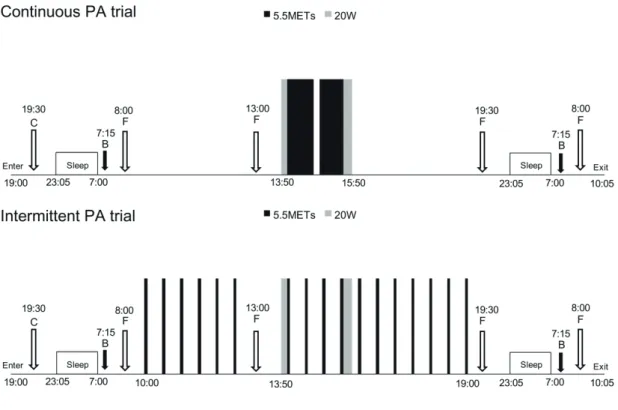
and 3 days) in a respiratory chamber (Figure 1). During the day while participants stayed in the
room, intentional vigorous PA such as exercise was restricted. Participants consumed all meals
provided until 1330 h and drank water freely. Participants arrived at the NIHN in the evening at
1730 h, were weighed lightly clad, put on the accelerometer, were fitted with an electrode for
measuring heart rate, and entered the calorimeter at 1850 h. They consumed the HC meal at
1930 h and were permitted to sleep at 2300 h. The HF experiments commenced at 0800 h on
day 2 after an equilibration period and finished at 1005 h on day 3. While in the calorimeter,
participants adhered to an identical fixed schedule of eating meals, exercising, and sleeping.
Minimum sleeping metabolic rate (SMR) was recorded overnight and calculated as minimum
EE over 3 hours on each of the 2 consecutive nights. Other metabolic parameters while sleeping
were analyzed from 2305 h to 0700 h on each of the 2 consecutive nights. Participants
temporarily left the chamber from 0715 h until 0730 h on the 2 consecutive mornings to provide
9 a blood sample.
10
Figure 1. Protocols in the continuous PA and the intermittent PA trials in the chamber.
Black bar, 5.5 METs cycling; gray bar, 20-W cycling; open arrows, meal eating; filled
arrows, blood sampling. C, carbohydrate meal; F, fat meal; B, blood sampling.
11 Dietary treatments
For 2 days before entering the chamber, participants consumed a provided HC weight
maintenance diet (15% of kcal from protein, 15% from fat, and 70% from carbohydrate).
Energy requirements were calculated individually as estimated by basal metabolic rate (BMR) ×
habitual PAL. BMR was estimated from age, sex, height, and body weight using Ganpule’s
equation (20), derived from Japanese adults at the NIHN. Habitual PAL was estimated using
IPAQ criteria, and 1.7 or 1.9 was applied, based on a report on the relationship between the
IPAQ criteria and PAL evaluated by the DLW method for Japanese adults (29). Energy intake
(EI) of the participants was either 2000, 2500, or 3000 kcal/d depending on their estimated
energy requirements. In addition, participants were asked to spend some time as similar as
possible during the 2 days before entering the chamber for each trial.
Participants consumed the HF meals (15% of kcal from protein, 50% from fat, 35%
from carbohydrate) starting from breakfast on day 2. They consumed the same meal 4 times
(breakfast, lunch, dinner, and breakfast) to avoid interactions of differences in food with time.
Energy requirements in the chamber were calculated individually as estimated BMR × 1.6 (PAL
of 1.6). The EI of a total of 3 meals (breakfast, lunch, and dinner) for each participant was either
2200, 2400, 2600, or 2800 kcal/d depending on their estimated energy requirements. Fatty acid
profiles of all meals consumed in the chamber were held constant with equal proportions of
12
saturated, mono-unsaturated, and poly-unsaturated fatty acids (1.4: 1.0: 0.5). All diets were
commercial products (processed foods) with known nutritional status and were provided by a
dietitian.
Exercise
The participants performed a total of 85 minutes of exercise using a static cycling
ergometer (Aerobike 75XL ii; Combi Wellness Corporation, Tokyo, Japan) at workload of 5.5
metabolic equivalents (METs) determined for each individual. In the continuous PA trial,
participants started exercise at 1350 h and finished at 1550 h. They performed a 10 minute
warming up, 45 minutes of exercise followed by a 10 minute break, then 40 more minutes of
exercise, and a 15 minute cooling down. In the intermittent PA trial, the participants started
exercise at 1000 h and finished at 1905 h. They performed 5 minutes of exercise every 30
minutes for a total of 17 bouts. They performed an identical 10 minute warming up and 15
minute cooling down at the same time as in the continuous PA trial. The workload for warming
up and cooling down was 20 W.
The workload of 5.5 METs was calculated by regression of the 20, 60, and 90 W
points while measuring maximum oxygen uptake. Maximum oxygen uptake was measured by
increasing the load every 3 minutes until exhaustion. Expired gas was sampled into Douglas
bags, and VO2 was obtained from oxygen and carbon dioxide concentrations measured using a
13
mass spectrometer for respiration (ARCO-2000; ARCOSYSTEM, Kashiwa, Japan) and gas
volume measured using a dry process gas flow meter (DC-1; Shinagawa, Tokyo, Japan) for the
last 30 seconds of every stage. The number of revolutions for all ergometer trials was kept at 60
r/min to keep energy efficiency constant. VO2 was considered “peak” if two of the following
criteria were met: 1) measured HRmax ≥ age-predicted HRmax - 10 beats/min; 2) VO2
increased by < 100 mL/min during a trial; 3) RERmax was ≥ 1.10; and/or 4) Borg Scalemax
was ≥ 19.
Indirect calorimetry
The present study used 2 open-circuit human calorimeters at the NIHN to measure
oxygen consumption and carbon dioxide production. Details of the human calorimeter were
previously reported (20, 46). The accuracy of the chambers in measurement of EE as
determined by an alcohol combustion test was 99.2 ± 0.7 (Mean ± SD) over 6 h and 99.2 ± 3.0
(Mean ± SD) over 30 minutes. The rooms were maintained at a temperature of 25 degrees
centigrade, humidity of 55%, and a ventilation rate of 60 L/min. Ventilation rate was measured
every 12 seconds using a pneumotachometer. Oxygen and carbon dioxide concentrations were
also measured every 12 seconds using a mass spectrometer (AR-2000; Arco System, Kashiwa,
Japan). EE was calculated from VO2 and VCO2 using Weir’s equation (77). Respiratory
exchange ratio (RER) was defined as VCO2/VO2. Fat and carbohydrate oxidation were
14
calculated from VO2 and VCO2, and protein oxidation using Jequier’s equation (32). Protein
intake was substituted for protein oxidation.
Physical activity evaluation using a tri-axial accelerometer
Participants wore the tri-axial accelerometer on the waist until all experiments were
completed. The accelerometer was developed especially for evaluating relatively low intensity
PA and non-locomotive or household PA (49, 50). Data were recorded in 10 second epoch
length. Cycling PA measured by accelerometry while using the cycling ergometer in the
chamber was converted to an acceleration value using Ohkawara’s equation (49). Non-wearing
time while in the chamber was assigned a value of 0.9 METs based on Ohkawara’s paper.
Continuity of sedentary behavior (METs ≤ 1.5) in the chamber was scored using three cutoff
points (3 or more, 5 or more, or 10 or more consecutive minutes), and analyzed using Microsoft
Excel (2007; Microsoft Japan, Tokyo, Japan).
Blood sampling
Blood samples for each participant were obtained under fasting condition at 0715 h
outside the chamber on 2 consecutive mornings to identify metabolically abnormal subjects and
to confirm whether there was an interaction with lipid metabolism between trials (lipid
oxidation subsides during the night). Blood samples collected in pre-chilled tubes that contained
a serum separating medium were centrifuged for 20 minutes at 3000 r/min 30 minutes after
15
drawing blood, after which serum was immediately stored in a refrigerator. Blood samples
collected in pre-chilled tubes that contained EDTA-2Na were centrifuged for 20 minutes at 3000
r/min, after which plasma was immediately stored in a freezer. Blood samples collected in
pre-chilled tubes that contained EDTA-2Na and NaF were stored immediately in a refrigerator.
Plasma concentrations of glucose, insulin, TG, nonesterified fatty acids (NEFA), high-density
lipoprotein cholesterol (HDL-C), LDL-C, and norepinephrine were analyzed at Mitsubishi
Chemical Medience Corporation.
Statistical analysis
Data are presented as means ± standard deviation (SD). 23-h RER from 0800 h on day
2 to 0700 h on day 3 was analyzed as the main outcome of this study. Descriptive statistics were
calculated, and Student’s paired t test, repeated measures analysis of variance, and Pearson’s
(partial) correlations were performed using SPSS (18.0; IBM SPSS, Tokyo, Japan). Student’s
paired t test was used to assess differences between the trials. Since RER during sleeping time
on day 1 was significantly different between trials, and because sleeping RER was significantly
correlated with 23-h RER, it was analyzed as a covariate. Multiple linear regression analysis
was used to adjust for covariance. Biochemical data were statistically analyzed using repeated
measures analysis of variance. The mean TEE and energy balance were significantly different
between trials. However, because neither TEE nor energy balance was significantly correlated
16
with 23-h RER, these were not used as co-variates. Physical activity data were assessed for
normality using a Kolmogorov-Smirnov test and kurtosis and skewness were determined;
however all variables were normally distributed. Results were considered significant at p < 0.05.
17
Study1. Effects of physical activity patterns on fat utilization
INTRODUCTION
Prevalence of both obesity and obesity-related diseases have been rising in most
developed countries (14). Physical activity (PA) is often recommended as a strategy for obesity
prevention. The International Association for the Study of Obesity (IASO) has adopted a
consensus statement stating that a PA level (PAL) of 1.7, or moderate intensity PA for 45 to 60
minutes per day, is recommended to prevent weight and fat gain in adults (57). However, a
recent systematic review and another report indicated that weight changes cannot be fully
explained by lower PA (80) or decreases in PA over time (79). Westerterp and Speakman (79),
interestingly, reported that PAL in adults evaluated by the doubly-labeled water (DLW) method
has not decreased since the 1980s. Therefore, it is possible that other factors related to PA, but
independent of PAL, may influence weight and fat gain in adults.
Previous studies have reported that higher PAL induces greater fat utilization when
switching from an HC to an HF meal (8, 23, 58, 63) . These studies showed results consistent
with the IASO consensus statement. However, it has not been investigated whether PA patterns
influence fat utilization during switching from an HC to an HF meal independent of PAL. In
general, moderate intensity PA, and in particular prolonged moderate intensity exercise lasting
for 10 minutes or more, is widely believed to be one of the easiest ways to utilize PA to increase
18
EE while burning a large proportion of energy from fat. In fact, most previous studies have
investigated the effects of continuity of exercise with a duration over 10 minutes (47). However,
increased accumulated intermittent PA and intense non-locomotive PA are effective alternatives
to prolonged PA, and both increase EE and fat utilization. Troiano et al. (70) suggested that
moderate to vigorous PA (MVPA) carried out for 10 or more minutes accounted for only
one-third of total time spent on MVPA as measured using an accelerometer. Interestingly, it was
shown that the amount or frequency of intermittent PA (“breaks in sedentary”) may play a role
in obesity-related outcomes (27), independent of total time spent on MVPA or sedentary
behavior. Thus, although intermittent PA carried out for less than 10 minutes may be an
important factor for PAL and obesity-related outcomes independent of MVPA, there is no
evidence on whether intermittent PA influences fat utilization or subsequent weight or fat gain.
Therefore, the aim of the present study was to determine whether continuous and
intermittent PA differentially influenced fat utilization over the course of a whole-day. We
measured both continuous and intermittent PA using a human calorimeter over one day with an
HF meal.
19 RESULTS
Subject characteristics.
Table 1 shows the characteristics of the nine participants. Participants were weight
stable (within 1.5 kg) throughout the study period. Average total EE for two days before
entering the chamber, measured using an accelerometer was not significantly different between
the continuous PA trial and the intermittent PA trial with 2450 ± 225 kcal, 2522 ± 374 kcal,
respectively. The same diets were provided between trials and all were consumed before
entering the chamber. The mean total energy intake was 2660 ± 225 kcal in both trials, and
mean macronutrient composition was 15.3 ± 0.0% protein, 15.8 ± 0.2% fat, and 68.9 ± 0.2%
carbohydrate in both trials.
20 Table 1. Physical characteristics.
21
EI, EE, and substrate oxidation under HC conditions in the chamber.
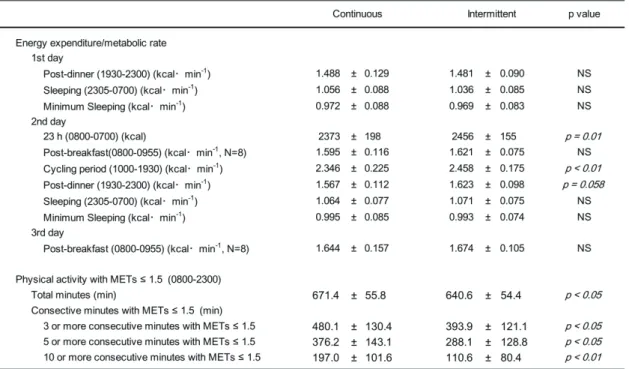
Average EE and RER for each segment are shown in Tables 2 and 3. On the first night,
EE and RER were not significantly different between trials except for sleeping time RER.
During sleep on day 1, RER in the intermittent PA trial was significantly lower than in the
continuous PA trial (p = 0.01).
22
Table 2. EE/metabolic rate in each segment and low-intensity PA in the chamber
Value are mean ± SD. Metabolic rate of post-breakfast were analyzed in eight males. PA with METs ≤ 1.5 was evaluated by using accelerometer. NS, nonsignificant.
23 Table 3. REE in each segment.
Value are mean ± SD. Metabolic rate of post-breakfast were analyzed in eight males. NS, nonsignificant.
24
EI, EE, and substrate oxidation under HF conditions in the chamber.
On day 2 in the chamber, mean total energy intake was 2413 ± 132 kcal in both trials,
and macronutrient composition was 16.4 ± 0.3% kcal from protein, 49.0 ± 0.7% from fat, and
34.6 ± 0.5% from carbohydrate in both trials. Table 2 shows energy expenditure and metabolic
rate values during each segment in the chamber. The mean total energy expenditure in the
intermittent PA trial (2456 ± 155 kcal) was higher than in the continuous PA trial (2373 ± 198
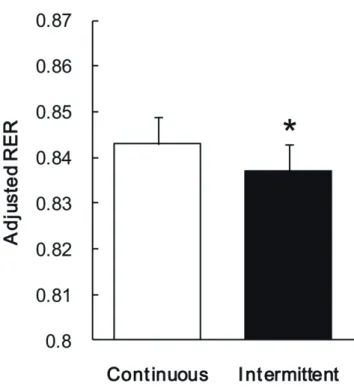
kcal, p = 0.01). Table 3 shows RER (non-adjusted) during each segment in the chamber. 23-h
RER adjusted for RER on the preceding day in the intermittent PA trial was lower than in the
continuous trial (P = 0.021, Figure 2). Non-sleeping RER (15-h) adjusted for RER on the
preceding day in the intermittent PA trial was also lower than in the continuous PA trial (P =
0.017). Sleeping RER adjusted for sleeping RER on the preceding day was not significantly
different between trials. There was no interaction between trial and time for sleeping RER or
post-breakfast RER. Although there was an effect of time between days 1 and 2 (P < 0.001) and
a trial effect (P < 0.01) for sleeping RER, there was only an effect of time between days 2 and 3
(P < 0.001) for post-breakfast RER. 23-h fat oxidation adjusted for TEE and sleeping fat
oxidation rate on the preceding day was significantly higher in the intermittent PA trial (109.8 ±
6.8 g) than in the continuous PA trial (101.1 ± 6.8 g; P = 0.001). There was no significant
difference between trials in 23-h CHO oxidation adjusted for TEE and sleeping CHO oxidation
25 rate on the preceding day.
PA in the chamber.
PA in the chamber was evaluated using an accelerometer. PA during the period without
respiratory measurements (0700–0800 h) on days 2 and 3 was not significantly different
between trials. There was no significant difference in cycling ergometer PA with either 5.5
METs or 20 W cycling between trials, whereas non-cycling PA in the intermittent PA trial (1.33
± 0.11 METs) was significantly higher than in the continuous PA trial (1.25 ± 0.11 METs, p <
0.01). The difference of means of accumulated time in trials was larger with a greater number of
consecutive minutes with METs ≤ 1.5 (Table 2).
PA in the chamber and substrate oxidation.
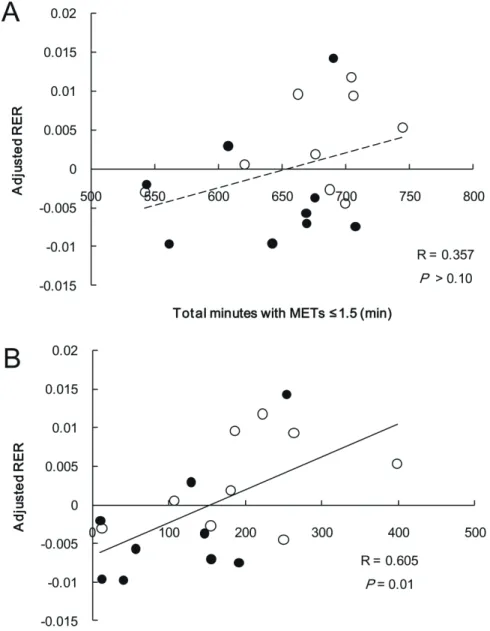
There was no significant relationship between total minutes with METs ≤ 1.5 and 23-h
RER adjusted for sleeping RER on the preceding day (Figure 3A), whereas adjusted 23-h RER
was correlated with each level of accumulated consecutive minutes with METs ≤ 1.5 (3 minutes
or more; r = 0.477, 5 minutes or more; r = 0.510, 10 minutes or more; r = 0.605, Figure 3B).
Moreover, because total minutes with METs ≤ 1.5 in the intermittent PA trial was significantly
lower than in the continuous PA trial, we examined the relationships between fractions of
accumulated consecutive minutes with METs ≤ 1.5 relative to total minutes with METs ≤ 1.5
and adjusted 23-h RER to evaluate the influence of prolonged sedentary behavior independently
26
of the PA trials. The relationships were comparable for each level (3 minutes or more; r = 0.488,
5 minutes or more; r = 0.516, 10 minutes or more; r = 0.625). The mean PA intensity for
non-cycling time was not significantly correlated with 23-RER adjusted for sleeping RER on
the preceding day. Additionally, neither PALsleep (TEE/SMR×23/24) nor PALBMR
(TEE/estimated BMR×23/24) evaluated in the respiratory chamber was significantly correlated
with 23-h RER.
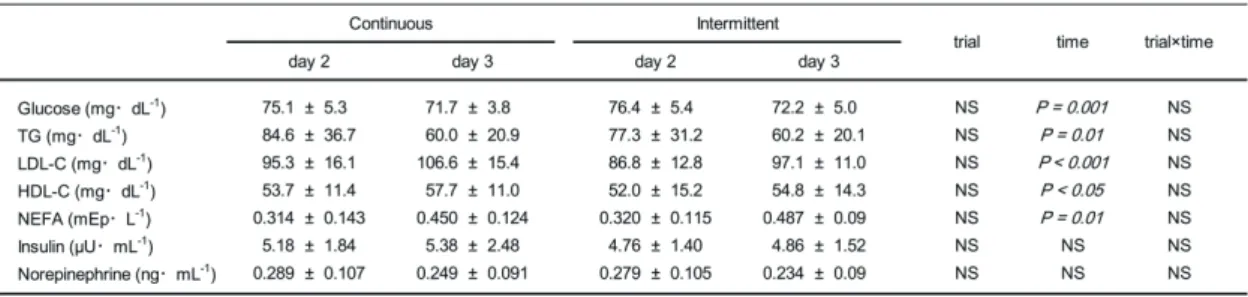
Blood samples.
Plasma parameters were not significantly different between trials on day 2. For all
variables, no significant interaction of trial×time was observed. The only significant effect of
time was between day 2 and day 3 on plasma parameters other than insulin and norepinephrine.
Plasma glucose and TG decreased (P = 0.001, P = 0.01, respectively), whereas NEFA, HDL-C,
and LDL-C increased (P = 0.01, P < 0.05, P < 0.001, respectively; Table 4).
27
Figure 2. RER adjusted for sleeping RER for the continuous PA trial and the intermittent PA trials. Values are mean ± SD. *P = 0.021 between trials.
28
Figure 3. Relation between PA with METs ≤ 1.5 and 23-h RER adjusted for sleeping RER.
Open circle, continuous; filled circle, intermittent.
29
Table 4. Fasting glucose, lipid, insulin, and norepinephrine concentrations over the course of the experiment
NS, nonsignificant.
30
Figure 4. Mean (±SEM) energy expenditure (A) and substrate oxidation (B) (C) during awake time. Open circle; continuous, filled circle; intermittent.
31 DISCUSSIONS
In the present study, we examined whether continuous and intermittent moderate
intensity PA differentially influence fat utilization over a whole-day. Given the results of a
recent study showing that the number of “breaks in sedentary” was associated with
obesity-related parameters, we hypothesized that intermittent moderate intensity PA throughout
the day (e.g. walking, moving around, intense household activity, etc.) would lead to greater fat
utilization than a single bout of moderate intensity PA. 23-h RER in the intermittent PA trial was
significantly lower than in the continuous PA trial, although the difference in fat oxidation was
only about 10g/day. In the intermittent PA trial, there were 15 more instances of standing up,
moving around, and ergometer preparation than in the continuous PA trial. 23-h TEE and energy
balance were significantly different between trials, but both were not significantly associated
with 23-h RER in this study, although energy balance is considered as a main determinant of fat
oxidation. This result may reflect that inter-individual relationships between energy balance and
RER were masked by some other confounding factors. Incidentally, although the difference in
TEE between trials was 83 kcal, most of this difference (70 kcal) can be explained by
non-cycling PA measured by accelerometry. Additionally, PAL and Non-cycling PA
(spontaneous PA) were not significantly associated with 23-h RER, although previous studies
have indicated that a higher PAL leads to more rapid adaptation to an HF meal. This discrepancy
32
may be due to a higher PAL in both trials in the present experiment. Hansen et al. (23) also
showed that the change in RER at a PAL of 1.8 was similar to that at a PAL of 1.6. Based on
these results, even if PAL were the same, intermittent PA might induce greater utilization of
ingested fat over the course of a day when switching from an HC meal to an HF meal than
continuous PA.
It is plausible that consecutive time with METs ≤ 1.5 in the intermittent PA trial was
less than in the continuous PA trial. Figure 3 shows that there was a strong correlation between
10 or more consecutive minutes with METs ≤ 1.5 and adjusted 23-h RER. Recent studies
presented by Hamilton and colleagues (2, 82) suggest that prolonged sedentary behavior leads
to decreased fat oxidation as a result of decreased heparin-releasable lipoprotein lipase (LPL)
activity, which directs consumed fat toward muscle. Furthermore, the present study showed that
the fraction of accumulated consecutive minutes with METs ≤ 1.5 relative to total minutes with
METs ≤ 1.5 was strongly associated with 23-h RER adjusted for sleeping RER on the preceding
day. Thus, our results may support the idea that “breaks in sedentary” prevent decreased fat
oxidation.
Several studies performed under energy balanced conditions over one day showed that
moderate-intensity exercise does not lead to relatively increased fat oxidation over the day (45).
This phenomenon can be explained by the popular dogma that RER becomes equal to the food
33
quotient (FQ) in the long term. Thus, when subjects eat meals with the same macronutrient
balance on pre-chamber days and chamber days, fat and CHO utilization during exercise should
compensate and become equal to the FQ. However, when FQ and energy balance change from
day to day, a positive fat balance is probably always easy to retain. Then, because this possibly
leads to weight gain, we need to investigate those conditions that are favorable for a positive fat
balance. Thus, this was the motivation for the present study. Although the difference in fat
oxidation was only about 10g/day, if a positive fat balance (i.e., a negative CHO balance)
accumulated rather than a threshold for stimulating appetite, this may lead to subsequent
overeating. Actually, fat oxidation did not show compensation after exercise, because the
measurement was performed during the period of switching from HC to HF. In addition,
because LPL protein remains elevated until about 20 hours after exercise in humans (61), we
continued our study until late morning on day 3. However, there were no significant interactions
between pre- and post-exercise for sleeping RER or postprandial RER in the morning (P = 0.19,
P = 0.64, respectively). Moreover, none of the biochemical variables on day 3 mornings showed
any interactions between trials, although the sample size and only one point (fasted condition)
for blood drawing were limited. Thus, excess fat oxidation after prolonged exercise during the
continuous PA trial might have been completed in the morning. These data probably indicate
that a positive fat balance may not be compensated and may accumulate day after day.
34
During switching from an HC meal to an HF meal, macronutrient utilization switches
from predominantly CHO to fat until it becomes equal to the proportion of fat consumed.
However, individuals cannot adapt as rapidly to changes in fat intake compared to changes in
other macronutrients. More than a full day is needed to increase pyruvate dehydrogenase kinase
(PDK) activity, a key factor for fat adaptation, after consumption of an HF diet (3, 52). However,
prolonged low-to moderate-intensity exercise can modulate PDK activity (73). In fact, Hansen
et al. (23) showed that prolonged low-intensity exercise leads to faster adaptation to an HF meal
than inactivity. A previous study reported that PDK activity was modulated 4 hours after
initiation of exercise. Moreover, LPL activity also began to increase 4 hours after exercise (61).
These data suggest that the beneficial effects of exercise on fat metabolism in response to an HF
diet require at least 4 hours. In the present study, however, increased fat utilization could be seen
approximately 1–2 hours after starting exercise in the intermittent PA trial (Figure 4), although
protein oxidation could not be measured. An acute negative energy balance during an
intermittent PA trial compared to during a continuous PA trial might lead to accelerating fat
adaptation. Thus, a synergistic effect of rapidly increased fat consumption and excess of EE by
only 5 min of exercise may have contributed to the acceleration of fat adaptation in the
intermittent PA trial. Therefore, intermittent PA may lead to efficient utilization of ingested fat
by preventing decreased fat oxidation and accelerating increased fat oxidation for adapting to fat
35 consumption.
Multiple bouts of exercise have been reported to have beneficial effects for the
prevention and management of obesity (21, 48), although the results of these studies were not
consistent with those of another study (31). Interestingly, Goto et al. (21) showed that splitting
up exercise into short sessions may be beneficial for fat utilization, although this study did not
evaluate all EE and PA over an entire day. That study compared RER during the 180 minutes
after either a single 30 minute bout of exercise or three 10 minute bouts of exercise with a 10
minute rest between each. The results showed that RER after intermittent exercise was lower
than after continuous exercise. In the present study, RER post-dinner in the intermittent PA trial
on day 2 was significantly lower than in the continuous PA trial (P < 0.01). However, EE
post-dinner in the intermittent PA trial tended to be higher than in the continuous PA trial.
Accelerometry data also showed that average PA in the intermittent PA trial (1.26 METs) was
higher than in the continuous PA trial (1.21 METs) but these differences were not significant
(data not shown). We speculate that higher postprandial EE in the intermittent PA trial
contributed to the lower postprandial RER relative to the continuous PA trial.
There are several limitations to our study. The first limitation is that energy balance
was significantly different between trials. However, EB was not significantly correlated with
RER in this study. Therefore, we thought that EB did not need to be taken into consideration for
36
statistical analysis. However, this may reflect that a negative EB is associated with a higher
RER in each participant, but these intra-individual relationships were masked in the larger
inter-individual distribution with almost no relationship. Therefore, we did a correlation analysis
between intra-individual differences in RER and those in EB. There was a moderate correlation
between differences in (delta) RER and differences in (delta) EB (r = 0.69). Thus, EB appears to
influence RER in each subject. However, so far as we know, these intra-individual relationships
between EB and RER cannot be statistically considered for comparing 2 PA patterns without
significant inter-individual relationships between EB and RER. In addition, because any
consecutive minutes with sedentary behavior were not associated with energy balance (data not
shown), we suggest that prolonged sedentary behavior influenced RER independently of energy
balance. The second limitation is that protein consumption was used to estimate substrate
oxidation. It is more accurate to estimate protein oxidation using urine samples. In the present
study, however, all subjects consumed meals that contained 15% protein. Moreover, since this
study used a crossover design, participants consumed the same diet in both trials. Previous
studies using a similar protocol showed that protein oxidation was not different between trials,
even if PAL (23) and meal frequency (62) were different. In addition, the duration of the
experiment was shorter than previous studies. Previous studies have monitored fat adaptation
over a 4 day period (8, 23, 63). However, participants in the present study consumed HC food
37
that contained 70% CHO (FQ = 0.928; higher than in previous studies) for 2 days before
entering the chamber in order to detect subsequent differences in adaptation speed to an HF diet.
The present data showed that average 23-h RER rapidly decreased to about 0.84, approaching
the FQ of 0.827, in both trials, although daily RER during HC consumption was not confirmed.
Because a previous study also reported that RER decreased substantially within one day of
consuming an HF diet (23), the experimental period of the present study appears to be
appropriate. In addition, we did not sequentially observe any biochemical parameters. Although
mean heart rate and variables of heart rate variability, an indicator of autonomic nervous activity,
were measured during experiments in the chamber, these were not significantly different
between trials (data not shown), because the intensity of exercise in these experiments was low.
Traditionally, prolonged exercise for 10 minutes or more in each session has been
recommended to increase EE. A study (67) and a guideline (24) for adults suggested that a
certain number of consecutive minutes (≥10 minutes) of MVPA contributed to weight control
more than accumulated sporadic MVPA, although this evidence was limited to cross-sectional
studies. However, the prevalence of obesity has continued to increase. In our study, the
intermittent PA trial, in which exercise was performed for only 5 minutes per bout, was
associated with greater fat utilization than the continuous PA trial. Thus, our data strongly
suggest that at least 5 or more consecutive minutes of MVPA may contribute to preventing
38
obesity as well as 10 or more consecutive minutes of MVPA, and may be a more achievable
goal for many people, although further studies are needed to clarify the effects of PA lasting less
than 5 minutes (sporadic PA). Partitioning exercise into short bouts of exercise throughout the
day may be more practical for sedentary individuals who have low physical fitness.
In summary, this study provides important information about the potential impact of
PA continuity on substrate oxidation over a whole-day. The present data indicate that there was
greater fat oxidation in the intermittent PA trial than in the continuous PA trial after exposure to
an HF meal. In addition, our data also suggest that multiple bouts of exercise for only 5 minutes
promote fat utilization better than prolonged exercise. This may be explained by the fact that a
greater number of consecutive minutes of sedentary behavior (METs ≤ 1.5) was associated with
higher RER (lower fat oxidation). Thus, the present study specifically suggests that the intervals
between dynamic body movements should be as short as possible for more efficient utilization
of ingested fat. Whereas, because these results were obtained from only a few subjects during a
short-term laboratory experiment, additional longitudinal studies and intervention studies are
needed to confirm whether intermittent PA rather than continuous PA is effective for preventing
obesity.
39
Study 2. Effects of aerobic capacity on fat utilization
INTRODUCTION
Several previous studies have indicated that a daily reduction in fat oxidation predicts
weight and fat gain over a year or more (12, 13, 51, 60, 83). Utilization of dietary fat is less
sensitive and adaptive compared to the other macronutrients; there is a larger capacity for fat
storage, which can be expanded or contracted as required, making it a more effective depot than
is the case for carbohydrate and/or protein storage. For example, “holiday weight gain” or
“weekend weight gain”, binge eating at a party, or a large reduction in the level of physical
activity (PA) during holidays can be the cause of a positive energy balance (EB) because these
situations can increase the likelihood for ingestion of excess fat. While a “healthy” lifestyle on a
daily basis is recommended in general, many people may hope to avoid or limit exercise and/or
a strict diet on their days off. Therefore, optimizing the utilization of fat to help prevent weight
gain under free-living conditions is most important in cases of overeating, especially if that
consumption involves ingestion of high-fat foods.
In recent studies, several physiological factors have been proposed as predictors of
either a lower body weight or an increase in body fat gain. For example, a higher resting
metabolic rate, higher insulin secretion during oral glucose testing, and higher sympathetic
activity, etc., have been reported to be associated with a subsequently lower weight or fat gain in
40
Pima Indians(53). However, evidence in support of such effects remains insufficient, mainly
because the physiological parameters in question can be strongly influenced by genetic factors,
making the parameters difficult to evaluate and improve. Aerobic capacity (AC) is also strongly
influenced by genetic factors, but it is one of the most modifiable parameters in terms of the
body's physiological functions, and has been used to maximize the capacity for fat oxidation.
Numerous longitudinal studies have shown that a higher AC can predict lower weight gain (5, 6,
22, 33, 43, 71). Some previous studies have reported that a higher AC can predict subsequently
lower weight or fat gain, even after adjustment for PA (5, 33). However, to the author's
knowledge, and following an extensive search of the literature, it appears that no study
sufficiently answers this question using a physiological approach: why can AC predict
subsequently lower weight or fat gain.
Many studies focus on fat utilization during exercise and show that a higher AC leads
to more fat utilization under identical workloads. This outcome does not change, even when
relative intensity or maximum oxygen uptake are the same (66, 81); the only exception may be
in men, for whom the evidence is conflicting (16, 17). There are only a few studies that focus on
fat utilization in conjunction with some physical activity over a whole day (36, 44, 56, 59, 64).
More study results showed that AC does not result in fat utilization and only a minority
of studies reported a positive association between the two. Smith et al. described that
41
higher ACs result in much more fat utilization under conditions in which fat tends to be in
excess, PA level (PAL) is low (PAL = 1.4) and the diet has been switched from being
high-carbohydrate (HC) to high-fat (HF). A PAL of 1.4 indicates that free-living individuals
would be well-advised to engage in very low-intensity activity throughout the day. In the Smith
et al. study, participants performed prolonged exercise for a total of 30 minutes, but this was
done in a sporadic manner 2 or 3 times a day for at least 10 minutes per session in a human
calorimeter to maintain the PAL of 1.4. There were some potential limitations associated with
the Smith study. First, it is uncertain whether or not prolonged exercise served as an influential
stimulus to the relationship between AC and fat utilization. Second, it is unclear whether or not
the continuity or sporadic nature of the exercise influenced the relationship between AC and fat
utilization. Third, there is doubt as to it whether or not the relationship between AC and fat
utilization took into account the sedentary periods pre- and post-exercise or just considered the
exercise period. As a result, it may be conceivable that higher AC leads to higher metabolic
flexibility during physical inactivity; however, there is no definitive evidence.
The primary purpose of the present study was to determine whether there is a
relationship between AC and fat utilization; this is based on the rationale that there are few
studies and the results are largely inconsistent. An investigation was also conducted to
determine whether the continuous or sporadic nature of exercise influences the relationship
42
between AC and fat utilization. The final aim of this study related to determining whether there
was a relationship between AC and fat utilization during sedentary periods pre- and
post-exercise.
43 RESULTS
The relationship between AC and energy substrate utilization
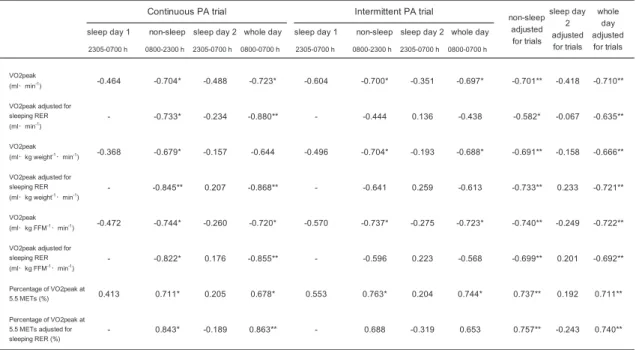
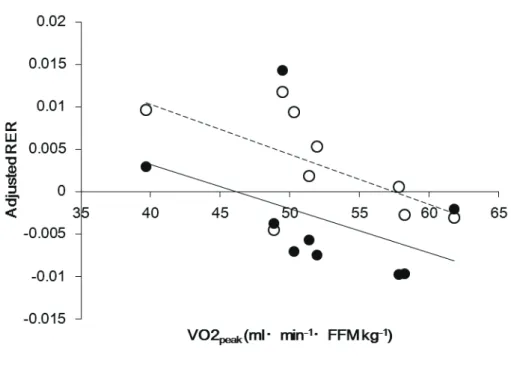
Table 5 and Figure 5 show the relationship between AC and the respiratory exchange
ratio (RER) during the continuous and intermittent trials. There was a significant relationship
between all parameters of AC and non-sleeping time (15-h) RER, and also between AC and
whole-day RER (23-h) in both trials. Becausethere was a possibility of an association between
AC and RER for sleeping time on day 1, sleeping time RER was analyzed as a covariate. All
parameters of AC were strongly correlated with non-sleeping time (15-h) RER, and whole-day
RER (23-h) in the continuous PA trial adjusted for sleeping RER on the preceding day. On the
other hand, in the intermittent PA trial, no parameters of AC were significantly correlated with
non-sleeping time (15-h) RER, although many parameters of AC were significantly correlated
with whole-day RER (23-h) in the intermittent PA trial adjusted for sleeping RER on the
preceding day. Because the slopes for both trials were comparable, these analyses were
performed together with an adjustment made for trial. All parameters of AC were significantly
correlated with non-sleeping time (15h) RER, and whole-day RER (23-h) adjusted for sleeping
RER on the preceding day and trial. There was no significant relationship between any
parameter of AC and sleeping RER on day 2.
44
Table 5. Correlation coefficients between AC and RER in continuous and intermittent physical activity trial segments
*P < 0.05; **P < 0.01. Abbreviations: PA, physical activity; FFM, fat-free mass; RER, respiratory exchange ratio; VO2peak, peak oxygen consumption.
VOHHSGD\ QRQVOHHS VOHHSGD\ ZKROHGD\ VOHHSGD\ QRQVOHHS VOHHSGD\ ZKROHGD\
K K K K K K K K
92SHDN
POዘPLQ
92SHDNDGMXVWHGIRU VOHHSLQJ5(5 POዘPLQ
92SHDN
POዘNJZHLJKWዘPLQ
92SHDNDGMXVWHGIRU VOHHSLQJ5(5 POዘNJZHLJKWዘPLQ
92SHDN
POዘNJ))0ዘPLQ
92SHDNDGMXVWHGIRU VOHHSLQJ5(5 POዘNJ))0ዘPLQ
3HUFHQWDJHRI92SHDNDW
0(7V
3HUFHQWDJHRI92SHDNDW 0(7VDGMXVWHGIRU VOHHSLQJ5(5
&RQWLQXRXV3$WULDO ,QWHUPLWWHQW3$WULDO
QRQVOHHS DGMXVWHG IRUWULDOV
VOHHSGD\
DGMXVWHG
IRUWULDOV ZKROH
GD\
DGMXVWHG IRUWULDOV
45
Figure 5. Relationship between AC and 23-h RER adjusted for sleeping RER.
open circle, continuous physical activity (PA); filled circle, intermittent PA; solid line,
regression line in continuous physical activity trial; dashed line, regression line in intermittent
physical activity trial. Abbreviations: AC, aerobic capacity; FFM, fat-free mass; RER,
respiratory exchange ratio; VO2peak, peak oxygen consumption.
46
The relationship between AC and energy substrate utilization during prolonged pre- and post-exercise periods during the continuous PA trial
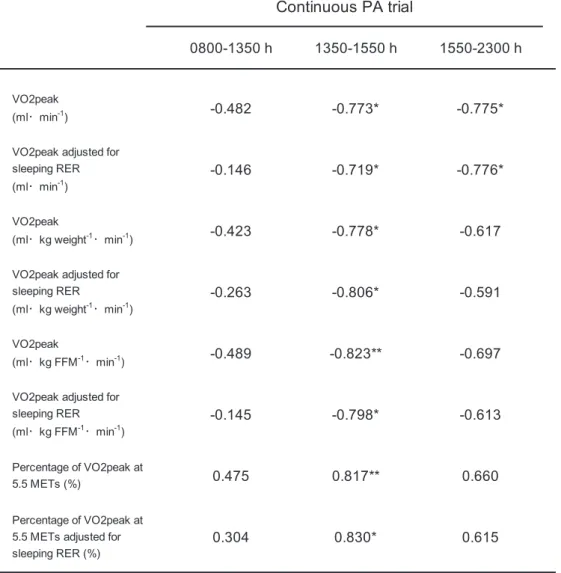
Table 6 and Figure 6 show the relationship between AC and RER during sedentary
periods in the continuous PA trial. All parameters of AC were strongly correlated with the RER
during the exercise period in the continuous PA trials. However, there was no significant
relationship between parameters of AC and the pre-exercise period in the continuous PA trials,
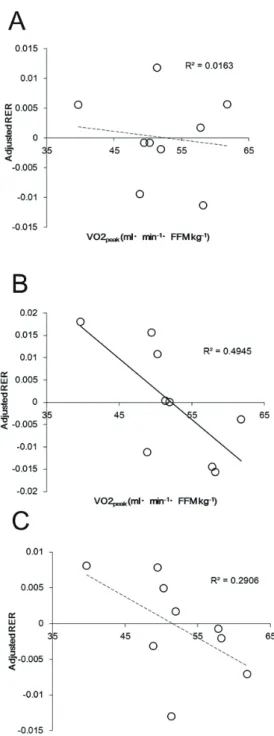
whereas all parameters of AC were associated with the post-exercise period RER in the
continuous PA trials.
47
Table 6. Correlations between AC and RER before, during, and post-exercise in the continuous PA trial
* P < 0.05; ** P < 0.01. Abbreviations: PA, physical activity; FFM, fat-free mass; RER, respiratory exchange ratio; VO2peak, peak oxygen consumption.
K K K
92SHDN
POዘPLQ
92SHDNDGMXVWHGIRU VOHHSLQJ5(5 POዘPLQ
92SHDN
POዘNJZHLJKWዘPLQ
92SHDNDGMXVWHGIRU VOHHSLQJ5(5
POዘNJZHLJKWዘPLQ
92SHDN
POዘNJ))0ዘPLQ
92SHDNDGMXVWHGIRU VOHHSLQJ5(5 POዘNJ))0ዘPLQ
3HUFHQWDJHRI92SHDNDW
0(7V
3HUFHQWDJHRI92SHDNDW 0(7VDGMXVWHGIRU VOHHSLQJ5(5
&RQWLQXRXV3$WULDO
48
Figure 6. Correlations between AC and RER before exercise (A), during exercise (B), and post-exercise (C) during the continuous PA trial.
Abbreviations: AC, aerobic capacity; FFM, fat-free mass; RER, respiratory exchange ratio; VO2peak, peak oxygen consumption.
49 DISCUSSION
To prevent weight or fat gain in free-living individuals, it may be most important to
optimize fat utilization in cases of overeating, especially if fat is consumed in excess. For this
reason, it is recommended that a relatively “healthy” lifestyle should be adopted, even during a
holiday(s). However, many people may be less interested in performing exercise during a day
off, and they may also be less inclined to want to adhere to dietary restrictions. Considering the
possibility of these tendencies, it is beneficial if ingested fat can be easily utilized; this rationale
is the basis for the focus of this study that investigated the influence of AC on fat utilization.
The results of this study show that higher AC was associated with higher fat utilization during
trials of continuous and intermittent physical activity when diets were switched from HC to HF
yielding results similar to those of Smith et al. (64). Thus, the results of our study support
previous evidence. Furthermore, this study was an investigation to determine whether the PA
pattern is influential, in relation to exercise continuity in particular. The results of this study
suggest that the associations identified in the continuous PA trial were stronger than those in the
intermittent PA trial; however, it is not possible to elaborate on statistical predominance in the
present study, because the slopes of theregression lines in the both trials were almost the same.
It is notable that the present results were not in agreement with Roy’s study (56) performed in
patients consuming an HF diet. This disparity in outcomes might be due to the difference in
50
exercise intensity in the chamber. Although our study and Smith’s study were based on exercise
approximating 5METs on the subjects, Roy’s study imposed exercise of less than 3METs. Thus,
relatively intense PA may be required to maintain the relationship between AC and fat
utilization.
All parameters of AC were strongly correlated with RER during the exercise period in
the continuous PA trials, even if the RER was adjusted for the sleeping RER on the preceding
day. Many studies support this result showing that a higher AC results in increased fat utilization
under conditions of the same workload (16, 17, 66, 81). This investigation also determined
whether there was a relationship between AC and fat utilization during sedentary periods pre-
and post-exercise in the continuous PA trial. All parameters of AC tended to be associated with
the post-exercise period RER after adjustment for sleeping RER in the continuous PA trials,
although the P values were marginal. The results of one study participant appeared to be an
outlier, and after removing that participant's data, there was an extremely strong correlation
between AC and RER adjusted for sleeping RER on the preceding day (R = 0.97, Figure C).
Thus, a strong association between AC and 23-h RER might exist. Because prolonged
lower-intensity exercise can modulate pyruvate dehydrogenase kinase (PDK) activity (73),
higher AC may accelerate fat adaptation after exercise.
51
Results of the study showed there was no significant relationship between all
parameters of AC and the pre-exercise period RER in the continuous PA trials, although
unadjusted RERs tended to be associated with AC. Thus, there may be no benefit of higher AC
on fat utilization during sedentary periods. More specifically, the pre-exercise RER was
associated with AC, but only if no adjustment was made. If the influences of substrate
utilization during sleep persist in the daytime and aid in the utilization of ingested fat, the
relationship between AC and unadjusted RER in the pre exercise period should represent just
one benefit of a higher AC on fat utilization. Recent studies in the field of obesity and diabetes
have addressed metabolic flexibility. Metabolic flexibility is the capacity of the bodyto match
fuel oxidation to ingested fuel(34).In reference to the aforementioned definition, Galgani et al.
(19) stated that, “... the switch from carbohydrate to lipid oxidation during an overnight fast
should also be part of the assessment of metabolic flexibility.”
Most previous studies have demonstrated no association between substrate utilization
during sleep and subsequent weight gain (13, 74-76), whereas other studies have shown the
association between non-sleeping time or 24-h substrate oxidation and weight gain (13,
83).Thus, utilization of ingested fat during the daytime may be an important factor in the
prevention of obesity. Enhancement of PA should also be considered important for utilization of
fat and prevention of subsequent weight or fat gain. However, because these results were
52
obtained following only a few hours of physical inactivity during pre-exercise, additional
studies and intervention studies examining participants under conditions of physical inactivity
over a whole day are needed to confirm whether there is the relationship between AC and fat
utilization during physical inactivity.
53
Comprehensive discussion and summary
A large body of evidence supports the notion that habitual exercise, higher PAL, and
well-balanced food intake is generally required to prevent of obesity. However, for many people
who have a very busy and fast-paced lifestyle, it can be an everyday challenge to follow dietary
and lifestyle recommendations, although they may even acknowledge it can help to prevent
weight/fat gain. Consequently, the increasing prevalence of obesity will likely continue. This
research has focused on how ingested fat predicts subsequent weight/fat gain in free-living
conditions and shows how outcomes are dependent on individuals' behaviors.
Study 1 demonstrated the effect of PA on fat utilization. In fact, expending as much
energy as possible is most important in terms of the utilization of fat. Longitudinal data have
shown the amount of PA cannot fully explain recent weight gain in adults. These findings
suggest that it is highly possible that other factors related to PA, but independent of PAL, may
influence weight and fat gain in adults. Study 1 indicated that fat oxidation increased more in
participants in the intermittent PA trial than in the continuous PA trial after exposure to an HF
meal. In addition, our data also suggested that multiple bouts of exercise, even if only
performed for a duration of 5 minutes, did more to promote fat utilization than did prolonged
exercise. This may be explained by the fact that longer periods of sedentary behavior
(consecutive minutes at METs ≤1.5) were associated with higher RER (lower fat oxidation). The
54
present study specifically suggests that the intervals between dynamic body movements should
be as short as possible for more efficient utilization of ingested fat. This study also provides
important information about the potential impact of PA continuity on substrate oxidation over a
whole day. Therefore, on days when excess fat is ingested, in particular on holidays,
occasionally breaking the sedentary pattern of no body movement may help with the increased
utilization of ingested fat. In addition, partitioning exercise into short sessions throughout the
day may be a more practical approach to PA for sedentary individuals who tend to have lower
levels of physical fitness.
Study 2 was an investigation of the effect of physiological function on fat utilization.
Optimizing the utilization of fat to help prevent weight/fat gain under conditions of free-living
is most important in cases of overeating, especially if that consumption involves ingestion of
high-fat foods; the utilization of ingested fat via body functions should not be difficult. Because
some longitudinal studies reported that higher AC can lead to lower weight gain, this
investigation was designed to determine whether or not higher AC helps to utilize ingested fat
over a whole day. A key point of focus was the relationship between AC and fat utilization
during a period of physical inactivity pre- and post-exercise. The results of Study 2 indicated
that there was strong association between AC and fat utilization after exposure to a HF meal in
both the continuous and intermittent PA trials; higher AC led a greater fat utilization, especially