在来種ネズミモチと移入種トウネズミモチ(モクセ イ科) の保全遺伝学的研究
著者 Saito Michihiro, Hayakawa Hiroshi, Minamiya Yukio, Muramatsu Yuko, Hirata Aya, Ueda Ryosuke, Matsuyama Kanako, Ohga Kyohei, Yokoyama Nanako, Muroi Miwako, Ito Katsura, Arakawa Ryo, Fukuda Tatsuya
著者別表示 齋藤 倫広, 早川 宗志, 南谷 幸雄, 村松 優子, 平
田 亜也, 植田 諒介, 松山 佳那子, 大賀 教平, 横 山 菜々子, 室井 美和子, 伊藤 桂, 荒川 良, 福田 達哉
journal or
publication title
The journal of phytogeography and taxonomy
volume 59
number 2
page range 73‑80
year 2012‑03‑30
URL http://doi.org/10.24517/00053461
Creative Commons : 表示 ‑ 非営利 ‑ 改変禁止
http://creativecommons.org/licenses/by‑nc‑nd/3.0/deed.ja
Abstract
Genetic introgression from introduced, non-native species into native populations is a growing challenge for biological conservation, and one that raises unique practical and ethical issues. Ligustrum lucidum is na- tive to China, and cultivated or used in gardens in various areas in Japan. Recently, some studies reported that this species escaped from cultivated areas and was sympatric with L. japonicum. This indicates that L.
japonicum faces the ecological and genetic risk of hybridization and introgression with non-native L. lucidum.
Therefore, we examined whether hybridization between L. japonicum and the non-native L. lucidum has oc- curred in a coexisting population using phenological and molecular analyses. The phenological results indicate that there is very little overlap in the flowering times of the two species. Moreover, molecular analyses using PCR-RFLP of chloroplast and nuclear DNA sequences could not detect any hybridization or introgression of L.
lucidum and L. japonicum in the population.
Key words : hybrid, Ligustrum, molecular, native, PCR-RFLP
1Faculty of Agriculture, Kochi University, Monobe 200, Nankoku City, Kochi 783-8502, Japan: tfukuda@
kochi-u.ac.jp (*Corresponding author); 2United Graduate School of Agricultural Sciences, Ehime University, Monobe 200, Nankoku City, Kochi 783-8502, Japan; 3Graduate School of Integrated Arts and Sciences, Kochi University, Monobe 200, Nankoku City, Kochi 783-8502, Japan
Introduction
The number of non-native species introduced worldwide has more than doubled as compared with estimates approximately three decades ago
(Williamson and Fitter 1996a; 1996b). This is predominantly due to the growth in global trade and human mobility (Sala et al. 2000; Gozlan 2008). Biological invasions are now considered a major environmental issue of public concern.
The introduction of a non-native species into an ecosystem is likely to present an ecological risk if the species is able to integrate successfully into the ecosystem (Gozlan and Newton 2009). This can result in interactions that are detri- mental for native species or even cause mal- function of whole ecosystems. The introduced species such as Festuca arundinacea Schreb., Pyracantha angustifolia(Franch.)C.K.Schneid.
and Trifolium repens L. could affect biodiversity
via competition for pollinator, hybridization, re- duction of native species, habitat modification, and transmission of novel diseases (Nakatsubo 1997; Ishida et al. 1998; Okubo and Oka 2005). There are many such examples with some caus- ing serious consequences for the conservation of biodiversity (Yoshioka 2005).
Ligustrum japonicum Thunb. is an evergreen shrub or small tree that grows 2–5 m tall and is native to central and southern Japan and Korea (Noshiro 2003). Its leaves are 5–10 cm long and 2–5 cm wide. The upper side of the leaf is glossy dark green, whereas the lower side is paler and glaucous to yellowish green.
These leaves are thick and leathery with an entire margin. This species is believed to be closely related to the Chinese L. lucidum Ai- ton (Yoshinaga and Kameyama 2001; Matsui 2002), which grows to a height of up to 25 m.
Michihiro Saito
1, Hiroshi Hayakawa
1, 2, Yukio Minamiya
1, Yuko Mu- ramatsu
3, Aya Hirata
3, Ryosuke Ueda
1, Kanako Matsuyama
3, Kyo- hei Ohga
3, Nanako Yokoyama
3, Miwako Muroi
3, Katsura Ito
1, Ryo Arakawa
1and Tatsuya Fukuda
1*: Conservation genetics of co- existing native Ligustrum japonicum Thunb. and non-native L.
lucidum Aiton ( Oleaceae ) in Japan
©The Society for the Study of Phytogeography and Taxonomy 2012
Its leaves are a glossy dark green, 6–17 cm long, and 3–8 cm wide (Noshiro 2003). Ligus- trum lucidum is non-native to Japan. It has been used as a garden shrub, and can therefore be found in various areas in Japan, such as in parks and grounds, along streets and rivers, and in other places. Thus, L. lucidum is an introduced species in Japan and growing in a new, artificial habitat (Yoshinaga and Kameya- ma 2001). Recently, there has been a marked increase in the problems arising from the acci- dental or deliberate escape of non-native plant species into the wild. In fact, some studies have reported the escape of L. lucidum from its cultivated areas, and the two Ligustrum species are now sympatric in Japan (e.g., Hashimoto et al. 2003). The escapes of L. lucidum can pose a considerable ecological threat, not only through direct competition, but also through hybridization with native species (Yoshinaga and Kameyama 2001). Although any natural hybrids between L. japonicum and L. lucidum have not been reported up to now, artificial crossing experiments showed that the two spe- cies could produce hybrids (Van Huylenbroeck et al. 2004).
Genetic methods provide powerful tools to identify cryptic species or species with few readily identifiable phenotypic characteristics
(Marhold et al. 2002). Furthermore, the use of both chloroplast and nuclear genetic markers allows the identification of hybrid species, be- cause it can reveal the contributions of both the father and mother plants to the hybrid genome.
Hybridization and introgression are most com- monly identified by the heterogeneity of nuclear DNA (nrDNA) and incongruence between chlo- roplast DNA (cpDNA) and nuclear DNA (nr- DNA) that may indicate different parental con- tributions to the hybrid genome. This suggests that it is useful to use both cpDNA and nrDNA to detect interspecific gene flow and subsequent chloroplast capture. Therefore, in order to test whether L. japonicum and L. lucidum produce hybrids in a region of natural sympatry, we conducted molecular analyses based on cpDNA and nrDNA sequences of individuals derived from areas where the two species coexist. Addi- tionally, we observed flowering phenology of the
two species to examine the potential for hybrid- ization.
Materials and methods
Phenological analysis of Ligustrum japoni- cum and L. lucidum
During the flowering season of 2009, we conducted a field survey to examine flowering times of L. japonicum and L. lucidum. Our research area is Mt. Godaisan of Kochi city, Ja- pan (N 33°32’; E 133°35’), where both species coexist. The numbers of L. japonicum and L.
lucidum individuals used for the analysis were 18 and 27, respectively. During the flowering season from June to July, flowering observa- tions were conducted two to four times per week for each species. In the flowering time, we counted the number of panicles and calcu- lated the flowering ratio (flowering panicles per total panicles) of each species.
Sequencing analysis
For the molecular analyses, total DNA was isolated from 200–300 mg of dried or fresh leaves using a Plant Genomic DNA Mini Kit
(VIOGENE, Sunnyvale, USA), according to the manufacturer’s protocol. After this, we amplified the trnT-trnL from cpDNA and the internal transcribed spacer (ITS) region from nrDNA using primers designed by Taberlet et al. (1991) and White et al. (1990), respective- ly. For partial samples, we used our original primers (a1: 5'-CTT TCT ATC CAT AGG AAT TC-3' and b1: 5'-ATT CAT TAG ATA CTG ATT AC-3' for the trnT-trnL, F1: 5'-CGA AAC CTG CAA AGC AGA CC-3' and R1: 5'-CTG TCG AAG TGC AAA GCA CC-3' for the ITS). DNA was amplified by PCR in a 50 µl reaction vol- ume containing approximately 50 ng total DNA, 10 mM Tris-HCl buffer (pH 8.3) with 50 mM KCl and 1.5 mM MgCl2, 0.2 mM of each dNTP, 1.25 units Taq DNA polymerase (TaKaRa), and 0.5 µM of each primer. We used the following thermal cycle profile for amplification: 1.5 min at 94°C, 2 min at 48°C, and 3 min at 72°C, for 45 cycles, followed by a 15 min extension at 72°C. We preliminary sequenced the ITS and the trnT-trnL regions from the parental species, and used the result in order to ensure that PCR-RFLP can effectively demonstrate
植物地理・分類研究 第 59 巻第 2 号 2012 年 3 月
hybridization events. After amplification, PCR products of the trnT-trnL as well as of the ITS region, were subjected to electrophoresis in 1% low-melting-temperature agarose gels with the aim to remove by-products and purify the amplified products. We sequenced the purified PCR products using BigDye Terminator ver.
3.1 (Applied BioSystems) and ABI Prism 3100 Genetic Analyzer (Applied BioSystems) accord- ing to the manufacturer’s instructions. For sequencing, we used the same primers as those used for amplification.
PCR-RFLP analysis
A total of 421 individuals, including seed-
lings, from the coexisting population of L. ja- ponicum and L. lucidum in the Mt. Godaisan were analysed. We carried out PCR-RFLP analysis after checking the sequencing results and alignments. The alignments indicated that Mse I restriction sites might be useful to distinguish the two species in the trnT-trnL of cpDNA and in the ITS of nrDNA. Amplified products were digested with Mse I at 37°C for more than 1 hour. Digested DNA fragments were separated on 1.5% agarose gels, and the size of each band was determined.
Phylogenetic analysis
To reveal the genetic relationships between
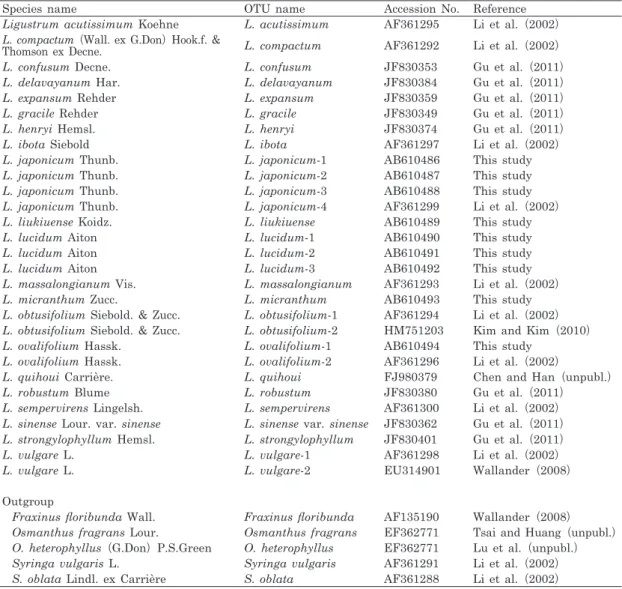
Table 1. Ligustrum taxa used for isolation of DNA sequences, which, together with the listed database acces- sion numbers of sequences, were used in the phylogenetic analysis
Species name OTU name Accession No. Reference
Ligustrum acutissimum Koehne L. acutissimum AF361295 Li et al. (2002) L. compactum (Wall. ex G.Don) Hook.f. &
Thomson ex Decne. L. compactum AF361292 Li et al. (2002)
L. confusum Decne. L. confusum JF830353 Gu et al. (2011)
L. delavayanum Har. L. delavayanum JF830384 Gu et al. (2011)
L. expansum Rehder L. expansum JF830359 Gu et al. (2011)
L. gracile Rehder L. gracile JF830349 Gu et al. (2011)
L. henryi Hemsl. L. henryi JF830374 Gu et al. (2011)
L. ibota Siebold L. ibota AF361297 Li et al. (2002)
L. japonicum Thunb. L. japonicum-1 AB610486 This study
L. japonicum Thunb. L. japonicum-2 AB610487 This study
L. japonicum Thunb. L. japonicum-3 AB610488 This study
L. japonicum Thunb. L. japonicum-4 AF361299 Li et al. (2002)
L. liukiuense Koidz. L. liukiuense AB610489 This study
L. lucidum Aiton L. lucidum-1 AB610490 This study
L. lucidum Aiton L. lucidum-2 AB610491 This study
L. lucidum Aiton L. lucidum-3 AB610492 This study
L. massalongianum Vis. L. massalongianum AF361293 Li et al. (2002)
L. micranthum Zucc. L. micranthum AB610493 This study
L. obtusifolium Siebold. & Zucc. L. obtusifolium-1 AF361294 Li et al. (2002) L. obtusifolium Siebold. & Zucc. L. obtusifolium-2 HM751203 Kim and Kim (2010)
L. ovalifolium Hassk. L. ovalifolium-1 AB610494 This study L. ovalifolium Hassk. L. ovalifolium-2 AF361296 Li et al. (2002)
L. quihoui Carrière. L. quihoui FJ980379 Chen and Han (unpubl.)
L. robustum Blume L. robustum JF830380 Gu et al. (2011)
L. sempervirens Lingelsh. L. sempervirens AF361300 Li et al. (2002) L. sinense Lour. var. sinense L. sinense var. sinense JF830362 Gu et al. (2011) L. strongylophyllum Hemsl. L. strongylophyllum JF830401 Gu et al. (2011)
L. vulgare L. L. vulgare-1 AF361298 Li et al. (2002)
L. vulgare L. L. vulgare-2 EU314901 Wallander (2008)
Outgroup
Fraxinus floribunda Wall. Fraxinus floribunda AF135190 Wallander (2008) Osmanthus fragrans Lour. Osmanthus fragrans EF362771 Tsai and Huang (unpubl.) O. heterophyllus (G.Don) P.S.Green O. heterophyllus EF362771 Lu et al. (unpubl.) Syringa vulgaris L. Syringa vulgaris AF361291 Li et al. (2002) S. oblata Lindl. ex Carrière S. oblata AF361288 Li et al. (2002)
the species, we examined 29 sequences of Li- gustrum species in our phylogenetic analysis using the ITS of nrDNA (Table 1). Fraxinus floribunda Wall., Osmanthus fragrans Lour., O. heterophyllus (G.Don) P.S.Green, Syringa vulgaris L., and S. oblata Lindl. were selected as outgroups on the basis of the result of previ- ous phylogenetic analyses including the genus Ligustrum (Li et al. 2002). Vouchers of plants used in this study have been deposited in the Herbarium, Makino Botanical Garden, Kochi
(MBK).
To construct phylogenetic trees, the sequences were aligned using Clustal W (Thompson et al.
1994) with default settings, followed by manual adjustment. The positions of insertions and de- letions (InDels) were excluded for phylogenetic analysis. To assess the relationships between
sequences, we constructed phylogenetic trees from the DNA sequences using neighbour- joining (NJ), maximum likelihood (ML), and Bayesian inference (BI) methods. The best- fit model of sequence evolution was calculated using the Akaike information criterion (AIC) with PAUP 4.0b10 (Swofford 2002) and Model- test v3.7 (Posada and Crandall 1998). For the BI analysis, on the other hand, MrModeltest v2.3 (Nylander et al. 2004) was used. NJ and ML analyses were performed under the best-fit model using PAUP 4.0b10 and TreeFinder (Jobb et al. 2004), respectively. For the NJ and ML analyses, confidence in tree topology was tested using non-parametric bootstrap analysis
(Felsenstein 1985) with 1000 replicates. For BI analyses, posterior probabilities were ob- tained from a Metropolis-coupled Markov chain 㪇
㪈㪇 㪉㪇 㪊㪇 㪋㪇 㪌㪇 㪍㪇
㪉㪇㪇㪐㪅㪍㪅㪉 㪉㪇㪇㪐㪅㪍㪅㪌
㪉㪇㪇㪐㪅㪍㪅㪍 㪉㪇㪇㪐㪅㪍㪅㪎
㪉㪇㪇㪐㪅㪍㪅㪐 㪉㪇㪇㪐㪅㪍㪅㪈㪈
㪉㪇㪇㪐㪅㪍㪅㪈㪊 㪉㪇㪇㪐㪅㪍㪅㪈㪌
㪉㪇㪇㪐㪅㪍㪅㪈㪎 㪉㪇㪇㪐㪅㪍㪅㪈㪐
㪉㪇㪇㪐㪅㪍㪅㪉㪉 㪉㪇㪇㪐㪅㪍㪅㪉㪌
㪉㪇㪇㪐㪅㪍㪅㪉㪐 㪉㪇㪇㪐㪅㪎㪅㪉
㪉㪇㪇㪐㪅㪎㪅㪌 㪉㪇㪇㪐㪅㪎㪅㪐
㪉㪇㪇㪐㪅㪎㪅㪈㪉 㪉㪇㪇㪐㪅㪎㪅㪈㪍
㪉㪇㪇㪐㪅㪎㪅㪉㪉
㪛㪸㫋㪼
㪝㫃㫆㫎㪼㫉㫀㫅㪾㩷㫉㪸㫋㫀㫆㩷㩿㩼 㪀
㪣㪅㩷㫁㪸㫇㫆㫅㫀㪺㫌㫄 㪣㪅㩷㫃㫌㪺㫀㪻㫌㫄
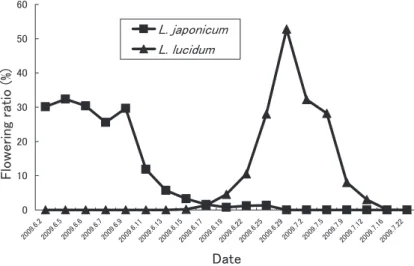
Fig. 1. Phenologies of Ligustrum japonicum and L. lucidum. Squares indicate L. japonicum and triangles indicate L. lucidum.
Species name OTU name Source locality Voucher
Ligustrum japonicum L. japonicum-1 Mt. Godaisan, Kochi City, Kochi Prefecture, JAPAN ---1)
L. japonicum L. japonicum-2 Inukai Shrine, Sogabe Town, Kameoka City, Kyoto Prefecture, JAPAN MBK 0178658 L. japonicum L. japonicum-3 Heitateyama Park, Okayama City, Okayama Prefecture, JAPAN --- L. liukiuense L. liukiuense Isen Town, Kagoshima Prefecture, JAPAN MBK 0055167 L. lucidum L. lucidum-1 Mt. Godaisan, Kochi City, Kochi Prefecture, JAPAN --- L. lucidum L. lucidum-2 Heitateyama Park, Okayama City, Okayama Prefecture, JAPAN --- L. lucidum L. lucidum-3 Golden Temple, Municipality, Kumming, Yunnan, CHINA MBK 0024365 L. micranthum L. micranthum Between Takinoura and Mt. Mikaeriyama, Ani island, Ogasawara Ar-
chipelago, JAPAN MBK 0055164
L. ovalifolium L. ovalifolium-1 Shinojima island, Minamichita Town, Aichi Prefecture, JAPAN MBK 0057269 1) No voucher. MBK: Herbarium of the Makino Botanical Garden, Kochi.
Table 2. Origins of Ligustrum species and voucher numbers in MBK
植物地理・分類研究 第 59 巻第 2 号 2012 年 3 月
Monte Carlo simulation (two independent runs;
four chains with 1.0 × 10⁶ generations each;
chain temperature: 0.2; trees sampled every 100 generations; deviation of split frequencies
< 0.01), with parameters estimated from the data set. A consensus topology was calculated for 7500 trees after discarding the first 2500 trees (burn-in = 25%) using MrBayes v3.1.2
(Huelsenbeck and Ronquist 2001). Corrected evolutionary distances were computed using PAUP 4.0b10 and the best-fit model including all codon positions.
Results
Phenological analyses of Ligustrum japoni- cum and L. lucidum
The flowering time of L. japonicum and L.
lucidum differed markedly in the examined area (Fig. 1). The flowering time of L. japoni- cum covered the period from mid-May until mid-June, but that of L. lucidum started mid- June and finished mid-July in 2009. The flow- ering of L. lucidum occurred approximately one month after L. japonicum flowered. Flowering times of L. japonicum and L. lucidum over- Fig. 2. Phylogeny of Ligustrum species based on ITS sequences of nuclear DNA using Bayesian method.
Numbers below branches indicate posterior probabilities (>90%) for Bayesian tree and bootstrap values (>50%)
for NJ and ML trees.
lapped in the middle of June. However, the overlap lasted only nine days, and the flowering ratios of the both species were very low in the overlapping period.
PCR―RFLP analyses of Ligustrum japoni- cum and L. lucidum
We determined the sequences of the trnT- trnL of cpDNA and the ITS region of nrDNA for 13 L. lucidum and 12 L. japonicum samples collected from different localities (Table 2). The length of the trnT-trnL alignment is 574 bp. Based on the sequence data, we found that the trnT-trnL sequences of L. lucidum and L. japonicum have two and three Mse I sites
(TTAA), respectively. Moreover, the ITS se- quences of L. lucidum and L. japonicum have three and two Mse I sites, respectively. These sequences have been deposited in the DDBJ/
EMBL/GenBank International DNA databases
(trnT-trnL: AB634833-4 and ITS: AB610486- 92). Based on these findings, we anticipated that we could use these restriction sites for species identification based on DNA samples of the different individuals. If hybrids are pres- ent, the nrDNA sequence results at the poly- morphic sites cannot be determined using direct sequences method of PCR products because of heterozygosity. Therefore, we conducted PCR- RFLP to examine whether hybrids are present in the population.
We identified 322 L. japonicum individuals and 99 L. lucidum individuals based on the PCR―RFLP analyses of cpDNA and nuclear ITS sequences. If hybrid and introgression plants exist, they would show a combined band pat- tern of nrDNA (hybridization), or incongruent results for cpDNA and nrDNA (introgression). However, we could not detect these band pat- terns in any of the individuals from the coexist- ing population.
Phylogenetic relationships of Ligustrum species
We reconstructed phylogenetic trees of nucle- ar ITS sequences based on the NJ, ML, and BI methods (Fig. 2). These different methods gen- erated mostly congruent topologies. Thus the BI tree with the support of Bayesian posterior probabilities, NJ bootstrap, and ML bootstrap are shown in Fig. 2. The Accession numbers
used in this phylogenetic analysis are shown in Table 1. In all trees, species of Ligustrum formed a monophyletic group. Moreover, all individuals of L. japonicum were included in a monophyletic group with L. liukiuense Koidz.
and L. micranthum Zucc., which had rela- tive high bootstrap values (BI: 94%; NJ: 85%;
ML: 76%). While, all individuals of L. lucidum formed a monophyletic group with L. grac- ile Rehd. From each one of the trees it was deduced that L. japonicum was not the most closely related species to L. lucidum.
Discussion
In our PCR-RFLP analyses, we failed to de- tect any hybrids between the native (in Japan) L. japonicum and the non-native L. lucidum.
Moreover, Kiyota et al. (2011) also could not detect any hybrids between L. japonicum and L.
lucidum by amplified fragment length polymor- phism (AFLP) analysis using multiple popula- tions in Kanto district. Therefore, these results suggest that the two species would not gener- ate hybrids under the natural condition in vari- ous areas of Japan. The lack of hybrids even in coexisting sites may be explained by the considerable differences of the flowering phe- nology of them (Fig. 1). Therefore, the risks to introduce L. lucidum, which is included in a list of “Other Alien Species” provided on the Invasive Alien Species Act in Japan would be mainly its competitive habits such as motives for pollinators and seed dispersers, high fitness for environments in city, and expansion of its distributions (Yoshinaga and Kameyama 2001). In addition, our phylogenetic results indicated that L. lucidum, which can make the artificial hybrid with L. japonicum, have close relation- ships with L. gracile (Fig. 2), implying that hy- bridization between L. japonicum and Chinese L.
gracile, which flowers for May to August (Chang et al. 1996) could occur. Therefore care should be taken at import and utilization of L. grac- ile in Japan, because the flowering times of L.
gracile and L. japonium overlap. In the future, it needs further analyses to protect Japanese Ligustrum from genetic disturbance of non- native species.
This is the first report contributing to our
植物地理・分類研究 第 59 巻第 2 号 2012 年 3 月
knowledge of the phylogenetic positions of L.
liukiuense and L. micranthum Moreover, our phylogenetic result indicated that L. liukiuense and L. micranthum, which are endemic species of Japan, were closely related to L. japonicum, suggesting that these three species originated in Japan. The flowering phenologies of L. liukiu- ense and L. micranthum are earlier than those of L. japonicum (Noshiro 2003), therefore, we consider that the risk of hybridization between L.
lucidum and L. liukiuense or L. micranthum is very low. However, it may be easy to affect the ecological pressure by escaping and/or artificial colonization of L. lucidum to L. liukiuense and L. micranthum because their distribution areas are very small.
Acknowledgements
We wish to thank Dr. N. Tanaka, curator of the MBK herbarium, for allowing us to examine specimens of Ligustrum, and Dr. J. Yokoyama for his help and advice. This study was partly supported by a Grant-in-Aid for Scientific Re- search from the Ministry of Education, Science, and Culture of Japan (to T.F. and R.A.).
References
Chang, M.-C., Qie, L.-Q. and Perter, S. G. 1996. Oleaceae. In: Wu, Z.-Y. and Raven, P. H. (eds.)
Flora of China Vol. 15 (Myrsinaceae through Loganiaceae). pp. 272–319. Science Press, Beijing, and Missuri Botanical Garden Press, St. Louis.
Felsenstein, J. 1985. Confidence limits on phy- logenies: an approach using the bootstrap.
Evolution 39: 783–791.
Gozlan, R. E. 2008. Introduction of non-native freshwater fish: is it all bad? Fish and Fish- eries 9: 106–115.
Gozlan, R. E. and Newton, A. C. 2009. Biologi- cal invasions: benefits versus risks. Science 324: 1015–1016.
Gu, J., Su, J.-X., Lin, R.-Z., Li, R.-Q. and Xiao, P.-G. 2011. Testing four proposed barcoding markers for the identification of species with- in Ligustrum L. (Oleaceae). J. System. Evol.
49: 213–224.
Hashimoto, Y., Hattori, T., Ishida, H., Akama- tsu, K. and Tamura, K. 2003. Distribution of
Ligustrum lucidum along Ina river. Human and Nature 14: 55–61. (in Japanese)
Huelsenbeck, J. P. and Ronquist, F. 2001.
MRBAYES: Bayesian inference of phylogeny.
Bioinformatics 17: 754–755.
Ishida, H., Hattori, T. and Yamato, M. 1998.
Ecological studies on the municipal forest II.
Biological invasion of landscaping trees into the fragmented secondary forests in flower town, Sanda, Hyogo Pref. Human and Na- ture. 9: 27–32. (in Japanese)
Jobb, G., von Haeseler, A. and Strimmer, K.
2004. TREEFINDER: a powerful graphical analysis environment for molecular phyloge- netics. BMC Evol. 4: 18.
Kim, D. K. and Kim, J. H. 2010. Molecular phylogeny of tribe Forsythieae (Oleaceae) based on nuclear ribosomal DNA internal transcribed spacers and plastid DNA trnL-F and matK gene sequences. J. Plant Res. 124:
339–347.
Kiyota, Y., Kameyama, Y., Hamano, C. and Suzuki, K. 2011. Study on hybridization be- tween Ligustrum lucidum Ait. and Ligustrum japonicum Thunb. In: Proceedings of the 75th Annual Meeting of the Botanical Society of Japan. p. 215. (in Japanese)
Li, J., Alexander, J. H. and Zhang, D. 2002.
Paraphyletic Syringa (Oleaceae): Evidence from sequences of nucler ribosomal DNA ITS and ETS regions. Syst. Bot. 27: 592–597.
Marhold, K., Lihova, J., Perny, M., Grupe, R.
and Neuffer, B. 2002. Natural hybridization in Cardamine (Brassicaceae) in the Pyrenees:
evidence from morphological and molecular data. Bot. J. Linn. Soc. 139: 275–294.
Matsui, H. 2002. Ligustrum japonicum. In:
NATURE GUIDE V: Illustrated Trees in Shi- koku. p. 195. The Kochi Shinbun. (in Japa- nese)
Nakatsubo, T. 1997. Colonization of invasive grasses in a river floodplain: its impact on the riparian plant community. Jap. J. Cons.
Ecol. 2: 179–187. (in Japanese)
Noshiro, S. 2003. Ligustrum. In: Iwatsuki, K., Yamazaki, T., Boufford, D. E. and Ohba, H.
(eds) Flora of Japan Volume IIIa. Angio- spermae Dictyedoneae Sympetalae (a). pp.
131–135. Kodansha, Tokyo.
Nylander, J. A. A., Ronquist, F., Huelsenbeck, J. P. and Nieves-Aldrey, J. L. 2004. Bayesian phylogenetic analysis of combined data. Syst.
Biol. 53: 47–67.
Okubo, K. and Oka, M. 2005. Distribution and habitat conditions of naturalized plant spe- cies Buddleja davidii and native close-species Buddleja japonica of the Mibu river water system in the Akaishi Mountains. Landscape Res. Jap. 68: 301–304. (in Japanese) Posada, D. and Crandall, K. A. 1998. MODEL-
TEST: testing the model of DNA substitution.
Bioinformatics 14: 817–818.
Sala, O. E., Chapin III, F. S., Armesto, J. J., Berlow, R., Bloomfield, J., Dirzo, R., Huber- Sanwald, E., Huenneke, L. F., Jackson, R. B., Kinzig, A., Leemans, R., Lodge, D., Mooney, H. A., Oesterheld, M., Poff, N. L., Sykes, M.
T., Walker, B. H., Walker, M. and Wall, D.
H. 2000. Global biodiversity scenarios for the year 2100. Science 287: 1770–1774.
Swofford, D. L. 2002. PAUP*. Phylogenetic Analysis Using Parsimony (*and Other Meth- ods). Version 4. Sinauer Associates, Sunder- land MA.
Taberlet, P., Gielly, L., Pautou, G. and Bouvet, J.
1991. Universal primers for amplification of three non-coding regions of chloroplast DNA.
Plant Mol. Biol. 17: 1105–1109.
Thompson, J. D., Higgins, D. G. and Gibson, T. J.
1994. CLUSTAL W: improving the sensitivity of progressive multiple sequence alignment through sequence weighting, position-specific gap penalties and weight matrix choice. Nu- cleic Acids Res. 22: 4673–4680.
Van Huylenbroeck, J., Van Laere, K., Eeckhaut, T., Van Bockstaele, E. and Van Bockstaele, E.
2004. Interspecific hybridisation in flowering shrubs. Acta Hort. (ISHS) 651: 55–62.
Wallander, E. 2008. Systematic of Fraxinus
(Oleaceae) and evolution of dioecy. Plant Syst. Evol. 273: 25-49.
White, T. J., Bruns, T., Lee, S. and Taylor, J.
1990. Amplification and direct sequencing of fungal ribosomal RNA genes for phylogenet- ics. In: Innis, M., Gelfand, D., Sninsky, J., White, T. J. (eds) PCR protocols: a guide to methods and application. pp. 315–322. Aca-
demic Press, San Diego.
Williamson, M. and Fitter, A. 1996a. The vary- ing success of invaders. Ecology 77: 1661– 1666.
Williamson, M. H. and Fitter, A. 1996b. The characters of successful invaders. Biological Conservation. 78: 163–170.
Yoshinaga, C. and Kameyama, A. 2001. Urban ecological study on expansion of glossy privet
(Ligustrum lucidum Ait.). Japanese Society of Revegetation Technology 27: 44–49. (in Japanese)
Yoshioka, T. 2005. Preliminary weed risk as- sessment of landscaping plants. Landscape Res. Jap. 68: 296–300. (in Japanese)
齋藤倫広1・早川宗志1, 2・南谷幸雄1・村松優子3・ 平田亜也3・植田諒介1・松山佳那子3・大賀教平3・ 横山菜々子3・室井美和子3・伊藤 桂1・荒川 良1・ 福田達哉1,* : 在来種ネズミモチと移入種トウネズ ミモチ(モクセイ科)の保全遺伝学的研究
移入種から在来種への遺伝子移入は生物学的保 全のための懸念課題であり,実用的かつ倫理的な 問題を提起している。中国原産のトウネズミモチ
(Ligustrum lucidum)は日本の広い地域で園芸と して栽植されているが逸出により分布を拡大してお り,在来種のネズミモチ(L. japonicum)と同所 的に生育していることが近年報告されている。この ため,ネズミモチはトウネズミモチとの雑種形成や 浸透交雑の生態学的リスクにさらされていると考え られる。そこで本研究では,在来種のネズミモチと 移入種のトウネズミモチの間での雑種形成による遺 伝的攪乱の有無を明らかにすることを目的として,
開花期調査および分子遺伝学的調査を行った。開花 期の調査結果より,両種の開花期がずれていること が明らかとなった。PCR-RFLP解析の結果,ネズ ミモチとトウネズミモチの間に交雑個体および浸透 交雑個体を検出することはできなかったため,両種 間での交雑は起こっていないと考えられる。
(1〒783―8502 高 知 県 南 国 市 物 部 乙200 高 知 大学農学部; 2〒783-8502 高知県南国市物部乙 200 愛 媛 大 学 大 学 院 連 合 農 学 研 究 科; 3〒783- 8502 高知県南国市物部乙200 高知大学農学部・
大学院総合人間自然科学研究科農学専攻)
(Received March 20, 2011; accepted January 25, 2012)
植物地理・分類研究 第 59 巻第 2 号 2012 年 3 月