は じ め に
OECD
(経済協力開発機構:Organization for Economic Co-operation and Devel- opment
)は,2014年に Increasing Taxpayers
ʼUse of Self-service Channels
(以下「2014年報告書」ともいう。)を発表した。これは,納税者の選択肢と して増加しあるいは多様化してきている様々なセルフサービスを分析し,
検討したものであるが,この報告書以前にも既に
OECD
はいくつかの研 究を行い,それを公表している。近年の研究の動向をみると,例えば,2011
年には,the Forum on Tax Administration
(FTA
)が,the Taxpayer Services Sub-Group
(TSG
)の下で行った研究がある。これは,“Working Smarter
379 商学論纂(中央大学)第
59
巻第5・6号(2018
年3月)納税者によるセルフサービスと 租税行政 ⑴
──歳入当局による納税者サービスの発展──
酒 井 克 彦
目 次 は じ め に
Ⅰ “Increasing Taxpayersʼ Use of Self-service Channels”
1 2014年報告書の概観 2 これまでの
OECD
の取組み3 デジタルサービスとその先にあるサービス形態の提案 4 調査結果と解析
5 2014年報告書からのインプリケーション 6 各国の取組み
in Revenue Administration
̶Using demand management strategies to meet service delivery goals
”(OECD, 2012 )
として纏められ,公表されている。また,2012年には,
FTA
が “Managing Service Demand :
a practical guide to help revenue bodies better meet taxpayers
ʼser vice expectations
”(
“Managing Service Demand
”)
を公表している。この流れの中で,2013年 には,FTA
は,これらの研究の実効性をさらに高めるために,オースト ラリア国税庁(The Australian Taxation Office
:ATO
)を研究プロジェクトの リーダーとして指名し,カナダ,中国,フランス,デンマーク,メキシ コ,オランダ,ニュージーランド,シンガポール,スウェーデン,スイ ス,トルコ,英国といった多数の国がこれに参加することとなった。な お,アイルランドも同タスクグループに貢献している。その後も,
OECD
は納税者サービスに関する研究を行い,適宜その成 果を公表しているところであるが,本稿は,OECD
の近時の研究を紹介 するとともに,これらの研究の今日的意義について考察するものである。Ⅰ “Increasing Taxpayersʼ Use of Self-service Channels”
1 2014年報告書の概観
⑴ 2014年報告書の構成2014年報告書は,13か国,14の歳入当局の協力によるオンラインサーベ イをベースに実施された調査に基づいている。かかるオンラインサーベイ においては,量的側面からの
Part A
及び質的側面としてより重点的ない し直接的なPart B
の両面を意識してなされている。・
Part A, which included context setting questions for the participating revenue bodies relating to their broader operating environments.
・
Par t B, which asked questions about specific initiatives that the
participating revenue bodies used to increase the use of self-service
channels.
2014年報告書は,全5章から構成されているが,
Introduction
である第1章に続いて,第2章 Framework for evolution of digital self-service
で は,個人納税者,法人,事業体のサービスの変遷を詳述し,デジタルサー ビスの進化のフレームワークを論じている。より具体的には,2013年9月の
FTA
及びTSG
のヘルシンキ会合がセルフサービスを優先的に重視す べ き と 承 認 し た 内 容 を 紹 介 し て い る。 第
3
章Service delivery
environment
は,現在の歳入当局におけるサービスの状況の調査内容が示されており,第4章への接続の意味を有する。第4章
Analysis and findings on revenue body initiatives
は,第3章の調査結果の分析である。第5章 “
Conclusions and recommendations
” では,第2章のフレームワー クと第4章で分析された結果である4つの要素(four key element
)との統 合がなされ,最終的な提案が示されている。⑵ 4つの要素(4
E-model
・4Element
)さて,2014年報告書の結論を先取りするようであるが,第3章の調査結 果を受けた第4章においては,4つの要素(
four key element
)が指摘され ている。すなわち,①サービスに対する納税者の需要に関するモニタリ ングや理解が重要であること,②提供するサービスが納税者のニーズに 合うものとなるようにユーザーセンターをデザインする必要があること,③次に示す4つの視角(
implementation
)が提案されるとともに,セルフサ ー ビ ス は 納 税 者 に 対 し て プ ッ シ ュ 型(mandating
)か あ る い は プ ル 型(
incentives
)として利用されるべきであること,④かかるセルフサービスが納税者に直接的に効率的なチャネルとして用意されるべきであることが 論じられている。
上記③で提案されている4つの視角とは,次の諸点である。
・
In the static self-service :
establishing an online presence and making services and information available online.
・
In the obligation based self-ser vice :
enhancing the online offer by creating surplus value and adding features.
・
In the integrated, personalized ser vice :
integrating and connecting existing online services into an end-to-end, holistic experience.
・
In the seamless invisible service :
embedding services in natural systems of taxpayers, so self-ser vicing becomes a by-product of day-to-day activities.
下線を付した4つの「
E
」すなわち,establishing enhancing end- to-end embedding
は, 重 要 な キ ー ワ ー ド と な っ て い る。 こ れ ら を2014年報告書は, 4 E model
と表現して,次頁のような最終的な報告に繫げている。
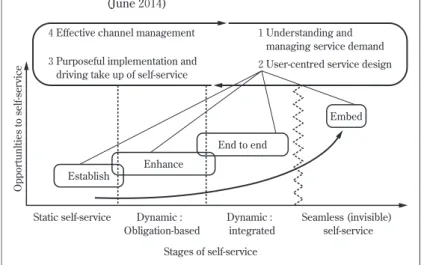
まず,第1の段階においては,
establishing
が重要であり,セルフサ ービスの構築が前提となることはいうまでもない。ここでは,依然とし て,静的な(static
)セルフサービスの構築が前提とされている。次の段階 は,第1段階で構築された初期のセルフサービスに対する精度向上が求められる
enhancing
の段階である。しかし,この段階では,セルフサービスは行政側の義務として位置付けられる段階にあるといってよいかもし れない。また,より高い付加価値や機能が加えられる段階であるといえよ う。第3の段階では,個々に構築されているサービスの統合ないし連携が 図られる。制度を全体として俯瞰した観点から
end-to-end
の接続を求 めるべくサービスシステムが展開されるのがこの段階である。そして,最後には,
embedding
として,納税者にとって自然なシステム(natural
systems
)として日々の生活の中に溶け込むような制度設計がなされるべきであるという。この段階は,持続的でありかつ生活に溶け込んだサービス
としての(
seamless invisible
)最終形が提案されている。そして,この段階的なステップを踏む過程において,常に,上記に示し た4つの要素(①〜④)が意識されるべきであるというのである。
さらに,2014年報告書は,歳入当局は,次の4つの項目について考慮し た上で,セルフサービスのチャネルを運用すべきである旨を指摘する。
4 Effective channel management 3 Purposeful implementation and driving take up of self-service
1 Understanding and managing service demand 2 User-centred service design
The four elements – monitoring and understanding service demand, user- centred service design, purposeful implementation and driving take up of self-service and effective channel management – are relevant to all stages in self-service. There is no single solution when it comes to increasing the use of self-service channels and revenue bodies need to work across all elements to achieve a sustained change, irrespective of the maturity of their self- service channels. What is specifically relevant to the stages in self-service, is the intent and focus of user-centred design. As discussed in Chapter 4 , the 4 E model connects the stage in self-service and the desired self-service experience with the relevant user-centred design considerations. This is reflected in Figure 5 . 1 .
Figure 5 . 1 . Revised framework for evolution of digital self-service (June 2014 )
Establish
Enhance
End to end
Embed
Opportunlties to self-service
Seamless (invisible) self-service Dynamic :
integrated Dynamic :
Obligation-based
Stages of self-service Static self-service
・
Element l :
Identify and target opportunities to offer self-services (by using effective monitoring and data analytics that support understanding of service demand).
・
Element 2 :
Take a user- centred design approach in creating new services or shifiing existing services to digital channels.
・
Element 3 :
Promote take up, either by mandating or offering incentives and leveraging tax intermediaries and third party providers in assisting taxpayers to take up self-service channels.
・
Element 4 :
Consistently direct taxpayers to the preferred channel through communication and education, eliminating channels or leveraging tax intermediaries and third par ty providers. To retain taxpayers in the preferred channels, consider providing a range of tailored in-channel support tools.
そして,政府は,持続的かつ更なる進化のために,セルフサービスのチ ャネルに関する測定方法(
metrics
)を構築すべきだというのである。それ は,まず,サービスに対する需要を測定し,それを認識する必要があり,さらに,納税者のセルフサービスを増加させる機会構築に向けた目標を設
測定方法(metrics)の構築
測定目的のために(measure)
認識のために(identify)
目標設定のために(target)
定することのために重要であるという。
2 これまでの OECD
の取組み前述したとおり,2011年になされた研究において,
OECD
は,Working Smarter in Revenue Administration
̶Using demand management strategies to meet service delivery goals
1)を発表した。多くの国の歳入当局がオン ラインチャネルやセルフサービスを展開しており,かかるサービスは高い 需要に支えられている旨が報告された。かかる研究では,サービス需要を 測定し,その情報量や傾向,どのようなトピックスを提供しているかにつ いての多様なやり方が検討されている。もっとも,ここでは,サービスへ の需要に対しての有効性分析がなされるには至っていなかった。そもそも,2014年報告書が最初に示すとおり,世界中の歳入当局は,公 共セクターに対する効率的な行政運営を図るべきとの要請に直面してお り,歳入当局は,租税行政運営に関するコストをいかに減少させるかとい う方策を模索し続けているのである2)。かような意味では,各国が行うサ ービスのチャネルの多様性を紹介し,これを分析することに重要な意義を 見出すことを否定するものではないが,この点についての課題があったと みるべきかもしれない。
その後に続く研究において,
OECD
は,2012年にManaging Service Demand :
a practical guide to help revenue bodies better meet taxpayers
ʼservice expectations
を各国の歳入庁向けのプラクティカルガイドとして発表している。このガイドでは,政府が取り組むためのモデルを示して,
1
) OECD (2012 ), Working Smarter in Revenue Administration—Using demand management strategies to meet service delivery goals, OECD, Paris, available at : www.oecd.org/site/ctpta/ 49428187 .pdf.
2) Increasing Taxpayersʼ Use of Self-service Channels. p. 3 .
ベストプラクティカルが提案されている。政府が行うべき認識,分析,取 組みについて実行可能性のある段階も示されるなどしており,このガイド の出版に続いて,技術的開発,行政経費の削減,サービス向上のための納 税者からの更なる要求が認識されるに至った。2011年9月の
TSG
会合は コスト意識をもって臨まれており,かかる効率性(cost effective
)について の研究がなされたとみてよかろう。すなわち,各国の歳入当局が効率性を 向上させるための取組みについて議論をする契機をも提示したと評価する ことができよう。2013年5月に,ヘルシンキにおける
FTA
において,TSG
で議論された 内容,すなわち,この研究や歳入当局に自主的にアクセスしようとする納 税者をサポートすることに注力するとともに,納税者全体にも共通するサ ービスが提供されるべきことが承認された。そこで,前述のとおりオース トラリア国税庁(ATO
)が研究のリーダーに選出され,各国がこれに参画 する形での研究がなされてきたのである。ヘルシンキ会合においては
Increasing the use of self-service channels
プロジェクトが立ち上がった。そこでは,次の2つの項目が掲げられた。すなわち,第1に,歳入当局はキーとなる納税者セグメントに対してセル フサービス・チャネルの利用の機会を増加させるためのターゲティングと した戦略を検討すべきであって,第2に,サービスに対する需要の効果を 図るべく納税者からサンプル収集を行うという点である3)。より具体的に は,この文脈において,7つのプロジェクト・ミッションが確認されてい
3
) l. Consider the strategies that revenue bodies can use to increase the use ofself- service channels in the context of a proposed future service experience for the key taxpayer segments
2
. Collect practical examples of initiatives revenue bodies have undertaken
to shift taxpayers and their representatives to self-service, including successes
and challenges, as well as the effect on service demand.
る。すなわち,①納税者のためのサービスの開発,②セルフサービスの 機会の尊重,③戦略の認識,④法的規制や効果的サービス等に対する方 策の確認,⑤需要モニタリング等に対する方策の確認,⑥これまでの伝 統的な手法に対する理解,⑦セルフサービス・チャネルへのシフトを推 進するための役割の検討といったプロジェクト・ミッションが掲げられて いるのである。
①
Develop a vision and framework that captures the future ser vice experience for individuals, businesses and tax intermediaries
②
Consider and prioritise self-service opportunities in the context to the future customer experlence
③
ldentify strategies revenue bodies have used or are using to shift clients to self- ser vice, including measures of effectiveness, challenges and lessons learned
④
Understand how legislation and effective service and process design can be used to enable the shift to self-service channels
⑤
Understand how demand is monitored and managed in self-ser vice channels, including how revenue bodies are responding to feedback to increase take-up of self-service channels
⑥
Understand the role of
“traditional
”, more expensive channel (for example, face-to-face and on call) in delivering the future ser vice experience and shift clients to self-service channels
⑦
Consider the role of tax intermediaries and third party providers in encouraging and supporting the shift to self-service channels
3 デジタルサービスとその先にあるサービス形態の提案
情報提供サービスとしての限界に近づきつつある静的セルフサービスか
ら,オンラインによる交換や取引を経由して,目に見えない新しいサービ スの環境整備というパラダイム転換を迎えているといえよう。先進国にお いては,
EC
モデルが展開されている。最終型としては,LNS
(leveraging
natural system
)が提案されている。これは,納税者の生活に浸透した新しいサービスであり,目に見えないサービスとして提供されるものである。
これは,例えば,消費税を納付する際のように,特に意識はしなくても 日々の生活の中で納税が済むような生活内に潜在化しているサービスを意 味しているといえよう。シンガポールのノーファイリング・サービス(
The
No-Finling Service :
NFS
)がこのサービスの究極系であるといってもよいと思われる。
シンガポールの
IRAS
(The Inland Revenue Authority of Singapore
)は,個人 納税者に対して,確定申告不要制度を採用している。2014年報告書は,こ のような取組みをシームレスであり,インビジブルなサービスとして捉え ている(後述)。4 調査結果と解析
⑴ デジタルサービスの拡張 イ 多様なサービスの展開
2014年報告書の調査は,全ての調査参加国の現在のサービスに関する取 組状況を反映するものである。各国の歳入当局は,多様な国家的規模のサ ービスを展開しているが,具体的には,次のような取組みに集約し得る。
①情報の再利用ないし他の政府当局との情報の共有,②単一行政体によ る処理,③単一行政体におけるポータルサービス,④政府のみからの情 報といったものである(以下の図表参照)。
Figure 1
中のReuse and sharing of data with other government depart-
ments
は,各国の協調の下での情報共有を意味しており,前例のない取組みである。これはセルフサービスの利用を促進させるものとなると思わ れるし,サービス統合のよりよい形を提示するものといえよう。納税者と 歳入当局との間の相互連絡に関してもその質的向上が進められている。
single authentication approach
やsingle source of information from government
は納税者の効率的ないし既成のサービス(tailored services
) に 関 す る 需 要 を 増 加 さ せ る。standard-based reporting to the govern- ment
は新しい情報や情報交換技術をもたらす。また,single portal for government services
やdigital mailbox for communication with the gov-
ernment
は新しい情報提供サービスの取組みである。また,この図中にある,
other
には,例えば,e-forms
,e-invoicing
,e-billing
,e-payment
といったものがあるが,2014年の調査の段階では依然として低い水準にあ る。多様なサービスの統合が求められるところではあるが,この点は,技 術革新の進展に左右されるところが大きいといってよかろう。そして,技術革新そのものは世界的な開発競争を促すこととなるだけで
Figure 1
Participation in the whole-of-government service delivery initiativesPlease identify whole-government service delivery initiatives that your revenue body participates in (select all that apply)
Reuse and sharing of data with other government departments 14 12 10 8 6 4 2
0 Single
authentication approach (whole-of- government
credential) Single portal for government
services
Central point/
single source of information
from government
Digital mailbox for communication
with the government
Sharing walk-in centres and other
physical facilities with other government departments
Standard- based reporting
to the government
Other 13
11
9 9
7 7
5
3
なく,よりよい統合インフラの共通化を通じて,公的サービスの配信を保 障するものである。
ロ
digital by default
アプローチ2014年報告書は,調査参加国のうち6か国がサービス配信の戦略及びデ ジタル・チャネルに関する戦略を有していたとする。特に注目すべきは
digital by default
アプローチである。2014年報告書は,6か国が採用している戦略では,デジタル・チャネルを使ったサービス配信が採用されて おり,そこでは
digital by default
アプローチが進められていることを 述べている。digital by default
アプローチは,単一の行政体によるもの ではなく政府一体となった(whole-of-government
)デジタル戦略であって,従来の伝統的サービスから離脱して,時間軸にべンチマークを置くもので ある。
通常,
digital by default
アプローチには,2つの意味が含有されていると思われる。その1つが,効率性を高めることにより納税者の時間の節 約が期待できる点である。もう1つは,このデジタルムーブメントが政府 にとっても時間の節約を意味するという点である。もっとも,時間のみな らずデジタルによる効率化が各種の経費削減をも意味することはいうまで もない。
例えば,英国では,
Digital Service Standard
として,18の基準を設けて おり4),英国はdigital by default
アプローチの牽引役であるといっても4) See, GOV. U.K(https://www.gov.uk/service-manual/service-standard)
1 . Understand user needs
Understand user needs. Research to develop a deep knowledge of who the
service users are and what that means for the design of the service.
2 . Do ongoing user research
Put a plan in place for ongoing user research and usability testing to
continuously seek feedback from users to improve the service.
よかろう。この影響はヨーロッパや
the European post-GIobal Financial Crisis
(GFC
)にも及んでいるのである。2014年報告書では,digital by
default
アプローチは世界的トレンドとなり,経費削減や納税者の意識向3 . Have a multidisciplinary team
Put in place a sustainable multidisciplinary team that can design, build and
operate the service, led by a suitably skilled and senior service manager with decision-making responsibility.
4 . Use agile methods
Build your service using the agile, iterative and user-centred methods set out
in the manual.
5 . Iterate and improve frequently
Build a service that can be iterated and improved on a frequent basis and make
sure that you have the capacity, resources and technical flexibility to do so.
6 . Evaluate tools and systems
Evaluate what tools and systems will be used to build, host, operate and
measure the service, and how to procure them.
7 . Understand security and privacy issues
Evaluate what user data and information the digital service will be providing or
storing and address the security level, legal responsibilities, privacy issues and risks associated with the service (consulting with experts where appropriate).
8 . Make all new source code open
Make all new source code open and reusable, and publish it under appropriate
licences (or provide a convincing explanation as to why this canʼ t be done for specific subsets of the source code).
9 . Use open standards and common platforms
Use open standards and common government platforms where available,
including GOV. UK Verify as an option for identity assurance.
10 . Test the end-to-end service
Be able to test the end-to-end service in an environment identical to that of the
live version, including on all common browsers and devices, and using dummy accounts and a representative sample of users.
11 . Make a plan for being offline
Make a plan for the event of the digital service being taken temporarily
offline.
上へと寄与するものと評価されている。
ハ 小 括
2014年報告書は,まず,参加国に共通する点として,それぞれの歳入当 局がサービスをセルフサービスの報告に移行していることを示している。
そして,全13か国のうち10か国は,特別の戦略や行動計画に基づいてセル フサービスに移行し,その10か国の中には,
digital by default
アプロー チによってセルフサービスに移行している国もあるという5)。12 . Make sure users succeed first time
Create a service which is simple to use and intuitive enough that users
succeed the first time.
13 . Make the user experience consistent with GOV. UK
Build a service consistent with the user experience of the rest of GOV. UK
including using the design patterns and style guide.
14 . Encourage everyone to use the digital service
Encourage all users to use the digital service (with assisted digital support if
required) alongside an appropriate plan to phase out non-digital channels and services.
15 . Collect performance data
Use tools for analysis that collect performance data. Use this data to analyse
the success of the service and to translate this into features and tasks for the next phase of development.
16 . Identify performance indicators
Identify performance indicators for the service, including the
4 mandatory key performance indicators (KPIs) defined in the manual. Establish a benchmark for each metric and make a plan to enable improvements.
17 . Report performance data on the Performance Platform
Why you should report data and how you'll be assessed.18 . Test with the minister
Test the service from beginning to end with the minister responsible for it.
5) 報告書では,次の3点に小括が集約されている。
・each revenue body reported that their strategies include a component of
moving service demand to self-service channels
その際,セルフサービスの拡張に当たっては,例えば,ルール策定,利 用者の増加,セルフサービス・チャネルの用意,従来型サービスの確保,
セルフサービスへの移行の義務化などが検討されるべきと指摘されてい る6)。
⑵ アンケート結果
イ 現在のサービスと将来のサービス
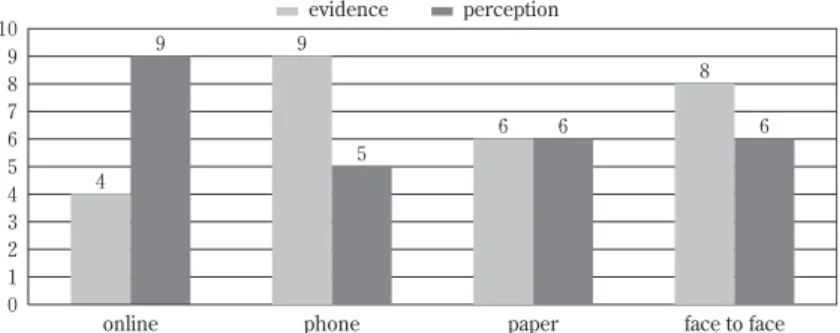
現在及び将来のそれぞれのサービス・チャネルの展開について参加国に アンケート調査を行った結果は,2014年報告書において
Figure 2のとおり
示されている。各国がオンラインサービスに移行しつつある中にあって は,いわば当然の結果であると思われるが,ここで筆者が関心を寄せるの は,従来型のサービスのうち,とりわけ減少が予想されるものが電話によ るサービスであるという点である。紙ベースのサービスは現状維持となり,
face-to-face
のサービスの落ち込みは必ずしも顕著ではない。この点について,2014年報告書は,依然として紙ベースの需要は大きい と分析する。納税者は依然として紙ベースのアップデート情報を求めると いうのである。
face-to-face
のサービスについては,歳入当局は様々な・
10 out of l 3 revenue bodies are pursuing specific tactics or actions to facilitate the shift to self-service
・unlike the whole-of-government “digital by default” strategies, few revenue
bodiesʼ strategies set any specific benchmarks or targets to drive and monitor the shift to self-service.
6) 1 . making rules, systems and processes simple and clear to understand, so taxpayers do not need service from the revenue body
2
. increasing the number of services available via self-service channels
3 . Making self-service channels an attractive echoice
4
. making less preferred ser vice channels (face to face in particular) less readily available and less attractive
5
. mandating the shift to self-service
工夫をして,負担の軽減を図っている。
例えば,ニュージーランドでは,
2009年から Interactive Voice Response
services
(SPK 2 IR
)というボイスメッセージ・サービスを始めている。その 後,2011年 に は, 生 体 認 証 に よ る ボ イ ス サ ー ビ ス を 展 開 し て い る。
Progress of Return
というレベルに達している納税者に対しては,新しいIR
(Interactive Response services
)モバイルアプリケーションによるサービ スを展開し,どこでもいつでもサービスにアクセスできるようにしてい る。ロ サービス移行理由
伝統的なサービスからオンラインサービスへの移行理由ないし,移行し ない理由については,次のような結果が示されている。
個人納税者については,時間の節約など効率性の観点からオンラインサ ービスへの積極的指向はみられるものの,依然として,「生」の人間との 対面を希望する要請が強いようである。
企業も個人と同様,時間的節約の観点からオンラインサービスへの指向 が認められる。もっとも,個人と大きく異なる点として,「生」の人間と
Figure 2
Perceptions vs. evidence : what is the basis for revenue bodiesʼknowledge of what services are sought via different channels?
online 10
98 7 6 54 3 2 1 0
4 9
face to face 8
6
paper
6 6
phone
service channel 9
5
evidence perception
Shorter turnaround times for online service channel (9) Online service channel offers extra advantages (9) Online service channel is easier to use (6)
Prefer direct contact with a ʻrealʼ person (7) Insufficient computer skills (5)
Traditional channels perceived as easier to use (5) Traditional service channels Online service channels
Figure 3
Why individual taxpayers choose online over traditionalservice channels and vice versa
Shorter turnaround times for online service channel (9) Online service channel offers extra advantages (7) Online service channel is cheaper to use (6) Use of online service channel has been mandated (6)
No or limited services provided online (6) Prefer direct contact with a ʻrealʼ person (5) No end-to-end online services (4) Traditional service channels Online service channels
Figure 4 Why business taxpayers choose online over traditional
service channels and vice versa
の対面要請が個人より減り,むしろオンラインサービスを補完するものと して,従来型のサービスの存続を望むようである。また,租税専門家など の中間業者については,この点がより顕著で,「生」の人間との対面要請 は低くなり,オンラインサービスを補完するチャネルとして従来型サービ スが依然として期待されている。
次のアンケートは,各国の歳入当局が提供する20のオンラインサービス のうち個人納税者,企業,租税専門家などの中間業者がどのサービスにニ ーズを感じているかを調査し,表にしたものである(
Table 1)
。個人納税者は,確定申告手続に関するサービス(電子申告)を最も望ん でいることが分かる(7参照)。あるいは,修正申告書の提出に関するサー ビス(電子修正申告)も同様である(9参照)。納税申告等の期限の延長に 関するサービスは低調である(14及び15参照)。納税相談や(18参照),納税 義務等の義務に関するアップデート情報の要請は高いといえよう(3参 照)。
Shorter turnaround for online service channel (8) Traditional service channels perceived as cumbersome (7) Online service channel is cheaper to use (6)
No end-to-end online service (5) Traditional service channels Online service channels
Figure 5
Why tax intermediaries choose online over traditionalservice channels and vice versa
Prefer direct contact with a ʻrealʼ person (4)
No or limited services provided online (10)
Table 1
Average aggregated maturities of online services across participating revenue bodies (by key client segments)# Online services
Average aggregated maturity Individual Business Tax intermediary
1 Register 2 . 09 2 . 08 2 . 08
2 Update registration details 2 . 25 2 . 08 1 . 93
3 update tax obligation details 2 . 00 1 . 69 1 . 38 4 Access account balances or details 2 . 00 2 . 00 1 . 79 5 Request statement of account 1 . 62 1 . 86 1 . 57
6 Request refund or transfer 1 . 67 1 . 92 1 . 62
7 Prepare and file an IT return 3 . 00 2 . 92 2 . 69 8 Prepare and file other tax return 2 . 27 2 . 92 2 . 69 9 Confirmation of receipt of an IT return 3 . 00 2 . 92 2 . 69 10 Confirmation of receipt of other tax
returns
2 . 20 2 . 92 2 . 69 11 Apply and vary tax credits and
entitlements in PAYE/G systems
1 . 25 1 . 29 0 . 86
12 Amend an IT return 2 . 62 2 . 29 2 . 07
13 Amend other tax returns 1 . 60 2 . 43 2 . 21
14 Request an extension of time to file an IT return
0 . 77 0 . 85 0 . 77 15 Request an extension of time to file
other tax returns
0 . 77 1 . 00 0 . 93
16 File an objection 1 . 50 1 . 29 0 . 93
17 Request an arrangement to pay tax debts
2 . 00 1 . 83 1 . 58
18 Make payment 2 . 69 2 . 57 2 . 36
19 Make an enquiry 1 . 92 2 . 07 1 . 86
20 Review correspondence and/or view notices
2 . 00 1 . 86 1 . 64 Average rate 1 . 96 2 . 05 1 . 83
Scale : 0) Service not available online: not offered ; 1) Information : find out about it ; 2)Interaction: initiate it ; and 3) Transaction: complete it.
企業においても,電子申告サービスに対する需要は高いといえるが(7 及び9参照),その他の申告に関する要請も等しく高い(8及び10参照)。質 問サービスへの要請は個人納税者よりも高い点が特徴的なところといえよ う(19参照)。
租税専門家などの中間業者については,ほとんどの項目において,個人 納税者及び企業よりもオンラインサービスに対する需要が低い傾向を看取 することができる。
5 2014年報告書からのインプリケーション
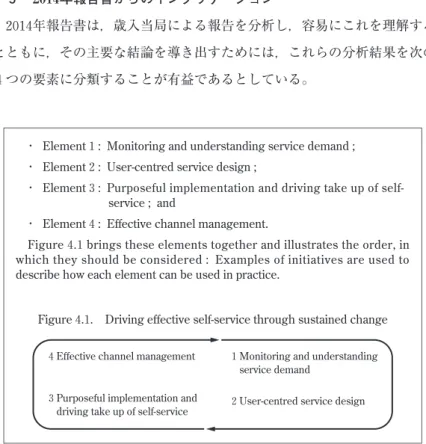
2014年報告書は,歳入当局による報告を分析し,容易にこれを理解する とともに,その主要な結論を導き出すためには,これらの分析結果を次の
4つの要素に分類することが有益であるとしている。
4 Effective channel management
3 Purposeful implementation and driving take up of self-service
1 Monitoring and understanding service demand
2 User-centred service design
・ Element
1 : Monitoring and understanding service demand ;
・ Element
2 : User-centred service design ;
・ Element
3 : Purposeful implementation and driving take up of self-
service ; and・ Element
4 : Effective channel management.
Figure 4 . 1 brings these elements together and illustrates the order, in which they should be considered : Examples of initiatives are used to describe how each element can be used in practice.
Figure 4 . 1 . Driving effective self-service through sustained change
これら4つの要素は,既述の4つの要素(4
E-model
・4Element
)である。その要素間の連続性についても前述のとおりであるが,セルフサービス の第1ステージでは,サービス構築に主眼が置かれる7)。次の第2ステー
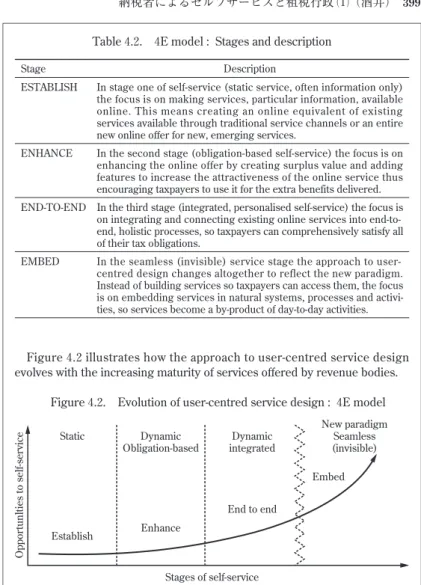
Figure 4 . 2 illustrates how the approach to user-centred service design evolves with the increasing maturity of services offered by revenue bodies.
Figure 4 . 2 . Evolution of user-centred service design : 4 E model
Stage Description
ESTABLISH In stage one of self-service (static service, often information only) the focus is on making services, particular information, available online. This means creating an online equivalent of existing services available through traditional service channels or an entire new online offer for new, emerging services.
ENHANCE In the second stage (obligation-based self-service) the focus is on enhancing the online offer by creating surplus value and adding features to increase the attractiveness of the online service thus encouraging taxpayers to use it for the extra benefits delivered.
END-TO-END In the third stage (integrated, personalised self-service) the focus is on integrating and connecting existing online services into end-to- end, holistic processes, so taxpayers can comprehensively satisfy all of their tax obligations.
EMBED In the seamless (invisible) service stage the approach to user- centred design changes altogether to reflect the new paradigm.
Instead of building services so taxpayers can access them, the focus is on embedding services in natural systems, processes and activi- ties, so services become a by-product of day-to-day activities.
Stages of self-service
New paradigm Seamless (invisible) Dynamic
integrated Dynamic
Obligation-based Static
Embed End to end
Enhance Establish
Table 4 . 2 . 4 E model : Stages and description
Opportunlties to self-service
ジでは,より高次の生産的なオンラインサービスの展開が期待され,第3 ステージでは,各種のサービスの統合がなされるべき段階に至る。最終の 第4ステージでは,ユーザーによるコントロールされたサービスが日々更 新されていく段階となる。
6 各国の取組み
⑴ カ ナ ダ
カナダ歳入庁(
Canada Revenue Agency :
CRA
)は,face-to-face
サービスの廃 止に取り組んできている。納税者が電話をして予約するというface-to-face
サービスについては,2012年10月から2013年10月までの間に49か所におい て,対面式の納税相談及び質問の受付を廃止している。この方向性は長年 のCRA
の目標でもあった。その代わりに,CRA
は,drop boxes
というデ ータ・スタンプ機械による証明サービスを展開している。これは,納税者が7
) Monitoring and understanding service demandでは,次の点が重要となる。・Monitoring the volumes and patterns of taxpayers seeking services ; ・Understanding the reasons why taxpayers seek the revenue bodyʼ s
services ;
・Understanding the value these services provide to taxpayers ;
・Monitoring the cost of delivering those services through different channels,
as well as levels of demand that may fluctuate throughout the year. This is necessary to ensure effective use of resources and elimination of waste or oversupply ;
・Being clear about ser vice levels and expectations within the taxpayer
community. This may include changing service standards and increasing response times for less preferred channels ;
・Increasing taxpayersʼ awareness about the revenue bodyʼ s services and
preferred methods and channels of interaction ; and finally
・While monitoring cost of delivering services and ensuring proper taxpayer
experience-maintaining focus on the compliance outcomes for government.
重要書類に収受印の押印を受けたい場合に,機械が対応するものである。
このようなサービスの移行は,行政コストの削減という明確な目標を掲 げたものであったが,必ずしもコスト削減に繫がらず継続されなかった。
CRA
は,これに対して,コールセンターにおけるサービス強化を行い,一般的な質問をそこでさばき,それ以外の個別的事案については,コール センターで予約のみを受け付けるという方針を展開している。
このように,納税相談及び質問の受付を廃止する国は,他の
OECD
加 盟国の中にもみられる傾向であり,例えば,デンマークや英国も同様の施 策を採っている。⑵ チ リ
チリ内国歳入庁(
the Chilean Inland Revenue Office
)はSII
ウェブモバイル アプリケーション(Service de Impuestos Internos
)を採用している。2013年 には,およそ1, 700万人が使用している。同時に,チリの市場においてモ
バイルが2, 410万台取引されており,急速な増加となっている。このモバ
イルデバイスの利用者の増加の認識の下,2012年にスマートフォンやタブ レットデバイスの最初のものとしてSII
が開始された。このウェブサービ スは,find about it
” というような静的サービスから,Frequently Asked
Questions
(“FAQ
”)のようなセルフサービスへとチャネルを拡大させたものである。税務当局の開業時間や場所,あるいは税務カレンダーの提示か
ら
complete it
というようなアップデートされたより詳細な情報提供へと進化している。そこには,個人納税者の納税申告や,電子領収書の提出 といったサービスが含まれている。2014年3月には,
SII
モバイルサービ スは約270万人の利用者を得ており,このサービスでは,月に2万の電子 税務書類が扱われ,同サービスを使ったVAT
の電子申告は4, 000に及んで
いる。SII
ウェブサービスを利用して2万3, 000の所得税の確定申告書が提
出されている。⑶ ニュージーランド
ニュージーランドでは,2012年8月より,
The MyIR GST
サービスが開 始されている。これは,事業者がGST
(Goods and Services Tax
)の申告をFigure 6
The diagram illustrates how the Electronic InvoicingSystem operates between B 2 B
1 . Seller, electronic invoice, issues an electronic invoice.
2 . Electronic invoice (xml format) is authorised online by the SII.
3 . Buyer electronic invoice receives the electronic invoice in xml format.
4 . Both seller and buyer send the Purchase and Sales e-book to the SII on a monthly basis.
5 . If the buyer is not electronic invoice, the buyer receives the electronic invoice printed (in paper form), and after he has to register and store the document.
Source : Servicio de Impuestos Internos (the Chilean Revenue Authority).
行う際に利用できるものである。かかる
IR
のシステムを通じて,約64万 のGST
の登録事業者が310万のGST
の確定申告を行っている。この新しい
IR
のサービスが開始される前に,ニュージーランド当局は,納税者に対してインタビューを行い,その情報をフィードバックするなど して納税者調査を実施した。大量のデータを問題点の発見に役立て,ソフ トウエア開発業者との協力の下で,従前の
IR
をモデルチェンジして,か かるサービス開始に漕ぎつけたのである。2012年の
IR
のサービスデザインユニットは,彼らの指向の根底に流れ るものである。⑷ オーストラリア
オーストラリア国税庁(
ATO
)では,2つのセルフサービス・チャネル を使って電子申告のチェックができるProgress of Return
(POR
)プログラ ムを提供している。1つは,電話やオンラインによるセルフサービスであ り, も う1つ は, モ バ イ ル ア プ リ ケ ー シ ョ ン に よ る サ ー ビ ス で あ る(
ATO 2013)
。後者は,2013年から開始しているものである。もっとも,セルフサービスプログラムを利用したくないという納税者に対しては,
Table 2
POR checks by Australian individual taxpayers by channelsYear
Channel Non self-
service Self-service
Phone calls to CSR
Phone(IVR) ato.gov.au/
ATO Online
Mobile app ATO 2013 Totals Successful unsuccessful
b2011 2012 2013 2014 a
122010 159920 122877 123079
864875 532177 460479 355188
420480 626538 183632 113504
n/a
341101266331 1420313
n/a n/a n/a 419848
1407365 1352745 2033319 2431932
Notes : a. data as at 29 May 2014b. where taxpayers were unable to self-serve and had to be transferred to a CSR.
ATO
コンタクトセンターでの受付も行っている。
Table 2
から分かるとおり,アグレッシブなオンラインサービスは着実に伸びているといえよう。
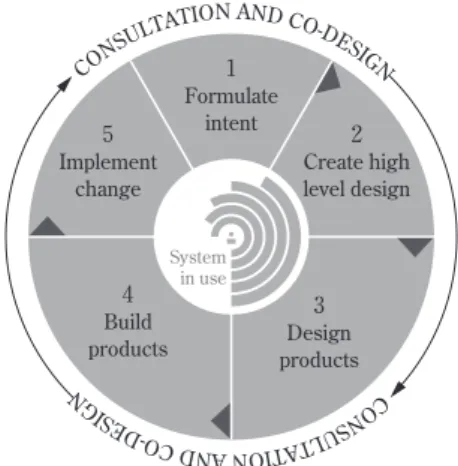
また,ユーザーによってコントロールされたデザインに関して,
ATO
は
Figure 7
のようなデザインを示している。この点は,英国の取組みにFigure 7 The user-centred design process follows five stages captured in the
“
Design Wheel
”: ATO Design Wheel
Source : Australian Taxation Office.
CONSULTATION AND CO-D ESIGN
NS CO AT ULT N A IO C ND ES O-D N IG
System in use
1
Formulateintent
2
Create high level design3
Design products4
Build products
5
Implementchange
Stages :
1 .
Formulate intent : capturing the desired intent of the change.
2 .
Create high level design : creating a document that outlines the high-level design of the change from the outside-in and end to end perspectives.
3 .
Design products : designing and prototyping products described in the blue- print, including user testing.
4 .
Build products : developing prototypes into
“real world
”products, product testing and end to end system testing.
5 .
Implement change : handing over the developed products to owners (internal) and users (external), evaluation, feedback and further improve- ment.
6 .
The design process is often non-linear and the stages may overlap.
も親和性があるといえよう。
⑸ スウェーデン
スウェーデン税務当局(
Swedish Tax Agency :
Skatteverket
)は,モバイル テクノロジーを使った納税者サービスを2012年から開始している。これは 前述のチリ内国歳入庁が行っているSII
ウェヴサービスと類似するもので ある。納税者のモバイルアプリケーションを利用して,税務申告のチェッ クやアップデートを行うものであり,スウェーデン税務当局は,スウェー デン銀行の協力の下でかかるサービスを開発し,モバイルデジタルID
の 利用を開始している。このID
は,権威付けのために有効に機能している。参 考 資 料