The Development of Non-Invasive Methods for
Assessing Skin and Hair Damages Based on
Near-Infrared Diffuse Reflectance Spectroscopy
著者(英)
Yuta Miyamae
学位名
学位の専攻分野の名称: 博士(工学)
学位授与機関
関西学院大学
学位授与番号
34504甲第480号
Contents
General Introduction
61. Scope of This Thesis 6
2. Why is the NIR-DR? - N ear-infrared diffuse reflectance spectroscopy 14 3. Applications to non-invasive assessments by the NIR-DR spectroscopy 15
4. Applications to the cosmetic field by the NIR-DR spectroscopy 15
5. Hair structure 16
6. Skin structure 1 7
7. Introduction of Each Chapter 18
8. References 22
Chapter
1: Evaluation of Physical Properties of Human Hair by
N ear-infrared Spectroscopy
30Abstract 31
1. Introduction 32
2.
Experimental 343. Results and Discussions 36
4. Conclusion 42
Chapter 2: A Non-Destructive Method for Assessing Hair Interior and
Surface Damage by Near Infrared Spectroscopy
Abstract
1. Introduction 2. Experimental
3. Results and Discussions
4. Conclusion 5. References 61 62 63 65 69 76 78
Chapter 3: A Non-Invasive Method for Assessing Interior Skin Damages
Caused by Chronological Aging and Photoaging based on Near-Infrared
Diffuse Reflectance Spectroscopy
93Abstract 94
1. Introduction 95
2.
Experimental 973. Results and Discussions 99
4. Conclusion 104
Chapter 4: A Combined Near-infrared Diffuse Reflectance Spectroscopy
and Principal Component Analysis Method of Assessment for the
Degree of Photoaging and Physiological Aging of Human Skin
117Abstract 118
1. Introduction 119
2. Experimental 121
3. Results and Discussions 123
4. Conclusion 128
5. References 129
Chapter 5: Non-invasive Estimation of Skin Thickness by Near-Infrared
Diffuse Reflection Spectroscopy
144Abstract 145
1. In trod u ction 146
2. Experimental 148
3. Results and Discussions 149
4.
Conclusion 153Acknowledgements List of Publications
List of Abbreviations
ATR-IR CCD FT-NIR FTIR-ATR MC NIR NIR-DROCT
PCA PLS PLSR SEC SEP SEM SNVUV
attenuated total reflection infrared
charge coupled device
fourier transform near infrared
fourier transform infrared - attenuated total reflection
mean centering
near infrared
near-infrared diffuse reflectance
optical computed tomography
principal component analysis
partial least squares
partial least squares regression
Standard Error of Calibration
Standard Error of Prediction
scanning electron microscopic
standard normal variate
ultraviolet
168
1. Scope of this thesis
Background and purpose
The purpose of this thesis IS to develop simple, quick and non-InvaSIve
methods for evaluating biological tissues, hair or skin.
It is important to know the hair and skin conditions from the points of
cosmetology, dermatology, and pharmaceutical science.
The number of customers who subject their hair to repeated chemical
treatments such as permanent waving and bleaching has been increasing over the years.
Denaturation of the cuticle layer and hair interior protein can damage hair structure. I - 4
Customers need an accurate assessment of the conditions of the surface and interior of
their hair so that they can choose the appropriate restoration or chemical treatment
agent. For example, in permanent wavIng and bleaching treatments the chemical
changes In hair are different, like this, the hydrolysis of the amide bonds or the
severing S-S bonds (R-S-S-R ~ 2R-S03H).4 -6 There are several evaluation methods
for monitoring hair surface conditions that are easy to use, such as charge coupled
device camera (CCD) observation. However, all of the current methods for examining
hair interior like the tensile test and infrared spectroscopy, are destructive ones.5, 6
Optical computed tomography (OCT) has been developed as a non-destructive image
analysis method for the hair interior,7 but it cannot evaluate chemical changes such as
few complicated and destructive methods to determine the protein concentration eluted
from hair. As a convenient method, attenuated total reflection based on fourier
transform infrared spectroscopy (FTIR-ATR)8 -11 is available. While FTIR-ATR is easy
to perform, it is only possible to determine surface hair damage. Many researchers
have investigated the chemical change of human hair using FTIR-ATR. However,
FTIR-ATR can penetrate to a depth of about 5 Jlm in spite of the average diameter of
hair is about 100 Jlm. However, the evaluation methods presently available are very
complicated and destructive. Therefore, we can't measure the chemical changes of hair
between the surface and the interior. We developed the simple, quick and
non-destructive method using near-infrared diffuse reflectance (NIR-DR) spectroscopy
that allows one to measure and visualize chemical changes in hair.
On the other hand, for skin, the skin aging is roughly classified into
physiological aging that occur in every human being along with aging, and photo aging
caused by ultraviolet (UV) light. Due to the skin aging, changes with time, such as the
loss of elasticity and the increase in wrinkles occur, which have a great influence on
the appearance and impression. Such changes with time reflect the physiological
changes among the skin, in particular, in the epidermis and dermis constituting the skin,
and for example, shallow wrinkles are greatly influenced by the epidermis and
papillary layer, whereas deep wrinkles and sagging are greatly influenced by the
conditions such as each thickness of the epidermis and dermis obj ectively and
quantitatively, which makes it possible to select and use appropriate cosmetics and medicine suitable for the skin conditions, or conduct doctor's treatment and the like. In
general, aging is evaluated from the measured value of, skin elasticity and wrinkles. However, it IS very difficult to clarify the cause, such as physiological aging or UV
light. The invasive method which is biopsy gIves us the information of the cause. Invasive method of skin tissue analysis, however, will not be tolerated by many
customers regardless of the benefits offered. In order to develop more effective beauty counseling method for skin, it is one of very important points to know the contribution
and the quantitative assessment of those two types aging, photo aging and physiological aging, on individual consumer's skin. With a precise and simple way to assess aging
taking place inside the skin that may not yet be visible on the surface, customers will
be alerted to treatment options earlier when they can make more of a difference. Studies on the physical properties of the skin have been conducted using the cutemeter,
analysis of skin surface or image analysis of skin echogenicity as non-invasive
h d f . I k' . 12 13 14 H h h d h I" . met 0 s 0 asseSSIng tota s In agIng. ' -. owever, t ese met 0 s ave ImItatIons
in their ability to distinguish between the two types of aging, and it is very di fficult to monitor some chemical changes in the interior skin. Fluorescence measurement IS
another non-invasive method which has been employed to assess agIng, but few have satisfactorily applied this technique to humans.15 16 FTIR-ATR method is usually used
as infrared light. However, only information about the stratum corneum on the surface
of the skin can be monitored, because the optical permeability of this method is about 5 /lm. Raman spectroscopy is widely used to study biological samples and, more recently, also to study the skin.17, 18 It is difficult to be used for general, because it is
very expensive. We, therefore, attempted to develop a non-invasive NIR-DR method which has good permeability for skin agIng. In cosmetic research, N IR-DR
spectroscopy has previously been used for measuring water content In skin, hair and nail or hemoglobin or quantity of reddening (erythemal reaction) of skin.15. 16. 19
However, to our best knowledge, no published research has utilized this technology to
assess skin agIng. The objective of the present study is to monitor quantitative and qualitative variations In collagen in the interior skin and to develop a non-invasive
method for the assessment that distinguishes the photoaging and physiological aging of
the human skin.
In this report, "simple" means that it dose not require any pretreatment before
N IR measurement, and the non-destructive evaluation indicates that it is possible to measure a hair interior and surface and skin condition by only putting an optical fiber
probe on hair and skin directly.
Originality and Novelty of this thesis
change is often caused by chemical change. Therefore, it IS very important point for
this study to note "physical changes are caused by chemical changes". NIR-DR
spectroscopy has high optical permeability and it is possible to evaluate the chemical
changes. Thus, I think that it is possible to evaluate the physical changes. This point
has originality and novelty.
In cosmetic studies, particularly for hair, the measurement of water content,
evaluation of hair color, and determination of melanin by use of NIR-DR spectroscopy
have already been developed.2o - 23 However, there has been Ii ttle research focused on
chemical changes of substances that include changes in the hair protein.
Original points are that the evaluation method which is possible to distinguish
the hair interior and surface condition, photoaging and physiological aging of the
human skin using NIR-DR spectroscopy and principal component analysis (PCA) were
developed.
Summary
In the results, we have developed simple, quick and non-invasive methods for
evaluating hair physical properties, hair interior and surface damage conditions, skin
condition and skin thickness with the particular wavenumber regions of NIR-DR
spectrum, PCA and partial least squares regression (PLSR). These methods can be also
1) The physical evaluation methods for hair Friction Twist Gloss 6000 - 5500 & 5060 4500 cm-1 7300 6500 & 6000 - 4200 cm-1 5300 - 4200 cm-1
The correlation coefficients and standard error of calibration of the PLSR
calibration models for the friction, twist and gloss of hair were calculated to be 0.96
and 0.023,0.81 and 3.27, and 0.90 and 0.36, respectively.
2) The evaluation of hair interior and surface damage conditions
5600 - 4500 cm-1
3) The evaluation of skin conditions
5990 - 5490 & 5000 - 4480 cm-1 4) The evaluation of skin thickness
6939 5990 & 5242 - 4609 cm-I
Epidermis, dermis and whole skin gave R2cvand SECV values were calculated
to be 0.77 and 8.2, 0.72 and 21.9, and 0.79 and 25.8, respectively.
impact of this thesis
1) The physical evaluation methods for hair
Since the evaluation time can be shortened considerably, it can contribute
It is necessary to evaluate physical properties such as hardness, tensile strength, friction and twist for monitoring conditions of hairs, nails, skin, foods, films and
capsules of medicine that are all made mainly from proteins. These measurements of
these physical properties are also important for evaluating the efficacy of products.
2) The evaluation of hair interior and surface damage conditions
Since the evaluation for the effect of conditioner to the hair can be very easy, it
can contribute to the development of repair agents with excellent effect.
3) The evaluation of skin conditions
It is possible to suggest the Effective prophylaxis.
It is possible to provide the agents and methods of treatment with excellent effect for each degree of damage factor.
Since this method can evaluate the skin interior condition over the counter, it is
possible to counseling accurately.
4) The evaluation of skin thickness
Since you can find early pathological skin thickening and measure skin
thickness with this method, it is possible to provide a preventive medicine, position of
treatment for skin grafting, and effective massage.
Future
structure and quantity of skin interior as the changes of chemical bonding state. The
NIR-DR method can evaluate the properties from a different perspective from the
conventional method. These evaluation methods are very useful tool for monitoring
non-invasively, simply and quickly. Monitoring the conditions of skin and hair by using
these evaluation methods allow us to capture in detail various aspects of the conditions
of the skin and hair, to care the skin and hair to keep beautiful, to provide necessary
information to Medical cosmetic surgery, to use as a counsel tool for providing rapid
advice and to provide the information of useful medically thickness skin and thickening
by atopy. However, there are some tasks that must be resolved. One is that I have to
Improve the accuracy of this developed NIR-DR methods. I think that probe
configuration has to be study more to control the information into the depth. For
example, in this method, our fiber probe is a diffuse reflection type. In the probe 100
each optical fibers are arranged at random for the incident and output light. I think that
the information into the depth can be controlled with the appropriate distance between
incident and output optical fiber. And, in this study for skin, a ring of stainless steel of
1.2mm thickness is attached to the tip of the probe, because the spectrum does not cause
saturation and the measurement unit is not contaminated (Figure 1). The ring was
touched to the tissue organization when we measured spectra. However, I have to try
better material, thickness and other method. The other is that as current subjects for
be monitored the small changes and so on. Recently, the NIR-DR device become smaller
and smaller and the NIR camera has been developed. Thus, by the accumulation of
information and the development of the tool, I have always thought that it can be
commercialized in the near future.
2. Why is the NIR-DR? - Near-infrared diffuse reflectance spectroscopy
NIR-DR spectroscopy is a treat such as fluorescence, light emission, absorption
and reflection of light in the wavelength range of up to 4000 cm-1 from the 12500 cm-1 •
In general, Electronic transition of a substance is present in the area of the
region from visible to the far ultraviolet, vibrational transitions are infrared region, the
rotational transitions are in the microwave region. Strong absorption is not observed
most commonly in the near infrared region. However, vibrational transitions to the
overtone and the combination tone of weak molecular vibration are observed. The
transition to overtone and the combination tone IS due to the anharmonicity of
vibration. The transition observed In the near infrared regIon IS limited to a high
vibration mode as anharmonicity is relatively large. So, the overtone and the
combination tone of the vibration mode of the functional group included O-H, C-H and
N - H in the spectra.
In general, NIR-DR spectroscopy is a powerful technique with high optical
the sample for small compared to the chemical bond.24, 25 One advantage of this
method is that optical fiber probes can be used during measurements. Another is that
non-invasive examination is possible and little sample pretreatment is needed. NIR-DR
spectroscopy can be used to monitor information down to about 1 mm from the skin
surface depending on the kind of the probe.
Recently, NIR-DR spectroscopy has been well developed as one of the
non-destructive techniques in the agriculture and food fields, and measurement of
oxygen saturation of hemoglobin is one of the most successful applications in the
biomedical applications of N IR-OR spectroscopy.26 - 28 For hair and skin, the
measurement of water content, evaluation of hair color, and determination of melanin
by used of NIR-DR spectroscopy have also been developed. 20 , 2 L 29, 30 However, there
is little research on paying attention to changes in internal protein and measuring the
damage conditions of human hair.
3. Applications to non-invasive assessments by the NIR-DR spectroscopy
4. Applications to the cosmetic field by the NIR-DR spectroscopy
NIR-DR spectroscopy provides information on such aspects as constituents
concentration. NIR spectroscopy was first developed in the 1980s by Norris et al. In
order to analyze agricultural products.31 In the field of biomedical engineenng,
- 37 There also exists great interest in non-invasive blood glucose measurement,38 cancer
detection,39 body fat measurement,40 and so on although most of them are not yet
clinically reliable.22 , 44,45
NIR-DR spectroscopy has been a powerful technique for water content
determination and water structure analysis for various kinds of materials for a number of
reasons.44 46 One is that in situ and nondestructive analysis is possible. The other is that
the NIR spectrum is very sensitive to the environment of water molecules. Yet another is
that NIR analysis is applicable both to samples containing a large amount of water and
to those having a small amount of water. To data, various kinds of agricultural products,
foods, fibers, and industrial products have been subj ected to N IR analysis of water. 44 - 46
However, application of NIR water analysis to animal tissues or medical samples is still
very rare.
5. Hair Stucture
Hair IS composed primarily of proteins. These proteins are of a hard fibrous
type known as keratin. This is the same kind of protein that makes up the nails and the
outer layer of skin. Each strand of hair consists of three layers (Figure 2). An
innermost layer is known as the medulla which is only present in large thick hairs. The
middle layer is known as the cortex. The cortex provides strength and both the color
3. The cuticle is thin and colorless and serves as a protector of the cortex. For example,
Permanent wave processing produces chemical changes such as the hydrolysis of the amide bond (-COONH ~ -COOH + NH3 ), but does not allow complete reformation of
the disulfide bond that is severed by the reduction (-S-S- ~ -SH). 47,48
6. Skin structure
Figure 4 shows the skin structure.49 Three layers are existed in the skin the
epidermis, dermis, and fat layer (also called the subcutaneous layer). Each layer performs specific tasks. In this section, we describe the epidermis and dermis that is
the target of this study. The area of the skin is about 1 m2 that is the same size as a tatami mat.
Epidermis: The epidermis (about 0.2mm) is the outer layer of the skin. It has
four layers which are stratum corneum, granular layer and basal layer. The outermost portion of the epidermis, known as the stratum corneum, contains the moisture of 12 to
about 21 0/0. The stratum corneum has the important role for undamaged, prevents most
bacteria, viruses, and other foreign substances from entering the body with keeping the
moisture. In certain areas of the body that require greater protection, the stratum corneum is much thicker (about 40 !-lm). If the stratuln corneum barrier is broken, Such
Dermis: The dermis (about 2mm), the skin's next layer, is a thick layer of
fibrous and elastic tissue (made mostly of collagen, elastin, and fibrillin) that gives the skin its flexibility and strength. The dermis provides tensile strength and elasticity to
the skin through an extracellular matrix composed of collagen fibrils, microfibrils, and
elastic fibers, embedded in proteoglycans. The figure 6 indicates the collagen fibrils (a) and elasti c fi bers (b). I f a lot of collagen is made, keloid, growth lines and stretch
marks will appear on the surface of the skin. It is also known that ultraviolet radiation cause abnormal collagen production.
7. Introduction of Each Chapter
This thesis is organized into five chapters. Chapter I described that a
non-destructive, simple and quick method to evaluate the friction, twist and gloss of human hair by using near infrared diffuse reflectance (NIR-DR-DR) spectroscopy and
chemometrics was developed. It is necessary for the method that Partial least squares (PLS) regression has been applied to NIR-DR spectra of human hair and mean
centering (MC), standard normal variant (SNV), and first derivative (1 d) or second
derivative (2d) are performed to develop calibration models that predict the friction, twist and gloss of human hair. The correlation coefficients and standard error of
calculated to be 0.96 and 0.023,0.81 and 3.27, and 0.90 and 0.36, respectively.
In chapter 2, this paper reports a non-destructive method for evaluating and
indicating hair interior and surface damage conditions induced by chemical treatments
in a simple, rapid, non-destructive manner based on near-infrared (NIR) diffuse
reflectance (DR) spectroscopy by putting fiber probe on hair. Though there are many
simple and non-destructive methods for evaluating the hair surface, the existing
evaluation methods for monitoring chemical changes in the interior proteins are very
complicated and destructive. Therefore, we have attempted to develop a new
non-destructive method to evaluate the damage of the hair interior and surface
simultaneously by uSIng NIR-DR spectroscopy. The key to this study was that the
combination of N IR-DR spectroscopy and principal component analysis (PCA) were
applied to development of the evaluation of hair damage and we found the most suitable
wavenumber region (5060 - 4500 cm-I) for the evaluation of hair damage.
Chapter 3 is reported on a near-infrared diffuse reflectance (NIR-DR)
spectroscopy method for evaluating non-invasively changes taking place inside the skin
of two kinds of hairless mouse groups, a UVB-irradiated group and a non-irradiated
group, which are subjected to photoaging and chronological aging, respectively in order
to explore the possibility of developing evaluation methods for human skin. Photoaging
and chronological aging are heavily involved in the skin changes that occur as we get
currently available for assessIng total skin agIng that examIne physical properties of
skin, but a novel approach is needed for more precise measurement of each type of aging
inside the skin. NIR-DR spectroscopy in the 5990 - 5490 cm-1 and 5000 - 4480 cm-1
regions and PCA may allow us the non-invasive assessment for the degree of photo aging
and chronological aging as degeneration of elasticity in collagen protein and
degradation of protein quantity, respectively.
Chapter 4 reports that we proposed a combined near-infrared diffuse reflectance
(NIR-DR) spectroscopy and principal component analysis (PCA) method of assessment
for the degree of photo aging and physiological aging of human skin. In our previous
paper we proposed a near-infrared diffuse reflectance (NIR-DR) spectroscopy method
for evaluating non-invasively changes taking place inside the skin of two kinds of
hairless mouse groups, a UVB-irradiated group and a non-irradiated group, which are
subjected to photoaging and physiological aging, respectively. The important point of
the present study is to explore the possibility of applying the proposed evaluation
method using the combined NIR-DR spectroscopy-PCA to human skin. In mouse skin
and human skin, while their organizations are similar, there are also quite different parts.
It is COlnmon sense that the mouse and human skins are largely di fferent in
dermatology.14 The most significant difference between the previous experiments using
mouse skin and the present experiments using human skin is that we employed artificial
on natural UV light from the sun. This study demonstrates that for the human skin,
N IR-DR spectroscopy and PCA may allow us the non-invasive assessment for the degree
of photo aging and physiological aging as degeneration of elasticity in proteins and
degradation of protein quantity, respectively.
In chapter 5, a non-invasive method for estimating skin thickness by uSIng
near-infrared diffuse reflectance (NIR-DR) spectroscopy is reported. Skin thickness is
significantly different between face and body parts and changes with agIng and
environment factors and the difference of the skin thickness reflects structural
conditions of epidermis and dermis. Thus, skin thickness is one of important skin
properties from the points of cosmetology, dermatology, and pharmaceutical SCIence.
However, current methods for measuring the skin thickness are complicated and need
big devices. Therefore, we propose a near-infrared (NIR) diffuse reflection (DR) and
partial least squares (PLS) regression method for non-destructive skin thickness
estimation by uSIng UV light-irradiated and non-irradiated skins of backs of hairless
mice and those denuded from the back. After examining the whole region and selected
regions, the 6939-5990 and 5242-4609 cm-l regions where bands due to amide groups of
proteins appear gave the best and SEV (Standard Error of Validation) results. The results
of loadings plots have revealed that wavenumbers contributing to the prediction of skin
8. References
1. Inoue, T., Ito, M., and Kizawa, K., Characterization of eluted proteins from hair
fiber under permanent waving or bleaching, J. Soc. Cosmet. Chern. Japan, 35 3 (2001),
237-242.
2. Inoue, T., Ito, M., and Kizawa, K., Increase of labile protein in hair by permanent
waving or bleaching, Fragrance Journal, 8 (2002), 55-60.
3. Robbins, C. R., Chemical aspects of bleaching human hair, J. Soc. Cosmet. Chern.,
22 (1971), 339-348.
4. Kaplin, I. J., Schwan, A., and Zahn, H., Effects of cosmetic treatments on the
ultrastructure of hair, Cosmet. & Toilet., 97 (1982), 22-26.
5. Robbins, C. R., and Crawford, R. J., Cuticle damage and the tensile properties of
human hair, J. Soc. Cosmet. Chern., 42 (1991), 59-67.
6. Tate, M. L., Kamath, Y. K., Ruetsch, S. B., and Weigmann, H. D., Quantification and
prevention of hair damage, J. Soc. Cosmet. Chern., 44 (1993), 347-37l.
7. Tanaka, K., Tango, Y., and Shimmoto, K., Continuous three-dimensional
examination of interior hair structure, 23rd IFSCC Congress, (2004), 216-220.
8. V. Signori, D. M.Lewis, Macromol. Symp. 119, 235 (1997).
9. V. Signori, D. M. Lewis, Internat. J. Cosmet. Science 19,1 (1997).
10. K. L. A. Chan, S. G. Kazarian, A. Mavraki and D. R. Williams, Appl. Spectrosc. 59,
11. D. J. Lyman and J. M-Wijelath, Appl. Spectrosc. 59,26 (2005).
12. Y. Takema, Y. Yorimoto, Y. Kawai and G. Imokawa, Br. J. Dermatol. 131, 641
(1994).
13. S. Akazaki, H. Nakagawa, H. Kazama, O. Osanai, M. Kawai, Y. Takema and G.
Imokawa, Bf. J. Dermatol. 147,689 (2002).
14. M. Gniadecka and G. B. Jemec, Bf. J. Dermatol. 139,815 (1998).
15. N. Kollias, R. Gillies, M. Moran, 1. E. Kochevar and R. R. Anderson, J. Invest. Dermatol. 111,776 (1998).
16. G. N. Stamatas, R. B. Estanislao, M. Suero, Z. S. Rivera, J. Li. Khaiat and N.
Kollias, Bf. J. Dermatol. 154, 125 (2006).
17. P. J. Caspers, G. W. Lucassen and G. J. Puppels, Biophysical Journal. 85, 572
(2003).
18. N. S. Eikje, Y. Ozaki, K. Aizawa and S. Arase, J. Biomedical Optics. 10,014013-1
(2005).
19. K. Han, H. Choi, C. Won, J. Chung, K. Cho, H. Eun and K. Kiln, Mech. Ageing Dev.
126,560 (2005).
20. Y. Ozaki, T. Miura, K. Sakurai and T. Matsunaga, Appl. Spectrosc. 46, 875 (1992).
21. A. Matas, M. G. Sowa, G. Taylor and H.H.Mantsch, Vibrational Spectrosc. 28, 45
(2002).
23. Pande, C. M., and Yang, B., Near-infrared spectroscopy: applications In hair
research, 1. Soc. Cosmet. Chern., 51 (2000),183-192.
24. K. Maruo, M. Tsurugi, M. Tamura and Y. Ozaki, Appl. Spectrosc. 57, 1236 (2003).
25. H.W. Siesler, Y. Ozaki, S. Kawata and H.M. Heise, Near-Infrared Spectroscopy,
Wiley- VCH, Weinheim, (2002)
26. S. Takashima, S. Hirano and H. Kimoto, Brain & Development 17, 312 (1995). 27. H. Sato, M. Shimoyama, T. Kamiya, T. Amari, S. Sasic, T. Ninomiya, H. W. Siesler
and Y. Ozaki, 1. Near Infrared Spectrosc. 11,309 (2003).
28. S. Tsuchikawa, Y Hirashima, Y. Sasaki and K. Ando, Appl. Spectrosc. 59, 86
(2005).
29. P. L. Walling and 1. M. Dabney, 1. Soc. Cosmet. Chern. 40,151 (1989).
30. Y. Ozaki, H. Maeda, M. Tanaka, N. Hayashi, T. Kojima, 1. N ear Infrared. Spectrosc.
3,191 (1995).
31. Near-Infrared Technology in the Agricultural and Food Industries, P. Williams and K.
Norris, Eds. (American Association of Cereal Chemists, 2001), 2nd ed.
30.1d. Rigal, Ml. Losch, R. Bazin, C. Camus, C. Sturelle, V. Descamps, lL. Leveque, 1.
Soc. Cosmet. Chern., 44, 197 (1993).
31. WF. Cheong, SA. Prahl and Al. Welch, IEEE 1. Quant. Electron, 26, 2166 (1990).
32.Z. Ya-Xian, T. Suetake and H. Tagami, Arch. Dermatol. Res., 291, 555 (1999).
34. OS. Khalil, S. Yeh, MG. Lowery, X. Wu, CF. Hanna, S. Kantor, TW. Jeng, JS. Kanger,
RA. Bolt and F. Mul, J. BioI. Opt., 8, 191 (2003).
35. Y. Hoshi and M. Tamyra, J. Appl. Physiol. 75, 1842 (1993).
36.RJ. McNichols, CL. Cote and J. Biomed. Opt., 5, 5 (2000).
37. H. Zeng, M. Petek, MT. Zorman, A. McWilliams, B. Palcic and S. Lam, Opt. Lett., 29,
587 (2004).
38.JM. Conway, KH. Norris, CEo Bodwell and Am. J. Clin. Nutr., 40,1123 (1984).
39.H. Arimoto, M. tarumi and Y. Yamada, Opt. Rev., 10,74 (2003).
40.H. Arimoto, M. tarumi and Y. Yamada, Opt. Rev., 10,161 (2003).
41. E.G. Osborne and T. Fearn, N ear Infrared Spectroscopy in Food analysis (John Wiley,
New York, 1986)
42. Near-Infrared Technology in the Agricultural and Food Industries, P. Williams and K.
Norris, Eds. (American Association of Cereal Chemists, St. Paul, Minnesota, 1990),
2nd ed.
43. S. Creaser and A. M. C. Davies, Analytical Applications of Spectroscopy (The Royal
Society of Chemistry, London, 1988).
44. Proceedings of the 2nd International NIRS Conference, M. Iwamoto and S. Kawano,
Eds. (Korin Publishing Co. LTD., Tokyou, 1990).
47. Robbins, C. R., Chemical aspects of bleaching human hair, J. Soc. Cosmet. Chern.,
48. Kaplin, 1. J., Schwan, A., and Zahn, H., Effects of cosmetic treatments on the
ultrastructure of hair, Cosmet. & Toilet., 97 (1982), 22-26.
49. L. A. Goldsmith. "Physiology, Biochemistry, and Molecular Biology of the Skin".
The cortex The hair CUL~..II[~"
The medulla
50~m Fig. 2. SEM observation of the hair.
10~m Fig. 3. SEM observation of the cuticles.
The epidermis
The dermis
The fat layer
(a) (b)
Fig. 5. The example of atopic dermatitis (a) and ichthyosis (b).
(皮膚病 ア ト ラ ス :南山堂)
(a) (b)
Fig. 6. The collagen fibrils (a) and elastic fibers (b).
Chapter 1
Evaluation of Physical Properties of Human Hair by Diffuse
Reflectance N ear-infrared Spectroscopy
ABSTRACT
The obj ective of the present study is to develop a novel non-destructive, simple and
quick method to evaluate the friction, twist and gloss of human hair based on near-infrared diffuse reflectance (NIR-DR) spectroscopy and chemometrics. NIR-DR
spectra were measured for human hair which were collected from eleven Japanese women (age 5-44 years) by use of an optical fiber probe. Partial least squares
regression (PLSR) has been applied to the NIR-DR spectra of human hair after mean centering (MC), standard normal variant (SNV), and first derivative or second
derivative to develop calibration models that predict the friction, twist and gloss of
human hair. We identified the most suitable wavenumber region for the evaluation of each physical property. Correlation coefficients and standard error of calibrations
(SEC) of the PLSR calibration models for the friction, twist and gloss of hair were calculated to be 0.96 and 0.023, 0.81 and 3.27, and 0.90 and 0.36, respectively. Thus,
the calibration models have high accuracy.
Key words: Near-infrared spectroscopy; Diffuse reflectance; Hair; Partial least square
INTRODUCTION
It IS of much importance to evaluate physical properties such as hardness,
tensile strength, friction and twist In order to monitor the conditions of hair, nails, skins, foods and capsules, all of which are largely composed of proteins. 1
Measurements of these physical properties are also important for evaluating product efficacy. Changes in physical properties of proteins are caused by their chemical
changes. Thus, it should be possible to monitor the variations in physical properties
using vibrational spectroscopy that is sensitive to chemical as well as physical changes of molecules.
The number of individuals subjecting their hair to repeated chemical treatments, such as permanent waving and bleaching, has increased in recent years. Denaturation of the cuticle layers and interior hair proteins can damage hair structure.2, 3 Such
individuals thus require accurate assessment of the conditions of the hair surface and
interior in order to select the treatment agents. For example, in permanent waving and bleaching treatments, the chemical changes in hair are different, i.e., hydrolysis of
amide bonds or severing S-S bonds (R-S-S-R ~ 2R-S03H).4 6 In order to develop
effective cosmetic products for hair, it is necessary to accurately evaluate surface and interior damages. However, current methods for examining hair conditions are complex
and destructive. At present, a friction tester is used to evaluate hair surface changes, while other methods examine tensile strength and twist. 7 9 Therefore, there is a strong
need to evaluate the physical properties of hair in a simple, quick and nondestructive
manner.
Recently, NIR-DR spectroscopy has been developed as a non-destructive
technique In agriculture, biomedical SCIences and other fields. Non-invasive
measurement of oxygen saturation In human brain IS one of the most successful
biomedical applications of NIR-DR spectroscopy.IO 13 For hair, nails and skin, for
example, NIR-DR prediction of water content, evaluation of hair color and
determination of melanin were reported. 14 - 17 However, little research has focused on
changes of physical properties in human hair.
Attenuated total reflection infrared spectroscopy (ATR-IR) is another, more
convenient method for measunng proteins in situ; for example, the ATR-IR
determination of the cysteic acid content In hair damaged by exposure to UV lights,
dry heat and chemical treatments and the ATR- IR imaging of a hair were reported.18-21
While ATR-IR is easy to use, for hair one can use it only to determine surface hair
damages. Many research groups have investigated chemical changes in human hair
using ATR-IR.18, 19 However, ATR-IR lights can only penetrate to a depth of about 5
Jlm, while the average diameter of human hair is about 100 Jlm. Therefore, the method
cannot be used to measure chemical changes in the interior hair.
In the present study, we have thus developed a new method for measunng
We also investigated whether the calibration models were applicable to in vivo samples
from two Japanese women.
The new method is simple, quick and non-destructive for evaluating hair
physical properties such as friction, gloss and twist. The proposed method can also be
applied to the measurements of physical properties of other protein-based materials
such as nails, skins, foods, and capsules.
EXPERIMENTAL
Samples
The hair samples used were collected from eleven Japanese women (age 5-44
years). The samples had not been subjected to any chemical treatments. They were tied
into bundles by "Parafilm M" (American National Can, USA) with a diameter of 7-8
mm after permanent waving or bleaching. The conditions for the permanent waving
and bleaching are described below. The treated bundles were washed with sufficient
running water, dried at 40°C, and left standing for 24 hours at 20 °C and 50% relative
humidity. The following treatment conditions, which are severer than normal
conditions, were used in order to prepare the damage models. The samples were
prepared as follows. (1) Control samples: no chemical treatment, washed with water
and dried only. (2) Samples with permanent wavIng: the permanent wavIng was
agent and sodium bromate as an oxidizing agent. Two levels of damaged hair were
produced using the reducing agent at concentrations of 5 and 10%. (3) Samples with
bleaching: the bleaching was performed using a bleaching agent containing 30/0
hydrogen peroxide and 3% ammonia for 30 minutes. Two levels of damaged hair were
produced by bleaching once or three times.
N ear-Infrared Diffuse Reflectance Spectroscopy
NIR-DR spectra in the 8000-4000 cm -I regIon were measured for the hair
samples at an 8 cm-1 spectral resolution with a FT-NIR spectrometer "IFS28/N"
(Bruker Optics, Ettlingen, German) using an optical fiber probe at 20°C. As shown
in Fig. 1, the optical fiber probe was directly put on the hair samples. Thus, it was
important to put the probe on the tied hair bundles. For each measurement, the samples
were placed on Teflon, and the spectra were measured at five points with 32 scans.
N IR-DR measurements had been carried out before the physical properties tests were
completed.
Measurement of friction, twist and gloss
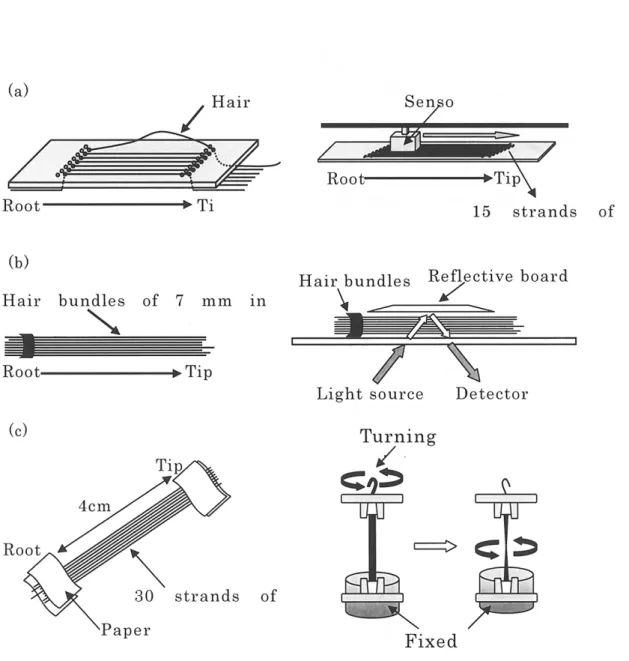
Figure 2 depicts sample preparation for friction, twist and gloss testing of
human hair. For the friction test samples, 15 strands of hair from the shaft were
directions from root to tip. Hair bundles of about 7 mm in diameter were prepared for
the gloss test samples. For the preparation of the twist test samples, 30 strands of hair
from the shaft were counted, and after the direction of the hairs were matched, these
were fixed to the test tool. Friction tests were made by use of a KES-SE friction tester
(Kato Tech.). Gloss tests were performed using a VG-2000 gloss meter (Nippon
Denshoku).22 Twist tests were carried out employing a KES- YN-I torsion and
intersecting torque tester (modified: Kato Tech).
Data analysis
The measured NIR-DR spectra were imported into Pirouette (version 3.11, Info
Metrix, Bothell, USA) for data analysis. PLSR was used to develop calibration models
that predict the friction, twist and gloss of the hair. 23 - 25 Because the sample collection
was not easy, the predictive performance of the calibration models was estimated by
the cross-validation procedure. Pretreatment of original NIR-DR spectra was
performed using Me, SNV, and first derivative or second derivatives.
RESULTS AND DISCUSSION
Figure 3 shows (a) NIR-DR spectra in the 8000-4000 cm-1 region of human hair,
and (b) their first and (c) second deri vati ve spectra. The spectra in the 6000-5500,
in a solid state containing a small amount of water. 26 27 Medium absorptions near 5900
and 5750 cm-I are assigned to the first overtones and combination modes of CH3 and
CH2 stretching modes of keratin in hair. A strong feature near 5250 cm-I
is assigned to
the OH combination mode of water, while that near 4900 cm-1 is due to the amide
combination mode in keratin. As the wavenumber regIons which yield the highest
correlation coefficients to the physical properties, we selected the 5060-4500 cm-I
region where several peaks due to the amide combination modes of keratin appear and
the 6200-5500 cm-I, 4800-4500 cm-1 and 4500-4100 cm-1 regions where some peaks
affected by the severing of S-S bonds (R-S-S-R ~ 2R-S03H)4-6 show clear differences
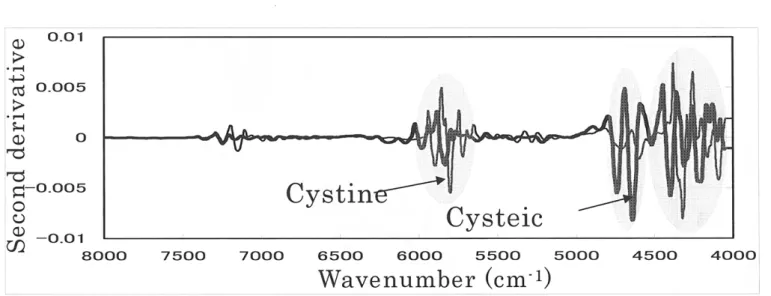
between cystine and cysteic acid (Fig. 4). When the PLS regression analysis was
conducted on the NIR-DR spectra, we explored vanous combinations of the
preprocessings and wavenumber regIons to identify the conditions with the highest
correlation between each physical property and N IR-DR spectra.
Friction
There are regularly arranged cuticles on the surface of human hair. Friction
testing IS one of the methods used to monitor the surface of human hair, as friction
properties are affected by changes in the cuticles.28 Because the cuticles are composed
of hard keratin that has numerous disulfide linkages, NIR-DR bands associated with
We initially suspected that the useful wavenumber regions would be those with bands
arising from thiols or sulphonic acids, which are synthesized by oxidation or reduction
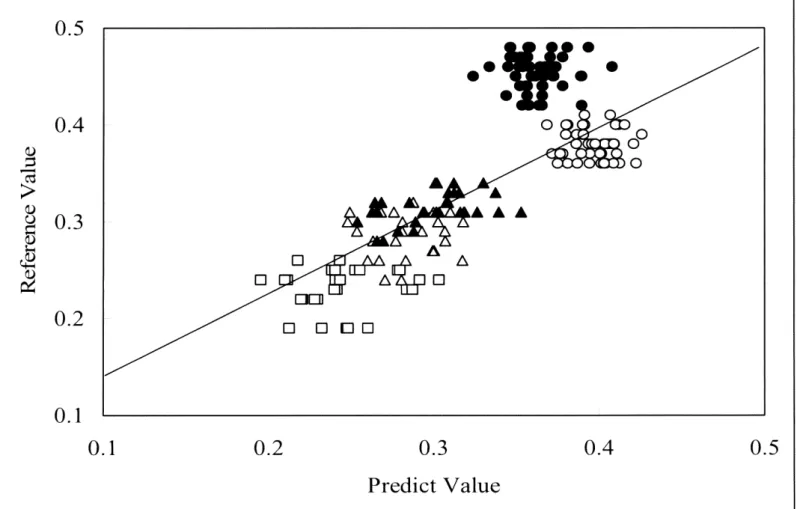
of cystine in the cuticles, and amide groups. Figure 5 shows a PLSR calibration model
for the friction developed using the original spectra in the 8000-4000 cm -I region. The
results show a very low correlation coefficient of 0.62, with SEC and standard error of
prediction (SEP) being 0.060 and 0.060, respectively. Of all the wavenumber regions
and their combinations investigated, the region exhibiting the highest correlation to
friction was the combination of the 6000-5500 and 5060-4500 cm-I regions. In other
words, the combination of these regions capturing the changes in the disulfide linkages
and amide bonds exhibited the highest correlation with friction. Figure 6 shows a
PLSR calibration model for predicting the friction of the hair developed uSIng the
original spectra in the 6000-5500 and 5060-4500 cm-I regions after the MC, SNV and
2d treatment. The PLS model thus developed showed a correlation coefficient of 0.96,
with SEC and SEP being 0.023 and 0.022, respectively.
Figure 7 shows a loadings plot of regression coefficients for the model shown
in Fig. 6 and the second derivatives of NIR-DR spectra of keratin and L-cysteic acid
(anhydrous) in the solid states. Combination bands including the N-H stretching and
different amide modes are found as the strongest peaks near 4900 and 4600 cm-I in the
plot. 29 They are due to the combination of amide A and amide
II
and that of amide Bthe keratin spectrum is weaker than that in the L-cysteic acid spectrum. Bands arising
from the first overtones and combinations of C-H stretching modes are located at 5830 and 5680 cm -I. As suspected, the peaks corresponding to severing the S-S bonds and
amide bonds are most closely related to friction.
Gloss
In permanent wave treatments, reducing agents cause sevenng of disulfide linkages in the cuticles on the hair surface. The surface of hair then exhibits
hydrophilic properties due to production of cysteine. Thus, the gloss value is influenced by the surface conditions and water content among individual hair strands.
Because the numerical value of glossiness IS markedly influenced by hair color,
bleached hair bundles were not used In this experiment; only permanent-waved hair
bundles were employed. Gloss is a physical property influenced by surface changes
such as cuticle damages. It was suspected that permanent waving would most strongly affect changes in amide bonds and water adsorption due to hydrophilization of the
surface cuticle layer. Initially, a PLSR calibration model was developed for gloss based on the original NIR-DR spectra in the 8000-4000 cm-I region. The results confirmed a
very low correlation coefficient of 0.53, with SEC and SEP being 0.97 and 0.96, respectively. Among all the wavenumber regions and their combinations investigated,
a PLS regression calibration model for predicting the gloss of the hair developed using
the original spectra in the 5300-4200 cm-1 region after the MC, SNV and second
derivative treatment. The best PLS model obtained for gloss revealed a correlation
coefficient of 0.90, with SEC and SEP being 0.36 and 0.32, respectively.
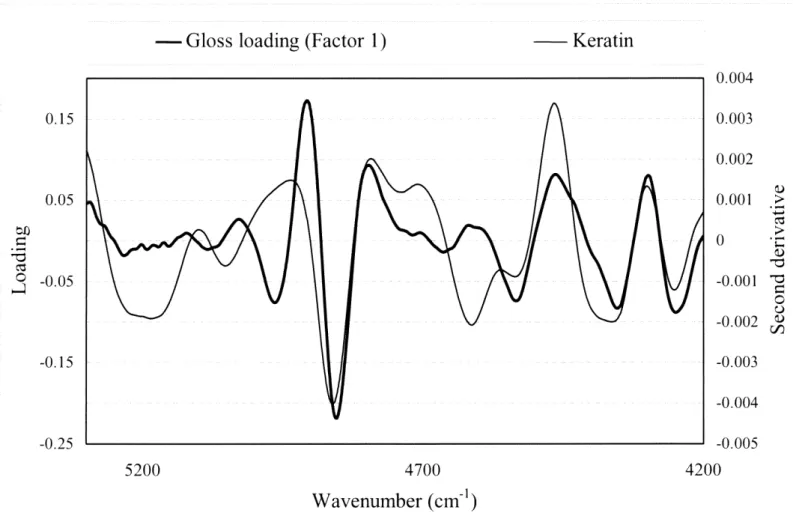
Figure 9 depicts a loadings plot of regression coefficients for the model shown
in Fig. 8 and the NIR-DR spectra of keratin. The strongest downward peak at near 4900
cm-I reflects the combination mode of amide A and amide
II
.27Twist
One of the factors exacerbating the formation of split ends is fracture In the
interior under tensile stress during comb-out. 9 Common techniques to monitor the
interior conditions are based on tensile strength and twist strength. Robbins and
Crawford showed that the tensile properties of human hair are due pnmary to the
cortex. I A new type of torsional testing (twist) has been developed to measure the
torsional properties of single fibers and yarns wi th high accuracy.8 In this study, the
interior of hair was monitored using the twist test. The torsional rigidity of hair fibers
is related to the surface and inner structure. It was considered that twist would be most strongly correlated to changes in amide bonds and water absorbed by hydrophilic areas
due to oxidation and reduction of surface cystine. We carried out PLSR for twist using
0.37, with SEC and SEP being 8.84 and 8.83, respectively was obtained. The NIR-DR
frequency regions exhibiting the highest correlation to twist measurements were those
of 7300-6500 and 6000-4200 cm-l. Figure 10 shows a PLS regression calibration model
for the gloss developed using the original spectra in the 7300-6500 and 6000-4200 cm-I
regions after the MC, SNV and first derivative treatment. The PLS model thus obtained
yields a correlation coefficient of 0.81, with SEC and SEP being 3.27 and 5.56,
respecti vel y.
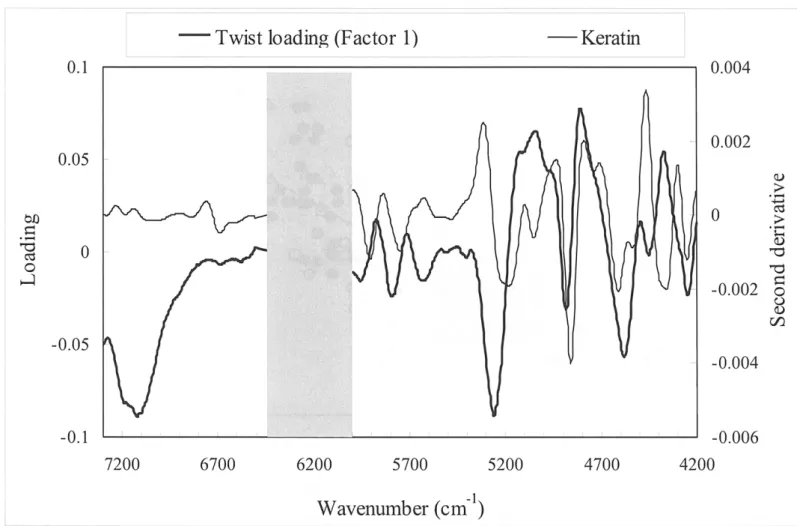
Figure 11 depicts a loadings plot of regression coefficients for the model shown
in Figure 10 and the NIR-DR spectra of keratin. Combination bands arising from the
N-H stretching and different amide modes are found as the strongest bands near 4900
and 4600 cm-I in the plot.29 A band due to the combination of the O-H antisymmetric
and symmetric stretching modes of water is found at near 7000 cm-1, whereas that of
0-H stretching and bending modes accounts for an absorption at near 5200 cm -1.29 In
fact, it is suggested that the twist is most strongly correlated to changes in surface and
interior proteins and water content among individual hair strands.
In vivo application
NIR-DR spectra in the wavenumber region of 7300-4200 cm-1 were measured
for the hair of two Japanese women in order to cover the specific NIR-DR regions for
and actual values of friction, gloss and twist. The predicated and actual values were
similar, thus confirming the validity of the present model.
CONCLUSIONS
The present study has clearly demonstrated that the use of N IR-DR
spectroscopy and PLS regression can predict the physical values of friction, gloss and
twist of human hair. Based on these results, we have identified the specific
wavenumber regions for the prediction of friction, gloss and twist. The wavenumber
regions selected are assoicated with chemical changes, such as the hydrolysis of the
amide bonds, severing of the S-S bond and OH groups. The following conclusions can
be drawn from the present study.
I) Friction properties are affected by changes in the cuticles. The wavenumber regions
exhibiting the highest correlation to friction are the 6000-5000 and 5060-4500 cm-1
regions. The combination of these regions capturing the changes in the disulfide
linkages and amide bonds exhibited the highest correlation with friction. The PLS
model thus developed showed a correlation coefficient of 0.96, with SEC and SEP
being 0.023 and 0.022, respectively.
2) The wavenumber region exhibiting the highest correlation to gloss is the 5300-4200
cm-1 region. The peaks near 4880 cm-1 especially, those for the amide bonds are
being 0.36 and 0.32 was obtained for the PLS model.
3) For twist value, chemical changes in amide bonds and OH groups are important.
The wavenumber regions exhibiting the highest correlation to twist measurements
are the 7300-6500 and 6000-4200 cm-1 regions. The chemometrics analysis of the
NIR data yielded a correlation coefficient of 0.81, with SEC and SEP being 3.27
and 5.56, respectively.
The PLS calibration models for the three physical properties developed using NIR-DR
spectra have shown very high levels of correlation, ranging from 0.81 to 0.96. Thus,
the present study has revealed that NIR-DR spectroscopy is a powerful nondestructive
technique for monitoring the physical properties of hair.
We have applied the present models to two subj ects in vivo, and the predicted
values are close to the measured values, thus confirming that these models were
appropriate. The results of the present study suggest that NIR-DR is able to measure
the physical properties of hair in a convenient, simple, rapid and non-destructive
manner. The present technique allows simple measurement of the physical properties
of hair, and in the future, it will be possible to quickly and simultaneously measure
REFERENCES
4. C. R. Robbins and R. J. Crawford, J. Soc. Cosmet. Chern. 42, 59 (1991).
5. T. Inoue, M. Ito and K. Kizawa, J. Soc. Cosmet. Chern. Japan 35,237 (2001).
6. T. Inoue, M. Ito and K. Kizawa, Fragrance Journal 8, 55 (2002).
7. C. R. Robbins, J. Soc. Cosmet. Chern. 22, 339 (1971).
8. L. J. Wolfram, K. Hall and 1. Hui, J. Soc. Cosmet. Chern. 21, 875 (1970).
9. C. R. Robbins and C. Kelly, J. Soc. Cosmet. Chern. 20, 555 (1969).
10. Y. Kamimura, Fragrance Journal 46, 107 (1981).
11. S. Kawabata, M. Niwa and T. Mamiya, J. Textile Machinery Japan 29, 9 (1976).
12. J. A. Swift, J. Soc. Cosmet. Chern. 48, 123 (1997).
13. S. Takashima, S. Hirano and H. Kimoto, Brain & Development 17, 312 (1995). 14. K. Maruo, M. Tsurugi, M. Tamura and Y. Ozaki, Appl. Spectrosc. 57, 1236 (2003).
15. H. Sato, M. Shimoyama, T. Kamiya, T. Amari, S. Sasic, T. Ninomiya, H. W. Siesler
and Y. Ozaki, J. Near Infrared Spectrosc. 11,309 (2003).
16. S. Tsuchikawa, Y Hirashima, Y. Sasaki and K. Ando, Appl. Spectrosc. 59, 86
(2005).
17. Y. Ozaki, T. Miura, K. Sakurai and T. Matsunaga, Appl. Spectrosc. 46, 875 (1992).
18. P. L. Walling and 1. M. Dabney, J. Soc. Cosmet. Chern. 40, 151 (1989).
19. A. Matas, M. G. Sowa, G. Taylor and H.H.Mantsch, Vibrational Spectrosc. 28, 45
20. Y. Ozaki, H. Maeda, M. Tanaka, N. Hayashi, T. Koj ima, J. N ear Infrared. Spectrosc.
3,191 (1995).
21. V. Signori, D. M.Lewis, Macromol. Symp. 119, 235 (1997).
22. V. Signori, D. M. Lewis, Internat. J. Cosmet. Science 19,1 (1997).
23. K. L. A. Chan, S. G. Kazarian, A. Mavraki and D. R. Williams, Appl. Spectrosc. 59,
149 (2005).
24. D. J. Lyman and J. M-Wijelath, Appl. Spectrosc. 59,26 (2005).
25. N. Suzuki, Y. Imaki and H. Kurokawa, J. Soc. Cosmet. Chern. Japan 24, 2, 129
(1990).
26. H. W. Siesler, Y. Ozaki, S. Kawata and H. M. Heise, eds, Ed., Near-Infrared
Spectroscopy, (Wiley- VCH Verlag Gmbh, Weinheim, Germany, 2002), Chapter. 7,
p. 126, 142.
27. S. Zhang, B. R. Soller and R. H. Micheels, Appl. Spectrosc. 52,400 (1998).
28. Y. Ozaki and K. Hasegawa, Gendaikagaku (in Japanese), 4 (2001).
29. F. N. Fu, D. B. Deoliveira, W. R. Trumble and H, K. Sakar, Appl. Spectrosc. 48,
1432 (1994).
30. Y. Liu, R-K, Cho, K. Sakurai, T. Miura and Y. Ozaki, Appl. Spectrosc. 48, 1249
(1994).
31. RL. Mcmullen and SP. Kety, Department of Chemistry and Bio chemistry. 23, 337
32. B. Osborne, T. Fearn and PH Hindle, Practical NIR Spectroscopy with Applications
in Food and Beverage Analysis, (Longman Scientific and Technical, Harlow, UK,
FIGURE CAPTIONS
Fig. 1. The optical fiber probe setup used for N IR-DR spectra measurement of human hair
Fig. 2. Sample preparation for: a, friction test; b, gloss test; and c, twist test.
Fig. 3. NIR-DR spectra in the 8000-4000 cm-1 region of hair samples: a, original
spectra; b, 1 st derivative spectra; c, 2nd derivative spectra.
Fig. 4. NIR second derivative spectra of cystine and cysteic acid in the 8000-4000 cm-I
regIon.
Fig. 5. P LS regression calibration models for predicting friction (8000-4000 cm -I)
Control; 0: Permanent waving 5%; e: 1 0%; ~: Bleaching once; A: 3 times.
Fig. 6. PLS regression calibration models for predicting friction (6000-5500 &
5060-4500 cm-I) 0: Control; 0: Permanent waving 5%; e: 10%;~: Bleaching once; A:
3 times.
Fig. 7. Regression coefficients for factor 1 in the model predicting friction and
NIR-DR spectra of keratin and L-cysteic acid (6000-5500 & 5060-4500 cm-I)
Fig. 8. PLS regression calibration models for predicting gloss (5300-4200 cm-I)
Control; 0: Permanent waving 50/0; e: 10%
Fig. 9. Regression coefficients for factor in the model predicting gloss and N IR- DR
spectrum of keratin (5300-4200 cm-I)
Fig. 10. PLS regression calibration models for predicting twist (7300-6500 &
3 times.
Fig. 11. Regression coefficients for factor 1 in the model predicting twist and NIR-DR
Table I. The Predicted versus Actual Values of Friction, Gloss and Twist of hair.
Wavenumber Predict
I
ActualPhysical Properties of Hair Subject -1
Value I Value region (cm ) Friction 1 6000-5500 &
0.4~_~~0=-±~
2 5060-4500 0.37 I 0.36 Gross 1 5300-4200 4.61 ! 4.50 2 5.25 5.28 Twist 1 7300-6500 & 33.98 33.81 2 6000-4200 25.80 25.69Fig. 1. The optical fiber probe setup used for NIR-DR spectra measurement of human hair.
/ Hair Roo~L---~ Root ---.~ Ti 15 strands of (b) Hair bundles of 7 mm In
.-~,~~
Hair bundles Reflective board
\ «
/>-,
Root---~~ Tip
Light source Detector
Turning
/
.
c:!)
30 strands of
Fixed
Fig. 2. Sample preparation for: a, friction test; b, gloss test; and c, twist test.
(a)1.4 1.2 C) 1 u ~ 0.8 ,.0 6 0.6 (/)
<
0.4 0.2 o 8000 7500 7000 6500 6000 5500 5000 4500 4000 (b) 0.02 OJ ~ 8-0.015 0.01g
0.005 o -0.005 (c) OJ 'll ~ t1: OJ"
-0.01 8000 0.0015 0.001 0.0005 0 -0.0005 -0.001 -0.0015 8000 Wavenumber (em i) 7000 6000 Wavenumber{em-I) 7000 6000 Wavenimber( em-I) 5000 5000Fig. 3. NIR-DR spectra 1n 8000-4000 cm-1 reg10n of
4000
4000'
the hair samples: a, original spectra; b, 1 st deri vati ve spectra; c, 2nd deri vati ve spectra.
~ ~-0.005
o
C,.)as
-0.01 8000 L _ 7500 - - - ---,Cystin~
Cysteic
7000 6500 6000 5500 5000Wavenumber (cm'
I )Fig. 4. NIR second derivative spectra of cystine and cysteic acid in the 8000-4000
- 1 •
0.5
0.4
~
~>
C)0.3
05
[) ~&
0.2
0.1
y-
•
••
• •
•
•
~
Ji.~
Jt::. ~0.1
0.2
0.3
0.4
Predict Value
Fig. 5. PLS regression calibration model for predicting the friction of hair samples (8000-4000 em-I) 0: Control; 0: Permanent waving 5%; e: 100/0; L1: Bleaching once; A: 3 times.
0.6
0.5
~
...
>
0.4
Q)~
~ ~0.3
~
0.2
0.1
0.1
0.2
0.3
0.4
0.5
0.6
Predicted Value
Fig. 6. PLS regressIon calibration models for predicting friction (6000-5500 &
5060-4500 cm-1) D: Control; 0: Permanent waving 50/0; .: 1 0%; ~: Bleaching once; .. : 3 times.
b1) s:: 0.2 0.15 -0.1 0.05
~
0 o ~ -0.05 -0.1 -0.15 - - - -- - - -- - -- - - --Friction loading (Factor 1) -
Keratin .---- L-cysteic acid (anhydrous)
_ _ _ _ _ _ _ __ _ ----1 " II ~ 0.0075 . 0.005 0.0025 (]J :>
.-g
o
.~ ~ (]) '"0-o.ooiE
-0.005 o u (]) V1 - -0.0075l
-0.2 6000 5500 -1 5000VVavenurnber(crn )
-0.01 4500 _j
Fig. 7. Regression coefficients for factor 1 In the model predicting friction and
8
7
2
>
6
(J) u5
[) ~5
&
4
3
3
•
4
5
6
7
Predicted Value
Fig. 8. P LS regressIon calibration models for predicting gloss (5300-4200 -1 )
cm : Control; : Permanent waving 50/0; .: 100/0.
bJ) s::
;.a
c!j 0.15 0.05-
Gloss loading (Factor 1)
--Keratin
0.004 0.003 0.002 0.001 0
3
-0.05 -0.001 -0.15 -0.25 5200 4700Wavenumber (em-I)
-0.002 -0.003 -0.004 -0.005 4200Fig. 9. Regression coefficients for factor 1 in the model predicting gloss and NIR-DR spectrum of keratin (5300-4200 em-I).
0)
>-.-
+-I c!j>-.-
$..., 0) '"d '"d s:: 0 () 0) V160
.&l.&
50
~ .&~ .&a
() -0 0,
..
•
a
..
~.J
~ ' - '40
~
@.
~
Q)30
0 0 ()5
[) ~~
20
10
10
20
30
40
50
60
Predict Value (mg-cm)
Fig. 10. PLS regression calibration models for predicting twist (7300-6500 & 6000-4200 -1 )
bJ) ~
.-"'0 ~ 0 ~ 0.1 0.05 -0 --0.05 -0.1 7200-
Twist loading
(Factor 1)
-Keratin
- - - - -6700 6200 5700 -1
VVavenurnber(crn )
- - - -5200 4700 0.004 - 0.002 0 -0.002 - -0.004 -0.006 4200Fig. 11. Regression coefficients for factor 1 in the model predicting twist and NIR-DR spectrum of keratin (7300-6500 & 6000-4200 em-I).
(J.) :>
.-
&J :>.-
~ (]) "'0 "'0 ~ 0 I () (]) VlChapter 2
A Non-Destructive Method for Assessing Hair Interior and Surface
Damage
byNear Infrared Spectroscopy
ABSTRACT
This paper reports a non-destructive method for evaluating hair interior and surface
damage based on NIR-DR spectroscopy. It is important to know the extent of chemical
damage in the interior and surface proteins of the hair in order to choose an appropriate
restoration agent or chemical treatment. Unfortunately, though there are many simple
and non-destructive methods for evaluating the hair surface, the existing evaluation
methods for monitoring chemical changes in the interior proteins are very complicated
and destructive. Therefore, we have attempted to develop a new non-destructive
method to evaluate the damage of the hair interior and surface simultaneously by using
NIR-DR spectroscopy. The key to this study was the combined application of N IR-DR
spectroscopy and principal component analysis (peA) to development of a method for the evaluation of hair damage and finding the most suitable wavenumber region (5060
- 4500 cm-1) for the evaluation. In this study, we developed a new evaluation method
that can indicate hair interior and surface damage conditions induced by chemical
treatments in a simple, rapid, non-destructive manner based on NIR-DR spectroscopy
by putting fiber probe on hair.
Key Words: non-destructive analysis, hair, health conditions, near-infrared
spectroscopy, chemical treatment, permanent waving, bleaching, chemical damage,