コミュニティ教育における環境絵本の可能性につい
ての研究
著者
Ivan Botev
学位授与大学
東洋大学
取得学位
博士
学位の分野
国際地域学
報告番号
32663甲第409号
学位授与年月日
2017-03-25
URL
http://id.nii.ac.jp/1060/00008961/
Doctoral Thesis
A Study on Picturebooks for Community Education
Ivan Botev 4810140002
Doctoral Course
Course of Regional Development Studies Graduate School of Regional Development Studies
Toyo University, Japan 2016 Academic Year
Acknowledgments
I would like to express my gratitude to my advisor Dr. Toshinobu Fujii for his invaluable guidance and feedback, his vast and various knowledge, his patience and belief in me and my project. I would also like to thank my sub-advisor Dr. Toshiya Aramaki and his never-ending positive attitude and for always being available for me. Special thanks go to all professors in the Graduate School of Regional Development Studies — the constructive criticism, and never allowing me slow down helped enormously to complete my studies in the allotted time. Dr. Yasuhiro Endoh also deserves a special mention as a mentor of mine outside of Toyo University.
Since the filed work for this project took place in Bulgaria, I would not have been successful without the elementary school teachers and their students, local university professors and everyone back home who welcomed me with open arms and offered the necessary assistance. All of you made me feel at home, encouraged me to actually put my ideas in practice after all the theoretical work, and to contribute to making Bulgaria a better place by working on a community level.
I would have not been able to complete my PhD studies without all the assistance and encouragement my family provided. My wife, children and extended family in Japan made sure I had the time needed to read and write and gave me the needed push when necessary. My parents in Bulgaria always had everything
scheduled and ready when I arrived to do my fieldwork. My sister, completing her own PhD a little before me, offered not only the necessary friendly rivalry but also encouragement, ideas and vital advice. Her family in the US always welcomed me as I went to present my ideas at conferences there.
Thank you all — without you and your support this would have not been possible!
Dedication
Abstract
Picturebooks are a combination of verbal and visual narratives in a book format, aimed mainly at children. To determine how thematically selected picturebooks can help instill a stronger sense of belonging in young learners, especially in curriculums that lack lessons covering local living environments, a group of elementary students (1st - 4th grade) and a group of college students (1st and 2nd year) read five picturebooks featuring the theme of local living environment — A Bus Called Heaven, Belonging, Tar Beach, The Streets Are Free and This Is Paris. Qualitative methods based on reader response theories, as well as ecological and environmental system theories were employed in this study. This study included oral and written responses of students, teacher and student interviews, class
observations, interviews with university professors, textbook publishers and other experts on education, student reading questionnaires in a table form (matrix), and responses in illustration form by elementary students. Responses were coded through the assignment of conceptual labels to respondents’ statements and then grouping these conceptual labels into a manageable number of categories based both on reader response theories and environmental system theories in the
proposed matrix. Results indicated that although the majority of respondents were familiar with the conventions of this literature genre and enjoyed reading the five books, this “sub-genre” of local living environment-themed picturebooks was new to them and showed them a novice way of seeing the importance of an individual’s role in their local community. The matrix itself proved to be the central finding in this study, helping shed light on how and why local living environment picturebooks instill sense of belonging in readers. This new intermediary education tool is not only the unique finding in this study but also has the potential for further and deeper
understanding of the successful practice of picturebooks use for the specific purpose stated above. Also, through further (re-)readings of this multimodal genre readers acquire new knowledge, vital in the process of fostering a sense of belonging. Evidence from this study supports the benefits of using picturebooks in the school curriculum, especially where there is lack of lessons and materials covering the area of local living environment.
Table of Contents ACKNOLEDGMENTS………..……….…3 DEDICATION……….……….…4 ABSTRACT……….…5 TABLE OF CONTENTS………7 LIST OF TABLES………..11 LIST OF FIGURES………12 LIST OF APPENDICES………13 CHAPTER 1 INTRODUCTION………14 Picturebooks………15 Background of Study……….22 Purpose of Study………30
CHAPTER 2 REVIEW OF THE LITERATURE……….31
The History of Picturebooks……….31
Picturebooks in Education………34
Reader Response Theories……….37
Experiential Theories………37
Response to Multimodal Texts……….……39
Picturebooks Audience……….41
Textual Theories……….……….45
Semiotics Theory……….………47
Reading Picturebooks………52
Picturebooks and Comics………. 53
Picturebooks and Photobooks………..54
Picturebooks and Traditional Books……….56
CHAPTER 3 METHODOLOGY……….………59
The Participants and the Researcher…….……….……….59
The Participants……….…………..59
Role of the Researcher……….…………..61
Materials………..…………..63
A Bus Called Heaven………..…………63
Belonging………..…………64
The Streets Are Free………..……….……64
Tar Beach………..………65
This is Paris………..………66
Procedure………..………67
Pilot Study………..67
The Main Study……….69
Design of the Study………..71
Trustworthiness……….72
Data Analysis……….73
CHAPTER 4 RESULTS……….………..76
Challenges……….……89
Interviews……….……..90
Interview with a Publishing House Representative……….……90
Interview with a Major Local Newspaper Journalist……….……..90
Interview with First Elementary School Teacher……….……91
First Interview with Second Elementary School Teacher………..94
Second Interview with Second Elementary School Teacher………97
Interview with a Local University Professor, Department of Education………..98
Illustration Responses………100
The Matrix………103
Summary………..104
CHAPTER 5 SUMMARY AND DISCUSSION………105
Summary of the Study………105
Discussion of the Results………..107
Research Question One………107
Research Question Two………112
Research Question Three……….113
Research Question Four………114
Summary of the Results Concerning the Research Questions………..115
CHAPTER 6 IMPLICATIONS FOR FURTHER RESEARCH & TEACHING………117
Implications for Educational Practice……….117
Suggestions for Further Research………..121 Final Comments……….123
List of Tables
Table 1 Future population forecast according to the National Statistics Institute,
Bulgaria………..24
Table 2 Blank matrix distributed to university students to fill in after picturebook
readings……….82
Table 3 “A Bus Called Heaven” — Reader Response Analysis, linear structure
pattern……….84
Table 4 “The Streets Are Free” — Reader Response Analysis, circular
(mandala) structure pattern……….85
Table 5 “Belonging” — Reader Response Analysis, linear structure pattern…86
Table 6 “Tar Beach” — Reader Response Analysis, linear structure pattern…87
List of Figures
Figure 1 Heinrich Hoffmann, Struwwelpeter, Routledge (1845)………16
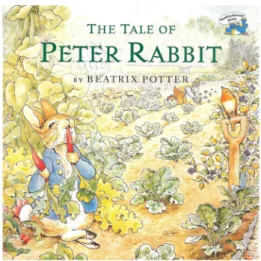
Figure 2 Beatrix Potter, The Tale of Peter Rabbit, Frederick Warne & Co., London (1902)………..…16
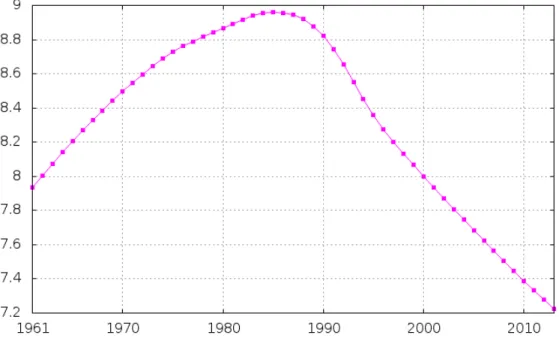
Figure 3 Population of Bulgaria 1961 - 2010………24
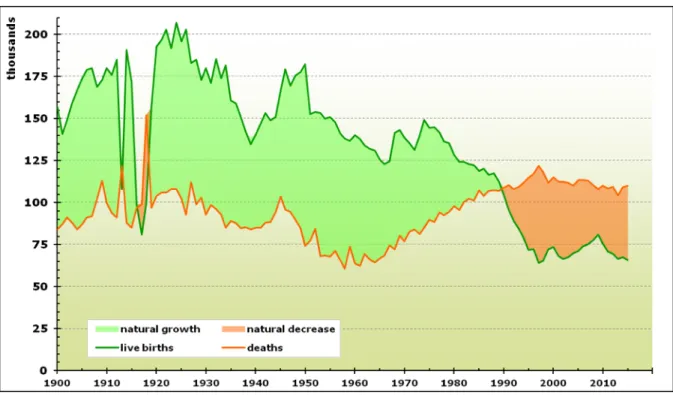
Figure 4 Vital Statistics of Bulgaria’s Population……….……25
Figure 5 Takamasa Yoshizaka’s concept of local living environment…………..50
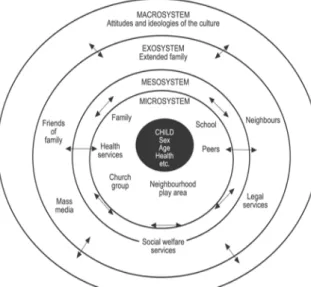
Figure 6 Urie Bronfenbrenner’s Ecological Systems Theory……….51
Figure 7 Wikstrom’s idea of human living environment………..52
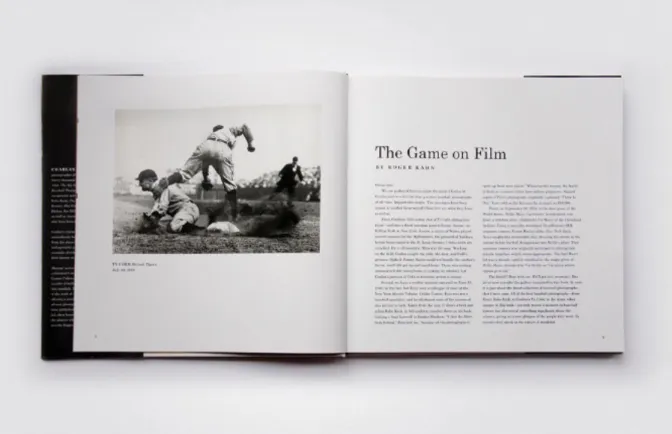
Figure 8 A photo-book example……….55
Figure 9 An example of a double spread of a picturebook………55
Figure 10 Fig. 10 Bob Graham, A Bus Called Heaven, Walker Books, London (2012)……….63
Figure 11 Jeannie Baker, Belonging, Walker Books, London (2004)………64
Figure 12 Kurusa,The Streets are Free, Annick Press, Buffalo, NY (1995)…….65
Figure 13 Faith Ringgold, Tar Beach, New York (1991)……….………….65
List of Appendices 1. Illustration 1……….133 2. Illustration 2………134 3. Illustration 3………135 4. Illustration 4………136 5. Illustration 5………137 6. Illustration 6………138
7. Hometown Studies for First Grade………..139
8. Hometown Studies for First Grade………..…140
9. Hometown Studies for First Grade………..141
10. Hometown Studies for First Grade……….142
11. Hometown Studies for Second Grade………….………143
12. Hometown Studies for Second Grade………145
13. Hometown Studies for Third Grade………..146
14. Hometown Studies Curriculum for First Grade………..142
15. Hometown Studies Curriculum for Second Grade………151
16. Hometown Studies Curriculum for Third Grade……….………158
17. Hometown Studies Curriculum for Fourth Grade………..162
18. UN Report, Total Population by Country, 1950, 2015, 2030 and 2100………..165
19. Koichi Tonuma’s Concept of Living Environment, 1980………166
CHAPTER 1 INTRODUCTION
The digital age has brought innovations in many aspects of life, including in that of literacy. As a result, there is a growing demand of pictorial instruction, sings and symbols. A literate person in the past was considered someone who could read and write printed text, although literacy is more complex today. According to Carter (2007) the definition of “text” nowadays is “anything in the surrounding world of the literate person” (p. 12) and “any communicative medium” (Moje, 2008). Moreover, Arizpe and Styles (2008) describe text as a different combination of print, images, sound, indication, and movement. This can be thought of as broadly as Chinese scrolls and Egyptian murals to digital text, film, music, television, theater, comic books and, of course, picturebooks and tells us that print has lost its eminence as the center of communications and the image has begun to replace the word. An example from our daily life would be the icons on the screen of our device that “speak” to us.
A better understanding and creation of different texts demands new literary skills and this authentic literacy is obtained through multiple approaches using multiple modalities (McPherson, 2006). Various national councils and ministries of education have proposed increased attention to multimodal literacies and instruction in use of various strategies to aid in the construction of meaning from multiple sites, texts, and media. “All the modes available and used in making meaning, in
representation and communication” is how Kress (2008) refers to multimodality (p. 91).
significance in multimodal texts “where print and image do the work of meaning together, where sound and music contribute to the perspective readers are asked to take, where bodily performance works in tandem with the written word, where print itself is animated and choreographed” (Bomer 2008, p. 354). We can see that today we are exposed to literacy that has become increasingly multimodal.
The example of a multimodal text that is studied here is the picturebook. The compound word “picturebook” is used here (Nikolajeva & Scott, 2006; Salisbury & Styles, 2012; Sipe, 2015), since it identifies the fusion of art and words, the result of which exceeds what each form can accomplish separately. Although picturebooks have been mostly used as an educational tool, their potential has been largely
underestimated. Multicultural contemporary picturebooks handling the theme of local living environments for example, can instill a stronger sense of identity and belonging during the fast development observed in young learners.
Below, I begin with describing picturebooks in greater detail, explain the background and purpose of this study, and provide a list of the research questions.
Picturebooks
The true origins of the picturebook are debatable but this literary form is in fact comparatively new. It was not until late in the twentieth century when the picturebook became an object of academic study (Lewis 2001, Salisbury & Styles, 2012). In the type of picturebooks introduced and studied here the role of the image in the
narrative, as Randolph Caldecott set to advance not more than 130 years ago, is not secondary but rather conveys the meaning of the story. To tell a story, the
picturebook today uses sequential imagery alongside limited text.
Picturebooks combine visual and verbal narratives in a book form, mostly aimed at children. A variety of media is used in picturebook images — water colors,
pencil, acrylics, oil paints, etc. Heinrich Hoffmann’s “Struwwelpeter” (1845) and Beatrix Potter’s “The Tale of Peter Rabbit” (1902) are two early examples of the modern picturebook format. Picturebooks usually are written with children as their audience in mind, thus having easily accessible vocabulary level to help them develop their reading skills. Picturebooks have two functions: they are first read to young children by adults, to be read later by children themselves once they begin learning to read.
The present time picturebook as a form is something that is evolving constantly, as picturebook creators constantly redefine and bend its use and contents. Additionally, a clear line must be drawn between books that feature illustrations (usually added later to enhance text) and picturebooks. “In contrast to the illustrated book, where pictures enhance, decorate and amplify, in the
picturebook the visual text will often carry much of the narrative responsibility. In most cases, the meaning emerges through the interplay of word and image, neither
Fig. 2 Beatrix Potter, The Tale of Peter Rabbit,
Frederick Warne & Co., London (1902) Fig. 1 Heinrich Hoffmann,
Struwwelpeter, Routledge (1845)
& Styles, 2012, p. 7). The power of picturebooks lies in the instantaneous surprise, the uniqueness of the story, the poetic expression of words, the aesthetic power of pictures and the amusement and relaxation from the humor found in this genre (Endoh, 2015). Nikolajeva and Scott, in their seminal work How Picturebooks Work (2006), stated that picturebooks are considered “educational vehicles, [that] includ[e] aspects such as socialization” (p. 2), that “picturebooks are examined in connection with developmental psychology” and that they belong to a genre “containing
pedagogical applications” (p. 3). Picturebooks are regarded as a literature and culture genre that prepares young learners for other communication media.
One thing to note here is what David Lewis puts forward in his seminal work, Reading Contemporary Picturebooks: Picturing Text (2001) when speaking about the picturebook as a process and specifically about genre incorporation. He says that the picturebook is
“…not a genre, despite the fact that it is frequently referred to as such. Rather than confining itself to exploring the byways of any one particular type of text, verbal or pictorial, it exploits genres. Nor the picturebook is a format, a template that can be dropped over any suitable material,
providing it with new clothes in the form of illustrations. If this were the case then all picturebooks would more or less the same way. What we find in the picturebook is a form that incorporates, or ingests, genres, forms of language and forms of illustration, then accommodates itself to what it has swallowed, taking on something of the character of the ingested matter, but always inflected through the interanimation of the words and pictures. The immediate result of this ability to ingest and incorporate pre-existent genres is that already existing forms are
represented — that is, re-represented — and in the process re-made” (p. 65).
This is to say that picturebook creators use a variety of writing and illustrative styles, manners and modes, applying techniques both from ancient and modern traditions and methods, none of which are deemed unsuitable or unfit for use.
Picturebooks are often placed in the Children’s Literature category and are thought of as a mean, a stepping stone, for young learners to develop the necessary literacy skills needed to understand “regular books.” Thus, while picturebooks are an essential step toward literacy, they are not seen as worthy to return to once readers have passed this developmental stage; that they are of little literary quality. It is erroneous to think that picturebooks are only for children and Endoh (2015) goes at length to provide evidence. He says that “the busy and exhausted adult of today can be revived through the ‘power of picturebooks’ to find their own content way of existence in their local living environment. Why would the free flow of ideas help the modern adult think more about an improved local living environment? Well, it is an adult’s duty to love and to work. What gently embraces these two is what the place we live in. To love better and to work better, inevitably the place we live in comes into play” (Endoh 2015, p. 9). Certainly, as picturebooks’ audience and influence
increasingly broaden, this hybrid type of literature is receiving new understanding and attention.
While picturebooks designate both a genre and a format, they can also be described as a medium combining written text and visual art. A wide array of studies looks at length at the visual part of picturebooks only — the art — while ignoring the
combination of written text and visual images. In fact, some of the best books in this genre are both written and illustrated either by the same person, or in a close
collaboration (ex. a long professional relationship between a husband and wife, etc.). Lewis (2001) and Salisbury and Styles (2012) call this experimental body
picturebook “makers,” since “a suitable term for the artist-author of the picturebook has yet to be found” (p. 7). While in this study I am mainly looking at educational theory and the practical application of picturebooks, their art and design cannot be ignored because, in a smooth interplay with text, it is where the uniqueness of this visual literature lies.
Although any book that combines narrative format with pictures might be categorized as a picture book, Kiefer (2010) explains that, “In the best picture books, the illustrations are as much a part of the experience with the book as the written text” (p.156). “[A picturebook is] defined by its narrative framework of sequential imagery and minimalist text to convey meaning or tell a story and [is] different from the illustrated book in which pictures play a secondary narrative part, enhancing and decorating the narrative” (Popova, 2014). In the words of semiotic terminology Nikolajeva and Scott (2006) further add that “[p]ictures in picturebooks are complex iconic signs, and words in picturebooks are complex conventional signs:; however, the basic relationship between the two levels is the same” (p. 1). Thus far it was discussed that picturebooks combine visual and verbal narratives in a book form, mostly aimed at children; picturebooks usually are written with children as their audience in mind, accordingly having easily accessible vocabulary level to help them develop their reading skills; picturebooks function two-ways: they are first read to young children by adults, to be read later by children themselves once they begin learning to read.
Here is a pertinent observation about visual narration attributed to fifteen-century painter and sculptor Leonardo Da Vinci:
And you who wish to represent by words the form of man and all the aspects of his membrification, relinquish that idea. For the more minutely you describe the more you will confine the mind of the reader, and the more you will keep him from the knowledge of the thing described. And so it is necessary to draw and to describe.
Because cartoons, comics and graphic novels also make use of the interplay of words and images on a page, it will be useful to distinguish them from picturebooks. Generally, cartoons are single panel images that are not sequential and do not unfold over multiple frames as do comics (Chute, 2008; McCloud, 1993). Comic books first appeared in the 1930s as reprints of newspaper strips and as original stories about superheroes (Weiner, 2003). Graphic novels in turn have evolved from comic books. Hammond (2009) suggests that all graphic novels are comic books but not all comic books are graphic novels. Both types use a comic format — sequential art — a
combination of text, images and panels that tell a story (Brenner, 2006). The main difference between comic books and graphic novels is their length. Graphic novels are longer, are issued an International Standard Book Number (ISBN) and can be defined as original, book-length stories in a comic book form.
“Historically, picture book illustrations simply reinforced the text narrative. More and more modern picturebooks use illustrations to enhance the story,
unique combination of images and words as “the marriage of text and image” to suggest a more complete integration. From its birth, the picturebook has always had an educational role to play. For example, in introducing children to the visual art and language, as well as in assisting foreign language and math teachers explain subject matter easier.
The big truth about picture books … is that they are an interweaving of word and pictures. You don't have to tell the story in the words. You can come out of the words and into the pictures and you get this nice and kind of antiphonal fugue effect.
Picturebook text is a blend, “an interweaving of words and pictures” as Allan Ahlberg puts it in the quotation above. When one reads a picturebook there is a sensation of alternating two different mediums. A text (semantically and etymologically close to textile) in a sense is the words and text woven together, a product that is much more than just an amassment of different parts. Meek (1992, p. 176-178) on the other hand says that “pictures and words on a page interanimate each other.” This is a vivid suggestion of how the two modes build upon each other. Nodelman (1988, p. 195) explains the process as that “… the pictures themselves can imply narrative information only in a
relationship to a verbal context; of none is actually provided, we tend to find one in our memories.” Also, “Words can make pictures into rich narrative resources — but only because they communicate so differently from pictures that they change the meaning pictures. For the same reason, also, pictures can change the narrative thrust of words” (p. 196). This brings our attention to the fact that while image and text in the picturebook influence each other, this
relationship is not reciprocal. We have to remember that throughout the picturebook the relationship between word and image is not maintained the same way but it tends to shift. While a great oversimplification, we can say that “What the words do to the pictures is not the same as what the pictures do to the words. Roughly speaking, the words in a picturebook tend to draw attention to the parts of the pictures we should attend to, whereas the pictures provide the words with a specificity — colour, shape and form — that they would
otherwise lack” (Lewis 2001, p. 35). Seeing language and image building upon each other provides us with a realistic perspective.
Background of Study
What brought my attention to picturebooks was my desire to contribute to the country where I was born and raised — Bulgaria. Since I had left the motherland right after high school at the age of 18 to pursue higher education in the US, and to later settle down in Japan, there was a growing feeling in me to give back to Bulgaria. By then I was a lecturer at Toyo University’s Faculty of Regional Development Studies and the more I observed my students working to empower local communities in various parts of the world, the more I realized that I can and should focus my research on improving education in
communities back home. There are two reasons why I decided to focus my research at the target age group of elementary school children (first to fourth grade in Bulgaria). First, elementary school is the primary step in compulsory, formal education and second, this is a stage when children develop rapidly and in a variety of ways. Unfortunately, lessons in the elementary school curriculum
live and play — students’ immediate surroundings — are very few and lack frequency (once or twice during the school year at most). This is where local living environment picturebooks can come into play as supplementary
educational material .
Since my own background was in education (I had been teaching for about ten years then) and my PhD advisor, Dr. Toshinobu Fujii, had extensive experience in community development, I decided to look at supplementary educational materials as a community development tool, specifically “quality multicultural” picturebooks, exploring and discussing ecological, placed-based, intercultural, etc. themes (Reisberg, 2008). My advisor had a very good idea that picturebooks had been in practice used as an educational tool for young and old in town planning, architecture, community empowerment, informal education, to mention a few. The role of my study was to look at picturebooks from an academic point of view and explain why and how they actually work in community development and education. Further, I wanted to both theoretically and empirically decipher “the power of the picturebook” that researchers and practitioners frequently talk about.
From the very beginning of my study, Dr. Yasuhiro Endoh has been my external advisor. Dr. Endoh is well known in and outside Japan for his practical use of picturebooks in areas such as architecture, town planning, community empowerment and revival, etc. Among his many publications, there are books, research papers, magazine and newspaper articles on the subject. When I visited his office in Nagoya, I was astounded by his vast collection of
Fig. 3 Population of Bulgaria 1961 - 2010 Year Population 2015 7,159,819 2020 6,950,436 2025 6,734,989 2030 6,519,217 2035 6,311,454 2040 6,115,526 2045 5,929,267 2050 5,748,061 2055 5,567,060 2060 5,384,040
Table 1. Future population forecast
he had over 2,000 carefully selected titles in different sizes and formats, collected in a period of time of over 20 years. It is an understatement to say that his experience and advice were useful, inspiring and motivating
throughout.
To return to the topic of Bulgaria, the country has gone through a long period of changes. In 1991, after about 45 years in power, the Communist regime fell and gave way to democracy. The economy was in shock, while at the same time travel outside of the country became much easier. This led to the departure of many young and able people in pursuit of better lives abroad and, unfortunately, the so-called “muscle-drain” and “brain-drain” are still visible today. The State Agency of Bulgarians Abroad estimates that between two and
four million Bulgarians are living outside their country. Right before the changes in 1991, population was at its peak in the country’s modern history at about nine million people. Currently (2016), it is at around seven million with forecast to decrease to around five million by 2050 and to around three million by 2100 (Figures 3 and 4; Table 1; Appendix 18). While we can argue that these are natural changes taking their course, I personally felt a need to do something to at least slow down these negative processes, starting at a community level; one place at a time.
To possess a strong sense of belonging to a certain community, town or area it is important to have pride in your roots; where you come from. We have all heard how Italians, Germans, Austrians and the British, for example, speak of themselves — as belonging or coming from a specific geographical area in their country, which is “the best in the world” to them. In Italy for example, people talks about how their area of residence is the best one in all of the country. A list of reasons and facts would follow their statement. Perhaps the fact that what we now think of Italy used to be fragmented into smaller
kingdoms in this case has been fostering such a strong sense of belonging in Italians for decades. In Vienna, Austria, there is a subject in elementary school called “Vienna.” In it students learn about the history of buildings and parts of the city, historical figures and events, which makes them become particularly good guides of their city. The lack of such sense of belonging, on the other hand, shows a lack of understanding of one’s locality and its history, historical figures, geographical peculiarities and many more. This is turn, shows lack of
picturebooks come into play in the classroom as supplementary educational materials. While lessons on students’ local living environment lack frequency (once or twice during the school year in elementary school), lessons in textbook are generic (the same lesson for schools around the country), and materials scarce (motivated teaches find ways to involve students into making such), thematically selected picturebooks embodying elements such as people, neighborhood, community, town/city, and environment can cover the gap and be the necessary educational tool to foster in young learners a sense of belonging to their hometown.
“We live in a fragmented and disconnected global culture, alienating us form each other and our environment” (Reisberg, 2008, p.251; also Bowers, 2005; McLaren & Houston, 2004a, 2004b; Orr, 1992). The Western education model unfortunately supports this fragmentation with its division of subject matter and students as not connected to each other and to their environments (Dewey, 1980, 1921; Gruenewald, 2006; Reisberg, Brander & Greenwald, 2006; Reisberg, 2008). However, picturebooks introducing and discussing local living environments can be a powerful instrument to encourage attention toward social and ecological caring; to stimulate young learners to learn more about their roots and their local community; and to stimulate readers to think of ways to better contribute towards their community’s prosperity. Thematically selected quality picturebooks help do all that and in a pleasurable way.
Problems with Current Curriculum in Elementary School
Textbooks used in the school subject “Hometown Studies” tend to lack lesson material on students’ local living environment — the city/town, neighborhood,
community, and nature where students spend their daily lives and the people whom they spend their every day with tend to rarely, if at all, represented. In recent years the subject “Hometown Studies” has been renamed as follows: first grade — “Hometown Studies,” second grade — “The World Around Us,” in third grade and fourth grade (duration of elementary school in Bulgaria is four years) the subject is split in two — “Humans and Society” and “Humans and the Environment.”
In the textbook “Hometown Studies” in first grade we observe one lesson called “Family” (Appendix 7), another one about “School” (Appendix 8), and a third one about “Place of Birth” (Appendix 9). There is also a lesson titled “My Street,” although it seems to teach basic safety rules and regulations more than fostering a sense of belonging to a place of birth. On one hand, the lessons are all generic and not locality-specific leaving it up to the teacher to find a way and teach the lesson in relation to students’ local living environment. On the other, it is a positive fact that they are part of Ministry of Education-approved textbook.
In the textbook “The World Around Us” in second grade there is a lesson named “My Home Town” (Appendix 11) which, while generic, encourages both teacher and students, and allows room for creativity, to focus on students’ own home town and compare it to the cities presented in the lesson. The following lesson is called “My Place of Residence” (Appendix 12) and builds on the lesson prior to it. There are also three consecutive lessons on family and two about “My School.” The rest of the lessons in the textbook do not seem to cover anything that is specific to where students actually live. Also, the textbook itself is split in two — the first half being “The World in Which We Live” and the second called “The Environment and
In third grade, it seems that there is only one lesson (Appendix 13) about students’ hometown. It is actually titled “Hometown” and appears on only one page toward the end of textbook. The limited space allows for a few pictures and some text, none of which are locality specific. Students are left here to their imagination and creativity to somehow link this lesson to their own place of residence. This would have not been a bad idea if the school curriculum had allotted more than just one lesson about students’ hometown.
In fourth grade, both of the textbooks “Humans and Society” and “Humans and the Environment” cover lessons such as Bulgaria as a country in the world and as part of Europe and the European Union. Other lessons are covering religious, cultural, and historical issues. While this is all vital knowledge for students, the lack of any lessons in the two textbooks throughout the “Hometown Studies” about students’ home town and their immediate world seem troubling.
Although textbook content seem to progress as students advance through the four grades in elementary school and to build on previously learned knowledge, one thing that is common in all the three textbooks choices approved by the Ministry of
Education in all four grades is the lack of lessons covering the student world or their local living environment.
Purpose of the Study
Although picturebooks have been popular for many years now, the purpose of this study was to determine whether living environment-themed picturebooks can instill in readers a stronger sense of belonging. Unlike many studies that focus on the practical side of picturebook usage, the main focus of this study is to explain in a more empirical way how this literature impacts learners. This was done by analyzing readers’ responses after readings of a selection of five award-winning picturebooks that embody various local living environment elements. The study also determined whether readers recognize serious issues, such as community issues (the way people behave when facing difficulties; how the community gets stronger when united; in what way nature and the lack thereof is represented in an urban environment; whether people feel happiness and live in harmony with one another in neighborhoods,
communities and cities; etc.) when presented in a picturebook format — usually thought to be entertaining, light-weight literature for children.
Research Questions
• How do readers respond to living environment picturebooks?
• How do readers make meaning in a picturebook?
• Do readers recognize serious issues when presented in a picturebook
format?
CHAPTER 2
REVIEW OF THE LITERATURE
As a multidisciplinary, international study area, research of picturebooks draws from different fields, such as education, history, cultural studies, literary theory and more. The framework of this study was provided mainly by reader response theories, specifically Louise Rosenblatt’s theory of transactional analysis, 1978 and local living environment concepts, particularly Takamasa Yoshizaka’s concept of local living environment, 1973, that is similar to, although less complex than
Bronfenbrenner’s ecological systems’ theory, 1979. The literature review that follows presents the history of picturebooks as a literature genre and how they apply to education and continues by looking at the above-mentioned theories. It also presents recent studies on picturebooks use in the classroom and examines claims for their educational benefits.
The History of Picturebooks
The oldest picturebook in existence is thought to be an ancient papyrus roll (around 1980 BC). Its finding has suggested that such books must have been in use longer. It can be hypothesized that combinations of pictures and words could have been engraved on to biodegradable materials — early forms of paper, wood, leaves, or leather. Asian cultures use Chinese characters, which in turn were based on ancient Chinese ideograms. Bland (1951) says that the ideogram is a picture of the thing it represents, is one of the first forms of illustration, and it is difficult to think of a closer relationship between text and illustration than such a combination as that.
It is generally agreed that both paper and printing find their beginnings in ancient China. The invention of the movable type by Gutenberg in the 1430s in
Europe was what opened the way for feasible mass publishing and therefore made education in the West accessible not only to the elite few who had access to hand-crafted literature, but to the common people. The method developed by Gutenberg was not seriously challenged for about 400 years.
In the early days, the printed and the illustrated books were printed from woodcuts. However, woodcuts had their limitations — one was the fact that they were cut from the plank side of the wood, which makes them prone to splitting; and two, images produced this way showed the outline of an object, just like in children’s coloring books. Later, engraving on metal was what was used because of the better precision and sophistication compared to woodcuts. Unfortunately, the printing press for images differed than the letterpress and for a book to be produced (engraving placed next to a text) each page had to be run through two different printing presses, which in turn increased cost.
Comenius’ Orbis Sensalium Pictus (1658), the first illustrated book designed for children to read, was met with a great interest, which also led to its longevity. Nevertheless, its example was not broadly reproduced and picturebooks of children did not become commonplace until the late 1900s. Thomas Bewick was the person who generally developed the book illustration. His achievement was in bringing wood engraving to a completely new level. His skillful hand, together with a deep interest in the natural world helped bring this process above and beyond the simple
reproduction style. We have to note though, that engraving here is more like a relief process like the woodcut and different than incising or engraving upon metal.
usually added by hand. The principle of lithography (the basis of all modern printing) was invented by Alois Senefelder in 1796 but it took a while until the process went into a commercial use.
Edward Ardizzone’s books hold a special place in the evolution of
picturebooks. His books were in full color throughout (only on one side of the paper) and were produced by offset photolithography. Ardizzone drew the black ink line on an intermediate transparent plate, called a ‘blanket’ while the watercolor washes were painted on a different sheet of paper. The blanket is used to print the final image onto paper. This delicate process was how a solid printed black line matching the original could be achieved. Offsetting contributed to the production of a high print quality, and images produced in almost any medium could be transferred to almost any type of paper, metal, plastic, etc.
In the world of picturebook production it does not come as a surprise that offset photography has become the presiding method, since it reproduces very closely the genuine concept of the picturebook creator and can be used in almost any desired medium.
“Fast, efficient, sensitive and flexible, the rotary offset litho press has transformed the production of the picturebook. Pictures and words can now be combined in more or less any way that a book’s designer might wish and that in turn raises all sorts of possibilities of the reader” (Lewis 2001, p. 144)
On the other hand, the presence of the eBook format and the increasingly global society we live in can only mean that the picturebook will keep breaking the established norm and surprising its readers.
The picturebook in our century has also turned into a sanctuary for many smaller countries and cultures who are gradually recognizing the importance of preserving their own language, customs and traditions. While famous authors are being published internationally, many outstanding works exist on a regional level. It is not unusual for smaller nations to subsidize the production of local, indigenous
picturebooks which can nurture in local readers a sense of identity and belonging.
Picturebooks in Education
Through its history, the picturebook has proven its place as a practical educational tool useful in and outside of the classroom. Young learners develop personally, socially, culturally and intellectually through the use of picturebooks (Jalongo et al. 2002, Jalongo, 2004; Karlin 1994, Nilolajeva & Scott 2006). Since picturebooks are based on the combination of two levels of communication, the verbal and the visual (Nikolajeva & Scott 2006), and thus are easily understood by readers, they are often used as a tool for literacy and aesthetics development in formal and non-formal settings (Jalongo 2004, Kiefer 1988).
Picturebooks are often first read by a parent or a teacher, and in a group with other young learners later. This helps with retaining new language, as well as
understanding the specific sequential nature (story) of the picturebook read (Moffit 2003). Maintaining a carefully selected assortment of local living
environment-accessible for the teacher to use during lessons, as the need arises; and for the students to use during their spare time at school. When reading a variety of children’s literature, students are triggered to think more deeply about their own surroundings and compare them to those in multicultural books.
Picturebooks can play an important role in the developmental stages of readers—the process of socializing—by providing them with a variety of characters in different settings, thus teaching them about how to share their opinions and agree and disagree with others. This is an essential stage for learners who are developing relationships, first with teachers and classmates, and later with members outside of their immediate community. Research suggests that “books capacitate the newly socialized child to explore interpersonal relationships and human
reasoning” (Jalongo et al. 2002, Kiefer 1988, Sulzby 1985).
Young learners are often familiar with opinions communicated in their own household at this developmental stage, while at the same time this is when they begin encountering ideas, different from their own or their household’s. This is when they gain interpersonal relationship skills and learn about different types of
reasoning. Gilpatrick (1969) lent support to the claim that picturebooks convey self-acceptance, and that they teach strategies for contending with difficulties for learners who are learning to cope with strong emotions. Accepting oneself, overcoming
struggles in life and handling highly-emotional situations successfully are necessary skills in life (Gilpatrick 1969, Moffit 2003). Picturebooks play an important role in developing such skills in young readers.
Moffit (2003) discusses how picturebooks help develop intellectual growth by supplying information and presenting questions about learners’ surroundings. Since
the world known to young readers is limited, a variety of quality multicultural picturebooks about local living environments can be an important source of information about different places and cultures around the world. Thus, in
picturebooks about local living environments questions about people and places from near and afar arise, which in turn provides a good opportunity for learners to further develop intellectually.
Discussion thus far indicates that picturebooks can play an instrumental part in learners’ development of cultural identity and multicultural perception and also that they play a significant part in readers’ development of character and awareness of their role in society (Fraser 1981, Gilpatrick 1969, Jalongo 2004, Pierce et al. 1994). Local living environment-themed picturebooks can be a useful educational tool, with application in formal and non-formal education settings to help develop learners’ identity in their own culture. This literature can enhance textbook material and be used during lessons to make readers become better acquainted with their own culture, while also allowing them to become familiar with various cultures of the world, thus helping bring about curiosity and creativity. To better understand their own surroundings, students can compare them with those of their peers in other countries, regions and places.
When defining the concept of sense of community McMilan and Chavis (1986) explain that it is based on “a feeling that members have of belonging, a feeling that members matter to one another and to the group, and a shared faith that members’ needs will be met through their commitment to be together” (p. 9). Sense of
involvement and desire to contribute to one’s local community. Multicultural picturebooks about local living environments can be that necessary beginning.
Reader Response Theories
Reader response theories focus on the reader and his/her experience of a literary work by examining the extent and diversity of reader reaction and analyzing the ways in which different readers make meaning of personal reactions, which may be inherited or culturally (and historically) conditioned ways of reading. They entail a negotiation between the text's inferred meaning and an individual’s interpretation by the reader through the lens of their personal emotions and understanding of the world; in the transaction between the reader and the text, the reader constructs meaning (Rosenblatt, 1978).
To understand how multicultural picturebooks about local living environments nurture a stronger sense of belonging, it is necessary to keep instructions to a minimum before picturebook readings and ensure freedom and creativity when students fill out the blank tables (matrices) used in the study (Rosenblatt 1938). The reader response theory is grounded in the autonomy in reader reaction to a given literary work. According to Beach (1993), there are five theoretical perspectives that do not exclude one another: textual, psychological, social, cultural, and experiential. Two of the five were used in this study: experiential and textual.
Experiential Theories
Theorists such as a Louise Rosenblatt focused their attention to the nature of readers’ engagement or experience with text. Rosenblatt formulated her theory in the 1920s - 30s, which many today consider to have been ahead of its time. It defined reading as a dynamic transaction between reader and text; a two-way process. She
put forward that in order for the reading process to happen several components must be involved — what she calls “transaction.” “… [A] text, once it leaves its author’s hands, is simply paper and ink until a reader evokes from it a literary work — sometimes, even, a literary work of art” (p. ix). To paraphrase, only when a reader, within a given time and space or context, has a relationship with a text, the text begins to have a meaning.
There are also more recent theorists who further shed light on reader response theories, such as Beach (1993, p. 52) who identified the following five categories to classify responses for analysis purposes: engaging — becoming emotionally involved, empathizing or identifying with the text; constructing — entering into and creating alternative worlds, conceptualizing characters, events, settings; imaging — creating visual images; connecting — relating one’s
autobiographical experience to the current text; evaluating/reflecting — judging the quality of one’s experience with a text. Other researchers also created their own response classifications based on the collected data, allowing categories to materialize from the data itself. This is based on Squire’s (1964) reader response study, which focused on the reader. He examined oral responses of young adults to several short stories in order to see how reader responses developed during the reading process. He recognized the following seven response categories: literary judgement, interpretational response, narrational reaction, associational responses, prescriptive judgements, self-involvement, and miscellaneous. It must be kept in mind though that the types of categories presented above emerged in studies about literary works that were not necessary in multimodal format.
Research so far shows that text response follows similar patterns. At the same time, Siegel (2006) suggested that when response is categorized in given media, researchers should include a media-specific analysis using the constructs distinct to the media and not to that of literary text. It can be said that reader response to picturebooks might require additional response categories.
Responses to Multimodal Texts
While the above response categories are with a reference to language texts, recent studies are considering response of readers to multimodal texts. Of course, the reader here relies on a blend of modes (images and text) to be able to make meaning. Sipe (2008) studied elementary school students’ responses to picturebook readings to find out that students made meaning through words and illustrations and that a significant amount (23%) of the responses were analysis of books’ images. Categories that emerged in his study included: analysis of illustrations (analysis), stories related to other stories and media (intertextual), connections to students’ own lives (personal), merging of real world and story world (transparent), and 5. usage of book as a springboard for creative play (performative). This is to show that the emergence of literature in multimodal format — not only picturebooks but also comic books and graphic novels — creates the need to look at reader response theories from a different angle, thus devising the necessary additional categories. s
Other early studies (Kiefer 1993, 1995) focused on elementary school
students’ verbal responses to picturebooks and detected developmental differences in how students responded. Students seemed familiar with visual elements such as line, color, and shape, while at the same time lacked the correct vocabulary to express it. It seemed they noticed details first and used critical thinking in their
responses later. The response categories that emerged in Kiefer’s research are as follows: informative (content of illustrations, storyline, text to life observations,
comparisons to other literature), heuristic (problems solving, inferences, hypothetical language), imaginative (entering into life of book and using figurative language), and personal (expressing feelings and opinions, relating to characters, and evaluating illustrations).
The studies above list different labels to response categories. Also, responses differed developmentally in young readers’ answers. At the same time, there are some common points in the responses with the exception of perhaps reactions to illustrations. There is a need of closer analysis and classification of responses of multimodal books, since responses to images often go unnoticed because teachers tend to focus on the verbal aspects of texts. As mentioned earlier, analysis
categories usually are let to arise from the data itself. Based on the similarity of categories, a metalanguage for looking at multimodal texts can be developed, (although that is not the focus of this study).
Response to the visual elements requires … not only a different language but also a different approach to the printed word given the complex
relationship between these two aspects. Perhaps we now need a different term that incorporates viewing, reading, and responding to other
multimodal aspects of the new texts for children (p. 370).
When reading text-only or multimodal texts such as picturebooks, many factors influence the reader’s interpretation of text in the reading process, with the reader individualizing the response. As will be discussed later in this study, age and
of the factors that that can influence readers’ responses (Galda & Beach, 2001). “As members of a particular culture and of a particular subculture or social group, we have absorbed concepts governing the nature of the literary arts, the satisfaction to be sought, the conventions to be observed, the qualities to be admired (Rosenblatt 1994, p. 152). Since the reader plays such a vital role in experiencing a literary work, a detailed look at the audience of picturebooks is due.
Picturebooks Audience
Picturebooks clearly have a dual audience — that of a young reader, together with a sophisticated adult. That is why picturebooks have to communicate to both types of readers on many levels. There are many great examples of books that appeal to an audience beginning with nonreaders all the way to the literate adult. Parents and teachers are frequently immersed in the conventions of the picturebook and are thus experienced in decrypting text in the more traditional way, following how events should unfold and usually scanning from left to right. There are many good examples of picturebooks that are better suited to the young reader’s eye. Such books can consist of various smaller scenes and pictorial events that tend to diverge from the traditional course. Picturebooks designed this way appeal to their varied audience by not requiring much expertise in picture decoding or rich understanding of the world. Maria Nikolajeva and Carole Scott in their seminal work How
Picturebooks Work (2006) say that “Clearly the best audience is a team of adult and child together, each offering special strengths (p. 21).” Authors acknowledge “a variety of levels of reading ability, sophistication, experiences of life, and the sense of humor characteristic of these levels, so that no one is excluded from feeling a part of the audience” (p. 22). Picturebooks are first read to children by adults and, later, are
encountered again, and read and re-read by children themselves, as they develop literary skills.
While the text can be rather simple, in contrast, the narrative elements presented visually can be rather complex. The humor in many picturebooks, for example, often depends on the oddities that images and text present. This, seemingly, lack of harmony that is the counterpoint between text and image can indeed be an important communication point. The reader is thus actively involved in the unfolding of the story due to this more exquisite and advanced narrative
perspective. Such counterpoints can be, for example, juxtapositions of outdoor and indoor scenes, distanced perspectives followed by close-ups, and others. This way authors can break picturebook conventions in the way they represent space and perspective, to engage both the adult and the child reading the book together. This can be accomplished by the synergy of objective and subjective elements involved in text and image, and by the contrast between humor in the pictures and a more
serious subject found in the text. The ultimate goal of picturebooks is to support imaginative perspectives and to actively engage audience — this is accomplished by breaking away from the orthodox and although picture and text may seem
counterpointing, they work in cooperation toward this common goal.
What is seen as appropriate for young readers, as far as picturebook content goes, has been constantly changing. Variations are great from one country or region to another. On the picturebook market what we see more and more is that authors and artists are creating crossover books with which different audiences can relate. Picturebooks can be seen as a communication medium for all ages. Martin Salisbury
and Morag Styles’ Children’s Picturebooks (2012) write about a picturebook festival in South Korea that states in its publicity material:
Picture books, in the present era, enjoy a status as a culture form to be enjoyed by people of all ages. It is a precious and versatile art that has already left the confines of paper behind, shattering the boundaries of its own genre and fusing with various other forms of art and imagery (p. 113).
What is “suitable” for children is to be decided by adults. Taking a look back in the history of picturebooks, one will see that cautionary children’s stories (especially in fairly tales) in the beginning were quite dark and fierce. Subjects we consider difficult, such as abuse, racism and even death, have been covered in many a picturebook but our society (in the West in particular) has been going in a direction towards protecting young children from things we consider dangerous and
unpleasant, both in life and literature, and even further in all aspects of life. Pages of the picturebook have covered topics such as death and dying, sex and relationships, domestic violence, war, etc., and it can be said that the topic of childhood has been somewhat sentimentalized in some areas of multimodal children’s literature.
Although, in some areas and cultures of the world — parts of mainland Europe (France, Germany), and particularly the Scandinavian countries, South Korea, Japan and others — we see that some of the topics mentioned above are indeed being discussed in picturebooks today. In other countries (e.g. the UK) it seems that more difficult subjects are allowed only sometimes and mainly in the works of prominent authors. In other English-speaking countries (the US, Canada, Australia)
picturebooks appear, while at other times the conservative force of the West is strongly felt (Salisbury & Styles 2012).
It is said that picturebooks play a role in “documenting” social, political and other changes of their time. How people in different countries and regions see and feel about childhood is what is significant here. Books oriented towards young readers can easily be affected by how a given culture, at a given time, sees
childhood. Of course, practices and customs of a given society vary greatly. When we speak of children’s literature, this can greatly affect to what extent it is suitable to cover more disturbing subjects on picturebook pages. As far as picturebook images go, they can be influenced by a given country or region’s traditions in the illustration arts.
Currently, there is no conclusive research as of what visual texts best communicates to children. Something that this study suggests is that:
… children of the traditional picturebook age tend not to have the language skills to express in words what they are perceiving from an image. They can be suggestible and prone to saying what they imagine adults want to hear. So, even with the best designed research projects, the world of that children are experiencing will inevitably remain
something of a mystery to us. As adults we make decisions on their behalf, even though we may struggle to retain the magical ability to read pictures that appear to come so naturally to the young (Salisbury & Styles 2012, p. 113).
Textual Theories
Textual reader response theories are based on a reader’s prior knowledge of text and literary conventions, which in turn is obtained by reading and studying literature. In contrast, the New Critical theories earlier maintained that meaning in literature is situated in a static text to be unsheathed by the reader (see Eliot 1919 and Ransom 1941). Wolfgang Iser’s (1978) notion of gap-filling and Jonatan Culler’s (1980) notion of text or genre conventions can give an explanation how, although the text does influence readers’ responses by acting on the readers, readers takes action on the text based on their own experiences of the world and knowledge of how to process text. This prompts readers to keep revising their understanding as they move on with the text.
In Iser’s theory we see two types of readers — the Implied and the Actual. Generally, readers understand the text they read by building an image that is formed by the limitation of text (Hammond 2009). What the text leaves untold — the gaps — are usually filled in by readers who, based on previous experience, constantly make decisions about what to keep and what to leave out. This predisposition of how to interpret a text in an anticipated way is referred to as the Implied Reader. Again, based on readers’ background and knowledge, the Actual Reader may choose not to fill in the gaps in the text or to make meaning as expected. “The Actual Reader has some more freedom in the gap-filling process and this accounts for variableness in text interpretation (Hammond 2009, p. 22).
Since in picturebooks the gaps are more distinct, this genre requires a more active and engaged participation of the reader to understand the line of the story. To create meaning the audience needs to connect image and text on different pages for
a unified, smooth fusion. When reading and rereading picturebooks readers have a variety of choices. This produces a varied experience from reader to reader, based on the frequency of revisiting a book. Furthermore, Rosenblatt (1995) states that there is no such thing as a correct reading of a text. Again, previous experience and knowledge of text and text conventions affect readers’ responses and are a factor towards valid interpretations.
Readers’ internalized grammar of literature, or knowledge of literary conventions is another way a text can applies some force in forming readers’ responses (Culler 1980). “A reader approaches a text already understanding the structure of certain genres or literary forms and how they work.” “Without this knowledge of the rules, literature would not be intelligible as literature (Hammond 2009. p. 23). Culler (1980) states that readers acquire knowledge of literary conventions during the process of literary education in formal education and that they are not always aware of possessing this knowledge. Young readers often acquire some knowledge of reading conventions before they enter an educational institution formally.
From an egalitarian point of view, it is practical to teach literary conventions since not all students bring to school a similar background, knowledge and
experience, and cultural resources (Kress 2003). More knowledgeable students about different text and illustration conventions could respond differently to reading than those with less knowledgeable peers (Beach 1993). The educational systems offer students ways to read and interpret literature and to develop literacy
Different conventions are in use in various genres. For example, particular genres following familiar patterns give their readers a certain pleasure, which is based on recognition of the familiar (Scholes, 2001). In the case of romance readers, firm expectations exist of what represents a romance and readers of such literature tend to be disappointed and even angered when the expected conventions were not in place (Radway 1984). “As readers come more familiar with the conventions of a certain genre, they are more aware of how their experience with the genre is shaped by the text. They also develop a growing sense of their own expertise (Beach 1993, p. 31).
Another way to learn literary conventions is informally, through experience in contrast to formal literature lessons. “The unresolved development question is whether readers acquire this interpretive know-how simply through reading or through active participation in formulating participation with other in communities whose members share knowledge of these conventions (Galda & Beach 2001, p. 65). The readers’ response and reading transaction are influenced by the
institutionalized conventions (relying on particular cultural skills) and readers experience and expertise with the conventions (Christiansen 2000).
Semiotics Theory
Picturebook reading is a complex semiotic process. Semiotics is the study of signs and symbols and their use or interpretation. The process also involves the production of signs, communication through signs, the systematic structuring of signs into codes, these social function of signs, and the meaning of signs. Signs as a substitution of something else, keep evolving and chaining in meaning of significance.
Semiotics is also concerned with is the meaning created in texts — what texts mean and also how they mean it. A Swiss linguist by the name of Ferdinand de Saussure, in the past century, formulated a theory of semiotics to define how we make meaning through signs. He put forward that sings are comprised of a signifier and a signified. The former is an image, object, or sound impression, and the latter — a meaning (De Saussure 1989). The relationship between the two Saussure adds, is arbitrary (the “arbitrariness of the sign) and depends on a person’s beliefs and experiences (Bomer 2008). There is no reason why a given signifier should be attached to a given signified. Readers make meaning through signs based on the rules of their own culture, or a code system.
As an interdisciplinary area of study, semiotics places all modes of communication, pictures, gestures, music, as equal to language. “Semiotics is uniquely suited to understanding multimodality because it offers a way of thinking about meaning and text that does not privilege language over all other signs systems” (Siegel 2006, p. 68).
According to Kress (2008), a mode is a “culturally and socially fashioned resource for representation sand communication” (p. 45). In the creation of a semiotic product, multimodality is the use of more than one semiotic mode, the so called “semiotic ensemble.” Meaning is made depending on the mode and each mode has its own potentials and limitations. In multimodal texts such as
picturebooks, when modes are arranged together the reader must observe all the present modes, as well as their interrelation. That is because a given mode carries only one part of the total meaning of the text. In picturebooks, readers have to pay
Modes can be categorized into two types of organizational logic (Kress 2008) — time-based modes (speech, dance, music, gesture, action) and space-based modes (image, sculpture, etc.). Kress talks about the affordances of writing, which are controlled by the logic of time, compared to images, controlled by the logic of space. In writing, the reader or writer has to read or write the text in a specific order for meaning making. In images, all elements are offered side by side. Text can represent action and events, and illustrations can represent the visible world. At the same time, text can also be used to narrate illustrations, and sequenced illustrations can embody action.
In the sequential process of reading picturebooks, we observe multimodality on each page and as a whole, the picturebook is a semiotic product. Picturebooks are based on the logic of time because readers go through the pages in a specific order and also read the text in a specific order. Time in picturebooks progresses only as fast as the reader’s eye moves across a page — time-boundedness. The entire page is available to the reader at the same time and the reader can go back and forth (what Yang, 2008 calls “visual permanence”) as frequently as necessary for meaning making.
According to Miller (2001), communication modes are usually codified, not possessed by the reader, and sometimes medium-specific, thus regulating formal aspects of a given medium. When a reader is not familiar with a meaning of a sign, it is not a sign — thus sign meaning has to be learned in advance. “Semiotic
toolkits” (Siegel 2006) need to be developed by young readers in order to
understand the multitude of texts available. Signs can be symbolic (representing certain meanings), iconic (structural resemblance to a meaning), or indexical (linked
to another image for its meaning). Picturebook conventions comprise a shorthand allowing the reader to fill in the gaps using their imagination when reading (Lewis 2001).
The Concept of Local Living Environment Takamasa Yoshizaka’s Concept
In 1973 Takamasa Yoshizaka advanced the Concept of Local Living Environment represented by four concentric circles (Figure 1) in which the central element is the child or the individual. Here, the person and his/her family are placed in the core circle 1. The following circles 2, 3 and 4 are
respectively the neighborhood, community and town/city where the individual resides. While all circles are independent, they
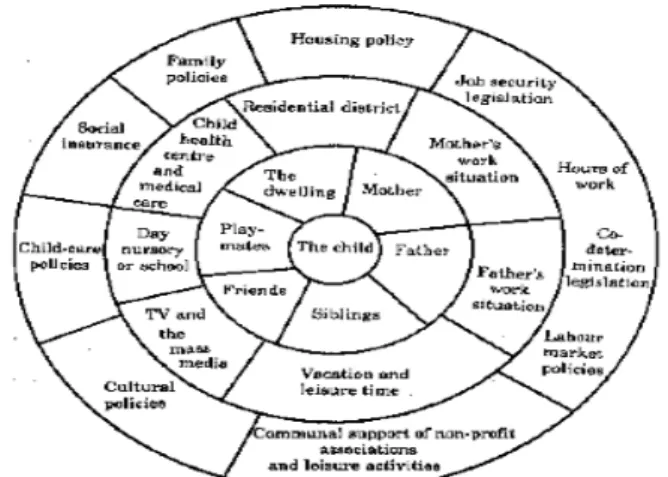
relate to and influence one another and together construct the living environment 5 of the individual. In this study I hypothesized that sense of belonging (McMilan & Chavis, 1986), which local living environment-themed picturebooks embody, is based on and explained by the circles/spheres, which the above five elements constitute, and their interrelation with one another.
Yoshizaka’s concept can be compared to Clarence Perry’s Neighborhood Unit theory (1929), a comprehensive physical planning strategy used for designing self-contained residential neighborhoods, promoting a community centric lifestyle. In his theory Perry also places the individual as a central part of his model and puts
Child (Person) ① ② ③ ④ ⑤ Family Neighborhood Community Town/City Environment
Fig. 5 Takamasa Yoshizaka’s concept of local living environment