原 著
輸血に関するインシデント事例の検討
河原 和夫
1)大井田 隆
2)比留間 潔
3)松崎 道男
4)! 橋 孝喜5) 坂本 久浩
6) 佐川 公矯
7) 柴田 洋一
8)
1)東京医科歯科大学大学院医療管理学分野,2)日本大学医学部公衆衛生学教室
3)東京都立駒込病院輸血科,4)虎の門病院輸血部
5)東京大学輸血部,6)産業医科大学輸血部
7)久留米大学臨床検査部,8)前東京大学輸血部
(平成 14 年 12 月 3 日受付)
(平成 15 年 2 月 24 日受理)
ADVERSE EVENTS ASSOCIATED WITH TRANSFUSION- EXPERIENCE FROM SIX HOSPITALS
Kazuo Kawahara1), Takashi Ohoida2), Kiyoshi Hiruma3), Michio Matsuzaki4), Koki Takahashi5), Hisahiro Sakamoto6), Kimitaka Sagawa7)and Youichi Shibata8)
1)Department of Health Policy Science, Tokyo Medical and Dental University,2)Department of Public Health, Nihon University,3)Transfusion Service, Tokyo Metropolitan Komagome Hospital,4)Department of
Transfusion Medicine, Toranomon General Hospital,5)Department of Transfusion Medicine, Tokyo University Hospital,6)Department of Transfusion Medicine, Sangyo Medical University,
7)Department of Laboratory Medicine, Kurume University Hospital,8)formerly Department of Transfusion Medicine, Tokyo University Hospital
Adverse events related to transfusion can have serious implications and attract a great deal of attention. It is easy to understand why newspapers and other media organizations report on these adverse medical events. This study identified strategies for preventing adverse events by analyzing how they happened(occurrence)and the circumstances surrounding the events at 6 selected hospi- tals that have been taking measures to prevent adverse transfusion events. These hospitals serve as role models for other hospitals in Japan which are seeking to institute measures to prevent adverse events. People involved in these adverse events are, in order of frequency, nurses, doctors and tech- nicians. Analysis of incident occurrences shows that doctors most frequently made mistakes like prescribing the wrong treatment(p<0.01),and nurses most frequently confuse the order, were negligent or overlooked a complication(p<0.01). In decreasing order of frequency, 60 incidents occurred in decision making about ordering a transfusion(17.4%), 43 when drawing blood(12.5%), 38 when handling blood products at inpatient wards(11.0%), 38 when starting or during the use of blood products(11.0%), and 35 when testing. Moreover, we found that the types of incident have a great deal to do with the roles of the respective medical professionals:doctors, nurses and techni- cians.
responsible party for an incident, process incidents occurred, causes of incidents, kaizen Key words:
Table 1 Total usage of blood products and the number of incidents reported at each hospital during the study F E
D C
B A
Hospitals
44 91
98 22
48 42
Number of incidents reported
123,772 145,413
198,258 95,734
121,947 134,744
Blood product usage(unit)
0.000355 0.000626
0.000494 0.000230
0.000394 0.000312
Number of incidents reported per unit
Table 2 Responsible party and cause of incidents
Total Intentionally
ignored Overlooked
potential issues Negligent
Overlooked complication Confused
Mistaken Responsible
party
123
2
0
15
5
4
97 * Medical
docter
100.0 1.6
0.0 12.2
4.1 3.3
78.9
146
2
0
43 *
3
21 *
77
Nurse
100.0 1.4
0.0 29.5
2.1 14.4
52.7
62
1
1
20
0
2
38
Technician
100.0 1.6
1.6 32.3
0.0 3.2
61.3
11
1
2
1
0
0
7
Other
100.0 9.1
18.2 9.1
0.0 0.0
63.6
3
0
0
0
0
1
2
Unknown
100.0 0.0
0.0 0.0
0.0 33.3
66.7
345
6
3
79
8
28 221
Total
100.0 1.7
0.9 22.9
2.3 8.1
64.1
* : p < 0.01
Upper line: number of cases, lower line: percentile
はじめに
輸血事故は患者生命に対する重篤な侵襲を引き 起こす恐れが極めて大きいことと,医療従事者の みならず患者・家族,さらに第三者に対してもそ の態様が比較的明瞭に伝わることから,衆目の関 心が非常に高い事象である.輸血事故の発生状況 に関する調査・研究は既に平成 12 年に「日本輸血 学会」によって行われているものの1),わが国では 事故に至らないインシデントの状況等に関する研 究はほとんど行われていない.
本研究はインシデント事例について,その発生 状況や特徴等を分析することにより,講ずべきイ ンシデント対策,さらに輸血事故発生の防止の手 法を確立することにより,輸血医療の安全性を向 上させることが目的である.
方 法
輸血事故防止対策や血液製剤の適正使用が進ん でいるわが国の代表的な 6 病院(A,B,C,D,E,
F 病院とする)について過去の輸血行為に伴うイ ンシデント事例の発生状況に関する調査分析を 行った.病床規模は,いずれも輸血部門が設置さ れている 700〜1,200 床の大規模病院である.
「インシデント」という用語の定義であるが,厚 生労働省の医療安全対策検討会議報告書(平成 14 年 4 月 17 日)にあるように,「インシデントは,日 常診療の場で誤った医療行為などが患者に実施さ れる前に発見されたもの,あるいは,誤った医療 行為などが実施されたが,結果として患者に影響 を及ぼすに至らなかったもの」という定義2)を本研 究でも用いた.
本研究では,6 病院でのインシデント事例を収
集し,その発端者,発生の場所(工程),及びその 態様(!誤る,"取り違える,#見逃す,$怠る,
%気づかず,&無視するの 6 つをインシデントの 態様とした)についての分析を行なった.報告事 例についてはそれぞれ収集期間に差があるもの の,A 病 院 1996〜2001 年 間 の 42 件,B 病 院 1995〜2001 年間の 48 件,C 病院 2001 年の 22 件,
D 病 院 1998〜2001 年 間 の 98 件,E 病 院 1997〜
2000 年間の 91 件,F 病院 2000〜2001 年の 44 件 の,計 345 件のインシデント報告事例を分析対象 とした.なお,分析は,SPSS 10.0J for Windows 98 を用い,相関分析,χ2検定及び階層クラスター 分析を行い p<0.01 あるいは p<0.05 の場合それ ぞれ有意差ありとした.
結 果
(1)血液製剤の使用単位数とインシデント事例 報告件数(Table 1)
それぞれの医療機関での血液製剤の使用単位数 とインシデント事例の報告件数の間には R2=0.78 と強い関係が認められた(p<0.05).
(2)インシデント事例の発端者とその態様 発端者については Table 2 に示すように,看護 師,医師,検査技師の順に多く報告されていた.
インシデントの態様を「!誤る」,「"取り違える」,
「#見 逃 す」,「$怠 る」,「%気 づ か ず」,「&無 視 す る」の 6 つに分類し,その実数と全体に占める割 合を同じく Table 2 に示している.χ2検定を行っ た結果,「!誤る」は医師と看護師を含む他の職種 との間で有意差が認められ,特に輸血指示内容の 誤りを主とするこの行為は医師に多く見られた
(p<0.01).「"取り違える」及び「$怠る」は看護 師に有意に多く認められる行 為 で あ っ た(p<
0.01).
(3)輸血行為の遂行工程におけるインシデント Fig . 1 Transfusion procedure and circumstances surrounding incidents that oc-
curred
Table 3 Transfusion procedures and incident-related actions(cause of incidents)
Total Intentionally ignored Overlooked potential issues Negligent Overlooked
implications Confused
Mistaken
60
0 0
8
0
0
52
Decision to give a transfusion and ordering a transfusion
43
0 0
18 0
17
8
Drawing blood
35
0 0
4
5
3
23
Testing
32
0 0
0
0
0
32
Preparing for the transfusion
25
0 0
4
0
1
20
Ordering blood products
22
1 0
6
0
0
15
Shipping the order
2
0 1
0
0
0
1
Delivering the order
38
0 0
10 1
0
27
Handling blood products in inpatient wards
38
0 0
15 2
7
14
Starting to use and during use of blood products
1
0 0
1
0
0
0
After the transfusion
4
1 0
1
0
0
2
Returning blood products
22
4 2
6
0
0
10
Inventory control Others
1
0 0
0
0
0
1
Handling blood products in hemodyalisis rooms
1
0 0
0
0
0
1
Handling blood products in operation rooms
6
0 0
3
0
0
3
Emergency transfusion
0
0 0
0
0
0
0
Transfusion for babies and infants
15
0 0
3
0
0
12
Self-donated blood and others
345 6
3 79
8 28
221 Total
の類型
今回の 6 病院の調査によると,輸血関連行為は,
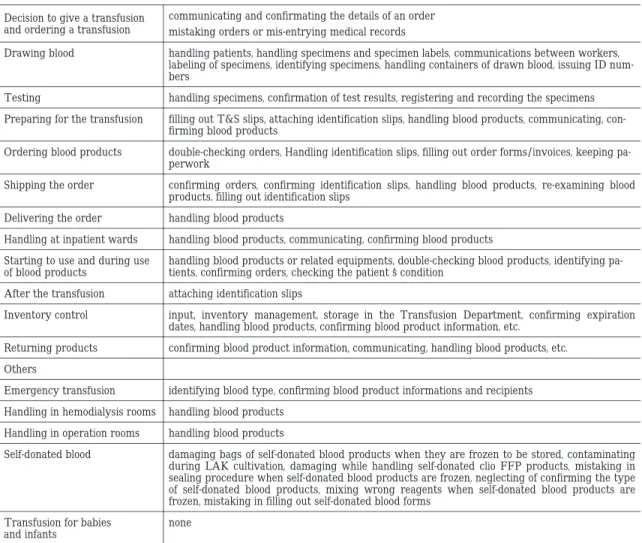
Table 3 に示すように 12 の基本的な工程から形 成されていた(その他の派生する工程として,「透 析室での製剤の取り扱い」,「手術室での製剤の取 り扱い」,「緊急時輸血」,「自己血輸血関連行為」,
「乳幼児・小児の輸血」の 5 工程があった).イン シデントの発生場所(発生工程)及びその関連行 為については,Fig. 1 と Table 3,4 に示すように
「輸血の実施を決定し指示を受けての連絡・確認 等を行なう場面 60(17.4%)」,「採血を行う場面 43
(12.5%)」,「病棟での製剤取り扱い場面 38(11.0
%)」,「血液製剤の使用を開始したり使用中の場面 38(11.0%)」,「検査の場面 35(10.1%)」の順であっ
た.また,インシデントの報告件数が 20 件以上あ る工程について,発端者及びインシデントの態様 をもとに各工程をクラスター分析によりグループ 化したものを Fig. 2 に示している.
「在庫管理と搬出」は,発端者とインシデントの 態様の類似性で 1 つのグループを形成していた.
この 2 つは「検査技師」が主たる発端者でしかも,
「誤る」,続いて「怠る」というインシデントの態 様を取っていた.同様に,「血液製剤の発注と検査」
に関しては,「医師」が主たる発端者で「誤る」と いう態様を最も多く取っていた.「採血と血液製剤 の使用開始・使用中」の場面は,「看護師」が主た る発端者で,「取り違える」や「怠る」という行動 を多く取っていた.また,「病棟での製剤の取り扱
Table 4 Transfusion procedures and causes of incidents(Breakdown of 345 incidents)
communicating and confirmating the details of an order mistaking orders or mis-entrying medical records Decision to give a transfusion
and ordering a transfusion
handling patients, handling specimens and specimen labels, communications between workers, labeling of specimens, identifying specimens, handling containers of drawn blood, issuing ID num- bers
Drawing blood
handling specimens, confirmation of test results, registering and recording the specimens Testing
filling out T&S slips, attaching identification slips, handling blood products, communicating, con- firming blood products
Preparing for the transfusion
double-checking orders, Handling identification slips, filling out order forms/invoices, keeping pa- perwork
Ordering blood products
confirming orders, confirming identification slips, handling blood products, re-examining blood products, filling out identification slips
Shipping the order
handling blood products Delivering the order
handling blood products, communicating, confirming blood products Handling at inpatient wards
handling blood products or related equipments, double-checking blood products, identifying pa- tients, confirming orders, checking the patient s condition
Starting to use and during use of blood products
attaching identification slips After the transfusion
input, inventory management, storage in the Transfusion Department, confirming expiration dates, handling blood products, confirming blood product information, etc.
Inventory control
confirming blood product information, communicating, handling blood products, etc.
Returning products Others
identifying blood type, confirming blood product informations and recipients Emergency transfusion
handling blood products Handling in hemodialysis rooms
handling blood products Handling in operation rooms
damaging bags of self-donated blood products when they are frozen to be stored, contaminating during LAK cultivation, damaging while handling self-donated clio FFP products, mistaking in sealing procedure when self-donated blood products are frozen, neglecting of confirming the type of self-donated blood products, mixing wrong reagents when self-donated blood products are frozen, mistaking in filling out self-donated blood forms
Self-donated blood
none Transfusion for babies
and infants
いや輸血の準備」は,同じく「看護師」が主たる 発端者で「誤る」という行動が多く認められた.
一方,「輸血の実施を決定し指示を出したり,そ の指示を受けたりする場面」のみは,他の工程と 大きくかけ離れて孤立しており,「医師」が主たる 発端者で「誤る」という態様が多く認められた.
考 察
過去に大規模な医療のリスクマネジメント研究 として与薬全般の新人看護師のヒヤリ・ハット体 験の分析が行われているが,これには輸血に関す る記載はほとんどなく輸血インシデント事例の有 益な資料ではない3).英国では,英国輸血学会,英 国輸血サービスなどの関係者が集まって輸血の重
大事例の収集・分析が行なわれている.この英国 の 輸 血 監 視 シ ス テ ム(SHOT;SERIOUS HAZ- ARDS OF TRANSFUSION)4)の 2000 年 10 月から 2001 年 9 月の 1 年間の報告では,参加 413 病院の うち 121 病院(29%)が 452 件のインシデント事 例を報告しているが,このうちの約半数 230 件
(50.1%)は検体の取り違えであった.院内輸血部 による血液製剤の選択,取り扱い,保存に関する インシデントは 81 件(17.9%)であった.今回の 調査は,英国での報告とは異なり,検体の取違え や保存上の不備に関してはわが国では少ない結果 であった.一方,日本輸血学会が 300 床以上,年 間 3,000 単位以上の血液製剤を使用している施設
に対して行った ABO 血液型不適合実態調査1)で は,1995 年 1 月から 1999 年 12 月 ま で の 期 間 に ABO 不適合輸血が 166 件報告されている.その中 で,「バッグの取り違え」や「患者の取り違え」と いう「取違え行為」が 94 件(56.6%)と原因の過 半数を占めていたが,今回のインシデント調査で は「取り違える」という行為は 28 件(8.1%)を占 めているに過ぎなかった.つまり,「取り違える」と いう行為はインシデント事例全体の中では大きな 比重を占めていないものの,いざ生じるとそれが 重大な事故に発展する危険性が大きいものである という性質を有している.また,ABO 不適合輸血 事例の発端者は看護師,医師の順に多かったが今 回のインシデント事例でも発端者については同様 に,看護師,医師の順に多かった.
職種によるインシデントの態様に相違が認めら れることは,それぞれの職種が担当行為を遂行す る際には,インシデントを生じやすい行為に及び,
それらの領域に踏み入ろうとするときには特に注 意を喚起する必要があることを示している.イン シデント報告数と血液製剤使用単位数との強い相 関関係は,規模の大小を問わずこれら 6 病院では インシデント報告が適切に提出されていることを 示している.
また,輸血に関する一連の工程を発端者やイン シデントの態様によってグループ化することによ り,インシデントの分類の単純化が可能となる.
こうしたグループ化による要因分析を行なうこと により,各職種が輸血医療を遂行する上で注意す べき点が明確になる.さらに,各グループを構成 する工程には,基本的に同様の手法でインシデン ト防止対策を講じることができると思われる.
輸血という一連の行為は,すべての医療行為が そうであるように,工業製品等の製造工程に対比 することができる.産業界ではインシデントを減 らすために,部品点数を減らすか工程自体を減ら すかといった改善(Kaizen)が行われている.し かし,医療現場では単純に工程を減らすことはか えって事故を増やす結果につながりかねない.む しろ,置き換えることが可能な部分は,どんどん 人的操作から機械化や IT 化などで対処すべきで ある.現に,端末での患者氏名の確認などの個人 情報の識別や採血から払い出しまでを一元管理す るためにコンピュータシステムを導入することが 極めて有効であることは実証されている5).また,
経費的にコンピュータシステムが導入しにくい小 規模病院に対しては,患者の同定を行なわない限 り輸血ができない「輸血錠」の導入もインシデン Fig. 2 Grouping of transfusion procedures characterized by responsible parties and
cause of incidents with cluster analysis
ト防止には有効であろう6).本研究の成果は,発端 者やインシデントの態様が類似の工程やインシデ ント発生率が高い場面を同定することにより,イ ンシデント防止対策を講じるための基礎資料を提 供するとともに,輸血工程,発端者とインシデン トの態様を組み合わすことによって,未知のイン シデントの形態を想定することができるなど,
ルートアナリシス分析では期待できない医療事故 防止のための研修にも応用できるものである.
工程管理的な本研究に類似したものとして,輸 血手順からインシデントやアクシデント事例が標 準的な輸血手順からどの程度逸脱しているかを直 接 手 順 ご と に 確 認 し て い く Direct Observation
(DO)という手法を用いて数量的に示した研究が あり,患者の確認や記録の誤り等の防止に有効で あった7).
また,集中治療分野では,ミスの態様と看護業 務手順との関係に注目した方法でミスの本質を追 求する試みもされている8).
アクシデントやインシデント防止と輸血医療の 安全性向上を目指した輸血工程の品質管理!工程 管理という考え方を医療現場に普及していくこと は極めて重要である.
このように工程管理的観点からの安全性対策を 進めていく必要があるが,インシデントの報告基 準や報告の様式については,個々の病院ごとに異 なっていることが今回の調査でも明らかとなっ た.何らかの統一した報告基準等の確立が今後の 課題として残っている.
なお,本報告は厚生科学研究費補助金特別研究
事業で行なった.
謝辞:SHOT 報告書については,日本赤十字社中央血液 センター田山達也医薬情報部長にご協力を賜ったことを 紙面を借りましてお礼申し上げます.
文 献
1)柴田洋一,他:日本輸血学会 ABO 不適合輸血事 故調査及び対策チーム報告.日本輸血学会誌,46
(6):545―564, 2000.
2)厚生労働省医政局:医療安全対策検討会議報告 書:14, 2002.
3)川村治子,他:医療のリスクマネジメントシステ ム構築に関する研究.厚生科学研究費補助金 平 成 11 年度医療技術評価総合研究事業総括報告 書:59―93, 2000.
4)British Blood, Transfusion Society, et al.:SERI- OUS HARZARDS OF TRANSFUSION. Annual Report 2000!2001:73―77, 2002.
5)高橋みどり,深澤由美,浅田宏胤,他:輸血管理 コンピュータを用いた 自 己 血 輸 血 の シ ス テ ム 化―虎の門病院 自己血管理システム!.自己血 輸血,11:185―188, 1998.
6)柴田洋一,高橋孝喜,比留間潔,河原和夫,松崎 道男,吉田道雄,中村幸夫,梶原道子:輸血事故
(過誤)の防止に関する効果的な方策及び社会経 済学的観点からの政策選択に関する研究.厚生科 学研究費補助金 平成 12 年度特別研究事業報告 書:19, 2000.
7)Carolyn, F. Whitsett., Mary, G. Robichaux.:As- sessment of blood administration procedures : Problems identified by direct observation and ad- ministrative incident reporting. TRANSFUSION, 41(5):583―84, 2001.
8)高橋英夫,武澤 純:ICU におけるリスクマネジ メ ン ト の 新 し い 手 法「QFD」.OPE Nursing, 16
(6):53, 2001.