家畜衛生学雑誌40-4表14.ai
K
家畜衛生学雑誌 家畜衛生学雑誌
Vol.40 No.4 2015. FEB.
日 本 家 畜 衛 生 学 会
The Japanese Society of Animal Hygiene
The Japanese Journal of Animal Hygiene
家畜衛生学雑誌 第
40 巻第4号 二〇一五年二月日本家畜衛生学会
複写される方へ
日本家畜衛生学会は有限責任中間法人 学術著作権協会(学著協)に複写に関する権利委託をしていますので,本誌に掲 載された著作物を複写したい方は,学著協より許諾を受けて複写して下さい.但し,社団法人日本複写権センター(学著協 より複写に関する権利を再委託)と包括複写許諾契約を締結されている企業の社員による社内利用目的の複写はその必要は ありません.(※社外頒布用の複写は許諾が必要です.)
権利委託先: 有限責任中間法人 学術著作権協会
〒107−0052 東京都港区赤坂9−6−41 乃木坂ビル3階
電話:03−3475−5618 FAX:03−3475−5619 E-mail:info@jaacc. jp
注意:複写以外の許諾(著作物の転載・翻訳等)は,学著協では扱っていませんので,直接日本家畜衛生学会へご連絡下 さい.(電話:042−769−1641)
また,アメリカ合衆国において本書を複写したい場合は,次の団体に連絡して下さい.
Copyright Clearance Center, Inc.
222 Rosewood Drive, Danvers, MA 01923 USA
Phone:1−978−750−8400 FAX:1−978−646−8600
家 畜 衛 生 学 雑 誌
日本家畜衛生学会 発行
President : Junsuke SHIRAI( )
Vice President : Shigeru MIYAZAKI ( )
Editor-in-Chief : Shigeru MIYAZAKI( )
Editorial Board : Norihide KAKIICHI( )
Shinji TAKAI( )
Hajime NAGAHATA( )
Sadao NOGAMI ( )
Tsuguaki FUKUYASU ( )
Tadao WATANABE( )
"""""""""""""""""""""""""""""""""""""""""""
The Japanese Journal of Animal Hygiene
Published by the Japanese Society of Animal Hygiene
理 事 長 :白井淳資 副理事長 :宮﨑 茂 編集委員長 :宮﨑 茂
編集委員 :柿市徳英・高井伸二・永幡 肇
野上貞雄・福安嗣昭・渡邊忠男
会員諸兄におかれましては,ますますご清栄のこととお慶び申し上げます.
ここに,「家畜衛生学雑誌」第40巻第 4 号を刊行する運びとなりました.本学会は1974年に創立され,昨年11月に は創立40周年記念式典,祝賀パーティーおよび記念企画の家畜衛生フォーラム2014を開催いたしました.これらの報 告については,本号の「会員へのおしらせ」をご覧ください.これらの催しが盛大にかつ無事に終了しましたのも,
会員の皆様のご協力の賜物と,深く感謝しております.
また,40周年を記念して「新編 家畜衛生ハンドブック」を養賢堂より刊行いたしましたので,ご活用頂きますと ともに,関係各方面へご周知頂きますようお願いいたします.
最後に,本学会および「家畜衛生学雑誌」の更なる充実のため,会員の皆様からの積極的なご投稿をお願いいたし ます.
日本家畜衛生学会理事長 白井淳資 家畜衛生学雑誌編集委員長 宮﨑 茂
日本家畜衛生学会・学会費納入のお願い
ご承知のように学会は会員の皆様からの会費をもって運営されています.学会の運営を円滑に運ぶために速やか に,所定の会費の納入をお願い申し上げます.
*学会費は正会員4,000円,学生会員2,000円となっています.
日本家畜衛生学会 理事長 白井淳資
00
口座記号 口座番号(右詰めで記入) 金額料金 特殊
取扱
千 百 十 万 千 百 十 円
※
※
※
※
加入者名通信欄ご依頼人 受付局日附印
※
※
(電話番号 − − ) おところ(郵便番号 − )
※ おなまえ
払 込 取 扱 票
口座記号番号加入者名金額料金特殊取扱ご依頼人
※
受 付 局 日 附 印
※
※
※
※
※
円
千 百 十 万 千 百 十 円
おなまえ
郵便振替払込請求書兼受領証
記載事項を訂正した場合は︑その箇所に訂正印を押してください︒切り取らないで郵便局にお出しください︒
各票の※印欄は︑ご依頼人において記載してください︒
裏面の注意事項をお読みください。
これより下部には何も記入しないでください。
(消費税込み)
様
様
日本家畜衛生学会
0 0 2 4 0
4 3 1 7 1 3 0 0 2 4 0 3 4 3 1 7 1
日本家畜衛生学会
平成 23 24 25 26 27 年度
( ) 計 円
ので、口座番号及び金額を記入す る際は、枠内にはっきりと記入し てください。
また、本票を汚したり、折り曲 げたりしないでください。
・この払込請求書を郵便局の派遣 員にお預けになるときは、引換え に預り証を必ずお受け取りください。
この受領証は、郵便振替の払込 みの証拠となるものですから大切
に保存してください。 この払込取扱票の裏面には、何も記載しないでください。
家畜衛生学雑誌
第40巻 第4号 2 0 1 5
目 次
〈原 著〉
Polarization of helper T cells towards the type 2 phenotype in chickens fed dried natto (fermented soybeans):
splenic cytokine and hepatic cyclooxygenase expression
・・・・・・・・・・・・・・ Yuta Seo, Masami Sudo, Naomi Toda, Yasuki Ogawa and Yuji Miyaguchi ・・・・・・・・・・・・・・・・・・・・・・ 193〜201
口蹄疫等の防疫用移動式レンダリング装置から排出される加熱破砕物の充填・運搬手法の検討
・・・・・・・・・・・・・・・・・・・・・・・・・・・田中康男・八木行雄・末吉益雄・勝田 賢・宮﨑綾子・鈴木 亨・
池口厚男・會田紀雄・石田三佳・中久保亮・上村涼子・橋本仁康・
弓削正昭・大﨑慎人・犬丸茂樹・荻野暁史・山下恭広 ・・・・・・・・・・・・・・・・・・・・・・ 203〜213
第40巻総目次 ・・・・・・・・・・・・・・・・・・・・・・・・・・・・・・・・・・・・・・・・・・・・・・・・・・・・・・・・・・・・・・・・・・・・・・・・・・・・・・・・・・・・・・・・・・・・・・・・・・・・・・・・・・・・・・・・・・・・・・・・・・・・・・・・ 215〜218
会員へのおしらせ ・・・・・・・・・・・・・・・・・・・・・・・・・・・・・・・・・・・・・・・・・・・・・・・・・・・・・・・・・・・・・・・・・・・・・・・・・・・・・・・・・・・・・・・・・・・・・・・・・・・・・・・・・・・・・・・・・・・・・・・・・・・・・・・・・ 219 家畜衛生学雑誌投稿規程 ・・・・・・・・・・・・・・・・・・・・・・・・・・・・・・・・・・・・・・・・・・・・・・・・・・・・・・・・・・・・・・・・・・・・・・・・・・・・・・・・・・・・・・・・・・・・・・・・・・・・・・・・・・・・・・・・ 220〜221 日本家畜衛生学会会則 ・・・・・・・・・・・・・・・・・・・・・・・・・・・・・・・・・・・・・・・・・・・・・・・・・・・・・・・・・・・・・・・・・・・・・・・・・・・・・・・・・・・・・・・・・・・・・・・・・・・・・・・・・・・・・・・・・・・・・・・・・・ 222
家 畜 衛 生 学 雑 誌
The Japanese Journal of Animal Hygiene Vol. 40 No. 4 2 0 1 5
Contents
〈Original report〉
Polarization of helper T cells towards the type 2 phenotype in chickens fed dried natto (fermented soybeans):
splenic cytokine and hepatic cyclooxygenase expression
・・・・・・・・・・・・・・・・・・・・・・・・・・・・・・・・・・・・・・ Yuta Seo et al. ・・・・・・・・・・・・・・・・・・・・・・・・・・・・・・・・・・・・・・・・・ 193〜201
Packing and transporting animal carcasses after rendering in mobile facility to control epidemics such as foot-and-mouth disease
・・・・・・・・・・・・・・・・・・・・・・・・・・・・・・・ Yasuo Tanaka et al. ・・・・・・・・・・・・・・・・・・・・・・・・・・・・・・・・・・・・・・・・・ 203〜213
Contents of volume 40 ・・・・・・・・・・・・・・・・・・・・・・・・・・・・・・・・・・・・・・・・・・・・・・・・・・・・・・・・・・・・・・・・・・・・・・・・・・・・・・・・・・・・・・・・・・・・・・・・・・・・・・・・・・・・・・・・・・・・・ 215〜218
Information for Members ・・・・・・・・・・・・・・・・・・・・・・・・・・・・・・・・・・・・・・・・・・・・・・・・・・・・・・・・・・・・・・・・・・・・・・・・・・・・・・・・・・・・・・・・・・・・・・・・・・・・・・・・・・・・・・・・・・・・・・・・ 219 Instruction for Authors ・・・・・・・・・・・・・・・・・・・・・・・・・・・・・・・・・・・・・・・・・・・・・・・・・・・・・・・・・・・・・・・・・・・・・・・・・・・・・・・・・・・・・・・・・・・・・・・・・・・・・・・・・・・・・・・・・・・・ 220〜221 The Regulations of The Japanese Society of Animal Hygiene ・・・・・・・・・・・・・・・・・・・・・・・・・・・・・・・・・・・・・・・・・・・・・・・・・・・・・・・・・・・・・・・・・・・・・・・・ 222
Jpn. J. Anim. Hyg.
Polarization of helper T cells towards the type 2 phenotype in chickens fed dried natto (fermented soybeans):
splenic cytokine and hepatic cyclooxygenase expression
Yuta Seo
1, 3), Masami Sudo
2), Naomi Toda
2, 4), Yasuki Ogawa
1)*and Yuji Miyaguchi
1)乾燥納豆(発酵大豆)を給与したニワトリにおけるヘルパーT細胞の 2 型表現型への偏向:脾臓サイトカインおよび肝臓シクロオキシゲナーゼの発現
瀬尾優太
1, 3)・須藤正巳
2 )・戸田尚美
2, 4)・小川恭喜
1 )*・宮口右二
1 )(1)College of Agriculture, Ibaraki University, 3-21-1, Chuo, Ami-machi, Inashiki-gun, Ibaraki 300-0393, Japan
2)Ibaraki Prefectural Livestock Research Centre, 1234, Negoya, Ishioka-shi, Ibaraki 315-0132, Japan
3)Present address: Sonton Food Industry Co. Ltd, 12886, Ishioka, Ishioka-shi, Ibaraki 315-0001, Japan
4)Present address: Ibaraki Prefectural Kenpoku Livestock Hygiene Service Centre, 966-1, Nakagachi-chou, Mito-shi, Ibaraki 310-0002, Japan
* Corresponding author; Tel & Fax: 029-888-8571; E-mail address: [email protected])
(Received 25. Jul. 2014/Accepted 25. Nov. 2014)
Summary
We examined the cytokine expression in the spleens of chickens fed a diet containing 3% dried natto (DN diet) to elucidate the effects of DN on the functional polarity of chicken helper T (Th) cells. To determine the proportions of type 1 (Th1) and type 2 (Th2) Th cells, the ratio of the expression of the Th1-related cytokine interleukin (IL)-2 to that of the Th2-related cytokine IL-4 was calculated. The IL-2 /IL-4 expression ratio of the DN diet group was significantly decreased (P<0.05). The colony-stimulating factor (CSF) bioactivity of the Th1 and Th2 cells was examined using a bone marrow cell colony assay. The CSF bioactivity of concanavalin A-stimulated spleen cells was significantly decreased in the DN diet group (P<0.05). This might have been due to the suppression of Th1 cell functions by the polarization of Th cells towards the Th2 phenotype because Th1 and Th2 cell populations reciprocally suppress each other. Diets containing the hexane-soluble (HS) (fat-enriched) (HS diet) or hexane-insoluble (HI) fraction (protein and dietary fiber-enriched) of natto did not have the same effects as the DN diet on chickens. Moreover, the hepatic expression of cyclooxygenase-2 was significantly decreased in the HS diet group (P<0.05). These results suggest that the polarization of chicken Th cells towards the Th2 phenotype was observed in the DN diet group and that the immunomodulatory effects of DN cannot be directly explained by those of the HS or HI fraction.
Key words: Natto, Chicken, Cytokine, Helper T cell, COX- 2
Jpn. J. Anim. Hyg. 40, 193〜201(2015)
1 ) 茨城大学農学部
〒300-0393 茨城県稲敷郡阿見町中央 3 -21- 1
2 ) 茨城県畜産センター
〒315-0132 茨城県石岡市根小屋1234
3 ) 現所属:ソントン食品工業株式会社 〒315-0001 茨城県石岡市石岡12886
4 ) 現所属:茨城県県北家畜保健衛生所 〒310-0002 茨城県水戸市中河内町966- 1
* 通信責任著者:小川恭喜([email protected])
Introduction
Natto is made of soybeans (Glycine max (L.) Merrill) that has been fermented with Bacillus subtilis var.
natto 14). Waste natto products are reused as a feed stuff for chickens to reduce waste because it contains an abundance of protein, dietary fiber, unsaturated fatty acid (USFA), and other nutrients 5-7). The supplementation of chickens with dried natto (DN) was found to lower egg yolk cholesterol and increase the concentration of free glutamic acid in chicken meat 5, 6). Whilst the expression levels of interferon-γ (IFN-γ) as a type 1 helper T (Th1) cell-related cytokine, interleukin (IL)-4, and IL-13 as type 2 helper T (Th2) cell-related cytokines were investigated in chickens that had been fed a diet containing DN7), the effects of DN on the functional polarity of chicken helper T (Th) cells have not been examined in chickens fed a similar diet. The aim of this study was to elucidate the effects of DN on the functional polarity of chicken Th cells. The expression levels of Th1-related (IL-2, IFN-γ, and IL-12 β) and Th2-related (IL-4 and IL-10) cytokines and
colony-stimulating factor (CSF) 3, 12, 13, 16) were determined in the spleens of chickens fed a diet containing DN.
Furthermore, to determine which components of DN have immunomodulatory effects, the expression levels of each of the abovementioned cytokines were investigated in chickens fed a diet containing hexane- soluble (HS) (fat-enriched) or hexane-insoluble (HI) (protein and dietary fiber-enriched) natto fractions.
Linoleic acid can be converted into arachidonic acid, which is metabolized into prostaglandins by cyclooxygenase (COX) 9, 10, 17). COX-1 is constitutively expressed in almost all tissues, whereas COX-2 expression is inducible by inflammatory mediators produced by immune and inflammatory cells. COX-2 plays a pivotal role in the production of prostaglandin E2 (PGE2), which regulates inflammatory and immune reactions 9). It has been reported that linoleic and linolenic acids, which are found in natto 14), influence PGE2 production 2, 15). Therefore, hepatic expression levels of COX-1 and COX-2 were also examined.
Materials and Methods
Feed analysis. The feed analyses were performed as described previously 19). The moisture content of the
feed was determined by drying a sample in an oven at 105±2℃ to a constant weight. The amount of crude protein in the feed was calculated by multiplying the nitrogen content of a sample, which was determined using the Kjeldahl method, by the nitrogen-to-protein conversion factor for soybeans (5.71). Crude fat was extracted from the feed according to the Soxhlet method using diethyl ether (Wako Pure Chemical Industries, Ltd., Osaka, Japan) at about 50℃ for about 16 hr. The amount of crude fiber in the feed was determined as the amount of the tested sample remaining after it had been boiled in a 0.255N solution of sulfuric acid and a 0.313N solution of sodium hydroxide, before being dried at 105±2℃ to a constant weight. The amount of crude ash was determined as the amount of the tested sample remaining after reciprocal heating in a furnace at 575±5℃ for 6 hr followed by cooling in a desiccator to a constant weight. The nitrogen free extract (NFE) was calculated as 100−the percentage of the feed composed of moisture, crude protein, crude fat, crude fiber, or crude ash.
Diets. Commercial natto products that were suitable for use in factory feed stock but could not be offered for sale as food products were kindly provided by Takano Foods Co., Ltd (Ibaraki, Japan). The natto was dried at 60℃ for about 60 hr, ground into pieces of less than 1 mm in size, and added to a basic commercial diet (maruni-jirusi kyuwa 17) (Kashima Feed Co., Ltd, Ibaraki, Japan) at a concentration of 3% (the DN diet), as described previously 5-7). The composition of the DN was as follows: moisture: 16.3%, crude protein: 38.6%, crude fat: 19.8%, crude fiber: 5.6%, crude ash: 4.6%, and NFE: 15.1%.
Fat- and protein/fiber-enriched natto fractions were also prepared. Briefly, wet natto (about 150 g) was suspended in about 700 ml of cold water, homogenized on ice for 5 min, and then centrifuged at 10,000×g for 5 min at 4℃. The resultant precipitate was extracted with 350 ml of acetone (Wako Pure Chemical Industries, Ltd.) for 2 hr at room temperature, passed through a 26G3.5 glass filter (Sibata Scientific Technology Ltd., Tokyo, Japan), and air-dried. Any acetone-insoluble materials were ground into pieces of about 1 mm in size and then extracted with 10 volumes of hexane (Wako Pure Chemical Industries, Ltd.) overnight. After being filtrated, the insoluble materials were re-
extracted with 5 volumes of hexane. Any remaining insoluble materials were air dried and used as the hexane-insoluble (HI) natto fraction. The composition of the latter fraction was as follows: moisture: 10.5%, crude protein: 38.0%, crude fat: 1.8%, crude fiber:
11.2%, crude ash: 3.8%, and NFE: 34.7%. The resultant hexane extracts were combined, and then the hexane was eliminated from the mixture via rotary evaporation to give the hexane-soluble (HS) natto fraction, which contained 1.2% of moisture and 98.3%
of crude fat. The HS diet contained a combination of the HS fraction (0.6%) and the basic diet (99.4%). The concentration of 0.6% of the HS fraction nearly corresponded to that of 3% of DN. The crude fat concentration of the HS diet was nearly equivalent to that of the DN diet. The HI diet was composed of a combination of the HI fraction (3%) and the basic diet (97%). The concentration of 3% of the HI fraction nearly corresponded to that of 3% of DN. The crude protein concentration of the HI diet was nearly equivalent to that of the DN diet.
Birds and experimental design. White Leghorn (Julia strain) layers were used at 34 or 42 weeks of age.
Ten layers per group were housed in individual cages in an open house for 8 weeks and had free access to feed and water. Chickens were euthanized by blood loss. All dietary experiments were performed with the approval of the animal care and use committee of Ibaraki University.
Culture of spleen cells. The spleens from the chickens fed the basic, DN, HS, or HI diet were poked with needles. The dispersed cells were collected and washed with Roswell Park Memorial Institute (RPMI) 1640 (Sigma-Aldrich, St. Louis, MO, USA) containing 100 µM 2-mercaptoethanol (2ME), 100 µg/ml streptomycin (Sigma-Aldrich Japan), 100 U/ml penicillin (Sigma- Aldrich), and 10% fetal bovine serum (FBS) (Life Technologies, Carlsbad, CA, USA). The red blood cells were lysed in a solution of 0.154 M ammonium chloride (Wako Pure Chemical Industries, Ltd.), 10 mM potassium hydrogen carbonate (Wako Pure Chemical Industries, Ltd.), and 0.1 mM ethylenediamine-N, N, N’, N’-tetraacetic acid (Wako Pure Chemical Industries, Ltd.). The remaining cells were washed with medium, allowed to stand for a few minutes to remove cell aggregates, and then used as spleen cells. The spleen
cells (5×10⁶/ml) were cultured in RPMI medium in the presence or absence of 5 µg/ml concanavalin A (Con A) (Type Ⅴ, Sigma-Aldrich) for 24-48 hr at 37℃ under 5%
CO2.
Bone marrow cell colony assay. CSF bioactivity was assessed by culturing fresh bone marrow cells from the femora of 4-day-old broilers in methylcellulose 4). The same assay was performed using fresh bone marrow cells from 1 to 4-day-old broilers as indicator cells. The culture supernatant (2.5-5%) of chicken spleen cells was cultivated in 0.5 ml of minimum essential medium Eagle alpha (nucleic acid-free, Sigma- Aldrich) containing 0.8% methylcellulose (Sigma- Aldrich), 1.5×10⁴ fresh bone marrow cells, 100 µM 2ME, 100 µg/ml streptomycin, 100 U/ml penicillin, 20% FBS, and 0.295% triphosphate broth (Sigma- Aldrich) in triplicate wells of 24 well microplate (Iwaki 1820-024, Tokyo, Japan) for 7 days at 37℃ under 5%
CO2. Then, the number of colonies (>40 cells) that formed was counted using an inverted microscope.
RNA analysis. Tissue samples were collected, flash- frozen in liquid nitrogen, and stored at -80℃ until use.
About 100 mg of tissue were mixed with 1 ml of TRIzol reagent (Life Technologies Japan, Tokyo, Japan) and homogenized. Next, 0.2 ml of chloroform (Wako Pure Chemical Industries, Ltd.) were added to the homogenate, which was then mixed, before being stood for a few minutes. After the mixture had been centrifuged (10,000 ×g, 15 min), 0.5 ml of isopropanol (Wako Pure Chemical Industries, Ltd.) were added to the aqueous phase (about 0.6 ml), which was then mixed and stood for 10 min. The precipitated RNA was collected by centrifugation (10,000 ×g, 10 min), washed with 75% ethanol (Wako Pure Chemical Industries, Ltd.), and dissolved in RNase-free pure water. Total RNA (1 µg/µl) was used as a template for complementary DNA synthesis together with 1.25 pmol/µl of random primers (Toyobo Co., Ltd., Osaka, Japan), 0.25 pmol/µl of oligo (dT) 20 primer (Toyobo Co., Ltd.), 500 pmol/µl of dNTP mixture (Takara Bio Inc., Shiga, Japan), 0.4 units/µl of RNase inhibitor (Toyobo Co., Ltd.), and 2 units/µl of ReverTra Ace (Toyobo Co., Ltd.) according to the manufacturer’s instructions.
The real-time polymerase chain reaction (PCR) solution, which contained 4 µl of 10 to 20-fold diluted
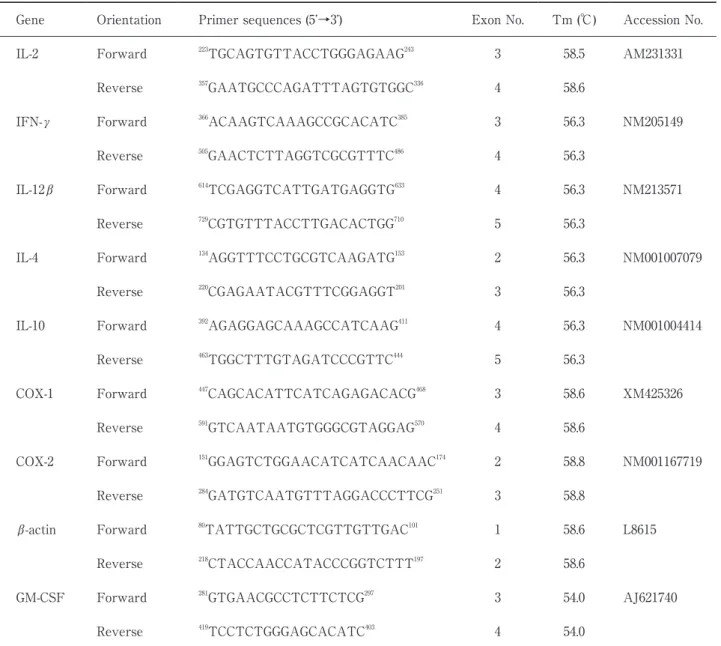
cDNA, 0.8 µl of each primer (10 pmol/µl), 10 µl of Thunderbird SYBR qPCR mix (Toyobo Co., Ltd.), and 4.4 µl of pure water, was prepared in 0.2 ml semi- skirted 96-well PCR plates with optically clear flat 8 cap strips (Thermo Fisher Scientific K. K., Tokyo, Japan), as recommended by the supplier. The real- time PCR was performed using a Thermal Cycler Dice Real Time System Single (Takara Bio Inc.). All of the primers (Table 1) were synthesized by Hokkaido System Science Co., Ltd (Hokkaido, Japan). The level of each transcript that did not exhibit an abnormal
dissociation curve was normalized to the expression level of β-actin as a reference transcript. In each diet group, the mean of the normalized individual value for each gene was expressed as a ratio relative to the mean normalized value obtained in the basic diet group.
Statistical analysis. All data were compared using one-way analysis of variance (ANOVA). The level of significance was set at P<0.05. P-values of <0.1 were considered to indicate tendencies.
Table 1. Chicken primers for real-time polymerase chain reaction
Gene Orientation Primer sequences (5’→3’) Exon No. Tm (℃) Accession No.
IL-2 Forward 223TGCAGTGTTACCTGGGAGAAG243 3 58.5 AM231331 Reverse 357GAATGCCCAGATTTAGTGTGGC336 4 58.6
IFN-γ Forward 366ACAAGTCAAAGCCGCACATC385 3 56.3 NM205149 Reverse 505GAACTCTTAGGTCGCGTTTC486 4 56.3
IL-12β Forward 614TCGAGGTCATTGATGAGGTG633 4 56.3 NM213571 Reverse 729CGTGTTTACCTTGACACTGG710 5 56.3
IL-4 Forward 134AGGTTTCCTGCGTCAAGATG153 2 56.3 NM001007079 Reverse 220CGAGAATACGTTTCGGAGGT201 3 56.3
IL-10 Forward 392AGAGGAGCAAAGCCATCAAG411 4 56.3 NM001004414 Reverse 463TGGCTTTGTAGATCCCGTTC444 5 56.3
COX-1 Forward 447CAGCACATTCATCAGAGACACG468 3 58.6 XM425326 Reverse 591GTCAATAATGTGGGCGTAGGAG570 4 58.6
COX-2 Forward 151GGAGTCTGGAACATCATCAACAAC174 2 58.8 NM001167719 Reverse 284GATGTCAATGTTTAGGACCCTTCG251 3 58.8
β-actin Forward 80TATTGCTGCGCTCGTTGTTGAC101 1 58.6 L8615 Reverse 218CTACCAACCATACCCGGTCTTT197 2 58.6
GM-CSF Forward 281GTGAACGCCTCTTCTCG297 3 54.0 AJ621740 Reverse 419TCCTCTGGGAGCACATC403 4 54.0
Results
Cytokine expression, the IL-2/IL-4 expression ratio, and CSF bioactivity in the spleens of chicken fed the DN diet As shown in Fig. 1, the chickens fed the DN diet displayed significantly reduced splenic IL-2 expression compared with those fed the basic diet (P<0.05). However, there were no significant differences in the expression levels of IFN-γ, IL-12β, IL-4, or IL-10 between the two groups. In addition, the chickens fed the DN diet exhibited significantly lower splenic IL-2/IL-4 expression ratios than those fed the basic diet (Fig. 1). CSF bioactivity was not detected in the supernatant of the unstimulated spleen cells, while the Con A-stimulated spleen cells displayed marked CSF bioactivity (Fig. 1). The chickens fed the DN diet demonstrated reduced splenic CSF bioactivity compared with the chickens fed the basic diet (P<0.05).
Cytokine expression, the IL-2/IL-4 expression ratio, and CSF bioactivity in the spleens of the chicken fed the HS and HI diets The spleen cells from the chickens fed the HS diet displayed significantly lower IL-2 expression than those from the chickens fed the basic
diet (P<0.05) (Fig. 2). On the other hand, the HI diet tended to increase the splenic expression of IL-4 (P<0.1). Neither diet induced significant changes in the splenic expression levels of IFN-γ, IL-12β, or IL-10.
The spleen cells from the chickens fed the HI diet tended to display lower IL-2/IL-4 expression ratios (P<0.1). The HS diet did not cause any significant change in the splenic IL-2/IL-4 expression ratio;
however, it did significantly suppress IL-2 expression (P<0.05). As was found for Con A-induced CSF bioactivity, no CSF suppression was detected in the spleen cells from the chickens fed the HS diet, while the spleen cells from the chickens fed the HI diet tended to display lower CSF production than those from the chickens fed the basic diet (P<0.1).
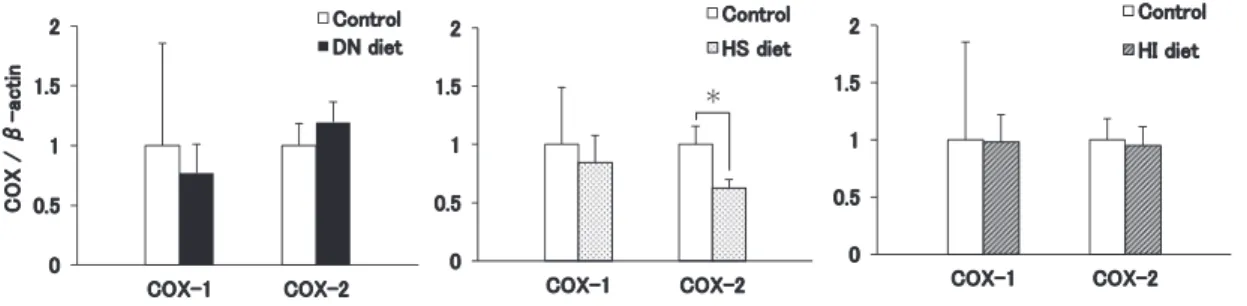
Expression of COX in the livers of chickens fed the DN, HS, or HI diet There were no significant differences in hepatic COX-1 expression among the chickens fed the DN, HS, and HI diets, while hepatic COX-2 expression was significantly decreased in the chickens fed the HS diet (P<0.05) (Fig. 3).
Figure 1. Cytokine expression, the IL-2/IL-4 expression ratio, and CSF bioactivity in the spleens of chickens fed the DN diet
Cytokine expression in the spleens of chickens fed the basic (control, open bars, n=8) and DN (closed bars, n=8) diets was assessed using quantitative real-time PCR, and the results were normalized to β-actin expression. The normalized expression level of each gene is expressed as a ratio to its mean normalized expression level in the basic diet group (mean
±SE).
The splenic IL-2/IL-4 expression ratio (mean±SE) of chickens fed the DN (closed bar, n=8) diet is compared with that of chickens fed the basic diet (control, open bar, n=8).
Spleen cells from chickens fed the basic (control, open bar, n=7) or DN diet (DN, closed bar, n=5) were cultured in the presence (Con A) or absence (unstimulated) of 5 µg/ml of Con A. The resultant supernatants were subjected to a bone marrow cell colony assay. CSF bioactivity (mean±SE) is expressed as colony-forming units (CFU) per ml. *: p<0.05
0 0.5 1 1.5 2
IL-2 IFN-γ IL-12β IL-4 IL-10
Control DN diet
Cytokine/β-actin *
* *
0 500 1000
Unstimulated Con A
CSFactivity(CFU/ml)
IL-2/IL-4
expression ratio CSF bioactivity
Cytokine expression
0 1 2 3 4
Control DN diet
IL-2/IL-4
Figure 2. Cytokine expression, the IL-2/IL-4 expression ratio, and CSF bioactivity in the spleens of chickens fed the HS or HI diet
Cytokine expression (mean±SE) in the spleens of chickens fed the basic (control, open bars), HS (dotted bars), or HI (hatched bars) diet was assessed with quantitative real-time PCR, as described in Fig. 1. In the comparisons between the basic and HS diet groups, the number of samples was as follows: IL-2: control (n=7) and HS diet (n=7); IFN-γ and IL-12β:
control (n=8) and HS diet (n=8); IL- 4 : control (n=8) and HS diet (n=5); and IL-10: control (n=7) and HS diet (n=8). In the comparisons between the basic and HI diet groups, the number of samples was as follows: IL-2: control (n=8) and HI diet (n=7); IFN-γ, IL-12β, and IL-10: control (n=8) and HI diet (n=8); and IL- 4 : control (n=8) and HI diet (n=7).
The splenic IL-2/IL-4 expression ratios (mean±SE) of chickens fed the HS (dotted bar, n=3) or HI (hatched bar, n=7) diet were compared with that of the chickens fed the basic diet (control, open bars; n=6 and 8 in the HS and HI experiments, respectively).
Spleen cells from chickens fed the basic, HS, or HI diet were cultured as described in Fig. 1. The resultant supernatants were subjected to a bone marrow cell colony assay. CSF bioactivity (mean±SE) is expressed as colony-forming units (CFU) per ml. In the comparison between the basic and HS diet groups, n=5 for both the control and HS diet samples, whereas in the comparisons between the basic and HI diet groups n=7 for both the control and HI diet samples.
*: p<0.05 ¶: p<0.1
0 0.5 1 1.5 2 2.5
IL-2 IFN-γ IL-12β IL-4 IL-10
Control HS diet
Cytokine/β-actin
*
0 0.5 1 1.5 2 2.5 3 3.5
IL-2 IFN-γ IL-12β IL-4 IL-10
Control HI diet
Cytokine/β-actin

0 500 1000
Unstimulated Con A
CSFactivity(CFU/ml)
0 500 1000
Unstimulated Con A
CSFactivity(CFU/ml)

HSdiet
IL-2/IL-4
expression ratio CSF bioactivity
HIdiet
Cytokine expression
0 1 2 3 4
Control HS diet
IL-2/IL-4
0 1 2 3 4
Control HI diet

IL-2/IL-4
Figure 3. Hepatic COX-1 and COX-2 expression in chickens fed the DN, HS, or HI diet
The hepatic COX expression levels (mean±SE) of chickens fed the basic (control, open bars, n=8), DN (closed bars, n=8), HS (dotted bars, n=8), or HI (hatched bars, n=8) diet were assessed with quantitative real-time PCR, normalized to β-actin expression, and expressed as described in Fig. 1. *: p <0.05
0 0.5 1 1.5 2
COX-1 COX-2
Control DN diet
COX/β-actin
0 0.5 1 1.5 2
COX-1 COX-2
Control HS diet
*
0 0.5 1 1.5 2
COX-1 COX-2
Control HI diet
Discussion
The expression ratio of IL-2, a Th1-related cytokine, to IL-4, a Th2-related cytokine, is widely used to determine the functional polarity of Th cells 13, 16). The inhibition of IL-2 expression in the chickens fed the DN diet resulted in a low IL-2/IL-4 expression ratio, which was indicative of polarization towards Th2 cells.
However, it was possible that the polarization towards the Th2 phenotype had also resulted in the inhibition of other Th1-related cytokines. To evaluate this, granulocyte-macrophage CSF (GM-CSF) expression was analyzed 3, 13, 16). However, splenic GM-CSF mRNA expression did not differ between the chickens fed the DN diet and those fed the basic diet (data not shown).
It is possible that GM-CSF protein expression is not correlated with the transcription of GM-CSF mRNA 1); thus, the significance of splenic GM-CSF bioactivity in chickens needs to be clarified. It has been reported that the CSF bioactivity detected in bone marrow colony assays is mainly dependent upon GM-CSF and IL-3 produced by Th1 and Th2 cells 3, 11). As inhibitory functional cross-regulation occurs between Th1 and Th2 cells 13, 16), it was possible that polarization towards Th2 cells would inhibit the expression of GM-CSF and IL-3, resulting in reduced CSF bioactivity in Th1 cells.
In agreement with this, lower splenic CSF bioactivity was detected in the chickens fed the DN diet, which might have been due to the suppression of Th1 cell functions caused by polarization towards the Th2 phenotype.
Cytokine expression, the IL-2/IL4 expression ratio, and CSF bioactivity were compared between spleen cells from chickens fed the HS diet and those from chickens fed the HI diet. It was considered that the inhibition of splenic IL-2 expression in the chickens fed the DN diet might have been dependent upon the HS fraction because splenic IL-2 expression was inhibited in the chickens fed the HS diet. This was supported by the findings of a study in which USFA was demonstrated to inhibit the expression of Th1-related cytokines such as IL-2 20). However, the chickens fed the HS diet did not display low splenic IL-2/IL-4 expression ratios, and CSF bioactivity was not inhibited in Con A-stimulated spleen cells from the chickens fed the HS diet. On the other hand, the
increase in splenic IL-4 expression observed in the HI diet group resulted in a low IL-2/IL-4 expression ratio, which was indicative of polarization towards Th2 cells.
This is supported by a study in which IL-4 inhibited the responses of Th1 cells 8). Reduced CSF bioactivity was also observed in Con A-stimulated spleen cells from the chickens fed the HI diet. However, the splenic expression patterns of IL-2 and IL-4 in the HI diet group were markedly different from those of the DN diet group. Namely, IL-2 expression was unchanged and IL-4 expression was increased in the spleen cells of the former group, and IL-2 expression was decreased and IL-4 expression was unchanged in the spleen cells of the latter group.
Since the inhibition of hepatic COX-2 expression in the HS diet group might have reduced the production of PGE2, which promotes polarization towards Th2 cells and suppresses Th1 cell functions in mice 9), it is interesting that the inhibition of COX-2 expression did not result in a change in Th1/Th2 cell polarity in the spleens of the HS-supplemented chickens. Hepatic COX-2 expression was not inhibited in the DN or HI diet groups.
The immunomodulatory effects of DN were not identical to those of either the HS or HI fraction. The reason for the discrepancies in the immunomodulatory effects of DN and the HS and HI fractions remains uncertain, but the immunomodulatory effects of DN might be dependent upon complex interactions between various components of the HS and HI fractions.
In conclusion, the present results suggest that the Th cells of chickens fed DN exhibit polarization towards the Th2 phenotype; however, the immunomodulatory effects of DN cannot be directly explained by those of its HS or HI fractions.
Acknowledgements
We thank Takano Foods Co., Ltd (Ibaraki, Japan) for kindly providing the natto.
References
1) Bickel, M., Cohen, R.B., Pluznik, D.H. (1990) Post- transcriptional regulation of granulocyte-macrophage colony-stimulating factor synthesis in murine T cells. The Journal of Immunology. 145, 840-845.
2) Black, P.N., Sharpe, S. (1997) Dietary fat and asthma:
is there a connection? European Respiratory Journal.
10, 6-12.
3) Cherwinski, H.M., Schumacher, J.H., Brown, K.D., et al.
(1987) Two types of mouse helper T cell clone. Ⅲ.
Further differences in lymphokine synthesis between Th1 and Th2 clones revealed by RNA hybridization, functionally monospecific bioassays, and monoclonal antibodies. The Journal of Experimental Medicine. 166, 1229-1244.
4) Dodge, W.H., Hansell, C.C. (1978) The marrow colony forming cell and serum colony stimulating factor of the chicken. Experimental Hematology. 6, 661-672.
5) Fujiwara, K., Miyaguchi, Y., Feng, X.H., et al. (2008a) Effect of fermented soybean, “Natto” on the production and qualities of chicken meat. Asian- Australasian Journal of Animal Science. 21, 1766- 1772.
6) Fujiwara, K., Miyaguchi, Y., Toyoda, A., et al.
(2008b) Effect of fermented soybean “Natto”
supplement on egg production and qualities.
Asian-Australasian Journal of Animal Science. 21, 1610-1615.
7) Fujiwara, K., Yamazaki, M., Abe, H., et al. (2009) Effect of Bacillus subtilis var. natto fermented soybean on growth performance, microbial activity in the caeca and cytokine gene expression of domestic meat type chickens. The Journal of Poultry Science. 46, 116-122.
8) Jacysyn, J.F., Abrahamsohn, I.A., Macedo, M.S. (2003) IL-4 from Th2-type cells suppresses induction of delayed-type hypersensitivity elicited shortly after immunization. Immunology and Cell Biology. 81, 424-430.
9) Kalinski, P. (2012) Regulation of immune responses by prostaglandin E2. The Journal of Immunology.
188, 21-28.
10) Kelley, D.S., Taylor, P.C., Nelson, G.J., et al. (1997) Effects of dietary arachidonic acid on human immune response. Lipids. 32, 449-456.
11) Kelso, A., Metcalf, D. (1985) Characteristics of colony-stimulating factor production by murine T-lymphocyte clones. Experimental Hematology.
13, 7-15.
12) Liao, W., Lin, J.-X., Leonard, W. (2011) IL-2 family cytokines: new insights into the complex roles of
IL-2 as a broad regulator of T helper cell differentiation. Current Opinion in Immunology.
23, 598-604.
13) Morel, P.A., Oriss, T.B. (1998) Crossregulation between Th1 and Th2 cells. Critical Reviews in Immunology. 18, 275-303.
14) Murooka, Y., Yamashita, M. (2008) Traditional healthful fermented products of Japan. Journal of Industrial Microbiology and Biotechnology. 35, 791-798.
15) Pace-Asciak, C., Wolfe, L.S. (1968) Inhibition of prostaglandin synthesis by oleic, linoleic and linolenic acids. Biochimica et Biophysica Acta. 152, 784- 787.
16) Romagnani, S. (2000) T-cell subsets (Th1 versus Th2). Annuals of Allergy, Asthma and Immunology.
85, 9-18.
17) Sardesai, V.W. (1992) Biochemical and nutritional aspects of eicosanoids. The Journal of Nutritional Biochemistry. 3, 562-579.
18) Sugano, A., Shimakage, A., Tsujinaka, S., et al. (2010) Kinouseiseibunbunsekihou. pp 133-163. Kiuchi K., Investigative approach to Natto. Kouseisha Kouseikaku Co., Ltd., Tokyo. (in Japanese).
19) Takano, K., Watanabe, T. (2010) Shokuhinseibun no bunseki. pp 19-45. Rikagakujikkensho. Sankyo Publishing Co., Ltd., Tokyo. (in Japanese).
20) Wallace, F.A., Miles, E.A., Evanz, C., et al. (2000) Dietary fatty acids influence the production of Th1- but not Th2-type cytokines. Journal of Leukocyte Biology. 69, 449-457.
要 旨
私たちは,乾燥納豆(DN)が鶏ヘルパーT(Th)細 胞の極性に及ぼす効果を明らかにするために, 3 %DN 添加飼料(DN飼料)を給与した鶏の脾臓サイトカイン の遺伝子発現を調べた.1 型Th(Th1)と 2 型Th(Th2)
細胞の比率を測定するために,Th1サイトカインである インターロイキン(IL)− 2 と Th2サイトカインである IL-4 との発現比率を算定した.DN 飼料給与群の IL-2/
IL-4 発現比率は有意に減少した(P<0.05).Th1および Th2細胞のコロニー刺激因子(CSF)生物活性を骨髄細 胞コロニー形成法で調べた.コンカナバリンAで刺激し た脾細胞のCSF生物活性はDN飼料給与群で有意に減少 した(P<0.05).Th1およびTh2細胞集団は相互に抑制 することから,この CSF 生物活性の減少は Th 細胞の
Th2表現型への偏向によるTh1細胞機能の抑制によるも のかもしれない.納豆のヘキサン可溶性(HS)(脂質濃 縮)またはヘキサン不溶(HI)(タンパク質と食物繊維 濃縮)画分を添加した飼料は鶏に対してDN飼料と同じ 効果を有さなかった.また,シクロオキシゲナーゼ− 2 の肝臓での発現はHS添加飼料給与群で有意に減少した
(P<0.05).これら結果は,鶏Th細胞のTh2表現型への
偏向がDN飼料給与群で観察されることおよびDNの免 疫調節効果はHSあるいはHI画分の効果で直接説明でき ないことを示唆した.
キーワード:納豆,鶏,サイトカイン,ヘルパーT細胞,
COX-2
口蹄疫等の防疫用移動式レンダリング装置から排出される 加熱破砕物の充填・運搬手法の検討
田中康男
1 )・八木行雄
2 )・末吉益雄
3 )・勝田 賢
2 )・宮﨑綾子
2 )・鈴木 亨
2 )・ 池口厚男
4 )・會田紀雄
5 )・石田三佳
1 )・中久保亮
1 )・上村涼子
3 )・橋本仁康
5 )・
弓削正昭
6 )・大﨑慎人
2 )・犬丸茂樹
2 )・荻野暁史
1 )・山下恭広
1 )Packing and transporting animal carcasses after rendering in mobile facility to control epidemics such as foot-and-mouth disease
Yasuo Tanaka
1), Yukio Yagi
2), Masuo Sueyoshi
3), Ken Katsuta
2), Ayako Miyazaki
2), Toru Suzuki
2), Atsuo Ikeguchi
4), Norio Aita
5), Mitsuyoshi Ishida
1), Ryoh Nakakubo
1), Ryoko Uemura
3),
Yoshiyasu Hashimoto
5), Masaaki Yuge
6), Masato Osaki
2), Shigeki Inumaru
2), Akifumi Ogino
1)and Takahiro Yamashita
1)(1)National Institute of Livestock and Grassland Science, 2, Ikenodai. Tsukuba-shi, Ibaraki, 305-0901, Japan
2)National Institute of Animal Health, 3-1-5, Kannondai, Tsukuba-shi, Ibaraki, 305-0856, Japan
3)Miyazaki University, 1-1, Gakuen Kibanadai-nishi, Miyazaki-shi, Miyazaki, 889-2192, Japan
4)Utsunomiya University, 350, Mine, Utsunomiya-shi, Tochigi, 321-8505, Japan
5)Food and Agricultural Materials Inspection Center, 2-1, Chuouku-Shintoshin, Saitama-shi, Saitama, 330-9731, Japan
6)NANGOKU-KOSAN co.,ltd., 1941, Arimizu, Takajocho, Miyakonojo-shi, Miyazaki, 885-1311, Japan)
(2014. 11. 17 受付/2015. 2. 3 受理)
Summary
During foot-and-mouth disease outbreaks, carcasses of slaughtered animals have to be safely removed onsite to minimize any possible spread of virus. Burial is generally recognized as the preferred disposal method; however, in certain areas, it is difficult to find suitable burial sites. In such areas, incineration would be the next best form of disposal. A mobile type pretreatment facility has been developed that consists of a carcass crusher unit, and heating unit to inactivate the viruses. The processed material is then transported to the incineration facility by truck. A safe and effective way to handle processed material is examined. A foldable plastic container of about 500 L, with a basal plate consisting of a forklift pallet, can be used for large scale facility. Two-ply polyethylene bags are used as inner packaging. The container is filled with about 500 kg of processed material. Subsequently, the polyethylene bags are tightly sealed and transported to the large scale incineration facility by truck. The packed material is thrown into the pit of the incineration facility by turning the container upside down with a forklift. A
1 ) 農研機構 畜産草地研究所
〒305−0901 茨城県つくば市池の台 2
2 ) 農研機構 動物衛生研究所
〒305−0856 茨城県つくば市観音台 3 − 1 − 5
3 ) 国立大学法人宮崎大学
〒889−2192 宮崎県宮崎市学園木花台西 1 − 1
4 ) 国立大学法人宇都宮大学
〒321−8505 栃木県宇都宮市峰町350
5 ) (独)農林水産消費安全技術センター
〒330−9731 埼玉県さいたま市中央区新都心 2 − 1
6 ) 南国興産株式会社
〒885−1311 宮崎県都城市高城町有水1941
序 文
口蹄疫においては埋却が殺処分家畜の最終処分法であ るが,十分な面積の埋却地の確保が困難な地域もある.
そのため「疑似患畜の埋却が困難な場合に備え,国は移 動式レンダリング車と焼却炉の組み合せによる焼却の実 用化を進める」6 )という対応も実施されることになっ た.また,2011年 4 月の家畜伝染病予防法の改正に伴 い,飼養衛生管理基準に,家畜の所有者は「埋却の用に 供する土地の確保又は焼却若しくは化成のための準備措 置を講ずること.」が明記された.
このような背景のもとに,農場近隣に移動して仮設 し,殺処分後の死体を破砕しさらに加熱処理する移動式 レンダリング装置(車載式感染獣畜レンダリング処理装 置)が開発された5 ).口蹄疫発生の際に,「埋却が困難 な場合にはこのような装置の利用も検討する」としてい る地域もある1 ).
この装置を活用して迅速な対応がとれるようにするこ とを目的とし,二次汚染を回避する装置稼働手法および 排出物の取り扱い手法などの総合的検討が実施され,そ の成果はすでに報告8 )されている.この報告において,
搬出容器の概要は記載されているが,適正容器の選定に 至るまでの検討経過の詳細は省かれている.また,小型 容器に関しては検討の中間段階までの記載に止まり,そ の後の試験で得られた知見は記載されていない.以上の 点から,本論文では容器の選定とその使用に関する詳細 な知見について報告する.
鳥インフルエンザ発生時における処分鶏の梱包・搬送 の場合,小型容器としては感染性廃棄物処理容器,大型 容器としてはフレコンバックを使用するマニュアルがす でに公表7 )されている.容器への処分鶏の投入は手作業 であるため,加熱破砕物投入への転用は不可能である.
また,殺処分された牛体をそのままの状態で焼却施設ま で病原微生物を散逸することなく輸送するための袋状容 器が開発3 )されているが,これもレンダリング処理物の ような高温の固液混合物の輸送に転用するには不向きで
ある.
今回の検討に係る輸送容器の基本条件としては,装置 の排出口から落下する固液混合の高温処理物を確実に受 け止めるための形状,耐熱性,耐水性,耐突刺性が重要 である.また,高温の固液混合物を扱う充填作業および 焼却施設での投入作業の安全性・効率性も考慮する必要 がある.
これらの条件を満たす容器の仕様と取扱法について,
重機を使用した投入が可能な一般廃棄物用大型焼却施設 への搬入を想定した場合と,作業者の手投入となる中小 規模焼却施設を想定した場合とに分け,それぞれ最適と 思われる手法を検討した.
材料および方法
1 .レンダリング装置および試験の概要移動式レンダリング装置は,原料ホッパー,破砕ユ ニット,殺菌ユニットおよび排出タンクからなる8 ).排 出タンク下部には35×35cm の角形排出口が設置されて おり,排出調整用の電動ゲートが備えられている.
容器への充填試験は宮崎県内の移動式レンダリング装 置稼働試験地において,2013年 1 月15日,2 月 1 〜 3 日,
2 月27日の 3 回実施した.
2 .試験容器
1 )液体輸送用大型ダンボール容器
内容積約 1 m3の液体輸送用ダンボール容器(外寸106.5
×106.5cm,内寸100.3×100.3×H101.6cm,重量29.8kg,
太陽シールパック株式会社製スペースクラフト)を使用 した.側板はシームレス 8 層構造の特殊ダンボール製 で,20トンの耐圧強度を有し,底板および蓋を付属して いる.容器内に専用付属品の液体用ポリエチレン袋(ロ ングシュラウド,容量1,000L,重量 1 kg)を装着した.
さらにその内側には耐熱性・耐突刺性の高いゴム製袋
(本体100φ×H102cm,流入口100φ×H80cm,容量800L,最 大充填質量1,000kg,シバタ工業株式会社製100℃耐熱ゴ ム製エスコン)を装着した.
340 L foldable container, in which 12–16 small boxes (20 L) are set, is suggested for the small-scale facility. It is positioned under the outlet port by the forklift, and the processed material fills the boxes. Each box is tightly sealed, and the lid plate of the container is closed. At the incineration facility, the lid is taken off, and the boxes in the container are manually disposed into the incinerator.
Key words: container, foot-and-mouth disease, incineration, onsite rendering device, transportation
家畜衛生学雑誌 40,203〜213(2015)
2 )フレキシブルコンテナバッグ
上述のゴム製袋またはロングシュラウドを内装した投 入量 1 トンのフレキシブルコンテナバッグ(シバタ工業 株式会社製ポリプロピレン製クロスエスコン)を,専用 スタンド(フレキシブルコンテナバッグ 1 トン用,シバ タ工業株式会社製ポリエチレン製)に付属の固定紐で取 り付けて使用した.
3 )フォークリフト用折り畳みプラスチックコンテナ 底面がフォークリフト用パレット,側面が格子状の板 からなる折り畳みプラスチックコンテナ(113×113×
H76cm,三甲株式会社製,折り畳み式コンパレッター F#700)を用いた.底面にフォークリフトの爪を挿入す ることで移動および容器の傾斜・回転が容易にできる.
内側には既述のロングシュラウドを二重に装着した.
4 )小型容器一斉充填・運搬用コンテナ
フォークリフト等での投入が不可能な中小規模焼却施 設の場合は小型容器を用いた手投入が不可欠となる.
1994年 9 月 6 日付け基発第547号「職場における腰痛予 防対策の推進について」では,重量物の取り扱いは作業 員の体重の40%未満を重量の目安にすべきとされてい る.仮に体重50kg とすれば20kg が上限となる.した がって,今回の試験では手投入用小型容器の容量は20L とし,多くの20L容器をフォークリフトで同時に保持し 一斉充填することとした.これに使用するためのコンテ ナについては,既製品で利用できるものが無かったた め,専用コンテナを試作した.このコンテナの設計にあ たって,フォークリフト用定型パレットのサイズに合致 するコンテナ内に小型容器の装填が可能で,処理物の充 填後はコンテナを数段積み重ねた状態でトラックに積載 できること,また未使用時には折り畳んで保管スペース を小さくできることなどの点を重視した.これらの点を 踏まえて,フォークリフト用プラスチックパレットを底 板とし,着脱式の側板 4 枚と上蓋 1 枚で組み立てる構造 とした(内寸104×104×H32cm,外寸110×110×H54cm).
コンテナ 1 基におよそ240〜320kg の処理物が充填でき るので, 2 基でおおよそ牛一頭分になる.充填時に液状 物がコンテナ内に漏洩した場合には,底部流出口より排 出されるようにした.なお,充填の際に小型容器同士の 間隙を伝って,若干の液状物がコンテナ下部に落下する ことは避けられないと予想されるので,充填作業場所に はビニールシート,大型プラスチックバット等を設置し て液状物が周囲に流れ出さないように受け止める必要が ある.
このコンテナに装填する20L容器としては,感染性廃 棄物専用容器と,低密度ポリエチレン袋を内側と外側に 装着した小型ダンボール容器の 2 種類についてその取扱
い性や耐久性の検討を行った.
感染性廃棄物専用容器は本体がポリプロピレン製,蓋 がポリエチレン製で,サイズは34×23.4×H36cmである
(富士システムパック株式会社製,ミッペール20タイ プ).コンテナ内には12個置くことができる.なお,サ イズが下記の段ボール容器と同一の製品があれば16個置 くことが可能となりより効率的になる.
小型ダンボール容器はサイズが25×25×H30cm で,
上蓋は無い.コンテナ内にはこの容器を16個置くことが できる.低密度ポリエチレン袋は,耐熱性および充填後 に袋を持って持ち運ぶ際の強度を考慮し,厚さ130µm,
軟化点80℃,溶融点120℃の仕様とした.
なお,レンダリング車両稼働試験の時点では,試作コ ンテナおよび小型段ボール容器が未完成であった.その ため,車両稼働時の充填試験では,大型プラスチック バットをコンテナの代用とし,また小型容器は感染性廃 棄物専用容器のみ試験を行った.試作コンテナの運搬試 験については畜産草地研究所(つくば)周辺で模擬的な 試験を行った.また,小型段ボール容器の使用試験につ いては,冷凍保存しておいた約30kg の処理物を加熱
(90℃)し,模擬的な充填作業を実施した.
結果と考察
1 .レンダリング処理物の性状レンダリング装置からの処理物の排出状況を図 1 に示 す.排出口から落下する処理物(図 1 A)は,最大径約
5 cm の肉片と骨片,および体液と溶融脂肪からなる液 分が含まれていた(図 1 B).骨片の中には鋭利な折損 部位を有するものも含まれているため(図 1 C),耐突 刺性の不十分な素材では落下した骨片で損傷し液分が漏 出する懸念がある.
排出タンクの排出口電動ゲートを開けた直後は液状物 が主に排出され,その後固形物が排出された.このため 充填タイミングにより容器内の処理物中の液分割合は大 きく変動した.
各充填試験時において容器内に落下した直後の処理物 の温度を測定したところ,65.6℃〜88.5℃の範囲で平均 は76.2℃であった(表 1 ).この温度の変動は,殺菌ユ ニットの加熱温度が稼働開始からの時間によって変化す ることや,排出タンク内の処理物貯留量の変動により放 熱の状況が変化することが影響したと推測される.
上記の実測温度より,容器の耐熱温度は90℃程度を上 限にするのが適切と推定された.汎用プラスチックの常 用耐熱温度は,低密度ポリエチレンが70〜90℃,高密度 ポ リ エ チ レ ン が90〜110℃, ポ リ プ ロ ピ レ ン が100〜
140℃,ポリ塩化ポリエチレンが60〜80℃,PET樹脂が
85℃とされていることから,ポリ塩化ポリエチレンと PET 樹脂以外であれば利用可能と推定される.今回使 用した低密度ポリエチレン袋は,必要最低限の耐熱性を 有する汎用的な資材であり,各種形状のものが入手しや すく,焼却時に有害物質が発生しないという長所を有す る.120℃まで耐熱性で耐突刺性も高いゴム製袋もある が,プラスチック製に比較してかなり高価になる.
2 .各容器の評価結果
1 )液体輸送用大型ダンボール容器
大型ダンボール容器は折りたたまれた状態で納品され るが,組み立ては 1 名でも可能であった.本体(側板)
段ボールは多層のため強度が高いが,底板と蓋は 1 層の ダンボールなので強度は期待できない.ただしパレット に乗せて運搬することから,充填前の容器の形状さえ保 持できれば底板の強度は不要である.
準備の完了したダンボール容器をフォークリフト用パ 表 1 .容器充填直後の処理物温度実測値
充 填 容 器 温度(℃)
大型ダンボール容器 65.6
フレキシブルコンテナバッグ 1 回目 79.2 フレキシブルコンテナバッグ 2 回目 82.7 排出口付フレキシブルコンテナバッグ 88.5
フォークリフト用折り畳みコンテナ 67.7
感染性廃棄物専用容器 73.2
図 1 .処理装置から排出された処理物
A.排出口からの落下状況 B.固形物の下に滞留した液状物
C.固形物の形状
レット(110×110cm)に乗せて移動し,処理物の充填 を行った(図 2 ).容器とパレットのサイズが一致する ため,パレットに載せた状態での移動は容易であった.
なお,ダンボール表面は撥水加工が施されているため,
一時的であれば雨などを浴びてもダンボール強度は低下 しないと予想される.
容器に装着したロングシュラウドは処理物の充填後も 特段の強度低下は見られなかったので,高価な耐熱ゴム 袋は不要と推定される.ただし鋭利な骨片の落下により ピンホールができる懸念を考慮すると,ロングシュラウ ドを二重で装着する方が安全と考えられる.
焼却施設では大型ダンボール容器はパレットに乗せて フォークリフトで運搬し,ゴミ投入口にそのまま投入す ることを想定した.しかし,今回,焼却試験を予定した 一般廃棄物焼却施設では, 1 辺 1 m以上のダンボール片 はゴミクレーンによるゴミの移送・混合作業に支障を生 じさせる懸念があり,投入不可能という判断が施設管理 者によってなされた.このため大型ダンボール容器は利 用に不向きと結論された.
ただし,大型ダンボール容器の付属品として使用した ロングシュラウドは,二重で使用することで確実な封入 が可能なことが実証され,他の大型容器の内装袋に活用 できることが確認された.
2 )フレキシブルコンテナバッグ
フレキシブルコンテナバックは内部にロングシュラウ ドを装着し専用スタンドに 4 本の紐で固定するだけなの で準備作業の負担は小さかった.スタンドごとフォーク リフト用パレットに乗せ,排出口下部に移動させ,充填 したところ(図 3 A),スタンドの強度不足により充填 作業中にバックが座屈し,充填物が一部溢れ出る状況が 生じた.よってスタンドによる保持は安全面で問題が
あった.フレキシブルコンテナバックの吊手をフォーク リフトの爪に掛けて吊り上げた状態で充填する方法に変 更したところ(図 3 B),順調な作業が可能になった.
充填後のフレキシブルコンテナバッグは水密仕様の大 型プラスチックコンテナに入れて輸送を行った.焼却施 設では,バッグの吊手をフォークリフトのクレーンアー ムに掛けて吊上げ,ゴミピット上部まで移動し,フレキ シブルコンテナバッグおよびロングシュラウドの下部を
図 3 .フレキシブルコンテナバッグの試験状況 A.スタンドを用いた充填状況
B.フォークリフトで吊った状態での充填状況
C.焼却施設での投入作業 図 2 .液体輸送用ダンボール容器への充填状況
長柄付鎌で切り裂いて内容物およびフレキシブルコンテ ナバックとロングシュラウドをピットに投入した(図 3
C ) .
この作業はごみピット投入口付近で長柄付鎌を用いて行 うため,作業者がバランスをくずしてピットに落下する 懸念があった.安全ベルトおよび命綱の装着を前提とし ても,鎌を持った状態で落下した場合には傷害を負うリ スクも高く,作業の安全性の観点から推奨できないと結 論された.
3 )フォークリフト用折り畳みプラスチックコンテナ このコンテナは組み立てが容易であり,作業者 1 名で も約 1 分で可能であった.内側にはロングシュラウドを 2 重に装着した.コンテナの開口サイズよりロングシュ ラウドの開口サイズがやや小さかったため,コンテナの 縁に折り返して装着することができず固定に手間取っ た.実用化するにはコンテナとロングシュラウドの開口 サイズを一致させることが重要と考えられる.
移動および排出口下部への位置取りと充填は,底面が フォークリフト用パレットの構造になっているため フォークリフトのオペレータのみで対応可能で,補助作 業員は不要であった.充填後(図 4 A)の重量は容器込 みで590kgとなった.充填後にロングシュラウドを封ず る作業はロングシュラウドの余裕長が不足したため手間 取ったが,内袋は紐で封じ外袋は上部を折込んでガム テープで固定する手法で密封できた(図 4 B).ロング シュラウドのサイズが開口部の密封作業に十分な長さで あれば作業負担はさらに軽減できる.
処理物を充填したコンテナは,フォークリフトでト ラックに積載した.輸送後に液漏れはまったく見られな かった.密封したロングシュラウドは,充填後 1 日たっ
て焼却施設に到着した時点でガスによる若干の膨化が見 られた.気温の高い時期で充填後すぐに焼却できないよ うな場合には,ロングシュラウド上部にガス抜き孔の取 り付が必要になる可能性もある.焼却施設では,ロング シュラウドの上部を切り裂いた後にフォークリフトでゴ ミピット上部に移動させ,フォークを回転させてコンテ ナを反転させ,ピット内に処理物とロングシュラウドを 同時に落下させることで,安全かつ省力的な投入ができ た.
4 )小型容器一斉充填・運搬用コンテナ
予備試験として,20Lの段ボール容器および感染性廃 棄物運搬容器に処理物を手作業で順次個別充填する方法 も試みたが,投入量を調整しながら充填するには排出口 電動ゲートの頻繁な開閉が必要であった.このため,レ ンダリング処理の速度が排出速度を上回り,処理物が装 置内に過剰滞留するトラブルが発生した.また,充填作 業中に高温の飛沫が作業者に降りかかるため,作業安全 面でも問題があった.したがって20L容器に個別に充填 するのは不適当と結論された.この結果を踏まえて,一 斉充填・運搬用コンテナの試作を行った.
試作した専用コンテナの組立は,各部材に取り付けた 連結用金具で部材同士を結合することにより,作業者 1 名でも工具を使用せずに 1 〜 2 分で可能であった(図 5 ).
設計上の強度は, 3 段まで積み重ねての輸送が可能な程 度とした.積み重ね状態での輸送の際には,取り付けら れた金具により上下のコンテナの横ずれが防がれるよう になっている.未使用時には部材を分解して底板に乗せ ることで,高さは29cm まで薄くなる.折り畳んだ後も そのままでフォークリフトによる運搬が可能であった.
既述のように,上記仕様のコンテナの製作がレンダリ
図 4 .フォークリフト用折り畳みプラスチックコンテナへの充填状況
A.処理物充填後の状態 B.密封後の状況