• 検索結果がありません。

satta 総合研究大学院大学学術情報リポジトリ satta

N/A
N/A
Protected

Academic year: 2018

シェア "satta 総合研究大学院大学学術情報リポジトリ satta"

Copied!
9
0
0

読み込み中.... (全文を見る)

全文

(1)

THE NEUTRAL THEORY AND NATURAL SELECTION IN THE HLA REGION

Yoko Satta, Yi-Ju Li and Naoyuki Takahata

Department of Biosystems Science, The Graduate University for Advanced Studies, Hayama, Kanagawa 240-0193, Japan

Received 4/3/98 Accepted 4/7/98

TABLE OF CONTENTS

1. Abstract

2. Introduction

3. Genes and nucleotide differences in HLA

4. Intergenic recombination

5. DRB1 allelic lineages and disease association

6. Perspective

7. Acknowledgments

8. References

1. ABSTRACT

Based on available DNA sequence data in the

HLA region of 4 Mb, we review the degree of

polymorphism at 39 loci of which most are involved in the

immune system. The extent of nucleotide differences per

silent site differs greatly from locus to locus. It is

exceptionally high at classical MHC loci, intermediate at six

MHC-related pseudogenes as well as at some loci in class I

and II regions, and low in the class III region. Different

exons of individual MHC loci show also different degrees of

silent polymorphism; high in the exons encoding for the

peptide binding region (PBR) and low in the exons encoding

for trans-membranes and cytoplasmic tails. The degree of

polymorphism within MHC allelic lineages is not much

smaller than that between allelic lineages, contrary to the

expectation where intra-allelic sequence exchanges are

restricted. The observation that many allelic lineages at the

HLA-DRB1 locus are combinations of distinct motifs in the

beta pleated sheet and alpha helix of PBR indicates that

sequence exchanges occur even within exon 2. Semi-

quantitative analysis is presented about the rate of sequence

exchanges between selected and linked neutral regions,

although more sequence information is necessary to make

definite conclusions. The extraordinary MHC

polymorphism is viewed from the dual function of MHC

molecules that controls the acquired immune system.

2. INTRODUCTION

The pattern and degree of polymorphism across

the genome are a useful indicator for identifying genes or

genomic regions which are subjected to different types of

natural selection. In some circumstances, polymorphism

may also be used to infer the function of unknown genes.

Without the action of natural selection, polymorphism

(often measured by the pairwise nucleotide differences at

the DNA level) must have evolved in much the same way

as what the neutral theory of molecular evolution depicts

(1, 2): The larger the effective population size (N

e

) and the

higher the neutral mutation rate, the more polymorphic. In

genomic regions experiencing either positive or negative

selection (purifying selection), polymorphism is lowered

(3, 4), while in those experiencing diversifying or balancing

selection, it is enhanced (5-9). These contrasting effects of

natural selection are not necessarily confined in the target

region per se, but they should be manifest also in a

neighboring genomic region in linkage. An important

factor is obviously the rate (c) of recombination between

two linked regions under study (5, 9).

A pair of neutral genes in an autosomal region

segregate for 2N

e

generations on average (10), so that if

recombination occurs rarely or at rate c = 1/N

e

or less with

the target region of natural selection, the linked neutral

polymorphism will be affected (11). Since N

e

is estimated

as about 104 for the human population over the past one

million years (7, 12), the indirect effect of natural selection

extends to the neighboring region with c 0.01% or

physical map distance 10 kb if 1 cM = 1 Mb (13). Thus,

if reduced polymorphism is observed in a neutral region,

purifying selection might have occurred somewhere in the

surrounding left or right 10 kb region during a much shorter

period of time than the last 2 × 10⁴ generations. On the

other hand, if enhanced polymorphism is observed,

balancing selection might have been operating throughout a

much longer period of time than 2 × 10⁴ generations. In

this case, the candidate region may be broader than of 20 kb

because the efficiency of recombination is reduced in

proportion to the number of alleles that are maintained by

balancing selection (9).

In humans, the nucleotide differences are

0.08% over 18,844 silent (synonymous) sites for 48 pairs

of carefully checked autosomal sequences ("standard") (12,

14). For 12 additional pairs of unchecked sequences (14),

the silent differences become high (0.31% over 6,071 sites),

yet they are much smaller than 1%. Although no

comparable estimates except for mitochondrial DNA are

available in non-human primates (15), the silent differences

(1.3% on average) in Drosophila melanogaster and its

sibling species suggested that the degree of DNA

polymorphism in humans is exceedingly low (14).

Notwithstanding, the silent differences at some functional

HLA class I and II loci are 50 to 100-fold greater than the

standard (16). Convincing evidence accumulated to support

the notion that this results from the long lasting operation

of balancing selection for non-silent substitutions in the

peptide binding region (PBR) of major histocompatibility

complex (MHC) molecules (17 - 20).

This review first summarizes the polymorphism

at 39 loci dispersed in the HLA region of 4 Mb; some are

MHC proper or their pseudogenes and others encode for

proteins involved in the immune system. Second, the silent

(2)

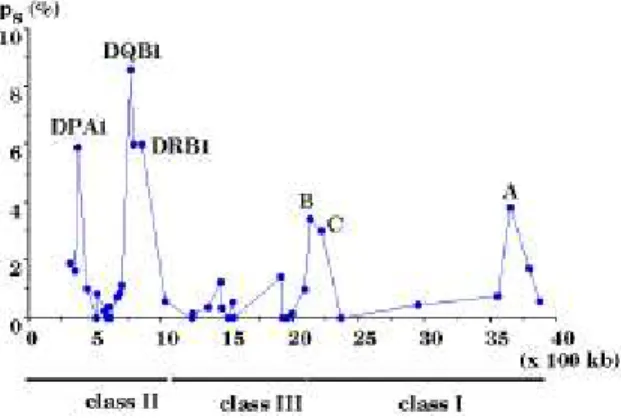
Figure 1 . The silent nucleotide differences (ps) and

chromosomal locations of 39 loci in the HLA region of 4

Mb (41 - 43).

differences at a particular locus are plotted against the

physical map distance from the nearest highly polymorphic

MHC locus and this relationship is used to examine semi-

quantitatively whether 1 cM = 1 Mb holds true in the HLA

region. Third, the silent differences within and between

class II DRB1 allelic lineages are presented to discuss the

possibility of intra-exonic recombination or gene conversion

(21 - 23). Relevant multi-locus haplotype data from

Siberian populations (24) are briefly mentioned. Finally,

we provide short comments on MHC-mediated thymic

selection in T cell repertoire and some perspectives for the

HLA study.

3. GENES AND NUCLEOTIDE DIFFERENCES IN

HLA

The degree of polymorphism at 39 loci in HLA is

summarized in table 1 in terms of the average number of

nucleotide differences and the number of segregating sites at

both silent (S

s

) and non-silent sites (S

n

). It is clear that the

degree differs greatly from locus to locus (figure 1).

Without direct and indirect effects of natural selection, the

silent polymorphism should be relatively uniform over the

loci, while the non-silent polymorphism may vary from

locus to locus owing to different degrees of functional

constraints (2). Nevertheless, the non-silent as well as

silent polymorphism at classical class I or class Ia (A, B

and C) and class II (DPB1, DPA1, DQB1, DQA1, DRB1

and DRA) loci is enhanced considerably from the standard

value of 0.08%. The overall silent differences (p

s

) at these

class Ia and II loci are 3.37% and 4.20% per site,

respectively. If the neutral mutation rate is 10

-9

per site per

year (25), it must have taken about 20 million years or

some millions of generations for these silent differences to

have accumulated. The different GC content in the HLA

region may well affect the neutral mutation rate, but this

does not seem sufficient to account for the observed

heterogeneity in the extent of polymorphism. No doubt,

the enhanced silent polymorphism has resulted largely from

the action of balancing selection on the PBR and its indirect

effects on tightly linked silent sites. The overall non-silent

polymorphism is also as great as the silent polymorphism.

The absence of any appreciable difference between silent

and non-silent polymorphism of MHC genes is similar to

what is expected for pseudogenes (2), but for very different

reasons.

The remaining 30 include immunity-related loci in

addition to two class I and four class II pseudogenes in

which all nucleotide sites are treated as silent. The overall

p

s

value at these 30 loci reduces to 127/15,132 = 0.84%.

Yet, it is ten-fold larger than the standard (P < 0.01). Also,

the p

s

value of 1.2% over the four class II pseudogenes

(DPB2, DQB2, DQA2 and DQB3) is much greater than the

standard (P < 0.01). This enhancement may be due to

recent cessation of balancing selection, inter-locus sequence

exchanges (unequal crossover or gene conversion), or tight

linkage to classical class II loci. The first possibility is

unlikely because the presence of DPB2 or DQB2 orthologs

in various primates (26) suggests that the two loci were

inactivated long before their alleles were generated. The

second possibility is inconsistent with the monophyletic

relationships between these pseudogenes and functional

paralogs (26); with inter-locus sequence exchanges, the

relationships must be para- or polyphyletic. Thus, the

relatively large p

s

value for these pseudogenes is attributed

to indirect effects of balancing selection operating on nearby

polymorphic class II loci.

The LMP2 and LMP7 genes encode for subunits

of a proteasome, while the TAP1 and TAP2 genes encode

for ABC transporter proteins, all being involved in

processing of proteins into peptides that are loaded onto

class I molecules (27). Unlike the rat TAP ortholog (28,

29), these four loci in HLA are rather monomorphic: The

p

s

value of 0.19% over the 1,492 silent sites is not different

from the standard. The DNA and DOB genes as well as

DMA and DMB genes encode for alpha and beta

polypeptide chains, respectively, each pair of chains

forming heterodimers like classical class II chains (30 - 32).

The function of the DM heterodimer is thought to facilitate

the exchange of class II associated invariant chains for

peptides that are generated in lysosomes from self and non-

self proteins (33), while the DO heterodimer inhibits such a

catalytic action of DM (34, 35). The average p

s

value at

these loci is 0.46%. Because of the small number of sites

compared (549 bp), the difference of p

s

= 0.46% from the

standard is only marginally significant (0.05 < P < 0.1).

Among 13 loci in the class III region, CYP21B

(steroid 21-hydroxylase involved in biosynthesis of cortisol

and aldosterone) and HSP70-2 (the major heat-inducible

chaperone of the HSP70 group) are shown to have

undergone frequent sequence exchanges with nearby

paralogs (36, 37). As a result, the nucleotide differences are

rather large so that in what follows, these two loci are

excluded from consideration. In the remaining 11 loci, the

average p

s

value of 0.22% at 3,329 sites is not different

from the standard. However, the non-silent differences (p

n

)

of 0.24% are greater than 0.024% at the standard loci (P <

0.01). It turns out that MICA (MHC class I chain-related

A) is unusual in that among 16 alleles at the locus, there are

22 non-silent segregating sites out of 618 and the alleles are

different from each other by seven such sites on average.

The MICA and MICB genes encode for non-classical (or

class Ib) MHC molecules (38 - 41) and may be recognized

mainly in intestinal epithelium by T lymphocytes with

gamma-delta T cell receptors (Tcr) (42). The significantly

large p

n

value of MICA may be associated with

this putative function. The class III region

also encodes for several other immunity-related genes

(27) such as in the complement cascade (C4B, Bf) and the

regulation of T lymphocyte development and function

(TNF).

(3)

Table 1. The per-site nucleotide differences (p) and the number of segregating sites (S) over L sites at each of 39 loci in the HLA

coding region.

Locus Silent Non-silent References

(#genes) K

s

/L

s

= p

s

(%) S

s

K

n

/L

n

= p

n

(%) S

n

or accession numbers

1 DPB2 (2) 37/1977 = 1.9 37 (73), (74)

2 DPB1 (67) 1/63 = 1.6 6.5 9.1/191 = 4.8 24.5 (47)

3 DPA1 (8) 3.5/59 = 5.9 8.7 5.2/185 = 2.8 12.3 (47)

4 DNA (3) 2/204 = 1.0 3 0/547 = 0 0 M31525, M26039, X02882

5 DMA (4) 0/71 = 0 0 3/208 = 1.5 6 X62744, X76775, U04878, U04877

6 DMB (7) 0.5/60 = 0.83 2 2/177 = 1.1 5 Y14395, U00700, U31743, AF00482, U16762, U32663, X76776

7 LMP2 (3) 0.5/173 = 0.24 1 0.4/463 = 0.09 1 X62741, S75169, U01025

8 TAP1 (5) 0.3/631 = 0.05 1 1.8/1610 = 0.11 4 X57522, L21205, L21206, L21207, L21208

9 LMP7 (5) 0/172 = 0 0 0/509 = 0 0 X62598, L11045, U17496, U17497, X66401

10 TAP2 (3) 2/516 = 0.39 3 2/1350 = 0.15 3 U07844, Z22935, Z22936

11 DOB (2) 0/214 = 0 0 1.2/605 = 0.17 1 M26040, L29472

12 DQB2 (8) 1.4/201 = 0.69 3 M83889, M83890, M83891, M24921, M24920, M24922,

M24923, M95729

13 DQA2 (2) 21/2504 = 0.84 21 Z84490, M29615

14 DQB3 (2) 15/1407 = 1.1 15 Z84490, M26577

15 DQB1 (27) 6.2/73 = 8.6 17.5 17/212 = 8.1 42 (47)

16 DQA1 (15) 9.0/150 = 6.0 26.5 19/426 = 4.5 47.5 (47)

17 DRB1 (135) 3.6/60 = 6.0 24 12/183 = 6.5 55.5 (47)

18 DRA (2) 1/174 = 0.57 1 1.0/504 = 0.20 1 (47)

19 PBX-2 (3) 0/338 = 0 0 0.7/953 = 0.07 1 X59842, X80700, D28769

20 RAGE (2) 0.5/338 = 0.15 0.5 3.5/874 = 0.40 3.5 M91211, D28769

21 G13 (2) 2/578 = 0.35 2 3/1520 = 0.20 3 X98054, U89337

22 CYP21B (2) 5/405 = 1.23 5 3/1080 = 0.28 3 M31022, AF019413

23 C4B (2) 1/310 = 0.32 1 1/833 = 0.12 1 K02404, AF019413

24 G11 (2) 0/214 = 0 0 0/560 = 0 0 X77836, (75)

25 RD (4) 1.5/274 = 0.54 3 2.6/778 = 0.33 5 L03411, M32275, X16105, AF019413

26 Bf (2) 0/467 = 0 0 1/1350 = 0.07 1 X72875, AF0149413

27 HSP70-2 (2) 7/508 = 1.4 7 2/1410 = 0.14 2 M59830, M11717

28 TNF (3) 0/191 = 0 0 0.7/508 = 0.13 1 X01394, X02910, M10988

29 BAT1 (3) 0/211 = 0 0 0.7/639 = 0.11 1 Z37166, AF029062, A02961

30 MICB (7) 0.3/204 = 0.14 1 1.7/618 = 0.28 6 (36), (37)

31 MICA (16) 2/204 = 0.96 5 7.2/618 = 1.2 22 (38), (39)

32 B (91) 9.7/289 = 3.4 45.4 25/796 = 3.2 91.5 (48)

33 C (35) 8.3/281 = 3.0 46.8 18/779 = 2.3 89.8 (48)

34 SC1 (2) 0/301 = 0 0 8/767 = 1.0 8 S53374, U25826

35 E (5) 0.5/127 = 0.43 3 1.8/346 = 0.51 6 (76)

36 J (3) 7.5/1046 = 0.72 11 (76)

37 A (50) 10/261 = 3.8 38 25/758 = 3.3 90.5 (48)

38 H (6) 18.7/1091 = 1.71 45 (76)

39 G (6) 1.1/195 = 0.56 5 1.3/522 = 0.25 4 (76)

The K and L are the average number of nucleotide differences and the average number of sites in all pairwise comparisons,

respectively, and the subscripts stand for silent and non-silent nucleotide substitutions.

(4)

Figure 2. The observed silent nucleotide differences at

individual loci are plotted against the physical map distance

from the nearest highly polymorphic HLA locus. The solid

and dotted curves are computed by the theoretical formulas

(9, 45) under the assumption of 1 cM = 1 Mb and 0.1 cM

= 1 Mb, respectively. It is assumed that selection intensity

is 2% and the number of breeding individuals is 10

5

and 10

4

before and after 50,000 generations ago. The values of the

per-site neutral mutation rate and the non-silent

substitutions rate per PBR per generation are given in text.

The discrepancy from the 1 cM = 1 Mb curve is caused by

MICA, J, H and G or by DPB2, DQB3, DNA, DQA2 and

DQB2.

The average p

s

value over five loci (SC1, E, J, H

and G) in the class I region is 0.98% which is greater than

the standard (P < 0.01). The SC1 gene is thought to control

the cell cycle, while the E and G genes encode for class Ib

molecules. The relatively high p

s

value in the class I region

is largely attributable to processed pseudogene HLA-H (not

to be confused with the renamed gene (HFE) that is

responsible for hereditary hemochromatosis (43), more than

3 Mb telomeric from the HLA). Compared with the case of

HLA-J which is also a pseudogene, both p

s

= 1.7% and S

s

=

43 over 1,067 silent sites at the HLA-H locus appear to be

too large. However, there is evidence that a telomeric region

of the HLA-A locus is somewhat suppressed in

recombination (H. Inoko, personal communication).

Although the reason is poorly understood, the reduced

recombination may well account for the elevated

polymorphism at the HLA-H locus as well as the slightly

increased polymorphism at the HLA-G locus.

4. INTERGENIC RECOMBINATION

In order to study the relationships between

silent differences (p

s

) and recombination rates (c), each p

s

value is plotted against the physical map distance (44 - 46)

which is measured from the nearest highly polymorphic

HLA locus (figure 2). As expected, the longer the distance,

the smaller the p

s

value. The following theoretical model (9,

47, 48) is used to examine the relationships more

quantitatively. The model assumes that the neutral region

and the PBR encoding exon are recombined with rate c per

generation. The model also assumes that any PBR non-

silent nucleotide substitution always generates a new allelic

lineage which, together with all other pre-existing alleles, is

subjected to random genetic drift and balancing selection.

The mutation rate per PBR is assumed to be 2.7 × 10⁻⁶ for

class I and 0.8 × 10⁻⁶ for class II locus owing to the

difference in the number of non-silent sites (25). The per-

site mutation rate is 2 × 10⁻⁸ per generation and the

generation time is 20 years. If a population has not been

demographically stable over time, N

e

is dependent of a time

period during which polymorphism has been generated (9).

This time period for neutral polymorphism is relatively

short, while that for HLA polymorphism is relatively long.

The estimate of N

e

= 104 is made based on the short-lived

neutral polymorphism, whereas that of N

e

= 105 is made

based on the enhanced polymorphism due to long-lived

HLA allelic lineages (7). The reduction in the effective

population size might have begun when Homo erectus first

migrated from Africa about one million years ago (7, 9, 48),

although there are alternatives. Figure 2 also depicts the

expected level of linked neutral polymorphism. The indirect

effect of balancing selection is remarkable in linked neutral

regions with c < 0.01%, or only within 10 kb if 1 cM =

1Mb is postulated (13). Thus, in order to account for large

p

s

values by linkage, tightly linked regions must be

considered. The relatively large p

s

value at DPB2, DQB3,

DNA, DQA2 and DQB2 locus as well as that at MICA, J,

H and G locus requires that the c value is smaller than

0.01% (figure 2). Since these loci are located about 25 kb to

more than 200 kb apart from the nearest polymorphic

MHC locus (44), recombination may be rarer than expected

from 1 cM = 1 Mb. One can claim that proper alignment

necessary for recombination between the homologous

chromosomes is hindered by highly diversified loci (49).

However, the small p

s

value at the remaining loci is by and

large consistent with the postulate of 1 cM = 1Mb. In

addition, a reduction of silent polymorphism in non-PBR

coding exons at classical MHC loci indicated that

recombination is not fully suppressed even within a locus

(9).

5. DRB1 ALLELIC LINEAGES AND DISEASE

ASSOCIATION

Long lasting allelic lineages at classical MHC loci

permit us to glean insight into molecular mechanisms of the

polymorphism, in particular roles of intra-exonic sequence

exchanges (recombination or gene conversion). The silent

differences within (p

w

) and between (p

b

) allelic lineages are

particularly useful for this purpose. Without sequence

exchanges among allelic lineages, the silent differences

within lineages should be much smaller than those between

lineages (figure 3). However, in the absence of information

on associations between alleles at a locus and the nearby

MHC locus, figure 3 cannot be used. An exception is

MHC loci themselves at which the linkage relationships

between non-PBR coding exons or introns and the PBR

coding exon are certain in some data sets (50, 51).

Both p

w

and p

b

values depend critically on the

definition of allelic lineages. In addition to serological

methods, sequence motifs as well as phylogenetic analyses

can provide reasonable classifications of MHC allelic

lineages (9). As an example, we take a close look at

(5)

Figure 3. The silent nucleotide differences within (p

w

)

and between (p

b

) allelic lineages based on the theoretical

formulas (9, 45). The same set of parameter values are used

as in figure 2.

the DRB1 locus at which the reported number of alleles is

about 180 and the average p

s

value at exon 2 is 8.0%,

amounting to the sequence divergence of 40 million years.

Based on the observation that the 5' exon 2 region encoding

for the beta pleated sheet and the 3' exon 2 region encoding

for the alpha helix are phylogenetically incongruent, it is

proposed that the chi-like sequence at codon 51-55

somehow mediates sequence exchanges (21). Recently,

DRB1 intron 1 and 2 sequences revealed that the

phylogenetic relationships are consistent with those of the

beta region, and therefore inconsistent with those of the

alpha region (22). In terms of linkage disequilibrium, the

sequences of these introns are more strongly associated

with those in the beta region than in the alpha region. It is

therefore suggested that the alpha region (or conversely,

though less likely, the beta+intron region) has been shuffled

among DRB1 alleles by either double crossover or gene

conversion (21 - 23).

Among 103 DRB1 exon 2 sequences available for

codon 9 through codon 86 (50), there are 28 and 45

different non-silent motifs in the beta and alpha region,

respectively. Of these, 17 beta or 38 alpha motifs can be

characterized simply by a set of codon 11, 13, 30 and 37 or

by a set of codon 57, 67, 70, 71 and 74. If we exclude

minor motifs which differ by single unique substitutions

only, there remain ten distinct beta and 16 alpha motifs (see

figure 4 for their relationships drawn by the phylogenetic

analysis). Importantly, some of these distinct motifs in

each region are shared by chimpanzees, gorillas, or Old

World Monkeys (51, 53), suggesting that they are of

ancient origins. This antiquity of sequence motifs is

consistent with the observed large p

s

values; 9.3% in the

alpha region and 4.4% in the beta region.

If DRB1 sequences in each region are classified

by either beta or alpha motifs, p

s

will be divided into p

w

and p

b

although p

b

is close to p

s

by definition.

Theoretically, the best classification of allelic lineages may

be obtained when p

b

is maximized and p

w

is minimized. In

the beta motif-based classification of allelic lineages, p

w

is

the expectation (figure 3), whereas p

w

is more than 3.8% in

the alpha region. This contrasting pattern of p

w

in the two

regions becomes less conspicuous in the alpha motif-based

classification of allelic lineages (3.3% in the beta region and

1.2% in the alpha region). This asymmetry may indicate

that the whole or partial alpha motifs have been recombined

with distinct beta motifs and that this shuffling generated an

enormously large number of DRB1 alleles (figure 5). An

alternative is to invoke convergent evolution in alpha motifs

(52, 53). In this respect, it is important to note that five

(two non-silent associated and three solitary) silent

substitutions in the alpha region are shared by distinct

allelic lineages defined by beta motifs (data not shown),

resulting in the elevated p

w

value in the alpha region. Since

it is difficult to invoke convergence for these shared silent

substitutions, it is reasonable to conclude that new

combinations between beta and alpha motifs have been

generated by intra-exonic recombination or gene conversion

(22, 23). Nonetheless, it should be kept in mind that if

sequence exchanges always occur at the same boundary, the

number of alleles maintained in a population becomes rather

limited (54). Moreover, were some sequence exchanges not

allowed within the alpha region, it does become difficult to

account for the relatively large p

w

value even in the alpha-

based classification (23). The shared silent substitutions

among different alpha motifs support that the tract of

sequence exchanges involving the alpha region is at variance.

This conclusion also agrees with the finding that although p

s

is larger in the alpha than in the beta region, the

phylogenetic relationships in the former are more star-like

and more compact than in the latter (figure 4).

Based on the serological classification (22), the p

b

(p

w

) value averaged over about 20 complete DRB1

sequences becomes 8.4% (1.7%) in exon 2, 8.6% (0.07%) in

intron 1, 4.8% (0.06%) in intron 2, 6.0% (1.8%) in exon 3

and 1.3% (0.4%) throughout exon 4-6. The extremely small

p

w

value in intron 1-2 (22) is due partly to the exclusion of

"recombinant" DRB1*0806 as well as partly to the

distinction between DRB1*1602 and *15011/*15021

although these alleles are regarded as identical in the present

beta motif-based classification. More importantly, iIt may

be noted that the p

b

value tends to be smaller in non-PBR

coding regions and this tendency is observed at other

classical MHC loci as well (9). Thus, even though intra-

locus recombination is rare, it might have acted so as to

decrease the level of silent polymorphism in non-PBR

coding exons. For such reduction to be observed in non-

PBR coding regions which are located within a few

kilobases away from the PBR coding exon, the rate (c) of

intra-exonic sequence exchanges may be of the order of

0.001%, as expected from 1 cM = 1Mb.

Interestingly, the beta and alpha motifs defined

above play distinct roles in shaping the physico-chemical

environment of peptide binding pockets of MHC molecules

(55 - 57) and that some alpha motifs are associated with

autoimmune diseases. Rheumatoid arthritis is associated

with DR4 subtypes (58). These MHC molecules possess a

set of amino acids (Q70R71A74 by the one letter amino

acid code) which participate in forming the P4 pocket.

According to the present classification of DRB1 allelic

lineages, this alpha motif occurs in some DR1 and DR14

subtypes as well, so that their susceptibility to the disease

is also worth being investigated. Insulin-dependent diabetes

mellitus (IDDM) is associated with DR3/DR4 (59), while a

reduced incidence is found in associations with DR2 (60).

In this case too, the DRB1 amino acid residue implicated in

susceptibility or resistance is somehow related to the

specificity of the P4 pocket (61). It is also reported that

(6)

Figure 4. The relationships among the major beta or alpha

motifs of DRB1 peptide chains. The relationships are

reconstructed from non-silent nucleotide differences in each

of the beta and alpha region. Each circle represents one

non-silent nucleotide substitution. Codon positions used

for the beta motifs are 11, 13, 30 and 37 and those for the

alpha motifs are 57, 67, 70, 71 and 74.

DR2 in Asia (62 - 64) and DR3 in Venezuela and Surinam

(65, 66). Recently, an Arginine (R) or a negatively charged

amino acid (D or E) in the P4 pocket is hypothesized to be

critical to susceptibility (67). There are only two alpha

motifs which do not have any of R, D and E in the P4

pocket: D57L67Q70K71A74 in some DRB1*04 and *14 as

well as D57I67Q70A71A74 in most of DRB1*15 and

*1309. It is observed that charged residues at position 71

control the charge permitted in the P4 pocket, and that

peptides with charged residues in the P4 pocket are capable

of binding only if an opposing change, or no charge, is

present at position 71 (68). The same is applied to

position 57 in relation to the P9 pocket. This observation

based on MHC-associated disease susceptibility and the

structural characterization of MHC-peptide complexes (68)

lends itself to the biological implication for the present

motif-based classification of allelic lineages.

6. PERSPECTIVE

Unfortunately, the loci used are insufficient to

make an accurate estimate of recombination rate in HLA.

The present analysis shows that it is crucial to examine

regions that are tightly linked to MHC loci. If 1 cM = 1

Mb holds true, c is 0.1% between an MHC locus and a

region 100 kb apart from it, and recombination with this c

value is too frequent for the present data set to demonstrate

slightly enhanced polymorphism by indirect effects of

balancing selection. Sampling as well as sequencing errors

in the estimate of silent polymorphism must also be

minimized. An alternative approach may be to use

population data of haplotypes. When two loci are

recombined with c = 0.05%, it takes about 2,000

generations or 40,000 years for the linkage to be broken.

Recent survey of Siberian populations for class II

haplotypes showed that more haplotypes are found in

Siberian than in any other population and that most of them

have been generated by recombination since the

colonization of the subcontinent 40,000 years ago (24).

The finding of new combinations between DQA1 and

DQB1 molecules that are rarely found in other areas

indicated frequent occurrences of recombination during the

past 2,000 generations. This is consistent with the

expected value of c = 0.02% under 1 cM = 1 Mb, since the

two loci are located 20 kb apart (44). Thus, this kind of

population data will certainly complement DNA sequence

information.

Immunoglobulin (Ig), T cell receptor (Tcr) and

MHC genes are encoded for by multigene families (27). A

relatively small number of loci and extremely high

polymorphism in MHC contrast with a large number of

rather monomorphic segmented genes and their somatic

rearrangements in Ig and Tcr. It is argued that unlike other

multigene families in which concerted evolution is

commonly invoked, these immunity-related multigene

families have undergone contraction, expansion and

subsequent diversification of loci (69 - 71). However,

expansion and subsequent diversification of MHC loci must

be restrictive owing to the dual roles of MHC molecules;

elimination of auto-reactive T cell clones and presentation

of non-self peptides to mature T cell repertoire (72 - 74).

Because of this dual function in thymus and peripheral,

MHC could not have evolved as a multigene family

consisting of a large number of functional loci. If

individuals express so many different MHC molecules

encoded for by a number of diversified duplicated loci,

either virtually all T cell clones will be capable of reacting

self peptides and be eliminated or the cell surface density of

particular MHC molecules will become too low to interact

with Tcr. In either case, the immune system will be unable

to work properly. On the other hand, appropriate amounts

of MHC diversity are necessary to deal with various

pathogens that individuals encounter (74). With a relatively

small number of functional MHC loci, natural selection has

found its way to operate and favored polymorphism. The

effect is by no means dramatic every generation (75) and it

is only after millions of generations of its operation that the

MHC polymorphism has become truly remarkable. It

appears that the polymorphism is a sort of molecular

compromise in the acquired immune system which is

controlled by the dual function of MHC molecules.

Couldn't any better alternative have been invented?

(7)

Figure 5. Combinations between some beta and alpha

motifs that occur in DRB1 peptide chains.

7. ACKNOWLEDGMENTS

This is contribution no. 4 from Department of Biosystems

Science and supported by grants from the Monbusho and

the Graduate University for Advanced Studies. We thank

Drs J. Klein, H. Inoko and Y. Obata for their helpful

comments.

8. REFERENCES

1. Kimura M: Evolutionary rate at the molecular level.

Nature 217, 624-626 (1968)

2. Kimura M: The neutral theory of molecular evolution.

Cambridge Univ. Press, Cambridge (1983)

3. Aquadro C. F, D. J. Begun & E. C. Kindahl: Selection,

recombination and DNA polymorphism. In: Non-neutral

evolution. Ed: Golding B, Chapmann & Hall, NY (1995)

4. Magunus N, B. Charlesworth & D. Charlesworth: The

effects of recombination on background selection. Genet Res

67, 159-174 (1996)

5. Hudson R. R. & N. L. Kaplan: The coalescent process in

models with selection and recombination. Genetics 120,

831-840 (1988)

6. Takahata N: A simple genealogical structure of strongly

balanced allelic lines and trans-specific evolution of

polymorphism. Proc Natl Acad Sci, USA 87, 2419-23

7. Takahata N: Allelic genealogy and human evolution. Mol

Biol Evol 10, 2-22 (1993)

8. Vekemans X. & M. Slatkin: Gene and allelic genealogies

at a gametophytic self-incompatibility locus. Genetics 137,

1157-1165 (1994)

9. Takahata N. & Y. Satta: Footprints of intragenic

recombination at HLA loci. Immunogenetics (1998 in press)

10. Kingman J. F. C: On the genealogy of large populations.

J Appl Prob 19A, 27-43 (1982)

11. Wright S: Evolution in mendelian populations. Genetics

16, 97-159 (1931)

12. Takahata N. & Y. Satta: Evolution of the primate

lineage leading to modern humans: phylogenetic and

demographic inferences from DNA sequences. Proc Natl

Acad Sci, USA 94, 4811-4815 (1997)

13. Vogel F. & A. G. Motulsky: Human genetics: problems

and approaches (3rd edn), Springer, Heidelberg (1997)

14. Li W.-H. & L. A. Saddler: Low nucleotide diversity in

man. Genetics 129, 513-523 (1991)

15. Ruvolo M, D. Pan, S. Zehr, T. Goldberg, T. R. Disotell

& M. von Dornum: Gene tree and hominoid phylogeny.

Proc Natl Acd Sci, USA 91, 8900-8904 (1994)

16. Satta Y: Balancing selection at HLA loci. In:

Mechanisms of molecular evolution. Eds: Takahata N,

Clark A. G, Springer, Tokyo (1992)

17. Hughes A. L. & M. Nei: Pattern of nucleotide

substitution at major histocompatibility complex class I loci

reveals overdominant selection. Nature 335, 167-170 (1988)

18. Hughes A. L. & M. Nei: Nucleotide substitution at

major histocompatibility complex class II loci: evidence for

overdominant selection. Proc Natl Acad Sci, USA 86, 958-

962 (1989)

19. Klein J, Y. Satta,, C. O'hUigin & N. Takahata: The

molecular decent of the major histocompatibility complex.

Annu Rev Immunol 11, 269-295 (1993)

20. Takahata N, Y. Satta & J. Klein: Polymorphism and

balancing selection at major histocompatibility complex

loci. Genetics 130, 925-938 (1992)

21. Gyllensten U. B, M. Sundvall & H. A. Erlich: Allelic

diversity is generated by intraexon sequence exchange at the

DRB1 locus of primates. Proc Natl Acad Sci, USA 88,

3686-3690 (1991)

22. Bergstrom T. F, A. Josefsson, H. A. Erlich & U.

Gyllensten: Recent origin of HLA-DRB1 alleles and

implications for human evolution. Nat Genet 18, 237-242

(1998)

23. Takahata N. & Y. Satta: Improbable truth in human

MHC diversity? Nat Genet 18, 204-206 (1998)

24. Grahovac B, R. I. Sukernik, C. O'hUigin, Z. Zaleska-

Rutczynska, N. Blagitko, O. Raldugina, T. Kosutic, Y.

Satta, F. Figueroa, N. Takahata & J. Klein: Polymorphism

of the HLA class II loci in Siberian populations. Hum Genet

102, 27-43 (1998)

(8)

25. Satta Y, C. O'hUigin, N. Takahata & J. Klein: The

synonymous substitution rate at the primate MHC loci.

Proc Natl Acad Sci, USA 90, 7480-7484 (1993)

26. Otting N, M. Kenter, P. van Weeren, M. Jonker & R.

E. Bontrop: MHC-DQB repertoire variation in hominoid

and Old World primate species. J Immunol 149, 461-470

(1992)

27. Klein J. & V. Horejsi: Immunology, Blackwell, MA

(1997)

28. Joly E, E. V. Deverson, W. J. Coadwell, E. Guenther, J.

C. Howard & G. W. Butcher: The distribution of Tap2

alleles among laboratory rat RT1 haplotypes.

Immunogenetics 40, 45-53 (1994)

29. Joly E, A-F. Le Rolle, A. L. Gonzalez, B. Mehling, J.

Stevens, W. J. Coadwell, T. Hunig, J. C. Howard & G. W.

Butcher: Co-evolution of rat TAP transporters and MHC

class I RT1-A molecules. Curr Biol 8, 169-172 (1998)

30. Trowsdale J. & A. Kelly: The human HLA class II

alpha chain gene DZ alpha is distinct from genes in the DP,

DQ and DR subregions. EMBO J 4, 2231-2237 (1985)

31. Servenius B, L. Rask & P. A. Peterson: Class II genes

of the human major histocompatibility complex. The DO

beta gene is a divergent member of the class II beta gene

family. J Biol Chem 25, 8759-8766 (1987)

32. Kelly A. P, J. J. Monaco, S. G. Cho & J. Trowsdale: A

new human HLA class II-related locus, DM. Nature 353,

571-573 (1991)

33. Sloan V. S, P. Cameron, G. Porter, M. Gammon, M.

Amaya, E. Mellins & D. M. Zaller: Mediation by HLA-

DM of dissociation of peptides from HLA-DR. Nature

375, 802-806 (1995)

34. van Ham S. M, E. P. M. Tjin, B. F. Lillemeier, U.

Gruneberg, K. E. van Meijgaarden, L. Pastoors, D.

Verwoerd, A. Tulp, B. Canas, D. Rahman, T. H. Ottenhoff,

D. J. Pappin, J. Trowsdale and J. Neefjes: HLA-DO is a

negative modulator of HLA-DM-mediated MHC class II

peptide loading. Curr Biol 7, 950-957 (1997)

35. Jensen P. E: Antigen processing: HLA-DO-a

hitchhiking inhibitor of HLA-DM. Curr Biol 8, R128-R131

(1998)

36. Tusie-Luna M. T. & P. C. White: Gene conversions and

unequal crossovers between CYP21 (steroid 21-

hydroxylase gene) and CYP21P involve different

mechanisms. Proc Natl Acad Sci, USA 92, 10796-10800

(1995)

37. Milner C. M. & R. D. Campbell: Structure and

expression of the three MHC-linked HSP70 genes.

Immunogenetics 32, 242-251 (1990)

38. Bahram S, T. Shiina, A. Oka, G. Tamiya & H. Inoko:

Genomic structure of the human MHC class I MICB gene.

Immunogenetics 45: 161-162 (1996)

39. Pellet P, M. Renaud, N. Fodil, L. Laloux, H. Inoko, G.

Hauptman, P. Debre, S. Bahram & I. Theodorou: Allelic

repertoire of the human MICB gene. Immunogenetics 46,

434-436 (1997)

40. Bahram S, M. Bresnahan, D. E. Geraghty & T. Spies: A

second lineage of mammalian major histocompatibility

complex class I genes. Proc Natl Acad Sci, USA 91, 6259-

6263 (1994)

41. Fodil N, L. Laloux, V. Wanner, P. Pellet, G. Hauptman,

N. Mizuki, H. Inoko, T. Spies, I. Theodorou & S. Bahram:

Allelic repertoire of the human MHC class I MICA gene.

Immunogenetics 44, 351-357 (1996)

42. Groh V, A. Steinle, S. Bauer & T. Spies: Recognition of

stress-induced MHC molecules by intestinal epithelial

gamma delta T cells. Science 279, 1737-1740 (1998)

43. Feder J. N, A. Gnirke, W. Thomas, Z. Tsuchihashi, D.

A. Ruddy, A. Basava, F. Dormishian, R. Jr. Domingo, M.

C. Ellis, A. Fullan, L. M. Hinton, N. L. Jones, B. E.

Kimmel, G. S. Kronmal, P. Lauer, V. K. Lee, D. B. Loeb, F.

A. Mapa, E. McClelland, N. C. Meyer, G. A. Mintier, N.

Moeller, T. Moore, E. Morikang, C. E. Prass, L. Quintana,

S. M. Starnes, R. C. Schatzman, K. J. Brunke, D. T.

Drayna, N. J. Risch, B. R. Bacon & R. K. Wolff : A novel

MHC class I-like gene is mutated in patients with

hereditary haemochromatosis. Nat Genet 13, 399-408

(1996)

44. Campbell R. D. & J. Trowsdale: A map of the human

major histocompatibility complex. Immunol Today 18,

suppl. (1997)

45. Shiina T, G. Tamiya, A. Oka, T. Yamagata, N.

Yamagata, E. Kikkawa, K. Goto, N. Mizuki, K. Watanabe,

Y. Fukuzumi, S. Taguchi, C. Sugawara, A. Ono, L. Chen,

M. Yamazaki, H. Tashiro, A. Ando, T. Ikemura, M.

Kimura & H. Inoko: Nucleotide sequencing analysis of the

146-kilobase segment around the IkBL and MICA genes at

the centromeric end of the HLA class I region. Genomics

47, 372-382 (1998)

46. Mizuki N, H. Ando, M. Kimura, S. Ohno, S. Miyata,

M. Yamazaki, H. Tashiro, K. Watanabe, A. Ono, S.

Taguchi, C. Sugawara, Y. Fukuzumi, K. Okumura, K. Goto,

M. Ishihara, S. Nakamura, J. Yonemoto, Y. Y. Kikuti, T.

Shiina, L. Chen, A. Ando, T. Ikemura & H. Inoko:

Nucleotide sequence analysis of the HLA class I region

spanning the 237-kb segment around the HLA-B and -C

genes. Genomics 15, 55-66 (1997)

47. Takahata N: Repeated failures that led to the eventual

success in human evolution. Mol Biol Evol 11, 803-805

(1994)

48. Takahata N: A genetic perspective on the origin and

history of humans. Ann Rev Ecol Syst 26, 343-372 (1995)

49. Klein J, C. O'hUigin, M. Kasahara, V. Vincek, D. Klein

& F. Figueroa: Frozen haplotypes in Mhc evolution. In:

Molecular evolution of the major histocompatibility

complex. Eds: Klein J, Klein D, Springer, Berlin (1992)

50. Marsh S. G. E. & J. G. Bodmer: HLA class II region

nucleotide sequences 1995. Tissue Antigens 46, 258-280

(1995)

51. Arnett K. L. & P. Parham: HLA class I nucleotide

sequences 1995. Tissue Antigens 46, 217-257(1995)

52. Klein J. & C. O'hUigin: Class II B Mhc motifs in an

evolutionary perspectives. Immunol Rev 143, 89-112

(1995)

53. O'hUigin C: Quantifying the degree of convergence in

primate Mhc-DRB genes. Immunol Rev 143, 123-140

(1995)

(9)

54. Satta Y: Effects of intra-locus recombination of HLA

polymorphism. Hereditas 127, 105-112 (1997)

55. Bjorkman P. J, M. A. Saper, B. Samraoui, W. S.

Bennett, J. L. Strominger & D. C. Wiley: Structure of the

human class I histocompatibility antigen, HLA-A2. Nature

329, 506-512 (1987)

56. Brown J. H, T. S. Jardetzky, J. C. Gorga, L. J. Stern, R.

G. Urban, J. L. Strominger & D. C. Wiley: Three-

dimensional structure of the human class II

histocompatibility antigen HLA-DR1. Nature 364, 33-39

(1993)

57. Stern L. J, J. H. Brown, T. S. Jardetzky, J. C. Gorga, R.

G. Urban, J. L. Strominger & D. C. Wiley: Crystal structure

of the human class II MHC protein HLA-DR1 complexed

with an influenza virus peptide. Nature 368, 215-221

(1994)

58. Gregersen P. K, M. Shen, Q. L. Song, P. Merryman, S.

Degar, T. Seki, J. Maccari, D. Goldberg, H. Murphy & J.

Schwenzer: Molecular diversity of HLA-DR4 haplotypes.

Proc Natl Acad Sci, USA 83, 2642-6 (1986)

59. Tiwari J. L. & P. I. Terasaki: Endocrinology. In: HLA

and disease associations. Eds: Tiwari JL, Terasaki PI,

Springer, NY (1985)

60. Noble J. A, A. M. Valdes, M. Cook, W. Klitz, G.

Thomson & H. A. Erlich: The role of HLA class II genes in

insulin-dependent diabetes mellitus: molecular analysis of

180 Caucasian, multiplex families. Am J Hum Genet 59,

1134-1148 (1996)

61. Zamani M. & J. J. Cassiman: Reevaluation of the

importance of polymorphic HLA class II alleles and amino

acids in the susceptibility of individuals of different

populations to type I diabetes. Am J Med Genet 76, 183-

194 (1998)

62. van Eden W, R. R. de Vries, N. K. Mehra, M. C.

Vaidya, J. D'Amaro and J. J. van Rood: HLA segregation of

tuberculoid leprosy: confirmation of the DR2 marker. J

Infect Dis 141, 693-701 (1980)

63. Mehra N. K: Role of HLA linked factors in governing

susceptibility to leprosy and tuberculosis. Trop Med

Parasitol 41, 352-354 (1990)

64. Todd J. R, B. C. West & J. C. McDonald: Human

leukocyte antigen and leprosy: study in northern Louisiana

and review. Rev Infect Dis 12, 63-74 (1990)

65. van Eden W, R. R. de Vries, J. D'Amaro, I. D.

Schreuder, L. Leiker & J. J. van Rood: HLA-DR-associated

genetic control of the type of leprosy in a population from

Surinam. Hum Immunol 4, 343-350 (1982)

66. van Eden W, N. M. Gonzalez, R. R. de Vries, J. Convit

& J. J. van Rood: HLA-linked control of predisposition to

lepromatous leprosy. J Infect Dis 151, 9-14 (1985)

67. Zerva L, B. Cizman, N. K. Mehra, S. K. Alahari, R.

Murali, C. M. Zmijewski, M. Kamoun & D. S. Monos:

Arginine at positions 13 or 70-71 in pocket 4 of HLA-

DRB1 alleles is associated with susceptibility to

tuberculoid leprosy. J Exp Med 183, 829-836 (1996)

68. Wucherpfennig K. W. & J. L. Strominger: Selective

binding of self peptides to disease-associated major

mechanism for MHC-linked susceptibility to human

autoimmune diseases. J Exp Med 181, 1597-1601 (1997)

69. Ota T. & M. Nei: Divergent evolution and evolution by

the birth-and-death process in the immunoglobulin VH gene

family. Mol Biol Evol 11, 469-482 (1994)

70. Nei M, X. Gu & T. Sitnikova: Evolution by the birth-

and-death process in multigene families of the vertebrate

immune system. Proc Natl Acad Sci, USA 94, 7799-7806

(1997)

71. Sitnikova T. & C. Su: Coevolution of immunoglobulin

heavy and light chain variable region gene families. Genetics

(1998 in press)

72. Lawlor D. A, J. Zemmour, P. D. Ennis & P. Parham:

Evolution of class-I MHC genes and proteins: from natural

selection to thymic selection. Annu Rev Immunol 8, 23-63

(1990)

73. Takahata N: Polymorphism at Mhc loci and isolation

by the immune system in vertebrates. In: Non-neutral

evolution. Ed: Golding B, Chapmann & Hall, NY (1995)

74. Klein J: Of HLA, trps, and selection: an essay on

coevolution of MHC and parasites. Hum Immunol 30, 247-

258 (1991)

75. Satta Y, C. O'hUigin, N. Takahata & J. Klein: Intensity

of natural; selection at the major histocompatibility

complex loci. Proc Natl Acad Sci, USA 91, 7184-7188

(1994)

76. Kappes D. J, D. Arnot, K. Okada & J. L. Strominger:

Structure and polymorphism of the HLA class II SB light

chain genes. EMBO J 3, 2985-2993 (1984)

77. Gustafsson K, E. Widmark, A. K. Jonsson, B.

Servenius, D. H. Sachs, D. Larhammar, L. Rask & P. A.

Peterson: Class II genes of the human major

histocompatibility complex: evolution of the DP region as

deduced from nucleotide sequences of the four genes. J Biol

Chem 262, 8778-8786 (1987)

78. Sargent C. A, M. J. Anderson, S. L. Hsieh, E. Kendall,

N. Gomez-Escobar & R. D. Campbell: Characterization of

the novel gene G11 lying adjacent to the complement C4A

gene in the human major histocompatibility complex. Hum

Mol Genet 3, 481-488 (1994)

79. Parham P: ASHI information. In: http://www.

swmed.edu (1997)

Key words: Polymorphism, Nucleotide Differences,

Balancing Selection, Allelic Lineage, Sequence Motifs,

Recombination, Gene Conversion, Population Genetics,

Major Histocompatibility Complex

__________________________________________

Send correspondence to: Dr. Naoyuki Takahata,

Department of Biosystems Science, The Graduate

University for Advanced Studies, Hayama, Kanagawa 240-

0193, Japan. TEL: +81 468 58 1504, FAX: +81 468 58

1542, E-mail: [email protected]

Figure 1 .  The silent nucleotide differences (ps) and chromosomal locations of 39 loci in the HLA region of 4 Mb (41 - 43).
Table 1. The per-site nucleotide differences (p) and the number of segregating sites (S) over L sites at each of 39 loci in the HLA coding region.
Figure 2.  The observed silent nucleotide differences at individual loci are plotted against the physical map distance from the nearest highly polymorphic HLA locus
Figure 3.  The silent nucleotide differences within (p w ) and between (p
+3

参照

関連したドキュメント

全国の 研究者情報 各大学の.

金沢大学学際科学実験センター アイソトープ総合研究施設 千葉大学大学院医学研究院

東京大学 大学院情報理工学系研究科 数理情報学専攻. [email protected]

大谷 和子 株式会社日本総合研究所 執行役員 垣内 秀介 東京大学大学院法学政治学研究科 教授 北澤 一樹 英知法律事務所

東北大学大学院医学系研究科の運動学分野門間陽樹講師、早稲田大学の川上

関谷 直也 東京大学大学院情報学環総合防災情報研究センター准教授 小宮山 庄一 危機管理室⻑. 岩田 直子

話題提供者: 河﨑佳子 神戸大学大学院 人間発達環境学研究科 話題提供者: 酒井邦嘉# 東京大学大学院 総合文化研究科 話題提供者: 武居渡 金沢大学

向井 康夫 : 東北大学大学院 生命科学研究科 助教 牧野 渡 : 東北大学大学院 生命科学研究科 助教 占部 城太郎 :