1164 Yogyo-Kyokai-Shi 95 [12] 1987 A. OYA et al. 20
Porous Material Prepared
by Carbonizing
Montmorillonite/
Acriflavine
Complex and Control of Porous
Structure
by Freeze-Drying
Asao OYA•õ, Jun SAKANO and Sugio OTANI
(
Department of Synthetic Chemistry, Faculty of Engineering, Gunma University1-5, Tenjin-cho, Kiryu-shi, Gunma 376
)
モ ン モ リ ロ ナ イ ト/ア ク リ フ ラ ビ ン 複 合 体 の 炭 素 化 に よ っ て 作 ら れ る 多 孔 材 料 と凍 結 乾 燥 に よ る 多 孔 構 造 の 制 御
大 谷 朝 男 ・坂 野 純 ・大 谷 杉 郎
(群馬大学 工学部 合成化学科)
A unique porous material can be prepared by carbonizing montmorillonite/acriflavine complex (MAC). Control of its porous structure was attempted by freeze-drying MAC blocks having various water content. The porous structure was changed over a wide range (pore volume: 1-3ml/g, pore radius: 40-240nm) by water content in MAC. Particle size of raw montmorillonite also caused certain effects. When pore volume increased, pore size also increased, i.e., both properties could not be controlled independently. In spite of such changes, uniform pore size distribution and characteristic card-house structure were kept. The porous structure was stable up to 1073K under nitrogen. [Received April 30, 1987: Accepted August 25, 1987]
Key-words: Porous material, Montmorillonite/acriflavine complex, Montmorillonite/carbon complex, Card-house structure, Pore size distribution.
1. Introduction
The present authors have reported previously on a porous material prepared by carbonizing montmorillonite/ƒ¿-naphthylamine complex.1), 2) This porous material is characterized by certain properties as follows: (1) to consist of very uniform pores of several tens of nm; (2) to have a large pore volume such as 0.8ml/g; and (3) to form a kind of card-house structure consisting of montmorillonite/carbon layer-type complex. Un til now, however, we have never purposely attempted to control the porous structure, which is essential to further develop this material. In the present work, therefore, the control of the porous structure was attempted by using a conventional freeze-drying technique. Montmorillonite/ acriflavine complex was used in this work instead of montmorillonite/ƒ¿-naphthylamine complex, because ƒ¿-naphthylamine is carcinogenic.
2. Experimental
2.1 Materials and preparations of porous materials
Commercially available montmorillonites, Kunipia-G and Kunipia-F, were used in this
work. Some properties cited from the catalogue are listed in Table 1. Only Kunipia-G was used after purification by the conventional sedimenta tion technique, because it includes impurities. The refined Kunipia-G aqueous sol became clear quicker than Kunipia-F aqueous sol, which indi cates that particles of the former are larger than the latter. The exchangeable cation is consistent of 86.9% of Na, 3.1% of K, 10.0% of Ca.
Table 1. Properties of commercially available montmorillonites Kunipia-F and -G*.
*from catalogue of Kunimine Ind. Co. Ltd.
_??_
prepared by pulverizing Kunipia-G
All correspondences should be to Dr A. Oya.
Acrif lavine hydrochloride (C7NH7(NH2)2 •E
2HCl) was dissolved into about 3% aqueons sol of montmorillonite (from here: Mont) by equiva lent amount to cation exchange capacity (CEC) of Mont, followed by stirring at 353K for 4 days to convert it into the montmorillonite/acriflavine
complex (MAC). In this paper, Kunipia-G and -F are shown as Mont (G) and Mont (F), and the derived complexes as MAC (G) and MAC (F), respectively. The resulting complexes were con centrated by centrifuging, followed by drying in a flat container at 333K within 3 days. During this period, MAC blocks (about 10•~10•~30mm) were cut out occasionally to prepare blocks with various water contents.
These blocks were subjected to freeze-drying at liquid-nitrogen temperature. Water content was calculated from weights before and after freeze drying. The blocks after drying were heat-treated (carbonized) at 873, 1073, and 1273K under nitrogen. The heating rate and residence time were 5K/min and 1h, respectively.
2.2 Measurements
Powder X-ray diffraction was done using Ni filtered CuKƒ¿ radiation. Carbon contents of MAC were obtained by the combustion method using tin particles as a combustion accelerator . A conventional mercury porosimeter was used for pore size distribution measurement. The frac tured surfaces of blocks were observed by a scanning electron microscopy (SEM).
Certain blocks (5•~5•~10mm) were subjected to compressive strength measurement, in which load speed was 4mm/min. In addition, only one sample was also subjected to measurements as follows. Bulk density was measured from dry weight and volume of the block. True density was obtained by the picnometer-method using a pow der sample. Open porosity and total porosity were obtained by Archimedes method and equation 1-(bulk density/true density)•~100, respec tively.
3. Results 3.1 X-ray diffraction
Figure 1 shows X-ray diffraction profiles of MAC (F) and MAC (G) before and after heating. Both samples showed very similar ther mal behavior as can be seen from Fig. 1 . (11-, 02-) diffraction peaks at 20•‹ remained unchanged up to 1073K, but (001) peak around 6•‹ weakened gradually and shifted to a higher diffraction angle with raising of heat-treatment temperature
(HTT). After heating to 1273K, ƒÀ-quartz appeared. MAC's exhibited an interlayer distance (d001) of 1.45 to 1.49nm before heating, 1.24nm at 873K, and 1.25nm at 1073K. Raw Mont after heating exhibit about 0.95-0.96nm.3)
3.2 Carbon content
Table 2 lists carbon contents of MAC's. MAC (F) contained a slightly larger amount of carbon than MAC (G), but the carbon contents in both MAC'S exhibited a similar trend against HTT .
The content increased between 873K and 1073K, which must be attributable to weight loss of the
host Mont layer.3) Even after heating to 1273K, about 8% of carbon remained. The behavior of the resulting carbon between clay layers has been discussed previously in detail.3), 4)
Fig. 1. X-ray diffraction profiles of MAC (F) and MAC (G) before and after heating .
Table 2. Relations between carbon contents (wt%) of MAC (F), MAC (G) and treatment temperatures.
Fig. 2. Pore size distribution diagrams of MAC (F) and MAC (G) blocks after heating to 873K .
3.3 Pore size distribution diagram
Figure 2 shows pore size distribution diagrams of MAC's after heating to 873K. It was very difficult to control water content in MAC's finely by this method so that both MAC (G) and MAC (F) blocks with nearly equal water contents were compared in the figure. After drying completely at 333K (shown by 0% water content), both MAC'S had nonporous structures. From the com
1166 Yogyo-Kyokai-Shi 95 [12] 1987 A. OYA et al. 22
parison between the distribution diagram and water content, it is clear that freeze-drying can be used to control the porous structure of MAC over a very wide range. It should be emphasized that increase in water content resulted in increases of
pore volume and pore size with almost no lower ing of uniform pore size distribution.
Fig. 3. Relations between water content and pore volume or pore radius for MAC's after heating to 873K.
Fig. 4. Pore size distribution diagrams of MAC (F) before and after heating.
Fig. 5. SEM photographs of the fracture surfaces of MAC (F) and MAC (G) blocks.
in Fig. 3, from which the effects can be seen of raw Mont on the porous structure. When both MAC's prepared from equal water content are compared, MAC (G) has a larger pore volume and pore size over MAC (F).
Figure 4 shows the changes of pore size dis tribution diagrams of MAC (F), prepared from 68 +2% water content, with HTT. Almost no difference was observed among the diagrams of MAC (F)'s excepting for one heated to 1273K. After heating to 1273K, MAC (F) showed signifi cant decrease of pore volume and somewhat marked decrease of pore size.
3.4 SEM observation
Figure 5 shows SEM photographs of fracture surfaces of certain MAC samples. MAC (F) (water content: 0%) after drying completely at 333K exhibited a highly dense structure, regard less of heat-treatment, as can be seen from the 873K-MAC (F) shown as an example (Photo A). However, the blocks from MAC's containing water resulted in a kind of card-house structure (Photo B). Such a characteristic structure mostly remains even after heating to 873K (Photo C) and 1073K (Photo D). After heating to 1273K, the porous structure sintered to become dense (Photo E), which coincides well with the results of X-ray diffraction analysis (see Fig. 1). Such changes were also observed in MAC (G) samples . A typical card-house structure of MAC (G) , from 57% water content, after heating to 873K, is shown in Photo F as an example.
3.5 Compressive strength
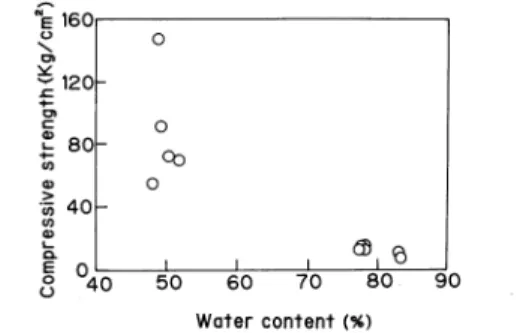
Figure 6 shows the relationship between com
pressive strength and water content of MAC (F) blocks after heating to 873K. The 873K MAC (F) block from 80% water content has about 3ml/g pore volume and just 10 to 15kg/cm2 compressive strength. A large scattering is seen among the blocks from water content of about 50%, which must be attributable cracks. The maximum strength was about 150kg/cm2.
3.6 Densities and porosities
Some properties of MAC (F) samples from 68% of water content, after heating to 873K, are listed in Table 3. Bulk density was just 0.31g/ml against 2g/ml of true density. Both open and total porosities of this sample, however, were almost equal, which shows that this material consists of connected open pores.
Fig. 6. Relation between compressive strength and water content for MAC(F), after heating to 873K.
Table 3. Properties of the porous material MAC (F) after heating to 873K*.
*prepared from MAC(F) with 68% of water content.
4. Discussion
As mentioned above, it is possible to control the porous structure of MAC blocks by freeze drying. In this work, there were no pore size distributions in MAC blocks having less than 50% water content, but both pore volume and pore size must have decreased considerably in view of the results in Fig. 3. However, maximum pore volume and maximum average pore size observed here were 3ml/g and 220nm, respec tively. The merit of the freeze-drying technique used here is that narrow pore size distribution and the characteristic card-house structure were clear ly retained in spite of large change of pore volume and pore size. As for increasing of pore volume, however, pore size also increased. The remaining problem to be solved is how to control pore size and pore volume independently.
The porous material derived from Mont/orga nic complex has certain properties as mentioned in the introduction. In this work, in addition, it was revealed that this material consists of the connected open pores. Such a porous structure is highly favorable for certain practical applica tions. The compressive strength was also mea sured first in this work. About 10kg/cm2 of a block with such a large pore volume is too low for practical use. This material must be reinforced for practical use, but with decreasing pore volume, the compressive strength increased con siderably. An additional property is the high thermostability as can be seen from Fig. 4. This material is stable up to 1073K under nitrogen. According to the earlier paper,2) thermostability under an oxidizing atmosphere drops by about 200K.
The next point to be discussed here is the effect of raw Mont on the derived MAC porous struc ture. When MAC (F) and MAC (G) from equal
1168 Yogyo-Kyokai-Shi 95 [12] 1987 A. OYA et al. 24
amount of water content are compared, the former resulted in a larger pore volume and pore size rather than the latter as shown in Fig. 3. As described above, the particles of Mont (G) are largerr than those of MAC (F). Therefore, MAC (G) constitutes a cruder card-house structure, resulting in a porous structure with larger pore volume and pore size. If the particle size of Mont can be controlled, e.g., by the sedimentation or centrifuging technique, then, the MAC porous structure can be also controlled. By combining control in addition, of the particle size of Mont and water content before freeze-drying, pore volume and pore size will be controlled indepen
dently.
Acknowledgement The authors wish to thank Mr. H. Hanaoka for carbon content measurement, and also to Kunimine Ind. Co., for supplying raw montmorillonite.
References
1) A. Oya, H. Yasuda, A. Imura and S. Otani, J. Mater, Sci., 21, 2908-14 (1986).
2) A. Oya, H. Yasuda, S. Otani and Y. Yamada, J. Mater. Sci., 21, 4481-84 (1986).
3) A. Oya, Y. Omata and S. Otani, J. Mater, Sci., 20, 255-60 (1985).
4) A. Oya, Y. Omata and S. Otani, Am. Ceram. Soc. Bull., 65, 776-79 (1986).