総 説
ジストニアの病態と治療
目崎 高広
* 要旨:ジストニアは,中枢性の持続的な筋緊張を特徴とする運動異常症の一症候群である.その臨床特徴として, 定型性,動作特異性,感覚トリック,オーバーフロー現象,早朝効果,フリップフロップ現象,共収縮,陰性ジス トニア(仮称)などがあり,これらを参考に診断する.通常,局所性ジストニアの治療はボツリヌス毒素の筋肉内 注射が第一選択である.一次性ジストニアで,より広範な身体部位を侵すばあいには,定位脳手術を考慮する.二 次性ジストニアにおける定位脳手術の成績は一般に劣るが,遅発性ジストニアでは効果が高い.内服治療は,有効 率が通常低く,一方,副作用の頻度は高いため,特殊な病型以外では補助療法としての位置づけに留まる. (臨床神経 2011;51:465-470) Key words:ジストニア,陰性ジストニア,腰曲がり,診断,治療 ジストニア(dystonia)という用語は,Oppenheim によっ て 1911 年に提唱された.「筋緊張の亢進と低下との併存」との み説明されたこの用語は,その後さまざまな曲折を経て,現在 の定義にいたる.すなわち,「持続的な筋収縮を呈する症候群 であり,しばしば捻転性・反復性の運動,または異常な姿勢を き た す(A syndrome of sustained muscle contractions,fre-quently causing twisting and repetitive movements,or ab-normal postures)」で あ る(Scientific Advisory Board of the Dystonia Medical Research Foundation による)1).つまり,ジストニアは疾患名ではなく,運動異常症の一症候名である.わ が国における定義もこれに準じるが,やや詳細である2).ここ
ではジストニアを「中枢神経系の障害に起因し,骨格筋の持続 の や や 長 い 収 縮 で 生 じ る 症 候」と し,ジ ス ト ニ ア 姿 勢 (dystonic posture)とジストニア運動(dystonic movement)
とを区別した.また,特定の随意運動時に出現,あるいはいち じるしく増強するばあいを動作性ジストニア(action dysto-nia)とした.なお,筋緊張低下を要件とせず,亢進のみを強 調するようになったのは Herz の論文(1944 年)3)以降と思わ れる.これに起因する問題点については後に論じる(1. 8)陰 性ジストニア参照). 本稿では前半でジストニアの病態,後半でその治療につい て述べる.ジストニアの病態については,病理学や神経生理学 などの立場からその本質に迫る研究も進みつつあるが,本稿 では主に症候学の立場から解説したい. 1.ジストニアの病態 ジストニアは,罹患部位によって局所性・分節性・全身 性・多巣性・片側性に分類される.随意運動をおこなう骨格 筋にはジストニアが生じうると考えてよい.一般に発症年齢 が低いほど広汎に罹患する傾向がある.一方,成人発症のばあ いは大半が局所性である.原因の有無によって一次性(原発 性)ジストニア(primary dystonia)と二次性(続発性)ジス トニア(secondary dystonia)とに大別される4).DYT1 に始
まる番号付きのジストニアは病型により一次性または二次性 とされる.なお,以前にジストニア・プラス症候群(dystonia-plus syndrome)または遺伝性神経変性疾患によるジストニア (heredodegenerative dystonia)とされた病態は5),二次性ジス トニアに分類される4)6).ジストニア・プラス症候群は,主要 症候としてジストニアに Parkinson 症候群またはミオクロー ヌスをともなう病態,遺伝性神経変性疾患によるジストニア は,(遺伝性)神経変性疾患の中核症状としてジストニアを呈 する病態を意味していた. ジストニア以外の機序で類似の症候を呈するばあいを,偽 性ジストニア(pseudodystonia)という.心因性ジストニア (psychogenic dystonia)は,議論はあるものの7)8)多くが転換 反応(conversion reaction)であると考えられ,偽性ジストニ アにふくまれる.また,固定ジストニア(fixed dystonia)9)を 真のジストニアと考えるか否かについては議論がある10). Schrag らの原著9)で 37% が心因性ジストニア,29% が身体 化障害(somatization disorder),24% が両者の診断基準を満 たしたこと,神経生理検査所見が通常のジストニアとことな ること11)12)から,筆者はこれを,現時点ではジストニアとよぶ べきでないと考える. ジストニアの診断は,典型例では容易である.次の特徴が診 断の参考になる. 1)定型性(stereotypy) ジストニアの異常姿勢または運動パターンが,程度の差は * Corresponding author: 原白鳳病院〔〒514―1251 三重県津市 原町 5630〕 原白鳳病院神経内科 (受付日:2011 年 3 月 27 日)
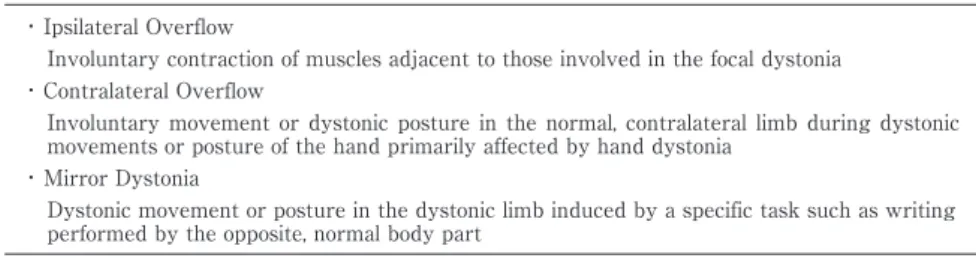
Table 1 Different forms of overflow phenomenon in hand dystonia17) 18).
・ Ipsilateral Overflow
Involuntary contraction of muscles adjacent to those involved in the focal dystonia ・ Contralateral Overflow
Involuntary movement or dystonic posture in the normal, contralateral limb during dystonic movements or posture of the hand primarily affected by hand dystonia
・ Mirror Dystonia
Dystonic movement or posture in the dystonic limb induced by a specific task such as writing performed by the opposite, normal body part
あっても患者毎に一定であり,変転しない,という臨床特徴で ある.重症度の変動はあっても,たとえば攣縮性斜頸の頭位 へ ん い 偏倚が,ときによって左回旋になったり右回旋になったりす ることはない.短期間で姿勢が変動するばあいには,心因性ジ ストニアをうたがう.ただし,患者が複数の異常姿勢を同時に もつことはある.つまり,ある姿勢を矯正すると,第二の異常 姿勢が出現するばあいである. 定型性はジストニアの基本的な特徴であるが,例外もある. 同一の偏倚であっても,これを構成する筋緊張パターンはし ばしばしだいに変化する13).また,長期的には偏倚自体も変化 しうる14). 2)動作特異性(task specificity) 特定の動作や環境によってジストニアの症候が出現した り,増悪したりする現象である.書痙や音楽家のジストニア (musician s dystonia)がその典型である.すなわち,書字あ るいは楽器演奏時にのみ症状が出現し,同程度の習熟を要す る動作であっても,他の動作は正常に遂行できる.一般に,初 期には動作特異性が保たれていても,しだいに他の動作でも ジストニアが出現するようになることが多い. 逆に,症状が軽くなる例として,攣縮性発声障害で会話が困 難な患者が,歌を正常に歌えることがある.また,書痙の患者 が,毛筆であれば正常に書けることがある. 動作特異性の機序として,特定の動作に対する運動プログ ラム(motor subroutine)だけが侵されるとの考えがある15). ただし,motor subroutine の存在が証明されているわけでは ない.
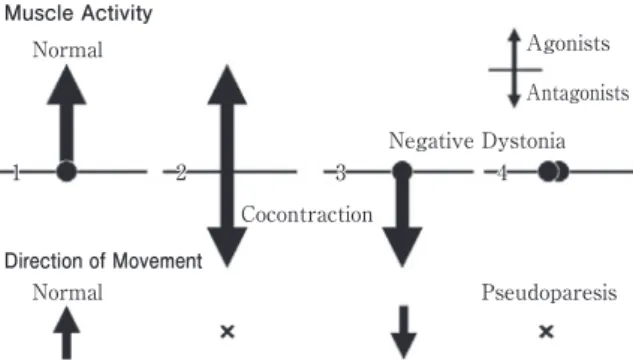
3)感覚トリック(sensory trick;geste antagoniste) 特定の感覚刺激によってジストニアが軽快(または増悪16)) するとき,その行為または現象を指す.攣縮性斜頸において, 手で頬を触れると症状が改善するばあいなどである.これを 利用して頭位を正常に保ちながら歩行している例をよく経験 する. 感覚トリックが成立する刺激部位や方法は患者によって 様々である.また,経過とともにみられなくなったり,成立す る部位が変化したりする.このほか,実際の感覚刺激がなくて も,特定の部位へ手を近づけるだけで成立する例,他者の手で 触れたばあいにも成立する例,他者の手を近づけるだけで成 立する例,特定の部位を触れる想像をするだけで成立する例 などがある. 感覚トリックの機序は,感覚入力による運動感覚連関(sen-sorimotor integration)への介入と考えられるが,詳細は不明 である. 4)オーバーフロー現象(overflow phenomenon) ある動作の際に,その動作に不必要な筋が不随意に収縮し てジストニアを呈する現象である. 健常な部位の運動により他部位にジストニアを生じるばあ いや,ジストニアを呈する部位の運動により本来不要な部位 まで筋収縮をきたすばあいなど,多様な状況が想定される.た とえば手のジストニアでは,Table 1 のような表現型が想定 される17)18). 5)早朝効果(morning benefit) 起床時に症状が軽いという現象である.数十秒から数時間 と,持続時間には個人差が大きい.昼寝をしても改善しないこ とが多いため,睡眠の影響とはいえない.わが国の専門誌でジ ストニアが最初に報告されたのは 1913 年と思われるが19),こ の例では起床直後のみ独力で手洗いへ行くことができた.自 室に戻ってからは終日臥床状態であった.これは顕著な例で ある. 一般に,早朝効果は軽症例に多くみとめられ,重症化すると 消失する傾向にある.軽快するとふたたびみられるようにな ることが多い. 6)フリップフロップ現象(flip-flop phenomenon) ジストニアの症候が,何らかのきっかけで(あるいは一見誘 因なく)急に増悪あるいは軽快する現象である.機械のフリッ プフロップ(2 つの可能な状態のうちどちらか一方をとる回 路)に擬した用語である. 自然経過によるばあいのほか,少量のボツリヌス毒素を一 度投与しただけで完全寛解する例もこの現象で説明できる が,心因の関与と区別することはしばしば難しい. 7)共収縮(cocontraction) ジストニアの筋緊張異常の本質は共収縮であると考えられ ている.互いに拮抗関係にある筋が同時に収縮する現象であ る(Fig. 1).運動を試みる間一貫して反対方向への収縮をみと める例,運動初期にのみ抵抗する例,運動の途中から抵抗が始 まる例,運動の間不規則に拮抗筋の抵抗が生じる例に分けら れる.最後の例では拮抗筋の筋緊張変動によって,不随意運動 が生じる. 8)陰性ジストニア(negative dystonia) 意図する運動に必要な筋が十分に駆動されない現象を,筆 者は陰性ジストニアとよんでいる20).運動に必要な筋が終始
Fig. 1 Cocontraction and “negative dystonia”.
When a group of muscles are working, their antagonists stay under reciprocal inhibition in the normal setting (1). When antagonists involuntarily contract with the agonists (cocontraction) the task achievement will be hampered (2). When agonists fail to be activated (“negative dystonia”), the movement goes to the opposite direction when their antagonists co-contract (3), or no movement occurs (pseudo-paresis) when antagonists are also silent (4).
Muscle Activity Normal Cocontraction × × Negative Dystonia Pseudoparesis Agonists Antagonists 1 2 3 4 Direction of Movement Normal
Fig. 2 No cocontraction of the masseter muscles despite
difficulty of jaw opening.
Surface electromyography depicts the lack of cocontrac-tion of the non-paretic (as shown in the upper column) masseter muscles during voluntary jaw opening either without (middle column) or with (bottom column) sensory trick; touching the patient s chin greatly eased jaw open-ing, from only several millimeters to about 3cm. Cocon-traction of the medial pterygoid muscles remains to be excluded. L: left, R: right.
L Jaw Clenching
Jaw Opening without Trick
Jaw Opening with Trick R L R L R 無活動である例,運動初期に収縮の開始が遅れる例,運動の途 中から収縮しなくなる例,運動の間安定した収縮が維持でき ない例に分けられる.最後の例では,拮抗筋に収縮があるばあ い,不随意運動を生じる.運動に不要な筋が意図せずに駆動さ れる通常の症状とは表裏の関係にある(Fig. 1).しかし,その 存在については未だコンセンサスがえられていない.存在す るにしても,これが通常のジストニアと同じ機序で生じてい るとの証拠はない.Herz3)以降,ジストニアは専ら筋緊張亢進 を特徴とする症候と考えられているので,この現象がジスト ニアであるなら,ジストニアの再定義が必要である20). 攣縮性斜頸の頭部運動制限の一部,麻痺型書痙のほか,開眼 (開瞼)失行,閉眼(閉瞼)失行,また dropped head(いわゆ る「首下がり」21))や Pisa 症候群および camptocormia の一部 を,陰性ジストニアで説明できる.口・下額ジストニアにも, この現象で説明できる例があると思われる(Fig. 2). 本現象に関連して,近年注目されている camptocormia の 解釈について私見を述べる. Camptocormia の原因は,傍脊柱筋の筋力低下と体幹支持 筋の筋緊張異常とに大別される.前者はミオパチー,神経筋接 合部疾患,末梢神経障害,運動ニューロン脱落などで生じる. 一方,後者は体幹を前屈させる筋の強剛やジストニアとして 説明される.しかし実際には,腹筋の過緊張を示唆する愁訴を えることはまれであり,診察で確認できるばあいも少ない.腸 腰筋の緊張亢進でも股関節屈曲により体幹前屈を呈しうる が,通常,画像所見で同筋の肥大はみとめられない.このよう なばあい,筆者はこれを,傍脊柱筋の駆動不全(陰性ジストニ ア)として説明したいと考えた.抗重力筋である傍脊柱筋は, 上半身が前傾しようとすると収縮して姿勢を維持する.これ が生じないばあいに体幹前屈が生じるとする考えである.麻 痺ではないので,初期には意識すると姿勢を立て直せるばあ いがある.しかし,体幹前屈が長期間におよぶと,傍脊柱筋の 伸展損傷が生じて麻痺・萎縮を来たし,矯正不能に陥る. 2.ジストニアの治療 1)内服治療 わが国でジストニアを適応症とする内服薬はないが,もっ とも多くおこなわれている治療法である22).一般に内服治療 は特殊なばあいを除き,有効率が低く,一時的に有効でものち に増量を要したり効果が減弱したりするばあいが多いこと, 副作用が問題になりうることから,ジストニアの治療として は補助的な役割に留まると考える.しかし,ドパ反応性ジスト ニアにおける L-DOPA のように,確実で持続的な効果をえら れるばあいもある.若年発症のジストニアでは,最初に L-DOPA を試みるよう推奨する意見がある23).また,ドパミン拮 抗薬などの服用開始から 24 時間以内に生じることが多いと される急性ジストニア反応(acute dystonic reaction)では, 原因薬の中止および抗コリン薬の投与が著効することが多 い. Balash らのメタ解析によると,一次性ジストニアにおいて 有効性が証明されているのは,若年(30 歳未満)の分節性・ 全身性ジストニアに対する高用量のトリヘキシフェニジルの みである24).このほか,メキシレチンの大量投与が,眼瞼攣 縮・攣縮性斜頸・全身性ジストニアに対して試みられ,高い 有効率を示したことは注目される25)∼27). 2)ボツリヌス治療 局所性ジストニアでは第一選択である.わが国の適応症の うち,ジストニアは眼瞼攣縮と攣縮性斜頸のみであるが,海外 では公的な適応承認の有無にかかわらず,口・下顎ジストニ
ア,喉頭ジストニア(攣縮性発声障害をふくむ),上肢ジスト ニア(書痙をふくむ),下肢ジストニアなどにももちいられて いる. より広範囲のジストニアにおいても,特定部位の筋緊張を 緩和する目的でボツリヌス治療をおこなうことがある.たと えば,全身性ジストニアの患者で頸椎症の手術をおこなうば あい,攣縮性斜頸に準じた治療をおこない,術後の安静を確保 する.
3)バクロフェン髄注療法(intrathecal baclofen therapy) わが国では脳脊髄疾患に由来する重度の痙性麻痺が適応症 であるが,全身性ジストニアも対象になりうる.脳室内投与の 報告もある28). 4)外科治療 全身性ジストニアなど,罹患範囲の広いジストニアは定位 脳手術の適応である.破壊術よりも深部脳刺激術(deep brain stimulation)の方が好まれる傾向にあるが,あえて破壊術を選 択する場面もあると思われる29)30).一次性ジストニア,および 薬物の副作用として生じる遅発性ジストニア(tardive dysto-nia)で効果が高い.その他の二次性ジストニアでは一般に効 果が劣るが,有効例も少なくない. 局所性ジストニアでも,たとえば書痙では視床手術の高い 効果が報告されており31)32),ボツリヌス治療の適応症でない 病型では,最初から手術を勧めることがある. また眼瞼攣縮では,ボツリヌス治療の効果不良例を中心に 眼輪筋切除術などが,長期罹患例で上眼瞼の下垂を呈するば あいには眼瞼の部分切除や吊り上げ術などがおこなわれる. 攣縮性斜頸では定位脳手術のほか,選択的末梢神経遮断術も 効果が高い33). 5)鍼治療 ジストニアに対する鍼治療では,血流改善や鎮痛のみでな く,筋緊張の調節を目的とする34).筋緊張の抑制・促通ともに 可能であるため,筆者が提唱する陰性ジストニアにも対処で きる. 6)理学療法 ジストニアに対するリハビリテーションの方法および効果 については一定した見解がない.たとえば書痙では,ギプス包 帯で完全に安静を保つ方法から積極的に運動させる方法まで 多様な報告がある.装具などの補助具についても,19 世紀か らさまざまな試みが続いている.ジストニアでは時間的・空 間的感覚弁別能が低下しているので,近年では書痙において, 手指の運動・感覚の弁別能を高める訓 練 が 提 唱 さ れ て い る35)36). 一般に,罹患部位の筋力訓練はジストニアを悪化させるこ とが多い.一方,可動域制限をみとめるばあい,明らかな共収 縮がなければ可動域訓練が推奨される.その際,攣縮性斜頸で 頭部の回旋困難がある例では,回旋したい方向へ上肢を外転 し,その指先を見つめるようにすることで回旋が容易になる 例がある(緊張性頸反射の応用).また,歩行時などに感覚ト リックが有効な例では,積極的にこれをもちいる.力づくでは なく,負担の少ない方法で正常に近づけるのが原則である. なお攣縮性斜頸の慢性例では,頭位偏倚があっても正常と 誤認していることがある.そのばあい,正常頭位を保つ練習を おこなう. 7)心理療法 大脳基底核と 桃体との間には密な線維連絡がある.大脳 基底核機能と関連の深いジストニアは,情動の影響を受けや すく,心身のストレスによって症状の悪化をみとめることが 少なくない.そのため遅発性ジストニアにおいても,原因薬が 精神症状の管理に必須であるばあいにはあえて継続し,ジス トニアには別途対処する方が,治療が容易であることが多い. ボツリヌス治療の効果も,不安定な精神状態では不良である ことが多く,また,治療経過中に大きなストレスに曝されると 効果が急に減弱することがある37). 情動の影響が顕著な例では,心理療法を考慮する.しかし適 応判定や方法についての知見は不十分であり,むしろ心因の 関与が少ない例で不必要な心理療法がおこなわれている点が 問題である.近年では認知行動療法の効果が期待されてい る38). 文 献
1)Fahn S, Marsden CD, Calne DB. Classification and investi-gation of dystonia. In : Marsden CD, Fahn S, editors. Movement Disorders 2. London: Butterworths; 1987. p. 332-358.
2)長谷川一子. ジストニアの定義―コンセンサスクライテリ アとジストニアの診断指針について―. 神経内科 2007;67: 6-13.
3)Herz E. Dystonia. I. Historical review; analysis of dystonic symptoms and physiologic mechanisms involved. Arch Neurol Psychitr 1944;51:305-318.
4)目崎高広, 梶 龍兒. ジストニアとボツリヌス治療 改訂 第 2 版. 東京: 診断と治療社; 2005. p. 103.
5)Fahn S, Bressman SB, Marsden CD. Classification of dystonia. Adv Neurol 1998;78:1-10.
6)Bressman SB. Dystonia genotypes, phenotypes, and clas-sification. Adv Neurol 2003;94:101-107.
7)Quartarone A, Rizzo V, Terranova C, et al. Abnormal sensorimotor plasticity in organic but not in psychogenic dystonia. Brain 2009;132:2871-2877.
8)Munts AG, Koehler PJ. How psychogenic is dystonia ? Views from past to present. Brain 2010;133:1552-1564. 9)Schrag A, Trimble M, Quinn N, et al. The syndrome of
fixed dystonia: an evaluation of 103 patients. Brain 2004; 127:2360-2372.
10)Avanzino L, Martino D, van de Warrenburg BP, et al. Cortical excitability is abnormal in patients with the fixed dystonia syndrome. Mov Disord 2008;23:646-652. 11)van Rijn MA, van Hilten JJ, van Dijk JG. Spatiotemporal
integration of sensory stimuli in complex regional pain syndrome and dystonia. J Neural Transm
2009;116:559-565.
12)Katschnig P, Edwards MJ, Schwingenschuh P, et al. Men-tal rotation of body parts and sensory temporal discrimi-nation in fixed dystonia. Mov Disord 2010;25:1061-1067. 13)Münchau A, Filipovic SR, Oester-Barkey A, et al.
Sponta-neously changing muscular activation pattern in patients with cervical dystonia. Mov Disord 2001;16:1091-1097. 14)Maia FM, Kanashiro AK, Chien HF, et al. Clinical changes
of cervical dystonia pattern in long-term botulinum toxin treated patients. Parkinsonism Relat Disord 2010;16:8-11. 15)Kaji R, Shibasaki H, Kimura J. Writer s cramp: a disorder
of motor subroutine? Ann Neurol 1995;38:837-838. 16)Asmus F, von Coelln R, Boertlein A, et al. Reverse
sen-sory geste in cervical dystonia. Mov Disord 2009;24:297-300.
17)Sitburana O, Jankovic J. Focal hand dystonia, mirror dystonia and motor overflow. J Neurol Sci 2008;266:31-33. 18)Sitburana O, Wu LJ, Sheffield JK, et al. Motor overflow
and mirror dystonia. Parkinsonism Relat Disord 2009;15: 758-761.
19)目崎高広. 井上善次郎,林 晁「ちっくノ一症カ」(1913)―
家族性全身性ジストニーの本邦第 1 例? 神経内科 2002; 57:443-452.
20)Mezaki T. Dystonia redefined as central non-paretic loss of control of muscle action: A concept including inability to activate muscles required for a specific movement, or
negative dystonia . Med Hypotheses 2007;69:1309-1312. 21)目崎高広. 中村桂子ほか「多系統萎縮症における首下が
りの頸部筋超音波所見」に対する意見. 神経内科 2009;71: 216.
22)目崎高広, 林 明人, 中瀬浩史ら. わが国におけるジスト ニー治療の現況. 臨床神経 2005;45:634-642.
23)Jankovic J. Treatment of hyperkinetic movement disor-ders. Lancet Neurol 2009;8:844-856.
24)Balash Y, Giladi N. Efficacy of pharmacological treatment of dystonia : evidence-based review including meta-analysis of the effect of botulinum toxin and other cure options. Eur J Neurol 2004;11:361-370.
25)Ohara S, Hayashi R, Momoi H, et al. Mexiletine in the treatment of spasmodic torticollis. Mov Disord 1998;13:
934-940.
26)Ohara S, Tsuyuzaki J, Hayashi R. Mexiletine in the treat-ment of blepharospasm: experience with the first three patients. Mov Disord 1999;14:173-175.
27)Lucetti C, Nuti A, Gambaccini G, et al. Mexiletine in the treatment of torticollis and generalized dystonia. Clin Neuropharmacol 2000;23:186-189.
28)Albright AL, Ferson SS. Intraventricular baclofen for dystonia: techniques and outcomes. Clinical article. J Neu-rosurg Pediatr 2009;3:11-14.
29)Yap L, Kouyialis A, Varma TR. Stereotactic neurosur-gery for disabling tremor in multiple sclerosis : tha-lamotomy or deep brain stimulation ? Br J Neurosurg 2007;21:349-354.
30)Hooper AK, Okun MS, Foote KD, et al. Clinical cases where lesion therapy was chosen over deep brain stimu-lation. Stereotact Funct Neurosurg 2008;86:147-152. 31)Goto S, Tsuiki H, Soyama N, et al. Stereotactic selective
Vo-complex thalamotomy in a patient with dystonic writer s cramp. Neurology 1997;49:1173-1174.
32)Taira T, Hori T. Stereotaxic ventrooralis thalamotomy for task-specific focal hand dystonia ( writer s cramp ) . Stereotact Funct Neurosurg 2003;80:88-91.
33)Taira T, Hori T. A novel denervation procedure for idi-opathic cervical dystonia. Stereotact Funct Neurosurg 2003;80:92-95.
34)鈴木俊明, 谷万喜子, 鍋田理恵ら. 攣縮性斜頸の鍼治療. 神 経内科 2000;53:20-27.
35)Byl NN. Focal hand dystonia may result from aberrant neuroplasticity. Adv Neurol 2004;94:19-28.
36)Zeuner KE, Molloy FM. Abnormal reorganization in focal hand dystonia--sensory and motor training programs to retrain cortical function. NeuroRehabilitation 2008;23:43-53.
37)Riley DE. Sudden loss of benefit from botulinum toxin for spasmodic torticollis. Mov Disord 2002;17:S304(abstr). 38)LaFrance WC Jr, Friedman JH. Cognitive behavioral
study for psychogenic movement disorder. Mov Disord 2009;24:1856-1857.
Abstract
Clinical characteristics and treatment of dystonia
Takahiro Mezaki, M.D., Ph.D.
Department of Neurology, Sakakibara Hakuho Hospital
Dystonia is defined as a syndrome of sustained muscle contractions, frequently causing twisting and repeti-tive movements, or abnormal postures. Its diagnosis is based on clinical characteristics. In dystonia, the pattern of abnormal posture or movement tends to be constant during the short term even if its severity fluctuates. This stereotypy often helps differentiate dystonia from psychogenic reaction. Dystonia may appear only during some specific task (task specificity) especially in its early phase, although it often becomes obscure during the long clini-cal course, resulting in persistent dystonic posture. Sensory trick or geste antagoniste means the change of sever-ity triggered by some sensory input. Overflow phenomenon is the activation of muscles unnecessary to a task, hampering purposeful movement. Symptoms tend to be milder in the morning, with large individual variation of its duration (morning benefit). Symptoms of dystonia may abruptly appear or disappear (flip-flop phenomenon).
Cocontraction, believed as an essential feature of dystonia, reflects a loss of reciprocal inhibition of muscle ac-tivities, causing involuntary simultaneous contractions of agonists and antagonists. Negative dystonia, still an un-accepted feature of dystonia, is defined as non-paretic loss of central driving of muscle activities necessary to a task. Apraxia of lid opening!closure, paretic form of hand dystonia, dropped head syndrome, camptocormia, Pisa syndrome, cervical dystonia with limited range of head movement, or mandibular dystonia without cocontractions of masticatory muscles, can be explained with this concept at least in a subset of cases.
Treatment of dystonia includes medication, botulinum toxin injection, intrathecal baclofen, surgical interven-tion, acupuncture and other alternative therapies, rehabilitainterven-tion, and psychotherapy. Oral medication is usually an adjunct to more potent therapeutic options except for some specific indications like dopa-responsive dystonia. Botulinum toxin is usually the treatment of choice for focal dystonia. Deep brain stimulation can be considered for both focal and non-focal phenotypes of dystonia.
(Clin Neurol 2011;51:465-470)