福 留 奈 美
大学共通教育科目非常勤講師高頭 ルーシー
日英翻訳家大 塚 み さ
日本語コミュニケーション学科准教授Nami Fukutome
Part-time Lecturer, Common Education, Jissen Women s University
Lucy Takato
Japanese-English Translator
Misa Otsuka
Associate Professor, Department of Japanese Communication
Summary:
The author has previously reported on research into soy sauces and salty fermented seasonings around Asia, including Japan, Korea, Thailand, Vietnam, and the Philippines. Common nouns such as product names initially captured in local languages were romanized and then translated phonetically into katakana for the benefi t of readers. This report highlights the various problems encountered in that circuitous process, including a lack of romanization standards, limitations of katakana in accurately expressing pronunciation differences, and a disregard for nuanced diff erences in ingredients or end-products. This report proposes a number of solutions, including adoption of the IPA, and makes clear that the participation of linguists will be critical for eff ective comparative food culture research going forward.
Challenges of Multilingual Notation in
Comparative Food Culture Research
―The case of translating soy sauce across Japanese, English, Korean,
Thai and Vietnamese―
比較食文化研究における多言語翻訳の課題
抄録: 著者は先行研究において日本、韓国、タイ、ベトナム、フィリピンを含むアジアのソイソース および塩味系発酵調味料に関する報告を行った。原語で収集された製品名等の一般名詞は、まず ローマ字で表記し、読者への便宜を図って原語の発音に近いカタカナ表記を添えた。本報告では、 一連の翻訳プロセスにおける課題として原語のローマ字表記規準の有無、原語の発音表記に正確 に対応できないカタカナ表記の限界、そして食品の原料と完成した製品の微妙な相違に言語表記 が対応できないことなどに言及し、IPA の使用を含めた解決策を提案するとともに、比較食文 化研究においては言語学者の参画が効果的かつ必要要件であると結論づけた。
Key Words:Comparative food culture research, IPA (International Phonetic Alphabet), Japanese, Korean, Thai, Vietnamese, multilingual
キーワード:比較食文化研究、IPA(国際発音記号)、日本語、韓国語、タイ語、ベトナム語、 多言語
INTRODUCTION
In 2013, traditional dietary cultures of the Japanese was designated intangible cultural heritage by UNESCO. Ever since, there has been growing interest in Japanese cuisine, both in and outside Japan. It is important to be aware of the similarities and diff erences with the food cultures of other Asian countries when talking about Japanese cuisine. There are many common ingredients as well as similar dishes and styles of eating between Japan and its neighbors. Where do they overlap? How do they diff er? To answer these questions, we need to clearly document the traditional food culture of each country by examining specifi c examples. Focusing on ingredients and seasonings that fall under a common name, I, the fi rst author, engage in ongoing research studies compiling detailed comparative food culture information in an eff ort to clarify cross-cultural understanding.
The soy sauces of various Asian countries are one such example. Japanese , Korean , in Thailand and Vietnam s ướ tương all differ in terms of raw materials, production methods and usage, and yet they are all translated as soy sauce in English. This gives the impression that they are one and the same. Sometimes these products are referred to as Japanese soy sauce or Korean soy sauce, for example, but I believe it would be much clearer if the original names shoyu and were maintained as common nouns with alphabetical notation. In the same way that both English cheddar and Swiss Emmental are both cheeses and referred to as such generally, people around the world are accustomed to seeing the distinct cheese variety names: recipes from each country specifically call for
cheddar cheese in a sandwich but Emmental in a cheese fondue. Researching diff erent usages for the three main types of soy sauce in Japan ‒ common soy sauce, light-colored soy sauce and tamari soy sauce ‒ sparked my interest in Korean varieties and uses, which then led to a survey examining soy sauces around Asia. The expertise and findings were subsequently recorded in research reports1, 2).
However, writing those reports presented a number of difficulties. In the course of the research, information was shared across Japanese and English, as well as English and each local language. The resulting reports were only to be published in Japanese and English, but even that presented challenges. The goal of the research presented in this paper, therefore, was to compile details on the issues faced when translating across multiple languages in the fi eld of food, with regards to cuisine, ingredients, and recipes.
Studies on contrastive linguistics between Japanese and other languages have been compiled by Ishiwata and Takada3)
, Hisano4)
, and Kuroda5)
; multilingual contrastive linguistic research centered on Asian languages includes those by Ogoshi6)
, Chung7)
, and Horie and Pardeshi8). Many suggestions were also gleaned from two collections of presented papers9,10) from a 2010 symposium on contrastive linguistics between Japanese and other languages. This shows that such topics are often the subject of discussion and research in the fi eld of linguistics. However, the research presented in this paper differs in that it was compiled primarily from the perspective of the author whose background is in natural science research in collaboration with a linguist who specializes in lexicology and a bilingual Japanese-English translator.
Cultural research frequently involves international comparisons, so it must be assumed that others face the same kinds of diffi culties translating across multiple languages that we have in our food culture studies. Exactly what issues are encountered in linguistic translations for information sharing in cross-cultural comparisons? Some of the answers to those questions can be found in the results of this research.
METHODS
We identifi ed examples of translation-related issues encountered when writing reports on Asian soy sauces1, 2). Terminology was typically translated from source language into English, then English into Japanese, occasionally requiring comparative analysis of both the source and Japanese with respect to words of foreign origin. Particularly in the case of proper nouns like company names or the names of specifi c dishes, consulting an individual who could provide the phonetic notation directly from the original language into Japanese proved most benefi cial. A food science expert and fellow researcher proofread the English food science data. Cross-language checking of translations was performed as follows: Korean by a professional
translator, Thai by a linguistics expert; and Vietnamese through advice from a Japanese food researcher with extensive fi eld work experience in Vietnam. Japanese-English translation was covered by Lucy Takato, a professional translator and co-researcher on this topic.
RESULTS AND DISCUSSION
1. Issues Encountered in Multilingual Translation
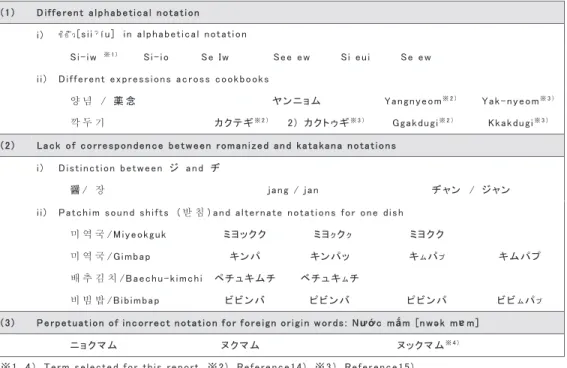
Table 1 provides a summary of the types of multilingual translation issues we encountered in reporting the research fi ndings. They are explained in detail here.
(1) Inconsistent romanization
Romanization of the Japanese language is primarily performed according to either the Hepburn or Kunrei-shiki styles. The same sounds may be romanized diff erently in each, however consistency can be achieved when one system of romanization is selected and adhered to. Thailand and Korea, on the contrary, do not have standardized romanization for their languages which led to diffi culties when reporting on the names of ingredients and products from those countries.
i) ซิอิ๊ว[siiˀíu] Thai soy sauce ‒ romanizing its name
Internet research revealed six alternative romanized forms for the Thai word ซิอิ๊ว. [siiˀíu]. The Thai language contains nine vowel sounds (or 18 when divided into short and long vowel sounds) as well as 21 initial consonant sounds, 12 possible consonant clusters, seven fi nal consonants and as many as 42 consonant letters11)
. This results in a much larger number of vowel and consonant sounds than both English and Japanese, and with the addition of tones in spoken Thai, it is clear why romanization of the language is so diffi cult. The Thai Offi ce of the Royal Society (ราชบัณฑิตยสถาน) fi rst issued standards for romanization in 1939, and an updated version12)
was issued in 1999 to more accurately refl ect pronunciation diff erences. We selected on the advice of a linguistic expert who deals in direct translations from Thai to JapaneseA
.
ii) Diff erent expressions across cookbooks
In Korea, there is no strict standard for romanizing the language. The Korean government translates and publishes cookbooks13,14)
into many languages, including English, French, Spanish, Chinese and Japanese, in an eff ort to popularize Korean cuisine around the world. Much of the terminology used is consistent, however, there are several dish names and ingredients for which we found multiple possible
notations causing us to struggle in our selection.
(2) Lack of correspondence between romanized and katakana notations and katakana notation of foreign words that include sounds not found in Japanese
i) Distinction between ジ and ヂ
The Korean word for sauce 장 [dʒaŋ] is typically romanized as , with katakana notation read as . However, what the Japanese cannot distinguish or convey is that the local Korean pronunciation is actually , the sonant of . The katakana could be displayed with the voicing mark on either チャ or シャ to result in the same sound. Very few Japanese can distinguish the pronunciation of these two versions of ヂャン / ジャン , but anyone can read and write them, thus both are used interchangeably in publications.
ii) Korean patchim sound shifts(받침) and alternate notations for one dish
One characteristic of the Korean language is the use of patchim or sound shifts on a consonant, and when a Korean word contains one, the katakana notation will have two variations. The possible variations in voiced sounds mid-word as well as silencing of voiced sounds at the beginning of words in Korean means there are multiple possible katakana notations for one dish. According to a professional translatorB, for now it seems the best strategy for dealing with katakana notation for Korean is for each media outlet to adhere to its own independently determined standards.
(3) Perpetuation of incorrect notation for foreign origin words
From the 1980s onwards in Japan, much attention has been on ethnic foods, including Vietnamese and its many ingredients. One essential ingredient is nước mắm, which at the time was translated into katakana ニョクマム read as . This became the standard notation in textbooks and media, but in fact the more accurate notation would be ヌックマム , according to a food researcher well-acquainted with local Vietnamese foodsC. It takes time to shift away from established names to new standards, but we should be using notations that represent the original language s sounds as closely as possible, whilst also off ering ease of pronunciation for Japanese people.
2. Key product diff erences not refl ected in English translation
(1) Actual fl avor diff erences not refl ected in soy sauce category names
The best example of this issue is found in soy sauce categories. Japanese
and , Thai and , and Vietnamese
and are all translated as the imprecise thin/light soy sauce and thick/dark soy sauce , respectively, even though the end products are vastly diff erent. Table 2 shows each country s products, the English translation of the product name s meaning, production methods and how they are used in cooking.
(2) Diff erences in national standards for soy sauce classifi cation
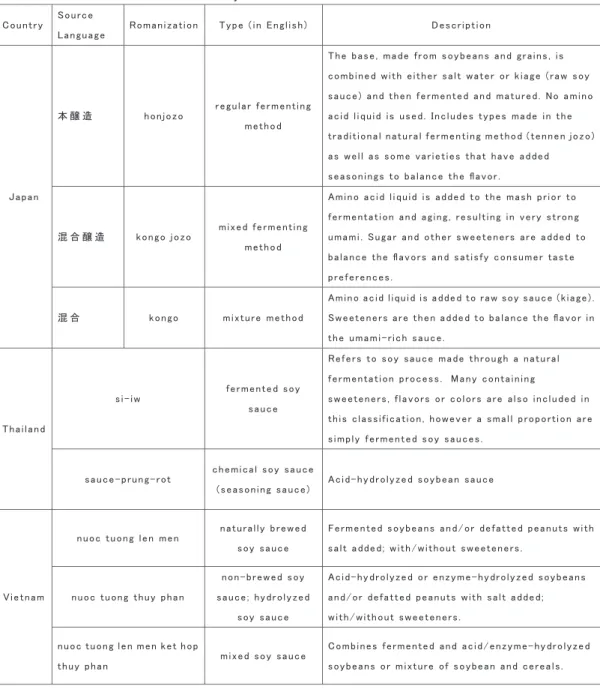
Table 3 shows a summary of the national standards for soy sauce classification in Japan, Thailand and Vietnam. The fi rst major distinction is between the key process of fermentation or hydrolysis. In the former, soy sauce is made by fermenting soybeans, wheat, defatted peanuts or other cereals; the latter utilizes the hydrolyzed liquid from defatted soybeans, peanuts or cereals. Some soy sauces are blends of both methods.
In Thailand, products made with hydrolyzed liquid are referred to as seasoning sauces to clearly distinguish them from traditional soy sauces. In contrast, Vietnam places such varieties under the umbrella classifi cation of soy sauces (nước tương [nwək twəŋ])
Table 1. Su mmary o f Issues Encountered in Multilingual Nota tion
㻔㻔 㻝 㻕 㻌 㻰 㼕 㼒 㼒 㼑 㼞 㼑 㼚 㼠㻌 㼍 㼘 㼜 㼔 㼍 㼎 㼑 㼠㼕 㼏 㼍 㼘 㻌 㼚 㼛 㼠㼍 㼠 㼕 㼛 㼚 㻌 㻌 㻌 㼕 㻕 㻌 ซิอิ๊ว㼇㼟㼕㼕ˀ㽸㼡㼉㻌 㼕㼚㻌㼍㼘㼜㼔㼍㼎㼑㼠㼕㼏㼍㼘㻌㼚㼛㼠㼍㼠㼕㼛㼚㻌 㻌 㻌 㻌 㻿 㼕 㻙 㼕 㼣 㻌䈜 㻝 㻕 㻌 㻌㻌 㻌 㻿 㼕 㻙 㼕 㼛 㻌 㻌 㻌 㻌 㻿 㼑 㻌 㻵㼣 㻌 㻌 㻌 㻌 㻌 㻌 㻌 㻿 㼑 㼑 㻌 㼑 㼣 㻌 㻌 㻌 㻌 㻿 㼕 㻌 㼑 㼡 㼕 㻌 㻌 㻌 㻌 㻿 㼑 㻌 㼑 㼣 㻌 㻌 㻌 㻌 㻌 㼕 㼕 㻕 㻌 㻰 㼕 㼒 㼒 㼑 㼞 㼑 㼚 㼠㻌 㼑 㼤 㼜 㼞 㼑 㼟 㼟 㼕 㼛 㼚 㼟 㻌 㼍 㼏 㼞 㼛 㼟 㼟 㻌 㼏 㼛 㼛 㼗 㼎 㼛 㼛 㼗 㼟 㻌 㻌 㻌 㟧 ⎦㻌㻛㻌⸆ᛕ㻌 㻌䝲䞁䝙䝵䝮㻌㻌㻌㻌㻌 㼅㼍㼚㼓㼚㼥㼑㼛㼙䈜 㻞 䠅㻌 㼅 㼍 㼗 㻙 㼚 㼥 㼑 㼛 㼙䈜 㻟 䠅 㻌 㻌 㻌 㻌 㻌 ₣ ⚦ ₆㻌 䜹䜽䝔䜼䈜 㻞 䠅㻌 㻞 㻕 㻌 䜹 䜽䝖 䜳 䜼䈜 㻟 䠅 㻌 㻌 㻌㻌 㻳 㼓 㼍 㼗 㼐 㼡 㼓 㼕䈜 㻞 䠅㻌 㻌 㻷 㼗 㼍 㼗 㼐 㼡 㼓 㼕䈜 㻟 䠅㻌 㻔 㻞 㻕 㻌 㻸 㼍 㼏 㼗 㻌 㼛 㼒 㻌 㼏 㼛 㼞 㼞 㼑 㼟 㼜 㼛 㼚 㼐 㼑 㼚 㼏 㼑 㻌 㼎 㼑 㼠㼣 㼑 㼑 㼚 㻌 㼞 㼛 㼙 㼍 㼚 㼕 㼦 㼑 㼐 㻌 㼍 㼚 㼐 㻌 㼗 㼍 㼠 㼍 㼗 㼍 㼚 㼍 㻌 㼚 㼛 㼠㼍 㼠 㼕 㼛 㼚 㼟 㻌 㻌 㻌 㻌 㻌 㼕 㻕 㻌 㻰 㼕 㼟 㼠㼕 㼚 㼏 㼠 㼕 㼛 㼚 㻌 㼎 㼑 㼠㼣 㼑 㼑 㼚 㻌 䝆㻌 㼍 㼚 㼐 㻌 䝐 㻌 㻌 㻌 㻌 㻌 㻌 㓺 㻛 㻌 㧻㻌㻌 㼖㼍㼚㼓㻌㻛㻌㼖㼍㼚㻌 䝐䝱䞁㻌㻛㻌䝆䝱䞁㻌 㻌 㻌 㼕 㼕 㻕 㻌 㻼㼍 㼠㼏 㼔 㼕 㼙 㻌 㼟 㼛 㼡 㼚 㼐 㻌 㼟 㼔 㼕 㼒 㼠㼟 㻌 䠄 䂾 䠅 㼍 㼚 㼐 㻌 㼍 㼘 㼠㼑 㼞 㼚 㼍 㼠㼑 㻌 㼚 㼛 㼠㼍 㼠㼕 㼛 㼚 㼟 㻌 㼒 㼛 㼞 㻌 㼛 㼚 㼑 㻌 㼐 㼕 㼟 㼔 㻌 㻌 㻌 ⹎ 㡃 ῃ 㻛 㻹 㼕 㼥 㼑 㼛 㼗 㼓 㼡 㼗 㻌 㻌 㻌 㻌 㻌 㻌 㻌 䝭 䝶 䝑 䜽 䜽 㻌 㻌 䝭 䝶䜽䜽䜽㻌 䝭 䝶 䜽 䜽 㻌 㻌 㻌 㻌 㻌 ⹎ 㡃 ῃ 㻛 㻳 㼕 㼙 㼎 㼍 㼜 㻌 䜻 䞁 䝟 㻌 䜻 䞁 䝟 䝑 㻌 䜻䝮䝟䝥㻌 䜻 䝮 䝟 䝥 㻌 㻌 㻌 ⺆ 㿪 ₖ 䂮 㻛 㻮 㼍 㼑 㼏 㼔 㼡 㻙 㼗 㼕 㼙 㼏 㼔 㼕 㻌 䝨䝏 䝳䜻 䝮 䝏 䝧 䝏 䝳 䜻䝮䝏㻌 㻌㻌 㻌 㻌 㻌 㻌 㻌 ゚ オ 㻛 㻮 㼕 㼎 㼕 㼙 㼎 㼍 㼜 㻌 䝡 䝡 䞁 䝞 㻌 䝢 䝡 䞁 䝞 㻌 䝢 䝡 䞁 䝟 㻌 䝡 䝡䝮䝟䝥㻌 㻔 㻟 㻕 㻌 㻼 㼑 㼞 㼜 㼑 㼠㼡 㼍 㼠 㼕 㼛 㼚 㻌㼛 㼒 㻌㼕 㼚 㼏 㼛 㼞 㼞 㼑 㼏 㼠 㻌㼚 㼛 㼠㼍 㼠 㼕 㼛 㼚 㻌㼒 㼛 㼞 㻌㼒 㼛 㼞 㼑 㼕 㼓 㼚 㻌㼛 㼞 㼕 㼓 㼕 㼚 㻌 㻌 㻌 㻌 㻌㻌 㻌 㻌 㻌 㻌 㻌 㻌 㻌 䈜 㻝 㻘 㻌 㻠 䠅 㻌 㼀 㼑 㼞 㼙 㻌 㼟 㼑 㼘 㼑 㼏 㼠㼑 㼐 㻌 㼒 㼛 㼞 㻌 㼠㼔 㼕 㼟 㻌 㼞 㼑 㼜 㼛 㼞 㼠 㻌 䈜 㻞 㻕 㻌 㻾 㼑 㼒 㼑 㼞 㼑 㼚 㼏 㼑 㻝 㻠 㻕 㻌 䈜 㻟 䠅 㻌 㻾 㼑 㼒 㼑 㼞 㼑 㼚 㼏 㼑 㻝㻡 㻕 㻌 䝮 䝬 䜽 䝑 䝚 㻌 䝮 䝬 䜽 䝚 㻌 䝮 䝬 䜽 䝵 䝙 㻌 㻌 㻌 㻌 㻌 䈜 㻠 㻕 㼣 㼛 㼞 㼐 㼟 㻦 㻌 㻺ướ㼏㻌㼙ắ㼙㻌㼇㼚㼣䀟㼗㻌㼙 㼙㼉㻌 㻌a
in a sub-category called hydrolyzed soy sauce. Japan includes mixed method varieties as soy sauce ( [ʃo:j㷙]) even though the hydrolyzed liquid referred to as amino acid liquid is not a true soy sauce.
(3) Fermentation versus brewing
In terms of regulations surrounding production, confusion is often caused by the use of the words fermenting and brewing as synonyms. As an example, one of the world s largest soy sauce producers, Kikkoman, uses the label naturally brewed on its soy sauces produced through the regular fermenting method. Two key processes take place in the production of soy sauce: fermenting with mold and brewing with yeast. Because these take place at essentially the same time, these terms are often used interchangeably in Japanese. Thus, while the process itself is described as fermenting and/or brewing, the activities of the soy sauce industry as a whole are typically translated as soy sauce brewing and the makers are soy sauce brewers . While at fi rst it may seem more fi tting to use the terminology soy sauce fermenting in English to diff erentiate from brewing,
Table 2. Comparison of Key So y Sauce Category Names in Jap an, Thailand and Vi etnam
㻌 㼀 㼔 㼕 㼚 㻛 㼘 㼕 㼓 㼔 㼠 㻌㼟 㼛 㼥 㻌㼟 㼍 㼡 㼏 㼑 㻹 㼑 㼍 㼚 㼕 㼚 㼓 㻌 㼛 㼒 㻌 㼟 㼛 㼡 㼞 㼏 㼑 㻌 㼘 㼍 㼚 㼓 㼡 㼍 㼓 㼑 㻌 㼚 㼍 㼙 㼑 㻌 㼕 㼚 㻌 㻱㼚 㼓 㼘 㼕 㼟 㼔 㻌 㼀 㼔 㼕 㼏 㼗 㻛 㼐 㼍 㼞 㼗 㻌㼟 㼛 㼥 㻌㼟 㼍 㼡 㼏 㼑 㻹 㼑 㼍 㼚 㼕 㼚 㼓 㻌 㼛 㼒 㻌 㼟 㼛 㼡 㼞 㼏 㼑 㻌 㼘 㼍 㼚 㼓 㼡 㼍 㼓 㼑 㻌 㼚 㼍 㼙 㼑 㻌 㼕 㼚 㻌 㻱㼚 㼓 㼘 㼕 㼟 㼔 㻌 㻶 㻶 㼍 㼜 㼍 㼚 㻌 㼁 㼟 㼡 㼗 㼡 㼏 㼔 㼕 㻌 㼠㼔 㼕 㼚 㻌 㼍 㼚 㼐 㻌 㼘 㼕 㼓 㼔 㼠㻌 㼏 㼛 㼘 㼛 㼞 㻌 㻷㻷 㼛 㼕 㼗 㼡 㼏 㼔 㼕 㻌 㼠 㼔 㼕 㼏 㼗 㻌 㼍 㼚 㼐 㻌 㼐 㼍 㼞 㼗 㻌 㼏 㼛 㼘 㼛 㼞 㻌 㼃 㼕 㼠㼔 㻌 㼟 㼘 㼕 㼓 㼔 㼠㼘 㼥 㻌 㼔 㼕 㼓 㼔 㼑 㼞 㻌 㼟 㼍 㼘 㼠㻌 㼏 㼛 㼚 㼠㼑 㼚 㼠 㻌 㼠㼔 㼍 㼚 㻌 㼗 㼛 㼕 㼗 㼡 㼏 㼔 㼕 㻌 㼢 㼍 㼞 㼕 㼑 㼠㼕 㼑 㼟 㻘 㻌 㼠㼔 㼑 㻌 㼏 㼛 㼘 㼛 㼞 㻌 㼕 㼟 㻌 㼘 㼕 㼓 㼔 㼠㼑 㼞 㻌 㼍 㼚 㼐 㻌 㼠㼔 㼑 㻌 㼍 㼞 㼛 㼙 㼍 㻌 㼕 㼟 㻌 㼙 㼛 㼞 㼑 㻌 㼐 㼑 㼘 㼕 㼏 㼍 㼠 㼑 㻘 㻌 㼙 㼍 㼗 㼕 㼚 㼓 㻌 㼕 㼠㻌 㼠㼔 㼑 㻌 㼏 㼔 㼛 㼟 㼑 㼚 㻌 㼢 㼍 㼞 㼕 㼑 㼠㼥 㻌 㼒 㼛 㼞 㻌 㼟 㼡 㼎 㼠㼘 㼑 㻌 㼟 㼛 㼥 㻌 㼟 㼍 㼡 㼏 㼑 㻌 㼒 㼘 㼍 㼢 㼛 㼞 㼟 㻌 㼕 㼚 㻌 㼏 㼛 㼛 㼗 㼕 㼚 㼓 㻚 㻌 㻱㼟 㼜 㼑 㼏 㼕 㼍 㼘 㼘 㼥 㻌 㼡 㼟 㼑 㼐 㻌 㼕 㼚 㻌 㼠㼔 㼑 㻌 㻷 㼍 㼚 㼟 㼍 㼕 㻌 㼞 㼑 㼓 㼕 㼛 㼚 㻌 㼣 㼔 㼕 㼏 㼔 㻌 㼕 㼚 㼏 㼘 㼡 㼐 㼑 㼟 㻌 㻷 㼥 㼛 㼠㼛 㻘 㻌 㻻 㼟 㼍 㼗 㼍 㻌 㼍 㼚 㼐 㻌 㻷 㼛 㼎 㼑 㻚 㻌 㻌 㻹 㼛 㼟 㼠㻌 㼏 㼛 㼙 㼙 㼛 㼚 㻌 㼢 㼍 㼞 㼕 㼑 㼠㼥 㻌 㼛 㼒 㻌 㼟 㼛 㼥 㻌 㼟 㼍 㼡 㼏 㼑 㻚 㻌 㼃 㼕 㼠㼔 㻌 㼟 㼠㼞 㼛 㼚 㼓 㼑 㼞 㻌 㼒 㼘 㼍 㼢 㼛 㼞 㻌 㼍 㼚 㼐 㻌 㼐 㼍 㼞 㼗 㼑 㼞 㻌 㼏 㼛 㼘 㼛 㼞 㻌 㼠 㼔 㼍 㼚 㻌 㼡 㼟 㼡 㼗 㼡 㼏 㼔 㼕 㻌 㼢 㼍 㼞 㼕 㼑 㼠㼕 㼑 㼟 㻘 㻌 㼗 㼛 㼕 㼗 㼡 㼏 㼔 㼕 㻌 㼕 㼟 㻌 㼍 㼘 㼘 㻙 㼜 㼡 㼞 㼜 㼛 㼟 㼑 㻌 㼎 㼑 㼏 㼍 㼡 㼟 㼑 㻌 㼕 㼠㻌 㼏 㼍 㼚 㻌 㼎 㼑 㻌 㼡 㼟 㼑 㼐 㻌 㼘 㼕 㼎 㼑 㼞 㼍 㼘 㼘 㼥 㻌 㼠 㼛 㻌 㼍 㼏 㼔 㼕 㼑 㼢 㼑 㻌 㼟 㼠㼞 㼛 㼚 㼓 㻌㼟 㼛 㼥 㻌㼟 㼍 㼡 㼏 㼑 㻌㼒 㼘 㼍 㼢 㼛 㼞 㻘 㻌㼛 㼞 㻌㼕 㼚 㻌㼟 㼙 㼍 㼘 㼘 㼑 㼞 㻌㼍 㼙 㼛 㼡 㼚 㼠㼟 㻌 㼒 㼛 㼞 㻌 㼙 㼛 㼞 㼑 㻌 㼟 㼡 㼎 㼠㼘 㼑 㻌 㼒 㼘 㼍 㼢 㼛 㼞 㻚 㻌 㻌 㼀 㼔 㼍 㼕 㼘 㼍 㼚 㼐 㻌 㻿 㼕 㻙 㼕 㼣 㻙 㼗 㼔 㼍 㼛 㻌 㼣 㼔 㼕 㼠㼑 㻌 㼟 㼛 㼥 㻌 㼟 㼍 㼡 㼏 㼑 㻌 㻿㻿 㼕 㻙 㼕 㼣 㻙 㼐 㼍 㼙 㻌 㼎 㼘 㼍 㼏 㼗 㻌 㼟 㼛 㼥 㻌 㼟 㼍 㼡 㼏 㼑 㻌 㻲㼑 㼞 㼙 㼑 㼚 㼠㼑 㼐 㻌 㼟 㼛 㼥 㻌 㼟 㼍 㼡 㼏 㼑 㻌 㼣 㼕 㼠 㼔 㻌 㼛 㼞 㻌 㼣 㼕 㼠㼔 㼛 㼡 㼠㻌 㼍 㼐 㼐 㼕 㼠 㼕 㼛 㼚 㻌 㼛 㼒 㻌 㼒 㼘 㼍 㼢 㼛 㼞 㼕 㼚 㼓 㻌 㼛 㼞 㻌 㼏 㼛 㼘 㼛 㼞 㻚 㻌 㻭 㻌 㼎 㼍 㼟 㼑 㻌 㼒 㼛 㼞 㻌 㼛 㼠㼔 㼑 㼞 㻌 㼠㼥 㼜 㼑 㼟 㻌 㼛 㼒 㻌 㼟 㼛 㼥 㻌 㼟 㼍 㼡 㼏 㼑 㻚 㻌 㼁 㼟 㼑 㼐 㻌 㼠㼛 㻌 㼓 㼕 㼢 㼑 㻌 㼐 㼕 㼟 㼔 㼑 㼟 㻌 㼟 㼍 㼘 㼠㼥 㻌 㼒 㼘 㼍 㼢 㼛 㼞 㻚 㻌 㻹 㼍 㼐 㼑 㻌 㼎 㼥 㻌 㼎 㼘 㼑 㼚 㼐 㼕 㼚 㼓 㻌 㼟 㼕 㻙 㼕 㼣 㻙 㼗 㼔 㼍 㼛 㻌 㼣 㼕 㼠㼔 㻌 㼟 㼣 㼑 㼑 㼠㼑 㼚 㼑 㼞 㼟 㻘 㻌 㼏 㼛 㼘 㼛 㼞 㼟 㻘 㻌 㼒 㼘 㼍 㼢 㼛 㼞 㼟 㻌 㼍 㼚 㼐 㻌 㼠㼔 㼕 㼏 㼗 㼑 㼚 㼑 㼞 㼟 㻚 㻌 㼁 㼟 㼑 㼐 㻌 㼠㼛 㻌 㼍 㼐 㼐 㻌 㼟 㼘 㼕 㼓 㼔 㼠 㼘 㼥 㻌 㼟 㼍 㼘 㼠㼥 㻌 㼍 㼚 㼐 㻌 㼟 㼣 㼑 㼑 㼠㻌 㼒 㼘 㼍 㼢 㼛 㼞 㼟 㻌 㼍 㼟 㻌 㼣 㼑 㼘 㼘 㻌 㼍 㼟 㻌 㼐 㼍 㼞 㼗 㼑 㼞 㻌 㼏 㼛 㼘 㼛 㼞 㻌 㼠 㼛 㻌 㼐 㼕 㼟 㼔 㼑 㼟 㻚 㻌 㼂 㼕 㼑 㼠㼚 㼍 㼙 㻌 㼀 㼔 㼍 㼚 㼔 㻙 㼂㼕 㻌 㼘 㼕 㼓 㼔 㼠 㻌 㻴㻴 㼍 㼛 㻙 㼂㼕 㻌 㻛 㻌 㻰 㼍 㼙 㻌 㼐 㼍 㼏 㻌 㼐 㼍 㼞 㼗 㻘 㻌 㼠 㼔 㼕 㼏 㼗 㻌 㼀 㼔 㼑 㻌㼙 㼛 㼟 㼠㻌㼏 㼛 㼙 㼙 㼛 㼚 㻌㼠㼥 㼜 㼑 㻌㼛 㼒 㻌㼚 㼡 㼛 㼏 㻌㼠㼡 㼛 㼚 㼓 㻚 㻌㻹 㼍 㼐 㼑 㻌 㼒 㼞 㼛 㼙 㻌㼠㼔 㼑 㻌㼟 㼑 㼏 㼛 㼚 㼐 㻌㼛 㼞 㻌㼟 㼡 㼎 㼟 㼑 㼝 㼡 㼑 㼚 㼠㻌㼜 㼞 㼑 㼟 㼟 㼑 㼟 㻘 㻌㼠㼔 㼑 㻌 㼒 㼘 㼍 㼢 㼛 㼞 㻌㼕 㼟 㻌㼘 㼕 㼓 㼔 㼠㼑 㼞 㻌㼙 㼍 㼗 㼕 㼚 㼓 㻌㼕 㼠㻌㼟 㼡 㼕 㼠㼍 㼎 㼘 㼑 㻌㼒 㼛 㼞 㻌㼍 㼐 㼐 㼕 㼚 㼓 㻌 㼐 㼕 㼞 㼑 㼏 㼠㼘 㼥 㻌 㼠㼛 㻌 㼐 㼕 㼟 㼔 㼑 㼟 㻌 㼍 㼟 㻌 㼍 㻌 㼟 㼑 㼍 㼟 㼛 㼚 㼕 㼚 㼓 㻌 㼍 㼠㻌 㼠㼔 㼑 㻌 㼠㼍 㼎 㼘 㼑 㻚 㻌 㻯 㼔 㼑 㼍 㼜 㼑 㼞 㻌 㼠㼔 㼍 㼚 㻌 㼔 㼍 㼛 㻙 㼢 㼕 㻛 㼐 㼍 㼙 㻙 㼐 㼍 㼏 㻘 㻌 㼕 㼠㻌 㼕 㼟 㻌 㼛 㼒 㼠㼑 㼚 㻌 㼒 㼛 㼡 㼚 㼐 㻌 㼛 㼚 㻌 㼞 㼑 㼟 㼠㼍 㼡 㼞 㼍 㼚 㼠 㻌 㼠㼍 㼎 㼘 㼑 㼟 㻚 㻌 㻌 㼀 㼥 㼜 㼕 㼏 㼍 㼘 㼘 㼥 㻌 㼏 㼛 㼙 㼎 㼕 㼚 㼑 㼐 㻌 㼣 㼕 㼠㼔 㻌 㼣 㼍 㼠㼑 㼞 㻌 㼛 㼞 㻌 㼢 㼕 㼚 㼑 㼓 㼍 㼞 㼟 㻌 㼠㼛 㻌 㼙 㼍 㼗 㼑 㻌 㼐 㼕 㼜 㼜 㼕 㼚 㼓 㻌 㼟 㼍 㼡 㼏 㼑 㼟 㻌 㼎 㼑 㼏 㼍 㼡 㼟 㼑 㻌 㼛 㼒 㻌 㼕 㼠㼟 㻌 㼟 㼠 㼞 㼛 㼚 㼓 㻌 㼒 㼘 㼍 㼢 㼛 㼞 㻚 㻌 㻌
Table 3. Standard So y Sauc e Classificatio n in Three Countries 㻯 㼛 㼡 㼚 㼠㼞 㼥 㻌 㻿 㼛 㼡 㼞 㼏 㼑 㻌 㻸㼍 㼚 㼓 㼡 㼍 㼓 㼑 㻌 㻾㼛㼙㼍㼚㼕㼦㼍㼠㼕㼛㼚㻌 㼀㼥㼜㼑㻌㻔㼕㼚㻌㻱㼚㼓㼘㼕㼟㼔㻕㻌 㻰㼑㼟㼏㼞㼕㼜㼠㼕㼛㼚㻌 㻶 㼍 㼜 㼍 㼚 㻌 ᮏ 㔊 㐀 㻌 㼔 㼛 㼚 㼖㼛 㼦㼛 㻌 㼞 㼑 㼓 㼡 㼘 㼍 㼞 㻌 㼒 㼑 㼞 㼙 㼑 㼚 㼠㼕 㼚 㼓 㻌 㼙 㼑 㼠 㼔 㼛 㼐 㻌 㼀 㼔 㼑 㻌 㼎 㼍 㼟 㼑 㻘 㻌 㼙 㼍 㼐 㼑 㻌 㼒 㼞 㼛 㼙 㻌 㼟 㼛 㼥 㼎 㼑 㼍 㼚 㼟 㻌 㼍 㼚 㼐 㻌 㼓 㼞 㼍 㼕 㼚 㼟 㻘 㻌 㼕 㼟 㻌 㼏 㼛 㼙 㼎 㼕 㼚 㼑 㼐 㻌 㼣 㼕 㼠㼔 㻌 㼑 㼕 㼠㼔 㼑 㼞 㻌 㼟 㼍 㼘 㼠 㻌 㼣 㼍 㼠㼑 㼞 㻌 㼛 㼞 㻌 㼗 㼕 㼍 㼓 㼑 㻌 㻔 㼞 㼍 㼣 㻌 㼟 㼛 㼥 㻌 㼟 㼍 㼡 㼏 㼑 㻕 㻌 㼍 㼚 㼐 㻌 㼠㼔 㼑 㼚 㻌 㼒 㼑 㼞 㼙 㼑 㼚 㼠㼑 㼐 㻌 㼍 㼚 㼐 㻌 㼙 㼍 㼠㼡 㼞 㼑 㼐 㻚 㻌 㻺 㼛 㻌 㼍 㼙 㼕 㼚 㼛 㻌 㼍 㼏 㼕 㼐 㻌 㼘 㼕 㼝 㼡 㼕 㼐 㻌 㼕 㼟 㻌 㼡 㼟 㼑 㼐 㻚 㻌 㻵㼚 㼏 㼘 㼡 㼐 㼑 㼟 㻌 㼠㼥 㼜 㼑 㼟 㻌 㼙 㼍 㼐 㼑 㻌 㼕 㼚 㻌 㼠㼔 㼑 㻌 㼠㼞 㼍 㼐 㼕 㼠㼕 㼛 㼚 㼍 㼘 㻌㼚 㼍 㼠㼡 㼞 㼍 㼘 㻌㼒 㼑 㼞 㼙 㼑 㼚 㼠㼕 㼚 㼓 㻌㼙 㼑 㼠㼔 㼛 㼐 㻌㻔 㼠㼑 㼚 㼚 㼑 㼚 㻌㼖㼛 㼦 㼛 㻕 㻌 㼍 㼟 㻌 㼣 㼑 㼘 㼘 㻌 㼍 㼟 㻌 㼟 㼛 㼙 㼑 㻌 㼢 㼍 㼞 㼕 㼑 㼠㼕 㼑 㼟 㻌 㼠㼔 㼍 㼠 㻌 㼔 㼍 㼢 㼑 㻌 㼍 㼐 㼐 㼑 㼐 㻌 㼟 㼑 㼍 㼟 㼛 㼚 㼕 㼚 㼓 㼟 㻌 㼠㼛 㻌 㼎 㼍 㼘 㼍 㼚 㼏 㼑 㻌 㼠㼔 㼑 㻌 䟻 㼍 㼢 㼛 㼞 㻚 㻌 ΰ ྜ 㔊 㐀 㻌 㼗 㼛 㼚 㼓 㼛 㻌 㼖 㼛 㼦㼛 㻌 㼙 㼕 㼤 㼑 㼐 㻌 㼒 㼑 㼞 㼙 㼑 㼚 㼠 㼕 㼚 㼓 㻌 㼙 㼑 㼠 㼔 㼛 㼐 㻌 㻭㼙 㼕 㼚 㼛 㻌 㼍 㼏 㼕 㼐 㻌 㼘 㼕 㼝 㼡 㼕 㼐 㻌 㼕 㼟 㻌 㼍 㼐 㼐 㼑 㼐 㻌 㼠㼛 㻌 㼠㼔 㼑 㻌 㼙 㼍 㼟 㼔 㻌 㼜 㼞 㼕 㼛 㼞 㻌 㼠㼛 㻌 㼒 㼑 㼞 㼙 㼑 㼚 㼠㼍 㼠㼕 㼛 㼚 㻌 㼍 㼚 㼐 㻌 㼍 㼓 㼕 㼚 㼓 㻘 㻌 㼞 㼑 㼟 㼡 㼘 㼠㼕 㼚 㼓 㻌 㼕 㼚 㻌 㼢 㼑 㼞 㼥 㻌 㼟 㼠 㼞 㼛 㼚 㼓 㻌 㼡 㼙 㼍 㼙 㼕 㻚 㻌 㻿 㼡 㼓 㼍 㼞 㻌 㼍 㼚 㼐 㻌 㼛 㼠㼔 㼑 㼞 㻌 㼟 㼣 㼑 㼑 㼠㼑 㼚 㼑 㼞 㼟 㻌 㼍 㼞 㼑 㻌 㼍 㼐 㼐 㼑 㼐 㻌 㼠㼛 㻌 㼎 㼍 㼘 㼍 㼚 㼏 㼑 㻌 㼠㼔 㼑 㻌 䟻 㼍 㼢 㼛 㼞 㼟 㻌 㼍 㼚 㼐 㻌 㼟 㼍 㼠㼕 㼟 㼒 㼥 㻌 㼏 㼛 㼚 㼟 㼡 㼙 㼑 㼞 㻌 㼠㼍 㼟 㼠㼑 㻌 㼜 㼞 㼑 㼒 㼑 㼞 㼑 㼚 㼏 㼑 㼟 㻚 㻌 㻭㼙 㼕 㼚 㼛 㻌㼍 㼏 㼕 㼐 㻌㼘 㼕 㼝 㼡 㼕 㼐 㻌㼕 㼟 㻌㼍 㼐 㼐 㼑 㼐 㻌㼠㼛 㻌㼞 㼍 㼣 㻌㼟 㼛 㼥 㻌㼟 㼍 㼡 㼏 㼑 㻌㻔 㼗 㼕 㼍 㼓 㼑 㻕 㻚 㻌 㻿 㼣 㼑 㼑 㼠㼑 㼚 㼑 㼞 㼟 㻌㼍 㼞 㼑 㻌㼠㼔 㼑 㼚 㻌㼍 㼐 㼐 㼑 㼐 㻌㼠 㼛 㻌㼎 㼍 㼘 㼍 㼚 㼏 㼑 㻌㼠㼔 㼑 㻌䟻 㼍 㼢 㼛 㼞 㻌㼕 㼚 㻌 㼠㼔 㼑 㻌 㼡 㼙 㼍 㼙 㼕 㻙 㼞 㼕 㼏 㼔 㻌 㼟 㼍 㼡 㼏 㼑 㻚 㻌 㻌 㼀 㼔 㼍 㼕 㼘 㼍 㼚 㼐 㻌 㼟 㼕 㻙 㼕 㼣 㻌 㼒 㼑 㼞 㼙 㼑 㼚 㼠㼑 㼐 㻌 㼟 㼛 㼥 㻌 㼟 㼍 㼡 㼏 㼑 㻌 㻾 㼑 㼒 㼑 㼞 㼟 㻌 㼠 㼛 㻌 㼟 㼛 㼥 㻌 㼟 㼍 㼡 㼏 㼑 㻌 㼙 㼍 㼐 㼑 㻌 㼠㼔 㼞 㼛 㼡 㼓 㼔 㻌 㼍 㻌 㼚 㼍 㼠㼡 㼞 㼍 㼘 㻌 㼒 㼑 㼞 㼙 㼑 㼚 㼠㼍 㼠㼕 㼛 㼚 㻌 㼜 㼞 㼛 㼏 㼑 㼟 㼟 㻚 㻌 㻹 㼍 㼚 㼥 㻌 㼏 㼛 㼚 㼠㼍 㼕 㼚 㼕 㼚 㼓 㻌 㼟 㼣 㼑 㼑 㼠㼑 㼚 㼑 㼞 㼟 㻘 㻌 㼒 㼘 㼍 㼢 㼛 㼞 㼟 㻌 㼛 㼞 㻌 㼏 㼛 㼘 㼛 㼞 㼟 㻌 㼍 㼞 㼑 㻌 㼍 㼘 㼟 㼛 㻌 㼕 㼚 㼏 㼘 㼡 㼐 㼑 㼐 㻌 㼕 㼚 㻌 㼠㼔 㼕 㼟 㻌 㼏 㼘 㼍 㼟 㼟 㼕 㼒 㼕 㼏 㼍 㼠㼕 㼛 㼚 㻘 㻌 㼔 㼛 㼣 㼑 㼢 㼑 㼞 㻌 㼍 㻌 㼟 㼙 㼍 㼘 㼘 㻌 㼜 㼞 㼛 㼜 㼛 㼞 㼠㼕 㼛 㼚 㻌 㼍 㼞 㼑 㻌 㼟 㼕 㼙 㼜 㼘 㼥 㻌 㼒 㼑 㼞 㼙 㼑 㼚 㼠 㼑 㼐 㻌 㼟 㼛 㼥 㻌 㼟 㼍 㼡 㼏 㼑 㼟 㻚 㻌 㻌 㼟 㼍 㼡 㼏 㼑 㻙 㼜 㼞 㼡 㼚 㼓 㻙 㼞 㼛 㼠 㻌 㼏 㼔 㼑 㼙 㼕 㼏 㼍 㼘 㻌 㼟 㼛 㼥 㻌 㼟 㼍 㼡 㼏 㼑 㻔 㼟 㼑 㼍 㼟 㼛 㼚 㼕 㼚 㼓 㻌 㼟 㼍 㼡 㼏 㼑 㻕 㻌 㻭㼏 㼕 㼐 㻙 㼔 㼥 㼐 㼞 㼛 㼘 㼥 㼦㼑 㼐 㻌 㼟 㼛 㼥 㼎 㼑 㼍 㼚 㻌 㼟 㼍 㼡 㼏 㼑 㻌 㼂㼕 㼑 㼠㼚 㼍 㼙 㻌 㼚 㼡 㼛 㼏 㻌 㼠㼡 㼛 㼚 㼓 㻌 㼘 㼑 㼚 㻌 㼙 㼑 㼚 㻌 㼚 㼍 㼠 㼡 㼞 㼍 㼘 㼘 㼥 㻌 㼎 㼞 㼑 㼣 㼑 㼐 㻌 㼟 㼛 㼥 㻌 㼟 㼍 㼡 㼏 㼑 㻌 㻲 㼑 㼞 㼙 㼑 㼚 㼠 㼑 㼐 㻌 㼟 㼛 㼥 㼎 㼑 㼍 㼚 㼟 㻌 㼍 㼚 㼐 㻛 㼛 㼞 㻌 㼐 㼑 㼒 㼍 㼠 㼠 㼑 㼐 㻌 㼜 㼑 㼍 㼚 㼡 㼠㼟 㻌 㼣 㼕 㼠 㼔 㻌 㼟 㼍 㼘 㼠㻌 㼍 㼐 㼐 㼑 㼐 㻧 㻌 㼣 㼕 㼠㼔 㻛 㼣 㼕 㼠㼔 㼛 㼡 㼠㻌 㼟 㼣 㼑 㼑 㼠㼑 㼚 㼑 㼞 㼟 㻚 㻌 㼚 㼡 㼛 㼏 㻌 㼠㼡 㼛 㼚 㼓 㻌 㼠㼔 㼡 㼥 㻌 㼜 㼔 㼍 㼚 㻌 㼚 㼛 㼚 㻙 㼎 㼞 㼑 㼣 㼑 㼐 㻌 㼟 㼛 㼥 㻌 㼟 㼍 㼡 㼏 㼑 㻧 㻌 㼔 㼥 㼐 㼞 㼛 㼘 㼥 㼦㼑 㼐 㻌 㼟 㼛 㼥 㻌 㼟 㼍 㼡 㼏 㼑 㻌 㻭㼏 㼕 㼐 㻙 㼔 㼥 㼐 㼞 㼛 㼘 㼥 㼦㼑 㼐 㻌 㼛 㼞 㻌 㼑 㼚 㼦 㼥 㼙 㼑 㻙 㼔 㼥 㼐 㼞 㼛 㼘 㼥 㼦㼑 㼐 㻌 㼟 㼛 㼥 㼎 㼑 㼍 㼚 㼟 㻌 㼍 㼚 㼐 㻛 㼛 㼞 㻌 㼐 㼑 㼒 㼍 㼠 㼠 㼑 㼐 㻌 㼜 㼑 㼍 㼚 㼡 㼠㼟 㻌 㼣 㼕 㼠 㼔 㻌 㼟 㼍 㼘 㼠 㻌 㼍 㼐 㼐 㼑 㼐 㻧 㻌 㼣 㼕 㼠㼔 㻛 㼣 㼕 㼠㼔 㼛 㼡 㼠㻌 㼟 㼣 㼑 㼑 㼠㼑 㼚 㼑 㼞 㼟 㻚 㻌 㼚 㼡 㼛 㼏 㻌㼠㼡 㼛 㼚 㼓 㻌㼘 㼑 㼚 㻌㼙 㼑 㼚 㻌㼗 㼑 㼠㻌㼔 㼛 㼜 㻌 㼠㼔 㼡 㼥 㻌 㼜 㼔 㼍 㼚 㻌 㼙 㼕 㼤 㼑 㼐 㻌 㼟 㼛 㼥 㻌 㼟 㼍 㼡 㼏 㼑 㻌 㻯 㼛 㼙 㼎 㼕 㼚 㼑 㼟 㻌 㼒 㼑 㼞 㼙 㼑 㼚 㼠㼑 㼐 㻌 㼍 㼚 㼐 㻌 㼍 㼏 㼕 㼐 㻛 㼑 㼚 㼦㼥 㼙 㼑 㻙 㼔 㼥 㼐 㼞 㼛 㼘 㼥 㼦㼑 㼐 㻌 㼟 㼛 㼥 㼎 㼑 㼍 㼚 㼟 㻌 㼛 㼞 㻌 㼙 㼕 㼤 㼠㼡 㼞 㼑 㻌 㼛 㼒 㻌 㼟 㼛 㼥 㼎 㼑 㼍 㼚 㻌 㼍 㼚 㼐 㻌 㼏 㼑 㼞 㼑 㼍 㼘 㼟 㻚 㻌 ΰ ྜ 㻌 㼗 㼛 㼚 㼓 㼛 㻌 㼙 㼕 㼤 㼠㼡 㼞 㼑 㻌 㼙 㼑 㼠㼔 㼛 㼐 㻌
usually associated with alcohol fermentation in the production of alcoholic drinks, brewing proves to be more appropriate in its coverage of the many varied methods behind soy sauce production, not limited to fermentation.
As shown above, many factors complicate the quest for consistency and must be taken into consideration when translating terminology related to soy sauce. These include the many different types of soy sauce, disparate national standards for classification meaning that a product categorized as soy sauce in one country might fall outside that grouping in another, and confusion over the diff erence between fermenting and brewing.
CONCLUSION
For translations to accurately convey information related to food culture, we must find notation for ingredients and other proper and common nouns that offers the highest possible reproduction of the original language s pronunciation. To address the specifi c issues raised above, and more generally the fact that current romanization styles do not focus on pronunciation, we see the need to standardize food-related products and method names using IPA ‒ the International Phonetic Alphabet.
Within the text of our report, you can fi nd examples of each country s primary name for soy sauce recorded in IPA notation. Going forward, we plan to look more deeply into the names of soy sauce categories as well as the product names for other salty fermented seasonings in each country to employ the correct IPA notation for those items as well. In the longer term, we hope to see the development of an overall system for standardization, including a multilingual food-related dictionary and translation database.
Given these conclusions, it is clear that linguists will always be instrumental in effective comparative food culture research.
References
1) Fukutome N., 2014, Soy Sauces of Asia Korea s Use of Ganjang , Food Culture, Kikkoman Institute for International Food Culture, No.24, pp14-25.
2) Fukutome N., 2015, Soy Sauces of Asia Soy sauce usage in the Philippines, Thailand and Vietnam, Food Culture, Kikkoman Institute for International Food Culture, No.25, pp14-21.
3) Ishiwata, T. and Takada, M., 1990, Taisho Gengogaku (Contrastive Linguistics), Ohfusha, Tokyo. 4) Hisano, S., 1978, Danwa no Bunpo (The Grammar of Discourse), Taishukan Shoten, Tokyo.
5) Kuroda, S., 2005, Nihongo kara Mita Seisei Bunpo (Generative Grammatical Studies in the Japanese Language),
Iwanami Shoten, Tokyo.
6) Ogoshi, N.(ed), 2002, Series Gengokagaku 4: Taisho Gengogaku (Linguistic Science Series 4: Contrastive Linguistics), University of Tokyo Press, Tokyo.
7) Chung, S., 2006, Kan-Nichi Shieki Kobun no Kinouruikeironteki Kenkyu – Doshi kiban no Bunpo kara Meishi kiban
no Bunpo e (A Functional Typological Study of Causative Constructions in Korean and Japanese: from Verb-based
Grammar to Noun-based Grammar), Kuroshio Publishers, Tokyo.
8) Horie, K., & Pardeshi, P., 2009, Gengo no Taiporojii: Ninchi Ruikeigata no Apurochi (Typology of Languages: A Cognitive Typological Approach), Kenkyusha, Tokyo.
9) Nose, M. (ed), 2011, Nihongo to X-go no Taisho: Gengo o Taisho Suru koto de Wakaru koto (A Contrastive Study of Japanese and X Language: Learning by Contrasting Languages), Proceedings of Young Researchers Conference for Contrastive Linguistics 2010, Sankeisha, Nagoya.
10) Sasahara, K., and Nose, A.(eds), 2012, Nihongo to X-go no Taisho: Gaikokugo no Megane o Toshite Miru Nihongo (A Contrastive Study of Japanese and X Language: Japanese Through the Eyeglass of Foreign Languages), Proceedings of Young Researchers Conference for Contrastive Linguistics 2011, Sankeisha, Nagoya.
11) School of Foreign Studies, Osaka University, Tai-go Dokushu Kontentsu (Content to Teach Yourself Thai) http://el.minoh.osaka-u.ac.jp/fl c/tha/pandl/01.html, [Accessed: 30th Sep. 2016]
12) Department of Linguistics, Chulalongkorn University, Thai Romanization,
http://www.arts.chula.ac.th/~ling/tts/ThaiRoman.pdf, [Accessed:30th Sep. 2016]
13) Kato, S., Ito, M., and Nguyễn, Phương Lan, 2009, tiếng Việt [revised] (Text of Vietnamese), Daito Bunka University, Faculty of International Relations, Series of Publications Ajia Rikai Kyoiku no Sogoteki Torikumi No. 16, (web version).
http://www.daito.ac.jp/gakubu/kokusai/language/vietnamese/chapter_i.html, [Accessed: 14th Oct. 2016]
14) Community Service Group, Daewoo Securities Co., Ltd., 2012, Korean Family Foods, 45 Korean Foods Most
Commonly Served at the Korean Family Table, Bookie Publishing House, Seoul.
15) Institute of Traditional Korean Food, 2008, Beauty of Korean Food: With 100 Best-Loved Recipes, Hollym International Corporation, Seoul.
Notes
A Consultations conducted with Phattraphan Bunnag, a linguistics expert who completed her study on Thai-Japanese food terms and went on to obtain her doctorate in linguistics from Ochanomizu University.
B Information gained from an interview with Yun Chunggung, a professional Korean-Japanese translator engaged in translations on Korean television dramas for Japanese audiences and various other translation projects.
C From interviews with Shinobu Itoh, researcher of Vietnamese cuisine and owner/coordinator of an com Vietnamese cooking school in Tokyo, Japan.
Dictionaries
1) Shogakukan and Kinsei Shuppansha (eds.), 1993, Chosengo Jiten (Korean-Japanese Dictionary), Shogakukan, Tokyo. 2) Matsuyama, O., 1999 Nittai jiten (Japanese-Thai Dictionary), Daigaku Shorin, Tokyo.