I.Introduction: スラブ起源流体とその役割 スラブ起源流体 (derived fluid or slab-fluid) は,沈み込むプレート (スラブ) から脱水 される流体であり,おもに水と水に溶け込みやす い元素からなる。流体の物理化学的特徴は,沈み 込む海洋プレートの構成物質である海洋堆積物や 海洋地殻中の含水鉱物に保持された流体を起源と し,それらが脱水する温度・圧力条件,および元 素ごとの水への溶け込みやすさ (Mobility) の違 いによって獲得される。このスラブ起源流体は, 上昇してマントルウェッジに達し,岩石の融点を 低下させ,ウェッジ内の比較的高温の部分で部分 溶融を引き起こすと考えられている (例えば, Iwa-mori, 1998)。この時,スラブ流体が運搬する元 素とマントルウェッジの岩石がもともと保持して いた元素が合わさり,メルトと残存マントル物質 に分配される。したがって,メルトおよびそれら が上昇し噴出した島弧火山岩は,スラブ流体の組 成的特徴を記録している。例えば,比較的イオン
スラブ起源流体と沈み込み帯でのマグマ生成
中 村 仁 美
*岩
森
光
*Slab-derived Fluid and Magma Generation in Subduction Zones Hitomi NAKAMURA* and Hikaru IWAMORI*
Abstract
Primary arc magmas are thought to originate through interactions among subducting slab, slab-derived fluid (slab-fluid) or slab-derived melt, and mantle wedge. In most subduction zones, slab-fluid is thought to play a major role in lowering the solidus temperature of the mantle wedge, inducing partial melting to produce arc magmas. The slab-fluid is composed of an aque-ous fluid derived from materials associated with the subducting slab, such as sediment and al-tered oceanic crust. The chemical composition of slab-fluid depends on the mobility of elements during dehydration, and affects the chemical and isotopic compositions of the fluid-added mantle wedge and arc volcanic rocks. Accordingly, geochemical analyses of arc volcanic rocks provide valuable information on slab-fluid, fluid-added mantle, and melting conditions. Examples from the Japan arcs support the validity of this approach in deciphering the composition and amount of slab-fluid, including both across-arc and along-arc variations: the amount of slab-fluid is larg-est in the Central Japan arc due to overlapping subduction of the two plates, while it is signifi-cantly less in the other arcs. In the Northeast Japan arc and the Izu-Bonin arcs the amount of slab-fluid decreases from the front to the rear arc. Accurate identification of slab-fluid also re-solves a large-scale along-arc variation in the isotopic composition of mantle wedge, involving the Indian-type and Pacific-type MORB mantles, which contributes to an understanding of the large-scale mantles flow.
Key words: slab-fluid, arc magma, subduction zone, magma generation, tectonics キーワード: スラブ起源流体,島弧マグマ,沈み込み帯,物質循環,テクトニクス
* 東京工業大学大学院理工学研究科地球惑星科学専攻
* Department of Earth and Planetary Sciences, Tokyo Institute of Technology, Tokyo, 152-8551, Japan
地学雑誌(Chigaku Zasshi)
Journal of Geography 119(6)1054—1062 2010
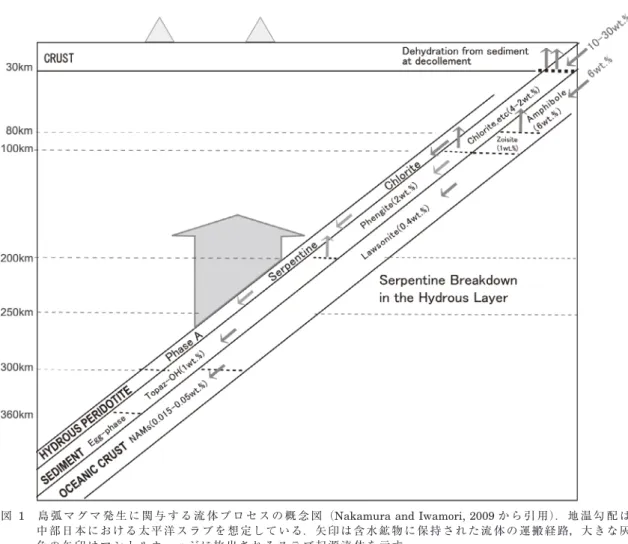
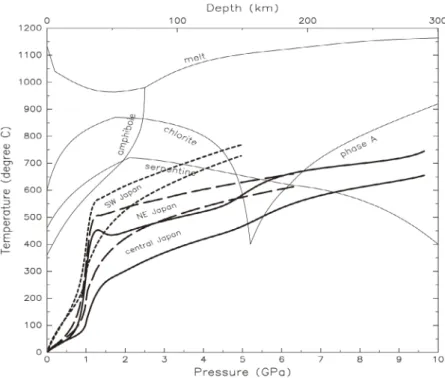
半径の大きい,いわゆる液相濃集元素は,固相に 比べ水溶液にもメルトにも入りやすく,それらの 相対的な濃度は,マントル中を上昇する過程での 固相との反応や溶融の影響を受けにくいため,水 溶液の情報を保持する。また,これらの元素のう ち,原子量の大きい元素に関わる同位体比は,ス ラブからの脱水やマントルの溶融による分別をほ とんど起こさないため,スラブ流体の起源物質の 同定やマントルウェッジ岩石へのスラブ流体の付 加量 (質量比) のトレーサーとなりうる。したがっ て,これらの解析を組み合わせることによって, 島弧火山岩の化学・同位体組成から,地下でのス ラブ流体の起源,量,溶融との関係性を紐解くこ とが原理的には可能である。本論文では,最近の そのような研究成果 (とくに,Nakamura and Iwamori, 2009) に基づいてこれらの解析を概観 し,そこからわかりつつある知見を紹介する。 II.スラブ起源流体の発生と組成 スラブの構成物質である海洋地殻や堆積物中の 流体は,温度と圧力に従ってさまざまな含水鉱物 の分解と生成を繰り返しながら保持され,マント ル深部へと運ばれる (例えば, Schmidt and Poli, 1998; Nakamura and Iwamori, 2009; 図 1)。含 水鉱物の安定性が,水をマントル深部へもち込む かマントルウェッジへ放出させるかを決める重要 な鍵になる。2.5-10 GPa の間では 600-700℃以 上で安定な含水鉱物は知られていないが,沈み込 むスラブとその周辺は一般に比較的低温 (深さ数 百キロメートルでも 600℃以下) であるため,多 くの沈み込み帯では,高含水量の緑泥石と蛇紋石 が水収支に重要な役割,例えばスラブからの主要 な脱水位置を支配することになる。スラブからマ ントルウェッジへ放出される流体 (スラブ起源流 体) の主要な深度は,スラブとマントルウェッジ の温度構造によって決まる (図 2)。例えば,太 平洋プレートが沈み込んでいる東北日本では 150-200 km の深度でスラブ起源流体が生じる (Iwamori, 2000, 2007)。太平洋プレートとフィ リピン海プレートが沈み込んでいる中部日本で は,太平洋プレートが形成するマントルウェッジ 内部に異なる方向からフィリピン海プレートが侵 入する幾何学のために,マントルウェッジが東北 日本よりもさらに冷たい温度構造をもつ。このた めに,スラブ起源流体は 250-300 km の深度で 発生すると予想されている (Iwamori, 2000)。 スラブ起源流体の化学的特徴は,(1) 流体の起 源物質である海洋堆積物や変質した海洋地殻の化 学組成と,(2) それらの物質が沈み込みに伴って 脱水する際の元素の Mobility (温度・圧力や脱水 分解に関わる鉱物相に依存する) によって獲得さ れる。地表地質帯の削剥物が海洋に流れ込む島弧 や,前弧域で付加帯が形成されている島弧では, 起源物質である堆積物の組成が異なるため,スラ ブ起源流体の化学組成も多様化することが予想さ れる。例えば,東北日本と伊豆弧では太平洋プ レートが沈み込んでいるが,沈み込まれる側のプ レートは前者では大陸プレート,後者では海洋プ レートである。地表削剥物が陸から海溝へ流入し ていると考えられる東北日本に比べ,伊豆弧では 堆積物の供給が少ない環境にある。このため伊豆 弧では,スラブ起源流体に対する堆積物の寄与は 少ないと推定される。また,フィリピン海プレー トは,東北日本と同様に地表削剥物の供給がある が,供給源がおもにより古い地殻物質を含む中部 ~西南日本であるために,その平均組成 (とくに 同位体組成) が異なっていると予想される。沈み 込まれる側のプレートの構造だけでなく,沈み込 むプレートの構造的特徴も重要かもしれない。例 えば,フラクチャーゾーンやメガムリオンなど海 洋プレート上の微細構造は,その凹凸地形に堆積 物をトラップし,結果としてスラブ流体の組成に 影響を与えると予想される。こうした起源物質お よびプレートの構造上の違いは,スラブ起源流体 の化学組成だけでなく,生成した火山岩の組成の 違いももたらすと考えられる。 図 3 は,これらの予想を,実際の島弧火山岩 組成の微量元素組成濃度と同位体比を用いたシス テマティクスのなかで解析し,検討した例を示 す。点線で囲まれた部分は,現在の (=沈み込む 前の) 太平洋プレート上で観察される変質海洋玄 武岩と海洋堆積物の組成範囲を示している。これ
ら 2 つがスラブ起源流体の主要起源物質である ため,流体の同位体組成は,両者のミキシングラ イン上にのるはずである。変質海洋玄武岩と海洋 堆積物のなかの Nd/Pb 濃度比はお互いに異なる ため,ミキシングラインは曲線となる (この場合 には上に凸の曲線)。太平洋スラブに由来する流 体組成が,この曲線上のどこにくるかは,実際の 火山岩組成のトレンドから示唆される。中部日本 の場合,フィリピン海プレートの影響がないと考 えられる火山の組成は,図 3 中の薄灰色の帯に 沿ってプロットされ,その端点として太平洋プ レート由来のスラブ起源流体の207Pb/ 204Pbを推定 することが可能である(Nakamura et al., 2008)。 また,起源物質の組成範囲に基づいて,楕円の範 囲で太平洋スラブ起源流体の同位体比組成(およ び元素濃度)が推定できる。一方,地球規模で上 部マントルの組成が,ある程度限られた範囲 (上部 マントルを代表する,中央海嶺玄武岩のソースと しての液相濃集元素や関連する同位体に枯渇した 性質をもつマントル,“Depleted MORB Mantle”)
図 1 島 弧 マ グ マ 発 生 に 関 与 す る 流 体 プ ロ セ ス の 概 念 図(Nakamura and Iwamori, 2009 か ら 引 用).地 温 勾 配 は 中 部 日 本 に お け る 太 平 洋 ス ラ ブ を 想 定 し て い る.矢 印 は 含 水 鉱 物 に 保 持 さ れ た 流 体 の 運 搬 経 路,大 き な 灰 色 の 矢 印 は マ ン ト ル ウェッ ジ に 放 出 さ れ る ス ラ ブ 起 源 流 体 を 示 す.
Fig. 1 Schematic diagram of fluid transportation and processes relevant to arc magmatism in subduction zones (Naka-mura and Iwamori, 2009). The geotherm along the Pacific slab beneath Central Japan is assumed as an example. Small arrows show fluid transportation via hydrous minerals in subducting materials. Large gray arrow shows slab-fluid released from the subducting slab to the mantle wedge as a result of breakdown of serpentine.
に収まることが知られており,スラブ起源流体が 加わるマントルウェッジの組成もこのなかに入る と考えられる (図 3 の楕円)。実際,中部日本の 火山岩データ (そのうち,太平洋プレートの影響 のみを受けていると考えられる火山岩データ)は, スラブ起源流体と枯渇マントルのミキシングに よって説明が可能である。転じて,各火山のマグ マをもたらしたマントルウェッジ内の源岩が,ど のくらいの量のスラブ起源流体によって汚染され たかを,このシステマティクスから定量的に読み とることができる。同様の推定方法によって, フィリピン海スラブ起源の流体組成とその付加量 も推定可能であり,中部日本においては,太平洋 プレートに由来するスラブ起源流体と,フィリピ ン海プレートに由来するスラブ起源流体が存在す ること,また両者の付加量や比率が空間的に変化 し,沈み込むスラブの形状や性質,テクトニクス と密接な関係があることが明らかとなった (Na-kamura and Iwamori, 2009)。
同様の解析は,日本列島をなす千島弧,東北日本 弧,伊豆—ボニン弧,琉球弧にも適応可能であり, 東北日本弧や伊豆—ボニン弧では,実際に多くの研 究例がある(例えば, Ishikawa and Naka mura, 1994; Taylor and Nesbitt, 1998; Shinjo et al., 2000; Moriguti et al., 2004; Kimura and Yoshida, 2006; Hanyu et al., 2006)。しかし,個々のモデル では異なる仮定が用いられており,沈み込む前の物 質からスラブ起源流体,火山岩までを系統的に扱 図 2 主要な含水鉱物の安定領域とスラブの地温勾配の関係を示す(Iwamori, 2007 の Fig. 9 から引用).東北日本, 中 部 日 本,西 南 日 本 の 各 島 弧 に お け る 二 本 の 線 は,ス ラ ブ—マ ン ト ル ウェッ ジ の 境 界 面 と,ス ラ ブ 上 面 か ら 6 km ほ ど 離 れ た マ ン ト ル ウェッ ジ で の 地 温 勾 配 を 示 す(太 線 は 中 部 日 本 下 の 太 平 洋 プ レー ト,破 線 は 東 北 日 本 下 の 太 平 洋 プ レー ト,点 線 は 西 南 日 本 下 の フィ リ ピ ン 海 プ レー ト を 指 す).
Fig. 2 Stability fields of the major hydrous phases, and geotherms along the subducting slab-wedge interface and within the mantle wedge above the slabs, after Fig. 9 of Iwamori (2007). Of the two lines for each arc setting, one with a lower temperature is for the slab-wedge interface, and the other is for the mantle wedge above the slabs (~ 6 km from the interface): thick solid lines for the Pacific plate beneath central Japan, broken lines for the subducting Pacific plate beneath northeast Japan, dotted lines for the subducting Philippine Sea plate beneath SW Japan.
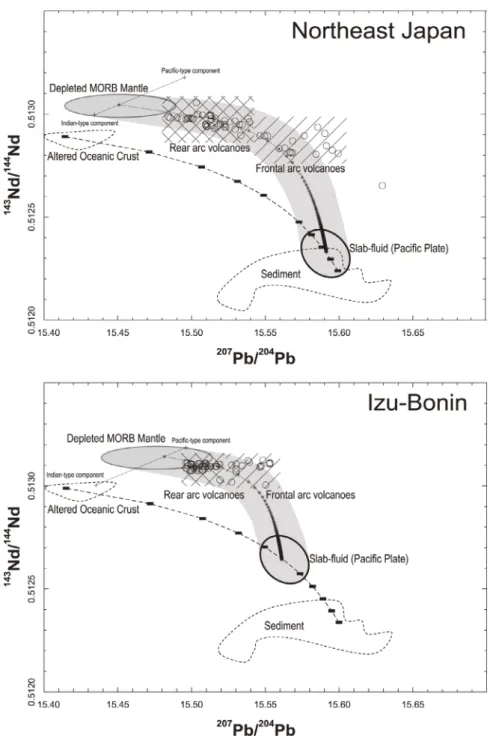
い,島弧間の比較を行った研究はなかった (詳細は Nakamaura and Iwamori (2009)の Table 2 を参 照)。Naka mura and Iwamori (2009) は,図 3 と 同様の解析を千島弧,東北日本弧,西南日本弧, 伊豆—ボニン弧,琉球弧において行って,それらの 結果を比較した。図 4 はその比較の一部を一枚の 図にまとめたものである。この図からは,個々の 弧の火山岩はそれぞれ特徴のある組成トレンドあ るいは組成範囲を示すこと,したがって島弧ごと にスラブ起源流体の組成,付加量に違いがあるこ とがわかる。Nakamura and Iwamori (2009) の 定量的モデルによれば,流体付加量の平均値は, 中部日本で 2.6 wt.%,琉球弧で 0.69 wt.%,東 北日本弧で 0.17 wt.%,千島と伊豆—ボニン弧で ともに 0.12 wt.%である。これらの違いは,スラ ブの沈み込み角度,年齢および沈み込まれる側の 地殻の厚さがおもな要因であると議論されてい る。また,解像度は悪いものの,東北日本弧に供 給されるスラブ起源流体には,伊豆—ボニン弧の それに比べて堆積物の寄与が大きく (207Pb/ 204Pb 比が大きく),前述の予想と整合的である。 これらのシステマティクスに基づけば,各弧内 部での火山岩の島弧横断方向の変化 (across-arc 変化) は以下のように解釈される。図 5 は,東北
図 3 火山岩—マントル—スラブ構成物質の同位体比の関係の例(Nakamura and Iwamori, 2009 の Fig. 5 を一部改変). マントルの端成分(インディアンタイプ; 太平洋タイプ)も同時に示している.○は中部日本の火山岩.点線は, 太 平 洋 ス ラ ブ と フィ リ ピ ン 海 ス ラ ブ の 各 構 成 物 質 の 組 成 範 囲 と そ の 混 合 曲 線.楕 円 は マ ン ト ル と 各 ス ラ ブ 起 源 流 体 の 各 組 成 範 囲,薄 灰 色 と 濃 灰 色 帯 は そ れ ら の 組 成 範 囲 を 考 慮 し た ミ キ シ ン グ バ ン ド を 示 す. Fig. 3 Pb-Nd isotope systematics for the volcanic rocks, slab-fluids and wedge mantle in central Japan (Modified after
Nakamura and Iwamori, 2009). Open circles represent to the bulk compositions of the lavas in this arc. Mantle end-components, Indian-type and Pacific-type MORB components, are also shown. The light gray and dark gray curves represent the mixing of subducting materials in the Pacific and the Philippine Sea plates, respectively. The ellipsoids and shaded bands represent the compositional uncertainties of the end-members and the mixing line, respectively.
日本弧および伊豆—ボニン弧におけるスラブ起源 流体とマントルのミキシングラインを示し,その ミキシングライン上でフロント側と背弧側の火山 が区別されることを示す。この場合,いずれの弧 でもフロント側の火山の方がスラブ起源流体の付 加量は多く,背弧側の方が少ないと解釈される。 スラブ起源流体の組成,付加量の定量的見積り は,それが付け加わるマントルウェッジについても 定 量 的 な 情 報 をもたら す。図 3 および 図 4 の “Depleted MORB Mantle” あるいは “MANTLE”
とラベルされた領域は,右上から左下方向に広がり をもち,その端点付近にはそれぞれ “Pacific-type component”(あるいは “Pacific”)および “Indian-type component” (あるいは “Indian”) とラベルが つけられている。図 4 に示す日本列島の各弧の火山 岩データ分布は,とくにそのマントル側 (図 4 の左 上側) において違いが明瞭であり,その付近では 207Pb/ 204Pb比によらずにほぼ一定の143Nd/ 144Nd 比を示す。このことは,島弧ごとにマントルウェッ ジの組成が異なり,琉球弧,東北日本弧では比較 的インディアンタイプマントルの成分が多く,伊 豆—ボニン弧 (IBM) では太平洋タイプマントル成 分が多いことがわかる。このデータに基づき,Na-kamura and Iwamori (2009) は,沈み込む太平洋 プレートおよびフィリピン海プレートの反流に伴っ て,ユーラシア大陸下からインディアンタイプマン トル成分が東に向かって流れだしている可能性を 指摘した。したがって,沈み込み帯のスラブ起源 流体の解析は,沈み込み帯の火成活動のみなら ず,マントルのより大規模な流れの解析にも重要 であると考えられる。 III.今後の課題 スラブ起源流体がマグマの生成に関与している ことは,上記の液相濃集元素とその同位体の解 析,捕獲岩や火山岩中の流体包有物の存在,火山 岩中の宇宙線起源のベリリウム 10 放射性核種の 存在 (Morris and Tera, 1989) などから裏づけと 定量化が進んできた。しかし,スラブ起源流体の 移動様式 (例えば浸透流,割れ目中の流れなど), 沈み込み帯スケールでの温度構造など,力学や温 度場についての理解や制約は不十分であり,まだ 沈み込み帯の流体プロセス,溶融,火成活動の総 合的理解には遠い。 例えば,どの沈み込み帯でもほぼ普遍的かつ明 瞭に存在する火山フロントが,どのようなメカニ ズムによって形成されるのかはいまだに明らかで ない。従来は,実験岩石学の結果に基づき,含水 橄欖岩の融点低下がマグマ発生に重要であるとの 視点から,火山フロントの位置は,主要な含水鉱 物の脱水分解がフロント直下で起こり,それに よって支配されると考えられてきた (Tatsumi, 1986)。しかし近年,観測・実験・シミュレー ション研究を統合して異なる描像が得られつつあ る。例えば,東北日本を対象とする高解像度の地 震波速度構造 (Nakajima et al., 2001a, b; Kawa-katsu and Watada, 2007) は,沈み込むスラブお よびマントルウェッジ内の低速度領域を詳細に捉 え,火山フロント直下での主要な脱水分解ではな く,より深部あるいは背弧側からのスラブ起源流 体やマグマの上昇を示唆している。この描像は, スラブ起源流体の発生と移動,および溶融を扱っ た数値シミュレーションの結果 (Iwamori, 1998) 図 4 伊 豆(IBM), 中 部 日 本(C Japan), 東 北 日 本 (NE Japan),琉球弧(Ryukyu)の第四紀火山岩 の207Pb/ 204Pb-143Nd/ 144Nd図 (Nakamura and
Iwa-mori, 2009に基づく).
Fig. 4 Compositions of the volcanic rocks, slab-fluids and wedge mantle in Izu-Bonin Arc (IBM), central Japan (C Japan), Northeast Japan (NE Japan), Ryukyu Arc (Ryukyu) in Pb-Nd isotope system-atics after Nakamura and Iwamori (2009).
図 5 東 北 日 本 お よ び 伊 豆—ボ ニ ン 弧 の 火 山 岩—マ ン ト ル—ス ラ ブ 構 成 物 質 の 同 位 体 比 の 関 係 を 示 す.マ ン ト ル は 端 成 分 (Indian-type; Pacific-type) も 同 時 に 示 す.○ は 火 山 岩,点 線 は ス ラ ブ 構 成 物 質 の 組 成 範 囲 と そ の 混 合 曲 線,楕 円 は マ ン ト ル と ス ラ ブ 起 源 流 体 の 各 組 成 範 囲,灰 色 帯 は そ の 組 成 範 囲 を 考 慮 し た ミ キ シ ン グ バ ン ド,斜 線 の 四 角 領 域 は フ ロ ン ト の 火 山,網 目 の 四 角 領 域 は 背 弧 の 火 山 を 示 す.
Fig. 5 Pb-Nd isotope systematics for the volcanic rocks, slab-fluids and wedge mantle in the Northeast Japan and Izu-Bonin arcs. The shaded and meshed squares represent volcanoes in the frontal and rear arcs, respectively. Other symbols are the same as in Fig. 3.
とも整合的であるが,流体移動様式や再現される 温度場の精度には不定性も大きい。また,これら の観測やモデルでは,なぜ火山フロントにマグマ が集中するのかは答えられていない。 マグマ生成の深さについても矛盾する研究結果 が存在する。例えば,東北日本火山岩の主成分元 素組成と相平衡実験に基づけば,ソレアイト,高 アルミナ,アルカリ玄武岩について,マントル ウェッジ内で化学平衡にあった圧力が 11-23 kbar と見積もられている (Tatsumi et al., 1983)。一 方,スラブ起源流体の組成や量を含めた微量元素 組成モデリングからは,いずれの玄武岩タイプに おいてもガーネット橄欖岩が安定な圧力 (およそ 25 kbar以上) における溶融が示唆されている
(Nakamura, 2006; Nakamura and Iwamori, submitted)。比較的深い後者の見積もりは,角 閃石橄欖岩のソリダスが 25 kbar 付近にもつカス プ (ソリダス温度の圧力に関する極小値の存在) とも整合的である。深部ではじまった溶融がガー ネットの微量元素存在度を強く規定しつつ,主成 分元素組成については上昇しながら再平衡化が進 行し,相平衡を規定するのかもしれない。どのよ うなマグマ移動様式やマントルの流れ場・温度場 が,一見矛盾するこれらの結果をうまく説明する のか,火山フロントの形成とも関連する研究課題 と考えられる。 IV.ま と め 本論文では,島弧火山岩の微量元素・同位体組 成からみた沈み込み帯の流体プロセス,とくにス ラブ起源流体の組成やマントルウェッジへの付加 量についての最近の研究を概観し,日本列島を形 成する複数の島弧が固有の特徴をもち区別されう ることを示した。また,付随する結果として,日 本列島下での広域的なマントル組成の変化が存在 することも示し,マントルの大規模な流れに対応 する可能性が示唆された。地球化学的証拠から, 沈み込み帯の流体プロセス (スラブ起源流体およ びマグマ生成に関わる過程) についての定量的制 約が進む一方,流れ場や温度場の推定には不定性 が大きく,火山フロントの形成などを含め,今後 の研究と総合的理解が待たれる。 文 献
Hanyu, T., Tatsumi, Y., Nakai, S., Chang, Q., Miyaza-ki, T., Sato, K., Tani, K., Shibata, T. and Yoshida, T. (2006): Contribution of slab melting and slab
de-hydration to magmatism in the Northeast Japan arc for the last 25 Myr: Constraints from geochem-istry. Geochemistry Geophysics Geosystems, 7, doi:10.1029/2005GC001220.
Ishikawa, T. and Nakamura, E. (1994): Origin of the slab component in arc lavas from across-arc varia-tion of B and Pb isotopes. Nature, 370, 205-208. Iwamori, H. (1998): Transportation of H2O and
melt-ing in subduction zones. Earth and Planetary Sci-ence Letters, 160, 65-80.
Iwamori, H. (2000): Deep subduction of H2O and
de-flection of volcanic chain towards back-arc near tri-ple junction due to lower temperature. Earth and Planetary Science Letters, 181, 41-46.
Iwamori, H. (2007): Transportation of H2O beneath
the Japan arcs and its implications for global water circulation. Chemical Geology, 239, 182-198. Iwamori, H. and Zhao, D. (2000): Melting and seismic
structure beneath Northeast Japan arc. Geophysi-cal Research Letters, 27, 425-428.
Kawakatsu, H. and Watada, S. (2007): Seismic evi-dence for deep-water transportation in the mantle. Science, 316, 1468-1471.
Kimura, J.-I. and Yoshida, T. (2006): Contributions of slab fluid, mantle wedge and crust to the origin of Quaternary lavas in the NE Japan arc. Journal of Petrology, 47, 2185—2232.
Moriguti, T., Shibata, T. and Nakamura, E. (2004): Lithium, Boron and Lead isotope and trace element systematics of Quaternary basaltic volcanic rocks in Northeastern Japan: Mineralogical controls on slab-derived fluid composition. Chemical Geology, 212, 81-100.
Morris, J. and Tera, F. (1989): Be-10 and Be-9 in min-eral separates and whole rocks from volcanic arcs — Implications for sediment subduction. Geochimi-ca et CosmochimiGeochimi-ca Acta, 53, 3197-3206.
Nakajima, J., Matsuzawa, T., Hasegawa, A. and Zhao, D. (2001a): Three-dimensional structure of Vp, Vs, and Vp/Vs beneath northeastern Japan: Implica-tions for arc magmatism and fluids. Journal of Geo-physical Research, 106, 843—857.
Nakajima, J., Matsuzawa, T., Hasegawa, A. and Zhao, D. (2001b): Seismic imaging of arc magma and flu-ids under the central part of northeastern Japan. Tectonophysics, 341, 1-17.
Nakamura, H. (2006): Geochemical Variation of Vol-canic Rocks in Central Japan: Implication for the Fluid Processes in Subduction Zone with the Dou-ble Subducting Plates. PhD Thesis, Department of
Earth and Planetary Science, University of Tokyo. Nakamura, H. and Iwamori, H. (2009): Contribution
of slab-fluid in arc magmas beneath the Japan arcs. Gondwana Research, 16, 431-445.
Nakamura, H., Iwamori, H. and Kimura, J.-I. (2008): Geochemical evidence for enhanced fluid flux due to overlapping subducting plates. Nature Geosci-ence, 1, 380—384.
Schmidt, M.W. and Poli, S. (1998): Experimentally based water budgets for dehydrating slabs and con-sequences for arc magma generation. Earth and Planetary Science Letters, 163, 361-379.
Shinjo, R., Woodhead, J.D. and Hergt, J.M. (2000): Geochemical variation within the northern Ryukyu Arc: Magma source compositions and geodynamic implications. Contributions to Mineralogy and
Pe-trology, 140, 263-282.
Tatsumi, Y. (1986): Formation of the volcanic front in subduction zones. Geophysical Research Letters, 13, 717-720.
Tatsumi, Y., Sakuyama, M., Fukuyama, H. and Kushi-ro, I. (1983): Generation of arc basalt magmas and thermal structure of the mantle wedge in subduc-tion zones. Journal of Geophysical Research, 106, 21843—21857.
Taylor, R.N. and Nesbitt, R.W. (1998): Isotopic char-acteristics of subduction fluids in an intra-oceanic setting, Izu-Bonin Arc, Japan. Earth and Planetary Science Letters, 164, 79-98.