THERMAL STRESS, CARDIOVASCULAR STRESS AND
WORK PRODUCTIVITY AMONG THE FEMALE BRICK FIELD
WORKERS OF WEST BENGAL, INDIA
BANIBRATADASDepartment of Physiology, South Calcutta Girls’ College, University of Calcutta Kolkata 700025, India
100 Biplabi Ganesh Ghosh Sarani, Post- Bhadrakali, Dist-Hooghly, Pin code-712232, West Bengal, India
*e-mail: [email protected]
ABSTRACT
The purpose of the study was to determine the thermal and cardiac stress among female brick field workers. Thermal and cardiac stress plays an important role in the ability to perform the work. A cross-sectional study was conducted on 112 female brick field workers from 12 brick fields of West Bengal, India. Thermal stress was also assessed by measuring the WBGT index. Cardiac strain in different seasons were measured in terms of work heart rate (WHR), relative cardiac cost (RCC), net cardiac cost (NCC), cardiovascular stress index (CSI) and other recovery indices among the female brick field workers. The net cardiac costs of the brick stackers were higher in comparison to brick moulders and carriers. NCC and the RCC levels were higher among the brick stackers than in other groups of brick field workers. The CSI levels were the maximum in the case of carrying raw mud activities. In these activities, the brick field workers changed their posture frequently during loading and unloading and walking with mud. The fre-quent change of postures imposed extra load on the cardiovascular system. This study concluded that due to heat stress, the productivity of the three groups of workers were affected.
Key words: cardiovascular stress index; WBGT; physiological stress; net cardiac cost; cardiac strain
INTRODUCTION
The brick field workers work in the brick field industry from September / October to May / June. Usually the brick field industry has been closed during the latter part of June to September due to monsoon. Usually the brick field workers work mainly in three seasons in the year. These are winter, spring and sum-mer when different types of environmental variations occur among the brick field workers. It has been found that the brick field workers do not suffer from any thermal stress during winter or spring, but they feel tremendous discomfort in the summer due to hot and humid environmental conditions, which ultimately lead to absenteeism in work and ultimately decrease in productivity.
Thermal stress is a major cause of production losses in the brick field industry. Thermal stress plays an important role in the ability to perform the work. Prolonged work under thermal stress conditions causes discomfort among the workers. Sustained heat strain in the exposure to hot conditions, doing heavy physical work, the use of the personal protective clothes and equipment form insulation against water vapor and heat, resulting in heat exhaustion (Ftaiti et al., 2001; Nielsen et al., 2001; Nybo and Nielsen, 2001). Due to the high level of manual handling involved in brick making operations, the workers are exposed to higher levels of risk and high physical workload. Excessive physical workload and heat stress have been identified as factors that could result in sudden Heat stroke (Barrow and Clark, 1998; Dehghan et al., 2012), muscular
Originals
cramp (Kovats and Hajat, 2008), increased human errors, reduced mental and physical activities(Hancock and Vasmatzidis, 2003; Brisswalter et al., 2002; Hocking et al., 2001), increased accidents at work and ul-timately reduced productivity (Miller and Bates, 2007; Ramsey et al., 1983; Axelson, 1974; Kjellstromet al., 2009). Heat and humidity not only act on human physiology, but also reduce work productivity partic-ularly affecting the developing countries in the tropical climate zone (Kjellstrom, 2009; Lundgren et al., 2013).
Manual brick making is an important and oldest industry in India, where millions of workers work in different unsuitable working conditions for a prolonged period of time. This study is exploratory in nature in the application of ergonomics and occupational health in the brick field industry in India. Therefore, this study is aimed to compare the cardiac strain between different groups of female brick field workers in terms of the relationship between heat exposure and various cardiovascular loads.
METHODS Study population
A cross-sectional study was conducted on 112 female brick field workers (34 brick carriers, 46 brick moulders and 32 brick stackers) from 12 brick fields, working in a selected brick field unit of Bhadrakali in Hooghly District, which was situated in the side of the Hooghly River. This brick field unit was selected randomly from the surrounding area. Before initiating the study, extensive interactions were carried out with the female brick field workers during which they assured to cooperate as required by the design of the study. The inclusion criteria of the selection of the subjects were: age 21–50 years, experience in dif-ferent brick field activities or office activities for one year. The study was conducted from March 2012 to April 2013 at 12 brick fields. The 112 participants were randomly selected from among 268 brick field workers of 12 brick fields of Bhadrakali, Uttarpara and Kotrung area in Hooghly district, India. Before conducting the study, written and signed consent was taken from brick field owners as well as each indi-vidual subject. Written permission on the project was obtained from the Institutional Human Ethical Clear-ance Committee according to the Indian Council of Medical Research Guidelines.
Task description performed by female brick field workers
Several activities were performed by the brick field workers. Among these, the following activities were performed by the female brick field workers (Fig.1).
Carrying the mud: the mud which was collected from the river bank is mainly accumulated in the ac-cumulation zone of the brick field by means of baskets on the head of the workers. During making the green bricks, the carriers carried the mud on their head to prepare the clay.
Preparation of raw bricks (moulding): preparation of clay was mainly done by a machine with the help of mud, water and several additives. After preparation of clay, inserting of clay in the wooden dice along with sand was done in squatting posture and particular amount of clay was taken by the workers and put it into the wooden dice. Extra clay was removed by a wire cutter. Then lifting the wooden dice upward and turning downwards to the ground forcefully were conducted.
Stacking the bricks: after preparing raw bricks, the raw bricks were dried up in the sun and after drying they were arranged in the brick kiln for burning. This activity was done very carefully, as otherwise the raw bricks would be damaged.
Carrying raw bricks from stacking area to a kiln: generally, brick carriers carried their raw bricks in to the kiln for burn. After reaching the kiln, unloading of raw bricks was done carefully. After unloading, the workers arranged the bricks for burn.
Arranging raw bricks in the kiln: the raw and green bricks were arranged in the kiln properly by which the heat or fire was exposed properly so that the raw the bricks burn properly.
Loading of burn bricks: after burning the bricks, the kiln workers generally took off the burned bricks from the kiln. After picking the burn bricks from the dust of the kiln, the female workers loaded the burn bricks on their head.
Carrying raw bricks: after loading the brick carriers covered a long distance to store the bricks in the brick field.
Unloading of burn bricks for storage: during storing, the unloading of burn bricks was an important
Fig.1 Different brick field activities.
(A) Carrying the mud. (B) Preparation of raw bricks (moulding).
(C) Stacking bricks. (D) Loading bricks.
and careful activity which was done by the brick carriers. Assessment of thermal stress
The working environment of the female brick field workers was assessed in this study. The wet bulb globe temperature (WBGT) index was calculated to estimate the effect of temperature and humidity on fe-male brick field workers in different environmental working conditions. Mean globe temperature and wet and dry bulb temperatures were also recorded. Wet Bulb Globe Temperature (WBGT) (Parsons, 2003) was measured at a fixed site in the field by using a globe thermometer (for Tg), a natural wet bulb thermometer (for Tnwb) and a dry bulb thermometer (shaded from the sun producing Ta). The WBGT was then calculated with the standard calculation formula. Where nwb was the natural wet bulb, g was the globe temperature and db was the dry bulb temperature.
WBGT= 0.7 Tnwb+ 0.1 Tdb+ 0.2 Tg.
Relative humidity was also estimated from a psychometric chart developed by Weksler Instrument (USA) (Tayyari and Smith, 1997). But in this study, we only measured WBGT outdoor during performance of various activities in the agricultural field by female brick field workers.
Assessment of physiological stress
Physiological stress assessment was carried out by recording the heart rate of the brick field workers prior to work and just after completion of work. Resting heart rate (RHR) was obtained in a seated position after a rest period of ≥30 minutes at a comfortable room temperature in the morning before the beginning of work. The resting or prior-to-work heart rate was measured from the radial pulse for 1 min with the help of a stopwatch and the heart rate just after work was recorded from the carotid pulse with the 10 beats method (Astrand and Rodhall, 1986). The maximum heart rate (MHR) was considered to be 220 less the age of the subjects in years (American Heart Association Committee of Exercise, 1972).
Heart rate just after work and recovery was the principal physiological parameter measured. Recovery heart rate was measured in a sitting posture. This was obtained by counting the pulse during the last 30 s of each minute in the first, second and third minute of the recovery period, i.e. from 30 s to 1 min after work stops – recovery pulse 1 (P1), from 1½ to 2 min – recovery pulse 2 (P2) and again from 2½ to 3 min – recovery pulse 3 (P3) stops. These three recovery heart rates were designated as P1 (1st recovery heart rate), P2 (2nd recovery heart rate) and P3 (3rd recovery heart rate). From these Brouha’s index of pulse deceleration was calculated as the difference between the third (P3) and first (P1) recovery pulse rates. The recommended value for this index is ≤–10 beats/min which indicates normal and fast recovery. How-ever, a value of >–10 beats/min indicates no recovery pattern or slower pulse deceleration. NCC and relative cardiac cost (RCC) were used as indicators of the cardiac strain. Net cardiac cost (NCC) was obtained as the difference between working heart rate (WHR) and resting heart rate, expressed as beats/min. RCC was determined by expressing the NCC as the percentage of the heart rate reserve (HRR) of the subjects by using the following formula: RCC = NCC/HRR×100 (Saha et al., 2008).
The blood pressure of the brick field workers was measured with a sphygmomanometer and a stetho-scope before and just after completion of work. Blood pressure measurements were made in 2 phases, one in a resting condition and the other just after completion of work among 2 groups of workers. Left arm blood pressure was taken with a sphygmomanometer and a stethoscope after the participant had been seated in a relaxed position for 5 min in a resting position. In the case of the second measurement, left arm blood pressure was taken with a sphygmomanometer and a stethoscope after the participant had been seated im-mediately after work. Systolic (SBP) and diastolic (DBP) blood pressures were recorded to the nearest mm Hg as the appearance (phase I) and disappearance (phase V) of Korotkoff sounds, respectively.
CSI of the subjects was calculated by the following formula (Trites et al., 1993). CSI = 100(HR work - HR rest) / (HR max - HR rest)
Data analysis
Data analysis was performed by using the statistical package Primer of Biostatistics version 5.0 (Msi Version = 1.20.1827.0, Primer for Windows, Mc-Graw-Hill). Statistical analysis included calculation of the mean and standard deviation of the various physical parameters. One-way Anova test was also used to determine whether there was any significant difference between the test variables within the selected work-ing groups.
RESULTS
Table 1 represents the demographics characteristics of female brick field workers. From this study, it was observed that there were mainly 3 types of brick field workers. These were carriers (30.4%), moulders (41.0%) and stackers (28.6%). The result of Table 1 also explained that among the working population, most of them (80%) are temporary workers who generally came from Bihar, Uttar Pradesh, Jharkhand, Orissa and other states of India. Most of the female brick field workers had just primary education (51.8%) while 42.9% did not have any formal education. Only 5.3% of female workers had secondary education. Table 2 describes the different activities performed by the female brick field workers, with duration of ac-tivities and the number of frequency of the acac-tivities described. This study showed that among the acac-tivities in brick making, moulding took maximum time (54 min) per shift. Carrying raw mud and stacking of raw bricks were the activities of brick making had the highest number of frequency per shift (30 per shift).
Variable Number Percentage
Sex Female 112 100.00%
Age (years) 21-30 years31-40 years 6237 55.30%33.00%
41-50 years 13 11.70%
BMI 18.5–24.9 25–29.9 3962 34.80%55.30%
≥30 11 9.90%
Group of workers CarriersMoulders 3446 30.40%41.00%
Stackers 32 28.60%
Type of workers PermanentTemporary 2290 19.60%80.40% Education level No formal education Primary 4858 42.90%51.80%
Secondary 6 5.30% Years of experience 1-5 Years 15 13.40% 6-10 Years 45 40.20% 11-15 Years 40 35.70% 16-20 Years 12 10.70%
Description of task Duration (min) Frequency per shift
Carrying raw mud 14 ± 2.6 30
Moulding the bricks 54 ± 2.9 7
Stacking the bricks 10 ± 3.1 30
Picking the burn bricks from kiln 8 ± 4.6 14
Loading the burn bricks from kiln 6 ± 5.2 14
Carrying the burn bricks for storage 8 ± 4.8 14 Unloading the burn bricks for storage 4 ± 3.1 14
Table 1. Demographics of the female brick field workers.
Table 2. Description of tasks performed by the female brick field workers.
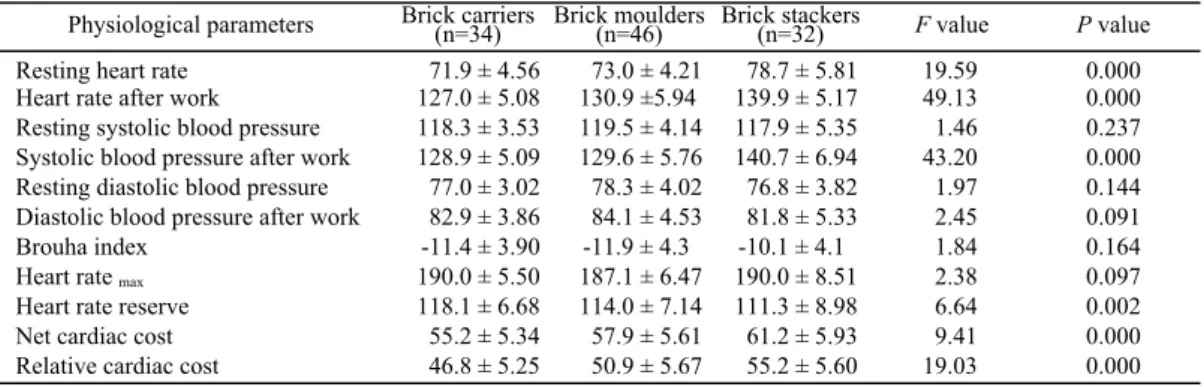
Table 3 represents the physiological parameters of different groups of female brick field workers showing a significant change of heart rate among three groups of female brick field workers. This study also showed that there was a significant change in systolic blood pressure after work among 3 groups of female brick field workers. This study indicates that the 3 different types of female brick field workers had significant different workloads in the brick field. NCC, RCC and HRR were used as indicators of the cardiac strain. There was a significant change in NCC, RCC and HRR among 3 groups of female workers.
The female workers were exposed to cardiovascular stress during performing different activities in brick manufacturing. The cardiovascular stress indexes (CSI) for different jobs are presented in Table 4. The cardiovascular stress was maximum in the case of mud carrying jobs. The mean cardiovascular stress index of female brick field workers (30.82 ± 3.82) is compared with other workers in Table 5.
Thermal stress prevailing in the brick field site is summarized in Table 6. The average thermal envi-ronmental conditions of the brick fields in different seasons are described in the table indicating distinct variations of thermal environmental conditions in different seasons. The relative humidity was higher in the summer in comparison to other studied seasons.
Physiological parameters Brick carriers(n=34) Brick moulders(n=46) Brick stackers(n=32) F value P value
Resting heart rate 71.9 ± 4.56 73.0 ± 4.21 78.7 ± 5.81 19.59 0.000
Heart rate after work 127.0 ± 5.08 130.9 ±5.94 139.9 ± 5.17 49.13 0.000
Resting systolic blood pressure 118.3 ± 3.53 119.5 ± 4.14 117.9 ± 5.35 1.46 0.237 Systolic blood pressure after work 128.9 ± 5.09 129.6 ± 5.76 140.7 ± 6.94 43.20 0.000 Resting diastolic blood pressure 77.0 ± 3.02 78.3 ± 4.02 76.8 ± 3.82 1.97 0.144 Diastolic blood pressure after work 82.9 ± 3.86 84.1 ± 4.53 81.8 ± 5.33 2.45 0.091
Brouha index -11.4 ± 3.90 -11.9 ± 4.3 -10.1 ± 4.1 1.84 0.164
Heart rate max 190.0 ± 5.50 187.1 ± 6.47 190.0 ± 8.51 2.38 0.097
Heart rate reserve 118.1 ± 6.68 114.0 ± 7.14 111.3 ± 8.98 6.64 0.002
Net cardiac cost 55.2 ± 5.34 57.9 ± 5.61 61.2 ± 5.93 9.41 0.000
Relative cardiac cost 46.8 ± 5.25 50.9 ± 5.67 55.2 ± 5.60 19.03 0.000
Table 3. Physical and physiological parameters of different groups of female brick field workers.
Description of brick field tasks Cardiovascular stress index
Carrying raw mud 33.4 ± 2.43
Moulding bricks 30.9 ± 3.27
Stacking bricks 29.1 ± 3.18
Picking burn bricks from the kiln 31.5 ± 3.61 Loading burn bricks from the kiln 31.5 ± 3.61 Carrying burn bricks for storage 31.5 ± 3.61 Unloading burn bricks for storage 31.5 ± 3.61
Types of workers Cardiovascular stress index Female brick field workers (Present study) 30.82 ± 3.48 Agricultural workers (Ghosh et al., 2003) 25.34 ± 10.85 Silviculture workers (Trites et al., 1993) 39.20 ± 4.00 Cane cutters (Vitalis et al., 1981) 25.00 ± 14.00 Car assembly workers (Goldsmith, 1978) 20.00 ± 7.00 Table 4. The cardiovascular stress index of female brick field
workers during different brick field activities.
Table 5. Comparison of the cardiovascular stress index between the present study and other studies.
Mean±SD
Mean±SD
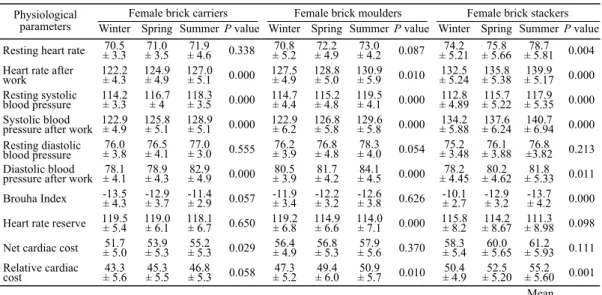
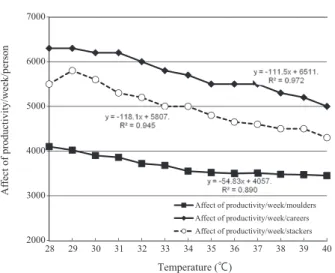
Table 7 indicates the seasonal comparisons of cardiac strain among the brick carriers, moulders and stackers. There was a significant change in heart rate after work in 3 different seasons among the brick carriers and stackers. There was a significant change in blood pressure (systolic and diastolic blood pressure) after work. NCC and RCC also had a significant change in 3 different seasons among the brick carriers. Table 7 indicates that the brick moulders showed significant heart rate change after work during working in 3 different seasons. The HRR and RCC of the female brick moulders had been significantly changed during different season. The HRR had been maximum in winter, whereas the NCC and RCC of the female moulders was comparatively high in the summer. Table 7 also showed the comparison of cardiac strain among the brick stackers. The heart rate and systolic blood pressure changed significantly in 3 different seasons. The two main physiological parameters (heart rate and blood pressure) markedly and significantly increased in the summer in comparison to other seasons (winter and spring). No significantly changed di-astolic blood pressure was observed in 3 different seasons among stackers. HRR and NCC of female stack-ers indicated no significant change in 3 different seasons, whereas the Brouha index and RCC of the stackstack-ers significantly changed. Figure 2 represent the affect of productivity among the different groups of female brick workers according to environmental temperature changes, and the productivity of the brick carriers
Environmental parameters Winter Spring Summer
Natural wet bulb temperature (ºC) 22.4 ± 2.18 25.2 ± 2.37 35.1 ± 3.21 Dry bulb temperature (ºC) 26.1 ± 2.02 29.1 ± 1.98 38.7 ± 2.32 Globe temperature (ºC) 36.2 ± 1.82 29.8 ± 1.95 40.3 ± 1.92
Air velocity (m/s) 0.38 ± 0.12 0.64 ± 0.17 0.42 ± 0.15
Relative humidity (%) 78 ± 6.22 73 ± 5.82 79 ± 5.88
WBGT (ºC) 25.6 ± 1.72 26.7 ± 1.48 36.5 ± 1.88
Table 6. The average environmental temperature at the brick field in different seasons.
Physiological
parameters Winter Spring Summer P value Winter Spring Summer P value Winter Spring Summer P valueFemale brick carriers Female brick moulders Female brick stackers Resting heart rate ± 3.370.5 ± 3.571.0 ± 4.671.9 0.338 ± 5.270.8 ± 4.972.2 ± 4.273.0 0.087 ± 5.2174.2 ± 5.6675.8 ± 5.81 0.00478.7 Heart rate after
work 122.2± 4.3 124.9± 4.9 127.0± 5.1 0.000 127.5± 4.9 128.8± 5.0 130.9± 5.9 0.010 132.5± 5.24 ± 5.38135.8 ± 5.17 0.000139.9 Resting systolic
blood pressure 114.2± 3.3 116.7± 4 118.3± 3.5 0.000 114.7± 4.4 115.2± 4.8 119.5± 4.1 0.000 112.8± 4.89 ± 5.22115.7 ± 5.35 0.000117.9 Systolic blood
pressure after work 122.9± 4.9 125.8± 5.1 128.9± 5.1 0.000 122.9± 6.2 126.8± 5.8 129.6± 5.8 0.000 134.2± 5.88 ± 6.24137.6 ± 6.94 0.000140.7 Resting diastolic
blood pressure ± 3.876.0 ± 4.176.5 ± 3.077.0 0.555 ± 3.976.2 ± 4.876.8 ± 4.078.3 0.054 ± 3.4875.2 ± 3.8876.1 ±3.82 0.21376.8 Diastolic blood
pressure after work ± 4.178.1 ± 4.378.9 ± 4.982.9 0.000 ± 3.980.5 ± 4.281.7 ± 4.584.1 0.000 ± 4.4578.2 ± 4.6280.2 ± 5.33 0.01181.8 Brouha Index -13.5± 4.3 -12.9± 3.7 -11.4± 2.9 0.057 -11.9± 3.4 ± 3.2-12.2 -12.6± 3.8 0.626 -10.1± 2.7 -12.9± 3.2 -13.7± 4.2 0.000 Heart rate reserve 119.5± 5.4 119.0± 6.1 118.1± 6.7 0.650 119.2± 6.8 114.9± 6.6 114.0± 7.1 0.000 115.8± 8.2 ± 8.67114.2 ± 8.98 0.098111.3 Net cardiac cost ± 5.051.7 ± 5.353.9 ± 5.355.2 0.029 ± 4.956.4 ± 5.356.8 ± 5.657.9 0.370 ± 5.458.3 ± 5.6560.0 ± 5.93 0.11161.2 Relative cardiac
cost ± 5.643.3 ± 5.545.3 ± 5.346.8 0.058 ± 5.247.3 ± 6.049.4 ± 5.750.9 0.010 ± 4.950.4 ± 5.2052.5 ± 5.60 0.00155.2
Table 7. Comparative physiological parameters of female brick carriers, moulders and stackers in three different seasons.
Mean±SD
Mean ±SD
was affected the most due to changes in environmental conditions in comparison to other workers (brick moulders and brick stackers).
DISCUSSION
Female workers play a significant role in the Indian economy and they are regarded as the backbone of the brick field industry. Female brick field workers are compelled to carry out a considerable amount of manual and physically demanding tasks in the brick fields for long periods of time, which mainly affected their health in different environmental conditions. The present study showed that among the female brick field workers, most of the workers are recruited on temporary basis, mainly working in the brick field for 8 months in a year. There were mainly three types of workers in the present study, carriers (30.4%), moul-ders (41.0%) and stackers (28.6%).
The prevalence of occupational health hazards has been reported as high among the brick field workers of India (Das, 2014 a,b). The present study found that female brick field workers performed different stren-uous activities in the brick field, which may cause cardiovascular stress among them. The study also re-vealed that among three groups of female workers, brick stackers suffered the most. Brick stackers generally perform different types of jobs including loading and unloading of burn bricks and stacking bricks, and also carry raw bricks from one place to another with hand for several times in the hot and humid condition.
It was proved that heart rate was the principal parameters to assess the cardiovascular strain in the field study. Heart rate is not only used in evaluating cardiovascular strain imposed by the workload of vary-ing intensity (Brouha, 1960) with minimal interference of the subject’s performance ability but also provides an integrated response to energy requirement and thermal and postural demands. This study revealed that the just after work heart rate of brick stackers in the summer season was 139.9 bpm, which was very high in comparison to the recommended limit of 110 bpm for an 8-hour work shift (Sanders and McCormick, 1993). Thus, major tasks in the brick field can cause high cardiovascular strain during a workday and may cause fatigue and higher muscular strain in workers, with associated muscular pain. As the muscular ac-tivities are constant, an increase in temperature in the summer months probably increases the heart rate at rest and thus the overall workload of these female workers (Sett and Sahu, 2014). So the fact that the heart rate and blood pressure of the brick stackers measured just after completion of work was very high may be due to constant movement of the body. Moreover, when brick stackers bend forward to collect the bricks, the muscles of the abdomen contract and the muscles of the back are stretched. Thus, the heart rates as well as blood pressure were increased. The present findings are supported by the findings of Das et al.
2000 3000 4000 5000 6000 7000 Af fect of p roducti vi ty/ w eek/person Temperature (℃) Affect of productivity/week/moulders Affect of productivity/week/careers Affect of productivity/week/stackers 28 29 30 31 32 33 34 35 36 37 38 39 40
Fig. 2. Affect of producibility among the female brick moulders, carriers and stackers according to environmental temperature changes.
(2013) who also emphasized that stretching of muscles caused vasoconstriction in the muscles which re-sulted in restriction of blood flow and in turn increased the heart rate and systolic blood pressure among the groundnut farmers. Mukhopadhyay (2008) also stated that the relative duration of working in the sun was critical in his subjects and this was substantiated by the elevated physiological parameters well above the normal resting value.
This study also highlights the cardiovascular strain and work-productivity-related problems experi-enced by female brick field workers who have to carry out physical work when exposed to high levels of heat. The net cardiac costs of the brick stackers were higher in comparison to brick moulders and brick carriers. The high cardiac cost among the brick stackers is due to difference in the nature of their job (static and dynamic), because brick stackers perform different jobs (such as loading and unloading of burn bricks and stacking bricks) with performing manual materials handling in different tasks. The bending posture among the brick stackers demands more cardiac cost than sitting posture. In this study it was observed that brick stackers performed work in bending posture during loading and unloading tasks. Whereas the brick moulders had a less net cardiac cost due to performing their work in kneeling posture (static work). More-over, the NCC being related to the RHR is used to evaluate workload strictly associated with the job while the RCC, linked to the subjects’ RHR and maximal HR, expresses individual circulatory strain better. (As-trand and Rodhall, 1986; McNeill and Parsons, 1999). This study found that the NCC and the RCC were high among the brick stackers compared to other groups of brick field workers. This was because brick stackers stacking bricks carried heavy load in an awkward posture for a long duration of time. Moreover, female brick field workers (stackers) bend forward in a squatting and kneeling posture for performing dif-ferent activities in the brick fields, and the muscles of the abdomen contract and the muscles of back are stretched. Further, contracting and stretching take place during different activities in brick making in a for-ward bending posture. Therefore, the heart rate was faster to supply more blood to the muscles (Kroemer and Grandenjen, 2000). The present findings are supported by the findings of Das et al. (2013) stating that stretching of muscles caused vasoconstriction in the muscles with increased systolic blood pressure among the preadolescent farmers. In this study, it was also revealed that there was a significant change in diastolic blood pressure due to erect and rigid postures among the female brick field workers. The findings of Guyton (1991) support the findings of the present study that diastolic blood pressure increased in certain activities when the posture was erect and rigid.
The female brick field workers were exposed to cardiovascular stress during performing different brick manufacturing jobs. The cardiovascular stresses were different for different jobs in brick production. It was observed that cardiovascular stress was maximum in the case of carrying raw mud activities. In these activities, the brick field workers changed their posture frequently during loading and unloading and walking with mud. The frequent change of posture imposed extra load on the cardiovascular system. Be-sides female brick field workers are suffering from acute pain especially at the low back and different parts of the body (Das, 2015).
In this study the mean cardiovascular stress index of the brick field workers was compared with that of other workers. It has been observed that the cardiovascular stress is much higher in the case of silvicul-tural workers (Trites et al., 1993) in comparison to other workers (brick field workers, agriculsilvicul-tural workers, cane cutters, car assemble workers). This study showed that after silviculture workers, female brick field workers suffered the most cardiovascular stress in comparison to other above-mentioned workers. Such variations of the cardiovascular stress index among different group of workers may be due to differences in the heaviness of jobs, environmental conditions and duration of activity.
Occupational health risks and reductions of work productivity are linked to the combined influences of the energy expenditure required for a particular job and the workplace heat conditions (Kjellstrom, 2009). From this study it was observed that heat exposure and continued work caused fatigue and exhaus-tion, thus decreasing productivity among the brick moulders, brick carriers and brick stackers.
CONCLUSION
amounts of manual and physically demanding tasks in the brick fields for long periods of time, which mainly affected their health in different environmental conditions. Among the female brick field workers, brick stackers perform work in bending posture during loading and unloading tasks. Whereas the brick moulders had a less net cardiac cost due to their work in kneeling posture involving static work. Moreover, the net cardiac cost (NCC) being related to the resting heart rate (RHR) is used to evaluate workload strictly associated with the job. It was found that the NCC and the relative cardiac cost (RCC) were high among the brick stackers in comparison to other groups of brick field workers, because brick stackers carried heavy loads of bricks for a long distance and stacking bricks in an awkward posture for long duration. Be-sides the female brick field workers were exposed to cardiovascular stress during performing different brick manufacturing jobs. This study showed that cardiovascular stress was the maximum in the case of carrying raw mud activities. In these activities, the brick field workers changed their posture frequently during loading and unloading and walking with mud. The frequent change of posture imposed extra load on the cardiovascular system.
ACKNOWLEDGEMENTS
The authors would like to thank all the brick field workers and brick field owners for their immense cooperation during this study. The author expresses sincere gratitude to the University Grant Commission (UGC) for the partial financial support for this project.
Funding This work was partially supported by the University Grant Commission (UGC). UGC Ref-erence No. F. PSW-147/11-12 (ERO).
Conflict of Interest: None
REFERENCES
American Heart Association Committee of Exercise (1972) Exercise testing and training of apparently healthy individual: A handbook of physician. New York: American Heart Association.
Astrand, P and Rodhall, K (1986) Textbook of work physiology. 3rd ed. New York: McGraw-Hill, New York, 501-502. Axelson, O (1974) Influence of heat exposure on productivity. Work Environ. Health, 11: 94.
Barrow, MW and Clark, KA (1998) Heat-related illnesses. Am. Fam. Physician, 58:749-56.
Brisswalter, J, Collardeau, M and Rene, A (2002) Effects of acute physical exercise characteristics on cognitive performance. Sports Med., 32:555-566.
Brouha, L (1960) Evaluation of the physiological requirements of jobs. In: Physiology in Industry: Evaluation of Industrial stress by the physiological reaction of the workers. London: Pergamon Press.
Das, B (2014a) Assessment of occupational health problems and physiological stress among the brick field workers of West Bengal, India. Int. J.Occup. Med. Environ. Health, 27:413-25.
Das, B (2014b) Prevalence of work related musculoskeletal disorder among the brick field workers of West Bengal, India. Arch. Environ.Occup. Health, 69:231-40.
Das, B (2015) An evaluation of low back pain among female brick field workers of West Bengal, India. Environ. Health Prev. Med., 20:360-368
Das, B, Ghosh, T and Gangopadhyay S (2013) Child Work in Agriculture in West Bengal, India: Assessment of Muscu-loskeletal Disorders and Occupational Health Problems. J.Occup. Health, 55: 244-258.
Dehghan, H, Mortazavi, SB, Jafari, MJ and Maracy, MR (2012) Combined application of wet-bulb globe temperature and heart rate under hot climatic conditions: A guide to better estimation of the heat strain. Feyz. 16:112-20.
Ftaiti, F,Grelot, L, Coudreuse, JM and Nicol, C (2001) Combined effect of heat stress, dehydration and exercise on neuro-muscular function in humans. Eur. J. Appl. Physiol., 84:87-94.
Guyton, AC (1991) Text book of medical physiology. 8th ed. Bangalore: Prism Books.
Hancock, P and Vasmatzidis, I (2003) Effects of heat stress on cognitive performance: The current state of knowledge. Int. J. Hyperthermia, 19:355-72.
Hocking, C, Silberstein, RB, Lau, WM, Stough, C and Roberts, W (2001) Evaluation of cognitive performance in the heat by functional brain imaging and psychometric testing. Comp.Biochem. Physiol.Part A: Mol.Integr. Physiol., 8:1234-719.
Kjellstrom, T, Holmer, I and Lemke, B (2009)Workplace heat stress, health and productivity-an increasing challenge for low and middle-income countries during climate.Glob. Health Action2, DOI: 10.3402/gha.v2i0.2047
Kjellstrom, T (2009) Climate change, direct heat exposure, health and well-being in low and middle-income countries. Glob. Health Action2, DOI: 10.3402/gha.v2i0.1958.
Kroemer, KHE and Grandenjen, E (2000) Fitting the task to the Human.In: A Text Book of Occupational Ergonomics, ed. by Kroemer,MHE and Grandenjen, E, Taylor and Francis publishing.
Lundgren, K, Kuklane, K, Gao, C and Holmér, I (2013) Effects of heat stress on working populations when facing climate change. Ind. Health, 51: 3-15.
McNeill, MB and Parsons, KC (1999) Appropriateness of international heat stress standards for use in tropical agricultural environment. Ergonomics, 42:779-97.
Miller, V and Bates, G (2007) Hydration of outdoor workers in north-west Australia. J.Occup. Health Safety, Aust. NZ. 23:79-87.
Mukhopadhyay, P (2008) Risk factors in manual brick manufacturing in India. HFESA J. Ergon. Aust. 22:16–25.
Nielsen, B, Hyldig, T, Bidstrup, F, Gonzalez-Alonso, J and Christoffersen, G (2001)Brain activity and fatigue during pro-longed exercise in the heat. Pflügers Arch., 442:41-8.
Nybo, L and Nielsen, B (2001) Hyperthermia and central fatigue during prolonged exercise in humans. J. Appl. Physiol., 91:1055 -61.
Parsons, K (2003) Human thermal environments. The effects of hot, moderate and cold temperatures on human health, comfort and performance. 2nd Ed., Taylor & Francis, London.
Ramsey, JD, Burford, CL, Beshir, MY and Jensen, RC (1983) Effects of workplace thermal conditions on safe work behavior. J. Safety Res., 14:105-14.
Saha, R. Dey, NC, Samanta, A and Biswas, R (2008) A Comparison of Cardiac Strain among drillers of two different age groups in underground manual coalmines in India. J.Occup. Health, 50: 512-520.
Sanders, MS and McCormick, EJ (1993) Human factors in engineering and design. 7th ed. New York, NY, USA: McGraw-Hill.
Sett, M and Sahu, S (2014) Effects of occupational heat exposure on female brick workers in West Bengal, India. Glob. Health Action, 7, DOI: 10.3402/gha.v7.21923
Tayyari, F and Smith, JL (1997) Occupational ergonomics. London: Chapman & Hall.
Trites, DG, Robinson, DG and Banister, EW (1993) Cardiovascular and muscular strain during a tree planting season among British-Columbia silviculture workers. Ergonomics, 36:935-49