11
カ ラ ー サ ー モ グ ラ フ ィ に み る望 診 法
国 立病 院 医療 セ ンタ ー麻 酔 科 東 洋 医学 研 究 グル ープ
*竹 之 内診佐 夫, 高原 孝 朋, 刑 部 忠和, 木 下 重 子, 与 五沢 敏 夫, 山下 九 三 夫 (日本)
Inspection
Diagnosis
Method
by Colour
Thermography
Misao Takenouchi, Koho Takahara, Tadakazu Osakabe, Shigeko Kinoshita, Toshio Yogosawa, Kumio Yamashita (JAPAN)
Anaesthetic Department of the National Medical Center Hospital
1. は じ め に 東 洋 医 学 の顔 面 部 の望 診 法 は, 視診 中 の重 要 な 内容 の 一 つ で あ る 「霊 枢, 邪 気臓 臆 病 形 編 」 は, 「12経脈 と365絡 は, そ の 血気 す べ て が 面 に上 って 空 窮 を歩 む 」 と説 い て い る。 した が っ て顔 面 部 は, 内 の臓 騎 に呼 応 す る 経 絡 が 集 ま り, そ れ ぞれ の部 位 が 経 絡 や 臓鵬 に分 属 され て い る。 そ れ ら各 部 位 に 表 現 され る, 神 色形 態 や 冷 温 寒 熱 等 に よ り, 全 体 の 病 変 を知 るのが 望 診 法 で あ る。従 来, この よ うな情 報 に よ り, 経 絡 や 臓 脇 の 病変 と して認 識 し, 陰 陽 虚 実 に 分 別 し, 治療 手段 を決 定 す る診 断 法 の一 つが 望 診 法 で あ る。 過 表, この望 診 法 は, 術 者 の主 観 的 観 察 の 中 で 行 な わ れ て きた。 今 回, 私 た ち の グ ル ー プ は, 新 ら しい望 診 法 と して カ ラー サ ー モ グ ラ フ ィを 使用 した。 イ ン フ ラ ア イ102A カ フ ーTVモ ニ タ 〔10ス テ ッ プ カ ラ ー 表 示 〕 ス キ ャ ン コ ン バ ー タ 白 黒TVモ ニ タ 〔リ ニ ア な 白 黒 画 像 表 示 〕
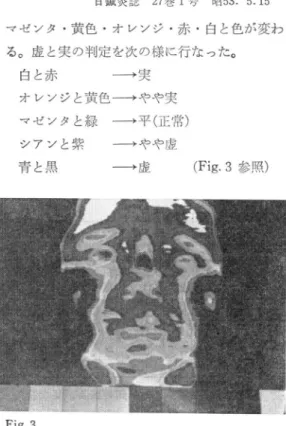
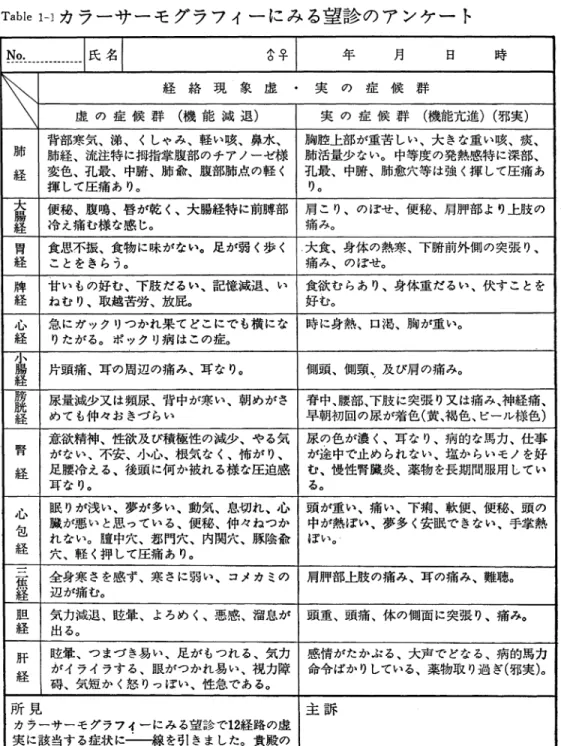
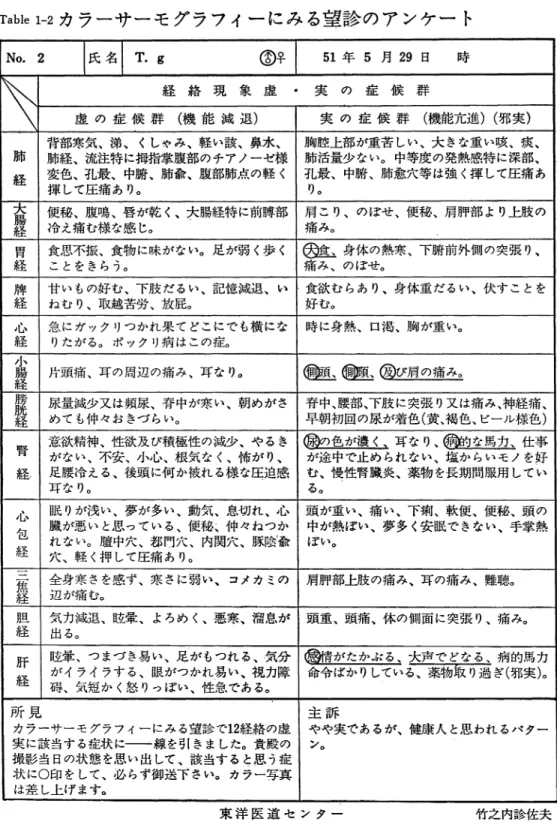
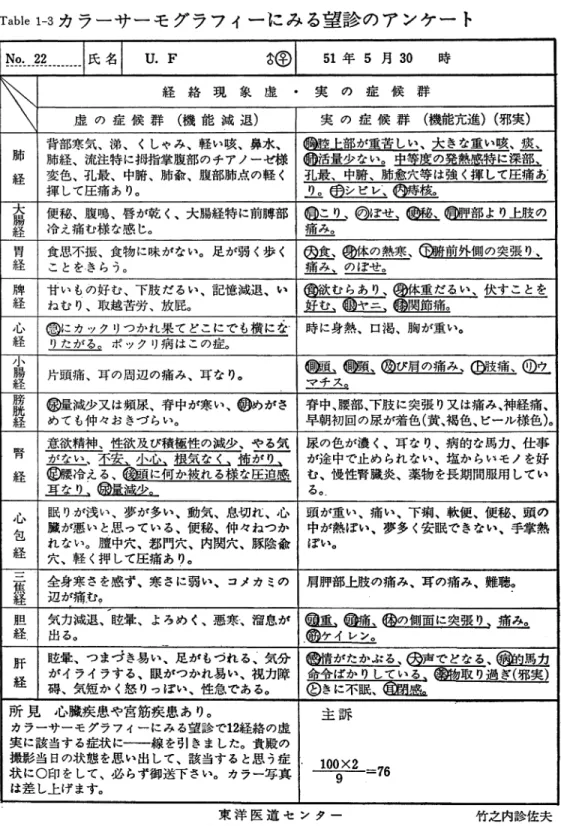
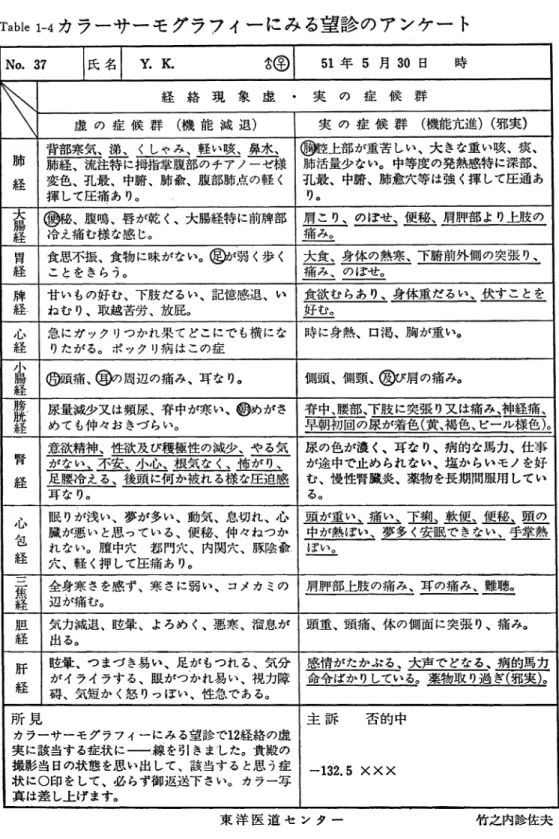
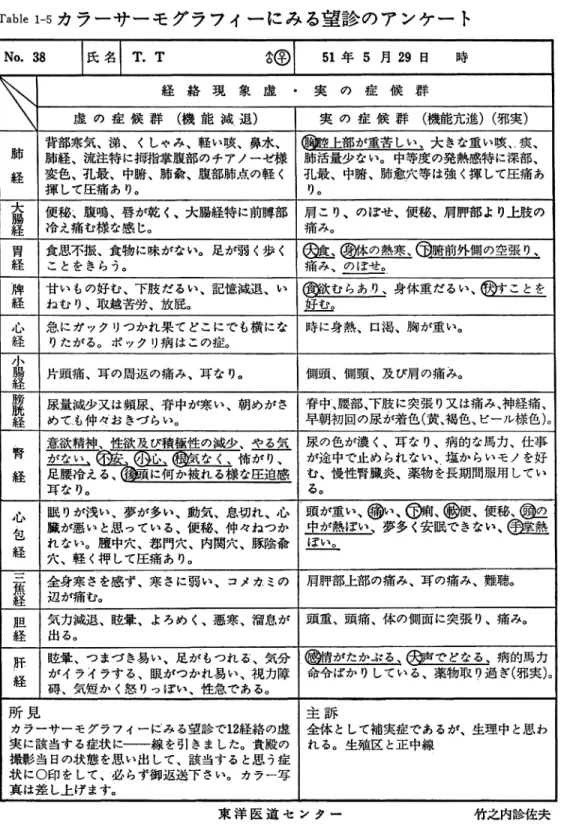
日 鍼 灸 誌 27巻1号 昭53.5.15 2. 使 用 機 具 (1) 医 用 カ ラ ー サ ー モ グ ラ フ ィ装 置 ・イ ン フ ラ ア イ102A (撮 像 機 と指 示 器) ・カ ラ ーTV (TVモ ニ タ ー, ス キ ャ ン コ ン パ ー タ ー, カ ラ ーTVモ ニ タ ー) (目 本 光 電 社 製) (2) 記 録 用 ・35mmカ メ ラ ・ポ ラ ロ イ ドカ メ ラ (3) 室 温は22℃∼25℃と し た。 (4) イ ン フ ラ ア イ102Aは, Fig. 1 参 照。 3. 研 究 方 法 36人 の カ ラ ー サ ー モ グ ラ フ ィの 映 像 を 顔 面 望 診 図Fig. 2 と 比 較 検 討 した。 カ ラ ー サ ー モ グ ラ フ ィ の 映 像 で, 黒 色 部 位 は 最 低 温 度 な の で 虚 と判 定 し, 白色 部 位 は 実 と し た。 カ ラ ー サ ー モ グ ラ フ ィは, 温 度が0.3℃の 上 昇 す る に し た が っ て, 黒 ・青 ・シ ア ン ・紫 ・ マ ゼ ン タ ・黄 色 ・オ レ ン ジ ・赤 ・白 と色 が 変 わ る。 虚 と 実 の 判 定 を 次 の 様 に 行 な っ た。 白 と 赤 → 実 オ レ ソ ジ と黄 色 → や や 実 マ ゼ ン タ と緑 → 平 (正 常) シ ア ソ と 紫 → や や 虚 青 と 黒 → 虚 (Fig.3参 照) カ ラ ー サ ー モ グ ラ フ ィに 依 り, 私 た ち は 実 験 者 の ほ と ん ど 可 能 な 限 りの 虚 実 を 判 定 す る こ と が 出 来 た。 私 達 は, 調 査 表 の 該 当 す る 項 目 に 棒 線 を ほ ど こ し, 患 者 は, 同 じ調 査 表 に 自分 の 主 訴に○印をつ け た。 そ し て 棒 線と○印の 比 較 検 討 を 行 な っ た (Table. 1)。 4. 結 果 私 た ち は, 私 た ち の 診 断 と, 患 者 の 書 い た も の とが, どの く ら い 一 致 し て い る か に よ っ て, 0∼100ま で の 点 数 を つ け た。 100点 は14例(38%), 91点 ∼99点 は1例(2 %), 81∼90点 は4例 (11.3%), 71点 ∼80点 は6 例 (16.3%), 61, 点 ∼70, 点 ごまこ2例 (5.7%), 51点 ∼ 60点 は2例 (5.7%), 41点 ∼50点 は1例 (2.8%), 10点 ∼40点 は3例 (8.5%), 9点 以 下 は3例 (8. 5%) で あ った。 51点 以 上 を 「良 」 と 考 え る な ら ぽ, 80.5劣 の 的 中 で, 良 い 結 果 が ら れ て い る。 Eig. 2 顔 面 部 望 診 図
Figure of Colour Thermography on Face
Table 1-1 カ ラ ー サ ー モ グ ラ フ イ ー に み る 望 診 の ア ン ケ ー ト
日鍼 灸 誌27巻1号 昭53.5.15
Table 1-2 カ ラ ー サ ー モ グ ラ フ ィ ー に み る 望 診 の ア ン ケ ー ト
東 洋 医 道 セ ン タ ー 竹之 内診佐 夫
Table 1-3 カ ラ ー サ ー モ グ ラ フ イ ー に み る 望 診 の ア ン ケ ー ト
日 鍼 灸 誌 27巻1号 昭53.5.15
Table 1-4 カ ラ ー サ ー モ グ ラ フ イ ー に み る 望 診 の ア ン ケ ー ト
東 洋 医 道 セ ン タ ー 竹 之 内診佐 夫
Table 1-5 カ ラ ー サ ー モ グ ラ フ ィ ー に み る 望 診 の ア ン ケ ー ト
日鍼 灸 誌 27巻1号 昭53.5.15
表6)
カ ラ ー サ ー モ グ ラ フ ィー に み る望 診 の ア ンケ ー ト
東 洋 医 道 セ ン タ ー 竹之 内診 佐夫
Tabie. 1-6
5. 実 験 症 例 (1) Fig. 4は, 健 康 人 と思 わ れ るパ ター ンで あ る。 これ に は, 特別 に注 目す る色調 の変 化 は な く, 顔 の輪 郭 は 明解 で あ る。 (2) Fig. 5は, 心 臓 疾 患 と子 宮 筋 腫 の パ タ ー ン の1つ で あ る。 黒 と 白 は, 心 臓 と 生 殖 器 の 部 位 を 示 し て い る。 そ の 他, 腎 ・腎 手 ・背 股 ・膝 脛 足 部 も黒 で 虚 証 を あ ら わ し て い る。 実 証 部 位 は, 肺 ・大 腸 ・脾 ・胃 ・小 腸 ・肝 ・胆 で あ る。 (3) Fig. 6は, 的 中 し な か っ た 例 で あ る。 私 た ち は, 胃 ・脾 ・膀 胱 ・心 包 ・三 焦 ・肝 経 の 色 を ま ち が っ て 認 識 し た。 実 と示 し て い る も の も の を, や や 実 と判 定 す べ き で あ っ た。 (4) Fig. 7は, 生 理 の 場 合 で あ る。 前 額 髪 際 に 白 色 が 見 ら れ る。 こ の 部 分 は 生 殖 器 官 の 機 能 を (5) Fig. 8は, 糖 尿 病 の1例 で あ る。 6. 結 語 (1) 私 た ち は, 望 診 図 を 使 う こ と に よ り, 不 問 診 に よ りか な り良 い 結 果 を 得 た。50点 以 上 の も の が, 80.5%で あ っ た。 Fig.4 Fig.5 Fig.6 Fig.7 Fig.8
日鍼 灸誌 27巻1号 昭53.5.15 た。 私達 は, 将 来 これ らの 解 明 を しな けれ ば な らな い。 (3) 私 達 は 今 回 の研 究 で, 心 臓 疾 患, 子 宮疾 患 (3例), 生 理(10例), 糖 尿 病(4例)に 特 異 な パ タ ー ソ の あ る こ とに 注 意 し た。 (4) カ ラ ー サ ー モ グ ラ フ ィは, 顔 面 の 視 診 に 有 効 で あ る と 思 わ れ る。 (〒164 中 野 区 東 中 野1-34-4)
Facial inspection
is one of the inspection
diagnostic methods in the fields of acu-puncture and moxibustion therapies. In the famous classic acupuncture book
"Rei-su", it is written that all energy and blood circulation of the 12 meridians and the 365 points come up to the face. Thus it can be said that all meridians concentrate in the face, the parts of which are divided into small areas which reflect the respec-tive meridian phenomenon and/or organs and visceral functions. The temperature
(cold, warm, frozen and heated), the colour and the gloss of these parts of the face suggest the Yin and Yang, the full-ness or emptiness of the meridians and these features help diagnose which meridi-ans may be treated effectively.
This inspection diagnostic method up to this time has been done by subjective ob-servation, however, the colour
thermo-graphy method is now used as a new in-spection method in our clinic.
A. Instruments Used in the Study
1) Medical Colour Thermography
struments:
Infra-eye 102A (consisting of camera and indicator)
Colour TV system (consisting of TV monitor, scan-converter and colour TV monitor) (Nihon-Koden Inst.) 2) For recording
35 mm Camera 1 and polaroid camera 1 3) Room temperature
22-25℃. are maintained during stud. 4) The block design of the Infra-eye
102A as shown in Fig. 1. B. Methods of Study
The faces of 36 volunteers were
photo-graphed by thermography and then the figures were analyzed and compared with the standard figure which is found in the classic acupuncture book. (Fig. 2) The black area in colour thermography which
shows the lowest temperature is considered to indicate emptiness and the white area fullness. As the temperature is increased the colour may change from black to blue, light-violet, violet, magenta, yellow, orange, red and white at the rise of every 0.3℃. The degrees of excitation and in-hibition may be divided as follows: (Fig. 3)
white and red fullness
orange and yellow slight fullness magenta and green average (normal)
light-violet and violet mild emptiness blue and black emptiness
According to the results of thermography, we could guess the possible complaints of
the volunteers. We checked these com-plaints on our specially designed inspec-tion diagnosis table and then compared the results with the table on which the volun-teers had marked their own complaints. C. Results
We gave marks from 0 to 100 depend-ing upon how closely our results coincided with what the volunteers had written.
Marks No. of
volunteers Percent Result
100 14 38 91-99 1 2.0 81-90 4 11.3 71-80 6 16.3 61-70 2 5.7 51-60 2 5.7 29-80.5% 41-50 1 2.8 10--40 3 8.5 under 9 3 8.5 7-19.5% 131
If we consider a mark of over 51 as good, 80.5% showed good results.
D. Examples
1) Fig. 4 shows one example which is the normal pattern. There are no remark-able differences in color and the contour of the face is rather clear.
2) Fig. 5 shows one example of a pa-tient who has cardiac disease and myoma uteri. Black and white show in the car-diac and the genital organ areas, and the kidney, upper arm, back of the thigh and lower extremity below the knee joint areas also tend to show emptiness. Fullness shows in the areas of the lung, large in-testine, spleen, stomach, small intestine, liver and gall bladder.
3) Fig. 6 is one case which reveals a very poor grade. We misunderstood the colour of the stomach, spleen, bladder, heart constrictor, triple-heater and liver area as indicating fullness when it should have been slight fullness.
4) Fig. 7 shows a case of menstrua-tion. On the forehead, just at the edge
of the hair line, a white colour is seen. This area is related to the genital organ functions.
5) Fig. 8 shows one example of a case of diabetes mellitus.
E. Conclusion
1. We obtained rather good results from non-question diagnosis when using the facial inspection diagnosis method. Those over a score of 50 points were 80.5%.
2. However, 19.5% showed completely opposite results and we must try to find the main reason for such poor results in future.
3. We especially noted the cases of cardiac diseases, uterine diseases (3 cases), menstruation (10 cases), and dia-betes mellitus (4 cases) among the ex-aminees.
4. Colour thermography is a useful method of investigation especially in the field of inspection diagnosis of the face.
(1-34-4, Higashi-Nakano, Nakano-ku, Tokyo 164, Japan)