Kyushu University Institutional Repository
エジプトにおける土壌被覆建築の適用可能性に関す る研究
ヘバ, ハッサン, アハメド, カメル, イスマイル
https://doi.org/10.15017/1931993
出版情報:Kyushu University, 2017, 博士(工学), 論文博士 バージョン:
権利関係:
The Possibility of Applying the Earth-Sheltered Building System in Egypt
A dissertation submitted to Kyushu University
in fulfillment of the requirements for the degree of
Doctor of Engineering
in
Department of Architecture
Graduate School of Human-Environment Studies
by
Heba Hassan
January 2018
To
The Next Generation of
Future Architects and Engineers,
This “message from the past” is just to unveil the topic, Please complete in the way.
ま たア ッラ ーは
,あ なた がた のた めに 創造 なさ れた 物で 日影 を創 り, 山々 に避 難の 場所 を蝕 け, ま たあ なた がた のた めに
,暑 熱を 防ぐ 衣服 と, 暴力 から あな たが たを 守る 衣を
,定 めら れた
。 か れが この よう にあ なた がた に対 し恩 恵を 成し 遂げ られ るの も, きっ とあ なた がた がア ッラ ー
( の意 志) に服 従, 帰依 する から であ る。
神 聖 なコ ー ラン
,〔 ア ン
・ ナ フ ル
〕81
In the name of Allah, the most compassionate, the most merciful. All praise is due to Allah, the Lord of the worlds.
I would like to express my deepest gratitude to everyone who had encouraged and supported me at different stages during the journey of this work.
First, I’m greatly indebted to my Japanese supervisors who contributed in the guidance of my research;
Professor Yasunori Akashi, who welcomed me to his laboratory at the beginning of my study at Kyushu University, and continued supporting me even through meetings after his moving to the University of Tokyo. He guided me to the most important points of engineering part of the research.
Associate professor Daisuke Sumiyoshi, who supported me since my first steps at Kyushu University until my final submission process of this work. His continuous support did not stop the time I was at Egypt every year, he kept his supervision even through E-mail and Skype meetings for the guidance of this research, and enhancements of the work quality, I appreciate.
Professor Takafumi Arima, who welcomed me in his laboratory for the middle two years of my journey. He made great efforts to guide me through the architectural part of this research.
I am also greatly indebted to my Egyptian supervisor, Professor Aly Ahmed, who supported me through my journey by guidance and encouragement, until the last moments.
My special thanks also go to the Japanese graduate students of our laboratory whom worked with me as a group work at the beginning of this research; Satoshi Ueda and Ritsuku Imai. Also, for Takahiro Ueno, and Wataru Kashima, for their help in the Japanese translation of the questionnaire survey, and their continuous support during my stay in the laboratory.
ACKNOWLEDGEMENTS
I would like to express my heartfelt gratitude to professor Gad El-Kady the former cultural and educational counselor, at the Egyptian Cultural and Educational Bureau at Tokyo, for his sincere support since my first moment at Japan, and continuous encouragements. I would also like to express my grateful thanks to professor Safwat Hassaballa, the director of Kyushu University office at Cairo, for his encouragement and continuous support.
I am also greatly indebted to my Egyptian supervisor at the master’s stage, professor Antar Abo-Korin, who taught me the foundation of the academic research field, and who primarily directed my first steps at this topic of the research about the Earth-sheltered buildings’ style.
During the questionnaire part of this research many professors in the Urban Design, Planning and Disaster Management and in Architecture departments supported me, either by themselves or by inviting their students and colleagues to participate in the questionnaire.
Deepest thanks and gratitude to Inas El-Sabban for her support in the English reviewing process through most of my published papers. Her English editing changed the research quality to a high extent.
Furthermore, I extend my thanks to post-graduate students at both Egypt and Japan who participated in the questionnaire and provided their opinions and futuristic point of views.
This research would have not been done without the financial support from the Japan Society for the Promotion of Science (JSPS), as I was enrolled under the RONPAKU program support.
Special thanks and gratitude to this organization.
My heartfelt gratitude to my friend Andini Radisia Partiwi for her continuous encouragements and support since my first days until last days at Kyushu University.
Enormous appreciation goes to my beloved parents whose unconditional emotional support, trust, and encouragement to my work was the fuel for this stage in my life.
Heba Hassan
January 2018
Fukuoka, Japan
2. Contents
ACKNOWLEDGEMENTS ... III CONTENTS ... I LIST OF FIGURES ... III LIST OF TABLES ... V ABSTRACT ... VI PUBLICATIONS ... VII NOMENCLATURE ... VIII
1. INTRODUCTION ... 1
1.1. Research Purpose and Objectives ... 2
1.2. Research Significance ... 2
1.3. Research Methodology ... 3
1.3.1. Simulation Model ... 3
1.3.2. Parametric Optimization ... 4
1.3.3. Questionnaire and Interviews ... 5
1.4. Organization and Research flow ... 6
2. THEORETICAL APPROACH ... 7
2.1. Background ... 8
2.2. Definitions ... 9
2.3. Classifications ... 9
2.4. Opportunities and Constraints ... 10
2.5. Case studies ... 10
2.5.1. Residential buildings ... 10
2.5.2. Small Clusters ... 14
2.5.3. Egyptian Experience ... 17
2.6. Literature review ... 18
2.6.1. Energy savings potential ... 19
2.6.2. Basement’s Thermal Performance Evaluation ... 22
2.6.3. Psychological Issues and Questionnaire Analysis... 23
2.7. Discussion ... 26
2.7.1. Application’s Possibility Guidelines ... 26
2.8. Conclusion ... 27
3. MEASURING PEOPLE’S PERCEPTION USING, PHOTO-QUESTIONNAIRE SURVEY ... 29
3.1. Methodology ... 30
3.1.1. Questionnaire Design... 30
3.1.2. Questionnaire Sample ... 30
3.1.3. Measures ... 31
3.1.4. Statistical Analysis Method ... 36
3.2. Results ... 36
3.2.1. Descriptive statistics ... 36
3.2.2. Inferential Statistics ... 43
3.3. Discussion ... 46
3.3.1. General Architectural Design Guidelines ... 46
3.3.2. General Urban Design Guidelines ... 47
3.3.3. Recommended Adaptation ... 48
3.4. Conclusion ... 49
3.4.1. Summary and Main contributions. ... 49
3.4.2. Limitations. ... 50
4. THE THERMAL COMFORT POTENTIAL BY SIMULATION ANALYSIS ... 53
CONTENTS
4.1. Climate analysis of the selected city at Egypt ... 54
4.2. Methodology ... 57
4.2.1. Measurments ... 57
4.2.2. Weather file ... 58
4.2.3. Ground temperature calculation process ... 59
4.2.4. Inputs for the Basement preprocessor... 61
4.2.5. Inputs of the simulated model ... 64
4.3. Results ... 68
4.3.1. Measurements’ comparisons above and underground ... 68
4.3.2. Ground temperature and basement comparisons ... 69
4.3.3. Thermal comfort analysis and comparisons ... 71
4.4. Discussion. ... 74
4.5. Conclusion. ... 75
5. PARAMETRIC OPTIMIZATION STUDY FOR EARTH-SHELTERED BUILDINGS ... 77
5.1. Genetic algorithm approach ... 77
5.2. Optimization. ... 80
5.3. Methodology ... 80
5.3.1. Calculation model ... 84
5.3.2. Objectives ... 85
5.3.3. Constraints ... 85
5.3.4. Variables. ... 86
5.4. Earth-sheltered Optimization Results... 87
5.5. Top floor Level Optimization Results ... 88
5.6. Optimization comparisons. ... 89
5.7. Post-optimization Results Analysis ... 92
5.7.1. Window wall ratio percentage (WWR%). ... 94
5.7.2. Cooling and heating set-points. ... 94
5.7.3. Building orientation... 95
5.7.4. Location Template. ... 96
5.8. Discussion ... 97
5.9. Conclusion ... 98
6. EARTH-SHELTERED BUILDINGS, DESIGN GUIDELINES ... 99
6.1. Issues of assessing the suitability ... 99
6.2. Methodology ... 101
6.2.1. Questionnaire and Interviews ... 101
6.2.2. Simulation Model ... 102
6.2.3. Parametric Optimization ... 102
6.3. Results ... 103
6.3.1. Architectural Design Guideline ... 103
6.3.2. Urban Planning Guidelines ... 109
6.3.3. Site Selection and Usage Suitability Guidelines. ... 111
6.4. Discussion ... 114
6.5. Conclusion and Future Prospects ... 115
7. CONCLUSION ... 117
7.1. Discussion ... 117
7.2. Recommendations ... 118
7.3. Future prospects ... 119
REFERENCES ... 121
APPENDICES ... 125
I. Appendices for Chapter 3 ... 125
Appendix E: Earth-Sheltered Building's Questionnaire, English form. ... 130
Appendix F:Earth-Sheltered Building's Questionnaire, Japanese form. ... 139
FIG. 1.1. ENERGY DISTRIBUTION PERCENTAGE ACCORDING TO THE BUILDING SECTOR, ... 1
FIG. 1.2. THESIS ORGANIZATION AND RESEARCH FLOW. ... 6
FIG. 2.1. ALONI HOUSE... 13
FIG. 2.2. JOE ERIC EARTH SHELTERED HOME... 14
FIG. 2.3. EARTH SHELTERED REST AREA ALONG INTERSTATE 77 IN OHIO. ... 14
FIG. 2.4. THE PROJECT MODEL OF FIRST PRIZE, ROYAL ACADEMY, BOVIS (GRAND PRIZE), 1994. ... 15
FIG. 2.5. THE COMMUNITY AFTER EARTH SHELTERING, WITH MAXIMUM ENERGY SAVINGS. ... 16
FIG. 2.6. EGYPTIAN TEMPLES WERE CARVED INTO ROCKS FOR A BETTER ENVIRONMENT. ... 17
FIG. 2.7. MOUNTAIN OF THE DEAD, SIWA, EGYPT. ... 17
FIG. 2.8. CROSS-SECTION AND PLAN OF THE OLD VILLAGE. ... 18
FIG. 2.9. EGYPT IS LOCATED IN THE ARID-DESERT-HOT ZONE ACCORDING TO KÖPPEN CLASSIFICATION. ... 19
FIG. 2.10. ANNUAL TEMPERATURE FLUCTUATIONS IN RIYADH FROM BELOW ZERO, ... 21
FIG. 3.1. A DIAGRAM CONCLUDING THE QUESTIONNAIRE PARTS AND THE CONTROL VARIABLES. ... 34
FIG. 3.2. A SCREENSHOT, CROSS SECTIONS’ FOUR LIKERT SCALE SUITABILITY, QUESTIONNAIRE’S QUESTIONS. ... 35
FIG. 3.3. EGYPTIANS AND JAPANESE ADJECTIVES OF EARTH-SHELTERED BUILDINGS’ SELECTIONS. ... 37
FIG. 3.4. MOST OF THE PEOPLE HAD A LITTLE KNOWLEDGE. ... 37
FIG. 3.5. THE SAMPLE MAJORS, THE POSTGRADUATE STUDENTS WERE THE HIGHEST IN BOTH SAMPLES. ... 38
FIG. 3.6. ARCHITECTURAL DESIGN CONSIDERATIONS FOR EGYPTIANS AND JAPANESE ... 38
FIG. 3.7. URBAN DESIGN CONSIDERATIONS FOR EGYPTIANS AND JAPANESE. ... 40
FIG. 3.8. CROSS-SECTION’S PREFERENCES FOR BOTH EGYPTIANS AND JAPANESE. ... 41
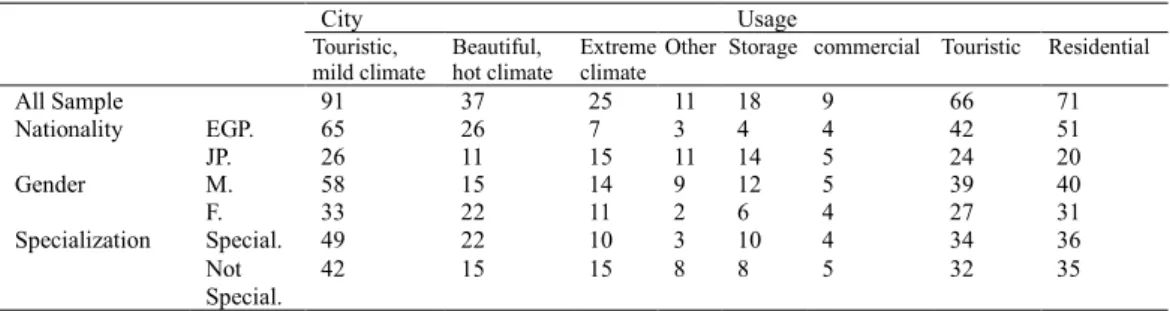
FIG. 3.9. SAMPLE’S CHOICES FOR THEIR PREFERRED CITY AND USAGE ... 43
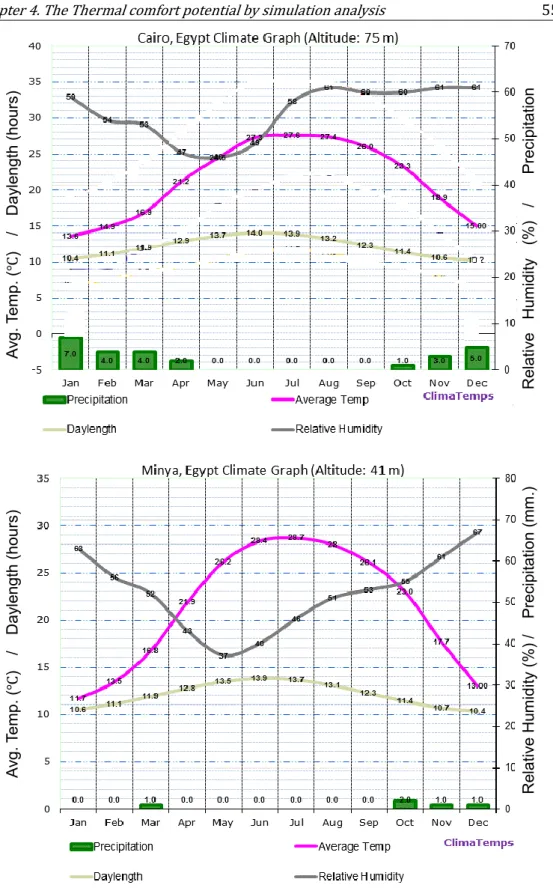
FIG. 4.1. COMPARISON BETWEEN MINYA AND CAIRO CITIES OF THE AVG. MONTHLY DRY BULB TEMP. ... 55
FIG. 4.2. DAILY DRY BULB TEMP., SHOWING THE HOTTEST AND COLDEST DAY. ... 56
FIG. 4.3. PSYCHROMETRIC ANALYSIS FOR MINYA CITY. ... 56
FIG. 4.4. PREDICTING TEMPERATURES UNDER THE GROUND SURFACE. ... 57
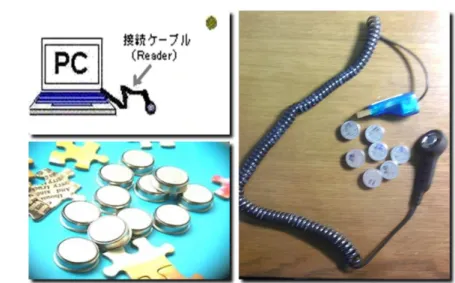
FIG. 4.5. THE HYGROMETER SENSOR FOR THE MEASUREMENT OF DRY BULB TEMP. AND RH%. ... 58
FIG. 4.6. A COMPARISON BETWEEN TYPICAL YEAR WEATHER FILE, AND ACTUAL MEASUREMENTS’ ... 59
FIG. 4.7. A FLOW CHART DESCRIBING THE GROUND TEMPERATURE AND BASEMENT’S SIMULATION PROCESS. ... 61
FIG. 4.8. THE BASEMENT ZONE’S ADJACENCIES CONDITIONS. ... 62
FIG. 4.9. CROSS-SECTION OF THE CALIBRATED BASEMENT FLOOR AND SLAB LAYERS ... 63
FIG. 4.10. THE ACTUAL SELECTED BUILDING VS. THE SIMULATED MODEL. ... 65
FIG. 4.11. THE TOP FLOOR RESIDENTIAL SIMULATED MODEL. ... 65
FIG. 4.12. THE RESIDENTIAL UNIT PLACEMENT IN THE BASEMENT LEVEL’S ADJACENCIES. ... 66
FIG. 4.13. THE CONDITIONED BEDROOM USAGE SCHEDULE. ... 66
FIG. 4.14. MEASUREMENTS COMPARISON BETWEEN DIFFERENT BUILDING STRUCTURES. ... 68
FIG. 4.15. GROUND TEMPERATURE ITERATION CHART, (OUTPUT OF BASEMENT PREPROCESSOR) SIMULATION... 69
FIG. 4.16. ZONE TEMPERATURE ITERATION CHART (OUTPUT OF DESIGNBUILDER/ ENERGYPLUS) SIMULATION. ... 70
FIG. 4.17. THE BASEMENT COMPARISON PROCESS, ... 70
FIG. 4.18. A COMPARISON BETWEEN THE CONDITIONED BEDROOM ZONE AT ROOF AND UNDERGROUND LEVELS. .... 71
FIG. 4.19. A COMPARISON BETWEEN THE UNCONDITIONED LIVING ZONE, AT ROOF AND UNDERGROUND LEVELS. .... 72
FIG. 4.20. HEATING AND COOLING LOADS FOR TOP FLOOR VS. BASEMENT OF THE CONDITIONED BEDROOM ZONE. .. 73
FIG. 4.21. THERMAL COMFORT COMPARISON BETWEEN TOP FLOOR AND UNDERGROUND FLOOR... 73
FIG. 5.1. A SCHEMATIC DIAGRAM SHOWING A GENERATION’S ONE CYCLE PROCESS. ... 79
FIG. 5.2. A SCHEMATIC DIAGRAM SHOWING THE MUTATION PROCESS ... 79
FIG. 5.3. THE GENERAL SCHEME OF AN EVOLUTIONARY ALGORITHM (EA) AS A FLOW-CHART. ... 81
LIST OF FIGURES
FIG. 5.4. THE SCORES OF THREE INDIVIDUALS ON TWO VARIABLES. ... 82
FIG. 5.5. THE PARAMETRIC OPTIMIZATION TRADE-OFF CLOUD STYLE PROCESS AT DESIGNBUILDER. ... 83
FIG. 5.6. THE ADJACENCIES OF THE TWO CALCULATED ZONES OF THE MODEL TO BE OPTIMIZED. ... 84
FIG. 5.7. THE RESEARCH OBJECTIVES TRADE-OFF SELECTION SETTINGS. ... 85
FIG. 5.8. CONSTRAINTS ARE LIMITS OF THE OPTIMIZATION PROCESS. ... 86
FIG. 5.9. VARIABLES ARE THE OPTIONS FOR THE OPTIMIZER TO CONSIDER PERFORMING CROSSOVER PROCESSES. .. 86
FIG. 5.10. EGYPTIANS GOVERNORATES’ BORDERS MAP, AND THE LOCATION OF THE FIVE SELECTED CITIES. ... 87
FIG. 5.11. MINIMIZE DISCOMFORT SUMMER ASHRAE 55 ADAPTIVE 90% ACCEPTABILITY & NET SITE ENERGY ... 88
FIG. 5.12. MINIMIZE DISCOMFORT SUMMER ASHRAE 55 ADAPTIVE 90% ACCEPTABILITY & NET SITE ENERGY ... 89
FIG. 5.13. A COMPARISON BETWEEN THE ROOF AND UNDERGROUND LEVEL’S “BEST-FIT-SO-FAR” CASES, ... 90
FIG. 5.14. SORTING THE PARETO FRONT CASES ACCORDING TO AN EVALUATION NUMBER. ... 93
FIG. 5.15. SORTING THE PARETO-FRONT CASES’ NET-SITE ENERGY CONSUMPTION ACCORDING TO EVALUATION NO. 93 FIG. 5.16. SORTING THE PARETO-FRONT CASES’ DISCOMFORT HOURS ACCORDING TO THE EVALUATION NO. ... 93
FIG. 5.17. THE WINDOW/WALL RATIO% TENDENCY FOR THE PARETO FRONT CASES AT EACH CITY... 94
FIG. 5.18. THE HEATING AND COOLING SET-POINTS TENDENCY FOR THE PARETO FRONT CASES AT EACH CITY. ... 95
FIG. 5.19. THE ORIENTATION TENDENCY FOR THE PARETO FRONT CASES AT EACH CITY. ... 96
FIG. 5.20. THE WEATHER FILE (LOCATION) TENDENCY FOR THE PARETO FRONT CASES. ... 96
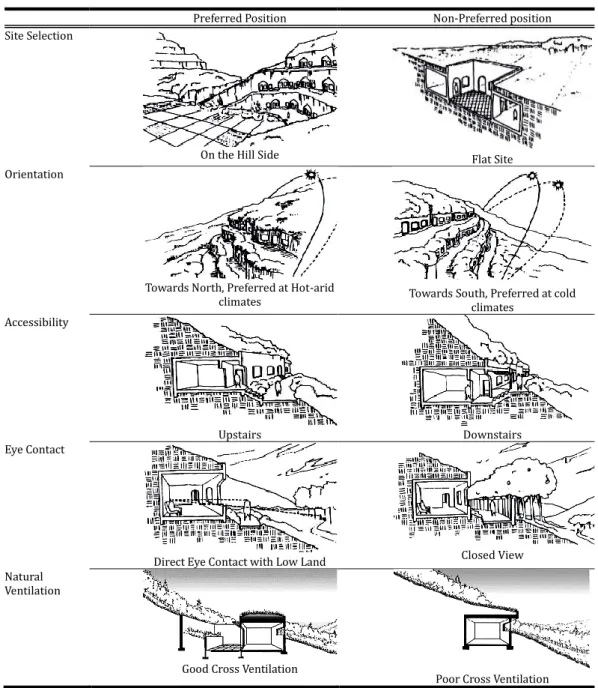
FIG. 6.1. (A) ZERO LEVEL ENTRANCE DIRECTION; (B) UPSTAIRS ENTRANCE DIRECTION. ... 105
FIG. 6.2. (A) STAIRWAY FOR MILD SLOPES; (B) CAR OR SHUTTLE BUS FOR STEEP SLOPES ACCESSIBILITY. ... 105
FIG. 6.3. (A) DIRECT EYE-CONTACT IS PREFERRED; (B) NORTH DIRECTION IS PREFERRED BY EGYPTIANS. ... 105
FIG. 6.4. EARTH SHELTERED CROSS SECTIONS’ TYPOLOGIES IN RELATION WITH THE ZERO LEVEL. ... 107
FIG. 6.5. THE DESIGNBUILDER PARAMETRIC OPTIMIZATION STUDY. ... 109
FIG. 6.6. THE EXTENSION DIRECTION POSSIBILITIES FOR AN EARTH-SHELTERED NEIGHBORHOOD. ... 110
FIG. 6.7. THE CLOSED (RIVER) TYPE IS THE RECOMMENDED FOR NEW COMMUNITIES. ... 110
FIG. 6.8. THE PREFERRED SLOPE GRADIENT FOR NEW EARTH-SHELTERED CONSTRUCTION IS 30% DEGREE. ... 111
FIG. 6.9. THE DETACHED URBAN FORM IS RECOMMENDED FOR GATHERING UNITS AT NEW COMMUNITIES ... 111
FIG. 6.10. AIN-SOKHNAH PORT VS. MINYA CITY, ... 112
TABLE 2.1. CLASSIFICATION OF THE EARTH-SHELTERED BUILDING TYPE. ... 9
TABLE 2.2. EVALUATING OPPORTUNITIES AND CONSTRAINTS RELATED TO EARTH-SHELTERING. ... 11
TABLE 3.1. CROSS SECTIONS’ SUITABILITY’S (MEAN) FOR WHOLE SAMPLE. ... 42
TABLE 3.2. NATIONALITY AND GENDER CHI- SQUARE TEST, APPENDIX A. ... 43
TABLE 3.3. CITY AND USAGE PREFERENCES CHI-SQUARE TEST, APPENDIX B. ... 44
TABLE 3.4. CROSS TABULATION FOR CONTROL VARIABLES, ACCESS PRETEST, AND POSTTEST. ... 45
TABLE 3.5. CITY AND USAGE CHOICES (2) TEST WITH NATIONALITY, GENDER AND SPECIALIZATION. ... 46
TABLE 3.6. ADAPTATION DESIGN GUIDELINES FOR ARCHITECTS, ACCORDING TO THE QUESTIONNAIRE RESULTS. ... 48
TABLE 4.1. INPUTS FOR THE BASEMENT PREPROCESSOR, THE EGYPTIAN LOCAL BUILDING MATERIAL PROPERTIES. . 64
TABLE 4.2. CUSTOMIZED INPUTS FOR THE BUILDING MODEL SIMULATION IN DESIGNBUILDER... 67
TABLE 5.1. OPTIMIZATION SETTINGS FOR BOTH OF THE ROOF AND UNDERGROUND LEVEL’S CASES. ... 85
TABLE 5.2. A COMPARISON BETWEEN ROOF AND UNDERGROUND LEVELS’ OPTIMIZATION RESULTS. ... 91
TABLE 6.1. SUGGESTED METHODOLOGIES FOR THE APPLICATION’S SUITABILITY ASSESSMENT PROCESS. ... 100
TABLE 6.2. COMPARING EFFICIENCY VALUES OF THE EARTH SHELTER BUILDING TYPOLOGY. ... 107
LIST OF TABLES
he main function of the building is to provide thermal comfort for users.
However, fulfilling this need became more difficult, especially in the harsh climate. This harsh climate raises the problem of the unsuitability of the ordinary building systems for those areas since it consumes a large amount of energy for the active air-conditioning systems, which are growing up to tremendous expenses.
One of the most effective techniques to achieve the trade-off between thermal comfort and low energy consumption in hot-arid climates is Earth-sheltering.
This research introduces a complete vision of this system, which aims to measure the suitability of applying the Earth sheltering technique at hot-arid climates, in Egypt as a case study. Through several topics; thermal comfort and energy savings perspective, architectural design guidelines, site selection and urban planning guidelines perspectives.
Moreover, measuring the balance between the thermal comfort, and energy savings through a parametric optimization analysis.
The research proves the hypothesis that the best thermal performance of the Earth sheltered buildings for energy savings is highly achievable in arid climates, rather than the moderate ones.
From the architectural perspective, the research proved that the main obstacle for application is only psychological due to lack of knowledge. From the photo-questionnaire experience, we gained satisfactory results about the system and positive attitudes.
Finally, this research presents site-specific guidelines, for architects and urban planners regarding the application of this technique for residential buildings.
T
ABSTRACT
参考論文 7編 1冊
1. The Possibility of Applying the Earth-Sheltered Building Type for Housing Projects between Humid and Dry Climates - Case Study Egypt and Japan.
International Society of Habitat Engineering and Design Conference 2012.
(平成24年12月3日) 共著者 Yasunori Akashi, Ahmed Aly, Takafumi Arima, Daisuke Sumiyoshi
2. Measuring the Possibility of Living in the Earth-Sheltered Building Type between Egypt and Japan.
Building Simulation Cairo 2013, Towards Sustainable and Green Life, Cairo, IBPSA- Egypt.
(平成25年6月23日) 共著者 Takafumi Arima, Aly Ahmed, Yasunori Akashi
3. Testing the Basements Thermal Performance as an Approach to the Earth- Sheltered Buildings Application at Hot Climates, Case Study (Egypt).
ASim 2014, IBPSA- Asia Conference Nagoya, Japan. (平成26年2月15日) 共著者 T. Arima, A. Ahmed, D. Sumiyoshi, Y. Akashi
4. Measuring people’s perception towards Earth-sheltered buildings using photo- questionnaire survey.
Sustainable Cities and Society 26, ELSEVIER. (平成28年5月28日)
共著者 Daisuke Sumiyoshi, Ahmed El-Kotory, Takafumi Arima, Aly Ahmed.
5. Earth-Sheltered Buildings in Hot-arid Climates: Design Guidelines.
Beni-Suef University Journal of Basic and Applied Sciences, ELSEVIER.
(平成29年5月11日)
共著者 Daisuke Sumiyoshi
6. Evaluation of Basement’s Thermal Performance against Thermal Comfort Model at Hot-arid Climates, Case Study (Egypt).
International Journal on: Environmental Science and Sustainable Development, IEREK Press. (平成29年9月7日)
共著者 Daisuke Sumiyoshi
7. A Discussion of The Application’s Possibility of The Earth-Sheltered Building Type in Egypt: Implementation Guidelines.
International Journal on: The Academic Research Community Publication, IEREK Press. (平成29年12月13日)
共著者 Ahmed Mohamed El_Kotory
PUBLICATIONS
Nomenclature for Chapter 4
Nomenclature Tav. Average monthly temperature, ℃.
Cp. Specific heat capacity of each layer, J/(Kg-ºk). Tn. Neutrality temperature (T neutrality), ℃.
K Thermal conductivity of each layer per unit area, w/(m-ºk).
V Volume of each layer per unit area, m3.
L Thickness of each layer, m.
m Mass of each layer, Kg. Greek letters
R Resistivity of each layer, ºk/w. ρ Density of each layer per unit area, Kg. /m3.
NOMENCLATURE
C HAPTER 1
1. INTRODUCTION
he energy problem at Egypt is growing higher every year, especially the electricity consumption of the residential sector compared with other sectors.
Egypt in numbers; • Area:1002450km2 • Population: 86502500 • Population density:84/ km2 • GDP: total $275.748 • Per Capita: $3213. (Osman 2013).
It could be noticed clearly by studying the energy distribution that the residential sector is the highest of energy consumption in comparison with other sectors. Moreover, the electricity consumption pattern in the residential sector is divided into nine parts, where the space cooling is consuming around 13%. It is expected to grow up to an extreme level, because of the recent trend to use the air-conditioning systems, if we did not control such consumption. (Fig. 1.1) (Aldali and Moustafa 2016).
Fig. 1.1. Energy distribution percentage according to the building sector, and the consumption pattern of the residential usage.
The research suggests using passive systems rather than the active ones, in an attempt to lower the energy consumption of the residential sector.
Recently, some passive design attempts had appeared on the architectural scene trying to solve the thermal comfort issue but had gained unsatisfactory psychological results. Such as: using arches, vaults, and domes.
T
This research is raising a call for sustainable building design of the Egyptian desert with a new architectural perspective using the Earth in construction to gain more integration with the environment and to add another new aesthetic dimension to the surroundings.
1.1. Research Purpose and Objectives
The main purpose of this research is to reduce the energy consumption in the residential sector. Therefore, we try to promote more thermal comfort building type in Egypt. To reach this purpose, we should grasp:
• The effectiveness of the thermal comfort of Earth-sheltered buildings at Egypt.
• The features of the Earth-sheltered buildings.
• The acceptability of living inside the Earth-sheltered buildings.
• Introducing general guidelines to architects and urban planners for the application of the earth-sheltered buildings at the early-design stage in the hot- arid climates.
Therefore, this research scope is focused on creating guidelines for architects, and urban planners who wish to work with the Earth-sheltered building system, especially in new communities of the hot-arid climates.
The main objectives of this research could be summarized in:
• Measuring the thermal comfort extent.
• Measuring the energy savings extent.
• Measuring people’s perception extent.
• Introducing architectural design guidelines.
• Introducing urban planning and site selection guidelines.
1.2. Research Significance
To simulate the Earth sheltered construction, one must calculate the prospective ground temperature, in order to gain exact simulation outputs.
Although many previous types of research touched the topic, they did not describe in detail how to calculate or simulate the ground temperature at Egypt, with integration to the whole building simulation.
There is no previous optimization analysis study for Earth sheltered buildings using the genetic algorithm approach for site-specific guidelines in hot arid climates or in Egypt.
Our research created a benchmark for simulating and optimizing basements and earth- sheltered constructions at hot arid-climates, especially Egypt.
To apply such kind of buildings to a wide sector, it is of utmost importance to measure people’s attitudes towards living or dealing with it, the subject that is not sufficiently covered in the literature. Although some researchers spotted the light on it, they recommended not to generalize their outcome to the public.
Our research significance at this point is that the results could be generalized to the public.
Therefore, we could grasp some architectural and urban design guidelines for architects and urban planners for the implementation stage at new communities.
1.3. Research Methodology
1.3.1. Simulation Model
As it was noted in previous researche that Earth-sheltered buildings could be above or under zero level (Sahar N. Kharrufa 2008).
Therefore, to measure the effect of Earth contact with the building on the thermal comfort and energy savings, it was recommended to measure a basement model.
Hence, we calibrated a basement model in Al-Minya city at Egypt, as a case study of the harsh hot-dry climate.
Using the Basement preprocessor of the EnergyPlus we calculated the heat flux and the soil surface boundary temperature for the 3D heat transfer between the building and the soil. We adopted an iterative approach to reach a convergence of the ground temperature, which was the main sensitive input of the DesignBuilder/EnergyPlus for calibrating the basement model.
Moreover, we calibrated two zones from the last floor residential apartment;
conditioned bedroom and unconditioned living. In order to show the difference between the basement and last floor, we used the same last floor plan and operating schedules as a hypothetical displacement in the underground level.
We did not gain direct results from this step, rather than preparing the accurate model inputs for the next step of the parametric optimization.
1.3.2. Parametric Optimization
We performed a parametric optimization study using the genetic algorithm provided by DesignBuilder/EnergyPlus software V4.7 to reach the optimal performance of the building with the best combination of design variables.
• Objectives: Was to reach the trade-off between minimizing the discomfort summer ASHRAE 55 Adaptive 90% acceptability, and minimizing the net site energy consumption, which typically conflicts.
• Constraints: We excluded the high discomfort hours from the results, choosing only the cases with no more than (1000 hrs./year) per year, discomfort summer ASHRAE 55 adaptive 80% acceptability.
More than this hour’s number, we considered them as failed constraint cases.
• Design Variables: Were the combination of five aspects:
- Window/Wall ratio percentage, ranging from 10-50% with 5 steps increment, for the building as a target object, resulting in 9 cases.
- Orientation, ranging from 0°-315° with 45° steps increment, for the building as a target object, resulting in 8 cases.
- Location template, with 5 options of the cities’ weather files inputs (Ismailia, Sharm-El-Sheikh, Al Minya, Marsa-Matrouh, Al Kharga), for the building as a target object, resulting in 5 cases.
- Cooling set-point temperature, ranging from 20-28°C with 1°C step increment, for the conditioned bedroom zone as a target object, resulting in 9 cases.
- Heating set-point temperature, ranging from 18-24°C with 1°C step increment, for the conditioned bedroom zone as a target object, resulting in 7 cases.
After the parametric optimization process, we chose the optimal design variables combination for the design guidelines recommendations, in accordance with the questionnaire results experts’ recommendations.
1.3.3. Questionnaire and Interviews
The questionnaire sample was (n=164) of Egyptians and Japanese, it passed three sequential steps:
• A pilot study photo questionnaire, with a sample of Egyptians’
architecture fourth-year grade undergraduates, postgraduate architects and architecture university teachers. Questions were in Arabic language and were moving around their attitudes and reactions. This stage was followed by interviews with the respondents (Ismail et al. 2013).
• The interviews stage was done at Egypt with Egyptian architects and at Japan with Japanese architects, to measure their attitudes about the Earth-sheltering technique and recommendations about the final questionnaire design (Heba Hassan et al. 2016).
• The internet form photo-questionnaire was the last stage which was designed to measure architecture specialists’ attitudes. Besides, contribution to their experience in choosing the most appropriate architecture, site selection, and urban design guidelines. The sample was limited to postgraduate students, architecture specialists, and architecture university teachers. Questions were designed in a photo comparison way in an internet form. There were two forms; English language for Egyptians, and Japanese language for Japanese. Afterwards, a comparison was made between both of their attitudes and different choices directions, as a representative of different climates and attitudes (Heba Hassan et al. 2016).
Results obtained from the questionnaire responses passed a chi-square test to be able to generalize the results to the public. We had chosen the significant results only for the design guidelines’ contribution.
1.4. Organization and Research flow
As Figure (Fig. 1.2) shows, the thesis organization and the research flow. It could be divided into three main parts:
• Introduction and Inspiration, which contains chapters 1, 2.
- The introduction.
- The theoretical approach to the Earth sheltered buildings.
• The research core, which contains chapters 3, 4, 5.
- Measuring people’s perception using photo-questionnaire survey.
- Measuring the thermal comfort and model comparisons using simulation analysis.
- Parametric Optimization study for Earth-sheltered buildings.
• The complete research vision and conclusion, which contains chapters 6,7.
- The design guidelines for earth-sheltered buildings.
- The research conclusion.
Fig. 1.2. Thesis organization and research flow.
C HAPTER 2
2. THEORETICAL APPROACH
his chapter is discussing the Earth-Sheltered building type with analytical point of view.
In this context, it started by a brief definition and classifications about this type, and studies the opportunities and constraints related with the urban and architectural design. Besides, it displays a quick overview of the contemporary use which is concentrated on the residential use all over the world.
Afterwards, the research makes a brief explanation for some case studies of this building type at both of the residential and small clusters levels.
The chapter mainly focuses on discussing the possibility of using the Earth-sheltered building type in the housing projects at the Egyptian deserts with its harsh climate, through arguing that Earth-sheltered housing would be more appropriate or not.
Besides, it examines the adaptation of the existing application constraints of this type in Egypt. The research suggests some urban and architectural applicable recommendations to overcome some of these constraints at different climate situations.
Finally, the research recommends using this type of buildings for housing projects in the new communities in the Egyptian deserts, for better environment.
T
2.1. Background
The energy crisis has been alarmingly increased during last decade. This in turn induces Architects to look for a suitable building system, which can effectively lower the energy consumption. There have been many attempts to reach this goal.
However, one of the most effective systems that are found to be capable of saving the energy inside buildings is the use of the earth cover as an effective insulator (Jhon Carmody and Sterling 1993). In addition, it can be considered environment friendly as it protects the Earth cover against desertification (Woods 2000).
The Earth-Sheltered Construction system is not a new style nor extinct. Traditionally, it had been used effectively all over the world as an energy conservative building system, there are many Earth-Sheltered buildings built for various purposes (Golany 1983). It started with living in the existing and excavated caves in the ancient eras. Also, it had been used as Temples and Tombs at the ancient civilizations such as Pharoses Tombs.
The Earth-Sheltered usage for housing purposes has been considered the most common especially in harsh climates and relatively among the poor class of people in order to save the land surface for other purposes, or more protection from the harsh climate and the security reasons. There are many vernacular cases in China, Turkey, Iran, and North Africa (Tunisia), and many others (Al-Temeemi and Harris 2004).
The Modern Earth-Sheltered architecture developed later to include other uses, especially Housing. The main objective to use this style is saving energy by the isolation of earth cover and other environmental passive solar-cooling or heating, passive ventilation systems (Wines 2000).
The modern samples use the same concepts in the traditional vernacular architecture but with more development and technology.
The Earth-sheltered architecture has some special basic characters (its classification types, opportunities and constraints) (Golany and Ojima 1996; Jhon Carmody and Sterling 1993).
2.2. Definitions
At the first glimpse when we mention the Earth-Sheltered buildings; it may be thought that it is completely under the zero level, whereas, it is just one kind of its classifications according to relation to the surface. On contrary, the modern examples of the Earth-Sheltered buildings are usually existed above zero level but are covered with a soil layer.
Earth shelters could be defined as: “structures built with the use of earth mass against building walls as external thermal mass, which reduces heat loss and maintains a steady indoor air temperature throughout the seasons”(Anselm 2012).
2.3. Classifications
There are many classifications of Underground Architecture depending on many characters (use or purpose, construction system, relation to the surface, opening relation to the surface). The major construction concepts are the bermed or banked with earth, the envelope, or the true underground type (Anselm 2012).
Therefore, studying the types and classification procedures is very important before going deep through the research in order to find the possibility of taking advantage of the geo- space for the design purpose either functionally or aesthetically. This research tried to combine different classification major types, as shown in (table 2.1).
Table 2.1. Classification of the Earth-Sheltered building type.
(H Hassan et al. 2014).
Through studying the classification, basements could be considered as the underground type of the Earth-Sheltered buildings. Accordingly, the research started by measuring its thermal performance, to predict the other types’ thermal performances with simulation programs in future research.
2.4. Opportunities and Constraints
There are many opportunities for the Earth-Sheltered building system we can make use of it. On the other hand, the drawbacks of this building type which we can avoid with good design, are focused on the main reason for refusing to be underground especially (psychologically and physiologically), and how to overcome these bias, as in (table 2.2).
2.5. Case studies
The Earth-Sheltered Architecture has been commonly used worldwide within the Housing sector rather than the public one (Carmody and Sterling 1985). Sterling supports this note when he made several studies on workers at factories, libraries, and governmental buildings. He found that the productivity had been lowered as much as workers are isolated from the natural environment outside. Besides, the air quality is relatively poor(Jhon Carmody and Sterling 1993).However, Ojima conducted many types of research on workers at Japanese libraries, he gained very good results of satisfaction about the working environment they are working at (Golany and Ojima 1996).
This chapter is concentrating on the domestic use of Earth-sheltered building style, as it is the most common nowadays. The researcher believes that the negative attitude towards Earth-Sheltered homes will disappear with evidence of successful designs found in several parts of the world (Heba Hassan et al. 2016; Ismail et al. 2013).
2.5.1. Residential buildings
One of the most significant earth-sheltered buildings in modern times is the Aloni House. It was built in Anti-Paros Island in Greece and won the Greek Piranesi Award in 2009 (Anselm 2012). The overall shape of this long rectangular structure responds to green needs (controlled natural light, heat and cooling crosswinds) as well as the slopes of two adjacent hillsides.
Table 2.2. Evaluating opportunities and constraints related to Earth-sheltering.
(Jhon Carmody and Sterling 1993) Category Sub-category
T he E ff ect of Bein g Un d er gr ou nd
Climate Isolation from Harsh Climate. Poor Ventilation if not Properly Designed.
Natural Hazard Protection
High Protection from Natural Hazards like (Earthquakes, Floods, Sandy Storm, Fire). But if Entrances were not well Designed, it will be Flooded, Buried or Smoke Confined.
Security High Security at all levels, but Poor signals.
Si te S ele ction , Plan ni ng & Geolo gy
Topography
Flat Easy Access, No Privacy.
Sloped Good Sewage, difficult water pumping.
Opened Good Ventilation and opened Natural View.
Closed Poor Ventilation and poor view.
Geology Some Geological Structures are more Suitable, but others are impossible to build on it.
Earth Cover
Gravel Layer
Hard Lime Stone
Sand Stone
Site Planning
It needs a more in-between area to be built above zero level, but it will be more helpful if it is built totally underground within Large Cities.
Build in g Desi gn a nd A esthet ics.
OutdoorsKeeping Historical places site theme without a big change, but if Entrances not designed well, it will give a very bad impression.
Indoors
It enables the creative environment for Designers, but if poorly designed, it will give a very bad impression.
E conom ic I ssues.
Initial Cost
Is very high, but if we can use the Mountain Rocks as a building material, it will lower the initial cost.
Long Run Cost
Is very low compared with Conventional buildings, but if poorly designed it will raise maintenance cost.
Physiology and Psychology.
Physiologically, poor ventilation affects air quality, therefore, affects the Health.
Psychologically, most people do not like to be under a ground cover, even if it is above zero level; it has a bad image in the back mind.
Building Codes and Low.
To get a permission to build totally Underground Building, will be more difficult, according to the Ventilation and Natural Light codes; which are different according to the place and Country.
The house emerges only in the center, and it looks like a half-buried contemporary underground home, as shown in (Fig. 2.1).
Fig. 2.1. Aloni House.
(a) View from the hilltop (b) from the top of the house (c) Opening leading to the courtyard (d) The central courtyard (e) Interior view of the living room (f) Interior view from the kitchen. (Images by Julia Klimi), (Anselm 2012).
Joe Eric and his wife have been lived in this home since 1985 until now, at Cincinnati, Ohio. They believe to reach the goal of a world free of fossil fuel by the year 2020. They tried to collect and research for solar information, as much as possible before building the home, from different sources. They built their home themselves with little help other expertise.
The home is very bright and has cross ventilation with low relative humidity inside. It consists of three bedrooms and a sunroom as a living room. At winter, the air is heated at the sunroom then forced through ducts of gravel bed under the house, worming the floor area by radiation.
At summer, the deciduous tree shade is preventing the Sun angle to penetrate the home, and cold air is collected through the gravel bed at night to reduce the home temperature next day long. The home is very light and bright, as shown in (fig. 2.2), (http://www.joe-davis.com).
Fig. 2.2. Joe Eric Earth sheltered home.
Many other examples of the Earth-sheltered buildings at its modern form in the residential sector have been analyzed through previous pieces of research, however, most of them at cold climates (Alkaff, Sim, and Ervina Efzan 2016; Kaliampakos et al. 2014), (Fig. 2.3). Is an example of the rest area at Ohio (Hoyle 2011).
Fig. 2.3. Earth sheltered rest area along Interstate 77 in Ohio.
2.5.2. Small Clusters
Since the research focuses on the study of the applicability of this method of development projects at the Egyptian deserts; the examples will be limited to viewing and analyzing of communities that used this method in the world and the extent of sustainability and compatibility with the surroundings of each site.
1) Residential community of monks
The Holy Island, Scotland, Architects; Andrew Wright & Consultants. The community cluster was divided into two separate buildings; for "Monks" and for "Nuns". It had been directed towards the south in an attempt to get the highest possible acquisition warming.
The design team tried to reach the maximum level of integration between man and surrounding nature in perfect harmony, and a high degree of self- sufficiency in most aspects of water, food, energy, and sanitation.
There are parts of the bottom of the residential terraces used in the cultivation of wheat, and the top of the island is used as places for "Lama"
pens. Water is collected naturally from rain and groundwater and is distributed across the island using the gravity. The sewage is discharged in long wells deep in the soil, due to gravity.
The community was designed and excavated into the soil in order to consume the least amount of energy. Until now, statistics and figures show that the community had consumed only 32% of the consumption compared with conventional buildings at the adjacent sites. And the rest of required energy is obtained from the wind blowing on the island. (Fig. 2.4).
Fig. 2.4. The Project Model of First Prize, Royal Academy, Bovis (Grand Prize), 1994.
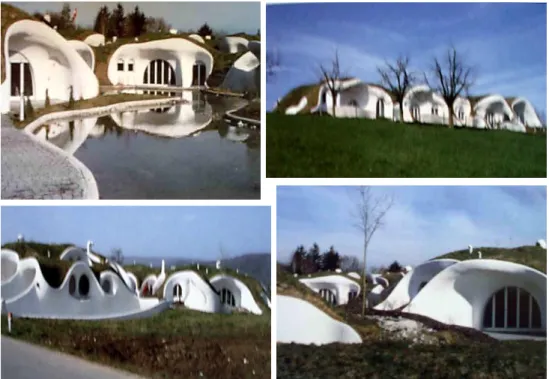
2) Urban cluster, Daitkon, Switzerland.
It was the duty of the architect "Jencks" and his wife "Keswick" to plan a residential community for the government office staff in Switzerland.
Both had been surprised that the site is scheduled to be built is lying on a series of small hills integrated with a number of old lakes that had been formed due to rainwater over years, randomly with a total length of about 120 meters.
The couple decided to keep the situation as it is and respect the Nature. They made a teamwork from experienced builders to accomplish that task. The very unique and attractive thing about the teamwork was that the design and implementation were very close to the original site nature.
In addition, the housing community achieved a high level of energy saving, which was the main objective on the top of a list of priorities that must have been achieved by the project. This project hits the finest example of what can be achieved at minimum cost and maximum utilization of natural resources available at the site, with the highest level of innovative design. (Fig. 2.5).
Fig. 2.5. The community after Earth sheltering, with maximum energy savings.
2.5.3. Egyptian Experience
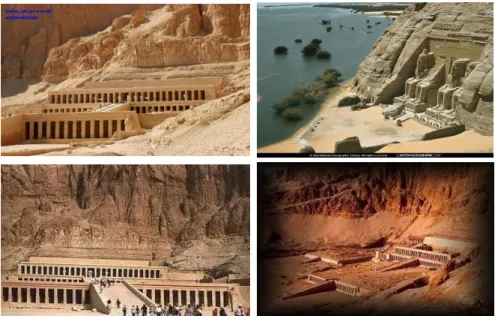
The Earth-Sheltered construction at Egypt is not found as a domestic use until now, it is all used as tombs at different eras. Pharos made some temples earth-sheltered by digging it into the mountains like Abu Simple and Hatshepsut temples, (Fig. 2.6).
Fig. 2.6. Egyptian temples were carved into rocks for a better environment.
Pharos understood that it will be cooler than the outside atmosphere at this very hot city (Luxor). Later, Egyptians found other tombs at Siwa city. But, they did not find dead people at it. So, they used it later as homes. It is called the Mountain of the Dead (Gebel El Mawta) (Fig. 2.7).
Fig. 2.7. Mountain of the Dead, Siwa, Egypt.
At 1980th. Hassan Fathy, the great Egyptian architect built the new (El Gorna) village for farmers, Qena City. The old village was carved into rocks.
However, people refused to live in the new village, as it was similar in style to the tombs. Unfortunately, now there is no one at both villages, (Fig. 2.8).
Fig. 2.8. Cross-section and plan of the old village.
From the previous examples it is obvious that:
• The Earth-Sheltered architecture suites many environmental conditions, extreme weather, and sometimes contradictory, where there were many examples in the very cold or hot regions.
• The use of the Earth-Sheltered building type is increasing day after day, with new uses and activities.
• The ancient and modern examples use the same concept of passive treatment for thermal comfort, lighting, and ventilation, but with more innovations in the design techniques and materials.
2.6. Literature review
In this section, we demonstrate the energy savings of the Earth-sheltered buildings, the ground temperature calculation methods, and the psychological issues as well.
2.6.1. Energy savings potential
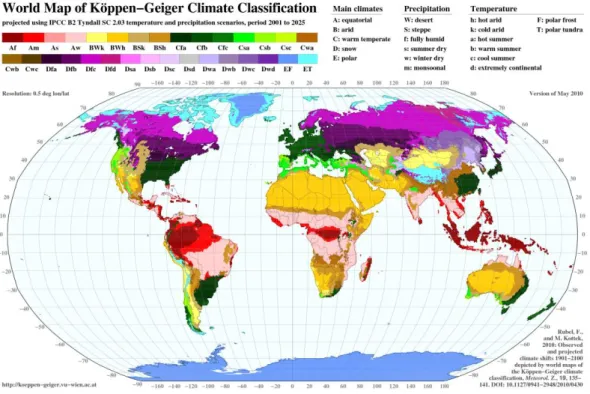
Egypt is classified as arid-desert-hot climate(BWh) according to the world climatic zones classified by Köppen-Geiger classification method, (Fig. 2.9) (Rubel and Kottek 2010).
That derives the way towards searching for a sustainable solution to reach thermal comfort and energy savings.
Fig. 2.9. Egypt is located in the arid-desert-hot zone according to Köppen classification.
The building envelope structure design as a passive way to reach thermal comfort is a non-ending issue, many types of research were done in this field.
The Earth-sheltered houses are often constructed with energy conservation and savings in mind. Owing to its very high thermal capacity, the temperature of the ground is lower than that of the outdoor air in summer and higher in winter. Consequently, the heating and cooling energy of a building considerably sunk into the ground are lower than that of a corresponding aboveground building (M. Staniec and Nowak 2011).
Not only the temperature difference between the exterior and interior is reduced, but mostly because the building is also protected from the direct solar radiation (Sahar N. Kharrufa 2008; Sheta 2010).
The Earth's mass absorbs and retains heat. Over time, this heat is released to surrounding areas, such as an earth shelter. Because of the high density of the earth, changing the earth’s temperature occurs slowly. This is known as
“Thermal lag”. Because of this principle, the Earth provides a constant temperature for the underground shelters, even when the outdoor temperature has great fluctuation(Hoyle 2011).
Moreover, basements required much lower cooling loads to reach thermal comfort, because it is not exposed to the outside environment, even at (-1m.) level. (Sahar N. Kharrufa 2008).
Other characteristics include the reduction of air infiltration within the dwelling because three walls of the structure are mainly surrounded by earth, the very little surface area is exposed to the outside air (Anselm 2012).
This alleviates the problem of warm air escaping the house through gaps around windows and door.
Furthermore, the earth walls protect against cold winter winds, which might otherwise penetrate these gaps. However, this can also become a potential indoor air quality problem. Healthy air circulation is key (Hoyle 2011).
Since most of the modern earth-shelters are built with concrete, which can absorb the excess energy from the soil. This absorbed heat is naturally released back into the building whenever the indoor air temperature is below the thermal mass, as shown in (Fig. 2.10).
A typical relationship between the annual air temperatures and corresponding temperature fluctuation below ground surface(El-Din 1999).
Sherief A. Sheta, concluded the energy saving benefits reasons of earth sheltering in four main points (Sheta 2010):
1) Reduction of conduction, due to earth mass.
2) Flattening peak conditioning loads.
3) Controlling air infiltration.
4) Cooling through evaporation, due to greening the roof.
Fig. 2.10. Annual temperature fluctuations in Riyadh from below zero,
to 48℃ and expected temperature fluctuations at (3.0m.) below ground level between 14℃ and 24℃.
Okba developed a checklist for envelope design techniques, based on the main elements of the envelope design (Okba 2005).
Sadineni et. al., introduced very rich study review about the passive techniques for the building envelope, one of them was the thermal mass to maximize the thermal latent heat storage (Sadineni, Madala, and Boehm 2011).Later, Kharrufa tested many passive techniques against the cooling loads using monitoring equipment to test the effectiveness extent of each technique at the hot-arid climates (S.N. Kharrufa and Adil 2012).
At Saudi Arabia, Alaidroos and Krarti performed multiple monitoring tests on different passive cooling systems, to select the best combination of which could give the best performance for lowering the cooling loads (Alaidroos and Krarti 2016).
Regarding the design guidelines in general issues, Takkanon tested many design variables against thermal comfort limits in Bangkok and provided design guidelines for both naturally ventilated and air-conditioned row houses in Bangkok (Takkanon 2006).
Therefore, we may consider the Earth-sheltering technique as one of the ways to reach thermal comfort passively, through enlarging the thermal capacity of the building envelope and maximizing the thermal lag of heat transfer of the walls (Carmody and Sterling 1985).
2.6.2. Basement’s Thermal Performance Evaluation
As earth-sheltered buildings could be defined as the structures built with the use of Earth mass against building walls as external thermal mass, (Anselm 2012). We might consider the basements as one kind of earth sheltering technique (Heba et al. 2012).
Carmody and Sterling analyzed the effect of earth integration on heating and cooling in a conceptual way, for winter and summer performance. Moreover, providing a regional design approaches based on different climate conditions (Carmody and Sterling 1985).
Regarding the ground temperature profile variation with depth, many researchers developed their own numerical expression models to predict the heat flow inside the ground (Al-Temeemi and Harris 2003; Derradji and Aiche 2014; El-Din 1999; Janssen, Carmeliet, and Hens 2004; Lazzarin, Castellotti, and Busato 2005; Serageldin et al. 2015; Maja Staniec and Nowak 2016).
In terms of thermal comfort in underground spaces, some researchers developed a mathematical model for calculating the heat transfer, then calculated the thermal comfort improvements using Predicted Mean Vote (PMV). However, it was a hypothetical model only without actual measurements. (Szabó and Kajtár 2016).
Anselm used fluid dynamics simulation program (Phonics-VR) to predict the energy savings in the earth-sheltered model as a whole building simulation (Anselm 2008). Later, 2009 Ip. and Miller monitored the thermal performance of an Earth-ship, as a kind of earth-sheltered buildings (Ip and Miller 2009).
However, simulations only or monitoring only is not enough for a complete vision of the issue, one should integrate both for a valuable research.
The most innovative and powerful pieces of research performed a comparison between the measured and simulated data, using simulation programs with and/or without mathematical models to predict the boundary condition temperature, and simulate the whole building performance (Andolsun et al.
2011; Freney, Soebarto, and Williamson 2012; Sahar N. Kharrufa 2008; Kumar, Sachdeva, and Kaushik 2007; M. Staniec and Nowak 2011).
2.6.3. Psychological Issues and Questionnaire Analysis
Most of the previous pieces of research were concentrated on measuring people’s attitudes with buildings, about windows proximity with classrooms and office buildings. All of which had proved the hypothesis that productivity, psychology, and physical comfort had increased with direct windows contact (Aries, Veitch, and Newsham 2010; Barrett et al. 2015; Jhon Carmody and Sterling 1993; Nagy, Yasunaga, and Kose 1995; Niroumand, Zain, and Jamil 2013a, 2013b; Yildirim, Akalin-Baskaya, and Celebi 2007).
As this research is mainly predicting and measuring about something still not applied, we used the photo-questionnaire technique.
Researchers used it with buildings and urban planning, in different topics, for predicting preferences and attitudes, (Hammitt, Patterson, and Noe 1994;
Santosa, Ikaruga, and Kobayashi 2013; Sullivan, Anderson, and Lovell 2004).
Valuable researches about assessing the suitability and attributes of Earth- Sheltered buildings at hot-arid climates were introduced (Al-Temeemi and Harris 2004; Sheta 2010). They are depending on the theoretical analysis and created an organized guidelines and Earth-Sheltered attributes. Although the Earth-Sheltered buildings had proved very high level of thermal comfort experimentally (Benardos, Athanasiadis, and Katsoulakos 2014; Derradji and Aiche 2014; Van Dronkelaar et al. 2014; H Hassan et al. 2014; Kaliampakos et
al. 2014; Tundrea et al. 2014), but still the application is not widespread in the world.
Even many architects think that it is only limited to basements or underground structures (Bobylev 2010; Kaliampakos et al. 2014).
Two recent books where Basil and Akubue talked about the Earth-Sheltered construction on its modern form, regarding the energy savings potentials, benefits and drawbacks, construction typologies, and the structural integrity (Anselm 2012; Hoyle 2011), in details for deep seekers about the system.
The relative researches to this work were since the eightieth; no further researches on the acceptability of Earth-Sheltered buildings using a questionnaire survey analysis had been published, until the pilot study of this research at 2013 (Ismail et al. 2013).
At Japan, there are two recent types of research about the acceptability of living at the basements (Kazumori and Yuske 2004; Mariko, H, and Taguchi 1999), but it is not recommended to do so.
The research team at Oklahoma university 1980, gained results from 34 questionnaires from people who already participated in designing their earth-sheltered houses. The majority felt satisfied by the energy savings, whether 40% felt dissatisfaction about their energy consumption, Boyer thought it might be because of over expectations from users (L. L. Boyer and Grondzik 1980). Because, they already measured the energy savings inside these buildings around the year, and gained a noticeable energy saving (L.
Boyer et al. 1980; L. L. Boyer, Grondzik, and Fitzgerald 1981).
At South Carolina, another research done by Stewart and his group (McKown and Stewart 1980). The sample farm (n=250), were interested volunteers had been hosted in an earth-sheltered house, and had been asked the questionnaire about their attitudes, to gain their reactions towards selected design features Ex.: (size, special arrangement, lightening, privacy, access, expected maintenance costs, and energy efficiency…) (Stewart, McKown, and
Newman 1981). They proved the visitor's desire to live in a similar house was related to three main attributes, every architect should consider them when designing such a house; community acceptance, accessibility, and lightning.
That study should not be generalized beyond its limitations.
In 1981, Baggs conducted a valuable research at Australia (Sydney 1981). He performed a postal survey at the beginning with 88 respondents, and then he conducted interviews with 53, both of which aboveground and underground dwellers, in an attempt to explore user attitudes before and after occupying an underground dwelling. He used the random number tables’ statistical method to equalize both samples. He advised conducting a photo-questionnaire at future pieces of research like this, because during his interviews, most of the respondents had changed their passive reactions into positives, after seeing photos of modern earth-sheltered houses. Again, this research outcome could not be generalized; it is only limited to that community.
Combs conducted a questionnaire at Nebraska, Lincoln, mailed to 182 sample of homebuilders, to gain their expertise about their acceptability of the constructed earth-sheltered houses (Combs 1985). He obtained the result that, those homes that were built within existing neighborhoods, were less accepted by the public than those were built in rural areas. The research was only concentrated on the psychological acceptance point.
At Minneapolis, St.-Paul, Minnesota. Bartz conducted a post-occupancy questionnaire (n=39), regarding the level of satisfaction after a real experience of this kind of buildings (Bartz 1986). He found that residents were very satisfied psychologically and with their internal thermal comfort.
In addition, about two-thirds of them had negative attitudes before that experience, which turned into positive ones. Moreover, three-fourths of them recommended this type for others to live in.
Finally, this research scope is directed to architects and urban planners who work with Earth-sheltered building system, especially in hot-arid climates.
2.7. Discussion
When earth sheltering is mentioned most people think that it is under zero level.
However, by studying the classification types, we may notice that it could be only one type of earth-sheltered construction; like basements; which had been discussed in this research.
By measuring basements thermal performance, it proved high thermal comfort than conventional ones.
That could be considered as an indicator to other earth sheltered building types to give a similar thermal performance.
On the other hand, basements are usually poor in daylight and cross ventilation.
Accordingly, this is not a call through this research to live in basements; it is only a proof of good thermal comfort for the earth sheltering system.
Furthermore, when studying other recent stand-alone earth-sheltered buildings like Aloni house; one can find that it has a full height conventional façade, which imitates residential buildings, and had good natural daylight and ventilation.
The researcher believes that most people avoid living or building an earth-sheltered construction, only because of its name, and because of the negative background image in minds about poor ventilation and lightning in basements.
Psychological bias is discussed in chapter 3 (Heba Hassan et al. 2016; Ismail et al. 2013).
2.7.1. Application’s Possibility Guidelines
In order to measure the application possibility, there are many aspects that architects should measure separately, then integrated together for a complete image, as a very important issue, in order to gain a realistic view. Al-Temeemi had listed some important steps (Al-Temeemi and Harris 2004). However, we think that there are more aspects to be measured:
• Accessibility could be measured by studying urban maps and choosing the
appropriate site which is near to natural resources and infrastructure.
• Geology should have been measured by studying the soil structure maps. Since wrong decision to choose a site with inappropriate soil structure could lead to a catastrophe.
Likewise, the case happened at Muqattam mountain at Egypt, when people built their homes by themselves on a porous rock of limestone structure, then a complete part of the mountain had a landslide and fall-down with hundreds of victims.
• Acceptability should be measured by making a survey questionnaire; in order to measure people’s attitudes towards these buildings.
• Thermal Comfort could be measured by simulation programs. Moreover, the thermal comfort sensation is different between countries, according to people’s perception of heat and cold.
• Energy saving could be measured by energy monitoring and calculating the actual energy saving, in comparison with conventional buildings. The energy saving extent could be measured also by simulation programs.
2.8. Conclusion
This chapter conducted an analytical study of the earth-sheltering building type through historical and recent cases.
The Earth-sheltered architecture is not a new style of buildings; it has been used a long time ago. Nowadays, architects are reusing the same concept with modern innovative designs. The application at Egypt has many obstacles, mainly the psychological one.
We demonstrated the state-of-the-art energy saving potential benefits of earth sheltering system. The expected ground temperatures at more depths were more stable.
In an attempt for application; there should be extensive studies to measure the suitability extent, using different tools like survey questionnaire and simulation programs to measure the thermal load.
This chapter demonstrated application guidelines for the best application in hot climates, for architects to measure the application’s suitability anywhere.