血液透析患者に対するエキセントリックサイクリングを用いた リハビリテーションの効果:一例によるパイロットスタディ
福田理香1) 本田元人1,2) 大坪俊夫3) 野坂和則4)
A case study for feasibility and effects of eccentric cycling training on patients with hemodialysis : Pilot study for a clinical trial
Rika Fukuda1) Haruhito Honda1,2) Toshio Otsubo3) Kazunori Nosaka4)
Abstract
Patients with hemodialysis (HD) have limited exercise capacity, which further decreases muscle strength and volume, functional physical capacity, and quality of life (QOL), and increases risk of cardiovascular diseases.
It has been reported that eccentric (ECC) cycling is less metabolically demanding than concentric cycling for the same work, and is effective for improving lower limb muscle strength. However, no previous study has applied ECC cycling training for HD patients. This pilot study investigated the feasibility of ECC cycling training in the rehabilitation using a HD patient. One male patient (65 y, body mass: 65.2 kg, height: 164.6 cm, BMI: 24.1kg/m2) who received HD three times a week for 9 months performed ECC cycling twice a week for 12 weeks on non-dialysis days, and the intensity and volume were gradually increased over 24 sessions.
Cardiovascular responses during ECC cycling were assessed, and blood tests, measurements of cross-sectional area (CSA) of the thigh and psoas major muscles and several functional physical fitness tests, and QOL assessment were taken before and after the intervention. The ECC cycling was well received by the patient, and he completed 24 sessions without any adverse effect. Upper thigh and psoas major muscle CSAs increased by 3-10%, and balance, leg muscle strength and some of the health-related QOL variables improved from pre- to post-training. It appears that ECC cycling training is feasible and effective for HD patients.
Further study is necessary to increase the number of patients, and investigate whether ECC cycling can be performed during HD.
Key Words: Eccentric exercise, Rehabilitation, Muscle hypertrophy, Functional physical fitness, QOL キーワード:エキセントリック運動、リハビリテーション、筋肥大、身体機能、生活の質
1.緒言
わが国の透析人口は約34万人であり、近年その伸び率はやや緩やかになっているものの増加し続 けている[1]。血液透析(Hemodialysis: HD)治療を行っている慢性腎疾患(Chronic kidney disease :CKD)
患者に共通する問題としてあげられる易疲労性[2]と筋萎縮[3, 4]は、筋力[3, 5]や身体機能の低下[3-5]
1) 活水女子大学 健康生活学部 食生活健康学科
Kwassui Women’s University, Faculty of Wellness Studies, Department of Nutritional Health 2) 社会福祉法人 せいひ会 せいひ中央クリニック、活水女子大学
Seihi Chuo Clinic, Kwassui Women’s University 3) 医療法人 光晴会病院
Koseikai Hospital
4) エディスコーワン大学、オーストラリア
Edith Cowan University, School of Medical and Health Sciences, Centre for Exercise and Sports Science Research
を招き、身体活動量を減少させる[6]。さらにこの不活動は、生活の質(Quality of life: QOL)の低下 [7, 8]、ひいては死亡率とも関連が強い心血管疾患のリスクを高めることが認められている[9, 10]。
このため、HD 患者の生命予後改善のためには、骨格筋、特に下肢の筋の萎縮を抑制することが重 要であると考えられる[9]。
運動トレーニングは、HD 患者が抱える上述の問題を解決する方法の一つとしてその重要性が高 まっている。カナダ、オーストラリア、一部のヨーロッパを中心に運動療法が導入されつつあるが、
日本においては、2018年に「腎臓リハビリテーションガイドライン」[12]が作成されたばかりであ り、リハビリテーションを提供している施設自体が少ないのが現状である。現在、HD 患者のリハ ビリテーションに導入されている運動は、自転車エルゴメーター[13-16]を使用した有酸素運動、セ ラバンド[17, 18]やアンクルウエイト[17-19]を用いた筋力トレーニングが主流である。これまでの先 行研究では、筋力[16, 17, 19]や運動耐容能の向上[14, 15]、QOLの改善[8, 13, 15, 16, 18]などの報告は 数多くあるが、下肢の筋量や筋横断面積(Cross sectional area: CSA)の増加を認めた報告は少ない[13,
18, 19]。HD 患者は、下肢筋力や運動耐容能が低下しており、筋に機能的、構造的変化をもたらす
ための十分な刺激を与えるのが難しいことがその一因として考えられる。
エキセントリック(Eccentric: ECC)サイクリングは、モーターにより回転するペダルに対し逆ら うようにして筋力を発揮しながら逆回転にペダリングする運動である。したがって、回転力に抗し て膝関節が伸展位から屈曲位になるフェーズで大腿四頭筋が伸張性収縮をするというユニークな多 関節運動である。また、ECCサイクリングは、約半分の酸素摂取量で一般的な順回転のコンセント リック(Concentric: CON)サイクリングと同一の仕事量の運動が可能であること[20-22]、さらに一
般健康人[20, 23, 24]や低体力の高齢者[25]において大腿部の筋力向上効果が高いことが報告されて
いる。このようなことから、現在、運動耐容能が低い心疾患患者[26-28]や慢性呼吸器疾患患者[29, 30]
などの様々な慢性疾患に対するリハビリテーションツールとして注目を集めている[31]。心血管疾 患のリスクが高く[9, 10]、筋力の低下や筋萎縮が認められるHD患者にとってECCサイクリングは これらの問題を解決し、生命予後の改善に有効な手段となりうる可能性を有していると考えられる。
しかし現在、透析患者に対するECCサイクリングの影響について検討した研究は見当たらない。
ECC 運動は、CON 運動やアイソメトリック運動と比較して、筋損傷や運動後数日間継続する筋 機能の低下などを伴う遅発性筋痛を引き起こす可能性が示唆されており[32]、HD患者に対してECC 運動をリハビリテーションに用いる場合は、トレーニングプロトコールの設定が重要となる。しか し、運動強度を低負荷から徐々に上げていくことによって、ECC筋収縮により誘発される筋損傷の 様々な症状を減弱できることが明らかとなっており[33, 34]、この原則に従ってプログラムを作成す ることによってHD患者への実現可能性が高まると考えられる。
そこで、短時間のインターバルECCサイクリングの負荷と仕事量を徐々に増加させる運動プロト コールを作成し、ECCサイクリングをHD患者に対するリハビリテーションとして利用できるかそ の可能性を検討する研究の第一歩として事例研究を行った。本研究の目的は、HD患者においてECC サイクリングが心血管系に大きな負担をかけることなく、下肢の筋に過負荷をかけることができる か、ECCサイクリングセッション中の循環応答と介入前後の血液検査、身体機能測定、大腿部CSA 測定およびQOLから検討することである。
2.方法
1)対象者および研究デザイン
糖尿病性腎症による慢性腎不全のため、HDを週に3回受けている65歳の男性(身長:164.6cm、 体重:65.2kg、BMI:24.1kg/m2)を対象とした。HD開始からの経過期間は9カ月であった。過去10 年以上定期的な運動の実施歴はなかった。本研究は、活水女子大学倫理委員会の承認(承認番号:
倫20-001号)を得た後に実施した。医学的検査を行い主治医からECCトレーニングへの参加許可 を得た上で、対象者に対して本研究の目的と内容を説明し、同意を得た。
対象者は、ECCサイクリングに慣れるために運動介入開始2週間前までに、トレーニング効果が 出ない程度の軽い負荷で1回あたり3~5分程度の練習を4回行った。ECCサイクリングトレーニ ングは、活水女子大学で実施した。
2)ECCサイクリングトレーニング
ECCサイクリング介入は非透析日に実施した。週2回、12週間、座位式自転車エルゴメーター(ス トレングスエルゴ240特別仕様、三菱電機エンジニアリング社製)を用いた。1回あたりのプログ ラムは、ウォーミングアップ(W-up)、クーリングダウンを含めて約1時間であった。
対象者は、W-upとして、50W、50rpmで3分間のCONサイクリングを行なった。その後、5分 間のECCサイクリングを3分間の休憩をはさんで4~6セット実施した。ECCサイクリングの負荷 強度は、回転トルク、ペダル回転数とセット数の組み合わせにより徐々に増加させた。回転トルク はCONサイクリングによって測定した最大発揮筋力(leg extension maximal torque during concentric
cycling: CON-MAX)の30%から100%まで徐々に上げていった(Table 1)。なお、回転トルクは、
介入6週間後に再度測定(CON-MAXMID)し、目標値を再調整した。
Week Session Intensity (%)
Target Torque (Nm)
Cadence (rpm)
Number of Sets
(No)
Mechanical Work rate
(W)
1 1
2
30 30
37 37
40 50
4 4
69.5 95.9
±
± 7.5 17.4
2 3
4
40 40
50 50
40 50
4 4
87.9 125.8
±
± 7.2 5.8
3 5
6
50 50
62 62
40 50
4 4
128.7 120.8
±
± 5.5 3.8
4 7
8
60 60
74 74
40 50
5 4
136.5 182.4
±
± 2.0 1.5
5 9
10
70 70
87 87
40 40
5 5
153.3 152.2
±
± 5.4 5.2
6 11
12
70 70
87 87
50 50
5 5
211.9 204.7
±
± 7.9 2.9
7 13
14
80 80
104 104
40 40
6 6
181.1 176.9
±
± 7.5 2.4
8 15
16
80 80
104 104
50 50
5 5
230.7 239.2
±
± 2.3 1.8
9 17
18
90 90
117 117
40 40
6 6
197.7 197.5
±
± 3.7 2.7
10 19
20
90 90
117 117
50 50
5 5
258.6 253.4
±
± 8.0 4.2
11 21
22
100 100
130 130
40 40
6 6
215.9 214.4
±
± 5.0 4.6
12 23
24
100 100
130 130
50 50
6 6
285.1 289.7
±
± 3.2 3.4 Table 1: Eccentric cycling intensity
relative to maximal torque during concentric cycling, target torque, cadence, number of sets and mechanical work rate of 24 sessions over 12 weeks.
3)ECCサイクリングセッション中の循環応答および自覚的運動強度
セッション中は運動負荷血圧監視装置(タンゴ M2)により循環応答を監視した。心拍数(heart rate : HR)、収縮期/拡張期血圧(systolic blood pressure : SYS / diastolic blood pressure : DIA)、そして ダブルプロダクト(Double product: DP)[35]を、トレーニング前の安静時、W-up(CONC)の最後 1分、W-up終了後2分30秒、そして各ECC中の最後1分、セット間の2分30秒時点に測定した。
また、サイクリング直後に、Borg指数[36]を用いて全身、脚、呼吸の自覚的強度(Rating of Perceived Exertion: RPE)を聴取した。
4)血液生化学検査
透析実施病院にて介入初日の前日、および介入最終日から 72 時間後に採血し、以下の項目につ いて検査した。赤血球数(red blood cell: RBC)、白血球数(white blood cell: WBC)、ヘモグロビン
(hemoglobin: Hb)、ヘマトクリット(hematocrit: Ht)、血小板数(platelet: PLT)、尿素窒素(blood urea nitrogen: BUN)、クレアチニン(creatinine: Cr)、推算糸球体濾過値(glomerular filtration rate: eGFR)、
総コレステロール(total cholesterol: TC)、高比重リポタンパク(high-density lipoprotein cholesterol:
HDLC)、低比重リポタンパク(low-density lipoprotein cholesterol: LDLC)、中性脂肪(triacylglycerols : TG)、クレアチンキナーゼ(creatine kinase activity : CK)、ヘモグロビンA1c(whole-blood glycosylated hemoglobin: HbA1c)。
5)大腿部および大腰筋のCSA測定
介入初日の1週間前と介入3日後に1.5T MRI(MAGNETOM ESSENZA SIEMENS製)を用いて、
大腿部および腰部のT1強調画像を撮像し、距離データを含むデジタルデータにて画像を記録した。
その後、画像解析ソフト(Unitia α Ver.1.82 KONICA MINOLTA製)を用い、読影経験豊富な医師2 名により病的な所見がないことを確認した後にトレースを行い、それぞれの筋のCSAを測定した。
撮影位置は運動前後の筋断面積の比較が可能になるよう腸骨稜を確認し、その位置を基準として第 4腰椎下端より膝関節までスライス間隔12mmにて撮像した。得られた画像より右大腿骨転子部の 断面径及び第5腰椎断面径を測定し運動前後共にいずれも同じ断面径であったことから運動前後の 画像は同一部位が撮像されていることを確認した。
大腿部は右大腿骨転子部のスライスより15スライス下(180mm)から19スライス下まで(228mm) の 5 スライス分を分析対象域として、大腿四頭筋(大腿直筋、外側広筋、中間広筋、内側広筋)、
内転筋群(大内転筋、長内転筋、短内転筋)、ハムストリングス(大腿二頭筋、半腱様筋、半膜様 筋)の3つに分割し、それぞれのCSAを測定した。大腰筋は第四腰椎下端より5スライス分の左右 のCSAを測定した。
6)CONサイクリングにおける最大発揮脚筋力(CON-MAX)
介入前(CON-MAXPRE)、介入 6 週間後(CON-MAXMID)、介入後(CON-MAXPOST)に、先述 のエルゴメーターに内蔵のCONサイクリングによる筋力測定モードで測定した。回転数50回/分で 軽いペダリング5回転に引き続き最大努力で5回転ペダリングを行い、左右それぞれの最大回転ト ルクのピーク値を最大筋力(CON-MAX)とした。また、ECCサイクリングの強度設定には、左右 最大筋力の平均値を用いた。
7)身体機能テスト
ECCトレーニング介入開始18日前、1週間前、および介入終了3日後に最大脚伸展筋力(Maximal voluntary isometric contraction strength of the knee extensors: MVC)、握力(Grip strength: GS)、30秒 間イス座り立ちテスト (30-second chair stand: CS)、3mタイム・アップ&ゴーテスト(3-metre timed up and go: TUG)、10m普通歩行(10-metre walk at normal speed: 10mW-Norm)、10m最大速度歩行
(10-metre walk at maximal speed: 10mW-Max)、5mタンデム歩行(Tandem walk: TW)、6分間歩行
(6-minute walking : 6minW)、開眼/閉眼片足立ち(Static balance ability with eyes open: Bal-EO / eyes
close: Bal-EC)の測定を行った。30秒間イス座り立ちテストおよび6分間歩行を除いたすべての項 目については、各3回実施し最良値を採用した。
8)QOL調査
ECCサイクリングトレーニング介入前後に、腎疾患特異的QOL尺度:KDQOL-SFTM Version1.3 日 本語版を用いて調査した[37]。
9)ECCサイクリング介入に対する感想
本研究が終了した後、12週間のECCサイクリング介入に対する感想を書いてもらった。
3.結果
1)ECCトレーニング
非透析日に週2回、12週間、計24回全て実施した。Table 1に、12週間、24セッションのECC サイクリングの強度(%CON-MAX)、目標トルク、回転数、セット数、実際の平均パワー(W)
を示した。平均パワーは介入初回の69.5Wから漸増し、最終回の24回目では289.7Wであった。す なわち、12週間にわたる計24回のトレーニングで約4倍に達した。
2)安静時、W-up、ECCセッション中の循環応答
安静時のHRは97.3±6.4拍/分、BPは144.5±10.6 mmHg/90.5±4.9 mmHg(SYS/DIA)、DPは14.0±1.0
(×10-3)bpm·mmHgであった。CONサイクリングによるW-upでは、HRは115.9±4.4拍/分で推定 最大心拍数(HRmax、220-年齢、155拍/分)の約75%、BPは203.0±9.3 mmHg/86.2±3.7 mmHg、DP
は23.5±1.6(×10-3)bpm·mmHgまで上昇し、終了2分半後にはいずれも安静時と同程度まで回復し
た。
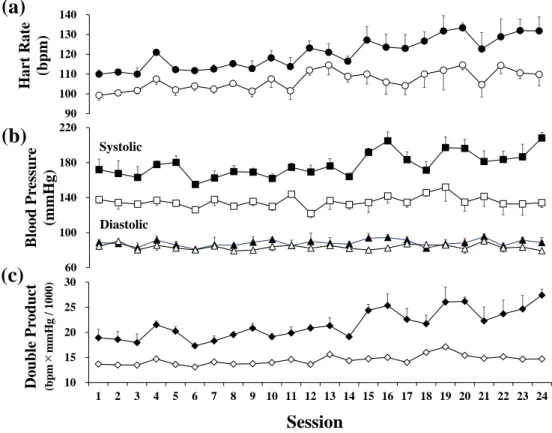
Figure 1に、ECCサイクリング中およびセット間の平均HR、SYS、DIA、DPを示した。HR、SYS、
Figure 1: Average heart rate [a], systolic (upper lines) and diastolic (lower lines) blood pressure [b] and double product (heart rate × systolic blood pressure) [c] during 4-6 sets of eccentric cycling (black) and interval between sets (white) over 24 training sessions in 12 weeks.
90 100 110 120 130 140
Hart Rate (bpm)
(a)
Systolic
Diastolic
(b)
60 100 140 180 220
Blood Pressure (mmHg)
(c)
10 15 20 25 30
1 2 3 4 5 6 7 8 9 10 11 12 13 14 15 16 17 18 19 20 21 22 23 24
Double Product (bpm×mmHg / 1000)
Session
DPはECCサイクリング中上昇し、セット間にはその日の安静時とほぼ同レベルまで回復した。DIA はほとんど変化が認められなかった。全体的にみると、ECCサイクリング最後1分時点での各測定 値は、セットおよび日によって多少のばらつきはあるものの、7週目(14回目)までは安定してい た。HRは、110~123拍/分で、70~77%HRmaxであった。8週目以降は、HR、SYS、DPにおいて やや上昇傾向にあり、それぞれの最高値は、130 bpm(約85%HRmax)、220 mmHg、28,200 bpm・
mmHgであった。
3)ECCサイクリングのRPE
介入1週目(1、2セッション)のRPELegのみ12を示したが、2週目以降は3部位全てにおいて 11であった。
介入日に毎回、前回のECCサイクリングによる影響、筋肉の張りや痛み等について口頭で尋ねた。
13回目のトレーニング翌日に、臀部と大腿部に軽い筋肉痛を認めた(HD後消失)以外は、局所的 な疲労感や筋肉痛はなかった。
4)血液生化学検査およびKt/V
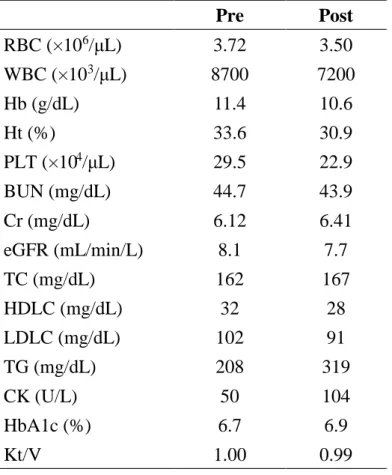
Table 2 に、介入前後の血液生化学検査および Kt/V の結果を示した。腎性貧血、高脂血症、高
HbA1cが認められた。いずれの項目においても介入前後で大きな変化はなく、ECCサイクリングト
レーニングの顕著な効果は認められなかった。
5)大腿部および大腰筋のCSA
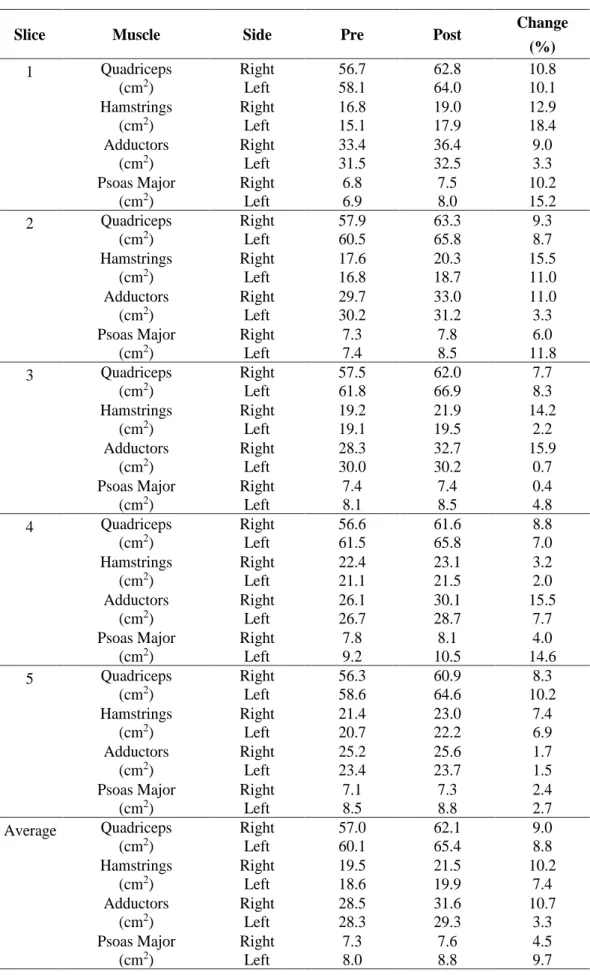
大腿上部および下腹部のMRI撮像で、大腿部、腰筋が最も大きかったスライスをFigure 2に示 した。また、大腿部(大腿四頭筋、ハムストリングス、内転筋群)、大腰筋におけるCSAの各スラ イスおよび5スライスの平均値をTable 3に示した。スライス毎にばらつきがあるものの、大腿四 頭筋のCSAは左右ともに9%程度の増加が認められた。ハムストリングスは、右脚で10%程度、左
Table 2: Changes in red blood cell (RBC), white blood cell (WBC), hemoglobin (Hb), hematocrit (Ht), platelet (PLT), blood urea nitrogen (BUN), creatinine (Cr), glomerular filtration rate (eGFR), total cholesterol ( T C ) , h i g h - d e n s i t y l i p o p r o t e i n cholesterol (HDLC), low-density lipoprotein cholesterol (LDLC), triacylglycerols (TG), creatine kinase a c t i v i t y ( C K ) , w h o l e - b l o o d glycosylated hemoglobin (HbA1c) and Kt/V before (Pre) and after (Post) 12-week eccentric cycling training.
Pre Post
RBC (×10
6/μL) 3.72 3.50 WBC (×10
3/μL) 8700 7200
Hb (g/dL) 11.4 10.6
Ht (%) 33.6 30.9
PLT (×10
4/μL) 29.5 22.9
BUN (mg/dL) 44.7 43.9
Cr (mg/dL) 6.12 6.41
eGFR (mL/min/L) 8.1 7.7
TC (mg/dL) 162 167
HDLC (mg/dL) 32 28
LDLC (mg/dL) 102 91
TG (mg/dL) 208 319
CK (U/L) 50 104
HbA1c (%) 6.7 6.9
Kt/V 1.00 0.99
脚で 7%程度の増加が認められた。内転筋群は、右脚で11%程度、左脚で3%程度の増加が認めら れた。大腰筋は、右脚で4.5%、左脚で9.4%増加した。
6)CON-MAXおよび身体機能テスト
Table 4にCON-MAXおよび身体機能テストの結果を示した。ほとんどの項目で改善傾向にあっ
た。とくに、TWは26.9%、Bal-EOは26.4%、CON-MAXは8.1%、CSは6.3%、MVCは5.6%に おいて顕著な改善が認められた。
7)QOL調査
Table 5 に、QOL調査における下位尺度毎のスコアを示した。健康関連尺度15項目のうち10項 目で改善が認められた。なかでも、体の痛みが62.5から100.0、睡眠が62.5から87.5、腎疾患の日 常生活への影響が65.6から90.6、社会生活機能が75.0から100.0に、大きな改善が認められた。そ の他、腎疾患による負担、症状、活力、人とのつきあい、こころの健康においても10ポイント以上 の改善があった。
8)ECCサイクリング介入に対する感想
Colum1に、本研究の対象者が書いたECCサイクリングトレーニングに対する感想を記した。
Figure 2: Magnetic resonance images of the upper thigh and lower abdomen of one participant where the cross-sectional area of the whole thigh muscles and psoas major are the largest before (Pre) and after (Post) 12week eccentric cycling training.
Pre Post
Upper Thigh
R L R L
Total 105.0cm
2109.2cm
2114.8cm
2116.0cm
2Lower Abdomen
7.8cm
29.2cm
28.1cm
210.5cm
2R L R L
Table 3: Changes in muscle cross sectional area of whole quadriceps, hamstrings, hip adductors and psoas major in each of five slices and average of the five slices for the right and left legs before (Pre) and after (Post) 12-week eccentric cycling training, and their percent changes.
Slice Muscle Side Pre Post Change
(%)
1 Quadriceps
(cm2)
Right Left
56.7 58.1
62.8 64.0
10.8 10.1 Hamstrings
(cm2)
Right Left
16.8 15.1
19.0 17.9
12.9 18.4 Adductors
(cm2)
Right Left
33.4 31.5
36.4 32.5
9.0 3.3 Psoas Major
(cm2)
Right Left
6.8 6.9
7.5 8.0
10.2 15.2
2 Quadriceps
(cm2)
Right Left
57.9 60.5
63.3 65.8
9.3 8.7 Hamstrings
(cm2)
Right Left
17.6 16.8
20.3 18.7
15.5 11.0 Adductors
(cm2)
Right Left
29.7 30.2
33.0 31.2
11.0 3.3 Psoas Major
(cm2)
Right Left
7.3 7.4
7.8 8.5
6.0 11.8
3 Quadriceps
(cm2)
Right Left
57.5 61.8
62.0 66.9
7.7 8.3 Hamstrings
(cm2)
Right Left
19.2 19.1
21.9 19.5
14.2 2.2 Adductors
(cm2)
Right Left
28.3 30.0
32.7 30.2
15.9 0.7 Psoas Major
(cm2)
Right Left
7.4 8.1
7.4 8.5
0.4 4.8
4 Quadriceps
(cm2)
Right Left
56.6 61.5
61.6 65.8
8.8 7.0 Hamstrings
(cm2)
Right Left
22.4 21.1
23.1 21.5
3.2 2.0 Adductors
(cm2)
Right Left
26.1 26.7
30.1 28.7
15.5 7.7 Psoas Major
(cm2)
Right Left
7.8 9.2
8.1 10.5
4.0 14.6
5 Quadriceps
(cm2)
Right Left
56.3 58.6
60.9 64.6
8.3 10.2 Hamstrings
(cm2)
Right Left
21.4 20.7
23.0 22.2
7.4 6.9 Adductors
(cm2)
Right Left
25.2 23.4
25.6 23.7
1.7 1.5 Psoas Major
(cm2)
Right Left
7.1 8.5
7.3 8.8
2.4 2.7 Average Quadriceps
(cm2)
Right Left
57.0 60.1
62.1 65.4
9.0 8.8 Hamstrings
(cm2)
Right Left
19.5 18.6
21.5 19.9
10.2 7.4 Adductors
(cm2)
Right Left
28.5 28.3
31.6 29.3
10.7 3.3 Psoas Major
(cm2)
Right Left
7.3 8.0
7.6 8.8
4.5 9.7
4.考察
本研究は、HD患者に対しECCサイクリングという運動様式を適用した初めての事例研究である。
HD患者1名に対して、非透析日に週2回、12週間、短時間の間欠的なECCサイクリングを実施し た(Table 1)。対象者に、本研究のECCサイクリングについて感想を求めたところ、一般的なCON サイクリングと比較して、身体的、精神的に楽な運動であった、と述べている(Colum 1)。この理
Table 5: Changes in the scores (0-100) of each dimension in KDQOL-SFTM before (Pre) and after (Post) 12-week eccentric cycling training, and their changes.
Dimension Pre Post Change
Symptoms / Problems 77.1 95.8 18.7
Effect of kidney disease 65.6 90.6 25.0
Burden of kidney disease 50.0 68.8 18.8
Work status 100.0 100.0 0.0
Cognitive function 93.3 100.0 6.7
Quality of social interaction 86.7 100.0 13.3
Sleep 62.5 87.5 25.0
Social support 100.0 100.0 0.0
Dialysis staff encouragement 75.0 75.0 0.0
Patient satisfaction 66.7 66.7 0.0
Physical functioning 90.0 90.0 0.0
Role functioning physical 100.0 100.0 0.0
Bodily pain 62.5 100.0 37.5
General health perceptions 50.0 50.0 0.0
Vitality 65.0 80.0 15.0
Social functioning 75.0 100.0 25.0
Role functional emotional 100.0 100.0 0.0
Mental health 84.0 96.0 12.0
Table 4: Changes in maximal torque during concentric cycling (CON-MAX), maximal voluntary isometric contraction strength of the knee extensors (MVC), grip strength (GS), 30-second chair stand (CS), 3-metre timed up and go (TUG), 10-metre walk at normal1 speed (10mW-Norm), 10-metre walk at maximal speed (10mW-Max), 5-metre tandem walk (TW), 6-minute walk (6minW), static balance ability with eyes open (Bal-EO) and closed (Bal-EC) before (Pre) and after (Post) 12-week eccentric cycling training, and their changes from the Pre-values.
Pre Post Change (%)
CON-MAX (Nm) 124 134 8.1
MVC (kg) 35.5 37.5 5.6
GS (kg) 34.4 34.6 0.6
CS (times) 16 17 6.3
TUG (s) 5.1 4.9 3.9
10mW-Norm (m/s) 1.43 1.45 1.4
10mW-Max (m/s) 2.04 2.04 0.0
TW (s) 16.7 12.2 26.9
6minW (m) 607 618 1.8
Bal-EO (s) 51.1 64.6 26.4
Ba-EC (s) 7.8 6.3 -19.2
由として、大きな力でペダルを踏み込み、その力を持続しなければいけない CON サイクリングと 比較して、短時間の間欠的ECCサイクリングは、ペダルに抗する時に瞬間的に力を発揮するだけで、
疲労感がほとんどなく、精神的に楽であったことをあげている。実際のパワー(W)は、69.5Wか
ら12週間で289.7Wまで上がった(Table 2)にもかかわらず、RPEは脚、呼吸、全身いずれもほと
んどが11であった。HD患者のような低体力者にとって、本ECCサイクリングは身体的、精神的 疲労感ともに低く、楽と感じ、モチベーションを維持しやすい運動であると考えられる。
ECC サイクリング介入期間中、循環応答の異常(Figure 1)、筋肉痛や関節痛等の整形外科的問 題は認められなかった。また、血液データ、週3回のHD時のKt/Vにも影響を与えることなく(Table
2)、12週間、24セッションのECCサイクリングを実施できた。本研究で特筆すべき結果は、12週
間のECCサイクリングにより、大腿部筋および大腰筋のCSAに3~10%の増加を認めたことであ る(Figure 2, Table 3)。この結果は、本研究のECCサイクリングの運動負荷がHD患者の下肢筋群 に対して有効な刺激を与えた可能性を示している。
これまで、HD患者に対する運動介入研究において、下肢筋力の増加[16, 17, 19]、運動耐容能の向 上[14, 15]などの報告は多数あるが、下肢筋のCSA[13, 19]や除脂肪量[18]に効果を認めた報告は少な い。Giannakiら[13]は、60~65%VO2peak強度のCONサイクリングをHD中に週3回、6か月間実 施し、大腿四頭筋のCSAが約7%増加したことを報告している。また、Johansen KLら[19]は、週3 回、3か月間、HD中にアンクルウエイトを使用した下腿の筋力トレーニングを行い、大腿四頭筋最
大部のCSAが2.5%増加したことを認めている。一方、2分間のRPE>17(~90%VO2max)強度の
CONサイクリングを2分間の休憩をはさみ15セットという、高強度インターバルトレーニングを HD中に週3回、3か月間実施した研究では、ベースラインからトレーニング負荷が274%、最高パ
ワーが71%それぞれ有意に増加したにもかかわらず、DEXA法による下肢の除脂肪量には増加が認
められなかったことを報告している[38]。本研究では、わずか週2回、3か月間で、大腿部のCSA
が約8~10%増加した(Figure 2, Table 3)。これら先行研究のトレーニング回数・形式および大腿
四頭筋のCSAの増加率と比較すると、本研究の間欠的ECCサイクリングが効率的に筋肥大をもた らしたと言えるであろう。
ECCサイクリングは、低い酸素摂取量でCONサイクリングと同一の仕事量の運動が可能である
[20-22]。つまり、同程度のエネルギー消費量で運動を設定した場合、ECCサイクリングはCONサ
イクリングと比較して大きな運動強度を設定することができるという特徴を有し、筋力や筋肥大の 効果が期待できる[20, 23-25]。その反面、ECC運動は筋損傷や運動後数日間継続する筋機能の低下 などを伴う遅発性筋痛が生じやすいという欠点を持ち合わせているが[32]、運動強度を徐々に上げ ていくことによってこれらの症状を減弱できることが示されている[33, 34]。したがって、本研究で は1セット当たりのトルク(Nm)を漸増させるだけでなく、回転数やセット数の組み合わせで、1 セッションあたりの総エネルギー消費量(KJ)も漸増するプロトコールを作成した(Table 1)。ま た、下肢筋へのダメージを最小限に抑えつつ、局所的に高い刺激を負荷するために、5 分間の間欠 的インターバル方式を採用した。一般男性において、ECC サイクリングのパワーは、CON サイク リングの約4倍の大きさであることが報告されている[24]。本研究における実際のECCサイクリン グのパワーは、約70Wから12週間、24セッションで約300Wまで上げることができた(Table 1)。
CON サイクリングではほぼ実施不可能な強度であると言えるが、筋肉痛等を最小限に抑え、12 週 間、24セッションを計画通りに実施できたことは、下肢筋の適応がスムーズにできたと考えられる。
本研究では、循環応答についても検討した(Figure 1)。各セット、日によって多少のばらつきは あるものの7週目(14回目)まではいずれの項目についても安定しており、W-upのCONサイクリ ング中と同等か低値を示した。8 週目以降は、HR、SYS、DP においてやや上昇傾向にあったが、
いずれも急激な変化は認められなかった。これらの結果は、本研究で採用した漸増負荷による短時 間の間欠的ECCサイクリングが、循環系に大きな負担をかけることなく、安全な運動負荷であった
・
・
ことを示すものである。ECC サイクリング直後に聴取した全身、呼吸、下肢のRPE は、1週目の RPE Legのみ12を示したが、3週目以降、全て11(やや楽)を示し、実際のHRやDPの数値と隔た りがあった。短時間の間欠的運動であったことがその原因の一つであると考えられるが、運動強度 の管理にRPEを使用するのは安全面の観点から避けるべきである。
身体機能の測定では、バランス能力を評価するBal-EO、TWが約26%向上した(Table 4)。バラ ンス能力は、骨代謝・ミネラル代謝異常によって易骨折性の状態にある HD 患者[39]にとって、転 倒を回避するという点で重要である。さらに、脚筋力の指標であるCON-MAX、MVC、CSで5~8% の改善が認められた(Table 4)。先述した下肢筋群のCSAが増加したことも含め(Figure 2, Table 3)、
転倒のリスクが高いフレイルの高齢者を対象とした研究[25]においても同様の結果が得られている。
したがって、ECCサイクリングがHD患者においても下肢筋に対して構造的な変化のみならず、機 能的な改善をもたらし、転倒リスクを下げる効果があることを示すものと考えられる。
QOLはECC介入後、健康関連項目の15項目のうち10項目で改善が認められた(Table 5)。こ の結果は、ECCサイクリングによる下肢筋の肥大(Figure 2, Table 3)、筋力の向上および身体機能 の改善(Table 4)と関連しているものと考えられる[8, 13, 15, 16]。
HD 患者に対する運動トレーニングについては、いつ実施するかも議論する必要がある [14, 15, 40]。非透析日の監視下での運動トレーニングは非常に効果がある一方で、継続率が低いことが指摘 されている[14, 15]。また、自宅では、非監視下であり計画された運動プログラムの順守が難しく、
運動効果は低いという報告がある[14]。その点、HD中の運動は、時間を有効利用できること、何ら かのイベントが発生した時に医療スタッフがすぐに対応できること、などから最近ではこの方法が 多くとり入れられている。ただし、HD中は心循環動態が不安定であるためHD開始2時間以内の 実施が推奨されている[41]。本研究は、HD患者に対してECCサイクリングを適用した報告はなか ったため、まず非透析日に実施し、下肢筋群の肥大が可能であるか検討することを第1の目的とし て実施した。今後、ECCサイクリングをHD中に安全に実施できるのか、また対象者を増やして運 動強度についてもさらに検討を重ねていく必要がある。
5.本研究のまとめ
HD患者に対するリハビリテーションツールとして、ECCサイクリングの実現可能性を検討した 初めての事例研究であった。本研究の目的は、HD患者においてECCサイクリングが心血管系に大 きな負担をかけることなく、下肢の筋に過負荷をかけることができるか、ECCセッション中の循環 応答と介入前後の血液検査、身体機能測定、下肢筋のCSA測定およびQOL調査から検討すること であった。主な結果は、短時間の間欠的ECCサイクリングによって、大きな循環動態を認めること なく、大腿四頭筋の横断面積(容積)が増加したことである。また、身体機能、QOLの改善も認め た。この結果は、筋の萎縮および心血管リスクを伴う低体力のHD患者にとって、短時間の間欠的 ECCサイクリングが、安全で効果的なリハビリテーションとして利用できる可能性を示すものと考 えられる。
Colum 1
『ECCサイクリングトレーニングを経験しての感想』(本研究の対象者が執筆)
ECC サイクリングを経験したことはなかった。今までは、一般的なサイクリング運動を今回よりも早い 回転数で漕ぐというトレーニングは何度も経験があった。そのため、トレーニング開始直後はペダルを 順回転方向へ漕ぎそうになり戸惑いがあった。また、これまで経験した自転車エルゴメーターを使ったト レーニングは、今回の運動よりもペダルを強く早く回転させることがほとんどであったため、ECC サイク リングトレーニングでペダルの回転に対し抵抗する、いわゆるストップをかけるような運動でどのような 効果が出るのか不安があった。
しかし、実際に経験したところコンセントリック(CON)サイクリングトレーニングより、かなり気楽なトレ ーニングであった。CON サイクリングトレーニングではペダルを漕ぎ出す瞬間に大きな力を必要とし、さ らにそれを持続させて漕がなければならないため疲労感を強く感じる運動であるのに対して、ECC サイ クリングトレーニングでは漕ぎ出すエネルギーが必要ないため、“運動をしている”という感覚よりも、
“瞬間的な我慢をインターバルで行っている”ような感覚で運動ができた。また、運動しようという気持ち のスイッチが入りやすく精神的に楽であった。トレーニング機器があれば直ぐにでも実施し、毎日でも継 続したいと思える気楽さがあった。実施後の、疲労感もほとんどなかった。
身体的変化としては大腿部に張りを感じた。感覚的であるが、特に大腿四頭筋の内で外側広筋が増 加したように感じていた。さらに、回転するペダルを押し留めようとすると、足だけでなく種々の筋に負荷 がかかり全身的な運動となっていたようである。特に臀部、背面部の筋に対する負荷が感じられた。
実際に血液透析患者である私にとって運動の必要性はわかるが、運動する気持ちの盛り上がりに 欠けている。若い頃より運動部に所属し、社会人になっても種々のスポーツを経験していたが、40代後 半より糖尿病から慢性腎疾患へと進行してからはスポーツからは遠のいている。血液透析の導入前は 全く運動しない生活が続いていて、運動しようと思っても体力がもたず、高い疲労感があったため諦め ていたのが現状である。しかし、今回ECCサイクリングトレーニングを経験して、この方法なら簡単に継 続できると思っているし、継続したいと望んでいる。
謝辞
MRI 画像の解析に際してご協力をいただいた、社会福祉法人せいひ会 介護老人保健施設 元亀の里 放射線診断専門医 木下博史先生に感謝の意を表します。
参考文献
1. 新田孝作、政金生人、花房規男、谷口正智、長谷川毅、中井滋、後藤俊介、和田篤志、濱野高 行、星野純一、常喜信彦、阿部雅紀、山本景一、中元秀友. わが国の慢性透析療法の現況(2018 年12月31日現在).透析会誌.2019; 52(12):679-754.
2. Murtagh FEM, Addington-Hall J, Higginson Irene. The prevalence of symptoms in end-stage renal disease: A systematic review. Adv Chronic Kidney Dis. 2007; 14: 82-99. DOI: 10.1053/j.ackd.2006.
10.001
3. Johansen KL, Shubert T, Doyle J, Soher B, Sakkas GK, Kent-Braun JA. Muscle atrophy in patients receiving hemodialysis: Effects on muscle strength, muscle quality, and physical function. Kidney Int.
2003; 63: 291-297.
4. Kouidi E, Albani M, Natsis K, Megalopoulos A, Gigis P, Guiba-Tziampiri O, Tourkantonis A, Deligiannis A. The effects of exercise training on muscle atrophy in haemodialysis patients. Nephrol Dial Transplant.
1998; 13: 685-699.
5. Matsuzawa R, Matsunaga A, Wang G, Yamamoto S, Kutsuna T, Ishii A, Abe Y, Yoneki K, Yoshida A, Takahira N. Relationship between lower extremity muscle strength and all-cause mortality in Japanese patients undergoing dialysis. Physical Therapy. 2014; 94: 947-956.
6. Johansen KL, Chertow GM, Ng AV, Mulligan K, Carey S, Schoenfeld PY, Kent- Braun JA. Physical activity levels in patients on hemodialysis and healthy sedentary controls. Kidney Int. 2000; 57:
2564-2570.
7. O'Hare AM, Tawney K, Bacchetti P, Johansen KL. Decreased survival among sedentary patients undergoing dialysis: results from the dialysis morbidity and mortality study wave 2. Am J Kidney Dis.
2003; 41: 447-454.
8. Kouidi E. Health-related quality of life in end-stage renal disease patients: the effects of renal rehabilitation. Clin Nephrol. 2004; 61(Suppl 1): S60-S71.
9. Cheung AK, Sarnak MJ, Yan G, Dwyer JT, Heyka RJ, Rocco MV, Teehan BP, Levery AS.
Atherosclerotic cardiovascular disease risks in chronic hemodialysis patients. Kidney Int. 2000; 58:
353-362.
10. Rostand SG, Kirk KA, Rutsky EA. Relationship of coronary risk factors to hemodialysis-associated ischemic heart disease. Kidney Int. 1982; 22: 304-308.
11. Stenvinkel P, Carrero JJ, von Walden F, Ikizler TA, Nader GA. Muscle wasting in end-stage renal disease promulgates premature death: establish, emerging and potential novel treatment strategies. Nephrol Dial Transplant. 2016; 31: 1070-1077.
12. 腎臓リハビリテーションガイドライン 編集:日本腎臓リハビリテーション学会.2018, 南江堂.
東京.
13. Giannaki CD, Sakkas GK, Karatzaferi C, Hadjigeorgiou GM, Lavdas E, Kyriakides T, Koutedakis Y, Stefanidis I. Effects of exercise training and dopamine agonists in patients with uremic restless legs syndrome: a six-month randomized, partially double–blind, placebo–controlled comparative study. BMC Nephrology. 2013, 14: 194. http://www.biomedcentral com/1471-2369/14/194
14. Konstantinidou E, Koukouvou G, Kouidi E, Deligiannis A, Tourkantonis A. Exercise training in patients with end-stage renal disease on hemodialysis: comparison of three rehabilitation programs. J Rehab Med.
2002; 34: 40-45.
15. Kouidi E, Grekas D, Dellgiannis A, Tourkantonis A. Outcoms of long exercise training in dialysis patients: comparison of two training programs. Clinical Nephrology. 2004; 61(Suppl.1): S31-S38.
16. Suhardjono Umami V, Tedjasukana D, Setiati S. The effect of intradialytic exercise twice a week on the physical capacity, inflammation, and nutritional status of dialysis patients: A randomized controlled trial.
2019; 23: 486-493.
17. Moriyama Y, Hara M, Aratani S, Ishikawa H, Kono K, Tamaki M. The association between six months intradialytic resistance training and muscle strength or physical performance in patients with maintenance hemodialysis: a multicenter retrospective observational study. BMC Nephrology. 2009; 20 :172-178.
18. Lopes LCC, Mota JF, PrestesJ, Schincaglia RM, Silva DM, Queiroz NP, Freitas ATVS, Lira FS, Peixoto MRG. Intradialytic resistance training improves functional capacity and lean mass gain in individuals on hemodialysis: A randomized pilot trial. Arch Phys Med Rehabil. 2019; 100: 2151-2158.
19. Johansen KL, Painter PL, Sakkas GK, Gordon P, Doyle J, Shubert T. Effect of resistance exercise training and Nandrolone decanoate on body composition and muscle function among patients who receive hemodialysis: A randomized, controlled trial. J Am Soc Nephrol. 2006; 17: 2307-2314.
20. Lewis MC, Peoples GE, Groeller H, Brown MA. Eccentric cycling emphasizing a low cardiopulmonary demand increases leg strength equivalent to workload matched concentric cycling in middle age sedentary males. J Sci Med Sci Sports. 2018; 21: 238-1243.
21. Lipski M, Abbiss CR, Nosaka K. Cardio- pulmonary responses to incremental eccentric and concentric cycling tests to task failure. Eur J Appl Physiol. 2018; 118: 947-957.
22. Penailillo L, Blazevich AJ, Nosaka K. Factors contributing to lower metabolic demand of eccentric compared with concentric cycling. J Appl Physiol. 2017; 123: 884-893.
23. Flann KL, LaStayo PC, McClain DA, Hazel M, and Lindstedt. Muscle damage and muscle remodeling:
no pain, no gain? J Exp Biol. 2011; 214(Pt 4): 674-679.
24. LaStayo P, Reich TE, Urquhart M, Hoppeler H, Lindstedt SL. Chronic eccentric exercise: improvements in muscle strength can occur with little demand for oxygen. Am J Physiol Regul Integr Comp Physiol.
1999; 279 (2): R611-615.
25. LaStayo P, Ewy GA, Pierotti DD, Johns RK, Lindstedt S. The positive effects of negative work: increased muscle strength and decreased fail risk in a frail elderly population. J Gerontol. 2003; 58A (5): 419-424.
26. Chasland LC, Green DJ, Maiorana AJ, Nosaka K, Haynes A, Dembo LG, Naylor LH. Eccentric cycling:
A promising modality for patients with chronic heart failure. Med Sci Sports Exerc. 2017; 49 (4):
646-651.
27. Gremeaux V, Duclay J, Deley G, Philipp JL, Laroche D, PoussonM, Casillas JM. Does eccentric endurance training improve walking capacity in patients with coronary artery disease? A randomized controlled pilot study. Clin Rehabil. 2010; 24: 590-599.
28. Steiner R, Meyer K, Lippuner K, Schmid J-P, Saner H, Hoppeler H. Eccentric endurance training in subjects with coronary artery disease: a novel exercise paradigm in cardiac rehabilitation? Eur J Appl Physiol. 2004; 91:572-578.
29. MacMillan NJ, Kapchinsky S, Konokhova Y, Gouspillou G, de Sousa Sena R, Jagoe RT, Baril J, Carver TE, Andersen RE, Richard R, Perrault H, Bourbeau J, Hepple RT, Taivassalo T. Eccentric ergometer training promotes locomotor muscle strength but not mitochondrial adaptation in patients with severe chronic obstructive pulmonary disease. 2017; 8: 114. DOI: 10.3389/fphys.2017.00114
30. Vieira DSR, Baril J, Richard R, Perrault H, Bourbeay J, Taivassalo T. Eccentric cycle exercise in severe COPD: Feasibility of application. J Chronic Obstructive Pulmonary Disease. 2011; 8: 270-274.
31. Harris-Love MO, Seamon BA, Gonzales TI, Hernandez HJ, Pennington D, Hoover BM. Eccentric exercise program design: A periodization model for rehabilitation applications. Front Physiol. 2017; 8:
112-126.
32. Clarkson PM, Nosaka K, Braun B. Muscle function after exercise-induced muscle damage and rapid adaptation. Med Sci Sports Exerc. 1992; 24: 512-520.
33. Chen HL, Nosaka K, Chen TC. Muscle damage protection by lower-intensity eccentric contraction remains for 2 weeks but not 3weeks. Eur J Appl Physiol. 2012; 112: 555-565.
34. Chen TC, Tseng WC, Huang GL, Chen HL, Tseng KW, Nosaka K. Low-intensity eccentric contractions attenuate muscle damage induced by subsequent maximal eccentric exercise of knee extensor in the elderly. Eur J Appl Physiol. 2013; 113: 1005-1015.
35. Riley M, Maehara J, Pórszász J, Engelen MP, Bartstow TJ, Tanaka H, Wasserman K. Association between the anaerobic threshold and the break- point in the double product/ work rate relationship. Eur J Appl Physiol Occup Physiol. 1997; 75: 14-21.
36. Borg G. Perceived exertion as an indicator of somatic stress. Scand J Rehabil Med. 1970; 2: 92-98.
37. Hays RD, Kallich JD, Mapes DL, Coons SJ, Amin N, Carter WB. Kidney Disease quality of life short form (KDQOL-SFTM), Version 1.3. A Manual for Use and Scoring. Santa Monica, CA: RAND, 1997;
7994.
38. Macdonald JH, Marcora SM, Jibani M, Phanish MK, Holly J, Lemmey AB. Intradialystic exercise as anabolic therapy in hemodialysis patients – a pilot study. Clin Physiol Funct Imaging. 2005; 25: 113-118.
39. Slouma M, Sahli H, Bahlous A, Laadhar L, Smaoui W, Rekik S, Gharsallah1 I, Sallami M, Moussa FB, Elleuch M, Cheour E. Mineral bone disorder and osteoporosis in hemodialysis patients. Adv Rheumatol.
2020; 60: 15. DOI: 10.1186/s42358-020-0118-0
40. Fang H-Y, Burrows BT, King AC, Wilund KR. A comparison of intradialytic versus out-of-clinic exercise training programs for hemodialysis patients. Blood Purify. 2020; 49: 151-157.
41. Moore GE, Painter PL, Brinker KR, Stray-Gundersen J, Mitchell JH. Cardiovascular response to submaximal stationary cycling during hemodialysis. Am J Kidney Dis. 1998; 31: 631-637.