Tokyo Metropolitan University {首都 大学東 京)
The Pecuniary Implications of Municipal Shared Service Arrangements
{地方 自治 体 の 共 有 サ ー ビス 契 約 に 関 す る経 済 的含 意}
A thesis submitted for consideration for the Master of Economics
Dana Kathleen McQuestin
{ダ ナ ・キ ャ サ リ ン ・マ ク ウ ェ ス テ ィ ン) Student Number: 18837309
ABSTRACT
Addressing financial sustainability concerns has been one of the key challenges facing public policymakers in the late 2011 and 2151-century. Whilst municipal amalgamation has been the reform instrument favoured by politicians, and thus predominantly used to target municipal financial sustainability, its effectiveness has been subject to extensive academic and political debate. One reform alternative which has been widely recommended in the extant scholarly literature is the use of shared service arrangements, whereby councils arrange for the joint production or provision of individual services. However, to date, empirical studies of the benefits and costs of such arrangements have been restricted to the service in question, and hence fail to capture any of the wider benefits and costs which might accrue to local governments. This thesis aims to address this gap in the extant literature through an examination of the implications of moving to shared service arrangements on the level of expenditure (per residential assessment) at the local government unit, rather than the individual service. To achieve this purpose, a framework (schema) was first constructed which illustrates the theoretical benefits and costs of moving from separate production to a shared service arrangement, clearly indicating the additional exogenous costs to the local government which may be incurred. Two hypotheses were then constructed based on the schema, which were empirically tested using a five-year panel of Australian (South Australian) local government data, spanning the period 2013 to 2017. Evidence from this analysis indicates increased expenditure per residential assessment of approximately eight per cent in the cohort of councils which utilised shared service arrangements, running counter to the arguments used by proponents of shared service arrangements. Moreover, evidence was
found to support the notion that services sensitive to resident tastes will be more likely to incur additional unexpected costs, however without additional qualitative analysis this outcome cannot be considered conclusive. This thesis concludes with a number of public
policy implications based on the findings and avenues for future research which may address some of the Iimitations in the analysis.
Page 3 of 55
Acknowledgements
First and foremost, 1 would like to express my deepest gratitude to my supervisors, professors Joseph Drew, 1-lirokuni liboshi and Masayoshi Noguchi. The feedback, guidance,
understanding and support has not only made the process of completing the master's degree more manageable, but has also provided me with the vital skills to needed undertake further postgraduate study. Indeed, the completion of this thesis would not have been possible without their help.
I would like to thank my family, in particular my parents Carol and Glen McQuestin, my brother and sister Luke and Ayla McQuestin, my grandparents, Kathleen Cochrane, Alan
McQuestin and the late Brenda McQuestin, and my extended family. Undertaking study in another nation is always a daunting task, however through their unwavering kindness and optimism, I never felt far from home. Their belief in me has been, and will continue to be, the
source of my strength.
I would also like to thank my friends, and fellow master's candidates, for taking the time to help me understand and integrate into Japanese culture. I wish them nothing but success in their future endeavours. Finally, I would like to thank Tokyo Metropolitan University for
providing me with this wonderful opportunity. It is my sincerest hope that this thesis will meet and surpass the high academic standard set by TMU.
Table of Contents Title Page...
Abstract...
Acknowledgements
Table of Contents ..
List of Tables and Figures
Section 1: Introduction ...
1
2
4
5
Purpose of Local Government in Australia
Challenges Facing Local Government
6
7
7
Municipal Reform
Motivation for the Study
Section 2: Net Pecuniary Outcomes of Moving to Collaborative Production
Rationale for Decentralised Government...
Pecuniary Benefits
Pecuniary Costs
A Schema to Inform Decision-Making
Section 3: Context and Empirical Strategy
Section 4: Results and Discussion...
Section 5: Conclusion
Reference List...
10
12
14
16
16
18
21
27
30
39
47
51
Page 5 of 55
List of Tables and Figures TABLES
Table 1: Local Governments in Australia, 1910 to 2019...
Table 2: Pecuniary Benefits and Costs of Moving From Separate to Shared Service Production...
8
Table 3: Shared Service Classifications
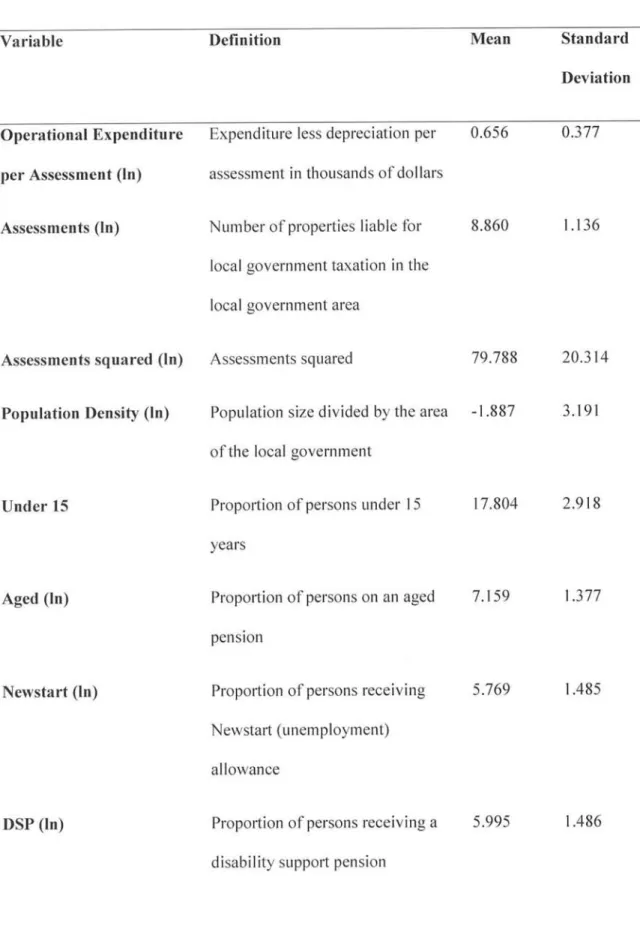
Table 4: Variables Employed
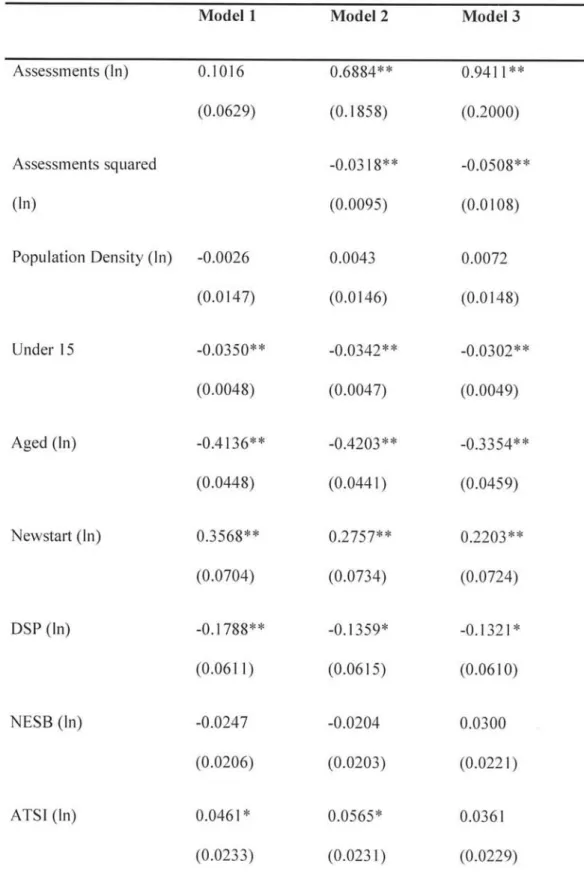
Table 5: Operating Expenditure and Shared Services, South Australian Local Government, 2013-2017...
FIGURES
Figure 1: Current Local Governments in Australia, by State and Territory...
Figure 2: Average Total Costs for Production Functions Exhibiting Economies of Scale ...
Figure 3: Net Shared Service Pecuniary Outcomes Algorithm...
26
32
36
41
7
19
28
Section 1: Introduction
The Purpose of Local Government in Australia
Local government is the third tier of government in Australia, with Federal and state
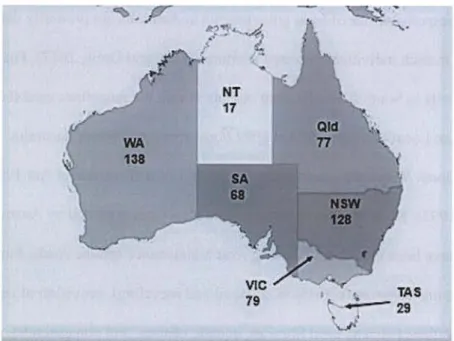
governments being thefirst and second tier respectively. With the exception of the Australian Capital Territory (ACT) each state and territory has its own local government system (Drew and Dollery, 2015). Local government in Australia employs over 187,000 individuals (roughly 10% of the total public sector workforce) and spends in excess of $35 billion per year on the provision of public services (about 8% of total public sector spending), (ALGA, 2019; Kepser et al., 2018). Currently, there are 536 local governments, in Australia, although it should be noted that this number has been declining since the Federation (see Figure 1;
Table 1).
WA 130
*714,4 2
NT 17
68
79
Old 77
NSW
"128
'lAS
Figure 1: Current Local Governments in Australia
Page 7 of 55
, by State and Territory
Table 1: Local Governments in Australia, 1910 to 2019
1910 1991 2001 2008 2013 2014 2019
NSW vlc
QLD SA WA TAS NT Total
324 206 164 175 147 51 n/a
1067
176 210 134 122 138 46 n/a 826
172 78
125 68
142 29 7 622
152 79 73 68 140 29
61 602
152 79 73 68 138 29
16 555
152
79
77
68
138
29
16
559
128 79 77 68 138 29
17 536 Source: DIRD (2013): D1RD (2014); Chapman (1997)
The roles and responsibilities of local governments in Australia are primarily determined by the legislation in each individual state and territory (Grant and Drew, 2017). For instance,
local governments in South Australia must operate within the guidelines established by the South Australian Local Government Act 1999 (Government of South Australia, 1999) whilst those in New South Wales are governed by the NSW Local Government Act 1993 (NSW
Government, 1993). However, a number of essential services provided by Australian local governments have been identified including road maintenance (public roads, footpaths and bridges), waste management (collection, disposal and recycling), provision of cultural and recreational facilities (such as local libraries, aquatic centres, and playgrounds), planning and development functions, and health-related regulatory functions (food and water inspections, livestock inspections and immunisation awareness programs) (DIRD, 2005). Whilst water provision and sewerage may also be considered essential services, it must be noted that these
functions are not always provided by local governments in Australia and instead may be delegated to external providers (for instance although regional local governments in NSW provide such services the same is not true for their South Australian counterparts).
These `services to properties' differentiate Australian local government from its counterparts in Japan, the United Kingdom and North America which provide a wider range of 'services to people' including health, education, welfare, and emergency (police and fire) services
(Andrews et al., 2003). These functions are generally maintained by state and federaI governments in Australia. However, recent years has seen an expansion in the role of local government to encompass several of these functions, typically in response to market failure (i.e. the inability or unwillingness of the private market to provide a good or service). Notable examples include the operation of childcare and aged care facilities, cemeteries, aerodromes and livestock trading facilities, (Drew and Campbell, 2016; DIRD, 2005).
In addition to inter-jurisdictional and international differences in service responsibilities, intra-jurisdictional differences may also exist between local governments operating within the same state or territory. This primarily occurs between urban and rural local governments as a result of the distinct characteristics of each location (urban environments are more densely populated and typically experience higher population growth rates whilst rural areas are less densely populated and typically associated with lower growth or even declining populations) and the unique challenges faced by both local government cohorts (for instance rural local governments are more likely to face challenges relating to market failure than urban local governments and generally have a higher reliance on intergovernmental financial support) (Grant and Drew, 2017). Consequently, whilst the majority of services provided by local governments in Australia are fairly common despite institutional differences, a substantial difference can arise as a result of geographical or environmental factors.
Page 9 of 55
II
The funds required to maintain provision of these services come from three main sources.
The first and second sources, municipal property taxes (known as 'rates' in Australia (Drew and Dollery, 2015)), and user fees and charges (fees levied based on the consumption of
specific services including water, childcare, parking, and recreation (pools, stadiums), etc.) are referred to as 'own-source revenue', in that the local government is usually responsible
for the collection of such funds. Jointly these two items account for about 80% of local government revenue, although this proportion is typically larger in metropolitan areas. The third major source of revenue, intergovernmental grants, is provided by state or federal government authorities, and accounts for roughly 10% of local government revenue, although for rural or regional governments this proportion may be as large as 50% (ALGA, 20I9).
Whilst these funding sources are similar for all Australian councils regardless of location, municipal revenue is not centrally controlled. Each state and territory has its own grants commission responsible for the redistribution of funds between Federal or state and local governments, and has specific legislation relating to municipal revenue collection (for instance NSW has enacted legislation to limit the increases in municipal rate revenue, known as "rate capping", yet similar limits are not imposed on councils in South Australia (although it is now being considered)).
Challenges Facing Local Government
Whilst Australian local governments face numerous challenges including improving equity in service provision, increasing democratic participation and representation, and reducing
corruption in the sector, the most important challenge lies in ensuring the financial
sustainability of local authorities. In this context, financial sustainability relates to the long- run viability of local government. A local government is considered to be sustainable if it is
able to meet its current and expected future financial responsibilities without the need for substantial or disruptive adjustments to either its revenue raising capabilities or spending levels (Access Economics, 2006).
A municipality is regarded as being unsustainable or experiencing fiscal stress if the municipality is unable to meet its current or expected financial responsibilities without an increase in revenue and/or reduction in expenditure (Boyne, 1988). A municipality which will require a correction of up to 10% to become sustainable is regarded as having `moderate' stress, `high' stress if a correction of up to 30% is required and 'severe' stress if a correction exceeding 30% is required (Boyne, 1988).
Since the 1970s a substantial increase in the number of local governments internationally exhibiting symptoms of 'fiscal stress' has occurred. This may be due to poor management or factors beyond the control of the local government (poor economic conditions or natural disasters etc). However political constraints including taxation limitations such as rate- capping (Dollery and Drew, 2016), and cost shifting (in which higher levels of government place additional financiaI responsibilities on local governments such as through withdrawal of funding, asset transfer and granting of concessions for ratepayers (Grant and Drew, 2017))
have also played a detrimental role.
In particular concerns have accelerated in the years following the Global Financial Crisis (GFC) in 2008 (Usang and Salim, 2016), as financial sustainability across the local government sector has generally declined resulting in the failures of the Central Darling
Shire, Hurstville and Coober Pedy councils in Australia, and the US City of Detroit (Drew and Campbell, 2016). The emergency measures associated with financial collapse can result
in significant reductions in the level of services or availability for residents within the local government area (examples include the suggestions for secession of 'non-core services' in
Page 11 of 55
Central Darling following administration including provision of post offices, aged care, cemeteries, community buses, waste and sewerage management and swimming pools (Drew and Campbell, 2016)), and substantial losses in employment (particularly for council
employees; staff numbers in Central Darling fell by one fifth (Drew and Campbell, 2016)), threatening the viability of local communities. It is for these reasons a high importance is
placed on preventing municipal default (compared to improving alternative areas of municipal performance), and ensuring the financial sustainability of municipal operations.
Municipal Reform
In order to avoid the potential consequences associated with financial stress, government agencies must usually implement reform in the local government sector (or at least the local governments affected by fiscal stress). Municipal reforms refer to any changes in the
operation, structure, finance or general functioning of a local government, or to the legislation which governs a municipality. Garcea and LeSage (2005) defined five main categories of
local government reform:
^
•
a
a
Jurisdictional reforms: changing the authority and autonomy of authorities through amendments to legislation;
Functional reforms: altering the number or type of functions (services) performed by municipalities;
Financial reforms: changing the financial or budgetary positions or operations of councils;
Internal governance and management reforms: through modifying the management or administration processes within the municipality; and
Structural reforms: changes to boundary, numbers and types of local government).
Although all types of reforms can target financial sustainability improvements, in Australia structural reforms (in particular amalgamation) has been the preferred policy instrument, and likewise the bulk of scholarly literature on municipal reform has examined the efficacy of structural reforms in achieving this objective compared to the other alternatives. Recent examples include the analyses of the effects of amalgamations of operating costs (Allers and Geertsema, 2016), system-wide effects of municipal mergers on costs (Grant and Drew, 2017), and efficiency (McQuestin et al., 2018). The literature on the subject matter is generally critical of the amalgamation process, however concessions are often made for the potential of mergers to be successful if common problems in the planning and
implementation stages are addressed (see Grant and Drew, 2017).
Given the inability of municipal amalgamations to improve financial sustainability, recent academic literature has instead focused on alternatives to amalgamation, including
governance and management reform alternatives (including performance management) undertaken in the UK Comprehensive Performing Assessment (Game, 2006) and Best Value Indicators (Boyne et al., 2004), financial reforms targeting grant funding (Johansson, 2003;
Drew and Campbell, 2016), and functional reforms, including privatisation of local
government services (Bell et al., 2010). However, less academic effort has been directed at investigating alternative instruments of structural reform, namely shared service
arrangements. As Bel and Warner (2015, p.53) have observed `cooperation has received far less attention than privatization, and the literature is still scarce with respect to cost
evaluation'.
In general, a shared service arrangement involves the joint production or provision of services by two or more (typically adjacent municipalities). Whilst shared services have previously
Page 13 of 55
been advocated in the academic literature as an effective alternative to amalgamations as they allow local governments to reap the benefits of economies of scale without the large
disruptions that generally accompany restructuring (see Dollery, Kortt, and Drew, 2016), this claim has not been sufficiently empirically tested. Similarly, criticisms against the use of such arrangements (typically by those in higher government authorities) have seldom been
supported by sound empirical evidence. One such example includes the claim by the
Metropolitan Local Government Review Panel (MLGRP, 2012, p.121) that resource sharing and shared service arrangements offer "short to medium-term savings, but ... can be very difficult to gain the full benefit over the long haul" which is not supported by empirical estimates. Where studies on the efficacy of shared services do exist, the consensus has largely been inconclusive, with studies finding evidence of higher, lower and statistically equivalent costs between councils which utilise such arrangements and those which do not.
An unfortunate consequence of these various gaps, inconsistencies and deficiencies in the empirical literature is that local government policymakers and municipalities alike may make important decisions, often involving high upfront costs, in the absence of consistent empirical evidence.
Motivation for the Study
The thesis aims to address this gap in the academic literature, through an examination of the efficacy of shared service arrangements to improve the financial sustainab i l ity of targeted municipalities. For the purpose, the association between the existence of shared service arrangements and municipal operational expenditure per property assessment (mainly residences and businesses) will be estimated.
Furthermore, this thesis also addresses a major limitation in the of the extant literature, namely the tendency to restrict the analysis of pecuniary impacts to the particular service in
question— generally waste collection and processing (Bel and Warner, 2015) — potentially neglecting additional costs which may be imposed on the remaining functions provided by a local government (hereafter referred to as exogenous costs). By expanding the analysis to include these additional costs, a more accurate understanding of the outcomes for individual local governments, and hence local government sustainability can be garnered.
For the purpose of this analysis, municipalities in South Australia (68 in total) were selected due to the comprehensive reporting requirements for shared service arrangements (frequently including both recognition and separate reports within the municipality's annual report). It must be noted that the shared service arrangements under analysis originated from functions previously provided separately by the municipalities involved, and by geographically adjacent municipalities (as non-adjacent arrangements were not found to exist), and hence inference based on this analysis cannot be extended to situations in which new service responsibilities or non-adjacent partners are being considered.
The remainder of this thesis is divided into five sections. In Section 2 a schema is first
developed, based on the extant theoretical arguments in the academic literature. In particular,
the benefits and costs of shared service production, in terms of the pecuniary outcomes, have been identified. Whilst there other reasons for the decision to undertake shared service arrangements, such as facilitating more coherent regional planning (Kim and Warner, 2016),
improving service quality (Aldag and Warner, 2017), promoting innovation (Carr and Hawkins, 2013), and reducing professional isolation (Dollery et al., 2016; Bel and Warner, 2015), pecuniary outcomes have been selected due to their importance from a financial sustainability viewpoint. This section will conclude with the formulation of two testable hypotheses based on insights garnered from the schema. Section 3 will introduce the data employed in the analysis, as well as providing justifications for the model section. The results of the analysis will be presented and discussed in Section 4. Finally, the implications for
Page 15 of 55
public policyrnakers, scholars and practitioners alike, and avenues for future research will be provided in Section 5.
Section 2: Net Pecuniary Outcomes of Moving to Collaborative Production
Rationale for Decentralised Government
Before the specific pecuniary benefits and costs arising from shared services are outlined, it is first useful to consider the economic rationale for decentralised government, and hence the initial provision of such services at the local government level. The decentralisation theorem
`establishes
, on grounds of economic efficiency, a presumption in favour of decentralised provision of public goods with localised effects', owing principally to the capacity to cater to the different preferences and production costs which is unlikely to occur in (more uniform) centralised provision (Oates, 1999, p. 122). In essence, this theorem suggests that resident and business have particular tastes for public goods, and that by adjusting the level and mix of public service production to suit these preferences, economic efficiency can be maximised.
For instance, residents in some suburban areas may have a preference for additional green waste collections, but residents in other areas may be content with simply a general waste collection (such as residents living in high-density areas). A local government which can tailor its service outputs to satisfy these preferences may be able to increase allocative efficiency (one component of economic efficiency). Consequently, a role exists for local governments, as the most decentralised level of government (at least in Australia), to provide such services.
Moreover, geographic distances and regional characteristics may result in differing production costs, even when services are uniform, across municipalities. Thus, even if residents had similar tastes for local government services, the differences in production cost
would likely result in disparate benefit-cost evaluations and hence unique optimal services levels by residents and local government authorities alike (Dollery el ccl., 2006). When combined with a Tieboutian conception that citizens sort themselves into more or less homogenous groups (in terms of tastes for public goods), then the ability to tailor service provision through decentralised government promises optimal technical efficiency (Grant and Drew, 2017). It is through these improvements to allocative and/or technical efficiency that economic efficiency, and hence economic welfare for residents can be maximised.
When local governments combine to produce services collaboratively (rather than at the most decentralised level) there is the potential that efficiency might be reduced if the service in question is one that was previously produced to reflect varying tastes of residents and if the service produced collaboratively is done so at a uniform standard (Feiock, 2007). However, not all services are tailored to the tastes of residents since sometimes standards are regulated by higher tiers of government. Moreover, shared services need not be produced to a uniform standard (although it would often invoke additional costs to manage a collaborative enterprise where there were various standards of services in place). However, in the cases where
services previously tailored to the taste of local government residents are shifted to a uniform standard produced by a collaborative venture, then it will be the case that the arrangement wilI weaken the foundations behind the economic rationale for decentralised government.
This suggests that the more heterogeneous (in terms of resident tastes for public goods) the populations comprising the locaI government areas entering into collaborative arrangements, then the greater the potential for changes in economic welfare arising from provision of shared services at a uniform standard. It also follows that Ioss will be proportional to the number of heterogeneous partners involved (Carr and Hawkins, 2013).
Page 17 of 55
It is important to stress that heterogeneity in local services is not restricted to demand-side forces. It is also possible that different local governments will exhibit heterogeneity on the supply-side. The clearest case of supply-side heterogeneity is in the area of production processes where local governments may choose varying combinations of input factors. Under these circumstances, moving to shared services when constituent local governments
previously exhibited supply-side heterogeneity will result in some change in production process for at least one local government, with likely consequences for unit cost. This is a benefit or cost directly contingent upon the decision to produce services collaboratively.
The purpose of this study is to make clear how the specific benefits and costs dealt with in the literature devolve into pecuniary outcomes arising from the decision to move from separate production to a collaborative arrangement. As mentioned although there may be other benefits arising from the use of shared service arrangements, for instance improvements in service quality, the analysis will be restricted to the pure pecuniary benefits and costs. Each of these benefits and costs will now be outlined.
Pecuniary Benefits
A major caveat to the decentralisation theorem resides in its presumption that efficiency outcomes might be improved through the capture of economies of scale by larger government units. Economies of scale refer to the proposition that — under certain conditions — average total costs may decrease as output increases. Similar to amalgamations, scale economies are the most frequently cited benefits of shared service arrangements in the literature (see, for
instance Feiock, 2007). Scale economies generally arise due to greater specialisation, use of excess capacity for capital-intensive plant, and enhanced purchasing power. However, it is important to note that not all local government production functions exhibit economies of scale. Indeed, the empirical evidence for economies of scale to date is mixed, and when
found, tends to occur at relatively low output levels (Fahey el al., 2016). It is also important to understand that once output has been increased to a level that fully exhausts economies of scale, it is followed by a domain of constant returns to scale (where costs do not change as output increases). Expanding output beyond this level can result in diseconomies of scale owing to problems co-ordinating large numbers of staff, and a reduction in the transparency of the organisation. Figure 2 depicts potential economies related to scale that may emerge for some local government functions. For these types of functions moving to a shared service arrangement may substantially reduce unit cost/foutput by separate production had not fully exhausted economies of scale, and if the combined output of the collaborative arrangement does not incur significant diseconomies of scale.
Average Total Cost
Economies of Scale Realised
C ork stant Returns to Scale
Net saving poss:b!e up to this output
Combined
Output
Figure 2: Average Total Costs for Production Functions Exhibiting Economies of Scale
Page 19 of 55
A second source of potential pecuniary benefits arising from a move to shared services occurs when the arrangement results in externalities being internalised (LeRoux et al., 2010).
Externalities occur when the conduct of one party has positive or negative effects on another party which in not directly involved in the initial decision. For example, flood mitigation works by a local government may have significant implications for adjoining municipalities.
By entering into shared service arrangements with geographically adjoining local
governments it may be possible to more effectively share the costs of negative externalities or benefits of positive externalities. For instance, if flood mitigation work at a given
municipality has reduced the likelihood of flooding for neighbouring municipalities
upstream, then it might be possible to have these neighbours internalise some of the costs for the benefits that they have received through entering into collaborative arrangements. Having
neighbours internalise benefits or costs as a result of collaboration not only provides a pecuniary advantage to the municipality which previously bore the entire cost, but may also lead to more effective and economically efficient collaborative solutions. For example, it might be cheaper in the long run for the upstream municipality to also do some work to avoid the build-up of debris and invasive weeds that would otherwise continue to inflict costs on the downstream local authority.
The third source of potential pecuniary benefits arise from medium-run dynamic
improvements attendant on collaboration. For instance, collaboration may result in municipal staff learning new skills and better ways of producing services (Brown and Potoski, 2005). It may also be the case that larger collaborative ventures serve to attract staff who are more skilled. In addition, these ventures may provide greater opportunities for professional staff to better share professional knowledge. This area has largely escaped attention in the shared services literature. However, it would be difficult to measure and test empirically, largely
because cost reductions attendant on learning typically emerge over the medium-term and occur unevenly.
It should be stressed that all of these benefits from collaborative production could be gained through other means. For instance, scale can increased through boundary change and
consolidation, although changes of this type necessarily result in all functions being increased to the same scale, which can be problematic given empirical evidence of differing optimal scale across local government functions. In a similar vein, externalities call be addressed through transfer payments, and learning through staff exchange or professional networks.
However, it is certainly the case that shared services offers a more flexible alternative: In principle, local governments could mix and match partners for different functions in order to optimise scale and source complementary skills or plant. Flexibility is thus an important attribute of the shared service model that may give rise to greater pecuniary benefits than might be achieved through other avenues.
Pecuniary Costs
Entering into a shared service arrangement necessarily involves new upfront costs. Upfront costs also occur for separate service production and may even be lower in this Iatter case.
However, the focus of this study is shared services constituted from established functions and thus are only concerned with the decision to move from separate to shared production. In an economic sense, all upfront costs are fixed costs since they arise prior to production (and would exist even if there were no production; Brown and Potoski, 2005). The magnitude of upfront costs will vary according to the number of partner municipalities, supply-side
heterogeneity of partners, and the type of service. The literature includes the costs of finding partner municipalities, holding negotiations, establishing or renegotiating contracts with suppliers, and consulting with affected staff and local residents (Carr and Hawkins, 2013).
Page 21 of 55
However, there are also a number of significant unanticipated costs that have largely escaped notice in the literature. For instance, contributions of assets may involve recognition of losses on disposal where the book value differs from the fair value of the asset contributed. Most of these costs will be recognised in accounting statements produced at the end of the financial year in which the shared service arrangement is established. Nonetheless, regardless of whether the cost is anticipated or unanticipated, from an economic perspective it is probably
more appropriate to think of these costs as being apportioned over the life of the collaborative venture, although it is recognised that this will often be difficult to factor into the decision-
making process where the life of the arrangement is not known a priori. Thus, under this conception, the value derived from the upfront costs is proportional to the duration of the life of the shared service arrangement.
The second major category of costs associated with shared service arrangements are transaction costs. These costs arise due to uncertainty, information asymmetries and the potential for partners to behave in an opportunistic manner (Brown and Potoski, 2005). They include division, information, co-ordination, free-rider and defection costs. Division costs refer to how the gross transaction surplus is distributed between participating local authorities. There is good reason to believe that larger local municipalities contributing greater expertise may use their relative power and knowledge to obtain a larger slice of the gross transaction surplus than might otherwise be warranted (Carr and Hawkins, 2013). In addition, the cost structure for each constituent municipality may well be dissimilar as a result of both supply-side and demand-side heterogeneity. This implies that even if the gross accounting surplus was distributed in proportion to the number of units previously produced, the resultant bargaining surplus might be asymmetrically apportioned between participating municipalities. In contrast, information costs apply to both local government entities and the shared service venture (where the former is an element of agency costs) and relate to the need
to provide information for statutory reporting and to meet the expectations of constituent local authorities.
Co-ordination costs are also an important component to consider for the calculation of shared services net savings. Co-ordination costs refer principally to the staff time employed to ensure that all parties to the cooperative venture maintain common goals — initially
established and in the negotiating phase — and act in a fashion that reflects these goals. Co- ordination costs are likely to be proportional to the number of municipal partners. They may be mitigated by trust relationships promoted by informal networks, professional standards, and the likelihood of repeated 'games', although if partners ultimately prove untrustworthy then savings ill this area are likely to be eliminated or exceeded elsewhere (LeRoux et al., 2010 Feiock, 2007). One way in which savings in co-ordination costs arising from misplaced trust may be eroded or eliminated is in the area of free-rider costs. Free-riding occurs when an entity attempts to pay less than the full price for a good or service consumed (Carr and Hawkins, 2013). Free-riding might occur if any of the parties to the shared service
arrangement seek to delay contributions (such as staff, assets or funds) or contribute less than initially agreed. This may not always be visible. For example, a local authority could seek to contribute staff or assets of a lower quality than might have been reasonably expected in an effort to transfer a portion of its entity-level liabilities to the shared service partners.
Defection costs generally refer to the costs incurred when a partner entity withdraws from a shared service arrangement (Dollery et al., 2016). A withdrawal of this kind will affect the amortisation of upfront costs, it may modify the unit costs of production, it may require the replacement of staff and assets (if repatriated to the withdrawing municipality), and it may require the re-negotiation of contracts. However, even the threat of defection — whether actually made by a local municipality or merely anticipated by other partner municipalities —
Page 23 of 55
can also fundamentally upset the bargaining equilibria upon which the shared service arrangement rests and thus result in costs being incurred. For instance, if partner entities believe that one local government might withdraw, then they may be willing to re-distribute a
larger proportion of the gross transaction surplus or be particularly accommodating to the potential defector's wishes at the expense of the other parties to the collaborative venture.
Agency costs are a cousin of transaction costs and relate to goal incongruence. For instance, they arise where an agent does not faithfully represent the interests of the principal, due to an
inability to correctly perceive the principal's wishes or a lack of concern for the principal's goals (Brown and Potoski, 2005). In local shared service arrangements, agency costs may be amplified due to both the distance between the principal and agent, as well as the number of agent-principal relationships, given that representatives on a shared service committee or board act as agents of both the constituent municipalities involved as well as local residents (Kwon and Feiock, 2010).
This study extends the literature on shared services because it considers the pecuniary outcomes of shared services at the level of the individual local government rather than just the local service in question. Because of the different lens through which shared services are viewed, many costs that reside outside of the specific service being shared become visible.
These expenses are referred to as `exogenous costs' because they are not directly related to the service being shared and would generally fall outside of decision-making and empirical analyses conducted at the service level. However, for the purposes of this analysis, the additional costs will be identified and incorporated into the schema. Major exogenous costs include erosion of economies of scope, additional staff and resource burdens on
municipalities as a result of reticence to meaningfully redeploy, as well as the need to
continue to conduct residual elements of functions that have been shared (such as handling of complaints).
Economies of scope arise when a single organisation produces two or more services that employ the same factor inputs. For example, the municipal building, information technology and staff used for customer service are typically also used for procurement activities. If one function is removed from the direct control of a local authority (and given over to a shared service arrangement), then an erosion of economies of scope may follow. This will result in a relative increase to the unit costs of many of the other services that remain at the local
municipality in question, and will effectively be reflected as a net cost at the level of the local government unit (and thus occur independently to savings made at the level of the service
shared). It is also critical for staff and assets that were previously employed in the function being shared to be meaningfully redeployed or released if they are not part of contribution to the collaborative arrangement. It is likely that many local municipalities will be reticent to dismiss staff (and legislation or unionisation may prevent this) and sale of assets may result
in the realisation of book losses. Failure to redeploy assets or staff will most certainly result in additional, unnecessary costs to the local government. The third major class of exogenous cost result from residualisation of elements of the function transferred to shared services. In particular, because 'citizens have difficulties in accurately identifying the providers ol'the services they receive' it is likely that local governments will still have to feld complaints and
inquiries about services long after the function has been transferred to the collaborative venture (Brown and Potoski, 2005, p. 330). Because exogenous costs relate to management decisions and the characteristics of particular local governments (such as use of the same factors for production of multiple services), exogenous costs may manifest differently for different municipalities even where the same service is shared.
Page 25 of 55
It is worth stressing that most of the pecuniary costs that are discussed arise entirely as a result of the decision to enter into a shared service arrangement. The main exceptions to this are information, co-ordination, agency and free-rider expenses that probably also occur for separate production (but manifest in different ways and are easier to manage in-house (Brown and Potoski 2005)).
Table 2 summarises the pecuniary benefits and costs arising from the decision to move from separate production to shared service production.
Table 2: Pecuniary Benefits and Costs of Moving From Separate to Shared Service Production
Pecuniary benefits of harmonising heterogeneity of demand (at a lower standard) and supply (where input factors are recalibrated to be more efficient).
May capture economies of scale.
May result in adjoining municipalities internalising externalities.
Dynamic efficiencies may arise over the medium term as a result of learning, the potential for larger ventures to attract more
Pecuniary costs of harmonising heterogeneity of demand (at a higher
standard) and supply (where input factors are recalibrated to be less efficient).
Upfront: Finding a partner, negotiating, contracting, consulting, regulatory, accounting.
Transaction (division, information, co- ordination, free-riding, defection) and Agency costs.
Exogenous costs: Erosion of economies of scope, redundant staff and equipment, residual functions retained.
skilled staff, and increased professional interactions.
A Schema to Inform Decision-Making
Figure 3 summarises these conceptual arguments into a net shared service savings schema that could assist decision-makers who are considering moving from separate to shared production of a given service. Here alrefers to the number of shared service partners and f?1refers to the heterogeneity of said partners. These two factors interact to produce a weighting applied to upfront costs and ongoing costs where expenses might be expected to rise as the number and heterogeneity of partners increases. Both upfront and ongoing costs are likely to be affected by these two factors although, as noted, some costs (like co-
ordination costs) will be more sensitive to this weighting than others. y1refers to the duration of the shared service arrangement and it is required to ensure that decision-makers remain cognisant that in an economic sense upfront costs (which may be substantial) should be apportioned over the expected life of the venture (although this may not always be clear). It is noteworthy that the exogenous costs appear outside of the parentheses and this reflects the fact that they are not dependent on either the number or the heterogeneity of partners.
Page 27 of 55
73 4.
di ty
SU V3 r fn ~
r~
00~
r.,
eg i
C) AJ CJ 1=! I0.1 Cl)
•. 0 it C.
L31
I.Ca I3.1 rfl
4
bA
G bL
rrl
U
qfi
rn Nl 0 U 0•
rn h'1t7 U
5 9 U
r.~
0 L) al
4.1
U 00
td)
CI 0G ~
n U
M CJ U
I)
rf;bll
~+ a
C) 0 rri
,..jCU re,rflwi~-1 9J a CJ GJJ 1' C.))I)F"r~Z i.y +~1140[d CI
U 6J7
5'El,aCJ
GL•,C1UU
rrIi
SJ !
4-y
~L, CJ
czt
a ;n
•ri 91
~ N d MI Cf?
~ c 071 c all
o
n.
cu E
~w U R1 qa ~,~I
0
1) I.! 4:^
d 42 0 0
0J+~rna)0) 41 d
'a'p~a ~q~-
~;W"0?.n
a
0 as
m
PLY 0 U a u w
as
4-
cri
V
u~
Lfl 4—
0 00 ry aJ tLO ro
This shared service schema is also useful to scholars because it makes the calculus explicit for the case where services previously produced separately are moved to collaborative production. Moreover, it clearly identifies the different costs which only become apparent when a local government level analysis (rather than a service specific analysis) is done.
Indeed, given the preponderance of costs and the relative uncertainty of some benefits occurring (such as economies of scale), it would seem likely that a move from separate to shared production may well result in an increase to unit expenditure when considered in terms of mean aggregate response. A number of hypotheses come to mind when examining the schema, but this thesis will focus on two in particular:
H I : The use of shared services, rather than continuing to supply services separately, will result in higher levels of expenditure — on average — at the level of the local government unit.
H2: Specific services that are particularly sensitive to citizen tastes will result in increased expenditure as a consequence of providing these services through shared service ventures (that may result in uniform standards being imposed).
Page 29 of 55
Section 3: Context and Empirical Strategy
To test the two hypotheses, and hence some of the theoretical insights, a five-year panel of data obtained from SA local government was employed. In common with other Australian states, SA has its own local government system which provides a comparatively Iimited range of functions, concentrated on `services to property', including roads and drainage, waste collection, disposal and recycling, as well as recreational areas (Dollery et al., 2006). A major difference in the service mix between Australian state local government systems and their
counterparts in other developed countries is that they do not normally provide the social services associated with the welfare state, but rather are much more narrowly focused on basic property services, although in recent years local service provision has expanded and now sometimes includes aged care, and land-care programs (Grant and Drew, 2017).
SA local government currently comprises 68 local authorities operating under the Local Government Act 1999 (SA) and the Local Government (Elections) Act 1999 (SA). Unlike the majority of Australian states and territories property taxes comprise a vast majority of
revenue (71 per cent), whereas intergovernmental grants (14 per cent), user charges (11 per cent) and other revenue (3 per cent) represent a relatively smaller proportion (South
Australian Local Government Grants Commission (SALGGC, 2017)). In the 2015/16 financial year, property rates alone generated $ I.55 billion.
Just over a third of SA municipalities conduct at least one collaborative venture, although the precise number varies slightly from year to year in response to new arrangements being established and existing arrangements discontinued or altered. It should be stressed that the degree of variation is not sufficient to test dynamic effects such as benefits from learning.
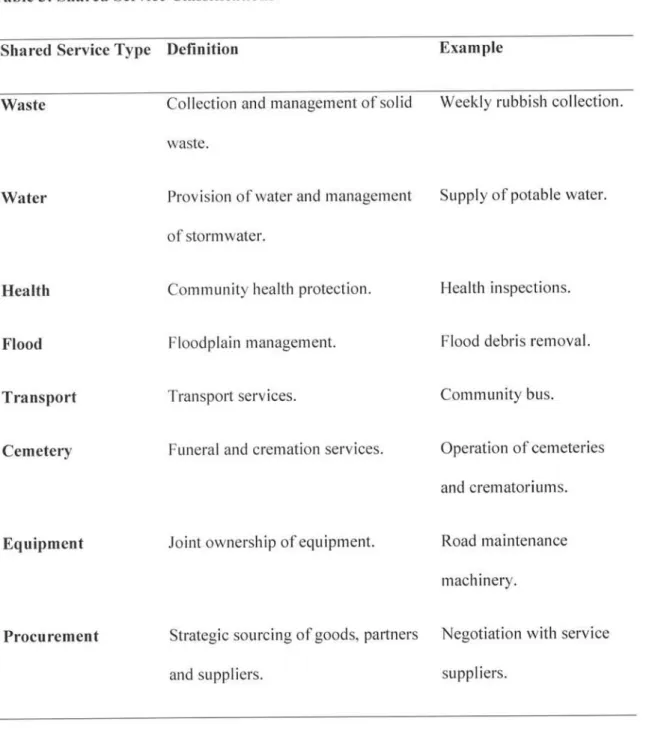
Table 3 categorises shared service arrangements according to eight different types of functions. The most common type of shared service is waste management and the least
common is cemetery services. All services shared are part of a historically long remit, thus making it reasonable to assume that services now shared were previously provided
separately. Moreover, all shared service arrangements that currently take place in SA do so between geographically adjacent municipalities. The great majority of municipalities involved in collaborative ventures share just one service (with only three municipalities providing more than two cooperative services). In the present context, this suggests a low probability of interaction effects, which would have been difficult to model given both the small numbers of municipalities with multiple collaborative ventures and the permutations in operation.
Page 31 of 55
Table 3: Shared Service Classifications
Shared Service Type Definition Example
Waste
Water
Health
Flood
Transport
Cemetery
Equipment
Procurement
CoIlection and management of solid waste.
Provision of water and management of stormwater.
Community health protection.
Floodplain management.
Transport services.
Funeral and cremation services.
Joint ownership of equipment.
Strategic sourcing of goods, partners and suppliers.
Weekly rubbish collection.
Supply of potable water.
Health inspections.
Flood debris removal.
Community bus.
Operation of cemeteries and crematoriums.
Road maintenance machinery.
Negotiation with service suppliers.
To determine if shared service arrangements have a statistically significant association with operational expenditure at the level of individual local government units, a conventional ordinary least squares model was employed. Fixed-effects was not suitable given that the regressors of interest were almost time invariant and random-effects could not be employed because the Hausman test was unfavourable, thus suggesting that the explanatory variables