Synthesis and characterization of
polysaccharide derivatives using ionic liquids catalyzed transesterification reactions
著者 グェン バン ウイ
著者別表示 Nguyen Van Quy journal or
publication title
博士論文本文Full 学位授与番号 13301甲第4635号
学位名 博士(工学)
学位授与年月日 2017‑09‑26
URL http://hdl.handle.net/2297/00050305
Creative Commons : 表示 ‑ 非営利 ‑ 改変禁止 http://creativecommons.org/licenses/by‑nc‑nd/3.0/deed.ja
Dissertation
Synthesis and characterization of polysaccharide derivatives using ionic liquids catalyzed transesterification reactions
Graduate School of
Natural Science and Technology Kanazawa University
Division of Natural System
Student ID No. 1424062014 Name: NGUYEN VAN QUY
Chief advisor: Professor, Kenji TAKAHASHI
June, 2017
I
Abstract
During several decades, people have been using fossil resources including coal, gas and oil to generate energy and produce chemicals and materials. The use of fossil resources results in greenhouse gas emission and climate change.
Moreover, fossil resources will not last forever, they will be depleted and not enough for all our needs in the future. Therefore, environmental protections and energy security become main global concerns. Biomass, a non-fossil and renewable resource of biological origin has been investigated to produce bioenergy and bio-based chemicals and materials to replace the employment of fossil resources. This process is defined as biorefinery. Isolated from renewable resources - biomass, naturally occurring polysaccharides have been hooked much concern to produce greener chemical products to replace the petroleum-based polymers. However, the numerous strong hydrogen-bonding networks in the polymeric chains of natural polysaccharides limit their solubility, processability, and feasibility. These problems cause many difficulties to apply them as materials.
To solve these problems, many effective chemical methods and solvent systems have been developed and reported. Recently, Takahashi and co-workers reported that dual functionalities of the ionic liquid, 1-ethyl-3-methylimidazolium acetate (EmimOAc), had an effective and quick direct transesterification reactions of microcrystalline cellulose with isopropenyl acetate as a green process of cellulose modification. From this work, the limitation for the ability of EmimOAc- mediated cellulose modification is interesting. In this dissertation, the scalability and recyclability were evaluated for the catalytic transesterifications of polysaccharides with EmimOAc serving as both a solvent and an organocatalyst.
The synthesis and characterization of a wide range of polysaccharide derivatives from various starting compounds such as cellulose, xylan, dextrin and pullulan using EmimOAc catalyzed transesterification reactions were conducted to address the limitations of its reaction system by addition of co-solvent dimethyl
II
sulfoxide (DMSO), and apply this effective methodology to directly acetylate the polysaccharides within rice husk and coconut fiber raw biomasses, which are abundant agricultural residues in Vietnam.
For the organocatalytic transesterifications with EmimOAc as a solvent and an organocatalyst, EmimOAc was recycled for four times without an obvious decrease in catalytic activity and the recovery rate of the EmimOAc reached sufficiently high (at least, 96 wt %). In order to show the applicability of the EmimOAc catalyzed transesterifications, the above-mentioned EmimOAc- catalyzed polymer modification was expanded to gram-scale reaction with various polysaccharide sources such as avicel, pulps, rayon, xylan, pullulan, and dextrin affording corresponding polysaccharide esters with practically perfect conversions of the starting hydroxyl groups. Structural determinations of the obtained polysaccharide derivatives by FT-IR and 1H NMR measurements were confirmed the successful syntheses of polysaccharide derivatives bearing acetyl, butyryl, pivaloyl and benzoyl groups, respectively. The degree of substitution of the obtained polysaccharide derivatives were determined by 1H NMR measurements that were obtained by the further benzoylation reaction and other reported calculation methods. The kinetic evolution of the TER of polysaccharides in EmimOAc was investigated by changing the amount of isopropenyl acetate (IPA), reaction time and temperature. These investigations indicated that the EmimOAc-mediated polysaccharide modification reactions were quantitatively proceeded. Furthermore, the thermal properties of the obtained polysaccharide derivatives were characterized by TGA measurement and solubility behavior observation presenting significant improvements after TER. Size exclusion chromatography measurements for polysaccharide derivatives were performed at 40°C using Prominence gel permeation chromatography system. The number average molecular weight (Mn,SEC) and polydispersity (Mw/Mn) were determined by the RI based on polystyrene
III
standards. The Mn,SEC and Mw/Mn indicated the Im-IL-catalyzed TER was the mild reaction without any polysaccharide decompositions. Finally, this homogeneous system composed EmimOAc, DMSO and IPA could apply eco-friendly and efficiently to synthesize polysaccharide acetates from raw lignocellulosic biomass.
IV
Acknowledgments
I could not finish my Ph.D. dissertation without the guidance of my supervisor and committee members; the help, encouragement and support from great programs, my family members and my friends.
From the bottom of my heart, I would like to thank Prof. Dr. Kenji Takahashi, my supervisor, who gave me the opportunity to be a part of his research team with a great atmosphere for doing research, and for his excellent guidance, patience, and supportive discussions. His profound knowledge and experience in the fields including natural polysaccharides, ionic liquids, organic chemistry, biochemistry and polymers influenced my research. I would like to thank my co-advisors, Dr. Ryohei Kakuchi, Dr. Kenji Takada and Dr. Daisuke Hirose guided my research for the past several years, helped me to improve my background in organic chemistry, polymer chemistry and patiently corrected my writings and presentation slides. I am also deeply grateful to them for their kind instructions, insightful discussions, helpful advice, continuous encouragement during my study and family life. I wish to express sincere thanks to my friendly lab mates, Mr. Makoto Yamaguchi, Mr. Hiroki Maeba, Mr. Shuhei Nomura and Miss Rina Hoshino. They are always willing to help and give me the best suggestions.
I would like to thank Can Tho University on behalf of Ca Mau 120 Project under Mekong 1000 Project for offering me a great opportunity to study abroad and for financial support throughout my doctoral course. I also would like to acknowledge the COI, ALCA and SIP programs supported by MEXT and JST.
Finally, I would like to express my deepest and most sincere gratitude towards to my parents, my siblings, my wife, my kind son and my new pretty daughter for their unending encouragement and unconditional support. I also take this chance to thank all of my colleagues at Phan Ngoc Hien High School and friends for their help, support and encouragement.
V
Table of Contents
Page
Chapter 1 General introduction ... 1
1.1 Natural polysaccharides as the sustainable resources instead of fossil fuel ... 1
1.2 Ionic liquids of the alternative solvent to green chemistry ... 4
1.3 Effective co-solvent of dimethyl sulfoxide together with ionic liquids ... 5
1.4 Objective and outline of the thesis ... 6
1.5 References ... 9
Chapter 2 Recyclable and scalable organocatalytic transesterification of cellulose in imidazolium-based ionic liquid ... 11
2.1 Introduction ... 12
2.2 Materials ... 18
2.3 Characterization methods ... 18
2.4 Synthesis of cellulose derivatives ... 20
2.4.1 Transesterification reaction of cellulose in EmimOAc/ DMSO mixed solvents ... 20
2.4.2 Scaling up and expanding the cellulose sources for the organocatalytic transesterifications in EmimOAc/DMSO mixed solvent systems ... 20
VI
2.4.3 Synthesis of cellulose derivatives using EmimOAc
or EmimOAc/DMSO with various esterification reagents .. 21
2.5 Results and discussion ... 23
2.5.1 Recycling and reusing EmimOAc for the cellulose modification reactions in EmimOAc/DMSO mixed solvent systems ... 23
2.5.2 Scaling up and expanding the polysaccharide source for the organocatalytic transesterifications in EmimOAc/DMSO mixed solvent systems ... 27
2.5.3 Physicochemical characterizations of cellulose derivatives synthesized by using EmimOAc or EmimOAc/DMSO with various ester donating reagents ... 28
2.6 Conclusions ... 33
2.7 References ... 34
Chapter 3 Synthesis, characterization of xylan, dextrin, pullulan derivatives and kinetic evolution of the TER of polysaccharides in EmimOAc ... 40
3.1 Introduction ... 41
3.2 Materials ... 47
3.3 Characterization methods ... 47
3.4 Synthesis of xylan, pullulan and dextrin derivatives ... 50
3.5 Results and discussion ... 53
VII
3.6 Conclusions ... 67
3.7 References ... 68
Chapter 4 Application of the TER using ionic liquid EmimOAc to directly acetylate lignocellulose from raw lignocellulosic biomass .... 73
4.1 Introduction ... 73
4.2 Materials ... 76
4.3 Experimental section ... 76
4.4 Characterization methods ... 77
4.5 Results and discussion ... 78
4.5.1 Confirmation of the obtained acetylated polysaccharides ... 78
4.5.2 Recover and reuse the EmimOAc ... 80
4.5.3 Thermal property of the obtained PAs ... 82
4.5.4 The solubility of the PAs ... 83
4.6 Conclusions ... 84
4.7 References ... 85
Chapter 5 Conclusions and future work... 88
5.1 Conclusions ... 88
5.2 Proposed future work ... 91
VIII
List of Figures
Page Figure 1.1 Biorefinery is an alternative green process to replace the
petrorefinery ... 2
Figure 2.1 Structure of cellulose ... 12
Figure 2.2 Structure of EmimOAc ... 15
Figure 2.3. 1H NMR spectra in CDCl3 of the obtained CAs (Table 2.1, Runs 1-5). ... 25
Figure 2.4 1H NMR spectra in CDCl3 of the recovered EmimOAc after the cellulose modification reactions (Table 2.1, Runs 1-5). ... 26
Figure 2.5 SEC traces of the obtained CA (solvent, CHCl3; flow rate, 1.0 mL min-1). ... 26
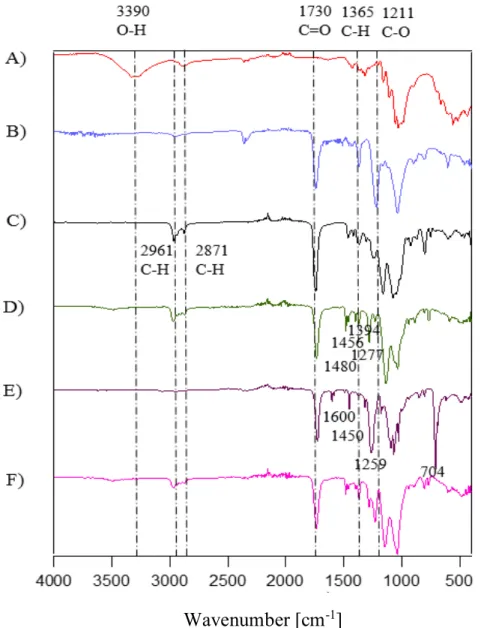
Figure 2.6 FT-IR spectra of cellulose (A), CA–Run 11 (B) and CBu-Run 15 (C), CPiv-Run 13 (D), CBn-Run 12 (E), and CAPiv-Run 14 (F). ... 29
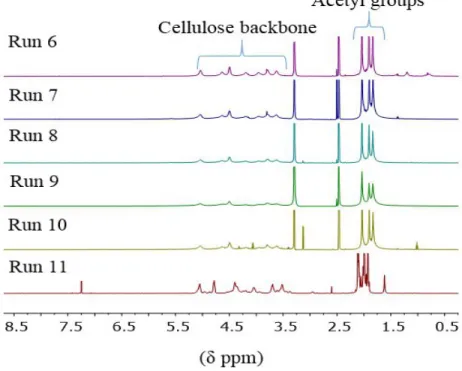
Figure 2.7 1H NMR spectra of CA synthesized from different cellulose materials recorded in DMSO-d6 (Runs 6-10) and CDCl3 (Run 11). ... 30
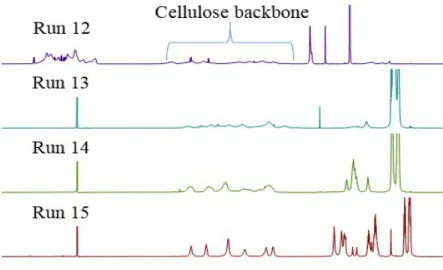
Figure 2.8 1H NMR spectra of CBn-Run 12 recorded in acetone-d6, CPiv-Run 13, CAPiv-Run 14, and CBu-Run 15 recorded in CDCl3. ... 31
Figure 3.1 Structure of xylan... 41
Figure 3.2 Structure of dextrin ... 43
Figure 3.3. Structure of pullulan ... 44
IX
Figure 3.4 FT-IR spectra of xylan, XA, XBu, dextrin, DA, DBu, pullulan, PuA and PuBu ... 54 Figure 3.5 1H NMR spectra of xylan, XA and XBu recorded in DMSO-d6 ... 55 Figure 3.6 1H NMR spectra of dextrin recorded in D2O, DA and DBu
recorded in DMSO-d6 ... 56 Figure 3.7 1H NMR spectra of pullulan recorded in DMSO-d6, PuA-Run 62
and PuBu-Run 64 recorded in CDCl3-d ... 57 Figure 3.8 1H NMR spectra in DMSO-d6 of the polysaccharide acetates
obtained from a large scale reaction ... 58 Figure 3.9 The effect of reaction time on the DS values of
polysaccharide acetates ... 62 Figure 3.10 The effect of reaction time on the conversion rate of
polysaccharide acetates ... 63 Figure 3.11 The effect of the IPA concentration to the OH group ratios on
the DS values of DA ... 63 Figure 3.12 TGA spectra of native xylan, XA, XBu, native dextrin, DA, DBu
native pullulan, PuA and PuBu ... 64 Figure 4.1 Direct transesterification reaction of polysaccharides
from lignocellulosic biomass using EmimOAc/DMSO with IPA (A: EmimOAc+biomass before reaction, B: the obtained product
from RH, C: the obtained product from CF) ... 78 Figure 4.2 FT-IR spectra of RH, CF, and PAs isolated from RH
(Run 66 using fresh EmimOAc, Run 67 using recycled EmimOAc)
X
and from CF (Run 68 using fresh EmimOAc, Run 69 using
recycled EmimOAc). ... 79 Figure 4.3 1H NMR spectra of PAs obtained from RH (Run 66) and CF
(Run 68) using fresh EmimOAc recorded in CDCl3. ... 80 Figure 4.4 1H NMR spectra of recycled EmimOAc collected from TER of
RH (Run 66), CF (Run 68), and pure EmimOAc recorded in CDCl3... 81 Figure 4.5 TGA thermograms of RH and CF (red, overlap), PAs from RH
(Run 66) and CF (Run 68). ... 82
XI
List of Schemes
Page Scheme 1.1 Schematic representation of cellulose acetate in
acetic acid/anhydride/catalyst of H2SO4 ... 2
Scheme 1.2 Schematic representation of pullulan derivatives in carboxylic acid/trifluoroacetic anhydride (TFAA) system... 3
Scheme 1.3 The schematic representation of chapter 2 ... 6
Scheme 1.4 The schematic representation of chapter 3 ... 7
Scheme 1.5 The schematic representation of chapter 4 ... 8
Scheme 2.1 Transesterification and hydrolysis reaction of vinyl esters under the catalyst of NaOH or KOH in DMSO ... 13
Scheme 2.2 Schematic representation of homogeneous acetylation of in new solvent triethyloctylammonium chloride (N2228Cl) combination with acetone and DMAc/pyridine. ... 14
Scheme 2.3 Schematic representation of the transesterification reaction of cellulose in EmimOAc ... 16
Scheme 2.4 The schematic representation of transesterification reactions of cellulose in EmimOAc with by changing the amount of IPA, VPiv ... 22
Scheme 2.5 Recyclable reaction of cellulose in EmimOAc/DMSO mixed solvent system ... 24
Scheme 3.1 Schematic representation of xylan esters in heterogeneous or homogeneous systems ... 43
Scheme 3.2 Schematic representation of pullulan acetate in DMAc/pyridine/CH3COCl ... 45
XII
Scheme 3.3 Schematic representation of synthesis of xylan, detrin and pullulan derivatives using EmimOAc as both solvent and
organocatalyst or a mixed solvent of EmimOAc/DMSO ... 52 Scheme 4.1 The schematic representation of direct transesterification
reactions of lignocellulosic biomass in EmimOAc and DMSO ... 77
XIII
List of Tables
Page Table 1.1 Solubility of dissolving pulp cellulose in ionic liquids ... 4 Table 2.1. Recycling EmimOAc in the cellulose modification reactions
in EmimOAc/DMSO mixed solvent systems ... 25 Table 2.2 A large scale cellulose modification reactions by using a
range of cellulose sources ... 28 Table 2.3 Synthesis of cellulose derivatives with various DS value at 80oC
under different conditions ... 32 Table 3.1 Degree of substitution (DS) of and yield of xylan acetate
synthesized under various conditions in DMF/LiCl ... 42 Table 3.2 Synthesis of CA (from filter paper) and xylan derivatives with
different DS values under various reaction conditions ... 59 Table 3.3 Synthesis of dextrin derivatives with different DS values under
various reaction conditions ... 60 Table 3.4 Synthesis of pullulan derivatives with different DS values under
various reaction conditions ... 61 Table 3.5 Solubility behavior and thermal analysis of polysaccharide
derivatives ... 65 Table 4.1 The yield, solubility and thermal property of the PAs obtained
directly from RH and CF using fresh EmimOAc (Run 66, 68) and
recycled EmimOAc (Run 67, 69) ... 83
XIV
Abbreviations
AGU anhydroglucose unit CA cellulose aceate
CAPiv cellulose acetate pivalate CBu cellulose butyrate
CBn cellulose benzoate
CF coconut fiber
CPiv cellulose pivalate
DMAc N,N-dimethyl acetamide DMF N,N-dimethyl formamide
DMI 1,3-dimethy-2-imidazolidinone DMSO dimethyl sulfoxide
DMSO-d6 deuterated dimethyl sulfoxide DP degree of polymerization DS degree of substitution DA dextrin acetate
DBu dextrin butyrate
EmimOAc 1-ethyl-3-methylimidazolium acetate FT-IR fourier - transform infrared spectroscopy
g gram
h hour
ILs ionic liquids
L liter
LiCl lithium chloride
M molar (mol/L)
PuA pullulan acetate PuBu pullulan butyrate
PAs polysaccharide acetates
XV
min minute mL milliliter
mg milligram
NMR nuclear magnetic resonance
RH rice husk
RTILs room temperature ionic liquids SEC size exclusion chromatography
TBAF tetrabutylammonium fluoride trihydrate TER transesterification reactions
TFAA trifluoroacetic anhydride TGA thermogravimetric analysis XA xylan acetate
XBu xylan butyrate XU anhydroxylose unit
1
Chapter 1: General introduction
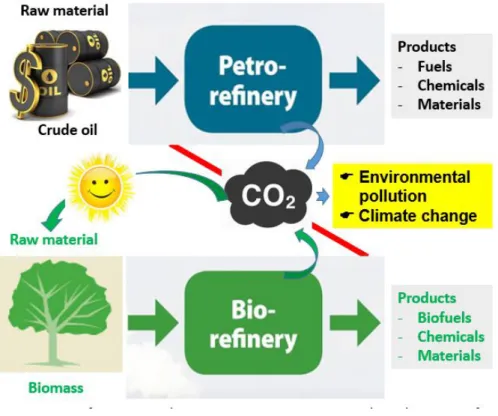
1.1 Natural polysaccharides as the sustainable resources instead of fossil fuel The human life has become more and more comfortable and convenient because of the development of science and technology, especially in the field of polymer materials. Polymers have being applied widely in various aspects of human life including food industry, textile, health care, transportation, construction, pharmaceutical industry.1 However, during several centuries, human activities based on fossil resources such as coal, gas and oil to generate energy and produce chemical products such as polymeric materials.2 The employment of fossil resources results in the accumulation of greenhouse gas and climate change significantly. Moreover, fossil resources will not last forever, they will be depleted and not enough to supply all our demands in the future. Therefore, for the sustainability of global economic development, environmental protections and energy security are main global interests.3 Looking for alternative and sustainable resources to produce fuels, chemicals and materials by using greener technologies needs to be investigated. Recently, biomass, a non-fossil and renewable resource of biological origin has been employed to convert into bioenergy and bio-based chemicals and materials to replace the use of non-biodegradable petroleum-based polymers due to their eco-friendly properties. This process is defined as biorefinery4 (Figure 1.1). Natural polysaccharides such as cellulose, xylan, pullulan, dextran, dextrin and chitin are interesting kinds of biological polymers with the functionality of polysaccharide structures combined with reactive groups.5 However, the numerous complex hydrogen-bonding networks within the polymeric chains of natural polysaccharides lead to the limitations of solubility, processability, and feasibility that are difficult to use them as materials.6
2
Figure 1.1 Biorefinery is an alternative green process to replace the petrorefinery
Esterification is an effective chemical modification method of polysaccharides to achieve thermoplastic polymeric materials.7-9 Traditionally, cellulose acetate (CA) is produced by acetylating the hydroxyl groups in cellulose with acetic acid and acetic anhydride using sulfuric acid as a catalyst.10 Other heterogeneous or homogeneous methods have been developed to synthesize CA (Scheme 1.1).11, 12
Scheme 1.1 Schematic representation of CA in acetic acid/anhydride/catalyst of H2SO4
O O O
OH
HO OH O
OH HO OH
n
O
O O
O O O
OAc
AcO OAc O
OAc AcO OAc
n
Cellulose Cellulose acetate
CH3COOH H2SO4 as a catalyst
3
The obtained xylan derivatives had potential applications to produce biodegradable plastics, resins, films and its blends.13-17 Low solubility or completely insoluble in water pullulan derivatives can be modified by chemical methods.18 In 2015, Iwata et al.19 reported that fully substituted pullulan esters with carbon number of acyl group (n) of 2-14 were conducted in carboxylic acid/trifluoroacetic anhydride (TFAA) system (Scheme 1.2).
Scheme 1.2 Schematic representation of pullulan derivatives in carboxylic acid/trifluoroacetic anhydride (TFAA) system
R=
TFAA/Carboxylic acid
R=
R=
R=
R=
R=
O O O
O
O
O
Acetate Propionate Butyrate Valerate
Hexanoate
Decanoate
O
Laurate R=
O HO OH
HO O
OH
O O
HO OH O n
Pullulan
OH OH
O
OH O
RO OR
RO O
OR
O O
RO OR O n
Pullulan derivatives
OR OR
O OR
Octanoate R=
O
R=
O
Myristate
Stearic acid dextrin ester was synthesized by using lipase as a catalyst.20 Lignocellulosic biomass refers to inedible and the most abundant plant material in the planet with the chemical components of 45-55% cellulose, 25-35%
hemicellulose and 20-30% lignin. It has been investigated as a promising potential resource to obtain chemicals, energy and various materials because of its renewable and biodegradable characteristics.21-23
4
1.2 Ionic liquids of the alternative solvent for green chemistry
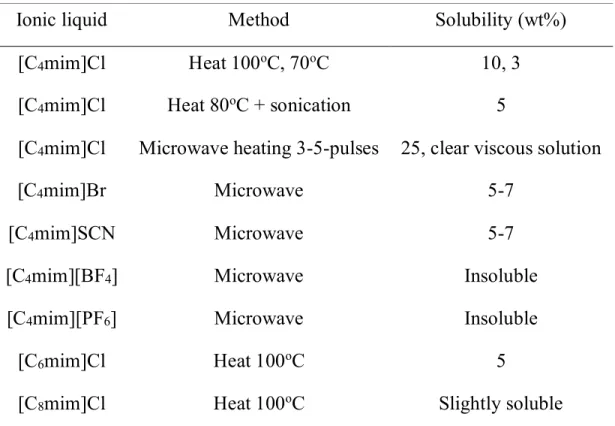
Ionic liquids (ILs) are groups of imidazolium, pyridinium or halide/halogenoaluminate low-melting-point molten salts, that change into liquid phase around room temperature.24 ILs have specific characteristics such as a negligible vapor pressure, excellent thermal stabilities, and controllable physicochemical properties, and recently, ILs have attracted much attention.25 The researches related to biomolecules such as naturally occurring polysaccharides by using ILs have been increased because ILs structures have specific affinities for polysaccharides.26 ILs were investigated as green solvents for dissolution biopolymers instead of the use of volatile organic. In 2002, Rogers and co-workers comprehensively confirmed that the 1-butyl-3-methylimidazolium chloride (BmimCl) significantly dissolved cellulose in high concentrations under mild conditions (Table 1.1).27 Since then, ILs were mainly used to homogeneously derivatize, modify, and regenerate cellulose and other polysaccharides.28-31
Table 1.1 Solubility of dissolving pulp cellulose in ionic liquids
Ionic liquid Method Solubility (wt%)
[C4mim]Cl Heat 100oC, 70oC 10, 3
[C4mim]Cl Heat 80oC + sonication 5
[C4mim]Cl Microwave heating 3-5-pulses 25, clear viscous solution
[C4mim]Br Microwave 5-7
[C4mim]SCN Microwave 5-7
[C4mim][BF4] Microwave Insoluble
[C4mim][PF6] Microwave Insoluble
[C6mim]Cl Heat 100oC 5
[C8mim]Cl Heat 100oC Slightly soluble
5
1.3 Effective co-solvent of dimethyl sulfoxide together with ionic liquids
ILs have been used as solvents for polysaccharide modifications. However, some disadvantages were found because of high viscosity of the ILs and the corresponding polysaccharide solution, and limited miscibility of the ILs with hydrophobic reagents. These limitations may result in a non-uniform and irreproducible reaction products. These problems can be addressed by adding co- solvents to polysaccharide/ILs solutions. For example, the employment of varied co-solvents in ternary systems (cellulose/IL/co-solvent) has studied and the results indicated that DMSO was the most suitable co-solvent compared with the others.32
6
1.4 Objective and outline of the thesis
The objectives of my research are to synthesize and characterize a wide range of polysaccharide derivatives by using the EmimOAc and EmimOAc/DMSO catalyzed TER and apply this effective methodology to directly acetylate the polysaccharides within rice husk (RH) and coconut fiber (CF) raw biomasses. An outline for this dissertation is presented as follows:
Chapter 2 will present a brief review of cellulose structure and chemical modification methods. The summarization of chapter 2 is depicted in Scheme 1.3.
The scalability and recyclability were evaluated for the catalytic transesterifications of cellulose with imidazolium-based ionic liquid (Im-ILs) such as EmimOAc serving as both a solvent and an organocatalyst. Then describe the syntheses of a variety of cellulose derivatives such as CA, cellulose butyrate (CBu), cellulose pivalate (CPiv), cellulose benzoate (CBn) and cellulose acetate pivalate (CAPiv).
Scheme 1.3 The schematic representation of chapter 2
N N
O O O
OH
HO OH O
OH HO OH
n EmimOAc or EmimOAc/DMSO
O O O
OR
RO OR O
OR RO OR
n
Cellulose sources:
Avicel, filter paper, pulps,
and rayon Cellulose esters
CH3COO
Scalability:
120mg to 2.4g
Recyclability Reusability
O
O
O
O
R=
R
Esterification reagents
O
R' R'= H or CH3
7
In Chapter 3, the syntheses and characterizations of other polysaccharides derivatives including xylan, pullulan and dextrin will be presented and summarized in Scheme 1.4. The structural polysaccharide derivatives, the kinetic evolution of TER of polysaccharides in EmimOAc by changing the amount of IPA, reaction time and temperature, the thermal property and the solubility behavior of polysaccharide derivatives were investigated.
Scheme 1.4 The schematic representation of chapter 3
O
O OHO
n
OH O
O
IPA
N N
EmimOAc Dextrin derivatives
Dextrin
CH3COO HO
O
O ORO
n OR
RO O CH2
O
Vinyl butyrate H3C
or
S O DMSO O
OH
O O O
HO OH
HO n
O OR
O O O
RO OR
RO n
Xylan derivatives Xylan
O RO OR
RO O
OR
O O
RO OR O n Pullulan derivatives
OR OR
O OR O
HO OH
HO O
OH
O O
HO OH O n Pullulan
OH OH
O OH
Scalability: 120mg to 2.4g
and/not
Kinetic evolution by the changes of:
[IPA]/[OH]
Reaction time Reaction temperature
CH3 O O
CH3
R= or
Chapter 4 will discuss the application of the TER using recyclable EmimOAc and co-solvent DMSO to directly acetylate polysaccharides from raw lignocellulosic biomass (Scheme 1.5). The structures of polysaccharide acetates (PAs) including cellulose acetate (CA) and hemicellulose acetate (HA) isolated from RH and CF were confirmed by FT-IR and 1HNMR measurements. The characterizations of the obtained PAs such as thermal property, solubility and the
8
comparison of the efficiency the TER by using fresh EmimOAc and recycled EmimOAc was also investigated.
Scheme 1.5 The schematic representation of chapter 4
Chapter 5 is a summary of this dissertation and suggest some possibility for the future work of the ionic liquid catalyzed modification of cellulose and other reactions.
9
1.5 References
1 T. Iwata, Angew. Chem. Int. Ed., 2015, 54, 3210-3215.
2 A. Brandt, J. Grasvik, J. P. Hallet and T. Welton, Green Chem., 2013, 15, 550- 583.
3 J-L. Wertz and O. Bédué, Lignocellulosesic Biorifinergies., 2013.
4 D. Greer, CropChoice.com, 2005 in
http://www.cropchoice.com/leadstryethanol052005.html
5 L. A. Lucia and Y. Habibi, John Wiley & Sons, Inc., 2012, 105-125.
6 J. Kadokawa, Green and Sustainable Chemistry., 2013, 3, 19-25.
7 K. J. Edgar, C. M. Buchanan, J. S. Debenham, P. A. Rundquist, B. D. Seiler and M. C. Shelton, Prog Polym Sci., 2001, 26 (9), 1605-1688.
8 T. Heinze and T. Liebert, Progress in Polymer Science., 2001, 26, 1689-1762.
9 T. Heinze and T. Liebert, Macromolecular Symposia., 2004, 208, 167-237.
10 S. Fischer, K. Thummler, B. Volkert, K. Hettrich, I. Chmidt and K. Fischer, Macromolecular Symposia., 2008, 262 (1), 89-96.
11 T. Heinze and T. Liebert, Macromolecular Symposia., 2004, 208 (1), 167-237.
12 T. Heinze, T. Liebert and A. Koschella, New York: Springer Laboratory., 2006, 41-116.
13 C. M. Buchanan, N. L. Buchanan, J. S. Debenham, P. Gatelholm, M.
Jacobsson, M. C. Shelton, et al., Carbohydrate Polymers., 2003, 52 (4), 345- 357.
14 I. Gabrielii, P. Gatenholm, W. G. Glasser, R. K. Jain and L. Kenne, Carbohydrate Polymers., 2000, 43 (4), 367-374.
15 E. I. Goksu, M. Karamanlioglu, U. Bakir, L. Yilmaz and U. Yilmazer, J. Agric.
Food Chem., 2007, 55 (26), 10685-10691.
16 B. S. Kayserilioglu, U. Bakir, L. Yilmaz and N. Akkas, Bioresource Technology., 2003, 87 (3), 239-246.
17 H. M. Shaikh, K. V. Pandare, G. Nair and A. J. Varma, Carbohydrate
10
Polymers., 2009, 76 (1), 23-29.
18 M. Rekha and P. Chandra, Trends in Biomaterials and Artificial Organs., 2007, 20 (2), 116-121.
19 Y. Enomoto-Rogers, N. Iio, A. Takemura and T. Iwata, European Polymer Journal, 2015, 66, 470-477.
20 P. Sun, H. Yang, Y. Wang, K. Liu and Y. Xu., Research in Health and Nutrition (RHN)., 2013, 1, 7-11.
21 M. Balat and H. Balat, Applied Energy., 2009, 86 (11), 2273-2282.
22 D. R. Dodds and R. A. Gross, Science., 2007, 318 (5854), 1250-1251.
23 A. Gandini, Macromolecules., 2008, 41 (24), 9491-9504.
24 P. Wassercheid and T. Welton, J. Chin. Chem. Soc., 2008, 55 (4), 716-723.
25 N. V. Plechkova and K. R Seddon, Chemical Society Reviews., 2008, 37, 123- 150.
26 O. A. El Seoud, A. Koschella, L. C. Fidale, S. Dorn and T. Heinze, Biomacromolecules, 2007, 8, 2629-2647.
27 R. P. Swatloski, S. K, Spear, J. D. Holbrey and R. D. Rogers, Am. Chem. Soc., 2002, 124, 4974-4975.
28 S. Zhu, Y. Wu, Q. Chen, Z. Yu, C. Wang, S. Jin, Y. Ding and G. Wu, Green Chemistry., 2006, 8, 325-327.
29 T. Liebert and T. Heinze, BioResources., 2008, 3, 576-601.
30 L. Feng and Z. I. Cheng, Journal of Molecular Liquids., 2008, 142, 1-5.
31 A. Pinkert, K. N. Marsh, S. Pang and M. P. Staiger, Chemical Reviews., 2009, 109, 6712-6728.
32 M. Gericke, K. Schlufter, T. Liebert, T. Heinze and T. Budtova, Biomacromolecules., 2009, 10, 1188-1194.
11
Chapter 2: Recyclable and Scalable Organocatalytic Tranesterification of cellulose in a mixed solvent of EmimOAc and DMSO
In this chapter, scalability and recyclability were evaluated for the catalytic transesterifications of cellulose with imidazolium-based ionic liquid (Im-ILs) serving as both a solvent and an organocatalyst. For the organocatalytic transesterifications with 1-ethyl-3-methylimidazorium acetate (EmimOAc) as a solvent and an organocatalyst, EmimOAc was recycled for four times without an obvious decrease in catalytic activity and the recovery rate of the EmimOAc reached sufficiently high (at least, 96 wt %). In order to show the applicability of the Im-IL catalyzed transesterifications, the above-mentioned EmimOAc-catalyzed polymer modification was expanded to gram-scale reaction with various cellulose sources such as avicel, pulps, and rayon, affording corresponding cellulose esters with practically perfect conversions of the starting hydroxyl groups. The TER of a series of cellulose materials using homogeneous system composed EmimOAc or EmimOAc/DMSO with IPA/VBu/VPiv/VBn as donating ester reagents without using additional catalysts and corrosive chemicals were successfully accomplished affording cellulose derivatives. The structural characterizations of the obtained products were confirmed by FT-IR and 1H NMR analyses indicated that CA, CBu, CPiv, CBn and CAPiv with high DS values were successfully synthesized in short reaction time. SEC measurements indicated that the obtained products had no decomposed compound during the EmimOAc-catalyszed TER.
12
2.1 Introduction
Nowadays, environmental protection and energy security are dominant themes for the world. Human activities, by over-exploitation of fossil fuels such as oil, coal and natural gas have leaded to the shortage of resources, accumulation of greenhouse gas and global warming. The need has dramatically arisen to find renewable and sustainable resources to replace the use of fossil resources which will not enough to offer all our needs.1 Lignocellulosic biomass has been investigated as a promising potential and
important alternative to produce fuels, bio- based chemicals, energy and various materials because of its non-fossil renewable and biodegradable properties.2-4 Cellulose is one of the most abundant lignocellulosic
resources and widely presented in photosynthetic organisms such as plants, bacteria, algae, invertebrates, and even amoeba.5, 6 It is estimated that about 56.8 × 10⁹ tons of elemental carbon is produced annually by terrestrial plants via photosynthesis around the world.7 Cellulose has extensive inter-/intra-molecular hydrogen-bonding network of crystalline structure which consists of a linear chain of up to 10000 β-1,4-linked D-glucopyranose units (Figure. 2.1). However, cellulose shows some disadvantages such as poor solubility in conventional solvents, high hydrophilicity, and lack of thermalplasticity, thus limiting its wider application as bio-based polymers.8 These difficulties can be addressed by chemical modification, and the production of cellulose derivatives has attracted significant concerns.9 Chemical esterification is an effective method was used to modify cellulose,10 and CA is one of the most commercially important cellulose derivatives and has been applied in many fields such as fibers, plastic, film, cigarette filter, dialyzer, and coating industry.11, 12 Global production of CA is estimated to be 1.5 billion pounds a year. Traditionally, CA is produced by acetylating the hydroxyl groups in cellulose with acetic acid and acetic anhydride
O O O
OH
HO OH
OH HO OH
O n Figure 2.1 Structure of cellulose
13
using sulfuric acid as a catalyst.13 Other heterogeneous or homogeneous methods have been developed to synthesize CA such as N,N-carbonyldiimidazole, dialkylcarbodiimide, iminium chloride, ring-opening esterification and transesterification.14, 15 The transesterification of cellulose with acetic anhydride or vinyl acetate in dimethyl sulfoxide (DMSO)/tetrabutylammonium fluoride trihydrate (TBAF/3H2O) was carried out and obtained in high yield.16, 17 CA was also prepared by using other solvents such as N-ethyl-pyridinium chloride,18 N,N- dimethylacetamide (DMAc)/Lithium chloride (LiCl),19, 20 1,3-dimethy-2- imidazolidinone (DMI)/LiCl, DMSO under the catalysis of NaOH or KOH (Scheme 2.1),21 and DMSO with 1,8-diazabicyclo [5,4,0] undec-7-ene (DBU) catalyzed per-O-acetylation.22 Scheme 2.2 presents the acetylation of cellulose in new solvent triethyloctylammonium chloride (N2228Cl) combination with acetone and DMAc/pyridine.23 However, the use of these solvents having various disadvantages such as environmental problems, side reactions, difficult recycling and high cost because of the requirement of activation before dissolution and instability.24
Scheme 2.1 Transesterification and hydrolysis reaction of vinyl esters under the catalyst of NaOH or KOH in DMSO
O
HO OH
OH O
n O R
Catalyst NaOH or KOH
in minutesDMSO
O
RO OH
OR O
n H2C
OH H3C H O
Transesterification reaction
Hydrolysis reaction
Cellulose Cellulose esters
O R H2O OH
R OH H2C
OH H3C H O
CH3
O O
CH3 O
CH3
R= or or
14
Scheme 2.2 Schematic representation of homogeneous acetylation of in new solvent triethyloctylammonium chloride (N2228Cl) combination with acetone and DMAc/pyridine.23
O
HO OH
OH O
O O Cl
O or
50oC, 2h
O
RO OR
OR O
R=H or O
N N Cl
N O LiCl
N O
O N
Cl N
Cl Solvents
Recently, the room temperature ionic liquids (RTILs) have been defined as low-melting-point molten salts25 and they have received significant attentions as promising green solvents26 for dissolution of cellulose27, 28 due to their attractive properties such as a negligible vapor pressure, non-flammability, excellent thermal stability, controllable physical and chemical characterictics,29 and allowed efficient and homogeneous synthesis of cellulose esters. The homogeneous system consisted of 1-allyl-3-methylimidazolium chloride (AmimCl) and acetic anhydride without a catalyst was used to obtained CA with DS values from 0.94 to 2.74 by different reaction conditions.30 The acetylation of cellulose was carried out using Zn-based acidic ILs featuring Zn2+ as a Lewis acid.31
During the past decades, emergence of metal-free catalysts, the so-called organocatalysts, has emerged in the chemical sciences.32-37 With the rapid growth of organocatalysts in organic chemistry, these catalysts have gradually integrated with polymer chemistry. For example, organocatalysts were revealed to be efficient for a range of polymer synthesis including ring opening polymerizations of cyclic esters,38-45 epoxides,46-48 and cyclic siloxane,49 the group transfer polymerization of vinyl monomers,50-55 step-growth polymerizations, 38, 56-57 as
15
well as post-polymerization modification reactions,58 to mention a few.59-60 When considering that organocatalysts are free from organometallics and thus involve green natures, an integration of organocatalysts into bio-renewable resources should provide new directions in biomass related science and polymer chemistry.
For example, organocatalysts have been utilized for ring-opening polymerization of bio-based cyclic esters,61 vinyl polymerization of bio-renewable monomers,62-63 and polymer analogous reactions of cellulose64-68 Organocatalytic transesterifications of cellulose using the ionic liquid 1-butyl-3- methylimidazolium chloride (BmimCl) as a media and 1,5,7-triazabicyclo [4,4,0]
dec-5-ene (TBD) as a catalyst were accomplished to produce cellulose derivatives with a limited DS values up to 0.69.64 The dissolution process of 3-20 wt%
microcrystalline cellulose was treated with EmimOAc (Figure 2.2) and a mixture of EmimOAc with DMSO at different
temperatures.69 The vapor of EmimOAc was dominated by the N-heterocyclic carbine-acetic acid complex which was highly reactive organocatalyst,70 and EmimOAc can be recycled and reused.71
Since polysaccharides including cellulose are known to be one of the most important chemical feedstock, the utilization of cellulose as a starting material has been a long-lasting challenge in biomass related chemistries.72 Due to their strong inter- and intra-hydrogen bonding, cellulose is hardly soluble in any reaction medium ranging from aqueous to organic ones. In this context, Im-ILs have been spotlighted in the field of biomass-related technologies since Im-ILs are known to dissolve cellulose under mild condition without harming the cellulose chemical structures.27, 73 Along with the privileged cellulose dissolving property of the Im- ILs, Im-ILs have found their way in organocatalysts based on their molecular structures.74 Recently, we have reported that the Im-ILs could provide dual functionalities of organocatalysts and reaction solvent for cellulose modification reactions.66-67 In detail, cellulose was subject to transesterification reactions in Im-
N N
EmimOAc
CH3COO
Figure 2.2 Structure of EmimOAc
16
ILs with stable esters such as isopropenyl acetate where Im-ILs behaved as not only a reaction medium but also an organocatalyst for the transesterification (Scheme 2.3). Thus, our synthetic protocol has realized not only active but also instinctively green cellulose modification reactions, potentially leading to materials science based on cellulose.
Scheme 2.3 Schematic representation of the transesterification reaction of cellulose in EmimOAc67
N N
O O O
OH
HO OH O
OH HO OH
n
O O IPA:
EmimOAc:
O O O
OAc
AcO OAc O
OAc AcO OAc
n
Cellulose Cellulose acetate
CH3COO
Despite the inherent green nature of the cellulose modification protocol, practical aspect of the reaction system has been a remaining consideration. In fact, the cellulose modification reactions were conducted on mg scale, thus limiting its application to other chemical sciences. In addition, reusability of Im-ILs should be verified because Im-ILs are rather expensive as compared to common organic solvents. It must be worth noting here that Im-ILs are at the same time known to be chemically stable and hardly volatile even under high vacuum conditions. This leads to a potential advantage of the Im-ILs in recyclability because high vacuum distillation of the reaction system should realize easy recovery of the Im-ILs.
However, above-mentioned issues have not been addressed in detail in our latest works. Along with the intrinsic green advantage of cellulose, enriching practical applicability of the cellulose modification protocol is rationally expected to provide practical and operationally easy synthetic strategy to not only polymer chemists but also materials scientists who wish to handle cellulose derivatives.
Herein, we now wish to provide an insight into practical applicability of our synthetic protocol (Scheme 2.4 and Scheme 2.5). This chapter represents: 1)
17
recyclability of Im-ILs for cellulose modification reactions, 2) scaling up the cellulose modification reactions with different cellulose sources such as avicel, pulps and rayon, 3) developing a homogeneous transesterification system composed ionic liquid EmimOAc as both catalyst and solvent, or EmimOAc as a catalyst with co-solvent DMSO (EmimOAc/DMSO) and IPA or VBu or VPiv or VBn without using additional catalysts and corrosive chemicals to efficiently synthesize cellulose derivatives with high DS values (Scheme 2.6 and Scheme 2.7); 4) the 1H NMR and FT-IR spectroscopy techniques were applied to elucidate the structural cellulose derivatives; 5) the thermal properties of these cellulose derivatives were also characterized by TGA; and moreover, 6) the solubility behavior of cellulose derivatives in commercial organic solvents was also investigated.
18
2.2 Materials
1-Ethyl-3-methylimidazorium acetate (EmimOAc; 95 %), dichloromethane, methanol, chloroform, deuterated NMR solvents (DMSO-d6, CDCl3-d, Acetone-d) were purchased from Kanto Chemical Co., Inc., and used without further purification. For ester reagents, the isopropenyl acetate (IPA) (99%) was available from the Sigma-Aldrich Chemicals Co., vinyl butyrate (VBu), vinyl pivalate (VPiv) and vinyl benzoate (VBn) were purchased from Tokyo Chemical Industry Co., Ltd, Japan and used as received. As cellulose sources, Avicel PH-101 and filter paper (whatman were purchased from Sigma-Aldrich Chemicals Co; The apparent molecular weight of the avicel was determined by size exclusion chromatography (SEC) measurements in THF with polystyrene calibrations of carbanilated cellulose sample (reacted with phenyl isocyanate). The carbanilation reaction was carried out essentially according to a previously reported method.75 The apparent number average degree of polymerization of original cellulose was calculated to be 105; pulp A, B, C and rayon were kindly offered by DAICEL Chemical Industries Ltd, Japan. All other chemicals such as dimethyl sulfoxide (DMSO, anhydrous >99.9%), benzoyl chloride were commercially available and used without further purification unless otherwise stated.
2.3 Characterization methods
The FT-IR spectra were observed by a Thermo Fisher Scientific Nicolet iS10 equipped with an ATR unit. All the 1H NMR spectra were recorded by JEOL 400 and 600 MHz FT-NMR spectrometers in solution of products (10mg) dissolved in 800µl of deuterated solvents (such as DMSO-d6, CDCl3-d, or Acetone-d), the chemical shifts (δ) were given in ppm as either the solvent peak or TMS as the internal standard. The Degree of substitution (DS) values of the CA, CBu, CPiv and CAPiv were determined by 1H NMR measurements of the cellulose derivatives and that were obtained by the reaction of cellulose derivatives with an excess amount of benzoyl chloride. The typical procedure is as follows: A
19
solution of the cellulose derivatives (100 mg, 347 μmol), 4 ml CHCl3, benzoyl chloride (440 mg, 3.1 mmol) and triethylamine (318 mg, 3.1 mmol) was stirred for 24 hours at room temperature. The reaction mixture was then poured into a large amount of MeOH to precipitate the products. The obtained products were collected by filtration and dried under vacuum conditions. In order to avoid potential overlapping of the aromatic protons and solvent peak, NMR measurements were conducted in DMSO-d6. The DS values were calculated using the following equation:
= ( 3)/3
( 3)/3 + (7.0~8.5 )/5 × 3
The DS of CBn was calculated from 1H NMR spectrum by the equation:
=7 ℎ 5
Where: Iphenyl, the peak integral of phenyl protons, IAUG, peak integral of protons of anhydroglucose unit.76
Size exclusion chromatography measurements for polysaccharides were performed at 40°C using Prominence gel permeation chromatography system (DGU-20A degassing unit, LC-20AD pump, SIL-20A HT auto sampler, CTO-20A column oven, and RID-20A refractive index detector) with two shodex KF-806L columns. The number average molecular weight (Mn,SEC) and polydispersity (Mw/Mn) were determined by the RI based on polystyrene standards (PStQuick A and PStQuick C).
20
2.4 Syntheses of cellulose derivatives
2.4.1 Transesterification reaction of cellulose in EmimOAc/DMSO mixed solvents
A typical reaction based on the transesterification reaction of cellulose was carried out as follows. A solution of cellulose (120 mg, [monomeric unit]0 = 0.74 mmol) in EmimOAc (4.00 g, 23.5 mmol) was dried for 16 hours under vacuum conditions at 80˚C. After drying process was finished, DMSO (4.00 mL) and IPA (4.00 mL, 36.8 mmol) were added under an argon atmosphere. After the reaction mixture was stirred for 30 minutes, the reaction mixture was diluted with CH2Cl2
and poured into a large amount of methanol. The obtained polymer was purified by reprecipitation (CH2Cl2/methanol) to yield a pale yellowish powder. Yield: 192 mg.
2.4.2 Scaling up and expanding the cellulose sources for the organocatalytic transesterifications in EmimOAc/DMSO mixed solvent systems
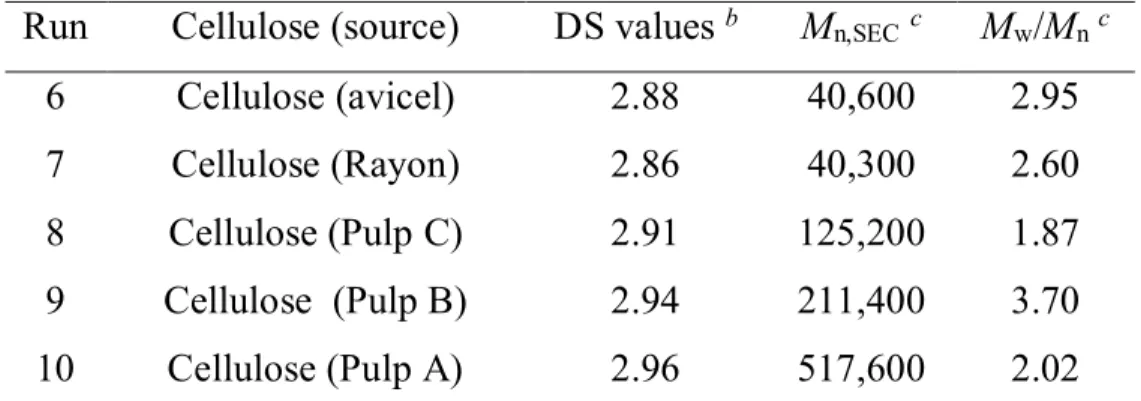
In an 1000ml schlenk flask equipped with a magnetic stirrer, 2.4g of cellulose materials (Avicel-Run 6, rayon-Run 7 or pulp C-Run 8, pulp B-Run 9, pulp A-Run 10) and 6.0g of EmimOAc as a solvent and an organocatalyst were added. The mixture was dried and heated at 80oC using oil bath for 3h under vacuum conditions. After drying step was completed, 80 mL of DMSO was added as a co-solvent to completely dissolve the mixture under an argon atmosphere.
Then, 12 mL of IPA (the initial [IPA]/[OH] was adjusted to be 2.5/1) was added to the mixture and stirred for 18h at 80oC. At the end of the reaction, the homogeneous mixture was poured slowly into 800 mL MeOH, the precipitates were collected by filtration in duplicate. The obtained products were dried under vacuum for overnight at 50oC. Yield: 3.45 g.
21
2.4.3 Synthesis of cellulose derivatives using EmimOAc or EmimOAc/DMSO with various esterification reagents
Synthesis of CA with small scale: In a schlenk flask equipped with a magnetic stirrer, 120mg (3 wt%) of cellulose (filter paper-Run 11) and 4g of EmimOAc as an organocatalyst and solvent were added. The mixture was heated at 80oC using oil bath for 3h under vacuum conditions to get complete cellulose dissolution. Then, 4mL of IPA was added to the mixture under an argon atmosphere and stirred for different reaction time from 18h at 80oC. At the end of the reaction, the mixture was poured slowly into methanol and filtered in duplicate.
The obtained product was dried in a vacuum oven for 24h at 50oC. Yield: 148 mg.
Synthesis of cellulose benzoate (CBn-Run 12) and cellulose pivalate (CPiv- Run 13) with large scale: In an 1000ml schlenk flask equipped with a magnetic stirrer, 2.4g of cellulose rayon and 6.0g of EmimOAc were added. The mixture was dried and heated at 80oC using oil bath for 3h under vacuum conditions. Then, 80 ml of DMSO as a co-solvent was added to completely dissolve the mixture under an argon atmosphere, then 98 mL of VBn (or 104mL of VPiv) was added to the mixture and stirred for 1h at 80oC. At the end of the reaction, the mixture was precipitated in 800mL MeOH and filtered in triplicate. The obtained product was dried under vacuum for overnight at 50oC. Yield: 3.48 g (CBn); 3.12 g (CPiv).
Synthesis of cellulose acetate pivalate (CAPiv-Run 14, 16-17): The reaction procedure was shown in scheme 2.4. Cellulose (240 mg; AGU, 1.48 mmol) and 1- ethyl-3-methylimidazorium acetate (EmimOAc; 8.0 g; 47.0 mmol) were added to a schlenk flask in the argon atmosphere. The mixture was dried at 80°C under reduced pressure for 3h. Then, the amount of esterification reagents (IPA and VPiv) as shown in Table 2.3 was added under Ar condition. At the end of the reaction, the mixture was precipitated in a mixture of MeOH: H2O and filtered in triplicate. The obtained products were dried under vacuum for overnight at 50oC.
Yield: 230 mg.
22
Scheme 2.4 The schematic representation of transesterification reactions of cellulose in EmimOAc with by changing the amount of IPA and VPiv
O O
HO OH OH
n
O O
RO OH OR
n
O O
O O
O O
RO OR' OR
n
O O
R= R'=
Cellulose CAPiv
IPA
N N EmimOAc
CH3COO-
O O
HO OH OH
n
O O
R'O OH
OR'
n
O O O
O
O O
R'O OR
OR'
n
R'= O
R=
Cellulose CAPiv
IPA
N N EmimOAc
CH3COO-
O
VPiv
VPiv Step 1
Step 1
Step 2
Step 2
Approach 2 Approach 1
Synthesis of cellulose butyrate (CBu-Run 15): In a schlenk flask equipped with a magnetic stirrer and a condenser, 240mg of cellulose and EmimOAc as an organocatalyst (0.25 mole equivalent) was added. The mixture was heated at 80oC using oil bath for 3h in vacuum conditions. Then, 2mL of DMSO as a co-solvent was added to dissolve the mixture under an argon atmosphere. Thereafter, VBu with the amount is 16 mole equivalent to molar amount of hydroxyl group in an AGU was added to the mixture and stirred for overnight. At the end of the reaction, the mixture was evaporated and poured slowly in methanol and filtered in duplicate. The obtained product was dried in a vacuum oven for 24h at 50oC.
Yield: 344 mg.
23
2.5 Results and discussion
2.5.1 Recycling and reusing EmimOAc for the cellulose modification reactions in EmimOAc/DMSO mixed solvent systems
In order to make the reported cellulose modification protocol greener and more practical, we first turned our attention to a recyclability and reusability of employed Im-ILs. Therefore, the first purpose in this work was to test whether or not employed Im-ILs could be recycled and reused for the cellulose modification reactions in the Im-ILs. Due to high viscosity and cost associated with the use of Im-ILs, the cellulose modification reaction was optimized in our latest work.66 In this context, the optimized reaction was employed for our study. To be precise, the cellulose modification reaction was conducted in EmimOAc/DMSO mixed solvent with isopropenyl acetate (IPA) being an ester donating reagent and EmimOAc being a cellulose solvent and an organocatalyst for transesterification. The initial cellulose modification condition of [EmimOAc]/[DMSO]/[IPA] was set to be [4.0]/[4.4]/[3.7] with cellulose concentration being 1.0 wt %. The transesterification reaction was conducted for 18h under Ar atmosphere at 80ºC.
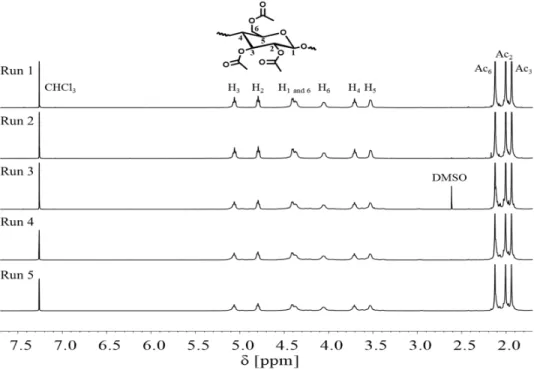
As already reported, the cellulose transesterification reaction led to cellulose acetate featuring high degree of substitution (DS) value of 2.95. After the cellulose acetate was isolated by a simple reprecipitation into MeOH, the resultant MeOH layer was subject to evaporation and subsequently high vacuum distillation (Scheme 2.5). This gave the employed EmimOAc in 99.2 wt % recovery ratio (Run 1, Table 2.1). As shown in the 1H NMR spectrum of the recovered EmimOAc depicted in Figure 2.3, a slight amount of impurity was observed.
Though a precise decomposition mechanism has been unclear, this phenomenon could be correlated with a rather acidic C2 proton. Since EmimOAc features a strongly basic acetate anion, instinctive nucleophilic attack of acetate anion to the C2 proton would be inevitable but could lead to a decomposition reaction. In spite of the confirmed impurity most probably owing to the decomposition during the reaction and/or purification steps, the recovered EmimOAc was then used for the
24
next cellulose modification reaction without any cautions. As shown in Run 2 (Table 2.1), cellulose acetate was produced with high DS value of 2.96 and good recyclability of the EmimOAc (98.1 %). This procedure was successfully iterated at least four times without any difficulties and a decrease in catalytic activities (Runs 3 ~ 5, Table 2.1). Thus, although unknown impurities have been generated in the employed EmimOAc through the iterated reaction and purification steps, the EmimOAc was revealed to be recyclable and reusable in the cellulose modification reaction for at least three times.
Scheme 2.5 Recyclable reaction of cellulose in EmimOAc/DMSO mixed solvent system
25
Table 2.1. Recycling EmimOAc in the cellulose modification reactions in EmimOAc/DMSO mixed solvent systemsa
Run EmimOAc DSvaluesb Recovery rate of EmimOAc [wt %]c
Mn,SECd Mw/Mnd
1 Fresh 2.95 99.2 31,700 3.58
2 Recycle 1 2.96 98.1 32,200 4.33
3 Recycle 2 2.87 96.2 33,200 3.43
4 Recycle 3 2.88 96.8 31,500 3.33
5 Recycle 4 2.86 97.7 29,900 5.69
a The reaction conditions for the transesterification reactions of cellulose with IPA are as follows;
EmimOAc as a solvent and an organocatalyst; the reaction was conducted for 18 hours; 4 mL of DMSO was used as a co-solvent; 120 mg of cellulose was used as a starting compound; initial [IPA]/[OH] was adjusted to be 16.5/1; Ar atmosphere. b Determined by 1H NMR measurements in DMSO-d6. c The recovery ratio was determined after vacuum drying of the resultant EmimOAc. d Determined from SEC measurement in CHCl3 using polystyrene standards.
Figure 2.3. 1H NMR spectra in CDCl3 of the obtained CAs (Table 2.1, Runs 1-5).
26
Figure 2.4 1H NMR spectra in CDCl3 of the recovered EmimOAc after the cellulose modification reactions (Table 2.1, Runs 1-5).
Figure 2.5 SEC traces of the obtained CA (solvent, CHCl3; flow rate, 1.0 mL min-
1).
22 20
18 16
14 12
10
Elution time / min
Run 1
Run 2
Run 3
Run 4
Run 5