DOI: 10.5797/jnet.oa.2016-0038
Expansion of Stent and Lumen Diameters on Follow-up after Carotid Artery Stenting in Patients with Carotid Artery Stenosis
Kenta Fujimoto,
1Hiroyuki Hashimoto,
1Mitsuhisa Nishiguchi,
1Toshitaka Inui,
1Naoki Tani,
1Kaoru Horiuchi,
1Megumi Chatani,
1Ryuta Matsuoka,
1Takahide Yaegaki,
1Ichiro Nakagawa,
2and Hiroyuki Nakase
2Purpose: We examined postoperative stent and lumen expansions after carotid artery stenting (CAS) in patients with carotid artery stenosis. Furthermore, we investigated factors influencing the stent and lumen expansions in a follow-up period.
Subjects: 134 cases (128 patients) who underwent CAS and performed follow-up cerebral angiography 12 months after CAS were enrolled into this study. The stenosis rate based on the stent and lumen diameters on follow-up angiography as a percentage of that immediately after CAS was evaluated.
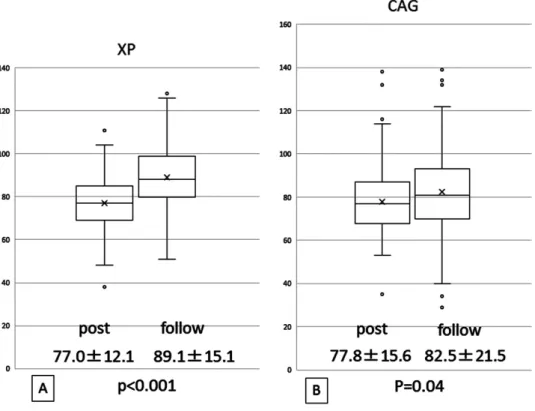
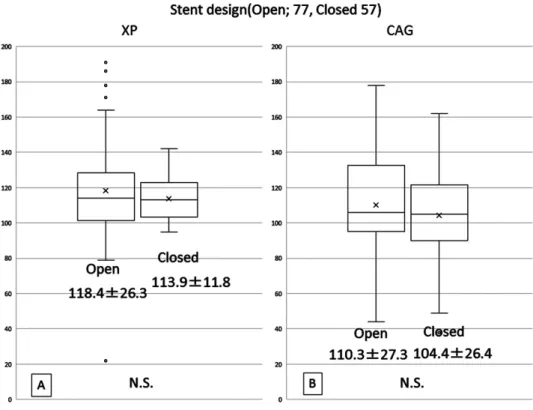
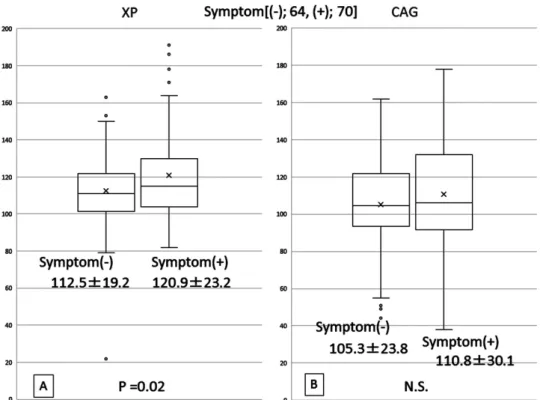
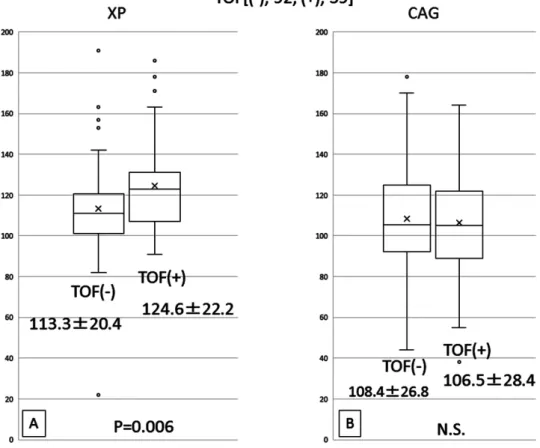
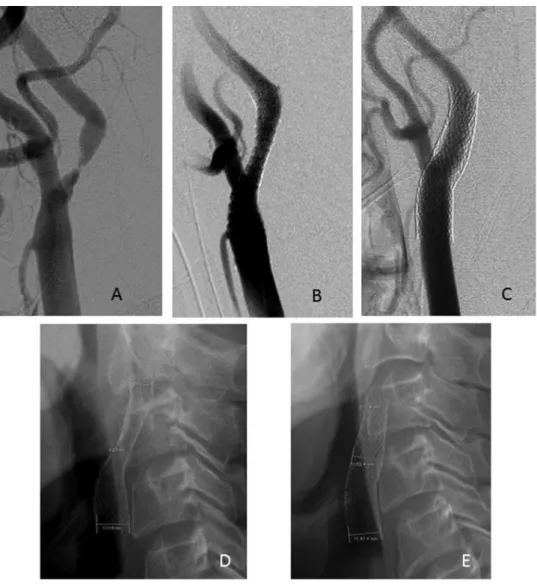
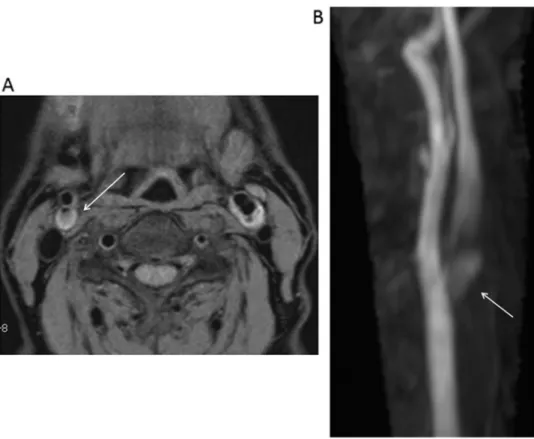
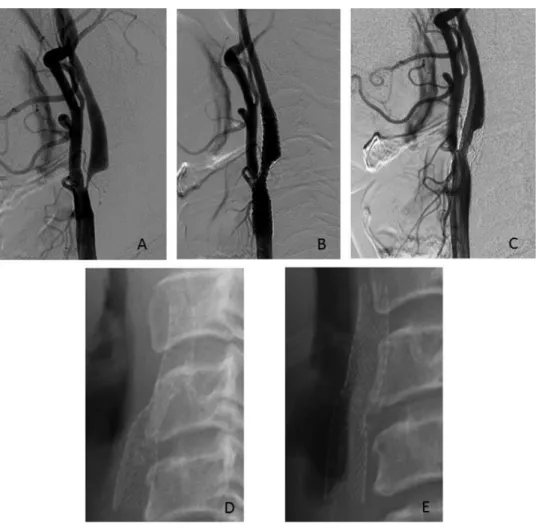
Results: Both the stent and lumen diameters were significantly dilated 12 months after CAS (p <0.001). There were no significant stent-type-related differences in the stent expansion rate. In the symptomatic stenosis group, this expansion rate was significantly higher than in the asymptomatic stenosis group (p = 0.02). With respect to the presence or absence of a high signal intensity on time of flight (TOF) magnetic resonance (MR) images, the stent expansion rate was significantly higher in the high signal intensity group (p = 0.006). In patients with a plaque/sternocleidomastoid muscle signal intensity ratio of ≥1.50 on plaque images, it was significantly higher than in those with a value of <1.50 (p = 0.006).
However, there were no significant differences in the lumen expansion rate among the groups.
Conclusion: Both the stent and vascular lumen were dilated 12 months after CAS. Plaque fragility influenced the stent expansion rate; however, there were no significant factor-related differences in the vascular lumen expansion rate.
Keywords▶ carotid artery stenting, self-expansion, plaque
Introduction
Since carotid artery stenting (CAS) for stenosis of the carotid artery became covered by health insurance in April 2008, it has commonly been performed in Japan. Initially, this procedure was primarily performed for patients at high risk for carotid endarterectomy (CEA) based on the results of the SAPPHIRE study.
1)However, in 2010, the CREST study
2)showed that CAS was as effective as CEA,
promoting its widespread application. On the other hand, the CREST
2)and ICSS
3)studies indicated that the inci- dence of perioperative stroke after CAS was higher than after CEA. Therefore, a reduction in the incidence is a key to an improvement in the results of CAS. Various studies have reported plaque assessment, medications, embolic protection devices, different cell-design stents, and proce- dures. Concerning procedures, studies using transcranial Doppler monitoring reported that distal embolism occurred most commonly on post-dilation after stenting.
4,5)Several studies suggested that the incidence of embolic complica- tions can be decreased by omitting or restricting post- dilation although an insufficient stent dilatation also can occur even using self-expanding stents.
6,7)There was one report about postoperative stent expansion 3 months after CAS; however, the long-term degree of postoperative stent expansion after CAS has not been elucidated.
8)Our CAS strategy is targeting a residual stenosis rate of
≤30% using self-expanding stent considering both risk of embolic complications related to marked post-dilation and
1
Department of Neurosurgery, Osaka General Medical Center, Osaka, Osaka, Japan
2