九州大学学術情報リポジトリ
Kyushu University Institutional Repository
根におけるアンモニウム同化に必要な炭素骨格の補 充
古賀, 伸久
Graduate School of Agriculture, Kyushu University
https://doi.org/10.11501/3142493
出版情報:Kyushu University, 1998, 博士(農学), 課程博士 バージョン:
権利関係:
REPLENISHMENT OF CARBON SKELETONS FOR AMMONIUM ASSIMILATION
IN PLANT ROOTS
THESIS
SUBMITTED TO GRADUATE SCHOOL, KYUSHU UNIVERSITY
IN PARTIAL FULFILLMENT OF THE REQUIREMENT FOR THE DEGREE OF DOCTOR OF PHILOSOPHY IN AGRICULTURAL SCIENCE
NOBUHISA KOGA
1998
ACKNOWLEDGMENTS
The author wishes to express his thanks to Dr. Motoki Ikeda, Professor of Plant Nutrition, Department of Agricultural Chemistry, Kyushu University for his invaluable instructions throughout the author's course work.
He is grateful to Dr. Kazuhiko Egashira, Professor of Soil Science for his critical review of the dissertation.
He is also indebted to Associate Professor Dr. Takeo Yamakawa of Plant Nutrition for his helpful suggestions.
The author would extend to thank his colleagues in the Laboratory of Plant Nutrition and Soil Fertility, Kyushu University for their encouragements and helps in his study and student life.
CONTENTS
Chapter 1. INTRODUCTION
1.1
Differential Plant Growth between Nitrate andAmmonium Nutrition 1
1.2
Replenishment of Carbon Skeletons for NitrogenAssimilation in Plants 3
1.3
PEPC Responsible for Non-photosynthetic CarbonFixation 6
1.4
Aim of This Study 8Chapter 2. STIMULATION
OFDARK CARBON FIXATION IN ROOTS DURING AMMONIUM NUTRITION 2.1 Introduction
2.2 Materials and Methods 2.3 Results
2.4 Discussion 2.5 Summary
Chapter 3. CHANGES IN PHOSPHOENOLPYRUVATE
CARBOXYLASE ACTIVITY IN ROOTS DURING AMMONIUM NUTRITION
3.1 Introduction
3.2 Materials and Methods
10
11
18
24
27
29
3.2.1 Time-course Changes in PEPC Activity in Roots of Plants Fed with Different Nitrogen Sources
3.2.2 Changes in Amounts of PEPC Protein in Roots of Tomato Plan ts fed with Different Nitrogen Sources
3.3.3 PEPC Activity in Wheat Roots Supplied with Amino Acids with or vvithout MSX
3.3 Results 3.4 Discussion 3.5 Summary
Chapter 4. PURIFICATION OF ROOT
PHOSPHOENOLPYRUVATE CARBOXYLASE AND POST-TRANSLATIONAL REGULATION
OFITS ACTIVITY
4.1 Introduction
4.2 Materials and Methods
4.2.1 Purification of PEPC from Tomato Roots
31
32
37
38
45
46
48
50 4.2.2 Enzymatic Properties of Tomato Root PEPC 52
4.2.3 Malate Sensitivity of PEPCs from Roots of
Nitrate-or Ammonium-fed Tomato Plants 54
4.3 Results
4.3.1 Purification of PEPC from Tomato Roots 55
4.3.2 Effects of Metabolites on Tomato Root
PEPC Activity 60
4.3.3 Malate Sensitivity between PEPCs Prepared Roots of Tomato
4.4 Discussion 4.5 S ummary
Chapter 5. GLUCOSE METABOLISM IN ROOTS DURING AMMONIUM NUTRITION
5.1 Introduction
5.2 Materials and Methods 5.3 Results and Discussion 5.4 Summary
Chapter 6. TRANSLOCATION OF PHOTOSYNTHATES TO ROOTS DURING AMMONIUM NUTRITION
68 70
72 73 76 84
6.1 Introduction 86
6.2 Materials and Methods 87
6.3 Results and Discussion 90
6.4 Summary 96
Chapter
7.GENERAL DISCUSSION AND CONCLUSIONS 98
Summary 106
References 108
AS BSA CAM CBB DEAE EDTA FW GOGAT GS HE PES
HPLC I so
Km
LSC MDH MSX NAD(H) OAA 2-0G PAGE PEP PEPC PITC PMSF PPO PTC PVPP RH
Abbreviations
asparagine synthetase bovine serum albumin
Crassulacean acid metabolism Coomassie Brilliant Blue diethylaminoethyl
ethylenediaminetetraacetate fresh weight
glutamate synthase
glutamine synthetase
N-[hydroxyethyl]piperazine-N'-[2- ethane sulfonic acid]
high performance liquid chromatography half-inhibitory dose
Michaelis constant
liquid scintillation counter malate dehydrogenase
L-methionine sulfoximine
nicotineamide adenine dinucleotide oxaloacetate
2-oxoglutarate
polyacrylamide gel electrophoresis phosphoenolpyruvate
phosphoenolpyruvate carboxylase phenyl isothiocyanate
phenylmethylsulfonyl fluoride 2,5-diphenyloxazole
phenyl thiocarbamoyl polyvinylpolypyrrolidone relative humidity
Chapter 1
INTRODUCTION
1.1 Differential Plant Growth between Nitrate and Ammonium Nutrition.
Nitrogen (N) is a major constituent within plants and a rate-limiting element in plant growth. Plants are basically able to absorb and utilize nitrate and ammonium as inorganic forms of N. In agricultural practices, ammonium-N is mainly fertilized because nitrate-N is lost from soils by leaching.
Armnonium in soils is oxidized to nitrate by the action of nitrifying bacteria, thereby both nitrate and ammonium are available for plants under upland soil conditions ( Sechley et al.
1992).
Generally, the supply of nitrate or ammonium makes a difference to plant growth or biomass production. Numerous
researchers have extensively studied the effects of nitrogen form on plant growth. The supply of ammonium generally displayed the smaller biomass production than the supply of nitrate or mixed nitrogen nutrition (Cramer and Lewis
1993)
1
although it depended, to some extent, on plant species or cultivars. Particularly, it was apparent that ammonium nutrition considerably repressed the root mass production and raised a shoot/root mass ratio (Lewis et al. 1987 Cramer and Lewis 1993). In addition, the experiment of split-root system confirmed that one half of the root system fed with ammonium showed a more depressed dry matter production than the other half of the root system fed with nitrate in soybean plants (Chaillou et al. 1994).
Within plant cells, one direct toxicity of ammonium is suggested to be uncoupling of electron transport and oxidative phosphorylation at mitochondria (Lang and Kaiser 1994).
However, the causation of the poor growth of plants during ammonium nutrition appears to be very complicated. The repressed mass production in ammonium-fed plants is often characterized by the decreased rate of photosynthesis or root respiration. (Cramer and Lewis 1993 Chaillou et al.
1994). Schortemeyer et al. (1997) demonstrated that ammonium
sensitive cul ti vars accumulated a higher level of ammonium and a lower level of water-soluble carbohydrates in roots than ammonium-insensitive cultivars employing maize cultivars differing in ammonium sensitivity. It was thus hypothesized that the sufficient supply of carbon (C) skeletons in roots during ammonium assimilation was required
growth of plants (Schortemeyer et al. 1997).
al. (1992) also showed that the exogenous
for the sound Magalhaes et supply of 2-0G contributed to the decreased concentration of ammonium in
tomato roots and improved the growth.
1.2 Replenishment of Carbon Skeletons for Nitrogen Assimilation in Plants.
Nitrate is able to be stored in vacuoles and exported to shoots without reduction. Subsequently, nitrate is reduced in shoots or roots by nitrate reductase and subsequent nitrite reductase and resultant ammonium is assimilated to amides and amino acids. The main site of nitrate reduction depends not only on plant species but also on temperature, light intensity and plant age (Engels and Marschner 1995 ; Crawford 1995).
In contrast, when plants are situated in a condition that ammonium is dominantly absorbed, in practice, an excess of ammonium-N is fertilized with the limited nitrification, absorbed ammonium is immediately assimilated in roots to detoxify ammonium and roots consequently accumulate glutamine and/or asparagine (Givan 1979). At the onset, ammonium is combined to glutamate to produce glutamine by the action of cytoplasmic GS. Then, glutamine reacts with 2-0G to regenerate two molecules of glutamate by NADH-dependent GOGAT. The absorbed ammonium is mostly assimilated in this GS/GOGAT cycle in roots (Joy 1988 ; Sechley et al. 1992 ; Oaks 1994).
Ammonium produced by the reduction of nitrate is also fixed in the GS/GOGAT cycle (Sechley et al. 1992 ; Sivasankar and Oaks 1996). Ammonium released by foliar photorespiration in the process of the conversion of two molecules of glycine to
3
serine is assimilated in a distinct GS/GOGAT cycle (Hayakawa et al. 1990 Peat and Tobin 1996). Asparagine, another dominant nitrogen assimilate for transport and storage in plants, is synthesized by the transfer of amide group of glutamine to carboxyl group of aspartate by the function of glutamine-dependent AS (Givan 1979). Aspartate is formed by a transamination reaction of glutamate and OAA (Lea 1993 ; Oaks 199 4 ).
When ammonium is continuously supplied, the assimilates produced in ammonium assimilation are to be translocated into shoots. As mentioned above, since the oxo acids such as 2-0G and OAA derived from TCA cycle are precursors of the assimilates, these oxo acids as carbon skeletons for ammonium assimilation have to be provided from the TCA cycle and other sources when ammonium continuously enters to roots.
The withdrawal of 2-0G and OAA results in the decreased pool of the TCA cycle intermediates. Therefore, C4-dicarboxylic acids such as malate and OAA are to be replenished into the TCA cycle. The C4-dicarboxylic acids can be synthesized from a C3 compound via £-carboxylation.
carbon fixation is especially referred dark carbon fixation.
In this case, the to as anaplerotic
The carbon fixation in roots is virtually mediated by PEPC ( EC 4 . 1 . 1. 31 ) , which converts PEP and bicarbonate to OAA and orthophosphate. PEP is provided through the glycolytic degradation of hexoses originating from the photosynthates (mainly sucrose) translocated into roots. Bicarbonate,
shoot
---•sucrose
cytoplasm sucrose
HC03- l
shoot+--- ---- �; A f n FEPC r p r p
Asp OAA pyruvate
/:- - - acetyl
-+----
C---....
oA
_______l
OAA citrate )
(
· TCAcycle
...__---+-__.
malat�2-0G
malate
mi tochondorion
l
Glu GOGAT 2-oc J
Glu Gin
---_____ ..,.shoot
GS ______/
NH4 + -"'---___.::==----
NH4+ Root Cell
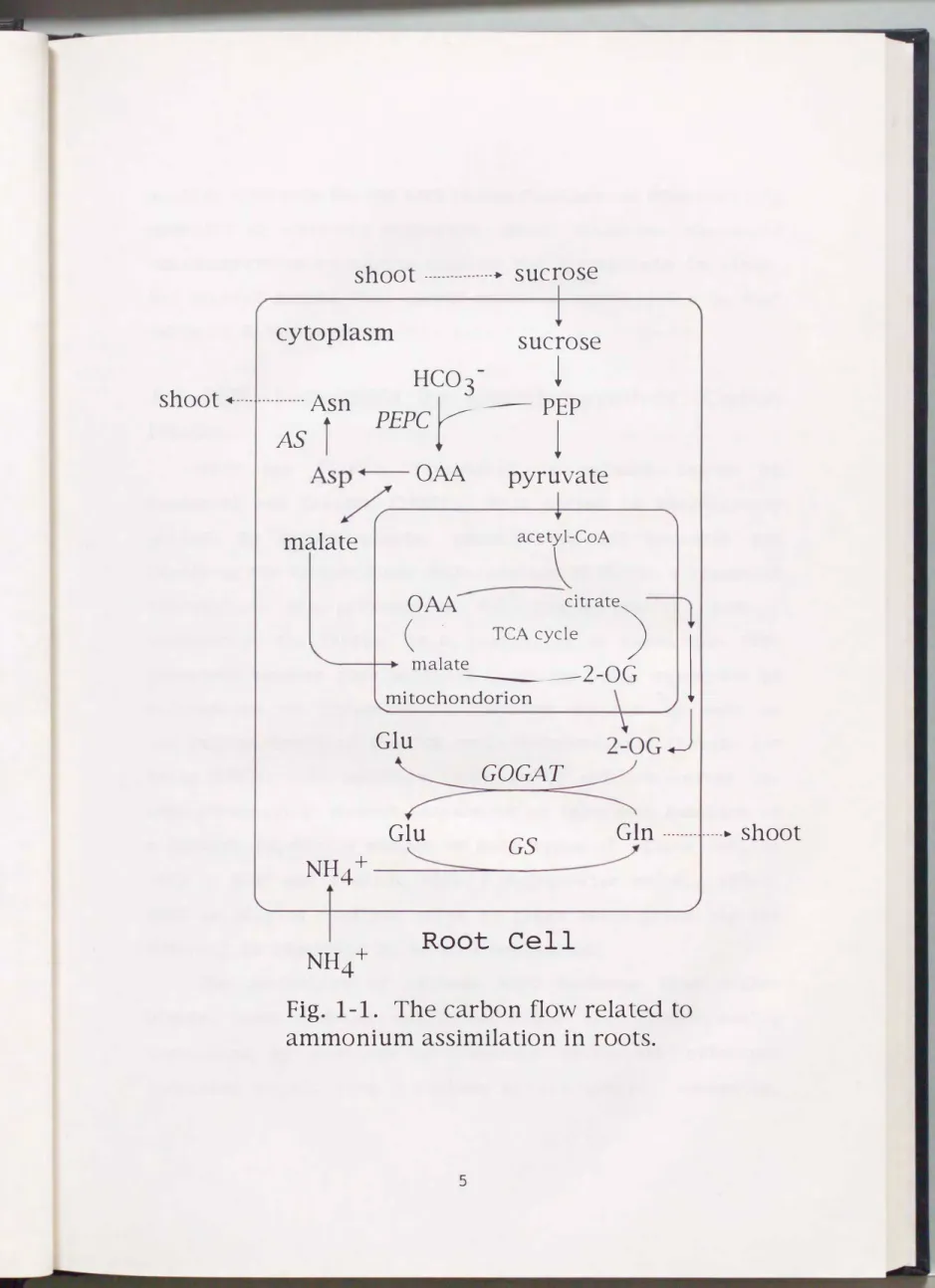
Fig. 1-1. The carbon flow related to ammonium assimilation in roots.
5
another substrate for the dark carbon fixation, is consecutively provided by carbonic anhydrase, which catalyzes the rapid interconversion of carbon dioxide and bicarbonate in water.
The overall carbon flow during ammonium assimilation in root cells is illustrated in Fig.
1-1.
1.3 PEPC Responsible for Non-photosynthetic Carbon Fixation.
PEPC was firstly discovered in spinach leaves by Bandurski and Greiner (
1953).
This enzyme is ubiquitously present in higher plants, green algae and bacteria and catalyzes the irreversible carboxylation of PEP in a cytosolic fraction in the presence of Mg2+ (Andrea et al.19 8
7 Lepiniec et al.1994).
In C3 plants, it is known that PEPC possesses diverse physiological functions, e.g. cytosolic pH maintenance and recapture of respired C02 etc. as well as the replenishment of the TCA cycle intermediates (Latzko and Kelly1983).
In addition, PEPC in C4 and CAM leaves has been intensively studied because of an important function as a primary C02-fixing enzyme in such types of plants (Winter1982
Jiao and Chollet1991
Rajagopalan et al.1994).
PEPC is playing cardinal roles in plant metabolisms and its activity is regulated by several mechanisms.
The activities of various PEPC isoforms from higher plants, root nodules and green algae are allosterically controlled by positive
(Lepiniec et al.
19 94
or negative metabolite effectors Chollet et al.
19 9 6)
. Generally,organic acids including malate represent negative effectors while sugar phosphates positively affect FEPC activities.
Which compounds and how strongly those function as effectors appear to depend on the source of FEPC. Therefore, in vivo FEPC activities presumably vary with the changes in the concentration of metabolite effectors in cells. In relation to ammonium nutrition in plant roots, it should be noted that a FEPC isoforrn separated from a green alga was activated by glutamine, the product of ammonium assimilation (Schuller et al. 1990a).
In C4 and CAM leaves, FEPC activity is known to be regulated by reversible protein phosphorylation (Chollet et al. 1996). FEPC from these materials is covalently modified by protein kinase and phosphatase in a light-dependent manner. Jiao and Chollet (1990) have already identified the phosphorylated serine residue near N-terrninus of maize leaf FEPC. The phosphorylation of PEPC elevates the catalytic activity and renders the enzyme activity less sensitive to the inhibition by malate ( Brulfert et al. 19 8 6 ; Jiao and Chollet 1988 ; Jiao and Chollet 1989).
In addition to the case of C4 and CAM leaves, it has been reported that PEPCs also undergo the regulatory phosphorylation in C3 leaves (Wang and Chollet 19 9 3 ; Duff and Chollet 1995) and root nodules (Schuller and Werner 1993
; Zhang et al. 1995). From the results of the stern girdling experiment, Zhang et al. (1995) suggested that shoot-derived materials might have a significant influence on the in vivo
7
phosphorylation state of nodule FEPC. It is very noteworthy
that FEPC in root nodules, which are not exposed to direct illumination, is consistently phosphorylated.
The metabolite effects and the reversible protein phosphorylation are responsible for the rapid modulation of the FEPC activity. Hence, both are called short-term modulations.
In contrast with metabolite effects and regulatory phosphorylation, de novo protein synthesis is referred to as a long-term modulation. Sugiharto and Sugiyama (1992) showed that glutamine had a inducible effect on the accumulation of FEPC protein in maize leaves during recovery from nitrogen deficiency. Manh et al. (1993) also indicated that glutamine was a likely compound for the induction of FEPC in detached wheat leaves.
These informations on the regulations of plant FEPC activity will be helpful when root FEPC activity is discussed in response to the supply of ammonium.
1.4 Aim of This Study.
A continuous supply of ammonium is considered to require the replenishment of carbon skeletons for the assimilation of ammonium to amides and amino acids in plant roots. Since the carbon skeletons are replenished via anaplerotic dark carbon fixation, it is conceivable that in vivo PEPC activity and/or the provision of the substrate for the dark carbon fixation in roots may be responsible for the
regulation in the replenishment of carbon skeletons. The root is a specific site for ammonium assimilation in plants.
Nevertheless, the carbon metabolism in roots is not sufficiently studied from the viewpoint of ammonium nutrition. The present study is designed to understand the regulations of the replenishment of carbon skeletons in roots during ammonium assimilation.
9
Chapter 2
STIMULATION OF DARK CARBON FIXATION IN ROOTS DURING AMMONIUM NUTRITION
2 .1 Introduction
Dark (non-photosynthetic) carbon fixation is a usual metabolic incident in plants and algae etc. This reaction is responsible for C4-dicarboxylic acid synthesis and mostly takes place as a carboxylation of PEP. Stimulation of the dark carbon fixation under various nutritional conditions has been already reported in higher plants (Ikeda et al.
1992 ; Johnson et al. 1994), cultured plant cells (Wright and Givan 1988) and algal cells (Vanlerberghe et al. 1990 ; Muller et al. 1990). The rate of dark carbon fixation is substantially increased when organic acid synthesis is reinforced. For example, phosphorus-stressed white lupin showed a stimulated dark carbon fixation in roots for citrate exudation to rhizosphere to acquire phosphorus (Johnson et al. 1994).
It is reported that the supply of ammonium stimulates
the dark carbon fixation in roots of higher plants (Ikeda et al.
1992
Cramer et al.1993)
and green algae (Wright and Givan1988
; Muller et al.1990).
Once ammonium enters into roots, the ammonium immediately has to be assimilated to counteract its toxicity although ammonium is a major source of N. This involves an alteration of carbon metabolism in roots because it demands the supply of oxo acids such as OAA and 2-0G in order to accept ammonium. These dicarboxylic acids are synthesized via the dark carbon fixation. Thereby, C fixed in roots is considered to play an important role in carbon metabolism of roots in the course of ammonium assimilation.This chapter addressed the determination of the rate of dark carbon fixation and the destinations of the fixed c in wheat roots supplied with ammonium and pretreated with or without MSX that is a specific inhibitor for GS.
2.2 Materials and Methods
Plant Growth.
Seeds of wheat plant
(Triticum aestivum
L. var.Saitama) were germinated on moist filter paper for 2 d in the dark. The seedlings were grown on washed sand for several days and thereafter hydroponically cultured in a 7.5 L plastic container
(10
seedlings per container) in a glasshouse. One-eighth modified Hoagland solution (pH 6,11
Table
2-1)
containing2 rnM
NaN03 was supplied to the plants with continuous aeration. The nutrient solution was basically prepared with deionized water and renewed twice a week.Nitrogen Treatment and MSX Pretreatment.
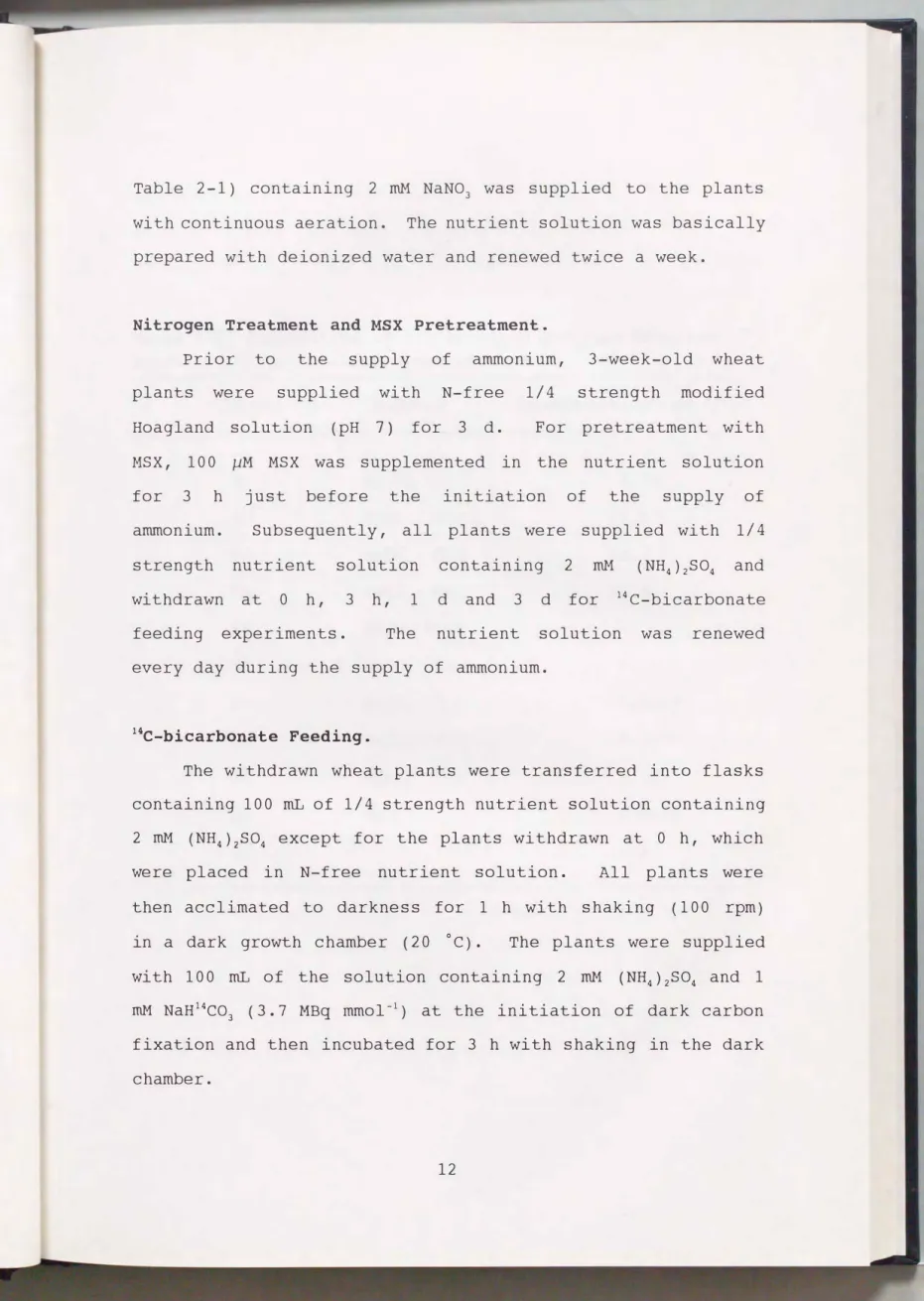
Prior to the supply of ammonium, 3-week-old wheat plants were supplied with N-free
1/4
strength modified Hoagland solution (pH7)
for 3 d. For pretreatment with MSX,100
JlM MSX was supplemented in the nutrient solution for 3 h just before the initiation of the supply of arrunonium. Subsequently, all plants were supplied with1 I 4
strength nutrient solution containing2 rnM
(NH4) 2S04 and withdrawn at0
h, 3 h,1
d and 3 d for 14C-bicarbonate feeding experiments. The nutrient solution was renewed every day during the supply of ammonium.14C-bicarbonate Feeding.
The withdrawn wheat plants were transferred into flasks containing
100
mL of1/4
strength nutrient solution containing 2 mM(
NH4) 2S04 except for the plants withdrawn at0
h, which were placed in N-free nutrient solution. All plants were then acclimated to darkness for1
h with shaking(100
rpm) in a dark growth chamber(20
oC). The plants were supplied with10 0
mL of the solution containing2 rnM
( NH4) 2S04 and1
mM NaH14C03 ( 3. 7 MBq mmol-1) at the initiation of dark carbon fixation and then incubated for 3 h with shaking in the dark chamber.
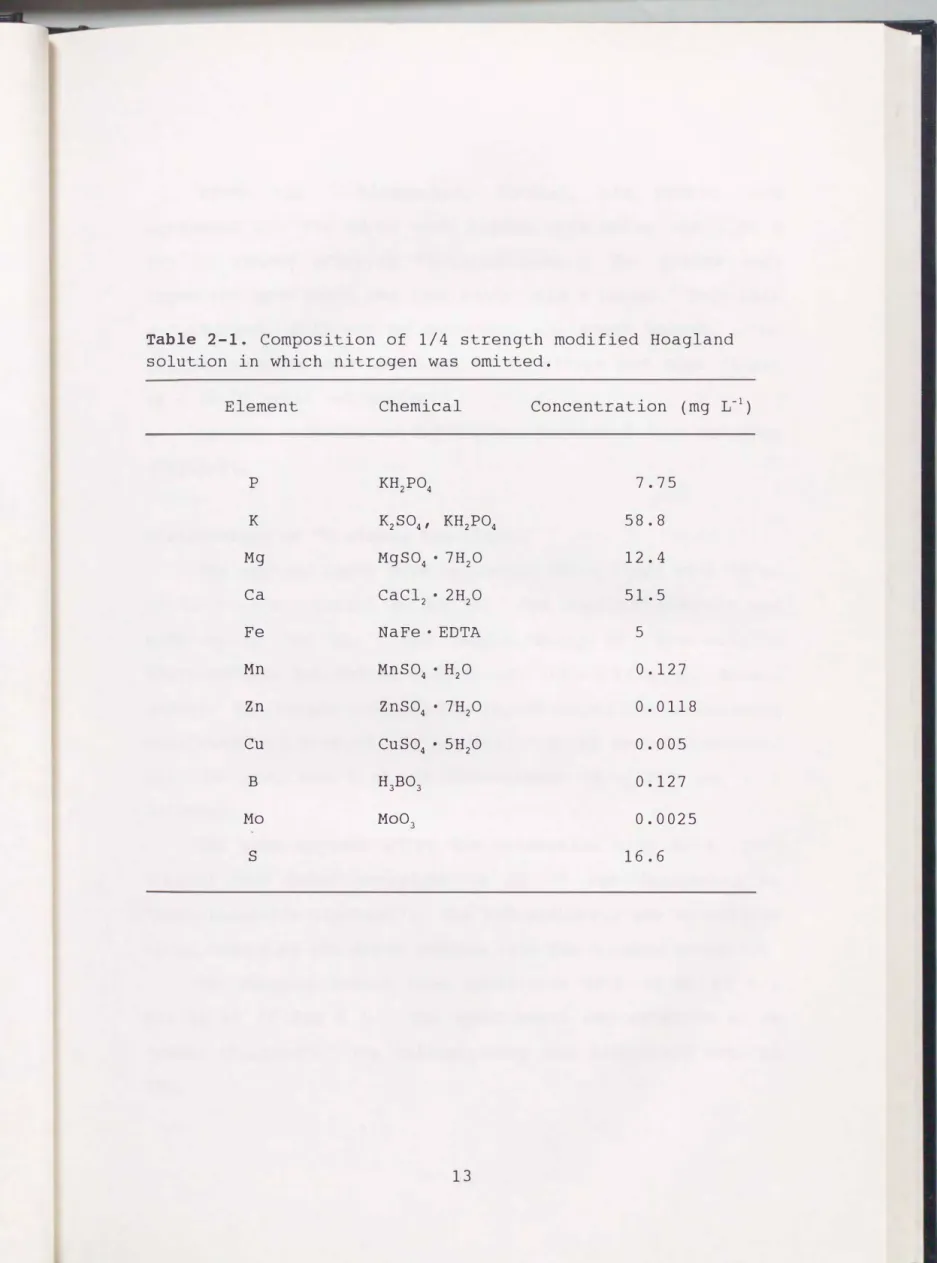
Table 2-1. Composition of
1/4
strength modified Hoagland solution in which nitrogen was omitted.Element Chemical Concentration (mg
L-1)
p KH2P04
7.75
K K2S04 I KH2P04
58.8
Mg MgS04 · 7H20
12.4
ca CaC12 •
2
H2051.5
Fe NaFe · EDTA 5
Mn MnS04 · H20
0.127
Zn ZnS04 • 7H20
0.0118
Cu CuS04 • 5H20
0.005
B H3B03
0.127
Mo Mo03
0.0025
s 16.6
13
After the He-bicarbonate feeding, the plants were harvested and the roots were rinsed with water and 0. 01 N Hel to remove adhering He-bicarbonate. The plants were separated into shoot and root parts with a razor. Each part was chopped, followed by measuring the fresh weight. The chopped samples were put into 50 rnL flasks and kept frozen at - 70 oc until extraction.
Aqueous solution of NaH14e03 was purchased from Arnersharn (England).
Distribution of 14C within the Plant.
The excised roots were extracted three times with 30 rnL of 8 0 % ( v /v) ethanol at 8 0 o e. The combined extract was
made up to 100 rnL . The radioactivity of J/root-soluble fraction" was determined with an LSe (LSC-5100 model, Aloka, Japan). The sample cocktail for liquid scintillation counting consisted of 0.5 rnL of the extract, 5 rnL of methanol-ethanol ( 1: 1 in v /v) and 5 rnL of PPO-toluene ( 4 g PPO per 1 L toluene) .
The root residue after the extraction with 80 % (v/v) ethanol was dried overnight at 50 oe and designated as J/root-insoluble fraction". The radioactivity was determined after immersing the dried residue into PPO-toluene overnight.
The chopped leaves were hydrolyzed with 30 rnL of 6 N HCl at 8 0 o C for 6 h. The hydrolysate was referred to as J/shoot fraction". Its radioactivity was determined with an LSe.
Ion-exchange Chromatography.
Further fractionation was performed for the root-soluble fraction. The root extract ( 2S mL) was concentrated by rotary evaporation. A whole aliquot of the concentrate was loaded onto the columns of Dowex SOW (H+ form) and Dowex 1 X 8
(CH3Coo- form) connected in series.
The neutral fraction was eluted with 12 mL of deionized water. After the columns were disconnected, the basic and acidic materials were eluted from Dowex SOW and Dowex 1 X 8 columns with 7 mL of 2 N NH40H and 8 N HCOOH, respectively.
The eluate was collected to a vial that was previously weighed. The radioactivity was determined with an LSC for each fraction.
HPLC Analysis for Major Organic Acids.
The acidic fraction was evaporated to dryness. The dried samples were dissolved in 100 J.lL of 0.1 % H3P04 and syringe-filtered ( 0. 4S J..Lm) . The individual organic acids were separated by HPLC (PV-980 model pump, Jasco, Tokyo) equipped with both of a Shim-Pack SCR-102H column (Shimadzu, Japan) and a guard column recommended by the manufacturer.
Ten J.lL of the sample was injected and eluted with 0.1 % H3P04 at 40 oc and at a flow rate of 1.0 mL min-1• Column pressure was 2 9 kg cm-2• Individual peaks were detected at 210 nm with a UV detector (UVDEC-100-III model, Jasco) and the peak areas were calculated with an integrator (Chromatocoder 12 model, SIC, Japan) . Individual acids were collected to a
15
vial by manual handling and the radioactivity was determined in a sample cocktail with an LSC. For malate, citrate, succinate and fumarate, the retention time and area/nmol value were determined in the preliminary experiments. The solvents used in HPLC analyses were previously degassed and filtered
(0.45
�m).Derivatization of Amino Acids with PITC.
Preparation of PTC-amino acids was according to the method of Yamaya and Matsumoto
(1988).
The sample of basic fraction( 5 rnL)
was evaporated to dryness. Hydroxyproline(12.5
nmol) was added as an internal standard. After evaporation to dryness, the sample was mixed with50
�L of ethanol-H20-triethylamine (TEA)( 2:2:1
[v/v/v]) and allowed to stand for 2 0 min. After evaporation, 50 J..lL of freshly prepared deri vatization reagent consisting of ethanol-H2 0- TEA-PITC( 7: 1: 1: 1
[v /v /v /v]) was added and the sample was incubated for2 0
min at room temperature.evaporated to dryness and stored at -
20
The sample was oC until HPLC analysis. According to the same procedure as the sample,
amino acids in standard solution (type H) from Wako Pure Chemical Industries, LTD. supplemented with asparagine, glutamine and hydroxyproline were derivatized with PITC.
HPLC Analysis for Amino Acids.
HPLC analysis for amino acids was performed by the method of Yamaya and Matsumoto
(1988).
PTC-amino acids weredissolved in 0.2 mL of solvent A (0.1 M ammonium acetate pH 6.5, 2.5 % [v/v] acetonitrile) and syringe-filtered (0.45
�m). Twenty �L of the sample was applied to an HPLC system equipped with a Cosmosil 5C18 (4.6 X 150 mm) column (Nacalai tesque Inc, Kyoto). For Asp, Asn, Glu and Gln, FTC-amino acids were separated by a isocratic elution for 15 min at 45 oc and at a flow rate of 2. 0 mL min-1 and detected at 254 nm. Individual peaks were collected to a vial by
manual handling and the radioactivity was determined in a sample cocktail with an LSC. The column was washed with sol vent B ( 6 0 % [ v /v] acetonitrile) for 5 min after the
separation of amino acids. All the solvents were degassed and filtered prior to HPLC analysis.
Ammonium Quantification.
One mL of root extract (root-soluble fraction) was placed in the outer room of a Warburg flask and 1 mL of 0.5 N H2S04 was placed in the inner room of the flask. Gaseous NH3 released by the addition of 1 mL of saturated borate buffer (pH 10) to the outer room was collected into the inner room for 2 d at 30 °C.
Ammonium concentration was colormetrically measured by the method of McCullough (1967). Sample (0.2 mL) was mixed with 2.5 mL of solution c (10 g phenol and 100 mg Na nitroprusside L-1) and 2.5 mL of solution D (10 g NaOH, 9.43 g Na2HP04·12H20, 31.8 g Na3P04·12H20 and 10 mL 5.25 % NaClO L-1). The mixture was incubated for more than 35 min at 37
17
oc, followed by reading the absorbance at 625 nm. Ammonium concentration was determined with the calibration curve prepared with NH4Cl standard solutions ( 0, 0. 0 5, 0.
1,
0.2
and 0 .
4 5 mM)
•2.3 Results
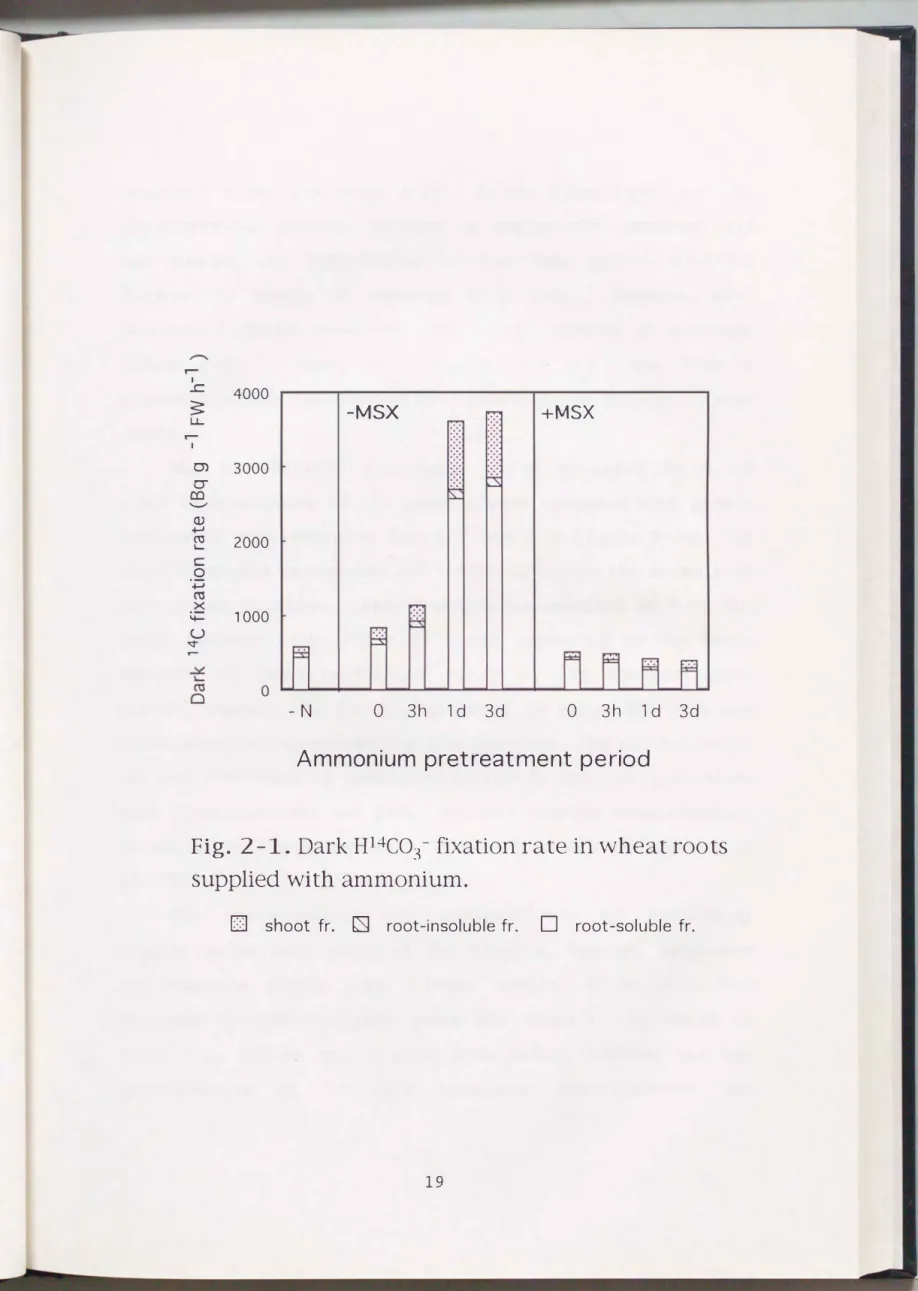
The rate of dark carbon fixation was examined in roots of young wheat plants supplied with ammonium and pretreated with or without MSX (Fig.
2-1).
14C-bicarbonate feeding was imposed for 3 h on the plants having different careers of ammonium treatment and ammonium was supplied during the feeding. The rate of dark carbon fixation was increased as a period of the pretreatment with ammonium was prolonged (Fig.2-1).
When the plants were grown on ammonium media for 3 h, the rate of the dark carbon fixation became two times as high as that in -N plants. The plants pretreated with ammonium for1
and 3 d showed the remarkable stimulation of dark carbon fixation. The rates were 6-fold higher compared to the rate in -N plants. The rates obtained in the present study were much higher than the rates reported for rice and tomato roots by Ikeda et al.( 19 9 2)
. Theyshowed that the rate in ammonium-fed plants was 3-fold increased at the highest compared to the rate in -N plants.
A significant difference of the stimulation of the dark carbon fixation in wheat roots pretreated with ammonium
r--1
..c
�
u..r--1
4000
0') 3000 0"'
..._, CQ
+-J Q)
�
2000c 0 . .+:i .� rn
'+- 1000
v u
.--
-MSX +MSX
- N 0 3h 1 d 3d 0 3h 1 d 3d
Ammonium pretreatment period
Fig. 2-1. Dark H14C03- fixation rate in wheat roots supplied with ammonium.
D
shoot fr.(S]
root-insoluble fr.D
root-soluble fr.19
between 3 h and 1 d (Fig. 2-1). On the other hand, all the MSX-pretreated plants, failing to assimilate ammonium, did not display the stimulation of the dark carbon fixation despite the supply of ammonium (Fig. 2-1). However, MSX
pretreated plants contained substantial amounts of ammonium (Table 2-2). Thus, this result did not come from a consequence that ammonium was not taken up in the MSX-pretreated plants.
The root-soluble fractions, which occupied 70 % of total radioactivity of the plants, were compared with plants pretreated with ammonium for 3 h and 1 d (Table 2-3). In roots of plants pretreated for 1 d which showed the stimulated dark carbon fixation, basic fraction represented 60 % of the total radioactivity, while 33 % was recovered to the basic fraction in roots pretreated for 3 h. In MSX-pretreated plants, however, 14C was hardly found in basic fraction and the majority was recovered in acidic fraction. The radioactivity was not recovered in neutral fraction in all the treatments when 14C-bicarbonate was fed. Similar results were obtained
in maize roots supplied with nitrate or ammonium (Cramer et al. 1993).
The concentration and radioactivity of individual
organic acids were measured for citrate, malate, succinate and fumarate (Table 2-4). Other several acids were also detected by HPLC analysis (data not shown). As shown in Table 2-4, malate and citrate were mainly labeled but the incorporation of 14 C into succinate and fumarate was
Table 2-2. Concentration of free ammonium in wheat roots.
( J.imOl g-1FW)
Ammonium
pretreatment - MSX + MSX
0
h20.6 ( ± 0.2)* 25.0 ( ± 1. 5) 3
h30.8 ( ± 1. 8) 32.6 (± 0. 9) 1
d48.2 ( ± 1. 3) 36.1 ( ± 1. 1) 3
d51.8 ( ± 2. 2) 24.3 ( ± 0. 3)
*
Standard deviationTable 2-3. Distribution of radioactivity from 14C-bicarbonate in soluble fractions of wheat roots.
(%)
Ammonium Neutral Acidic Basic
pretreatment (sugars) (organic acids) (amino acids)
3
h0.6 66.0 33.4
- MSX
1
d0.7 40.3 59.0
3
h0.1 92.4 7.5
+ MSX
1
d0.4 90.4 9.2
14C-bicarbonate was fed for
3
h after the pretreatment with ammonium.21
Table 2-4. Concentration, radioactivity and specific radioactivity of major organic acids in acidic fractions in roots of wheat plants.
Concentration Radioactivity Specific radioactivity
Anunonium cit mal sue fum cit mal sue fum cit mal sue fum
pretreatment
J.Imol g-1 FW Bq g-1 FW
N period Bq J.Imol-1
N
3h 3.7 22.2 5.1 0.09 114 941 N.D. N.D. 30.8 42.3 N.D. N.D.
- MSX
1d 1.6 6.2 4.0 0.06 47 214 N.D. N.D. 29.4 34.7 N.D. N.D.
3h 3.4 39.2 9.0 0.10 66 737 N.D. N.D. 19.1 18.8 N.D. N.D.
+ MSX
1d 3.0 21.9 7.4 0.07 24 392 N.D. N.D. 7.9 17.9 N.D. N.D.
cit : citrate mal : malate sue : succinate fum : fumarate N.D. : Not detected
N w
Table 2-5. Concentration, radioactivity and specific radioactivity of major amino acids in basic fractions in roots of wheat plants.
Concentration Radioactivity Specific radioactivity
Ammonium pretreatment period
3h
- MSX 1d
Asp Glu Asn J.lmO 1 g-1 FW
Gln
0.13 0.23 0.58 0.23 0.20 0.50 2.87 0.54
Asp
28 58
Glu Asn Bq g-1 FW
39. 134 66 476
Gln Asp
56 215
73 290
Glu Asn Bq J.lmOl-1
167 231 132 166
Gln
243 135
undetectable. This may imply that carbon flow is not via succinate and fumarate for the ammonium assimilation. As ammonium was supplied longer, the concentration and radioactivity of malate and citrate were drastically declined but the specific radioactivity was not influenced (Table 2-4) . In addition, an unidentified peak detected at 12 . 7 min of retention time in HPLC analysis showed a high radioactivity only in ammonium-treated plants (data not shown). As for the basic fractions, asparagine content was 5-fold increased from
3
h pretreatment to 1 d pretreatment and asparagine was the most dominant amino acid in quantity (Table 2-5) . Cramer et al. ( 19 93)
showed that asparagine was the most 14C-labeled and accumulated amino acid in maize roots supplied with ammonium when 14C-bicarbonate was incorporated. On the whole, the specific radioactivity in the amino acids was considerably higher compared to that in the organic acids (Tables 2-4, 2-5). The reason may be due to the larger non-radioactive pool of organic acids compared to amino acids.2.4 Discussion
It has been already documented that nitrate nutrition did not stimulate the dark carbon fixation in tomato and rice roots (Ikeda et al. 19 9 2) . Hence, the present study was focused on ammonium nutrition. Consistent with the
previous work in tomato and rice roots (Ikeda et al. 1992) and in maize roots (Cramer et al. 1993), ammonium nutrition did stimulate the rate of the dark carbon fixation in wheat roots (Fig. 2-1). However, the plants pretreated with ammonium for less than 3 h did not show the marked increase which was observed in plants pretreated for 1 and 3 d (Fig.
2-1). The reaction of dark carbon fixation mostly occurs as
the carboxylation of PEP. Therefore, the stimulation of the dark carbon fixation in roots may be linked to in situ root PEPC activity, the supply of PEP due to carbohydrate degradation in roots and the translocation of photosynthates from shoots.
MSX pretreatment experiment may propose that ammonium assimilation is a requisite for the stimulated dark carbon fixation in roots rather than the entry of ammonium itself (Fig. 2-1, Table 2-2). However, the supply of glutamine, the product of ammonium assimilation, did not stimulate the bicarbonate incorporation although the supply of ammonium resulted in the stimulated bicarbonate incorporation in cultured cells of Acer pseudoplatanus (Goodchild and Givan 1991).
There was a marked difference in the distribution of 14C in root-soluble fractions (Table 2-3). The plants which showed the stimulated dark carbon fixation by the supply of ammonium represented higher radioactivity in the basic fraction than in the acidic fraction (Table 2-3). When the rate of the dark carbon fixation for the ammonium assimilation was low, citrate and malate were heavily labeled (Table 2-4).
25
Therefore, C4-dicarboxylic acids synthesized by the dark carbon fixation were mainly converted to citrate and malate in this case. On the other hand, when the dark carbon fixation was stimulated by the supply of ammonium, the radioactivity in citrate and malate became low (Table
2-4).
These results imply that the carbon flow to amides through organic acids was accelerated when the dark carbon fixation was stimulated for ammonium assimilation.
In the basic fractions, asparagine was strongly labeled (Table
2-5).
Similar trends were observed in maize roots by the supply of ammonium rather than by the supply of nitrate (Cramer et al.1993).
These results confirm that C fixed by the dark carbon fixation in roots is of great importance for the replenishment of carbon skeletons to assimilate ammonium and to prevent its toxicity.Generally, the plants accumulate asparagine and/or glutamine in roots when ammonium is supplied (Oaks and Hirel
1985
Joy1988).
Which amide compound is dominantly accumulated in roots appears to depend on plant species. As shown in Table2-3,
MSX-pretreatment consistently repressed the incorporation of 14C into basic compounds even if ammonium was supplied. Since MSX inhibits the action of GS, this result suggests that glutamine is the primary assimilate of ammonium in wheat roots. However, wheat roots specifically accumulated asparagine and the c fixed by the dark carbon fixation was also utilized for asparagine synthesis (Table2-5).
Since the radioactivity was not detected in succinateand fumarate among the TCA cycle intermediates examined, it is considered that the carbon skeletons of asparagine are not compounds which come through citrate and 2-0G in the TCA cycle but are OAA which was produced in the dark carbon fixation. In other words, it is likely that OAA produced in the dark carbon fixation was directly converted to aspartate and subsequently to asparagine.
2.5 Summary
The rate of dark carbon fixation in roots of young wheat plants differing in ammonium pretreatments was determined using 14C-bicarbonate since the dark carbon fixation was considered to be responsible for C4-dicarboxylic acid synthesis necessary for the imperative assimilation of ammonium. As a period of ammonium pretreatment was prolonged, the rate of dark carbon fixation was accelerated. The rate in plants pretreated with ammonium for 1 or 3 d was about 6-fold higher than the rate in plants grown on N-free media. On the other hand, the pretreatment with MSX did not result in such a stimulation despite the entry of ammonium into roots.
These results indicated that the dark carbon fixation was stimulated in a gradual manner in response to the supply of ammonium. It was shown that the stimulation required not only the absorption of ammonium but also the assimilation of ammonium in roots.
27
As a period of ammonium pretreatment was prolonged, the incorporation of 14C derived from bicarbonate into organic acids such as malate and citrate was decreased and asparagine was strongly labeled. Therefore, c fixed by the dark carbon fixation was exclusively utilized for the synthesis of asparagine, which is one of important nitrogenous compounds in accumulation and export of N. It was made clear that the stimulation of dark carbon fixation in roots was closely associated with the replenishment of carbon skeletons for ammonium assimilation to prevent its toxicity.
Chapter 3
CHANGES IN
PHOSPHOENOLPYRUVATE CARBOXYLASE ACTIVITY IN ROOTS DURING AMMONIUM NUTRITION
3.1 Introduction
Ammonium nutrition influenced carbon metabolism in roots and stimulated the dark carbon fixation for amide synthesis (Chapter
2).
The dark carbon fixation is mainly mediated by PEPC although some other carboxylating enzymes exist in roots (Izui 1994).Extensive work has been dedicated to PEPC in leaves of C4 and CAM plants because of its significant function as a primary C02 assimilating enzyme in photosynthesis (Jiao and Chollet 1991 Rajagopalan et al. 1994). Recently, the informations have been accumulated on PEPC from other species than C4 and CAM plants. According to the previous work on plant PEPC, it is well-known that PEPC activity is regulated by two mechanisms (Chollet et al. 1996). One is a short-term
2
9modulation such as metabolite effects and reversible protein phosphorylation, which is effective at a post-translational level. The other is a long-term modulation including de
novo protein synthesis, that is a regulation at a transcriptional or translational level.
In addition, it is reported that PEPC activity was increased by the supply of ammonium in green algae (Schuller et al. 1990a) and N-stressed maize leaves (Sugiharto and Sugiyama 1992). When ammonium was produced in N2 fixation and in nitrate reduction, the increase in PEPC activity was noticed in soybean root nodules (Schuller and Werner 1993) and in illuminated wheat leaves supplied with nitrate (Van Quy et al. 1991), respectively. Moreover, Sugiharto et al.
( 1992) reported that glutamine induced N-dependent accumulation of mRNAs encoding PEPC in maize leaf. Therefore, PEPC activity seems closely related to nitrogen metabolism that involves the ammonium assimilation.
It was documented that NADH-dependent GOGAT was
responsive to ammonium in rice roots, depending on de novo
protein synthesis (Yamaya et al. 1995). To evaluate the role of PEPC in the stimulation of dark carbon fixation, the activity and amounts of PEPC in the roots of plants were determined in relation to ammonium nutrition.
3.2 Materials and Methods
3.2.1 Time-course Changes in PEPC Activity in Roots of Plants Fed with Different Nitrogen Sources.
Plant Growth.
Seeds of wheat
(Triticum aestivum
L. var. Roland), barley(Hordeum vulgare
L. var. Fuji Nijou) and tomato(Lycopersicon esculentum
Mill. var. Ohgata Fukuju) plants were germinated on moist filter paper for 2 d ( 4 d in tomato) at 25 o C in the dark. The seedlings were grown as described in Chapter 2.Nitrogen Treatment and Rapid Preparation of Root Extracts.
Prior to nitrogen treatment, 21-d-old wheat and barley plants and 4 7 -d-old tomato plants were supplied with the N-free 1/4 strength modified Hoagland solution (pH 6, Table 2-1) for 3 d. Subsequently, the plants were supplied with the 1/4 strength nutrient solution containing 4 mM NaN03, 2 mM (NH4) 2S04 or no N. The fresh roots were periodically harvested and immediately subjected to extraction. The nutrient solution was renewed every second day.
One g of fresh roots washed with deionized water was chopped and homogenized in an ice-cold mortar with a pestle with 0.1 g of PVPP, 1 g of washed sea sand, 5 mL of extraction medium containing 50 mM imidazole-HCl (pH 7. 1) , 2 0 % ( v /v) glycerol, 5 mM MgCl2, 5 mM NaF, 5 mM 2 -mercaptoethanol
31
and
1
rnM fresh PMSF (from100
rnM ethanolic solution). After another addition of2. 5
mL of extraction medium, further homogenization was completed. The homogenate was filtered through one layer of Miracloth (Calbiochem) and the filtrate was centrifuged at30,000
g for30
min at4
°C. The clear supernatant was kept on ice until use.Standard PEPC Assay.
The PEPC activity was spectrophotometrically measured by monitoring NADH oxidation at
340
nm with an assay mixture for the determination of the carboxylation reaction coupled to exogenous malate dehydrogenase activity at30
oc(V-530
model, JASCO). The assay mixture contained50
mM HEPES-KOH (pH8.0), 0.2
mM NADH,10
mM MgC12,10
mM NaHC03,2
units of malate dehydrogenase (from pig heart, Boehringer Mannheim) and 2 mM PEP (trisodium salt) in a final volume of0.8
mL.One unit of PEPC activity corresponds to the oxidation of
1
J.lmol NADH per minute under standard assay conditions. The data was obtained from two independent plants. The extinction of6.2
of1
mM NADH solution at340
nm was employed.3.2.2 Changes in Amounts ofPEPC Protein in Roots of Tomato Plants Fed with Different Nitrogen Sources.
SDS-PAGE.
SDS-PAGE was according to the method of Laemmli
(1970).
Sample was mixed with an equal volume of SDS sample buffer
and boiled for 5 min. The sample was resolved in a slab gel (10
%
separation and 4%
stacking gel) at 20 rnA.The gel was stained with CBB solution ( 1 g of CBB R-250, 250
mL
of methanol and 50mL
of acetic acid 500mL-1)
and destained with 5%
methanol and 10%
acetic acid solution.Production of Antiserum to Tomato Root PEPC.
Partially purified PEPC from tomato roots (Chapter 4) was desalted through a Sephadex G-25 column and then concentrated by lyophilization. The lyophilized proteins were dissolved in SDS sample buffer and resolved by SDS-PAGE (10
%).
After the gel was stained with CBB, the band corresponding to PEPC subunit was excised from the gel with a razor blade and pulverized in a mortar. The pulverized gel was suspended in 10 mM Na phosphate buffer (pH 7.2) containing 150 mM NaCl.A 4-week-old female mouse (strain : ddY) was immunized by five intraperitoneal injections with the gel suspension.
A total of 30 �g of PEPC protein was injected per mouse over 50 d.
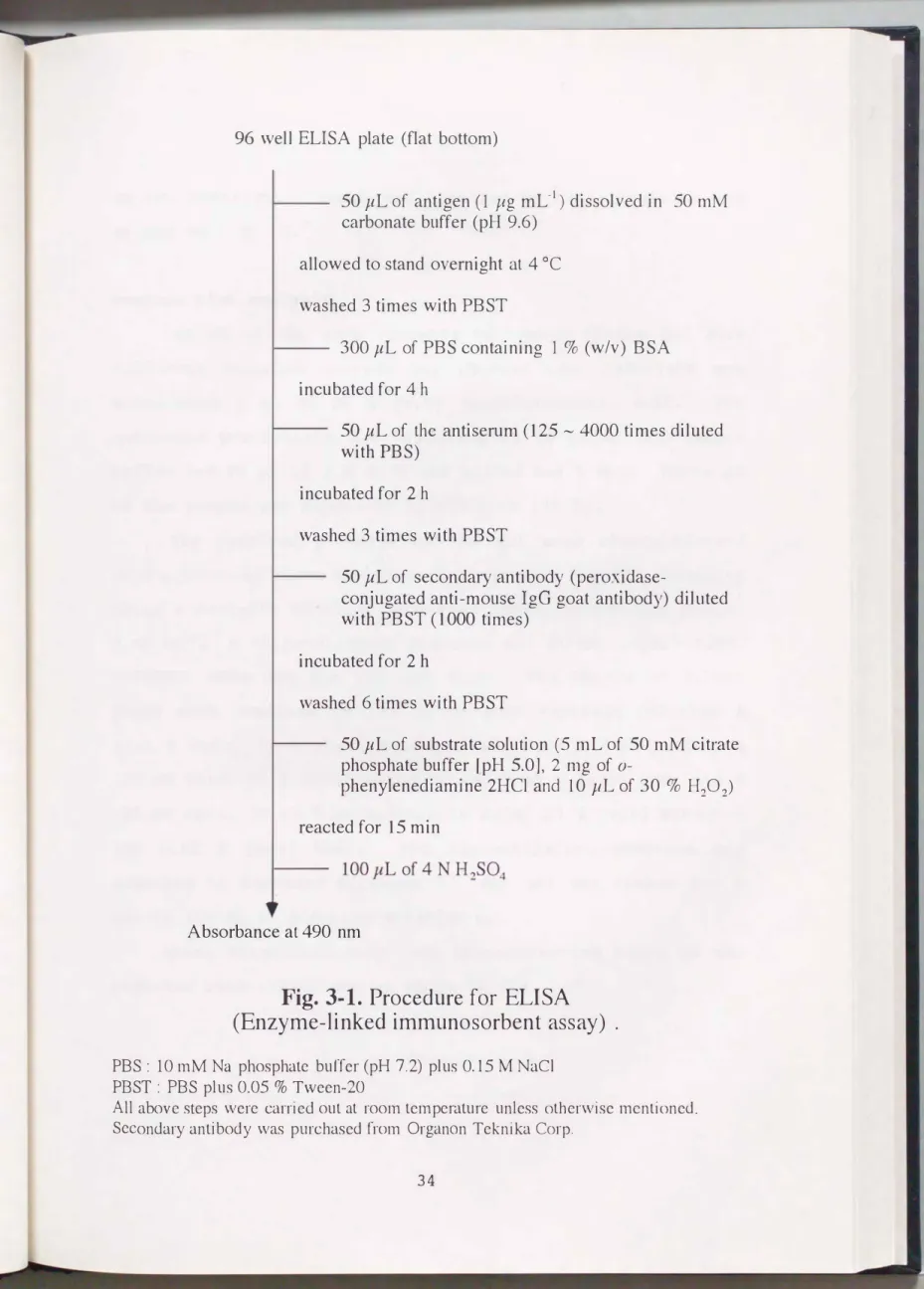
In order to check the antiserum production, a few �L of the blood was collected from the mouse's tail and the serum was obtained by centrifugation. Antiserum production was tested with the serum by ELISA (Fig.3-l).
After the production of the antibodies was confirmed, whole blood was collected from axillary plexus. The blood was allowed to coagulate at 37 oc for 1 h and then to stand
33
96
\Veil ELISA plate (flat bottom)
50 JlL of antigen (1
JlgmL-1) dissolved in 50 mM carbonate buffer (pH 9.6)
allowed to stand overnight
at 4 oc\Vashed
3times with PBST
300 JlL of PBS containing
1 %(w/v) BSA incubated for
4 h50 JlL of
theantiserum ( 1 2 5 "' 4000 times diluted with PBS)
incubated for 2
h\Vashed
3times with PBST
50 JlL of secondary antibody (peroxidase
conjugated anti-mouse IgG goat antibody) diluted with PBST (1000 times)
incubated for 2 h
·washed 6 times with PBST
50 JlL of substrate solution (5 mL of 50 mM citrate phosphate buffer [pH 5.0], 2
mgof
aphenylenediamine 2HC1 and 10 JlL of 30
%H102) reacted for 15 min
,,
Absorbance at 490 nm
Fig. 3-1. Procedure for ELISA (Enzyme-linked immunosorbent assay) .
PBS:
10 mM
Naphosphate buffer (pH 7.2) plus 0.15
MNaCl
PEST: PBSplus 0.05% Tween-20
All above steps were carried out at room temperature unless otherwise mentioned.
on ice overnight. Serum was obtained by centrifugation and stored at -
80
°C.western blot analysis.
One mL of the root extracts of tomato plants fed with different nitrogen sources for various time intervals was mixed with
1
mL of3 0 % (
wI
v) tr ic h loroac etic acid. Thecollected precipitate was dissolved in
80
�L of SDS sample buffer and20
�L of2
N NaOH and boiled for5
min. Forty �Lof the sample was separated by SDS-PAGE
(10 % ).
The resolved proteins on the gel were electroblot ted onto a nitrocellulose membrane (Schleicher & Schuell, Germany) using a semi-dry blotting apparatus (ATTO, Tokyo) for
2
h at1 rnA cm-2• A nitrocellulose membrane and filter papers
(3MM,
whatman) were cut for the gel size. Two pieces of filter paper were immersed in100
mL of each blotting solution A(0.3 M
Tris,20 %
[v/v] methanol and0.05 %
[w/v] SDS), B(25
mM Tris,20 %
[v/v] methanol and0.05 %
[w/v] SDS) and C(25
mM Tris,40
mM 6-aminohexanoic acid,20 %
[v/v] methanol and0. 05 %
[w/v] SDS). The nitrocellulose membrane was immersed in blotting solution c. The gel was shaken for5
min in100
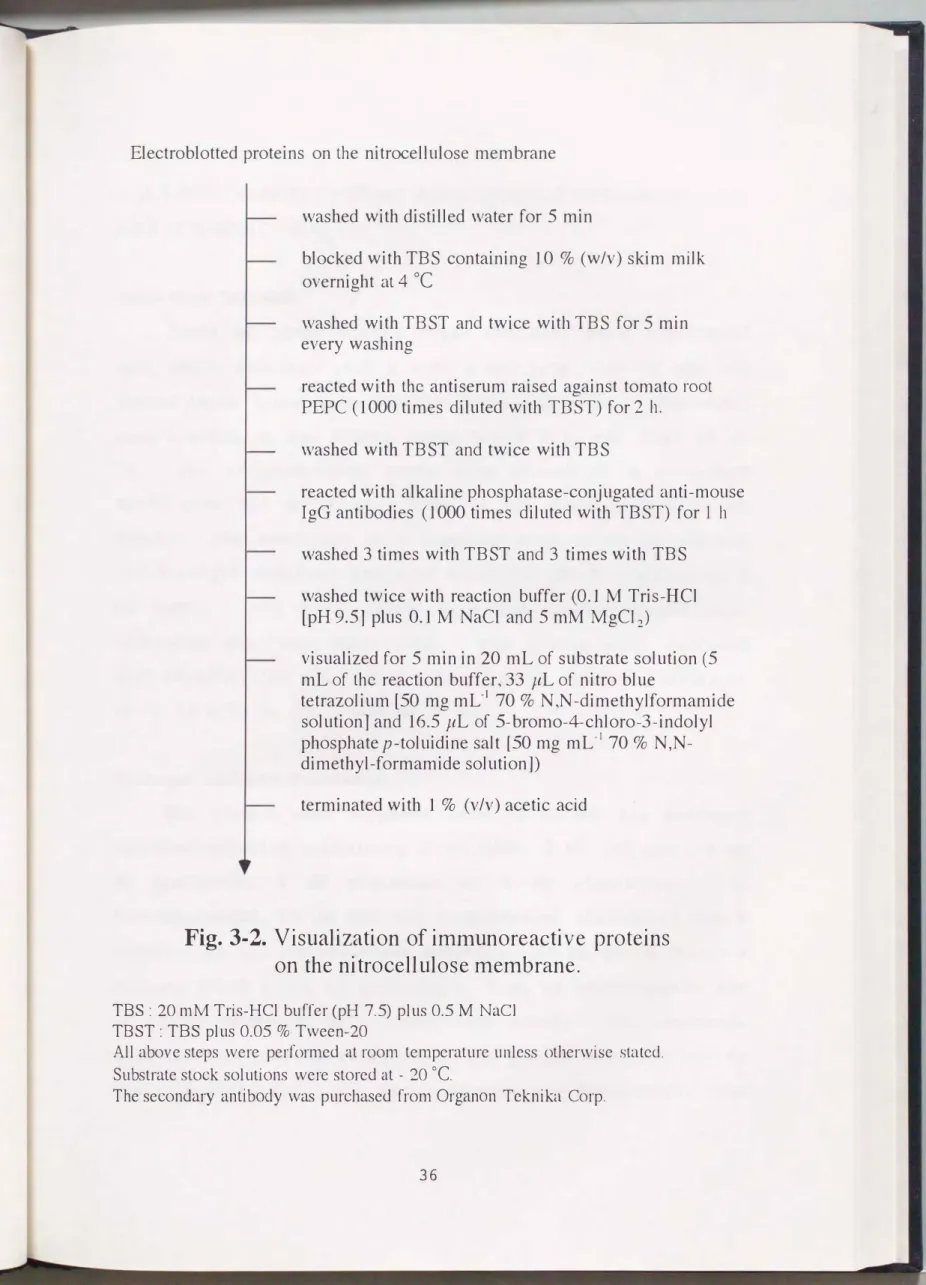
mL of blotting solution c.After electroblotting, the immunoreactive bands on the membrane were visualized as shown in Fig.
3-2.
35
Electroblotted proteins on the nitrocellulose membrane
washed with distilled water for 5 min
blocked with TES containing 10 % (w/v) skim milk overnight at 4
oC
washed with TEST and twice with TES for 5 min every washing
reacted with the antiserum raised against tomato root PEPC (1000 times diluted with
TEST)
for 2 h.\Vashed with TEST and twice with TES
reacted with alkaline phosphatase-conjugated anti-mouse IgG antibodies (1000 times diluted with
TBST)
for 1 h washed 3 times with TEST and 3 times with TESwashed twice with reaction buffer (0.1 M Tris-HCl [pH 9.5] plus 0.1 M NaCl and 5 mM MgC12)
visualized for 5 min in 20 mL of substrate solution (5 mL of the reaction buffer, 33 pL of nitro blue
tetrazolium [50 mg mL-1 70% N,N-dimethylformamide solution] and 16.5 pL of 5-bromo-4-chloro-3-indolyl phosphate p-toluidine salt [50 mg mL-1 70% N,N
dimethyl-formamide solution]) terminated with 1 % (v/v) acetic acid
Fig. 3-2. Visualization of immunoreactive proteins on the nitrocellulose membrane.
TBS: 20 mM Tris-HCl buffer (pH 7.5) plus 0.5 M NaCl TBST : TBS plus 0.05 % Tween-20
All above steps were performed at room temperature unless otherwise stated.
Substrate stock solutions were stored at - 20
°C.
The secondary antibody was purchased from Organon Teknika Corp.
3.2.3 PEPC Activity in Wheat Roots Supplied with Amino Acids with or without MSX.
Germ-free Culture.
Seeds of wheat plants (var. Sai tama) were sterilized with NaClO solution (1.5
%
active chlorine) for 15 min and washed three times with sterile distilled water. The seeds were imbibed on wet filter paper for 3 d in the dark at 20oc. The 13 germinated seeds were placed on a stainless steel wire net in a test tube
( 4
em diameter and 2 0 em depth). The seedlings were supplied with 50 mL of sterile 1/8 strength modified Hoagland solution (pH6)
containing 2 rnM NaN03• The test tubes were previously capped with aluminium foil and au toe laved. The plants were cultured with shaking (100 rpm) for 5 d in a growth chamber (day/night cycle 12 h/12 h, 20 oc and RH 70%).
Nitrogen and MSX Treatment.
The plants were supplied with 50 mL of 1 I
4
strength nutrient solution containing4
mM NaN03, 2 mM (NH4) 2S04,4
rnM Na glutamate,4
mM glutamine or4
mM asparagine. In MSX-treatments, 50 �M MSX was supplemented throughout the N supply. To all the treatment solution, 100 �L of antibiotics mixture (5000 units of penicillin, 5 mg of streptomycin and 10 mg of neomycin mL-1, Sigma) was added. The treatment solution was renewed every day. The plants were subject to the treatments for 3 d. Each treatment was duplicated. The37
nutrient solutions containing inorganic nitrogen were autoclaved. The amino acids and MSX stock solution were syringe-filtered
( 0. 20
].liD cellulose acetate membrane, Toyo Roshi Kaisha, Ltd., Tokyo).Crude root extracts were rapidly prepared as described previously in this chapter
(3.2.1).
The activity andamounts of PEPC and GS activity were examined for the extracts.
GS
(Transferase) Assay.
GS transferase activity was assayed according to Rhodes
et al
( 197 5).
The composition of the reaction mixture was1 0 0
J.1 L of1
M imi d a z o 1 e-H c 1 ( pH6
.4
), 2 5 0
J.l L of0 . 2 6
ML-g 1 u t amine
, 1 0 0
J.lL of0 . 18
M NH2 OH · H c 1 ,1 0 0
J.lL of2 5
mMMnCl2,
100
J.lL of2
mM ADP,100
J.lL of0.33
M Na2HAs04·7H20 and250
J.lL of enzyme solution. The mixture was incubated for15
min at
30
oc and then the reaction was terminated with1 mL
of ferric chloride reagent
(0.37
M FeCl3,0.67
N HCl and0.2
M trichloroacetic acid). Absorbance of the mixture was read at
540
nm. For calibration, y-GHA (L-glutamic acid ymonohydroxamate
0 3
J.liDOlmL-1)
standard solution was mixed with the ferric chloride reagent.3.3 Results
For wheat, barley and tomato plants, time-course
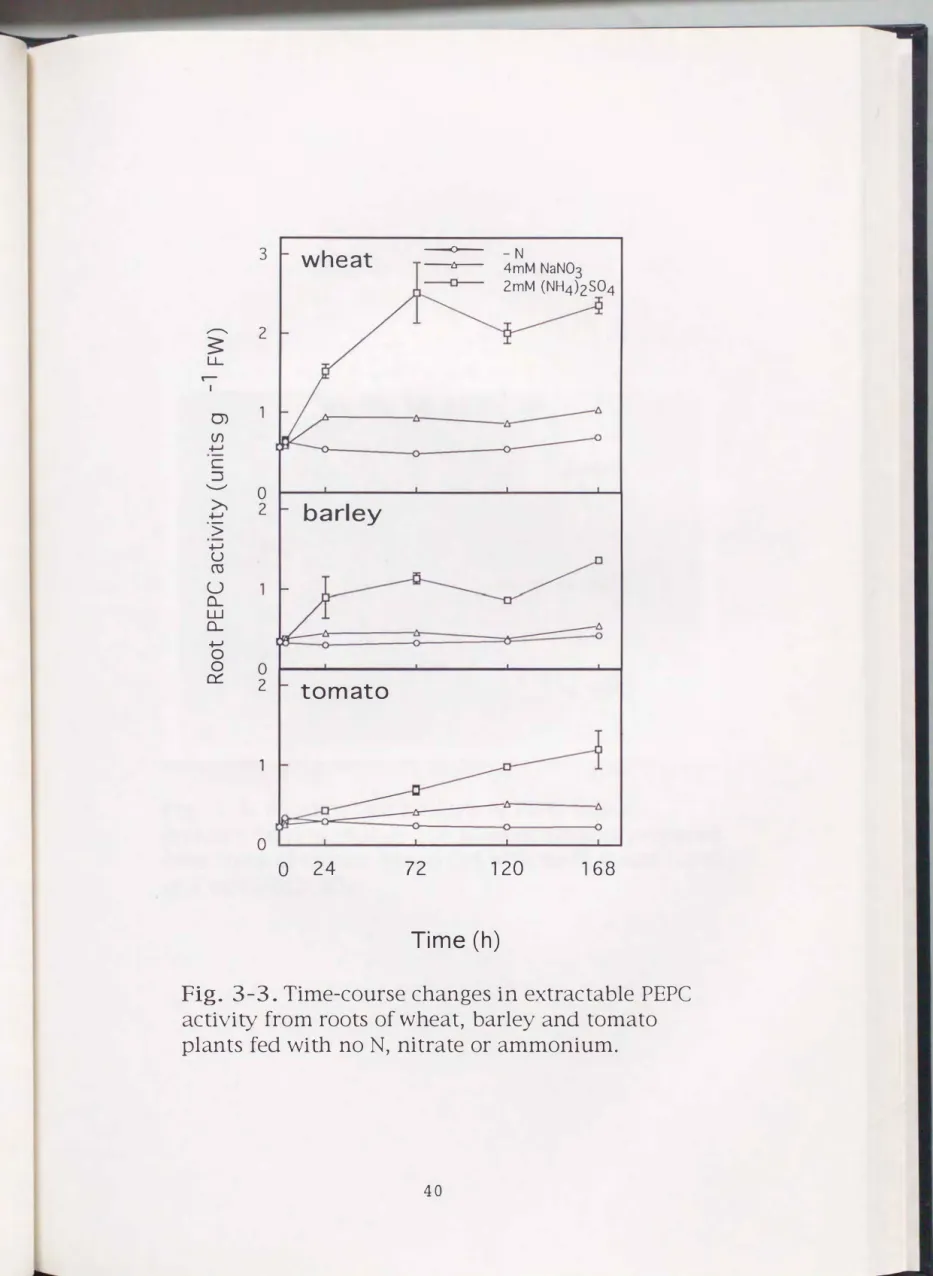
changes in extractable root PEPC activity on a fresh weight basis were examined in response to different forms of N (Fig. 3-3). In all the three species, nitrate-fed plants showed a slightly higher root PEPC activity than -N plants but the root PEPC activities in nitrate-fed and -N plants remained unchanged throughout the nitrogen treatment. On the other hand, the PEPC activity in roots of ammonium-fed plants gradually and consistently increased. Finally, ammonium
fed plants showed 2- to 2. 5-fold higher PEPC activities compared to nitrate-fed plants at 7 d after the nitrogen treatment. Consistent with these results, Arnozis et al.
(1988) showed that ammonium-fed plants had 2- to 3-fold higher PEPC activities than nitrate-fed plants at 12 d in maize, wheat and tomato roots. The increase in the activity was not observed within 3 h but 2 4 h after the ammoni urn treatment in any species (Fig. 3-3). Wheat plants exhibited about 2-fold higher root PEPC activity than barley and tomato plants, regardless of nitrogen sources.
The amounts of PEPC subunit protein in the root extracts were examined in tomato plants treated with the different nitrogen sources for a few days. By immunoblot analyses, tomato root contained PEPC subunit proteins with about 1 0 6 kD a of molecular weight ( Fig . 3-4 ) . Each 1 an e included the soluble proteins equivalent to 47 mg fresh roots. The immunoblot analyses revealed that the ammonium nutrition showed the most positive effect on the amounts of PEPC subunit protein in tomato roots among the three nitrogen
39
3
wheat
� -tr---N 4mM NaN03
-o--
2mM (NH4)zS04
,...-... 2
s
LL� I
0) fr-
�A
+-' (/) c ::::J
...__,
� 0 2
barley
·:;
+-'+-' u ro u Q_
w 0....
+-' 0
0
0
0:::: 2
tomato
0 ��---�---�---�
0 24 72 120 168
Time (h)
Fig. 3-3. Time-course changes in extractable PEPC
activity from roots of wheat, barley and tomato
plants fed with noN, nitrate or ammonium.
-N
NH +
4Oh 3h 1d 3d Sd 7d
.. PEPC
... PEPC
.. PEPC
Fig. 3-4. Western blot analysis of PEPC subunit
proteins (approximately 106 kDa) in extracts prepared from roots of tomato plants fed with no N, 4 mM NaN03 or 2 mM (NH4)2S04.
41
treatments.
bands seemed
In addition, the intensity of the immunoreactive to coincide with the extractable root
PEPCactivities (Figs. 3-3, 3-4). As observed in tomato root
FEPC,
the activity of NADH-dependent GOGAT in rice roots was coincided with amounts of this enzyme protein in response to ammonium (Yamaya et al. 1995).
PEPC
activity was measured in wheat roots when the plants were supplied with several amino acids as organic nitrogen sources and treated with or without MSX. The supply of asparagine or glutamine at a concentration of 4
mMresulted in a 1. 5-fold higher root
PEPCactivity than the supply of ammonium (Fig. 3-5). The supply of glutamate and ammonium increased the
PEPCactivity to a similar extent with each other. In contrast, the
PEPCactivity was repressed in all the roots where the action of GS was inhibited by MSX treatment although ammonium was supplied.
Speculating from the report on N-stressed maize leaves of Sugiharto et al. (1992), it was expected that glutamine would increase the
PEPCactivity even if the roots were treated with MSX. However, the different result was obtained in wheat roots of the present study. In addition, levels of the
PEPCactivity in wheat roots with several kinds of nitrogen sources were proportional to the amounts of
PEPCsubunit protein revealed by Western blot analyses (Fig.
3-6).
� I
...--.,
�
LLr-
I
0)
... (/) c ::::;
"--"' ... �
:�
.j...Ju ro
(1) (/) ro I- 4-(1) (/) c ro I-
f-
4 .---
D
-MSX PEPC
3
t-0
+MSX
N Asn
Nitrogen source
20 D
-MSX
GS 15 D
. +MSX
I-
�
10 r.t rr !I
I-
5
t-0 m
.n
.n R
.m
.N A Glu Gin Asn
Nitrogen source
Fig.3-5. PEPC and GS activities in roots of wheat plants supplied with amino acids with or without MSX.
N; nitrate A; ammonium
43
z z
·� �
::J ::J c c c c<.9 <.9 <.9 <.9 (/) (/)
>< >< � �
(/) (/) >< ><
2: 2: (/) (/) ><
+ + 2: 2: (/)
+ + 2: +
Fig. 3-6. Western blot analysis of PEPC proteins in
roots of wheat plants fed with inorganic or organic
N sources with or without MSX.
3.4 Discussion
This chapter was focused on the response of PEPC activity to nitrogen sources to make clear the function of the enzyme in the replenishment of carbon skeletons during ammonium assimilation in plant roots. Nitrate-fed plants showed a higher root PEPC activity than -N plants, implying that a part of nitrate was reduced in roots in those species (Fig. 3-3). However, the supply of ammonium resulted in the most conspicuous increase in root PEPC activity. The work of Arnozis et al. (1988) supports the results of the present study. Increased PEPC activity in roots is unequivocally favorable for the replenishment of carbon skeletons for ammonium assimilation to prevent its toxicity. One of the regulating modes of the PEPC activity is de novo protein synthesis as observed in the results of Western blot analyses (Fig. 3-4). Increases in both activity and amounts of NADH-dependent GOGAT were also found in response to ammonium in rice roots (Yamaya et al. 1995). Therefore, in roots of plants during ammonium nutrition, de novo synthesis of PEPC and GOGAT protein is a cardinal strategy for ammonium assimilation or its detoxification.
When GS was inhibited by the treatment with MSX, the supply of ammonium did not result in the increases in both FEPC activity and PEPC protein (Figs 3-5, 3-6). Hence, the assimilation of ammonium by the action of GS is necessary for the induction of synthesis of PEPC protein in roots. In
45
other words, glutamine, the product of the GS reaction, or its down-stream compounds seem to be responsible for the increase of PEPC activity, depending on de novo synthesis.
Manh et al. ( 19 9
3)
reported that the supply of glutamine or the treatment with azaserine, which causes an accumulation of glutamine by inhibiting the action of GOGAT, resulted in the substantial increase in PEPC activity when wheat leaves were supplied with various nitrogen treatment solutions through cut end. In the present study, however, the supply of asparagine also resulted in the increases in both activity and amounts of PEPC in wheat roots (Figs.3-5,
3-6). As shown in Table 2-5, wheat roots accumulated asparagine rather than glutamine. In this species, amides and their down-stream compounds were likely to be a trigger of the induction of PEPC activity. On the contrary, Sivasankar and Oaks ( 1996) showed that there was no effect on a level of PEPC protein when asparagine or glutamine was supplemented to maize roots. Therefore, the effects of these amides on the synthesis of PEPC protein may not yet be conclusively clarified.
3.5 Summary
In Chapter 2, it was revealed that the supply of ammonium consistently stimulated the dark carbon fixation in roots. In order to understand the mechanism of the stimulation,