玉川大学農学部研究教育紀要 第 5 号:69―75(2020) Bulletin of the College of Agriculture, Tamagawa University, 5, 69―75(2020)
affected by global threats, and because they possess much of the expertise, data and resources that are needed for finding effective solutions (OECD, 2011).
International joint research presents agricultural researchers with opportunities to share experiences, data, methods, and knowledge that can provide the basis for Sustainable Development Goals (SDGs).
Under these circumstances, the Science and Technology Research Partnership for Sustainable Development (SATREPS) was established in 2008 as a Japanese government program that promotes international joint research. The program is structured as a collaboration between the Japan Science and Technology Agency (JST) and the Japan International Cooperation Agency (JICA), and
1 The background of the international Joint
Research with Developing Countries
Since our economic activities transcend national borders, and given the deepening interdependence in the international community, global issues are increasingly the subject of policy-level deliberations. Global issues such as environmental problems, agriculture and spread of infectious diseases cannot be tackled by the efforts of a single country alone.
To overcome these issues, OECD mentioned that international cooperation between developed countries and developing countries is of special importance, because developing countries are often the ones most severely
【Article】
Opportunities in International Joint Research Cooperation with
Developing Countries:
Central Luzon State University, Republic of the Philippines
Koji Ishikawa
1, Kyoko Watanabe
2, Soe Mizuno
2, Edgar A. Orden
3, Renato G. Reyes
3 AbstractGlobal issues that cannot be solved by one country alone have been on the rise around the world. In Fiscal Year (FY) 2008, Japan Science and Technology Agency (JST) and Japan International Cooperation Agency (JICA) launched a program called “Science and Technology Research Partnership for Sustainable Development (SATREPS)” as a framework for international cooperation that struggles to solve global issues. SATREPS is a science and technology diplomacy initiative that promotes international joint research using advanced science and technology from Japan in combination with Official Development Assistance (ODA). For FY 2020, JST and JICA called for SATREPS project proposals from researchers in Japan and began to accept proposals in September 2019, and 10 new projects including Tamagawa University’s proposed project collaboration with Philippines researchers were provisionally selected1) in June 2020. In this paper, we introduce the background of international joint research scheme under the SATREPS and general description of our counterpart university for the future academic collaboration to drive innovation and creativity in education and research.
Keywords: International Joint Research, Central Luzon State University, Capacity Development
1 Department of Agri-Environmental Sciences, College of Agriculture, Tamagawa University, 6―1―1 Tamagawagakuen, Machida, Tokyo, 194―8610, Japan
2 Department of Agri-Production Sciences, College of Agriculture, Tamagawa Univeristy, 6―1―1 Tamagawagakuen, Machida, Tokyo, 194― 8610, Japan
3 Central Luzon State University, Science City of Muñoz, Nueva Ecija, Philippines Corresponding author: Koji Ishikawa [email protected]
(MOFA) and the Ministry of Education, Culture, Sports, Science and Technology (MEXT). The program aims to address global issues and produce research outcomes of practical benefit to both local and global society based on the needs of recipient countries by combining competitive research funds for science and technology projects, and development assistance.
According to JST and JICA (Figure 1) , the three stated objectives of SATREPS are (1) International Cooperation, (2) Addressing Global Issues and Advancing Science, and (3) Capacity Development. The “Utilization of Research Outcomes2)” is positioned as the ultimate goal above these
3 objectives (JST and JICA, 2020).
Figure 1 Objective of SATREPS Source) JST, JICA (2020), SATREPS Brochure
Sustainable agricultural production is a key to transforming the livelihoods of hundreds of millions of people across the world. Banana and cacao are positioned as staple foods and important cash crops in developing countries and their year-round availability, affordability, taste, nutritive value make these fruits favorite in developed countries.
Banana is an economically important cash crop as it makes large profits share in international market. Despite the multitude of banana species across the world, industrial production is dominated by the Cavendish. Cavendish banana accounted for around 47 percent of global banana production and the vast majority of banana entering international trade (FAO, 2020).
The banana industry in the Philippines particularly the
the country as second largest global exporter of bananas behind Ecuador, accounting for an estimated 20 percent of global shipments in 2019 (FAO, 2019).
However, serious banana diseases in Cavendish banana occur and affect the banana industries and farmers economically.
Besides, the Cacao Industry has been gaining recognition in the domestic and export markets as the supply and demand gap of cocoa beans is increasing. The world demand for cacao has nearly tripled since 1970 growing at an annual rate of 3 percent with China and India growing at 7.9 percent. One of the primary drivers of this increase is the growing middle class, increasing discretionary household income in developing countries, new and innovative uses of cocoa in the food, cosmetics and pharmaceutical industries, and the positioning of cacao as health food (Department of Trade and Industry, 2017). In the Philippines, both industries are affiliated with each other because small farmers employ banana-cacao intercrop far ming system introduced by the Federation of Cooperatives in Mindanao.
However, the sustainable production of both tropical crops in the Philippines faces significant challenges. Among these problems, losses due to plant diseases play a large part in reducing yields, quality, and profitability.
According to a government report (Department of Agriculture, 2014), it is estimated that 3,000 hectares planted to Cavendish banana are affected by fusarium wilt disease or Panama disease caused by Fusarium oxysporum f. sp. cubense tropical race 4 (TR4), all banana plantations are infected with Sigatoka disease, and the losses due to post harvest diseases is estimated at 25 to 35 percent.
Regarding Cacao production, all production areas in the Philippines are infected with black pod rot (BPR) while vascular streak disease (VSD) infection was observed in Davao plantations with an area of 6,000 hectares. Thus, inadequate plant disease management poses significant challenges, especially for small holder farmers.
The above-mentioned issues of plant diseases management have been studied by university researchers in the Philippines, Central Luzon State University (CLSU) and Tamagawa University in Japan, specifically concerning matters in a major banana and cacao production area since
2017.
It was discovered that proper control of plant disease will be the key to preventing plant disease, and based on this findings, Tamagawa University has applied the SATREPS project for “Development and Adoption of Ecofriendly High Performance Disease Control Technology for Banana and Cacao through Agrobiodiversity Management System” in cooperation with CLSU in 2019 and has been provisionally selected for FY2020. The period of this SATREPS is 5 years and aiming to develop and introduce sustainable production system through eco-friendly high-performance technologies for disease surveillance, diagnosis, and smart agrobiodiversity management system over a period of 5 years from FY2021 to FY 2025.
Regarding the application process of the SATREPS, when applying to JST, the Japanese principal investigators and researchers must explain not only the process of selection but also content of the joint research project and the coverage of the SATREPS budget. In contrast, it is essential for the principal investigator in the partner country to submit official requests for Official Development Assistance (ODA) technical cooperation specified as SATREPS to MOFA. The request must reach Japan through the ministry or agency in the recipient country responsible for ODA and the Japanese embassy in the recipient country. The condition to be included in the selection process in Japan is to complete the matching between applications of research proposals in Japan and request of ODA technical cooperation in the partner country. Provisional projects are selected by document
screening and interviews conducted by JST, together with JICA and MOFA.
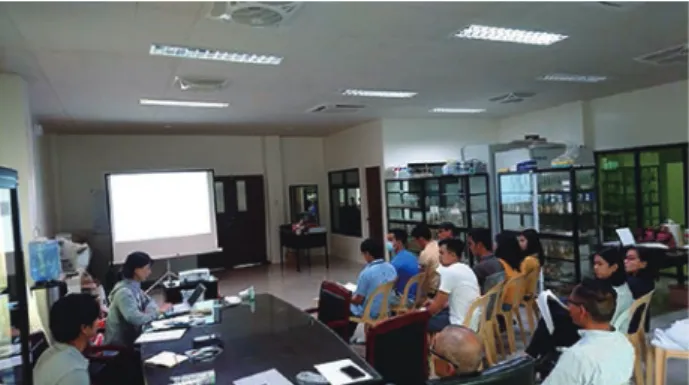
For this reason, it is thus firstly necessary to build a common recognition among researchers how research project that utilize ODA funds can contribute to solving development issues in the recipient country (Figure 2, 3).
2 Counterpart University at a glance / Central
Luzon State University
The Central Luzon State University (CLSU), one of the renowned and prestigious state-institutions of higher learning in the Philippines, is the lead agency of the Muñoz Science Community and the seat of the Central Luzon Agriculture, Aquatic and Resources Research and Development Consortium (CLAARRDEC). It started as a farm school, the Central Luzon Agricultural School (CLAS) in 1907, wherein the students learned the rudiments of better practical farming methods, agricultural mechanics, and homemaking arts. These activities soon evolved into a model vocational-agricultural teaching and learning program which became its legacy to the country in so far as the CLAS experience was concerned. As a result, CLAS became a byword for productive practical farming methods. CLAS was converted into the Central Luzon Agricultural College (CLAC) in 1950, the first state institution in the country to offer a 4 year curriculum for training teachers of vocational agriculture and eventually became known as “the mother of vocational agricultural schools” in the country. CLAC became the Central Luzon State University in 1964 by virtue of Republic Act 4067. As embodied in its enabling act, the “University shall primarily give professional and technical training in agriculture and Figure 2 SATREPS formulation Meeting at CLSU
promoting research in literature, philosophy, the sciences, technology and art”.
To date, CLSU remains as one of the premier institutions of agriculture in Southeast Asia known for its breakthrough researches in aquatic culture, ruminant, crops, orchard, mushrooms, aquaponics/hydroponics, vertical and urban farming and water management, living through its vision of becoming “a world-class National Research University for science and technology in agriculture and allied fields”. Additionally, it is also the first comprehensive state university to undergo institutional accreditation and is declared Cultural Property of the Philippines due to its high historical, cultural, academical, and agricultural importance to the nation that focuses its research and development in agriculture and allied fields. Being headed by the University President and supported by 4 Vice Presidents, 12 Deans, Directors and Department Chairs, CLSU has 474 faculty members and 463 non-academic staff.
CLSU is composed of 9 colleges (College of Agriculture, College of Arts and Social Sciences, College of Science, College of Business Administration and Accountancy, College of Education, College of Engineering, College of Fisheries, College of Home Science and Industry, and College of Veterinary Science and Medicine) and enrolls approximately 14,000 students.
In FY 2019, CLSU received approximately 18 million USD (PHP 899,218,452) in funding from outside sources. In addition, CLSU also generated income from tuition fees, income from agribusiness, auxiliary and business income amounting to 3.6 million USD (PHP 174,742,000).
Up to the present, CLSU is ranked as a 5-star university in employability, teaching and inclusiveness by the QS World Ranking of Universities, it has 6 Centers of Excellence namely agriculture, agricultural and biosystems engineering, biology, fisheries, teacher education, and veterinary medicine and is a Commission on Higher Education (CHED) recognized National University of Agriculture and Fisheries in the Philippines. The Department of Biological Sciences as one of the Centers of Excellence where one of the proponents is affiliated with as professor is offering graduate and undergraduate programs in biology.
3 Faculty and Faculty qualification of CLSU
The faculty members have five main functions in the university: Instruction, Research, Extension, Production and Administration. Instruction, Research, Extension and Production are the main functions of the professors on which they are presently most focused.
To increase the qualified individuals in each program, CLSU supports faculty development programs which could be in the form of a scholarship grant, training programs and/ or thesis/dissertation grants. Research is also one main function of faculty members that facilitates the knowledge generation and development of both faculty members, staff and students. The university aims to develop its manpower’s research capabilities which can be measured quantitatively by the number of academic projects, number of published journals, number of inventions patented, etc. The university starts building up the competencies of its faculty members in conducting research through proposal writing training sessions and intellectual property seminars. The university also identifies the specializations needed for its focal research areas and strengthen these using linkages through possible research collaboration, faculty exchange and scholarship opportunities.
To retain faculty, CLSU provides additional incentives and compensation like scholarships or opportunities for faculty development. CLSU provides special incentives for faculty members who have published their papers in internationally recognized peer-reviewed research journals, or present in national and international conferences. Those who have attained advanced degrees abroad received administrative designations or are provided funding to conduct further research based on the specialization they have gained.
There has been a rapid increase of students over the years in CLSU, but the tenure positions of faculty members are slow to expand. Usually overloaded with instruction responsibilities, it provides little opportunity for the faculty members to pursue higher degrees. Additionally, limited scholarship opportunities disable them from pursuing higher qualifications and demotivate them from remaining in academe.
4 Facilities and Equipment
CLSU expressed interest to improve its current facilities and equipment. As stated in its strategic plans, CLSU signified its interest on establishing and upgrading their current facilities and equipment (Figure 4, 5).
Figure 4 SATREPS Research Center at CLSU
Figure 5 Lab equipment at CLSU
As one of the national leading universities, adequate facilities and equipment are needed to sustain and improve its research activities and linkages. One of the most critical issues on R&D environment in CLSU is lack of facilities and equipment. Facilities and equipment needed are mostly concentrated on the Engineering and Agriculture disciplines. Since faculty members in CLSU relatively have better opportunity to get scholarship to study abroad, providing R&D environment to scholars with necessary
equipment is effective to continuously improve their expertise.
Since CLSU is the leading university for agriculture with long history of research activities, there are relatively sufficient faculty members with PhD, however continuing development by pursuing PhD degrees of faculty members especially the young ones are still important.
The faculty members have expressed their desire to conduct advanced research such as in nanotechnology, big data analytics, biotechnology, digital agriculture etc. Although they have many research projects on agricultural basic research, they have not proceeded to higher technological research due to lack of equipment. Since the Philippines has rich agricultural resources, CLSU needs to improve its research capability to continuously lead the agricultural research and become a competitive higher education institution. Thus, faculty development for young generation and providing stable facilities and advanced equipment remains to be a priority issue in CLSU.
5 Linkage with overseas university
CLSU has established linkages with several overseas universities including Universities in Japan such as Miyazaki University, Tsukuba University, Mie University, Tamagawa University and planning to increase or establish its relationships with overseas universities or institutions for possible student and faculty development through exchange and scholarship programs and to enhance its research collaboration.
Establishing local and global linkages for CLSU provides opportunities not only to share knowledge and ideas, but also to facilitate the development of the university through student and faculty exchange programs and research collaborations. These connections facilitate the knowledge transfer from overseas universities. Through these, CLSU is also given assistance in upgrading its facilities and procurement of equipment. However, connections with overseas universities are usually initiated by personal linkage of faculty members.
Most of the collaborations between CLSU and overseas universities are for research purposes as CLSU aims to develop its R&D capability. To support its research funding, CLSU submits research proposals to external funding
and Department of Agriculture.
CLSU has also collaborative research overseas institutions, such as International Crops Research Institute for Semi-Arid Tropics (ICRISAT), Consultative Group for International Agricultural Research (CGIAR), and World Fish.
CLSU has developed its faculty through collaborative research with overseas universities, currently it has 115 faculty members or 24 percent with PhD, 230 or 49 percent with MS degrees. On March 13th, 2020, Tamagawa University has officially concluded the joint research agreement with CLSU ahead of official acceptance of SATREPS.
6 Expected capacity development through
SATREPS
The acceptance of foreign researchers in a SATREPS scheme will be carried as a technical cooperation Training Program. The system entails that a researcher from CLSU can be invited to Japan to receive advanced training. It is expected that invited researchers will play a leading role in advancing science, technology, or bilateral collaboration. Invited researchers are expected to play a key role in the successful completion of the research project. Training programs can be classified as long-term (over one year) or short-term (less than one year) and include travel and accommodation costs, daily allowances, and other training expenses.
Through these trainings, SATREPS will promote capacity development of researchers, CLSU and other counterpart research institutions and local people in the Philippines by means of frequent exchanges of researchers between Tamagawa University and CLSU. The scheme is unique in comparison to science and technology cooperation programs implemented by other donors and will be recognized as a Japan-specific scheme by Republic of the Philippines.
Skills and knowledge of new science technologies also gradually accumulate. In addition to the activities of spreading and disseminating research results, workshops and symposia will be increasingly hosted to promote the practical benefits of research outcomes to both local and global society. Through the realization of capacity
Therefore, the role of our joint research cooperation, which is an initiative to solve global issues, will be greatly contributed to deepening bilateral and regional friendship. In addition, from the viewpoint of responding to global issues, our project will contribute to the achievement of SDGs and thus will contribute the improvement of Japan’s presence in the international community.
ACKNOWLEDGEMENTS
This research is based upon work supported in part by the college of agriculture collaboration research grant at Tamagawa University.
Notes:
1)Before formally starting a project, an international agreement needs to be signed between MOFA and the government of the developing country regarding implementation of the project, followed by an agreement on the details of technical cooperation between JICA and the relevant institution in the developing country. However, the project may be unable to start in case that both sides do not reach agreement due to the reasons such as changes to the project name or the research details, shortening the research period, or changes in the situation in the counterpart country. For this reason, the selection of these projects at this stage is provisional selection.
2)The research projects should lead to future social and economic benefits, achieved by using newly obtained knowledge and technology to enhance government services or to develop products that can be deployed in the market.
REFERENCES
Board and Investment. 2015. The Philippine Cocoa “Tablea” Industry Roadmap. the Philippine government. Cacao Industry Development Association of Mindanao Inc. 2012. Cacao Industry Cluster Roadmap.
CLSU. 2010. CLSU University Code, University Printing Press, Central Luzon State University.
Dale, J. James., A, Paul., J.Y. Khanna, H. Smith., M. Echeerria, S.P. Bastideas., F.G. Kema., G. Waterhouse, P. Mengersen., K. Harding. 2017. Transgenic Cavendish bananas with resistance to Fusarium wilt tropical race 4. Nature Communications 8(1): 1496.
De la Cruz J., Jansen K. 2018. Panama disease and contract farming in the Philippines 249―266, Journal of Agrarian Change.
Debode, J., Hofte.,M. 2017. Disease suppressiveness to Fusarium wilt of banana in an agroforestry system: influence of soil characteristics and plant community. Agriculture Ecosystem & Environment. 239, 173―181. Doi: 10.1016/j. agee.2017.01.018
Department of Agriculture, Department of Trade and Industry. 2017. 2017―2022 Philippine Cacao Industry Roadmap. Department of Agriculture. 2014. Cacao Industry Roadmap,
Bureau of Plant Industry.
Department of Trade and Industry. 2017. Policy Briefs, The Philippines in the Cocoa-Chocolate Global Value Chain, Series No. 2017―09.
Duke University Center of Globalization. 2017. The Philippines in the Cocoa-Chocolate Global Value Chain.
FAO. 2019. Banana Market Review Preliminary Results for 2019.
FAO. 2020. Banana facts and figures, http://www.fao.org/ economic/est/est-commodities/bananas/bananafacts/en/#. X5dt0VgzaUk (Accessed: 10 Nov. 2020)
Fu, L., Ruan, Y., Tao, C., Li, R., and Shen, Q. 2016. Continuous application of bioorganic fertilizer induced resilient culturable
bacteria community associated with banana Fusarium wilt suppression. Sci. Rep. 6:27731. Doi: 10.1038/srep27731 JST and JICA. 2020. SATREPS Brochure.
Koji Ishikawa, Kyoko Wanatabe, Soe Mizuno, Dionisio G. Alvindia, Renato G. Reyes. 2019. Current situation of Panama disease in a Major Philippine Banana Production Area. Research for Tropical Agriculture 13 (1)51―52
Ministry of Foreign Affairs of Japan. 2019. Evaluation of the SATREPS Program, Oriental Consultants Global Co., Ltd. Mostert, D., Molina, A. B., Daniells, J., Fourie, G., Hermanto, C.,
Chao, C. P. 2017. The distribution and host range of the banana Fusarium wilt fungus, Fusarium oxysporum f. sp. cubense, in Asia. PLoS ONE. 12:e0181630. doi: 10.1371/ journal.pone.0181630.
OECD. 2011. Opportunities, Challenges and Good Practices in International Research Cooperation between Developed and Developing Countries. OECD Global Forum.
Warman, N. M. and Aitken, E. A. B. 2018. The movement of Fusarium oxysporum f.sp. cubense (sub- tropical race 4) in susceptible cultivars of banana Frontiers in Plant Science 9:1748. Doi: 10.2239/fpls.2018.01748