
明石海峡産マクサに生息するワレカラ類の季節的優占種交代
23
0
0
全文
(2) BJIJEfhifigil4gY ij v!jh l( tsM-9" 6 t 7 l.i )is iJt XcD $crp e9es ,!ipt:;:;51<LtL<:. xpt • didixisigTit, ept.kt=-x. M96613E wrM li]ltw. Seasonal alternation of dominant caprelhd amphipods (Crustacea) inhabiting the red alga Gelidium elegans Kutzing in the Akashi Straits. SAKAGUCHI Masaki. 1998tCli2fi 28 H.
(3) Abstract: I investigated population dyTiamics of caprellid amphipods mhabiting a true-perennial red alga Gelidium elegans, in the Yamato-jima rocky shore facing the rapid tidal current Akashi Straits ( more than 10 krn. per hour), Awaji is!and, Hyogo prefecture, from Apri1 1996 to July 1997. Fourteen caprellid species were found to be present. Amang them CapreUa. danilevskr'i Czerniavskii was the most dominant species from July to November, in which water temperature was higher than 20Åé, and C. penantis Leach substituted the dominant from February to June, in which water temperature was less than 20Åé. These two species shared the dominance in December and January. I think that water temperature is the possible limiting factor of seasonal alternation of dominant caprehid species inhabiting a red alga G. elegans in the Akashi Straits. The caprellid individual densities fluctuated from 19.8Uan, 7, 1997) to 144.7(Mar. 7, 1997) ind./g wet. weight, especially it was the maximum in spring and autumn. Maximum density was greater than 30 times of that of Amatsu-Kominato facing the Pacific Ocean, Chiba prefecture.. 1. Introduction. CapreMd amphipods, as well as gammarid amphipods, represent an important component in ecosystem of "Garamo-ba"(Sargassum zone) which flourishes on rocky shores of the Seto Inland Sea. And these crustaceans are the major prey item of rocky shore fishes(FusE, 1962). Ecological studies on. the caprehids on the "Garamo-ba" have mostly dealt with.either substrate selection(HIRAyAMA & KIKucHI, 1980; IMADA et al.,1981; TAKEucHI et al.,l987, 1990 etc) or populatlon dyrLamics(AoKI,1988, TAKEucm et al., 1990). Of these. studies, HIRAYAMA and KIKUcHI(1980), TAKEucHI et al.(1987), TAKEucHI et al.(1990) and TAKEucHI(1992) reported on caprellid species compositions on several smaller algae on the basis of seasonal coilections. In the Akashi Stratts,. only SAKAGucHI(1979) reported twelve caprellids species inhabiting some algae at shallow water in front of Kobe University Research Center for Iniand. Seas(KURCIS), 1 km sQuth from the Yamato-jima rocky shore. In this study, I focused on population dyriamics of the Caprevadea inhabiting the red alga Gelidium elegans, which is a true perennial alga(KATADA, 1963). in "Garamo-ba". 2. Materials and Methods. This study was conducted in the Yamato-jima rocky shore, 1 km north of KURCIS. This site is situated on the north end of Awaji island facing the Akashi Stralts, the east end of the Seto Inland Sea, west Japan(Fig. 1.). Sampling was carried out from algal bed at the depth of 1-2 meters. Samples. 1.
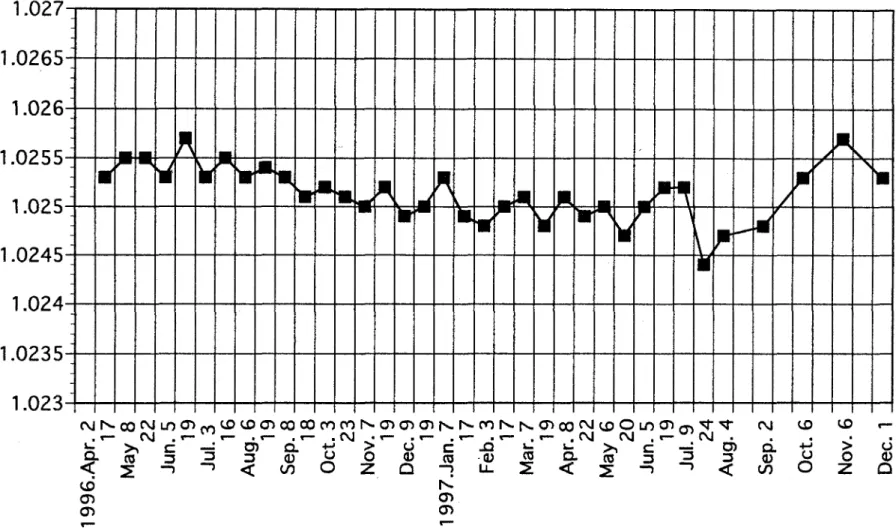
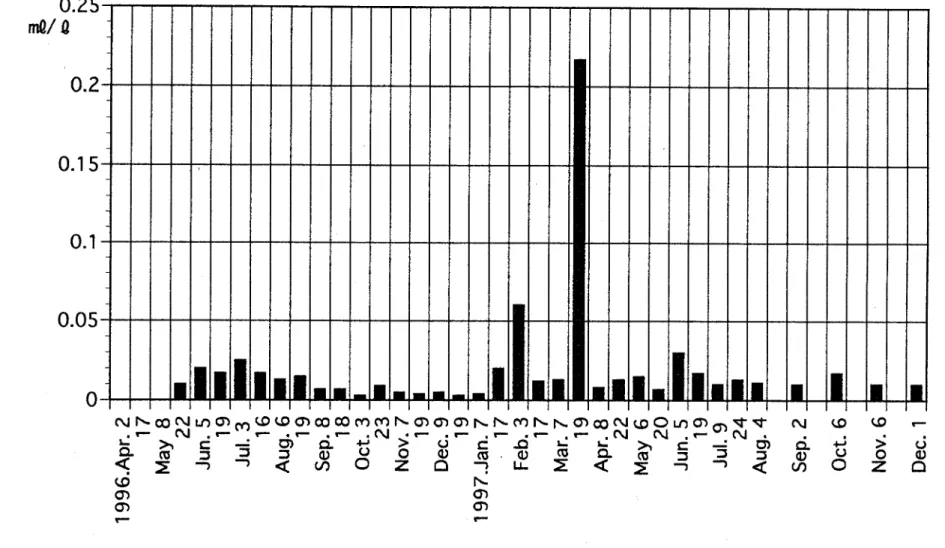
(4) of G. elegans were collected by skin diving at monthly intervals from April 1996 to July 1997. I put my hand into a vinyl bag, caught an alga and pulled it quickly, then there was an algae in a vinyl bag. In the KURCIS laboratory, I. poured buffered formalin into a vinyl bag. Few days after, samples were. washed out by tap water, and was filtered by a net with 5onm mesh. Animals and plants inhabiting G. elegans were collected and preserved in 70S06o. ethanol solution. CapreMds species identification was conducted under a binocular microscope. In large individuals, sex of two dominant species, C. penantis and C. dani7evskri, were determined from presence of oostegites or presence of rudiment of oostegite in female, and absence of oostegite or absence of rudiment of oostegite in males. Small individuals, which were smaller than the smallest female with presence of rudtment of oostegite, were classified as juveniles. Females were separated into two categories, i. e,. immatures in which oostegites were without setae, and matures in which oostegites with long setae formed a brood pouch. Furthermore, mature females were separated into three conditions, i. e. matures with eggs, matures with juviniles and matures without eggs. Wet weight of alga was measured to O.Olg after centrifugaiizing it by a simple drainer.. Surface sea water temperature was measured at the sampling site, Yamatojima roclry shore every month with mercury thermome,ter. It ranged from 9.3 (Feb. 17, 1997) to 26.9Åé(Aug. 19,1996)(Fig. 2.). Specific gravity(Uis) was. measured with Akanuma's standard hydrometer and mercury thermometer at KURCIS laboratory, and measured value was revised to o is. It ranged from 1.0244 to 1.0257(Fig. 3.). In the Akashi Straits, rapid stream ehanges direction twice a day, and mixes up the sea water, there was little fiuctuation about specific gravity in snite of the rain. Amount of suspended matters in the sea. water was measured by measuring tube, afer filtering 20-50 liters sea water. by net with 50um mesh at the sampling site, Yamato-jima rocky shore. It ranged from O.O03 to O.217m2/C(Fig.4.). It increased in spring(Mar. 19, 1997), it contained large amount of noctikcae. Amount of chlorophyll-a in the. sea water were deterrnined after measuring absorbances of 90906o aceton treating solution by spectrophotometer (Fig.5.). 3. Results. The wet weight of G. elegans varied from 7.86 to 25.15g and the height varied from 9 to 20cm, no seasonal fluctuation was recognized(Tab. 1). I collected fourteen caprellid species. Thirteen species belong to the genus Caprella ; C. penantis Leach, 1814(Fig. 6.), C. verrucosa Boeck, l871, C. arimotoi Takeuchi, 1993, C. tsngarensis Utinomi, 1947, C. brevirostn's Mayer, 1903, C. polyacantha Utinomi, 1947, C. scauraTempleton, 1836, C. dani'levski1'. 2.
(5) Czerniavskii, 1868(Fig. 6.), C. sp. I, C. sp. ll, C. sp. III aff. generosa, C. sp. IV. aff. B(TAKEucHI's) and C. sp. V aff, ini'quilibra. Another generic species is. ParacapreUa crassa Mayer, 1903. 10828 individuals were identified in fourteen species. C. penantis and C. danilevskit' were main components throughout this study(Fig. 6).. Seasonal fiuctuatin of caprehids was shown in Tab. 1. Among them C. danilevski'i was the most dominant species from July to November with the exception of May. The share of C. dani'levskt'i to total number of identified caprerads varied from 52.1 to 88.0906o(Tab. 2.). Its individual density per 1 g wet weight of the alga increased rapidly from June to July and was kept high until November( more than 12 ind./g wet weight). In January it decreased to 6.1 ind./g wet weight, and such a low density( less than 3 ind./g wet weight). extended up to June except May(11.3 ind./g wet weight) (Tab, 2.). C. danilevskii' was present all seasons with the exception of February(Tab. 1.).. From July to November, mature males, mature females and immature females were present. C. penantis was the another dominant species from February to June with the exception of May. The share of C. penantis to total number of identified capremads varied from 64.8 to 91.49o((Tab. 2.). Its individual density per 1 g wet weight of algae increased rapidly from January to February and was kept high until June (more than 16.4 ind./g wet weight). In July, it decreased to O.3 ind./g wet weight, and such a low density(less than 5 ind./g wet weight) extended up to November(Tab. 2.). C. penantis was present all seasons(Tab.. 1.). From December to June, mature males, mature females and immature females were present. Other twelve spesies present in all seasons with a little density fluctuation.. 4. Discussion In this study, I found a seasonal alternation of the dominant capreMd species. inhabiting a red alga Gelidium elegans in the Akashi Straits. Caprefla danilevsin'i was the most dominant species from July to November and C. penantis substituted th.e dominant from February to June. These two species. shared the dominance in December and January (Tab. 1.). In high water temperature pertod higher than 20Åé, C. dam'levskii was the dominant, and in. low water temperature period less than 20Åé, C. penantis substituted the dominant. Furtheremore, these two caprevads species were present in al1 seasons and were year-round breedingrrab. 1. and 2.). At the Pacific coast of Tohoku district, in Oshika Peninsula and Otsuchi Bay (Fig. 1.), C. penantis was dominant in the most wave exposed "Garamo-ba", scarce in the calm "Garamo-ba", and C. dani'levskit' was dominant in a mild or. intermediate "Garamo-ba" (HIRAyAMA and KIKucHI,1980 ; TAKEucHI,1995). 3.
(6) TAKEucHI et al.(1987) reported that C. okadai' was the dominant species on such large alga(more than 10cm) as Gelidium amansii, CIadophora wn'ghtiana. HARvEy and Sargassum pildifemm(TuRNER) C. AGARDH, which were growing at the zones protected from wave exposure in the inlet "Heito" facing the Pacific Ocean, at Amatsu-Kominato(Fig. 1.). Furthermore they reported that C. dantievsin'i and C. penantis were the dominant species of the exposed area, and that C. dam'levskii associated mostiy with Sargassum spp.. from fall to spring, while in summer, when the length of Sargassum spp. decreased, C. danilevskii was collected from Sargassum rtnggoldianum and C. wrightiana in the sheltered area. And TAKEucHI et al. (1990) reported that C. okadal was the dominmt species on such large alga(more than 10cm) as G.. amansii in a smal1 inlet of the rocky shore facing the Pacific Ocean, at Amatsu-Kominato, and was collected from the rocky shore facing the ocean influenced by eithetithe Kuroshio Current. The main factor of capreMd's habitat segregation was wave exposure, as well. as HIRAYAMA and KIKucHl(1980), TAKEucHI et al.(1987,1990) and TAKEUcHI(l992) discussed. Caprelhd's adaptation to wave exposure was expressed by the ratio of 2nd pereenite height and body length(TAKEucHI, 1992). It's ratio of C. dani7evskii is greater than that of C. okadai, so C. okadat. is dominant at the zones protected from wave expo,sure, C. dantievskii is dominant at the exposed area, and C. penantis has also great ratio, it also dominant at exposed area. The tidal current at the center of the Akashi Straits was very fast over 10 km per hour, so, Yamato'-jima rocky shore, the sampling site, was like a wave exposed area. The story of seasonal alternation of dominant caprehid species inhabiting a. red alga G. elegans is as the followed. In Yamato-jima, Sargassum spp. and Undaria pinnatifida (HARvEy) SuRINGAR grow well in spring (Fig. 7.) and C. danilevskii is inhabiting on Sargassum spp., less on G. elegans. C. penantis is inhabiting on G. elegans, less on Sargassum spp.(Fig. 8.). Sargassum spp. and Undan'a pinnatifida have annual life cycle. In eariy summer, 1arge algae are. disappeared according to rising temperature. C. dam'levski'i removes from Sargassum spp. to various kind of algae arround it, and competes with C. penantis. C. dam7evskii wins its competition and is dominant during high temperature period, more than 20Åé(Fig. 9.). C, penantis inhabits on various kind of algae and is low density. In early winter, Sargassum spp. begins to grow, C. danilevsin'i removes from G. elegans to Sargassum spp. which is more suitable alga for C. datlevsin'i inhabiting, thus C. penantis becomes to be dominant on G. elegans. And number of eggs in a egg pouch of C. dani'levski'i is less than that of C. penantis(Fig. IO.). Population number of C. penantis. increases more easier than of C. dani'levsin'i, so, C. penantis is dominant caprellid inhabiting a red alga G. elegans in the Akashi Straits during low. 4.
(7) temperature period, less than 20Åé(Fig. 8.).. In this study, caprellid individual density inhabiting a red alga G. elegans is very high(max. 144.7 ind./g wet weigth in Mar. 7. 1997, as shown in Tab. 1.).. TAKEucHI et al.(1990) reported that maximum capre-d indiviual density inhabiting a red alga G. aniansii was about 500 ind./100g wet weight at Amatsu-Kominato facing Pacific Ocean, this is very low individual density compared with my study. I think the reason why is that the Seto In!and Sea is eutrophic.. 5, Acknowledgments I am gratefu1 to Prof. T. YAMADA, Hyogo University of Teacher Education, for kindly directions, Prof. S. ENoMoTo, Prof. H. KAwAI, T. NAKANo and Y. UsHIHARA, Kobe University Research Center for Inland Seas, for use of the facilities, and Dr. I. TAKEucHI for useful comments on this study.. 6. References AoKI, M. 1988. Factors affecting population fluctuations of caprellid amphipods inhabiting Sargassum patens bed (Preliminary report). Benthos Res. [Bull. Japan Ass. Benthology] 32:42-49. (In Japanese with English. summary) FusE, S. 1962. 'Ihe animai community in the Sargassum belt. Physiol. Ecol.,. Kyoto 11:23-45.(In Japanese with English smmary) HIRAYAMA, A. and T. KIKucHI 1980. Caprellid fauna associated with subtidal algal bed along the coast of Oshika Peninsula, Tohoku District. Publ.. Amakusa Mar. Biol. Lab. 5:171-188. IMADA, K., A. HIRAyAMA, S. NoJIMA and T. KIKucHI 1981. The microdistribution of phytal amphipods on Sairgassum sea weeds. Res. Crust. 11:124-l37. (In Japanese with English summary) KATADA, M. I963. Life forms of sea weeds and succession of their vegetation (Review). BuR. Japan. Soc. Sci. Fish, 29:798-808. (In Japanese with English title). SAKAGuCHI, M. 1979. Caprellids inhabiting a buoy. Hyogo Biology vol.7 no.5 :235-238. (In Japanese) TAKEUcHI, I., R. KuWABARA, R. HIRANO and H. YAMAKIWA 1987. Species compositions of the capredidea(Crustacea:Amphipoda) on the Sairgassum zone of the Pacific coast of Japan. Bull. Mar. Sci. 41:253-267.. TAKEucHI, I. Taxonomic and ecological studies of the Caprellidea(Crustacea,. Amphipoda) inhabiting the Sargassum zone. Tokyo University Doctor Paper. 244pp. TAKEUcHI, I.,H. YAMAKAwA, M. FuJIwARA 1990. Density fluctuation of capreMd amphipods(Crustacea) inhabiting the red alga Gelidium amansii. 5.
(8) (LAMouRoux) LAMouRoUX, with emphasis on Caprella okadai' ARIMoTo. La mer 28:30-36. TAKEucHI, I. 1992. Distribution of caprellid(Amphipoda, Crustacea) on the Sargassum zone, especially its habitat segregation and wave exposure.. Gekkan Kaiyo 24:470-475. (In Japanese) TAKEUcHI, I. 1995. Caprellid amphipods inhabiting Sargassum zone in Otsuchi Bay, northern Japan, with emphasis on species diversity and biomass. Otsuchi Mar. Res. Cen. Rep. 20:90. (ln Japanese). 6.
(9) o.. 140E. Z.e. e. -"". 130E. Il...". l . s•".. -•. ij li. i. I. <= Otsuchi. 40N. O Oshika Peninsula. --t- -t:-I-t-t---tt"'-. i 't".' .:.' l .o osaka .r:l""'l.:i" sl'l{:I'll:-,llLil:'s.. l.. :" .. :i:.l,?;.ilb """ 'isir ...:. ':. g the. : ---t---}tl:. at!a sle. a - --//i---tt; ...s... Amatsu-Kominato. o ." .. ,e. e. e. nyi•ts.. ;""' " ''. '. g. oO. 30N. Akashi. seolrm135E B. C. ':1 ']'!. l:'••. t""k. N. --- si Akashisl`;a3ts ,ip4b)thaO(SX-.[iCILUmi. t-----. .I .! -- i '•. ltI-t---. -; -------ny---t-ll ---:---i--- :""'i:, -"""""'1.•'is Hyogo -:- prefecture -b --t----l '-"l.;. gs". "s. ffo4}:kl'. ,' ..3.5N -ti.-t---l: --- -F. ljll{ osaka Bay. the lnfiih"d sea hi KObe ,li.OSak.ia.i,.li';.. 'S.s. IwayaO <t) Yamato-jima. {Cifll OYamat jimai. KURCIS@. Aati .ii. slan , ,--•--•"""-":'"'""-/;'. 5km. --------------tlt---. l.. Ot .-h.: "i. S. ushima 1'i.. Fig. 1, Maps showing the sampling site. A. 'Ihe sampling site locates at the Akashi Straits, the east end of the Inland Sea. B. Yamato-jima, the sampling site, is locates at the north-east coast of Awaji island. C. Map of Yamato-jima, the sampling site. KURCIS:Kobe University Research Center for Inland Seas. The center is about lkm south of Iwaya Harbor.. 7.
(10) 30 Åé. 25. 20 '. 15. 10 oo. 5. o :..""-;,..N//.9tB•9:g9//.9gtsu;t9:t2:ds>:.)Idr9:ctX;.,.ON//.92.g:q. N o o d "o o o o co o z a t"'. ):. Fig.2. Seasonal change of surface water temperature at the sampling site, Yamato-jima rocky shore facing the Akashi Straits. Each solid square indicates the measured temperature. The highest temperature is 26.9Åé(Aug. 19, 1996) and the.lowest temperature is 9.3Åé (Feb. 17, 1997).. c.5.
(11) 1.027. 1.0265 1.026. 1.0255 1.02S. 1.0245 1.024. o 1.0235 1.023 N ."- oO fti R f!! cy, 9 `"`l f!2 Q S! C"l [e E9 al f!2 -) `"'l ) E a.nt' C9 [lll `•`' RR or..- or IEI] E. qa s. :. :• .g .-. g i•.. o ot or v--. g. rg=. N or .. . cu" akss .a <-" " LL E<E. .A. N o os d "o o o o co o z a. ot. 't--. Fig. 3. Specific gravity( u is) corrected after measuring with Akanuma's hydrometer and mercury thermometer at the sampling site, Yamato-ji'ma rocky shore facing the Akashi Straits.. t-p. <dS.
(12) O.25 me/ o. O.2. O.15. O.1. 5. e.os. o N > co i l U? 9 cy, 9 <Sl 9 OCI :i9 n g3 E fi[2 9 f!l E)") N. C.-r) C(l [U O f?l R9 or .Sr tr.. G- S• E tr .=or .8 6' i. <ss. s•. g• pt. or. or ot. t'-'. t"". o. .sLi-tsEa< ta ss g E "< -". N o os '6 p d o v o v co o z a. Fig. 4. Seasonal change of quantity of floating matters containing zoo- and phyto-plankton at the sampling site, Yamato-ji'ma rocky shore. 20-50 litters sea water was filtered by net with 50 nc m mesh, It ranged from O.O03 to O.217mg/ C . Sudden increase in spring(1997, Mar. 19) contatns much noctilucae owing to a red tide..
(13) 6. ug/g 5 4 3. 2. :. 1. o CY > co Fti R 92 cy•) 2 (Sl f!2 (X? e!2 Ct'l f(i E f2) q9E>q>E2 OC? iU <S) gi R E!1 cr) gE N <Sl gl :. ti S• g• :• tt .8 6' i• 8• g• fi• S• ea S• gC :• .or• .8 5• 2• .V•. o rr. = N. '. co or or t"". Fig. 5. Seasonal change of Chlorophyll-a of phytoplankton at the sampling site, Yamato-jima rocky shore facing the Akashi Straits..
(14) dOlt' sp.5. sp.4 sp.2 ; •. p.. sp.1. V]Y=J. C. penantis. Ma1e. tsc y. A. 7y, ••111'r L. B. Male. /X<l)st-.. C. danilevskii. eeK""'. y. N. }eE,gx>. i'. -N.. r T i),,JijJLt SY. Female. i,ti. -g,. .. rema+e. /fkl-ll". A. ,iI. e,. <v. dikfo,. 1 L.-..--.,•. CapreUa penantis Leach, 1814.. dapreUa danilevsim' Ceemiavski, 1868.. Male, 9.tm. Female, 6.0mm. Bar scales 1mm. (from TAKEUcHI, 1989). Male, 12.6mm. Female, 8.3mm. Bar scales 1mm. (from TAKEucHI, 1989). Fig. 6. Species composition of fourteen caprellids and two dominant species inhabiting a red alga Gek'dt'um elegans at the sampling site, Yamato-jima rocky shore facing the Akashi Straits. A:CapreUa penantis, a. dominant species during low temprature, B:CapreUa dani'levsin'i, another dommt species during high temperature..
(15) 700. 80. g. cm 70. 600. oo. er 500 liE+". ym. A ooO. ax. O s. tw. 50. m eoo. 2111. sc 300 bl. t-)'t'. 30. I$]. v200. 20. as. 1OO. 10. o. o mopmXlaip"if"K4afi!IN"Kl#ippt KlatsIEEXgtulgmKlag "asXla#ItwXmsYifR<motw. fr R A" W x. )pt " X>N x rk. xB fr •R k' tt?x ?'(1 "Å~ Sts rx. :.;x pt Å~ pt •ly <Ri. N iv. lagekasxlniptwgU#1ififxmoigGxmolggQ<la#rkmxaRt lglix4RS ljmxlaip)ER<xulmx. Qx x 'xlp,A AN " )"bb7b fr •R " }IJ rts "x ekr xb fr R '.. ";sex "< "Å~ sts pt. :.;x pt Å~A "kr < -R. •IKr. k. Fig. 7. Change of algal fiora from spring to summer at the sampling site, Yamato-jima rocky shore facing the Akashi Straits. Spring:Mar.31, 1997. Summer:Aug.1,1997. Each seasons have three samples..
(16) JFgaZ<egtsma". VtiJV. '. JFeginmats. y. sp. [I , 4 •70. Tagthmbts. =7. N7' ti]V. *y. *y sp. I. 7]V=7. v. JF$a'. h\lf 7Ny=7 7jV= ,Y"JV. 1 996ff6M 5 HNo.1 '? O 'ti-tuMstal 8gME 1 6crn,. *s =7 tYfi. pt. A. n=482. 1996E6R5HNo.37t'1-IS'YlvtSr. 1996ff6A5HNo.Z5T`?,lvxV-l7 ngMaa392g,. Mcat43g,ME17crn, n=22. as e 1 70cm, n=Z87(5 f) a) 1 fi te RIM L ]F.v {at). Zcoptstats. TagSM{2S. TopintuX. sp. Il sp. I. NytiJV. =7. Ny ri J L,. sp. I. ?vv=i. ?)v=i sp. I. 4slO 1 996ij6A 5 HNo.4 ?' e7 'ti'ant22g,. ME14cm, n=420(45)opMma). 1996E6nSHNo.5)l'AlrV-raXMS26g, ME12crn, n=499(45)a)litag). *y z7 7JVZi. 1996ff6fiSHNo,6iN7VixJ<tuXati59g, msE25cm, n.tlll. Fig. 8. Species composition of caprevads inhabiting various kinds of algae in Yamato-jima rocky shore facing the Akashi Straits. Sargassum spp. and Undan'a pinnatifida formed "Garamo-ba" in the sampling site. Sampled in Jun. 5, 1996..
(17) ,Tngenma". Fagzama" itsY. Tspstrats. sp. Il. tA-i. =7 ?jVz7 *s7 =. V' riJ>. vye F O`' tA -i. -slP. =1. =7 z*y. syVfJV. sp. i. rkv. 'Y ti JV. 1996ff7fi3HNo.Z'?'t7-!Å}. -3n-2S.1Sg,NE17cm,. H. en. n=t827. Tngblrats. Y"JV. FY0. 1996ff7R3HNo.7'?,tTV•. 1996ff7fi3HNo.51-fSt7ti. ki-t15.05g,ME16cm, n==Z19. klstM5.47g,SE9cm, n-=65. ?JV=sp. ]1. ;k==7. sp. I. syXJV. 4YO. Topinma. e. sp. Il-. sp.I. Ji;aginuats. =7 sy ti JV. =7 'Y riJV. *h7. 1996g7g3aNo.ltXiSiYl?S 4slO. m7. FYP. xunft40.1Og,ME17cm, n=15. =7. ;•10. 7JVX7. lgg6ff7fi3HNo.6hFt7xlKl i) 1996ff7n3ENo.3 Lhv 1996a7fi3HNo.4ixi-vlxJ( xlas.56g,zaEllcm, n=28, . Rai6.12g,ME9cm, n==102 RstZZ5.55g,as6Zlcm, n=13 Fig. 9. Species composition of caprellids inhabiting various kinds of algae in Yamato-ji'ma rocky shore facing. the Akashi Straits. Sargassum spp, and Undan'a pinnatifida vanished in the sampling site. Sampled in Jul. 3, 1996..
(18) 25. '. :. E. zg. Caprelia penan tis. i. l. z?. E. l. l. '. i ;. ?8. '. '. Caprelia danilevskii'. t. l9. 1. E. I. l. lg. l. relg. E I. &t 12. 5. l. I. I '. '. l. s. i t. loi. i. :. i. g g 2 ; 6 o. t. ;. G. l. t r. E. 8 rel'=-4. 5 '. l. ]. 3 2. ]. 1. n. l'i tsftmm. l-X-t---,. il'I'. l'--t'. 4. E. 1. 1,1]' I. /. i l. 13 12 11 10 9. 6. l l. 14. 7. E. l. 15. 5. o 6. o. 1. 2. 3. 4. 5. Fig. 10. Relationship between number of eggs brooded in an egg pouch and body length of females in two dominant species. Caprella penantis held more eggs in a pouch than C. danilevskil'. Sampled in Dec. 9, 1996.. 6.
(19) Tab. 1. Seasonal change of population size of caprellids inhabiting a red alga. Gelidium elegans. Figures are the nurnber ofindividuals.. 4E2H 5Jl8H 6fi5H 7H3H 8Ji]6H 9.liil8H 10Jiil3H 11H7H 12El9H 1fi7H taigpa et5t. C. oenantis C. verrucosa C. arimotoi C. tsugarensis. 12g ig 10cm 16cm 682 118. 6. o o o. C. brevirostrts. C. polyacantha. o o o 8. 2 o. o. 72 6 4 o. 47 1 47. o o. o. o. 2. 12 28. 5 20. 748. 556. 482. 226 827. 62.3. 23.2. 26.8. 5. 8. 8. C. sp. V aff.iniquilibra O. Species diversity(H'). o o. 61 o. 130. 50 o. C. sp. IV aff.B O. No. of species(S). 163. 16. o o 331. C. sp. ll C. sp. Maff. generosaO. JFHA*isma4:S g"stu!tw maaszaue(mp/g). 5. o 24. o o 313. P. crassa C.danilevskii C. sp. I. 7FXpt. 34 10 o o o o. 4 o 1. o o 15. C. sca ura ts. o. 18g 25.15g 16.11g 9.38g 10.53g 11.23g 16cm 17cm 15cm 9cm 16cm 15cm 296 1 45 7 1 15. o. 272. O.3681 1.4603. 7 4 o. o. o. o. o. o. 2. o. o. 15 2 11 o. o o. 143. 7 4 o 1 o 4. 57. 825. 5 o 86 o. o o 1 3. o 79. 93. 'o. o. o. o. 27 59 o o. o. 3 659 o o o o. 76. o. 3 2 o o o o. 149. 14. o o o. o. o 65. 28• 38. 439 113. 5. o 3 6 o. 31. 5 o. o o. 565. 11 o 15 1 o. o o. 66. o. 6. o o 26 71 4 95 4. o. o. 77. 18. 1. o. o o o. 1 o. o. o. 345. 309. 46 249. 234 868. 1137. 32.8. 19.8. 77.9. 144.7. 6. 6. 9. 8. 10. O.6981. 1.2424. 356. 47.0. 38.0. 1040 98.8. 811. 32.9. 72.2. 10. 5. 8. 10 O.8013. 1.0681 1.5386 1.0423 1.5070. 3H7H. 9.41g 12.58g 11.14g 7.86g •19cm 20cm 15cm 11cm. o o 62. 338 757. s. 2Ji]3H. 1.22zl9. 1.2557. O.9319.
(20) Tab. 1.. continued. 1997ff. 4H8H 5E6H 6El5H 7Ji]9H waptge. 27,71g 13.86g 8.48g. gt. 21cm 15cm 12cm. 17cm 1 285 1370 .457. C. oenantis C. verrucosa. C. amotoi. 84 8 21. C. tsngarensis C. brevirostiti's. C. polyacantha C. scaura 66. 166 O 34. C.dam7evskr'i'. C. sp. ll C. sp. Maff. generosa C. sp. IV aff. B C. sp. V aff.iniquthbra. 7Fgpt JJFHA"`ghma,IZg. ft"EffmpX. maasijue(pa/g) No. of species(S) Species diversity(H'). erut 4386. ft remsesXO 5 6 OasM$ 40.5%o.. 2.9%o. 6 o. 319 197 371. 71. 296. 22. o. o o. R crassa C. sp. I. 15.68g. 76 415 80. 239 40 O. 34.4 136.1 110.4. 2.7% O.OS06.. O.lo/. o.1go6.. 647. 3502. 32.3so)6.. o o. 1026. 9.50/o. 298 388 30. 2.8% 3.6%. 107. o. 1 1 324 35 23 O 952 1887 936. 1 6 7. 1.8% 3.4fO)6o. o. 57. 1. 495. -o. 1503. 911. (12826). 58.1. 7 1.7316 e.79891.2284 O.9974. 15 1.7751. O.3o/. O.0906. (100.0%.).
(21) Tab. 2. Seasonal change of several developing satges of two dominant caprellids. hiigg. nt. 4R2H 5fi8H 6fi5H 7H3H 8R6H 9R8H 10Ji]3H 11H7H 12fi9H IJil7H 2R3H 3n7H 12g 24g 18g 25.15g 16.11g 9.38g 10.53g 11.23g 9.41g 12.58g ll.1ig 7.86g. -eotuophi. 10cm 16cm 16cm. 17cm 15cm 9cm 16cm 15cm 19cm 20cm 15cm 11cm. eeowstig. C. oenantis 682 ijN(ind./g wet wetght) 56.8. (esiafeXPI) 91.4S06 di(>immature9) 184 9regP rp ma es 65. 6. twgN ec IC ljN ):Z L 12. twmal2Ist,SNItrp 8 immaturemaptsc 201. 118 4.9. 16.4. O.3. O.1. 1.6. 4.3. O.1. 22.90/o. 64.80/o. 1.29o(. O.2%. 5.zl%o. 4.8906o. O.I%. 42. 157. 7. zI. o o. C. danile vskii 8. 20 52 272. ijge(ind./gwetweight) O.7. 11.3. (eslileas) 1.lo/o. 52.70/o. e(>immature9) 4. 104 10. gnptg(<immature\) 212. gt tugNrpmain[ o. t>t]YNY7Ye OXA'7iJ VXA'1}) OXA'7)) ma O.llg en O.35g ts 2.47g ts O.36g 296 1 15 45 1 7 76 28. 86 26. o o. o. o 1. o. o. o. o. 7 11 9 15. 313. O.8 3.3%. 12.4 52.1%. o. 78. o. 28 14 2 29. o. 39.4. 71.9. 69.2%o. 71.3%o. 17. 14. 17. o. o. 15. 6. 143. 825. 659. 149. 20.5. 15.2. 78.3. 58.7. 79.4AO. 57.0%. 87.10/o. 82. 41 15 8 2 15. 139. raM}l}J}spaelgA"stU!;tw 746. 516. 457. 601. 417. il,zl,. 23 3. 40. 2. 62 277. o. 6 o. 3. 331. 162. 2. o o. 10.3. 13.8%o. 1. XJi2Ig(<irnmature?) 2. immaturemafrIg 2. 4. o. o 1. o. 8.1. 3. o. 80 72. twmaas,8xlkrp O. 3 o. 11. 565. 31.1%e. o 1 32. o o o 1 14. teijN#}cljN72:l..i O. 7. 439. 24. 2. 78 99. 7. 7. 140 108. o. 132. 82 6 3. 136. 206. 26. o.o. 88.oso6.. 15.8 61.1%. 77 6.1 37.9%. o%. 3.3%. 151. 152. 27. 65 41 2 97. 31 5 2 27 57. o. 10. 76 26. 22 1. o. o. 29. o. 2. 185 385. 302. 947. 749. 244. 6 1. 18. 203. o o o. 634. 3.3. o 1 5. 10 792.
(22) HA JEi'hil[!}:lre' E" tli7 '!)' }C til,eg.,3' •ll5 T , Li )ig ri> X (D $en l:lil]Jee i[!ipt;'>fZl `f`ll. #N • deajXXf!#;ft e,pt.f"=v--x mplsL. M96613E wtM J[Etw. vvfo)x}&"uae?k, gyrefutzm, rprcma ftxt'ke, %swe. vyfoy. ffFHfielkLv(rpa6pttL'Cijbut6.. gllE}cpt'g-6. Capretiams}a, JeOmpzf. Je c '(F, sig }a BA zs ta maz im L tc rfi. elegansV: A- is t$7"t7 L,t )tI P C. okadai' Ats". RJit o ma '(s 1ogptre ve g Qs (Mccain e. gg st a) JJ< 1in k (Z) ltl me }t gl g L '( V i5 v. Steinberg,1970). VVfuPreOvass}a. ij -V-L )51ptEL, ?ut}Cth,ee,'g- Z5 V tz>ig. )!lit L,VC;l3 O, asft}tktwER iJ )<- F]Lfo>. i;7 X ve 1 IIi }IS lcb tc o vC ew /si k. HJ] Jes. 6twt>SFX-F]VZ McaKOJY.y.eeve. ifll pt }; : fEiEii fc Ziffig 1 Okm / fEIiÅÄ zlEr tw k , J l l cD. Li 'C V> 6 . rtff V;} ng3, 4tw en }C}{Ill gN ec. i{itto&stshiptSl'(sas6. ij*"ffilig,fi,.}a. oostegite 4}i <> ) VC ts D . : ut 64K (D tEl gN ff fo>"o < 6 zgFryi vc ljN ve sxlt ge -(f ig k. JltMftOBAaXifgRkwhLtcXmeT, -ue "1-2m}Ctilk,(V>6Yij -!)-eXS >. 6. .SNittpa. KJts}aeeMfo>6eeut6fo>",. sw lf ) ti "if bln ligk ?x$ L tc . m e. -ut opt '(s }a uamfo>" L vec 6 < op Fem enafn!t. llll ,i lil V(ft , ta 1)< (Z) ti pt, zi< hi, li7 M P 7. e ilgz vgeut 6 fi en lt rk -g-.. I]y-ag. himp?\vatzig7titgoeeijpt. sk[titiptlfioÅëtme\de (gzthdecaiitu,. paSli{IH{i!}:geil;(iiLfc. eeptiJJIigk}aue<D. 198O) 6D >U iii7 Ea V(f eg , 2bkE 7I;1, (JDY\ <JD gfi. zni ut fo>"gfi v tc sb rb> i$; fo>" wa D '( s ?Iif zl< (z). V>ap71Ii VC: ttl,li. 6 A{ >t Si'T7 ii7Xl: eg •g?,]Lx. Li ig}a1.025fii,i?Ev(E"fft;(L`'cv>tc. hi. )V Vfu PC. penantis fo>•es espttts b, i7J L2B22ROY\fosti7S ts<>tit6e*Y. i}<wa}&Xflk9.3Åé. Res26.9Åé'ifIS. V Vfu P C. dani'levskr'i fo>"as tisse ts. fo> v ) 7lrc . va PI , ?\ va tllig }1] 3 Ji] }: g"l ,filtl 25' <. 6o Y<twws ('Ptrus. 19gs)oXyeE'(fs va, 2skn:Eoeeesogfiv>njmoxNf7?N.7>. ts 6 fo>", e tua kt = Vs a V fo>"SE }: ptes ?IS ut tc k 5t) 'Zf iS D tc . hi pP ?\ ve tEig. E ij kls }sv]Lxp v op p tn fv v. geoes enap m n 7 I ]L-agokwh e. fu P C. verrucosa fo>"5H LIwa,&..twkrphn. ma st <1) Atlt ve L tco. Lx ntk6-7R l: twta L, Hew lc Vtk Ag 'L7 T7. vo v"' ve ?2fi • ma fE UTee es V fc me. D , ]( pm i]xpt 6DRtlk13Åé .k D rb> ts D IZk. on 5tfu $1 i77 op YC.. SII. }lk (D 14pt ff 6D V V fu Y e F.f te .. suhinennisfo>"JK.utglo 6 di 5 lcmphB V. Y]VXY 7 Vfo ) C. penan tis. te. 2zlt2lt(Dee\(Doj tsV>tapPJkagpt (DJzNf. = YV Vfu )C. verrucosa. 1 * .r)>E) -li '(f }& rk Y 9 V fu P fost -- ff rp. af;N>, l 'ffV }/)is ii7 C. an'motoi. es6-e6. getc, eethoygvee;2eJ6N. sy li]LT7 L•t )is i;7 C. tsugarensis. as \ it O }]( ta ilxlj (va pt 6 , 1990) 'ZF }a ut. llA-S VVfuPC. brevirostris. igE a) sYg (D mu > a jili oD v ij y- Gelidium. l ti V Ufu i C. polyacan tha. 20.
(23) FtT:Sv 1/)ip i7 C. scaura. E}ifft8gXI;. tlscY V tz fu Y C. dani'levskri. mexg. C. sp. I C. sp. ll C. sp. M aff. generosa. C. sp. IV aff. B(TAKEUCHI's) C. sp. V aff. ini'quilibra. i ij lfV Yfu YParacaprella crassa. lut614ptO5ts, VijYltikMrkjZ5ut -e"`ut4-1Optuefox'ttlecLt.--. Hlll]Etall!SeV(!t }tk, zi-" jis tlY'V l.i)ip iiJt }#1.l;i!,M )7b>67Izl:)b>-). tc. 20ÅéLM"lt(1) TtHE 3'rll<vapm }C}g rtr '1 T7 l/ )iJ. Si7fo>", 20ÅéLI'F(Df[kzkwaewVCVaY]VJi i7 r7 V is ii7 fo>"es i,!ifpt 2: tS D , es ,I5pt (Z) l]slE!ILI. 'g- 6 : t fo>" lp fo> p tc . ee 6re fots"x'ts lk '94 6. cD}avijY'kv(f}tkbl6b"cbfo>Dk. V ]li [, iiir t7 V il1 iiitr c} :ArY iJ, l-t )l1 iii} (Des t!ifpt. 5 Ef lÅí (D et ee }rk t(>•?E (1) sc tw "(! iS 6 fo>", ts Jts. kfo>MS*Olefo>"t9k6ut6. 6fi tR. )t[r ii;} l! a (1) rt9 >t t52' rJi i7 X(D ?U tlkz fl{F ue. i: hiZ}< waue20Åé ve ij VC L -C as Snt (D .7tscre. fo>" en ptE ut tc l t fo> 5 , rk >YV )XV:. esEf@E LVCltsSL'CV>tcAscYVL!IJ i7 fostv ij •lj- As$Mpt wh L tc iil ee nl fo>"Mmp " iR. {l5 . ge 71cT , 51Yc 7()> 6 ftll-$- }z 7b> eliJ' vz:" a) as •iL' Sl ee. pm}3eaV]LJ ii7 r7 l-i>ig i7 (DIil;lllgfi (1 as as tc b Xpt J$ gNX16.3ma) fo>" zisc Y V V fu. yoptg!eeg (1metotcb\ziggNx6.4 ma) }: pa 6 e t '(s es es nt ox.K iÅí ont HA fo>" "(f 3 6 iil ee tth fo>" IS K) . ULI] fi hi pt ck D ?ti) iiEt. utoppaV>nykPShiptTS, VijYkTeses @;f>lsiL IÅí fo>" :l{s g 6 o fo> pt gik th 6 . )v p E za )b>" i{i} v ) '( t) , Vle2I:k eC gfi V>'?)l/J iii ,17 l/ )ZJ. i fo>'M Spt t t& 6 al ne tr fo>' M 6 . A7 ?#o MtsXfiascwt "(f as 6 .. ge te , HAEta pt 6D v l7 Yk cD V V )ig i7. Omaasnjre}aXJitts144.7matds/waegkg -i St iS D , ;iJ( ta iJxpt CD XJI< asL500ma ,MS/M. ajge1OOg}zLI -sl'(;P'FVis"l:J<3V>. uept Pk] va 6D esgkastk L '( V> 6 l t fo>ua pa )tit 6D. ab>, "-' {paCl)Eff's'f:eeasV(fas6.. 21. deEHS[=LLIM-E;l=-.
(24)
図


+6


関連したドキュメント
It is suggested by our method that most of the quadratic algebras for all St¨ ackel equivalence classes of 3D second order quantum superintegrable systems on conformally flat
This paper develops a recursion formula for the conditional moments of the area under the absolute value of Brownian bridge given the local time at 0.. The method of power series
Then it follows immediately from a suitable version of “Hensel’s Lemma” [cf., e.g., the argument of [4], Lemma 2.1] that S may be obtained, as the notation suggests, as the m A
Our method of proof can also be used to recover the rational homotopy of L K(2) S 0 as well as the chromatic splitting conjecture at primes p > 3 [16]; we only need to use the
In this paper we focus on the relation existing between a (singular) projective hypersurface and the 0-th local cohomology of its jacobian ring.. Most of the results we will present
While conducting an experiment regarding fetal move- ments as a result of Pulsed Wave Doppler (PWD) ultrasound, [8] we encountered the severe artifacts in the acquired image2.
joint work with Michele D’Adderio and Alessandro Iraci April 15, 2019.. the Macdonald polynomials are Schur positive.. the Macdonald polynomials are Schur positive.. the
Hence, for these classes of orthogonal polynomials analogous results to those reported above hold, namely an additional three-term recursion relation involving shifts in the
