Contents lists available atScienceDirect
Journal of Functional Foods
journal homepage:www.elsevier.com/locate/jffDaily intake of Lactobacillus gasseri CP2305 relieves fatigue and
stress-related symptoms in male university Ekiden runners: A double-blind,
randomized, and placebo-controlled clinical trial
Daisuke Sawada
a, Yuki Kuwano
b, Hiroki Tanaka
b, Susumu Hara
c, Yoshihide Uchiyama
c,
Tomonori Sugawara
a, Shigeru Fujiwara
a, Kazuhito Rokutan
b, Kensei Nishida
b,⁎aResearch & Development Center, Core Technology Laboratories, Asahi Group Holdings, Ltd., 5-11-10, Fuchinobe, Chuo-ku, Sagamihara, Kanagawa 252-0206, Japan bDepartment of Pathophysiology, Institute of Biomedical Sciences, Tokushima University Graduate School, 3-15-18 Kuramoto-cho, Tokushima, Tokushima 770-8503, Japan
cTrack Team, Aoyama Gakuin University, 5-10-1 Fuchinobe, Chuo-ku, Sagamihara, Kanagawa 252-5258, Japan
A R T I C L E I N F O Keywords: Lactobacillus gasseri CP2305 Top athletes Fatigue Stress Microbiota A B S T R A C T
The heat-inactivated, enteric-colonizing Lactobacillus gasseri CP2305 (CP2305) ameliorates psychological stress-related symptoms. In this study, we examined effects of CP2305 on top athletes experiencing physical and mental stresses. Forty-nine male university Ekiden (long distance relay race) runners daily took the CP2305-containing beverage for 12 weeks during training for and competing in All-Japan university championships. The CP2305 intake significantly facilitated recovery from fatigue and relieved anxiety and depressive mood, com-pared with placebo intake. The CP2305 intake significantly prevented the training-induced reduction of he-moglobin and facilitated exercise-induced increase in serum growth hormone levels. The CP2305 intake sig-nificantly increased the alpha- and beta-diversities of fecal microbiota, and the compositions of Bifidobacterium and Faecalibacterium. Gene expression profiling of peripheral blood leukocytes indicated that CP2305 prevented the stress-induced changes in the expression of genes related to mitochondrial functions. Our results suggest that daily intake of paraprobiotic CP2305 may be beneficial to athletes facing stressful situations.
1. Introduction
The bidirectional communication system between the gastro-intestinal tract and the brain, the gut-brain axis, plays an important role in the maintenance of homeostasis between the body and brain func-tions (Aziz & Thompson, 1998; Eisenstein, 2016; Liu, Cao, & Zhang, 2015). Several studies have demonstrated that the gut microbiota sig-nificantly modifies the gut-brain axis activity, a concept now widely accepted as the microbiota-gut-brain axis (Bienenstock, Kunze, & Forsythe, 2015). Manipulating the gut microbiota with probiotics, prebiotics, and diets is a novel approach to altering brain function and treating gut-brain axis-associated disorders (Dinan & Cryan, 2017).
Various types of physical, physiological or psychological stimuli
induce the stress response that plays an essential role in maintaining homeostasis (Galley & Bailey, 2014). However, intense exercise causes enhanced stress responses and alters the composition of the gut mi-crobiome; this may result in inadequate recovery and under-performance (Clark & Mach, 2016). Many athletes subjected to ex-cessive exercise and expectations occasionally experience fatigue and decreased performance (Purvis, Gonsalves, & Deuster, 2010). These physical and emotional stresses stimulate the sympathetic adrenome-dullary (SAM) axis and the hypothalamic–pituitary–adrenal (HPA) axis (Morgan, Corrigan, & Baune, 2015). Comprehensive studies conducted by Lehmann (Lehmann, Foster, Dickhuth, & Gastmann, 1998; Lehmann, Schnee, Scheu, Stockhausen, & Bachl, 1992) over the past 20 years on athletes in endurance training have shown that 60–80% of athletes
https://doi.org/10.1016/j.jff.2019.04.022
Received 6 February 2019; Received in revised form 10 April 2019; Accepted 10 April 2019
Abbreviations: SAM, sympathetic adrenomedullary; HPA, hypothalamic–pituitary–adrenal; CRH, corticotropin releasing hormone; ACTH, adrenocorticotropic hormone; IBS, irritable bowel syndrome; CBC, complete blood count; CFS, Chalder fatigue scales; STAI, Spielberger State-Trait-Anxiety-Inventory; HADS, Hospitality Anxiety and Depression Scale; GHQ-28, General Health Questionnaire-28; PSQI, Pittsburgh Sleep Quality Index; CgA, chromogranin A; QIIME, Quantitative Insights Into Microbial Ecology; OTUs, operational taxonomic units; PCoA, principal coordinate analysis; IPA, Ingenuity Pathway Analysis; ANOSIM, analysis of similarities; IPAQ, international physical activity questionnaire; METs, metabolic equivalents; EIF2, eukaryotic initiation factor 2
⁎Corresponding author at: Department of Pathophysiology, Institute of Biomedical Sciences, Tokushima University Graduate School, 3-15-18 Kuramoto-cho,
Tokushima, Tokushima 770-8503, Japan.
E-mail address:[email protected](K. Nishida).
Available online 24 April 2019
1756-4646/ © 2019 The Authors. Published by Elsevier Ltd. This is an open access article under the CC BY license (http://creativecommons.org/licenses/BY/4.0/).
experiencing the early stage of chronic stress have higher pituitary corticotropin releasing hormone (CRH)-stimulated adrenocorticotropic hormone (ACTH) response.
Probiotic supplementation is becoming increasingly popular to re-duce susceptibility to common infectious illnesses. Although various beneficial effects of probiotics are observed in a strain-dependent manner, several studies have indicated that probiotic intake can im-prove low-grade inflammation and enhance the resistance to upper respiratory tract infections and abdominal symptoms in endurance-based athletes (Cox, Pyne, Saunders, & Fricker, 2010; West et al., 2014; West et al., 2011). However, there are little data about how probiotics affect human behaviour and the gut-brain axis in top athletes.
The Lactobacillus gasseri strain CP2305 (CP2305), an anaerobic gram-positive bacterium, was isolated from the stool samples of a healthy volunteer (Sawada et al., 2016). Ten months following the oral administration of probiotics 3-times, CP2305 was detected in the feces of approximately 40% of the volunteers (Sawada et al., 2016). Similar to live “probiotic” CP2305, heat-inactivated “paraprobiotic” CP2305 improves the bowel patterns in healthy volunteers by correcting the balance between sympathetic and parasympathetic nerve activities (Sugawara et al., 2016). CP2305 relieves stress in healthy young adults facing stressful conditions (Nishida et al., 2017a, 2017b; Sawada et al., 2017), and improves the clinical symptoms of irritable bowel syndrome (IBS) (Nobutani et al., 2017).
In this study, we investigated whether daily intake of “para-probiotic” CP2305 for 12 weeks exerted beneficial effects on the elite university Ekiden (long distance relay race) runners challenging the three university Ekiden championships.
2. Materials and methods 2.1. Study procedures
The protocol was approved by the Institutional Review Boards of Tokushima University Hospital, Tokushima, Japan. This study was re-gistered with the UMIN Clinical Trials Registry as UMIN000022773 (Title; Research on nutritional beverage for exercise stress), and was conducted in compliance with the protocol. Written informed consent was obtained from all subjects prior to enrolment. The study was per-formed from September to December 2016.
2.2. Subjects and study design
A randomized, double-blind, and placebo-controlled parallel group study was conducted over 12 weeks. All 49 participants were male university students, 18–22 years of age and members of the Aoyama Gakuin University Ekiden (long distance relay race) Team (Tokyo, Japan). No student suffered from a psychological or physical disorder, or had a history of severe diseases. Before (0) and 6 or 12 weeks after the initiation of the study, the athletes were subjected to the following exams: self-reported measurements of mental and physical state, mea-surement of anthropometric and circulatory parameters, blood chem-istry, complete blood count (CBC), measurement of stress markers in saliva, and analyses of fecal microbiota and gene expression profiles in peripheral blood leukocytes. At the latter sampling point (12 weeks after starting the intervention), all subjects were still taking the test beverages.
The subjects were randomly divided into 2 groups: one group con-sumed the placebo beverage, while the other group concon-sumed the test beverage containing heat-inactivated CP2305. During the ingestion period, each subject consumed either a test beverage or placebo bev-erage once a day. Daily consumption was self-recorded in a diary for verification of the compliance rate of ingestion. Subjects were in-structed to continue their usual eating, exercise, sleeping habits throughout the study; however, foods enriched with lactic acid bacteria were prohibited. Medications and hospital visits were allowed and were
recorded in a diary if such actions occurred.
The study was conducted for 12 weeks from September to December 2016. During the experimental period, the athletes prepared and at-tended the Izumo All Japan University Ekiden (October 10, 2016) and the All Japan University Men's Ekiden (November 6, 2016) cham-pionships and continued their vigorous training for the biggest uni-versity championship, the Hakone Ekiden, on January 2 and 3, 2017 (5 weeks following the end of beverage consumption).
2.3. Supplementary beverages
We prepared 200 ml of beverages, either containing heat-in-activated CP2305 corresponding to 1 × 10¹⁰bacterial cells as the active
beverage, or without CP2305 for use as the placebo. The test isotonic sports drinks were prepared by mixing sweetener, acidifier, flavorings, vitamin C, and minerals (Na, Ca, K, Mg). The controller confirmed that there were no differences in nutritional composition, appearance, and taste between the two beverages.
2.4. Self-reported measurements of mental and physical state
The physical and mental health of the participants were assessed using the following questionnaires: CFS, the Chalder Fatigue Scales (Chalder et al., 1993); STAI, the Spielberger State-Trait-Anxiety-In-ventory (Kvaal, Ulstein, Nordhus, & Engedal, 2005); HADS, the Hos-pitality Anxiety and Depression Scale (Zigmond & Snaith, 1983); GHQ-28, the 28-item General Health Questionnaire (Goldberg & Hillier, 1979); and the Pittsburgh Sleep Quality Index (PSQI) (Buysse, Reynolds III, Monk, Berman, & Kupfer, 1989). These questionnaires were given to the subjects at three time points: before (0) and 6 or 12 weeks after the start of beverage consumption.
2.5. Complete blood count (CBC) and blood chemistry
CBC and the following parameters were measured in fasting blood samples before (0) and 6 or 12 weeks after start of beverage con-sumption: total protein (TP), albumin (Alb), total bilirubin (T-Bil), as-partate aminotransferase (AST), alanine aminotransferase (ALT), lac-tate dehydrogenase (LDH), alkaline phosphatase (ALP), γ-glutamyl transpeptidase (γ-GTP), blood urea nitrogen (BUN), creatinine (Cre), amylase (AMY), creatine phosphokinase (CPK), transferrin (TF), growth hormone (GH), and insulin-like growth factor 1 (IGF-1). All blood analyses were performed by a private clinical laboratory service (BML, Inc., Tokyo, Japan).
2.6. Measurements of salivary cortisol and chromogranin A
Saliva was collected using a Salivette® sampling device (Sarstadt Inc., Rommelsdorf, Germany) for 2 min between 16:00 and 17:00 to avoid diurnal fluctuations. This was also performed prior to blood collection (Kurokawa et al., 2011) and saliva was stored at−80 °C until the analyses. Salivary cortisol and chromogranin A (CgA) levels were assayed using kits (cortisol EIA kit, Salimetrics Inc., LLC, Carlsbad, CA, USA; YK070 Human CgA EIA kit, Yanaihara Institute, Shizuoka, Japan). 2.7. Analysis of fecal microbiota
DNA was extracted from fecal samples using the bead-beating method. Extracted DNA was purified with the High Pure PCR Template Preparation Kit (Roche, Tokyo, Japan) (Hatanaka et al., 2018). Briefly, samples were washed in phosphate-buffered saline and centrifuged. Pellets were resuspended in 166 mM Tris/HCl buffer (pH 9.0) con-taining 66 mM EDTA, 8.3% sodium dodecyl sulfate and 66% of phenol saturated in Tris-EDTA buffer (pH 8.0). Glass beads (diameter, 0.1 mm) were added to the suspension and the mixture vortexed vigorously for 60 s using a Multi Beads ShockerR (Yasui Kikai Corporation, Osaka,
Japan). After centrifugation at 14,000 rpm for 10 min at 4 °C, the su-pernatant was extracted with phenol–chloroform-isoamyl alcohol (25:24:1) and DNA was precipitated with isopropanol. The samples were then washed with 70% ethanol and dissolved with TE buffer. For further purification, the High Pure PCR Template Preparation Kit (Roche, Tokyo, Japan) was used according to the manufacturer’s in-structions. Gene sequencing of 16S-rRNA was performed as described previously (Imoto et al., 2018). Briefly, the purified DNA was used as the template for Amplicon PCR, the V4 fragment of the 16S-rRNA was amplified with a primer set of Tru357F (5′-CGCTCTTCCGATCTCTG TACGGRAGGCAGCAG-3′) and Tru806R (5′-CGCTCTTCCGATCTGAC GGACTACHVGGGTWTCTAAT-3′). After purification of the PCR pro-ducts using Agencourt AMPure XP (Beckman Coulter, Inc., CA, USA), the products were amplified using the Nextera Index Kit (Illumina, CA, USA). After the 2nd PCR, the amplified products were purified using Agencourt AMPure XP. The library was quantified, normalized and pooled in an equimolar amount, and sequencing performed with an Illumina MiSeq system and MiSeq Reagent Kit version 2 (300 Cycles). The sequence data were analyzed as described previously (Imoto et al., 2018). Quantitative Insights Into Microbial Ecology (QIIME) ver.1.8.0 was used forfiltering and analysis of the sequences (Caporaso et al., 2010). Qualityfiltering was performed using the provided fastq files, and sequences with a quality score < 29 were removed. Chimeric sequences were removed using USEARCH. Assignment to operational taxonomic units (OTUs) was performed using open-reference OTU picking with a 97% threshold for pairwise identity. After OTUs con-taining < 5 sequences were removed, the OTUs were classified tax-onomically using the Greengenes reference database (http:// greengenes.secondgenome.com/downloads/database/13_5). Alpha di-versity as the didi-versity of the gut microbial community within in-dividual samples (Chao1, number of observed species, phylogenetic distance whole tree) was calculated using QIIME; the beta diversity by comparing the similarity of the gut microbial community between different samples was visualized by principal coordinate analysis (PCoA) based on unweighted UniFrac distances using QIIME.
2.8. Gene expression analysis
Gene expression analysis of peripheral leukocytes was conducted for 22 subjects in each group using DNA microarray. Venous blood (2.5 ml) was taken from each subject and immediately poured into PAXgene blood RNA tubes (Becton Dickinson, Franklin Lakes, NJ). After suffi-cient mixing, tubes were left standing for 2 h at room temperature, followed by storage at−80 °C until analysis. RNA was isolated using a PAXgene blood RNA kit (Qiagen, Hilden, Germany) according to the manufacturer’s protocol. Purified RNA quality was assessed using an Agilent 2100 Bioanalyzer and an RNA 6000 Nano Labchip kit (Agilent Technologies, Santa Clara, CA, USA); RNA samples having > 8.5 RNA integrity number (RIN) were used for further measurements.
The RNA samples were subjected to gene expression analysis using a whole human genome microarray (SurePrint G3 Human GE 8 × 60 k V3; Agilent) as previously described (Kuwano et al., 2011). The data were analyzed using GeneSpring 14.9 (Agilent). Notably, we eliminated mRNA signals within the lowest 20th percentile of all in-tensity values in at least half of the samples andfiltered the data set based on existingflag values. Consequently, a total of 23,093 probes (19,750 genes) was detected in our samples. The microarray and sample annotation data have been deposited in GEO (accession number GSE122671). The Ingenuity Pathway Analysis (IPA) software (http:// www.ingenuity.com/products/ipa) was employed to identify canonical functions related to differentially expressed genes. The calculated z-score by IPA reflects the overall predicted activation state of the reg-ulator (< 0: inhibited, > 0: activated). Z-scores > 2 or< −2 were considered significant.
2.9. Statistical analysis
Data are presented as means ± SEM. The effects of group factor and time-by-group interaction were assessed by two-way ANOVA with repeated measures, and analyzed by ANCOVA with baseline as the covariate. Differences were considered significant at p < 0.05. All statistical analyses with an exclusion of the beta-diversity analysis were performed using JMP13 (SAS Institute Japan Ltd., Tokyo, Japan) or IBM SPSS Statistics 23.
For analysis of the beta-diversity, p-values were calculated using analysis of similarities (ANOSIM) based on unweighted UniFrac dis-tances within QIIME; the number of permutations was set at 999. 3. Results
3.1. Physical activities of participants
The characteristics of the athletes are presented inTable 1. Their physical activities were assessed using the short version of the inter-national physical activity questionnaire (IPAQ) and their daily running distances were recorded. The metabolic equivalents (METs) that are commonly used to express the energy cost of physical activities were calculated in accordance with the instructions of IPAQ (Jette, Sidney, & Blumchen, 1990). Considering the average running speed (20.9 km/h) and the calculated METs (19.8), the athletes were subjected to ex-tensive training and were top male university athletes (Ainsworth et al., 2011). No significant differences were found in any parameters be-tween the two groups prior to ingesting the test beverages (Table 1). In the CP2305 and placebo groups, the average intake rates of the test beverages during the ingestion period were 96.6 ± 5.1% and 98.6 ± 2.8%, respectively.Table 1includes the anthropometric mea-surements and daily average values of the physical activity parameters; no significant differences in these parameters were found throughout the study between the groups.
3.2. Effects of paraprobiotic CP2305 on physical and mental state The results of the questionnaires are summarized inTable 2. The mean values of the GHQ-28 general scores were above the threshold value of 5 for all time points measured. Daily intake of the para-probiotic CP2305 did not significantly affect the GHQ-28 general scores. During the experimental period, the participants prepared and attended the Izumo All Japan University Ekiden and the All Japan University Men's Ekiden championships. Five weeks after the end of beverage consumption, they had to compete in the most important university Ekiden championship, the Hakone Ekiden. Therefore, the athletes were greatly pressured and continued extensive training during the manipulation period. To assess physical or mental fatigue of the athletes, we used the Chalder Fatigue Scales (CFS). CFS-global scores in the athletes were also above the average value of 14.2 in the general population (Cella & Chalder, 2010). CFS-global (Fig. 1A) and -physical Table 1
Characteristics of the subjects.
Parameters CP2305 group (n = 24) Placebo group (n = 25) Age (years old) 19.8 ± 1.4 20.1 ± 1.1
Height (cm) 171.9 ± 3.4 170.0 ± 4.9 Body weight (kg) 57.0 ± 3.4 56.1 ± 4.6
BMI 19.2 ± 1.3 19.4 ± 1.1
Running distance (km/day) 13.1 ± 4.8 13.7 ± 5.5 Active mass (METs * min/
day)
1083.1 ± 459.1 902.2 ± 469.9 Energy consumption (kcal/
day)
1067.7 ± 448.1 887.0 ± 494.3 Test drink intake rate (%) 96.6 ± 5.1 98.6 ± 2.8
Table 2
Results of self-reported questionnaires.
Questionnaires Probability for each factor Treatment Scores
Treatment Time Time * Treatment Week 0 Week 6 Week 12
GHQ28 general 0.380 0.580 0.777 CP2305 7.8 ± 4.2 7.3 ± 4.9 6.7 ± 4.6 Placebo 7.2 ± 4.5 7.2 ± 5.1 7.0 ± 5.4 CFS general 0.028* 0.050 0.195 CP2305 19.8 ± 5.8 17.7 ± 7.8 16.0 ± 7.2 Placebo 17.7 ± 5.5 17.2 ± 7.5 17.2 ± 8.9 CFS physical 0.047* 0.061 0.261 CP2305 13.0 ± 3.6 11.5 ± 4.9 10.6 ± 4.5 Placebo 11.3 ± 3.3 10.8 ± 4.7 10.9 ± 5.8 CFS mental 0.062# 0.236 0.177 CP2305 6.8 ± 2.8 6.2 ± 3.2 5.4 ± 3.3 Placebo 6.4 ± 3.1 6.4 ± 3.3 6.2 ± 3.4 STAI state 0.037* 0.457 0.289 CP2305 48.2 ± 9.0 44.2 ± 11.1 46.0 ± 10.5 Placebo 46.4 ± 8.3 46.9 ± 10.7 47.2 ± 11.1 STAI trait 0.002* 0.078 0.071 CP2305 52.7 ± 10.2 48.3 ± 12.6 47.7 ± 10.1 Placebo 51.2 ± 9.8 51.3 ± 11.9 51.3 ± 12.2 HADS anxiety 0.019* 0.363 0.119 CP2305 8.3 ± 3.7 7.4 ± 3.5 7.0 ± 3.4 Placebo 7.2 ± 3.0 7.0 ± 3.5 7.7 ± 3.8 HADS depression < 0.001* 0.802 0.011 CP2305 7.4 ± 3.3 6.6 ± 3.5 6.3 ± 2.7 Placebo 6.3 ± 3.0 7.6 ± 3.9 8.0 ± 3.2 PSQI global 0.418 0.378 0.670 CP2305 5.4 ± 1.9 5.7 ± 2.5 5.0 ± 1.9 Placebo 5.2 ± 2.5 4.9 ± 2.9 4.8 ± 2.3
Values are mean ± SD.
* Significantly different between CP2305 and placebo group (p < 0.05 by repeated-measures ANOVA).
# p < 0.10 by repeated-measures ANOVA.
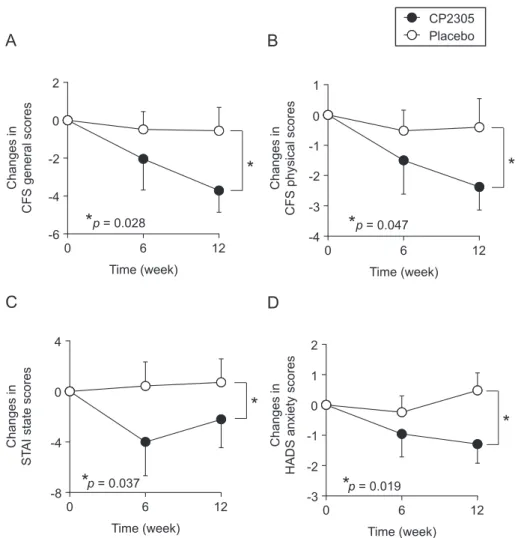
Fig. 1. Effects on the time-dependent changes of stress-related behaviors during the experimental period as determined by questionnaires. CFS-general score (A), CFS-physical score (B), STAI-state score (C), and HADS-anxiety score (D). Values indicate the means ± SEM. Data were analyzed by repeated measures ANOVA between the groups and the p value is shown in each panel.
(Fig. 1B) scores decreased significantly in the CP2305 group compared to the placebo group using two-way ANOVA with repeated measures. CP2305 tended to reduce the mental fatigue scores (Table 2).
Effects of paraprobiotic CP2305 intake on mental state were further examined using STAI and HADS. The mean values of the STAI-state scores measured at 0, 6, and 12 weeks in both groups were always higher than the threshold value of 40 based on the Japanese version of STAI (Nakazato & Shimonaka, 1989). When compared to the placebo group, CP2305 administration significantly decreased the STAI-state scores for athletes in the CP2305 group (Fig. 1C). Usually, the STAI-trait score does not change in a short period of time; however, the CP2305 group had a significant reduction in STAI-trait scores. This may have been influenced by the effective relief of anxiety in the CP2305 group. The HADS questionnaire also indicated that CP2305 intake significantly ameliorated anxiety (Fig. 1D) and depressive mode in the CP2305 group when compared to the placebo. Thus, many of the athletes who complained about psychological stress prior to CP2305 administration were significantly relieved of anxiety and depressive mood.
In accordance with the results of the self-reported questionnaires, repeated-measures of ANOVA showed that CP2305 significantly re-duced the levels of the salivary stress marker, chromogranin A, when compared to placebo administration (Fig. 2). However, we could not detect any significant changes in the levels of salivary cortisol between the two groups (data not shown). In a previous study, we reported that the paraprobiotic CP2305 administration improved stress-induced sleep disturbance (Nishida et al., 2017a, 2017b); however, such effects were not detected in the present study (Table 2).
3.3. Effects of paraprobiotic CP2305 on blood chemistry and blood cell counts
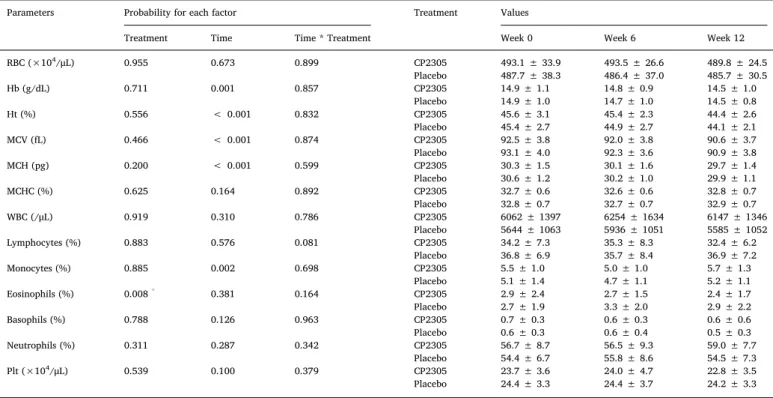
Data on blood chemistry are summarized in Table 3. The mean values of all parameters were within normal limits. Although it was difficult to assign significance to changes that were within the normal limits, we attempted to identify firm exercise-associated changes. Training did not result in liver damages or changes to the nutritional state of athletes; however, intense physical exercise caused muscle damaged and increased serum CPK and LDH levels. Due to individual variations in serum CPK and LDH levels, likely due to different timings and extent of training prior to sampling, we could not detect significant changes between the two groups (Table 3). As shown inTable 4, there was no significant change in RBC count and Hb concentration in both groups during the experimental period. Hb is crucial for long-distance runners; therefore, we performed a more precise examination of
individual changes during the period. As shown inFig. 3A, the post hoc analyses with ANCOVA at 12 weeks after the start of the study, revealed a significant preservation of the Hb contents during the training by CP2305 administration when compared to placebo administration. We also found that lymphocyte and eosinophil counts significantly de-creased in the CP2305 group compared to their respective equivalents in the placebo group (Table 4).
The most interestingfinding was the effect of CP2305 on serum GH concentrations. As shown inTable 3andFig. 3B, the daily adminis-tration of CP2305 significantly increased serum GH levels which were measured between 17:00 and 18:00, while serum GH levels in the placebo group was unchanged during the experimental period. In a previous study, paraprobiotic CP2305 significantly improved stress-associated sleep disturbance (Nishida et al., 2017a, 2017b). In this study, the mean scores of PSQI-general were below the cut-off value of 5.5, except the score measured 6 weeks following the initiation of test beverage consumption in the CP2305 group (Table 2). This indicated that many of the athletes did not experience sleep disturbance. Con-sequently, we could not detect any beneficial effect on sleep when as-sessing the PSQI in this study. Compared to non-rapid eye movement sleep, physical exercise is not as potent as a stimulator for GH release; however, it can facilitate GH release. Interestingly, CP2305 intake significantly and more effectively increased serum GH levels compared to placebo intake.
3.4. Effects of paraprobiotic CP2305 on fecal microbiota
We examined the effects of paraprobiotic CP2305 on gut microbiota using the alpha-diversity indices: observed species (actual numbers of species richness), Chao1 index (estimated numbers of species richness) and phylogenetic diversity whole tree index (similarity of the microbial phylogenetic tree). These indices are used to assess richness (observed species and Chao1 index) and evenness (phylogenetic diversity whole tree index). There were no significant differences in these alpha-di-versity indices between the CP2305 and placebo groups prior to the initiation of the study, and between 0 (before) and 12 weeks following the start of the intervention in the placebo group (Fig. 4A–C). However, daily administration of paraprobiotic CP2305 significantly increased the number of observed species (Fig. 4A), the Chao1 index (Fig. 4B), and the phylogenetic diversity whole tree index (Fig. 4C).
To assess the similarity between the gut microbial community of the two groups, beta-diversity was visualized using PCoA based on the unweighted UniFrac distances; the p value was calculated between the two groups using the ANOSIM test based on the unweighted UniFrac distances. There was no significant difference in the beta-diversity be-tween the placebo and the CP2305 group before (Fig. 5A) and after the 12-week intervention (Fig. 5B). We did not detect any significant dif-ference in the beta-diversity before and after the 12-week intervention in the place group (Fig. 5C). In contrast, daily administration of para-probiotic CP2305 for 12 weeks significantly increased the beta-diversity of the group (Fig. 5D).
Fecal bacterial 16S metagenomic sequencing analysis revealed 5 major genus members with compositions of no less than 5%. The changes in their compositions are summarized inTable 5. ANCOVA with the initial value as the covariate showed that the daily intake of paraprobiotic CP2305 for 12 weeks significantly increased the compo-sition of Faecalibacterium; this did not occur with placebo intake. In addition, the reduction of Bifidobacterium observed in the placebo group was significantly prevented by the daily intake of paraprobiotic CP2305 (Table 5).
3.5. Gene expression changes in peripheral leukocytes
It is likely that the administration of paraprobiotic CP2305 had beneficial impacts on the athletes. To further confirm such effects, we assessed the gene expression profiles of peripheral leukocytes. Total
*p < 0.001
CP2305 Placebo Cha ng es in Cg A lev els (pm ol/m g prote in) 0 6 12 -20 -10 0 10 Time (week)*
Fig. 2. Effect on the time-dependent changes of salivary chromogranin A (CgA) levels during the experimental period. Values indicate the means ± SEM. Data were analyzed by repeated measures ANOVA between the groups and p values are shown in the panel.
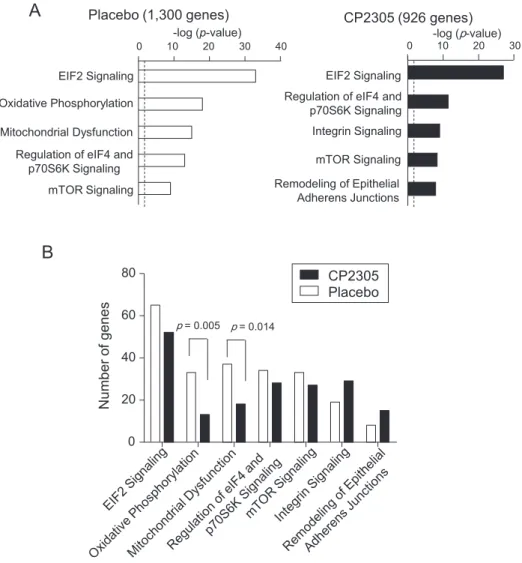
RNA was prepared from 44 athletes (22 in each group) and subjected to microarray analysis. We defined differentially expressed genes as fol-lows: genes that significantly changed the mRNA levels by the Student’s t-test (p < 0.01), and mean mRNA levels of the genes differed > 1.25-fold. First, the effects of vigorous training were examined. Vigorous training significantly changed the expression of 1300 genes (481 regulated and 819 down-regulated genes) and 926 genes (564 up-regulated and 362 down-up-regulated genes) in the placebo and CP2305 group, respectively, when compared between before and 12 weeks after the initiation of test beverage consumption. The 1300 differentially expressed genes in the placebo group were subjected to Ingenuity Pathway Analysis (IPA). IPA ranked the topfive canonical pathways as follows: (1) “EIF2 Signaling” (65 molecules, p = 5.93E−34), (2) “Oxidative Phosphorylation” (33 molecules, p = 1.13E−18), (3) “Mitochondrial Dysfunction” (37 molecules, p = 1.73E-15), (4) “Regulation of eIF4 and p70S6K Signaling” (34 molecules, p = 7.53E−14), and (5) “mTOR Signaling” (33 molecules, p = 3.16E−10). In the CP2305 group, IPA of the 926 genes was ranked based on the top five canonical pathways: (1) “EIF2 Signaling” (52 molecules, p = 5.53E−28), (2) “Regulation of eIF4 and p70S6K Signaling” (28 molecules, p = 2.42E-12), (3) “Integrin Signaling” (29 molecules, p = 6.59E−10), (4) “mTOR Signaling” (27 molecules, p = 3.21E−09), and (5) “Remodeling of Epithelial Adherens Junctions” (15 molecules, p = 1.10E−08) (Fig. 6A andSupplementary Table S1). Considering the p values of these canonical pathways, the most prominent changes in gene expression were related to the EIF2 Signaling pathway in the placebo group. Most genes included in the EIF2 Signaling pathway were down-regulated, and IPA calculated a negative z-score for the pathway. This suggests a decreased activity in
EIF2 Signaling in both groups (Supplementary Table S1). To assess whether CP2305 administration modified these gene expression sig-natures, we compared the number of differentially expressed genes included in each canonical pathway between the placebo group and the CP2305 group. CP2305 administration significantly reduced the number of differentially expressed genes in the “Oxidative Phosphor-ylation” pathway (13 genes in the CP2305 vs. 33 genes in the placebo group; p = 0.005 by the Fisher’s exact test) and “Mitochondrial Dys-function” pathway (18 genes in the CP2305 vs. 37 genes in the placebo group; p = 0.0144) (Fig. 6B). Moreover, Integrin Signaling, which is related to the cytoskeletal remodeling process, was ranked as one of the topfive pathways in the CP2305 group only. In addition, its activation scores (z-score) were higher in the CP2305 group (4.426) than the placebo group (2.828) (Supplementary Table S1).
4. Discussion
In our experiment series, we consistently showed that daily intake of CP2305 relieved academic stress-associated symptoms in medical stu-dents (Nishida et al., 2017a, 2017b; Sawada et al., 2017) and clinical symptoms in patients with irritable bowel syndrome (Nobutani et al., 2017). Particularly, daily intake of heat-inactivated, washed CP2305 cell product (paraprobiotic CP2305) for 12 weeks, as used in this study, significantly ameliorated stress-associated physical and psychological symptoms and sleep disturbance in medical students preparing to take the national examination for medical practitioners (Nishida et al., 2017b). Based on these findings, the present study was designed to investigate whether paraprobiotic CP2305 had beneficial effects on top athletes. All students recruited in this study were long-distance runners Table 3
Summary of blood chemistry.
Parameters Probability for each factor Treatment Values
Treatment Time Time * Treatment Week 0 Week 6 Week 12
TP (g/dL) 0.406 0.111 0.430 CP2305 7.2 ± 0.4 7.3 ± 0.3 7.1 ± 0.3 Placebo 7.2 ± 0.3 7.1 ± 0.4 7.1 ± 0.3 Alb (g/dL) 0.689 0.116 0.566 CP2305 4.5 ± 0.2 4.6 ± 0.2 4.5 ± 0.1 Placebo 4.5 ± 0.2 4.5 ± 0.2 4.5 ± 0.2 AST (U/L) 0.333 0.009 0.582 CP2305 38.7 ± 15.0 31.8 ± 8.6 37.2 ± 10.9 Placebo 33.4 ± 14.0 30.0 ± 10.6 32.6 ± 9.3 ALT (U/L) 0.060 0.045 0.403 CP2305 28.8 ± 10.2 24.0 ± 7.7 25.5 ± 8.8 Placebo 24.5 ± 8.6 22.9 ± 10.0 24.0 ± 7.4 ALP (U/L) 0.008* < 0.001 0.122 CP2305 316.3 ± 65.3 288.0 ± 71.3 274.4 ± 59.1 Placebo 302.3 ± 66.1 288.7 ± 65.3 283.9 ± 66.8 γ-GTP (U/L) 0.011* < 0.001 0.177 CP2305 26.2 ± 11.0 22.9 ± 7.5 22.0 ± 7.0 Placebo 21.6 ± 5.7 20.9 ± 6.1 19.5 ± 5.6 T-Bil (mg/dL) 0.081 < 0.001 0.459 CP2305 0.60 ± 0.23 0.53 ± 0.17 0.66 ± 0.23 Placebo 0.60 ± 0.25 0.48 ± 0.18 0.61 ± 0.21 LDH (U/L) 0.864 0.002 0.806 CP2305 276.1 ± 69.8 252.8 ± 62.2 256.2 ± 71.6 Placebo 261.6 ± 20.5 232.0 ± 52.3 244.7 ± 46.9 AMY (U/L) < 0.001* 0.236 0.026 CP2305 97.2 ± 31.5 87.5 ± 25.2 86.1 ± 23.8 Placebo 81.8 ± 20.5 83.4 ± 22.7 84.9 ± 35.4 BUN (mg/dL) 0.023* 0.122 0.186 CP2305 17.3 ± 3.7 16.8 ± 2.9 17.7 ± 3.8 Placebo 17.9 ± 2.7 16.6 ± 2.7 16.8 ± 2.5 CPK (U/L) 0.206 0.010 0.654 CP2305 679.0 ± 891.7 331.9 ± 190.2 428.4 ± 283.5 Placebo 479.8 ± 573.2 289.4 ± 153.1 349.2 ± 204.2 TF (mg/dL) 0.057 < 0.001 0.398 CP2305 250.3 ± 36.2 274.9 ± 36.1 263.8 ± 27.4 Placebo 251.8 ± 31.2 268.5 ± 28.8 256.9 ± 27.5 GH (ng/mL) 0.047* 0.197 0.363 CP2305 0.6 ± 1.4 2.0 ± 2.8 2.0 ± 3.7 Placebo 1.1 ± 2.0 1.3 ± 2.2 1.2 ± 1.7 IGF-1 (ng/mL) 0.797 < 0.001 0.635 CP2305 225.6 ± 41.7 240.2 ± 44.4 248.2 ± 46.9 Placebo 208.9 ± 55.1 229.9 ± 66.7 228.4 ± 51.7 Cre (mg/dL) 0.241 0.013 0.589 CP2305 0.78 ± 0.09 0.81 ± 0.09 0.78 ± 0.08 Placebo 0.79 ± 0.09 0.80 ± 0.09 0.78 ± 0.08
Values are mean ± SD.
TP, total protein; Alb, albumin; AST, aspartate aminotransferase; ALT, alanine aminotransferase; ALP, alkaline phosphatase;γ-GTP, γ-glutamyl transpeptidase; T-Bil, total bilirubin; LDH, lactate dehydrogenase; AMY, amylase; BUN, blood urea nitrogen; CPK, creatine phosphokinase; TF, transferrin; GH, growth hormone; IGF-1, insulin-like growth factor 1; Cre, creatinine
who took similar curriculums and lived in the same dormitory. Diet is an important factor in this type of experiment. However, they ate the same breakfast and dinner menus provided by the dormitory staff. Thus, this study consisted of a homogenous population. Afterfinishing classes, these athletes were always training to be selected as a team member for the Ekiden tournaments. In fact, during the experimental period (from September 2016 to December 2016), they prepared and attended the Izumo All Japan University Ekiden (October 10, 2016) and the All Japan University Men's Ekiden (November 6, 2016) cham-pionships and continued their vigorous training for the biggest uni-versity championship in Japan (the Hakone Ekiden on January 2nd and 3rd of 2017). The Hakone Ekiden is one of the most popular sport events in Japan. Only 10 of 49 students on this Ekiden team were
selected to be a part of the Hakone Ekiden championship team. It is important to note that every young, long-distance runner in Japan feels highly honored to be a participant in this championship. Moreover, this Ekiden team has won the three championships for two years running. Thus, this study was likely appropriate to examine the effects of para-probiotic CP2305 on highly-pressured top athletes. In fact, the STAI and HADS questionnaires demonstrated that the students continued to ex-perience anxiety and depressive mood during the experimental period. Compared to the medical students who were experiencing chronic academic stress (Nishida et al., 2017b), the Ekiden runner university students experienced more effective relief of stress-associated psycho-logical symptoms when taking the paraprobiotic CP2305. The scores of STAI-state, STAI-trait, HADS-anxiety, and HADS-depression were Table 4
Summary of the results of hematological parameters.
Parameters Probability for each factor Treatment Values
Treatment Time Time * Treatment Week 0 Week 6 Week 12
RBC (×104/μL) 0.955 0.673 0.899 CP2305 493.1 ± 33.9 493.5 ± 26.6 489.8 ± 24.5 Placebo 487.7 ± 38.3 486.4 ± 37.0 485.7 ± 30.5 Hb (g/dL) 0.711 0.001 0.857 CP2305 14.9 ± 1.1 14.8 ± 0.9 14.5 ± 1.0 Placebo 14.9 ± 1.0 14.7 ± 1.0 14.5 ± 0.8 Ht (%) 0.556 < 0.001 0.832 CP2305 45.6 ± 3.1 45.4 ± 2.3 44.4 ± 2.6 Placebo 45.4 ± 2.7 44.9 ± 2.7 44.1 ± 2.1 MCV (fL) 0.466 < 0.001 0.874 CP2305 92.5 ± 3.8 92.0 ± 3.8 90.6 ± 3.7 Placebo 93.1 ± 4.0 92.3 ± 3.6 90.9 ± 3.8 MCH (pg) 0.200 < 0.001 0.599 CP2305 30.3 ± 1.5 30.1 ± 1.6 29.7 ± 1.4 Placebo 30.6 ± 1.2 30.2 ± 1.0 29.9 ± 1.1 MCHC (%) 0.625 0.164 0.892 CP2305 32.7 ± 0.6 32.6 ± 0.6 32.8 ± 0.7 Placebo 32.8 ± 0.7 32.7 ± 0.7 32.9 ± 0.7 WBC (/μL) 0.919 0.310 0.786 CP2305 6062 ± 1397 6254 ± 1634 6147 ± 1346 Placebo 5644 ± 1063 5936 ± 1051 5585 ± 1052 Lymphocytes (%) 0.883 0.576 0.081 CP2305 34.2 ± 7.3 35.3 ± 8.3 32.4 ± 6.2 Placebo 36.8 ± 6.9 35.7 ± 8.4 36.9 ± 7.2 Monocytes (%) 0.885 0.002 0.698 CP2305 5.5 ± 1.0 5.0 ± 1.0 5.7 ± 1.3 Placebo 5.1 ± 1.4 4.7 ± 1.1 5.2 ± 1.1 Eosinophils (%) 0.008* 0.381 0.164 CP2305 2.9 ± 2.4 2.7 ± 1.5 2.4 ± 1.7 Placebo 2.7 ± 1.9 3.3 ± 2.0 2.9 ± 2.2 Basophils (%) 0.788 0.126 0.963 CP2305 0.7 ± 0.3 0.6 ± 0.3 0.6 ± 0.6 Placebo 0.6 ± 0.3 0.6 ± 0.4 0.5 ± 0.3 Neutrophils (%) 0.311 0.287 0.342 CP2305 56.7 ± 8.7 56.5 ± 9.3 59.0 ± 7.7 Placebo 54.4 ± 6.7 55.8 ± 8.6 54.5 ± 7.3 Plt (×104/μL) 0.539 0.100 0.379 CP2305 23.7 ± 3.6 24.0 ± 4.7 22.8 ± 3.5 Placebo 24.4 ± 3.3 24.4 ± 3.7 24.2 ± 3.3
Values are mean ± SD.
RBC, red blood cell; Hb, hemoglobin; Ht, hematocrit; MCV, mean corpuscular volume; MCH, mean corpuscular hemoglobin; MCHC, mean corpuscular hemoglobin concentration; WBC, white blood cell; Plt, platelet.
* Significantly different between CP2305 and placebo group (p < 0.05 by repeated-measures ANOVA).
A
B
*
p = 0.0471
12
14
16
18
-3
-2
-1
0
1
2
Initial Hb levels (g/dl)
p = 0.004
Changes in
Hb lev
els
(g
/dl)
0 6 12
-1
0
1
2
3
Time (week)
Chang
es in
serum
GH lev
els (ng/m
l)
CP2305
Placebo
*
Fig. 3. Effects on the changes of hematological and biological markers in the blood during the experimental period. (A) Changes in hemoglobin (Hb) levels at 12 weeks after the start of ingestion. Solid and dotted lines indicate the regression models of the CP2305 and placebo group, respec-tively. Density ellipses of 0.95 are shown. Data were analyzed by ANCOVA with the initial con-centration as covariate and p values are shown in the panel. (B) Time-dependent changes of serum growth hormone (GH) levels. Values indicate the means ± SEM. Data were analyzed by repeated measures ANOVA between the groups and p values are shown in the panel.
however similarly elevated in the medical students (40 males and 29 females) (Nishida et al., 2017b) and the Ekiden runners (49 males). Paraprobiotic CP2305 significantly reduced STAI-state scores in the female medical students only; however, this was not observed in the male medical students (Nishida et al., 2017b). In contrast, para-probiotic CP2305 significantly decreased STAI-state and STAI-trait scores in the male Ekiden runners when compared to placebo. More-over, paraprobiotic CP2305 significantly improved the feeling of an-xiety and depressive mood as assessed by the HADS questionnaire. These results suggest that paraprobiotic CP2305 may be more effective in exerting beneficial effects on intense exercise-associated symptoms rather than on naturally-induced stresses.
Interestingly, paraprobiotic CP2305 significantly reduced salivary concentrations of chromogranin A rather than cortisol; however, the latter was significantly suppressed in medical students (Nishida et al., 2017b). In general, assessing chromogranin A provides more insight on the SAM axis as opposed to the HPA axis (Tananska, 2014). Therefore, based on our results, paraprobiotic CP2305 may preferentially suppress the SAM axis rather than the HPA axis in pressured athletes. Another possible explanation is that in endurance training, repeated exercise per se does not induce permanent hypercortisolism which results from an adaptation to the HPA axis activity (Duclos & Tabarin, 2016). Thus, paraprobiotic CP2305 could exert various stress-relieving effects based on the type of stress.
We were also interested in the beneficial effects of paraprobiotic CP2305 on intense exercise-related fatigue. The self-reported
measurement of fatigue using CFS revealed that daily intake of para-probiotic CP2305 significantly facilitated the recovery of physical fa-tigue and tended to improve mental fafa-tigue when compared to the placebo. This recovery effect on chronic fatigue may be beneficial in avoiding injury as well as improving training efficiency and perfor-mance of athletes.
To clarify the fatigue-recovering effect of paraprobiotic CP2305, we carefully analyzed blood chemistry and blood cell counts of the ath-letes. The intense training did not result in anemia and liver dysfunc-tion, and did not change the nutritional status of the athletes. However, the post hoc analysis with ANCOVA at 12 weeks after initiating test beverage consumption, paraprobiotic CP2305 significantly prevented the loss of Hb contents during training when compared to the placebo. Notably, CP2305 administration significantly improved basal GH con-centration under the stressful situation. An intense physical exercise could serve as a potent stimulator of GH secretion. However, the effect of chronic exercise training on GH response remains inconsistent. Resting static state levels of GH are reduced in endurance-trained ath-letes (Godfrey, Madgwick, & Whyte, 2003). In our subjects, while the intense training unchanged the mean value of serum GH concentration in the placebo group, the daily administration of CP2305 significantly increased serum GH levels in athletes treated with CP2305. This adaptive collaboration between exercise and CP2305 may be advanta-geous as GH enhances adipose tissue response, hormone-sensitive lipase activity, and fatty acid availability. In addition to GH, its primary downstream mediator, IGF-I, plays a critical role in the formation,
Before After
0
500
1000
1500
2000
0
1000
2000
3000
0
20
40
60
80
Observ
ed species
Chao1
Phy
log
enetic div
ersi
ty
w
hole tree
A
B
C
p = 0.015
p = 0.010
p = 0.001
CP2305
Placebo
Before After
Before After
CP2305
Placebo
Before After
Before After
CP2305
Placebo
Before After
Fig. 4. Effects on alpha-diversity of fecal microbiota. Observed species (A), Chao1 index (B), and phylogenetic diversity whole tree index (C). Values indicate the means ± SEM. Data were analyzed by the paired Student’s t-test between the groups and p value is shown in each panel.
maintenance, and regeneration of skeletal muscles. Unfortunately, we only measured total IGF-I and could not detect significant effect of CP2305 on serum IGF-1 concentration. Several recent studies have re-ported the importance of measuring free IGF-I and bioactive IGF-I, besides immunoreactive (total) IGF-I (Frystyk, 2010). Therefore, the measurements of free and bioactive IGF-1 should be performed in fu-ture experiments.
In our study series (Nishida et al., 2017a; Sawada et al., 2016; Sugawara et al., 2016), we have consistently reported that para-probiotic CP2305 could significantly modify the composition of in-testinal microbiota. The reduction of the alpha-diversity of gut
microbiota is associated with pathological conditions including gas-trointestinal disorders (Clarke et al., 2014). Therefore, improving alpha-diversity by taking paraprobiotic CP2305 may support the phy-sical conditions of the top university Ekiden runners. The beta-diversity analysis demonstrated significant changes in the composition of fecal microbiota after daily intake of paraprobiotic CP2305 for 12 weeks. Fecal bacterial 16S metagenomic sequencing analysis revealed that paraprobiotic CP2305 significantly increased the composition of Fae-calibacterium and prevented the reduction of Bifidobacterium during the ingestion period. Bifidobacterium is known to play an important role in maintaining a healthy intestinal environment (Bottacini, Ventura, van Sinderen, & O'Connell Motherway, 2014). Faecalibacterium is a buty-rate-producing bacterium and plays a key role in gut homeostasis (Audebert et al., 2016). Hence, compositional changes in the gut mi-crobiota by ingesting CP2305 may also improve the intestinal en-vironment. Several studies suggest that the gut microbiota controls energy balance and stress responses by modulating the gut-brain axis activity (Bauer, Hamr, & Duca, 2016; Duca & Lam, 2014; Mayer, Tillisch, & Gupta, 2015). The changes in intestinal microbiota observed in this study may contribute to recovery from fatigue, and the mod-eration of stress and anxiety in athletes.Clarke et al. (2014)reported that alpha-diversity in elite rugby players was significantly higher than that in healthy controls. Furthermore,Estaki et al. (2016)reported that a higher cardiorespiratoryfitness correlated with the higher diversity of gut microbiota, and that enrichment of the butyrate-producing bacterial group and higher fecal butyrate levels were associated with host ex-ercise capacity. Thus, paraprobiotic CP2305-induced increases in the
PC3(5%) PC2(5%)
PC1(9%)
p = 0.082
B
12-week beverage consumption
(CP2305 vs Placebo)
CP2305
Placebo
p = 0.606
PC3(5%) PC2(6%) PC1(12%)A
Before beverage consumption
(CP2305 vs Placebo)
CP2305
Placebo
p = 0.004
PC3(5%) PC2(6%) PC1(10%)D
CP2305
(before vs 12 weeks after)
Before
After
p = 0.154
PC3(5%) PC2(6%) PC1(12%)C
Placebo
(before vs 12 weeks after)
Before
After
Fig. 5. Effects on beta-diversity of fecal microbiota. Before intervention (CP2305 vs Placebo) (A), 12 weeks after intervention (CP2305 vs Placebo) (B), Placebo (before vs 12 weeks after) (C), CP2305 (before vs 12 weeks after) (D). The gut microbial profile is represented by PCoA based on unweighted UniFrac distances. Data were analyzed by the analysis of similarities (ANOSIM) based on unweighted UniFrac distances and the p value is shown in each panel.
Table 5
Summary of the results of fecal microbiota composition.
Genus Treatment % (week 0) % (week 12) Faecalibacterium* CP2305 13.3 ± 7.2 18.6 ± 11.1 Placebo 12.7 ± 9.3 14.2 ± 8.0 Bifidobacterium* CP2305 10.3 ± 8.0 5.7 ± 8.0 Placebo 12.5 ± 14.5 6.4 ± 7.0 Coprococcus CP2305 8.6 ± 5.3 8.0 ± 4.6 Placebo 8.7 ± 5.2 8.7 ± 5.8 Lachnospiraceae;g_ CP2305 7.3 ± 6.6 4.9 ± 3.2 Placebo 5.2 ± 2.9 4.1 ± 3.0 Bacteroides CP2305 3.9 ± 5.5 13.7 ± 10.3 Placebo 5.9 ± 6.8 15.7 ± 14.4
Values are mean ± SD.
* Significant difference between CP2305 and placebo group (p < 0.05 by ANCOVA with the baseline as covariate.
alpha-diversity and compositions of butyrate-producing bacteria may have beneficial effects on top athletes.
Finally, to evaluate the effect of paraprobiotic CP2305 administra-tion on physiological responses during the intervenadministra-tion period, we as-sessed the gene expression profiles of peripheral blood leukocytes. Vigorous training during the intervention period preferentially altered the expression of genes included in the protein synthesis-related cano-nical pathways (EIF2 Signaling, Regulation of eIF4 and p70S6K Signaling, and mTOR Signaling) in the placebo group; most genes in-cluded in these pathways were down-regulated. Recently, we showed that medical students taking the cadaver dissection course (Sawada et al., 2017) and patients with IBS (Nobutani et al., 2017) had down-regulated expressions of a group of genes related to the EIF2 Signaling pathway, and that daily intake of CP2305 prevented the down-regula-tion in associadown-regula-tion with improvement of stress-associated or clinical symptoms. EIF2 signaling is generally considered to play a crucial role in a common adaptive pathway, termed the integrated stress response (Pakos-Zebrucka et al., 2016; Taniuchi, Miyake, Tsugawa, Oyadomari, & Oyadomari, 2016). Although we could not detect any significant changes in the expression of EIF2 Signaling-related genes between daily intake of placebo and CP2305, daily intake of paraprobiotic CP2305 seemed to preserve the activities of the protein synthesis-related path-ways based on the p -value, z-scores, and number of genes included in each protein synthesis-related pathway (Supplementary Table S1). In contrast, two mitochondrial function-related pathways (Oxidative Phosphorylation and Mitochondrial Dysfunction) were ranked as the topfive pathways in the placebo group only (Fig. 6A); most genes in these pathways in the placebo group were down-regulated. Daily intake
of paraprobiotic CP2305 significantly prevented the down-regulation of oxidative phosphorylation-related genes and reduced the altered ex-pression of mitochondria dysfunction-related genes, suggesting that CP2305 may contribute to the maintenance of mitochondrial function and facilitate recovery from fatigue. Our gene expression analysis also suggests that a daily intake of paraprobiotic CP2305 may relieve stress-associated symptoms.
It is widely accepted that probiotics, including Lactobacillus strain, play an important role in the maintenance of homeostasis in the host gastrointestinal tract. However, the mechanism for the beneficial effects of probiotics remained to be elucidated. Several mechanisms have been proposed including metabolites produced by probiotics, altered mi-crobiota composition caused by direct or indirect interaction between probiotics and gut microbiota, and direct interaction of probiotics with host epithelial cells (Bienenstock, Gibson, Klaenhammer, Allan Walker, & Neish, 2013). Recently, it has been shown that heat-killed bacteria could exhibit similar effects on host physical conditions as live ones (Adams, 2010; de Almada, Almada, Martinez, & Sant’Ana, 2016). Heat-resistant ingredients including peptidoglycan (He, Wu, Pan, Guo, & Zeng, 2017) should be considered as candidates of the bioactive com-ponents. Further investigations are needed to elucidate the mechanism for beneficial effects of heat-inactivated CP2305. In addition, there is a growing interest in gender-specific effects of probiotics on host (Fransen et al., 2017; He et al., 2019). It is of interest to investigate whether paraprobiotics CP2305 will exert similar effects on female athletes in the future study.
In conclusion, the present clinical trial demonstrates that daily CP2305 intake was effective in recovering from fatigue and in relieving
Placebo
CP2305
0 20 40 60 80 p = 0.005 p = 0.014Numbe
r of
genes
EIF2 Signaling Oxidative Phosphorylation Mitochondrial Dysfunction Regulation of eIF4 andp70S6K Signaling mTOR Signaling
Placebo (1,300 genes)
-log (p-value) 0 10 20 30 40A
B
EIF2 Signaling Regulation of eIF4 andp70S6K Signaling mTOR Signaling
CP2305 (926 genes)
-log (p-value) 0 10 20 30 Integrin Signaling Remodeling of Epithelial Adherens JunctionsFig. 6. Changes in gene expression profiles of peripheral blood leukocytes. The changes in gene expression in peripheral blood leukocytes were measured using a microarray, before and 12 weeks after the initiation of placebo or CP2305 intake. The vigorous training session significantly changed the expression levels of 1300 genes and 926 genes in the placebo and CP2305 group, re-spectively. (A) IPA listed the top 5 canonical pathways related to the affected genes in each group. Dotted lines show the level of significance (p = 0.05 by Fisher’s exact test). (B) The number of genes with a change in expression of more than 1.25-fold was compared between the before and 12 weeks after the start of placebo or CP2305 in-take (p < 0.01, paired Student’s t-test). Data were analyzed by Fisher’s exact test and the p values indicated.
anxiety and depressive mood during the vigorous training period. Furthermore, administration of CP2305 improved the richness and evenness of the gut microbial ecosystem and prevented the stress-in-duced changes in gene expression of peripheral blood leucocytes. Despite these beneficial effects, however, we could not detect any sig-nificant difference in physical performance between the CP2305 and placebo group (Supplementary Table S2). Since there are individual variations and variable factors for physical performance, further studies are required to elucidate the beneficial effects of paraprobiotic CP2305 on the physical performance of athletes.
Conflicts of interest
DS, TS and SF are employees of Asahi Group Holdings, Ltd. The other authors declare that the research was conducted in the absence of anyfinancial relationships that could be construed as a potential con-flict of interest.
Ethics statements
The authors ensure that the current clinical trial has been carried out in accordance with the Code of Ethics of the World Medical Association (Declaration of Helsinki). The protocol was approved by the Institutional Review Boards of Tokushima University Hospital, Tokushima, Japan. This study was registered with the UMIN Clinical Trials Registry as UMIN000022773 (Title; Research on nutritional beverage for exercise stress), and was conducted in compliance with the protocol. Written informed consent was obtained from all subjects prior to enrolment.
Acknowledgements
We thank Isao Takehara (Clinical Support Corporation, Hokkaido, Japan), and Yumeko Aoki and Hiroto Morita (Asahi Group Holdings, Ltd., Tokyo, Japan) for their technical supports. This study was funded by Asahi Group Holdings, Ltd.
Appendix A. Supplementary material
Supplementary data to this article can be found online athttps:// doi.org/10.1016/j.jff.2019.04.022.
References
Adams, C. A. (2010). The probiotic paradox: Live and dead cells are biological response modifiers. Nutrition Research Reviews, 23(1), 37–46.https://doi.org/10.1017/ S0954422410000090.
Ainsworth, B. E., Haskell, W. L., Herrmann, S. D., Meckes, N., Bassett, D. R., Jr., Tudor-Locke, C., & Leon, A. S. (2011). Compendium of physical activities: A second update of codes and MET values. Medicine & Science in Sports & Exercise, 43(8), 1575–1581. https://doi.org/10.1249/MSS.0b013e31821ece12.
Audebert, C., Even, G., Cian, A., Loywick, A., Merlin, S., Viscogliosi, E., & Chabe, M. (2016). Colonization with the enteric protozoa Blastocystis is associated with in-creased diversity of human gut bacterial microbiota. Scientific Reports, 6, 25255. https://doi.org/10.1038/srep25255.
Aziz, Q., & Thompson, D. G. (1998). Brain-gut axis in health and disease. Gastroenterology, 114(3), 559–578.
Bauer, P. V., Hamr, S. C., & Duca, F. A. (2016). Regulation of energy balance by a gut-brain axis and involvement of the gut microbiota. Cellular and Molecular Life Sciences, 73(4), 737–755.https://doi.org/10.1007/s00018-015-2083-z.
Bienenstock, J., Gibson, G., Klaenhammer, T. R., Allan Walker, W., & Neish, A. S. (2013). New insights into probiotic mechanisms: A harvest from functional and metagenomic studies. Gut Microbes, 4(2), 94–100.https://doi.org/10.4161/gmic.23283. Bienenstock, J., Kunze, W., & Forsythe, P. (2015). Microbiota and the gut-brain axis.
Nutrition Reviews, 73(Suppl 1), 28–31.https://doi.org/10.1093/nutrit/nuv019. Bottacini, F., Ventura, M., van Sinderen, D., & O'Connell Motherway, M. (2014).
Diversity, ecology and intestinal function of bifidobacteria. Microbial Cell Factories, 13(Suppl 1), S4.https://doi.org/10.1186/1475-2859-13-s1-s4.
Buysse, D. J., Reynolds, C. F., III, Monk, T. H., Berman, S. R., & Kupfer, D. J. (1989). The Pittsburgh sleep quality index: A new instrument for psychiatric practice and re-search. Psychiatry Research, 28(2), 193–213.https://doi.org/10.1016/0165-1781(89) 90047-4.
Caporaso, J. G., Kuczynski, J., Stombaugh, J., Bittinger, K., Bushman, F. D., Costello, E. K., & Knight, R. (2010). QIIME allows analysis of high-throughput community se-quencing data. Nature Methods, 7(5), 335–336.https://doi.org/10.1038/nmeth.f. 303.
Cella, M., & Chalder, T. (2010). Measuring fatigue in clinical and community settings. J Psychosom Res, 69(1), 17–22.https://doi.org/10.1016/j.jpsychores.2009.10.007. Chalder, T., Berelowitz, G., Pawlikowska, T., Watts, L., Wessely, S., Wright, D., & Wallace,
E. P. (1993). Development of a fatigue scale. Journal of Psychosomatic Research, 37(2), 147–153.
Clark, A., & Mach, N. (2016). Exercise-induced stress behavior, gut-microbiota-brain axis and diet: A systematic review for athletes. Journal of the International Society of Sports Nutrition, 13, 43.https://doi.org/10.1186/s12970-016-0155-6.
Clarke, S. F., Murphy, E. F., O'Sullivan, O., Lucey, A. J., Humphreys, M., Hogan, A., & Cotter, P. D. (2014). Exercise and associated dietary extremes impact on gut micro-bial diversity. Gut, 63(12), 1913–1920. https://doi.org/10.1136/gutjnl-2013-306541.
Cox, A. J., Pyne, D. B., Saunders, P. U., & Fricker, P. A. (2010). Oral administration of the probiotic Lactobacillus fermentum VRI-003 and mucosal immunity in endurance athletes. British Journal of Sports Medicine, 44(4), 222–226.https://doi.org/10.1136/ bjsm.2007.044628.
de Almada, C. N., Almada, C. N., Martinez, R. C. R., & Sant’Ana, A. S. (2016). Paraprobiotics: Evidences on their ability to modify biological responses, inactivation methods and perspectives on their application in foods. Trends in Food Science and Technology, 58, 96–114.https://doi.org/10.1016/j.tifs.2016.09.011.
Dinan, T. G., & Cryan, J. F. (2017). The microbiome-gut-brain axis in health and disease. Gastroenterology Clinics of North America, 46(1), 77–89.https://doi.org/10.1016/j. gtc.2016.09.007.
Duca, F. A., & Lam, T. K. (2014). Gut microbiota, nutrient sensing and energy balance. Diabetes, Obesity and Metabolism, 16(Suppl 1), 68–76.https://doi.org/10.1111/dom. 12340.
Duclos, M., & Tabarin, A. (2016). Exercise and the hypothalamo-pituitary-adrenal axis. Frontiers of Hormone Research, 47, 12–26.https://doi.org/10.1159/000445149. Eisenstein, M. (2016). Neuropathy: A name for their pain. Nature, 535(7611), S10–S11.
https://doi.org/10.1038/535S10a.
Estaki, M., Pither, J., Baumeister, P., Little, J. P., Gill, S. K., Ghosh, S., & Gibson, D. L. (2016). Cardiorespiratoryfitness as a predictor of intestinal microbial diversity and distinct metagenomic functions. Microbiome, 4(1), 42.https://doi.org/10.1186/ s40168-016-0189-7.
Fransen, F., van Beek, A. A., Borghuis, T., Meijer, B., Hugenholtz, F., van der Gaast-de Jongh, C., & de Vos, P. (2017). The impact of gut microbiota on gender-specific differences in immunity. Frontiers in Immunology, 8(JUN), 754.https://doi.org/10. 3389/fimmu.2017.00754.
Frystyk, J. (2010). Exercise and the growth hormone-insulin-like growth factor axis. Medicine & Science in Sports & Exercise, 42(1), 58–66.https://doi.org/10.1249/MSS. 0b013e3181b07d2d.
Galley, J. D., & Bailey, M. T. (2014). Impact of stressor exposure on the interplay between commensal microbiota and host inflammation. Gut Microbes, 5(3), 390–396.https:// doi.org/10.4161/gmic.28683.
Godfrey, R. J., Madgwick, Z., & Whyte, G. P. (2003). The exercise-induced growth hor-mone response in athletes. Sports Medicine, 33(8), 599–613.https://doi.org/10.2165/ 00007256-200333080-00005.
Goldberg, D. P., & Hillier, V. F. (1979). A scaled version of the General Health Questionnaire. Psychological Medicine, 9(1), 139–145.
Hatanaka, M., Yamamoto, K., Suzuki, N., Iio, S., Takara, T., Morita, H., & Nakamura, T. (2018). Effect of Bacillus subtilis C-3102 on loose stools in healthy volunteers. Beneficial Microbes, 9(3), 357–365.https://doi.org/10.3920/bm2017.0103. He, J., Wang, W., Wu, Z., Pan, D., Guo, Y., Cai, Z., & Lian, L. (2019). Effect of
Lactobacillus reuteri on intestinal microbiota and immune parameters: Involvement of sex differences. Journal of Functional Foods, 53, 36–43.https://doi.org/10.1016/j. jff.2018.12.010.
He, J., Wu, Z., Pan, D., Guo, Y., & Zeng, X. (2017). Effect of selenylation modification on antitumor activity of peptidoglycan from Lactobacillus acidophilus. Carbohydrate Polymers, 165, 344–350.https://doi.org/10.1016/j.carbpol.2017.02.031. Imoto, N., Morita, H., Amanuma, F., Maruyama, H., Watanabe, S., & Hashiguchi, N.
(2018). Maternal antimicrobial use at delivery has a stronger impact than mode of delivery on bifidobacterial colonization in infants: a pilot study. Journal of Perinatology, 38(9), 1174–1181.https://doi.org/10.1038/s41372-018-0172-1. Jette, M., Sidney, K., & Blumchen, G. (1990). Metabolic equivalents (METS) in exercise
testing, exercise prescription, and evaluation of functional capacity. Clinical Cardiology, 13(8), 555–565.
Kurokawa, K., Tanahashi, T., Murata, A., Akaike, Y., Katsuura, S., Nishida, K., & Rokutan, K. (2011). Effects of chronic academic stress on mental state and expression of glu-cocorticoid receptor alpha and beta isoforms in healthy Japanese medical students. Stress, 14(4), 431–438.https://doi.org/10.3109/10253890.2011.555930. Kuwano, Y., Kamio, Y., Kawai, T., Katsuura, S., Inada, N., Takaki, A., & Rokutan, K.
(2011). Autism-associated gene expression in peripheral leucocytes commonly ob-served between subjects with autism and healthy women having autistic children. PLoS One, 6(9),https://doi.org/10.1371/journal.pone.0024723.
Kvaal, K., Ulstein, I., Nordhus, I. H., & Engedal, K. (2005). The Spielberger State-Trait Anxiety Inventory (STAI): The state scale in detecting mental disorders in geriatric patients. International Journal of Geriatric Psychiatry, 20(7), 629–634.https://doi.org/ 10.1002/gps.1330.
Lehmann, M., Foster, C., Dickhuth, H. H., & Gastmann, U. (1998). Autonomic imbalance hypothesis and overtraining syndrome. Medicine & Science in Sports & Exercise, 30(7), 1140–1145.
nocturnal catecholamine excretion: parameter for an overtraining syndrome in ath-letes? International Journal of Sports Medicine, 13(3), 236–242.https://doi.org/10. 1055/s-2007-1021260.
Liu, X., Cao, S., & Zhang, X. (2015). Modulation of gut microbiota-brain axis by pro-biotics, prepro-biotics, and diet. Journal of Agricultural and Food Chemistry, 63(36), 7885–7895.https://doi.org/10.1021/acs.jafc.5b02404.
Mayer, E. A., Tillisch, K., & Gupta, A. (2015). Gut/brain axis and the microbiota. Journal of Clinical Investigation, 125(3), 926–938.https://doi.org/10.1172/jci76304. Morgan, J. A., Corrigan, F., & Baune, B. T. (2015). Effects of physical exercise on central
nervous system functions: A review of brain region specific adaptations. Journal of Molecular Psychiatry, 3(1), 3.https://doi.org/10.1186/s40303-015-0010-8. Nakazato, K., & Shimonaka, Y. (1989). The Japanese State-Trait Anxiety Inventory: Age
and sex differences. Perceptual and Motor Skills, 69(2), 611–617.https://doi.org/10. 2466/pms.1989.69.2.611.
Nishida, K., Sawada, D., Kawai, T., Kuwano, Y., Fujiwara, S., & Rokutan, K. (2017a). Para-psychobiotic Lactobacillus gasseri CP2305 ameliorates stress-related symptoms and sleep quality. Journal of Applied Microbiology, 123(6), 1561–1570.https://doi.org/10. 1111/jam.13594.
Nishida, K., Sawada, D., Kuwano, Y., Tanaka, H., Sugawara, T., Aoki, Y., & Rokutan, K. (2017b). Daily administration of paraprobiotic Lactobacillus gasseri CP2305 ame-liorates chronic stress-associated symptoms in Japanese medical students. Journal of Functional Foods, 36, 112–121.https://doi.org/10.1016/j.jff.2017.06.031. Nobutani, K., Sawada, D., Fujiwara, S., Kuwano, Y., Nishida, K., Nakayama, J., &
Rokutan, K. (2017). The effects of administration of the Lactobacillus gasseri strain CP2305 on quality of life, clinical symptoms and changes in gene expression in pa-tients with irritable bowel syndrome. Journal of Applied Microbiology, 122(1), 212–224.https://doi.org/10.1111/jam.13329.
Pakos-Zebrucka, K., Koryga, I., Mnich, K., Ljujic, M., Samali, A., & Gorman, A. M. (2016). The integrated stress response. EMBO Reports, 17(10), 1374–1395.https://doi.org/ 10.15252/embr.201642195.
Purvis, D., Gonsalves, S., & Deuster, P. A. (2010). Physiological and psychological fatigue
in extreme conditions: Overtraining and elite athletes. Pm&r, 2(5), 442–450.https:// doi.org/10.1016/j.pmrj.2010.03.025.
Sawada, D., Kawai, T., Nishida, K., Kuwano, Y., Fujiwara, S., & Rokutan, K. (2017). Daily intake of Lactobacillus gasseri CP2305 improves mental, physical, and sleep quality among Japanese medical students enrolled in a cadaver dissection course. Journal of Functional Foods, 31, 188–197.https://doi.org/10.1016/j.jff.2017.01.042. Sawada, D., Sugawara, T., Ishida, Y., Aihara, K., Aoki, Y., Takehara, I., & Fujiwara, S.
(2016). Effect of continuous ingestion of a beverage prepared with Lactobacillus gasseri CP2305 inactivated by heat treatment on the regulation of intestinal function. Food Research International, 79, 33–39.https://doi.org/10.1016/j.foodres.2015.11. 032.
Sugawara, T., Sawada, D., Ishida, Y., Aihara, K., Aoki, Y., Takehara, I., & Fujiwara, S. (2016). Regulatory effect of paraprobiotic Lactobacillus gasseri CP2305 on gut en-vironment and function. Microbial Ecology in Health and Disease, 27, 30259.https:// doi.org/10.3402/mehd.v27.30259.
Tananska, V. T. (2014). Salivary alpha-Amylase And Chromogranin A In Anxiety-Related Research. Folia Medica (Plovdiv), 56(4), 233–236. https://doi.org/10.1515/folmed-2015-0001.
Taniuchi, S., Miyake, M., Tsugawa, K., Oyadomari, M., & Oyadomari, S. (2016). Integrated stress response of vertebrates is regulated by four eIF2alpha kinases. Scientific Reports, 6, 32886.https://doi.org/10.1038/srep32886.
West, N. P., Horn, P. L., Pyne, D. B., Gebski, V. J., Lahtinen, S. J., Fricker, P. A., & Cripps, A. W. (2014). Probiotic supplementation for respiratory and gastrointestinal illness symptoms in healthy physically active individuals. Clinical Nutrition, 33(4), 581–587. https://doi.org/10.1016/j.clnu.2013.10.002.
West, N. P., Pyne, D. B., Cripps, A. W., Hopkins, W. G., Eskesen, D. C., Jairath, A., & Fricker, P. A. (2011). Lactobacillus fermentum (PCC(R)) supplementation and gas-trointestinal and respiratory-tract illness symptoms: A randomised control trial in athletes. Nutrition Journal, 10, 30.https://doi.org/10.1186/1475-2891-10-30. Zigmond, A. S., & Snaith, R. P. (1983). The hospital anxiety and depression scale. Acta