福島県立医科大学 学術機関リポジトリ
This document is downloaded at: 2021-11-07T23:57:56Z
Title Inhibitory effect of lidocaine on colonic spasm during colonoscopy: A multicenter double-blind, randomized controlled trial( 本文 )
Author(s) 根本, 大樹
Citation
Issue Date 2020-03-24
URL http://ir.fmu.ac.jp/dspace/handle/123456789/1086
Rights
© 2018 Japan Gastroenterological Endoscopy Society. This is the peer reviewed version of the following article: [Dig Endosc.
2019 Mar;31(2):173-179], which has been published in final form at [https://doi.org/10.1111/den.13272]. This article may be used for non-commercial purposes in accordance with Wiley Terms and Conditions for Use of Self-Archived Versions.
DOI
Text Version ETD
学 位 論 文
学位論文名
Inhibitory effect of lidocaine on colonic spasm during colonoscopy:
A multicenter double-blind, randomized controlled trial
(大腸内視鏡検査におけるリドカインの腸管蠕動抑制効果:
多施設、二重盲検、ランダム化比較試験)
福島県立医科大学大学院医学研究科 大腸肛門病学分野小腸大腸肛門科学講座
申請者氏名 根本 大樹
論 文 内 容 要 旨(和文)
学位論文題名
Inhibitory effect of lidocaine on colonic spasm during colonoscopy:
A multicenter double-blind, randomized controlled trial
(大腸内視鏡検査におけるリドカインの腸管蠕動抑制効果:多施設、二重盲 検、ランダム化比較試験)
【研究背景】大腸の腸管蠕動は重要な生理的役割を果たしているが、大腸内視鏡検査および内視鏡治療の 妨げになることがある。腸管蠕動抑制薬は、盲腸到達時間や検査中の苦痛、ポリープ検出率、腺腫検出率 の改善のために補助的に用いられてきた。一般的な腸管蠕動抑制薬(ブチルスコポラミンやグルカゴン)
の全身投与では、頻脈、散瞳、反応性低血糖といった随伴症状を生じうるため、併存疾患の多い高齢者で は注意を要する。一方、ペパーミントオイルは局所投与により腸管蠕動を抑制し、随伴症状を生じないが、
ペパーミントオイルの効果持続時間は短く、しばしば投与後のリバウンド収縮を引き起こし、一般的には 使用されない。局所麻酔薬のリドカインは、局所投与により腸粘膜内の神経細胞膜のNaチャネルをブロ ックすることで腸管蠕動を抑制し、薬理学的には血中リドカイン濃度が上昇しないとされる。本研究では、
リドカインの局所投与による腸管蠕動抑制効果を評価するために、生理食塩水をプラセボ対照としたラン ダム化比較試験を行った。同時に、リドカイン局所投与の安全性を確認するために、投与後の血中リドカ イン濃度を測定した。
【方法】全国5つの消化器内視鏡専門医療機関で、大腸腫瘍に対する内視鏡治療を要する患者128名を対 象とした。大腸内視鏡検査中に2%リドカイン溶液20mlを局所投与する群(LID群64名)または生理食 塩水20mlを局所投与する群(NS群64名)にランダム化割り付け(1:1)を行った。第三者の薬剤師が 各溶液を同様の容器に封入することにより、二重盲検化した。大腸内視鏡検査中、検査施行医は割り付け られた溶液を散布チューブにより病変近傍に撒布し、3分間観察した。主要評価項目は、溶液投与後1, 2, 3分後の蠕動抑制効果とし、3段階(excellent, fair, poor)で評価した。副次評価項目は、リバウンド収 縮と有害事象とした。血清リドカイン濃度は、32名で内視鏡検査直後に測定した。
【結果】2群間で患者背景に有意差はなかった。すべての時点において、excellentの割合はNS群よりも LID群で多く、2分後(p=0.02)、3分後(p=0.02)で有意差を認めた。LID群では、excellentの割合は
2 分後で12.5%増加し、3 分後に維持されていた。リバウンド収縮はLID 群では発生しなかったが、NS
群では15.6%に生じた(p=0.001)。LID群で有害事象は生じなかった。血中リドカイン濃度は、いずれも
検出限界値以下であった。
【考察】本試験において、リドカインの局所投与(腸管内撒布)により、大腸内視鏡検査中の腸管蠕動を 抑制し、リドカインが腸管よりほとんど吸収されないことが確認された。リドカイン撒布による蠕動抑制 効果は、全消化管において発揮されると考えられるので、今後は、大腸以外の消化管内視鏡検査における 活用も期待される。
ABSTRACT
Objectives
Colonic spasm can interfere with colonoscopy, but antispasmodic agents can cause complications. This study aimed to assess the inhibitory effect of topical lidocaine compared with a placebo control.
Methods
In five tertiary-care hospitals in Japan, 128 patients requiring endoscopic resection of a colorectal lesion were enrolled and randomly and double-blindly allocated to colonoscopy with topical administration of 2% lidocaine solution 20mL (LID, n=64) or normal saline 20mL (control, n=64). During colonoscopy, the assigned solution was applied with a spray catheter near the lesion and the area was observed for three minutes. primary endpoint was the inhibitory effect at three time-points (1, 2 and 3 minutes after dispersion), using a three-point scale (excellent, fair, poor). Secondary endpoints were rebound spasm and adverse events. All endpoints were scored in real time. Serum lidocaine levels were measured in 32 patients (LID 16, control 16).
Results
There were no significant differences between groups in patient demographics.
At all time-points, the proportion of patients with “excellent” scores was greater in LID group than control group, with significant differences observed at 2 minutes (p=0.02) and 3 minutes (p=0.02). In LID group, the rate of “excellent” scores increased by 12.5% at 2 minutes and was maintained at 3 minutes. Rebound spasm did not occur in LID group, compared with 15.6% of control group (p=0.001). There were no adverse events in LID group. All serum lidocaine levels were below detectable levels.
Conclusions
Topical lidocaine is an effective and safe method for suppressing colorectal spasm during colonoscopy (UMIN000024733).
Key words: antispasmodic agents; colonoscopy; colon spasm; lidocaine;
peristalsis
Abbreviations
LID, lidocaine NS, normal saline GI, gastrointestinal
INTRODUCTION
Colonic peristalsis has an important physiologic role, however, can interfere with diagnostic and therapeutic colonoscopy. Antispasmodic agents have been used adjunctively to improve cecal intubation time,1 patient comfort,2 polyp detection rate3 and adenoma detection rate.4, 5 Hyoscine butylbromide and glucagon have been administered intravenously or intramuscularly during colonoscopy, but these agents can cause adverse events including tachycardia, dry mouth, mydriasis, and hypoglycemia.6 Peppermint oil is also an antispasmodic agent applied by topical dispersion, and a possible alternative to systemic-use agents.7, 8 However, topical peppermint oil is limited by a rather short duration of effect and a high prevalence of rebound spasm.9 Repeated dispersion of peppermint oil does not work in most patients, and peppermint oil is not widely used. The ideal antispasmodic agent would have a long-term duration of action and no adverse effects.
We have recently evaluated a lidocaine dispersion technique to inhibit colon spasm.9 Lidocaine hydrochloride is a local anesthetic and antiarrhythmic agent that acts through blocking Na+ channels in neuronal tissue and voluntary/involuntary muscles. In the gastrointestinal tract, lidocaine
hydrochloride is thought to have an antispasmodic effect via action on mucosal nerves. Findings from our double-blind clinical trial suggest that topical administration of lidocaine inhibits the intestinal spasm induced by colonoscope movement, through blocking a feedback mechanism mediated by sensory nerves in the mucosal layer. We observed inhibition of spasm in almost all patients with lidocaine dispersion, but the effect was not superior to peppermint oil.9 The safety and blood levels of lidocaine have not been previously studied.
In this study, we aimed to assess the efficacy and safety of topical lidocaine dispersion for prevention of colonic spasm during colonoscopy. To further assess the extent of inhibitory effects on colonic spasm, we aimed to compare its effect with a normal saline placebo. Saline is clear, colorless and odorless liquid with same osmolality as lidocaine. We also aimed to assess the safety of lidocaine dispersion, as a novel technique, and the blood levels of lidocaine achieved following topical application.
METHODS
Study design/setting
We conducted a prospective, double blind, randomized, controlled trial to evaluate the effect of dispersed topical lidocaine hydrochloride on colonic spasm during colonoscopy, compared with normal saline solution, at five tertiary-care hospitals in Japan (Aizu Medical Center FMU, Osaka International Cancer Institute, National Hospital Organization Tokyo Medical Center, Otaru Ekisaikai Hospital and Sendai Kousei Hospital). The study was approved by the Institutional Review Board of all five participating institutions and registered with the University Hospital Medical Information Network (UMIN000024733).
Enrollment was from November 2016 to March 2017. The CONSORT (Consolidated Standards of Reporting Trials) guidelines were followed in reporting this study.
Participants
Patients were eligible for enrollment if aged 20 years to 79 years, able to give informed consent, and scheduled for colonoscopy for endoscopic resection of a colorectal lesion. Exclusion criteria included hypersensitivity to lidocaine
hydrochloride, inflammatory bowel disease, known dysfunction of intestinal motility, poor bowel preparation, pregnant women and a history of colorectal surgical resection. The authors enrolled all participants, and none had participated in a previous study.
Intervention and randomization
Prior to colonoscopy, eligible patients were randomly assigned to one of two groups: 20 ml of 2% lidocaine hydrochloride solution (LID group) or 20 ml of normal saline solution (NS group), both topically dispersed. The concentration of lidocaine hydrochloride solution was determined from our previous study.9 Randomization was blinded such that neither the patient nor the investigator knew which solution was being administered. A random allocation sequence was generated using a computer-generated list of random numbers in each hospital (block). To maintain blinding, the study solution was labeled with a number pre-printed on the vial by a pharmacist. To ensure concealed allocation, investigators were only informed of the vial number, and not the group allocation, after identification of an eligible patient. Assignment was concealed until completion of all colonoscopy procedures.
Consensus on assessment criteria
Since criteria for the endoscopic assessment of intestinal spasm had not been previously established, we held a consensus meeting of all authors prior to study enrollment where we agreed on simple and practical assessment criteria for inhibitory effect of lidocaine, and proposed a provisional assessment method.
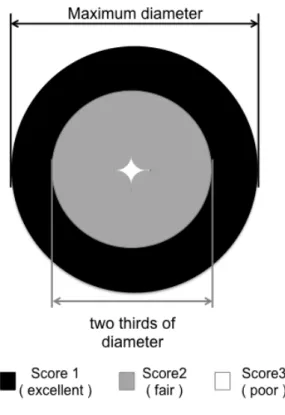
Finally, the method was finalized into consensus criteria thorough feedbacks from all authors. In this assessment criteria, inhibitory-effect scores were objectively rated according to the luminal opening diameter (Figure 1).
Procedure
After bowel preparation using polyethylene glycol electrolyte lavage solution containing ascorbic acid (Moviprep. EA Pharma Co., Ltd., Tokyo, Japan), colonoscopy was performed by experienced endoscopists (>1000 colonoscopies), under sedation with midazolam, pethidine, pentazocine or propofol and without the administration of anticholinergic agents including glucagon. Lubricant gel without lidocaine was used. Carbon dioxide (CO2) insufflation was used for all patients. The quality of bowel preparation was assessed from the extent of mucosal visualization after suction of the fluid
residue, following the Aronchick Bowel Preparation Scale: excellent (≥ 95%
mucosal visualization); good (90-95% mucosal visualization); fair (80-90%
mucosal visualization) and poor (< 80% mucosal visualization).10
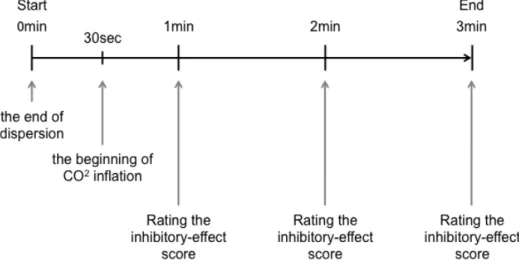
The colorectal lesion of interest was identified in advance from the previous colonoscopic findings. After cecal intubation, the endoscopist searched for the lesion while suctioning residual stool and fluid. Once the lesion was identified, 20mL of the assigned solution was applied close to the lesion (on either the oral or anal side) through a spray catheter over a 10cm length of colon only. After complete application of the solution (expelled using an air cushion in the syringe), the endoscopist started observation. During the initial 30 seconds of observation time, intraluminal gas was completely suctioned to maximize mucosal dispersal of the solution. At 30 seconds after dispersion, the intestinal lumen was inflated with CO2. The endoscopist, in real time, rated the inhibitory effect on intestinal spasm at 1-minute, 2-minute and 3-minute intervals after application (Figure 2). In our previous study9, the median latency to spasm inhibition was 43.5 seconds after lidocaine application; the anesthetic effect of lidocaine is 30-45 minutes in mucous membranes. We therefore chose 3 minutes of observation as the time to assess the inhibitory effect of lidocaine.
Prior to the start of enrollment, all authors watched a video of the study procedure and outcome assessment methods.
Outcome Measures
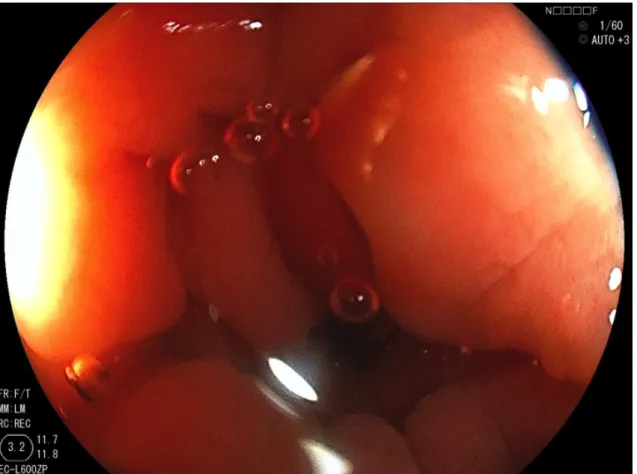
The primary outcome measure was the inhibitory effect on colorectal spasm (inhibitory effect score), rated on a scale of 1 to 3 according to the luminal opening diameter: 1 (excellent): no spasm, 2 (fair): moderate spasm and 3 (poor): severe spasm, (Figure 3-A, 3-B and 3-C). Secondary outcome measures were the degree of rebound spasm, symptoms associated with administration of the solution assigned, and adverse events. Rebound spasm was defined as a recurrence of spasm (inhibitory-effect score 2 or 3) within the 3 minutes of observation, after initially reaching an “inhibitory-effect score 1”. All were rated in real time and recorded after each procedure. The serum lidocaine level was measured in all 32 participants enrolled at Aizu Medical Center FMU.
Sample size calculation
The sample size was calculated based on the data from our previous study. It was assumed that the spasm inhibition rate was 50% with lidocaine and
25% with normal saline. To detect a difference of at least 25% between groups using chi-squared test with a 2-sided alpha error of 0.05 and power of 0.80, 58 patients in each group of the study were required. Assuming an exclusion or withdrawal rate of 10%, we aimed to enroll 64 patients in each group. Enrollment was divided between institutions (24 patients each), with Aizu Medical Center FMU enrolling the remainder.
Statistical methods
For nominal data, comparisons were made using chi-square test for equality of proportions. When the data were ordinal or non-normal, Student t test for trends was used to compare the distribution of responses. All p-values are two-tailed. P values less than 0.05 are considered to indicate statistical significance. All statistical analyses were performed with Intercooled Stata 13.0®
for Windows (Stata Corp., TX, United States).
RESULTS
Patients
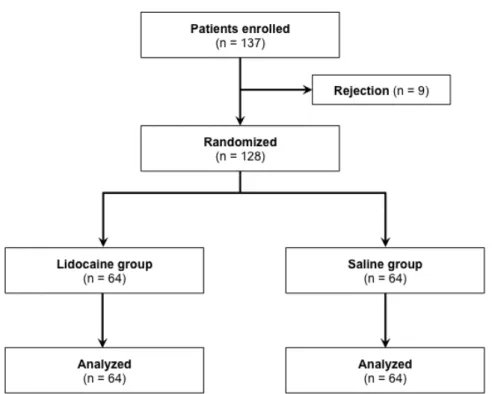
From November 7, 2016 to March 24, 2017, there were 137 patients eligible for inclusion; nine patients declined to participate in the study (Figure 4).
The remaining 128 patients were enrolled, underwent colonoscopy, and randomized to either LID (n=64) or NS group (n=64). There were no withdrawals or exclusions due to inadequate bowel preparation. All colonoscopies were performed to the cecum by 22 operators with experience of >1000 colonoscopies. Of 128 patients, 104 underwent endoscopic resections at the same colonoscopy whereas 28 underwent resections day after the examination.
There were no significant differences in age, gender, body mass index, use of sedative agents and dispersed location between LID group and NS group (Table 1).
Primary outcome
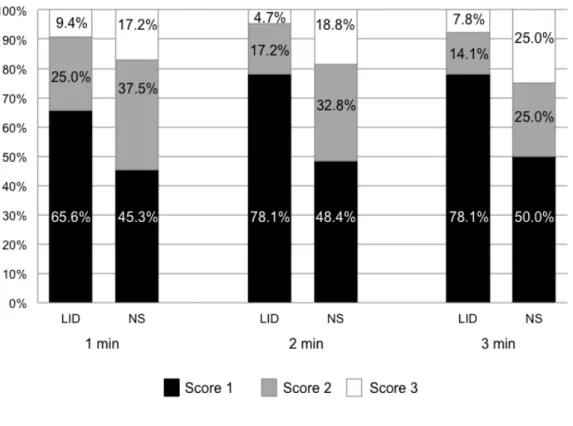
The inhibitory-effect scores in each group and at each time point are shown in Figure 5. In the NS group, there was minimal change in inhibitory-effect scores between 1 minute and 3 minutes of observation, with an increase of only
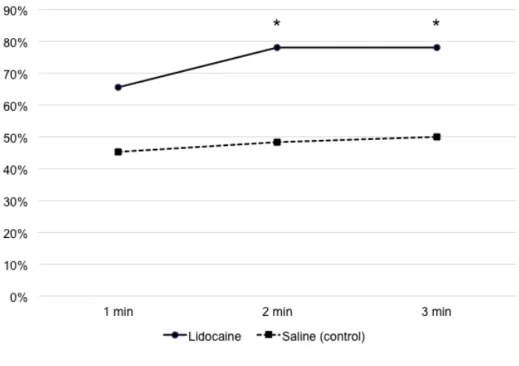
4.7% in proportion of patients with an excellent score (of 1). In the LID group, the proportion of patients with an excellent inhibitory-effect score (of 1) increased by 12.5% at 2 minutes and 3 minutes, compared with 1 minute. None of these differences over time reached statistical significance. However, the proportion of patients with excellent scores was statistically significantly higher in the LID group at 2 minutes (p=.02) and 3 minutes (p=.02) of observation, compared with the NS group (Figure 6).
Subgroup analyses are shown in the Supplementary Table 1. The was no significant impact on inhibitory effect scores of colonic location or other demographic characteristics.
Secondary outcomes
Rebound spasm was not reported in the LID group, but was observed in 10 patients in the NS group (15.6%, 10/64; p=.001). There were no adverse events or symptoms associated with dispersion of the solution during or after colonoscopy. In 32 patients at one center (n=16, NS group and n=16, LID group), blood levels of lidocaine were all below the detectable level (<0.9μg/ml). Four patients experienced a major adverse event (hemorrhage), all after endoscopic
resection and all in the NS group. One occurred during the procedure and three occurred the next day or later, and were all successfully treated endoscopically.
DISCUSSION
This multicenter, randomized, double-blinded controlled trial clearly demonstrated that lidocaine dispersion during colonoscopy inhibited colorectal spasm more effectively compared with normal saline (control). To our knowledge, this is the first description of a benefit of topical lidocaine during colonoscopy, with previous research showing equivalence to topical peppermint oil.9
Two topical dispersion techniques for inhibition of colonic spasm have been proposed. In 2001, it was reported that topical peppermint oil inhibited colonic spasm, although this was not a randomized trial.8 In 2002, warm water infusion was reported for overcoming colonic spasms during colonoscopy. Six randomized clinical trials have shown a benefit of warm water infusion on need for sedation/analgesia and patient acceptance of colonoscopy.11-16 However,
only one trial has evaluated colonic spasm and failed to show a significant difference compared with room-temperature water infusion.12
The objective evaluation of intestinal spasm is challenging. Even the two most common antispasmodics in colonoscopy, hyoscine butylbromide and glucagon, have not had their inhibitory effect on intestinal spasm verified.6 No validated scoring system for assessment of colonic spasm exists. Instead of measuring spasm therefore, many previous studies have rated surrogate measures such as cecal intubation rate/time, patient discomfort and polyp detection. In our previous trial, we defined intestinal spasm as luminal narrowing or greater than one-third of circumference of the lumen.9 However, raters found this difficult to apply, which may have led to equivocal ratings and compromised clinical findings.
In this trial, we developed and applied a novel rating scale for the assessment of intestinal spasm. The inhibitory effect on intestinal spasm was scored using the degree of the luminal opening, which is easily evaluated in a single glance. This approach was intended to minimize inter- or intra-observer variability and more accurately evaluate the inhibitory effect, creating a robust and reliable scoring system for colon spasm.
In approximately half of the NS group, an unexpected inhibitory effect was observed that reached a plateau at 1 minute after spraying but then decreased. We were aware that endoscopic movement induces colonic spasm by stimulating sensory nerves in the mucosal layer,9 so during the first thirty seconds after dispersion, the endoscopist remained still without moving the instrument to preventing colonic spasm. Water infusion even in room-temperature can prevent colonic peristalsis but the inhibitory effect does not last long.12 In contrast, the inhibitory effect of lidocaine dispersion increased gradually and reached a plateau at 2 minutes. Moreover, no rebound spasm occurred after lidocaine dispersion, indicating that the duration of lidocaine’s inhibitory effect is much longer than control.
Our findings also demonstrate the safety of topical lidocaine application in the colon. Systemic administration of lidocaine can cause serious adverse events, e.g., severe cardiac arrhythmias such as complete A-V block. For topical use of lidocaine solution in mucus membranes of oronasal cavities, respiratory tract and proximal GI tract, a maximum 500 mg of lidocaine solution is allowed.
The maximum dose is still unknown for the colon and rectum. We used a total of 400mg of lidocaine solution per patient, with no increase in serum
concentrations lidocaine and no adverse events. The pharmacological literature17, 18 shows that lidocaine cannot penetrate through muscularis mucosa and that absorption of lidocaine in the large intestine is limited, thus indicating its safety and raising the possibility of repeated use. However, caution is required after endoscopic resection because of absorption through mucosal defects.
Post-procedural bleeding is a theoretical concern with lidocaine dispersion after endoscopic treatment because of its effect to dilate blood vessels. However, we observed no increase in bleeding after endoscopic treatment with, in fact, a higher rate of delayed bleeding in the control group.
Lidocaine may have a preventive effect on bleeding by suppressing intestinal peristalsis.
Our study had several limitations. First, we only studied therapeutic colonoscopy, and lidocaine was only applied to a relatively short segment of the colon, and not the entire large intestine. Pan-colonic application of lidocaine is possible due to its non-absorbable nature through the colonic mucosa, and warrants future investigation. Second, our scoring system for assessing colonic spasm is novel and its validity has not been assessed in other contexts or with other raters, and we did not assess inter- or intra-observer agreement. Finally,
we were only able to measure blood concentrations of lidocaine in a single center, and only at single point in time. Continuous monitoring of blood lidocaine levels may provide further reassurance of the safety of topical lidocaine dispersion.
In conclusion, topical lidocaine is an effective and safe method for inhibiting colorectal spasms during colonoscopy. The role of lidocaine dispersion in other endoscopic procedures, such as upper GI endoscopy, biliary endoscopy and enteroscopy, is worthy of further evaluation.
ACKNOWLEDGEMENTS
We would like to thank Manabu Suzuki (Pharmacy, Aizu Medical Center Fukushima Medical University, Japan) for technical support, Taka-aki Koshimizu (Division of Molecular Pharmacology, Department of Pharmacology, Jichi Medical University, Japan) for his advice about pharmacological mechanisms, Alan K Lefor (Department of Surgery, Jichi Medical University, Japan) for his help during this trial and Ms. Jinko Kobayashi for administrative support.
CONFLICT OF INTEREST
Authors declare no conflict of interests for this article.
REFERENCES
1. Saunders BP, Williams CB. Premedication with intravenous antispasmodic speeds colonoscope insertion. Gastrointest. Endosc. 1996;43:209-11.
2. Mui LM, Ng EK, Chan KC, et al. Randomized, double-blinded, placebo-controlled trial of intravenously administered hyoscine N-butyl
bromide in patients undergoing colonoscopy with patient-controlled sedation.
Gastrointest. Endosc. 2004;59:22-7.
3. Corte C, Dahlenburg L, Selby W, et al. Hyoscine butylbromide administered at the cecum increases polyp detection: a randomized double-blind placebo-controlled trial. Endoscopy 2012;44:917-22.
4. Rajasekhar PT, Rees CJ, Bramble MG, et al. A multicenter pragmatic study of an evidence-based intervention to improve adenoma detection: the Quality Improvement in Colonoscopy (QIC) study. Endoscopy 2015;47:217-24.
5. Inoue K, Dohi O, Gen Y, et al. L-menthol improves adenoma detection rate during colonoscopy: a randomized trial. Endoscopy 2014;46:196-202.
6. Sanagapalli S, Agnihotri K, Leong R, et al. Antispasmodic drugs in colonoscopy: a review of their pharmacology, safety and efficacy in improving polyp detection and related outcomes. Therap. Adv. Gastroenterol.
2017;10:101-13.
7. Amato A, Liotta R, Mule F. Effects of menthol on circular smooth muscle of human colon: analysis of the mechanism of action. Eur. J. Pharmacol.
2014;740:295-301.
8. Asao T, Mochiki E, Suzuki H, et al. An easy method for the intraluminal administration of peppermint oil before colonoscopy and its effectiveness in reducing colonic spasm. Gastrointest. Endosc. 2001;53:172-7.
9. Nemoto D, Utano K, Isohata N, et al. Topical lidocaine inhibits spasm during colonoscopy: a double-blind, randomized controlled trial (with video).
Endosc. Int. Open 2017;5:E402-E7.
10. Aronchick CA LW, Wright SH, et al. Validation of an instrument to assess colon cleansing [abstract]. Am. J. Gastroenterol. 1999;94:2667.
11. Amato A, Radaelli F, Paggi S, et al. Carbon dioxide insufflation or warm-water infusion versus standard air insufflation for unsedated colonoscopy: a randomized controlled trial. Dis. Colon Rectum 2013;56:511-8.
12. Church JM. Warm water irrigation for dealing with spasm during colonoscopy: simple, inexpensive, and effective. Gastrointest. Endosc.
2002;56:672-4.
13. Hafner S, Zolk K, Radaelli F, et al. Water infusion versus air insufflation for colonoscopy. Cochrane Database Syst. Rev. 2015:CD009863.
14. Lee BY, Katon R, Herzig D, et al. Warm water infusion during sedated colonoscopy does not decrease amount of sedation medication used.
Gastrointest. Endosc. 2012;76:1182-7.
15. Lee H, Kim JJ, Min BH, et al. Effectiveness of warm water consumption to reduce patient discomfort during colonoscopy: a randomized controlled trial.
Am. J. Gastroenterol. 2009;104:2935-41.
16. Radaelli F, Paggi S, Amato A, et al. Warm water infusion versus air insufflation for unsedated colonoscopy: a randomized, controlled trial.
Gastrointest. Endosc. 2010;72:701-9.
17. Fozzard HA, Sheets MF, Hanck DA. The sodium channel as a target for local anesthetic drugs. Front Pharmacol. 2011;2:68.
18. Sheets MF, Fozzard HA, Lipkind GM, et al. Sodium channel molecular conformations and antiarrhythmic drug affinity. Trends Cardiovasc. Med.
2010;20:16-21.
Table 1. Demographic data of patients and lesion of interest
Lidocaine group n=64
Saline group n=64
P value
Age, years
Mean ± SD, (range)
66.6 ± 10.4 (38-79)
64.9 ± 10.2 (31-79)
0.34
Gender Female, n (%) 20 (31) 20 (31) 1.00
Male, n (%) 44 (69) 44 (69)
Body mass index, kg/m2
Mean ± SD, (range)
23.2 ± 4.0 (16.8-37.2)
23.3 ± 3.2 (17.7-31.9)
0.87
Use of sedative agents †
Yes, n (%) 38 (59) 38 (59) 1.00
No, n (%) 26 (41) 26 (41)
Bowel cleansing level ‡
Excellent, n (%) 20 (31) 11 (17) 0.54
Good, n (%) 36 (56) 38 (59)
Fair, n (%) 8 (13) 14 (22)
Dispersed location §
Proximal, n (%) 48 (75) 40 (63) 0.13
Distal, n (%) 16 (25) 24 (37)
† Midazolam, pethidine, pentazocine or propofol
‡ Evaluated using the Aronchick Bowel Preparation Scale
FIGURES
Figure 1. Schema for the inhibitory-effect score. Score 1, luminal opening
greater than or equal to two-thirds of the maximum diameter. Score 2, luminal opening less than two-thirds of the maximum diameter. Score 3, invisible oral side lumen. The maximum diameter is defined as the diameter when the lumen was fully dilated.
Figure 2. Timetable of three-minutes observation.
Figure 3-A. Inhibitory-effect score 1, the colon is completely relaxed.
Figure 3-B. Inhibitory-effect score 2, moderate spasm.
Figure 3-C. Inhibitory-effect score 3, severe spasm.
Figure 4. Present study flow chart.
Figure 5. Inhibitory-effect scores in each group and time point. LID, lidocaine;
NS, normal saline.
Figure 6. Rate of inhibitory-effect score 1 (excellent) in each group and time
point. *Significant difference between two groups (P < 0.05)