The Impact of Foreign
Debt on GDP growth
(Cameroon)
A Thesis in partial fulfillment of an MBA in
Comparative Institution Design for Transition
Economy and Business Management
Ritsumeikan Asia Pacific University By AKUM Gawum Joseph 52109602 Supervised by Professor Suzuki Yasushi
i Dedication
ii
Declaration
This is to declare that I, AKUM Gawum Joseph, am submitting this piece of work, under the supervision of Professor Suzuki Yasushi, to the Graduate School of Management of Ritsumeikan Asia Pacific University in partial fulfillment of the requirements for a Masters degree in Business Administration. I hereby declare that this research paper has not been earlier on submitted, and that all data from other sources has been duly acknowledged.
AKUM Gawum Joseph
Signature 15th July 2011
iii
Certification
This is to certify that this research was performed by AKUM Gawum Joseph under the supervision of Professor Suzuki Yasushi in partial fulfillment of the requirements for a Masters of Business Administration, specializing in Comparative Institution Design for Transition Economy and Business Management. This work has not until now been submitted or published.
iv
Acknowledgement
At the end of this research, I feel the deep need to express my heartfelt gratitude to my Sensei, Professor Suzuki Yasushi whose guidance and correction served as a source of direction and motivation. Also, to the interim review committee: Professor Kayhan Tajeddini and Professor Ken Suzuki, I am ever so grateful for their constructive criticism. I would like to thank the members of the CID seminar for their inputs which contributed to my point of focus.
I would like to thank Doctor Nair, and all the other lecturers in APU who, through their insight contributed to the ideas which made this work possible. It would be unfair to go without expressing my gratitude to the APU administration and management who do not cease to provide the student community with a wide range of facilities to guide and support research.
Finally, I would like to thank the Japanese Government for the support provided through the MEXT scholarship program, without which this study, as well as the last two years of study would not have been possible. I am deeply grateful to all the members of the MBA Fall 2011 graduating class for the growth enhancing atmosphere they created as we all engaged in this exchange through which we learnt from each other.
v
Abstract
The important role of institutions is hereby evoked by studying the relationship between Cameroon’s foreign debt and its GDP growth. This study observes that it could be misleading to set foreign debt management targets on a strictly quantitative basis, considering the diversity of debtors and their needs. A conceptual framework using the circular flow of resources within the economy is used to qualitatively analyze the areas where the flow is subjected to frictions due to institutional inefficiency. The country’s readiness to convert its foreign debts to gross capital formation, thus stimulating consumption, and earning fiscal revenues is studied. Through this, the depth of changes initiated by foreign debt management programs is assessed. The changes resulting from these programs, especially the latest one, (HIPC initiative) are observed to evaluate how these programs have affected decision making within the economy. It examines the degree to which the country’s long term immunity to a future foreign debt has been enhanced, and also, the chances that the economy can internally stimulate its future GDP growth without tuning to foreign debt. It concludes that the efficiency of domestic institutions as well as its major creditors has a significant impact on debt sustainability. Therefore, the HIPC’ initiative’s failure to adequately address institutional weaknesses in the economy, only paves the way for a future debt crisis.
vi
Table of Contents
Dedication ... i Declaration ... ii Certification ... iii Acknowledgement ... iv Abstract ... v Table of Contents... vi List of Abbreviations ... ix CHAPTER 1 ... 1 1. Introduction ... 1 1.1 Background ... 21.1.1 Cameroon’s economic structure in relation to its foreign debt ... 3
1.1.2 The structure of Cameroon’s Public debt ... 8
1.1.3 Evolution of Cameroon’s stock of foreign debt and GDP growth ... 9
1.2 Problem statement... 14
1.3 Research Objectives ... 16
1.3.1 General objectives: ... 16
1.3.2 Specific objectives:... 17
1.4 Significance of study ... 18
1.4.1 Significance to developing economies ... 18
1.4.2 Significance to research and academic bodies... 19
CHAPTER 2 ... 21
2.0 Literature Review ... 21
CHAPTER 3 ... 28
3.0 Research Method ... 28
3.1 Hypotheses ... 28
3.2 Conceptual and Theoretical Framework ... 28
3.2.1 Debt sustainability ... 28
3.2.2 Keynesian Concept of Government Spending ... 30
3.3 Research Approach ... 32
3.3.1 Data types and Sources ... 32
3.4 Methods of analysis ... 39
3.5 Other Concepts ... 42
3.5.1 Moral Hazard problem: ... 42
vii 3.5.3 Export Diversification ... 45 3.5.1 Agency Cost ... 45 CHAPTER 4 ... 47 4.0 Results ... 47 Discussion of findings ... 47
4.1. What relationship exists between the country’s foreign debt and the contributors to its repayment, and Why? ... 47
4.1.1 Pre Crisis Period (Petroleum revenue Boom) 1976-1984... 47
4.1.2 Crisis Period 1985-1994 ... 49
4.1.3 Post Crisis Period 1994-2010 ... 50
4.2 How does a rise in the country’s foreign debt level affect the percentage of its GDP spent on Capital investments and why?... 55
4.2.1 Pre Crisis Period ... 55
4.2.2 Crisis Period ... 57
4.2.3 Post Crisis Period ... 58
4.3 To what extent did the rise in Cameroon’s foreign debt level improve the GDP percentage of the country’s fiscal revenues in the long run? ... 60
4.3.1 Pre Crisis Period ... 60
4.3.2 Crisis Period ... 61
4.3.3 Post Crisis Period ... 64
4.4 How have the country’s foreign debt management institutions and its major creditors affected the foreign debt to GDP growth relationship? ... 67
4.4.1 Pre Crisis Period ... 67
4.4.2 Crisis Period ... 68
4.4.3 Post Crisis Period ... 71
4.5 Limitations ... 76
CHAPTER 5 ... 78
Conclusion and Recommendations ... 78
5.1 Conclusion... 78
5.1.1 “Foreign debt down the rat hole” ... 78
5.1.2 “Poverty trap” ... 78
5.2 Cameroon’s position in the existing debate ... 79
5.2.1 Debt and aid are so easy to get ... 79
5.2.2 Receivers of debt relief are often wasteful and corrupt ... 80
viii
5.3 Recommendations ... 81
5.3.1 General Recommendations ... 81
5.3.2 Recommendations under the existing debate ... 83
Recommendations on Cameroon’s argued position ... 83
5.3.3 Recommendations under the ... 83
5.3.4 Recommendations arising from the Conceptual framework ... 83
ANNEXES ... 85
Bibliography ... 90
List of Figures Fig 1 Sectors' Percentage Contributions to GDP 1966-1976 ... 4
Fig 2 Sectors' Contributions to Cameroon's GDP 1977-1985 ... 5
Fig 3 Sectors' Contributions to Cameroon's GDP 2009 ... 6
Fig 4 The Structure of Cameroon's Public Debt ... 8
Fig 5 Mass of Cameroon's Foreign debt Stock ... 9
Fig 6 Evolution of Cameroon's GDP growth ... 10
Fig 7 Composition of Cameroon's GDP per sector ... 13
Fig 8 Cameroon's Labor Force by Sector ... 13
Fig 9 Conceptual Framework... 30
Fig 10 Periodic Partition of Foreign Debt Stock ... 41
Fig 11 Periodic Partition of Cameroon’s GDP growth ... 41
Fig 12 Periodic partition of Cameroon’s GDP percentage of Gross Capital Formation ... 55
Fig 13 Periodic Partition of GDP percentage of fiscal revenue ... 64
Fig 14 World Governance indicators’ value for Government effectiveness .... 71
List of Tables Table 1 HIPC Debt Sustainability Thresholds ... 29
ix
List of Abbreviations
GDP: Gross Domestic Product IMF: International Monetary Fund IFI: International Financial Institutions VAT: Value Added Tax
MTEF: Medium Term Expenditure Framework CFA: African Financial Community
HIPC: Highly Indebted Poor Country
OECD: Organization for Economic Cooperation and Development SONARA: National Refineries’ Corporation
1
CHAPTER 1
1. Introduction
Following the oil shocks in the 70’s, until the 2000’s many African economies, including Cameroon, have suffered huge balance of payment deficits. This phenomenon made foreign debts necessary. Within this period, Cameroon’s economy has faced difficulties in the repayment of its foreign debt while promoting growth of its GDP (Gross Domestic Product). This situation has been met with numerous programs through which international financial institutions sought to improve the situation either by awarding loans, changing the terms of existing loans, or cancelling loans. This has led to diverse reactions of the economy in the periods within which each of the programs was carried out.
This problem therefore created the motivation to study the reasons why the economy reacted as observed, following the actions initiated through its relations with creditors. This is an internally focused study which is more interested in the internal actions or reactions to stimuli which could influence the country’s foreign debt to GDP relationship over a period which ranges from the 1970 until 2006.
The theories of institutional economics are applied to explain the results of government action. This is done by using the Keynesian concept of government spending. By linking this theory to Minsky’s theory of financial fragility, determinants of government financing are analyzed. This is done by a qualitative
2
analysis of the flow of foreign debt to capital formation, and the government’s ability to trap its spending through fiscal revenues, as the country went through economic changes to enhance the efficiency of foreign debt management.
In general, the country’s long run financial fragility is evaluated by analyzing the degree to which its foreign debt dependency has evolved within each era of the country’s GDP growth, as it responds to actions of international financial institutions regarding the degree of institutional efficiency.
1.1 Background
Cameroon falls among the many African economies which fell into a debt trap after the Oil shocks in the mid 1970’s. The world wide rise in fuel prices led to the accumulation of cash reserves in western Banks. In the face of recession in developed countries, there arose excess supplies over demand of credits, and thus a fall in the cost of loans. The low cost of loans, at the time, represented an opportunity for African economies which later on became a threat. This happened as the western economies emerged from recession and began to compete in the demand for credits. This growth in the demand for credits led to a rise in interest rates which affected the price to be paid by the Cameroonian economy in reimbursement of their foreign loans.
The country’s independence in 1960 came with a lot of optimism, as the average real economic growth of 6% was achieved between 1965 and 1986. The country’s petroleum resources played a key role in the boom experienced in the 70’s, as
3
foreign reserves were positive, in the face of growing domestic investments which rose from 21% of GDP in 1977 to greater than 30% in 1986. This boom was characterized by high inefficiency in the management of state enterprises in charge of non-petroleum products, and thus enhancing the country’s dependence on its oil revenues (Nkama, 2005).
Heightened public sector mismanagement combined with the sudden fall of the prices of Cameroon agricultural and petroleum revenues. This trapped the economy in a crisis which was recognized by the state in 1987. As a consequence, between 1985 and 1992, terms of trade declined by about 55%, while the average GDP growth fell to a yearly of 3.8% from 1986 to 1994. At the same time, external debt rose from 39% of GDP in 1986 to 65% of GDP in 65% of GDP in 1992. Then the national currency (CFA franc) underwent a 105% in 1994 (Nkama, 2005) .
1.1.1 Cameroon’s economic structure in relation to its foreign debt
Among the goals of the HIPC initiative was the achievement of a 150% ratio of net present value of foreign debt to GDP. But this ought to have gotten beyond this single quantitative dimension. It ought to have taken account of other aspects of the economy, such as its structure, the structure of its foreign debt, and the strength of institutions which can make for economic stability in spite of high debt to GDP ratios.
4 Fig 1 Sectors' Percentage Contributions to GDP 1966-1976
Source: Aerts, Cogneau, Herrera, de Monchy, & Roubaud, 2000
The heart of Cameroon’s economic boom came in the early half of the 70’s, an era within which the service sector supplied half of the country’s GDP. Given that the majority of this service sector belonged to the civil service, an important component of government revenue could be earned from fiscal sources. The large civil service served, not only as a source of fiscal revenue through income taxes, but also, as a huge source of current government expenditure. At the time, the country’s agric sector contributed 30% of the country’s GDP, while the manufacturing sector contributed 20% of the economy’s GDP as shown in fig 1.
Agric 30% Manufacturing 20% Service 50%
Contributors to Cameroon's GDP
(1966-1976)
5 Fig 2 Sectors' Contributions to Cameroon's GDP 1977-1985
Source: Aerts, Cogneau, Herrera, de Monchy, & Roubaud, 2000
The discovery of petroleum in the country’s South West Coast line in 1970 influenced the contribution of each sector to the country’s GDP as shown in the figure above. The effect of this discovery was perceptible between the late 70’s and the first half of the 80’s. The agric sector and the service sector both lost 10% and 5% respectively to the manufacturing sector whose contribution to GDP had grown to from 20% to 35%, as demonstrated in figure 2. This growth arose from the annual 32% rise in petroleum earnings realized between 1980 and 1985. After the petroleum discovery, until the economic crisis, only the service sector faced a relatively stable growth rate, as the manufacturing and agricultural sectors experienced significant growth rate drops. (Aerts, Cogneau, Herrera, de Monchy, & Roubaud, 2000, p. 18). Agric 20% Manufacturing 35% Service 45%
Contributors to Cameroon's GDP
(1977-1985)
6
With this GDP contribution structure, the economy fell into a structural crisis (1985-1994) as it depended on unstable oil revenues to finance its growing recurrent expenses. This called for the country’s subjection to the structural adjustment program.
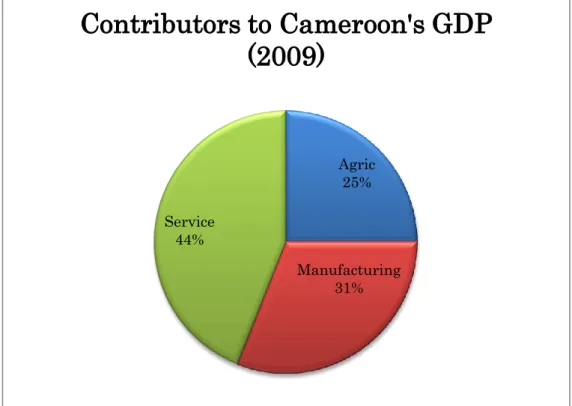
Fig 3 Sectors' Contributions to Cameroon's GDP 2009 Source: IMF Country Repot No.10/259 July 2010
After the Structural Adjustment programme, the sectors which contribute to Cameroon’s GDP are classified as shown in figure 3 with resperct to their percentage contribution to GDP. The largest component is the service sector which earns 44% of the country’s GDP. This sector and the construction sector do not yield direct income for the state by which its foreign debt can be serviced. This is
Agric 25% Manufacturing 31% Service 44%
Contributors to Cameroon's GDP
(2009)
7
because the state only earns taxes from income earned by individuals rendering services and executing construction contracts. Thus the state’s ability to raise income from this sector tends to depend on how efficiently its institutions can spread its tax base to trap revenue from these sectors.
The state is therefore left with the remaining 56% (Manunufacturing, Oil and mining, Agriculture, Forestry and livestock) from which it expects to earn substancial amounts of foreign income, considering its participation in these sectors, such as its 66% shares in the National Refinaries Company, SONARA (US Department of the interior, 2009). According to AfDB and OECD (2008), the forestry sector realizes income through environmental regulation. Given that this sector’s products are not locally processed, it could earn a deeper component of its potential by adding the value of its products before they get exported. In the agriculrutal sector, the potential is not exploited, due to inadequacy of financing, road networks, and fertilizers.
The non-petroleum manufacturing sector holds 19.2% of the economy’s GDP. The country’s technological base is relatively weak, as is the case with low income less economically developed countries. The trade liberalization which followed the Structural Adjusment programme opened the country’s markets to competition from foreign manufactured products. It is therefore difficult to perceive this sector as a source of foreign income, considering the recent declining terms of trade in the economy.
8
It is therefore important to understand how an economy whose GDP arises predominantly from the service sector will react to the growing mass of foreign debt, considering the need for externally earned income to finance maturing foreign loans. Also, considering the relative instability of the externally earned income due to export price fluctuations (See Annex) , it is important to assess the means by which such a small economy can generate GDP growth from internal sources, thus reducing its dependence on foreign debt.
1.1.2 The structure of Cameroon’s Public debt
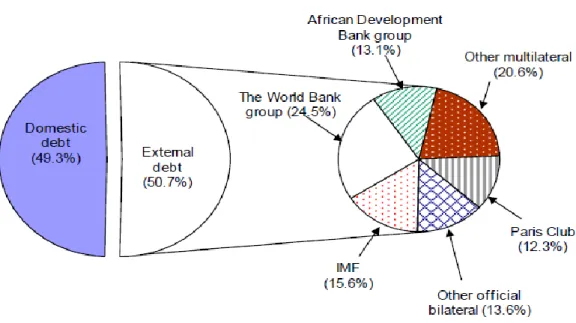
Fig 4. The Structure of Cameroon's Public Debt Source: IMF Country Repot No.10/259 2010
Cameroon’s economy owes 50.7% of its debts to foreign creditors. Figure 4 shows its foreign debt structure with a vast majority of its creditors being multilateral. This leaves the country with a limited percentage of bilateral foreign loans to worry about. In this case, the country’s commitments to commercial bank loans
9
(which have tighter conditionality than multilateral loans) are quite negligible, given that they are not visible in the debt structure.
Thus, the bulk of the country’s external debt is highly concessional, leading to more preferential interest rates and longer grace periods. This inspires the worry on whether the absence of tight loan agreements (such as high interest rates and short maturity terms) lures the economy into the substitution of fiscal revenues with these external debts, thus being permanently dependent on foreign loans and thus getting caught in a debt trap.
1.1.3 Evolution of Cameroon’s stock of foreign debt and
GDP growth
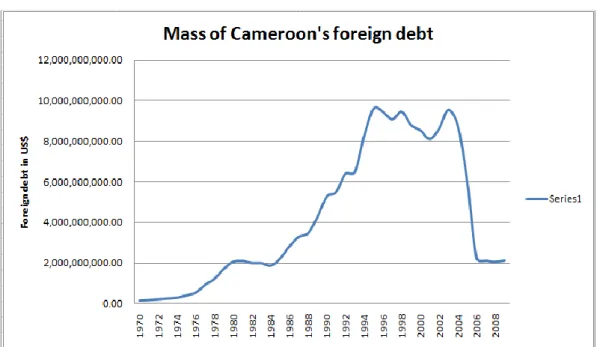
Fig 5 Mass of Cameroon's Foreign debt Stock
Source: World Bank Database
-10 -5 0 5 10 15 20 25 1970 1972 1974 1976 1978 1980 1982 1984 1986 1988 1990 1992 1994 1996 1998 2000 2002 2004 2006 2008 F or eig n d eb t in U S $
Mass of Cameroon's foreign debt
10 Fig 6 Evolution of Cameroon's GDP growth,
Source: World Bank Database
The relative instability in the country’s GDP growth rate between 1970 and 1980 arose from the discovery of petroleum resources in the country’s coast line in the early 70’s; and eventually the production which began in 1978. The price hikes in petroleum products during the 80’s “oil boom”, as well as the availability of these resources are temporary. This had a strong impact on the economy, as it led to investment choices which prioritized petroleum, as well as other non-tradable resource sectors over the agriculture and other tradable resources whose prices were relatively unstable at the time. This investment policy failed to consider the fact that the agricultural sector held a high percentage of the country’s labor force. This instability resulted from the need to return to the country’s initial GDP contributor mix, focusing on agriculture, after the drop in fuel prices (Benjamin &
-10 -5 0 5 10 15 20 25 1970 1972 1974 1976 1978 1980 1982 1984 1986 1988 1990 1992 1994 1996 1998 2000 2002 2004 2006 2008 G D P g ro w th (% )
Cameroon's GDP growth
11
Devarajan, 1985)
According to Benjamin & Devarajan (1985), by injecting oil revenues into the economy, inflation levels rose. This increased the prices of locally manufactured agricultural products, making them less competitive on local and foreign market, following exchange rate appreciation. This was a challenge to the economy’s quest to use import substitution policy as a driver of growth in the late 70’s. Therefore, allowing the contraction of the country’s agric sector in the face of oil discovery was not a proper orientation of the state’s economic policy. This was responsible for the unstable growth of the economy after the “Oil boom”.
In the 80’s the economy faced the effects of the concentration of state investments in the petroleum sector. This can be observed from the sharp fall in GDP growth in 1982 and 1988, following the fall of the prices of the country’s main export commodities: Cocoa, coffee, cotton and petroleum. This led to a rise in the country’s current account and fiscal deficits, as the economy fell into an economic crisis in the late 80’s. These deficits were financed by arrears from civil servants and local suppliers which escalated into a crisis in the banking sector within which the country saw the peak of recession (Gauthier, Soloage, & Tybout, 2000). This led to the need to comply with World Bank conditionality, which was characterized by the Structural Adjustment program in 1989, which sought to restructure the economy. This program’s objectives constituted reducing the gap between state revenues and expenses, in order to enhance GDP growth.
12
Within the economic crisis which plagued Cameroon’s economy between 1985 and 1995, the country’s external debt to Gross National Income (GNI) ratio rose to 133% in 1995. Thus, the programs lunched with the help of the major International Financial Institutions (IFI), seeking to enhance economic rigor went on until the 90’s. These programs had painful effects on those who contributed to the “more costly” part of the economy, as they sought to minimize state spending and increase state revenues. Among these was the more than 50% reduction of civil servants’ salaries in 1993 as a measure to reduce cost. Then in January 1994 came the 105% devaluation of the national currency (CFA Franc). This was a major turning point for the economy following the “oil boom” which led to an overvaluation of the CFA Franc. Hence, the country’s main commodities got relatively cheaper and more competitive on foreign markets.
In 1997, the Enhanced Structural Adjustment Facility focused on methods of maintaining the country’s GDP growth at a 5% level by strengthening non-oil sources of revenue, raising savings by the initiation of privatization procedures, reducing the country’s external debt burden, and improving the quality and management of state spending by allocating more resources to education, health, the judiciary, infrastructure and the rural sector. (International Monetary Fund, 2001)
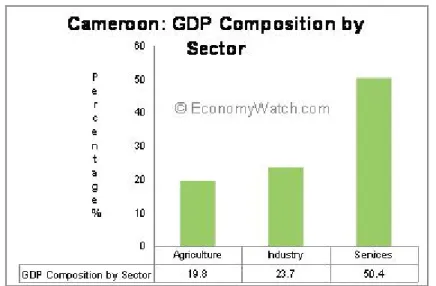
13 Fig 7 Composition of Cameroon's GDP per sector
, Source: economywatch.com (2009 statistics)
Fig 8 Cameroon's Labor Force by Sector
Source: economywatch.com (2009 statistics)
Following the quest to revitalize the rural sector, agriculture which plays a key role in the economy, as it employs 70% of the country’s population, would be expected to be a high contributor to the country’s GDP. This emphasizes the need to redirect investment in agriculture after the end of the “oil shocks”. A higher
14
percentage of the country’s labor force is devoted to this sector, yet it supplies the lowest contribution to the country’s GDP. It could thus be argued that country’s fast growing foreign debt was not invested in the mechanization of the agricultural sector. This process could revolutionize this sector and make it capital intensive, by the provision of infrastructure, improved access to markets, and educational facilities for improved research in this sector; and therefore have a greater impact on the sector’s contribution of the country’s GDP.
GDP growth dropped only slightly from 3.5% in 2007 to 3.4 in 2008 despite the global financial crisis due to positive performance of the petroleum sector, as well as an increase in the supply of infrastructure and energy. This relative stability was also boosted by programs to improve on the agriculture, livestock, and fisheries sectors. But in 2009, the global financial crisis caught up with the country’s GDP growth. It dropped to 2.4%, as the global recession pushed down prices and demand for the country’s major export commodities: Oil, wood, cotton and rubber. For many years, the country has faced the huge challenge of stabilizing its GDP. This goal could be achieved by improving on export diversification in order to reduce its dependence on oil revenues, as well as fighting against falling commodity prices through sufficient processing of raw material exports. (OECD, 2009)
1.2 Problem statement
The economic crisis in Cameroon in the 80’s led the country to experience the least growth ever recorded in its history. To reverse the situation, it was necessary
15
to seek external support in the form of loans from the World Bank, the International Monetary Fund (IMF), as well as other multilateral or bilateral creditors. Thus, between the mid 80’s and the mid 90’s the mass of the country’s foreign debt grew rapidly. Considering the fact that these loans were granted to stimulate growth, an issue arises when one considers the fact that the period within which the country’s debt grew fastest was the period within which it recorded the lowest GDP growth. This in mind, the high positive impact of foreign debt on GDP growth has not yet been experienced in spite of the country’s huge debt cancellation.
It is worth noting that after the cancellation of the country’s foreign debt, following the achievement point of the HIPC initiative in 2006, the country’s GDP growth rate has not improved remarkably. The observed impact of the country’s foreign debt on its GDP growth portrays a gap which needs to be filled to achieve foreign debt sustainability through improved efficiency of institutions. It is therefore important to understand why the long term effect of the country’s foreign debt on its GDP growth is still awaited, and to understand the likelihood that the expected growth results would be achieved.
In earlier research works, causes of the observed relationship between the country’s foreign debt and GDP growth, the debt to export ratio has been observed, as well as the debt service to export ratio, to evaluate whether the country spends more of its export revenue on debt repayment. It is therefore important to integrate the percentage of the country’s GDP spent on capital investments, as well as the
16
efficiency of institutions. This will measure the country’s commitment to the use of local institutions in its quest to internally stimulate GDP growth and thus reduce the likelihood of a future debt crisis.
1.3 Research Objectives
1.3.1 General objectives:
1.3.1.1 To study the relationship between foreign debt and GDP growth
This is an effort to test the significance of the relationship between foreign debt and GDP growth. Here, a number of economic variables are analyzed. By so doing, the changes in the sectors of the economy are assessed. These constitute measures of the country’s debt repayment ability and the efficiency of its foreign debt management in the past. This will be used to make recommendations on how the economy can better manage its foreign debt in the face of an anticipated debt crisis.
1.3.1.2 To establish arguments on why this relationship exists. To argue reasons for the observed relationship between foreign debt and GDP growth, institutional variables1 will be observed to measure the country’s degree of commitment towards the sustainable monitoring and management of its most valuable sources of income, its ability to effectively utilize its foreign debt, and its ability to recollect the resources spent as fiscal revenues, and the impact of all these on the growth of the country’s foreign debt. Using these variables it is expected to advance the argument that the “qualitative” strength or efficiency of
1 Institutional Variables are data sets summarized to represent perception-based
indicators of governance. These are split into six interdependent dimensions: Accountability, Political Stability, Government effectiveness, Regulatory Quality, Rule of Law, and Control of Corruption. (Kaufmann, Kraay, & Mastruzzi, 2010)
17
institutions is as important as the “quantitative” debt to export ratios. These quantitative measures, as suggested by the HIPC initiative, seek to attain a 150% debt-to-export ratio, which should serve as a debt sustainability benchmark, in spite of the other characteristics of the economy.
1.3.2 Specific objectives:
1.3.2.1To study the changes in the main contributors to the country’s GDP as a measure of the country’s credit worthiness.
This will present the evolution, over time, of the sectors through which the economy earns income, or the major GDP contributors. A decline in any GDP contributor demonstrates deterioration in the economy’s debt sustainability situation. By observing economic happenings which lead to the major variations in the GDP contributors (agric exports, service sector, and the manufacturing sector), arguments will be raised on the impact of foreign debt on GDP growth, as well as foreign debt management mechanisms within the economy.
1.3.2.2 To assess whether an increasing foreign debt stock implies rising government spending on Gross Capital Formation
By comparing the evolution of foreign debt with Gross Capital Formation, it is expected to observe whether the accumulated foreign debt is spent on the acquisition of infrastructure and technology. A higher rate of spending on capital expenditures, following the accumulation of foreign debt hypothetically demonstrates growth sustainability for the future. This is expected to pave the way for debt sustainability and eventually, result in high GDP growth.
18
1.3.2.3 To observe how the country’s foreign debt and debt relief affect the percentage contribution of fiscal revenues to its GDP. This seeks to analyze whether debt and debt relief have served as compliments or substitutes to fiscal revenue. A complimentary or positive relationship between foreign debt and fiscal revenues suggests that the growth in foreign debt and debt relief has a positive impact on the fiscal policy performance. Conversely, a substitutive or negative relationship between the stock of foreign debt and the percentage contribution of fiscal revenues to GDP leads to the claim that foreign debt has a dampening effect on the efficiency of the country’s fiscal policy.
1.3.2.4 To identify and explain the factors of institutional efficiency which could be responsible for the observed relationship between foreign debt and GDP growth relationship.
Factors of institutional efficiency include: Government effectiveness, voice and accountability, Political stability, Regulatory quality, Rule of Law, and Control of corruption. These variables will be considered within a circular flow framework to explain efficiency problems which act as a friction or leakage of resources, thus affecting the economy’s ability to generate GDP growth by the use of its foreign debt and debt relief.
1.4 Significance of study
1.4.1 Significance to developing economies
The debt relief programs, especially the HIPC initiative, mark an important phase in the history of low income developing countries’ indebtedness. It is therefore important to monitor the changes they initiated in debt related macroeconomic and institutional variables. By so doing, the possibility of recurrence of a debt
19
crisis is tested. And the means by which this may be avoided are suggested.
1.4.2 Significance to research and academic bodies
This is an effort to demonstrate the shift of interests in the execution of economic programs through the past, and to guide priorities for the future. It seeks to demonstrate the importance of a given economic school of thought with due consideration of the environment within which the problem which seeks to be solved exists. By this, it is attempted to demonstrate the need to evolve from the Classical school of thought that suggests a free market mechanism. It also seeks to demonstrate the need for strong institutions in an economy, as a prerequisite for the smooth circular flow of resources in the economy as suggested in the Keynesian school of thought. It thus seeks to enhance the importance the Neo-classical school of thought, especially in low income economies where institutions are relatively inefficient. This is sought by paying more attention to the role of institutions in the use of foreign debt to generate GDP growth.
There have been arguments on the exogenous reasons why foreign debt fails to generate GDP growth. These arguments take into account export barriers on products, high fluctuation of commodity prices, interest rates, loan conditions, scarcity of concessional financing, and natural disaster in low income economies to explain the relationship between foreign debt and GDP growth. Hence the need to analyze the same issue from an internal perspective, considering how the internal factors have influenced low income countries’ potential to simultaneously repay foreign debt and trigger GDP growth.
20
The HIPC initiative turned a new page in the country’s foreign debt history. This was characterized by a fall in the country’s stock of foreign debt at the completion point from US$ 6 billion in 2005 to US$ 2 billion since 2006 (World Bank database, 2011). This has not been met by corresponding changes in the country’s credit rating, which has fluctuated from B- in 2006 (Daly & Cavanuagh, 2007) to B in 2009 (Beers, 2010) . Thus by understanding the channels through which foreign debt is expected to influence GDP growth positively, and gathering facts on how this happens in the country’s economy, a relevant amount of contribution will be made. This will either support or contest the negligible change in the country’s credit rating after the HIPC debt cancellation.
21
CHAPTER 2
2.0 Literature Review
Birdsall & Williamson (2002) used ratios to analyze the impact of debt burden on GDP growth in countries that benefited from debt cancellation through the HIPC initiative. They criticized debtor governments for wrong economic policies and poor governance. At the same time, creditors were criticized for cancelling debt to achieve their own commercial and political aims, rather than cancelling enough debt to save these developing economies from the debt trap (Pp 33). Their method is strictly quantitative. It pays little attention to the reasons to the reasons for, or the degree to which the debtor countries’ institutions influence the performance of foreign debt management policy. Therefore, this study comes to disagree with the need for increased debt cancellation, to suggest that an increase in the magnitude of debt cancellation in the absence of improvement in the countries’ institutions and policy efficiency will not have a durable or significant impact on the country’s debt sustainability.
Moss, Standley, & Birdsall, (2005) suggest, in the case of Nigeria, that the cost of external debt to a low income economy, or the debt burden could be so heavy that it crowds out the effects of the government’s debt-sustainability policy. External debt can therefore be considered as a major impediment, which limits the government’s ability to convince the public and parliament toward the adoption of economic reforms. This falls in line with the Cameroon economy’s case, as it faced the economic crisis in the mid 1990’s within which, due to large mass of
22
foreign debt, the devaluation of the country’s currency could not lead to continuously growing GDP growth rates. But after the year 2000, when the country’s debt burden had substantially fallen, the country’s falling GDP ratio cannot be justified by high foreign debt burden.
Dijkstra (2006), claims that the World Bank has contributed to the debt
overhang2 in developing countries. She argues that this institution, by monopolizing the dual role of Creditor and Controller in the International Finance framework, faces an obligation to finance failing economies. In Niall Ferguson’s forward in Dead Aid, (Moyo, 2009) he supports this notion as he condemns concessional loans. He claims that they are awarded under relatively easy terms, which reduce the distinction between these loans and aid. This distinction problem makes government control difficult, and suppresses the government’s motivation to save and invest. He further suggests that aid provided in kind kills the motivation of developing countries to persist in the learning process which eventually enforces GDP growth(Pp x). Moyo (2009) argues that the unclear distinction between debts and grants in developing countries has a negative effect on the commitment of institutions in charge of external debt management, and these go a long way to reduce GDP growth. This creates the problems of Moral Hazard and adverse selection. This argument is supported in this study, but here, the focus is on the domestic economy, and to a
2 Debt overhang: As defined by Krugman (1988), this happens when a country’s
expected debt repayment is less than the value stipulated in the debt contract. In this situation, the country’s output is used to pay off existing foreign loans at the expense of investment towards economic growth [Clements, Bhattacharya, Nguyen, 2003]
23
lesser extent, on the actions of the international financial institutions.
Cobbe (1990), suggests that the IMF and World Bank are greatly liable to be blamed for the failure of their credit allocation programs to generate GDP growth in developing countries. Considering the fact that the servicing of foreign debt leads to a leakage of resources which would otherwise have been allocated to domestic investment, he claims that foreign debt has a negative impact on GDP growth. He goes further to question the degree of commitment of the World Bank and the IMF, as well as African governments to the search for future solutions to the lasting debt crisis in Africa. The African governments are hereby blamed for their vague objectives and economic performance standards, which serves as a first step in the failure to achieve long term results. This point of view is supported, given that in the absence of very high debt burden, the Cameroon economy’s failure to enjoy increasingly high GDP growth comes as a result of inefficient institutions, both local and foreign.
Todaro and Smith, (2009) consider foreign debt to be a threat to GDP growth when the payments exceed revenues, due to mismanagement. They claim that as long as these piled up debts are being productively invested in projects whose domestic rates of return exceed the market interest rate, these debts could yield growth. This idea is countered by this study in the sense that the economy could experience high domestic rates of return, yet if the government’s institutions in charge of fiscal revenue are not efficient enough to trap a share in this domestic rate of return, the high returns on local markets will have no impact on the
24
government’s ability to raise funds, and thus no effect on the country’s high dependence on foreign debt.
Yang and Nyberg (2009), argue that the majority of countries that attained the completion point of the HIPC initiative still depend to a great extent on a single export product for a large percentage of their export revenue. Thus the degree of exposure to external shocks, which could arise in these economies, following changes in the prices of these products has not been mitigated. Also, it is noticed,using the revenue to GDP ratio, that an average of less than 20% of the HIPCs’ GDP is earned from the countries’ fiscal revenues. Thus suggesting that their degree of dependence on foreign revenues was not improved after the cancellation of their foreign loans. Considering the strength of institutions, they used the CPIA and KKM governance indices to suggest that despite the relative improvements in institutional frameworks, HIPCs’ initiative did not initiate changes strong enough to achievement of external debt sustainability. This point of view is strongly supported, considering the fact that the HIPC initiative focused on making resources available, and cancelling foreign debt, without taking into account the means by which these countries’ institutions can be designed to raise their own revenues and run efficiently in the absence of debt.
Cohen and Vellutini (2004) argued that the HIPC initiative was not the final solution to the debt crisis in low income economies for two reasons: The first being very weak practices in the monitoring and management of debt; and the second, poor performance and diversification of exports. Hence the HIPCs’ degree
25
of suceptibility to exogenous shocks (e.g. changes in the prices of countries’ main exports) has not changed following the completion point of the HIPC initiative.
They questioned the criteria of the allocation of resources to countries in the HIPC initiative by seeking to understand the relationship between debt relief and policy performance. This resulted from the fact that larger amounts of resources from the initiative were allocated to countries with worse policy performance. Logically, therefore, this could lead to moral hazard. Here, economies with relatively better policy performance tend to make decisions which negatively affect their debt burden, as a means to attract debt relief assistance. Following such conditions, external debts have a negative impact on GDP growth. This suggestion does not quite fall in line with the arguments of this research on one condition. If the International Financial Institutions and the economies are both efficient, then through the pre-completion point surveillance by the IMF and the World Bank, there is no means by which the economies may manipulate policy to attract debt relief. But, if the supervisory institution is inefficient, there are chances of the HIPC’s to inappropriately manage its economic policy in order to attract debt relief.
Cohen & Vellutini (2004), suggest that the HIPC initiative achieved the reform of policy which brought about policy dialogue, strengthened institutions, and the reduced the burden of external debts. They claim that it improved cross donor surveillance through which debtor information may be centralized for better monitoring of foreign debts in low income countries. Also, that apart from
26
quantitative variables like debt to export or debt to GDP ratios, more consideration should be given to variables like the quality of external debt monitoring and management. This is said to be achievable through the enhanced governance to fine-tune ex-ante management of state spending and the establishment of loan contracts. They claim that such management will generate the information which will increase the selectivity of foreign donors, and thus keep the mass of foreign debt under control. This argument is more focused on the external part of the foreign debt contract, and covers the information interests of the creditors more. This study goes in the opposite direction to study the reasons why the debtors fail to maximize the use of these debts.
Kraay & Nehru, (2006) focus on “debt distress” in their study on external debt. They refer to debt distress as a period within which countries resort to external debt arrears, Paris club debt rescheduling, and non-concessional IMF loans. They argue that debt distress is caused by: Debt burden, policy and institutional inefficiency, and external shocks which affect GDP growth. They suggest that policy improvements have the same impact as the reduction of debt burden, but improved institutional efficiency is more important in the fight against debt distress in low income economies. This argument is hereby supported, given that the financial support supplied by the HIPC initiative was relatively high, but the institutional changes were relatively inadequate. This implies that, in the absence of relevant changes in the levels of corruption and government efficiency, the HIPCs are not far from the next debt crisis.
27
Gunter (2002) argues that the enhanced HIPC initative’s failure to achieve debt sustainability results from the inadequecy of resources allocated to this programme, as well as the political instability such as wars going on in these poor countries. This study comes to argue that political instability has a stronger impact on debt sustainability than the adequacy of resources. It can therefore be suggested that corruption and government inefficiency have similarly destructive impacts on the HIPC initiative’s ability to generate debt sustainability.
Hence, they claim that the use of a single (quantitative) debt sustainability indicator: Present value of debt to export ratio is not enough for the measurement of debt sustainability in a group of countries which portray diverse institutional characteristics, such as diverse governance mechanisms. So, a country’s debt sustainability should be measured with more attention to the quality of its policies and institutions. This is supported by a strong relationship between the policy performance and debt distress. They therefore state that the appropriate debt burden of an economy should reflect the quality of its policies and institutions. They conclude that the prioritization of aid and concessional loans to low income economies could creates an implicit reward to countries that portray poor policy performance, therefore weakening their policy performance in the long run. This position is supported, considering the fact that HIPC economies do not gain any foreign debt management or institutional experience through debt relief programs. In this regard, the debt relief programs are a very temporal solution to the debt crisis in developing countries.
28
CHAPTER 3
3.0 Research Method
3.1 Hypotheses
3.1.1 Foreign debt has a positive impact on GDP growth.
3.1.2 Foreign debt leads to a rise in Gross Capital Formation.
3.1.3 Foreign debt has a positive impact on GDP percentage contribution of
fiscal revenues.
3.1.4 The institutional efficiency of local and foreign institutions has improved
the foreign debt to GDP growth relationship.
3.2 Conceptual and Theoretical Framework 3.2.1 Debt sustainability
Cohen & Vellutini (2004) made allusion to debt sustainability, as one of the goals of the HIPC initiative. Debt sustainability is defined as the economic stabilization goal sought by keeping the mass of NPV of debt at a targeted level; such as one where the ratio of debt to export is less than 150%, as was the case in the HIPC initiative.
But this study seeks to argue against the arbitrary 150% debt level, and attribute debt sustainability to the efficiency of the country’s institutions. Considering the foreign debt to GDP growth relationship, institutions exert strong influence on the
29
channel through which foreign debts are used to acquire technological advancement in the form of Gross Capital Formation. They influence the amount of consumption stimulated by government spending, as well as the government’s ability to raise fiscal revenue earned from domestic consumption to finance the government’s new spending needs and reduce their dependence on foreign debt.
According to the IMF Fact Sheet( 2011), the degree of indebtedness that can be tolerated by a given low income economy needs to be set with regards to the strength of policies or institutions within the country in question. It was therefore suggested that the countries with stronger institutions and better policy performance would be able to manage higher ratios of debt-ot-export and debt-to-GDP, as illustrated by the following table:
Table 3.1 HIPC Debt Sustainability Thresholds
Debt-to-Export ratio Debt-to-GDP ratio
Weak policy efficiency 100% 30%
Medium policy efficiency 150% 40%
Strong policy efficiency 200% 50%
Table 1 HIPC Debt Sustainability Thresholds
30
3.2.2 Keynesian Concept of Government Spending
Fig 9 Conceptual Framework
Source: Developed by the in the course of this research; inspired by H.P. Minsky.
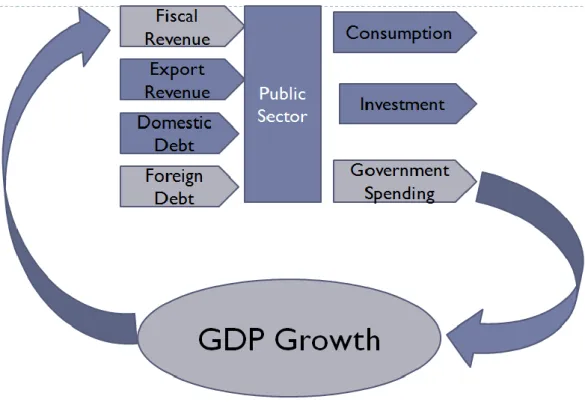
The figure above was inspired by the following quote from Hyman P Minsky, “Investment must be financed, and how it is financed makes a difference. As the proportion that is externally financed grows, fragility increases…” [Minsky, 2008, p: xv]
This quote finds its origins in the Keynesian General Theory of government spending: Y= (C + I + G + X) / (s + t + m) , where Y: income, C: Consumption, I: investment, G: government spending, X: net exports, s: propensity to save, t: propensity to tax, m: propensity to inport. It was motivated by the suggestion that Keynes General Theory is not very precise on the constituents of Y. Therefore,
31
Minsky sought to fill up this gap by considering local and external sorces of public finance.
This constitutes the conceptual framework which guides the assessment of the impact of foreign debt notonly on GDP growth, but also on the sustainability of GDP growth. The cycle assumes that economic activity needs to be financed from various sources which include: Fiscal revenue, Export revenue, Domestic debt, and foreign debt. The economy commits itself to foreign debt contracts with the sole aim of orientating government spending to trigger GDP growth. The amount of growth generated would depend on how the foreign deb was spent. And the sustainability of this growth would depend on the economy’s potential to finance itself from internal sources (such as fiscal revenue), and hence reduce the need of foreign debt financing, as well as financing from unstable export revenues which increases the fragility in the economy.
For the economy to be able to efficiently manage its foreign debt and invest it in infrastructure that will stimulate consumption and hence fiscal revenue, the public sector, through which the foreign debt flows needs to be characterized by efficient institutions. These efficient institutions are expected to have a mastery of the best interests of the economy, and therefore are expected to be able to negotiate with, guide international financial institutions as they award these loans, towards the best interests of the economy, as well as decide on how these loans can be spent in order to reduce the country’s dependence on foreign debt financing to the barest minimum.
32
3.3 Research Approach
3.3.1 Data types and Sources
This paper will apply a Qualitative Case Study approach, and will use secondary data. This approach will be used to answer the questions and test the research hypotheses. It will consider the economy of Cameroon as a single unit or institution with various attributes. Analyses and arguments will be raised based on the suitability of policies which arose in this unit to stimulate positive impacts or to mitigate the negative impacts of foreign debt on GDP growth over the period in consideration. The time frame is further split into four GDP growth regimes: Oil Boom, Crisis, Recovery, Post HIPC initiative.
An uninterrupted flow of foreign debt to gross capital formation or infrastructural development is expected to stimulate consumption. Through this consumption, the government’s ability to earn taxes would determine the degree to which the country stays dependent on other sources of income, especially foreign debt for GDP growth to be stable. It is therefore worth studying how the system works by using the conceptual framework (Page 25), to identify and raise arguments on the reasons for the frictions and other failures. These failures keep resources from being spent on Gross Capital Formation and stimulating consumption. The same failures prevent the government from earning fiscal revenues from consumption as expected. These frictions, defined by the inefficiency of institutions, are expected to inherently have an impact on the country’s ability to stabilize GDP growth using domestic sources, thus the increasing need for financing from external sources.
33
The variables to be considered include in the study:
3.3.1.1 Economic Indicators (1970-2008)
External Debt Stock (Public and Publicly Guaranteed, in USD).
External debt stock is the value of long term obligations owed to foreign creditors by debtors within an economy. These creditors should include other governments, foreign commercial banks, and International Organizations. The debtors on the other hand should include the government, independent public institutions, and private entities. The obligations resulting from public or private loan contracts are guaranteed for repayment by a public entity. (World Bank, Global Development Finance, 2010) This variable will be compared with the fluctuations in the country’s GDP contributors, in order to assess the country’s ability to generate GDP growth while financing its foreign debt.
Gross Domestic Product (GDP, in current USD value).
This is the value of all goods and services produced within an economy over a period of time. It includes the total value added by producers within the territory, as well as taxes levied on products, less the subsidies rendered for their production. This variable is observed in terms of contributors to the economy’s output, such as agricultural products, manufactured products, and services. Changes in the magnitude of these contributors will be observed to evaluate changes in the country’s ability to repay its foreign debt in the presence of economic stability.
34
GDP growth (Annual Percentage).
This is the annual change, positive or negative observed in the total value of goods and services produced within an economy including taxes less subsidies, and it is expressed in percentages which represent each year. By observing changes in this variable, compared with the growth in the country’s foreign debt, growth enhancing nature of the country’s foreign debt will be analyzed.
Exports of goods and services (Current USD value).
This represents the value of goods supplied and services rendered by the country’s economy to the rest of the world. These goods include petroleum, cocoa, coffee, cotton, bananas, etc. The country’s export services include transportation, insurance and information technology services rendered by resident companies to non-residents. Considering the fact that the petroleum boom led to a rise in the country’s export prices, this variable will be observed to demonstrate impact of the devaluation of the country’s currency on its export performance, and therefore, on debt sustainability in the long run.
Gross Fixed Capital Formation (Percentage of GDP).
These are additions to fixed assets, including the net changes on the value of existing assets such as land improvements and the acquisition of materials and machinery, the construction of roads, railways, schools, hospitals, private accommodation facilities, etc. By observing the changes in this variable in comparison with the growth of the country’s foreign debt, this study seeks to identify the degree to which the country’s budgetary deficits and its growing
35
foreign debt affected its acquisition of infrastructure. By this means, the economy’s attitude towards long run GDP growth in the face of budgetary deficits and rising foreign debt are assessed.
All of the above variables are obtained through internet downloads from the Data base of National Accounts held at the World Bank website. The World Bank collects this data through the governments of its member states. Standards and guidelines for data collection are set by this International financial institution. After data collection by the governments, the World Bank tests the data for consistency before its compilation and eventual publication.
3.3.1.2 Review of Publications
Article IV Consultations on Cameroon.
Through these documents, the IMF seeks to assess the economic health of the economy and develop policies which seek to improve economic performance on a regular basis. Results of these consultations, published within the years within each of the stages of the economic growth regimes will be analyzed. These analyses will supply arguments to support or reject each hypothesis. From this, information will be obtained on the sources of friction which impede the flow of resources from foreign debt to Gross Capital formation, and from government spending to fiscal revenue, thus influencing the country’s ability to generate GDP growth from its foreign debt.
36
Cameroon Economic Outlook Publications and Other Publications
related to the Cameroon Economy from non-Bretton woods publishers.
The Breton woods institutions played a central role in the provision of solutions to the structural problems experienced within the country’s economic history. To enhance neutrality of results, it is therefore important to use non-Bretton woods sources in the provision of answers to the issues raised in the research questions. For this reason, critical analyses of independent authors on foreign debt management in the economy will be useful in the comparison of the existing debt related data and the observed GDP growth. By this, the origin and early evolution of the country’s foreign debt will be captured to suggest historical root causes for the country’s observed foreign debt to GDP growth relationship.
3.3.1.3 World Governance Indicators in six dimensions (1996-2009)
(Kaufmann, Kraay, & Mastruzzi, 2010) Voice and Accountability
This measures the degree to which the country’s people are allowed to participate in the choice of the bodies which govern them. It also takes into account the people’s freedom to express themselves, to associate, and the freedom the held by the media.
Political Stability and no violence
This estimates the likelihood of a violent change of government, such as violence arising due to political reasons or terrorist action.
37
Government effectiveness
This estimates the value of services rendered by the public sector or the civil service. It takes into consideration this sector’s independence to political influence. It also takes into account the degree of quality of policy conception and implementation, as well as the government’s degree of commitment to these policies.
Regulatory Quality
This measures the government’s ability to conceive and implement policies and regulations which make the economic environment more suitable for private sector development. This also measures the degree to which citizens respect the laws which govern social transaction.
Rule of Law
This measures the extent to which citizens trust and abide by social rules, including the quality of social enforcement of contracts, property rights, and the frequency of violence.
Control of Corruption
This considers the degree to which public powers are exercised to yield private gains.
These variables are interdependent, and therefore, cannot be considered in isolation. But the most interesting for this study are the country’s control over
38
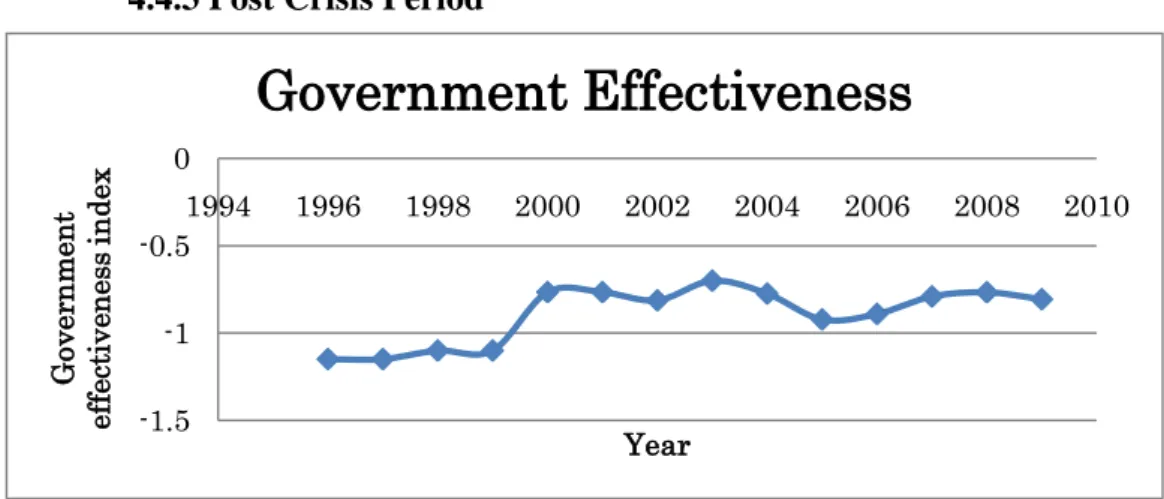
corruption, as well as its government efficiency. The government efficiency figures are justified by the attitude of the country’s economic decision makers towards the country’s long term debt sustainability, export diversification, and the monitoring of major sources of state revenue. These will guide the choice of a position in the current debate on whether the observed debt to GDP growth relationship results from excessive debt burden with tight conditionality, or from mismanagement.
This data is obtained from the World Governance indicators’ data base coordinated by Daniel Kaufmann, Aart Kraay, and Massimo Mastruzzi, working under the World Bank development research group, in the Macroeconomics and growth team. These variables are obtained using an Unobserved Component Model (UCM). The authors gathered the results via country surveys from individuals, domestic firms, multilateral development agencies, as well as Public Sector Data providers. It is suggested that these indicators expected to be strongly interdependent on one another, considering, for example, the fact that a country’s accountability mechanism is expected to exert significant influence on the country’s degree of corruption. [Kaufmann, Kraay, Mastruzzi, 2010, p: 5]
Conditional means were used to bundle up data. These averages gave more weight to sources providing more information. The measurements demonstrate a 90% degree of confidence that the stated indicators fall within the given range. Values of these indicators range from +2.5 for countries with more efficient institutional environment, and -2.5 for countries with relatively inefficient institutional
39
environment. [Kaufmann, Kraay, Mastruzzi, 2010, pp 12]
3.3.1.3.1 Why the KKM World Governance Indicators?
These indicators were developed within the World Bank research development unit. The World Bank, in partnership with the IMF are the country’s important partners in its debt sustainability framework. This results from the fact that they are involved in macroeconomic supervision, and offer the economy 37.1% of its foreign debt (IMF Country Repot No.10/259 2010).
The development of this data by the World Bank in 1996 came after the structural adjustment program had failed to produce sustainable results due to inadequate consideration of institutional efficiency. Considering the World Bank group’s strong involvement in the management of the country’s macroeconomic stability and foreign debt management, this data is expected play an important role in the choice of policy recommendations to the developing countries, especially in cases where macroeconomic aggregates fail to portray the expected relationship, such as that of foreign debt or debt relief failing to positively influence GDP growth.
3.4 Methods of analysis
The country’s economy has been through three main growth regimes. Of these, the third can be further divided into two periods, considering the economic happenings within the country. This begins from the reunification of the Eastern and Southern Cameroons in 1972:
40
Period I
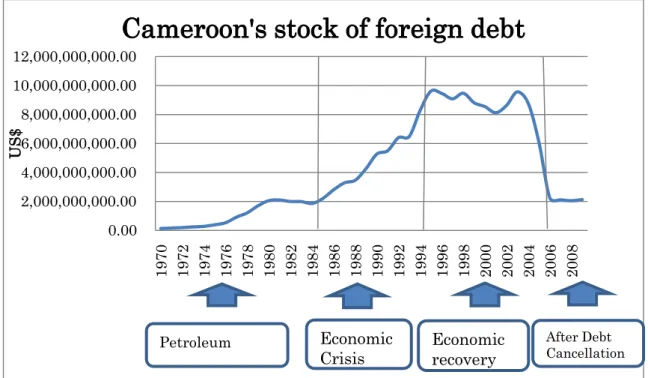
The crude oil boom began after 1972 when the economy experienced a wave of eratic growth until the end of 1982 when groth stabilized, in the face of a smooth growth in the country’s foreign debt which stayed stable between 1980 and 1984.
Period II
The Economic Crisis which ran from 1985 to 1994 when the country experienced a transtition from steady GDP growth at 8% to negative GDP
growth. Within this period the country’s stock of foreign debt more than
quadrupled.
Period III
The Economic Recovery between 1995 and 2005 within which the economy regained positive growth and a relative restabilization of the country’s mass of foreign debt.
The Post-HIPC (Heavily Indebted Poor Countries) Initiative within which the economy’s GDP growth rate remained stable despite the fact that the stock of the country’s foreign debt had fallen to close to one fifth of the level at which it was four years earlier.
Considering the split of the country’s economic history using the observed levels of debt and GDP growth, it is observable that the debt to GDP growth relationship is distinct within each of these periods. Thus the findings to answer the resarch questions and test the reserch hypotheses will be split with respect to these periods. (See figure below)
41 Fig 10 Periodic Partition of Foreign Debt Stock
Source: World Bank Database 2010.
Fig 11 Periodic Partition of Cameroon’s GDP growth Source: World Bank database 2010
0.00 2,000,000,000.00 4,000,000,000.00 6,000,000,000.00 8,000,000,000.00 10,000,000,000.00 12,000,000,000.00 1970 1972 1974 1976 1978 1980 1982 1984 1986 1988 1990 1992 1994 1996 1998 2000 2002 2004 2006 2008 U S $
Cameroon's stock of foreign debt
Petroleum Economic
Crisis Economic recovery
After Debt Cancellation -10 -5 0 5 10 15 20 25 G D P g ro w th (% )
Cameroon's GDP growth
Petroleum Boom Economic Crisis
Economic