Teacher Feedback & Negotiation for Meaning
Abstract
This study investigates the use of negotiation for meaning in the language classroom in Japanese universities. It focuses on whether or not teachers use negotiation for meaning or any type of modifying output with the use of form- and/or meaning-based feedback and/or L1. The researcher found that even though teachers were using motivational strategies to entice the students to talk during class lectures, there was a lack of providing form-feedback to improve on students’ accuracy. This study discusses the use and type of negotiation interaction among the teachers/students in the classroom.
Introduction
In the field of second language acquisition (SLA), providing form feedback (Lyster, Lightbown, & Spada, 1999; Truscott, 1999) and using the L1 (Burden, 2001; Cook, 2001) are controversial issues. However, many researchers, including the author, have found that providing form-feedback is effective during interaction between teacher and students in the classroom (Long, 2001, 2007; Spada & Lightbown, 1993). In practice, there are methods for teachers to utilize so that learners are given an opportunity to notice the feedback and continue the use of the L2 in the classroom. Yet, according to Spada and Lightbown (2008), there has been very little research on the feasibility issue (Iwai & Kawamoto, 2011), which is how and when form-focused instruction (i.e., error correction/error feedback) is most effective in the classroom. In addition, there are few studies of teacher-student interaction in terms of providing meaning-based feedback.
The present study is an attempt to clarify the feasibility issue when teachers provide feedback (form-
and meaning-based) through the use of negotiation for meaning while interacting with their students in class. Although, negotiation for meaning in second language acquisition is “an attempt to overcome comprehension problems” (Cook, 2015, p.15) between native and non-native language users, it is used in this study when teachers make requests for clarifications so that students will notice their own linguistic problems and give students a chance to correct their own errors and “not generate from [sic] linguistic problems or communication breakdowns” (Cook, 2015, p.15). In order for this to happen, the teacher-student interactions were analyzed, as well whether or not this interaction significantly impacted students’ output.
Literature Review
Feasibility Issue and Teachers’ Beliefs
In her study, Kawamoto (2012) examined the feasibility issue in terms of whether the teachers were able to integrate grammar and meaning in a communicatively oriented instructional approach regardless of their native language or their amount of teaching experience. She compared experienced native-English speaking (NESTs) and non-native-English speaking teachers (NNESTs), as well as experienced and inexperienced teachers, to determine how and to what extent these teachers differed in their ways of providing feedback. She found that when teachers were asked to correct any errors students make, teachers did not focus on a particular kind of error. However, teachers changed the way they provided feedback when they were requested to pay attention to a certain form or forms, in this case, verb tense forms. The results indicated that the teachers had difficulty organizing and prioritizing their correction of students’ errors. As a result, it was concluded that teachers have some difficulty in focusing on a specific
Julia M. K
AWAMOTOform naturally. This may be in part because of teachers’ beliefs and experiences that would influence their decision to implement a particular teaching approach and method.
Teachers’ beliefs are the foundations of teachers’ teaching strategies (Doman, 2007; Farrell & Liam, 2005), and the teachers in the present study have different beliefs about their teaching and use of the L1 in the classroom, which will be mentioned in the discussion. Teachers’ beliefs determine whether they emphasize or ignore grammar instruction and/or how the L2 is taught. For example, Mori (2002) found that the two NNESTs in her study provided corrective feedback that was consistent with their beliefs. The first teacher s beliefs about classroom interaction reflected her philosophical outlook, according to which the world is structured in terms of polar opposites, and were illustrated by using examples of grammar (e.g., past vs. present and singular vs. plural). She provided recasts, which involved the “reformation of all or part of a student s utterances, minus the error” (Lyster & Ranta, 1997, p.46), as a strategy to motivate students to continue their interaction with her, and play a dual role of teacher and participant. The second teacher s beliefs was more structured compared to the first teacher in which students need to learn “sentence-bound rules” (Mori, 2002, p.61). He gave his students opportunities to interact spontaneously as long as they stayed within the confines of the task he set up to practice the grammar and vocabulary. Unlike his female counterpart who used recasts to camouflage her intent when she provided feedback, the second teacher tended to provide overt feedback, e.g., prompts (signaling devices for students to modify their output) and explicit feedback, for the students to be aware of their errors and on what grammar forms they were practicing.
In order to fully understand how teachers correct students’ errors or stimulate them to produce an appropriate utterance during meaningful communication, investigation of negotiation for meaning is essential. We can clarify its relation to language acquisition by using it as a way to see how teachers and students interact.
Negotiation for Meaning
Through negotiation, students not only have the opportunity to communicate their meaning, but also to receive corrective feedback on their ill-formed utterances. In addition, when communication breakdown occurs between teachers and students, teachers can
strategically make adjustment for students to overcome the difficulties of their utterances and/or comprehension. The diagram below shows how communication breakdown is ameliorated during the negotiation process, as operationalized by Varonis and Gass (1985). This diagram (Fig. 1) will serve as a template for the present study to examine various strategies teachers use to repair communication breakdown through negotiated interaction.
Figure 1:
Diagram of the process of repairing communication breakdown (Adapted from Varonis and Gass, 1985)
According to this model, (T) is the trigger in the speaker s utterance which causes a listener comprehension problem. The listener uses an indicator [designated by (I)] to signal the speaker that a non-understanding occurred. This then stops the progress of the conversation and starts a downward progression, in turn, resulting in a pushdown effect on the conversation.
Response (R) is to give confirmation that the speaker recognizes that there is a non-understanding. Reaction to the response (RR) is the reaction to the misunderstanding, which is optional, and resolves the negotiation or popping (a signal indicating that the
conversation during the negotiation would return back to the main flow of the conversation). The following is an example of repairing a communication breakdown:
Excerpt 1
1) Student: One grade members makes ah, one grade members choose color. (T)
2) Teacher: So the first grade members choose the color? (I)
3) Student: Choose color. (R) 4) Teacher: Really? (RR)
formulated:
1. Were teachers able to merge both instructional foci (form- and meaning-based instruction)?
The purpose of this question is to find out if the teachers were able to focus on a form (verb tense), and whether they could provide efficient feedback on both form and meaning at the same time.
2. Were there any NEST /NNEST difference?
This question was intended to investigate potential contrasts between the NEST and NNEST (e.g., Chiba & Matsuura, 2003; Kawamoto & Iwai, 2008). In particular, it is assumed that the NEST would focus primarily on meaning, and the NNEST would focus mainly on grammatical form.
Methods
Participants
The data collection for this study was conducted in October and November 2014. The participants were seven English language teachers in their communication/ conversational classes, which comprised university students from four universities (one national, two municipal, and one private) in different majors and fields: three female NNESTs, one female NEST, and three male NESTs. All teachers except one had more than five years of university teaching experience in Japan. For convenience, the following pseudonyms are used:
1) Hana, Miki, and Yuki for the female NNESTs; 2) Sara for the female NEST;
3) John, Nick, and Mike for the male NESTs.
All participants have been fully informed about the purpose, methods, and intended possible uses of this research. In addition, the participants participated in a voluntary way. They also have given written consent. Moreover, this study has been approved by the ethics committee in Hiroshima City University.
Data Collection
Teachers used textbooks that were either assigned by their universities or chosen by the teachers as appropriate for their students. Additional materials that were used were created by the teachers. They were videotaped in their own classrooms and were interviewed after their lessons, recorded by audio-taping.
Data Coding
The data from the class observations were coded with respect to teacher utterance in terms of their use of L1 and providing form- and meaning-based feedback. The researcher coded the data. For the form-based feedback, the categories were identified by the type of grammar errors that the teacher corrected for the students. The meaning-based feedback in this study were coded by devices teachers used to entice students to talk and indicate understanding of their messages, which codes were based on Dornyei and Scott s (1997), and Miller and Kindt s (2008) taxonomies. These codes are defined below:
Form-Based Feedback 1. Prep ‒ Preposition 2. Lex ‒ Lexicon 3. V ‒ Verb tenses 4. Pron ‒ Pronunciation 5. Art ‒ Articles
Meaning-Based Feedback 1. R ‒ Repetition 2. Q ‒ Asking questions
3. C ‒ Clarifications (Oh you mean …?)
4. F ‒ Filling-in or finishing students’ comments 5. Con ‒ Confirmation
6. Cont ‒ Getting students to continue 7. P ‒ Praising
8. A ‒ Getting students to ask questions 9. H ‒ Humor including sarcasm
10. Com ‒ Comforting students (You re doing OK.) 11. Ht ‒ Hints
12. Push ‒ Getting students to wake-up or do their classwork
13. Call ‒ Calling out students’ name/group/pair
Results
This section shows the results of the analysis of the teachers’ feedback patterns. The results are organized to answer the two research questions: merging form- and meaning-based feedback (including the use of L1), and differences between NESTs and NNESTs.
Research question 1
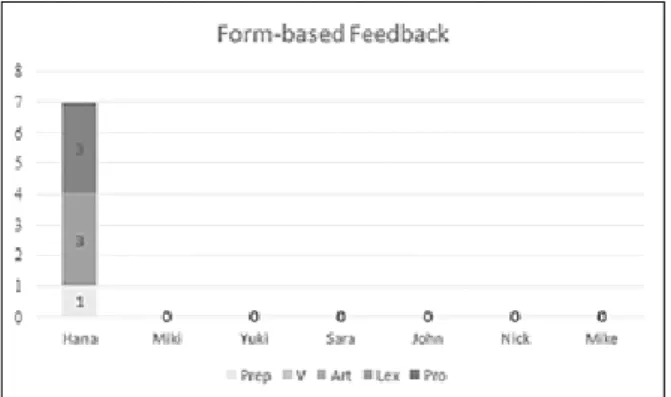
Figure 2: Form-based feedback: number of occurrences per category
Figure 3: Meaning-based feedback:
number of occurrences per category
As we can see in Figure 1, Hana is the only teacher out of the seven who provided form-based feedback. The three forms she concentrated on were prepositions, lexicon, and pronunciation. In addition, this teacher used only recasts; three out of her seven recasts were explicit in nature, as shown below in Excerpt 2:
Excerpt 2
1) Student: In Cocombia . . . [Error: pronunciation] 2) Teacher: In Colombia! Wow! Interesting country. [Feedback: recast-explicit]
3) Student: Colombia.
From this a recast was triggered when the student s utterance contained an error. The teacher provided a recast by reformulating the incorrect form into the correct form, which was then repeated by the student.
The rest of the time, the type of recasts that her students received were implicit; that is, they did not interrupt the communication flow between teacher and student (Long, 2007) to ensure their message was understood by the teacher (Doughty, 2001), as shown
below:
Excerpt 3
1) Student: MacDonald in uh Hiroshima Station. [Error: preposition-teacher felt it was an error]
2) Teacher: Oh MacDonald s at Hiroshima Station. How long did you work. So both days, weekend, both days? Saturday and Sunday? [Feedback: recast-implicit] 3) Student: Both days. Ah . . . I work 8 hours.
We can see from the interactions above that there was a nice balance for her students not only for them to notice their errors easily, but also for them to manage their language problems without feeling forced to correct their errors (Mackey, 2007).
As for meaning-based feedback, all seven teachers provided ways to get students talking during the teacher/student interaction. They tended to focus on asking questions to students. Overall, the teachers had the tendency to focus mainly on meaning-based feedback, rather than on the form-based type.
Here we can see that teachers differ in terms of their frequency of form- and meaning-based feedback in their classes. This would imply that it is not simple for teachers, no matter how much teaching experience they have, to restrict their attention to errors while engaging a communicative language teaching approach.
Research question 2
Next, regarding the differences among the NEST/ NNEST, the results presented in Figures 2 and 3 show that there are no discernible group differences, but there are individual differences. There are several notable points that can be identified. First, regarding form-feedback, six teachers did not provide any grammatical feedback at all, but apparently for different reasons. One example is Miki who taught her lessons on vocabulary and phrases in order for students to acquire communication strategies and meaning through the movie she used. Thus, her instruction was not concentrating on the communicative and interactive aspects that the other teachers had emphasized.
praising them (17), asking questions (53), and repeating as an indication of understanding (21) to interact with the students. These were ways for her to make them feel that the classroom was a safe environment. Miki primarily had to push her low-level unmotivated students in order for them to work on the class activity by waking them up (26), providing hints (32), encouraging them to continue their writing (29), and praising them (12). Yuki asked questions in an attempt to draw students into a discussion. Sara (158) mainly asked questions to elicit some kind of response from her students. Similar to Sara, John constantly asked questions (46) in some attempt to get students interacting with him, whereas Nick (35) used humor in order to emotionally comfort his students. Finally, Mike would call out students’ names (67) to have them answer the question from the textbook, and ask a question to him (13). In addition, he constantly would praise them (34) whether or not their answers were correct. In summary, the answer to the second research question indicates that all teachers were different in their approach to providing feedback. One reason may be that the teachers’ working memory (Baddeley & Hitch, 1974) may had been overloaded since they needed to constantly shift between the students’ utterances, their assessment of students’ performance, managing the class, and their feedback decisions.
Practical implications
The teachers utilized both pushing down and popping up in order to repair communication breakdown to indicate to the students that their utterances needed to be modified. In other words, students needed to be properly understood and to improve their accuracy. However, how they pushed down and popped up the students’ errors were different in terms of the way they negotiated during the interaction. For example, Excerpt 4 below is a sample of a typical negotiated interaction using meaning-based feedback between the teacher and student:
Excerpt 4
1) Student: No, ah, carry. <Student made a gesture>. (T) 2) Teacher: Oh delivery. (I)
3) Student: For the for the… <gesture, rely on other students> (R)
4) Teacher: So you serve, serve. Just serve. Oh I see. (RR)
5) Teacher: So all day? (Main topic)
In line 2, the teacher, Hana, attempted to understand the student s gesture. The student responded by continuing the gesture and relying on her classmates to help her. Finally, Hana understood the student was referring to a waitress serving the customer and continued on the main topic. As we can see, an experienced teacher somewhat consistently used this motivational device to give students reasons for maintaining their attempt to communicate and negotiate.
Excerpt 5 gives a different picture when Mike was interacting with his students.
Excerpt 5
1) Student: Tanoshimu. (T)
2) Teacher: Ah, to look forward to it yes, yes so there you go yes enjoy that s that s those good ideas yes. (RR) 3) Teacher: Ah OK. We ll get, well that s good over here.
(Main topic)
Here in line 1, the student used Japanese since she did not know Tanoshimu in English. Mike gave the translation in line 2 and continued on the main topic (line 3). This type of negotiation is typical among the teachers since the students rarely offered to interact with their teachers during class time.
Pedagogical implications
Truscott s (1999) line of reasoning, that providing form feedback would impede learning, may be partially correct in cases where teachers could not provide effective feedback. In addition, researchers (i.e., Krashen, 1981; Scott & Fuente, 2008) argue against the use of L1 and find that by using it in the L2 classroom is “potentially detrimental to student learning in the EFL classroom” (Carson, 2014, p.248). However, the researcher argues that feedback could be used effectively and the use of L1 could reduce the gap between teachers’ beliefs and students’ preferences. The researcher has some suggestions of appropriate instruction that can be applied in the classroom.
(e.g., Long, Inagaki, & Ortega, 1998), they are more likely to recognize the corrective element of recasts. Determining the optimal length of feedback is a way to make recasts effective. In Philp s study (2003), she found the shorter the recasts are, the easier it is for students to recognize and recall them.
Another way to draw students’ attention to the corrective content is providing hints on students’ errors (prompts). For example, Ellis, Loewen, and Erlam (2006) used the regular past tense -ed as a target item in their study. Although the intermediate students in their study had already studied this grammatical form, they found that the students had extreme difficulty in controlling their tense errors, particularly in oral communication. From their results, they noticed that the group who received metalinguistic feedback (prompts) had more control over their knowledge of the past tense compared to a recast group and a control group. However, there are some drawbacks to the use of prompts where teachers might have the tendency to over-prompt by not giving students enough time to finish or engage in self-repair (Kawamoto, 2010).
Limitations and future research
While the present study sheds some light on some important issues in terms of feedback and L1 use in the L2 classroom, there are several limitations that should be addressed in order to lead to future improved studies. First this is an exploratory study with a small group of seven teachers. Having a larger number of participants will make it possible to examine other important variables, such as education background and training. The second limitation is the level and proficiency of students each teacher had which was based on the teachers’ timetable in their universities. Finally, the researcher established the meaning-based feedback coding framework, but coding this type of feedback proved to be difficult. It seems that to date there are no set guidelines established for the coding criteria on meaning-based feedback. However, Hauser (2005) argues that an improvised coding system is sufficient as long as coders are able to provide reasons for the coding, and the coders are judging consistently.
Conclusion
This study revealed that researchers should take into
account that there are individual differences among teachers in terms of the use of feedback and L1 in the L2 classroom. Moreover, long-term training, regardless of the number of years of experience, might be necessary for teachers to learn how to use form-based feedback effectively and efficiently (Doman, 2009). Yet, through their preferences and experiences, there are teachers who regard this method of instruction might not be of their interests or beliefs (Kawamoto, 2012).
This study was supported by the Japan Society for the Promotion of Science grant (#26284080) under the advisement of Chiaki Iwai from Hiroshima City University.
References
Baddeley, A. D., & Hitch, G. J. (1974). Working memory. In G. Bower (Ed.), The psychology of learning and motivation: Advances
in research and theory, Vol. 111. New York: Academic Press.
Chiba, R., & Matsuura, H. (2003). Diverse attitudes toward teaching communicative English in Japan: Native vs nonnative beliefs. Journal of International Relations, 13, 97-118.
Cook, J. (2015). Negotiation for meaning and feedback among language learners. Journal of Language Teaching and Research,
6(2), 250-257.
Cook, V. (2001). Using the first language in the classroom.
Canadian Modern Language Review, 57, 402-423.
Doman, E. (2007). Teachers’ beliefs about form-focused instruction. Bulletin for Language Center, Tokai University, 28,
63-79.
Dörnyei, Z., & Scott, M. (1997). Communication strategies in a second language: Definitions and taxonomies. Language
Learning, 47, 173-210.
Doughty, C. (2001). Cognitive underpinnings of focus on form. In P. Robinson (Ed.), Cognition and second language instruction
(pp. 206-257). Cambridge: Cambridge University Press. Ellis, R., Loewen, S., & Erlam, R. (2006). Implicit and explicit
corrective feedback and the acquisition of L2 grammar.
Studies of Second Language Acquisition, 28, 339-368.
Farrell, T.S.C., & Lim, P.C.P. (2005). Conceptions of grammar teaching: A case study of teachers’ beliefs and classroom practices. TESL-EJ, 9, 1‒13.
Hauser, E. (2005). Coding corrective recasts: The maintenance of meaning and more fundamental problems. Applied
Linguistics, 26, 293-316.
Iwai, C., & Kawamoto, J. (2011). Factors affecting teachers’ feedback. In A. Stewart (Ed.), JALT2010 Conference
Kawamoto, J. (2010). Exploring successful and unsuccessful feedback in teacher-student interaction. JACET
Chugoku-Shikoku Chapter Research Bulletin, 7, 57-72.
Kawamoto, J. M. (2012). The feasibility for teachers to merge,
form-focused and meaning form-focused feedback. (Unpublished doctoral
dissertation). Hiroshima City University, Hiroshima, Japan. Kawamoto, J. & Iwai, C. (2008). Counterbalance hypothesis:
Practical or impractical in the classroom? In A. M. Stoke (Ed.), JALT2008 Conference Proceedings. Tokyo: JALT.
Krashen, S. D. (1981). Second language acquisition and second
language learning. Oxford: Oxford University Press.
Long, M. H. (2007). Problems in SLA. Mahwah: Lawrence
Erlbaum.
Long, M. H., Inagaki, S., & Ortega, L. (1998). The role of implicit negative feedback in SLA: Models and recasts in Japanese and Spanish. Modern Language Journal, 82, 357-371.
Lyster, R., Lightbown, P., & Spada, N. (1999). A response to Truscott s ‘What s wrong with oral grammar correction.’
Canadian Modern Language Review, 55, 457-467.
Lyster, R., & Ranta, L. (1997). Corrective feedback and learner uptake: Negotiation of form in communicative classrooms.
Studies in Second Language Acquisition, 19, 37-66.
Mackey, A. (2007). The role of conversational interaction in second language acquisition. In A. Mackey (Ed.),
Conversational interaction in second language acquisition (pp.
1-26). Oxford: Oxford University Press.
Miller, T., & Kindt, D. (2008). Interactive feedback in the power-up! Tutorial. Nagoya University of Foreign Studies Journal of the School of Contemporary International Studies, 4, 231-263.
Mori, R. (2002). Teachers’ beliefs and corrective feedback.
JALT Journal, 24, 48-69.
Philp, J. (2003). Constraints on “noticing the gap”: Nonnative speakers’ noticing of recasts in NS-NNS interaction, Studies
in Second Language Acquisition, 25, 99-126.
Scott, V. M., & Fuente, M. J. D. L. (2008), What's the problem? L2 learners' use of the L1 during consciousness raising, form-focused tasks. The Modern Language Journal, 92, 100-113.
Truscott, J. (1999). What s wrong with oral grammar correction. Canadian Modern Language Review, 55, 437-456.
Varonis, E. M., & Gass, S. (1985). Non-native/non-native conversations: A model for negotiation of meaning. Applied
Linguistics, 6, 71-90.
Appendix
要旨 - 本研究では,日本の大学の言語授業における意味交 渉の使用について調査した。形式主体のフィードバック, 意味主体のフィードバック及び第一言語の使用またはいず れかを通し,教員が意味交渉を使用したのか若しくは修正 アウトプットを使用したのかについて調査することを目的