言語処理学会 第21回年次大会 発表論文集 (2015年3月)
Tree-to-String 翻訳における構文解析器の自己学習の効果
波多腰 優斗 Graham Neubig Sakriani Sakti 戸田 智基 中村 哲 奈良先端奈良先端科学技術大学院大学 情報科学研究科
{hatakoshi.yuto.hq8,neubig,ssakti,tomoki,s-nakamura}@is.naist.jp
1 はじめに
統計的機械翻訳では,複数の単語からなるフレーズ 間の翻訳確率を計算し,目的言語として適切な語順と なるように並べ替えモデルによる局所的なフレーズの 移動を行う,フレーズベース機械翻訳(phrase-based machine translation, PBMT)[8]が広く用いられてい る.PBMTは翻訳モデルの学習が容易であり,多く の言語対で高い精度での翻訳が可能である一方,形態 的・統語的な情報の扱いに乏しいという問題点もある.
また,並べ替えモデルによる長距離の並べ替え確率の 推定が困難であり,英語と日本語のように語順が大き く異なる言語対では翻訳精度が低下することが知られ ている.
これに対して,翻訳パターンに構文木の部分木の構 造を用いる統語ベース翻訳[24]は,文法構造が大きく 異なる言語対においてPBMTよりも正確な翻訳を実 現することが多い.統語ベース翻訳の中でも原言語側 のみの構文情報を用いた,同期木置換文法(STSG)[3]
に基づくT2S(Tree-to-String)翻訳[9]は,語彙選択と 並べ替えを同時に行う翻訳パターンを利用することで,
語順が大きく異なる言語対においても高精度かつ高速 な訳出が可能である.一方で,構文解析の結果を用い て翻訳を行うため,訳出の精度は構文解析器の精度に 大きく依存する.英日・日英翻訳の実験において,よ り精度の高い解析モデルを用いることで,T2Sの翻訳 精度が向上することが報告されており[16],構文解析 器の精度は重要な要素の一つとなっている.
構文解析の精度を高めるための単純かつ有用な手法 として,自己学習(self-training)が挙げられる[11].自 己学習では,はじめに既存のモデルにより構文解析を 行い,その結果を用いてモデルの再学習を行う.再学 習したモデルにより構文解析を行うことで,解析対象 のデータへの適応を補助する効果が得られ,解析精度 が向上する.McCloskyらは,自己学習により既知語 の組み合わせによる未知のbi-gramの解析精度が向上 したことから,既知語が通常と異なる文脈で現れると
きに有効であると報告している[12].このような構文 解析器の自己学習は,構文情報を用いて翻訳を行う統 語ベース翻訳の精度向上にも寄与すると考えられるが,
その詳細な効果については検証されていない.
そこで本研究では,T2S翻訳における構文解析器の 自己学習の効果について調査を行う.実験では英日・日 英翻訳を対象とし,2つの専門分野(特許・Wikipedia 記事)への適応を行う.実験の結果,構文解析器の自 己学習によりT2Sの精度が大きく向上することが確 認された.
2 Tree-to-String 翻訳
T2S翻訳は原言語文の構文解析結果を利用するこ とで,2言語間の関係を統語的な構造により捉えるこ とができ,正確な翻訳が可能となる.翻訳パターンは PBMTのように単語列ではなく,変数xを含むルー ルも利用して原言語文の部分木の構造として表現され る.以下の例は,置き換え可能な2つのNPを翻訳パ ターンに直接含んでおり,x0,x1に当てはまる候補 の確率と翻訳パターン自体の確率を考慮して訳文を生 成する.
S ( x0:NP ) ( VP (VBD hit) (x1:NP) ) )
→x0はx1 を打つ
原言語文の部分木を用いることで訳出候補が少なく なるメリットもあり,探索空間が小さくなることで翻 訳に必要な時間も短縮される.一方で,構文解析の結 果を基に翻訳パターンを生成するため,翻訳精度が構 文解析器の精度に依存してしまうというデメリットも ある.
このような問題点を緩和する手法として,複数の構 文木の解釈を一つの超グラフ構造で保持した構文森を 入力として用いるF2S(Forest-to-String)翻訳[13]が ある.これにより,いくつかの構文木の解釈の中から 精度の高い訳出を行うための構文解析結果を選択する ことが可能となる[25].
Copyright(C) 2015 The Association for Natural Language Processing.
All Rights Reserved.
― 421 ―
― 421 ―
3 構文解析における自己学習
構文解析における自己学習に関する実験は,Char- niakにより初めて報告されており,WSJ コーパス [10]により学習された確率文脈自由文法(probabilis- tic context-free grammar, PCFG)に対して自己学習 を行ったところ精度の改善は見られなかったとしてい る[1].また,語彙化木接合文法(lexicalized tree ad- joining grammar, LTAG)および語彙化 PCFGにお いては,構文解析モデルの学習データが小さいときに 限り精度が改善されるものの,十分な量のデータによ り学習されたモデルに対しては自己学習の効果が得ら れない[21].これに対して,McCloskyらはラベルな しのデータを効果的に利用することで,語彙化PCFG の精度を自己学習により改善している[11].この手法 では,構文解析結果のn-bestのリランキングを行い,
その結果を自己学習に用いている.
一方で,PCFG-LA (PCFG with Latent Annota-
tions) は自己学習によって解析精度が大きく向上す
るモデルとして知られている[4].PCFG-LAの解析 精度は,語彙化PCFGと比較して自己学習による改 善の幅が大きく,大量のデータによって学習されたモ デルに対する効果も示されている.この理由として,
PCFG-LAが高精度なモデルであるため自己学習に用
いる構文木の精度が高いことや,EMアルゴリズムに より,正解木と自動で生成した構文木の両方から複雑 な文法規則を獲得できることを挙げている.本研究で は,これを踏まえてPCFG-LAに対して自己学習を行 い,統語ベース翻訳の精度に及ぼす影響を調査する.
4 統計的機械翻訳における自己学習
前節で述べた自己学習による構文解析精度の向上と,
先行研究[16]により報告されている,構文解析精度が 統語ベース翻訳に及ぼす影響を考慮すると,構文解析 器の自己学習により翻訳精度が向上する可能性は十分 にあると考えられる.本研究では,この効果を定量化 することを主な目的とする.
統語ベース翻訳における前例は筆者の知る限り存 在しないが,関連深い先行研究として,事前並べ替 え[23]に用いる構文解析器に対して自己学習を行い,
PBMTの翻訳精度を向上させた研究が挙げられる[6].
この研究では,通常の自己学習に加えて標的自己学習 (targeted self-training) の枠組みを取り入れており,
複数の構文解析候補の中から事前並べ替えの精度が最 も高くなるものを選択し,構文解析器を再学習を行っ ている.報告によると,自己学習は一定の効果を示し,
表1: KFTT・NTCIR7のデータ内訳
KFTT Words (En) Words (Ja) Sentences
train 10.6M 10.9M 430k
dev 24.3k 26.8k 1.17k
test 26.7k 28.3k 1.16k
NTCIR Words (En) Words (Ja) Sentences
train 99.0M 117M 3.08M
dev 28.6k 33.5k 0.82k
test 44.3k 52.4k 1.38k
標的自己学習により更なる向上が実現可能である.本 研究では通常の自己学習に焦点を合わせ,同様の効果 が統語ベース翻訳に対しても得られるか調査を行う.
5 実験的評価
5.1 実験条件
実験は英日・日英翻訳を対象とし,京都フリー翻訳 タスク(KFTT)1,およびNTCIR-7特許機械翻訳テ ストコレクション[2]の英日翻訳データを用いた.実 験データに関して,学習データ(train),開発データ (dev),テストデータ(test)の詳細を表1に示す.
T2SはTravatar [15]2 に実装されているものをデ フォルトの設定で用いた.単語アライメントを取るツー ルとしてNile [20] 3 を用い,目的言語である日本語 の言語モデルはSRILM[22]を用いて5-gramで学習し た.実験における翻訳精度は,BLEU[18]とRIBES[5]
の2つの自動評価尺度を用いて測った.各素性の重み はBLEUが最大となるようにMERT[17]を用いて最 適化した.日本語の単語分割にはKyTea4を用いた.
構文解析はPCFG-LAモデル[19]を用いたCkylark [26]5により行った.英語および日本語の構文解析に は,WSJコーパス[10],JDCコーパス[14]によりそれ ぞれ学習されたモデルを用いた.JDCは係り受けコー パスであるため,Travatarのツールキットに含まれる 主辞ルールを利用してPCFG-LAの学習に必要な形式 に変換した6.構文解析器の自己学習は,WSJ/JDC のモデルにより解析されたKFTTとNTCIRのtrain データのみを用いて行った.自己学習に用いるデータ はtrainデータの上位5k∼50kまで変化させ,各条件 における翻訳精度を評価した.
5.2 実験結果
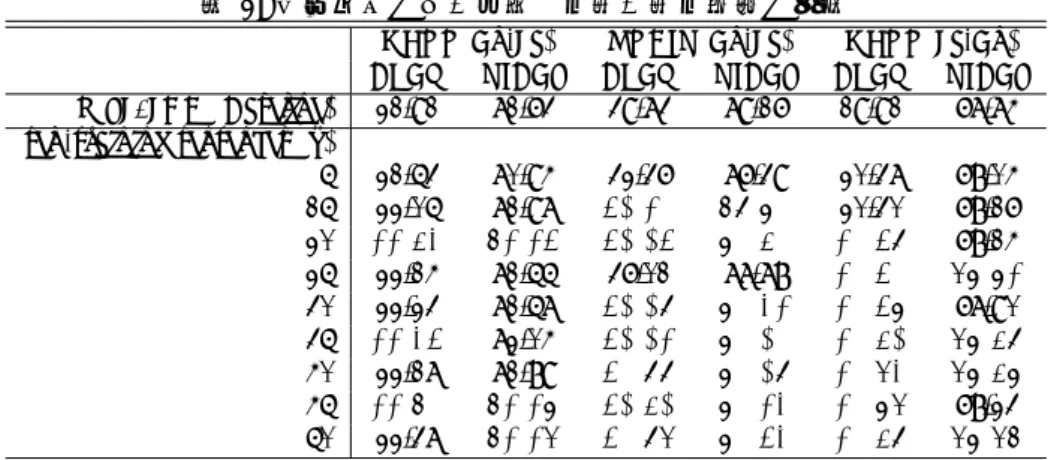
実験結果を表2に示す.表中の太字は,ブートスト ラップ・リサンプリング法[7]を用いてベースライン
1http://www.phontron.com/kftt/index-ja.html
2http://www.phontron.com/travatar/
3https://code.google.com/p/nile/
4http://www.phontron.com/kytea/index-ja.html
5http://odaemon.com/?page=tools_ckylark
6ja-adjust-dep.pl, ja-dep2cfg.pl
Copyright(C) 2015 The Association for Natural Language Processing.
All Rights Reserved.
― 422 ―
― 422 ―
表2: 自己学習のデータ量と英日・日英翻訳の精度
KFTT(En-Ja) NTCIR(En-Ja) KFTT(Ja-En)
BLEU RIBES BLEU RIBES BLEU RIBES
WSJ/JDC (Baseline) 21.91 71.63 39.73 79.16 19.91 67.74 self-training sentences (k)
5 21.53 70.94 32.36 76.39 20.37 68.04 15 22.05 71.97 41.20 79.80 20.30 68.16 20 22.53 72.24 41.14 80.50 20.49 68.14 25 22.14 71.55 36.01 77.78 20.40 68.82 30 22.23 71.57 41.19 80.32 20.48 67.90 35 22.34 72.04 41.12 80.10 20.51 68.59 40 22.17 71.89 40.99 80.19 20.63 68.58 45 22.70 72.28 41.51 80.23 20.86 68.23 50 22.37 72.26 40.96 80.43 20.59 68.67
表4: 構文解析器の自己学習による英日翻訳の訳出の改善例
source · · · , comprises a plurality of male contacts 98 aligned in a row in an electrically insulative housing 97 as shown in the figure .
Reference · · ·、 図示 の よう に 、 絶縁 ハウジング 97 内 に 雄 コンタクト 98 を 整列 保持 し て 構成 さ れ る 。
Baseline · · · 、 複 数 の 雄型 コンタクト 列 に 整 列 さ れ て 同 図 に 示 す よ う に 、
電気 絶縁 性 の ハウジング 97 98 から 構成 さ れ て い る 。
self-training 45k · · · 、 図 に 示 す ように 、 絶縁 性 の ハウジング 97 に 一 列 に 配列さ れ た 複数 の 雄型 コンタクト 98 から 構成 され て い る 。
表3: NTCIR(En-Ja):45kのテスト文に対する各条件 の構文木の精度
self-training sentences (k) 20 25 30 F-measure 85.64 74.83 88.57
と比較した結果,統計的有意性が認められた数値を示 している(p <0.05).
実験の結果,各翻訳タスクにおいて構文解析器の自己 学習によりBLEUとRIBESが向上した.それぞれの実 験条件におけるBLEUは最大で,KFTT(En-Ja):0.79,
NTCIR(En-Ja):1.68,KFTT(Ja-En):0.95ポイント上 昇した(Baseline vs self-training 45k).
一方で,翻訳精度が改善されない条件も多く見ら れた(ex.NTCIR:25k, KFTT:25k-30k-40k-50k).表3 はNTCIR(En-Ja)において最もBLEU値が高かった self-training 45kのテスト文を正解木としたときの各 条件における構文木の精度を示している(Evalb7によ り算出).翻訳精度が低かったself-training 25kの条 件において構文木のF値も低くなっており,自己学習 による効果が得られていないことが分かる.本研究で
は,trainデータにおける上位の行をそのまま構文解
析器の再学習に用いており,解析精度の向上に寄与す るデータを効率的に抽出できていない.先行研究[4]
のように構文解析器の再学習に用いるデータを選択し,
7http://nlp.cs.nyu.edu/evalb/
効果的な自己学習を行うことで,学習に用いるデータ 量に対して安定した結果が得られるようになると考え られる.
5.3 自己学習の効果
表4に英日翻訳の訳出の改善例を示す.構文解析器 の自己学習によって表中の下線部のような名詞句の訳 出の改善が多く確認された.図1は表4の原言語文の 構文解析結果である.Baselineにおける構文木は名詞 句“male contacts 98”が2つの名詞句に分解されてし まっているが(図1(a)),自己学習により1つのスパン の名詞句として正しく解析された(図1(b)).これは先 行研究[12]で報告されていたように,WSJとNTCIR において異なる文脈で現れていた既知語の解析精度が 向上した結果であると考えられる.このような構文解 析精度の向上によって翻訳モデルの構築時により良い 翻訳規則が学習され,翻訳精度が改善されたと言える.
6 おわりに
本研究では,T2S翻訳における構文解析器の自己学 習の効果について検証を行った.自己学習の効果が特 に大きいとされるPCFG-LAモデルによる構文解析器 を用い,2つの翻訳タスクにおいて英日・日英翻訳を 行った.構文解析器の自己学習の効果はT2S翻訳の 結果にも反映され,訳出の精度が向上することが確認
Copyright(C) 2015 The Association for Natural Language Processing.
All Rights Reserved.
― 423 ―
― 423 ―
(a) Baseline (b) self-training 45k NP
NP
JJ NNS
male contacts NP
CD
98 PP
NP VP
IN
NP NP
JJ NNS
male contacts NP CD
98 PP
IN
NP VP
図1: 自己学習による構文解析の改善
された.今後の課題として,他の言語対やF2S翻訳に 対する効果の検証を予定している.また,先行研究で は標的自己学習の効果が示されており,統語ベース翻 訳に対してこのような枠組みを用いることも考えてい きたい.
謝辞
本研究の一部は,JSPS科研費25730136の助成を 受け実施した.
参考文献
[1] E. Charniak. Statistical parsing with a context-free gram- mar and word statistics. AAAI/IAAI, 2005:598–603, 1997.
[2] A. Fujii, M. Utiyama, M. Yamamoto, T. Utsuro, T. Ehara, H. Echizen-ya, and S. Shimohata. Overview of the patent translation task at the NTCIR-7 workshop.
InProceedings of the 7th NTCIR Workshop Meeting, pp.
389–400, 2008.
[3] J. Graehl, K. Knight, and J. May. Training tree trans- ducers. Computational Linguistics, pp. 391–427, 2008.
[4] Z. Huang and M. Harper. Self-training PCFG grammars with latent annotations across languages. InConference on Empirical Methods in Natural Language Processing (EMNLP), pp. 832–841, 2009.
[5] H. Isozaki, T. Hirao, K. Duh, K. Sudoh, and H. Tsukada.
Automatic evaluation of translation quality for distant language pairs. In Conference on Empirical Methods in Natural Language Processing (EMNLP), pp. 944–952, 2010.
[6] J. Katz-Brown, S. Petrov, R. McDonald, F. Och, D. Tal- bot, H. Ichikawa, M. Seno, and H. Kazawa. Training a parser for machine translation reordering. InConference on Empirical Methods in Natural Language Processing (EMNLP), pp. 183–192, 2011.
[7] P. Koehn. Statistical significance tests for machine trans- lation evaluation. InConference on Empirical Methods in Natural Language Processing (EMNLP), pp. 388–395, 2004.
[8] P. Koehn, F. J. Och, and D. Marcu. Statistical phrase- based translation. InNorth American Chapter of the As- sociation for Computational Linguistics, pp. 48–54, 2003.
[9] Y. Liu, Q. Liu, and S. Lin. Tree-to-string alignment template for statistical machine translation. In Annual Meeting of the Association for Computational Linguis- tics (ACL), pp. 609–616, 2006.
[10] M. P. Marcus, M. A. Marcinkiewicz, and B. Santorini.
Building a large annotated corpus of English: The penn treebank. Computational linguistics, 19(2):313–
330, 1993.
[11] D. McClosky, E. Charniak, and M. Johnson. Effective self-training for parsing. InNorth American Chapter of the Association for Computational Linguistics, pp. 152–
159, 2006.
[12] D. McClosky, E. Charniak, and M. Johnson. When is self- training effective for parsing? InInternational Confer- ence on Computational Linguistics (COLING), pp. 561–
568, 2008.
[13] H. Mi, L. Huang, and Q. Liu. Forest-based translation.
InACL, pp. 192–199, 2008.
[14] S. Mori, H. Ogura, and T. Sasada. A Japanese word dependency corpus. InProceedings of the Nineth Inter- national Conference on Language Resources and Evalu- ation, 2014.
[15] G. Neubig. Travatar: A forest-to-string machine transla- tion engine based on tree transducers. Annual Meeting of the Association for Computational Linguistics (ACL), p. 91, 2013.
[16] G. Neubig and K. Duh. On the elements of an accu- rate tree-to-string machine translation system. InAnnual Meeting of the Association for Computational Linguis- tics (ACL), pp. 143–149, 2014.
[17] F. J. Och. Minimum error rate training in statistical machine translation. InAnnual Meeting of the Associa- tion for Computational Linguistics (ACL), pp. 160–167, 2003.
[18] K. Papineni, S. Roukos, T. Ward, and W.-J. Zhu. BLEU:
a method for automatic evaluation of machine transla- tion. InAnnual Meeting of the Association for Compu- tational Linguistics (ACL), pp. 311–318, 2002.
[19] S. Petrov and D. Klein. Improved inference for unlexi- calized parsing. InHuman Language Technology Confer- ence of the North American Chapter of the Association for Computational Linguistics (HLT-NAACL), pp. 404–
411, 2007.
[20] J. Riesa and D. Marcu. Hierarchical search for word align- ment. InAnnual Meeting of the Association for Compu- tational Linguistics (ACL), pp. 157–166, 2010.
[21] M. Steedman, M. Osborne, A. Sarkar, S. Clark, R. Hwa, J. Hockenmaier, P. Ruhlen, S. Baker, and J. Crim. Boot- strapping statistical parsers from small datasets. InEuro- pean Chapter of the Association for Computational Lin- guistics (EACL), pp. 331–338, 2003.
[22] A. Stolcke, J. Zheng, W. Wang, and V. Abrash. SRILM at sixteen: Update and outlook. In IEEE Auto- matic Speech Recognition and Understanding Workshop (ASRU), p. 5, 2011.
[23] F. Xia and M. McCord. Improving a statistical mt system with automatically learned rewrite patterns. InInterna- tional Conference on Computational Linguistics (COL- ING), p. 508, 2004.
[24] K. Yamada and K. Knight. A syntax-based statistical translation model. InAnnual Meeting of the Association for Computational Linguistics (ACL), pp. 523–530, 2001.
[25] H. Zhang and D. Chiang. An exploration of forest-to- string translation: does translation help or hurt parsing?
InAnnual Meeting of the Association for Computational Linguistics (ACL), pp. 317–321, 2012.
[26] 小田, G. Neubig, S. Sakti,戸田,中村.解析失敗の発生しに
くいPCFG-LA句構造構文解析. 言語処理学会第21回年次
大会(NLP2015), 2015.
Copyright(C) 2015 The Association for Natural Language Processing.
All Rights Reserved.
― 424 ―
― 424 ―