Observations of atmospheric particulate matters and its local environmental effects in Japan
MINGYUAN DU
Institute for Agro-Environmental Sciences, National Agriculture and Food Research Organization
3-1-3 Kannondai, Tsukuba, Ibaraki, JAPAN
[email protected] http://researchmap.jp/read0082151 NAISHEN LIANG
Center for Global Environmental Research National Institute for Environmental Studies
16-2 Onogawa, Tsukuba-City, Ibaraki JAPAN
[email protected] http://www.liangber.org
Abstract: Using optical dust particle counter, simultaneous observation of atmospheric particulate matter (PM) such as PM2.5 and aeolian dust (Kosa) in Tsukuba (farmland environment), Fukuoka (urban environment) and Oku-nikko (forest environment) with different local environments were done. This paper gives a detailed report on the influence of local environment on PM by analyzing the observation data. It has been clarified that the influence of local environment on PM is great due to difference of PM2.5 and Kosa particle concentration in different local environments is very large and the pattern of diurnal variation is different. The annual average PM2.5 concentrations in Tsukuba, Fukuoka and Oku-Nikko were 14.28μg/m3, 24.23μg/m3, and 4.11μg/m3, respectively, and Fukuoka (urban) was the highest. The annual average Kosa particle concentration at the 3 sites was 54.53μg/m3, 43.12μg/m3, 12.33μg/m3, respectively, and Tsukuba (farmland) was the highest indicating that urban environment producing more PM2.5 and farmland environment producing more coarse particles or Kosa.
Key-Words: aeolian dust (Kosa), optical dust particle counter, local environment, observation, PM2.5
1 Introduction
There is an increasing awareness of the influence that atmospheric particulate matter (PM) has on environmental systems and human health [1]. The PM is a key indicator of air pollution brought into the air by a variety of natural and human activities [2]. As it can be suspended over long time and travel over long distances in the atmosphere, it can cause a wide range of diseases that lead to a significant reduction of human life [1, 2]. PM covers a wide particle size range, from diameters of a few nanometers (nm) to around 100 micrometers (μm).
There are two commonly used particle metrics:
PM10 and PM2.5. PM10 is defined as particles having an aerodynamic diameter of less than 10μm and PM2.5 is defined as particles smaller than 2.5μm.
Another term used for PM2.5 is the fine fraction. The coarse fraction of PM10 comprises particles with diameters in the size range between 2.5μm and 10μm and is called aeolian dust or Kosa in Japan (hereafter Kosa particles). Measurement of PM,
especially real-time measurement of the PM2.5 is of great importance. Standard methods for the measurement of PM are rely on filter samples such as low-volume samplers called reference method and real-time measurements or on-line measurement such as Tapered Element Oscillating Microbalances (TEOMs) [3] or β-attenuation monitors [4] are used for PM monitoring, and data are later validated with the reference method. In recent years, the Ministry of the Environment of Japan has established a lot of general environmental air measurement stations for constantly monitoring air pollutants and suspended particulate matter (SPM) concentration by β-ray absorption method and light scattering method.
Some detailed research results have been obtained using this continuous monitoring data [5, 6]. Optical particle counters (OPCs) and polarization lidars seem to be attractive new measurement methods and come to use in recent years [7, 8, 9]. Especially, OPCs are easy to use and can be run without regulation for long time spans.
There are many researches works on Kosa of Japan and the effects of Kosa from China [e.g. 9, 10].
However, there is no works concerning local environmental effects on PM in Japan. Here we perform a simultaneous observation results of atmospheric particulate matter such as PM2.5 and aeolian dust (Kosa) in different local environments by using optical dust particle counters.
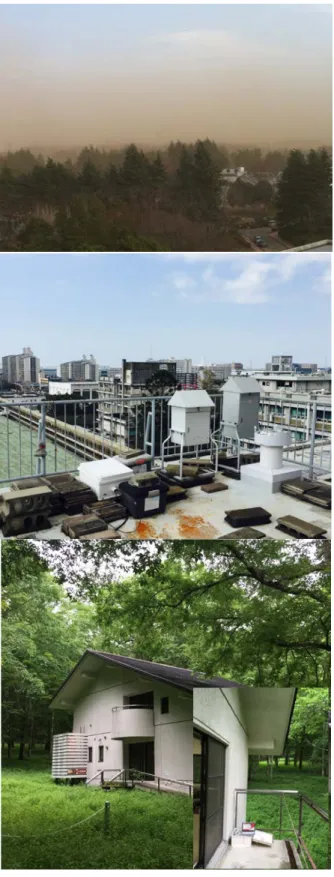
Fig. 1 Environment of 3 observation points. up:
Tsukuba City, farmland environment; Middle:
Fukuoka City, urban enviroment; Down: Oku-Nikko National Forest, forest enviroment.
2 Data and Method
2.1 Data collection
The optical dust particle counter used in this study is a portable particle counter Model-550 of Yamatronics (Yamato Seisakusyo) Co., Ltd., measuring range of 0.5μm, 1.0μm, 3.0μm, 5.0μm or more at 4 stages. It is a laser scattering type dust particle counter which draw air into the laser beam pass with a speed of 1 liter of air per minute [11].
From March 2009, on the roof of the 6-floor building of the Institute for Agro-Environmental Sciences, National Agriculture and Food Research Organization located in Tsukuba City and on the roof of the 6-floor building of the Faculty of Agriculture of Kyushu University located in Fukuoka City, furthermore, from July 2015, on the middle two floor building of Oku-Nikko National Forest, the dust particle counter was installed and the particle concentration in the air was continuously measured. This dataset of the 3 sites was analyzed in this paper. Monthly and annual means are derived from 2015.
Fig. 1 shows the enviromental views of the 3 observation points, respectively. Tsukuba City is 60km northwest of Tokyo metropolitan city and the Institute for Agro-Environmental Sciences, National Agriculture and Food Research Organization located in the suburb of Tsukuba City surrounded by farmland and forest. Fukuoka City is 5th begest city of Japan and the Faculty of Agriculture of Kyushu University is located just in the city center of the Fukuoka City. Oku-Nikko National Forest is located insite of Nikko Mountain area.
2.2 Method for determining atmospheric particulate matter concentration
Theoretically the concentration of atmospheric particulate matter can be calculated by equation (1), with particle volume (V) of all particle sizes (r, radius) and its density (ρ).
dr r r C r V
Q ( ) ( ) ( )
10
0
∫
ρ=
(1)
However, a dust particle counter cannot observe all particle sizes. Then, we can convert equation (1) to equation (2) and calculate mass concentration (Q, μg/m3) by the number of particles observed with the particle counter by the following formula.) ( ) ( )
10 (
0 V r C r r
Q=
∑
ρ (2) where, V is the individual volume (μm3/piece) of the particle with the particle diameter d=2r (μm), C is the number concentration (particles/cm3) of the particle and ρ is the density of this particle (g/cm3).The particle counter used in this study is Model 550 of Yamatronics Co., Ltd [11]. It is assumed that the particles are spherical, and have 4-channel size discriminator that can be measured are 0.5 μm or more in particle diameter, 1.0 μm or more, 3.0 μm or more and 5.0 μm or more. Also, the density of particle size is also unknown. Considering the weight of the number of particles, we use average particle diameter A (μm) for particles of 0.5μm to 1.0μm, average particle diameter B (μm) for particles of 1.0μm to 2.5μm, average particle diameter C (μm) for particles of 2.5μm to 3.0μm, the average particle diameter D (μm) for particles of 3.0μm to 5.0μm and the average particle diameter E (μm) of particles larger than 5.0μm. The atmospheric particulate matter concentration (Q) is divided into PM2.5 concentration (Q2.5) and coarse particles concentration with a diameter of 2.5μm to 10μm (Here, we call it as KOSA in Japan, QKosa).
Simultaneous particle observation can get the particle numbers of the 4-channel size discriminators. Therefore, the coefficients can be determined by the following equation.
QKosa
Q
Q= 2.5+
(3)
B c C A b C a
Q2.5 0.51 3 13 )3 (2 3 ) 4
(2 3
4π λ − π
− +
+
=
(4)
E f C D e C C d C
QKosa 13 3 35 3 5 )3
(2 3 ) 4 (2 3 ) 4 (2 3 ) 4 1
( −λ − π + − π + > π
=
(5)
Where a, b and c are statistical coefficients, a is the concentration of particles of 0.5 μm or less (μg/m3) when the number of particles with a particle size of 0.5μm to 1.0μm and the number of particles with a particle size of 1.0μm to 3.0μm is zero. λ is the ratio of particles of 2.5μm or less in particle size 1.0μm to 3.0μm particles (this study assumed λ = 0.8, that is 80% of the 1.0μm to 3.0μm particles are 1.0μm - 2.5μm). C0.5-1, C1-3, C3-5, C>5 are measured particle number concentrations (particles/cm3) with particle size 0.5μm to 1.0μm, 1.0μm to 3.0μm, 3.0μm to 5.0μm and >5.0μm, respectively. a, b, c, d, e and f are the arerage densities (g/cm3) of the particle, respectively. A to E are weighted average particle sizes of particle size range, respectively. These coefficients are determined by the statistical method by the simultaneous observation with the observation of PM2.5 at the General Environmental Atmosphere Measurement Station that constantly
monitors atmospheric pollutants of the Ministry of the Environment of Japan by the β ray absorption method and light scattering method. A to E and a to f are listed in Table 1.
Table 1 Coefficients (density etc.) of each particle of equations (4) and (5) obtained by simultaneous observation with PM2.5
Paticles size
(μm) <0.5 0.5- 1.0
1.0- 2.5
2.5- 3.0
3.0- 5.0
>5.0 Average
particle sizes (μm)
A~E
0.74 1.62 2.7 3.8 7.0
Average densities (g/cm3)
a~f
1.063
*
2.12 1.87 2.65
**
2.65
**
2.65
**
*: Concentration (g/cm3) of particles of 0.5μm or less
**: The density of dust particles is 2.65g/cm3 assuming quartz is a main component.
3 Results
3.1 Monthly mean concentration
Fig. 2 shows the annual change of monthly mean of PM2.5 and Kosa particle concentration in Tsukuba (farmland, TKB), Fukuoka (urban, FOK), Oku- Nikko (forest, ONK). The concentration of PM2.5
did not show clear annual change at the three sites, although Oku-Nikko's observations are only from July to November. The concentration of PM2.5 is the lowest in Oku-Nikko (forest). The highest concentration of PM2.5 is in Fukuoka (urban). The concentration of PM2.5 in Oku-Nikko (forest) is only one fifth of that in Fukuoka (urban) and one third of that of Tsukuba.
However, the concentration of Kosa particles was high in winter, especially in February at Fukuoka, while that was in spring (April - May) at Tsukuba and low in summer and in autumn. The lowest month of concentration of Kosa particles was November in all the three sites. Concentration of Kosa particles was almost the same at Fukuoka and at Tsukuba, while that at Oku-Nikko was only about one third of Tsukuba during summer and autumn.
Fig.2 Annual change of monthly mean value of PM2.5 and Kosa particle concentration in Tsukuba (farmland, TKB), Fukuoka (urban, FOK), Oku- Nikko (forest, ONK).
3.2 Seasonal and daily change
Fig. 3 and Fig. 4 are the diurnal change of 1-hour average value of PM2.5 and Kosa particle concentrations in April and July at the three sites. In April, PM2.5 and Kosa particle concentration are high. Fukuoka and Tsukuba showed a similar daily change. Both PM2.5 and Kosa particle concentration were low from noon to afternoon. At Tsukuba (farmland), the concentration of PM2.5 was low, while the concentration of Kosa particles was higher than that of Fukuoka. In July, PM2.5 and Kosa particle concentrations were relatively low. Fukuoka and Tsukuba showed different daily changes. In addition, PM2.5 concentrations in Fukuoka and Tsukuba showed diurnal changes similar to Kosa particle concentrations, but PM2.5 concentrations and Kosa particle concentrations showed different daily changes in Oku-Nikko. PM2.5 concentrations at Oku - Nikko showed high concentrations in the daytime and low in the night time, while Kosa concentration at Oku-Nikko showed low concentration in the daytime and high in the night time.
Fig.3 Daily change of 1 hour average value of PM2.5
and Kosa particle concentration in April in Tsukuba (farmland, TKB), Fukuoka (urban, FOK).
Fig. 4 Daily change of 1 hour average value of PM2.5 and Kosa particle concentration in July in Tsukuba (Farmland, TKB), Fukuoka (urban, FOK), Oku-Nikko (forest, ONK).
The daily change of Kosa particle concentration in Oku - Nikko showed a pattern similar to Tsukuba.
The data of September and October in Autumn at 3 points also changed in the same way.
3.3 Annual mean concentration
The annual average PM2.5 concentrations at 3 sites were 14.28μg/m3, 24.23μg/m3, 4.11μg/m3, respectively with consumption of no annual change of PM2.5 at Oku-Nikko. Fukuoka (urban) was the highest. On the other hand, Kosa particle concentration was not different between Tsukuba (farmland) and Fukuoka (urban), but rather Kosa particle concentration was higher in spring (April - May) of Tsukuba (farmland). The annual average Kosa particle concentration at 3 sites was 54.53μg/m3, 43.12μg/m3, 12.33μg/m3, respectively, and Tsukuba was the highest. And annual average atmospheric particulate matter concentration (PM 2.5 + Kosa) in Fukuoka (urban) was the highest, 67.35 μg/m3.
4 Discussions and Conclusions
4.1 Relationship between particle concentration and meteorological elements It is well known that the influence of meteorology on PM is great and is different for different diameter particles. High big size particle concentrations found to be closely related to strong wind speed.
Fig. 5 shows an example of daily variation of particle numbers of four sizes with air temperature and wind speed before and after a sandstorm on March 10, 2013. It can be seen that numbers of particles bigger than 1.0μm change with wind speed Parallelly, while particles of 0.5μm did not change with wind speed. This relationship not only shown during the sandstorm period but also exited in other time. Therefore, PM2.5 were less vulnerable to the meteorological changes than Kosa particles.
Fig. 5 Daily variation of particle numbers of four sizes with air temperature and wind speed before and after a sandstorm on March 10, 2013.
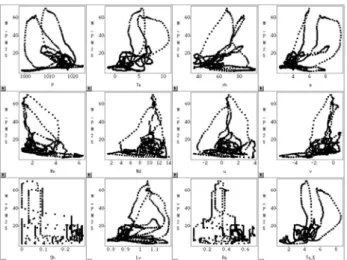
Fig. 6 shows the relationship beteen PM2.5
concentration and meteorological elements at the same time as PM2.5 observed at Tsukuba in January to February 2014: pressure (p), temperature (Ta), relative humidity (rh), water vapor pressure (e), wind speed (Ws) ), wind direction (Wd), east-west wind speed (u), north-south wind speed (v), solar radiation time (Sh), long wave radiation amount (Lv), solar radiation amount (Rs), daily variation of soil 5 cm soil temperature (Ts_5). As shown in Fig.
6, although there is a weak correlation with other elements, the PM2.5 concentration is high when the wind speed is weak or when the west wind, especially when the south wind volume (v <0) is weak. It turned out that the sunshine time is short when PM2.5 concentration is high.
Fig. 6 Relationship beteen PM2.5 concentration and meteorological elements during winter time: air presure P, air temperature Ta, relative humidity rh, absolute humidity e, wind speed Ws, wind diriction Wd, east-west wind speed u, north-south wind speed v, sun shine hours Sh, Long wave rediation Lv, sort wave radiation Rs and soil temperature at 5cm daphs.
4.2 Local environment effects on particle concentration
Changes in the concentration of Kosa particles in Tsukuba (farmland) and Oku-Nikko (forest) were similar. This is probably because Tsukuba and Oku- Nikko are often in the same air mass and the origins of atmospheric particulate matter are the same.
Also, it is considered that there is no generation of PM2.5 and Kosa particles in Oku-Nikko, PM2.5 and Kosa particle concentrations in Oku-Nikko are extrinsic. Therefore, the difference between PM2.5
and Kosa particle concentrations of Tsukuba and Oku-Nikko is considered to be due to the local farmland environment.
The concentration difference between Tsukuba (farmland) and Fukuoka (urban) PM2.5 is quite large.
This is the influence of both the occurrence of PM2.5
in the city and the one from China because Fukuoka is near China, and detailed observation and analysis are necessary to clarify quantitatively in the future.
4.3 Conclusions
Using optical dust particle counter, simultaneous observation of atmospheric particulate matter such as PM2.5 and aeolian dust (Kosa) in Tsukuba (farmland environment), Fukuoka (urban environment) and Oku-nikko (forest environment) shows local environment has great effects on atmospheric particulate matter variations. Urban enviroment has higher concentrition of PM2.5, while farmland envioroment has higher Kosa particle.
Concentration of atmospheric particulate matter in a forest enviroment in mounntain area shuch as Oku- nikko can be traited as base concentration in Japan.
This base anual mean concentration of PM2.5 and coarse fraction of PM10 in 2015 was 4.11μg/m3 and 12.33μg/m3, respectively, while that in Tsukuba (farmland) was 14.28μg/m3 and 54.53μg/m3, respectively and PM2.5 and coarse fraction of PM10
in Fukuoka (urban) was 24.23μg/m3 and 43.12μg/m3, respectively.
These results show
that urban environment producing more PM2.5 and farmland environment producing more coarse particles or Kosa.References:
[1] Atkinson RW,Kang S, Anderson HR, Mills IC and Walton HA, Epidemiological time series studies of PM2.5and daily mortality and hospital admissions: a systematic review and meta-analysis. Thorax, 69, 2014, 660–665.
[2] Ki-Hyun Kim, Ehsanul Kabir, Shamin Kabir, A review on the human health impact of airborne
particulate matter, Environment International, Volume 74, 2015, pp. 136-143.
[3] Patashnick, H., & Rupprecht, G., New real- time monitoring instrument for suspended particulate mass concentration—TEOM.
Journal of the American Chemical Society, 179, 1980. 51.
[4] Willeke, K., & Baron, P. A. (Eds.), Aerosol measurement: principles, techniques, and applications. New York: Van Nostrand Reinold, 1993.
[5] Iwai, K, Recent studies on the effects of suspended particulate matter for human health- Anew target of air pollution policy-, Journal of Japanese Society of Atmospheric Environment.
32(5), 1997, 323~330.
[6] Sakamoto, K, Dynamics of particulate matter (PM2.5) in the atmosphere, Journal of Japanese Society of Atmospheric Environment. 49(1), 2014, A2~A6.
[7] Kanai, Y. A. Ohta, H. Kamioka, N. Imai, H.
Shimizu, Y. Takahashi, K. Kai, M. Hayashi and R. Zhang, Observation of mass concentration and particle size of atmospheric aerosol in east Asia and dry deposition in Tsukuba in combination with optical particle counter observation, Bulletin of the Geological Survey of Japan, 56 (7/8), 2005, 273-301.
[8] Burkart, J. G. Steiner, G. Reischl, H.
Moshammer, M. Neuberger, R. Hitzenberger, Characterizing the performance of two optical particle counters (Grimm OPC1.108 and OPC1.109) under urban aerosol conditions, Journal of Aerosol Science, 41, 2010, 953–962.
[9] Shimizu, A., N. Sugimoto, I. Matsui, K. Arao, I. Uno, T. Murayama, N. Kagawa, K. Aoki, A.
Uchiyama, and A. Yamazaki, Continuous observations of Asian dust and other aerosols by polarization lidars in China and Japan during ACE-Asia,J. Geophys. Res.,109, 2004, D19S17, doi:10.1029/2002JD003253.
[10] Mikami, M., G. Shi, I. Uno, S. Yabuki, Y.
Iwasaka, M. Yasui, T. Aoki, T. Tanaka, Y.
Kurosaki, K. Masuda, A. Uchiyama, A.
Matsuki, T. Sakai, T. Takemi, M. Nakawo, N.
Seino, M. Ishizuka, S. Satake, K. Fujita, Y.
Hara, K. Kai, S. Kanayama, M. Hayashi, M.
Du, Y. Kanai, Y. Yamada, X. Zhang, Z. Shen, H. Zhou, O. Abe, T. Nagai, Y. Tsutsumi, M.
Chiba, J. Suzuki, Aeolian dust experiment on climate impact: An overview of Japan–China joint project ADEC, Global and Planetary Change, 52, 2006, 142-172.
[11] Toshio Fujita: Portable particle counter. Clean Technology, 1998, 34-36.