Youth Behaviors Toward Social Networking
Service (SNS) and its Effect on their
Education as Study Tool -A Case Study of
Nepalese Youth
著者
Thapa Sakhila
学位授与大学
東洋大学
取得学位
博士
学位の分野
国際地域学
報告番号
32663甲第436号
学位授与年月日
2018-03-25
URL
http://id.nii.ac.jp/1060/00010078/
Creative Commons : 表示 - 非営利 - 改変禁止 http://creativecommons.org/licenses/by-nc-nd/3.0/deed.jaDoctoral Thesis
Youth Behaviors Toward Social Networking Service
(SNS) and its Effect on their Education as Study Tool
-A Case Study of Nepalese Youth
ソーシャルネットワークサービスに対する若者の行動と学習ツールと
しての学習環境への影響‐ネパールの若者を事例として
Thapa Sakhila
4810150004
Doctoral Course
Course of Regional Development Studies
Graduate School of Regional Development Studies
Toyo University, Japan
2017 Academic Year
i
博士論文要旨
、本研究では、ネパールの 若者たちの教育とソーシャルメディア (Social Networking Service-SNS)で の若者たちの活動に、ついての研究である。現在、世界中にソーシャルメディアのユーザー数は増加の ー途をたどっている。ソーシャルメディアを、さまざまな目的に使うことも増えてきている。ネパールでは、若 者の人口がますます増え続けていると同時に、若者の中で、教育、職業―または―雇用についての問 題なども増えている状況である。ネパールの教育機関は、教育の質の向上を問題として、その解決に取 り組んでいる。ネパールでは、全国にある多くの初等学校から高等教育までに適切なインフラがなく、情 報通信技術(ICT)もないため、伝統的な教授法しか用意されていない。一方、若者は、家庭やスマー トフォンを通じて、インターネットをより多い使用するため、その影響を受けている。そして、インターネットを使 用すると同時にソーシャルメディアの影響を多く受けている。 ネパールでは、ソーシャルメディアのユーザー比率ががますます増加している。若者たちは、さまざまな目 的に関してソーシャルメディアを使っており、その中でもとりわけエンターテインメントの目的で使う人が多い。 しかしながら、ソーシャルメディアの利点を教育に使用できるならば、教育の質の向上に役に立つと考え た。本研究の主な目的として、ネパールの若者たちの日常生活にソーシャルメディアがどれくらい影響が あるのか、ソーシャルメディアの利点は教育上重要な要素をなれるか、などについてデータ分析して、明 らかにする。本研究の仮説的推定(hypothetical presumption)は、若者たちがソーシャルメディアを使 用する主な目的である1)コミュニケーション、2)情報交換、3)情報検索&学習を通じて、彼ら自身が、 自らの教育環境を拡大していると考える。 その仮説的推定(hypothetical presumption)に関して調査を行ったところ、ネパールの教育機関で は,ICT の技術の使用はまだ初期の段階であるが、多くの割合の若者たちはインターネットにアクセスがで きソーシャルメディアを使用していることが分かった。彼らは色々な目的で SNS を使用してるが、学習行動 もその一つだと明らかになった。学習に SNS を使用する一番の目的ではないが、若者たちにとって、SNS を通じてソーシャルネットワークを構築し、オンラインからオフラインまでにコミュニケーションするのは、一番 簡単で安価な手段をなっていることを明らかにした。そして、若者たちの教育環境をよりよくするために役に 立っていることを明らかにし、結論として、SNS の使用は、若者たちにとって、教育の質を向上するツール になると分かった。
ii
Abstract
In this internet era, the use of social networking services has become an essential activity in our daily lives, especially among the younger generation where its affects can be found in nearly every aspect of their lives. The use of SNS is dramatically increasing among youths. This research has analyzed the effectiveness of SNS on youths daily lives and has examined SNS impact on youths education as an effective tool for study. The negative aspects of SNS cannot be neglected, but this research focused more on the positive effects of SNS on their daily lives and on the education of youths. This research has been divided into three different phases with its different data. Research is focused on the quality of education as the fundamental goal of the study, and Nepalese youths are taken into consideration to evaluate their quality of education. The research approached those youths who are using SNS, along with those youths that are still in the formal education system. Research surveys had been conducted in three phases: under the first phase, the survey is divided into three areas which are (i) Living abroad, (ii) Urban area, (iii) Rural area. The survey questionnaire had been formatted as the main measurement scale to analyze data and all data was collected on the basis of these questionnaires.The survey included pilot area observations, infrastructure observations and informal interviews with related staffs.
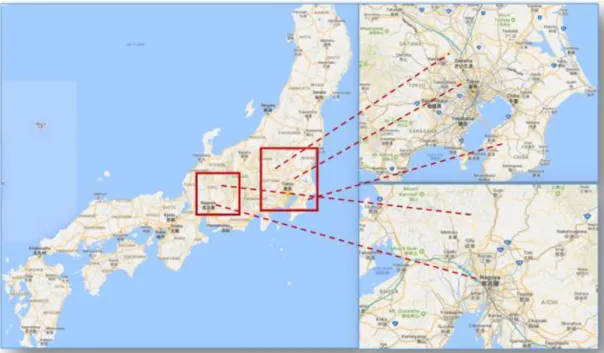
The first survey was conducted in the living abroad in Japan, wherein Tokyo, Saitama, Chiba, Nagoya and Gifu was selected as pilot areas. Survey was operated from December 2015 to April 2016 with face-to-face and web-based format. 152 data were collected and analyzed in first survey area (living abroad). For urban area survey, after selecting three main cities of Nepal; Kathmandu, Lalitpur and Rupandehi, the survey was operated from December 2016 to January 2017. In the urban survey, 151 data were collected and analyzed. Similarly for the rural area survey, after selecting Palpa district of western development region of Nepal, the survey was operated. In the rural area, preliminary data and information were studied, and then field survey was conducted. Total 123 data was collected during rural area survey, and the survey was operated into two formats: questionnaire survey and SNS information diffusion workshop.
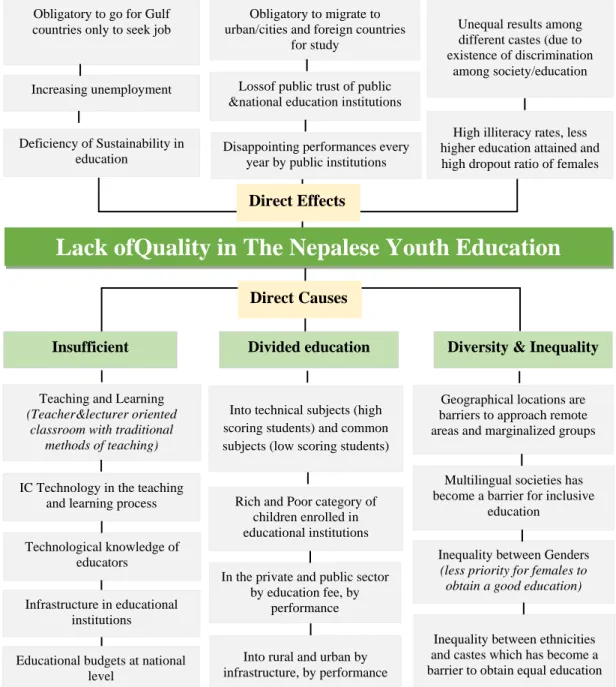
In findings, regarding the quality of youths education; three significant factors has seen behind the lack of quality in Nepalese youths education, i) Insufficient: Teaching and learning(Lecturer oriented classroom with traditional methods of teaching), ICT, technological knowledge of educators, educational budgets ii) Divided education: Into technical subjects and common subjects, rich and poor category, private and public sector and, rural and urban, iii) Diversity and Inequality: geographical location, language, gender and inequality between caste (ethnicity). Mainly, these factors are the obstruction to improve quality in Nepalese youths education which caused rural-urban migration, migration to other countries to seek job and study opportunities.Concerning to improve the quality of youths education, this research is focused on the inclusion of
iii
e-learning methods in Nepalese youths education. E-learning is a process of web-based learning which is directly relevant to the ICT knowledge and devices. The statistics show that throughout the country’s educational institutions’ master plan of ICT are partially operated in 3996 schools, colleges and universities which is only 11.7% of total educational institutions. On the other hand, we cannot deny the fact that SNS has several influential features and a capability to deliver information and news instantly among its users and notably this unique feature of SNS is an attractive element that could motivate the users to use it for various sectors. Youths, those are living in foreign countries and in the cities of Nepal are actively participating in various social activities, political interaction, business promotion and educational discussion via SNS. Even among the youths in rural areas are affected by the popularity of SNS. However, SNS is often taken as the component of communication and SNS are also used as the form of entertainment.
According to the findings of factor variances regarding three survey areas; the huge numbers of Nepalese youth are living in three different regions; they are cities, villages and foreign countries. Hypothetically this research predicts that the living standard of youths in different regions has affected their education and the usage of SNS in terms of the technology convenience. The three factors (living abroad, urban and rural) variance between dependent and independent variables have been analyzed in according to the hypothesis; (1) the frequencies could have differences in conformity with the living standard of youths, (2) Youths in different areas are influenced by SNS, due to the popularity and unique features of SNS. The frequency of the three factors variables has differences in many extents in terms of the living standard of youths. The differences also have seen based on the living lifestyle of youths. Thus, the variances between ICT knowledge and ICT device ownership in terms of technology convenience also has find, however, the ratio has inferior. In addition, all three areas youths are affected by SNS. Most of them are equally participated to use SNS, though the purposes are different to use it for. Youths of age 15 to 30 are more influenced by the use of SNS compared to the other generations. Many areas youths are equally influenced by the popular SNS where internet has accessed. However, the purposes to use are different which is affected by the surrounding circles and societies. In many remote and rural areas even in cities has a generation gap in terms of technology usage. Therefore many youths are using SNS by its generalization and popularity with often without proper guideline and adequate knowledge, which could caused negative consequences. Although SNS has an extreme influential capability to reach out among every area’s people, and these days SNS has become one of the daily activities. SNS has effected in many aspects of youths life, however, it should have adequate knowledge and proper guideline with certain criteria to take advantage from SNS for various aspects.
Regarding the social relationship of youths via SNS and its significance; the case study had analyzed the social relationship of youths in their SNS profile and identified the significance of the relationship. The interaction between teacher-students and
students-iv
students had been analyzed. Furthermore, the activities on Facebook profile also were observed to identify the activities of youths regarding education. According to the case studies the youths have more relationship with their classmates via Facebook by 75.8% frequency of connection. Youths are more frequently interacted with their classmates than other friends via online. Notably, the factors of interaction with classmate are getting information, providing information, casual chats and study discussion had been seen. However, only a few youths are interacted with teachers in the Facebook due to the less participation of teachers in SNS activities. In terms of the information sharing of youths in Facebook, 90% respondents are frequently active to share individual activities such as photos and status. However, youths only 10% had shared educational information. The youth had seen less active to share educational information on Facebook profile compared to share the other social information. Due to the free of charge and easily accessible in online to offline, youth are using Facebook more to communicate with their friends,where 60.6% agreed that the Facebook is an easy and comfortable means to do educational interaction with their classmates.
In this research the factors, availability of technology, youths behavior toward SNS and impact of SNS on education were explored as a significant influencing factors to enhance learning environment of youths. The influencing factors was analyzed by important variables as the hypothetical presumption of the research, they are: H1-Communication (independent), H2-Sharing (independent) and H3-Finding and Learning (dependent). In the findings, among three significant variables, communication has the strongest influences on youth motivation to enhance the learning environment. This implies that this factor is the most important one in interaction. Secondly the independent variables, sharing had also influencing the youths to share information regarding education; however, only a few youths were sharing educational content through popular SNS like Facebook. At the same time, such SNS those particularly constructed for the educational purpose had more influences on sharing educational content. Regarding the dependent variables, finding and learning had influenced the learning environment of youth. The behavior of sharing, motivated on searching the relevant sources along with has helped youths to receive online educational sources and information. This implies that the behavior of youths toward SNS has motivated for e-learning which has helped to reduce digital divide among the learners. The research had certain limitations while applying the survey design in practical. One of major limitations of the research was the lack of computer and Internet in the institutions and the less participation of teachers on SNS. That caused to apply SNS as informal learning tool. However, the survey motivated the youths to use SNS as an important component of e-learning. Similarly, this research provides insights for teachers who are interested to use SNS as a part of their teaching, research motivated to use SNS’s unique features to take advantage on teaching.
v
Acknowledgement
I am very grateful towards all the people who contributed in many ways to the work described in this research. First and foremost, I am gratitude to the Toyo University for granting me an opportunity to upgrade my academic career. Also thankful to the Ministry of Education, Culture, Sports, Science and Technology-Japan (MEXT) for provided me the three academic years scholarship to encourage my studies.
I would like to thanks for different academic publications; (i) Toyo Annual Newsletter (2015 年度東洋大学大学院紀要第 52 集), (ii) The International Journal of E-Learning and Educational Technologies in the Digital Media (IJEETDM), (iii) The Society of Digital Information and Wireless Communications (SDIWC); Proceedings of The Fifth International Conference on E-Learning and E-Technologies in Education (ICEEE2016), Malaysia 2016, (iv) The 2017 IEEE/ACM International Conference on Advances in Social Networks Analysis and Mining-TeleSon, for playing role of requirement to complete this academic level. Additionally, I would like to give my thanks to academic societies; XXXV Sunbelt Conference of the International Network for Social Network Analysis (INSNA), Brighton, London,第 100 回ドキュメントコミュニ ケーション研究会(参加者募集)テーマ「コミュニティのドキュメント活用技術および一般」
(Information Processing Society of Japan-IPSJ), The Fifth International Conference on E-Learning and E-Technologies in Education (ICEEE2016) Kuala Lumpur, Malaysia,
第 125 回情報基礎とアクセス技術・第 104 回ドキュメントコミュニケーション合同研究発表会
(Information Processing Society of Japan-IPSJ), and The 2018 IEEE/ACM International Conference on Advances in Social Networks Analysis and Mining (ASONAM-TeleSon), for giving me an opportunity to participate in conference for research presentation.
I heartily thankful to my supervisor Professor Nakabashami Chieko for accepted my research under her supervision and provided essential guidelines, comments, advices from the beginning phase till the end of this research. She has played most important role for completing this research, this research wouldn’t have been completed without her support. I would like to give my heartfelt thanks to sub-supervisor Professor Norihisa Shima, for accepting my research and motivating me by giving adequate help, excellent advice and encouragement. I would also like to thank retired Professor Maria Rosario Piquero Ballescas as my sub-supervisor during my initial two years who gave me right guidelines and suggestions during this research.
Similarly, I am very privileged and gratitude to all of the professors of this faculty, this academic journey have been complete and successful because of their advice and suggestions, such creativity, knowledge and experience that I gained during this period has really affected my present and future career. Heartfelt thanks to all of our respected
vi
professors. I am feeling glad to remember all those staff member of Toyo University’s administration and thankful to them for their significant support.
As quantitative data has an important role in achieving qualitative success in research, firstly I am grateful to different Nepalese students studying in language institutes, vocational colleges and universities in Japan and also studying in different colleges and universities of Nepal who are vital elements of this research, for giving me their important time and help. I would like to thank especially to facilitator Professor Mr. Munesh Ratna Gubhaju for helping me to collect data and information during survey operation, similarly I am also thankful to the Professors of Rammani Campus, Rupandehi for their support to collect the data and information. I would like to remember the two members of Nepal Japan Students Society (NJSS) Mr. Santosh Babu Chokal and Mr. Chetan Paudel for providing me adequate data regarding the situation of Nepalese students in Japan.
I would also like to thank Mr. Sanjeev Thapa (Brother) who helped in the correction or edit English language writings during the thesis writing. I always received positive response, encouragement and emotional support by my parents and loved one so they are also entitled to thankfulness. I am also thankful to my well-wishers' Senior Pastor, Pastors and all the brother and sister of Victory Christian Center (VCC) as indirect support for encouraging emotionally and spiritually. At last, I like to thank all senior colleague, counterparts and friends of Regional Development Studies faculty to make this academic interesting, meaningful and fruitful and providing essential guidelines for the research.
Thapa Sakhila 2017 Academic Year
vii
Acronyms and Abbreviations
B2B - Business-to-BusinessCD-Rom - Compact Disc Read-only-memory
CF - Community Friend,
CM - Classmate
CS - Case Study
DEO - District Education Office DOE - Department of Education e.g. - Exempli Gratia
EFA - Education for All E-learning - Electronic Learning E-mail - Electronic Mail
etc. - et cetera (Latin phrase) stand for and (et), the rest (cetera) FF - Friend of Friend
FM - Family Member
FM - Frequency Modulation
FRP - Formative Research Project GDP - Gross Domestic Product GPA - Grade Point Average
Hrs. - Hours
HS - High School
i.e. - id est (Latin phrase) stand for Exempli Gratia ICT - Information Communication Technology ILO - International Labour Organization
INGO - International Non-Government Organization IAAS - Institute of Agriculture and Animal Science IOE - Institute of Engineering
ISP - Internet Service Provider
ISPAN - Internet Service Provider’s Association of Nepal IT - Information Technology
JASSO - Japan Student Service Organization
KM - Kilo Meter
KM2 - Square Kilo Meter
LA - Living Abroad
MoE - Ministry of Education
N/A - Not Available
NCED - National Centre for Educational Development NCF - National Curriculum Framework
NGO - Non Government Organization NJSS - Nepal Japan Students Society NLSS - Nepal Living Standard Survey
viii
NOC - No Objection Certificate NPA - National Plan of Action
NPHC - National Population Housing Census NTC - Nepal Tele Communication
OLPC - One Laptop Per Child
PC - Personal Computer Ph.D - Doctor of Philosophy PPP - Public-Private Partnership PU - Purbanchal University Pvt. Ltd. - Private Limited R - Relative
RED - Regional Education Directorates S.E.E - Secondary Education Examination SIM - Subscriber Identification Module SLC - School Leaving Certificate SNA - Social Networking Analysis SNS - Social Networking Service SSRP - School Sector Reform Plan TU - Tribhuvan University UAE - United Arab Emirates U.S.A. - United State of America
UF - Unknown Friend
UNESCO - The United Nations Educational Scientific and Cultural UNICEF - United Nations International Children’s Emergency Fund UNT- University of North Texas (Nepalese Student
Association)
UTL - United Telecom Limited
VDC - Village Development Committee WHO - World Health Organization Wi-Fi - Wireless Fidelity
ix
Table of Contents
博士論文要旨 ... i
Abstract ... ii
Acknowledgement ... v
Acronyms and Abbreviations ... vii
Table of Contents ... ix
List of Tables ... xii
List of Figures ... xiii
CHAPTER 1 ... 1
1. Introduction... 1
1.1 Background ... 1
1.1.1 Widespread of Social Networking Services ... 4
1.1.2 Issues Regarding Social Isolation ... 6
1.1.3 Social Networking Service (SNS) Use in Education ... 7
1.2 Research Context and Framework ... 8
1.2.1 Purpose of the Research ... 10
1.3 Goal and Objectives ... 12
1.4 Methodology ... 12
1.5 Literature Reviews ... 14
1.6 Significance of the Study ... 15
1.7 Scopes and Limitations ... 16
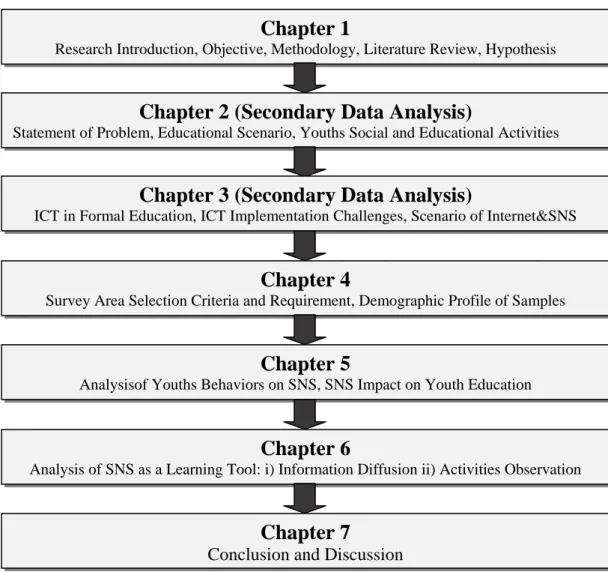
1.8 Layout of Thesis ... 17
CHAPTER 2 ... 18
2. Secondary Data Analysis-1 (Quality of Education) ... 18
2.1 Statement of Problems ... 18
2.2 Youths Activities and Educational Structure ... 20
2.2.1 Youths Labor Migration ... 22
2.2.2 Youth’s Participation in Social Activities ... 24
2.3 Youths Education Scenarios ... 26
2.3.1 Non-formal Education for Literacy Expedition ... 30
2.4 Academy Performances ... 30
x
2.4.2 Study Abroad ... 34
2.5 Summary of Findings ... 35
CHAPTER 3 ... 37
3. Secondary Data Analysis-2 (ICT in Education) ... 37
3.1 ICT in Formal Education and Its Challenges ... 37
3.1.1 Challenges of ICT Implementation ... 40
3.1.2 Private Sector Activation for ICT Education Enhancement ... 41
3.2 Telephone Penetration and Internet Users ... 42
3.3 Widespread of Social Networking Service ... 45
3.4 Scope of E-learning through SNS ... 48
3.5 Summary of Findings ... 49
CHAPTER 4 ... 51
4. Research Area and Demographic Profiles ... 51
4.1 Introduction ... 51
4.1.1 First Survey Area and Data Collection: Living Abroad ... 51
4.1.2 Second Survey Area and Data Collection: Urban ... 57
4.1.3 Third Survey Area and Data Collection: Rural ... 61
4.2 Variance between the Factor Variables ... 65
4.2.1 Variance of Educational Environments ... 65
4.2.2 Variances of ICT Knowledge and Device Ownership ... 67
4.2.3 Variance of SNS Influence ... 67
4.3 Summary of Findings ... 68
CHAPTER 5 ... 70
5. Behavior of Youth toward SNS ... 70
5.1 Introduction ... 70
5.2 Integrated Demographic Profile and Descriptive Statistics ... 71
5.3 Internet Generalization and Its Factors ... 72
5.3.1 Factor Behind to Spend a Time on Internet ... 74
5.4 Youth Involvement on Social Networking Services (SNS) ... 75
5.4.1 Friendship Network of Youth in SNS Profile ... 78
5.4.2 Significant Factors to Use of Various Social Networking Services ... 81
5.5 Summary of Findings ... 84
5.5.1 Impact of SNS on Daily Lives of Youths ... 84
xi
CHAPTER 6 ... 86
6. Impact of SNS on Youths Education as a Learning Tool ... 86
6.1 Introduction ... 86
6.1.1 Hypothesis of Youth Behavior to Use of SNS and Its Beneficial Impact on Education ... 88
6.2 Youth Perspective on SNS as not an Appropriate Tool for Education ... 99
6.3 Behavior of Youth toward SNS Help to Include E-learning in Education ... 101
6.4 Summary of Findings ... 103
CHAPTER 7 ... 105
7. Conclusion and Discussion ... 105
7.1 Brief Description of Findings, Conclusion and Discussion of Research ... 105
7.1.1 The Impact of Social Networking Service (SNS) on Youth’s Daily Activities and on their Education ... 107
7.1.2 The Perception of Youths toward SNS between the Understanding and Behavioral Activities. ... 109
7.1.3. Conclusion findings of SNS’s Advantages and Its Beneficial Features for Education ... 111
7.1.4 Social Networking Service as a Learning Tool to Enhance Educational Environment ... 112
References... 115
Appendix 1 ... 122
Appendix 2 ... 128
xii
List of Tables
Table 1 Old and New School Structure of Nepal ... 21
Table 2 Youth (16 to 40) Usual Activities by Percentage ... 22
Table 3 Categories of Youths Occupation in Numbers ... 23
Table 4 Rights and Awareness Scale of Youths ... 24
Table 5 Reasons of Non-involvement in Social Activities ... 25
Table 6 Number of Schools and Students ... 27
Table 7 Youth Literacy Rates from 1995 to 2010 ... 27
Table 8 TU Courses and Programs ... 28
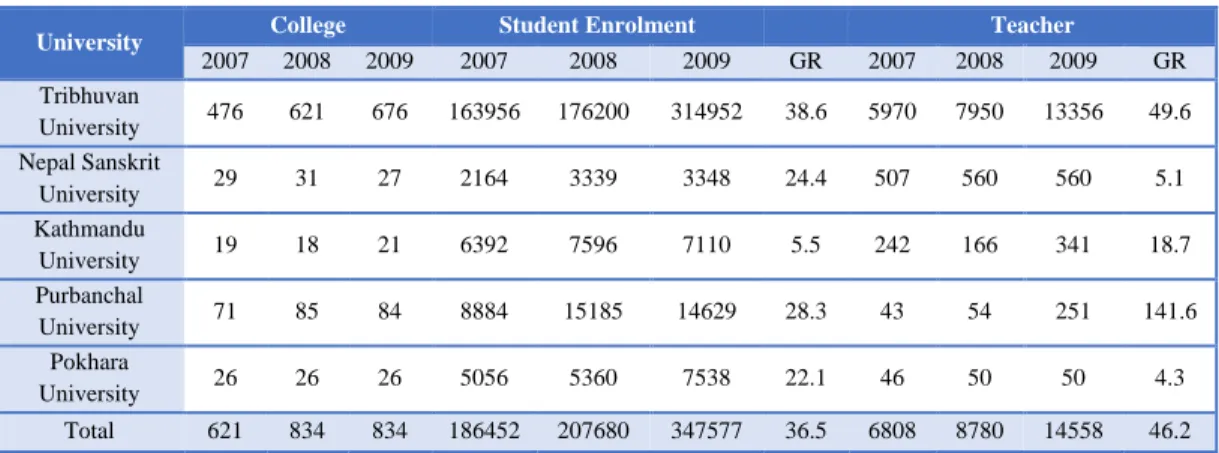
Table 9 Colleges, Student Enrollment and Teacher Numbers of 5 Universities ... 29
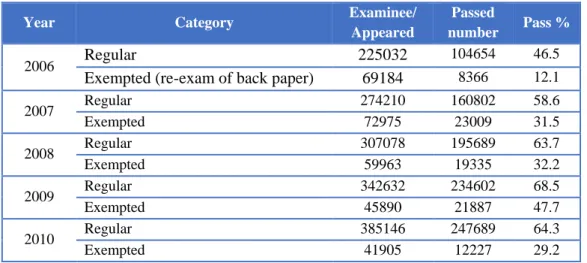
Table 10 School Leaving Certificate (SLC) Results ... 31
Table 11 HSE Results (Grade 11 and Grade 12) ... 32
Table 12 Higher Education Level Results (All Faculties) ... 32
Table 13 University, Public and Private Campuses Results ... 33
Table 14 Destination Countries for Study (n=number) ... 34
Table 15 Allocated National Education Budget... 41
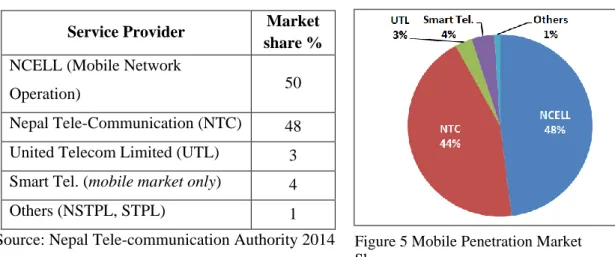
Table 16 Providers of Mobile Phone and Internet Data Service ... 43
Table 17 Profile Holder in Most Popular SNS ... 45
Table 18 International Student in Japan ... 52
Table 19 Respondents Demographic Description of First Survey Area ‘Living Abroad’ ... 55
Table 20 Respondents Demographic Description of Second Survey Area ‘Urban’ ... 60
Table 21 Respondents Demographic Description of Third Survey Area ‘Rural’ ... 64
Table 22 Variance between Three Factors of Learning Environments ... 66
Table 23 Variances between Three Factors of ICT ... 67
Table 24 Factor Differences between Dependant Variables ... 68
Table 25 Total Respondent Description (Three Area’s Merged Data) ... 71
Table 26 Frequencies of Internet Use by Devices ... 73
Table 27 Internet Ownership in Accommodation and in Studied Institutions ... 73
Table 28 Frequency of Activities (Component) by Three Survey Area ... 75
Table 29 Variance of SNS Users in 3 Survey Areas ... 77
Table 30 Frequency of Components by Three Different Areas ... 82
Table 31 SNS as Learning Discussion Tool through Communication (n=426) ... 88
Table 32 Frequency of Learning Discussion Tool by Three Areas (H1-Communication) ... 89
Table 33 Frequency of Communication on Learning Activities ... 90
Table 34 SNS as an Educational Sources Sharing Tool (n=426) ... 91
Table 35 Frequency of Educational Sources Sharing Tool by Three Areas (H2-Sharing) ... 92
xiii
Table 37 SNS Enhanced Learning Environment by Finding and Learning Behavior
(n=426) ... 95
Table 38 SNS Enhanced Learning Environment by Three Areas (H3-Finding and Learning) ... 96
Table 39 Inappropriate for Learning Tool by Three Areas Frequency ... 100
Table 40 Conclusion of the Three Areas Factor Variances ... 111
List of Figures
Figure 1 General Framework of Research ... 9Figure 2 Youth Behaviour to use SNS help to Improve Quality of Education. ... 11
Figure 3 Structure of the Thesis ... 17
Figure 4 Problem Analysis of Research Regarding to Youths Education ... 18
Figure 5 Mobile Penetration Market Share ... 43
Figure 7 Internet Surfing Devices and Web Traffic... 44
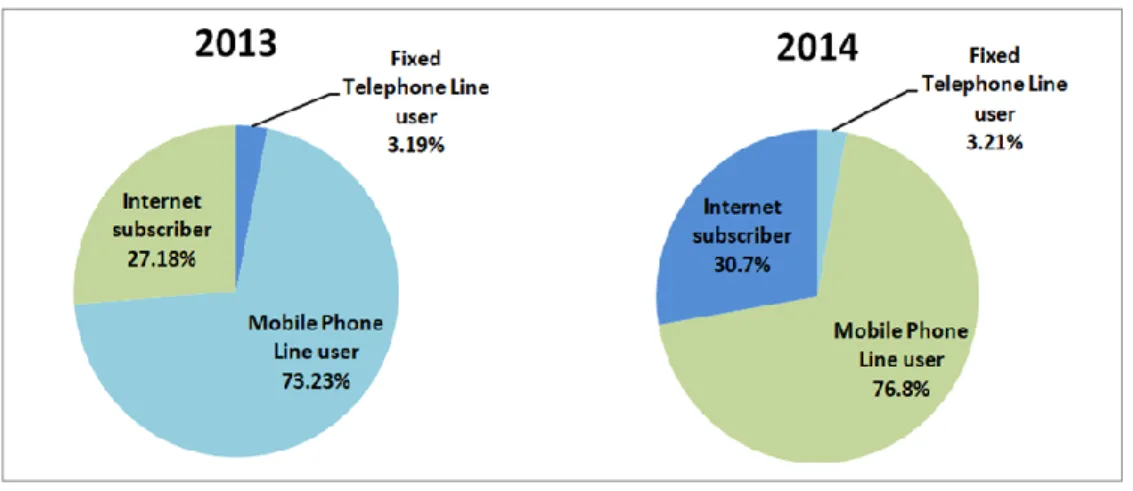
Figure 6 Increased Telephone Penetration Rate... 44
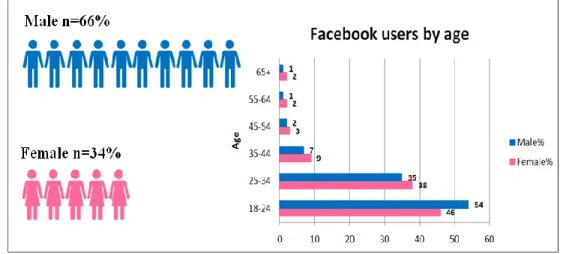
Figure 8 Monthly active Facebook Users by Gender & Age ... 46
Figure 9 Survey Area in Japan (Source: By Google Map) ... 53
Figure 10 Second Survey Area (Urban): Rupandehi, Kathmandu and Lalitpur ... 59
Figure 11 Education Level and Status (Source NPHC 2011) ... 62
Figure 12 Map of Palpa Distict ... 63
Figure 14 Map of Pilot Area; (1) TMC Science, (2) Palpa Awashiya HSS ... 63
Figure 13 Map of Nepal ... 63
Figure 15 Frequency of Internet User in a Single Day ... 72
Figure 16 Frequencies of Reason behind to Use of Internet ... 74
Figure 17 Various SNS Used Ratio by Youths ... 76
Figure 18 Ratio of Social Relationship in Facebook Profile ... 79
Figure 19 Frequency of Facebook Friendship Interaction ... 80
Figure 20 Factors Behind the use of SNS ... 81
Figure 21 Common Behaviors of Youth During Communication ... 83
Figure 22 Inappropriate for Learning Tool by Youths Perception ... 99
Figure 23 StudentNepal Page and Learning Activities by Users ... 102
Figure 24 General Theme of Research... 106
Figure 25 Probability of Analyzed Consequences ... 107
Figure 26 Classrooms of Palpa District Survey Venue (Undergraduate level) ... 108
Figure 27 Youth activities on Facebook Profile for Study Purpose ... 109
Figure 28 Contradiction Between the Thought and Behavior-1 ... 110
Figure 29 Contradiction between Youths Thought and Behavior-2 ... 110
Figure 30 Conclusion of 3 Hypothesis Behaviours to Enhance Learning Environment of Youth ... 113
1
CHAPTER 1
1. Introduction
1.1 Background
Education is often called the backbone of development for nations and it has been established as an important base for modern life. For educational awareness, there are a lot of different types of education system such as formal, informal and non-formal education system for the public, however formal or academic education is the most accepted as the first priority. To get an education is an activity with the aim of
improving knowledge, skills and abilities; it is a synthesis of formal, non-formal and informal knowledge. Formal education implies the existence of an educational system (Milan, Natalija, Radica, 2015). It is not possible to imagine a society without formal education. Formal, informal and non-formal learning is defined by CEDEFOP Glossary (2008) as:
Formal learning: “Education that happens in an organized and structured
environment, in other words, it includes classes, face-to-face workshops and other educational events. Formal learning is intentional from the learners’ perspectives and it typically leads to validation and certification (pp-28).”
Informal learning: “It is not organized or structured in terms of objectives or time
but informal learning occurs based on everyday activities related to work, family or leisure activities which is in most cases unintentional from the learners’ point of views (pp-39).”
Non-formal learning: “Learning is not explicitly designated as learning but it
contains significant learning environment. Non-formal learning is intentional from the learner’s perspective but typically does not lead to certification (pp-54).”
Recently, in modern society regarding the sustainability of education, more emphasis is given to the quality in education. It affirmed that quality was the ‘at the heart of education’ a fundamental determinant of enrolment, retention and achievement (EFA Global Monitoring Report, UNESCO, 2005). To develop the quality of education, the academy should have quality learning environments. In different periods of time, quality in education has been measured in different aspects and has been given different definitions according to the necessity of that time, period or environment. According to UNICEF in ‘Defining Quality in Education’, the learning environment basically should be concerned with the physical elements and psycho-social elements with discipline and policies of the academy. Physical elements is defined as: it should have good quality of school facilities, proper interaction between school infrastructure and other quality dimensions and also class size matters to improve the quality of education. Regarding psycho-social elements: it is defined as the education environment that should have peaceful safe environments, non-violent behaviour from teachers to students. Discipline and policies of the academy: it should be inclusive for all and also should be a non-violent environment. Additionally service delivery also described
2
which indicates that the academies should have the provision of health services to the students (UNICEF, 2000).
Along with formal education, over time the educational systems have dramatically changed, for example educational system, management, curriculums, text books and teaching methods are constantly changing. Such educational modifications are happening from school level to higher education. Moreover, many countries are concerned with the globalization of education so it has become a major factor to make essential changes in educational systems these days.
To develop the quality of education, it is important to make teaching methods more understandable and to establish information communication technology (ICT) as an essential element which hasto be included in the education from school level (UNESCO, 2004, UNESCO, 2013). ICT is included not only in the curriculum but is being used as a tool for educational instruction. ICT is a new concept in pedagogical practice which has become one of the essential pillars to develop modern societies, therefore the mastery and understanding of basic ICT skills and concepts in imperative (Dirgha Raj Joshi, 2014). In many developing nations ICT has not been accessed thoroughly, due to the insufficient equipment and lack of technical manpower. Because these problems, it effects the regular use of ICT where it is accessible (survey of Schools’ ICT in Education, 2013). Although, it is necessary to include ICT as regular courses in education to deliver the essential knowledge and skills of current technology to the children from school level.
In the preliminary phase, ICT was only defined as computer programs and software programs in order to beable to just use computer and basic programs, however these days ICT is not limited to the above definition due to the internet. So the definition of ICT is extremely broad and profound. Consequently, after the development of the internet in communication technology the web-based learning trend had been developed to provide the educational resources and materials for teachers, students and all kinds of learners. Thus, these web-based learning methods being more effective as advance learning method for learners. The web-based learning process has been defined e-learning these days which is very significant to include modern technologies in education. Previously e-learning focused on computer-assisted learning, where part or all of the learning content is delivered digitally (Olojo Oludare Jethro, Adewumi Moradeke Grace, Ajijola Kolawole Thomas, 2012). E-learning is the developed format of distance learning as well as blended learning. Distance learning is indispensable linked with modern learning surroundings and information technology. The virtual learning environment plays the most important role in distance learning (Vilmante Kumpikaite, 2016). Along with the inclusion of technology in education, teaching and learning methods have been transformed from conventional education to modern education methods.
3
According to the Olojo, Adewani, Ajisola (2012), e-learning is the use of internet technologies to enhance knowledge and performance where the teaching-learning method shifted from conventional education methods to ICT-based personalised, flexible, individual, self-organised and collaborative for all teachers and learners. They mentioned that the e-learning benefits are an essential for education that can improve the quality of ones learning experiences and extend to reach every lecturer and learner.
The effectiveness of e-learning is increasing among the learners these days, at the same time new platforms and services in communication technology are being invented. Recently social networking services (SNS) are the most effective and successful invention of communication technology which has a strong accessible capability to reach out among to every community. And youths are more affected by the widespread of SNS in this digital era. The development of various SNSs has defined social communication differently in human communication history. In these days, numerous social networking services have emerged, and these services are reshaping the ways that people communicate, interact, collaborate, work and even learn (Yesemin Gulbahar, 2013).
It can be seen that SNS has been used in different fields for various purposes, because of its unique features it has become important in the field of communication technology. Social communication, social collaboration and social interaction are natural human processes due to which we can say the above helped establish and develop society. Milan, Nitalija, Radica, (2015) explain in their article named ‘The Use of Social Network’s for E-learning Improvement’ that the humans are social beings by nature, therefore before the invention of the internet, when they were in their communities they build contacts and friendships in the streets, public areas and markets showrooms. These days, the communication platform has changed dramatically so most of us now use virtual communication platforms instead of face-to-face contact.
Through SNS the social communication has transformed into a virtual format and SNS has become the most suitable platform for social network building, group discussions, self-expressions and information exchange these days. Despite the beneficial features of SNS that has effects on many communities and people of all ages, the extreme effects of social networking services has been seen especially among the youths, due to them possessing the skills and ability to use this technology. “The majority of users of SNS’s are young people in higher education” (Preeti Srivastava, 2012, pp.11). Regarding the number of SNS users, according to the research by Pew Research Center (Internet & Technology, 2017), the United States statistics collected between 2006-2016; on gender-wise user numbers show that there is not much difference between male and female users. However, statistics of the country-wise demographic SNS user, especially in developing countries shows that the numbers of female SNS users are fewer than males. Also, as for Facebook statistics from Sproutsocial.com, the female users are 44% whereas male users are 56% out of the total number of SNS users.
4
Compare to the other SNS users number, the age of 15-24 and 25-34 youths SNS users are higher. Below are some reasons regarding the higher number of youth SNS users.
The literacy rate of youths (15-24) is higher in developed and developing countries (UNICEF, 2016, The World Bank-updated), it is thought that the literacy rate has affected the number of age-wise SNS users. Also in many developing countries, the literacy rate of females is lower than males, so there statistics have affected the number of SNS users by gender.
According to the statistics portal ‘Internet use by age group world-wise, 2014’, the statistics of internet users of 15-24 (26.5%), 25-34 (26%), 35-44 (20.4%), 45-54 (13.7%) and 55+ has (12.7%). Between the ages of 15 to 24 has higher percentage of internet users compared to other ages, which could be the reason of the higher number of youth SNS users.
Statistics of NDSU ‘Agriculture Communication, 2015’ the United State Smartphone users, Smartphone ownership are mostly from the age group of 18-24 (90%) and 25-34 (89%). Likewise, along with an increased number of telephones penetration into developing countries, the numbers of Smartphone users has highly increased. Generally, due to ease of access of the internet via Smartphone, the SNS among youths is also easily accessed, so the youth users are much higher than other SNS users.
1.1.1 Widespread of Social Networking Services
According to aresearch paper by Alessandro (2017) on social networking, the single definition of the term ‘social networking’ does not exclusively belong to digital technology on the contrary, the research mentioned that social networking has been studied from the 20th century with the objectives to comprehend how the people of a certain community interact and which mechanism can determine the interaction itself. Initially, though the interpretation and definition of the social communication network was based on face-to-face interaction, now the medium of the social communication network among people has changed. These days social networking refers to all activities that are carried out within specific online services that provide free space and software tools which allow people to create networks. In other words, a social networking service is a web service that allows individuals to construct a public or semi-public profile (Alessandro, 2007). Now, the social network is not limited to face-to-face interaction but includes a great aspect of virtual communications.
In general, the social network which is established by verbal communication or face-to-face interaction is limited to certain communities, certain relationships and certain area. On the contrary, virtual communication services can construct social relationships in a wide range of networks from surrounding societies as well as from the other societies. SNS have played an important role in establishing relationships between the people of different areas, countries and cultures around the world. Likewise, SNS has provided independent space for different purposes like expressing opinions, sharing news, capturing moments of daily lives through photos and videos including building
5
relationships. SNS are modern interactive communication channels through which people connect to one another, share ideas, experiences, pictures, messages and information of interest (Helen, Charles, Jennifer, 2014). Within a short period of time SNS has succeeded to establish its own unique identity due to its beneficial features and popularity.
SNS have attracted millions of users, many of whom have been made to use these services as parts of daily activities (Helen, Charles, Jennifer, 2014). It is like a normal routine and daily activity to use SNS where internet is accessible today. Along with the increasing an amount of users, the number of different kinds of networking services is also being developed constantly for different purposes with different unique features. Therefore some networking services have their own distinticusers. However, every social networking service has one common objective which is to connect people around the world. In the research of Social Media Today “Top Social Network Demographics 2017’; it is more challenging to established the statistics of social network demographics due to the fluctuation number of SNS users.
With regards the data reference, there are over 2.8 billion active users which is 22% higher than last year (2016), but this number has not been taken from the one single SNS platforms, but from all SNS platforms totally. In which 28% is related to one person using one SNS, whereas user using two SNS is 24%, in addition percentage of users using 3, 4 and 5 SNS are 16%, 8% and 4% respectively. In recent years, when we observe the statistics of most popular and practised SNS, then Facebook has established itself as the global internet phenomenon which was released by Mark Zuckerberg in 2004. Though the founder of Facebook has developed other networking websites, Facebook is the most popular social networking site to date (A brief history of Facebook, Sarah Philips, 2007). While observing Facebook’s user statistics, there are 1.9 billion monthly active users in which, predominantly female users are more in numbers with 83% whereas male users are 75%. Likewise, YouTube is second largest visited service by users. Recently YouTube has been established as the most used video networking service which has 1 billion users. Users of YouTube have predominantly male with 55% and 45% female users.
Instagram is also one of the fastest growing social networking services. Though Instagram launched in October 2010, in the last three years, Instagram users have increased phenomenally (DASH BURST, The History of Instagram, Mikaela Rakos, 2014). According to the data of 2017, Instagram has 600 million active monthly users, where 38% are female and 26% are male. 90% of Instagram users are below 35 years of age as indicated by statistics. After Instagram, Twitter is the next most popular networking site, whose active users are 317 million. The studies show that although having such huge number of users, 53% of total users never post or update in addition users only spend an average of 2.7 minutes on Twitter a day. Pinterest which has the same amount of users as Twitter is popular especially among female users. Pinterest has interesting and different consistent users’ generations, according to which 50-64
6
age group people use it consistently, 30-49 years of age people are the second consistent user group and the 18-29 group of people are the third1. LinkedIn users are comparatively increasing these days which launched in late 2002 for professional and business purposes. LinkedIn is also known as professional and a B2B service which has 106 million users. LinkedIn doesn’t have such difference regarding the male and female subscribers.
There are many more active social sites apart from the ones mentioned above like REDDIT, Google+, MySpace, Bebo, Snap chat, Yahoo Answers, Tumblr etc., whose user numbersare unstable. There are other developed SNS used in particular areas, however due to less user numbers, some SNS have over time such as Friendster 2002 (inactive), Orkut, 2008 (dissolved in 2014), Yahoo! Buzz, 2008 (dissolved in 2011) and many others.
1.1.2 Issues Regarding Social Isolation
As mentioned in the result of studies by biomedicine of prevention (2016) on 305 University students; ‘The effect of SNS use on psychological well-being is controversial: on the one hand, frequent message exchanges between SNS friends may help people to form stronger relationships; conversely, others contend that these newly available SNS relationships are superficial or ephemeral and that they displace authentic face to face contact, which in turn leads to social isolation and dismantles social cohesion’. Under the initial feature of social networks, though establishing relationships is the main purpose, it has minimized face-to-face participation on social activities around our society. Especially encouraging physical social isolation of the younger generations are issues raised as studies conclude. Also, it has affected the creativeness of younger generations negatively and created an environment for youths to spend more time in the virtual world in a limited area.
Many relationships created in social networks are not permanent, inauthentic, made for only entertainment and difficult to measure relationship authenticity because of which there are possibilities that relationships are fake. The relationships made through social networking, creates many friends but the quality and integrity of these friendships are not always true. Along with it, the people in SNS are not always honest and the relationshipsis not reliable always (Ashraf Jalal Yousef Zaidieh, 2012). Due to a high percentage of daily SNS use, physical participation in social activities have minimized and issues such as cyber bullying, a decrease in productivity, the destruction of individual privacy including cyber crimes have increased. Therefore, SNS has many positive aspects along with some negative aspects.
1Data statistic has been taken from Social Media Today ‘Top Social Network Demographic 2017’; it has been explained here according to the published data on March 21, 2017.
7
1.1.3 Social Networking Service (SNS) Use in Education
Different types of social networking services with its various features have become an essential tool for multiple purposes in the web 2.0 of the digital era. Because SNS is a multi-featured tool, people from different fields are using it for individual objectives, group work, company promotion, educational activities, journalism, business advertisements and other various purposes. SNS is a public platform, so the people are using it in various multi-sectors instead of just one single sector. According to the articles of many other studies, SNS has been used as a tool for the study in many colleges and universities in developed countries. A lot research has been conducted regarding SNS as a learning tool regarding different groups of students, and positive results have found that SNS can become an important tool in education. However, few colleges and universities have implemented such SNS as a regular and direct study tool in the classroom.
The research of Nicole A. Buzzetto-More in 2012 based on social networking in undergraduate students about the popular SNS among the new generation, the use of SNS is expanding instead of conventional teaching and learning method. SNS has provided new opportunities for creative, authentic and flexible non-linear learning experiences of the study environment. In that research, SNS has supported learning theories like the social learning theory, constructivism, learning available on demand, authentic learning, student-centered learning, student involvement, digital literacy, media richness and sensory complexity2. Another research of Nicole A. Buzzetto-More’s in 2014, the study was conducted by six hypothetical presumptions (H1-H6), based on undergraduate students perception and prediction on ‘The use of YouTube in teaching and learning processes.
H1: Use of YouTube enhances instruction
H2: Students are most likely to visit YouTube on mobile device
H3: Frequent uses of social networking services like Facebook, YouTube are more likely to accept the use of YouTube in the teaching-learning process.
H4: Length has an impact on the decision to view a video. H5: Course delivery formal impacts length preference H6: Course delivery format impacts audio preference3
2
Nicole A. Buzzetto-More, 2012 ‘Social Networking in Undergraduate Education’ P-68, cited references of learning theory; 1. ‘Social learning theory ‘: Greenhow & Robelia (2009), Smith (2009), Brown (2008), Ellison, Steinfield & Lampe (2007), Buzzetto-More (2012). 2. ‘Constructivism’: Cheal (2012), 3. ‘Learning available on demand’: Fogg et al. (2011), United States Department of Education (2010), 4. ‘Authentic Learning’: Yang Su, 5. ‘Student-Centered Learning’: Greenhow as reported in Yang Su, (2011), 6. ‘Student Engagement’: Shih (2011), Webb (2009), 7. ‘Digital Literacy’: Coiro et al. (2008), 8. ‘Media Richness and Sensory Complexity’: Cheal (2012), Jone & Shiao (2011).
3
Hypothesis has mentioned according to Nicole A. Buzzetto-More, 2014, ‘An Examination of Undergraduate Student’s Perceptions and Predilections of the Use of YouTube in the Teaching and Learning Process’, from p-22-29.
8
In the conclusion of that research, the researcher defined ‘incorporation of YouTube enhances instruction and increases student interest; moreover online students especially indicated a greater preference for the adoption of YouTube than their hybrid and in-person counterparts.’ Therefore during the use of SNS in teaching and learning processes, there could positive aspects like flexiblity, repeatable convenience and accessibility. By its usage, the learning environment was made more interesting as well as the pedagogical process including motivating study adaption and advanced technological methods which enhanced the educational environment of the students.
1.2 Research Context and Framework
‘Learners as digital natives are permanently tied-up to ubiquitous, exceedingly accessible, ever advance technologies that transform users from passive consumers to creators of user-generated content exchanged through a host of networked communities (Nicole A. Buzzetto, 2012)’.
These days, SNS is an integral part of e-learning. SNS provides the appropriate spaces for social collaboration for learners. In the area of e-learning, the social networking services help to handle the difficulties raised by educators recently (Ashraf Jalal Yousef Zaideh, 2012). Many SNSs can provides users with information sharing opportunities via chats, messages, video, blogging, file sharing including photo sharing and most of all are provided free of charge (Mural Kayri, Ozlem Cakir, 2010). In an overview of the prevalence of social networking services in our current society; SNS has been dominating communities of developing countries along with developed countries. SNSs’ is becoming increasingly popular not only in industrialised nations (Danah M.Boyd, Nicole B. Ellison, 2007). Similarly, because of the generalization of internet access and awareness among people, most of the communities have also been affected by SNS.
Although there are educational benefits of SNS as a learning tool, SNS has not been used directly incolleges and universities in many developing countries due to various reasons. Some of these most common reasons are becoming a barrier to the use of SNS as a learning tool for example; the lack of physical infrastructure such as electricity, computers, internet facilities, knowledge of ICT awareness, lack of capable manpower to use computers and the internet and the lack of approriate knowledge regarding the beneficial features of social networking services.
In this research, the statement have been explored and acknowledged that by the use of SNS, youths can obtain the educational benefits in formal education, however SNS has not been used in direct way in their classrooms but the behaviour ofthe usage as independent spaces (out of classroom/online to offline); it enlarges the area of social communication and social collaboration which has enhanced the learning environment. From the learning perspective, SNS has expanded group discussions, information sharing and provided the opportunities of educational interaction among learners.
9
Therefore by the hypothetical presumption of SNS usage for educational benefits in the direct or indirect way of learning; the important variable of SNS has been examined. This research is focused on the quality of education as the fundamental goal of the study, and Nepalese youths are taken into consideration to evaluate their quality of education. In this internet era, the use of social networking services has become an essential activity in our daily lives, especially among the younger generation where its affects can be found in nearly every aspect of their lives. The use of SNS is dramatically increasing among youths. This research has analyzed the effectiveness of SNS on youth education as an important tool to adopt educational resources.
As a research framework; this research has analyzed the behavior of youths by using different social networking services and has examined its impact on their education as an effective tool for study. The negative aspects of SNS cannot be neglected, but this research focused more on the positive effects of SNS on their daily lives and on the education of youths.
According to the Figure 1, educational and social networking service (SNS) is studied as the fundamental approach in this research. Because education and social networking services are integrated with youths, the youths are become the central approach for this study. There seems to be various definitions about youth’s age groups, this research has taken the age groups in accordance to the definition of youth by the United Nations (UN), therefore the youths of the age 15 to 24 are included as respondents in the study. The United Nation’s youth definition “Youth is often referred to a person between the ages of leaving compulsory education, and the first job.” “Youth to the year of 2000 and beyond, it reiterates that the UN defined youth as the age cohort of 15-24.”4
This research focuses on those youths who are using SNS, along with those youths that are still in the formal education system. The respondents were taken from academic
4United Nation, ‘Definition of Youth’. According to the mentioned, UN secretariat/ UNESCO/ ILO/ UN Habitant/ UNICEF/ WHO/ UNFPA defined the age between 15 to 24 are youth.
10
institutions (Higher Secondary schools, Colleges and Universities) between the ages of 15 to 24, however the data has been collected from some mature students (up to 30 years old). In this research, without limiting students of certain classes or certain institutions, it has tried to include the youths using SNS for different purposes who represent different communities and areas. Hypothetically, due to the reason of using SNS by youths, it can be utilized directly or indirectly in their education and SNS can be developed as a learning tool.
1.2.1 Purpose of the Research
In recent years, social networking services have not affected in one particular aspect, but different aspects of our lives directly or indirectly. Among them, educational activities of youths are one of the important aspects, which has been effected allegedly by using social networking services. In the present situation of education in Nepal, there is a satisfaction growth in the quantitative results (increasing the number of educational institutions and student numbers) of youth education; however there is a lack of expected achievement regarding quality and sustainable education. It might cause serious consequences throughout the nation. On the other hand, it should not be ignored that the increasing ratio of youths as users of SNS can get the essential advantages of SNS such as the improvement of their education. Therefore to consider the two different situations of youths 1) quality of education and 2) increasing ratio of SNS users, this study tries to explore that SNS can be supportive to enhance the quality of education as an effective learning tool.
Louis Lam’s (2012) research of Facebook on the hypothetical benefit of it. Social networking service can support social learning theories by Nicole A. Buzzetto-More (2014), and other examined researches related to SNS for education, have been studied to construct the model of this research. In Louis Lam’s research the benefits of Facebook has explained; many researchers have identified important variables dealing with Facebook. Louis Lam’s research examined four benefits of Facebook that are interaction, communication, social relationship and participation. Additionally, explained that ‘time and space bounded traditional classroom interaction, but the online social networking services are not bounded by the time and space constraints’. However, these online networking services do not provide traditional face-to-face communication. At the same time, the research acknowledged and explained that online services could facilitate the communication and interaction between teachers and learners, learner to learner, and it allows learners to download educational materials and also can be submitted assignments through Facebook (Louis Lam, 2012), which has become motivation in learning.
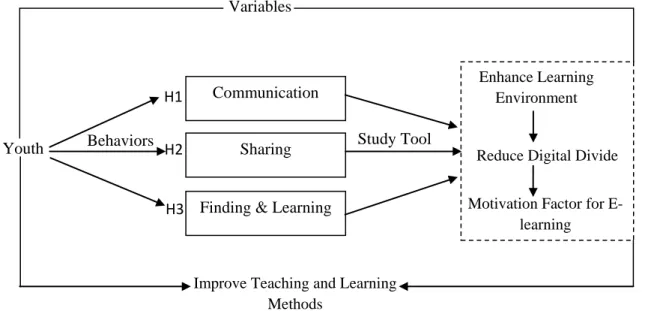
To centralize the aspects of youths using social networking services, this research analyzed youths’ behaviour toward social networking services; which is divided into three significant variables they are: (1) Communication (independent), (2) Sharing (independent), (3) Finding and Learning (dependent). Concerning the above three
11
variables, this research aims to examine the impact of SNS on the learning environment of youths.
The hypothesis of youths behaviour on the use of SNS and its beneficial impacts on education:
Hypothesis 1 (H1), Communication: SNS can build educational communication
networks between youth learners which can help to enhance the educational environment among youths.
Hypothesis 2 (H2), Sharing: SNS can create educational information sharing
environments among youth learners which can enhance the educational environment among youths.
Hypothesis 3 (H3), Finding & Learning: SNS can help to obtain educational
information and learning materials which can create e-learning environment among youths.
The proposed model of youth behavior toward SNS is to enhance learning environments which motivates to include e-learning and reduce digital divide. The model is developed and presented in figure 2.
Hypothetically, the effectiveness of behavior in youth education while using SNS has been analyzed in this research. The research of Louis Lam and Nicole A. Buzzetto-More’s methods was based on SNS as an educational tool in limited classroom. Whereas this research not only limiting study only in any determined group or particular classroom, this research expanded by studying and examining individually in an independent space.
Figure 2 Youth Behaviour to use SNS help to Improve Quality of Education.
Youth
Variables
Communication
Finding & Learning Sharing H1
H2
H3
Improve Teaching and Learning Methods
Behaviors
Enhance Learning Environment
Motivation Factor for E-learning Reduce Digital Divide
12
Above three hypothesis variable was analyzed and evaluated in according to the model of research. There were three variables namely 1) Communication (H1), 2) Sharing (H2), Finding & Learning (H3) are used as the elements to enhance learning environment.
1.3 Goal and Objectives
The main goal of this research is to improve the quality of youth education. To meet the goal of this research the initial objectives are to identify the main problems in youth education in Nepal. According to the fundamental approach, it is also very important to study about the features of SNS and youth behavior towards using SNS. Related to the behavior of youths using SNS, SNS should be evaluated regarding its efficacy on their education. To complete this research in an easy and understandable way, some general questions were prepared and based on these questions, the general and specific objectives had been formulated.
To find out the impact of SNS on the learning environment of youths, it is important to analyze how youths are using SNS and for what purpose they use it for. Can SNS be an effective learning tool to enhance the quality of education in terms of ICT? This research has set its objectives and goal, based on the above general questions. Under these objectives, the first purpose of this research is to recognize the reasons for using SNS, and explore the effects of SNS in the daily activities of youths and on their education. The objective of this research is specified in following points:
To identify the impact of social networking services (SNS) on youth’s daily activities and on their education.
To analyze youths perception toward SNS between the understanding and its actual use.
To evaluate social networking services as an effective tool to enhance educational environment.
To promote SNS’s advantages toward education to develop quality education of youths.
The general objective of this research is to find out the role of SNS in aiding the educational environment of youths by using different popular SNS, and diffuse information to take advantages from SNS as a study tools among those youths who are using SNS for different purposes.
1.4 Methodology
Although the qualitative method has been given more emphasis than the quantitative method in this research, for qualitative analysis, numbers of data are equally important to obtain qualitative results. Therefore both quantitative and qualitative methods have been the priority usage in this research.
13
Research surveys had been conducted in three phases: under the first phase, the survey is divided into three areas which are i. Living abroad (to include those youths who are living in another country for study purposes), ii. Urban area (to include those youths who are living in cities of Nepal), iii. Rural area (to include those youths who are living in rural areas of Nepal)5. The survey questionnaire had been formatted as the main measurement scale to analyze data and all data was collected on the basis of these questionnaires. Multiple choice questions, contingency questions, open questions, Likert scale questions were prepared as survey components of this phase. Likewise, the survey included pilot area observations, infrastructure observations, informal interviews with the related pilot area’s teachers/lecturers and principal of a Higher Secondary School and a science lab assistant. For data analysis excel pivot table, IBM SPSS statistics 2.0 were used.
The survey questionnaire is considered as the main scale to analyze and data collection. The survey questionnaire consistedof 2 sections; the first section consists of three parts regarding the respondent’s (1) general description, (2) educational description and (3) descriptions related to the use of SNS, ICT knowledge and device ownership. The second section consists of two parts for the analysis of ‘SNS behavior’ and its ‘impact on education’ this second section’s questions are prepared based on Likert measurement scale (John H. Wilson, 2010).
Second section; First part, without component;
1=Strongly Disagree 2=Disagree 3=Neutral/Undecided 4=Agree 5=Strongly Agree
1 2 3 4 5
Second section; second part, with component;
1=Strongly 2=Somewhat 3=Neutral/Undecided 4=Somewhat 5=Strongly
Effective 1 2 3 4 5 Ineffective
Regarding the open question interviews, three questions were prepared and each of the 3 questions was related to the context of SNS and education. There were 50 subjects out of 426 who were interviewed. The open question interviews had been carrying the key message about how to identify the positive aspects of SNS and how youths can gain advantages from it for study purposes. There was an intention to conduct these open question interviews; to promote the use of SNS as a learning tool and to explore youth’s perceptions toward SNS between their actual thoughts and their actual usage of SNS.
To operate the second phase survey, 19 Guttman scaled multiple choice questions were conducted and from a total of 426 respondents, 33 respondents were chosen as case studies for the survey. The main goal of the case study was to identify youths social interaction and communication activities with their classmate and teachers, and explored the communication validity in youth education. Facebook was used as an analysis component. The third phase survey was conducted i) to examine the factors
5