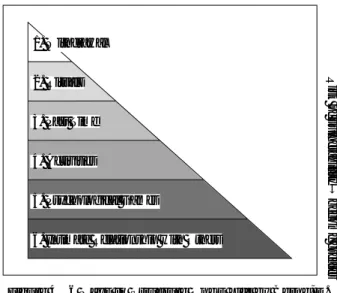
in Difficult Situations in Present-Day
Japanese Society
—Focusing upon the Issue of Hikikomori (Social Withdrawal)
Shirai, Sachiko
Introduction
This article deals with some of the psychological problems Japanese people are facing, and how psychotherapists can assist those people suffering from these problems, paying special attention to the issue of Hikikomori, or in English social withdrawal.
First, I would like to explain Japanese historical and cultural backgrounds briefly which might help us understand why Japanese society is facing these problems. Secondly, I am going to discuss some of the psychological problems that Japanese people are presently facing, and finally, I would like to comment on what we can do to help those people suffering from these problems.
Part of this article was presented as “Family Problems in Japan” at the 28th International Congress of Psychology held in Beijing from Aug. 7th to Aug.14, 2004.
Ⅰ . Japanese historical, social, and cultural backgrounds
1. Before World War Ⅱ
Before World War Ⅱ , Japan had the Emperor-centered value system. The lives of the people were subordinated to the Emperor. The “Patriarchy family system” tied firmly with the Emperor System influenced every aspect of the
lives of the people. The father was the center of the family, and had authority over family members.The eldest son was valued more as the heir of the family. Wives, women and other siblings were valued less.
When World War Ⅱ ended, 2,530,000 people were killed or injured, 8,750,000 suffered war damages, and 2,360,000 houses were destroyed. Japan had lost 35% of the national properties. The Japanese people believed that to die for the Emperor and the Nation was the highest value in human life. After paying unprecedented sacrifices, Japan entered into the new peaceful age,(1)
2. After World War Ⅱ
The Constitution of Japan established in 1946 declares that all people have basic human rights (Ariticle 11), and laws have to be established based upon the dignity of individuals and the equality of both sexes.
From the end of the War until 1989, Japan has made rapid economic growth. Japanese society and people’s lives were carried out based upon the “economy-centered value system.”
The father became the “company man,” or the “company soldier” and was seldom at home. The company had ultimate priority and individual and family lives were sacrificed.(2) “Tanshin Funin,or,unaccompanied job transfers, in which
male employees move to another city or even another country to work and leave their families behind, has become an object of social concern. As Japanese companies are moving production facilities to developing countries, this form of overseas transfers were about 250,000 in 1992.”(3)
3. After the collapse of the “Bubble Economy”
Japan came to be known as an “economically wealthy country” in the 1980s, after aiming at economic prosperity. This produced the so-called “bubble economy”, that ended around the year 1989 or 1990, caused by the “Oil Shock”. Since then, we started having many difficulties which we had never expe-rienced before in our history.
us true wealth? Are 80-year-old people living happy and fulfilling lives? Are they respected and recognized as a person? ...Right now, it is necessary for us to ask what true wealth means.”(4) Table 1 shows a summary of what is
described so far.
Society Emperor was the god
Father-Centered Eldest son was valued
Family & Individual
Society Democracy prevailed
Economy centered system
Father was absent Became “Company man”
Family & Individual
Society Serious Economic Situation
Family & Individual
Table 1 Changes in Japanese Family Life
Wife and other siblings were less valuaed
After world warⅡ∼ until 1989−during rapid economic growth−
Before World War Ⅱ:Emperor−centered
Mother had close ties with Children, especially with eldest son
From 1990 ∼ Until Present: Bubble Economy was gone
Father is powerless Mother is self-autonomous Children create serious problems: School Avoidance, domestic violence, eating disorder, etc.
Ⅱ . Some psychological problems Japanese people are facing now
The economy-centered value system, “fatherless and motherless homes”, and the collapse of family systems created many social and psychological prob-lems.
I would like to look at five current problems Japanese people are facing paying special attention to Hikikomori(social withdrawal)
1. The increasing suicide rate.
According to the Yomiuri Newspaper [July 23,2004], 34,427 people com-mitted suicide in 2003. This is the worst suicide record, since they started keeping records in 1978. This means that 2,284 more people committed suicide (7.1% increase) compared with the previous year of 2002.
The causes of suicide were as follows:
1) Health problems such as illnesses--15,416 people 2) Financial and social problems --8,897 people 3) Family problems --2,928 people
4) Problems at work (failure at work)--1,878 people
The number of people who committed suicide, because of “ financial and social problems” has remarkably increased by 12.1% or (957 people) more than the previous year. This represents the worst record in Japanese history. 54.1% of the people who committed suicide last year were people in their 30s- 50s who suffered mostly from depression caused by the fear of losing jobs or stress at work such as over-working, or the “ability-based evaluation system of employees.” Until recently, advancement in the company was based upon years of service rather than upon one's ability or accomplishments in the work place.
93 primary and junior high school students committed suicide. This was 57% more than that of the previous year. Further, 225 senior high school students committed suicide last year. This was a 29.3% increase over last year. 2. The increasing divorce rate and decreasing rate of women getting married
Figure 1 shows the incidence of divorce and divorce rate in Japan. The divorce rate for 1998 was 1.94. This meant that 243,192 couples got divorced. This is almost the same divorce rate as France, which was 1.70%(in 1996). In 2002, 289,838 couples divorced. This was also the highest divorce rate in Japanese history. [The Yomiuri Newspaper, June 6, 2003.]
2.8 2.4 2.0 1.6 1.2 0.8 0.4 0 24 20 16 12 8 4 0 ( 10 4 ) 1947 1955 1965 1975 1985 1989 1996 Incidence rate Incidence rate(per 1,000)
The Ministry of Health and
W elfar e. 1998 Incidence of Di v o rce and Di v o rce rate in J apan Figure 1 1.66
Women empowered themselves and started having a stronger sense of self-autonomy through participating in the economic activities after the World War Ⅱ .
This represents a difference between prewar and postwar Japan. Today women are less likely to endure unhappy marriages than their counterparts were before the War.(5) Now, Japanese women declare “Seven No’s” to their husbands
and society:(6)
1) “No” to childbirth 2) “No” to marriage itself
3) “No” to the continuance of marriage life
4) “No” to sexual harassment, rape, and prostitution
5) “No” to the Family Register System〈Koseki Seido,Ujisei Seido〉 6) “No” to the law and system to use the family as a substitute for welfare
service
7) “No” to the social value system : economic prosperity is most valuable in which the people are forced to overwork, aiming at productivity, efficiency,and competency
These “Seven No’s” are declarations by Japanese women who try to restore diginity and pride as human beings, and protect themselves from working in inhumane living environments.(7)
As a result, however, some parents had to give up raising their childen at home and send them to child-caring institutions.
3. The decrease in the national birthrate:1.29
A further related problem is the decrease in the national birthrate. The birthrate for 2003 was 1.29, the lowest birthrate in Japanese history. So there is a fear that this decrease in the national birthrate will have economic consequences. A problem related to this falling birthrate is that women in the work place who take maternity leave may not have a job to return to after giving birth. So some women choose having a career over having a family. This has also contributed to a lower birth.
According to the Asahi Evening Newspaper [Aug.7,2004], the following four countries in Asia are having a rapid decrease in their national birthrate.
In 2002: Hong Kong--0.94 Taiwan--1.24 Singapore--1.25 Korea--1.17
Same reasons as Japan are pointed out: 1) Changes in family structures 2) Women’s social participation
3) High expenses for children’s education 4. Increasing child abuse
According to the Asahi Newspaper [ Dec.20, 2003], child abuse cases reported to the Child Consultation Centers in Japan in 2002 were 23,738, the largest numbers ever reported. The content of abuse was as follows:
physical abuse--46% Neglect--38% psychological abuse--13% sexual abuse--3% Abusers: mother--63% father--22% non-biological father--7% non-biological mother--2%
Taking care of children in a nuclear family system with little or no support from the neighborhood, or communities might contribute to child abuse.
Thinking of the future lives of abused children, we cannot help taking this issue seriously. Dr. Machizawa reports how 75 Japanese borderline patients he examined were treated by their parents as follows:(8)
In Japan:
Overprotection--62.7% Neglect--30.7%
Violence and abuse--4% In the U.S.:
80%--90% of borderline patients were abused as children, and 40% of them were sexually abused.
5. Hikikomori rendered in English phrase “Social withdrawal” (1) The definition of Hikikomori (social withdrawal)
Hikikomori or in English “social withdrawal” points to “those people who are staying at home without going to school, or going to work more than six months while not having any physical problems”(9). It is pointed
out that Hikikomori” describes not only certain mental problems of young people in Japan, but also a social phenomenological characteristic of Japanese society.(10) Machizawa claims that Hikikomori is not only the
pathology of the people, but also reflects a distortion of Japanese society.(11)
The phenomenon of “Hikikomori” started being observed from the middle of 1970 or 1980. At present the number of the people with Hikikomori is between 800,000 and l,000,000.(12)
Saito,Tamaki, M.D., one of the nation's leading specialists in adolescent problems, advocates the concept of “Social Hikikomori”, meaning “withdrawal from every interpersonal relationship except with families”
(13). Saito defines Hikikomori as follows: “becoming problems by late
20s, and staying at home without participation in social activities for more than six months, while not caused primarily by mental illness.(14) When
Saito says Hikikomor, he means “social withdrawal”, which is not caused by mental illness.
This paper mainly deals with Hikikomori based upon Saito’s definition. (2) Findings of Saito’s Reserach on social hikikomori patients
T.Saito, psychiatrist who treated more than 200 social hikikomori in the last 10 years carried out statistical research from Jan. 1983 to Dec.1988 and discovered the following interesting facts. His research consisted of
80 patients (66 male and 14 female patients) who satisfied the following conditions:(15)
1) No basic mental illness such as schizophrenia, depressive disorders manic episode, or, other psychotic disorders.
2) Withdrawing helplessly for more than 3 months at the first medical examininaton
3) Treatments lasted more than 6-months 4) Taking more than 5 treatments
5) Enough materials are available for patients’ evaluations The results of the research by Saito were as follows:(16)
1) The average withdrawal period during the research project was 39 months (3 years 3 months).
2) Patients were predominently male, especially the eldest son in the family. 3) The average age at onset was 15.5 year-old.
4) The 68.8% of the first cause of withdrawal was “School Avoidance”. 5) It took a long period of time for them to come for treatment. 6) They came from middle or upper middle class families and few came
from divorced families.
Saito points out that “out of school avoidance, 86% of them did not go to school for more than 3 months, with no experience of social participation. From this fact we can safely speculate that the long period of school avoidance might lead to Hikikomori.
Hikikomori might be traced in their “inmaturity” caused by adolescent adjustment problems. “We saw no patients who went into Hikikomori, after they obtained social maturity.”(17)
(3) Typical behavioral patterns of Hikikomori people
Saito points out that the most predominant mental disorder of Hikikomori people is a “fear of human relations”. No matter what reasons they had for Hikikomori, if they stop communicating with other people for long
times, they might sooner or later, run into difficulities in relating to other people, and participate less in social activities.
They start blaming other people, especially mothers for bringing them up in such a hopeless way, attacking them violently (62% of them used domestic violences). They live a reversed life of day and night with insomnia. They often regress back to childhood, and wish to touch mothers and sleep in the same beds with their mothers, even they are in their 20s.(both men and women). They frequently suffer from feelings of depression, hopelessness, emptiness, guilt, and longing for death.(18)
Figure 2 shows the Hikikomori Systems Model proposed by Saito presenting the dynamics of system interations of Hikikomori.(19)
Figure 2 “Hikikomori” Withdrawal System Model
individual family society family individual society
“ Healthy” System Model
“Syetmes of Withdrawal”
Saito, Tamaki, M.D.:Social Withdrawal, Endless Adolescnet. PHP Shinsho, P.101, 1998
The circles represent system boundaries and the system interact at the point that coincide. In summary, the three systems operate in tandemn while also maintaining their independence.
The three systemls operate independently of each other, while there is a certain amount of energy between the systems, the energy within the most active system is converted to stress, which exacer a vicious cycle.
(4) The importance of discovering the causes of Hikikomori at its early stage
Psychiatrists specializing in Hikikomori emphasize the importance of the diagnose of Hikikomori at its early stage, because Hikikomori is not a disease, but a state caused by various factors. Treatments differ according to the cause. Social hikikomori is not caused by mental illnesses and does not respond to medicine, but Hikikomori caused by mental illnesses such as schizophrenia, and depressive disorder medicine works well.20),21), 22)
Therefore, it is important to find out what causes Hikikomori. ① Hikikomori caused by mental illnesses and personality disorders Saito
classfies mental illnesses into three categories:
Caused by internal factors-schizophrenia,depressive disorders manic episodes
Caused by psychological factors such as stress, shock. trauma-neu-roses, or personality disorders
Caused by organistic factors observable by CT Scan, MRI Figure 3 shows the classification by Machizawa distinguishes between Hikikomori coming from adolescent adjustment problems and Hikikomori caused by mental illness.
Figure 3 Relationship between Withdrawal and Mental Illness
Machizawa, S., M.D.:Hikikomori of Young People, Daiwa Shobou, 2003, p.23 Failure
(failure in entrance exam or studying at school. etc) Bullying
School Avoidance, Poor Study Habits, Inability to work・Resignation from work.
Poor Study Habits Possible causes
Phenomena
Hikikomori
(More than 1 year of withdrawal)
『※』Mental illnesses often found with hikikomori Mental Illuness
Adjustment Disorders Depression
Eating Disorders (Anorexia Nervosa)
Physical Perception disorders Anxiety disorders
Panic disorders, Obsessive compulsive disorders※
Personality disorders※
Normal(Adjustment Disorders?)
(5) Personality disorders causing Hikikomori (DSM-IV)
There are personality disorders which often make it difficult to have proper relationships with other people and bring on Hikikomori. ① Avoidant Personality Disorder
Because of strong feelings of self-inadequancy and “fear of criticism, disapproval, or rejection by other people”, some people are unable to have social and interpersonal contact with other people. That situation will often lead to Hikikomori.
② Dependency Personality Disorder
Some people have strong needs to be taken care of and fears of separation which make them difficult to take “responsibilites for most major areas of their lives.” They also have difficulties to “express disagreement with others because of loss of support or approval” by other people. ③ Obsessive-Compulsive Personality Disorder
Because of excessive perfectionism, some people are overly sensitive to “details, rules, lists, order” which make them difficult to be flexible and open-minded to other people who have different opinions. Their patterns of thinking and behaviors will often lead them to Hikikomori.(23)
(6) Social and cultural backgrounds causing social Hikikomori
According to Machizawa, the "Japanese word, Hikikomori is written in roman letter “Hikikomori” in English-speaking areas and understood its meanings as such...Some American psychology dictionary even puts Machizawa's definition of the word. This might exemplify that Hikikomori is a unique phenomenon to Japanese society.(24)
Machizawa points out several social and cultural background causes of “Hikikomori” as follows:(25)
① Economic growth creates a complicated and competitive society. Children brought up in a way to live up in this competitive society. However, paying attention to live with high academic achievement
deprived them of abilities to create human relations.
Bullying indigenous to Japanese society made it harder to survive in this kind of society [conformity-oriented society]. They were stunned. The longer they stayed home, the more difficult it became to relate to other people.
② The overprotection and codependency of Japanese mothers, and lack the of roles of fathers
According to Akiko Fuse, “Japanese men never had loving relation-ships with women throughout Japanese history, Women have been lonely. They dedicated their love not to their husbands, but to sons, especially to first born sons....They created codependent relationship with their sons”(26)
Machizawa also points out that “Japanese men have never been through the Oedipus complex developmental stage. They were brought up as” a little prince or princess” all the way through adulthood. Thus, they’ve lost opportunities to strengthen their ego-states...They were not mature enough to cope properly with the difficulties of life. When they ran into a little stress at school, they stopped attending schools.(27)
③ The problem of “bullying”
Machizawa points out that the amount of bullying in the Japanese school systems is greater than anywhere else in the world. "Trying not to stop bullying is characteristiscs of Japan. In the U.S. 80% of students would stop bullying, but in Japan, only 20% students try to stop bullying. In Japan not only children, but also adults pretend not to see bullying situations(28).
Ⅲ . How to assist people in trouble especially “Hikikomori” people
So far I have discussed some of psychological problems Japanese people are facing, paying special attention to Hikikomori presented Japanese histori-cal, social, and cultlural backgrounds briefly. Now I would like to discuss how psychotherapies can assist people in difficult situations, focusing upon Hikikomori.
1. The basic presupposition is that we need "stimuli from other people", in order to keep our emotional and mental stability. Psychotherapists should help them get stimuli from other people.
According to Berne, E., founder of Transactonal Analysis, we have two basic human needs; a need for “stimuli” and a need for “structure”--desire to structure our lives in a way we can feel fulfillment in our lives. He indicated that the adult basic human need is a desire to structure our time in a way we feel satisfaction in our lives.(29)
Berne claimed that we structure our time in six different ways as showing figure 4: 1) withdrawing, 2) rituals, 3) past time, 4) activities, 5) psycological games, and 6) intimate relationships with others.
The degree of being hurt will increase from 1) to 6), however, the amount of “stroke” or “stimuli” will increase. Berne insists that the winner in life is the one who is willing to take a chance of having a close relationships with others without fear of being hurt.(30)
We need love and concern from other people in order to keep our mental health in balance. Therapists should help people suffering from Hikikomori to be willing to relate themselves to others.[Figure 4]
Figure 4 6 Ways to Structure One’s Life by Berne, E. Amount of stimulus → become greater Risk of vulnerability → become greater 1. Withdrawal 2. Rituals 3. Past Time 4. Activities 5. Psychological Games
6. Intimate Relationship with Others
2. Presupposition mentioned in 1.might be carried out by creating places and opportunities to get together with friends who have similar prob-lems
(1) At school; to offer places and opportunities to be able to enjoy them-selves, to mix together with others.
(2) As Machizawa tried, making hospital wards a place to relate to other, to learn about oneself, and strengthen abilities to cope with the stress of life.
3. Listening to their inner struggles and understand what is happening to them:
The people in “Hikikomori” seem to suffer from fear of being hurt, sadness, unable to have self-confidence, and struggling between wishes to work and inability to do so. Without criticizing them, listening to their inner struggles might be of great help to take a first step.
4. To evaluate the meaning of “economic prosperity-oriented value sys-tem”.
Perhaps it is right time for us to ask ourselves: Is economic prosperity the thing we would like to go after? What did we miss in a process of working hard for enonomic prosperity?
We have paid a high price to improve our economic conditions by working hard leaving our children at home. Now it is time to slow down our pace of life cherishing authentic value which fill our heart in happiness and peace. 5. To provide young people with something they would like to look for: Figure 5 shows that Japanese young people are not living their lives with future-oriented goals. If they are enjoying themselves, that seems to be sufficient enough. However, American or Taiwanese young people seem to have more future-oriented life goals. We should make efforts to make them have hope, or dreams they would like to obtain in the future.
Figure 5
Japanese resarch institute for the younger generation, 1994
have a good time at this moment work hard for the future
47 53 65 35 77 23 0 20 40 60 80 100(%) Japan U.S. Taiwan
Future prospective and Life styles of American, Japanese and Taiwan high school students.
6. To restore ‘family togetherness’: to eat together, to talk together and to laugh together
Figure 6 shows the values people think are the most precious. Family is the most precious factor for each individual. It is not desirable to work under the sacrifice of the family. Tournier, P. points out that "No man or woman should work to such an extent they sacrifice their family.(31) We should work
within the limit of having togetherness to eat together, to chat together, and to laugh together.
Summary
In this article I presented some of psychological problems Japanese people are facing, focusing upon the issue of Hikikomori (social with-drawal) which is unique to Japanese society. I described Japanese historical, social, and cultural backgounds briefly which are deeply related to some of problems, especially to Hikikomori. I also mentioned how psychotherapists assist the people who are suffering from these people.
Figure 6 The most important value is a family
% 45 40 35 30 25 20 15 10 5 0 1958 63 68 73 78 83 88 93
Research on the Japanese value system by the Japanese Ministry of Education family health love child money work nation
Footnotes
( 1 )Fuse, Akiko: Thinking of Human history; Marriage and Family, Iwanami Publishing Company,1993. p.100
( 2 )Ibid.pp.122-124
( 3 )Hamada, Tomoko: “Absent Fathers, Feminized Sons, Selfish Mothers and Disobedient Daughters; Revisiting the Japanese Ie Household”, Japan Policy Research Institute, p.4. (A Version of this paper was delivered at the meeting of the American Anthoropology Association, San Francisco, 1996.)
( 4 )Ando, Tadao:“Raising up Ideals Unable to State by Figures”, Asahi Evening Newpaper, published on July18, 2001.
( 5 )Fuse, Ibid., pp.163-167.
( 6 )Ibid.,p.145.
( 7 )Ibid.,p.145.
( 8 )Machizawa, Shizuo: Young People of Withdrawal, Daiwa Shobo, 2003, p.44
( 9 )Ibid., p.21.
(10)Ibid., p.3.
(11)Ibid., p.3.
(12)Ibid., p.25.
(13)Saito, Tamaki: Social Withdrawal, Endless adolescence, PHP Shinsho,1998, pp.18 (14)Ibid., p.25. (15)Ibid., p.32-33. (16)Ibid., 33-34. (17)Ibid., pp.39-40. (18)Ibid., pp.40-56. (19)ibid., p.101. (20)Ibid., pp.62-64. (21)Machizawa, pp.155-182.
(22)Uchida, Chiyoko: Clinical Records of Hikikomori, Hokensha, 2001, pp.30-33.
(23)Reid, William H. and Wise, Michael G.:DSM-W Training Guide, Brunner/ Mazel Publishers• New York, 1995, pp. 291-294
(24)Machizawa, Ibid., p.36.
(25)Ibid., pp.37-39
(26)Fuse, ibid., p.123
(27)Machizawa, p.137.
(28)Machizawa, p.46.
(29)Stewart, I. Joines, V. TA TODAY, Lifespace Publishing, 1987, pp.89-104
Shoboshinsho, pp. 46-64
(31)Tournier, P. (translated by Mirura, Yasuko):Die Jaherszeiten Unsres Lebens, Yorudansha, 1970, pp. 94-95
Bibliography
Machizawa, Shizuo: Dangerous Boys, Kodansha, 2000.
Machizawa, Shizuo: Children Who Want to Destroy Themselves, PHP kenkyu-Takatsuka, Yusuke: Psychology of Withdrawal and Its Reasons, Gakuyoshobo 2002, Wada, Hideki: Psychology of child abuse, KK Best-sellers, 2001. jo, 2001 Watanabe,Takashi(ed.): To Live without Going to School, Tarojirosha, 1983