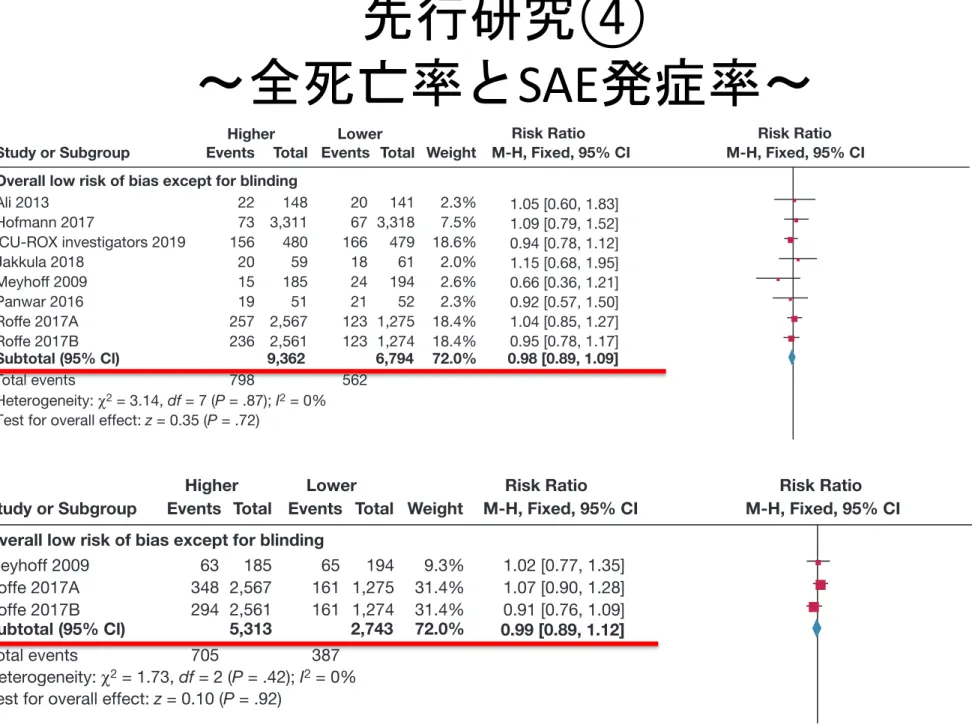
急性呼吸不全患者における 適切な酸素濃度目標とは?
35
T ab le S1 1 P oc ke t ca rd for ev al ua ti on o f inc lus ion cr it eri a. Front B ack
聖マリアンナ医科大学 横浜市西部病院 三戸勉、指導医:若竹春明
2021/4/6
Journal Club
本日の論文
T h e ne w e ngl a nd jou r na l o f m e dicine
n engl j med nejm.org 1
The authors’ full names, academic de- grees, and affiliations are listed in the Ap- pendix. Address reprint requests to Dr.
Rasmussen at the Department of Anes- thesia and Intensive Care, Aalborg Uni- versity Hospital, Hobrovej 18-21, DK- 9000 Aalborg, Denmark, or at bodil.
*A complete list of investigators in the HOT-ICU trial is provided in the Supple- mentary Appendix, available at NEJM.org.
Drs. Schjørring and Klitgaard contributed equally to this article.
This article was published on January 20, 2021, at NEJM.org.
DOI: 10.1056/NEJMoa2032510
Copyright © 2021 Massachusetts Medical Society.
BACKGROUND
Patients with acute hypoxemic respiratory failure in the intensive care unit (ICU) are treated with supplemental oxygen, but the benefits and harms of different oxygenation targets are unclear. We hypothesized that using a lower target for par- tial pressure of arterial oxygen (Pa
O2) would result in lower mortality than using a higher target.
METHODS
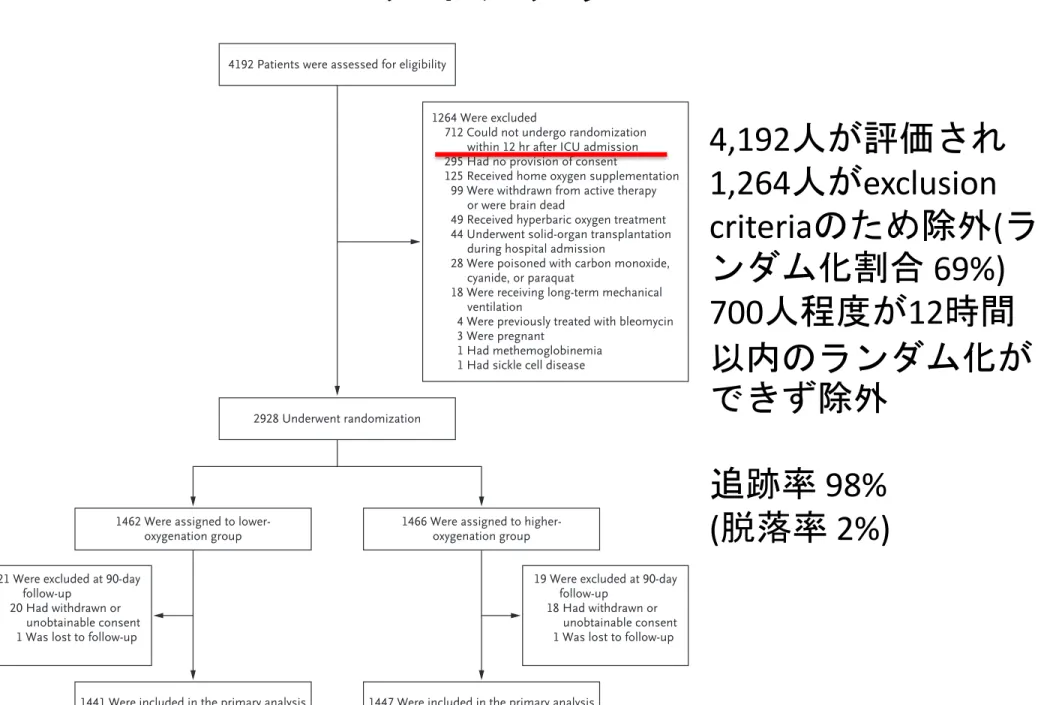
In this multicenter trial, we randomly assigned 2928 adult patients who had recently been admitted to the ICU (
≤12 hours before randomization) and who were receiv-ing at least 10 liters of oxygen per minute in an open system or had a fraction of inspired oxygen of at least 0.50 in a closed system to receive oxygen therapy target- ing a Pa
O2of either 60 mm Hg (lower-oxygenation group) or 90 mm Hg (higher- oxygenation group) for a maximum of 90 days. The primary outcome was death within 90 days.
RESULTS
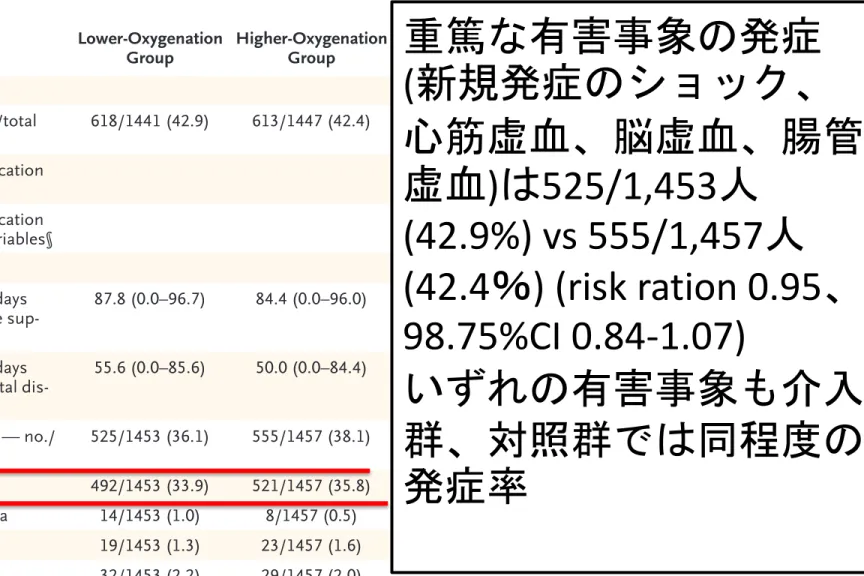
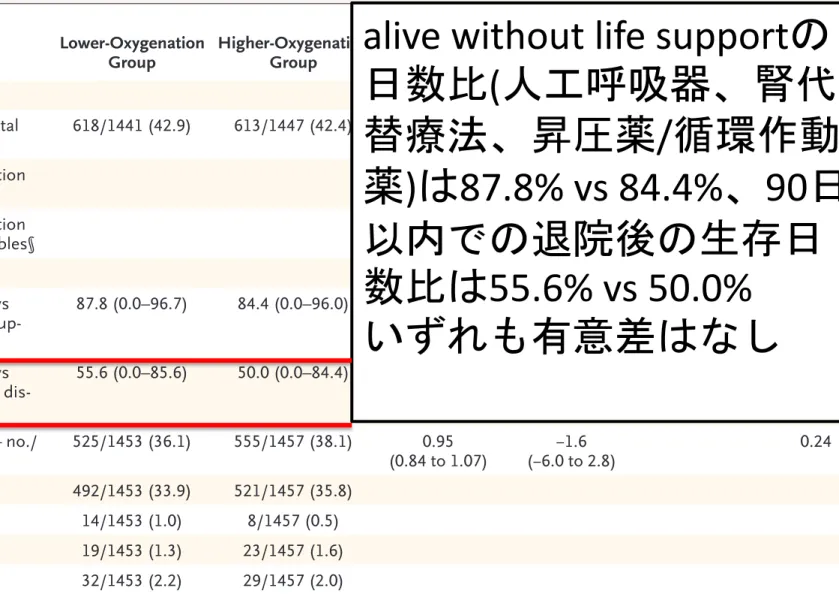
At 90 days, 618 of 1441 patients (42.9%) in the lower-oxygenation group and 613 of 1447 patients (42.4%) in the higher-oxygenation group had died (adjusted risk ratio, 1.02; 95% confidence interval, 0.94 to 1.11; P = 0.64). At 90 days, there was no signifi- cant between-group difference in the percentage of days that patients were alive with- out life support or in the percentage of days they were alive after hospital discharge.
The percentages of patients who had new episodes of shock, myocardial ischemia, ischemic stroke, or intestinal ischemia were similar in the two groups (P = 0.24).
CONCLUSIONS
Among adult patients with acute hypoxemic respiratory failure in the ICU, a lower oxygenation target did not result in lower mortality than a higher target at 90 days.
(Funded by the Innovation Fund Denmark and others; HOT-ICU ClinicalTrials.gov number, NCT03174002.)
A BS TR AC T
Lower or Higher Oxygenation Targets for Acute Hypoxemic Respiratory Failure
O.L. Schjørring, T.L. Klitgaard, A. Perner, J. Wetterslev, T. Lange, M. Siegemund, M. Bäcklund, F. Keus, J.H. Laake, M. Morgan, K.M. Thormar, S.A. Rosborg,
J. Bisgaard, A.E.S. Erntgaard, A.-S.H. Lynnerup, R.L. Pedersen, E. Crescioli, T.C. Gielstrup, M.T. Behzadi, L.M. Poulsen, S. Estrup, J.P. Laigaard, C. Andersen,
C.B. Mortensen, B.A. Brand, J. White, I.-L. Jarnvig, M.H. Møller, L. Quist, M.H. Bestle, M. Schønemann-Lund, M.K. Kamper, M. Hindborg, A. Hollinger,
C.E. Gebhard, N. Zellweger, C.S. Meyhoff, M. Hjort, L.K. Bech, T. Grøfte, H. Bundgaard, L.H.M. Østergaard, M.A. Thyø, T. Hildebrandt, B. Uslu, C.G. Sølling, N. Møller-Nielsen, A.C. Brøchner, M. Borup, M. Okkonen,
W. Dieperink, U.G. Pedersen, A.S. Andreasen, L. Buus, T.N. Aslam, R.R. Winding, J.C. Schefold, S.B. Thorup, S.A. Iversen, J. Engstrøm, M.-B.N. Kjær, and B.S. Rasmussen, for the HOT-ICU Investigators*
Original Article
The New England Journal of Medicine
Downloaded from nejm.org by TSUTOMU MITO on February 12, 2021. For personal use only. No other uses without permission.
Copyright © 2021 Massachusetts Medical Society. All rights reserved.
Background
〜急性内科疾患における酸素療法〜
No commercial reuse: See rights and reprints http://www.bmj.com/permissions 6 of 10
RAPID RECOMMENDATIONS
for acutely ill adults. In addition to mortality, other dif- ficulties caused by oxygen can include nasal or throat irritation and hampered mobility. Doctors first used oxy- gen for medical purposes in the 19th century,6 and its use became routine in the early 20th century.7 Modern guidelines vary in their advice on when to give oxygen for acute medical conditions and how much to give (see table 1).
When to start oxygen—Peripheral capillary oxygen satu- ration (SpO2) thresholds typically trigger the use of oxygen treatment. Thresholds range from SpO2 <90% to <95% in guidelines. Recommendations for starting oxygen in spe- cific groups vary: patients with stroke with SpO2 <95%,9 and, regardless of SpO2, those experiencing an acute myo- cardial infarction who feel breathless, are offered oxygen.11 When to stop oxygen—Many guidelines do not say how much is too much. Healthcare workers may respond to this advice by keeping a buffer between a patient’s SpO2 and the lower limit (for example, by keeping the SpO2 close to 100%). Some guidelines advocate targeting a SpO2 range. Proposed limits range from 98% for most patients, to an upper limit of 92% for patients with risk of hypercapnic respiratory failure, such as patients with chronic obstructive pulmonary disease.15
The evidence
A recent systematic review and meta-analysis of ran- domised controlled trials of acutely ill adults quantified whether inpatients were at greater risk of death with liberal or conservative oxygen therapy.1 Patients ran- domised to liberal oxygen therapy were more likely to die (risk ratio 1.21 (95% confidence interval 1.03 to 1.43)).
The increase in mortality was highest in the trials with the greatest increase in SpO2; this suggests a dose-response relation and strengthens the inference that excessive oxygen is a cause of death. The review included 25 ran- domised controlled trials. Figure 2 outlines key study and participant characteristics. This shows that the results apply to a wide variety of patient groups.
Upper limit of oxygen therapy
The panel had moderate certainty that oxygen increases mortality when the SpO2 is above 96%. Providing supple- mental oxygen above a SpO2 of 96% probably increases mortality by around 1%. There is probably no difference in length of hospitalisation or risk of hospital acquired infections. Average (median) SpO2 was 96% in partici- pants randomised to none or limited oxygen therapy. The evidence was rated down from high to moderate certainty for indirectness (uncertain applicability) because the trials used varying SpO2 thresholds, leaving some uncertainty regarding the value above which mortality increases.
Table 1 | Current guidance on supplemental oxygen therapy Organisation Condition
Recommendations
Lower limit Upper limit
AARC, 20028 All patients in acute care facility Provide oxygen if SaO2 <90% No upper limit
AHA/ASA, 20189 Ischaemic stroke Provide oxygen to maintain SaO2 >94% No upper limit
EAN, 201810 Ischaemic stroke Provide oxygen to maintain normoxia in patients with SaO2 <95%. Routine use of O2 is not
recommended None mentioned
AHA, 201311 Myocardial infarction with ST elevation Provide oxygen in patients with SaO2 <90%, heart failure, or dyspnoea No upper limit ESC, 201712 Myocardial infarction with ST elevation Provide oxygen in patients with hypoxaemia (SaO2 <90% or PaO2 <60 mm Hg). Routine oxygen
not recommended if SaO2 ≥90% No upper limit
ESC, 201513 Myocardial infarction without ST elevation Provide oxygen blood oxygen saturation <90% or respiratory distress. No upper limit
BTS, 201714 Acute medical conditions Provide oxygen if SaO2 <94% for most acutely ill patients; <88% for patients with hypercapnia 98% for most patients, 92% for patients with hypercapnia
TSANZ15 Acute medical conditions Provide oxygen if SpO2 <92% 96% for most patients
AARC=American Association for Respiratory Care; AHA=American Heart Association; ASA=American Stroke Association; EAN=European Academy of Neurology; ESC=European Society of Cardiology; BTS=British Thoracic Society; TSANZ=Thoracic Society of Australia and New Zealand.
SaO2=oxygen saturation; PaO2=partial pressure of oxygen; SpO2=peripheral capillary oxygen saturation
HOW THIS RECOMMENDATION WAS CREATED Our international panel included methodologists, a respiratory therapist/technician, a nurse, patient partners who have been hospitalised for an acute medical condition, pulmonologists, intensivists, internists, an anaesthesiologist, a cardiologist, emergency physicians, and a surgeon (see appendix 1 on bmj.com for details of panel members). They decided on the scope of the recommendation and the outcomes most important to patients. The panel identified three key patient-important outcomes: mortality, hospital acquired infections, and length of hospitalisation. For two specific populations for which there was substantial randomised evidence available, the panel noted additional key outcomes: for patients with stroke, disability; and for patients with acute myocardial infarction, recurrent myocardial infarction, revascularisation, and chest pain.
The panel met to discuss the evidence and formulate a recommendation. No member had financial conflicts of interest; intellectual and professional conflicts were minimised and are transparently described (appendix 2 on bmj.com). The panel followed the BMJ Rapid Recommendations procedures for creating a trustworthy recommendation,2 including using the GRADE approach to critically appraise the evidence and create recommendations (appendix 3 on bmj.com).3 The panel considered the benefits, as well as any harms and burdens, of oxygen therapy, the certainty (quality) of the evidence for each outcome, typical and expected variations in patient values and preferences, acceptability, and feasibility.22 Within the GRADE framework, recommendations can be either strong or weak (also known as conditional), and for or against a specific course of action.23
The panel considered several key practical issues:
psychological comfort from oxygen, discomfort (such as nasal irritation), and feasibility (such as impact on nursing resources). The panel was interested in knowing whether the impacts of oxygen were different in different medical conditions or study populations.
on 15 February 2021 by Tsutomu Mito. Protected by copyright.http://www.bmj.com/BMJ: first published as 10.1136/bmj.k4169 on 24 October 2018. Downloaded from
急性内科疾患における酸素療法の目標は
British Thoracic Society
で はSaO
294
〜98%
、Thoracic Society of Australia and New Zealand
ではSpO
292
〜96%
としているが、明確な根拠はない. American
Association for Respiratory Care
では記載なし(Respirology 2015, 20:1182-91)(Thorax 2017, 72:1-90)
Background
〜急性内科疾患における酸素療法〜
No commercial reuse: See rights and reprints http://www.bmj.com/permissions 2 of 10
RAPID RECOMMENDATIONS
Overview of recommendations
Applies to:
Patients with acute stroke or myocardial infarction
Recommendation 1
Stop oxygen therapy no higher than 96% saturation
Recommendation 3
Do not start oxygen therapy at or above 93% saturation
Recommendation 2
We suggest not starting oxygen therapy between 90-92% saturation
Applies to:
Acutely ill adult medical patients (with exceptions)
STRONG WEAK
STRONG Peripheral capillary
oxygen saturation (SpO2)
on 15 February 2021 by Tsutomu Mito. Protected by copyright.http://www.bmj.com/BMJ: first published as 10.1136/bmj.k4169 on 24 October 2018. Downloaded from
急性内科疾患では、
酸素療法の上限を
SpO
296%
としているNo commercial reuse: See rights and reprints http://www.bmj.com/permissions 1 of 10
RA P I D R E CO M M E N DAT I O N S
What is the best way to use oxygen therapy for patients with an acute medical illness? A systematic review pub- lished in the Lancet in April 2018 found that supplemen- tal oxygen in inpatients with normal oxygen saturation increases mortality.1 Its authors concluded that oxygen should be administered conservatively, but they did not make specific recommendations on how to do it. An international expert panel used that review to inform this guideline. It aims to promptly and transparently translate potentially practice-changing evidence to usable recom- mendations for clinicians and patients.2 The panel used the GRADE framework and following standards for trust- worthy guidelines.3
The panel asked;
• In acutely ill patients, when should oxygen therapy be started? (What is the lower limit of peripheral capillary oxygen saturation (SpO2)?)
• In acutely ill patients receiving oxygen therapy, how much oxygen should be given? (What is the upper limit of SpO2?)
The panel makes a strong recommendation for maintaining an oxygen saturation of no more than 96% in acutely ill medical patients (upper limit). The panel did not make a recommendation on when to
start (the lower limit) for all medical patients because there was not enough evidence. Instead, the panel suggests that patients with acute stroke or myocardial infarction and a SpO2 ≥90% not receive supplemental oxygen (a weak recommendation if SpO2 is 90-92%
and a strong recommendation if 93-100%). Box 1 shows the article and evidence linked to this Rapid Recommendation. The infographic provides an overview of the key absolute benefits and harms, as well as the quality of evidence that informed each of the recommendations.
The panel was confident that the recommendation against letting oxygen saturation rise above 96% applies to almost all patients in hospital with a medical problem.
The recommendation also applies to pre-hospital care. The evidence may apply to surgical and obstetric patients, but the panel did not review the evidence on postoperative healing and infections and therefore decided not to com- ment on these patients. Similarly, the panel did not review the evidence on oxygen therapy in neonates and infants.
Current practice
Supplemental oxygen therapy is widely used in hospi- tals: 25% or more of patients who visit the emergency department receive oxygen.4 Clinicians often give oxy- gen to many patients presenting with stroke without hypoxaemia, and to almost all patients presenting with myocardial infarction.5 Until recently, many healthcare professionals believed that oxygen had little or no harm WHAT YOU NEED TO KNOW
• It is a longstanding cultural norm to provide supplemental oxygen to sick patients
regardless of their blood oxygen saturation
• A recent systematic review and meta-analysis has shown that too much supplemental oxygen increases mortality for medical patients in hospital
• For patients receiving oxygen therapy, aim for peripheral capillary oxygen saturation (SpO2) of ≤96% (strong recommendation)
• For patients with acute myocardial infarction or stroke, do not initiate oxygen therapy in patients with SpO2 ≥90% (for ≥93%
strong recommendation, for 90-92% weak recommendation)
• A target SpO2 range of 90-94% seems reasonable for most patients and 88-92% for patients at risk of hypercapnic respiratory failure; use the minimum amount of oxygen necessary
Box 1 | Linked resources in this BMJ Rapid Recommendations cluster
• Siemieniuk RAC, Chu DK, Kim LH-Y, et al. Oxygen therapy for acutely ill medical patients: a clinical practice guideline.
BMJ 2018;363:k4169
–Summary of the results from the Rapid Recommendation process
• Chu DK, Kim LH, Young PJ, et al. Mortality and morbidity in acutely ill adults treated with liberal versus conservative oxygen therapy (IOTA): a systematic review and meta- analysis. Lancet 2018;391:1693-705.
–Review and meta-analysis of all available randomised trials that assessed oxygen therapy for acute illnesses
• MAGICapp (https://app.magicapp.org/public/guideline/
jxQ7OL)
–Expanded version of the results with multilayered recommendations, evidence summaries, and decision aids for use on all devices
Oxygen therapy for acutely ill medical patients: a clinical practice guideline
Reed A C Siemieniuk,1 Derek K Chu,2 Lisa Ha-Yeon Kim,2 Maria-Rosa Güell-Rous,3 Waleed Alhazzani,1 2 Paola M Soccal,4 5 Paul J Karanicolas,6 Pauline D Farhoumand,7
Jillian L K Siemieniuk,8 Imran Satia,2 Elvis M Irusen,9 Marwan M. Refaat,10 J. Stephen Mikita,11 Maureen Smith,12 Dian N Cohen,13 Per O Vandvik,14 Thomas Agoritsas,1 7 15 Lyubov Lytvyn,1 Gordon H Guyatt1 2
Full author details can be found at the end of the article
Correspondence to:
R A C Siemieniuk
[email protected] Cite this as: BMJ 2018;363:k4169 doi: 10.1136/bmj.k4169 This BMJ Rapid Recommendation article is one of a series that provides clinicians with trustworthy recommendations for potentially practice changing evidence.
BMJ Rapid Recommendations represent a collaborative effort between the MAGIC group (http://magicproject.org/) and The BMJ. A summary is offered here and the full version including decision aids is on the MAGICapp (https://app.magicapp.org), for all devices in multilayered formats.
Those reading and using these recommendations should consider individual patient circumstances, and their values and preferences and may want to use consultation decision aids in MAGICapp to facilitate shared decision making with patients. We encourage adaptation and contextualisation of our recommendations to local or other contexts. Those considering use or adaptation of content may go to MAGICapp to link or extract its content or contact The BMJ for permission to reuse content in this article. Series adviser Rafael Perera-Salazar.
on 15 February 2021 by Tsutomu Mito. Protected by copyright.http://www.bmj.com/BMJ: first published as 10.1136/bmj.k4169 on 24 October 2018. Downloaded from
(BMJ 2018, 24:363)
Background
〜急性疾患における酸素療法〜
酸素制限群で院内死亡率、
30
日死亡率が改善SpO
294
〜96%
を目標とし た酸素療法の推奨に一石 を投じたArticles
www.thelancet.com Vol 391 April 28, 2018 1693
Mortality and morbidity in acutely ill adults treated with liberal versus conservative oxygen therapy (IOTA):
a systematic review and meta-analysis
Derek K Chu*†, Lisa H-Y Kim*†, Paul J Young, Nima Zamiri, Saleh A Almenawer, Roman Jaeschke, Wojciech Szczeklik, Holger J Schünemann, John D Neary, Waleed Alhazzani
Summary
Background Supplemental oxygen is often administered liberally to acutely ill adults, but the credibility of the evidence for this practice is unclear. We systematically reviewed the efficacy and safety of liberal versus conservative oxygen therapy in acutely ill adults.
Methods In the Improving Oxygen Therapy in Acute-illness (IOTA) systematic review and meta-analysis, we searched the Cochrane Central Register of Controlled Trials, MEDLINE, Embase, HealthSTAR, LILACS, PapersFirst, and the WHO International Clinical Trials Registry from inception to Oct 25, 2017, for randomised controlled trials comparing liberal and conservative oxygen therapy in acutely ill adults (aged ≥18 years). Studies limited to patients with chronic respiratory diseases or psychiatric disease, patients on extracorporeal life support, or patients treated with hyperbaric oxygen therapy or elective surgery were excluded. We screened studies and extracted summary estimates independently and in duplicate. We also extracted individual patient-level data from survival curves. The main outcomes were mortality (in-hospital, at 30 days, and at longest follow-up) and morbidity (disability at longest follow-up, risk of hospital-acquired pneumonia, any hospital-acquired infection, and length of hospital stay) assessed by random-effects meta-analyses. We assessed quality of evidence using the grading of recommend ations assessment, development, and evaluation approach. This study is registered with PROSPERO, number CRD42017065697.
Findings 25 randomised controlled trials enrolled 16 037 patients with sepsis, critical illness, stroke, trauma, myocardial infarction, or cardiac arrest, and patients who had emergency surgery. Compared with a conservative oxygen strategy, a liberal oxygen strategy (median baseline saturation of peripheral oxygen [SpO₂] across trials, 96% [range 94–99%, IQR 96–98]) increased mortality in-hospital (relative risk [RR] 1·21, 95% CI 1·03–1·43, I²=0%, high quality), at 30 days (RR 1·14, 95% CI 1·01–1·29, I²=0%, high quality), and at longest follow-up (RR 1·10, 95% CI 1·00–1·20, I²=0%, high quality). Morbidity outcomes were similar between groups. Findings were robust to trial sequential, subgroup, and sensitivity analyses.
Interpretation In acutely ill adults, high-quality evidence shows that liberal oxygen therapy increases mortality without improving other patient-important outcomes. Supplemental oxygen might become unfavourable above an SpO₂ range of 94–96%. These results support the conservative administration of oxygen therapy.
Funding None.
Copyright © 2018 Elsevier Ltd. All rights reserved.
Introduction
Oxygen was first described as a treatment in acute care in 1885.1 In contemporary clinical practice, supplemental oxygen is frequently administered to acutely ill patients—
approximately 34% of patients in ambulances, 25% of individuals in emergency rooms,2 and 15% of patients admitted to hospital3 in the UK. In these settings, 50–84% of patients are exposed to excess oxygen and hyper oxaemia as a result of efforts to prevent or reverse hypoxaemia.4–6 Further more, many health-care providers consider sup plemental oxygen a harmless and potentially beneficial therapy, irrespective of the presence or absence of hypoxaemia.3,7,8
Although adequate oxygen delivery is essential to treat hypoxaemia,9 concerns are increasing about the potential
deleterious effects of excessive oxygen supplementation, such as absorption atelectasis, acute lung injury, in- flammatory cytokine production, central nervous system toxicity, reduced cardiac output, and cerebral and coro- nary vasoconstriction.3,10
Guidelines3,11–17 on the use of supplemental oxygen for various acute illnesses in adults are contradictory and inconsistent, and no high-quality evidence base exists.
Moreover, although a number of randomised controlled trials comparing liberal versus conservative oxygen for various acute conditions have been done, the trial data have not been synthesised. Two previous systematic reviews18,19 are illustrative: both focused solely on patients with critical illness, but did not identify any relevant randomised controlled trials, and their meta-analyses of
Lancet 2018; 391: 1693–705 See Comment page 1640
*Contributed equally
†Joint first authors Department of Medicine (D K Chu MD, L H-Y Kim MD, N Zamiri MD,
Prof R Jaeschke MD, Prof W Szczeklik MD, Prof H J Schünemann MD, J D Neary MD, W Alhazzani MD), Division of Neurosurgery (S A Almenawer MD), and Department of Health Research Methods, Evidence, and Impact (Prof R Jaeschke,
Prof H J Schünemann, W Alhazzani), McMaster University, Hamilton, ON, Canada; Medical Research Institute of New Zealand, Wellington, New Zealand (P J Young MBChB); Intensive Care Unit, Wellington Regional Hospital, Wellington, New Zealand (P J Young); and Department of Intensive Care and Perioperative Medicine, Jagiellonian University Medical College, Krakow, Poland (Prof W Szczeklik) Correspondence to:
Dr Waleed Alhazzani, Department of Medicine, McMaster University, Hamilton, ON L8N 3Z5, Canada
Articles
www.thelancet.com Vol 391 April 28, 2018 1697
Figure 2: Mortality outcomes with liberal versus conservative oxygen therapy (A) Forest plot of in-hospital mortality with superimposed summary estimates at 30 days and longest follow-up.
(B) Meta-regression of effect of increasing SpO₂ on RR of in-hospital mortality. Size of data markers indicates their weight in the respective analysis. n=deaths. N=group size. RR=relative risk.
STEMI=ST-elevation myocardial infarction.
SpO₂=peripheral oxygen saturation.
pinteraction=0·97
Cardiac (myocardiaI infarction–cardiac arrest) Girardis et al (2016)47
Stub et al (2012)60
Critical care (mixed medical-surgical)
Khoshnood et al (2015)49
Ukholkina et al (2005)61 Singhal et al (2005)58 Roffe et al (2017)59
Kuisma et al (2006)50
Neurological (stroke–traumatic brain injury)
Emergency surgery
Rawles et al (1976)55 NCT02378545 (2015) Sepsis
Hofmann et al (2017)48 Schietroma et al (2016)57 NCT00414726
Panwar et al (2016)53 Shi et al (2017)65
Butler et al (1987)46
Young et al (2014)62 Ronning et al (1999)56 Ali et al (2014)44,66
NCT02687217
Setting
Critical illness
Myocardial infarction (STEMI) Myocardial infarction (STEMI)
Myocardial infarction Stroke (ischaemic) Stroke
Cardiac arrest Myocardial infarction Myocardial infarction Perforated peptic ulcer Stroke (ischaemic)
Critical illness Stroke (ischaemic)
Limb ischaemia
Cardiac arrest Stroke Stroke
Acute appendicitis Sepsis
In-hospital mortality, overall (I2=0%, p=0·020) 30-day mortality, overall (I2=0%, p=0·033)
Mortality at longest follow-up, overall (I2 =0%, p=0·044)
RR (95% CI)
1·21 (1·03–1·43) 1·33 (1·00–1·78)
0·45 (0·16–1·29) 0·88 (0·18–4·24)
4·07 (0·17–98·10) 0·27 (0·01–5·70) 1·11 (0·75–1·66)
1·00 (0·31–3·23) 2·71 (0·76–9·73) 1·50 (0·27–8·22)
1·21 (0·81–1·80) 0·50 (0·09–2·70) 3·42 (1·22–9·54)
0·96 (0·48–1·90) (Excluded)
3·83 (0·17–88·62)
1·11 (0·45–2·75) 1·18 (0·74–1·89) 1·18 (0·32–4·30)
(Excluded)
1·14 (1·01–1·28) 1·10 (1·00–1·20) Liberal (n/N)
283/7555 80/243
5/312 3/85
1/58 0/9 50/2668
4/14 9/105 3/25
53/3311 2/119 14/43
12/51 0/9
1/17
5/9 36/292
5/155
0/30
484/7546 828/7897
Conservative (n/N)
58/235
11/312 3/75
0/79 1/7 45/2668
4/14 3/95 2/25
44/3318 4/120 4/42
13/53 0/9
0/22
4/8 27/258
4/146
0/30
227/7516 422/7507 749/7857
% weight
32·1
2·4 1·1
0·6 0·3 16·6
1·9 1·6 0·9
16·8 0·9 2·5
5·6 0
0·3
3·2 11·9 1·6
0
100 100 100
Favours more oxygen Favours less oxygen 1·0
0·2 0·5 2·0 5·0
0 2 4 6
0·2 0·5 1·0 2·0 5·0
Relative risk mortality (log scale)
Percentage point increase in SpO2
Trial 95% CI Regression slope
B A
(Lancet 2018, 391:1693-1705)
Background
〜急性疾患における酸素療法〜
ICU(medical and surgical)
を 対象とした研究は2
つ(
後 述)
のみで、ICU
患者を対 象とした場合には、低濃 度酸素管理の有用性のエ ビデンスはまだ十分に確 立していないArticles
www.thelancet.com Vol 391 April 28, 2018 1693
Mortality and morbidity in acutely ill adults treated with liberal versus conservative oxygen therapy (IOTA):
a systematic review and meta-analysis
Derek K Chu*†, Lisa H-Y Kim*†, Paul J Young, Nima Zamiri, Saleh A Almenawer, Roman Jaeschke, Wojciech Szczeklik, Holger J Schünemann, John D Neary, Waleed Alhazzani
Summary
Background Supplemental oxygen is often administered liberally to acutely ill adults, but the credibility of the evidence for this practice is unclear. We systematically reviewed the efficacy and safety of liberal versus conservative oxygen therapy in acutely ill adults.
Methods In the Improving Oxygen Therapy in Acute-illness (IOTA) systematic review and meta-analysis, we searched the Cochrane Central Register of Controlled Trials, MEDLINE, Embase, HealthSTAR, LILACS, PapersFirst, and the WHO International Clinical Trials Registry from inception to Oct 25, 2017, for randomised controlled trials comparing liberal and conservative oxygen therapy in acutely ill adults (aged ≥18 years). Studies limited to patients with chronic respiratory diseases or psychiatric disease, patients on extracorporeal life support, or patients treated with hyperbaric oxygen therapy or elective surgery were excluded. We screened studies and extracted summary estimates independently and in duplicate. We also extracted individual patient-level data from survival curves. The main outcomes were mortality (in-hospital, at 30 days, and at longest follow-up) and morbidity (disability at longest follow-up, risk of hospital-acquired pneumonia, any hospital-acquired infection, and length of hospital stay) assessed by random-effects meta-analyses. We assessed quality of evidence using the grading of recommend ations assessment, development, and evaluation approach. This study is registered with PROSPERO, number CRD42017065697.
Findings 25 randomised controlled trials enrolled 16 037 patients with sepsis, critical illness, stroke, trauma, myocardial infarction, or cardiac arrest, and patients who had emergency surgery. Compared with a conservative oxygen strategy, a liberal oxygen strategy (median baseline saturation of peripheral oxygen [SpO₂] across trials, 96% [range 94–99%, IQR 96–98]) increased mortality in-hospital (relative risk [RR] 1·21, 95% CI 1·03–1·43, I²=0%, high quality), at 30 days (RR 1·14, 95% CI 1·01–1·29, I²=0%, high quality), and at longest follow-up (RR 1·10, 95% CI 1·00–1·20, I²=0%, high quality). Morbidity outcomes were similar between groups. Findings were robust to trial sequential, subgroup, and sensitivity analyses.
Interpretation In acutely ill adults, high-quality evidence shows that liberal oxygen therapy increases mortality without improving other patient-important outcomes. Supplemental oxygen might become unfavourable above an SpO₂ range of 94–96%. These results support the conservative administration of oxygen therapy.
Funding None.
Copyright © 2018 Elsevier Ltd. All rights reserved.
Introduction
Oxygen was first described as a treatment in acute care in 1885.1 In contemporary clinical practice, supplemental oxygen is frequently administered to acutely ill patients—
approximately 34% of patients in ambulances, 25% of individuals in emergency rooms,2 and 15% of patients admitted to hospital3 in the UK. In these settings, 50–84% of patients are exposed to excess oxygen and hyper oxaemia as a result of efforts to prevent or reverse hypoxaemia.4–6 Further more, many health-care providers consider sup plemental oxygen a harmless and potentially beneficial therapy, irrespective of the presence or absence of hypoxaemia.3,7,8
Although adequate oxygen delivery is essential to treat hypoxaemia,9 concerns are increasing about the potential
deleterious effects of excessive oxygen supplementation, such as absorption atelectasis, acute lung injury, in- flammatory cytokine production, central nervous system toxicity, reduced cardiac output, and cerebral and coro- nary vasoconstriction.3,10
Guidelines3,11–17 on the use of supplemental oxygen for various acute illnesses in adults are contradictory and inconsistent, and no high-quality evidence base exists.
Moreover, although a number of randomised controlled trials comparing liberal versus conservative oxygen for various acute conditions have been done, the trial data have not been synthesised. Two previous systematic reviews18,19 are illustrative: both focused solely on patients with critical illness, but did not identify any relevant randomised controlled trials, and their meta-analyses of
Lancet 2018; 391: 1693–705 See Comment page 1640
*Contributed equally
†Joint first authors Department of Medicine (D K Chu MD, L H-Y Kim MD, N Zamiri MD,
Prof R Jaeschke MD, Prof W Szczeklik MD, Prof H J Schünemann MD, J D Neary MD, W Alhazzani MD), Division of Neurosurgery (S A Almenawer MD), and Department of Health Research Methods, Evidence, and Impact (Prof R Jaeschke,
Prof H J Schünemann, W Alhazzani), McMaster University, Hamilton, ON, Canada; Medical Research Institute of New Zealand, Wellington, New Zealand (P J Young MBChB); Intensive Care Unit, Wellington Regional Hospital, Wellington, New Zealand (P J Young); and Department of Intensive Care and Perioperative Medicine, Jagiellonian University Medical College, Krakow, Poland (Prof W Szczeklik) Correspondence to:
Dr Waleed Alhazzani, Department of Medicine, McMaster University, Hamilton, ON L8N 3Z5, Canada
Articles
www.thelancet.com Vol 391 April 28, 2018 1697
Figure 2: Mortality outcomes with liberal versus conservative oxygen therapy (A) Forest plot of in-hospital mortality with superimposed summary estimates at 30 days and longest follow-up.
(B) Meta-regression of effect of increasing SpO₂ on RR of in-hospital mortality. Size of data markers indicates their weight in the respective analysis. n=deaths. N=group size. RR=relative risk.
STEMI=ST-elevation myocardial infarction.
SpO₂=peripheral oxygen saturation.
pinteraction=0·97
Cardiac (myocardiaI infarction–cardiac arrest) Girardis et al (2016)47
Stub et al (2012)60
Critical care (mixed medical-surgical)
Khoshnood et al (2015)49
Ukholkina et al (2005)61 Singhal et al (2005)58 Roffe et al (2017)59
Kuisma et al (2006)50
Neurological (stroke–traumatic brain injury)
Emergency surgery
Rawles et al (1976)55 NCT02378545 (2015) Sepsis
Hofmann et al (2017)48 Schietroma et al (2016)57 NCT00414726
Panwar et al (2016)53 Shi et al (2017)65
Butler et al (1987)46
Young et al (2014)62 Ronning et al (1999)56 Ali et al (2014)44,66
NCT02687217
Setting
Critical illness
Myocardial infarction (STEMI) Myocardial infarction (STEMI)
Myocardial infarction Stroke (ischaemic) Stroke
Cardiac arrest Myocardial infarction Myocardial infarction Perforated peptic ulcer Stroke (ischaemic)
Critical illness Stroke (ischaemic)
Limb ischaemia
Cardiac arrest Stroke Stroke
Acute appendicitis Sepsis
In-hospital mortality, overall (I2=0%, p=0·020) 30-day mortality, overall (I2=0%, p=0·033)
Mortality at longest follow-up, overall (I2 =0%, p=0·044)
RR (95% CI)
1·21 (1·03–1·43) 1·33 (1·00–1·78)
0·45 (0·16–1·29) 0·88 (0·18–4·24)
4·07 (0·17–98·10) 0·27 (0·01–5·70) 1·11 (0·75–1·66)
1·00 (0·31–3·23) 2·71 (0·76–9·73) 1·50 (0·27–8·22)
1·21 (0·81–1·80) 0·50 (0·09–2·70) 3·42 (1·22–9·54)
0·96 (0·48–1·90) (Excluded)
3·83 (0·17–88·62)
1·11 (0·45–2·75) 1·18 (0·74–1·89) 1·18 (0·32–4·30)
(Excluded)
1·14 (1·01–1·28) 1·10 (1·00–1·20) Liberal (n/N)
283/7555 80/243
5/312 3/85
1/58 0/9 50/2668
4/14 9/105 3/25
53/3311 2/119 14/43
12/51 0/9
1/17
5/9 36/292
5/155
0/30
484/7546 828/7897
Conservative (n/N)
58/235
11/312 3/75
0/79 1/7 45/2668
4/14 3/95 2/25
44/3318 4/120 4/42
13/53 0/9
0/22
4/8 27/258
4/146
0/30
227/7516 422/7507 749/7857
% weight
32·1
2·4 1·1
0·6 0·3 16·6
1·9 1·6 0·9
16·8 0·9 2·5
5·6 0
0·3
3·2 11·9 1·6
0
100 100 100
Favours more oxygen Favours less oxygen 1·0
0·2 0·5 2·0 5·0
0 2 4 6
0·2 0·5 1·0 2·0 5·0
Relative risk mortality (log scale)
Percentage point increase in SpO2
Trial 95% CI Regression slope
B A
Background
〜低濃度酸素管理 vs 高濃度酸素管理〜
高濃度酸素管理の害
CaO2=(1.34×Hb×SaO2)+ (0.003×PaO2)
DO2=CaO2(動脈血酸素飽和度)×CO
低酸素血症により組織低酸 素症
(hypoxia)
と臓器障害死亡率増加
低濃度酸素管理の害
活性化酸素による細胞障害 高酸素血症性血管収縮
吸収性無気肺 二酸化炭素蓄積
下気道
(
特に肺胞)
障害(N Engl J Med 1983, 13:878-83) (Eur J Anaesthesiol 17, 2000) (Anesth Analg 95, 2002)
(Chest 2002, 121:1602-9)
先行研究
① Oxygen ICU trial
P 72
時間以上のICU
滞在 が予測される患者I SpO
294
〜98%
、PaO
270
〜
100mmHg
で管理C SpO
297
〜100%
、PaO
2150mmHg
以上許容O Primary outcome
:90
日以内の死亡率Copyright 2016 American Medical Association. All rights reserved.
Effect of Conservative vs Conventional Oxygen Therapy on Mortality Among Patients in an Intensive Care Unit The Oxygen-ICU Randomized Clinical Trial
Massimo Girardis, MD; Stefano Busani, MD; Elisa Damiani, MD; Abele Donati, MD; Laura Rinaldi, MD; Andrea Marudi, MD;
Andrea Morelli, MD; Massimo Antonelli, MD; Mervyn Singer, MD, FRCA
IMPORTANCE Despite suggestions of potential harm from unnecessary oxygen therapy, critically ill patients spend substantial periods in a hyperoxemic state. A strategy of controlled arterial oxygenation is thus rational but has not been validated in clinical practice.
OBJECTIVE To assess whether a conservative protocol for oxygen supplementation could improve outcomes in patients admitted to intensive care units (ICUs).
DESIGN, SETTING, AND PATIENTS Oxygen-ICU was a single-center, open-label, randomized clinical trial conducted from March 2010 to October 2012 that included all adults admitted with an expected length of stay of 72 hours or longer to the medical-surgical ICU of Modena University Hospital, Italy. The originally planned sample size was 660 patients, but the study was stopped early due to difficulties in enrollment after inclusion of 480 patients.
INTERVENTIONS Patients were randomly assigned to receive oxygen therapy to maintain PaO2between 70 and 100 mm Hg or arterial oxyhemoglobin saturation (SpO2) between 94%
and 98% (conservative group) or, according to standard ICU practice, to allow PaO2values up to 150 mm Hg or SpO2values between 97% and 100% (conventional control group).
MAIN OUTCOMES AND MEASURES The primary outcome was ICU mortality. Secondary outcomes included occurrence of new organ failure and infection 48 hours or more after ICU admission.
RESULTS A total of 434 patients (median age, 64 years; 188 [43.3%] women) received conventional (n = 218) or conservative (n = 216) oxygen therapy and were included in the modified intent-to-treat analysis. Daily time-weighted PaO2averages during the ICU stay were significantly higher (P< .001) in the conventional group (median PaO2, 102 mm Hg [IQR, 88-116]) vs the conservative group (median PaO2, 87 mm Hg [IQR, 79-97]). Mortality was lower in the conservative oxygen therapy group. The conservative group had fewer episodes of shock, liver failure, and bacteremia.
Oxygen Therapy, No. (%)
Absolute Risk Reduction
(95% CI) PValue
Conservative
(n = 216) Conventional (n = 218) Primary outcome
ICU mortality 25 (11.6) 44 (20.2) 0.086 (0.017-0.150) .01
Secondary outcomes
Shock 8 (3.7) 23 (10.6) 0.068 (0.020-0.120) .006
Liver failure 4 (1.9) 14 (6.4) 0.046 (0.008-0.088) .02
Bacteremia 11 (5.1) 22 (10.1) 0.050 (0.000-0.090) .049
CONCLUSIONS AND RELEVANCE Among critically ill patients with an ICU length of stay of 72 hours or longer, a conservative protocol for oxygen therapy vs conventional therapy resulted in lower ICU mortality. These preliminary findings were based on unplanned early termination of the trial, and a larger multicenter trial is needed to evaluate the potential benefit of this approach.
TRIAL REGISTRATION clinicaltrials.gov Identifier:NCT01319643
JAMA. 2016;316(15):1583-1589. doi:10.1001/jama.2016.11993 Published online October 5, 2016.
Editorialpage 1553 Supplemental content
Author Affiliations:Author
affiliations are listed at the end of this article.
Corresponding Author:Massimo Girardis, MD, Cattedra di Anestesia e Rianimazione, Azienda Ospedaliera Universitaria di Modena, L.go del Pozzo, 71, 41100 Modena, Italy ([email protected]).
Research
JAMA | Preliminary Communication | CARING FOR THE CRITICALLY ILL PATIENT
(Reprinted) 1583 Copyright 2016 American Medical Association. All rights reserved.
Downloaded From: https://jamanetwork.com/ Chiba University by Tsutomu Mito on 02/12/2021
limitation
・単施設研究
・
P/F
比150
以下は除外・地震のため予定していない中 間解析で有意差を認めたため、
早期中止
(660
人予定が480
人)
(JAMA 2016, 316:1583-1589)
介入群 対照群
90
日死亡率
11.6% 20.2%
絶対リスク差
0.086
(95%CI
、0.017-0.150)
先行研究
② ICU ROX trial
P 48
時間以上の人工呼吸器 管理を要する患者I conservative oxygen SpO
291
〜96%
C usual oxygen SpO
291%
以上O Primary outcome
:28
日以内のventilation free day(VFD)
Secondary outcome
:90
日死亡率The
new england journal
ofmedicine
n engl j med 382;11 nejm.org March 12, 2020 989
established in 1812 March 12, 2020 vol. 382 no. 11
The members of the writing committee (Diane Mackle, M.N., Rinaldo Bellomo, M.D., Michael Bailey, Ph.D., Richard Beas- ley, M.D., D. Sc., Adam Deane, M.D., Ph.D., Glenn Eastwood, R.N., Ph.D., Simon Finfer, M.D., Ross Freebairn, M.D., Victoria King, R.N., Natalie Linke, R.N., Edward Litton, M.D., Ph.D., Colin McArthur, M.D., Shay McGuinness, M.D., Rakshit Panwar, M.D., and Paul Young, M.D., Ph.D.) assume responsibility for the over- all content and integrity of this article.
The affiliations of the members of the writing committee are listed in the Ap- pendix. Address reprint requests to Dr.
Young at the Intensive Care Unit, Welling- ton Regional Hospital, Private Bag 7902, Wellington South, New Zealand, or at paul . young@ ccdhb . org . nz.
*A complete list of investigators in the ICU-ROX trial is provided in the Supple- mentary Appendix, available at NEJM.org.
This article was published on October 14, 2019, at NEJM.org.
N Engl J Med 2020;382:989-98.
DOI: 10.1056/NEJMoa1903297 Copyright © 2019 Massachusetts Medical Society.
BACKGROUND
Patients who are undergoing mechanical ventilation in the intensive care unit (ICU) often receive a high fraction of inspired oxygen (FIO2) and have a high arte- rial oxygen tension. The conservative use of oxygen may reduce oxygen exposure, diminish lung and systemic oxidative injury, and thereby increase the number of ventilator-free days (days alive and free from mechanical ventilation).
METHODS
We randomly assigned 1000 adult patients who were anticipated to require me- chanical ventilation beyond the day after recruitment in the ICU to receive conser- vative or usual oxygen therapy. In the two groups, the default lower limit for oxygen saturation as measured by pulse oximetry (SpO2) was 90%. In the conservative- oxygen group, the upper limit of the SpO2 alarm was set to sound when the level reached 97%, and the FIO2 was decreased to 0.21 if the SpO2 was above the accept- able lower limit. In the usual-oxygen group, there were no specific measures limiting the FIO2 or the SpO2. The primary outcome was the number of ventilator- free days from randomization until day 28.
RESULTS
The number of ventilator-free days did not differ significantly between the conser- vative-oxygen group and the usual-oxygen group, with a median duration of 21.3 days (interquartile range, 0 to 26.3) and 22.1 days (interquartile range, 0 to 26.2), respectively, for an absolute difference of −0.3 days (95% confidence interval [CI],
−2.1 to 1.6; P = 0.80). The conservative-oxygen group spent more time in the ICU with an FIO2 of 0.21 than the usual-oxygen group, with a median duration of 29 hours (interquartile range, 5 to 78) and 1 hour (interquartile range, 0 to 17), respec- tively (absolute difference, 28 hours; 95% CI, 22 to 34); the conservative-oxygen group spent less time with an SpO2 exceeding 96%, with a duration of 27 hours (interquartile range, 11 to 63.5) and 49 hours (interquartile range, 22 to 112), re- spectively (absolute difference, 22 hours; 95% CI, 14 to 30). At 180 days, mortality was 35.7% in the conservative-oxygen group and 34.5% in the usual-oxygen group, for an unadjusted odds ratio of 1.05 (95% CI, 0.81 to 1.37).
CONCLUSIONS
In adults undergoing mechanical ventilation in the ICU, the use of conservative oxygen therapy, as compared with usual oxygen therapy, did not significantly affect the number of ventilator-free days. (Funded by the New Zealand Health Research Council; ICU-ROX Australian and New Zealand Clinical Trials Registry number, ACTRN12615000957594.)
abstr act
Conservative Oxygen Therapy during Mechanical Ventilation in the ICU
The ICU-ROX Investigators and the Australian and New Zealand Intensive Care Society Clinical Trials Group*
The New England Journal of Medicine
Downloaded from nejm.org by TSUTOMU MITO on February 12, 2021. For personal use only. No other uses without permission.
Copyright © 2020 Massachusetts Medical Society. All rights reserved.
(N Engl J Med 2020, 382:989-998)
介入群 対照群
VFD 21.3 22.1
difference -0.3 (95%CI
、-2.1-1.6) 90
日死亡率
34.7% 32.5%
オッズ比