Consequences of Teenage Pregnancy in Sri Lanka:
A Study of Colombo Municipal Council1 K. Dilhani Wijesinghe
Key words: Teenage pregnancy, Teenage motherhood, Colombo Municipal Council (CMC) Abstract
This paper examines the socio-cultural, economic and health consequences of teenage pregnancy in the Colombo Municipal Council (CMC) area of Sri Lanka, where a high prevalence of teenage pregnancies has been reported. The data were gathered using a sample of 150 teenage pregnant mothers from three antenatal clinics of the CMC. The findings revealed that most teenage mothers were unable to achieve their educational goals and experienced insecure feelings about the future. However, socio-cultural consequences such as social stigma, and problems related to social acceptance and isolation were mostly limited to Sinhalese and Tamil ethnic groups. The main economic consequences were limited participation in the labor force, reduced employability, economic difficulties and dependency. Undernutrition, gestational hypertension, maternal diabetes and anemia were the negative health consequences, while delivery complications, perceived poor health conditions and late initiation of antenatal care visits were also prevalent among teenage mothers. These findings suggest the importance of teenage pregnancy prevention and awareness programs, vocational training opportunities and teenage couple counselling programs.
1. Introduction
Teenage pregnancy has often been considered as associated with adverse socio-economic and health consequences. A pregnancy occurring to a teenage girl, usually between the ages of 13 and 19, is considered as a teenage pregnancy (UNICEF, 2008: 1). In Sri Lanka, the teenage pregnancy rate has declined from 35 per 1000 in 1993 (De Silva et al, 2003) to 6.5 in 2010 (Family Health Bureau, 2010). Thus, available data shows a steep decline of teenage pregnancies in Sri Lanka.
1 This paper is based on a part of my Master’s thesis, “Determinants and Consequences of Teenage Pregnancy: A Study of Colombo Municipal Council of Sri Lanka”, Department of Demography, University of Colombo.
Despite this decreasing trend, a high prevalence of teenage pregnancies was reported in Northern and Eastern provinces of Sri Lanka due to the war and the lower socio-economic status of those areas. In addition, there were some districts and areas such as Anuradhapura, Polonnaruwa, Badulla, Moneragala, Ratnapura, Matale and Colombo Municipal Council (CMC) which showed higher levels of teenage pregnancies in 2010 (FHB, 2010). Particularly, the percentage of teenage births remained substantially higher (8.1% in 2012) in the CMC, a municipal governing body of the commercial capital and largest city (Colombo) of Sri Lanka, while Colombo district reported much lower (4.6%) teenage pregnancies (FHB, unpublished data)2.
Considering the relatively high prevalence of teenage pregnancies in the CMC area, a previous study (Wijesinghe, 2018) examined the factors associated with teenage pregnancies in the CMC area. The study revealed that the concentration of Moors (Muslims), lower education level with insufficient knowledge of reproductive health, mother’s absence, lower socio- economic background, influence of peers and social media, pre-marital sexual relationships, influence of negative social trends, and poor relationship with parents were the risk factors associated with teenage pregnancies in the area. As teenage pregnancy has often been considered as a social problem with serious implications for maternal and child health, this study examines the consequences of teenage pregnancies in the CMC area.
The study uses an interviewer administered questionnaire to collect data regarding the socio- cultural, economic and health aspects of teenage pregnancy. The sample is comprised of 150 pregnant mothers attending three antenatal clinics in the CMC. These mothers were between 16 and 24 years of age and had experienced a teenage pregnancy. The findings of the current study will be useful to make the policy makers aware of options to minimize the negative consequences of teenage pregnancies.
2. Empirical literature on teenage pregnancies
The accumulated empirical literature on teenage pregnancy has mainly identified socio- economic and health consequences of teenage pregnancy. Negative consequences would mostly emerge due to physical immaturity, while socio-cultural and economic circumstances also have a great effect.
2 According to the Population Census conducted in 2012, the majority of population in Sri Lanka is Sinhalese (74.9%) followed by Tamils (15.3%) and Moors (9.3%). Within the Colombo Municipal Council, Sinhalese, Tamils and Moors constitute 36.7%, 31.5% and 29.4%
respectively. The figures for the Colombo district are 76%, 11% and 10.7% respectively (Department of Census and Statistics, 2015).
Teenage child-bearing has adverse social consequences, particularly on female educational attainment, since women who become mothers in their teens are more likely to curtail education (Department of Census and Statistics, 2009). Within the socio-cultural milieu of Sri Lanka, the continuation of education after a conception is quite impossible and therefore, the educational disruption is more common among teenage mothers (Wijesinghe, 2018). Further, Littlejohn (1996) describes social costs of teenage pregnancy such as interference in the process of transition into adulthood, potential grief and guilt associated with an abortion or adoption, and social isolation. Moreover, teenage mothers are more likely to be unemployed due to their limited education. As a result of reduced employability, the association between teenage pregnancy and poverty has been well documented (UNICEF, 2008; Slowinski, 2001; Littlejohn, 1996; Maynard, 1995).
There is a great deal in the literature on the adverse health consequences of teenage pregnancy.
Young women often are unaware that they are pregnant and most teenage pregnancies are unplanned. Thus, most of them delay entry to prenatal care (Martin et al, 2005). Antenatal care is a critical opportunity for health providers to deliver care, support and information to pregnant women (WHO, 2017). Currently there are a large number of programs through the maternal and child health clinics of Sri Lanka which lead to safe motherhood. Every woman should register with an antenatal clinic immediately after a conception. De Silva (1998) states that teenagers in Sri Lanka often report their pregnancies later than adult women and this behavior is associated with a lower level of psychological maturity and possession of fewer coping mechanisms. Several studies suggest that the most consistent risk factor leading to adverse outcomes is the inadequacy of antenatal care (Cunnington, 2001; Raatikainen et al., 2005). However, Cunnington (2001) argues that this is not because of antenatal care being particularly beneficial, rather those who entered late into antenatal care were those most disadvantaged in other ways. It may include potentially more vulnerable pregnant mothers who did not realize or sought to hide. Yet, Raatikainen et al. (2005) suggest that the high-quality maternity care system can reduce the obstetric outcome of teenage pregnancy implying the significance of adequate antenatal care for teenage mothers.
Cunnington (2001) suggests that anemia, pregnancy-induced hypertension, low birth weight, prematurity, intra-uterine growth retardation and neonatal mortality are the most frequently cited health consequences of teenage pregnancy. Pregnant teenagers are more likely to suffer from eclampsia and obstructed labor compared with women who become pregnant in their early twenties (De Silva et al., 2003). Moreover, teenage mothers have an increased risk of operative delivery (Ventura et al., 2001) and postpartum depression (Reid and Meadows, 2007; Irvine et al., 1997) compared to adult mothers. Maternal morbidity rates also tend to be high for teenagers
(De Silva, 1998). Thus, teenage mothers have a higher risk for pregnancy related illnesses and deaths.
The risk factors associated with the babies of teenage mothers are also higher in comparison with babies of older mothers. Risk factors may be in many major areas of life including nutritional problems, school dropouts, poverty and physical or mental illnesses (Wijesinghe, 2014). Among these, birth weight is an exceedingly important determinant of an infant’s survival as well as an indicator of a child’s vulnerability to the risk of childhood illnesses. If birth weight is less than 2.5kg, such children have a higher risk of facing an early childhood death (UNFPA, 2012, p.10).
The prevalence of low birth weight (LBW) is higher in Asia than elsewhere, predominantly due to maternal undernutrition (Muthayya, 2009). In fact, teenage mothers are at high risk of being undernourished due to the immaturity of the reproductive system (Bhan, 2019). Given the above, teenage pregnancy is associated with serious maternal and child health consequences.
Though numerous studies have revealed consequences of teenage pregnancy, most studies are based in other countries such as the U.S., the U.K., Australia, Finland and India. Though Perera and Silva (2012) have conducted a study in the CMC area to discuss the experiences of teenage mothers which deny their access to pregnancy support mechanisms, they have not examined the consequences of teenage pregnancies. Thus, it is clear that no previous study has investigated consequences of teenage pregnancies in Sri Lanka. Therefore, this will be one of the pioneer studies, which examines consequences associated with teenage pregnancies in the CMC area of Sri Lanka.
3. Methods
Quantitative data for the current study were collected using an interviewer administered questionnaire as it ensures a higher response rate for answers to sensitive questions. All the women living in the CMC area who experienced at least one pregnancy before age 20 represent the entire population of the present study. Antenatal clinics which were managed by the CMC were chosen to collect data from teenage pregnant mothers, since pregnant mothers register and regularly visit those clinics. The authorization for the study was obtained from the Medical Director of the CMC. Out of 14 antenatal clinics in the CMC, Modara, Wasala and New Bazar clinics were chosen randomly and a sample of 150 respondents was selected using complete enumeration of all the eligible pregnant mothers attending the three antenatal clinics. As the number of mothers attending the clinics was mobile, uncertain and varied from day to day, interviews continued from 1st November 2013 to 10th December 2013 until a sufficient number of respondents were included in the study. From each clinic, a more or less equal number of respondents were included in the sample. Mothers’ pregnancy cards were used to identify eligible mothers. The sample included currently pregnant mothers below age 20 (N=103), and 20 to 24
years old (N=47), who had experienced a teenage pregnancy. Interviews were conducted in Sinhala medium by the author and two interviewers (a graduate and an undergraduate student).
The two interviewers were trained by the author.
The study primarily gathered quantitative data with a few open-ended questions for supplementary qualitative data. The questionnaire was made in a structured manner and straightforward way to obtain specific answers. The questions included were identified and developed based on relevant literature and independently received advice from researchers and medical professionals. The questionnaire included questions on each individual’s demographic and socio-economic characteristics, and the socio-cultural, economic and health consequences of pregnancy3. No previous study has adequately discussed social consequences and therefore, the current study paid particular attention to exploring social consequences. A pilot survey was conducted at Modara antenatal clinic to test the feasibility of the questionnaire. The pre-pregnant BMI is calculated using the height and weight of the teen girl at the very beginning of the pregnancy. When obtaining data from the mothers of 20 to 24 years of age who had previous pregnancies, the pre-pregnant BMI was calculated referring to the first pregnancy.
Each respondent’s privacy and confidentiality were highly valued, as the current study involves human subjects. An information sheet was prepared including the purpose, procedures and relevant information of the study and the researcher. Prior to the commencement of the survey, prospective participants were asked to sign a written consent form to confirm their voluntary participation in the survey.
The socio-economic and ethnic composition of the respondents attending the three clinics did not differ significantly and therefore this study combined the results of all three clinics. Data analysis was performed descriptively using the SPSS software package and uni-variate, bi-variate and cross tabulation analysis were conducted.
4. Findings
4.1 Individual and demographic characteristics of the respondents
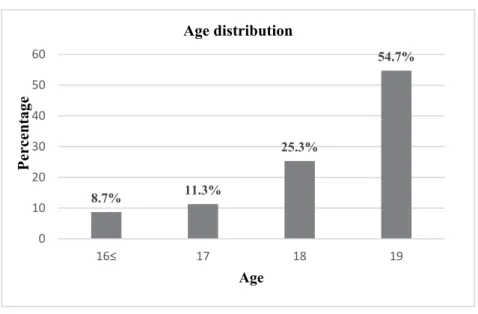
The respondents in the current study were between 16 and 24 years of age. Nearly 55 percent of the respondents were between the ages of 18 and 19 when their first pregnancy occurred (figure 1). A considerable proportion (23%) of mothers reported their second or third pregnancy by the age of 20.
3 Even though abortions contribute to teenage pregnancy and birth rate declines, the current study was unable to collect reliable data on induced abortions due to the severely restrictive laws on abortion in Sri Lanka.
Figure 1: Mother’s age distribution at first pregnancy
The sample of the current study manifested a very high concentration of Muslims, despite Muslims being a minority group (29.4%) in the area. Nearly 47 percent of the respondents were Muslims while 37 percent and 13 percent of the respondents were Sinhalese and Tamils respectively. Thus, a high prevalence of teenage pregnancy was reported from Muslims in the area. The education level of the respondents was relatively low with more than 50 percent of them having obtained primary or up to grade 6 to 11 education. About 65 percent of respondents got pregnant as a result of a love marriage or a love affair. The rest were arranged marriages and among them 73 percent were Muslims.
About 57 percent of respondents were married by age 18. The mean and median age at first marriage was 18.2 and 18.0 respectively. Other than the majority of Muslims who married before age 18, three respondents married before age 18 but had registered marriages stating false ages.
Although marriage provides legal approval and social recognition to have sexual relationships and legitimate births, about 10 percent of the study population was never married. While living with their partners, most of them were waiting until the age 18 to legally get married. The cross- tabulation analysis of age at first sexual intercourse and age at first marriage showed that 23 percent of the total number of married pregnant mothers (N= 136) had sexual relationships prior to the marriage. Taking into account the mothers who were not married by the time of the interview, this percentage increases up to 30 percent.
A cross tabulation analysis of the age at first marriage and the age at first pregnancy (table is not shown) revealed that 14 percent of teenage mothers got pregnant prior to the marriage.
Additionally, 55 percent of the total married mothers did not show even a single month of
8.7% 11.3%
25.3%
54.7%
0 10 20 30 40 50 60
16≤ 17 18 19
Percentage
Age Age distribution
difference in age at first marriage and age at first pregnancy. Thus, it implies that the majority of respondents got pregnant soon after marriage or got married just after becoming pregnant.
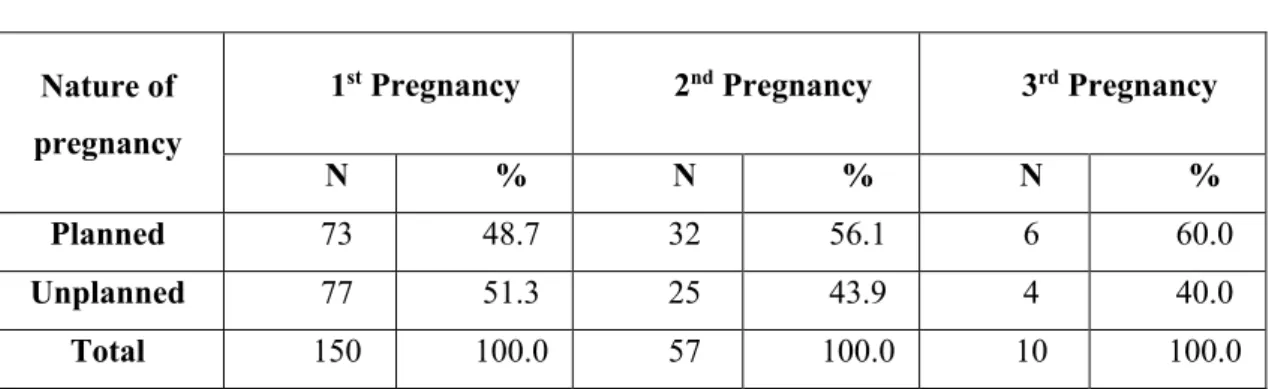
Table 1: Planned or unplanned nature of pregnancies
More than half of first pregnancies (51%) to teenage mothers were unplanned (Table 1). Out of 150 respondents, 67 mothers had experienced their second or third pregnancy by the time of the interview and the 2nd and 3rd births appeared to be more planned than the first birth.
4.2 Socio-cultural consequences of teenage pregnancy
Teenage mothers are more likely to face critical socio-cultural consequences due to the pregnancy and early motherhood. This is especially the case for teen girls who got pregnant out of wedlock and are vulnerable to numerous social issues. A little less than a fifth (17%) of the respondents have faced problems related to social acceptance due to a teenage pregnancy. They have been isolated from the neighborhood, friends or relatives. Moreover, about 19 percent of the respondents have experienced stigma on both mother and child. Among them, the majority occurred to the Sinhalese Buddhist community and as a whole more than 45 percent of Sinhalese Buddhist respondents have experienced stigma. The percentage of Tamils who have experienced stigma was only 12 percent while there was no evidence of stigma among Muslims. Accordingly, socio-cultural consequences of teenage pregnancy were mostly confined to Sinhalese Buddhist teen mothers. In fact, early marriages as well as early conceptions are socially accepted and admired within the Muslim culture. Since the majority of the study population were Muslims, reported social consequences were limited during the current study.
Cultural issues were also prevalent among teenage mothers as early marriages and early conceptions are not culturally accepted in Sri Lanka. Nearly 20 percent of respondents in the current study have faced cultural issues. Among them, the vast majority of respondents have been censured by family members, relatives and neighbors as they conceived prior to the marriage or married after becoming pregnant. Other cultural issues were negative perceptions of the mother due to the early marriage or getting pregnant without marriage. Additionally, the majority of
Nature of pregnancy
1st Pregnancy 2nd Pregnancy 3rd Pregnancy
N % N % N %
Planned 73 48.7 32 56.1 6 60.0
Unplanned 77 51.3 25 43.9 4 40.0
Total 150 100.0 57 100.0 10 100.0
respondents had to deal with social oppression due to the feeling of being socially unaccepted, disrespected, neglected or treated in an unfriendly manner by the parents or the community they lived in.
Family members of the teenage mother also may encounter negative impacts due to the socially unacceptable activity of their teen girls. Thus, censure and mental oppression could be focused on family members. The commonest situation was the censure of parents. As expressed by one respondent, whenever the young couple quarreled or caused a problem, the neighbors blamed the teenage mothers’ parents but never blamed her or her spouse. In addition, the shame and sorrow felt due to the arbitrary marriage or unexpected pregnancies were the main issues faced by the family members.
Without any ethnic differential, more than one fifth of the respondents had to curtail their school education before achieving educational targets. Following a love affair, most of them wanted to get married. A few cases have been reported of dropping out of school education or other desired educational activities due to an unintended pregnancy.
Future arrangements of a teen girl can significantly change due to an unexpected pregnancy, and a limited knowledge of contraceptives can badly affect a teenager’s entire future. During the current study, 16 percent of respondents revealed that their future arrangements had changed to a great extent after becoming pregnant with no significant ethnic differentials. Further, 23 percent of respondents had changed their future arrangements to some extent. Thus, nearly 40 percent of teenage mothers had to give up their future arrangements due to the pregnancy. About 57 percent of them reported that they could not fulfill their educational goals. Also, 30 percent of them were unable to have a permanent residence or decent living standard while 12 percent of respondents had to give up their intention to work. Additionally, some teenage mothers stated that they had lost their hopes and goals for the future including their chosen partner, marriage age and vocational education due to the pregnancy.
Stability and hope for the future are significant to explore as a part of the social consequences of teenage pregnancy. A total of 40 percent of respondents in the current study were unclear and anxious about their future. The main reason for the anxiousness was the fear of family dissolution in the future as almost all of them had family problems in day-to-day life. Other reasons were economic instability, fear of child delivery, emerging challenges due to lack of life experiences, the upbringing and education of children and absence of permanent housing facilities. In fact, uncertainty over the future was the most common feeling among teenage mothers.
4.3 Economic consequences of teenage pregnancy
Teenage mothers have a limited earning capacity and therefore, economic hardships were widespread among them. Only 5 percent of teenage mothers were employed at the time of
interview while the vast majority of respondents were housewives. Notably, 46 percent of housewives were not employed because their spouses or partners were opposed. Also, 21 percent of housewives stated that their parent or guardian opposed their employment while 19 percent of respondents were unable to be employed due to the pregnancy or due to looking after children.
The rest stated that they were not employed because of physical inconveniences owing to the pregnancy or their dislike toward work. Teenage mothers’ reduced employability, which is associated with lower educational level and limited professional qualifications, could be the main reason for most economic consequences. The employability of teenagers can be increased by participating in vocational training after leaving school. Yet, the vast majority of respondents reported that they had never taken any vocational training. In the case of lone parenthood, teenage mothers have to face severe economic difficulties.
Almost all the employed respondents were employed in the private sector manufacturing (80%) and service (20%) industries. The most common employment sector among spouses were private (56%) and self-employment (24%) while government employments (6%) were rare.
Considering the occupation of spouses, greater participation in service (36%), manufacturing (17%) and labor (19%) workers were prevalent. Further, the majority of self-employed spouses were employed in service industries. This implies that the government or white-collar employments are very rare among teenage couples and most couples were employed in primary jobs in the private sector.
The great majority of respondents (98%) stated that their spouse or partner is the chief wage earner in the family. Moreover, 71 percent of teenage mothers’ main source of financial support was the spouse or partner, proving that teenage mothers are more likely to be dependent on the spouse or the partner. A substantial proportion of respondents (23%) revealed that their parents were the main financial providers. The rest (6%) reported having their main financial support from parents.
Household income is an important indicator which measures the standard of living. According to table 2, 37 percent of families of teen girls (37%) had a monthly income between Rs.10,001 and Rs.20,000. The percentage which received an income between Rs.20,001 and Rs.30,000 was 34 percent. The mean, median and mode of the income were Rs.28,447, Rs.25,000 and Rs.30,000 respectively.
The monthly expenditure incurred on household consumption needs is also vital to evaluate the financial position of the household. About 55 percent of respondents stated that their monthly expenses are between Rs.10,001 and Rs.20,000 (Table 2). The percentage which had less than Rs.10,001 was 12 percent. Accordingly, 67 percent of respondents seem to have less than Rs.20,000 monthly expenditure. The mean expenditure was Rs.20,527 while the median and
mode of the expenditure was Rs.20,000. In addition, the average household size of the respondents was 3.25 while nearly 25 percent of families had more than five members.
Table 2: Monthly income and expenditure status of the respondents
The current study inquired on economic hardships in the family to assess the economic well- being of teenage mothers. More than half of the respondents (53%) mentioned that they have faced severe or moderate economic difficulties. More than 40 percent of them accepted that there is a relationship between their pregnancy and economic difficulties. Most of them stated that the main reason for those economic difficulties was their inability to work due to the teenage pregnancy, while some teenage mothers who had already given birth revealed that the expenditure needs of children caused the economic difficulties. Overall, economic deprivation and instability were widespread among teenage mothers.
The cross-tabulation analysis of the ethnicity and economic difficulties of the respondents revealed that the Muslims reported economic difficulties less often than other ethnic groups. It is possible within the Muslim population as they believe that revealing family economic difficulties to outsiders is an insult to the husband. Though there were significant numbers of Muslim husbands who were doing primary jobs such as laborers, their wives also mentioned that they have no economic difficulties. In fact, nearly 70 percent of Sinhalese revealed that they have economic difficulties while only 44 percent of Muslims revealed economic difficulties.
4.4 Health consequences of Teenage pregnancy
Teenage pregnancy is widely discussed as an associated factor to adverse health consequences.
Due to the immaturity of the reproductive system and maternal undernutrition, teenage childbirths often lead to complications.
Table 3 shows that more than half of the respondents (51%) were not at optimum BMI levels at the beginning of the first pregnancy. Fully 76 percent of mothers were in a low weight category
Currency Income Expenditure
(Rupees) Number Percentage Number Percentage
Less than 10,000 3 2.0 18 12.0
10,001-20,000 56 37.3 82 54.7
20,001-30,000 51 34.0 36 24.0
30,001-40,000 18 12.0 9 6.0
40,001-50,000 10 6.7 5 3.3
More than 50,001 12 8.0 0 0.0
Total 150 100.0 150 100.0
(below 18.5 BMI level) while some of them had extremely low BMI values such as below 14.
This implies that the inadequate nutritional status of teenage mothers can increase the risk of having a low birth weight baby. Likewise, most overweight mothers were experiencing serious health conditions due to obesity. Most of their BMI levels had unnecessarily increased with the pregnancy and birth control pills made the problem acute.
Table 3: Percentage distribution of teenage mothers according to their BMI status
Moreover, 12 percent of the study population had specific diseases such as maternal diabetes, malnutrition and anemia while the main reasons for such diseases were introduced as pregnancy, over-work at home and mental depression.
The current study revealed that 34 percent of the respondents’ health status had changed due to the pregnancy. Most of them revealed that their health status had changed towards a worse situation while some respondents’ health status had changed to a slightly better level. Additionally, 30 percent of respondents stated that their health status is worse relative to peers. This implies that a considerable proportion of teenage mothers were not in good health.
Despite the fact that early attendance at the antenatal clinic is significant to minimize the adverse outcomes of teenage pregnancy, 38 percent of teenage mothers in the current study had first visited the antenatal clinic after the third month of pregnancy due to unawareness, out of wedlock conceptions and pre-marital conceptions. This shows that teenage mothers are at risk of delaying their first antenatal clinic visit.
The past reproductive experiences of mothers who had children in their teens are also important to allow an exploration of the health complications of teenage pregnancy. In the current study, a total of 32 percent of respondents had experienced prior child births. Most of them faced significant delivery complications for the first birth. However, moderate complications were very prevalent at the second birth whilst serious complications were less prevalent. Thus, the trend was more serious complications at first delivery while more moderate complications at second
Category Number Percentage
Low weight (BMI less than 18.5) 58 38.7
Optimum weight (BMI 18.5-24.9) 74 49.3
Overweight (BMI 25- 29.9) 11 7.3
Obesity (BMI more than 30) 7 4.7
Total 150 100.0
delivery. It is possible to assume that with the increasing maternal age at second delivery, the reproductive system also matured reducing serious delivery complications.
The consequences of teenage pregnancy are not confined to the teenage mother but also the child may face various health issues due to their mother’s immaturity. As revealed by the mothers who had previous births, about 20 percent of teenage pregnancies resulted in babies with low birth weight. However, in the analysis of weight at birth of the child more than 30 percent of children had weighed less than 2.5kg at birth. Moreover, a few cases (2.2%) have been reported of health complications such as respiratory difficulties at birth.
The mental health aspects are also important to investigate the health complications of teenage pregnancy. To have a good mental health condition, it is essential to have a physically and mentally healthy child. Even though no respondent was found with a mental disorder, about 53 percent of respondents felt depressed or sad very often or sometimes. Among them, about 36 percent had felt depressed or sad due to family problems. As teenage mothers are not physically and mentally mature enough to face and tolerate family problems, they are more vulnerable to anxiety and depression in response to stressful life events. Additionally, economic difficulties, loneliness, physical inconveniences, unhealthy perceptions and diseases, burdens of household chores and children, and illegitimate births may cause depression or sadness. Consequently, the possibility of having mental illnesses would be high among teenage mothers and such mental disorders can badly affect not only the mother but also the child.
5. Discussion and conclusion
The current study was conducted to examine the consequences of teenage pregnancy under the three main domains of socio-cultural, economic and health. The respondents were more likely to report low socio-economic conditions. The vast majority of respondents reported their first pregnancy between the ages of 18 and 19 implying that this is the most vulnerable period for teen girls. The Muslim concentration in the sample was emphasized and most of them were married very early, under Islamic law. The mean and median age at first marriage of the study population was 18. This implies that the teenage mothers are entering into marriage 5 years earlier than other women in Sri Lanka.
The social consequences of teenage pregnancy were mostly limited to Sinhalese and Tamils and most of them have experienced stigma while problems related to social acceptance and isolation were prevalent. Additionally, family members of the teenage mothers also encountered bad impacts such as censure, oppression, shame and sorrow. Educational disruption was also common among the total surveyed teenage mothers and it could be identified as a detrimental social consequence of teenage pregnancy in the CMC area. Nearly two-fifths of respondents had to change their future arrangements. Though feelings on future reflect the overall stability of the
family, a notable proportion of respondents were worried about their future while one fifth of the study population had cultural issues such as social censures, negative perceptions, and mentally oppressive situations. Thus, the current study has been able to explore various social consequences and their ethnic aspects which may be unique to Sri Lanka and have not been described previously.
The vast majority of respondents were not employed due to the spouses’ or partners’
opposition and more than three fourths of them had never been in any kind of job training. Thus, the reduced employability of teen mothers was emphasized with their low educational and professional qualifications. Likewise, most respondents were financially dependent on their spouse or partner. A small number of employed respondents and their spouses were mostly engaged in primary jobs in the private sector. According to Sri Lankan Household Income and Expenditure Survey in 2012/13, the average monthly household income and expenditure is Rs.
46,207 and Rs. 40,887 respectively (Department of Census and Statistics, 2013). Compared to the national average, the vast majority of respondents in the current study had significantly lower incomes and expenditure levels. Consequently, more than half of the respondents revealed that they had economic difficulties. However, the Muslim population showed much less disclosure of economic difficulties in the current study. This might be due to the fact that Muslim teenagers were more likely to visit the antenatal clinic accompanied by husbands and/or mothers-in-law.
The majority of respondents were not at optimum BMI levels and undernutrition was very prevalent among them. Furthermore, some teenage mothers had specific diseases such as gestational hypertension, maternal diabetes and anemia. A significant proportion of respondents were worried that their health condition was worse relative to their peers. Though the effect of social consequences varied by ethnicity, health consequences were commonly reported.
According to the antenatal care circular in Sri Lanka, even low risk mothers are required to attend the clinic within 6 to 8 weeks of pregnancy (Ministry of Health, 2014). Despite that, delayed initiation of antenatal care was very common among teenage mothers. Additionally, perceived delivery complications were very prevalent among the respondents while a significant proportion of respondents had low weight babies.
As an Asian country, the acceptability of unmarried motherhood and early marriages is low in Sri Lanka (except among the Muslim population). Therefore, teenage motherhood is a socially inflicted hazard for an unmarried mother and such a mother is more vulnerable to serious emotional problems. Their suffering mentality and physical immaturity can badly affect both mother and child with emerging issues of physical and mental well-being.
The above findings suggest several policy implications, such as introducing teenage pregnancy prevention programs, awareness programs on negative consequences of teenage pregnancy, increasing the minimum legal age of marriage for Muslims and taking necessary
actions to stop child marriages. Likewise, most teenage mothers were rarely employed due to their reduced employability and husbands’ opposition. Providing vocational training opportunities and teenage couple counselling programs to manage conflicts relating to employment would offer them pathways out of poverty.
Finally, two limitations of this study need to be acknowledged. First, the data analysis of this study was descriptive. Second, the study could not adequately examine the ethnic differentials in the consequences of teenage pregnancy. There may be many more consequences among Muslim mothers which were kept private, covered up or lied about as most of them were accompanied by husbands and/or mothers-in-law. Even so, the current study attempted to contribute to the existing literature on consequences of teenage pregnancy in a Sri Lankan context and provide suggestions for future research. Thus, ethnicity specific studies on teenage pregnancies with more statistical analysis would be a promising future direction in this area.
References
Bhan, N. (2019). “Preventing teenage pregnancy in India to end the cycle of undernutrition,” The Lancet Child & Adolescent Health 3, 439-40.
Cunnington, A. J. (2001). “What's so bad about teenage pregnancy?” BMJ Sexual & Reproductive Health 27, 36-41.
Department of Census and Statistics (2009). Sri Lanka Demographic & Health Survey 2006-07.
Colombo: Department of Census and Statistics.
--- (2013). Household income and expenditure survey-2012/13. Colombo: Department of Census and Statistics.
--- (2015). Census of Population and Housing- 2012. Colombo: Department of Census and Statistics.
De Silva, W. I., Somanatan, A., & Eryagama, V. (2003). “Adolescent and youth reproductive health in Sri Lanka: Status, Issues, Policies, and Programs, Health Policy Programme,”
Institute of Policy Studies of Sri Lanka, 227-31.
De Silva, W. I. (1998). “Puerperal Morbidity: A Neglected Area of Maternal Health in Sri Lanka,”
Social Biology, 45, 223–45.
FHB (Family Health Bureau) (2010). Annual report on family health Sri Lanka 2010, Family Health Bureau, Ministry of Health, Colombo, Sri Lanka.
--- (Unpublished). Ministry of Health, Colombo, Sri Lanka.
Irvine, H. et al. (1997). “The implications of teenage pregnancy and motherhood for primary health care: Unresolved issues,” British Journal of General Practice 47, 323-26.
Littlejohn, P. (1996). “Young Mothers: A Longitudinal Study of Young Pregnant Women in Victoria,” 13, Youth Research Centre, The University of Melbourne.
Martin, J. et al. (2005). “Births: Final Data for 2003,” National vital statistics report. 1-26, [Online] Available from: http://www.cdc.gov/nchs/data/nvsr/nvsr54/ nvsr54_02.pdf [Accessed 23/01/2014].
Maynard, R. (1995). “Teenage Childbearing and Welfare Reform: Lessons from a Decade of Demonstration and Evaluation Research,” Children and Youth Services Review 17, 309- 32, [Online] Available from: http://familyimpactsem inars.org/s_ wifis05c02.pdf [Accessed 26/04/2013].
Perera, J.A.P.S. and K.T. Silva (2012). Barriers for pregnancy support: Experience of slum- dwelling pregnant teenagers in Colombo city, Annual Academic Sessions, Open University of Sri Lanka, Colombo.
Ministry of Health (2014) Antenatal Care circular 02-85/2014, Ministry of Health, Suwasiripaya.
Muthayya, S. (2009). “Maternal nutrition & low birth weight - What is really important?” The Indian journal of medical research, 130, 600-8.
Raatikainen, K., Heiskanen., N., Verkasalo, P. K. & Heinonen, S. (2005). “Good outcome of teenage pregnancies in high-quality maternity care,” European Journal of Public Health 16, 57-161, [Online] Available from: http://eurpub.oxfordjournals.org/[Accessed 27/03/2013].
Reid, V. and Meadows-Oliver, M. (2007). “Postpartum Depression in Adolescent Mothers: An Integrative Review of the Literature,” Journal of pediatric health care: official publication of National Association of Pediatric Nurse Associates & Practitioners 21, 289-98.
Slowinski, K. (2001). Unplanned Teenage Pregnancy and the Support Needs of Young Mothers.
Unplanned teenage pregnancy research project, Department of Human Services.
UNFPA (2012). Population Situation Analysis: Sri Lanka. [Online] Available from:http://unfpa.org/psa/wp-content/uploads/2012/11/Sri-Lanka-Population-Situati on- Analysis.pdf [Accessed 21/03/2013].
UNICEF (2008). Young people and family planning: Teenage pregnancy, [Online] Available from: http://www.unicef.org/malaysia/Teenage_Pregnancies [Accessed 22/03/2013]
Ventura, S. J. et al. (2001). “Trends in Pregnancy Rates for the United States, 1976-97: An Update”. National vital statistics reports: from the Centers for Disease Control and Prevention, National Vital Statistics Rep 49, 1-9.
WHO (2017). “Scope and purpose. WHO Intercountry meeting Improvement of the antenatal care in the countries of Eastern Europe and Central Asia,” Tbilisi, Georgia.
Wijesinghe, K. D. (2018). “Factors Associated with Teenage Pregnancies in Sri Lanka: A Study of the Colombo Municipal Council,” Sri Lanka Journal of Population Studies 18-19, 67- 79.
--- (2014). Determinants and Consequences of Teenage pregnancy- A study of Colombo Municipal Council of Sri Lanka, Master’s thesis, University of Colombo, Sri Lanka.